

12 Best Datadog Alternatives Reviewed in 2026

Best Datadog Alternatives Shortlist
Here’s my shortlist of the best Datadog alternatives:


If you're using Datadog for cloud monitoring, you might have run into challenges, such as high costs or complex features that don't fit your team's needs. You're not alone. Many tech experts seek Datadog alternatives to better match their specific requirements.
In my experience, finding the right tool can significantly increase your team's efficiency. That's why I've independently tested and reviewed various alternatives to Datadog. My goal is to provide you with an unbiased and well-researched guide to help you make an informed decision.
In this article, I'll share my top picks for Datadog alternatives, focusing on unique features and benefits that might be a better fit for your team. Let's explore the options that could better serve your business needs.
What Is Datadog?
Datadog is a cloud monitoring platform that helps you keep track of your applications, infrastructure, and logs in real time. IT professionals, developers, and operations teams generally use Datadog to monitor performance and troubleshoot issues quickly. Features such as real-time monitoring, log management, and customizable dashboards help with identifying performance bottlenecks and maintaining system health. Overall, Datadog offers a straightforward way to keep your systems running smoothly.
Best Datadog Alternatives Summary
This comparison chart summarizes pricing details for my top Datadog alternative selections to help you find the best one for your budget and business needs.
| Tool | Best For | Trial Info | Price | ||
|---|---|---|---|---|---|
| 1 | Best for flexible data retention | 14-day free trial + free demo available | From $0.05/GB | Website | |
| 2 | Best for AI-driven dependency mapping at scale | Free demo + 15-day free trial available | From $7/host/month | Website | |
| 3 | Best unified full-stack telemetry ecosystem | Free trial + free demo available | Pricing upon request | Website | |
| 4 | Best pull-based metrics engine for Kubernetes | Free plan available | Pricing upon request | Website | |
| 5 | Best for enterprise-grade security analytics | 14-day free trial + free demo available | Pricing upon request | Website | |
| 6 | Best for data-source-agnostic visualization | Free plan + free trial available | From $19/month + usage | Website | |
| 7 | Best for real-time app discovery | Free demo available | From $21.20/MVS/month | Website | |
| 8 | Best for AWS environments | Free plan available | Pricing upon request | Website | |
| 9 | Best for large-scale log search | Free trial + free demo available | From $0.07/GB data ingested | Website | |
| 10 | Best for Azure integration | Free demo available | Pricing upon request | Website | |
| 11 | Best for AI-assisted troubleshooting | 14-day free trial + free demo available | From $0.20/million metric data points | Website | |
| 12 | Best for OpenTelemetry-native backend monitoring | 30-day free trial + free demo available | From $49/month | Website |
Why Trust Our Software Reviews
We’ve been testing and reviewing software since 2023. As tech leaders ourselves, we know how critical and difficult it is to make the right decision when selecting software.
We invest in deep research to help our audience make better software purchasing decisions. We’ve tested more than 2,000 tools for different tech use cases and written over 1,000 comprehensive software reviews. Learn how we stay transparent & our software review methodology.
-

Freshservice
Visit WebsiteThis is an aggregated rating for this tool including ratings from Crozdesk users and ratings from other sites.4.6 -
Deel IT
Visit Website -
Rippling IT
Visit WebsiteThis is an aggregated rating for this tool including ratings from Crozdesk users and ratings from other sites.4.8



Best Datadog Alternatives Reviews
Below are my detailed summaries of the best Datadog alternatives that made it onto my shortlist. My reviews offer a detailed look at the key features, pros and cons, integrations, and ideal use cases of each tool to help you find the best one for you.

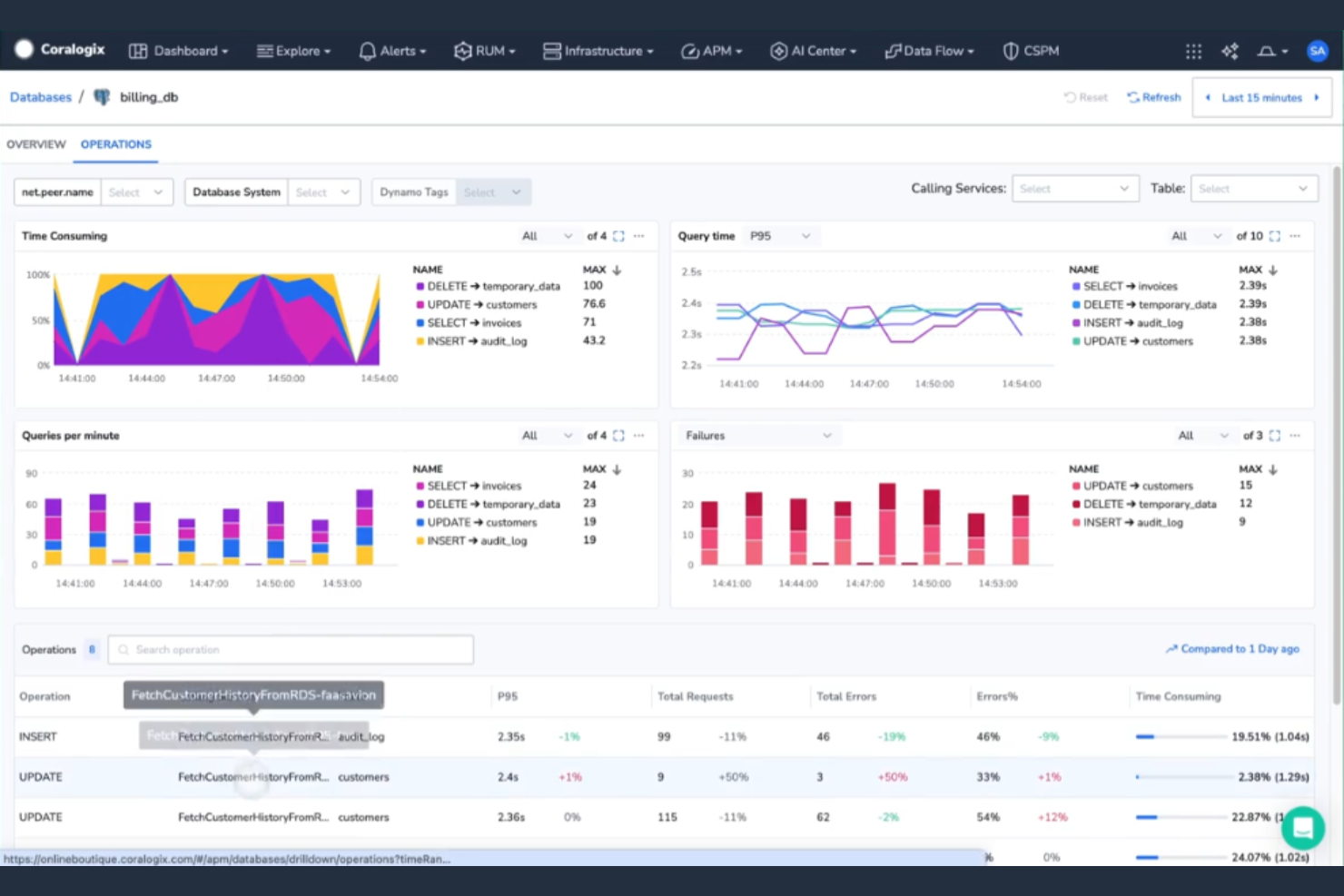
Coralogix is a log analytics and monitoring platform designed for DevOps teams and IT professionals. It helps you manage and analyze log data to gain insights and improve system performance.
Why it's a good Datadog alternative: Coralogix offers flexible data retention options, allowing you to control how long you keep your data. Its real-time analytics provide immediate insights into your logs. With machine learning capabilities, Coralogix helps you identify patterns and anomalies quickly. This can be particularly useful for teams looking to optimize data storage and retrieval.
Standout Features and Integrations:
Features include live tailing, which lets you view log data in real-time to catch issues as they happen. The platform's machine learning algorithms improve anomaly detection. You can also use its customizable dashboards to focus on the metrics that matter most to your team.
Integrations include AWS, Microsoft Azure, Google Cloud Platform, Kubernetes, Docker, GitHub, Slack, Jira, PagerDuty, and more.
Pros and Cons
Pros:
- Machine learning insights, including immediate anomaly detection
- Real-time log analytics
- Flexible data retention
Cons:
- Tiered configurations can become expensive
- Complex interface and proprietary query language
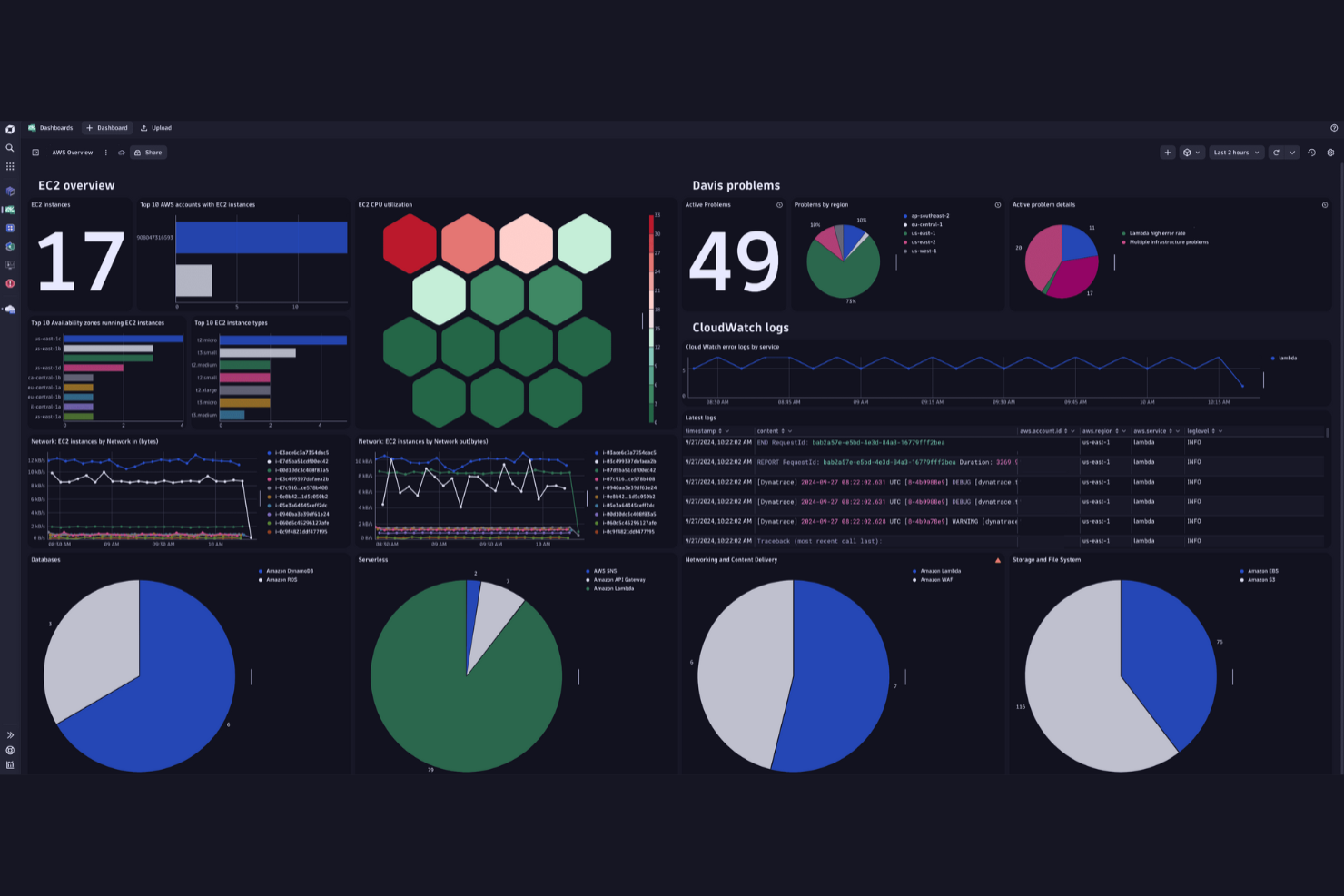
Dynatrace is an AI-powered monitoring platform used by IT and DevOps teams to gain insights into infrastructure and application performance across the entire stack. It automates monitoring and provides real-time data to optimize your systems.
Why it's a good Datadog alternative: Dynatrace's AI-driven insights help you automatically detect anomalies and predict issues before they affect users. Its full-stack monitoring covers everything from applications to microservices, providing a unified view. The AI capabilities also reduce manual work by offering automated root cause analysis. This makes it easier for your team to focus on strategic tasks rather than firefighting.
Standout Features and Integrations:
Features include real user monitoring, which provides insights into user experiences. The platform's automatic discovery maps out your entire IT environment. You also get access to API monitoring, making your integrations perform well.
Integrations include AWS, Microsoft Azure, Google Cloud, Kubernetes, ServiceNow, Slack, Jira, VMware, SAP, IBM, and more.
Pros and Cons
Pros:
- Scalable for large enterprises
- AI-driven root cause analysis
- Causal topology mapping
Cons:
- Higher licensing cost
- Challenging submenu interface
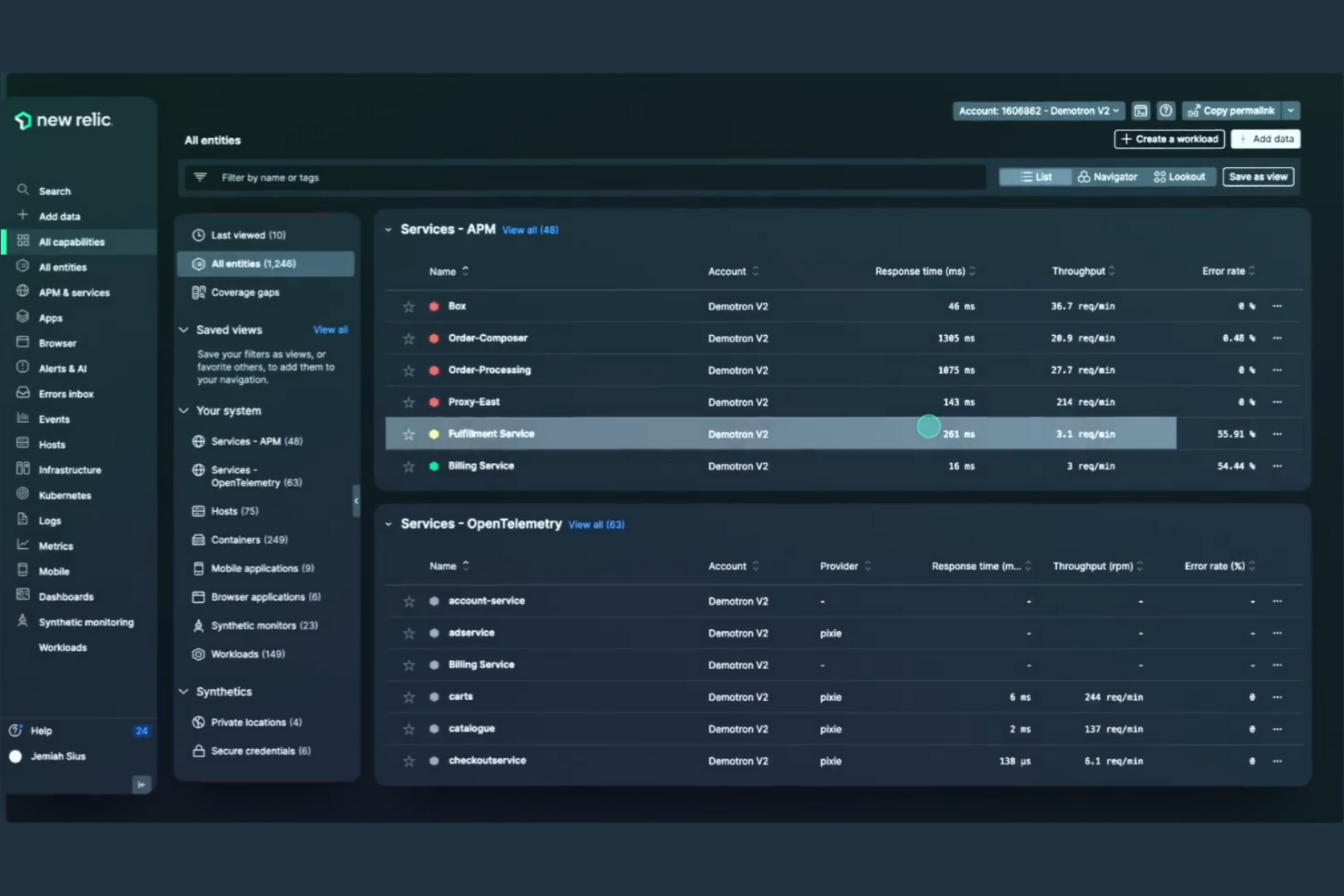
New Relic is an application performance monitoring (APM) tool utilized by developers and IT operations teams to ensure optimal application performance. It provides insights into application behavior and infrastructure health.
Why it's a good Datadog alternative: With extensive integrations, New Relic allows you to connect to a wide variety of services and platforms. Its real-time APM and alerting features help you stay on top of performance issues. Customizable dashboards give you the flexibility to tailor metrics to your team's needs. This makes it easier to manage complex environments with diverse technologies.
Standout Features and Integrations:
Features include synthetic monitoring, which simulates user interactions to catch issues early. Distributed tracing helps you understand the flow of requests in your applications. You can also use advanced analytics to gain deeper insights into your data.
Integrations include AWS, Microsoft Azure, Google Cloud, Kubernetes, Docker, Slack, PagerDuty, Jenkins, GitHub, Jira, and more.
Pros and Cons
Pros:
- Consolidated entity-centric view
- Powerful APM and tracing
- Extensive integration options
Cons:
- Some features require advanced setup
- Complex pricing model

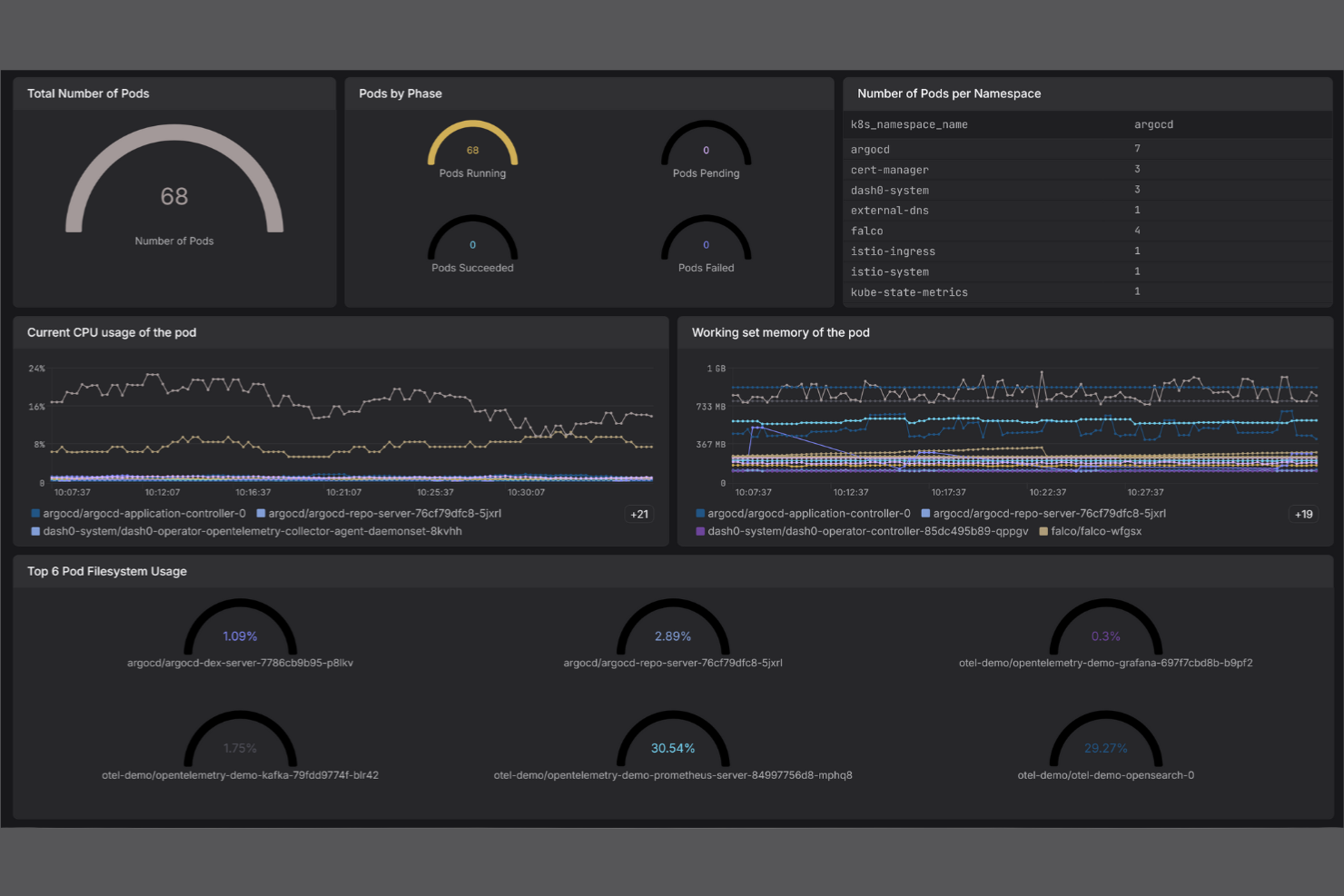
Prometheus is an open-source monitoring and alerting toolkit primarily used by developers and IT operations teams. It focuses on capturing time series data to provide insights into system performance and reliability.
Why it's a good Datadog alternative: Prometheus provides an open-source solution allowing for a high degree of customization and flexibility. Its powerful query language, PromQL, lets you explore and analyze data efficiently. The tool's focus on time series data helps you monitor and alert on key metrics. Plus, its ability to integrate with various systems makes it adaptable to different environments.
Standout Features and Integrations:
Features include a flexible data model that supports multi-dimensional data collection. The alert manager allows you to define and manage alerts effectively. You can also use built-in visualization tools to create insightful dashboards.
Integrations include Kubernetes, Docker, Consul, etcd, Amazon EC2, Google Cloud Platform, Microsoft Azure, DigitalOcean, and Grafana.
Pros and Cons
Pros:
- Efficient time-series data handling
- Customizable query language
- Open-source flexibility
Cons:
- No native long-term storage
- Limited built-in visualization

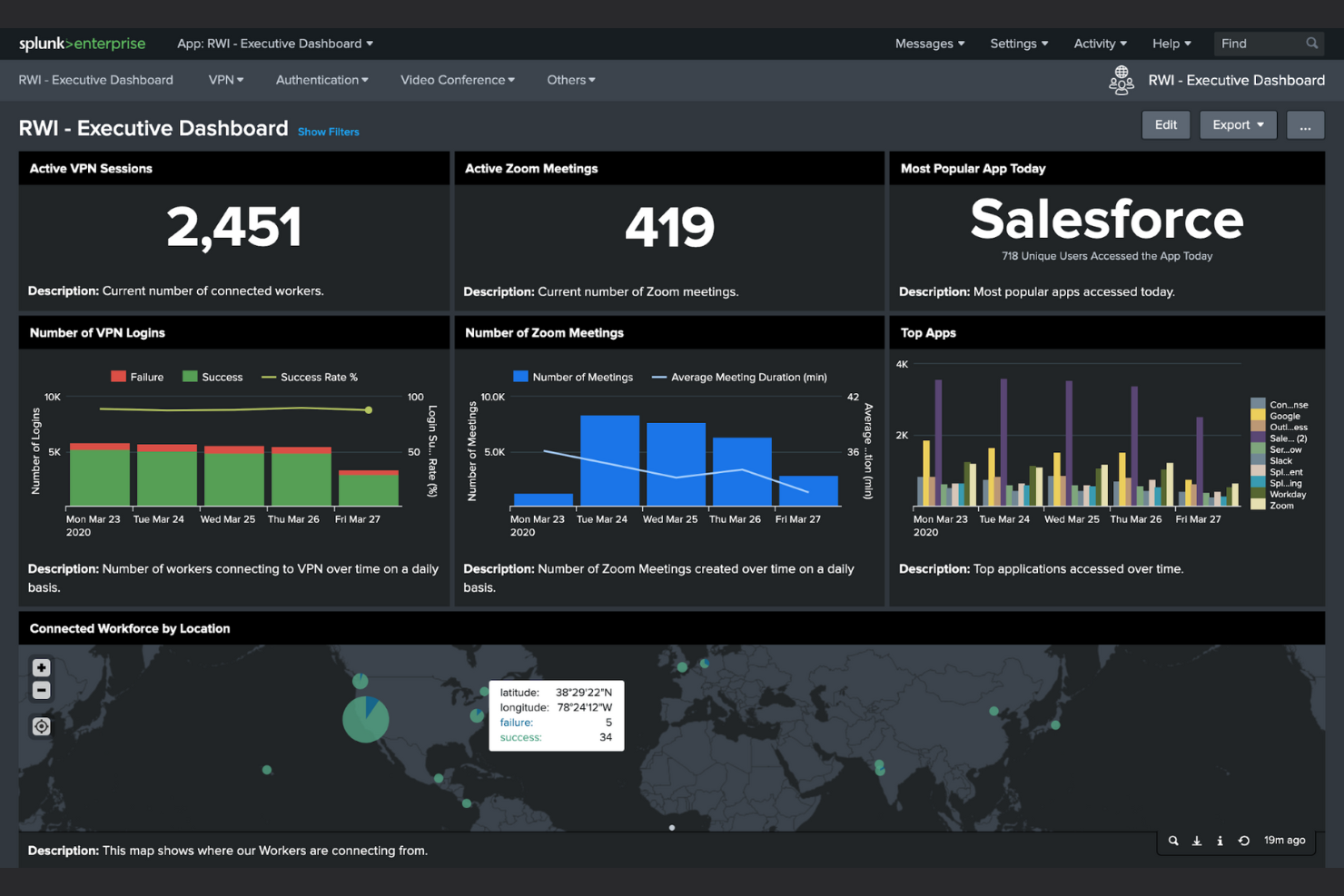
Splunk is a data analytics platform used by IT and security professionals to monitor and analyze machine-generated data. It helps you gain insights from logs, metrics, and events to improve operational performance and security.
Why it's a good Datadog alternative: Splunk excels in security analytics, including SIEM, providing advanced threat detection and response capabilities. Its powerful search and visualization tools enable you to quickly identify and mitigate security risks. The platform's ability to handle large data volumes makes it suitable for complex environments. You can also customize dashboards to focus on the security metrics that matter most to your team.
Standout features and integrations:
Features include advanced search capabilities that allow you to explore your data in detail. The platform's machine learning tools improve predictive analytics for better decision-making. You can also benefit from real-time monitoring to keep your systems secure.
Integrations include AWS, Microsoft Azure, Google Cloud Platform, AppDynamics, ServiceNow, Docker, Kubernetes, Salesforce, Cisco, Okta, Palo Alto Networks, and more.
Pros and Cons
Pros:
- Extensive integration marketplace
- Strong security and SIEM tools
- Advanced log analytics
Cons:
- High total cost of ownership
- Heavy indexer maintenance

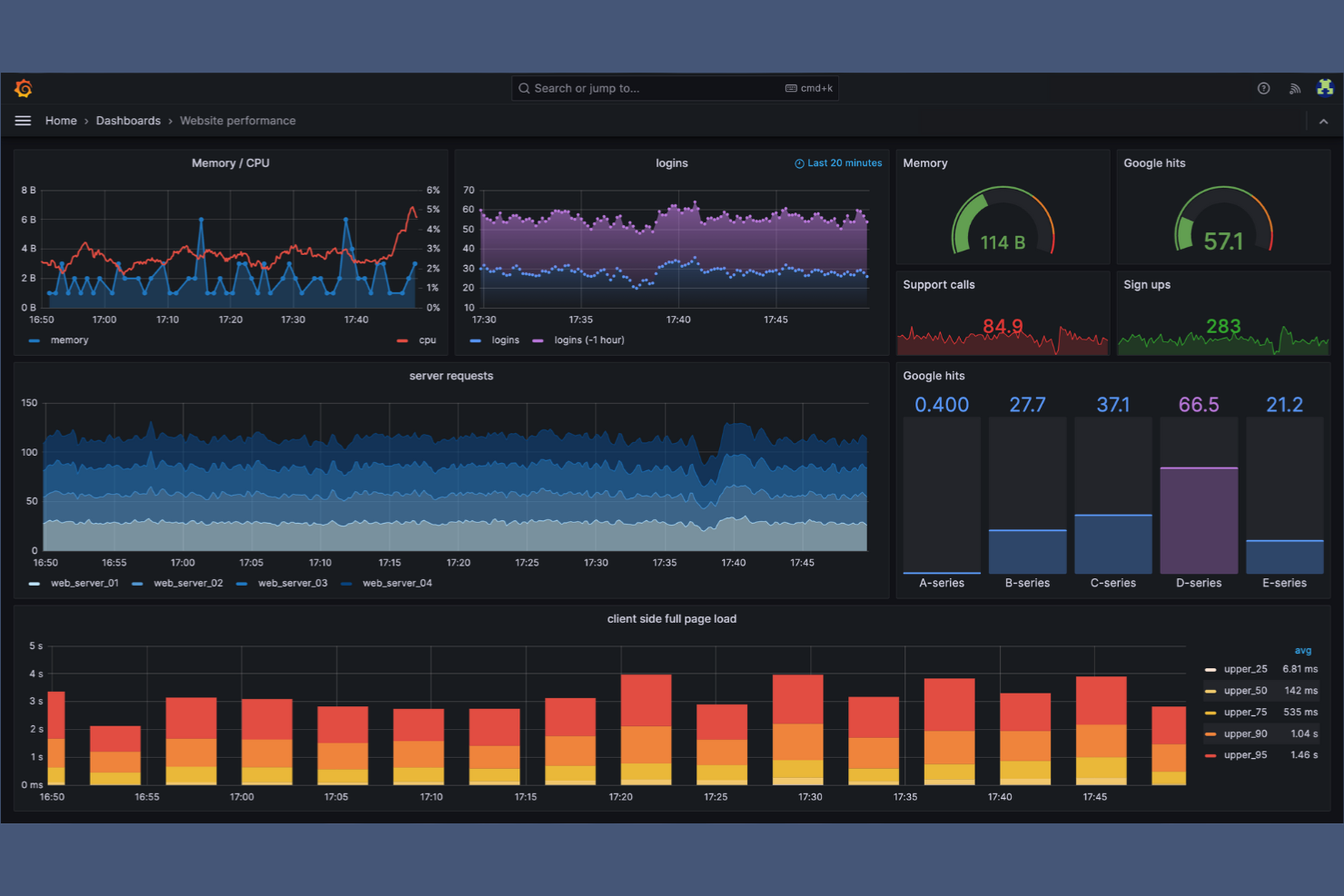
Grafana is a data visualization and monitoring platform used by IT and DevOps teams to create interactive and shareable dashboards. It helps you monitor and analyze metrics from various data sources.
Why it's a good Datadog alternative: Grafana excels in visualizing metrics with its wide range of customizable dashboards. You can tailor these dashboards to display the data that's most relevant to your team. The platform's flexible alerting system keeps you informed about critical changes. Its open-source nature means you can adapt it to fit your exact needs.
Standout Features and Integrations:
Features include templating, which lets you create reusable and dynamic dashboards. The annotation feature helps you mark important events on graphs for context. You can also use its alerting capabilities to receive notifications based on specific thresholds.
Integrations include Grafana Labs stack, Prometheus, InfluxDB, Elasticsearch, AWS CloudWatch, Microsoft Azure Monitor, Google Cloud, MySQL, PostgreSQL, Graphite, OpenTSDB, and more.
Pros and Cons
Pros:
- Strong visualization capabilities
- Efficient data aggregation
- Advanced multi-source visualization
Cons:
- Limited built-in analytics
- High operational complexity

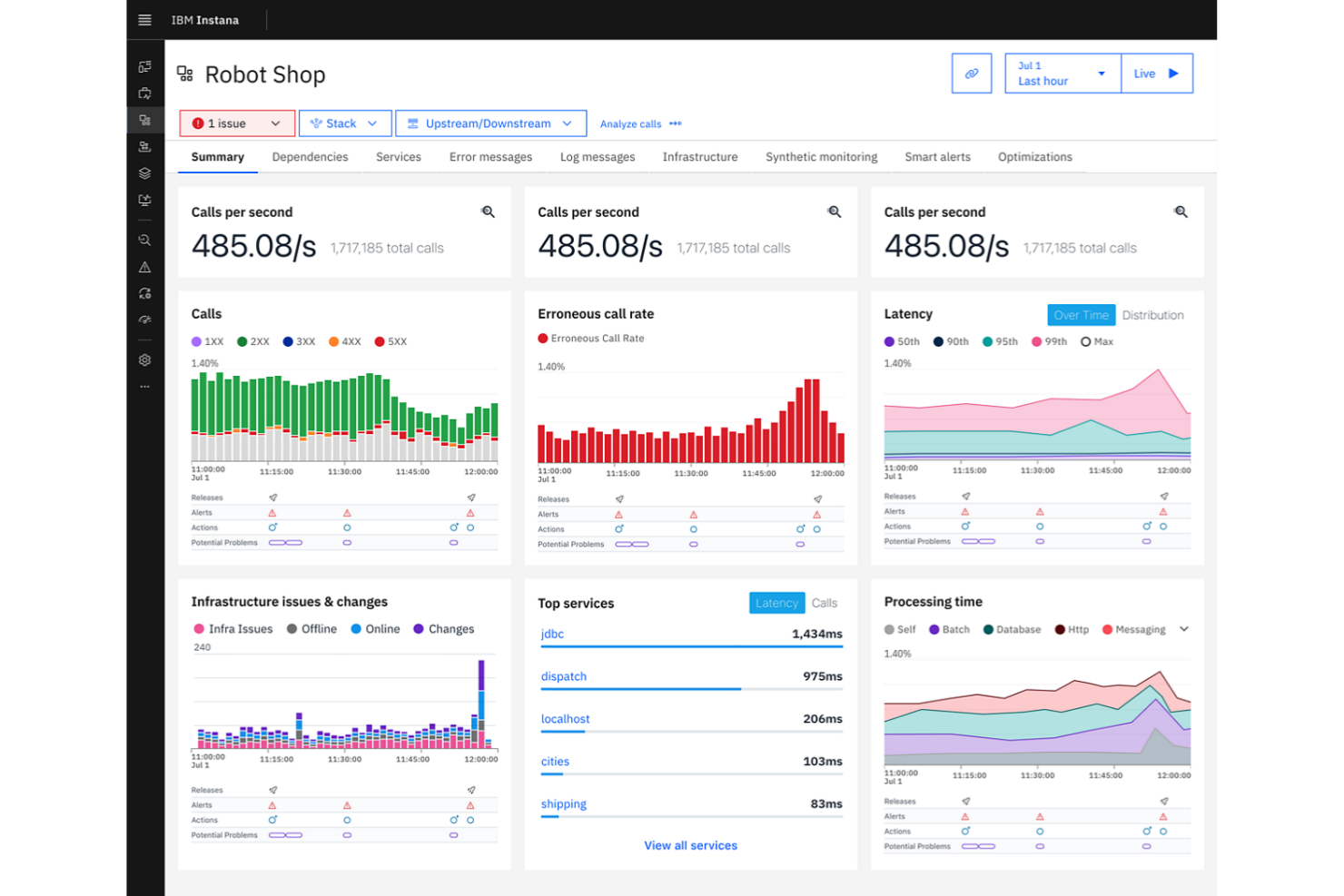
IBM Instana is an APM tool designed for DevOps and IT operations teams. It provides real-time insights into application performance and infrastructure health.
Why it's a good Datadog alternative: With real-time AI insights and correlation capabilities, IBM Instana automatically detects issues and provides actionable data to resolve them. Its automatic discovery and mapping of services gives you a complete view of your environment. The tool's AI-driven root cause analysis helps you quickly identify and fix problems. Continuous updates mean your team always has the latest information at their fingertips.
Standout Features and Integrations:
Features include continuous integration with DevOps workflows to improve your team's efficiency. The platform offers end-to-end transaction tracing to monitor the user experience. You can also access detailed infrastructure monitoring for deeper insights into system performance.
Integrations include Kubernetes, Docker, AWS, Microsoft Azure, Google Cloud Platform, IBM Cloud, Red Hat OpenShift, VMware, Jenkins, Grafana, and more.
Pros and Cons
Pros:
- Strong Kubernetes support
- Automatic dependency mapping
- Real-time tracing and monitoring
Cons:
- Steep initial configuration
- Opaque per-MVS pricing

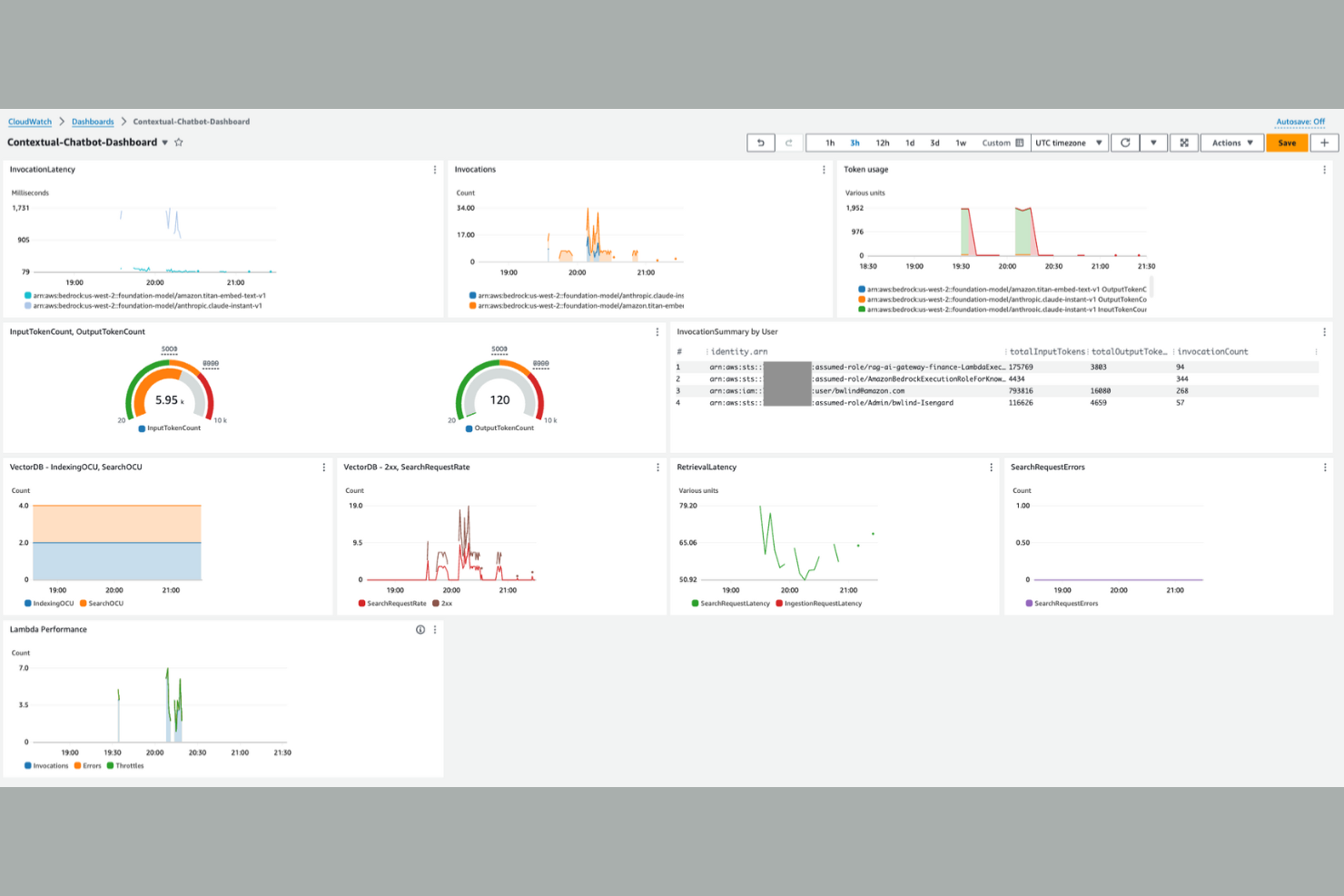
Amazon CloudWatch is a monitoring and management service built for developers, system operators, and IT managers who are using AWS resources. It helps you collect and track metrics, monitor log files, and set alarms.
Why it's a good Datadog alternative: With its deep integration with AWS, Amazon CloudWatch offers coherent monitoring of all your AWS resources. It provides detailed performance data and operational health insights. The service's ability to set alarms based on metric thresholds helps in proactive management. Additionally, its automatic scaling feature maintains your application's performance levels.
Standout Features and Integrations:
Features include detailed monitoring, allowing you to collect and analyze metrics at one-minute intervals. The service also offers log data storage and management, helping you troubleshoot issues quickly. You can set custom dashboards to visualize metrics that matter most to your team.
Integrations include AWS Lambda, Amazon EC2, Amazon S3, Amazon RDS, Amazon ECS, AWS Elastic Beanstalk, Amazon API Gateway, AWS CloudTrail, AWS Step Functions, AWS IoT, and more.
Pros and Cons
Pros:
- Customizable alarms
- Detailed performance data
- Integrated with AWS security
Cons:
- Requires AWS expertise
- Limited cross-cloud visibility

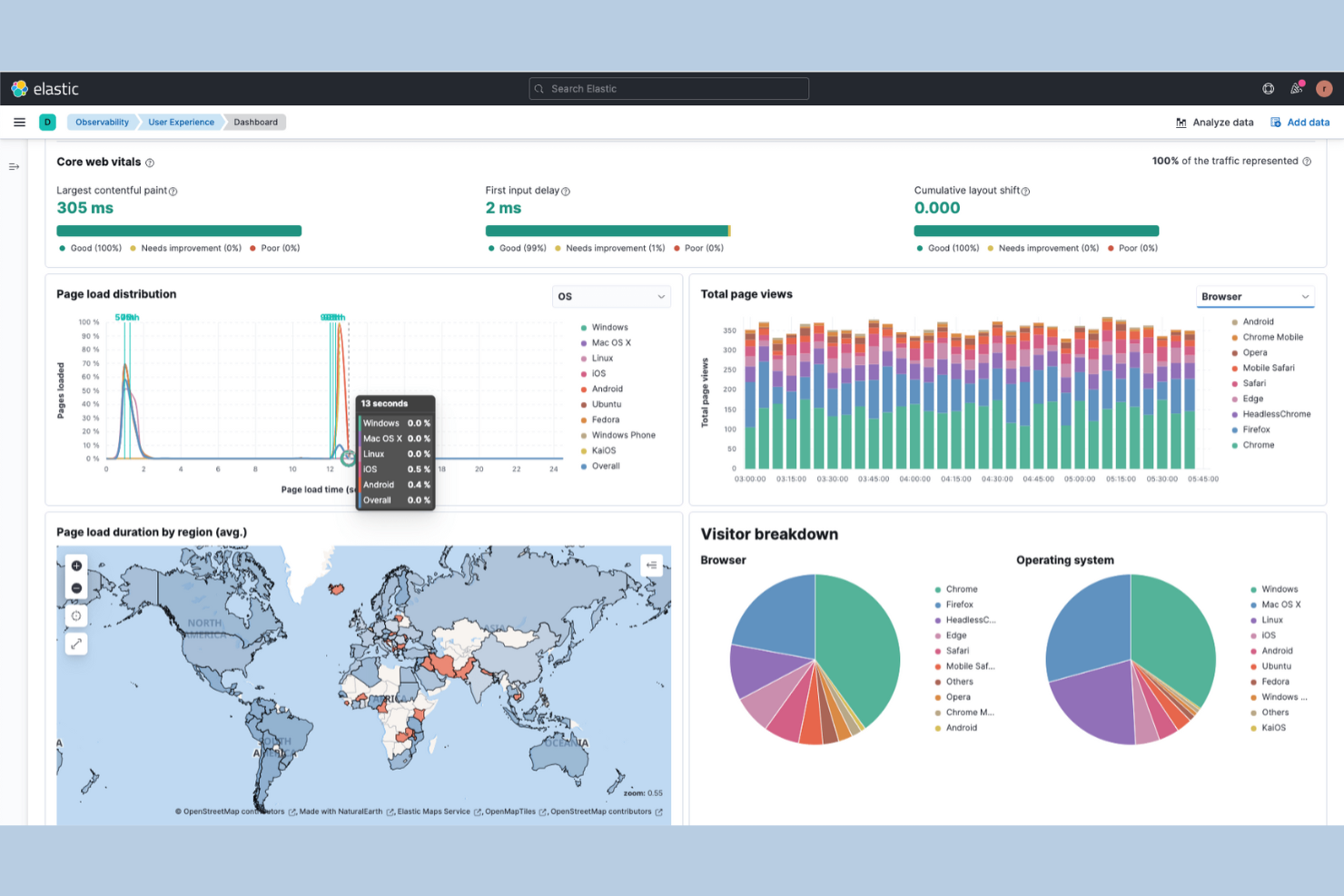
Elastic is a search-powered analytics platform that serves developers and IT teams needing to search, analyze, and visualize data in real time. It supports various functions, including logging, security, and observability.
Why it's a good Datadog alternative: Elastic excels in search capabilities, making it easier to find and analyze specific data points. Its observability tools provide deep insights into application performance and infrastructure health. The platform's scalability allows you to handle large volumes of data efficiently. With customizable dashboards, your team can focus on the metrics that matter most.
Standout Features and Integrations:
Features include powerful search capabilities that let you query large datasets quickly. The platform's machine learning features help you detect anomalies in your data. You can also use its visualization tools to create insightful dashboards that highlight key metrics.
Integrations include Kubernetes, Docker, AWS, Microsoft Azure, Google Cloud Platform, Apache Kafka, Apache Hadoop, Logstash, Beats, MySQL, and more.
Pros and Cons
Pros:
- Highly flexible data ingestion methods
- Scalable log and metrics analysis
- Strong full-text search capabilities
Cons:
- Can be resource-intensive
- Potential for operational lock-in

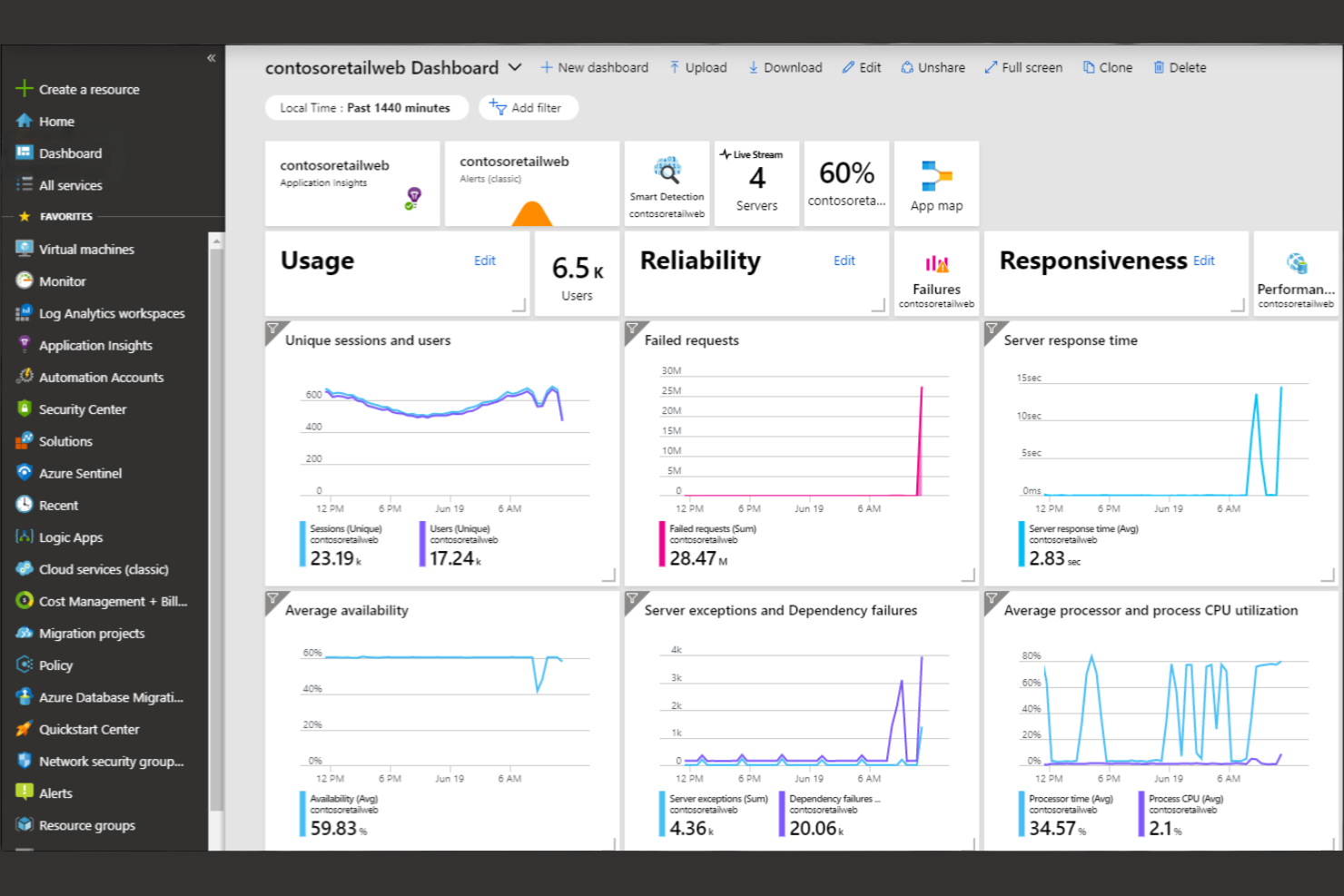
Azure Monitor is an all-in-one monitoring service designed for IT professionals and developers using Microsoft Azure. It collects, analyzes, and acts on telemetry data from your cloud and on-premises environments.
Why it's a good Datadog alternative: With native Microsoft Azure integration, Azure Monitor provides smooth monitoring across your Azure resources. It offers built-in analytics for deep insights into your applications. The service's ability to create alerts based on custom metrics notifies you promptly about any pipeline issues. Additionally, its scalability supports large and dynamic environments, making it ideal for growing businesses.
Standout Features and Integrations:
Features include log analytics, which help you query and analyze log data efficiently. Application insights provide end-to-end monitoring of your applications. The service also includes network performance monitoring to track and diagnose network issues.
Integrations include Azure Automation, Azure Log Analytics, Azure Event Hubs, Azure Logic Apps, Azure Functions, Azure DevOps, Microsoft Graph, Power BI, and more.
Pros and Cons
Pros:
- Supports hybrid cloud setups
- Built-in log analytics tools
- Native Microsoft Azure integration and observability
Cons:
- Limited visibility into non-Azure environments
- Significant manual setup for dashboards and alerts

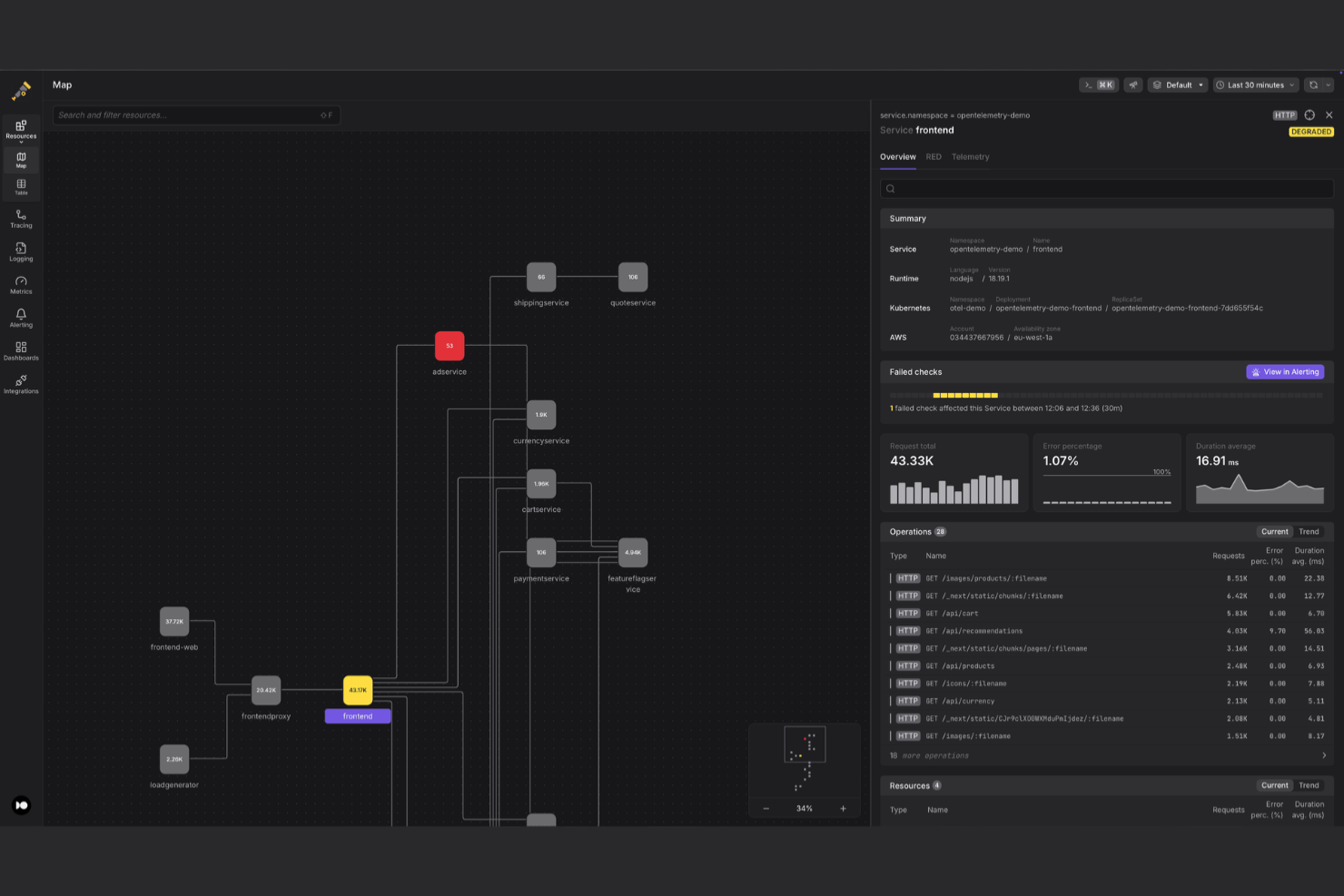
Dash0 is an AI-native observability platform aimed at developers, SREs, and platform engineers. It helps simplify the monitoring and management of logs, metrics, and traces.
Why it's a good Datadog alternative: Dash0 offers AI-native observability, allowing for simplified monitoring without complex setups. Its instant log filtering and centralized metrics monitoring ensure you can track performance efficiently. The platform's OpenTelemetry-native design supports instrumentation, provides flexibility, and prevents vendor lock-in. Real-time tracing and customizable dashboards enable your team to manage and visualize data more effectively.
Standout Features and Integrations:
Features include instant log filtering, which makes it easy to find specific logs quickly. The centralized metrics monitoring lets you keep an eye on all your key performance indicators in one place. You can also use real-time tracing to gain immediate insights into application performance.
Integrations include Kubernetes, Prometheus, AWS, Google Cloud Platform, Microsoft Azure, Datadog, Grafana, and more.
Pros and Cons
Pros:
- OTEL-first troubleshooting
- Real-time tracing
- Instant log filtering
Cons:
- Limited integration capabilities
- Lacks some advanced functionalities

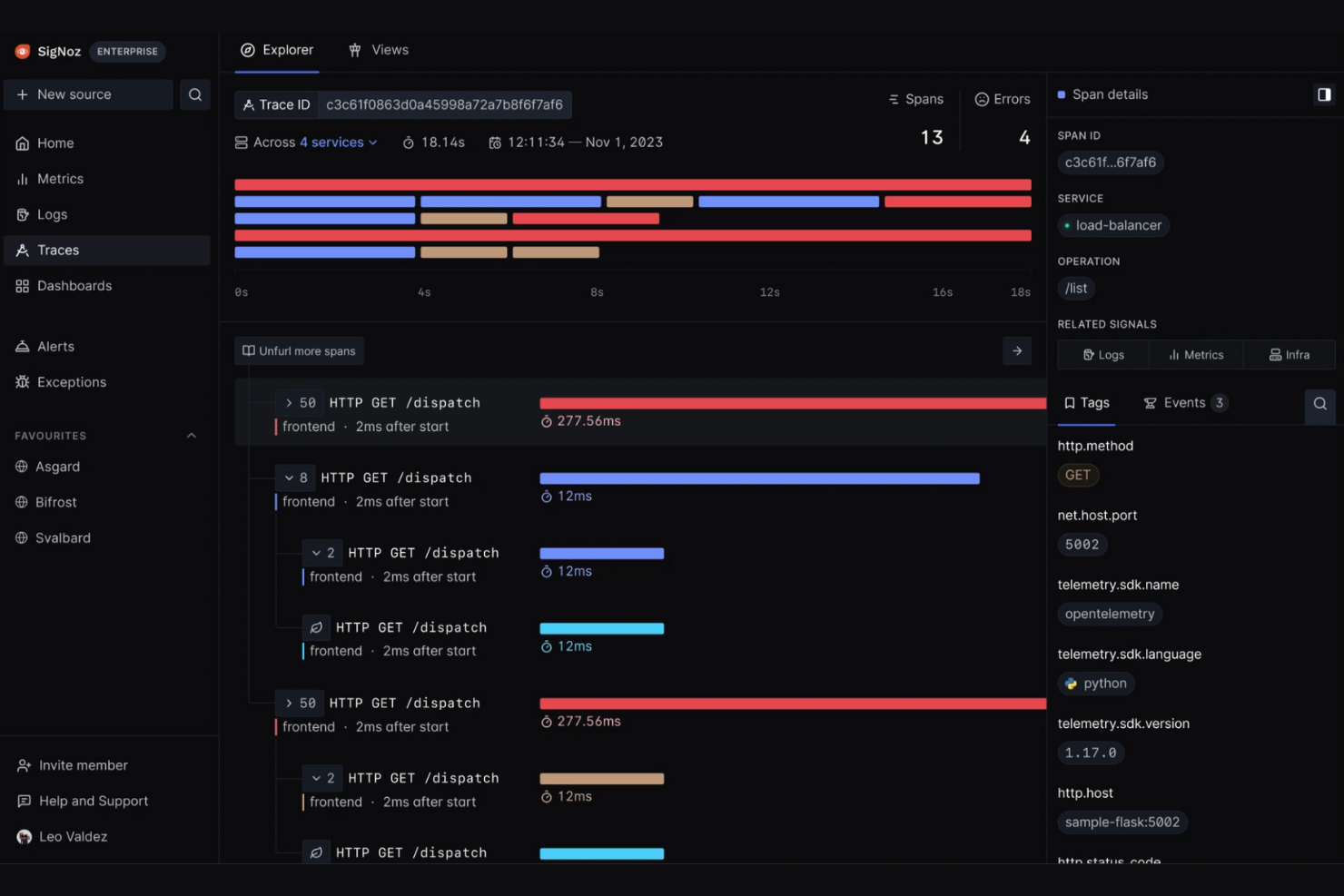
SigNoz is an open-source, full-stack observability tool designed for monitoring applications and infrastructure. Developers and IT teams primarily use it to track performance metrics and troubleshoot issues.
Why it's a good Datadog alternative: As an open-source alternative, SigNoz provides the flexibility and cost-effectiveness needed to self-host and avoid vendor lock-in. Features such as distributed tracing, log management, and customizable dashboards support open-source monitoring. You can also benefit from high-performance data ingestion with ClickHouse, which increases data query speed. SigNoz's commitment to OpenTelemetry future-proofs and adapts to your team's changing needs.
Standout Features and Integrations:
Features include real-time alerts that notify your team of issues as they arise. The customizable dashboards let you tailor views to your specific needs. You can also leverage distributed tracing to pinpoint performance bottlenecks.
Integrations include Kubernetes, Prometheus, OpenTelemetry, and more.
Pros and Cons
Pros:
- Vendor-neutral OTel standard
- Self-hosting flexibility
- High-speed telemetry correlation
Cons:
- Less mature enterprise features
- Smaller integration ecosystem
Other Datadog Alternatives
Here are some additional Datadog alternatives that didn’t make it onto my shortlist, but are still worth checking out:
- LogicMonitor
For hybrid infrastructure monitoring
- ManageEngine Applications Manager
For unified app performance
- Zabbix
Open-source, on-prem monitoring
- Sumo Logic
For cloud-native log analytics
- Sentry
For application error tracking
- Better Stack
For incident response
- HyperDX
For real-time debugging
- Chronosphere
For cloud-native scale metrics


Datadog Alternatives Selection Criteria
When selecting the best Datadog alternatives to include in this list, I considered common buyer needs and pain points related to cloud monitoring platform products, such as scalability and integration capabilities. I also used the following framework to keep my evaluation structured and fair:
Core Functionality (25% of total score)
To be considered for inclusion in this list, each solution had to fulfill these common use cases:
- Monitor system performance
- Alert on anomalies
- Visualize data metrics
- Log data collection
- Support cloud environments
Additional Standout Features (25% of total score)
To help further narrow down the competition, I also looked for unique features, such as:
- AI-driven insights
- Customizable dashboards
- Real-time analytics
- Predictive analytics
- Multi-cloud support
Usability (10% of total score)
To get a sense of the usability of each system, I considered the following:
- Intuitive user interface
- Easy navigation
- Customization options
- Accessibility across devices
- Workflow efficiency
Onboarding (10% of total score)
To evaluate the onboarding experience for each platform, I considered the following:
- Availability of training videos
- Interactive product tours
- Learning curve requirements
- Live webinars
- Chatbot assistance
Customer Support (10% of total score)
To assess each software provider's customer support services, I considered the following:
- 24/7 support availability
- Response time
- Multi-channel support
- Knowledge base access
- Personalized assistance
Value for Money (10% of total score)
To evaluate the value for money of each platform, I considered the following:
- Competitive pricing
- Feature set offered
- Licensing flexibility
- Cost of add-ons
- Return on investment
Customer Reviews (10% of total score)
To get a sense of overall customer satisfaction, I considered the following when reading customer reviews:
- User satisfaction
- Common complaints
- Feature appreciation
- Support feedback
- Product reliability
Why Look for a Datadog Alternative?
While Datadog is a good choice of cloud monitoring platform, there are a number of reasons why some users seek out alternative solutions. You might be looking for a Datadog alternative because…
- You need more affordable pricing options
- Your team requires a simpler setup and management
- You need better integration with specific tools
- Your business demands more customization features
- You require support for a specific geographic region
- Your team needs better data privacy controls
If any of these sound like you, you've come to the right place. My list contains several cloud monitoring platform options that are better suited for teams facing these challenges with Datadog and looking for alternative solutions.
Datadog Key Features
Here are some of the key features of Datadog, to help you contrast and compare what alternative solutions offer:
- Infrastructure monitoring: Monitors metrics, containers, and networks to ensure your systems are running smoothly.
- Application performance monitoring: Provides insights into application performance and database management to optimize user experience.
- Log management: Manages logs with features such as sensitive data scanning to help you maintain security and compliance.
- Real user monitoring: Tracks user journeys and frontend performance to improve the digital experience.
- Synthetic monitoring: Simulates user interactions to ensure uptime and availability.
- Security monitoring: Offers real-time threat detection and compliance management to keep your data secure.
- Service management: Simplifies incident response and case management workflows for better operational efficiency.
- AI capabilities: Uses AI tools for anomaly detection and model performance monitoring to provide deeper insights.
- Serverless monitoring: Offers insights into serverless applications to ensure they perform optimally.
What's Next:
If you're in the process of researching a cloud monitoring platform, connect with a SoftwareSelect advisor for free recommendations.
You fill out a form and have a quick chat where they get into the specifics of your needs. Then you'll get a shortlist of software to review. They'll even support you through the entire buying process, including price negotiations.