
10 Best Zendesk Alternatives Reviewed in 2026

Best Zendesk Alternatives Shortlist
Here's my pick of the 10 best software from the 25 tools reviewed.


Zendesk is a widely popular customer support platform, but it might not be the perfect fit for every business. Whether you’re looking for a more budget-friendly option, specific features that Zendesk lacks, or a simpler user interface, there are numerous alternatives worth considering.
In this review, we will explore some of the best Zendesk alternatives, comparing their key features, pricing, and unique benefits to help you find the right solution for your customer support needs.
What is Zendesk?
Zendesk is a customer service software designed to help businesses efficiently manage and respond to customer inquiries across multiple channels. It centralizes ticket management, allowing support teams to promptly track, prioritize, and resolve issues.
With support for email, chat, phone, and social media interactions, Zendesk ensures seamless communication to meet diverse customer needs.
Why Trust Our Software Reviews
We’ve been testing and reviewing help desk software since 2023. As tech experts ourselves, we know how critical and difficult it is to make the right decision when selecting software.
We invest in deep research to help our audience make better software purchasing decisions. We’ve tested more than 2,000 tools for different SaaS development use cases and written over 1,000 comprehensive software reviews. Learn how we stay transparent & our software review methodology.
Best Zendesk Alternatives Summary
| Tool | Best For | Trial Info | Price | ||
|---|---|---|---|---|---|
| 1 | Best for omnichannel support | 14-day free trial available | From $19/user/month (billed annually) | Website | |
| 2 | Best for managing support channels from Gmail inbox | 7-day free trial + free demo + free plan available | From $25/user/month (billed annually) | Website | |
| 3 | Best for AI-driven ticket routing | 14-day free trial | From $39/agent/month | Website | |
| 4 | Best for contextual AI chatbot support | Free trial + free plan available | From $24.17/month (billed annually) | Website | |
| 5 | Best for Microsoft Teams integration | 21-day free trial + free plan + free demo available | From $12/agent/month (billed annually) | Website | |
| 6 | Best for instant live chat support across platforms | 14-day free trial | From $24/agent/month (billed annually) | Website | |
| 7 | Best for leading customer interactions | Free plan + free trial available | From $45/month | Website | |
| 8 | Best for unified customer experience management | Free demo available | From $15/user/month (billed annually) | Website | |
| 9 | Best for unlimited free users | Free trial available | From $478/user/annually | Website | |
| 10 | Best for centralized customer data | Free demo available | Pricing upon request | Website |




Best Zendesk Alternatives Reviews
Here are my detailed analyses of each Zendesk alternative, covering their pros and cons, key features, and best use cases to help you make an informed decision.
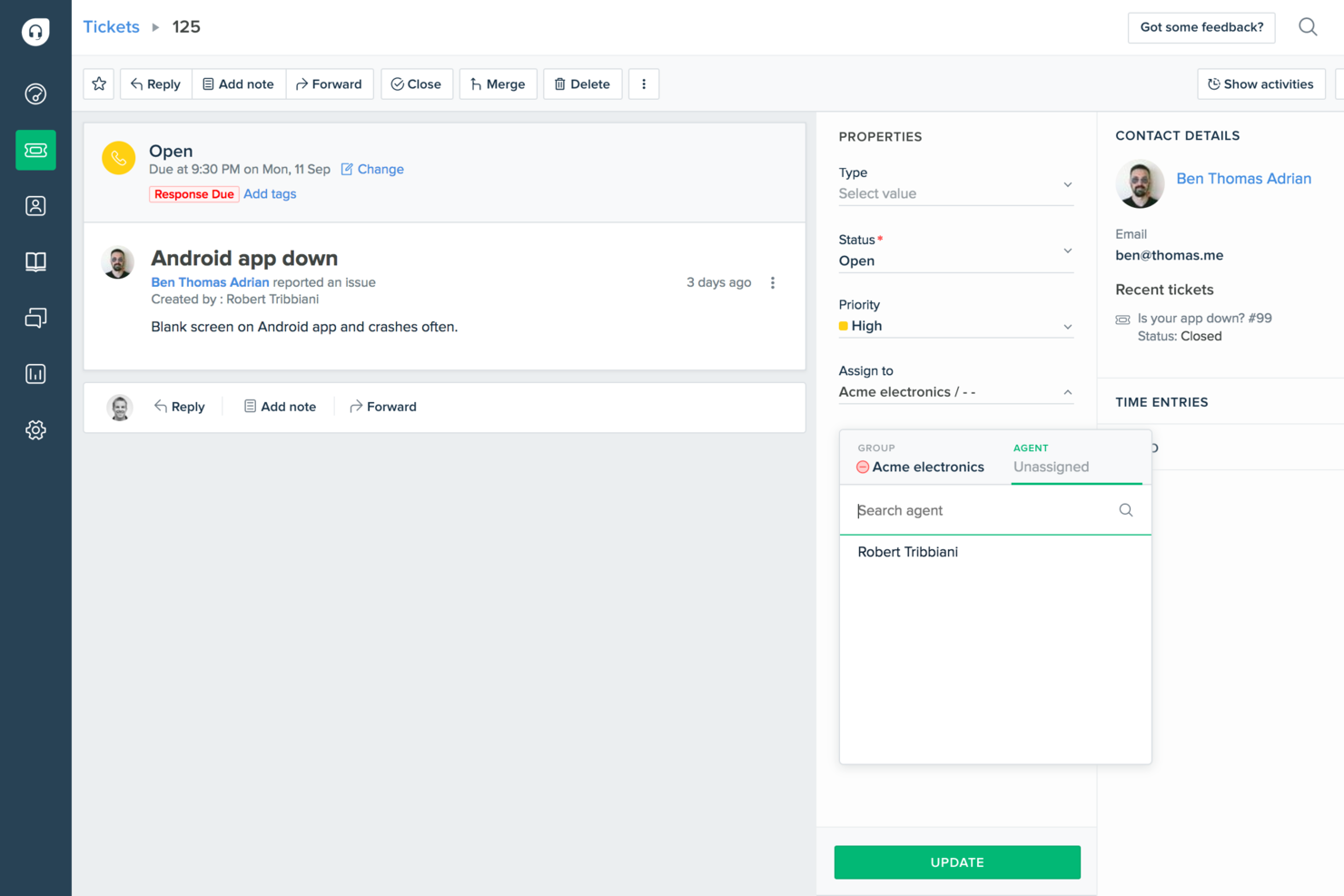
Freshdesk is an AI-powered customer support platform built for teams that want enterprise-grade functionality without Zendesk’s complexity or cost. It brings ticketing, automation, and omnichannel support into a single workspace, making it easier for technical leaders to scale support operations efficiently. For CTOs and support managers, Freshdesk focuses on reducing manual work while maintaining visibility across customer interactions.
Why I Picked Freshdesk
I picked Freshdesk because it gives you practical AI tools that improve support efficiency without forcing a complete overhaul of your workflows. Freddy AI can automate repetitive tickets, surface insights, and assist agents in real time, which helps your team focus on higher-impact issues. I also like how Freshdesk centralizes conversations across channels, so you get a clearer operational view than many Zendesk setups with multiple add-ons. For CTOs evaluating Zendesk alternatives, Freshdesk offers strong automation with a lower adoption barrier.
Freshdesk Key Features
In addition to its standout AI capabilities, Freshdesk offers several other valuable features:
- Omnichannel Support: This feature allows you to manage customer interactions across multiple channels, such as email, chat, phone, and social media, from a single interface.
- Centralized Command Center: You can oversee support operations in real-time, making it easier to allocate resources and monitor performance.
- Advanced Ticketing: This system automates ticket prioritization and routing, ensuring that queries are addressed promptly and efficiently.
- Customizable Workflows: Tailor processes to your team's needs, boosting productivity and ensuring consistent customer service delivery.
Freshdesk Integrations
Freshdesk integrates with Slack, Microsoft Teams, Shopify, Playvox, Salesforce, Jira, Google Workspace, Microsoft 365, QuickBooks, and Mailchimp.
Pros and Cons
Pros:
- Flexible workflows and SLA controls
- Omnichannel support in one workspace
- Strong AI-powered ticket automation
Cons:
- Interface complexity for new users
- AI features require higher tiers
New Product Updates from Freshdesk

Freshdesk Adds Voice AI Agents in Freshcaller
Freshdesk introduces Voice AI Agents available through Freshcaller Marketplace apps to handle routine calls and reduce queues. This feature enables automated call handling with real-time, conversational support. For more information, visit Freshdesk's official site.


Hiver integrates directly with Gmail to manage customer support teams, making it ideal for handling queries within the Google Workspace environment without switching platforms.
Why it's a good Zendesk alternative: Hiver simplifies email management by integrating directly with Gmail, eliminating the need for a separate help desk system. This makes it a strong alternative to Zendesk for teams already using Google Workspace, as it reduces the learning curve and streamlines workflows.
Standout features & integrations:
Features include multi-channel support, email management, workflow automation, and analytics, enabling teams to collaborate, automate repetitive tasks, and monitor performance directly within the Gmail interface.
Integrations include Slack, WhatsApp, Aircall, Asana, Salesforce, QuickBooks, Jira, Zapier, Okta, and Google Workspace.
Pros and Cons
Pros:
- Comprehensive email management features
- Easy to use with minimal setup
- Direct integration with Gmail
Cons:
- Limited customization options compared to some competitors
- Limited to Google Workspace users
New Product Updates from Hiver

Hiver Introduces Custom Objects for Workflow Automation
Hiver introduces Custom Objects, allowing teams to import external data from CRMs or spreadsheets. This enables more dynamic and personalized workflow automation. For more information, visit Hiver's official site.

eDesk is an AI-powered customer support platform designed for ecommerce businesses. It centralizes customer inquiries, order details, and product information to improve customer loyalty through quick and accurate responses.
Why I picked eDesk: I chose eDesk as a solid Zendesk alternative because of its AI-driven features like intelligent ticket routing and automated replies. These capabilities ensure that your team can handle customer inquiries quickly, enhancing the overall customer experience. Additionally, the platform's 24/7 AI chatbot provides real-time support, making it a reliable option for businesses that need around-the-clock service.
Another reason eDesk stands out is its Smart Inbox, which allows for faster response times by organizing and prioritizing messages effectively. This feature is crucial for managing high volumes of customer interactions without overwhelming your team. With tools for measuring support metrics and managing customer feedback, eDesk provides the insights you need to continually improve your customer service operations.
Standout features & integrations:
Features include a knowledge base that helps reduce the number of queries by providing customers with self-service options. eDesk also offers tools for measuring support metrics, allowing you to track your team's performance and identify areas for improvement. You can also manage customer feedback to ensure you're meeting their needs and expectations, fostering long-term loyalty.
Integrations include Shopify, Amazon, eBay, Magento, Walmart, WooCommerce, Mirakl, Brightpearl, Klaviyo, ChannelAdvisor, and ShipStation.
Pros and Cons
Pros:
- Quick access to customer information and order details, saving time in managing queries.
- App store integrations are simple and intuitive, enhancing user experience.
- Easy setup with sufficient text/video guides and webinars to help new users get started.
Cons:
- Users have noted that the spam filter doesn't work effectively.
- Limited automation features, which may require more manual intervention.


Tidio is a customer support platform that combines live chat, AI automation, and help desk tools to help businesses manage customer conversations across multiple channels.
Why it's a good Zendesk alternative: Tidio's Lyro AI Agent is a key feature that makes it a strong alternative to Zendesk. Lyro uses your existing support content to answer customer questions across live chat, email, and messaging apps like WhatsApp and Instagram. Lyro also understands context, asks clarifying questions, and supports multiple languages, making it a versatile tool for customer support.
Standout features & integrations:
Features include a centralized ticket system, live typing preview, automatic chat assignment, visitor tracking, contact data collection, multilingual chat support, customer feedback collection, and working hours display.
Integrations include Shopify, WordPress, Squarespace, WIX, Adobe Commerce, BigCommerce, WooCommerce, Google Analytics, Mailchimp, HubSpot, and Zendesk.
Pros and Cons
Pros:
- Provides insights into team performance and customer satisfaction
- Lyro AI handles a significant portion of customer inquiries
- Multichannel support, including for chats, emails, and social media
Cons:
- Limitations when integrating with certain third-party tools
- Many automation features limited to higher tier plans
New Product Updates from Tidio

Tidio Expands Lyro AI Across Email and Chat
Tidio expands Lyro AI to email ticketing and enhances its chatbot with Claude 3.0 integration. These updates improve automation across support channels and enhance AI-driven interactions. For more information, visit Tidio’s official site.
 .
.

For businesses looking for an alternative to Zendesk, Desk365 presents itself as a compelling option with its AI-driven helpdesk capabilities. Tailored for organizations of all sizes, it addresses support challenges by automating routine tasks, offering a unified inbox for efficient ticket management, and enhancing customer interactions through customizable workflows.
Why I Picked Desk365
I picked Desk365 because of its unique integration with Microsoft Teams, which allows your team to handle support queries directly within a familiar platform. This feature, combined with its AI-powered ticketing system, ensures that your team can automate repetitive tasks and focus on more complex customer issues. Additionally, Desk365's unified inbox consolidates all support requests in one place, streamlining your team's workflow and ensuring no ticket is overlooked.
Desk365 Key Features
In addition to its standout Microsoft Teams integration, Desk365 offers other valuable features:
- AI Agent: This feature uses machine learning to assist in drafting responses and managing tickets efficiently.
- Automations: Automate repetitive tasks and workflows to save time and reduce manual errors.
- SLAs: Monitor and manage service level agreements to ensure your team meets performance standards.
- Knowledge Base: Create and manage a repository of information for self-service support.
Desk365 Integrations
Integrations include Microsoft Teams, Jira, Azure DevOps, Asana, MS Planner, Microsoft 365 Copilot, Power BI, and API support for custom integrations.
Pros and Cons
Pros:
- Integration with Microsoft Teams enhances collaboration
- AI-powered ticketing system automates repetitive tasks
- Unified inbox centralizes support requests for easy management
Cons:
- Multilingual options not clearly documented
- Limited mobile accessibility


HappyFox is an advanced help desk and customer support software solution. It excels in providing instant live chat support across mobile, desktop, and web platforms for omnichannel support.
Why it's a good Zendesk alternative: HappyFox is known for its strong live chat capabilities, which are important for businesses requiring real-time customer interaction. Its multi-platform support ensures accessibility across devices, offering a versatile alternative to Zendesk. Additionally, HappyFox provides excellent customer support, ensuring that businesses receive the help they need to maximize the platform’s potential.
Standout features & integrations:
Features include a strong ticketing system, AI-driven support, end-to-end process automation, and instant live chat for enhanced customer engagement and support efficiency.
Integrations include Salesforce, Aircall, Microsoft Teams, Slack, Facebook, Jira, Okta, Azure, Asana, and HubSpot.
Pros and Cons
Pros:
- Multi-platform live chat support
- AI-driven support features
- Comprehensive ticketing system
Cons:
- Limited customization options
- Higher starting price compared to some competitors


Crisp is an all-in-one business messaging platform tailored for startups to efficiently manage customer interactions by centralizing communication channels in one place.
Why it's a good Zendesk alternative: Crisp offers an advanced suite of tools that are particularly beneficial for startups. Its all-in-one messaging platform stands out by integrating multiple communication channels into a single interface, which simplifies customer relationship management. Additionally, Crisp provides seamless integrations with popular tools and offers a more personalized support experience, making it easier for team members to engage with their customers effectively.
Standout features & integrations:
Features include a shared inbox, chatbots, CRM, and co-browsing capabilities, allowing businesses to automate tasks and provide real-time customer assistance.
Integrations include Slack, WhatsApp, Instagram, Zapier, Aircall, Shopify, WordPress, Segment, Salesforce, and Pipedrive.
Pros and Cons
Pros:
- Affordable pricing for small teams
- Easy integration with multiple communication channels
- Comprehensive feature set for startups
Cons:
- May require some time to set up and customize
- Limited advanced features compared to larger platforms

Nextiva is a unified customer experience management platform that centralizes all interactions, offering an advanced suite of tools to manage customer experiences across multiple channels.
Why it's a good Zendesk alternative: Nextiva provides strong capabilities in unifying customer interactions across multiple channels, which makes it a viable alternative to Zendesk. Its AI-driven features and advanced analytics provide deep insights into customer behavior, enhancing the overall customer experience.
Standout features & integrations:
Features include AI-powered contact centers, real-time analytics, and intelligent routing, enhancing customer interaction management and personalization.
Integrations include Salesforce, HubSpot, Microsoft Teams, Google Workspace, Slack, Zendesk, Zoho CRM, QuickBooks, Outlook, and Mailchimp.
Pros and Cons
Pros:
- Customizable call flows
- A unified platform for all customer interactions
- Comprehensive AI and analytics capabilities
Cons:
- Complex setup for smaller businesses
- Occasional interface lage


Issuetrak is a versatile platform designed to help your team manage and resolve issues efficiently. It offers tools for tracking tickets, managing workflows, and handling customer support requests.
Why it's a good Zendesk alternative: It supports omnichannel ticket submission, allowing for organized management of customer interactions across various platforms, which aids in the effectiveness of support teams. Automated ticket assignments and collaborative task flows are additional features that enhance process efficiency and improve response times. Unlike Zendesk, Issuetrak offers full feature access without tiered pricing, providing features such as unlimited free users and customizable branding without additional costs.
Standout features & integrations:
Features include a knowledge base, custom forms, user-defined fields, detailed reporting, task management, workflow branching, billing module, surveys module, issue escalation, priority management, SLA management, and email notifications.
Integrations include Microsoft 365, Google Analytics, Gmail, Salesforce, Power BI, and thousands more through Zapier. You can also access the Issuetrak API for even more connections.
Pros and Cons
Pros:
- Effective in organizing and managing tickets
- Cloud and on-premises deployment options
- Highly customizable system
Cons:
- Asset management is a paid add-on
- Certain features may be complex to set up


Kustomer is a customer service CRM platform that uses AI to improve customer interactions and streamline support processes. This makes it ideal for businesses looking to efficiently manage customer service with AI capabilities.
Why it's a good Zendesk alternative: Kustomer offers users with strong AI capabilities that significantly improve customer service efficiency. It provides a single view of customer interactions across various channels, enabling support teams to resolve issues more efficiently. Additionally, Kustomer excels with its several automation and workflow customization options, making it ideal for businesses that need a more tailored support experience.
Standout features & integrations:
Features include AI chatbots, AI agent copilot, and a unified customer timeline for swift and precise issue resolution, offering comprehensive insights into customer interactions.
Integrations include Slack, Salesforce, Shopify, Magento, BigCommerce, Zapier, Mailchimp, Google Analytics, Facebook Messenger, and Instagram.
Pros and Cons
Pros:
- Proactive support capabilities
- Unified customer view
- AI-driven automation
Cons:
- Limited customization options
- Complex setup for small businesses
Other Zendesk Alternatives
Below is a list of additional Zendesk alternatives that I shortlisted. While they didn’t make the top 10, they’re still valuable and worth further research.
- HubSpot Service Hub
For scalable customer service tools
- ProProfs
For training and customer support tools
- Jira Service Management
For high-velocity service management
- eGain
For knowledge management
- ServiceNow Customer Service Management
For AI-driven proactive digital operations
- Trengo
Multichannel inbox
- SAAS First
For AI-powered customer support
- Freshservice
For unified IT helpdesk & asset management
- LiveAgent
For hybrid ticket streams
- Help Scout
For customer-first support
- Intercom
For personalized customer messaging
- Groove
For small business support teams
- BoldDesk
For customizable help desk solutions
- Attio
For CRM and customer data management
- Zoho Desk
For AI-driven customer service


Related Software & Tool Reviews
If you still haven't found what you're looking for here, check out these other types of tools that we've tested and evaluated.
- Network Monitoring Software
- Server Monitoring Software
- SD-Wan Solutions
- Infrastructure Monitoring Tools
- Packet Sniffer
- Application Monitoring Tools
Zendesk Alternatives Selection Criteria
The criteria for choosing a Zendesk alternative should directly address buyer needs and common pain points, ensuring that the software serves its intended purpose effectively. As an expert who has personally tried and researched these tools, here are the requirements I use when evaluating software:
Core Functionality (25% of the weighting score):
- Support Ticket Management
- Customer Communication Channels (Email, Chat, Phone)
- Reporting and Analytics
- Knowledge Base Management
- Automation Capabilities and Workflow Customization
Additional Standout Features (25% of total weighting score):
- AI-Powered Chatbots
- Social Media Integration
- Customizable Dashboards
- Multilingual Support
- Mobile App Functionality
- Notifications and Other Add-On Features
Usability (10% of total weighting score):
- Intuitive Interface Design
- Drag-and-Drop Functionality
- Customizable User Roles
- Easy Navigation
- Minimal Learning Curve
Onboarding (10% of total weighting score):
- Availability of Training Videos
- Interactive Product Tours
- Pre-Built Templates
- Chatbots for Initial Guidance
- Webinars for In-Depth Training
Customer Support (10% of total weighting score):
- 24/7 Availability
- Multiple Support Channels (Email, Phone, Chat)
- Dedicated Account Managers
- Comprehensive Help Center
- Fast Response Times
Value For Money (10% of total weighting score):
- Competitive Pricing Plans
- Transparent Pricing Structure
- Free Trial Availability
- Discounts for Annual Subscriptions
- Feature-to-Price Ratio
Customer Reviews (10% of total weighting score):
- Overall Satisfaction Ratings
- Feedback on Usability
- Comments on Customer Support
- Insights on Feature Effectiveness
- User Experience Testimonials
Why Look for a Zendesk Alternative?
Although Zendesk is a valuable tool, it may not be the right fit for your team. There are several reasons why you may start searching for a Zendesk alternative, including:
- Cost: Zendesk’s pricing can be quite steep, especially for small businesses or startups with limited budgets. As a result, you might be looking for a more affordable alternative that still offers strong customer support features.
- Complexity: Zendesk can be overwhelming with its extensive features, which may not be necessary for all teams. If your team needs a simpler, more intuitive platform, a less complex alternative might be a better fit.
- Customization: While Zendesk offers customization options, they may not be sufficient for all business needs. If you require more flexibility to tailor the platform to your unique processes, you might seek a more customizable solution.
- Integration: Zendesk may not seamlessly integrate with some of the other tools and software your business relies on. If smoother integration with your existing workflow is essential, you may need to consider alternatives that offer better compatibility.
- Support: Some users find that Zendesk’s customer support can be slow or impersonal at times. If you prioritize more responsive or personalized support, you might want to explore other options that offer a higher level of customer care.
Alternatives to Zendesk can provide more affordable pricing, simpler interfaces, greater customization, better integration capabilities, and more responsive support, addressing some of the limitations you might face with Zendesk. These alternatives can better align with your specific needs and preferences.
Key Features of Zendesk Alternatives
Here are some key features of Zendesk that your alternative software should be able to replicate or improve upon to be a good fit.
- Ticketing System: Manages customer inquiries by converting them into tickets for streamlined support.
- Multi-Channel Support: Integrates email, social media, phone, and web widgets for seamless customer interactions.
- Self-Service Portal and/or Knowledge Base: Allows customers to find answers on their own through articles, guides, and FAQs.
- Live Chat and Messaging: Provides real-time chat support and integrates with SMS messaging apps like Facebook Messenger and WhatsApp for ease of use.
- Analytics and Reporting: Offers performance dashboards and analytics tools to measure customer satisfaction and support efficiency.
- Automation and Workflows: Automates ticket creation and routing, and supports custom workflows to improve efficiency.
- Customization and Integrations: Supports third-party apps and custom integrations to tailor the platform to specific business needs.
- AI-Powered Chatbots: Deploys intelligent bots to handle common customer requests and provide instant responses.
- Collaboration Tools: Facilitates internal collaboration with shared views, macros, and private support agent comments.
- Security and Privacy: Ensures data protection and compliance with industry standards through advanced security features.
Join for More Insights!
Boost your SaaS growth and leadership skills. Subscribe to our newsletter for the latest insights from CTOs and aspiring tech leaders. We'll help you scale smarter and lead stronger with guides, resources, and strategies from top experts!