

Al adentrarse en el ámbito de la inteligencia artificial, es habitual encontrarse con una gran variedad de herramientas de procesamiento del lenguaje natural, cada una de ellas con capacidades únicas. Desde bots impulsados por modelos avanzados de PLN hasta aplicaciones que facilitan la traducción automática y la creación de resúmenes, estas herramientas son la columna vertebral del panorama actual de la automatización.
Basándome en mi experiencia con la comprensión del lenguaje natural, la respuesta a preguntas, la extracción de entidades y las particularidades de los lenguajes de programación, he visto cómo los asistentes virtuales y las aplicaciones de PLN han revolucionado las interacciones. Explorar estas opciones puede eliminar el desafío de revisar los datos manualmente y cerrar la brecha entre la ingente cantidad de información y los conocimientos prácticos.
Por qué confiar en nuestras recomendaciones de software
6,700+
Reviews
20
Industry experts
16+
Evaluation factors
14
Years
Nuestro equipo lleva probando y evaluando software desde 2012. Como líderes tecnológicos, sabemos lo difícil —y lo importante— que es elegir el software adecuado.
Para esta guía, evaluamos las herramientas mediante pruebas prácticas e investigación independiente, puntuando las herramientas según nuestros criterios de selección.
Nuestras reseñas reflejan nuestro criterio editorial humano, no un discurso de ventas.
Revisores expertos:
- Paulo Gardini MiguelDirector técnico
 Tim FisherVP de IA
 Gabriel RosasTech Lead y arquitecto de software
 Christhian GruhnTech Lead y arquitecto de plataforma

Tabla comparativa: software de PLN
Esta tabla comparativa resume los detalles de precios de mi selección de los mejores programas de PLN.
| Tool | Best For | Trial Info | Price | ||
|---|---|---|---|---|---|
| 1 | Ideal para la implementación local de NLP conversacional | Plan gratuito + demostración gratuita disponible | Precio bajo solicitud | Website | |
| 2 | Ideal para acceder a modelos de lenguaje de vanguardia mediante API | Plan gratuito disponible | Desde $20/usuario/mes | Website | |
| 3 | Ideal para el análisis unificado de texto y datos estructurados | Prueba gratuita de 14 días + demostración gratuita disponible | Precio bajo solicitud | Website | |
| 4 | Ideal para procesar documentos de contexto extenso mediante LLM abiertos | No disponible | Precio bajo solicitud | Website | |
| 5 | La mejor opción para el ajuste fino de LLM de extremo a extremo a escala | Hay un plan gratuito disponible | Desde $0.04/crédito | Website | |
| 6 | La mejor opción para el análisis de texto nativo de AWS a escala | Plan gratuito disponible | Desde $0.0001/unidad | Website | |
| 7 | Ideal para implementar canalizaciones de NLP listas para producción | Plan gratuito disponible | Plan gratuito disponible | Website | |
| 8 | La mejor opción para NLP con gobernanza en implementaciones de nube híbrida | Plan gratuito + prueba gratuita + demostración gratuita disponibles | Desde $1,110/mes | Website | |
| 9 | Ideal para canalizaciones de análisis de texto nativas de GCP | Plan gratuito disponible | Desde $0.90/1,000 caracteres (facturación anual) | Website | |
| 10 | La mejor opción para ajustar modelos de código abierto a escala | Plan gratuito disponible | Desde 9 $/mes | Website |





Opiniones sobre los mejores programas de PLN
 1Ideal para la implementación local de NLP conversacional
Rasa
- Plan gratuito + demostración gratuita disponible
- Precio bajo solicitud
Visit WebsiteCustomer Rating:4.2/5
Rasa permite a los usuarios configurar flujos de conversación con un creador visual de flujos. Rasa es un marco de NLP conversacional de código abierto que ofrece una canalización modular de NLU, clasificación de intenciones personalizada, reconocimiento de entidades con nombre, integración de LLM mediante su arquitectura CALM y opciones de implementación de nivel empresarial, incluidos entornos locales y aislados de redes externas.
¿Para quién es mejor Rasa?
Rasa es una excelente opción para ingenieros de ML/NLP y equipos de DevOps de sectores regulados que necesitan un control total sobre el entorno de implementación de su IA conversacional.
Por qué elegí Rasa
He incluido Rasa entre mis principales opciones porque es la alternativa más sólida que he encontrado para los equipos que necesitan implementar NLP conversacional completamente en su propia infraestructura. Su implementación nativa de Kubernetes mediante gráficos de Helm, la compatibilidad con entornos aislados de redes externas y la gestión de secretos de HashiCorp Vault la convierten en una opción natural para sectores regulados como la atención sanitaria y las finanzas, donde los datos nunca salen del perímetro de la organización. También valoro la arquitectura CALM, que separa la comprensión del lenguaje basada en LLM de la lógica empresarial determinista, lo que mantiene predecible y auditable el comportamiento del agente en producción.
Características clave de Rasa
- Clasificador DIET: Un modelo basado en transformadores que gestiona simultáneamente la clasificación de intenciones y la extracción de entidades dentro de una única arquitectura entrenable.
- Enrutamiento entre varios LLM: Permite asignar distintos LLM a diferentes tareas dentro del mismo agente, lo que proporciona control sobre las compensaciones entre coste y latencia.
- Módulo RAG empresarial: Se conecta a bases de datos vectoriales personalizadas para recuperar conocimiento en tiempo real y fundamentar las respuestas en sus propios datos sin volver a entrenar el modelo.
- Reutilización de flujos multilingües: Implementa los mismos flujos de conversación en varios idiomas y admite el cambio de idioma a mitad de la conversación sin perder el contexto.
Integraciones de Rasa
Rasa documenta integraciones con Hugging Face Transformers, spaCy, scikit-learn, Duckling, GPT-4, Llama, Redis, Apache Kafka, HashiCorp Vault y OpenTelemetry. Las API REST y WebSocket admiten integraciones personalizadas.
Pros and Cons
Pros:
- Compatible con implementaciones locales y en entornos aislados de redes externas
- Completamente de código abierto con canalizaciones personalizables
- Reutilización de flujos multilingües con conservación del contexto
Cons:
- No incluye análisis de sentimiento ni resumen de texto de forma nativa
- La edición de código abierto se encuentra en modo de mantenimiento
Learn more about Rasa: Ideal para acceder a modelos de lenguaje de vanguardia mediante API
- Plan gratuito disponible
- Desde $20/usuario/mes

El Playground de OpenAI permite a los usuarios ejecutar consultas del intérprete de código mediante asistentes. OpenAI es una plataforma de IA que ofrece a los desarrolladores acceso mediante API a un amplio catálogo de modelos de lenguaje de gran escala, modelos de representación vectorial y modelos de voz para crear aplicaciones de PLN en tareas como clasificación de texto, extracción de entidades, resumen, traducción y búsqueda semántica.
¿Para quién es más adecuado OpenAI?
OpenAI es una opción excelente para ingenieros de AA y equipos de desarrollo que necesitan un acceso fiable y escalable mediante API a modelos de lenguaje de vanguardia sin gestionar ninguna infraestructura subyacente.
Por qué elegí OpenAI
OpenAI ocupa un lugar en mi lista de opciones porque ninguna otra plataforma ofrece acceso directo mediante API a un catálogo más amplio de modelos de vanguardia con este nivel de calidad. Me gusta especialmente cómo funcionan conjuntamente la API de Responses, la API de Batch y los modelos de representaciones vectoriales: puedes ejecutar trabajos de reconocimiento de entidades nombradas o clasificación de gran volumen con un coste un 50 % menor mediante la API de Batch y, después, introducir los resultados en
text-embedding-3-largepara realizar agrupaciones semánticas, todo ello sin gestionar ninguna infraestructura. El Programa de Modelos Personalizados es otro aspecto destacado, con resultados de producción demostrados como la mejora del 83 % en precisión de Harvey en PLN jurídico.Características principales de OpenAI
- Tokenizador Tiktoken: Un tokenizador BPE de código abierto que reproduce la tokenización interna de OpenAI y permite contar tokens y gestionar los límites de la ventana de contexto antes de realizar llamadas a la API.
- Salidas estructuradas mediante el modo JSON: Obliga a que las respuestas del modelo sigan un esquema JSON definido, lo que lo hace fiable para extraer entidades o etiquetas de clasificación a gran escala.
- API de representaciones vectoriales: Genera representaciones vectoriales densas del texto mediante
text-embedding-3-smallotext-embedding-3-largepara tareas de búsqueda semántica, agrupación y clasificación. - API de Batch: Procesa grandes volúmenes de solicitudes de inferencia de forma asíncrona con un descuento del 50 % en el coste frente a las llamadas síncronas a la API.
Integraciones de OpenAI
OpenAI se integra con LangChain, LlamaIndex, Azure OpenAI Service, Pinecone, Weaviate, Qdrant, Chroma y Temporal. Sus API y SDK oficiales permiten conexiones personalizadas con bases de datos vectoriales, sistemas empresariales y flujos de trabajo de CI/CD.
Pros and Cons
Pros:
- Modelos de lenguaje de vanguardia actualizados con resultados de referencia líderes del sector
- La API de Batch reduce los costes del procesamiento a gran escala
- Ajuste fino con casos prácticos empresariales demostrados
Cons:
- No ofrece alojamiento local ni en una nube privada
- No expone ninguna canalización clásica de preprocesamiento de PLN
Learn more about OpenAI: Ideal para el análisis unificado de texto y datos estructurados
- Prueba gratuita de 14 días + demostración gratuita disponible
- Precio bajo solicitud

SAS Model Studio permite a los usuarios organizar proyectos de análisis de texto en un solo lugar. SAS Visual Analytics es una plataforma empresarial de analítica y NLP que combina exploración visual de datos, análisis de texto, modelado de temas, análisis de sentimientos y NER con un creador de canalizaciones sin código y un asistente de IA generativa.
¿Para quién es más adecuado SAS Visual Analytics?
SAS Visual Analytics es una opción excelente para equipos empresariales de ciencia de datos que necesitan analizar datos de texto estructurados y no estructurados dentro de una única plataforma con gobernanza.
Por qué elegí SAS Visual Analytics
Elegí SAS Visual Analytics porque es una de las pocas plataformas de NLP que realmente unifica el análisis de datos estructurados y el análisis de texto sin obligarte a combinar herramientas independientes. SAS Visual Text Analytics, que se ejecuta junto con ella, gestiona NER, análisis de sentimientos basado en BERT y modelado de temas dentro del mismo entorno con gobernanza en el que ya residen tus datos estructurados. Me gusta especialmente la función de calibración de LLM, que permite ajustar el comportamiento del modelo para canalizaciones RAG sin modificar el modelo base, una ventaja real al trabajar con datos empresariales confidenciales.
Características principales de SAS Visual Analytics
- Preprocesamiento de texto en 33 idiomas: La tokenización, la lematización y el etiquetado de categorías gramaticales están disponibles de forma nativa en 33 idiomas, incluidos el árabe, el hindi, el tailandés y el vietnamita.
- Creador de canalizaciones de NLP híbridas: Una interfaz visual sin código permite combinar nodos basados en reglas, de aprendizaje automático y de aprendizaje profundo en una única canalización de análisis de texto.
- API SAS Micro Analytic Score: Una API de puntuación sin estado y residente en memoria, diseñada para la inferencia de modelos de alto rendimiento y en tiempo real en entornos de producción.
- Archivos de modelos portátiles ASTORE: Los modelos entrenados se exportan como archivos binarios ASTORE, lo que permite realizar puntuaciones fuera del entorno SAS en destinos en la nube y locales.
Integraciones de SAS Visual Analytics
SAS Visual Analytics ofrece integraciones nativas en todo el ecosistema de Microsoft, incluidos Microsoft 365 y Azure, además de compatibilidad con la implementación en AWS, Google Cloud Platform y Red Hat OpenShift. Las API REST y los SDK de SAS Viya permiten realizar integraciones personalizadas.
Pros and Cons
Pros:
- Compatibilidad multilingüe nativa para 33 idiomas
- Plataforma unificada para texto y datos estructurados
- IA generativa con controles de sesgo integrados
Cons:
- Las funciones avanzadas de NLP requieren un complemento independiente
- Menos flexible que los marcos de NLP de código abierto
Learn more about SAS Visual Analytics: Ideal para procesar documentos de contexto extenso mediante LLM abiertos
- No disponible
- Precio bajo solicitud

AI21 Studio permite a los usuarios definir requisitos de salida explícitos para cada ejecución de la API. AI21 Studio es una plataforma de LLM basada en la familia Jamba de modelos híbridos Mamba-Transformer, que ofrece generación de texto, resumen, respuesta a preguntas, clasificación, orquestación de RAG y ajuste fino de varios niveles mediante API, SDK y servicios en la nube administrados.
¿Para quién es más adecuado AI21 Studio?
AI21 Studio es una opción muy adecuada para ingenieros de ML y equipos empresariales que desarrollan canalizaciones de RAG o flujos de trabajo de conocimiento sobre grandes corpus de documentos no estructurados.
Por qué elegí AI21 Studio
AI21 Studio ocupa un lugar en mi lista de opciones principales por la eficacia con la que la familia de modelos Jamba gestiona cargas de trabajo con documentos realmente grandes. La ventana de contexto de 256K tokens es la más grande disponible entre los modelos de pesos abiertos, lo que significa que puedo introducir contratos completos, informes de ensayos clínicos o documentos de operaciones de fusiones y adquisiciones en una sola llamada de inferencia sin dividirlos en fragmentos. Si a esto le añadimos la capa de orquestación de RAG Maestro, que enruta dinámicamente entre la búsqueda de archivos, la búsqueda web y los LLM, al tiempo que proporciona un gráfico visual de ejecución, obtenemos una canalización sólida para extraer información estructurada de corpus densos y no estructurados.
Características principales de AI21 Studio
- Arquitectura híbrida Jamba: los modelos Jamba combinan capas Mamba SSM con atención Transformer en un diseño de Mezcla de expertos, ofreciendo una inferencia hasta 2,5 veces más rápida que la de modelos de tamaño comparable basados únicamente en Transformer.
- API de ajuste fino de varios niveles: admite ajuste fino completo, LoRA y QLoRA mediante bibliotecas estándar de HuggingFace, además de un servicio administrado de posentrenamiento para equipos empresariales que quieren ser propietarios del modelo resultante.
- Puerta de enlace inteligente: una capa de enrutamiento lista para integrar que analiza el coste por agente, compacta el contexto redundante y selecciona modelos de forma adaptativa en cada turno; actualmente es gratuita durante la beta.
- Pesos de modelos abiertos en Hugging Face: los modelos Jamba están disponibles públicamente bajo la Licencia de modelo abierto Jamba, lo que permite a tu equipo alojarlos por cuenta propia, inspeccionarlos o personalizarlos aún más sin dependencia del proveedor.
Integraciones de AI21 Studio
AI21 Studio se integra con AWS, Microsoft Azure, Google Cloud, NVIDIA NIM, Hugging Face, LangChain, LlamaIndex, Pinecone, Snowflake y Databricks. Su API REST, SDK de Python y SDK de TypeScript permiten integraciones personalizadas y flujos de trabajo de implementación.
Pros and Cons
Pros:
- Procesa entradas de documentos extensos de 256K tokens
- Admite ajuste fino completo, LoRA y QLoRA
- Pesos de modelos abiertos para alojamiento propio
Cons:
- No ofrece una API específica de reconocimiento de entidades nombradas ni de análisis de sentimientos
- Carece de un creador visual de canalizaciones de PLN sin código
Learn more about AI21 Studio: La mejor opción para el ajuste fino de LLM de extremo a extremo a escala
- Hay un plan gratuito disponible
- Desde $0.04/crédito
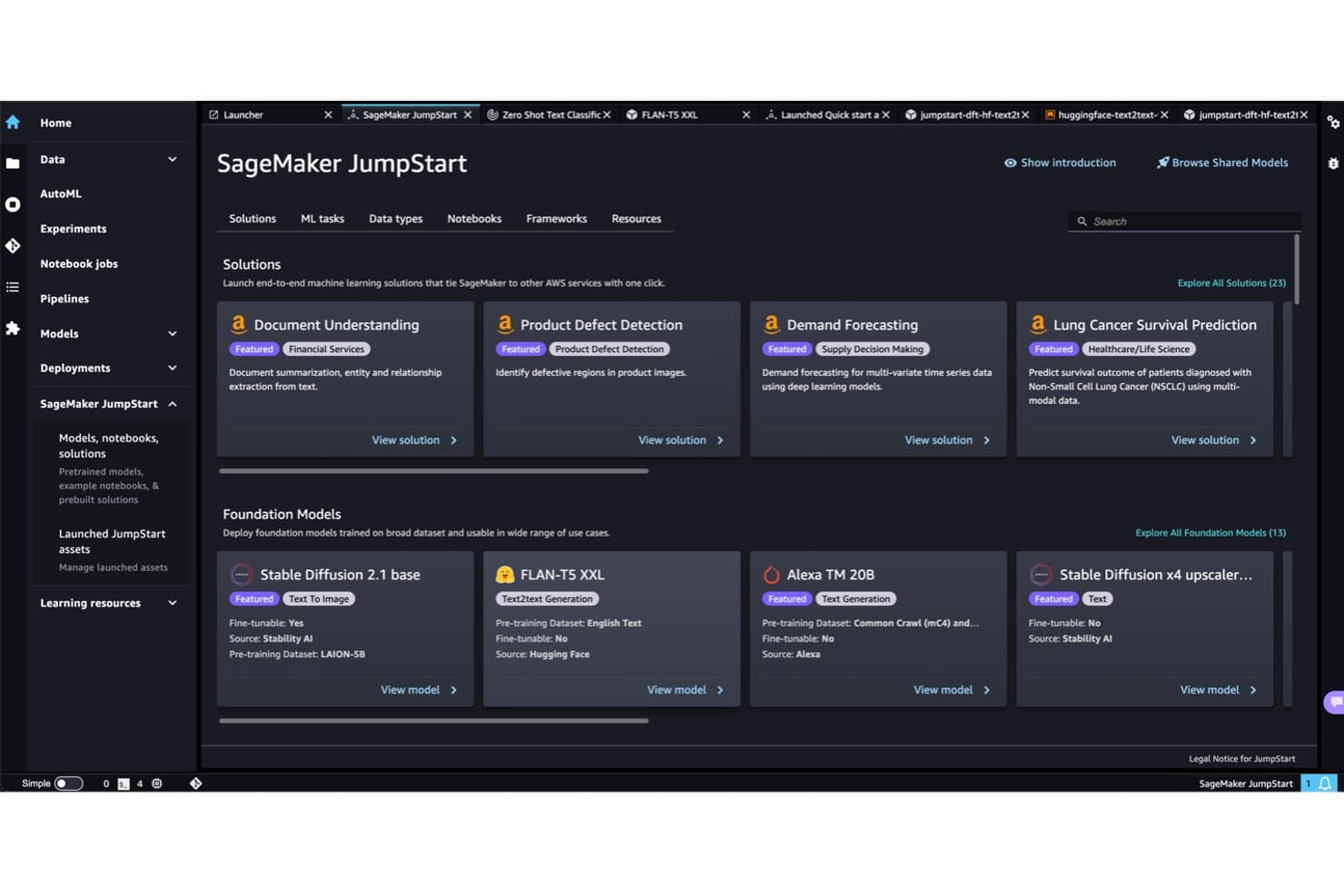
Amazon SageMaker JumpStart ofrece modelos de PLN prediseñados listos para implementar. Amazon SageMaker es la plataforma de ML administrada de AWS que cubre todo el ciclo de vida de los modelos de PLN, desde el preprocesamiento y la tokenización de datos hasta el entrenamiento, el ajuste fino y la implementación de modelos de lenguaje grandes a escala mediante herramientas como JumpStart, HyperPod e integraciones nativas con Hugging Face.
¿Para quién es más adecuado Amazon SageMaker?
Amazon SageMaker es la opción adecuada para ingenieros de ML y equipos de MLOps de empresas medianas y grandes que necesitan una única plataforma para llevar los LLM desde los datos sin procesar hasta la producción a escala.
Por qué elegí Amazon SageMaker
Amazon SageMaker ocupa un lugar en mi lista de opciones principales porque ninguna otra plataforma de ML administrada iguala su profundidad para el ajuste fino de LLM de extremo a extremo a escala. Me impresiona especialmente HyperPod, que permite ejecutar ajustes finos distribuidos en cientos de aceleradores con entrenamiento elástico sin puntos de control, lo que reduce el tiempo de entrenamiento hasta en un 40 %. El catálogo de más de 1.000 modelos de JumpStart, incluidos Llama 4, DeepSeek R1 y los LLM médicos de John Snow Labs, significa que puedo pasar de seleccionar un modelo base específico para un dominio a ajustarlo con datos personalizados sin salir de la plataforma.
Características principales de Amazon SageMaker
- SageMaker Clarify: Detecta sesgos y genera informes de explicabilidad para modelos de PLN durante el entrenamiento, la evaluación y la supervisión posterior a la implementación.
- SageMaker Data Wrangler: Proporciona una interfaz de bajo código para importar, transformar y preparar datos de texto antes del entrenamiento del modelo.
- Puntos de conexión de inferencia multimodal: Admite opciones de inferencia en tiempo real, sin servidor, asíncrona y por lotes en más de 70 tipos de instancias, incluidos los chips Inferentia y Trainium.
- Integración administrada con MLflow: Realiza un seguimiento de los experimentos, compara ejecuciones de modelos y administra el control de versiones en los flujos de trabajo de PLN sin requerir infraestructura independiente.
Integraciones de Amazon SageMaker
Amazon SageMaker ofrece integraciones nativas con Amazon S3, Amazon Bedrock, Amazon OpenSearch Service, Amazon EKS, AWS Lambda, Amazon CloudWatch, AWS IAM, Hugging Face y MLflow. También ofrece API REST, SDK y acceso mediante AWS CLI para integraciones personalizadas.
Pros and Cons
Pros:
- El mayor catálogo disponible de modelos preentrenados
- HyperPod admite entrenamiento distribuido masivo de LLM
- Ciclo de vida de extremo a extremo con herramientas de explicabilidad
Cons:
- El seguimiento de costes es difícil para la mayoría de los equipos
- Riesgo de dependencia del proveedor para empresas que utilizan varias nubes
Learn more about Amazon SageMaker: La mejor opción para el análisis de texto nativo de AWS a escala
- Plan gratuito disponible
- Desde $0.0001/unidad
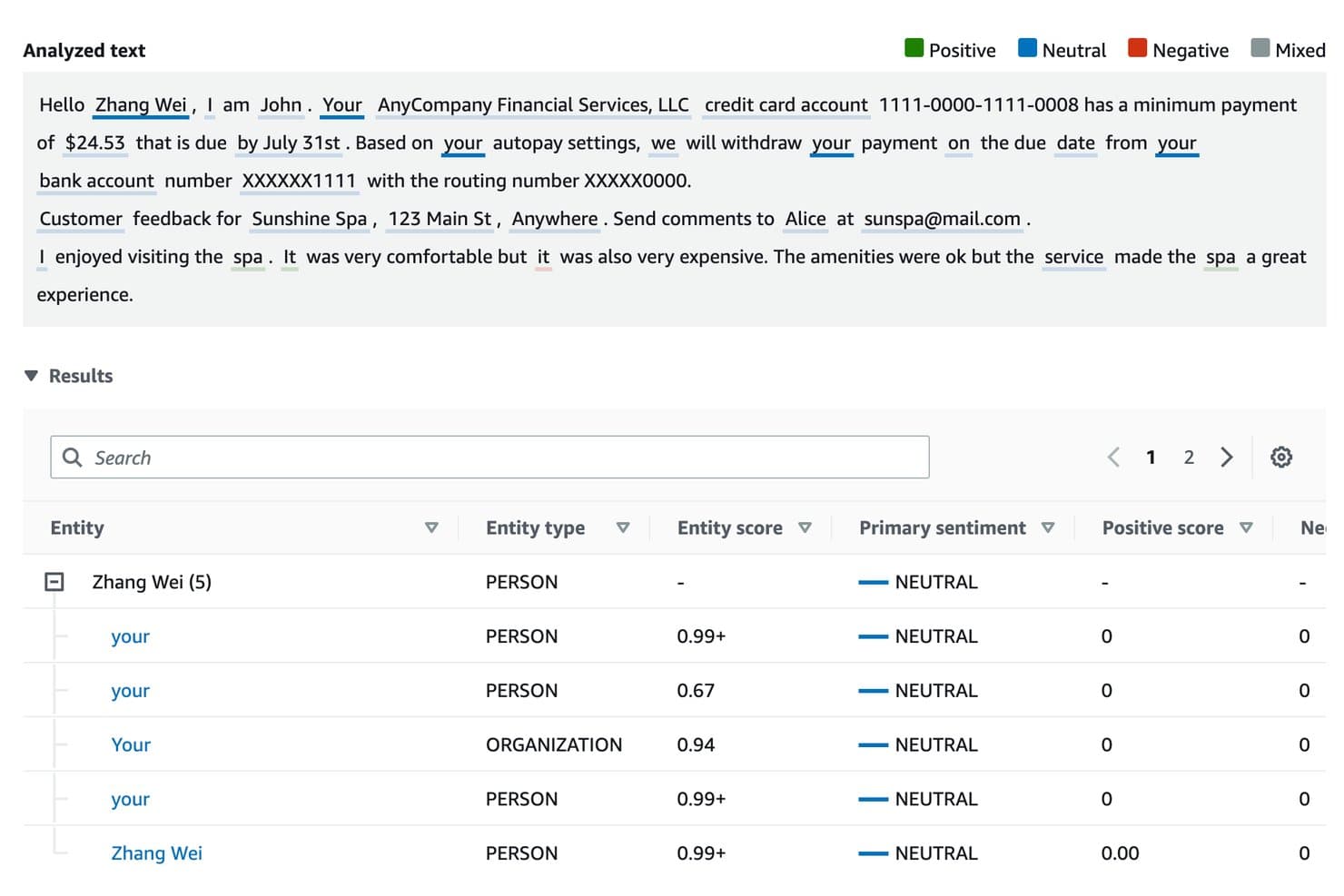
Amazon Comprehend identifica entidades y sentimientos en el texto analizado. Amazon Comprehend es un servicio NLP de AWS completamente administrado que ofrece capacidades de análisis de texto prediseñadas y basadas en API, incluido el análisis de sentimientos, el reconocimiento de entidades con nombre, la detección de PII, la extracción de frases clave y el entrenamiento de modelos personalizados mediante AutoML, sin requerir que administres ninguna infraestructura subyacente.
¿Para quién es más adecuado Amazon Comprehend?
Amazon Comprehend es una excelente opción para equipos de ingeniería y DevOps que ya ejecutan cargas de trabajo en AWS y necesitan NLP listo para producción sin administrar ninguna infraestructura de ML.
Por qué elegí Amazon Comprehend
Amazon Comprehend ocupa un lugar en mi lista de opciones principales porque es la solución más natural para el análisis de texto nativo de AWS a escala. Me gusta que puedas ejecutar análisis de sentimientos, reconocimiento de entidades específicas y redacción de PII directamente mediante puntos de conexión de API administrados, sin aprovisionar un solo servidor. En la práctica, esto significa que mi equipo puede procesar millones de registros de clientes desde S3 de forma asíncrona, con precios escalonados por volumen que realmente disminuyen cuanto más analizas.
Características principales de Amazon Comprehend
- Reconocimiento de entidades personalizado: Entrena un reconocedor de entidades específico para tu dominio con tus propios ejemplos etiquetados para extraer términos como números de póliza o códigos internos que los modelos prediseñados no detectan.
- Detección y redacción de PII: Identifica y redacta automáticamente datos personales confidenciales —nombres, números de la Seguridad Social y números de tarjetas de crédito— directamente dentro de tu canalización de procesamiento de documentos.
- Automatización de MLOps con Flywheel: Administra todo el ciclo de vida de los modelos personalizados, desde la ingesta de datos hasta el reentrenamiento y la promoción de versiones, sin crear una capa de MLOps independiente.
- Vinculación con ontologías de Comprehend Medical: Asigna las entidades clínicas extraídas a sistemas de codificación estandarizados como ICD-10-CM, RxNorm y SNOMED CT para flujos de trabajo de NLP específicos del sector sanitario.
Integraciones de Amazon Comprehend
Amazon Comprehend cuenta con integraciones nativas con Amazon S3, AWS Lambda, AWS KMS, AWS IAM, Amazon Kendra, Amazon Lex, Amazon Connect, AWS CloudTrail y Amazon CloudWatch. Su API REST, los SDK de AWS, la CLI de AWS, Step Functions y EventBridge permiten crear canalizaciones personalizadas y automatizar flujos de trabajo.
Pros and Cons
Pros:
- Integración nativa para flujos de trabajo de NLP centrados en AWS
- NLP sanitario con asignación a ontologías clínicas
- Detección y redacción de PII integradas
Cons:
- Sin acceso a los componentes internos del modelo
- Ajuste limitado más allá del AutoML básico
Learn more about Amazon Comprehend: Ideal para implementar canalizaciones de NLP listas para producción
- Plan gratuito disponible
- Plan gratuito disponible
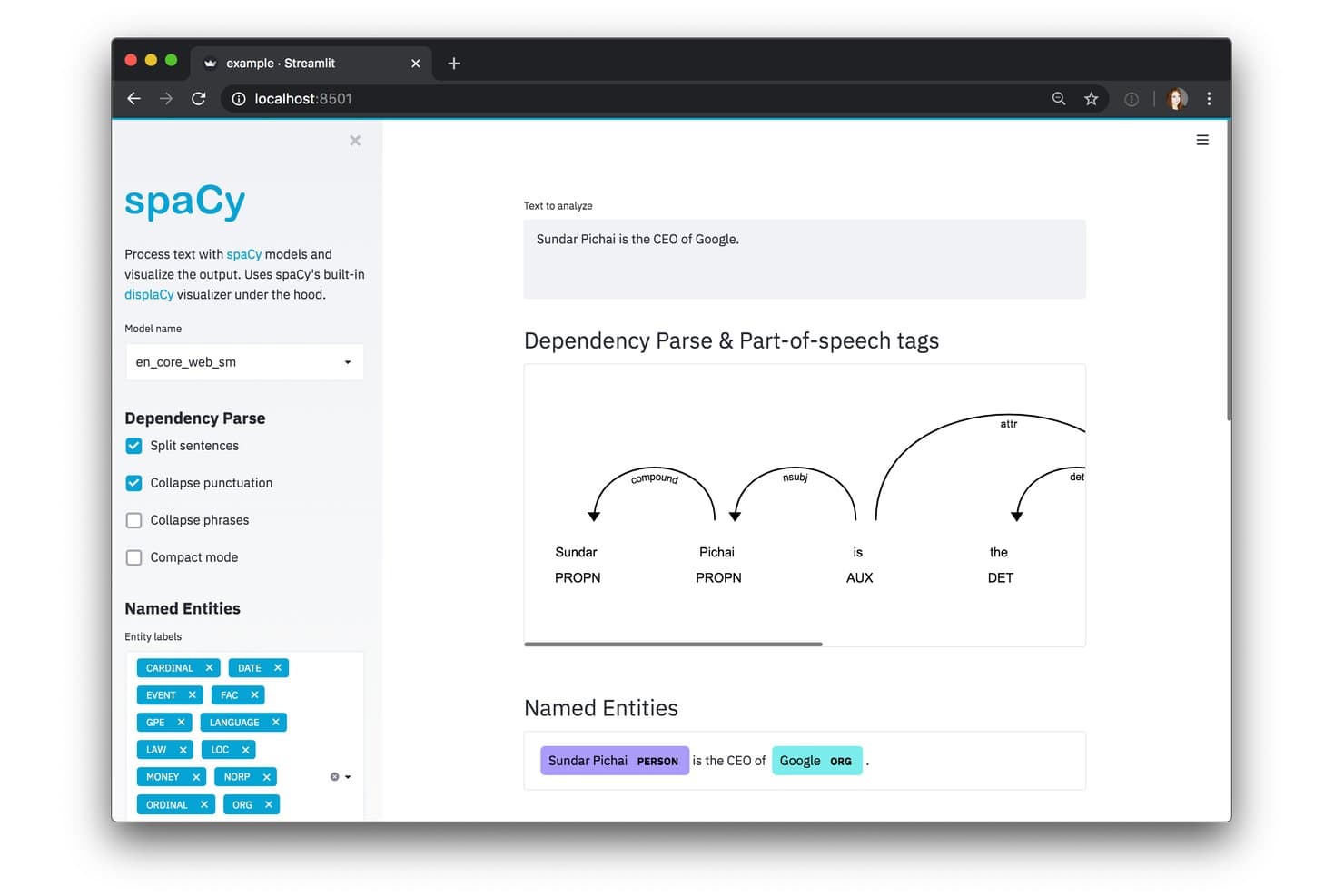
spaCy visualiza de forma interactiva el análisis de dependencias y las entidades con nombre. spaCy es una biblioteca de NLP de código abierto para Python que abarca la tokenización, el reconocimiento de entidades con nombre, el análisis de dependencias, la clasificación de texto y el entrenamiento de modelos basados en transformadores en más de 75 idiomas.
¿Para quién es más adecuado spaCy?
spaCy es una excelente opción para ingenieros de aprendizaje automático y científicos de datos que necesitan crear, entrenar y desplegar canalizaciones de NLP en Python sin depender de una plataforma administrada.
Por qué elegí spaCy
spaCy ocupa un lugar en mi lista corta porque está diseñado desde cero para producción, no solo para la experimentación. Me gusta que las canalizaciones entrenadas se empaqueten como módulos de Python instalables, lo que significa que desplegar un modelo NER personalizado en un contenedor de Docker o en una capa de AWS Lambda es un proceso repetible y versionado, en lugar de una solución improvisada de último momento. El sistema
spaCy trainbasado en configuración mantiene cada hiperparámetro y decisión de arquitectura en un único archivo, por lo que mis canalizaciones son reproducibles en distintos entornos. Esa combinación de disciplina de empaquetado y rendimiento de procesamiento por lotes impulsado por Cython mediantenlp.pipe()es lo que hace que spaCy esté realmente preparado para producción.Características principales de spaCy
- 84 canalizaciones preentrenadas: Descarga y ejecuta canalizaciones preentrenadas en 25 idiomas, desde modelos compactos optimizados para CPU hasta variantes completas basadas en transformadores construidas sobre RoBERTa y BERT.
- Integración con
spaCy-LLM: Conecta las canalizaciones de spaCy directamente con API de LLM alojadas (OpenAI, Anthropic, Cohere) o con modelos de código abierto para ejecutar tareas de NLP sin requerir datos de entrenamiento etiquetados. - Visualizador displaCy: Representa anotaciones de entidades con nombre y árboles de análisis de dependencias en el navegador mediante el componente de visualización integrado de spaCy.
- Ecosistema de canalizaciones específicas de dominio: Accede a canalizaciones comunitarias listas para usar en el ámbito sanitario (medspaCy) y en textos jurídicos (Blackstone) mediante la biblioteca spaCy Universe.
Integraciones de spaCy
spaCy se integra con Hugging Face Transformers, PyTorch, TensorFlow, OpenAI, Anthropic, Cohere, LangChain, Prodigy, DVC, Prefect y Ray. Su API de Python admite integraciones personalizadas, pero no incluye una API REST nativa.
Pros and Cons
Pros:
- Se ejecuta completamente en tu propia infraestructura
- Ofrece canalizaciones específicas de dominio para los sectores sanitario y jurídico
- El empaquetado permite implementaciones de modelos reproducibles y versionadas
Cons:
- No incluye una API REST integrada para servir modelos
- No cuenta con una interfaz de flujo de trabajo visual o sin código
Learn more about spaCy: La mejor opción para NLP con gobernanza en implementaciones de nube híbrida
- Plan gratuito + prueba gratuita + demostración gratuita disponibles
- Desde $1,110/mes

IBM watsonx.ai extrae hechos estructurados de documentos SEC 10-K mediante indicaciones de pocos ejemplos. IBM watsonx.ai es una plataforma de IA empresarial que combina un catálogo de modelos fundacionales de múltiples proveedores, la biblioteca Watson NLP, el ajuste fino LoRA/QLoRA, AutoML y opciones flexibles de implementación mediante SaaS, implementaciones locales y nube híbrida para crear y escalar cargas de trabajo de NLP.
¿Para quién es más adecuado IBM watsonx.ai?
IBM watsonx.ai es una opción ideal para equipos empresariales de TI y ciencia de datos que necesitan crear, ajustar y desplegar cargas de trabajo de NLP en entornos locales, híbridos y en la nube, con estrictos requisitos de gobernanza y cumplimiento.
Por qué elegí IBM watsonx.ai
IBM watsonx.ai ocupa un lugar en mi lista de finalistas por lo bien que gestiona el NLP con gobernanza en entornos de nube híbrida, lo que supone un verdadero diferenciador para los equipos empresariales con estrictos requisitos de cumplimiento. Me impresiona especialmente la biblioteca Watson NLP, que abarca el reconocimiento de entidades nombradas (NER), el análisis de sentimiento, la clasificación del tono y el etiquetado de roles semánticos en más de 20 idiomas dentro de una única canalización auditable. Si a esto se añade CP4D en Red Hat OpenShift para implementaciones locales o híbridas y AI Factsheets para los registros de auditoría de los modelos, se obtiene una gobernanza integral incorporada en cada capa.
Características principales de IBM watsonx.ai
- Catálogo de modelos fundacionales de múltiples proveedores: Accede a modelos preentrenados de IBM Granite, Meta Llama, Mistral, DeepSeek y NVIDIA desde una única biblioteca alojada.
- Ajuste fino LoRA/QLoRA: Adapta modelos fundacionales a tareas de NLP específicas del dominio mediante un ajuste fino eficiente en cuanto a parámetros en entornos acelerados por GPU.
- Constructor de canalizaciones AutoAI: Gestiona automáticamente la preparación de datos, la ingeniería de características, la selección de modelos y el ajuste de hiperparámetros para flujos de trabajo de ML predictivo.
- Punto de conexión de API compatible con OpenAI: Conecta las aplicaciones existentes a la inferencia de watsonx.ai mediante un formato de API REST compatible con OpenAI, junto con SDK para Python, Node.js y Java.
Integraciones de IBM watsonx.ai
IBM watsonx.ai se integra con Hugging Face, Red Hat OpenShift, watsonx.data, Watson Assistant, watsonx Orchestrate, Watson Discovery e IBM Cloud Object Storage. Su API REST, junto con los SDK para Python, Node.js y Java, permite integraciones personalizadas.
Pros and Cons
Pros:
- Amplia cobertura de tareas de NLP en más de 20 idiomas
- Indemnización por propiedad intelectual para los modelos empresariales de IBM
- Compatibilidad nativa con RAG y búsqueda vectorial
Cons:
- Los modelos propietarios de IBM no están disponibles para AWS
- La interfaz puede resultar confusa para los usuarios nuevos
Learn more about IBM watsonx.ai: Ideal para canalizaciones de análisis de texto nativas de GCP
- Plan gratuito disponible
- Desde $0.90/1,000 caracteres (facturación anual)

Google Cloud Natural Language AI anota entidades de currículos, como habilidades y empleadores. Google Cloud Natural Language AI es una API de PLN administrada de Google que ofrece análisis de sentimientos, reconocimiento de entidades, análisis sintáctico, clasificación de contenido y moderación de texto preentrenados mediante interfaces REST y gRPC, con bibliotecas cliente para ocho lenguajes de programación.
¿Para quién es más adecuada Google Cloud Natural Language AI?
Google Cloud Natural Language AI es una excelente opción para equipos de ingeniería que ya ejecutan cargas de trabajo en GCP y necesitan PLN listo para producción sin gestionar la infraestructura.
Por qué elegí Google Cloud Natural Language AI
Google Cloud Natural Language AI ocupa un lugar en mi lista de finalistas por lo bien que encaja en las canalizaciones de análisis de texto nativas de GCP. Si tu equipo ya procesa datos mediante BigQuery, puedes llamar directamente a
ML.UNDERSTAND_TEXTen SQL para ejecutar análisis de sentimientos o de entidades sin salir del almacén de datos. También me gusta que la API v2 utilice un modelo basado en PaLM para las tareas de entidades y sentimientos, y que el métodoannotateTextpermita obtener varias funciones de PLN en una sola llamada a la API, lo que reduce considerablemente la sobrecarga de los recorridos de ida y vuelta.Funciones clave de Google Cloud Natural Language AI
- Análisis del sentimiento de entidades: Detecta el sentimiento asociado a cada entidad con nombre en un texto y devuelve puntuaciones por entidad para inglés, japonés y español.
- AutoML Natural Language: Permite entrenar modelos personalizados de clasificación de texto y extracción de entidades con tus propios conjuntos de datos etiquetados mediante una interfaz visual sin código a través de Vertex AI.
- Puntos de conexión multirregionales: Enruta las solicitudes de la API a través de puntos de conexión de EE. UU. o de la UE para mantener los datos procesados y almacenados dentro de una región específica, cumpliendo los requisitos de residencia de datos.
- API apta para HIPAA: Está cubierta por el Acuerdo de socio comercial de Google Cloud, lo que permite utilizarla en flujos de trabajo que manejan información médica protegida.
Integraciones de Google Cloud Natural Language AI
Google Cloud Natural Language AI se integra con Vertex AI, BigQuery, Cloud Composer, Speech-to-Text, Translation API, Vision API, Dataflow, Cloud Run y Cloud Functions. REST, gRPC y ocho bibliotecas cliente permiten realizar integraciones personalizadas.
Pros and Cons
Pros:
- Los modelos preentrenados no requieren datos de entrenamiento
- Los datos nunca se almacenan después del procesamiento de la API
- Compatibilidad multilingüe para funciones clave de PLN
Cons:
- No ofrece explicabilidad de modelos ni métricas de sesgo
- El ajuste fino solo está disponible mediante Vertex AI
Learn more about Google Cloud Natural Language AI: La mejor opción para ajustar modelos de código abierto a escala
- Plan gratuito disponible
- Desde 9 $/mes

HuggingChat permite a los usuarios consultar modelos de IA mediante una interfaz de chat web. Hugging Face es una plataforma de NLP de código abierto que te da acceso a más de 2 millones de modelos preentrenados, junto con un conjunto completo de herramientas para la tokenización, el ajuste fino y la implementación de modelos en entornos de nube y locales.
¿Para quién es más adecuado Hugging Face?
Hugging Face es la plataforma de referencia para los ingenieros de ML y NLP que necesitan acceso directo a modelos de código abierto y a la cadena de herramientas completa para ajustarlos, evaluarlos e implementarlos a escala.
Por qué elegí Hugging Face
Hugging Face ocupa un lugar en mi lista final porque ninguna otra plataforma se acerca a su capacidad para ajustar modelos de código abierto a escala. Me encanta que PEFT y QLoRA permitan ajustar LLM con miles de millones de parámetros, como LLaMA o Mistral, en una sola GPU, lo que reduce drásticamente los costes de computación sin sacrificar la calidad. La biblioteca TRL añade compatibilidad completa con RLHF y DPO, por lo que puedes alinear modelos específicos de un dominio con una sobrecarga mínima.
Características principales de Hugging Face
- API de canalización de Transformers: Una interfaz de una sola línea para ejecutar tareas de NLP—clasificación, NER, resumen, traducción y QA—con cualquier modelo del Hub.
- AutoTrain: Una interfaz de entrenamiento sin código en la que cargas un conjunto de datos etiquetado, seleccionas una tarea y la plataforma gestiona automáticamente la selección y el entrenamiento del modelo.
- Inferencia de incrustaciones de texto (TEI): Un motor de inferencia específico optimizado para la generación de incrustaciones de alto rendimiento, compatible con búsquedas semánticas y canalizaciones RAG a escala.
- API de proveedores de inferencia: Un punto de conexión unificado compatible con OpenAI que enruta las solicitudes entre proveedores como Groq, Together AI y Cerebras mediante un único token de Hugging Face.
Integraciones de Hugging Face
Hugging Face se integra con PyTorch, TensorFlow, JAX, AWS SageMaker, Google Cloud, Azure, Weights & Biases, MLflow y Snowflake. Sus API de Python, JavaScript, REST y CLI permiten integraciones personalizadas y flujos de trabajo de implementación.
Pros and Cons
Pros:
- Selección incomparable de modelos de NLP de código abierto
- Permite ajustar modelos gigantes en una sola GPU
- AutoTrain permite entrenar modelos sin código
Cons:
- La calidad y la seguridad de los modelos de la comunidad varían
- La implementación preparada para empresas requiere conocimientos de DevOps
Learn more about Hugging Face:
Otros programas de PLN
A continuación se muestra una lista de programas de PLN adicionales que seleccioné, pero que no llegaron a estar entre los 10 mejores. Sin duda, merece la pena echarles un vistazo.
- 11NLP CloudIdeal para la implementación de API de NLP con prioridad en la privacidad
- 12SnorkelIdeal para el etiquetado programático a escala empresarial
- 13ClaudeIdeal para el procesamiento del lenguaje natural (NLP) centrado en la seguridad en todas las principales nubes
- 14Cohere NorthIdeal para la implementación de modelos de PLN en entornos aislados
- 15Microsoft Azure AI LanguageIdeal para PLN aislado en industrias reguladas
- 16NLTKIdeal para el procesamiento clásico del lenguaje natural sin costes de infraestructura
- 17Stanford NLPMejor opción para una precisión lingüística en más de 80 idiomas
Wie ich NLP-Software bewerte
Von NER-Pipelines bis hin zu Transformer-Einsätzen in der Produktion bewerte ich NLP-Tools in zwei Ebenen: die Grundvoraussetzungen, die jede Plattform erfüllen muss, um in die Liste aufgenommen zu werden, und die Unterscheidungsmerkmale, die die Besten hervorheben.
Kernfunktionen (Grundvoraussetzung für diese Liste)
Wenn ich Tools für meine Liste auswähle, bewerte ich jedes einzelne auf einer Skala von 0 (bietet die Funktion nicht an) bis 5 (übertrifft in diesem Bereich) für jede nachfolgend aufgeführte Kernfunktionalität. Anschließend berechne ich die Gesamtpunktzahl des Tools als Prozentsatz. Jedes Tool muss eine Mindestgesamtpunktzahl von 75 % erreichen, um berücksichtigt zu werden.
- Textvorverarbeitung & Tokenisierung: Ich prüfe, ob eine Plattform die gesamte Bereinigungskette abdeckt – Tokenisierung, Stemming, Lemmatisierung, Stopwort-Entfernung – sodass Rohtexte in mehreren Sprachen direkt für die Pipeline nutzbar sind.
- Vorgefertigte Sprachmodelle: Der Zugang zu aktuellen Transformer-Architekturen ist entscheidend. Ich achte auf einen breiten, regelmäßig aktualisierten Modellkatalog anstelle einiger veralteter Optionen.
- Abdeckung zentraler NLP-Aufgaben: Jedes Tool sollte grundlegende Aufgaben wie NER, Sentiment-Analyse, Klassifikation und Zusammenfassung unterstützen – die Bausteine der meisten produktiven NLP-Workflows.
- Modelltraining & Feintuning: Ich bewerte, ob man eigene Datensätze einbringen und Modelle mit echter Kontrolle über Hyperparameter feinabstimmen kann, und nicht nur ein paar Voreinstellungen über einen Assistenten verändern kann.
- API- & SDK-Zugang: Gute NLP-Tools bieten REST-APIs und SDKs in Sprachen wie Python und Java. Ich achte auf eine klare Dokumentation, versionierte Endpunkte und Kompatibilität mit Frameworks.
- Bereitstellung & Skalierbarkeit: Ich prüfe, wie die Plattform produktive Arbeitslasten bewältigt – ob sie automatisches Hochskalieren von Inferenz, Batch-Verarbeitung und flexible Rechenoptionen wie GPU- oder TPU-Bereitstellung unterstützt.
Sobald ich eine Liste von Tools habe, die die Kriterien erfüllen, sehe ich mir an, wodurch sich jede Plattform besonders auszeichnet.
Unterscheidende Faktoren (Was Anbieter voneinander abhebt)
So vergleiche und bewerte ich verschiedene Anbieter:
Herausragende Funktionen
RAG-Frameworks und Unterstützung für Vektorsuche sind derzeit große Unterscheidungsmerkmale. Teams, die LLM-basierte Anwendungen bauen, benötigen eine native Einbettungsgenerierung und Retrieval-Pipelines, keine nachträglichen Lösungen. Außerdem achte ich auf Werkzeuge für Erklärbarkeit und Bias-Erkennung – insbesondere wenn Sentiment-Modelle in der Produktion eingesetzt werden, wollen Beteiligte verstehen, warum eine Vorhersage getroffen wurde. Domänenspezifische Modellbibliotheken sparen ebenfalls viel Zeit, vor allem in Bereichen wie Gesundheitswesen oder Recht, wo Teams sonst Wochen damit verbringen würden, Modelle für allgemeine Zwecke anzupassen.
Über die Funktionen hinaus
Bereitstellungsflexibilität ist entscheidend, wenn die Sicherheitsabteilung On-Premises-Hosting oder luftabgetrennte Umgebungen vorschreibt. Ich prüfe, ob eine Plattform Cloud-, Hybrid- und Self-Hosting-Optionen zusammen mit Kubernetes-Orchestrierung unterstützt. Datenschutzkontrollen sind genauso wichtig – ich achte auf SOC 2-Konformität, Möglichkeiten zur Datenresidenz und Richtlinien zur Nullspeicherung, speziell bei der Verarbeitung sensibler Daten wie medizinischer Unterlagen. Ökosystem-Kompatibilität rundet das Ganze ab: Ein Tool, das sich problemlos in MLOps-Systeme und Dateninfrastruktur einfügt, spart Monate an Integrationsarbeit.
Cómo elegir un programa de PLN
Es fácil perderse entre largas listas de funciones y complejas estructuras de precios. Para ayudarte a mantener la concentración mientras avanzas en tu proceso específico de selección de software, aquí tienes una lista de factores que debes tener en cuenta:
| Factor | Qué debes tener en cuenta |
|---|---|
| FactorEscalabilidad | Qué debes tener en cuenta¿Puede el software crecer junto con tu equipo? Busca herramientas que gestionen mayores volúmenes de datos sin costes adicionales. Ten en cuenta las necesidades futuras y las posibles ampliaciones. |
| FactorIntegraciones | Qué debes tener en cuenta¿Funciona con tus sistemas actuales? Comprueba la compatibilidad con tus herramientas actuales para evitar interrupciones en los flujos de trabajo. |
| FactorPersonalización | Qué debes tener en cuenta¿Puedes adaptarlo a tus necesidades? Asegúrate de que puedes ajustar la configuración o las funciones para adaptarlas a tus procesos específicos. |
| FactorFacilidad de uso | Qué debes tener en cuenta¿La interfaz es fácil de usar? Las herramientas complejas pueden ralentizar la adopción. Busca diseños intuitivos que requieran una formación mínima. |
| FactorImplementación e incorporación | Qué debes tener en cuenta¿Cuánto tiempo tardarás en empezar? Evalúa el tiempo necesario para la configuración y la formación. Una incorporación rápida puede ahorrar tiempo y recursos. |
| FactorCoste | Qué debes tener en cuenta¿Se ajusta a tu presupuesto? Compara los planes de precios y presta atención a las tarifas ocultas. Ten en cuenta el coste total de propiedad, no solo el precio inicial. |
| FactorMedidas de seguridad | Qué debes tener en cuenta¿Están protegidos tus datos? Asegúrate de cumplir las normas de privacidad de datos y busca funciones de cifrado y otras características de seguridad. |
| FactorDisponibilidad del soporte | Qué debes tener en cuenta¿Los servicios de soporte son accesibles cuando los necesitas? Evalúa la disponibilidad y la calidad de los canales de atención al cliente, como el chat, el correo electrónico o el teléfono. |
¿Qué es un programa de PLN?
El software de PLN es una herramienta que procesa y analiza datos del lenguaje humano. Profesionales como científicos de datos, especialistas en marketing y equipos de atención al cliente utilizan estas herramientas para extraer información útil y mejorar la comunicación. Las funciones de análisis de texto, análisis de sentimientos y traducción de idiomas ayudan a comprender y responder a las necesidades de los usuarios.
En general, estas herramientas, incluido el software de inteligencia conversacional, mejoran la toma de decisiones y la eficiencia en las tareas relacionadas con el lenguaje.
Funciones
Al seleccionar un software de PLN, presta atención a las siguientes funciones clave:
- Análisis de texto: Procesa grandes volúmenes de datos de texto para extraer información útil, ayudando a los equipos a comprender las tendencias y los patrones.
- Análisis de sentimientos: Identifica y clasifica las opiniones expresadas en el texto para evaluar las actitudes de los clientes y mejorar las estrategias de interacción.
- Traducción de idiomas: Convierte texto de un idioma a otro, facilitando la comunicación global y la accesibilidad.
- Software de reconocimiento de voz: Transcribe el lenguaje hablado a texto, permitiendo la entrada de voz y mejorando la accesibilidad.
- Reconocimiento de entidades: Identifica y clasifica elementos clave dentro del texto, como nombres y fechas, para organizar mejor los datos.
- Compatibilidad multilingüe: Ofrece funciones en varios idiomas, lo que permite una aplicación más amplia en distintas regiones.
- Modelos personalizables: Permite a los usuarios adaptar los algoritmos a necesidades específicas, mejorando la relevancia y precisión de los resultados.
- Procesamiento en tiempo real: Proporciona análisis y comentarios inmediatos, algo esencial para las aplicaciones y la toma de decisiones en las que el tiempo es importante.
- Configuración de privacidad de datos: Garantiza el cumplimiento de las normativas de protección de datos y protege la información confidencial.
- Integración en la nube: Permite una colaboración fluida y el acceso a los datos desde diversas plataformas y dispositivos.
Beneficios
La implementación de un software de PLN ofrece varios beneficios para tu equipo y tu empresa. Estos son algunos de los que puedes esperar:
- Mejora de la comunicación: El software de generación de lenguaje natural y el reconocimiento de voz facilitan una comunicación global y accesible.
- Mejora de la toma de decisiones: El análisis de texto y el análisis de sentimientos proporcionan información útil para definir estrategias y acciones.
- Ahorro de tiempo: El procesamiento en tiempo real ofrece comentarios rápidos, lo que permite responder y actuar con mayor rapidez.
- Eficiencia de costes: La automatización de tareas como el reconocimiento de entidades reduce la necesidad de gestionar los datos manualmente y ahorra recursos.
- Mayor precisión: Los modelos personalizables garantizan que los resultados se adapten a necesidades específicas, mejorando la precisión de los resultados.
- Seguridad de los datos: La configuración de privacidad de datos ayuda a mantener segura la información confidencial y a cumplir las normativas.
- Escalabilidad: La compatibilidad multilingüe y la integración en la nube permiten crecer y adaptarse en diversos mercados.
Costes y precios
Seleccionar un software de PLN requiere comprender los distintos modelos de precios y planes disponibles. Los costes varían en función de las funciones, el tamaño del equipo, los complementos y otros factores. La siguiente tabla resume los planes habituales, sus precios medios y las funciones que suelen incluir las soluciones de software de PLN:
Tabla comparativa de planes de software de PLN
| Tipo de plan | Precio medio | Funciones habituales |
|---|---|---|
| Tipo de planPlan gratuito | Precio medio$0 | Funciones habitualesAnálisis de texto básico, compatibilidad limitada con idiomas y asistencia de la comunidad. |
| Tipo de planPlan personal | Precio medio$10-$30/user/month | Funciones habitualesAnálisis de sentimientos, traducción de idiomas y asistencia por correo electrónico. |
| Tipo de planPlan para empresas | Precio medio$40-$100/user/month | Funciones habitualesReconocimiento de voz, reconocimiento de entidades y asistencia telefónica. |
| Tipo de planPlan empresarial | Precio medio$150+/user/month | Funciones habitualesModelos personalizables, procesamiento en tiempo real y gestión de cuentas específica. |
Preguntas frecuentes sobre el software de NLP
Aquí tienes algunas respuestas a preguntas frecuentes sobre el software de NLP:
¿Puede el software de NLP integrarse con mis herramientas actuales?
La mayoría de los programas de NLP ofrecen funciones de integración con plataformas populares, como sistemas CRM y herramientas de análisis de datos. Comprueba la compatibilidad con tu conjunto tecnológico actual para garantizar un flujo de trabajo y un intercambio de datos fluidos. Algunas soluciones pueden requerir el desarrollo de una API personalizada para la integración.
¿Qué nivel de seguridad ofrece el software de NLP?
Las funciones de seguridad varían según el proveedor, pero debes buscar el cifrado de datos, el cumplimiento de las normativas de protección de datos y actualizaciones de seguridad periódicas. Asegúrate de que el software cumpla los estándares de privacidad y protección de datos de tu sector, especialmente si gestiona información sensible.
¿Es posible personalizar el software de NLP?
Muchas herramientas de NLP ofrecen opciones de personalización para adaptar las funciones y los modelos a tus necesidades. Esto puede incluir el ajuste de algoritmos o la creación de flujos de trabajo específicos para el procesamiento de datos. Sin embargo, el nivel de personalización puede variar, por lo que debes verificar las funciones disponibles antes de elegir una solución.
¿Qué tipo de asistencia está disponible para los usuarios del software de NLP?
Los servicios de asistencia abarcan desde recursos en línea, como preguntas frecuentes y tutoriales, hasta atención al cliente en directo mediante chat, correo electrónico o teléfono. Evalúa la disponibilidad y la capacidad de respuesta de estos servicios, y considera la importancia de contar con asistencia especializada, especialmente durante la implementación.
¿Es lo mismo NLP que la IA?
NLP es un subcampo de la inteligencia artificial. Mientras que el software de IA abarca un amplio conjunto de capacidades, NLP se ocupa específicamente del procesamiento del lenguaje humano.
¿Puede el software de NLP entender la jerga o el lenguaje informal?
Algunas herramientas de NLP están entrenadas para reconocer el lenguaje informal, la jerga o las expresiones regionales, pero la precisión puede variar en función de los datos utilizados para entrenar el modelo.