

Gli strumenti di sicurezza della catena di fornitura del software aiutano a rilevare, monitorare e prevenire le minacce nel codice, nelle dipendenze e nel processo di sviluppo. Questi strumenti si concentrano sulla sicurezza delle applicazioni e sulla sicurezza del software open source, identificando le vulnerabilità note prima che abbiano un impatto sull’ambiente di produzione. Spesso includono funzionalità come l’analisi della composizione del software e i test di sicurezza automatizzati per proteggere i dati sensibili e garantire una distribuzione del software più sicura. Integrandoli nella pipeline, i team ottengono visibilità e controllo sui rischi lungo l’intera catena di fornitura. Questo elenco offre una panoramica chiara e aggiornata dei principali strumenti scelti dai team IT per proteggere ogni anello della catena di fornitura del software. Troverai opzioni per ambienti, profili di rischio e flussi di lavoro diversi, così potrai scegliere la soluzione più adatta alle esigenze del tuo team.
Perché fidarsi dei nostri consigli sui software
6,700+
Reviews
20
Industry experts
16+
Evaluation factors
14
Years
Il nostro team testa e recensisce software dal 2012. In quanto leader tecnologici noi stessi, sappiamo quanto sia difficile — e importante — scegliere il software giusto.
Per questa guida, abbiamo valutato gli strumenti attraverso test praticie ricerche indipendenti, assegnando un punteggio agli strumenti in base ai nostri criteri di selezione.
Le nostre recensioni riflettono il nostro giudizio editoriale umano, non un discorso di vendita.
Revisori esperti:
- Paulo Gardini MiguelDirettore tecnico
 Tim FisherVP dell'IA
 Gabriel RosasTech Lead e architetto software
 Christhian GruhnTech Lead e architetto della piattaforma

Riepilogo dei migliori strumenti di sicurezza della catena di fornitura del software
Questa tabella comparativa riassume i dettagli dei prezzi delle mie migliori selezioni di strumenti di sicurezza della catena di fornitura del software, per aiutarti a trovare quello più adatto al tuo budget e alle esigenze della tua azienda.
| Tool | Best For | Trial Info | Price | ||
|---|---|---|---|---|---|
| 1 | Ideale per ampia copertura di linguaggi e framework | Piano gratuito + prova gratuita di 14 giorni + demo gratuita disponibile | Da $34/mese | Website | |
| 2 | Ideale per la scansione delle vulnerabilità incentrata sugli sviluppatori | Piano gratuito + demo gratuita disponibile | Da $25/sviluppatore contributore/mese | Website | |
| 3 | Ideale per la sicurezza del codice basata su IA | Demo gratuita disponibile | Prezzo su richiesta | Website | |
| 4 | Ideale per la sicurezza della catena di fornitura end-to-end | Prova gratuita di 14 giorni + piano gratuito + demo gratuita disponibile | Da $135/utente/mese + consumo (fatturato annualmente) | Website | |
| 5 | Ideale per regole di scansione della sicurezza personalizzabili | Piano gratuito + demo gratuita disponibile | Da $30/contributore/mese | Website | |
| 6 | Ideale per la sicurezza dei container basata su policy | Prova gratuita di 14 giorni + demo gratuita disponibile | Prezzo su richiesta | Website | |
| 7 | Ideale per la visibilità dal codice al cloud basata sul rischio | Demo gratuita disponibile | Prezzo su richiesta | Website | |
| 8 | Ideale per il rilevamento avanzato delle minacce alla catena di fornitura | Prova gratuita di 14 giorni + piano gratuito + demo gratuita disponibile | A partire da $500/mese | Website | |
| 9 | Ideale per la scansione continua di binari e container | Prova gratuita di 14 giorni + demo gratuita disponibile | Da $150/mese | Website | |
| 10 | Ideale per la protezione della supply chain nelle pipeline CI/CD | Piano gratuito + demo gratuita disponibili | $350/month | Website |


Recensioni degli strumenti di sicurezza della catena di fornitura del software
Di seguito trovi i miei riepiloghi dettagliati degli strumenti di sicurezza della catena di fornitura del software inclusi nel mio elenco ristretto. Le mie recensioni offrono una panoramica dettagliata delle funzionalità, delle capacità e delle integrazioni di ciascuna piattaforma, per aiutarti a trovare quella più adatta a te.
 Ideale per ampia copertura di linguaggi e framework
- Piano gratuito + prova gratuita di 14 giorni + demo gratuita disponibile
- Da $34/mese
Visit WebsiteCustomer Rating:4.4/5This rating combines scores from multiple user review sites to reflect overall customer sentiment about the product.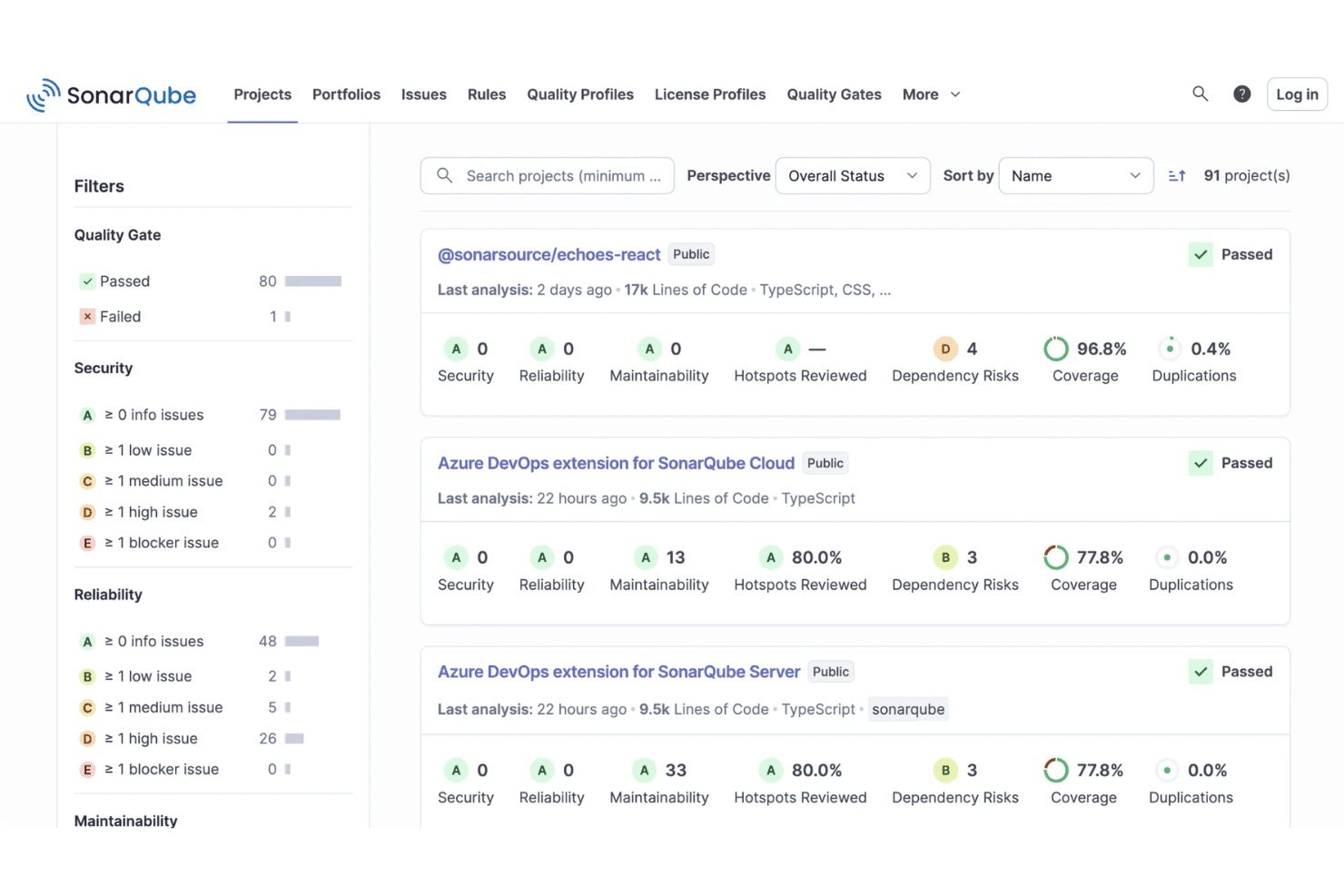
SonarQube mostra la dashboard del progetto con gli stati dei quality gate, valutazioni di sicurezza, percentuali di copertura e metriche di manutenibilità. SonarQube è una piattaforma per l’analisi della sicurezza e della qualità del codice che combina SAST, SCA, rilevamento di segreti e generazione di SBOM per eseguire la scansione del codice proprietario, del codice generato dall’IA e delle dipendenze open source.
Per chi è ideale SonarQube?
SonarQube è particolarmente adatto a team di ingegneria aziendali che gestiscono grandi codebase poliglotte su più linguaggi, framework e ambienti.
Perché ho scelto SonarQube
Ho scelto SonarQube perché nessun altro strumento nella mia lista copre oltre 40 linguaggi, framework e tecnologie IaC in un'unica piattaforma. Mi piace che includa linguaggi legacy come COBOL e ABAP, poiché le compromissioni della supply chain non fanno distinzioni per età dello stack. L’analisi 'taint' sensibile alle dipendenze traccia i flussi di dati dal tuo codice verso le librerie di terze parti, rilevando vulnerabilità che uno scanner limitato ad un solo linguaggio potrebbe non identificare.
Funzionalità principali di SonarQube
- Rilevamento di segreti: Trova credenziali, token e dati sensibili hard-coded prima che il codice raggiunga il tuo repository.
- Generazione SBOM: Crea e aggiorna automaticamente una Software Bill of Materials per ogni progetto.
- Quality gates: Impone soglie personalizzate di sicurezza e qualità nella pipeline CI/CD.
- Integrazione IDE: Fornisce insight immediati sul codice direttamente in editor popolari come Visual Studio Code e IntelliJ.
Integrazioni SonarQube
SonarQube offre integrazioni native con GitHub, GitLab, Bitbucket, Azure DevOps, Jenkins, Jira, Slack e supporta Visual Studio Code, IntelliJ ed Eclipse. È disponibile un’API per integrazioni personalizzate.
Pros and Cons
Pros:
- Offre SAST, SCA e scansione dei segreti
- Supporta linguaggi di programmazione legacy e moderni
- Generazione ed esportazione automatica di SBOM
Cons:
- I report possono essere eccessivi a causa di risultati non critici
- Il rilevamento dei segreti a volte non individua i valori cifrati
Learn more about SonarQube: 2Ideale per la scansione delle vulnerabilità incentrata sugli sviluppatori
Snyk
- Piano gratuito + demo gratuita disponibile
- Da $25/sviluppatore contributore/mese
Visit WebsiteCustomer Rating:4.6/5This rating combines scores from multiple user review sites to reflect overall customer sentiment about the product.
La dashboard delle risorse di Snyk mostra la copertura dei repository, la suddivisione per tecnologie e metriche di rischio open source. Snyk è una piattaforma per la sicurezza della supply chain del software che offre rilevamento automatico delle vulnerabilità, scansione del codice, conformità delle licenze e strumenti di risoluzione per sviluppatori e team di sicurezza.
Per chi è ideale Snyk?
Team di sviluppo e ingegneri della sicurezza in aziende tecnologiche che desiderano rilevamento e risoluzione automatizzati delle vulnerabilità nella loro supply chain del software.
Perché ho scelto Snyk
Ho scelto Snyk come uno dei migliori perché mi affido al suo approccio orientato agli sviluppatori per intercettare le vulnerabilità già nelle prime fasi di scrittura del codice. Mi piace che esegua la scansione per individuare codice malevolo tra le dipendenze open source, immagini dei container e infrastruttura come codice, contribuendo a proteggere l'intero ecosistema di sviluppo. Il mio team inoltre beneficia di informazioni come i metadati delle dipendenze e suggerimenti di risoluzione automatica, che rendono più semplice risolvere i problemi rapidamente senza uscire dal nostro flusso di lavoro.
Caratteristiche principali di Snyk
- Gestione della conformità delle licenze: Monitora e segnala problemi di licenze open source nelle dipendenze.
- Generazione SBOM: Crea automaticamente distinte base software per ogni progetto.
- Policy di sicurezza personalizzate: Permette di definire e far rispettare regole di sicurezza specifiche dell'organizzazione.
- Integrazione con le pipeline CI/CD: Si collega direttamente agli strumenti di build per un monitoraggio continuo.
Integrazioni di Snyk
Snyk offre integrazioni native con GitHub, GitLab, Bitbucket, Azure DevOps, Jenkins, Jira, Docker Hub, CircleCI, Travis CI e Slack. Una API è disponibile per integrazioni personalizzate.
Pros and Cons
Pros:
- Scansione in tempo reale delle dipendenze open source
- Risoluzione automatica per le vulnerabilità rilevate
- Monitoraggio della conformità delle licenze per pacchetti di terze parti
Cons:
- Opzioni di reportistica limitate per audit di conformità
- Le funzionalità avanzate richiedono piani di livello superiore
Learn more about Snyk: Ideale per la sicurezza del codice basata su IA
- Demo gratuita disponibile
- Prezzo su richiesta
Visit WebsiteCustomer Rating:4.2/5This rating combines scores from multiple user review sites to reflect overall customer sentiment about the product.
La dashboard di Checkmarx mostra i livelli di rischio dei progetti, le violazioni delle policy e il monitoraggio delle vulnerabilità basato sulle dipendenze. Checkmarx è una piattaforma di sicurezza per la supply chain del software che fornisce scansione automatizzata del codice, analisi dei rischi open source e rilevamento delle minacce guidato dall'IA per i team di sviluppo.
Per chi è più indicato Checkmarx?
Team di sicurezza e DevOps nelle grandi aziende che necessitano di analisi automatizzata del codice e dei rischi nella supply chain.
Perché ho scelto Checkmarx
Ho scelto Checkmarx tra i migliori perché mi affido al suo rilevamento dei rischi nella supply chain basato sull'IA per individuare minacce che gli scanner tradizionali non rilevano. Il mio team utilizza la sua analisi automatizzata del codice e la gestione dei rischi open source per individuare le vulnerabilità precocemente nelle nostre pipeline. Apprezzo come correla i risultati tra codice, dipendenze e infrastrutture per una visione unificata del rischio.
Caratteristiche principali di Checkmarx
- Generazione SBOM: Crea automaticamente un bill of materials software per tutti i componenti tracciati.
- Gestione delle policy: Permette di definire e applicare politiche di sicurezza su tutti i progetti.
- Visualizzazione del grafo delle dipendenze: Rappresenta le relazioni e i rischi lungo la supply chain software.
- Audit logging: Traccia tutte le azioni degli utenti e l'applicazione delle policy per la conformità.
Integrazioni di Checkmarx
Checkmarx offre un'integrazione nativa nella piattaforma Checkmarx One e supporta i flussi di lavoro degli sviluppatori con integrazioni nelle pipeline CI/CD e nei repository di codice sorgente. È disponibile una API per integrazioni personalizzate.
Pros and Cons
Pros:
- Rilevamento delle minacce nella supply chain basato su IA
- Fornisce SBOM dettagliati e mappatura delle dipendenze
- Supporta progetti multi-linguaggio e multi-framework
Cons:
- I falsi positivi possono richiedere una revisione manuale
- Le opzioni di personalizzazione dei report sono limitate
Learn more about Checkmarx: Ideale per la sicurezza della catena di fornitura end-to-end
- Prova gratuita di 14 giorni + piano gratuito + demo gratuita disponibile
- Da $135/utente/mese + consumo (fatturato annualmente)

La dashboard di Sonatype mostra violazioni delle policy, punteggi di rischio dei componenti e tracciamento delle dipendenze tra le applicazioni. Sonatype è una piattaforma per la sicurezza della catena di fornitura del software che aiuta le organizzazioni a identificare e ridurre i rischi di sicurezza durante tutto il ciclo di vita dello sviluppo software. Offre applicazione automatica delle policy, monitoraggio continuo, rilevamento delle vulnerabilità e conformità alle licenze sia per componenti open source che proprietari.
Per chi è più adatto Sonatype?
Team di sicurezza aziendale e DevOps che necessitano di applicazione automatica delle policy e monitoraggio su catene di fornitura software complesse.
Perché ho scelto Sonatype
Ho scelto Sonatype tra i migliori perché mi affido alla sua applicazione automatica delle policy per mantenere la nostra catena di fornitura software conforme in ogni fase. Mi piace che monitori costantemente componenti open source e proprietari per vulnerabilità e rischi di licenza. Il mio team usa i suoi controlli dettagliati sulle policy per bloccare dipendenze rischiose prima che raggiungano la produzione.
Funzionalità principali di Sonatype
- Generazione SBOM: Crea automaticamente distinte materiali software per ogni build.
- Scansione continua delle dipendenze: Monitora le librerie di terze parti per nuove vulnerabilità.
- Controllo degli accessi basato sui ruoli: Permette di gestire i permessi degli utenti e limitare le azioni sensibili.
- Audit logging: Traccia tutti gli eventi di sicurezza e i cambiamenti all'interno dell'ambiente CI/CD.
Integrazioni Sonatype
Sonatype offre integrazioni native con Jenkins, GitHub, GitLab, Bitbucket, Azure DevOps, Bamboo, Nexus Repository, Jira e Slack. È disponibile un'API per integrazioni personalizzate.
Pros and Cons
Pros:
- Applicazione automatica delle policy per i componenti open source
- Generazione dettagliata di SBOM per ogni build
- Rilevamento dei rischi di licenza per le librerie di terze parti
Cons:
- Personalizzazione limitata dei report per le esigenze di conformità
- La documentazione può essere scarna per configurazioni complesse
Learn more about Sonatype: Ideale per regole di scansione della sicurezza personalizzabili
- Piano gratuito + demo gratuita disponibile
- Da $30/contributore/mese

La dashboard di Semgrep mostra i risultati delle analisi sul codice, il rilevamento di segreti e le tendenze del rischio della supply chain nel tempo. Semgrep è uno strumento per la sicurezza della supply chain software che combina la scansione del codice, l'analisi delle dipendenze e l'applicazione delle policy per aiutare i team a identificare e gestire i rischi all'interno dei loro flussi di lavoro di sviluppo.
A chi è rivolto Semgrep?
Ingegneri della sicurezza e team DevSecOps in aziende a forte vocazione tecnologica che necessitano di sicurezza automatizzata del codice e delle dipendenze lungo tutta la loro supply chain software.
Perché ho scelto Semgrep
Ho scelto Semgrep come uno dei migliori strumenti perché mi affido alla sua sicurezza automatizzata di codice e dipendenze per rilevare vulnerabilità prima che arrivino in produzione. Uso le sue analisi della supply chain per monitorare rischi da open source e violazioni delle policy su tutti i nostri repository. Il mio team beneficia delle sue segnalazioni attuabili, che ci aiutano a dare priorità e risolvere rapidamente i problemi.
Funzionalità principali di Semgrep
- Creazione di regole personalizzate: consente di scrivere e applicare le proprie policy di sicurezza.
- Integrazione nelle pipeline CI/CD: si collega direttamente ai flussi di lavoro di build e deployment.
- Generazione SBOM: produce software bill of materials per il monitoraggio delle dipendenze.
- Monitoraggio dei pacchetti di terze parti: esegue scansioni continue per individuare rischi nelle librerie open source.
Integrazioni Semgrep
Semgrep offre integrazioni native con GitHub, GitLab, Bitbucket, Azure DevOps, Jenkins e Jira, e fornisce un'API per integrazioni personalizzate.
Pros and Cons
Pros:
- Motore di scansione sulla supply chain veloce e consapevole del codice
- Regole personalizzabili per il rilevamento dei rischi delle dipendenze
- Libreria di regole guidata dalla community per aggiornamenti rapidi
Cons:
- La scrittura di regole avanzate richiede conoscenza di YAML
- Nessun supporto nativo per la scansione di artefatti binari
Learn more about Semgrep: Ideale per la sicurezza dei container basata su policy
- Prova gratuita di 14 giorni + demo gratuita disponibile
- Prezzo su richiesta

La dashboard del sistema Anchore mostra lo stato di salute dei servizi, le scansioni delle immagini e lo stato di applicazione delle policy. Anchore è una piattaforma per la sicurezza della catena di fornitura software che offre scansione automatizzata delle immagini dei container, applicazione di policy, rilevamento delle vulnerabilità e controlli di conformità per applicazioni containerizzate.
Per chi è più adatto Anchore?
Team di sicurezza e DevOps di aziende che gestiscono carichi di lavoro containerizzati in settori regolamentati.
Perché ho scelto Anchore
Ho scelto Anchore come uno dei migliori perché mi affido alla scansione automatica delle immagini dei container e all'applicazione delle policy per individuare vulnerabilità prima del deployment. Il mio team lo utilizza insieme agli strumenti SCA per analizzare il software open source e applicare regole che supportano la mitigazione dei rischi in ogni fase della nostra pipeline CI/CD. Apprezzo anche il fatto che fornisca report dettagliati su vulnerabilità e violazioni delle policy, aiutandoci a mantenere una catena di fornitura software sicura.
Funzionalità chiave di Anchore
- Generazione SBOM: Crea automaticamente distinte base software per le immagini dei container.
- Scansione multi-registry: Scansiona immagini su più registry di container per individuare vulnerabilità.
- Controllo accessi basato sui ruoli: Permette di gestire permessi e accessi degli utenti all'interno della piattaforma.
- REST API: Consente l'integrazione con strumenti esterni e workflow personalizzati.
Integrazioni di Anchore
Anchore offre integrazioni native con Jenkins, GitHub, GitLab, Azure DevOps e Jira, e mette a disposizione un'API per integrazioni personalizzate. Supporta inoltre i workflow CI/CD attraverso la sua API.
Pros and Cons
Pros:
- Solida scansione delle immagini dei container basata su policy
- Motore open source disponibile per la personalizzazione
- Supporta flussi di lavoro di rimedio automatizzato
Cons:
- Supporto limitato per artefatti non relativi ai container
- La scansione può essere lenta su immagini di grandi dimensioni
Learn more about Anchore: Ideale per la visibilità dal codice al cloud basata sul rischio
- Demo gratuita disponibile
- Prezzo su richiesta

Il cruscotto dei rischi di Apiiro monitora i rischi individuati, le metriche MTTR, lo stato SLA e le tendenze di sicurezza. Apiiro è una piattaforma di sicurezza per la catena di fornitura del software che offre analisi dei rischi nel codice, monitoraggio delle pipeline CI/CD e rimedi automatizzati per team di sviluppo e sicurezza.
Per chi è più adatto Apiiro?
Team di sicurezza e ingegneria di grandi aziende che necessitano di una visibilità e di rimedi end-to-end sui rischi lungo tutta la catena di fornitura del software.
Perché ho scelto Apiiro
Ho scelto Apiiro tra i migliori perché mi affido alla sua visibilità e ai rimedi end-to-end sui rischi lungo la supply chain del software. Utilizzo la sua analisi dei rischi del codice per individuare le vulnerabilità precocemente e i suoi flussi di lavoro automatizzati di remediation aiutano il mio team a risolvere i problemi prima che arrivino in produzione. Apprezzo anche come Apiiro colleghi i rischi al contesto aziendale, così possiamo dare priorità a ciò che conta di più.
Funzionalità principali di Apiiro
- Gestione SBOM: Consente di generare, tracciare e gestire le distinte base software di tutti i componenti.
- Controlli basati su policy: Permettono di applicare policy di sicurezza e conformità personalizzate su tutte le pipeline.
- Scanning delle dipendenze di terze parti: Identifica vulnerabilità in librerie open source e di terze parti.
- Audit trail e reportistica: Fornisce log dettagliati e report su tutte le attività di rischio e remediation.
Integrazioni Apiiro
Apiiro offre integrazioni native con GitHub, GitLab, Bitbucket, Azure DevOps, Jenkins, Jira e Slack, e fornisce una API per integrazioni personalizzate.
Pros and Cons
Pros:
- Mappatura end-to-end dei rischi sulle pipeline
- Remediation automatizzata per codice e dipendenze
- Integrazione nativa con i principali strumenti CI/CD
- Prioritizzazione dei rischi basata sul contesto
- Supporta la gestione e l'esportazione SBOM
Cons:
- Supporto limitato per artefatti non containerizzati
- La velocità di scansione può essere lenta su immagini di grandi dimensioni
Learn more about Apiiro: Ideale per il rilevamento avanzato delle minacce alla catena di fornitura
- Prova gratuita di 14 giorni + piano gratuito + demo gratuita disponibile
- A partire da $500/mese

Il pannello di analisi di ReversingLabs mostra la valutazione del rischio del file, i risultati relativi alle CVE e i dettagli dei componenti estratti. ReversingLabs è una piattaforma di sicurezza della catena di fornitura del software che offre rilevamento avanzato delle minacce, analisi binaria e monitoraggio continuo degli artefatti e dei componenti software.
A chi è più adatto ReversingLabs?
I team di sicurezza delle grandi aziende e dei fornitori di software che necessitano di rilevamento e analisi avanzati delle minacce per la propria catena di fornitura del software.
Perché ho scelto ReversingLabs
Ho scelto ReversingLabs come una delle migliori soluzioni perché mi affido al suo rilevamento avanzato delle minacce e alla sua analisi binaria approfondita per individuare i rischi nascosti tra i componenti di terze parti. Il mio team utilizza il monitoraggio continuo per rafforzare il livello di sicurezza informatica e rilevare tempestivamente le minacce alla catena di fornitura, analogamente ai rischi di alto profilo osservati in incidenti come SolarWinds. Apprezzo inoltre la sua analisi dettagliata della reputazione dei file e dei malware, che mi dà fiducia nella protezione sia del software open source sia di quello proprietario.
Caratteristiche principali di ReversingLabs
- Applicazione automatizzata delle policy: Applica le policy di sicurezza in tutta la catena di fornitura del software.
- Gestione degli SBOM: Genera e gestisce gli elenchi dei materiali software per tutti gli artefatti.
- Rilevamento delle manomissioni: Identifica le modifiche non autorizzate nei pacchetti software.
- Integrazione con le pipeline CI/CD: Si collega direttamente ai flussi di lavoro di compilazione e distribuzione.
Integrazioni di ReversingLabs
Al momento non sono elencate integrazioni native. Lo strumento supporta integrazioni tramite API per flussi di lavoro personalizzati e può collegarsi alle pipeline CI/CD.
Pros and Cons
Pros:
- Analisi binaria approfondita per gli artefatti software
- Generazione e gestione automatizzata degli SBOM
- Rilevamento delle manomissioni per i pacchetti software
Cons:
- Elevato utilizzo delle risorse per l'analisi approfondita
- Funzionalità limitate per la scansione delle vulnerabilità open source
Learn more about ReversingLabs: Ideale per la scansione continua di binari e container
- Prova gratuita di 14 giorni + demo gratuita disponibile
- Da $150/mese

La dashboard di JFrog Xray mostra il conteggio delle vulnerabilità, la suddivisione per gravità e le violazioni delle policy per le immagini container. JFrog Xray è uno strumento di sicurezza per la supply chain del software che offre analisi approfondite di binari e container, rilevamento delle vulnerabilità e analisi della conformità delle licenze su artefatti e dipendenze.
A chi è rivolto JFrog Xray?
Team DevOps aziendali e di sicurezza nei settori tecnologico, finanziario e manifatturiero che necessitano di una scansione approfondita di binari e container per vulnerabilità e conformità delle licenze.
Perché ho scelto JFrog Xray
Ho scelto JFrog Xray come uno dei migliori perché faccio affidamento sulla sua scansione ricorsiva approfondita per la gestione delle vulnerabilità su binari e container. Mi piace il fatto che analizzi le dipendenze nei progetti open-source fino in fondo alla catena, non solo i pacchetti superficiali. Il mio team beneficia anche di funzionalità come i controlli di autenticazione e la sua integrazione con JFrog Artifactory per automatizzare la scansione continua all’interno dei nostri flussi CI/CD.
Funzionalità principali di JFrog Xray
- Controlli di sicurezza basati su policy: Imposta e applica policy di sicurezza e conformità personalizzate per gli artefatti.
- Generazione SBOM: Crea automaticamente il software bill of materials per i componenti tracciati.
- Accesso via REST API: Integra scansione e reportistica in sistemi e flussi di lavoro esterni.
- Gestione della conformità delle licenze: Individua e segnala problematiche di licenza open source nelle dipendenze.
Integrazioni JFrog Xray
JFrog Xray offre integrazioni native con JFrog Artifactory, Jenkins, Jira, GitHub, GitLab, Bitbucket, Azure DevOps e Slack. È disponibile un’API per integrazioni personalizzate e supporta i flussi di lavoro CI/CD tramite la sua API.
Pros and Cons
Pros:
- Capacità di scansione approfondita di binari e container
- Aggiornamenti in tempo reale del database delle vulnerabilità
- Supporta progetti multi-package e multi-lingua
Cons:
- Supporto limitato per tipi di repository non-JFrog
- Configurazione iniziale complessa per ambienti ibridi
Learn more about JFrog Xray: 10Ideale per la protezione della supply chain nelle pipeline CI/CD
Aikido
- Piano gratuito + demo gratuita disponibili
- $350/month

La dashboard di Aikido mostra sessioni di pentesting attive, simulazioni di attacco e monitoraggio delle minacce in tempo reale tra gli agenti. Aikido è una piattaforma di sicurezza per la supply chain del software che si concentra sul rilevamento e la prevenzione automatica delle minacce nelle pipeline CI/CD, offrendo monitoraggio in tempo reale e approfondimenti utili ai team di sviluppo.
Per chi è più adatto Aikido?
Team di sicurezza e DevOps presso aziende tecnologiche che necessitano di una protezione automatica della supply chain nei loro flussi di lavoro CI/CD.
Perché ho scelto Aikido
Ho scelto Aikido tra i migliori perché rileva e blocca attivamente gli attacchi alla supply chain direttamente nella pipeline CI/CD. Mi piace il fatto che monitori i processi di build per attività sospette e applichi automaticamente le policy di sicurezza. Il mio team riceve avvisi in tempo reale quando vengono rilevate minacce, così possiamo rispondere rapidamente.
Funzionalità principali di Aikido
- Scansione delle dipendenze: Analizza continuamente le dipendenze open source e di terze parti alla ricerca di vulnerabilità.
- Generazione SBOM: Crea automaticamente distinte base del software per ogni build.
- Controllo degli accessi basato sui ruoli: Ti permette di gestire le autorizzazioni degli utenti e limitare l'accesso ad azioni sensibili.
- Audit logging: Tiene traccia di tutti gli eventi di sicurezza e delle modifiche all'interno dell'ambiente CI/CD.
Integrazioni di Aikido
Aikido offre integrazioni native con GitHub, GitLab, Bitbucket, Jira, Slack, Azure DevOps, AWS, Google Cloud, Docker Hub e Jenkins. È disponibile un'API per integrazioni personalizzate.
Pros and Cons
Pros:
- Rilevamento automatico degli attacchi alla supply chain
- Monitoraggio in tempo reale delle pipeline CI/CD
- Generazione SBOM per ogni build
Cons:
- Non è disponibile un'opzione di implementazione on-premises
- Le funzionalità avanzate richiedono piani di livello superiore
Learn more about Aikido:
Altri strumenti di sicurezza della catena di fornitura del software
Ecco alcune opzioni aggiuntive di strumenti di sicurezza della catena di fornitura del software che non sono entrate nel mio elenco ristretto, ma che vale comunque la pena prendere in considerazione:
- 11ChainguardIdeale per supply chain di immagini container sicure
- 12CycodeIdeale per sicurezza unificata di codice e pipeline
- 13KusariIdeale per l'integrità della supply chain open-source
- 14JitIdeale per la sicurezza e la conformità DevSecOps
Come valuto gli strumenti per la sicurezza della supply chain del software
Divido la valutazione in due livelli: i requisiti di base—generazione di SBOM, scansione delle CVE, firma degli artefatti—e i fattori differenzianti che rivelano quali strumenti sono realmente pensati per la difesa della supply chain.
Funzionalità di base (requisiti fondamentali per questo elenco)
Quando seleziono gli strumenti per il mio elenco, assegno a ciascuno un punteggio da 0 (la funzionalità non è offerta) a 5 (eccelle in quest’area) per ogni funzionalità di base elencata sotto. Successivamente, calcolo il punteggio totale dello strumento come percentuale. Ogni strumento deve ottenere un punteggio minimo totale del 65% per essere considerato nell’elenco.
- Generazione & gestione SBOM: Verifico se lo strumento può generare automaticamente SBOM nei formati SPDX e CycloneDX per ogni build, data la crescente richiesta nei processi di procurement e compliance, soprattutto al rilascio.
- Scansione di dipendenze & vulnerabilità: Qui conta la profondità della SCA—valuto la copertura degli ecosistemi di linguaggi, la risoluzione delle dipendenze transitive e se lo strumento collega le CVE con un contesto, come la raggiungibilità o i punteggi EPSS.
- Rilevamento di pacchetti maligni: Oltre ai feed delle CVE, cerco intelligenza proprietaria sulle minacce che individua typosquat e attacchi di dependency confusion nei registri come npm, PyPI e Maven Central.
- Sicurezza della pipeline CI/CD: Uno strumento dovrebbe coprire errori di configurazione della pipeline, segreti esposti e controlli sull’integrità delle build su piattaforme come GitHub Actions, GitLab CI o Jenkins.
- Integrità & provenienza degli artefatti: Valuto se lo strumento supporta workflow di firma (Cosign, Sigstore) e genera attestazioni di provenienza in linea con i livelli del framework SLSA.
- Enforcement delle policy & compliance: Cerco policy-as-code personalizzabili con gating nella CI/CD—i team devono poter bloccare build che violano limiti di licenza o vulnerabilità prima della distribuzione.
Una volta che dispongo di una lista di strumenti che soddisfano i criteri, considero ciò che rende unica ciascuna piattaforma.
Fattori differenzianti (cosa distingue i fornitori)
Ecco come confronto e metto a paragone i diversi fornitori:
Funzionalità distintive
L’analisi della raggiungibilità è un elemento distintivo importante—cerco strumenti che possano indicare se una CVE rilevata interessa davvero un percorso di esecuzione nel codice e non solo che sia presente nell’albero delle dipendenze. Un firewall di pacchetti gestito aggiunge un ulteriore livello, permettendo ai team di fungere da proxy per i registri pubblici e bloccare pacchetti rischiosi prima che gli sviluppatori li scarichino. Valuto anche le funzionalità di remediation integrate per gli sviluppatori, come la generazione automatica di PR di correzione, poiché i problemi di sicurezza che restano confinati nelle dashboard invece di raggiungere gli sviluppatori tendono a non essere risolti.
Oltre le funzionalità
L’integrazione con lo stack DevSecOps è una delle prime cose che valuto: gli strumenti devono offrire plugin nativi per la CI/CD su piattaforme come GitHub Actions o GitLab CI, oltre a collegamenti con registri di artefatti e sistemi di ticketing come Jira. L’aderenza alla compliance è altrettanto importante, soprattutto per i team che consegnano a clienti regolamentati che si aspettano documentazione di attestazione NIST SSDF o SLSA. Considero anche la profondità dell’intelligence sulle minacce, verificando se un fornitore mantiene un team di ricerca interno che pubblica risultati originali su minacce emergenti a livello di pacchetto.
Come scegliere gli strumenti di sicurezza della catena di fornitura del software
È facile perdersi in lunghi elenchi di funzionalità e strutture tariffarie complesse. Per aiutarti a rimanere concentrato mentre affronti il tuo specifico processo di selezione del software, ecco una lista di fattori da tenere a mente:
| Fattore | Cosa considerare |
|---|---|
| FattoreScalabilità | Cosa considerareLo strumento sarà in grado di gestire le dimensioni attuali e previste della tua base di codice, il numero di utenti e il numero di integrazioni man mano che la tua organizzazione cresce? |
| FattoreIntegrazioni | Cosa considerareSi collega nativamente ai tuoi sistemi CI/CD, agli archivi di codice, ai sistemi di gestione dei ticket e agli strumenti di segnalazione? Sono disponibili API per flussi di lavoro personalizzati? |
| FattorePersonalizzazione | Cosa considerarePuoi adattare le politiche, gli avvisi e i report al profilo di rischio e alle esigenze di conformità della tua organizzazione? |
| FattoreFacilità d’uso | Cosa considerareL’interfaccia è intuitiva sia per i team di sicurezza sia per quelli di sviluppo? Saranno necessari formazione approfondita o supporto continuo per utilizzarla quotidianamente? |
| FattoreImplementazione e avvio | Cosa considerareQuanto tempo richiede la configurazione e quali risorse sono necessarie? Sono disponibili strumenti di migrazione, guide per l’avvio o supporto dedicato per la distribuzione? |
| FattoreCosto | Cosa considerareI livelli di prezzo sono trasparenti e prevedibili? Il costo varia in base all’utilizzo, al numero di postazioni o alle funzionalità? Fai attenzione ai costi nascosti o ai componenti aggiuntivi. |
| FattoreMisure di sicurezza | Cosa considerareQuali certificazioni, standard di crittografia e pratiche di gestione dei dati segue il fornitore? Sono disponibili registri di audit e controlli degli accessi? |
| FattoreRequisiti di conformità | Cosa considerareLo strumento supporta gli standard normativi del tuo settore (ad es., SOC 2, ISO 27001, GDPR)? È in grado di generare report pronti per la verifica della conformità? |
Cosa sono gli strumenti di sicurezza della catena di fornitura del software?
Gli strumenti di sicurezza della catena di fornitura del software sono piattaforme specializzate che aiutano le organizzazioni a identificare, monitorare e mitigare i rischi presenti nei componenti, nelle dipendenze e nei processi utilizzati per creare e distribuire il software. Questi strumenti analizzano il codice, le librerie di terze parti e l'infrastruttura alla ricerca di vulnerabilità, tengono traccia degli inventari dei componenti software e supportano la conformità agli standard di sicurezza durante tutto il ciclo di vita dello sviluppo.
Caratteristiche degli strumenti di sicurezza della catena di fornitura del software
Quando selezioni gli strumenti di sicurezza della catena di fornitura del software, presta attenzione alle seguenti caratteristiche principali:
- Scansione delle vulnerabilità: analizza il codice sorgente, le dipendenze e i container alla ricerca di vulnerabilità di sicurezza note ed emergenti durante tutto il ciclo di vita dello sviluppo.
- Generazione di SBOM: crea automaticamente un inventario dei componenti software per catalogare tutti i componenti e le dipendenze delle applicazioni.
- Monitoraggio delle dipendenze: controlla le librerie di terze parti e open source alla ricerca di aggiornamenti, rischi e problemi di conformità delle licenze.
- Applicazione delle policy: consente di definire e automatizzare le policy di sicurezza per impedire al codice o ai componenti rischiosi di entrare nel proprio ambiente.
- Prioritizzazione dei rischi: utilizza il contesto e la gravità per classificare le vulnerabilità, aiutando i team a concentrarsi prima sulle minacce più urgenti.
- Integrazione CI/CD: si collega direttamente alle pipeline di build e distribuzione per automatizzare i controlli di sicurezza e le fasi di correzione.
- Registrazione degli audit: registra le azioni degli utenti, le modifiche alle policy e gli eventi di sicurezza per la conformità e l'analisi forense.
- Avvisi e report: notifica ai team i problemi critici e genera report dettagliati per gli stakeholder e i revisori.
- Indicazioni per la correzione: fornisce passaggi concreti o correzioni automatiche per risolvere le vulnerabilità e le configurazioni errate identificate.
Vantaggi degli strumenti di sicurezza della catena di fornitura del software
L'implementazione di strumenti di sicurezza della catena di fornitura del software offre numerosi vantaggi al team e all'azienda. Eccone alcuni:
- Riduzione del rischio di vulnerabilità: la scansione e il monitoraggio automatizzati aiutano a individuare e risolvere i problemi di sicurezza prima che abbiano un impatto sul software o sugli utenti.
- Maggiore conformità: l'applicazione integrata delle policy e la registrazione degli audit facilitano il rispetto dei requisiti normativi e il superamento degli audit di sicurezza.
- Risposta più rapida agli incidenti: gli avvisi in tempo reale e la prioritizzazione dei rischi consentono al team di identificare e correggere rapidamente le minacce più urgenti.
- Maggiore visibilità: la generazione di SBOM e il monitoraggio delle dipendenze offrono una visione chiara di tutti i componenti della catena di fornitura del software.
- Flussi di lavoro semplificati: le integrazioni CI/CD e le fasi di correzione automatizzate riducono il lavoro manuale e mantengono i controlli di sicurezza sincronizzati con lo sviluppo.
- Migliore processo decisionale: report dettagliati e valutazioni del rischio aiutano gli stakeholder a comprendere il livello di sicurezza e ad allocare le risorse dove sono più necessarie.
- Collaborazione migliorata: dashboard centralizzate e avvisi mantengono allineati i team di sicurezza, sviluppo e conformità sui rischi e sulle azioni condivise.
Costi e prezzi degli strumenti di sicurezza della catena di fornitura del software
La selezione degli strumenti di sicurezza della catena di fornitura del software richiede una conoscenza dei vari modelli di prezzo e dei piani disponibili. I costi variano in base alle funzionalità, alle dimensioni del team, ai componenti aggiuntivi e ad altri fattori. La tabella seguente riassume i piani comuni, i relativi prezzi medi e le funzionalità tipicamente incluse nelle soluzioni di strumenti di sicurezza della catena di fornitura del software:
Tabella comparativa dei piani per gli strumenti di sicurezza della catena di fornitura del software
| Tipo di piano | Prezzo medio | Funzionalità comuni |
|---|---|---|
| Tipo di pianoPiano gratuito | Prezzo medio$0 | Funzionalità comuniScansione di base delle vulnerabilità, generazione limitata di SBOM e supporto della community. |
| Tipo di pianoPiano personale | Prezzo medio$10-$30/user/month | Funzionalità comuniScansione avanzata, applicazione di base delle policy, integrazioni limitate e supporto via email. |
| Tipo di pianoPiano aziendale | Prezzo medio$40-$80/user/month | Funzionalità comuniIntegrazione CI/CD completa, prioritizzazione dei rischi, registrazione degli audit, report e supporto clienti standard. |
| Tipo di pianoPiano per grandi aziende | Prezzo medio$100-$200/user/month | Funzionalità comuniGestione personalizzata delle policy, strumenti avanzati per la conformità, onboarding dedicato, supporto premium e SLA. |
Strumenti per la sicurezza della catena di fornitura del software: domande frequenti
Ecco alcune risposte alle domande comuni sugli strumenti per la sicurezza della catena di fornitura del software:
In che modo gli strumenti per la sicurezza della catena di fornitura del software aiutano a prevenire gli attacchi alla catena di fornitura?
Questi strumenti analizzano il codice, le dipendenze e i processi di compilazione alla ricerca di vulnerabilità e modifiche sospette. Monitorando le minacce note e applicando le policy di sicurezza, aiutano a individuare tempestivamente i rischi e a ridurre la probabilità che componenti compromessi arrivino in produzione.
Gli strumenti per la sicurezza della catena di fornitura del software possono integrarsi con la mia pipeline CI/CD esistente?
Sì, la maggior parte degli strumenti offre integrazioni con piattaforme CI/CD diffuse come Jenkins, GitHub Actions e GitLab CI. Ciò consente di automatizzare i controlli di sicurezza nell’ambito dei flussi di lavoro di compilazione e distribuzione, in modo che le vulnerabilità vengano segnalate prima del rilascio del codice.
Che cos'è una distinta dei materiali del software (SBOM) e perché è importante?
Una SBOM è un inventario dettagliato di tutti i componenti e le dipendenze presenti nel software. È importante perché offre visibilità su ciò che è contenuto nella base di codice, facilita il monitoraggio delle vulnerabilità ed è sempre più richiesta per la conformità normativa.
Questi strumenti supportano il codice open source e proprietario?
Sì, la maggior parte delle soluzioni è in grado di analizzare sia le basi di codice open source sia quelle proprietarie. In genere supportano un’ampia gamma di linguaggi di programmazione e gestori di pacchetti, consentendo di monitorare tutti gli asset software alla ricerca di rischi.
Con quale frequenza devo eseguire le scansioni con questi strumenti?
Dovresti eseguire le scansioni continuamente o, se possibile, a ogni commit del codice. Le scansioni frequenti garantiscono che le nuove vulnerabilità vengano rilevate rapidamente e aiutano a mantenere un solido livello di sicurezza con l’evolversi della base di codice.