


Aikido Security vs. Checkmarx: Comparison & Expert Reviews For 2026

We review tools independently, and commissions help fund our testing. See our transparency policy, our methodology, or suggest a tool.
If you feel like AppSec has turned into a tooling arms race, you are not alone. Between AI-assisted code, sprawling microservices, and constant pressure to ship faster, the gap between “we have security tools” and “we actually manage application risk” keeps widening for most teams. That is exactly where platforms like Aikido Security and Checkmarx are trying to differentiate themselves, by promising not just more findings, but smarter, more consolidated AppSec programs that fit how your developers already work.
In this article, I will walk you through how Aikido Security and Checkmarx stack up across pricing, core capabilities, integrations, security posture, and day-to-day usability, with a clear focus on what that means for you.
Aikido Security


4.7/5
- Free plan available
- From $350/month
Checkmarx
4.2/5
- Free demo available
- Pricing upon request
Why Trust Our Software Recommendations
6,700+
Reviews
20
Industry experts
16+
Evaluation factors
14
Years
Our team has been testing and reviewing software since 2012. As tech leaders ourselves, we know how difficult—and important—it is to choose the right software.
For this guide, we evaluated tools using hands-on testing and independent research, scoring tools using our selection criteria.
Our reviews reflect our human editorial judgment, not a sales pitch.
Expert reviewers:
- Paulo Gardini MiguelTech Director
 Tim FisherVP of AI
 Gabriel RosasTech Lead & Software Architect
 Christhian GruhnTech Lead & Platform Architect

| Aikido Security | Checkmarx | |
|---|---|---|
| Free Trial | Free plan available | Free demo available |
| Pricing | From $350/month | Pricing upon request |
Aikido Security vs. Checkmarx Hidden Costs
When you look at Aikido’s pricing, the main story is predictable flat fees with no hidden charges. Paid plans are on a monthly tiered structure with fair-usage limits on repos, cloud accounts, domains, and images, plus a generous free tier for smaller teams and enterprise options that move to flat, unlimited-style pricing. That structure also makes it relatively easy to forecast costs as your organization scales, since pricing is tied to clearly defined usage limits rather than custom quotes. The things to watch are moving up a tier as your repo and cloud footprint grows, the uplift for month-to-month contracts versus annual, and buying additional AI SAST credits if you lean on that engine heavily.
Checkmarx takes a very different approach with primarily quote-based pricing linked to factors like the number of contributing developers, codebase size, and required modules across SAST, SCA, DAST, and API security. That model is flexible for large enterprises but can introduce hidden costs as your developer count, lines of code, or compliance demands increase, and you may also see extra charges for premium support or professional services. For you as a buyer, that means the total cost of ownership hinges less on list price and more on long-term scale—if your headcount and portfolio are growing quickly, you will want multi-year projections from sales and clear guardrails on how pricing escalates as you expand.
Aikido’s combines SAST, DAST, SCA, container scanning, IaC scanning, CSPM, secrets detection, and license and malware checks in a single dashboard, so you are not juggling half a dozen tools. AutoTriage and reachability analysis cut findings that aren’t reachable or exploitable, and results come back in seconds with feedback in the pull request. Over a 6-week Aikido pilot period, 50 devs from a global HRtech platform resolved 92% of critical issues and reduced critical false positives by 99% vs their Checkmarx, their existing AppSec platform. On top of that, AutoTriage and Autofix can auto-generate pull requests for common issues across code, infrastructure, and containers, which materially reduces manual triage time for small security teams.
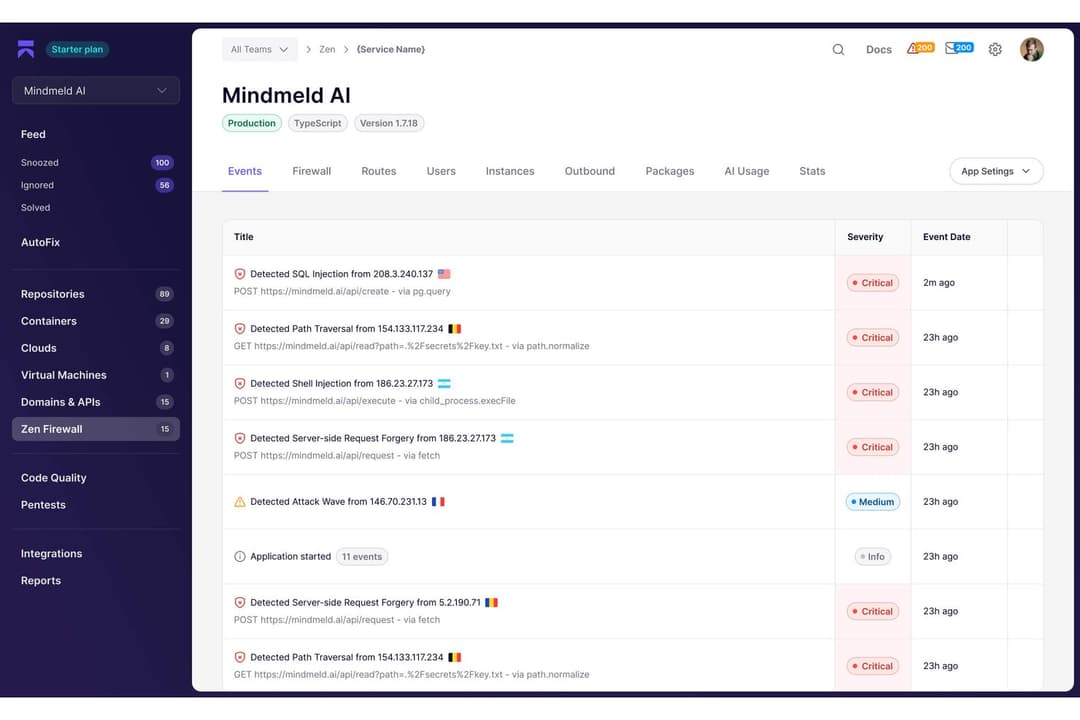
Aikido also checks your cloud configuration directly for misconfigurations (CSPM) and adds a runtime layer, Zen, that blocks injection, SSRF, and other attacks in the running app. Deep integrations into IDEs, CI/CD, and task managers like Jira mean your developers see and fix issues where they already work, turning the platform into an ASPM layer rather than “just another scanner.”
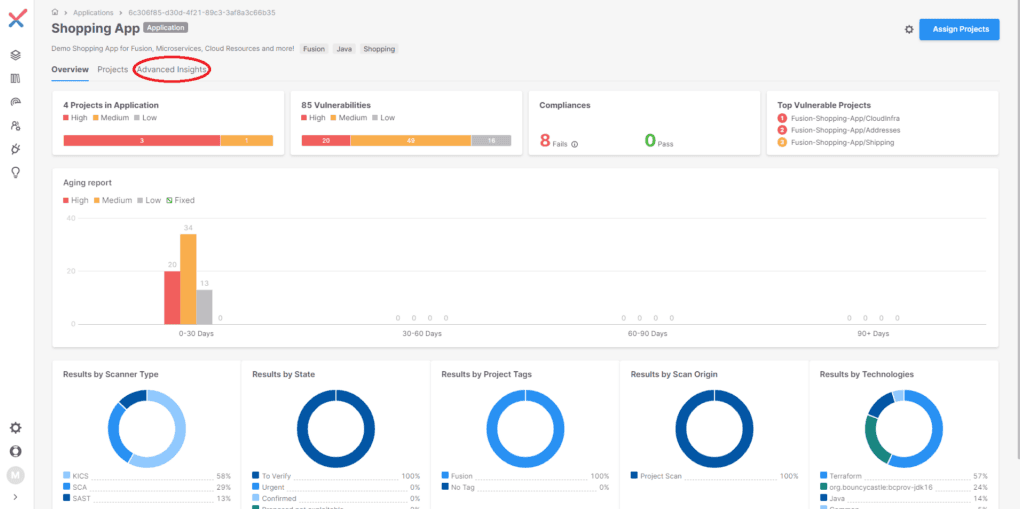
Checkmarx One, by contrast, is built for large regulated enterprises, with two decades of SAST maturity, deep legacy-language coverage (including COBOL), and a custom query editor that lets AppSec teams tune detection logic for in-house frameworks. The platform’s Agentic AI capabilities, including Checkmarx One Assist and Developer Assist, aim to surface the right issues earlier in the SDLC and guide developers through secure fixes without needing to become security experts. For you as an enterprise leader, the big win is centralized AppSec governance—unified policies, consolidated risk scores, and ASPM-style views that span repositories, pipelines, and runtime so you can steer security outcomes at scale.
| Aikido Security | Checkmarx | |
|---|---|---|
| API | Yes | Yes |
| Dashboard | Yes | Yes |
| Data Export | Yes | Yes |
| Data Import | Yes | Yes |
| External Integrations | Yes | Yes |
| Multi-User | Yes | Yes |
| Notifications | Yes | Yes |
| Tool | Aikido Security | Checkmarx |
| GitHub | ✅ | ✅ |
| GitLab | ✅ | ✅ |
| Bitbucket | ✅ | ✅ |
| Azure DevOps | ✅ | ✅ |
| Jira | ✅ | ✅ |
| Jenkins | ✅ | ✅ |
| CircleCI | ✅ | ✅ |
| Slack | ✅ | ✅ |
| Microsoft Team | ✅ | ✅ |
| AWS CodeBuild | ✅ | ✅ |
| SonarQube | ✅ | ✅ |
| Visual Studio Code | ✅ | ✅ |
| JetBrains IDEs | ✅ | ✅ |
| Docker Hub | ✅ | ✅ |
| AWS ECR | ✅ | ✅ |
Both platforms lean heavily into “meet developers where they are,” offering broad coverage across source code hosts, CI/CD tools, ticketing systems, chat, and popular IDEs so you can embed security without redesigning your toolchain. Aikido focuses on giving you fast, low-friction connectors for modern SaaS dev stacks, while Checkmarx leans on its enterprise tenure, exploitable path analysis that traces vulnerabilities down to specific call paths, and legacy-language depth for large regulated organizations with mature AppSec teams.
| Factor | Aikido Security | Checkmarx |
| Data Security Controls | Aikido is ISO 27001:2022 and SOC 2 Type II compliant, uses temporary isolated containers for code cloning, and deletes repository clones after scans to minimize data exposure. | Checkmarx is ISO 27001:2022 and SOC 2 Type II certified and runs on hardened cloud infrastructure with enterprise-grade access controls and monitoring designed for regulated environments. |
| Compliance Support | Helps you generate evidence for ISO 27001, SOC 2, PCI, HIPAA, DORA, and CIS controls by continuously mapping results to technical requirements and reporting on compliance status. | Provides extensive documentation, audit logs, and reporting to support SOC 2, ISO 27001, and other regulatory frameworks as part of broader enterprise governance programs. |
| Data Residency and Privacy | Emphasizes EU-friendly data handling and supports European data sovereignty for companies that need to align with GDPR, NIS2, and the Cyber Resilience Act. | Offers regional hosting options and aligns with global privacy and data protection standards, which is important if you operate across multiple jurisdictions with strict regulatory demands. |
| Availability and Uptime | Aikido publishes a 99.5% availability SLA on paid tiers, backed by a public status page and continuous monitoring, plus in-product SLA management so you can track how quickly findings are getting resolved. | Publishes a 99.5% availability SLA for its cloud services, giving larger enterprises clear uptime commitments and recourse if service levels are not met. |
| Reliability and Assurance | Conducts regular external penetration tests, runs an ongoing bug bounty program, and integrates with compliance automation tools so you can continuously validate security posture. | Has a long track record in large enterprises, combined with recurring independent audits and certifications, gives you strong assurance for mission-critical, large-scale application portfolios. |
While both vendors prioritize security and compliance, they tell completely different stories about trust. Aikido emphasizes EU-friendly data handling alongside a developer-first approach and tools that automate the grunt work of compliance across SOC 2, ISO 27001, and DORA requirements. Checkmarx, meanwhile, emphasizes its enterprise roots and track record, highlighting its rigorous certifications and concrete reliability in highly regulated environments.
| Factor | Aikido Security | Checkmarx |
| Interface and UX | Aikido offers a clean, modern UI that is intuitive and low-noise, with clear risk prioritization and explanations that make findings easy to understand and act on. | Checkmarx provides a comprehensive web interface that users find powerful and generally user-friendly, though some note it can feel dense or slightly outdated given the breadth of capabilities it exposes. |
| Setup and Configuration | Offers “5-10-minute setup,” auto discovery of repositories, and minimal configuration, making it easy for small and mid-sized teams to get value quickly. | Setup is more involved due to its enterprise scope, but once implemented, adding new projects and extending coverage is straightforward with the help of documentation and support. |
| Onboarding | Onboarding is smooth and guided, with fast time-to-first-result and hands-on support that helps non-security specialists ramp up quickly. | Onboarding typically includes more formal enablement and training, which suits enterprises with larger teams and complex workflows but can require more upfront time and coordination. |
| Day-to-Day Workflow | Designed as “security for engineers,” integrating directly into developer workflows and emphasizing low false positives so teams keep engaging with the tool over time. | Supports deep SDLC embedding with IDE and CI integrations, but day-to-day use can involve more tuning and policy management to keep noise manageable across large codebases and multiple scan types. |
| Support Experience | Responsive, proactive support and a fast product iteration cadence that quickly addresses feedback and issues. | Strong enterprise support with dedicated teams and SLAs, although response and customization cycles can reflect the processes of a larger, more traditional vendor. |
Aikido wins when it comes to velocity. Most teams can get results running and actionable insights flowing in minutes rather than days, which matters if you are a smaller security team that cannot afford lengthy enterprise deployments. Checkmarx, on the other hand, delivers power and configurability at the cost of a longer ramp-up period, If you have the resources to invest in proper onboarding and training, you will unlock the ability to customize SAST queries, policies, scan configurations, and workflow states, and enterprise-grade governance that scales across hundreds of applications.
Aikido Security
- High-quality developer experience and workflow integration.
- Dramatically reduces remediation time compared to manual fixes with its AutoFix feature.
- Enterprise-grade SAST and SCA.
- No built-in developer security training program.
- Limited support for retaining historic container image scan records
- Teams needing custom detection logic built from scratch will need different tooling.
Checkmarx
- It offers excellent security vulnerability detection for your applications.
- The user interface is intuitive and easy for your team to navigate.
- It provides comprehensive security analysis to protect your code.
- Onboarding can take longer than expected for complex testing environments.
- Customer support response times might not meet your expectations.
- It may have a steeper learning curve for new users in your team.
Aikido Security
- Enterprise Development TeamsEnterprise customers get custom onboarding and direct access to the Aikido team regardless of contract size. One customer onboarded 150+ developers in 45 minutes, and the flat-rate enterprise pricing means no surprise costs as headcount grows.
- HealthTech and MedTech CompaniesHealthcare teams rely on Aikido to monitor security from code commits through cloud deployments, with automated compliance evidence for HIPAA, SOC 2, and ISO 27001.
- Cloud-Native Startups and Scale-UpsStartups with two team members get Aikido for free, then scale with affordable per-month pricing, so you can avoid that budget-crushing security hire during your critical growth phase.
- B2B SaaS ProvidersSaaS providers who connect Aikido to their GitHub repos get auto-generated SBOMs and compliance evidence reports, which cuts the manual work involved in answering vendor security questionnaires.
- DevOps and Platform Engineer TeamsDevOps teams integrating Aikido with Jenkins or GitHub Actions catch more critical vulnerabilities pre-production, slashing emergency patching and stopping security issues from derailing their release timelines.
- Small Dev TeamsJunior developers can fix their own security bugs thanks to Aikido’s clear step-by-step guides and ready-to-use patch snippets—even without any security background.
Checkmarx
- Finance SectorChief information security officers (CISOs) can benefit from its strong security features that protect sensitive financial data.
- Healthcare IndustryCheckmarx helps your team secure patient data with its rigorous vulnerability detection.
- Technology CompaniesSoftware development teams will appreciate Checkmarx’s comprehensive code security analysis and support for continuous integration and continuous deployment (CI/CD) workflow.
- Government AgenciesFor safeguarding confidential data, Checkmarx offers reliable security testing tools.
- Large EnterprisesIt provides extensive features that meet the security demands of large-scale software infrastructure and DevSecOps workflow.
- Security TeamsCheckmarx’s focus on application vulnerabilities makes it a valuable tool for security-focused teams.
Who Should Use Aikido Security, and Who Should Use Checkmarx?
If you’re a startup, SMB, or scaling development team, especially in B2B SaaS, FinTech, or HealthTech, and you don’t have a dedicated security team, Aikido Security is the better choice. It combines security across the complete SDLC, cloud security, and compliance into one platform that developers can use easily, making it a strong fit for teams that want enterprise-grade AppSec without heavy setup or ongoing tuning. Lean teams that want to ship quickly, cut down on tool sprawl, and pass SOC 2 or ISO 27001 audits without hiring a lot of security people will like the AI-powered auto-triage, the onboarding that takes less than 10 minutes, and the clear clear, predictable pricing. Aikido gives you exactly what you want: simplicity, speed, and no alert fatigue.
Checkmarx is made for big companies and organizations that have hundreds of applications, complicated rules to follow, and the money to spend on structured onboarding, custom policies, and in-depth SAST and DAST setups. Checkmarx is the best choice when you need centralized AppSec governance, mature ASPM capabilities, and proven reliability for mission-critical codebases at massive scale. Checkmarx’s breadth and enterprise maturity make the steeper learning curve and higher cost worth it if your security program needs granular query customization, strong compliance reporting, formal SLAs, and the ability to scan billions of lines of code per month across large portfolios.
| Aikido Security | Checkmarx | |
|---|---|---|
| Platform Consolidation | Aikido Security From the start, Aikido combines SAST, DAST, SCA, IaC, CSPM, container scanning, secrets detection, and malware checks into one platform, so you don’t have to use multiple tools. | Checkmarx Checkmarx One also has a full suite, but you may need to license and set up each module separately, which can make the implementation process more difficult. |
| Pricing Transparency | Aikido Security Aikido has clear, tiered pricing plans that have fair-usage limits on repos, cloud accounts, and images, as well as flat enterprise pricing. | Checkmarx Checkmarx has custom, quote-based enterprise pricing that depends on things like the number of developers, the number of lines of code, and the modules chosen, giving you flexibility, but it doesn't show you the full cost up front. |
| Query Customization | Aikido Security Aikido supports custom rules but leans on AutoTriage and reachability analysis for noise reduction rather than requiring manual query tuning. | Checkmarx Checkmarx has a powerful query editor, including an AI Query Builder, that lets AppSec teams write or change custom SAST queries to cut down on false positives for in-house sanitizers, unique frameworks, or proprietary code patterns. |
| Runtime Protection | Aikido Security Zen by Aikido is a runtime protection layer that finds and stops zero-day exploits, malicious requests, and suspicious activity in real time as your application runs, before threats can get to your database. | Checkmarx Checkmarx One is all about testing before production and managing risks with ASPM, but it doesn’t have a built-in runtime application self-protection or web application firewall. |
| Scan Speed | Aikido Security Results come back in seconds and post findings straight to the pull request, so developers get feedback while the code is still fresh | Checkmarx Full scans can run 25 to 45 minutes per application, and limited logging makes it hard to see what's slowing a scan down. |
| Target Audience | Aikido Security Aikido is a mature platform built for organizations of all sizes, from startups that scale to enterprises. With onboarding that takes just minutes, teams can start finding and fixing real security issues right away. | Checkmarx Checkmarx is aimed at big businesses and Fortune 500 companies with complicated governance needs that require more structured onboarding, training, and professional services. |
| AI-Powered Automation | Both platforms use AI to reduce manual triage and speed up remediation, stopping your teams from getting trapped on false positives or spending hours on remedies that don’t work. |
|---|---|
| CI/CD Pipeline Integration | Aikido and Checkmarx both interact with large CI/CD platforms like GitHub Actions, GitLab CI, Jenkins, Azure DevOps, CircleCI, and Bitbucket Pipelines to make sure that every build is automatically inspected for security problems. |
| Developer-Centric Tooling | Both solutions focus on meeting developers where they work by giving them IDE plugins for well-known editors like JetBrains and Visual Studio Code, as well as SCM integrations that show results right in pull requests with inline comments. |
| Governance & Compliance | Aikido and Checkmarx both help you keep your security in check on a wide scale by giving you tools like role-based access controls (RBAC), single sign-on (SSO), SAML, audit logging, and policy enforcement, while also helping you be ready for audits and collect proof by offering you compliance mapping and reporting for different standards. |
| Multi-Layer Security Testing | Both systems offer complete AppSec testing for SAST, DAST, SCA, IaC scanning, container security, and secrets detection, so you can be sure that your code is safe all the way to the cloud. |