

20 meilleurs outils d’analyse de code en 2026

Meilleurs Outils d’Analyse de Code - Shortlist
Voici ma sélection des meilleurs outils d’analyse de code :


Les meilleurs outils d’analyse de code aident les développeurs à détecter les bugs tôt, à améliorer la qualité du code et à faire respecter automatiquement les standards de codage pour que les problèmes n’atteignent pas la production. Quand il s’agit de déboguer des erreurs peu claires, de traquer des défauts cachés dans de vastes bases de code, ou de gérer des styles de code incohérents dans les équipes, garder un niveau de qualité élevé à grande échelle devient frustrant et chronophage.
La bonne plateforme d’analyse de code automatise les vérifications, met en lumière les vrais problèmes et aide les équipes à se concentrer sur l’écriture d’un code plus propre et plus fiable. En tant que directeur technique avec plus de 20 ans d’expérience dans le test et l’évaluation d’outils de développement sur des pipelines en production, j’ai identifié les meilleures solutions qui permettent aux équipes d’avancer plus rapidement sans sacrifier la qualité. Chaque revue couvre les fonctionnalités, les avantages et limites, ainsi que les cas d’utilisation recommandés pour vous aider à choisir l’outil adapté à votre flux de travail.
Pourquoi faire confiance à nos analyses de logiciels ?
Nous testons et évaluons des logiciels depuis 2023. En tant que spécialistes IT et data, nous savons à quel point il est crucial et difficile de prendre la bonne décision lors du choix de logiciels.
Nous investissons dans une recherche approfondie afin d’aider notre audience à prendre de meilleures décisions d’achat logiciel. Nous avons testé plus de 2 000 outils pour différents usages IT et rédigé plus de 1 000 revues logicielles complètes. Découvrez comment nous restons transparents & notre méthodologie d’évaluation.
Table of Contents
- Meilleure sélection de logiciels
- Pourquoi nous faire confiance
- Comparer les spécifications
- Avis
- Autres outils d’analyse de code
- Autres évaluations
- Critères de sélection
- Comment choisir
- Tendances des outils d’analyse de code
- Qu’est-ce qu’un outil d’analyse de code ?
- Fonctionnalités
- Avantages
- Coûts et tarification
- Questions fréquentes
Résumé des Meilleurs Outils d’Analyse de Code
| Tool | Best For | Trial Info | Price | ||
|---|---|---|---|---|---|
| 1 | Idéal pour le maintien de la qualité du code | Essai gratuit de 14 jours | $150/instance/year | Website | |
| 2 | Idéal pour l'analyse de code pilotée par l'IA | Plan gratuit disponible | À partir de $200/mois | Website | |
| 3 | Idéal pour le débogage piloté par l’IA | Formule gratuite + démo gratuite disponible | À partir de $26/mois (facturé annuellement) | Website | |
| 4 | Idéal pour la détection de vulnérabilités par IA | Offre gratuite disponible | À partir de $34/développeur/mois | Website | |
| 5 | Idéal pour le code source et les fichiers binaires | Démo gratuite disponible | Tarifs sur demande | Website | |
| 6 | Idéal pour les revues de code nouvelle génération | Offre gratuite disponible + démo gratuite | À partir de 350 $/mois | Website | |
| 7 | Idéal pour la remédiation de sécurité alimentée par IA directement dans le dépôt | Démo gratuite disponible | À partir de $1000/utilisateur/an | Website | |
| 8 | Idéal pour une analyse avancée | Essai gratuit de 14 jours disponible | À partir de $24/mois (facturé annuellement) | Website | |
| 9 | Idéal pour les tests de sécurité | Plan gratuit disponible | À partir de $57/utilisateur/mois | Website | |
| 10 | Idéal pour les intégrations CI/CD | Essai gratuit de 14 jours | À partir de $15/mois | Website | |
| 11 | Meilleur analyseur de code open-source | Disponible gratuitement | Disponible gratuitement | Website | |
| 12 | Idéal pour la prise en charge de nombreux langages de programmation | Essai gratuit disponible | À partir de $5/contributeur/mois (facturé annuellement) | Website | |
| 13 | Idéal pour les équipes DevOps | Licence d'essai disponible | Tarification sur demande | Website | |
| 14 | Idéal pour la sécurité des entreprises | Pas d'essai gratuit | Tarification sur demande | Website | |
| 15 | Idéal pour l'analyse des vulnérabilités et la couverture | Essai gratuit de 14 jours disponible | Tarification sur demande | Website | |
| 16 | Idéal pour les utilisateurs de GitHub | Gratuit pour les projets open source | À partir de $16.67 par mois | Website | |
| 17 | Idéal pour gérer la complexité du code | Not available | Tarifs disponibles sur demande | Website | |
| 18 | Idéal pour une analyse statique précise | Not available | Tarification disponible sur demande | Website | |
| 19 | Idéal pour réaliser des évaluations logicielles à grande échelle | Essai gratuit de 30 jours | À partir de $10,000/an | Website | |
| 20 | Idéal pour les développeurs mobiles | Disponible gratuitement | Disponible gratuitement | Website |


-

Site24x7
Visit WebsiteThis is an aggregated rating for this tool including ratings from Crozdesk users and ratings from other sites.4.7 -
GitHub Actions
Visit WebsiteThis is an aggregated rating for this tool including ratings from Crozdesk users and ratings from other sites.4.8 -
Docker
Visit WebsiteThis is an aggregated rating for this tool including ratings from Crozdesk users and ratings from other sites.4.6




Avis sur les Meilleurs Outils d’Analyse de Code
Vous trouverez ci-dessous mes résumés détaillés des meilleurs outils d’analyse de code ayant intégré ma sélection. Mes avis vous offrent un aperçu approfondi des fonctionnalités clés, des avantages u0026amp; inconvénients, des intégrations et des cas d’utilisation idéaux de chaque outil afin de vous aider à trouver le plus adapté à vos besoins.

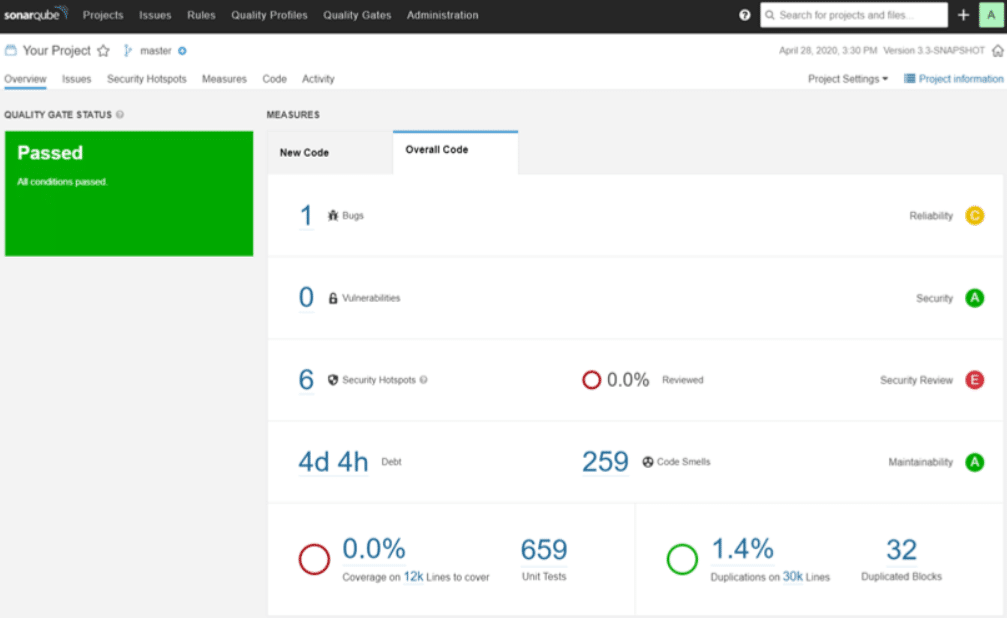
SonarQube propose des options d'analyse statique de code autogérées (SonarQube Server) et basées sur le cloud (SonarQube Cloud) pour examiner le code à la recherche de bogues, de problèmes de qualité et de vulnérabilités de sécurité, qu'il soit écrit par des développeurs ou généré par l'IA. En s'intégrant directement au flux de travail DevOps, il aide les équipes à détecter et corriger les problèmes tôt, améliorant ainsi la santé du code avant la mise en production.
Pourquoi j'ai choisi SonarQube
Ce qui m'a marqué chez SonarQube, c'est son analyseur intégré, qui met en évidence les problèmes au fur et à mesure que vous codez. J'ai apprécié que chaque problème soit catégorisé selon sa gravité et inclue un temps de correction estimé, ce qui facilite la priorisation des améliorations. Il fournit aussi des retours automatiques sur la qualité, la sécurité et la conformité du code IA, directement dans les pull requests et branches. Cette intégration maintient les contrôles de code dans le processus de développement habituel sans ajouter d'étapes supplémentaires.
Principales fonctionnalités de SonarQube
En plus de son fort accent sur la qualité du code, SonarQube propose plusieurs fonctionnalités qui renforcent sa valeur en tant qu'outil d'analyse de code.
- Prise en charge multilingue : SonarQube gère plus de 35 langages de programmation, le rendant polyvalent pour divers environnements de développement.
- Détection des vulnérabilités de sécurité : Il fournit des analyses de sécurité complètes, identifiant les vulnérabilités et proposant des solutions correctives.
- Retour en temps réel dans l'EDI : Grâce à SonarLint, les développeurs reçoivent un retour immédiat dans leur EDI préféré, favorisant une approche proactive de la qualité du code.
- Tableaux de bord personnalisables : Les équipes peuvent créer des tableaux de bord sur mesure pour suivre les indicateurs de qualité du code et l'évolution au fil du temps.
Intégrations SonarQube
Des intégrations sont disponibles nativement avec les plateformes DevOps telles que GitHub, GitLab, Bitbucket et Azure DevOps. D'autres connexions peuvent être réalisées via l'API gratuite de SonarQube et les webhooks.
Pros and Cons
Pros:
- Prend en charge plus de 30 langages de programmation, dont Java, Ruby et C
- Propose des intégrations avec les principales plateformes DevOps
- Réalise des inspections continues du code
Cons:
- Peut générer des faux positifs
- La version gratuite a des fonctionnalités limitées
New Product Updates from SonarQube

SonarQube Cloud Adds Azure DevOps Analysis and SCIM Automation
SonarQube Cloud introduces Automatic Analysis for Azure DevOps and SCIM User Lifecycle Management (Beta). These updates automate code analysis and user management, reducing manual setup and improving efficiency. For more information, visit SonarQube Cloud’s official site.
 .
.
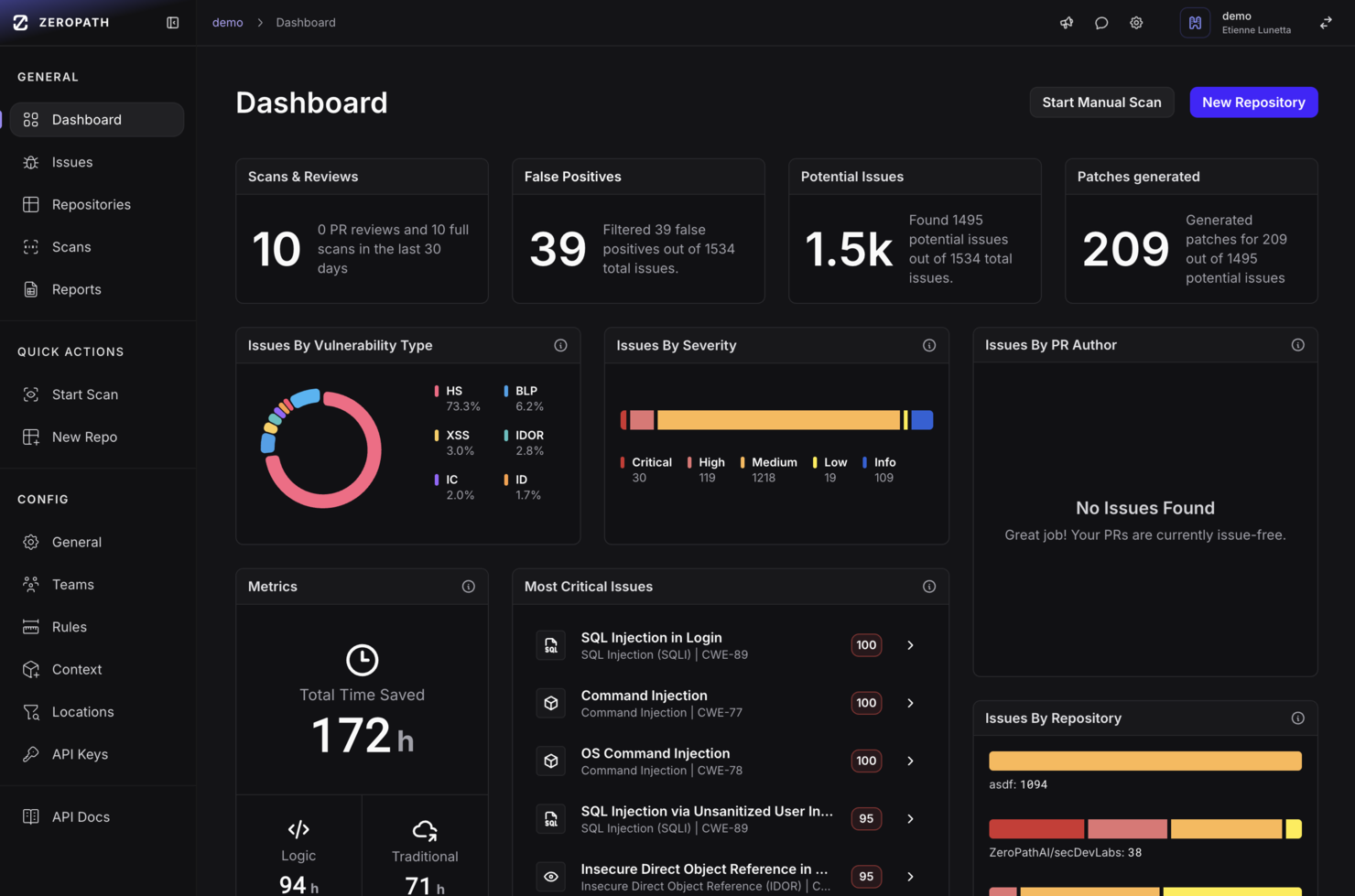
Zeropath est une plateforme d’Analyse de la Sécurité des Applications Statique (SAST) pilotée par l’IA, conçue pour les entreprises et professionnels souhaitant renforcer la sécurité du code et optimiser leurs processus de développement logiciel. Grâce à sa capacité à identifier et corriger automatiquement les vulnérabilités, Zeropath convient particulièrement aux équipes qui placent la sécurité au premier plan sans sacrifier la rapidité. En réduisant les faux positifs et en s’intégrant parfaitement aux plateformes de développement populaires, Zeropath transforme la sécurité de point de blocage potentiel en catalyseur pour un déploiement de code plus sûr et plus rapide.
Pourquoi j'ai choisi Zeropath
J’ai choisi Zeropath car sa démarche axée sur l’IA pour l’analyse de code offre des fonctionnalités uniques, essentielles aux équipes de développement modernes. La capacité de la plateforme à scanner rapidement, avec des analyses des demandes de fusion réalisées en moins de 60 secondes, assure à votre équipe des retours ponctuels sans perturber le flux de développement. De plus, la génération automatique de correctifs par Zeropath, perfectionnée grâce à des instructions en langage naturel, traite efficacement les vulnérabilités et permet à votre équipe de se concentrer sur l’innovation plutôt que les corrections manuelles.
Fonctionnalités principales de Zeropath
En plus de ses atouts majeurs, Zeropath propose d’autres fonctionnalités qui en font un outil précieux pour l’analyse de code :
- Détection de secrets : Analyse vos dépôts à la recherche de clés et jetons divulgués.
- Support complet des langages : Prend en charge plusieurs langages de programmation, ce qui accroît sa polyvalence selon les projets.
- Application de politiques : Permet d’écrire des règles en langage naturel et de les faire respecter sur l’ensemble du code.
- Intégration avec les systèmes de gestion de versions : S’intègre aisément aux systèmes populaires comme GitHub et GitLab, offrant des retours en temps réel au cours du cycle de développement.
Intégrations Zeropath
Les intégrations comprennent GitHub, GitLab, Bitbucket, Azure Pipelines, VS Code, CircleCI et Docker.
Pros and Cons
Pros:
- Détecte les failles logiques et risques cachés qui pourraient passer inaperçus lors d'analyses classiques.
- Réduit les signalements inutiles afin que votre équipe puisse se concentrer sur les vrais problèmes.
- Vous fournit des correctifs clairs qui accélèrent la révision de la sécurité.
Cons:
- Des vulnérabilités peuvent être manquées si l'IA n'est pas correctement configurée.
- Un temps d'adaptation peut être nécessaire pour ajuster votre workflow à son automatisation.

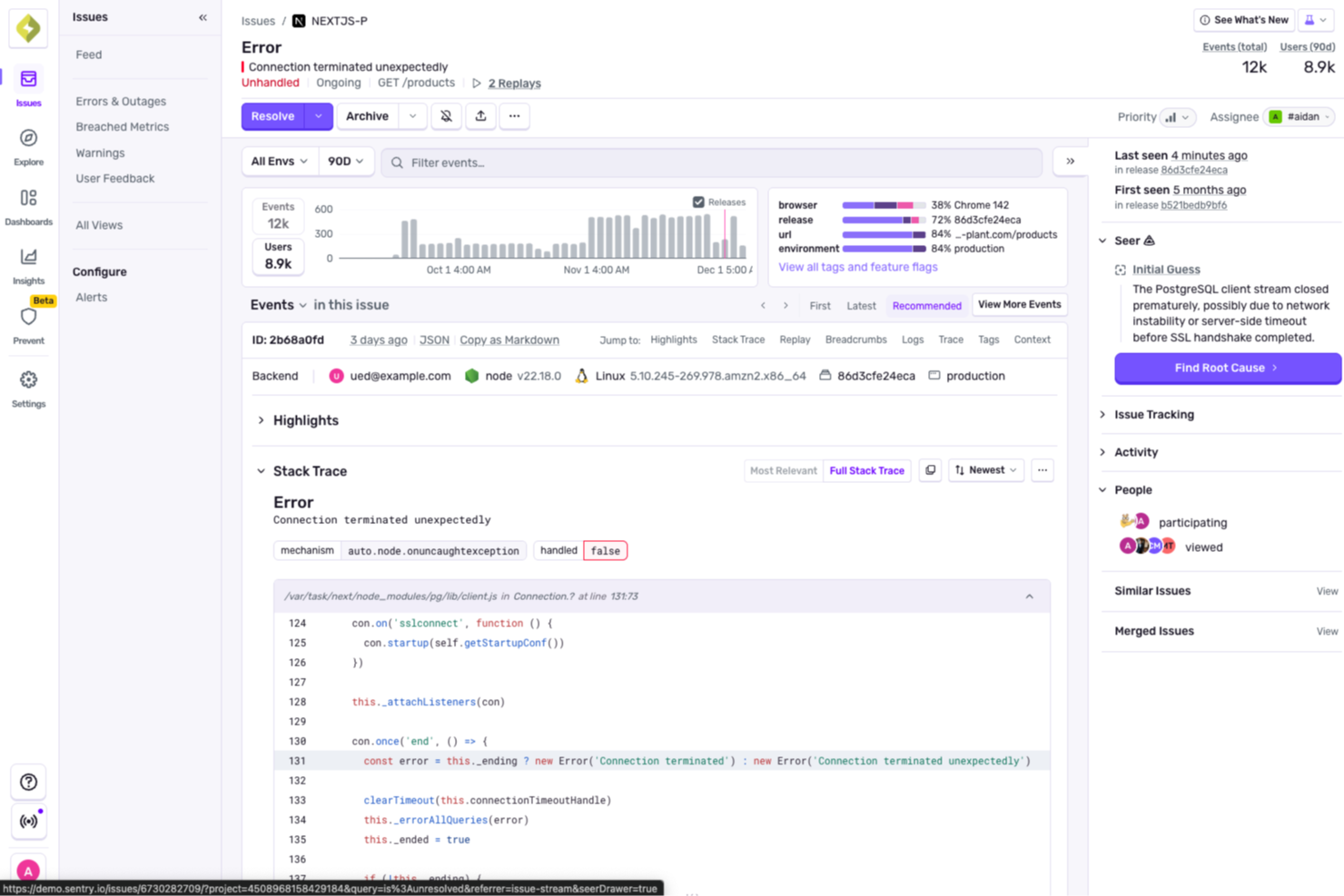
Sentry est un outil essentiel pour les développeurs et les équipes souhaitant améliorer leurs processus d’analyse de code. Il offre une suite complète de fonctionnalités axées sur la surveillance des performances applicatives et le suivi des erreurs, ce qui le rend adapté aux développeurs web, aux créateurs d’applications mobiles et aux ingénieurs logiciels en entreprise. Grâce à son intégration avec des plateformes populaires comme GitHub et Slack, Sentry vous aide à résoudre les problèmes critiques avant qu’ils ne prennent de l’ampleur, garantissant ainsi des déploiements plus fluides et une meilleure qualité logicielle.
Pourquoi j’ai choisi Sentry
J’ai choisi Sentry pour son approche unique de l’analyse de code basée sur l’IA, qui le distingue sur le marché très concurrentiel des outils de surveillance. Le débogueur IA de Sentry, Seer, fournit des informations inégalées en analysant journaux et traces afin d’identifier et de résoudre rapidement les problèmes. Cette fonctionnalité, associée à sa capacité à lier automatiquement les incidents aux versions et aux pull requests, offre un contexte précieux lors du débogage. Ces fonctionnalités répondent parfaitement aux attentes des développeurs exigeant une détection précise des erreurs afin de maintenir un code de haute qualité.
Principales fonctionnalités de Sentry
En plus de ses capacités de débogage alimentées par l’IA, Sentry propose un ensemble de fonctionnalités qui renforcent son efficacité comme outil d’analyse de code.
- Surveillance des erreurs : Suit et signale les erreurs en temps réel, vous aidant à identifier et corriger les problèmes au fur et à mesure qu’ils apparaissent.
- Traçage des performances : Offre une vue sur les performances de l’application, vous permettant de détecter les requêtes lentes et d’optimiser en conséquence.
- Relecture de session : Permet de rejouer les sessions utilisateur afin de comprendre le contexte des erreurs et des interactions.
- Mise en place minimale : S’intègre rapidement à vos projets existants pour permettre une surveillance avec peu de modifications du code.
Intégrations de Sentry
Les intégrations incluent GitHub, Slack, Jira, Bitbucket, GitLab, Trello, PagerDuty, Microsoft Teams, Asana et Datadog.
Pros and Cons
Pros:
- L’IA signale les problèmes dans les pull requests
- Génération automatisée de tests unitaires
- Surveillance des erreurs en production en temps réel
Cons:
- La configuration initiale peut être complexe
- Les suggestions de l’IA peuvent nécessiter une vérification
New Product Updates from Sentry

Sentry Adds AI Dashboard Generation in Beta
Sentry introduces AI Dashboard Generation in beta, enabling users to create dashboards using prompts through an agent. This makes dashboard setup faster and easier without manual configuration. For more information, visit Sentry’s official site.
 .
.
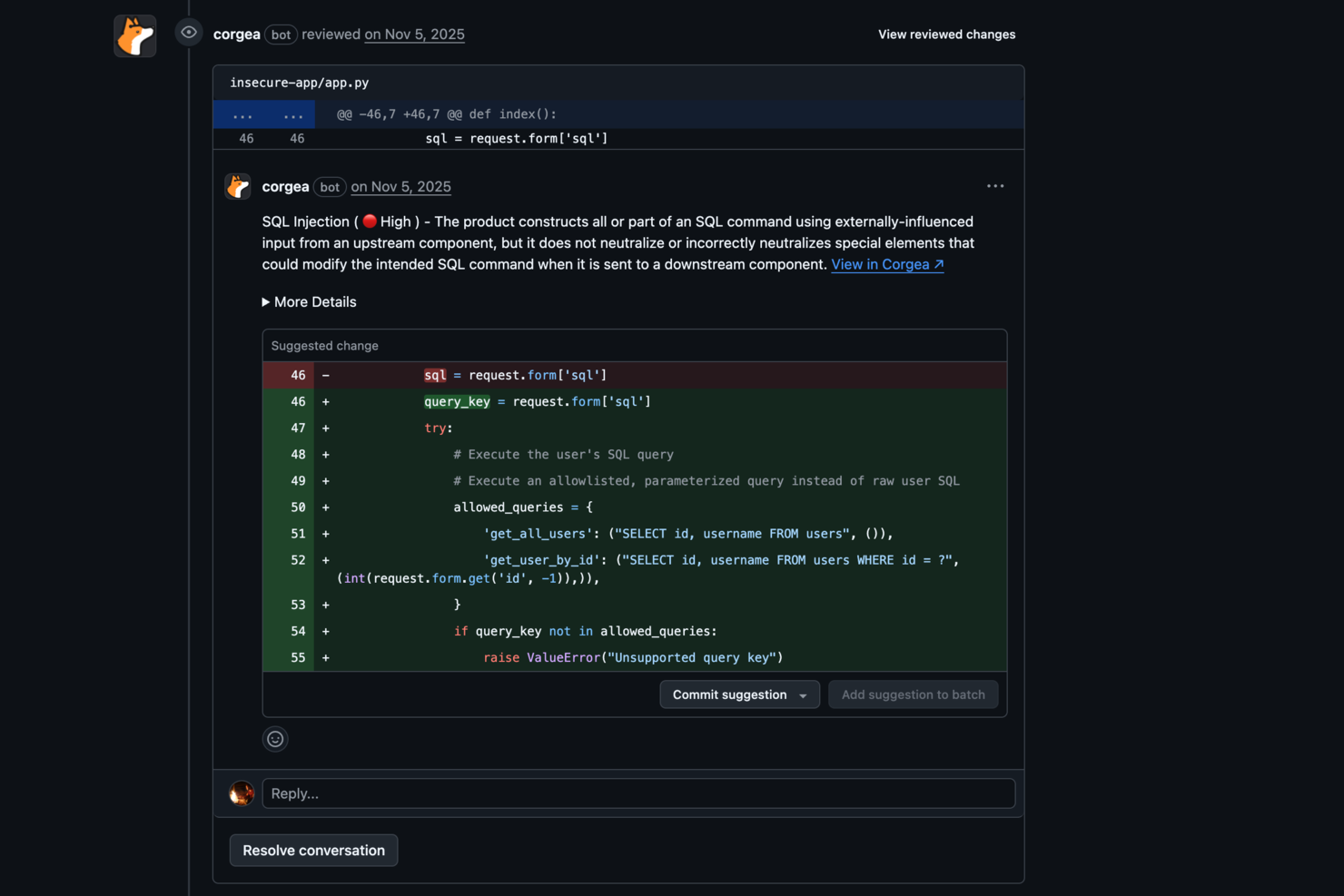
Corgea est conçu pour les développeurs et les professionnels de la sécurité qui souhaitent une analyse de code plus intelligente. Il s'attaque au problème de la détection et de la correction des vulnérabilités en intégrant l'analyse basée sur l'IA directement dans votre flux de travail existant. Parce qu'il comprend le contexte de votre code, Corgea réduit considérablement les faux positifs et propose des corrections réellement exploitables. Cela en fait un bon choix pour les équipes qui souhaitent améliorer la sécurité sans subir les bruits parasites et les inefficacités fréquents des outils traditionnels.
Pourquoi j'ai choisi Corgea
J'ai choisi Corgea parce qu'il utilise une SAST native à l'IA pour détecter des vulnérabilités souvent manquées par les outils traditionnels, y compris les failles de logique métier et les problèmes de code complexes. Il s'appuie sur des modèles de langage avancés pour comprendre le contexte du code, ce qui réduit nettement les faux positifs. De plus, son tri automatisé et sa détection contextuelle ne se contentent pas de signaler les problèmes ; ils fournissent des corrections concrètes. Pour les équipes axées sur la sécurité, Corgea constitue une option plus efficace et pragmatique.
Principales fonctionnalités de Corgea
En plus de ses capacités SAST natives à l'IA, Corgea offre plusieurs autres fonctionnalités qui renforcent son utilité en tant qu'outil d'analyse de code :
- Analyse des dépendances : Identifie automatiquement les vulnérabilités dans les dépendances tierces sur plus de 25 langages de programmation.
- Analyse de l'Infrastructure as Code (IaC) : Détecte les mauvaises configurations de sécurité et les secrets exposés dans le code d'infrastructure avant le déploiement.
- Analyse des secrets : Détecte les identifiants codés en dur et les informations sensibles grâce à la reconnaissance de motifs et à la compréhension contextuelle alimentée par l'IA.
- Remédiation par IA : Génère des correctifs contextuels pour les vulnérabilités en analysant les schémas de code et les contrôles de sécurité.
Intégrations Corgea
Les intégrations natives ne sont actuellement pas listées par Corgea.
Pros and Cons
Pros:
- Détection de vulnérabilités alimentée par l'IA
- Correctifs de code sécurisé automatiques
- Détection de failles de logique métier
Cons:
- Pas de fonctionnalités de protection à l'exécution
- Axé sur la sécurité applicative, pas sur la pile complète

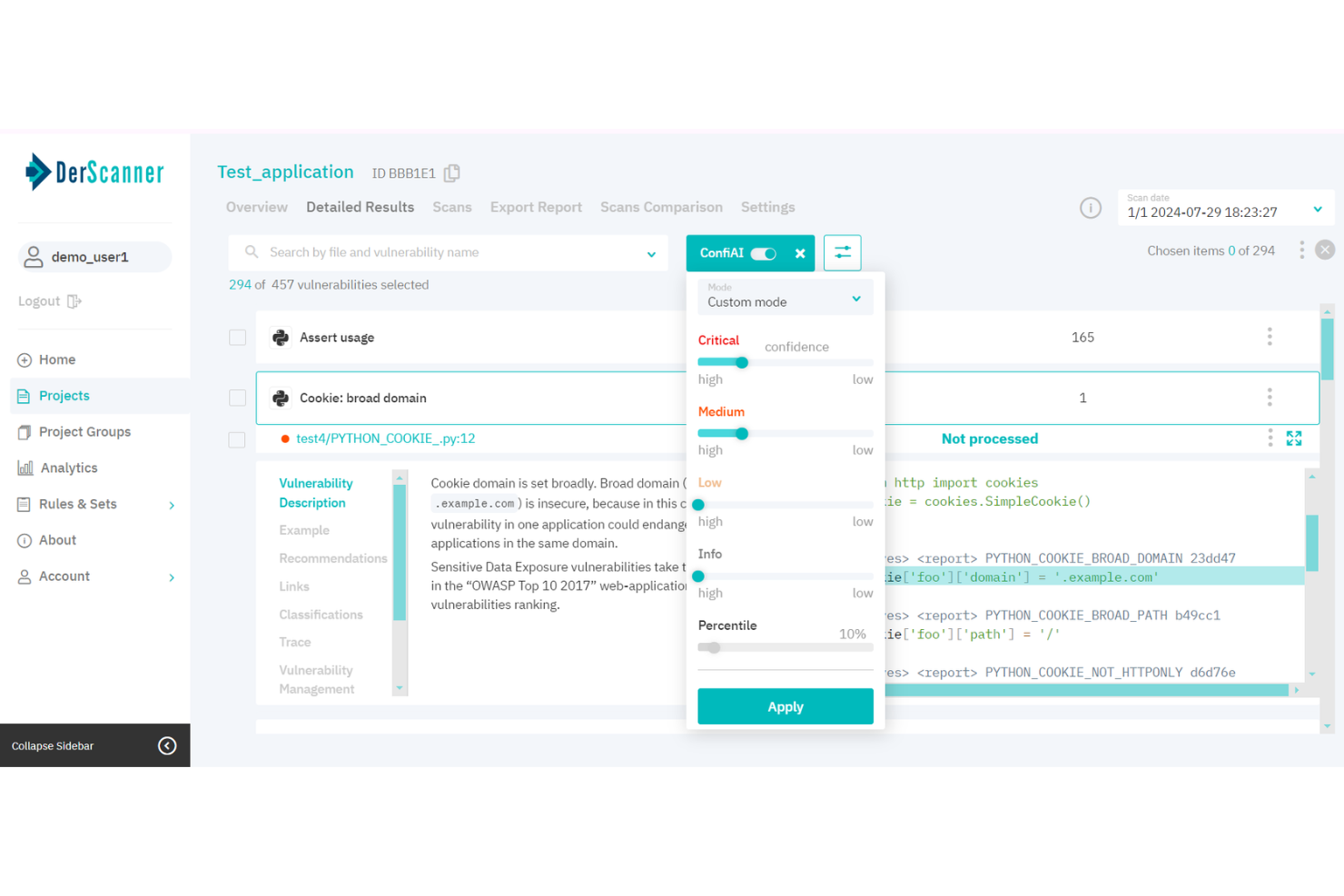
DerScanner est une plateforme d’analyse de la sécurité des applications qui combine plusieurs méthodes d’analyse pour vous aider à identifier et corriger les vulnérabilités dans vos logiciels.
Pourquoi j’ai choisi DerScanner : L’une des principales raisons pour lesquelles j’ai choisi DerScanner est sa capacité à analyser à la fois le code source et les fichiers binaires. Cette fonctionnalité est particulièrement utile lors du travail avec des applications héritées ou des logiciels compilés, car elle permet de détecter des failles de sécurité même lorsque le code source original n’est pas disponible. Grâce à son analyse approfondie, elle garantit que les vulnérabilités ne passent pas inaperçues. J’apprécie également le moteur Confi AI de DerScanner, qui minimise les faux positifs. Au lieu de passer du temps à trier des alertes inutiles, votre équipe peut se concentrer sur les vrais risques de sécurité.
Fonctionnalités et intégrations remarquables de DerScanner :
Fonctionnalités : test de sécurité dynamique des applications (DAST), qui évalue les applications web actives pour identifier les vulnérabilités du point de vue d’un attaquant. L’analyse de la composition logicielle (SCA) apporte une visibilité sur les dépendances open source et la chaîne d’approvisionnement, aidant votre équipe à traiter les risques de sécurité sur les composants tiers. L’outil prend également en charge l’analyse de sécurité des applications mobiles, permettant une évaluation sécuritaire plus complète.
Intégrations : Jira, GitLab CI, Jenkins, Azure DevOps, TeamCity, SonarQube, GitHub, Bitbucket et SVN.
Pros and Cons
Pros:
- Fonctionnalités pour réduire la surcharge d’alertes
- Prend en charge plusieurs langages de programmation
- Détection efficace des vulnérabilités
Cons:
- Le processus de configuration peut être complexe
- Utilisateurs limités sur les offres de niveau inférieur

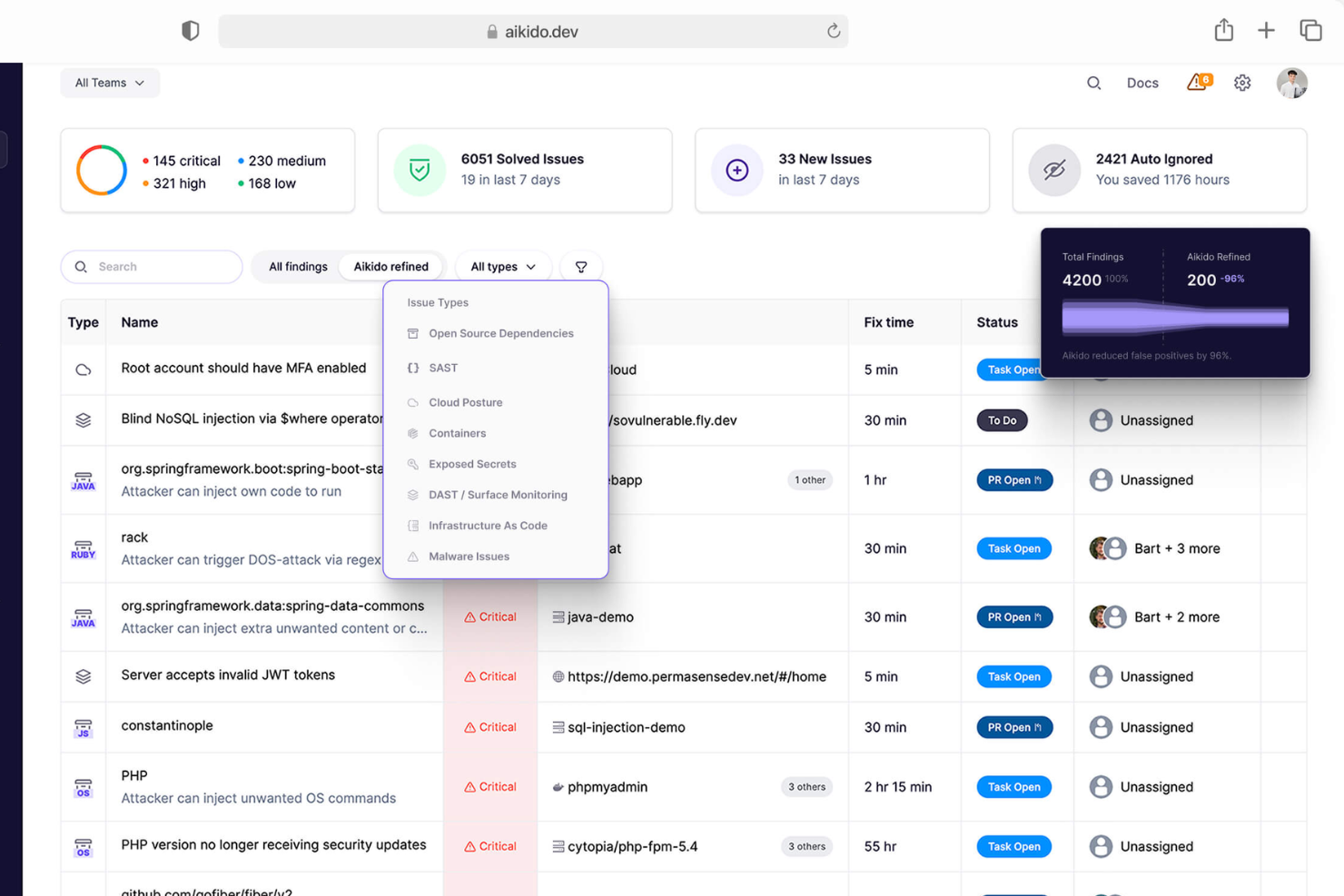
Aikido Security est une plateforme DevSecOps qui offre des solutions de sécurité complètes pour les environnements de code et cloud.
Pourquoi j'ai choisi Aikido Security : Aikido combine des contrôles de qualité du code de nouvelle génération avec des tests de sécurité applicative statique (SAST) sur une seule plateforme, aidant les développeurs à détecter tôt à la fois les bugs et les vulnérabilités. Ses revues alimentées par l’IA signalent les problèmes de maintenabilité et de qualité du code tout en détectant les failles critiques comme les injections SQL, le cross-site scripting (XSS) et les dépassements de tampon. Propulsée par des analyseurs open-source reconnus tels que Bandit, Opengrep (remplaçant Semgrep) et Gosec, associés aux moteurs propriétaires d’Aikido pilotés par l’IA, la plateforme fournit des analyses approfondies, précises et exploitables.
Fonctionnalités remarquables et intégrations d'Aikido Security :
Les fonctionnalités qui distinguent également Aikido sont ses capacités de gestion de la posture de sécurité cloud (CSPM), qui détectent les risques liés à l’infrastructure cloud sur les principaux fournisseurs, et sa fonction de détection de secrets qui prévient l’accès non autorisé en contrôlant votre code pour repérer les clés API, mots de passe, certificats et clés de chiffrement divulgués ou exposés.
Les intégrations incluent Amazon Web Services (AWS), Google Cloud, Microsoft Azure Cloud, Drata, Vanta, AWS Elastic Container Registry, Docker Hub, Jira, Asana et GitHub.
Pros and Cons
Pros:
- Interface conviviale
- Fournit des recommandations concrètes
- Propose un tableau de bord complet et des rapports personnalisables
Cons:
- Ignore les vulnérabilités si aucune correction n'est disponible
- Uniquement disponible en anglais
New Product Updates from Aikido Security

Aikido Adds Lovable Integration for Pentesting
Aikido introduces integration with Lovable and integrated pentesting. This update helps teams detect and fix security issues before deployment. For more information, visit Aikido Security's official site.

Mend.io
Idéal pour la remédiation de sécurité alimentée par IA directement dans le dépôt
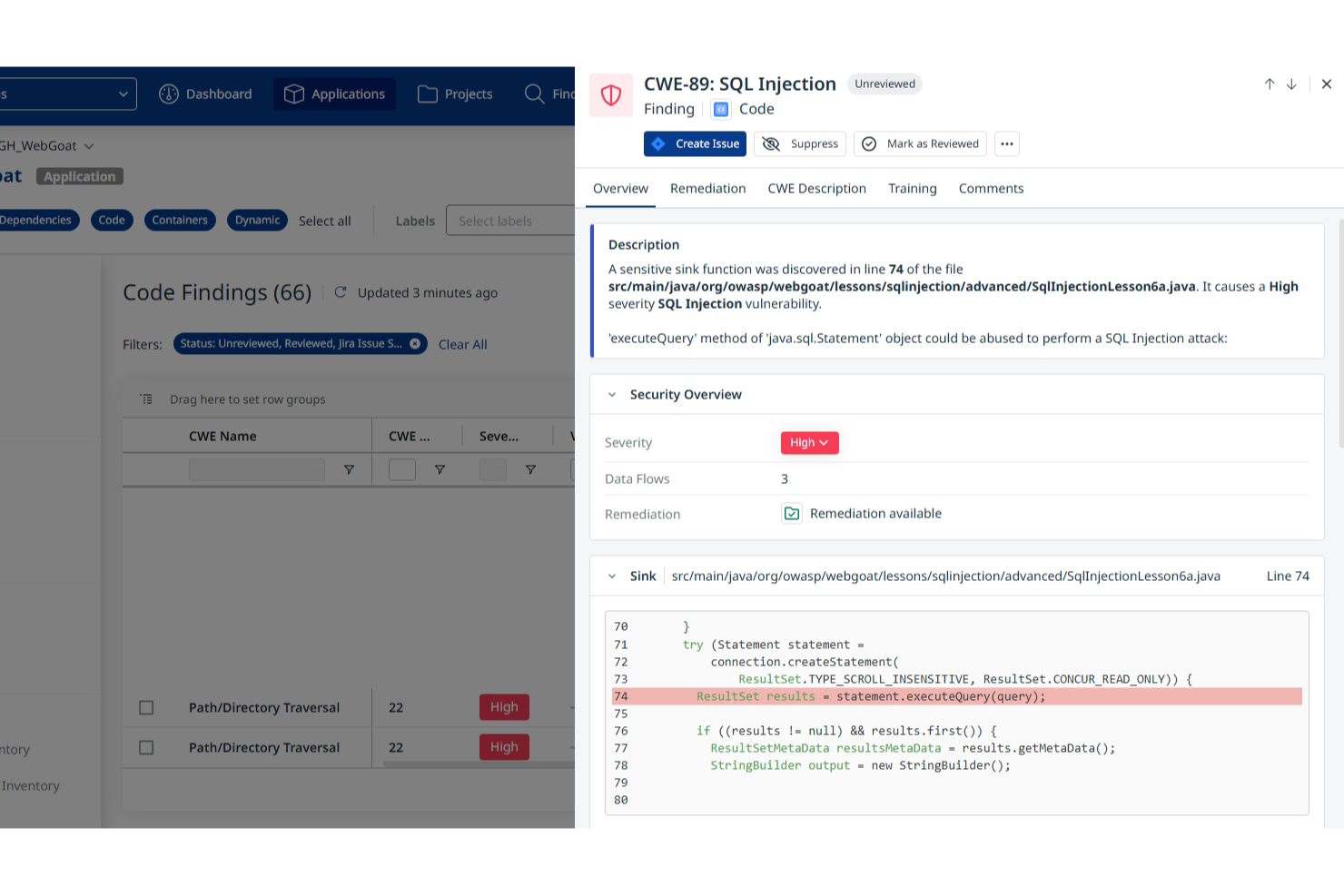
Mend.io est une plateforme d'analyse de code qui vous aide à détecter les vulnérabilités de sécurité et les problèmes de licence dans le code propriétaire et open source. Elle combine l'analyse statique de la sécurité des applications (SAST) avec l'analyse de composition logicielle (SCA) pour vous offrir une visibilité sur les risques de votre application au fur et à mesure de son développement.
Pourquoi j'ai choisi Mend.io : J'ai ajouté Mend.io à cette liste car il s'attaque à deux points sensibles auxquels de nombreuses équipes de sécurité sont confrontées : la lenteur des analyses et l'abondance de résultats peu pertinents. Son moteur d'analyse statique fonctionne 10 fois plus vite que les outils SAST classiques et se concentre sur l'identification des nouveaux problèmes introduits depuis votre dernier commit. Ainsi, vous pouvez vous concentrer sur la résolution des véritables priorités au lieu de traiter des alertes obsolètes. J'apprécie également la correction basée sur l'IA, qui suggère des solutions que vous pouvez appliquer en un seul clic afin de réduire le temps moyen de résolution.
Fonctionnalités et intégrations remarquables de Mend.io :
Fonctionnalités incluent la gestion de la conformité des licences pour les paquets open source, l'analyse des images de conteneurs et l'évaluation des risques pour les composants de code générés par IA. La plateforme propose aussi des contrôles d'accès basés sur les rôles, des rapports prêts pour l'audit et un accès API pour des intégrations personnalisées.
Intégrations incluent Azure DevOps, Bitbucket Cloud, GitHub.com, GitHub Enterprise, GitLab, Mend pour Azure Repos, Mend pour Bitbucket Data Center et Mend pour GitLab.
Pros and Cons
Pros:
- Analyses plus rapides que les SAST traditionnels
- Remédiation en un clic alimentée par IA
- Couvre le code propriétaire et open source
Cons:
- La configuration initiale peut nécessiter des ajustements
- Prise en charge limitée des langages et des paquets
New Product Updates from Mend.io
Mend CLI Adds Support for the Conan Package Manager
Mend.io has introduced support for the Conan package manager in its latest CLI update, providing seamless integration without additional configuration. For more information, visit Mend.io's official site.
 .
.
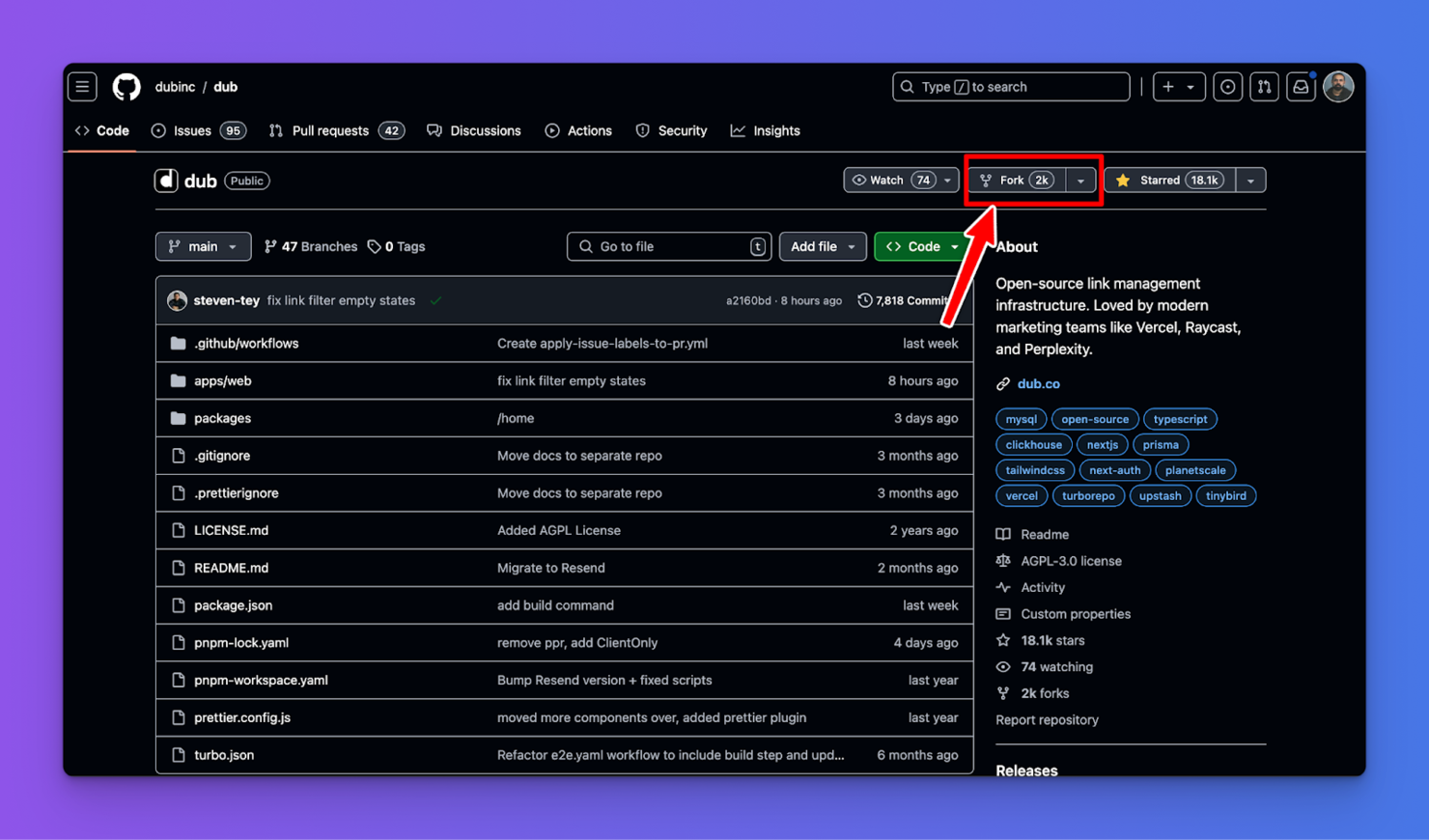
CodeRabbit est un outil alimenté par l'IA conçu pour améliorer le processus de revue de code. En automatisant les vérifications et en fournissant des analyses intelligentes, il aide les développeurs à détecter et à corriger les problèmes plus rapidement et efficacement.
Pourquoi j'ai choisi CodeRabbit : J'ai choisi CodeRabbit pour ses capacités d'analyse avancées. L'outil utilise des analyseurs statiques et un raisonnement basé sur l'IA, ce qui signifie qu'il ne se contente pas de trouver des bogues, mais comprend la structure du code. Cela conduit à une revue plus approfondie avec moins de bruit, permettant à votre équipe de se concentrer sur l'essentiel. De plus, sa fonctionnalité de rapports automatisés génère des notes de versions utiles et des rapports quotidiens, tenant tout le monde informé sans effort supplémentaire.
Fonctionnalités et intégrations remarquables de CodeRabbit :
Fonctionnalités : chat agentique, qui permet d'interagir et d'automatiser des tâches comme la génération de code et la résolution des retours, rendant votre flux de travail plus cohérent. L'outil offre aussi des résumés de PR simples qui fournissent une vue d'ensemble concise des fichiers modifiés et des descriptions, vous aidant à comprendre rapidement ce qui a été modifié. De plus, CodeRabbit inclut l'identification automatisée des problèmes, garantissant que les écarts sont mis en avant et résolus rapidement.
Intégrations : GitHub, GitLab, Azure DevOps, Jira, Linear, Mercury, Writer, Abnormal Security, Ashby, Chegg, Sisense et Groupon.
Pros and Cons
Pros:
- CodeRabbit CLI permet des revues de code par IA directement dans le terminal
- Les utilisateurs peuvent examiner le code généré par l'IA ligne par ligne avant de valider, assurant des vérifications approfondies
- Fournit un retour instantané sur le code, identifiant hallucinations, failles logiques, vulnérabilités et tests manquants
Cons:
- Certains utilisateurs peuvent trouver le paramétrage initial et l'intégration avec les dépôts fastidieux
- Peut ne pas complètement saisir des bases de code complexes, ce qui peut entraîner des imprécisions et affecter la fiabilité du retour

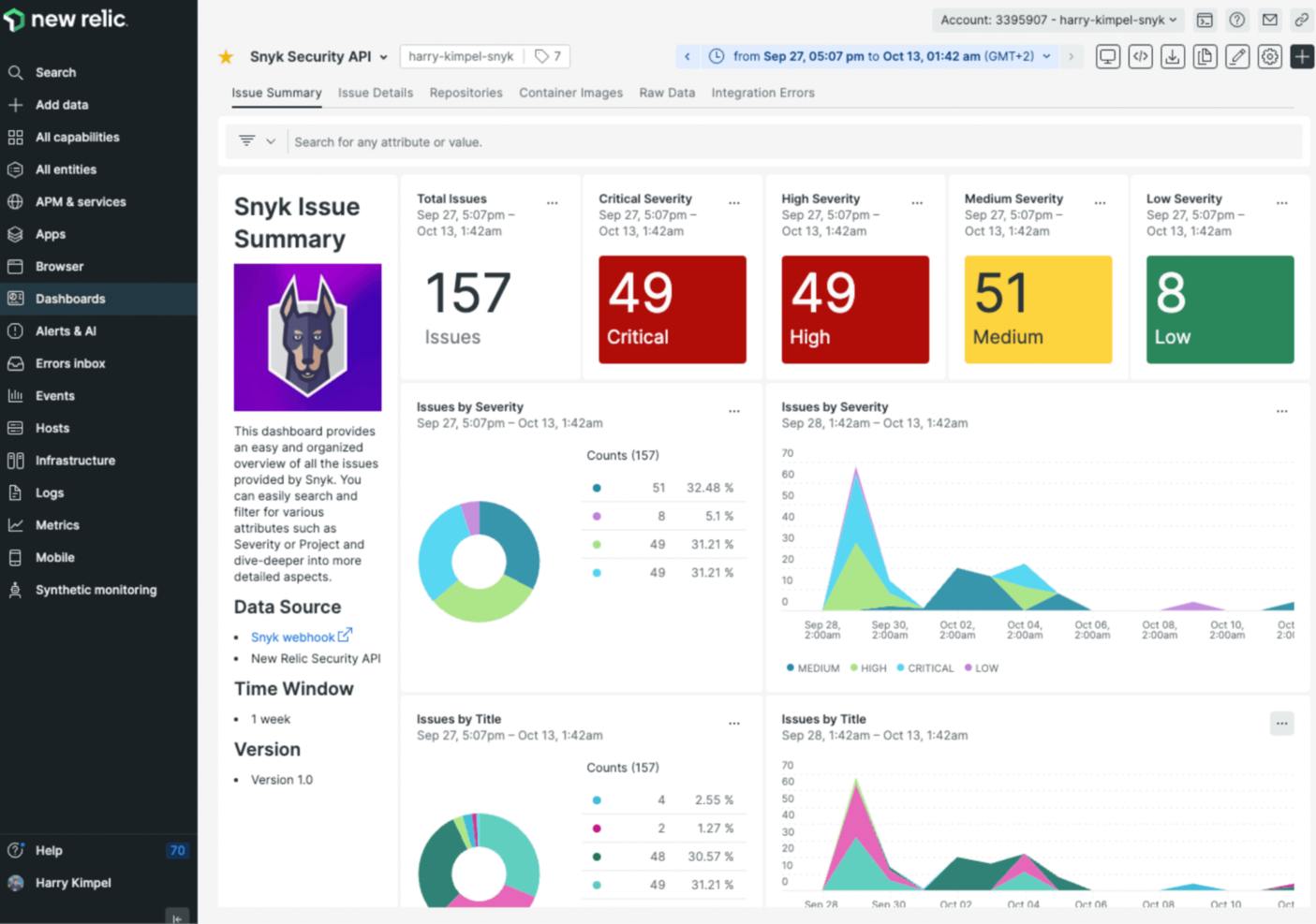
Snyk est une plateforme de sécurité dédiée aux développeurs qui propose une analyse et une surveillance en temps réel de votre code. Elle offre également une intégration aux dépôts git, ce qui permet de prioriser les problèmes sur l'ensemble de vos projets.
Pourquoi j'ai choisi Snyk : J'ai ajouté Snyk à cette liste car il propose des fonctionnalités de sécurité impressionnantes. Pour commencer, son outil DeepCode AI génère une liste de correctifs rapides dès qu'il détecte des problèmes. Vous pouvez examiner et appliquer ces correctifs directement depuis votre environnement de développement intégré (IDE). Ensuite, Snyk attribue à chaque problème un score de risque, ce qui vous aide à prioriser les correctifs et à renforcer la sécurité de votre code.
Fonctionnalités et intégrations remarquables de Snyk :
Fonctionnalités : ce qui fait de Snyk un excellent outil d'analyse de code inclut l'analyse des conteneurs pour repérer les vulnérabilités dans les images de conteneurs, ainsi que la surveillance en direct du code qui valide votre travail au fur et à mesure. J'ai apprécié pouvoir vérifier mon code même lorsque je n'étais pas devant mon bureau durant mes tests.
Intégrations : des intégrations natives sont disponibles pour des outils CI/CD tels que Jenkins, Azure Pipelines et Bitbucket Pipelines. Il existe également des plugins pour des IDEs comme Eclipse, PhpStorm et Visual Studio.
Pros and Cons
Pros:
- Facile à intégrer et à configurer
- Propose une intégration continue avec les pipelines CI/CD
- Interface utilisateur facile à prendre en main
Cons:
- Les analyses sont plus lentes
- Le plan gratuit est limité à 100 tests par mois

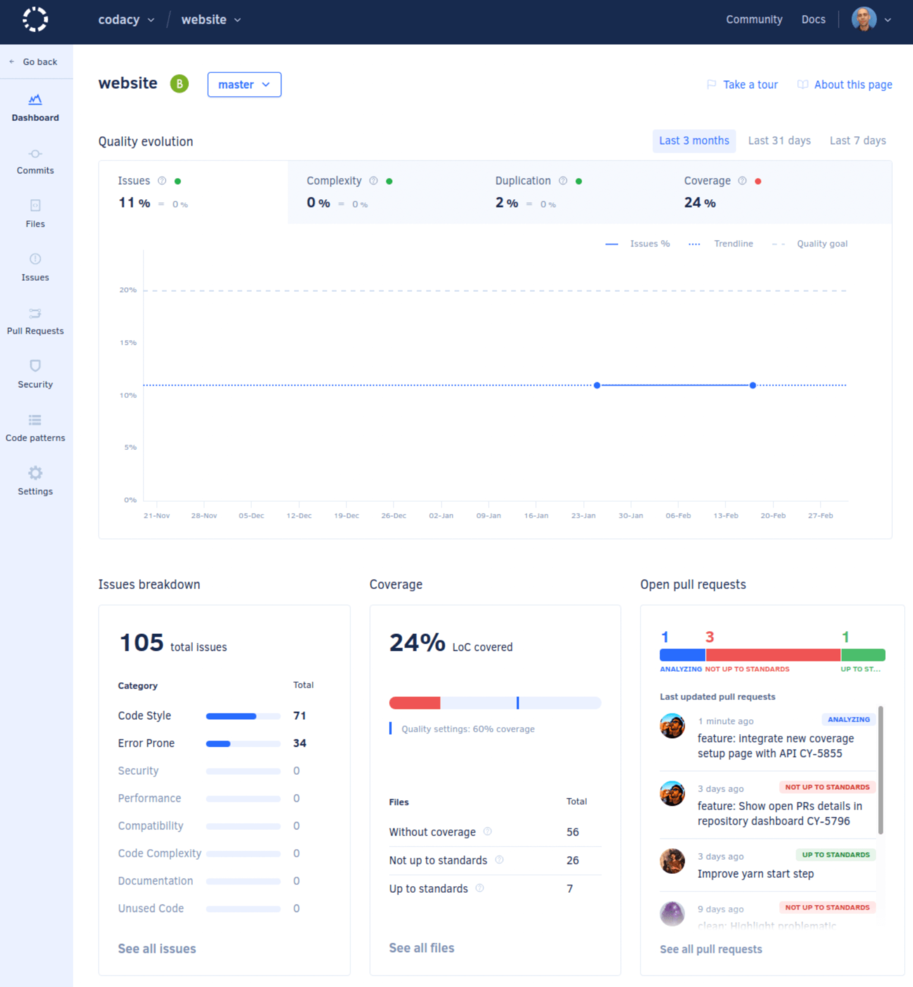
Codacy est un outil d'analyse de code qui automatise les revues de code. Il analyse votre code source et met en évidence les problèmes à mesure que vous travaillez, vous permettant ainsi de développer des logiciels plus efficaces. La plateforme prend en charge plus de 40 langages et frameworks de programmation dès l'installation.
Pourquoi j'ai choisi Codacy : J'ai sélectionné Codacy car il s’intègre parfaitement aux workflows CI — une pratique DevOps qui consiste à fusionner des modifications de code dans un dépôt. L'intégration de Codacy avec GitHub m'a permis d’obtenir des retours instantanés sur mon code, afin de corriger rapidement les problèmes éventuels. Une autre raison de mon choix est que Codacy aide à standardiser la qualité du code en bloquant automatiquement les pull requests qui ne respectent pas certains standards.
Fonctionnalités et intégrations remarquables de Codacy :
Fonctionnalités que j’ai appréciées chez Codacy : la possibilité de définir des ensembles de règles personnalisées. Codacy propose des centaines de règles par défaut, mais vous pouvez également importer votre propre fichier de configuration. Cela facilite l’application de conditions spécifiques à une base de code et permet de maintenir la qualité du code à travers toutes les équipes.
Intégrations : des intégrations natives sont disponibles avec GitHub, GitLab et Bitbucket. Des intégrations natives existent également pour Jira et Slack.
Pros and Cons
Pros:
- Fournit des rapports utiles sur la qualité du code
- S’intègre facilement aux workflows de développement
- Respecte les normes de sécurité SOC2
Cons:
- Pas d’intégration avec Lombok, une bibliothèque Java qui réduit le code passe-partout
- Impossible d’exporter les motifs de code

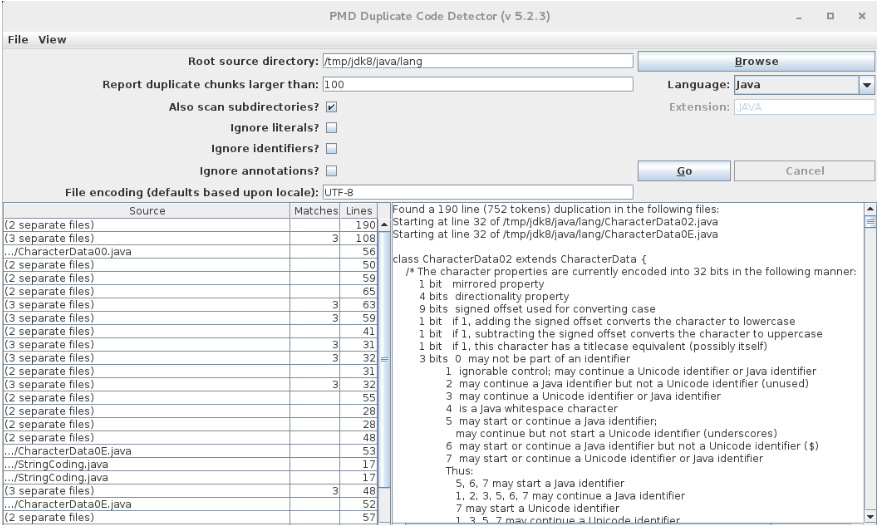
PMD est un outil open-source qui fournit une analyse statique pour des langages de programmation tels que JavaScript, Apex et XML. Il est disponible pour Windows, macOS et Linux.
Pourquoi j'ai choisi PMD : La plupart des outils d'analyse de code nécessitent une licence payante ou offrent des fonctionnalités limitées dans leurs versions gratuites. Mais la raison pour laquelle j'ai choisi PMD est parce qu'il s'agit d'un logiciel open-source, ce qui en fait une alternative rentable aux options payantes.
Fonctionnalités et intégrations remarquables de PMD :
Fonctionnalités que j'ai appréciées en travaillant avec PMD : ses vérifications intégrées permettent de configurer des règles pour différents langages afin d'imposer des standards de codage. L'outil inclut également le Copy/Paste Detector (CPD), qui vous aide à identifier le code dupliqué dans votre base de code.
Intégrations sont disponibles avec des IDE populaires comme Eclipse, JDeveloper et Gradle via des plugins.
Pros and Cons
Pros:
- Peut détecter le code dupliqué dans divers langages de programmation
- Capable de bien gérer les faux positifs
- Gratuit et open-source
Cons:
- La configuration des règles d'analyse de PMD peut être compliquée
- Les retours sur le code ne sont pas fournis en temps réel

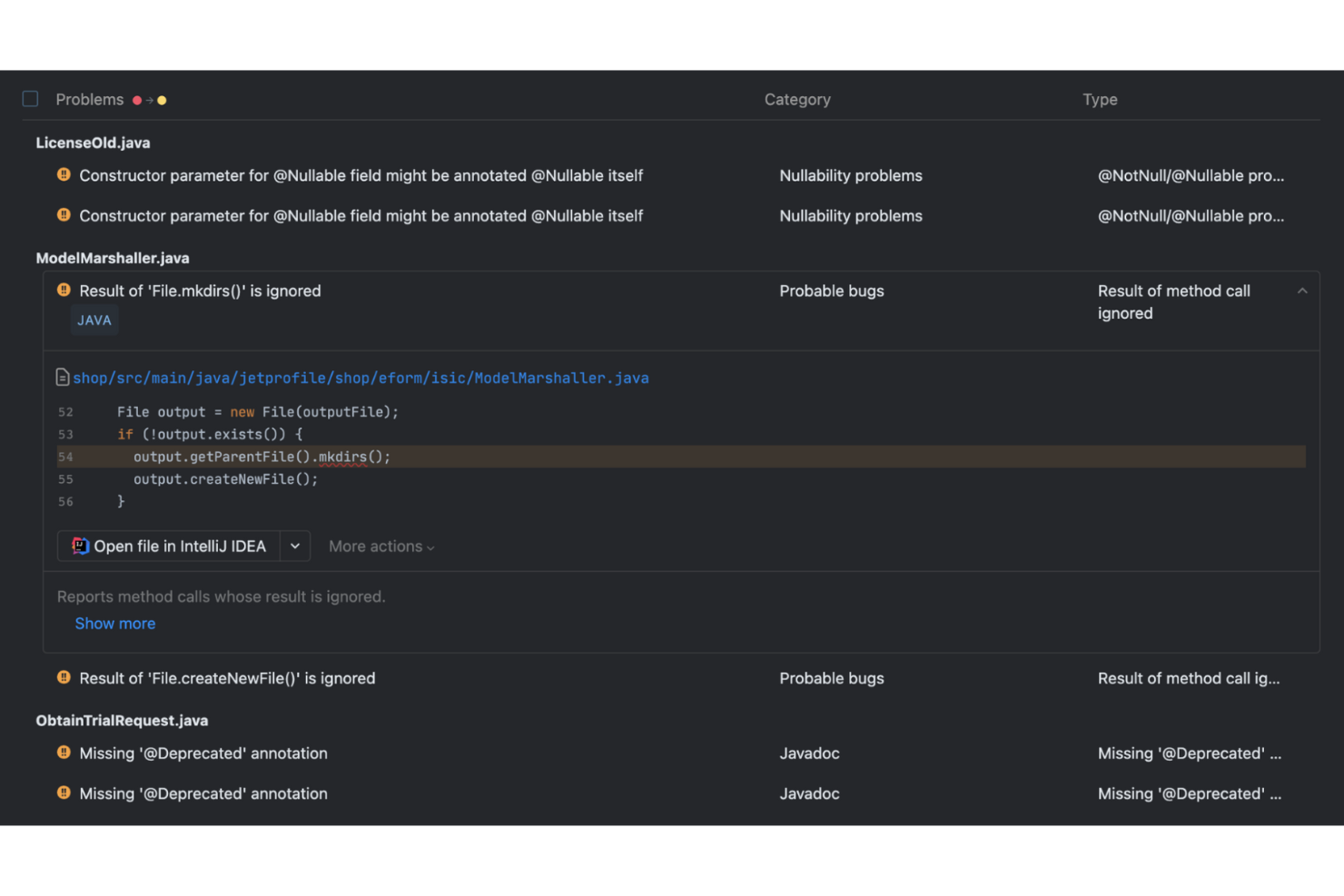
Qodana, développé par JetBrains, est un outil d'analyse statique de code destiné aux équipes de développement souhaitant maintenir une haute qualité de code grâce à ses inspections approfondies et ses capacités de correction rapide.
Pourquoi j'ai choisi Qodana : Il prend en charge plus de 60 langages de programmation, dont Java, JavaScript, TypeScript, PHP, Kotlin, Python, Go et C#. Il propose des inspections personnalisables, permettant aux équipes d'adapter les analyses aux besoins spécifiques de l'entreprise, et contribue à sécuriser les bases de code en détectant les dépendances vulnérables. Son intégration avec les systèmes CI/CD tels que GitHub Actions, GitLab, TeamCity et Jenkins, ainsi que ses corrections automatiques et ses seuils de qualité flexibles, garantissent une qualité de code constante.
Fonctionnalités et intégrations phares de Qodana :
Fonctionnalités comprennent l'analyse des flux de données pour identifier des problèmes complexes tels que les déréférencements de pointeurs nuls et les fuites de ressources, l'analyse des duplications pour détecter et gérer le code dupliqué, ainsi que l'analyse de la contamination des données pour évaluer la circulation d'entrées utilisateur non fiables, aidant ainsi à prévenir des vulnérabilités telles que l'injection SQL et les scripts intersites (cross-site scripting).
Intégrations comprennent TeamCity, YouTrack, Azure DevOps, IntelliJ, Jenkins, GitHub Actions, GitLab, .NET, Visual Studio, Azure Pipelines, systèmes CI/CD et Docker.
Pros and Cons
Pros:
- Analyse de code précise avec des retours contextuels
- Prend en charge plus de 60 langages de programmation
- Corrections automatiques rapides
Cons:
- Les faux positifs peuvent être difficiles à gérer
- Nécessite une configuration d'intégration qui peut être complexe

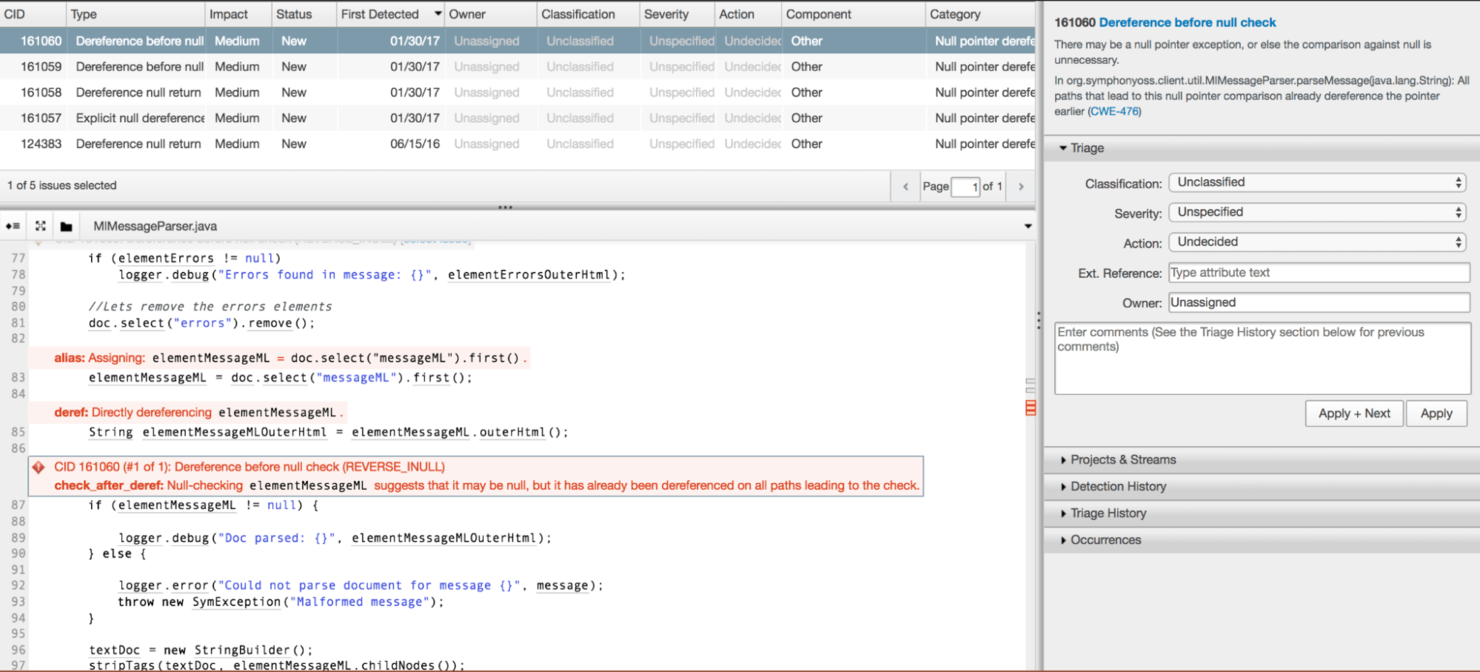
Synopsys Coverity est un outil d'analyse statique de code qui aide les équipes DevOps à identifier et corriger les risques de sécurité tôt dans le cycle de développement logiciel. Il propose des options de déploiement sur le cloud et sur site.
Pourquoi j'ai choisi Synopsys Coverity : Synopsys Coverity s'est retrouvé en haut de ma liste d'outils d'analyse de code pour sa précision dans l'identification des vulnérabilités telles que les débordements de mémoire tampon, les erreurs de validation d'entrée et les fuites de mémoire. J'ai particulièrement apprécié la manière dont le plugin Code Sight IDE fournissait des informations détaillées sur les vulnérabilités détectées ainsi que des conseils pour les corriger.
Fonctionnalités et intégrations marquantes de Synopsys Coverity :
Fonctionnalités qui rendent Synopsys Coverity intéressant à mes yeux : son outil Rapid Scan, capable d'analyser les configurations d'infrastructure-as-code (IaC), et des rapports complets offrant des évaluations des risques pour l'ensemble du portefeuille applicatif.
Intégrations disponibles en natif avec des outils DevOps comme GitHub, Eclipse, Jenkins, Azure Pipelines et Jira. Vous pouvez également utiliser ses API REST pour intégrer d'autres applications.
Pros and Cons
Pros:
- La détection en temps réel aide à corriger rapidement les erreurs
- Peut analyser des lignes de code plus rapidement que d'autres outils
- Fournit des rapports détaillés
Cons:
- Intégration compliquée avec d'autres outils
- L'interface utilisateur est difficile à naviguer

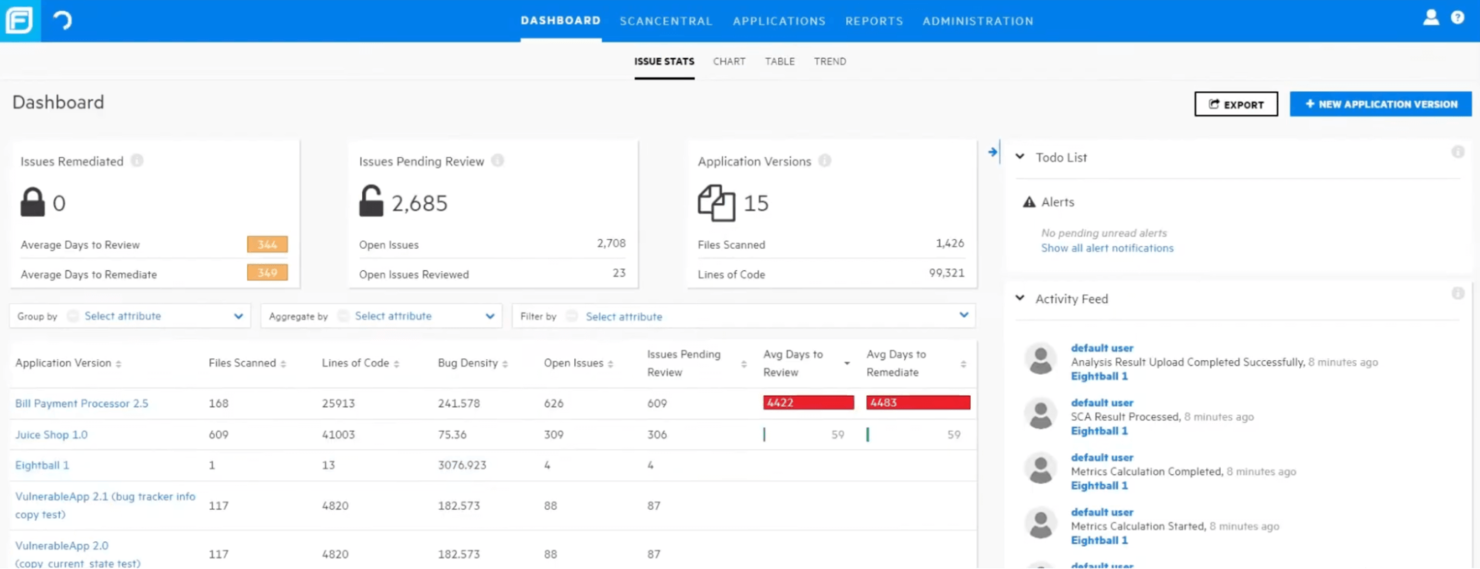
Fortify Application Security aide les entreprises à identifier les vulnérabilités lors du développement et à créer des logiciels plus sécurisés. La plateforme offre des options de déploiement flexibles.
Pourquoi j'ai choisi Fortify Application Security : Ce qui distingue Fortify Static Code Analyzer, c’est qu’il peut détecter plus de 800 types de vulnérabilités à travers 27 langages de programmation. Ce niveau de couverture contribue à réduire significativement les risques liés à la sécurité des applications.
Points forts et intégrations de Fortify Application Security :
Fonctionnalités proposées par Fortify Application Security comprennent un outil d’analyse statique du code qui fournit un retour immédiat pendant que vous codez. J'ai apprécié que la plateforme inclut également WebInspect pour des tests dynamiques de sécurité applicative (DAST), qui analyse et scanne vos applications web à la recherche de vulnérabilités connues.
Intégrations disponibles nativement pour plus de 50 IDE, outils CI/CD et systèmes de gestion des tickets, tels qu’Eclipse, Jenkins et Jira.
Pros and Cons
Pros:
- Interface utilisateur intuitive avec un tableau de bord utile pour suivre les erreurs détectées
- Prise en charge de plusieurs langages et frameworks de programmation
- Large gamme d'intégrations disponibles
Cons:
- Peut être difficile à configurer au départ
- Ne gère pas efficacement la détection des faux positifs

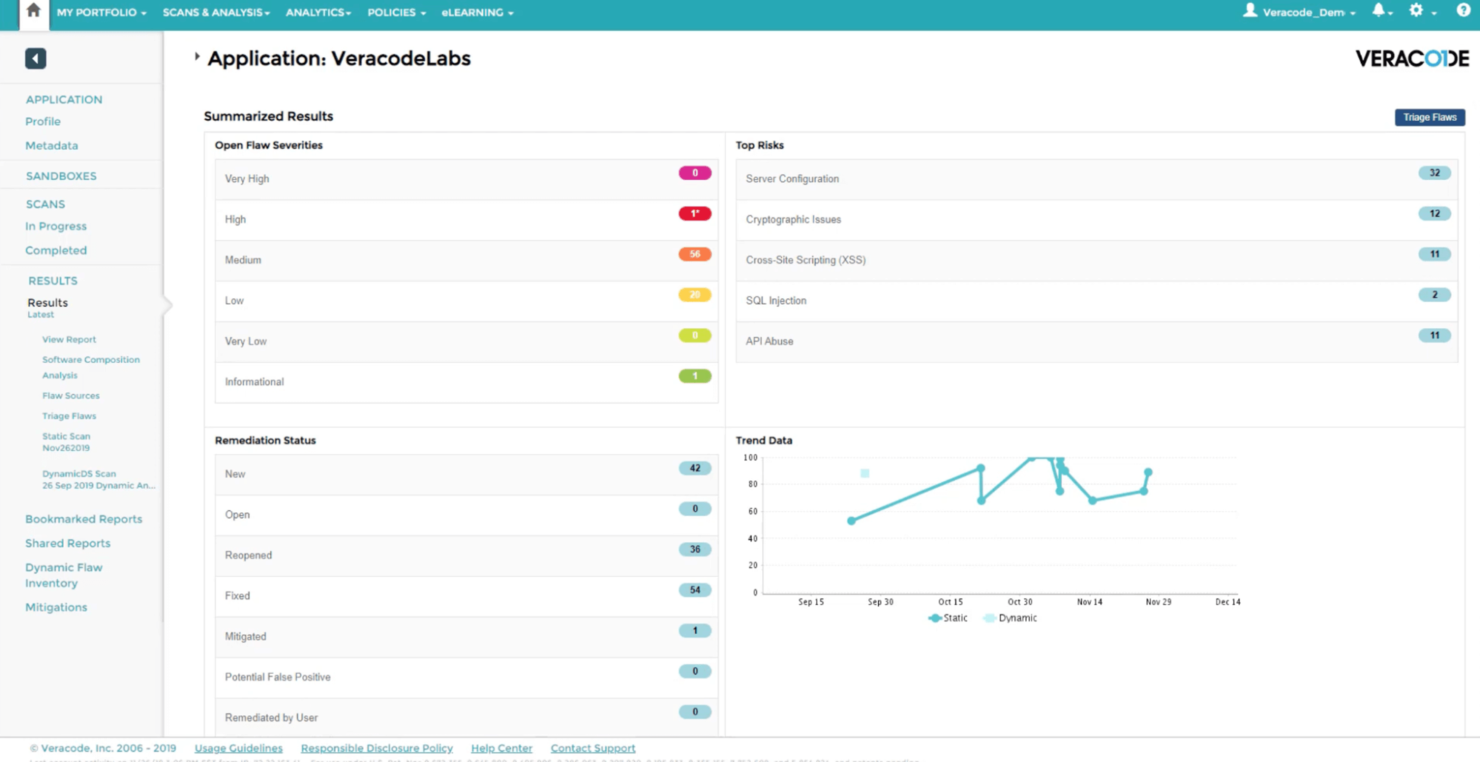
Veracode Static Analysis est une plateforme de test de sécurité applicative statique (SAST) qui aide les organisations à analyser leur code source et à identifier les vulnérabilités. Elle prend en charge plus de 27 langages et plus de 100 frameworks, offrant ainsi une couverture étendue aux entreprises de toutes tailles.
Pourquoi j'ai choisi Veracode Static Analysis : J'ai choisi Veracode Static Analysis pour ses capacités d'analyse étendues. Elle fournit un retour d'information en temps réel et identifie les vulnérabilités au fur et à mesure que je code dans mon EDI préféré (Eclipse). Mais ce que j'ai le plus apprécié, c'est qu'elle propose des intégrations pour les pipelines CI/CD, ce qui permet d'analyser les vulnérabilités sur l'ensemble du cycle de développement.
Fonctionnalités et intégrations remarquables de Veracode Static Analysis :
Fonctionnalités qui rendent Veracode Static Analysis unique à mes yeux : ses performances d'analyse rapides et son faible taux de faux positifs (<1,1 %). Les conseils de remédiation en temps réel aident à prioriser les corrections qui présentent les plus grandes menaces.
Intégrations disponibles nativement avec plus de 40 plateformes telles qu'Azure DevOps, Bitbucket, Eclipse, Jenkins et Visual Studio. Veracode propose également des API personnalisées, ce qui vous permet d'intégrer l'outil à encore plus de plateformes tierces.
Pros and Cons
Pros:
- Fournit des rapports détaillés
- Réalise les analyses efficacement
- Excellent support client
Cons:
- La documentation est incomplète sur certains aspects
- Courbe d'apprentissage abrupte

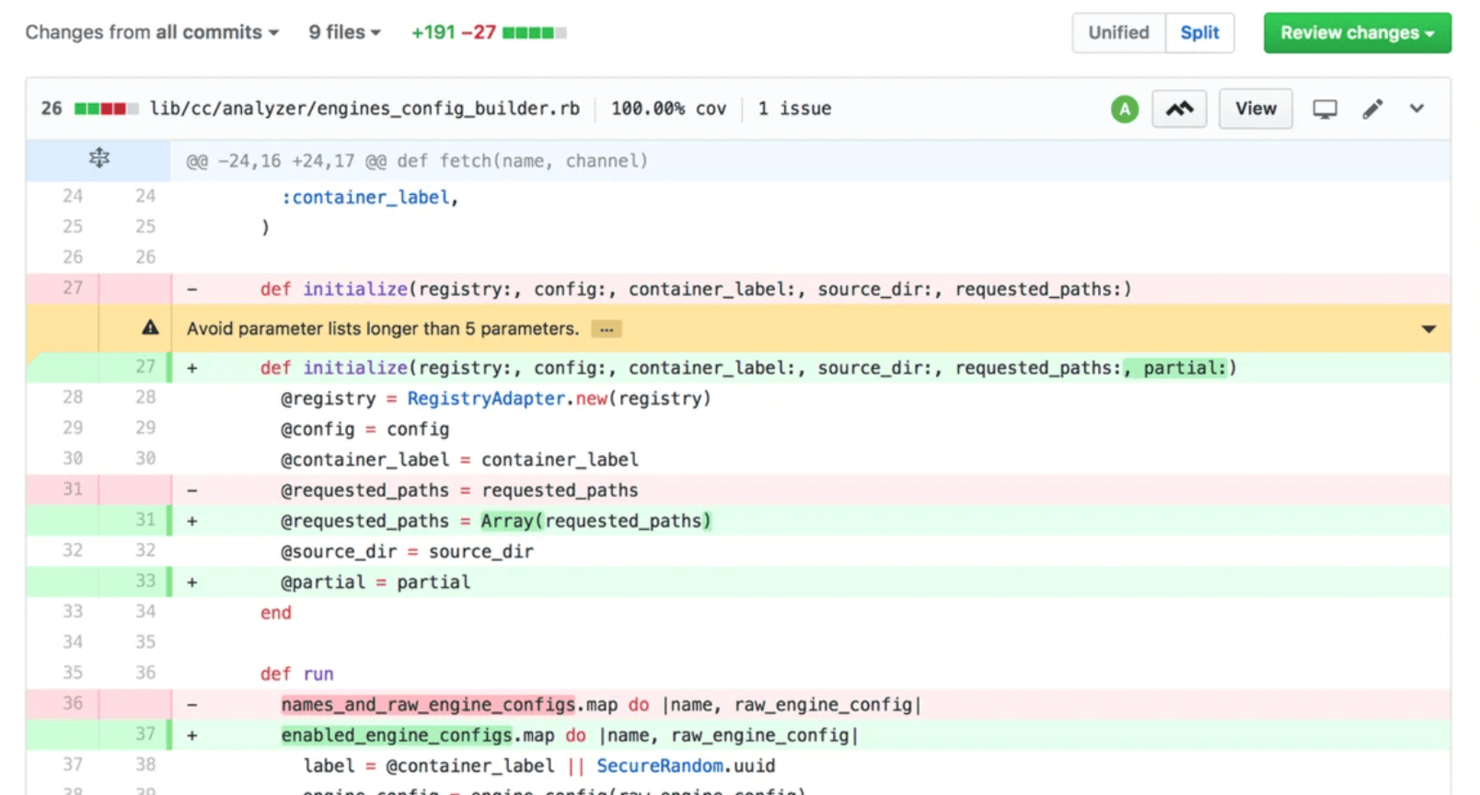
Code Climate Quality est un outil d'analyse de code qui aide les équipes de développement à livrer un code de meilleure qualité. Il offre une analyse statique pour des langages comme PHP, Java, JavaScript, Python et Ruby.
Pourquoi j'ai choisi Code Climate Quality : J'ai opté pour Code Climate Quality en raison de son intégration native avec GitHub. Il fournit non seulement un retour instantané sur mon code, mais il résume également tous les problèmes liés à une pull request avant son intégration dans le dépôt principal. L'extension du navigateur GitHub est aussi utile pour afficher les données de couverture des tests ligne par ligne.
Fonctionnalités et intégrations remarquables de Code Climate Quality :
Les fonctionnalités qui distinguent Code Climate Quality, selon moi, incluent son évaluation de la dette technique sur 10 points, qui attribue une note de A à F à votre code en fonction de sa maintenabilité et de sa couverture de tests. Il estime également le temps nécessaire pour résoudre un problème. Ces métriques m'ont aidé à mieux prioriser mes efforts sur les fichiers présentant des problèmes de maintenabilité ou une couverture insuffisante.
Les intégrations sont disponibles nativement avec GitHub et GitLab. L'outil s'intègre également nativement avec les systèmes de gestion de tickets et messagerie comme Asana, Trello et Slack.
Pros and Cons
Pros:
- Fournit des rapports de progression visuels avec un système de notation simple
- Propose l'authentification à deux facteurs avec OAuth GitHub
- Fait respecter automatiquement les styles et standards de codage
Cons:
- Peut générer des faux positifs
- Le forfait gratuit a des fonctionnalités limitées

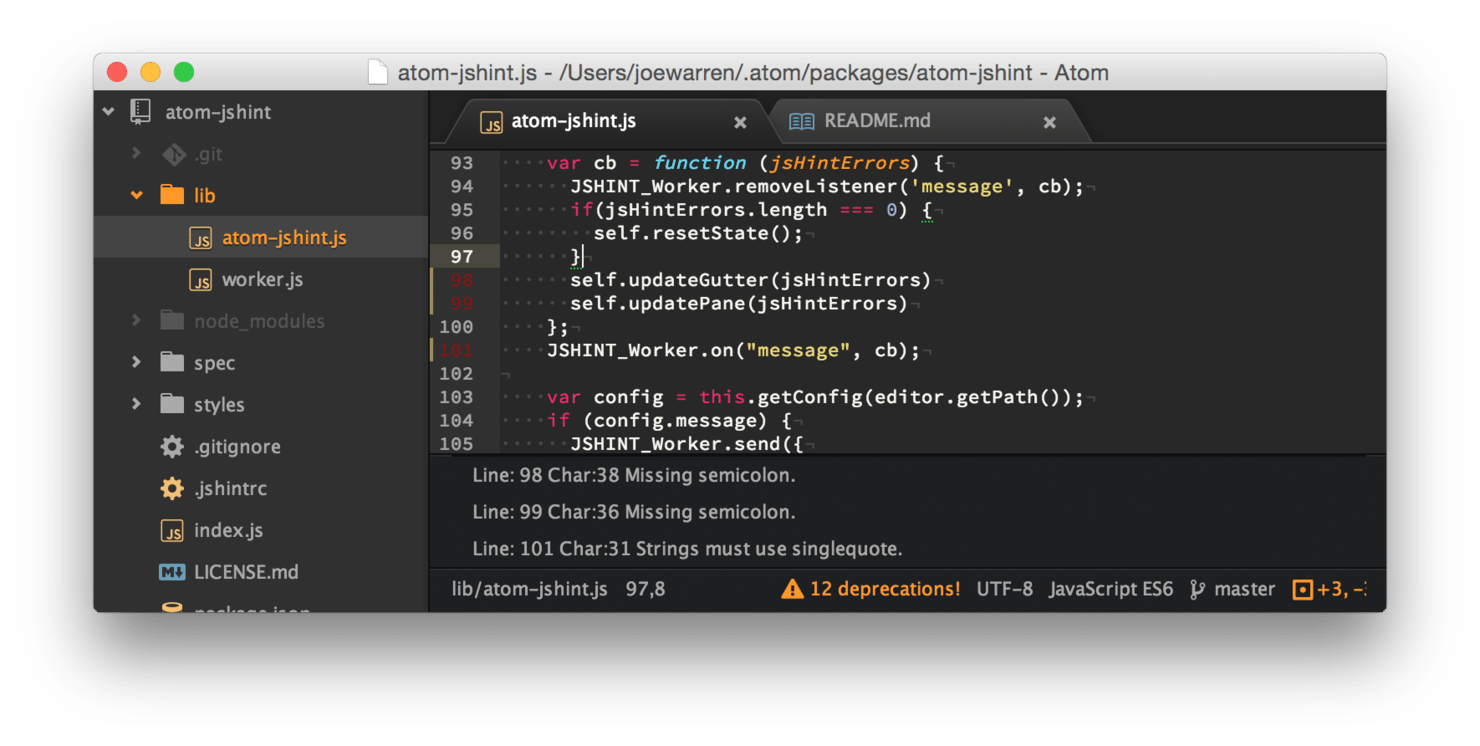
JSHint est un outil conçu pour vous aider à détecter les erreurs et les problèmes potentiels dans votre code JavaScript. En analysant votre code, JSHint garantit que celui-ci respecte les normes de codage et évite les pièges courants, rendant ainsi votre processus de développement plus fluide et plus fiable.
Pourquoi j'ai choisi JSHint : J'ai choisi JSHint comme excellent outil d'analyse de code notamment pour sa capacité à signaler la complexité cyclomatique, ce qui vous aide à maîtriser la complexité de votre code en mettant en évidence les zones qui pourraient être trop alambiquées. Cette fonctionnalité garantit la possibilité de maintenir un code propre et compréhensible, ce qui est crucial pour les projets à long terme. Passer d'un projet à l'autre devient ainsi moins fastidieux lorsque vous pouvez compter sur un code clair et facile à gérer.
Fonctionnalités et intégrations remarquables de JSHint :
Fonctionnalités : possibilité de supposer différents environnements comme le navigateur ou Node.js, ce qui vous permet d'adapter votre code en fonction du contexte d'exécution. JSHint prend également en charge les nouvelles fonctionnalités JavaScript comme ES6, garantissant que votre code reste à jour avec les derniers standards. De plus, il émet des avertissements lorsque le code n'est pas en mode strict, vous aidant ainsi à appliquer de bonnes pratiques de codage pour un meilleur contrôle des erreurs et un débogage facilité.
Intégrations : JSHint CLI, VIM, Emacs, Sublime Text, Atom, TextMate, Visual Studio, Visual Studio Code, Brackets, Eclipse, NetBeans et la famille d'IDE JetBrains.
Pros and Cons
Pros:
- Il prend en charge les fonctionnalités JavaScript récentes, essentielles pour le développement moderne
- Il aide à maintenir la qualité du code en imposant des conventions de codage et en détectant les problèmes potentiels
- De nombreux développeurs ont souligné qu'il permet de gagner du temps en détectant les erreurs avant l'exécution du code
Cons:
- Certains trouvent la configuration de JSHint complexe et pas aussi intuitive qu'ils le souhaiteraient
- Des utilisateurs ont signalé que JSHint pouvait être lent en termes de performance, surtout avec de grandes bases de code

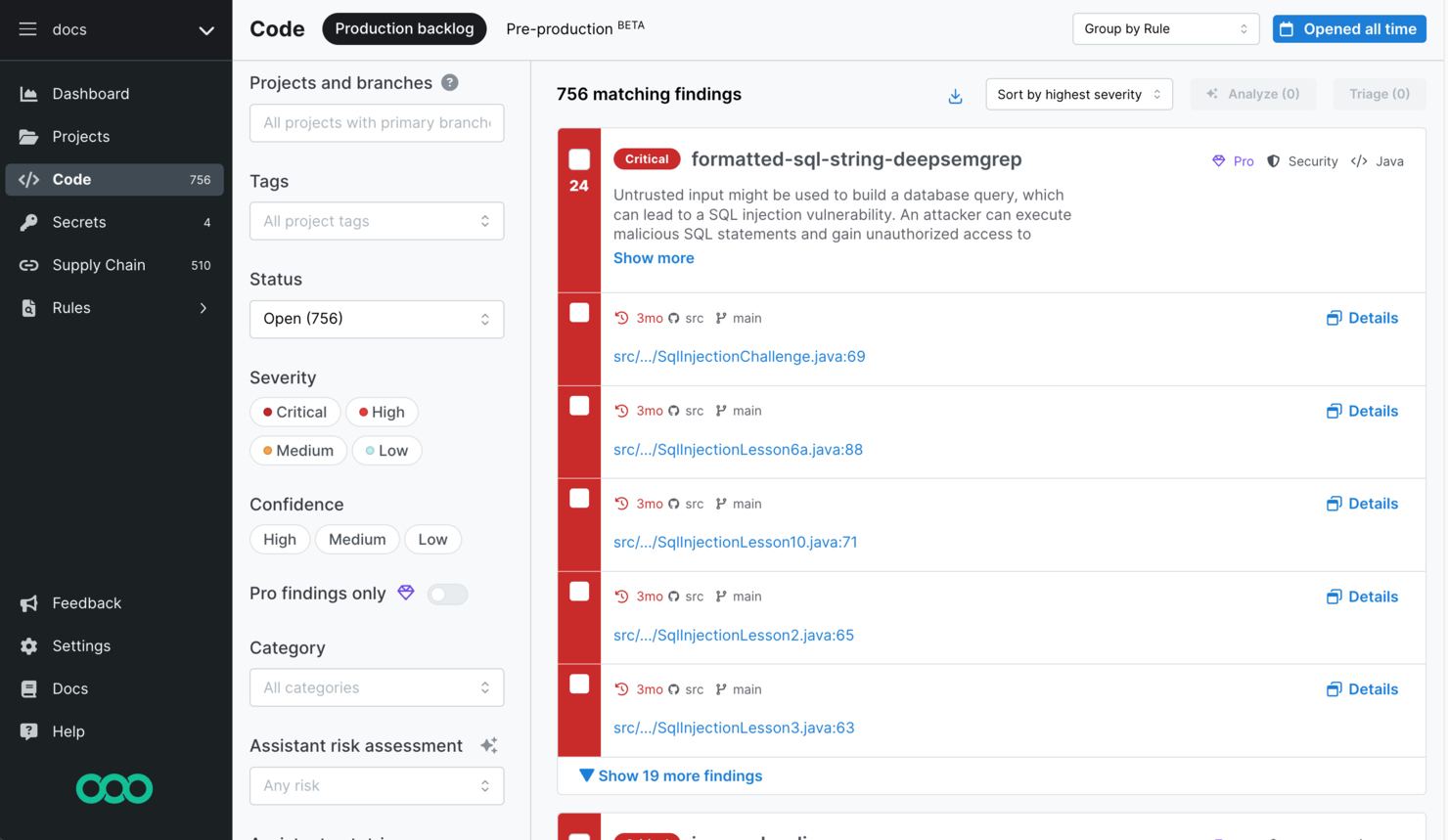
Semgrep est un outil polyvalent d'analyse de code qui vous aide à détecter les vulnérabilités de sécurité, les bugs et les problèmes de conformité dans votre code. Il offre une gamme de fonctionnalités pour garantir que votre logiciel est sécurisé et conforme aux normes du secteur.
Pourquoi j'ai choisi Semgrep : L'une des principales raisons pour lesquelles j'ai choisi Semgrep est sa capacité d'analyse statique, essentielle pour identifier les potentielles failles de sécurité dans votre code. Avec son Pro Engine, Semgrep améliore la précision de la détection des vrais positifs, réduisant ainsi le bruit des faux positifs. Cela signifie que vous pouvez faire confiance aux alertes reçues et vous concentrer sur la résolution des problèmes réels sans distractions inutiles. De plus, le filtrage du bruit basé sur l'IA de Semgrep masque automatiquement les faux positifs probables, vous offrant une liste d'incidents plus propre et fiable à traiter.
Fonctionnalités phares et intégrations de Semgrep :
Fonctionnalités : incluent la capacité d'effectuer une analyse de la composition logicielle pour la détection des vulnérabilités dans les dépendances, ce qui vous aide à gérer les risques liés aux composants tiers de votre logiciel. Semgrep excelle aussi dans la détection de secrets, identifiant les clés et mots de passe codés en dur dans votre code, évitant ainsi de potentielles failles de sécurité. Enfin, l'outil prend en charge un large éventail de langages de programmation et de frameworks, offrant flexibilité et adaptabilité pour répondre aux besoins spécifiques de votre projet.
Intégrations : incluent GitHub, GitLab, Bitbucket, Jenkins, CircleCI, Azure Pipelines, Buildkite, HackerOne, Slack, Email, Webhooks et VS Code.
Pros and Cons
Pros:
- Il prend en charge une grande variété de langages de programmation, assurant une couverture étendue pour différents projets
- L’outil est léger et efficace pour l’intégration dans les CI/CD, minimisant l’impact sur les temps de build
- Le moteur de règles personnalisable permet une détection adaptée à des bases de code spécifiques
Cons:
- Les utilisateurs ont relevé des limites dans sa capacité à gérer les risques de sécurité applicative à grande échelle, ce qui peut être un défi pour de grands déploiements
- L’outil nécessite un réglage manuel important pour réduire le bruit et les faux positifs, ce qui peut prendre du temps

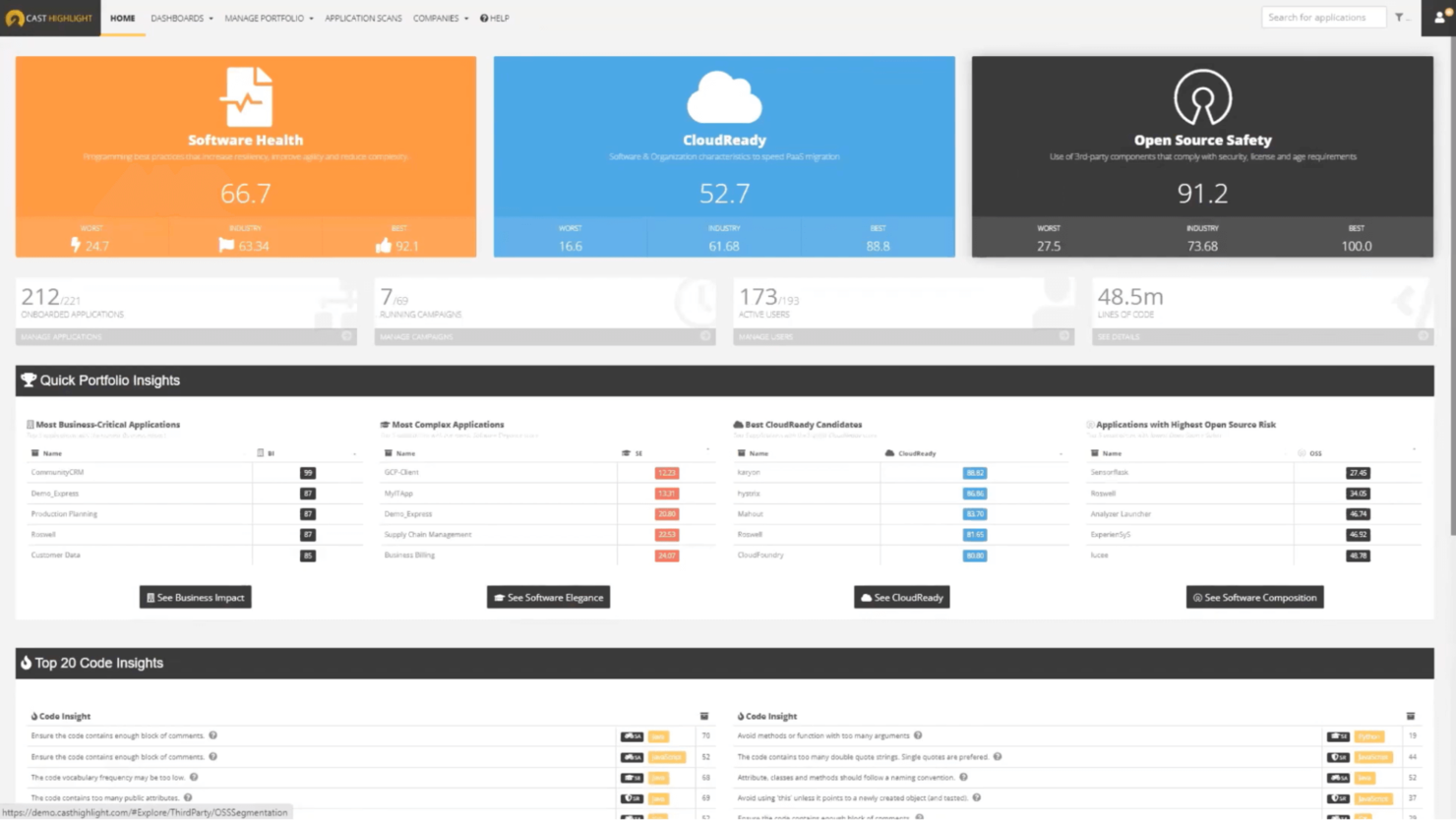
CAST Highlight est une plateforme d’intelligence logicielle capable d’analyser le code source de centaines d’applications. Elle génère des tableaux de bord utiles et colorés qui offrent des aperçus instantanés sur l’ensemble de vos applications.
Pourquoi j’ai choisi CAST Highlight : CAST Highlight mérite sa place dans cette liste, car elle excelle dans un domaine où les autres outils que j’ai testés ne rivalisent pas : l’évaluation logicielle à grande échelle. Elle est capable d’analyser automatiquement des centaines d’applications et d’identifier les risques de sécurité. L’outil effectue des analyses de code en local et n’envoie jamais votre code sur le cloud.
Caractéristiques et intégrations exceptionnelles de CAST Highlight :
Les fonctionnalités qui font de CAST Highlight un excellent choix selon moi sont les outils d’évaluation de la préparation au cloud et les feuilles de route de migration, particulièrement utiles si votre entreprise souhaite migrer vers le cloud. L’outil propose également des recommandations prioritaires pour réduire les risques de sécurité et identifie les opportunités d’optimisation des coûts sur votre portefeuille.
Les intégrations sont disponibles nativement pour GitHub, Bitbucket et Azure DevOps. Vous pouvez aussi utiliser l’API REST publique de CAST Highlight pour extraire et intégrer des indicateurs clés dans d’autres systèmes.
Pros and Cons
Pros:
- Propose des suggestions de migration vers le cloud
- Prend en charge plus de 40 langages de programmation
- Permet de suivre dans le temps la préparation au cloud et la sécurité de votre portefeuille
Cons:
- Tarifs élevés
- Courbe d’apprentissage prononcée

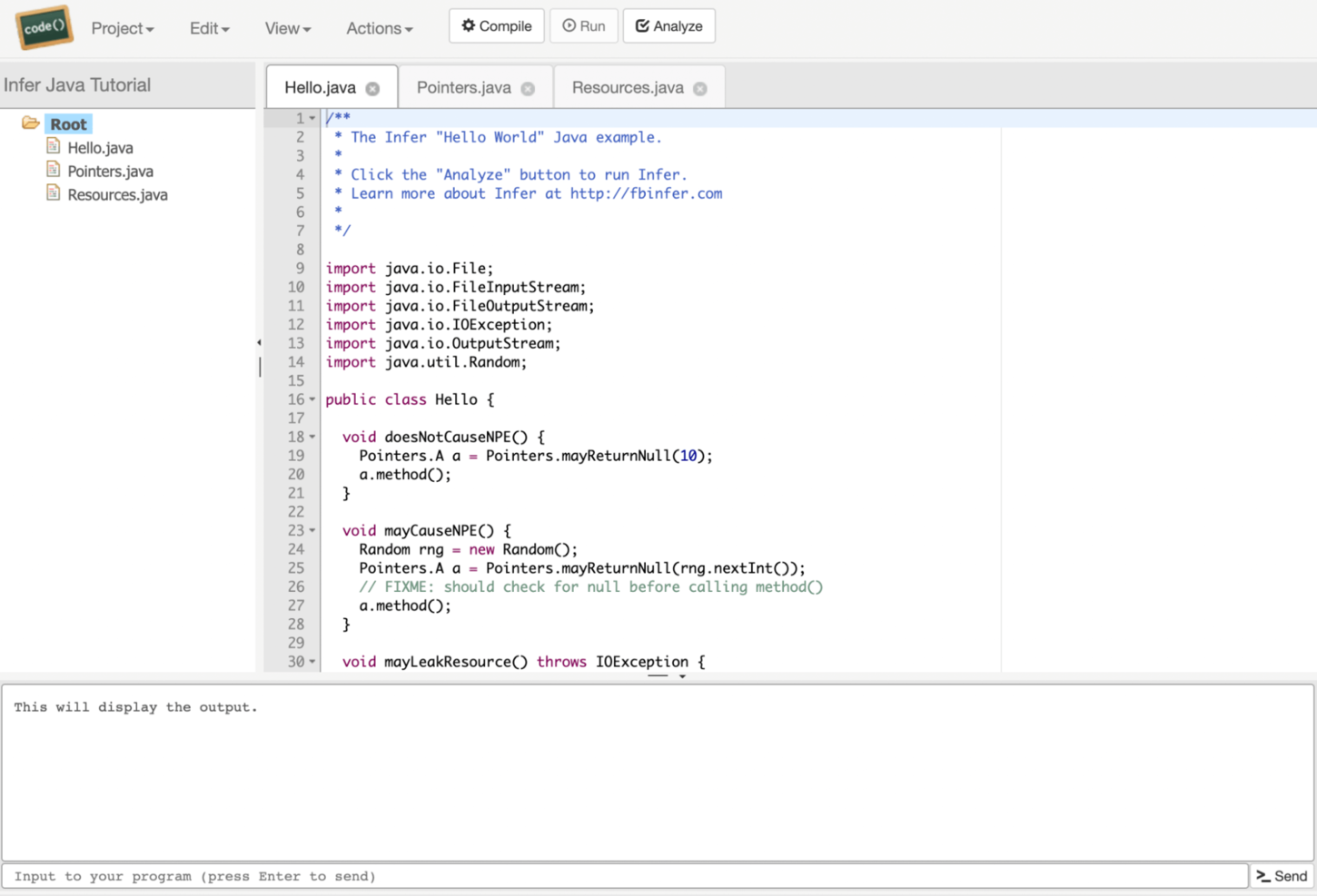
Infer prend en charge Java, C et Objective-C. Facebook déploie l'outil dans ses propres applications Android et iOS pour analyser et valider la justesse de son code source.
Pourquoi j'ai choisi Infer : J'ai sélectionné Infer dans cette liste parce qu'il prend en charge Java, C et Objective-C — des langages utilisés par les développeurs mobiles pour développer des applications Android et iOS. Le fait qu'il soit open source signifie que les développeurs contribuent en permanence à son amélioration.
Fonctionnalités et intégrations remarquables d'Infer :
Fonctionnalités que j'ai appréciées chez Infer : sa large couverture des problèmes courants. Lors de mes tests, l'outil a identifié des problèmes fréquents pouvant provoquer des plantages d'applications mobiles, comme les exceptions de pointeur nul et les fuites de mémoire. Les performances sont également au rendez-vous, même avec de larges bases de code.
Intégrations : elles sont disponibles nativement avec les compilateurs Javac, Clang et GCC. D'autres systèmes compatibles avec Infer incluent Gradle, Maven et xcodebuild.
Pros and Cons
Pros:
- Détection précise des bugs
- Prend en charge plusieurs langages comme C, C++ et Java
- Open source et disponible gratuitement
Cons:
- Fonctionnalité limitée en dehors de l'analyse de code d'applications iOS et Android
- Courbe d'apprentissage abrupte
Autres Outils d’Analyse de Code
Il existe quelques autres outils d’analyse de code qui n’ont pas tout à fait intégré ma sélection, mais qui méritent tout de même qu’on s’y attarde :
- PVS-Studio
Idéal pour les développeurs de jeux
- CodeScene
Idéal pour la gestion de la dette technique
- Sourcery
Idéal pour des retours en temps réel dans les IDE


Autres avis de logiciels IT
Si vous n’avez pas encore trouvé ce que vous cherchez ici, découvrez ces alternatives que nous avons testées et évaluées.
- Logiciels de supervision réseau
- Logiciels de supervision de serveurs
- Solutions SD-Wan
- Outils de supervision d’infrastructure
- Sniffers de paquets
- Outils de supervision applicative
Critères de Sélection des Outils d’Analyse de Code
Pour sélectionner les meilleurs outils d’analyse de code à inclure dans cette liste, j’ai pris en compte les besoins et points sensibles courants des acheteurs, comme l’identification des bugs cachés et l’amélioration de la maintenabilité du code. J’ai également utilisé la grille suivante pour rendre mon évaluation structurée et équitable :
Fonctionnalités Clés (25 % de la note finale)
Pour être sélectionnée dans cette liste, chaque solution devait répondre à ces cas d’usage courants :
- Identifier les erreurs de syntaxe et les bugs logiques
- Détecter les failles de sécurité
- Mesurer la complexité du code
- Prendre en charge plusieurs langages de programmation
- Vous permettre de travailler avec des plateformes DevOps comme GitLab et GitHub
- Fournir des retours en temps réel pendant le codage
Fonctionnalités Distinctives Supplémentaires (25 % de la note totale)
Pour aider à affiner davantage la sélection, j'ai également recherché des fonctionnalités uniques, telles que :
- Suggestions de code générées par l'IA
- Intégration aux pipelines CI/CD
- Jeux de règles personnalisables
- Analyse et rapports historiques du code
- Suggestions d'optimisation spécifiques au langage
Facilité d’Utilisation (10 % de la note totale)
Pour évaluer la convivialité de chaque système, j’ai tenu compte des éléments suivants :
- Interface utilisateur claire et intuitive
- Temps de traitement rapide
- Configuration simple des règles d'analyse
- Courbe d’apprentissage minimale
- Compatibilité avec les IDE courants
Onboarding (10 % de la note totale)
Pour évaluer l’expérience d’intégration de chaque plateforme, j’ai pris en compte les éléments suivants :
- Disponibilité de supports de formation
- Tutoriels et guides interactifs dans l’application
- Modèles préconfigurés pour une mise en place rapide
- Assistance dédiée à l’onboarding
- Visites guidées interactives du produit
Support Client (10 % de la note totale)
Pour évaluer le service client de chaque éditeur de logiciel, j’ai considéré les points suivants :
- Support en direct 24/7 et assistance téléphonique
- Base de connaissances et centre d’aide
- Forums communautaires
- Délais de réponse garantis par SLA
- Accès à des spécialistes techniques
Rapport Qualité/Prix (10 % de la note totale)
Pour évaluer le rapport qualité/prix de chaque plateforme, j’ai pris en compte les critères suivants :
- Tarification basée sur les fonctionnalités et l’utilisation
- Disponibilité d’une version d’essai gratuite
- Transparence des coûts
- Flexibilité pour adapter les offres
- Réductions pour les licences entreprises
Avis Clients (10 % de la note totale)
Pour apprécier la satisfaction globale des clients, j’ai relevé les aspects suivants en consultant les avis clients :
- Qualité d’intégration de la plateforme aux flux de travail existants
- Facilité d’utilisation et d’installation
- Qualité des analyses fournies
- Performance et rapidité
- Qualité du service client
Comment choisir des outils d’analyse de code
Il est facile de se perdre dans de longues listes de fonctionnalités et des structures tarifaires complexes. Pour vous aider à rester concentré(e) lors de votre processus de sélection de logiciel, voici une liste de critères à garder à l’esprit :
| Facteur | À prendre en compte |
|---|---|
| Scalabilité | Assurez-vous que l’outil peut gérer de grands ensembles de code et plusieurs utilisateurs simultanés sans ralentir l’analyse. |
| Intégrations | Vérifiez que l’outil s’intègre à votre pipeline CI/CD, vos systèmes de gestion de versions et vos outils de gestion de projet. |
| Personnalisation | Recherchez des options pour modifier les règles d’analyse, les seuils et les formats de rapports afin d’adapter l’outil à votre flux de travail. |
| Facilité d’utilisation | Les outils de visualisation de code proposent des interfaces intuitives nécessitant peu de formation et une configuration rapide. |
| Budget | Évaluez les coûts de licence, les paliers de fonctionnalités et tout supplément pour les options premium ou le support. |
| Mesures de sécurité | Vérifiez la présence de chiffrement, le traitement sécurisé des données et la conformité aux normes de sécurité. |
| Précision | Choisissez un outil avec un faible taux de faux positifs et des recommandations claires et exploitables. |
| Rapports | Privilégiez des rapports détaillés avec des analyses claires, des données historiques et des tendances identifiées. |
Tendances des outils d’analyse de code
Dans mes recherches, j’ai parcouru d’innombrables mises à jour de produits, communiqués de presse et journaux de versions de différents éditeurs d’outils d’analyse de code. Voici quelques tendances émergentes auxquelles je porte une attention particulière :
- Analyse assistée par IA : Les outils utilisent de plus en plus l’apprentissage automatique pour détecter des schémas et suggérer des corrections, améliorant ainsi la précision et réduisant les faux positifs.
- Sécurité en amont : Plus de plateformes intègrent des contrôles de sécurité dès les premières étapes du cycle de développement afin de repérer les vulnérabilités avant le déploiement.
- Solutions cloud : L’analyse de code basée sur le cloud gagne en popularité grâce à sa scalabilité et à sa capacité à s’intégrer aux environnements de développement distants.
- Profilage de performance : Les outils les plus récents offrent des analyses approfondies de l’exécution du code et de l’utilisation des ressources pour améliorer les performances.
- Extension linguistique : Davantage d’outils prennent en charge des langages de programmation de niche ou émergents pour répondre à des besoins variés de développement.
Qu’est-ce qu’un outil d’analyse de code ?
Les outils d’analyse de code examinent le code source pour détecter les bugs, failles de sécurité et problèmes de performance avant le déploiement. Les développeurs, ingénieurs QA et professionnels DevOps les utilisent pour garantir un code plus propre, plus fiable et réduire le temps des revues manuelles.
L’analyse automatisée, l’analyse statique et dynamique ainsi que le retour en temps réel permettent d’identifier les erreurs, d’appliquer les standards et d’améliorer la qualité du code. En bref, ces outils facilitent l’écriture de code de meilleure qualité, plus rapidement, et assurent la stabilité sur le long terme.
Fonctionnalités des outils d’analyse de code
Lors du choix d’un outil d’analyse de code, soyez attentif aux fonctionnalités clés suivantes :
- Analyse statique du code : Cette fonctionnalité analyse votre code source sans l’exécuter, permettant de détecter bugs, mauvais usages du code et failles, dès les premiers stades du développement. C’est idéal pour repérer et corriger les problèmes avant qu’ils n’arrivent en production.
- Intégration à l’environnement de développement : Grâce à cette fonction, vous pouvez travailler là où vous codez. Ces outils s’intègrent généralement de façon transparente dans les environnements de développement (IDE) populaires, ce qui permet de corriger les erreurs et consulter les suggestions en temps réel sans changer d’application.
- Rapports automatisés : Vous obtenez des analyses détaillées sur la qualité, la complexité ou la conformité du code, envoyées directement à votre boîte mail ou votre tableau de bord. Ces rapports facilitent le suivi, l’identification des tendances et le partage d’informations avec votre équipe.
- Métriques et analyses de code : Cette fonctionnalité quantifie, entre autres, la complexité cyclomatique, les duplications ou la maintenabilité. Les métriques offrent une vision claire des zones à risques pour mieux cibler les améliorations.
- Support multi-langages : Si vous développez dans plusieurs langages, cette option est essentielle. Les meilleurs outils analysent du Java, Python, JavaScript et bien d’autres, couvrant ainsi l’ensemble de votre code.
- Règles personnalisables : Vous pouvez adapter les règles d’analyse à vos standards de développement ou aux exigences du projet. Ainsi, vos analyses ne se limitent pas à des suggestions génériques, mais correspondent à vos objectifs spécifiques.
- Détection des vulnérabilités : Recherchez des outils capables d’identifier les failles connues telles que les injections SQL ou les débordements de mémoire tampon afin d’éliminer les risques avant qu’ils n’impactent votre application.
- Intégration au contrôle de version : Cette fonctionnalité permet de lancer automatiquement une analyse du code lors des nouveaux commits ou des pull requests, garantissant que seul du code propre et vérifié soit intégré aux dépôts partagés.
- Fonctionnalités de collaboration : Certains outils facilitent l’affectation des problèmes, l’ajout de commentaires ou le suivi des corrections au sein de votre équipe. L’objectif est de rester coordonné et responsable.
Fonctionnalités courantes des outils d’analyse de code utilisant l’IA
Au-delà des fonctionnalités standard des outils d'analyse de code mentionnées ci-dessus, beaucoup de ces solutions intègrent l’IA avec des fonctionnalités telles que :
- Prédiction intelligente des bugs : En utilisant des données historiques, l’IA prédit où les bugs sont susceptibles d’apparaître, vous permettant ainsi de concentrer de manière proactive vos tests et vos revues sur les zones les plus risquées.
- Suggestions automatiques de revue de code : L’IA analyse votre code et offre des retours instantanés adaptés au contexte ainsi que des suggestions d’amélioration, vous aidant à perfectionner votre base de code avec moins d'effort manuel.
- Détection des menaces de sécurité : Des moteurs basés sur l’IA identifient des menaces de sécurité subtiles et émergentes en reconnaissant des schémas dans votre code et grâce à des sources d’intelligence sur les menaces toujours à jour.
- Recommandations intelligentes de refactorisation : Obtenez des propositions personnalisées pour restructurer le code afin d’en améliorer la lisibilité, la maintenabilité ou la performance, toutes suggérées par l’IA qui apprend de vos habitudes de codage spécifiques.
- Analyse indépendante du langage : L’IA étend l’analyse aux langages de niche ou rares en adaptant ses vérifications, réduisant ainsi les angles morts que les outils traditionnels pourraient manquer.
Avantages des outils d’analyse de code
L’implémentation d’outils d’analyse de code offre plusieurs bénéfices pour votre équipe et votre entreprise. Voici quelques avantages auxquels vous pouvez vous attendre :
- Qualité du code améliorée : Identifie les bugs et inefficacités en amont, aidant les développeurs à écrire un code plus propre et plus efficace.
- Débogage plus rapide : Réduit le temps consacré à l'identification et à la correction des problèmes en fournissant des informations claires et exploitables.
- Sécurité renforcée : Détecte précocement les vulnérabilités et failles de sécurité, minimisant ainsi les risques de compromission.
- Meilleure maintenabilité : Contribue à garder le code organisé et cohérent, ce qui facilite et accélère les mises à jour futures.
- Productivité accrue de l’équipe : Les outils automatiques de revue de code peuvent réaliser des vérifications et retours répétitifs, permettant ainsi aux développeurs de se concentrer sur des tâches à plus forte valeur ajoutée.
- Soutien à la conformité : Garantit que le code respecte les normes de l’industrie et les meilleures pratiques en signalant les éventuelles violations.
- Réduction des coûts : Réduit la dette technique et les corrections coûteuses après publication en améliorant la qualité du code dès le départ.
Coûts et tarification des outils d’analyse de code
Choisir des outils d’analyse de code requiert une compréhension des différents modèles et plans tarifaires disponibles. Les coûts varient selon les fonctionnalités, la taille de l’équipe, les modules additionnels et bien d'autres critères. Le tableau ci-dessous résume les offres courantes, leurs prix moyens et les fonctionnalités typiques incluses dans les solutions d’analyse de code :
Tableau comparatif des offres pour les outils d’analyse de code
| Type d’offre | Prix moyen | Fonctionnalités courantes |
|---|---|---|
| Offre gratuite | $0/user/month | Analyse de code basique, prise en charge linguistique limitée et aucun rapport avancé. |
| Offre personnelle | $10–$30/user/month | Support élargi des langages, règles personnalisées et paramètres individuels de l’utilisateur. |
| Offre professionnelle | $30–$100/user/month | Collaboration en équipe, intégration CI/CD, retours en temps réel et rapports avancés. |
| Offre entreprise | $100+/user/month | Sécurité de niveau entreprise, vérifications de conformité, utilisateurs illimités et support dédié. |
FAQ sur les outils d'analyse de code
u003cspan class=u0022relative -mx-px my-[-0.2rem] rounded px-px py-[0.2rem]u0022u003eVoici des réponses aux questions fréquemment posées sur les outils d’analyse de code :u003c/spanu003e
Comment les outils d'analyse de code s'intègrent-ils aux pipelines d'intégration et de déploiement continus (CI/CD) ?
Les outils d'analyse de code peuvent-ils détecter les vulnérabilités de sécurité dans mon code ?
Comment les outils d'analyse de code gèrent-ils les faux positifs ?
Existe-t-il des outils d'analyse de code open-source ?
Quels indicateurs faut-il suivre pour mesurer l'impact des outils d'analyse de code ?
Comment limiter l'impact lors du déploiement des outils d'analyse de code sur plusieurs équipes de développement ?
Les outils d'analyse de code fonctionnent-ils avec des bases de code anciennes et modernes ?
À quelle fréquence faut-il lancer une analyse de code dans un processus de livraison logiciel mature ?
Quelles sont les erreurs fréquemment commises par les CTO dans la mise en place des solutions d'analyse de code ?
Dernières réflexions
Environ 79 % des organisations reconnaissent livrer des applications avec des vulnérabilités connues. Plus de la moitié (54 %) déclarent l'avoir fait pour respecter des délais critiques. Ces pratiques exposent les entreprises et leurs clients à des risques.
Avec les bons outils d'analyse de code, il n'est plus nécessaire de compromettre la sécurité pour garantir des logiciels sûrs et efficaces. Utilisez cette liste pour trouver la solution la mieux adaptée à votre entreprise.
Abonnez-vous à la newsletter The CTO Club pour davantage de conseils d'experts reconnus du secteur.