

Las 10 mejores herramientas de seguridad de la cadena de suministro de software en 2026

Lista de herramientas de seguridad de la cadena de suministro de software


Las herramientas de seguridad de la cadena de suministro de software te ayudan a detectar, supervisar y prevenir amenazas en tu código, dependencias y proceso de desarrollo. Estas herramientas se centran en la seguridad de las aplicaciones y la seguridad del código abierto, e identifican vulnerabilidades conocidas antes de que afecten a la producción. Suelen incluir funciones como el análisis de la composición del software y las pruebas de seguridad automatizadas para proteger los datos confidenciales y garantizar una entrega de software más segura. Al integrarse en tu canalización, proporcionan a los equipos visibilidad y control sobre los riesgos en toda la cadena de suministro. Esta lista te ofrece una visión clara y actualizada de las principales herramientas en las que confían los equipos de TI para proteger cada eslabón de su cadena de suministro de software. Encontrarás opciones para distintos entornos, perfiles de riesgo y flujos de trabajo, para que puedas elegir la más adecuada para las necesidades de tu equipo.
Por qué confiar en nuestras recomendaciones de software
Nuestro equipo lleva probando y evaluando software desde 2012. Como líderes tecnológicos, sabemos lo difícil —y lo importante— que es elegir el software adecuado.
Para esta guía, evaluamos las herramientas mediante pruebas prácticas e investigación independiente, puntuando las herramientas según nuestros criterios de selección.
Nuestras reseñas reflejan nuestro criterio editorial humano, no un discurso de ventas.
Revisores expertos:
Resumen de las mejores herramientas de seguridad de la cadena de suministro de software
Esta tabla comparativa resume los detalles de precios de mi selección de las mejores herramientas de seguridad de la cadena de suministro de software para ayudarte a encontrar la opción más adecuada para tu presupuesto y las necesidades de tu empresa.
| Tool | Best For | Trial Info | Price | ||
|---|---|---|---|---|---|
| 1 | Mejor para amplia cobertura de lenguajes y frameworks | Plan gratis + prueba gratuita de 14 días + demo gratuita disponible | Desde $34/mes | Website | |
| 2 | Ideal para escaneo de vulnerabilidades orientado al desarrollador | Plan gratuito + demo gratis disponible | Desde $25/desarrollador que contribuye/mes | Website | |
| 3 | Ideal para seguridad de código potenciada por IA | Demo gratuita disponible | Precio bajo consulta | Website | |
| 4 | Mejor para seguridad integral de la cadena de suministro | Prueba gratuita de 14 días + plan gratuito + demo gratis disponible | Desde $135/usuario/mes + consumo (facturación anual) | Website | |
| 5 | Ideal para reglas personalizables de escaneo de seguridad | Plan gratuito + demo gratuita disponible | Desde $30/contribuidor/mes | Website | |
| 6 | Mejor para la seguridad de contenedores basada en políticas | Prueba gratuita de 14 días + demostración gratuita disponible | Precios bajo solicitud | Website | |
| 7 | Ideal para visibilidad riesgos basada en código hasta la nube | Demo gratuita disponible | Precio a consultar | Website | |
| 8 | Ideal para la detección avanzada de amenazas en la cadena de suministro | Prueba gratuita de 14 días + plan gratuito + demostración gratuita disponible | Desde $500/mes | Website | |
| 9 | Ideal para análisis continuos de binarios y contenedores | Prueba gratuita de 14 días + demostración gratuita disponible | Desde $150/mes | Website | |
| 10 | Mejor para la protección de la cadena de suministro en CI/CD | Plan gratuito + demo gratuita disponible | $350/month | Website |
Análisis de herramientas de seguridad de la cadena de suministro de software
A continuación se muestran mis resúmenes detallados de las herramientas de seguridad de la cadena de suministro de software que llegaron a mi lista. Mis análisis ofrecen una visión detallada de las funciones, capacidades e integraciones de cada plataforma para ayudarte a encontrar la opción más adecuada para ti.

Mejor para amplia cobertura de lenguajes y frameworks
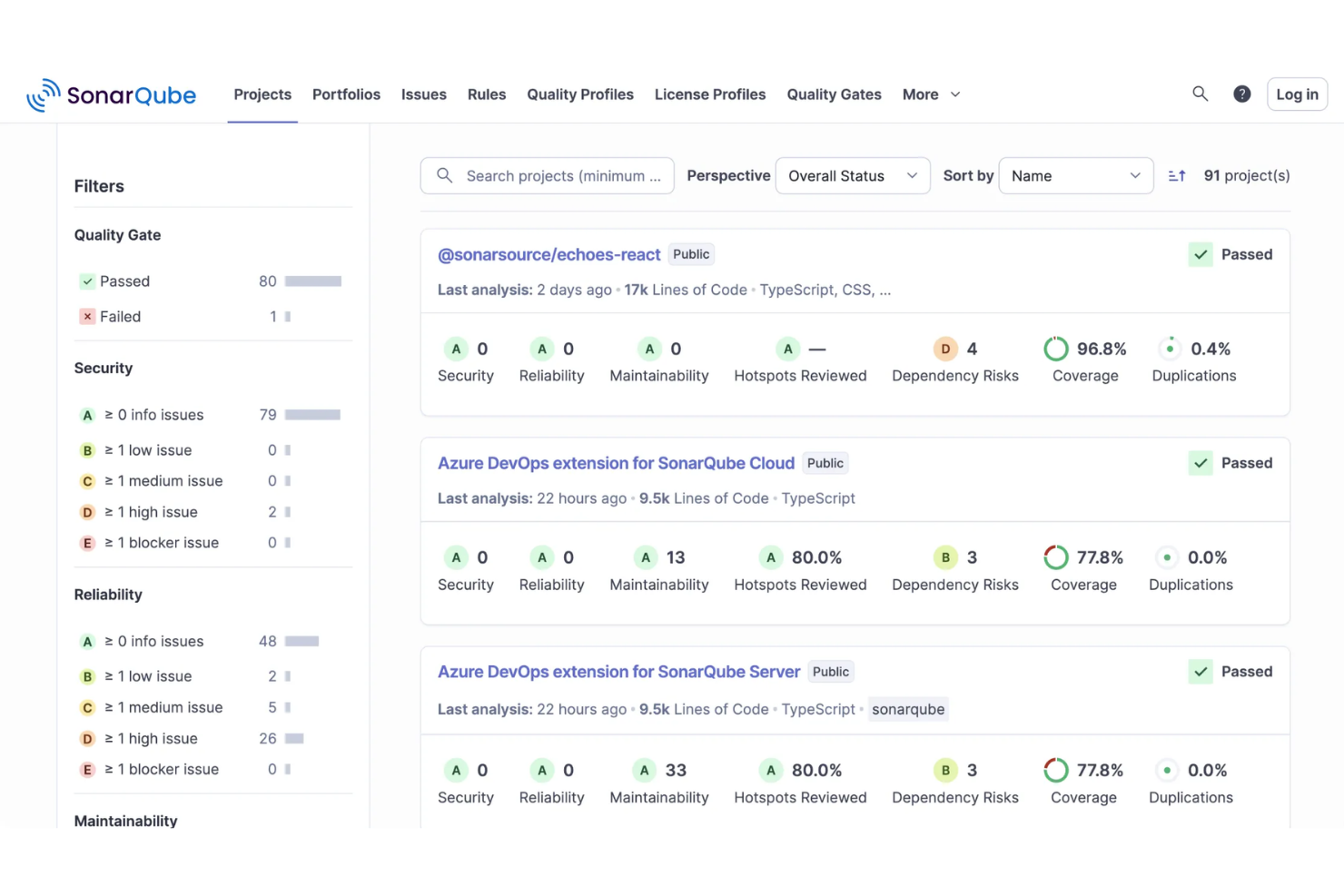
SonarQube es una plataforma de análisis de calidad y seguridad de código que combina SAST, SCA, detección de secretos y generación de SBOM para analizar código propio, código generado por IA y dependencias de código abierto.
¿Para Quién es Mejor SonarQube?
SonarQube es ideal para equipos de ingeniería empresariales que gestionan grandes bases de código poliglota en múltiples lenguajes, marcos de trabajo y entornos.
Por Qué Elegí SonarQube
Elegí SonarQube porque ninguna otra herramienta en mi lista corta cubre más de 40 lenguajes, marcos y tecnologías IaC en una sola plataforma. Me gusta que incluya lenguajes heredados como COBOL y ABAP, ya que los compromisos en la cadena de suministro no discriminan por la antigüedad de la pila tecnológica. Su análisis de flujo de datos consciente de dependencias rastrea cómo los datos pasan de tu código a bibliotecas de terceros, detectando vulnerabilidades que un escáner aislado por lenguaje no encontraría.
Características Clave de SonarQube
- Detección de secretos: Encuentra credenciales, tokens y datos sensibles incrustados antes de que el código llegue a tu repositorio.
- Generación de SBOM: Crea y actualiza automáticamente una Lista de Materiales de Software para cada proyecto.
- Compuertas de calidad: Hace cumplir umbrales personalizados de seguridad y calidad en la canalización CI/CD.
- Integración con IDE: Ofrece información instantánea sobre el código dentro de editores populares como Visual Studio Code e IntelliJ.
Integraciones de SonarQube
SonarQube ofrece integraciones nativas con GitHub, GitLab, Bitbucket, Azure DevOps, Jenkins, Jira, Slack y es compatible con Visual Studio Code, IntelliJ y Eclipse. Hay una API disponible para integraciones personalizadas.
Pros and Cons
Pros:
- Ofrece SAST, SCA y escaneo de secretos
- Soporta lenguajes de programación modernos y heredados
- Generación y exportación de SBOM de forma automática
Cons:
- Los reportes pueden abrumar con hallazgos no críticos
- El escaneo de secretos a veces omite valores encriptados
New Product Updates from SonarQube
SonarQube Cloud Expands Rust Analysis and Quality Controls
SonarQube Cloud now delivers enterprise-grade Rust verification by complementing Clippy and treating it as a dependency, preserving local workflows while enabling organization-wide quality and security governance. For more information, visit SonarQube's official site.
 .
.
Snyk
Ideal para escaneo de vulnerabilidades orientado al desarrollador
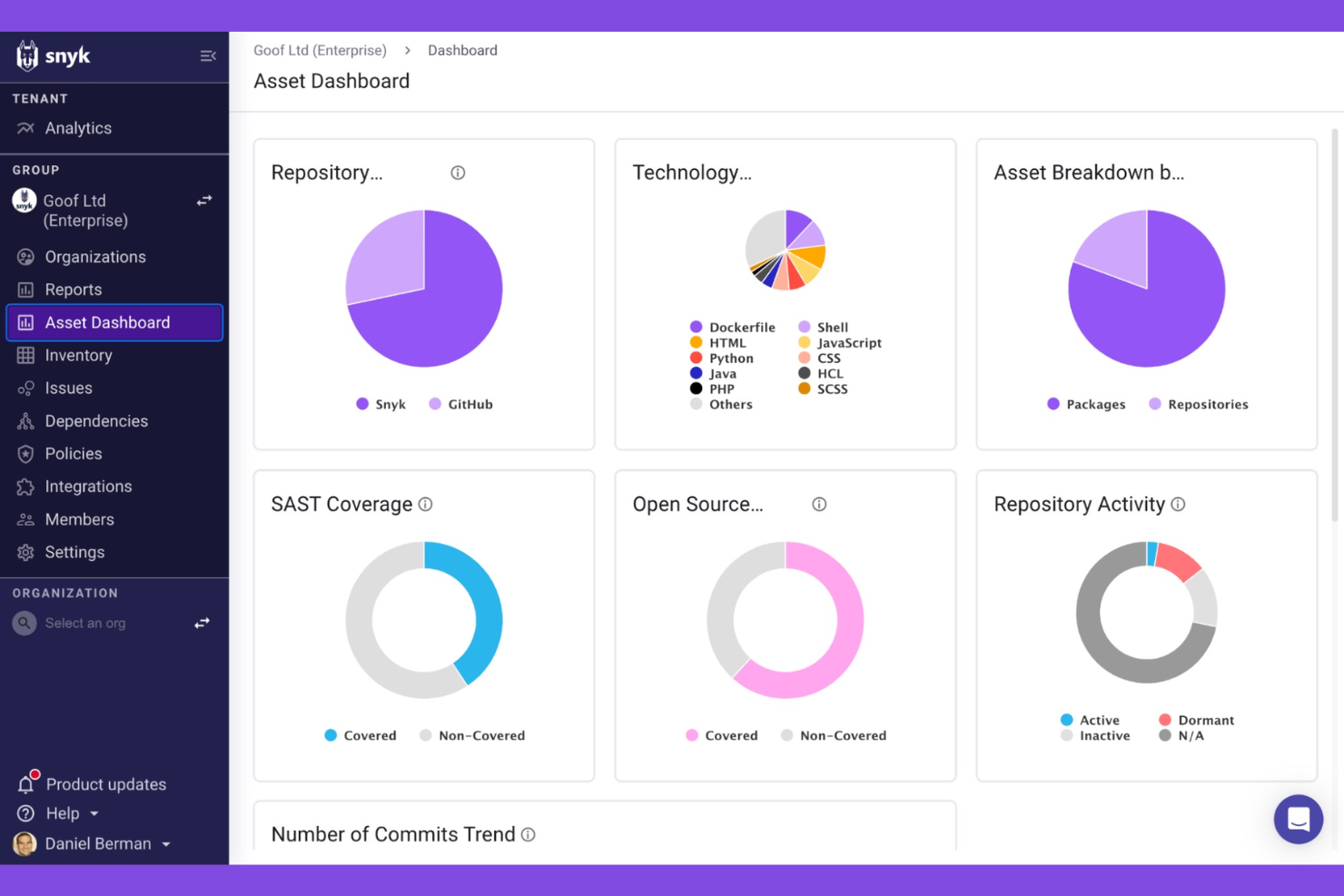
Snyk es una plataforma de seguridad de la cadena de suministro de software que proporciona detección automatizada de vulnerabilidades, análisis de código, cumplimiento de licencias y herramientas de remediación para desarrolladores y equipos de seguridad.
¿Para quién es mejor Snyk?
Equipos de desarrollo e ingenieros de seguridad en empresas orientadas a la tecnología que buscan detección y remediación automatizada de vulnerabilidades en su cadena de suministro de software.
Por qué elegí Snyk
Elegí Snyk como uno de los mejores porque confío en su enfoque orientado al desarrollador para detectar vulnerabilidades desde el inicio del proceso de programación. Me gusta que analiza el código malicioso en dependencias de código abierto, imágenes de contenedores e infraestructura como código, ayudando a proteger todo el ecosistema de desarrollo. Mi equipo también se beneficia de información como metadatos de dependencias y sugerencias de remediación automatizadas, lo que facilita resolver problemas rápidamente sin salir de nuestro flujo de trabajo.
Funciones clave de Snyk
- Gestión de cumplimiento de licencias: Rastrea y señala problemas de licencias de código abierto en dependencias.
- Generación de SBOM: Crea automáticamente listas de materiales de software para cada proyecto.
- Políticas de seguridad personalizadas: Permite definir e implementar reglas de seguridad específicas para la organización.
- Integración con pipelines CI/CD: Se conecta directamente con herramientas de compilación para monitoreo continuo.
Integraciones de Snyk
Snyk ofrece integraciones nativas con GitHub, GitLab, Bitbucket, Azure DevOps, Jenkins, Jira, Docker Hub, CircleCI, Travis CI y Slack. Hay una API disponible para integraciones personalizadas.
Pros and Cons
Pros:
- Escaneo en tiempo real de dependencias de código abierto
- Remediación automatizada de vulnerabilidades detectadas
- Seguimiento de cumplimiento de licencias para paquetes de terceros
Cons:
- Opciones de generación de informes limitadas para auditorías de cumplimiento
- Las funciones avanzadas requieren planes de nivel superior
Ideal para seguridad de código potenciada por IA
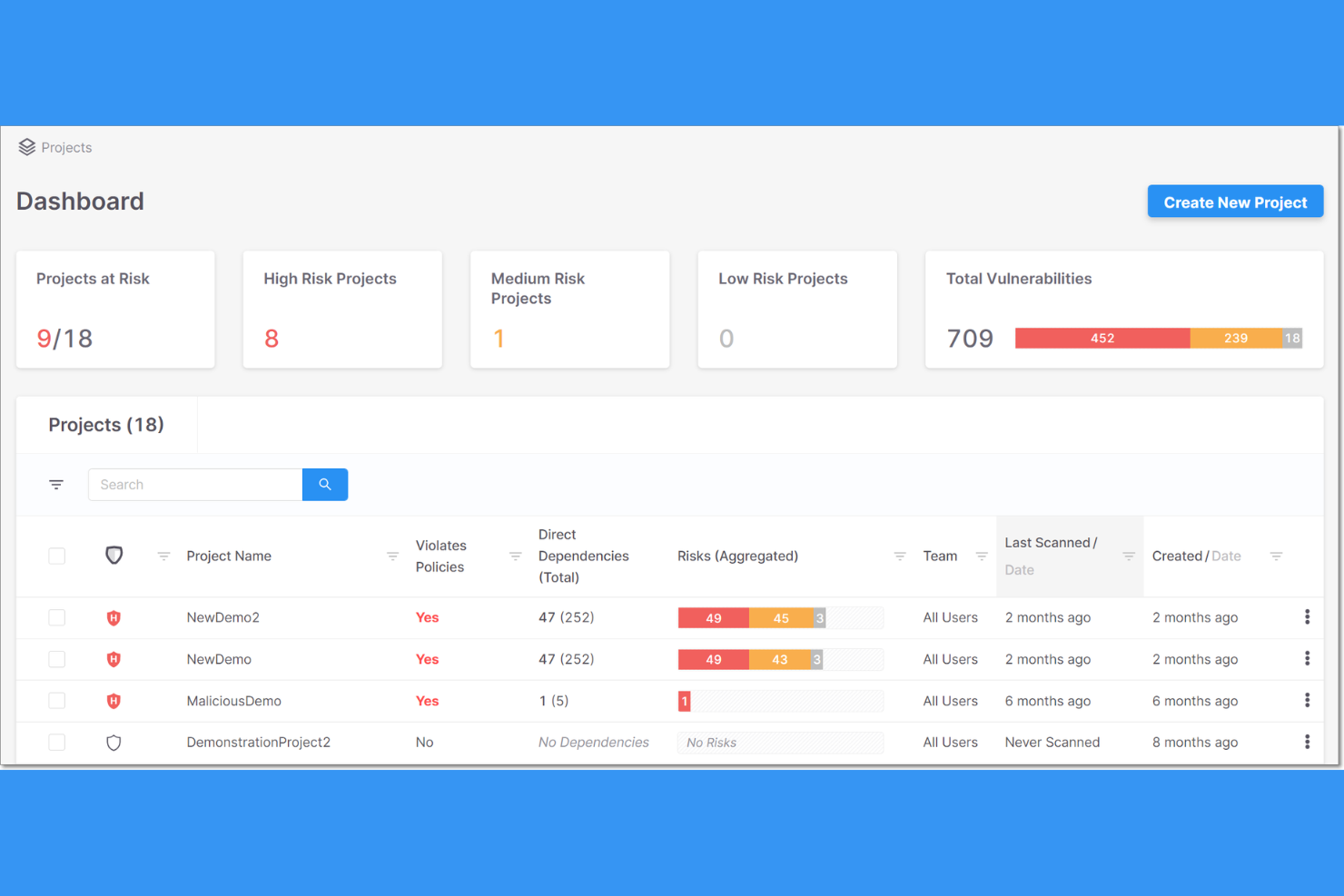
Checkmarx es una plataforma de seguridad para la cadena de suministro de software que ofrece escaneo automatizado de código, análisis de riesgos de código abierto y detección de amenazas impulsada por IA para los equipos de desarrollo.
¿Para quién es mejor Checkmarx?
Equipos de Seguridad y DevOps en grandes empresas que necesitan análisis automatizados de código y riesgos en la cadena de suministro.
Por qué elegí Checkmarx
Elegí Checkmarx como uno de los mejores porque confío en su detección de riesgos en la cadena de suministro basada en IA para identificar amenazas que los escáneres tradicionales pasan por alto. Mi equipo utiliza su análisis automatizado de código y la gestión de riesgos de código abierto para detectar vulnerabilidades temprano en nuestros procesos. Me gusta cómo correlaciona hallazgos entre código, dependencias e infraestructura para ofrecer una visión unificada del riesgo.
Características clave de Checkmarx
- Generación de SBOM: Crea automáticamente listas de materiales de software para todos los componentes rastreados.
- Gestión de políticas: Te permite definir e imponer políticas de seguridad en todos los proyectos.
- Visualización de grafo de dependencias: Mapea relaciones y riesgos a lo largo de tu cadena de suministro de software.
- Registro de auditoría: Realiza seguimiento de todas las acciones de usuario y cumplimiento de políticas para auditorías.
Integraciones de Checkmarx
Checkmarx ofrece integración nativa en la plataforma Checkmarx One y admite flujos de trabajo de desarrolladores con integraciones en canales CI/CD y repositorios de código fuente. Hay una API disponible para integraciones personalizadas.
Pros and Cons
Pros:
- Detección de amenazas en la cadena de suministro impulsada por IA
- Proporciona detallado SBOM y mapeo de dependencias
- Soporta proyectos multi-lenguaje y multi-framework
Cons:
- Los falsos positivos pueden requerir revisión manual
- Las opciones de personalización de informes son limitadas

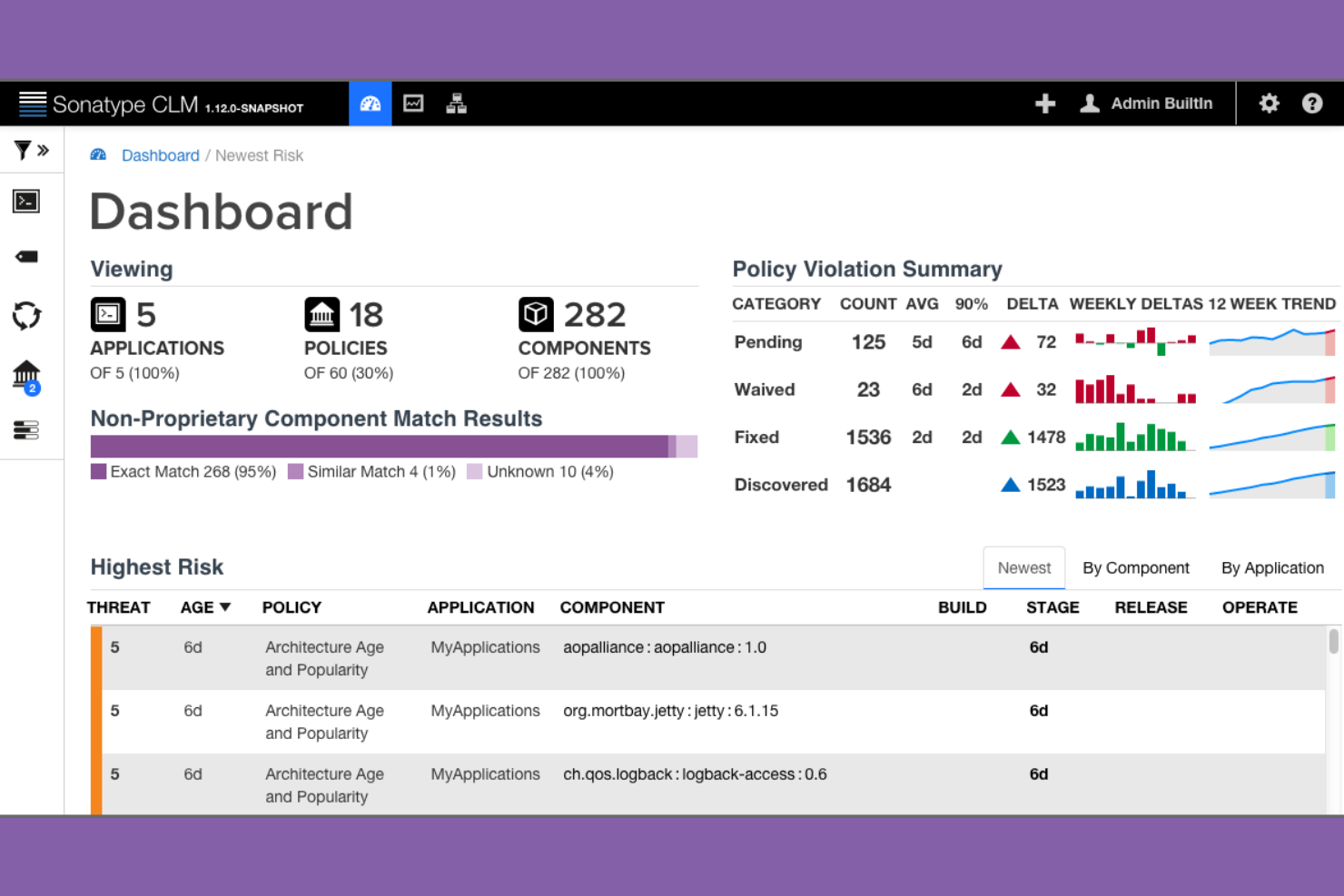
Sonatype es una plataforma de seguridad para la cadena de suministro de software que ayuda a las organizaciones a identificar y reducir los riesgos de seguridad en todo el ciclo de vida del desarrollo de software. Proporciona aplicación automática de políticas, monitoreo continuo, detección de vulnerabilidades y cumplimiento de licencias tanto para componentes de código abierto como propietarios.
¿Para Quién Es Mejor Sonatype?
Equipos de seguridad empresarial y DevOps que necesitan aplicación de políticas y monitoreo automatizado a lo largo de cadenas de suministro de software complejas.
Por Qué Elegí Sonatype
Elegí Sonatype como uno de los mejores porque confío en su aplicación automática de políticas para mantener la conformidad de nuestra cadena de suministro de software en cada etapa. Me gusta que monitorea continuamente los componentes de código abierto y propietarios en busca de vulnerabilidades y riesgos de licencia. Mi equipo utiliza sus controles de políticas granulares para bloquear dependencias riesgosas antes de que lleguen a producción.
Características Clave de Sonatype
- Generación de SBOM: Genera automáticamente listas de materiales de software para cada compilación.
- Escaneo continuo de dependencias: Monitorea bibliotecas de terceros para detectar nuevas vulnerabilidades.
- Control de acceso basado en roles: Te permite gestionar permisos de usuario y restringir acciones sensibles.
- Registro de auditoría: Rastrea todos los eventos y cambios de seguridad dentro de tu entorno CI/CD.
Integraciones de Sonatype
Sonatype ofrece integraciones nativas con Jenkins, GitHub, GitLab, Bitbucket, Azure DevOps, Bamboo, Nexus Repository, Jira y Slack. Hay una API disponible para integraciones personalizadas.
Pros and Cons
Pros:
- Aplicación automática de políticas para componentes de código abierto
- Generación detallada de SBOM para cada compilación
- Detección de riesgos de licencia para bibliotecas de terceros
Cons:
- Personalización de informes limitada para necesidades de cumplimiento
- La documentación puede ser escasa para configuraciones complejas

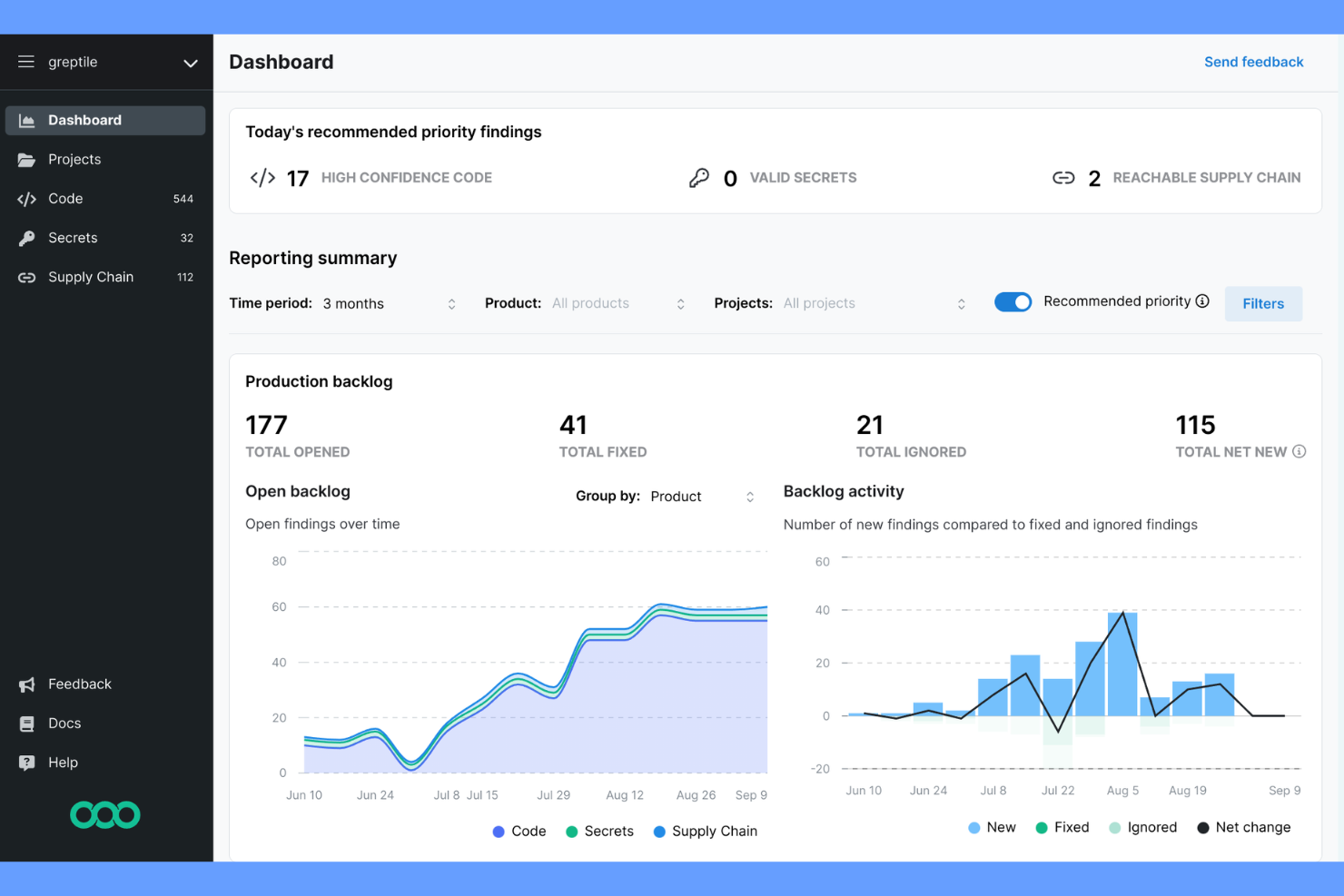
Semgrep es una herramienta de seguridad para la cadena de suministro de software que combina el escaneo de código, el análisis de dependencias y la aplicación de políticas para ayudar a los equipos a identificar y gestionar riesgos en sus flujos de trabajo de desarrollo.
¿Para quién es mejor Semgrep?
Ingenieros de seguridad y equipos de DevSecOps en empresas impulsadas por la tecnología que necesitan seguridad automatizada en el código y las dependencias a lo largo de la cadena de suministro de software.
Por qué elegí Semgrep
Elegí Semgrep como uno de los mejores porque confío en su seguridad automatizada de código y dependencias para detectar vulnerabilidades antes de que lleguen a producción. Utilizo sus perspectivas sobre la cadena de suministro para rastrear riesgos de código abierto e infracciones de políticas en nuestros repositorios. Mi equipo se beneficia de sus hallazgos accionables, lo que nos ayuda a priorizar y remediar problemas rápidamente.
Características clave de Semgrep
- Creación de reglas personalizadas: Permite escribir e implementar tus propias políticas de seguridad.
- Integración en pipelines CI/CD: Se conecta directamente con los flujos de trabajo de construcción y despliegue.
- Generación de SBOM: Produce listas de materiales de software para el seguimiento de dependencias.
- Monitoreo de paquetes de terceros: Escanea continuamente los riesgos en bibliotecas de código abierto.
Integraciones de Semgrep
Semgrep ofrece integraciones nativas con GitHub, GitLab, Bitbucket, Azure DevOps, Jenkins y Jira, y proporciona una API para integraciones personalizadas.
Pros and Cons
Pros:
- Motor de escaneo rápido, atento al código para la cadena de suministro
- Reglas personalizables para la detección de riesgos en dependencias
- Biblioteca de reglas con aporte de la comunidad para actualizaciones rápidas
Cons:
- La escritura avanzada de reglas requiere conocimientos de YAML
- No tiene soporte nativo para escaneo de artefactos binarios

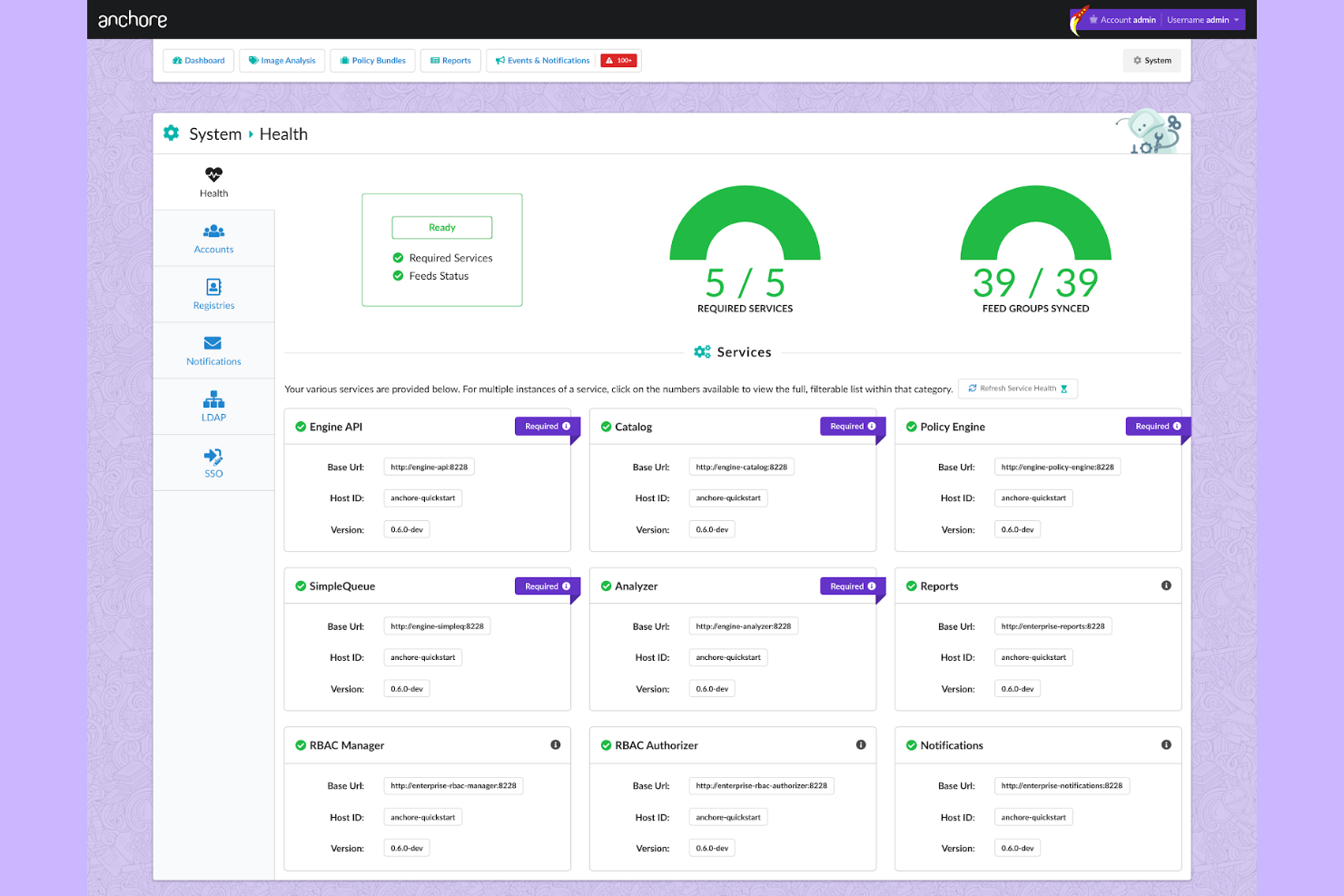
Anchore es una plataforma de seguridad para la cadena de suministro de software que proporciona análisis automatizado de imágenes de contenedores, aplicación de políticas, detección de vulnerabilidades y verificaciones de cumplimiento para aplicaciones contenerizadas.
¿Para quién es mejor Anchore?
Equipos de seguridad y DevOps en empresas que ejecutan cargas de trabajo contenerizadas en industrias reguladas.
Por qué elegí Anchore
Elegí Anchore como uno de los mejores porque confío en su análisis automatizado de imágenes de contenedores y aplicación de políticas para detectar vulnerabilidades antes de la implementación. Mi equipo lo utiliza junto con herramientas SCA para analizar software de código abierto y aplicar reglas que apoyan la mitigación de riesgos en cada etapa de nuestra canalización CI/CD. También me gusta que proporcione informes detallados sobre vulnerabilidades e infracciones de políticas, ayudándonos a mantener una cadena de suministro de software segura.
Características clave de Anchore
- Generación de SBOM: Crea automáticamente listas de materiales de software para imágenes de contenedores.
- Análisis en múltiples registros: Analiza imágenes en varios registros de contenedores en busca de vulnerabilidades.
- Control de acceso basado en roles: Permite gestionar los permisos y accesos de los usuarios dentro de la plataforma.
- API REST: Permite la integración con herramientas externas y flujos de trabajo personalizados.
Integraciones de Anchore
Anchore ofrece integraciones nativas con Jenkins, GitHub, GitLab, Azure DevOps y Jira, y proporciona una API para integraciones personalizadas. También admite flujos de trabajo CI/CD a través de su API.
Pros and Cons
Pros:
- Fuerte análisis de imágenes de contenedores basado en políticas
- Motor de código abierto disponible para personalización
- Admite flujos de trabajo de remediación automatizados
Cons:
- Soporte limitado para artefactos que no sean contenedores
- La velocidad de análisis puede ser lenta en imágenes grandes

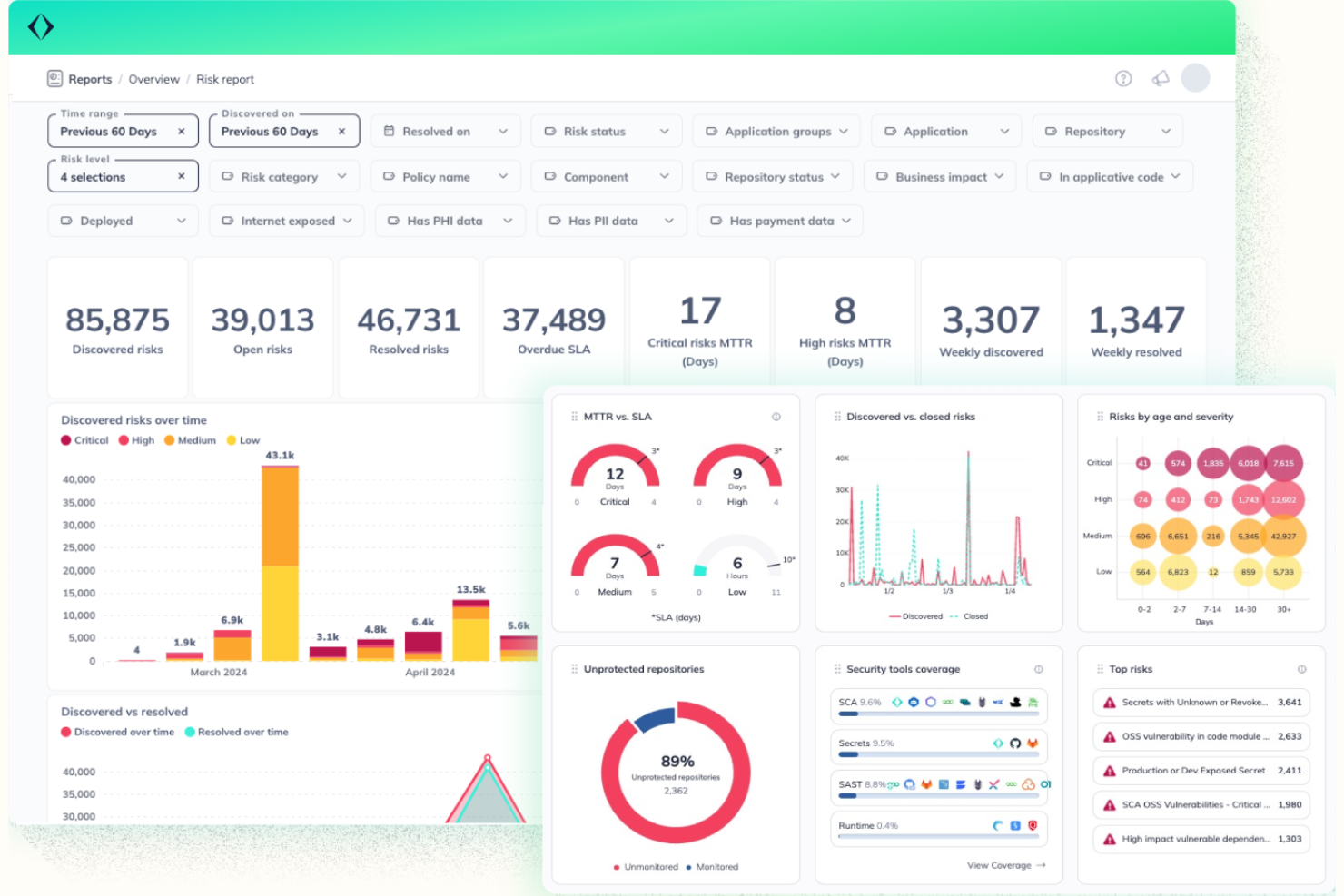
Apiiro es una plataforma de seguridad de la cadena de suministro de software que ofrece análisis de riesgos de código, monitoreo de la canalización CI/CD y remediación automatizada para equipos de desarrollo y seguridad.
¿Para quién es mejor Apiiro?
Equipos de seguridad e ingeniería en grandes empresas que necesitan visibilidad integral de riesgos y remediación en toda su cadena de suministro de software.
Por qué elegí Apiiro
Elegí Apiiro como uno de los mejores porque confío en su visibilidad integral de riesgos y remediación a través de la cadena de suministro de software. Utilizo su análisis de riesgos de código para identificar vulnerabilidades de forma temprana, y sus flujos de trabajo de remediación automatizada ayudan a mi equipo a abordar los problemas antes de que lleguen a producción. También me gusta cómo Apiiro vincula los riesgos con el contexto empresarial, lo que nos permite priorizar lo más importante.
Características clave de Apiiro
- Gestión de SBOM: Permite generar, rastrear y administrar listas de materiales de software para todos los componentes.
- Controles basados en políticas: Permiten hacer cumplir políticas personalizadas de seguridad y cumplimiento en tus canalizaciones.
- Análisis de dependencias de terceros: Identifica vulnerabilidades en bibliotecas de código abierto y de terceros.
- Registro de auditoría e informes: Proporciona registros e informes detallados de todas las actividades de riesgo y remediación.
Integraciones de Apiiro
Apiiro ofrece integraciones nativas con GitHub, GitLab, Bitbucket, Azure DevOps, Jenkins, Jira y Slack, y proporciona una API para integraciones personalizadas.
Pros and Cons
Pros:
- Mapeo integral de riesgos en todas las canalizaciones
- Remediación automatizada para código y dependencias
- Integración nativa con principales herramientas CI/CD
- Priorización de riesgos basada en contexto
- Permite gestión y exportación de SBOM
Cons:
- Soporte limitado para artefactos no basados en contenedores
- Las velocidades de escaneo pueden ser lentas en imágenes grandes

Ideal para la detección avanzada de amenazas en la cadena de suministro
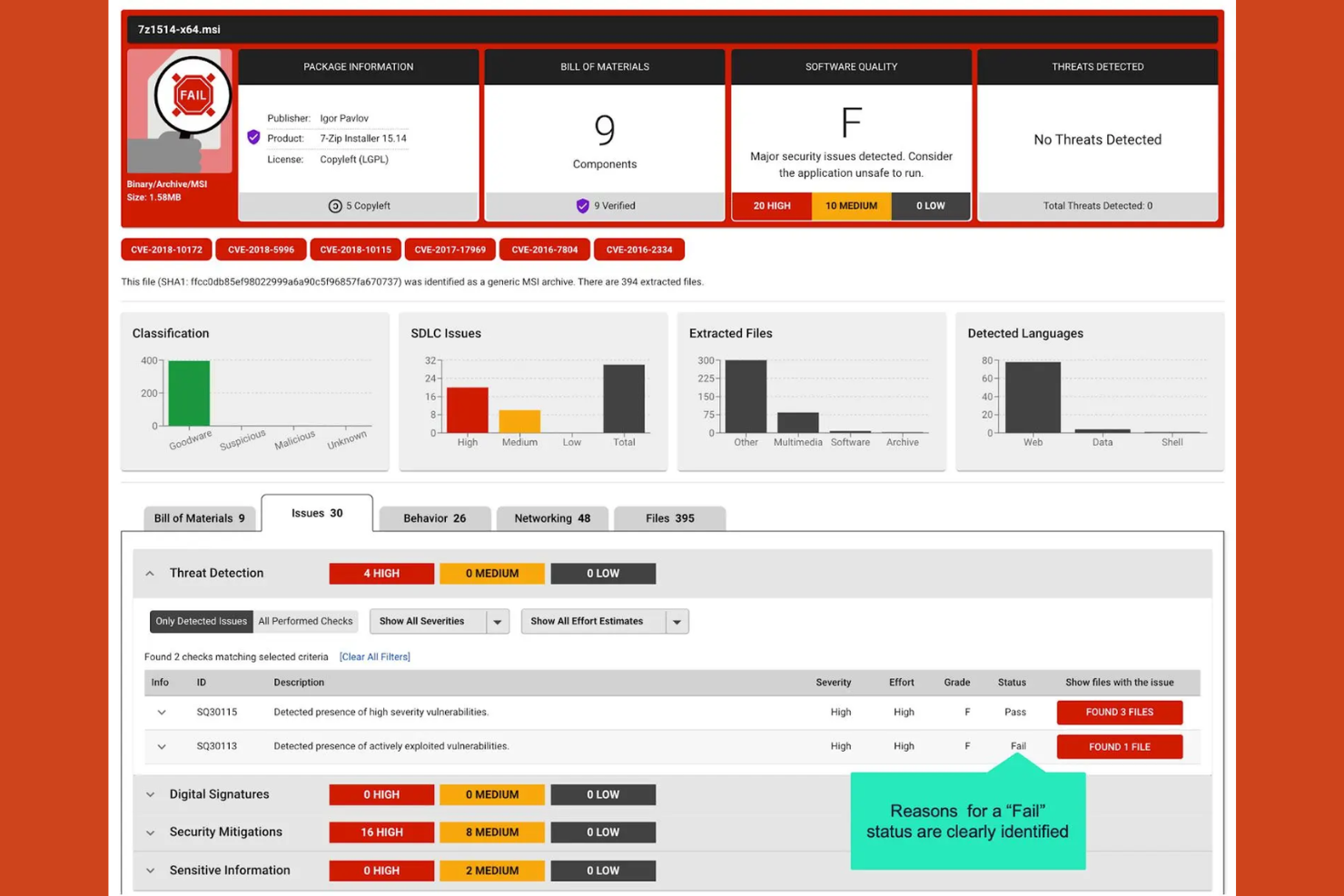
ReversingLabs es una plataforma de seguridad de la cadena de suministro de software que ofrece detección avanzada de amenazas, análisis binario y supervisión continua de artefactos y componentes de software.
¿Para quién es más adecuado ReversingLabs?
Equipos de seguridad de grandes empresas y proveedores de software que necesitan detección y análisis avanzados de amenazas para su cadena de suministro de software.
Por qué elegí ReversingLabs
Elegí ReversingLabs como una de las mejores opciones porque confío en su detección avanzada de amenazas y en su análisis binario profundo para descubrir riesgos ocultos en componentes de terceros. Mi equipo utiliza su supervisión continua para reforzar nuestra postura de ciberseguridad y detectar las amenazas de la cadena de suministro en una fase temprana, de forma similar a los riesgos de gran repercusión observados en incidentes como SolarWinds. También valoro su detallado análisis de reputación de archivos y malware, que me permite confiar en la protección tanto del software de código abierto como del software propietario.
Funciones clave de ReversingLabs
- Aplicación automatizada de políticas: Aplica políticas de seguridad en toda la cadena de suministro de software.
- Gestión de SBOM: Genera y gestiona listas de materiales de software para todos los artefactos.
- Detección de manipulaciones: Identifica cambios no autorizados en los paquetes de software.
- Integración con canalizaciones de CI/CD: Se conecta directamente a los flujos de trabajo de compilación y despliegue.
Integraciones de ReversingLabs
Actualmente no se indican integraciones nativas. La herramienta admite integraciones mediante API para flujos de trabajo personalizados y puede conectarse a canalizaciones de CI/CD.
Pros and Cons
Pros:
- Análisis binario profundo de artefactos de software
- Generación y gestión automatizadas de SBOM
- Detección de manipulaciones en paquetes de software
Cons:
- Alto uso de recursos para análisis profundos
- Funciones limitadas de análisis de vulnerabilidades de código abierto
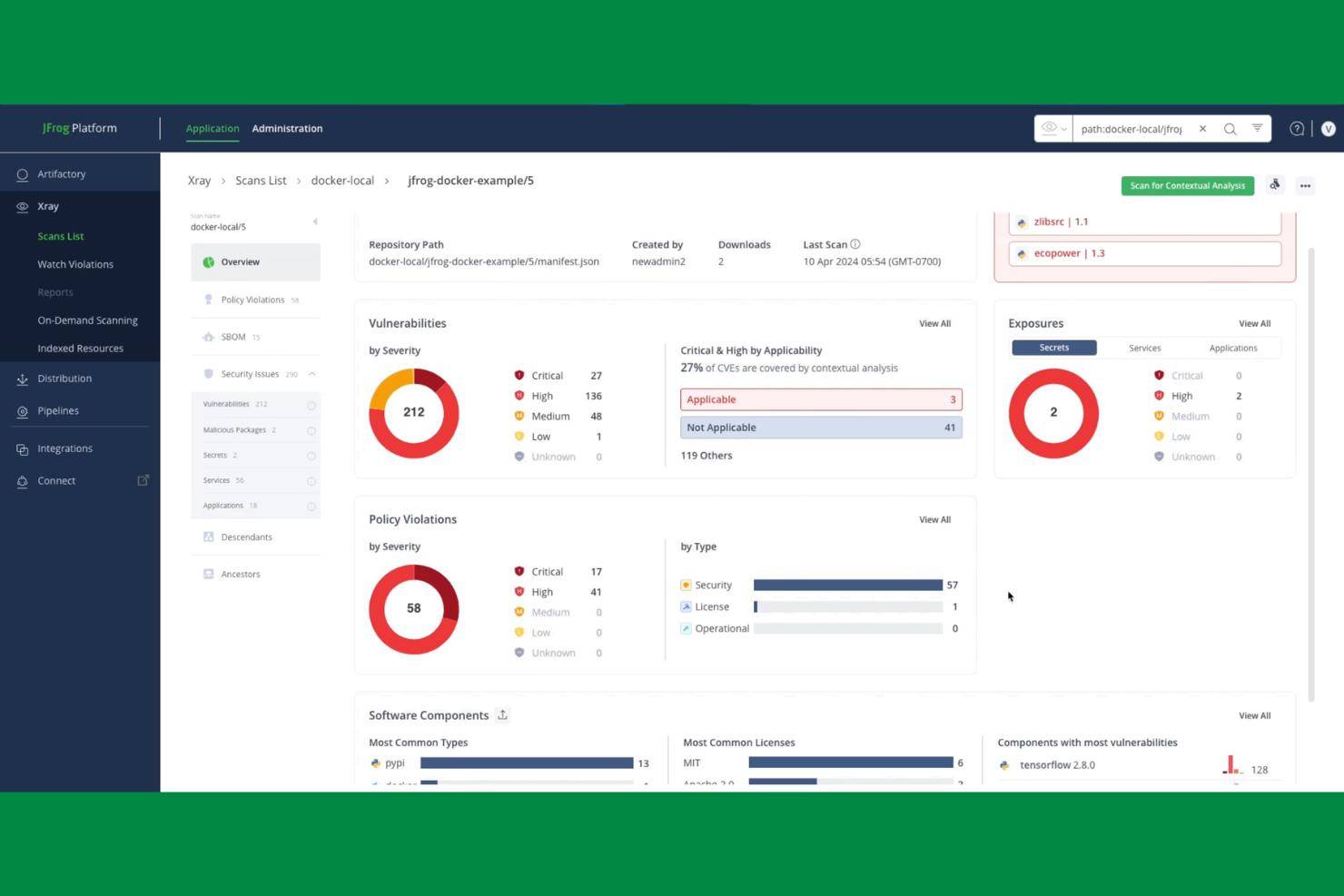
JFrog Xray es una herramienta de seguridad de la cadena de suministro de software que proporciona análisis profundos de binarios y contenedores, detección de vulnerabilidades y análisis de cumplimiento de licencias en tus artefactos y dependencias.
¿Para quién es mejor JFrog Xray?
Equipos de DevOps y seguridad empresariales en tecnología, finanzas y manufactura que necesitan análisis profundos de binarios y contenedores para la detección de vulnerabilidades y cumplimiento de licencias.
Por qué elegí JFrog Xray
Elegí JFrog Xray como uno de los mejores porque confío en su análisis recursivo profundo para la gestión de vulnerabilidades en binarios y contenedores. Me gusta que analiza las dependencias en proyectos de código abierto hasta el último eslabón de la cadena, no solo los paquetes superficiales. Mi equipo también se beneficia de funciones como controles de autenticación y su integración con JFrog Artifactory para automatizar el escaneo continuo dentro de nuestros flujos de trabajo CI/CD.
Funciones clave de JFrog Xray
- Controles de seguridad basados en políticas: Configura y aplica políticas personalizadas de seguridad y cumplimiento para los artefactos.
- Generación de SBOM: Crea automáticamente listas de materiales de software para los componentes rastreados.
- Acceso mediante REST API: Integra el análisis y la generación de reportes en sistemas y flujos de trabajo externos.
- Gestión de cumplimiento de licencias: Detecta y señala problemas con licencias de código abierto en las dependencias.
Integraciones de JFrog Xray
JFrog Xray ofrece integraciones nativas con JFrog Artifactory, Jenkins, Jira, GitHub, GitLab, Bitbucket, Azure DevOps y Slack. Hay una API disponible para integraciones personalizadas y admite flujos de trabajo CI/CD a través de su API.
Pros and Cons
Pros:
- Capacidades de análisis profundo de binarios y contenedores
- Actualizaciones en tiempo real de la base de datos de vulnerabilidades
- Admite proyectos multipaquete y multilenguaje
Cons:
- Soporte limitado para tipos de repositorios que no son de JFrog
- Configuración inicial compleja para entornos híbridos

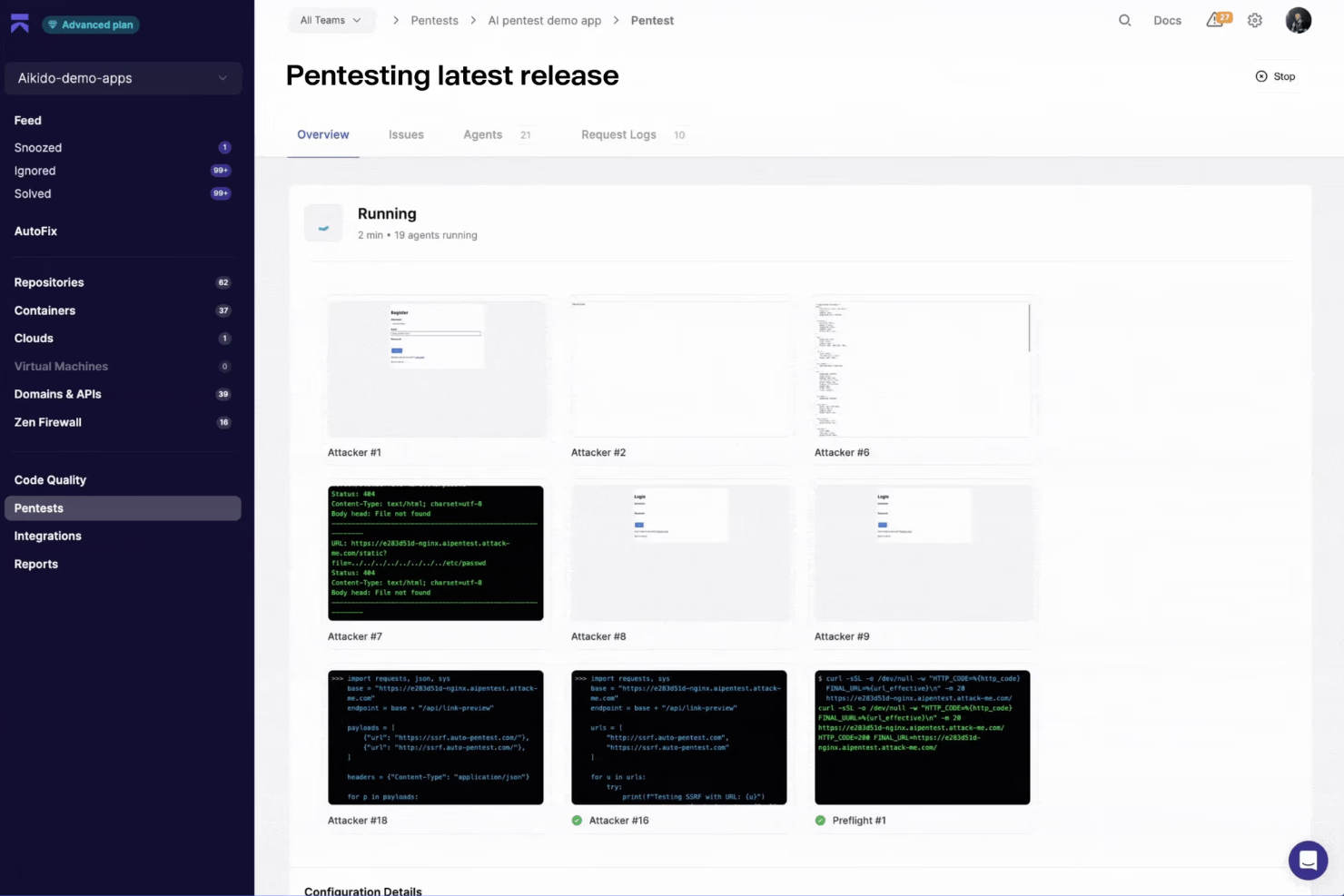
Aikido es una plataforma de seguridad para la cadena de suministro de software que se centra en la detección y prevención automatizadas de amenazas en los flujos de trabajo CI/CD, ofreciendo monitoreo en tiempo real y análisis accionables para los equipos de desarrollo.
¿Para quién es mejor Aikido?
Equipos de seguridad y DevOps en empresas tecnológicas que necesitan protección automatizada de la cadena de suministro en sus flujos de trabajo CI/CD.
Por qué elegí Aikido
Elegí Aikido como uno de los mejores porque detecta y bloquea activamente los ataques a la cadena de suministro directamente en la canalización CI/CD. Me gusta que monitorea los procesos de compilación en busca de actividad sospechosa y aplica las políticas de seguridad de forma automática. Mi equipo puede recibir alertas en tiempo real cuando se detectan amenazas, así que podemos responder rápidamente.
Características clave de Aikido
- Escaneo de dependencias: Escanea continuamente dependencias de código abierto y de terceros en busca de vulnerabilidades.
- Generación de SBOM: Crea automáticamente una lista de materiales de software para cada compilación.
- Control de acceso basado en roles: Permite gestionar los permisos de usuario y restringir el acceso a acciones sensibles.
- Registro de auditoría: Rastrea todos los eventos de seguridad y cambios dentro de tu entorno CI/CD.
Integraciones de Aikido
Aikido ofrece integraciones nativas con GitHub, GitLab, Bitbucket, Jira, Slack, Azure DevOps, AWS, Google Cloud, Docker Hub y Jenkins. Hay una API disponible para integraciones personalizadas.
Pros and Cons
Pros:
- Detección automatizada de ataques a la cadena de suministro
- Monitoreo en tiempo real de flujos CI/CD
- Generación de SBOM para cada compilación
Cons:
- Sin opción de implementación local
- Las funciones avanzadas requieren planes de nivel superior
Otras herramientas de seguridad de la cadena de suministro de software
Estas son algunas opciones adicionales de herramientas de seguridad de la cadena de suministro de software que no llegaron a mi lista, pero que aun así vale la pena consultar:
- Chainguard
Ideal para cadenas de suministro de imágenes de contenedores seguras
- Cycode
Ideal para la seguridad unificada de código y canalizaciones
- Kusari
Mejor para la integridad de la cadena de suministro de open source
- Jit
Ideal para la seguridad y el cumplimiento en DevSecOps


Cómo evalúo las herramientas de seguridad de la cadena de suministro de software
Divido la evaluación en dos capas: requisitos básicos—generación de SBOM, escaneo de CVE, firma de artefactos—y los diferenciadores que muestran qué herramientas están realmente diseñadas para la defensa de la cadena de suministro.
Funcionalidad principal (condiciones básicas para esta lista)
Cuando selecciono herramientas para mi lista, califico cada una en una escala de 0 (no ofrece la funcionalidad) a 5 (sobresale en esta área) para cada funcionalidad principal mencionada abajo. Luego, calculo la puntuación total de la herramienta como un porcentaje. Cada herramienta necesita alcanzar una puntuación total mínima del 65% para ser considerada para su inclusión.
- Generación y gestión de SBOM: Verifico si una herramienta puede generar automáticamente SBOMs en formatos SPDX y CycloneDX por cada compilación, ya que muchos flujos de trabajo de compras y cumplimiento los requieren en el momento de la liberación.
- Escaneo de dependencias y vulnerabilidades: La profundidad de SCA es importante aquí—evalúo la cobertura de ecosistemas de lenguajes, la resolución de dependencias transitivas y si la herramienta asigna CVEs con contexto, como la alcanzabilidad o puntuaciones EPSS.
- Detección de paquetes maliciosos: Más allá de los feeds de CVE, busco inteligencia de amenazas propietaria que detecte typosquatting y ataques de confusión de dependencias en registros como npm, PyPI y Maven Central.
- Seguridad en el pipeline CI/CD: Una herramienta debe cubrir errores de configuración en el pipeline, secretos expuestos y comprobaciones de integridad de compilación en plataformas como GitHub Actions, GitLab CI o Jenkins.
- Integridad y procedencia del artefacto: Evalúo si la herramienta admite flujos de trabajo de firma (Cosign, Sigstore) y genera atestaciones de procedencia alineadas con los niveles del marco SLSA.
- Aplicación de políticas y cumplimiento: Busco una gestión de políticas como código personalizable con control en CI/CD—los equipos deben poder bloquear compilaciones que violen umbrales de licencias o vulnerabilidades antes de que algo sea enviado.
Una vez que tengo una lista de herramientas que cumplen los criterios, considero qué diferencia a cada plataforma.
Factores diferenciadores (qué distingue a los proveedores)
Así es como comparo y contrasto diferentes proveedores:
Características sobresalientes
El análisis de alcanzabilidad es un gran diferenciador—busco herramientas que puedan decirte si una CVE detectada realmente afecta una ruta de ejecución en tu código, y no solo que exista en tu árbol de dependencias. Un firewall de paquetes curado añade otra capa permitiendo a los equipos hacer proxy de registros públicos y bloquear paquetes riesgosos antes de que los desarrolladores los descarguen. También evalúo soluciones de remediación para desarrolladores, como PRs de corrección generadas automáticamente, ya que los hallazgos de seguridad que se quedan en paneles y no llegan a desarrollo suelen quedar sin resolver.
Más allá de las características
La integración con el stack DevSecOps es de lo primero que evalúo—las herramientas necesitan plugins nativos de CI/CD para plataformas como GitHub Actions o GitLab CI, además de conexiones con registros de artefactos y sistemas de tickets como Jira. El alineamiento con los requisitos de cumplimiento es igual de importante, especialmente para equipos que entregan a compradores regulados que esperan documentación de atestación NIST SSDF o SLSA. También considero la profundidad de la inteligencia de amenazas, comprobando si el proveedor mantiene un equipo de investigación propio que publique hallazgos originales sobre amenazas emergentes a nivel de paquetes.
Cómo elegir herramientas de seguridad de la cadena de suministro de software
Es fácil perderse entre largas listas de funciones y estructuras de precios complejas. Para ayudarte a mantener la concentración mientras avanzas en tu proceso único de selección de software, estos son los factores que debes tener en cuenta:
| Factor | Qué debes considerar |
|---|---|
| Escalabilidad | ¿La herramienta podrá gestionar el tamaño actual y previsto de tu base de código, el número de usuarios y la cantidad de integraciones a medida que crezca tu organización? |
| Integraciones | ¿Se conecta de forma nativa con tus sistemas de CI/CD, repositorios de código, gestión de incidencias y alertas? ¿Hay APIs disponibles para flujos de trabajo personalizados? |
| Personalización | ¿Puedes adaptar las políticas, alertas e informes al perfil de riesgo y las necesidades de cumplimiento de tu organización? |
| Facilidad de uso | ¿La interfaz es intuitiva tanto para los equipos de seguridad como para los de desarrollo? ¿Requerirá una formación extensa o asistencia continua para utilizarla a diario? |
| Implementación e incorporación | ¿Cuánto tiempo lleva la configuración y qué recursos se necesitan? ¿Existen herramientas de migración, guías de incorporación o asistencia específica para el despliegue? |
| Coste | ¿Los niveles de precios son transparentes y previsibles? ¿El coste aumenta según el uso, el número de puestos o las funciones? Presta atención a las tarifas ocultas o los complementos. |
| Medidas de seguridad | ¿Qué certificaciones, normas de cifrado y prácticas de gestión de datos sigue el proveedor? ¿Hay registros de auditoría y controles de acceso? |
| Requisitos de cumplimiento | ¿La herramienta es compatible con las normas regulatorias de tu sector (por ejemplo, SOC 2, ISO 27001, GDPR)? ¿Puede generar informes preparados para auditorías de cumplimiento? |
¿Qué son las herramientas de seguridad de la cadena de suministro de software?
Las herramientas de seguridad de la cadena de suministro de software son plataformas especializadas que ayudan a las organizaciones a identificar, supervisar y mitigar los riesgos presentes en los componentes, las dependencias y los procesos utilizados para crear y entregar software. Estas herramientas analizan el código, las bibliotecas de terceros y la infraestructura en busca de vulnerabilidades, realizan un seguimiento de las listas de materiales de software y facilitan el cumplimiento de los estándares de seguridad durante todo el ciclo de vida del desarrollo.
Funciones de las herramientas de seguridad de la cadena de suministro de software
Al seleccionar herramientas de seguridad de la cadena de suministro de software, presta atención a las siguientes funciones clave:
- Análisis de vulnerabilidades: Analiza el código fuente, las dependencias y los contenedores en busca de vulnerabilidades de seguridad conocidas y emergentes durante todo el ciclo de vida del desarrollo.
- Generación de SBOM: Crea automáticamente una lista de materiales de software para inventariar todos los componentes y las dependencias de tus aplicaciones.
- Seguimiento de dependencias: Supervisa las bibliotecas de terceros y de código abierto para detectar actualizaciones, riesgos y problemas de cumplimiento de licencias.
- Aplicación de políticas: Permite definir y automatizar políticas de seguridad para impedir que el código o los componentes de riesgo ingresen en tu entorno.
- Priorización de riesgos: Utiliza el contexto y la gravedad para clasificar las vulnerabilidades, lo que ayuda a los equipos a centrarse primero en las amenazas más urgentes.
- Integración con CI/CD: Se conecta directamente con tus canalizaciones de compilación y distribución para automatizar las comprobaciones de seguridad y los pasos de corrección.
- Registro de auditoría: Registra las acciones de los usuarios, los cambios en las políticas y los eventos de seguridad para facilitar el cumplimiento y el análisis forense.
- Alertas e informes: Notifica a los equipos sobre problemas críticos y genera informes detallados para las partes interesadas y los auditores.
- Orientación para la corrección: Proporciona pasos prácticos o correcciones automatizadas para resolver las vulnerabilidades y las configuraciones incorrectas identificadas.
Beneficios de las herramientas de seguridad de la cadena de suministro de software
La implementación de herramientas de seguridad de la cadena de suministro de software ofrece varios beneficios para tu equipo y tu empresa. Estos son algunos de los que puedes esperar:
- Reducción del riesgo de vulnerabilidades: El análisis y la supervisión automatizados te ayudan a detectar y abordar los problemas de seguridad antes de que afecten a tu software o a tus usuarios.
- Mejora del cumplimiento: La aplicación integrada de políticas y el registro de auditoría facilitan el cumplimiento de los requisitos normativos y la superación de las auditorías de seguridad.
- Respuesta más rápida ante incidentes: Las alertas en tiempo real y la priorización de riesgos permiten que tu equipo identifique y corrija rápidamente las amenazas más urgentes.
- Mayor visibilidad: La generación de SBOM y el seguimiento de dependencias te ofrecen una visión clara de todos los componentes de tu cadena de suministro de software.
- Flujos de trabajo simplificados: Las integraciones con CI/CD y los pasos de corrección automatizados reducen el trabajo manual y mantienen las comprobaciones de seguridad sincronizadas con el desarrollo.
- Mejor toma de decisiones: Los informes detallados y la puntuación de riesgos ayudan a las partes interesadas a comprender la postura de seguridad y a asignar recursos donde más se necesitan.
- Mejor colaboración: Los paneles centralizados y las alertas mantienen alineados a los equipos de seguridad, desarrollo y cumplimiento en torno a los riesgos y las acciones compartidos.
Costos y precios de las herramientas de seguridad de la cadena de suministro de software
Seleccionar herramientas de seguridad de la cadena de suministro de software requiere comprender los diversos modelos de precios y planes disponibles. Los costos varían según las funciones, el tamaño del equipo, los complementos y otros factores. La siguiente tabla resume los planes habituales, sus precios promedio y las funciones que suelen incluir las soluciones de herramientas de seguridad de la cadena de suministro de software:
Tabla comparativa de planes para herramientas de seguridad de la cadena de suministro de software
| Tipo de plan | Precio promedio | Funciones habituales |
|---|---|---|
| Plan gratuito | $0 | Análisis básico de vulnerabilidades, generación limitada de SBOM y asistencia de la comunidad. |
| Plan personal | $10-$30/usuario/mes | Análisis avanzado, aplicación básica de políticas, integraciones limitadas y asistencia por correo electrónico. |
| Plan empresarial | $40-$80/usuario/mes | Integración completa con CI/CD, priorización de riesgos, registro de auditoría, informes y asistencia estándar al cliente. |
| Plan corporativo | $100-$200/usuario/mes | Gestión personalizada de políticas, herramientas avanzadas de cumplimiento, incorporación específica, asistencia premium y SLA. |
Preguntas frecuentes sobre herramientas de seguridad de la cadena de suministro de software
Estas son algunas respuestas a preguntas frecuentes sobre las herramientas de seguridad de la cadena de suministro de software:
¿Cómo ayudan las herramientas de seguridad de la cadena de suministro de software a prevenir los ataques a la cadena de suministro?
Estas herramientas analizan el código, las dependencias y los procesos de compilación en busca de vulnerabilidades y cambios sospechosos. Al supervisar las amenazas conocidas y aplicar políticas de seguridad, ayudan a detectar los riesgos de forma temprana y reducen la posibilidad de que componentes comprometidos lleguen a producción.
¿Pueden las herramientas de seguridad de la cadena de suministro de software integrarse con mi canal de CI/CD existente?
Sí, la mayoría de las herramientas ofrecen integraciones con plataformas populares de CI/CD como Jenkins, GitHub Actions y GitLab CI. Esto permite automatizar las comprobaciones de seguridad como parte de los flujos de trabajo de compilación y despliegue, de modo que las vulnerabilidades se señalen antes de publicar el código.
¿Qué es una lista de materiales de software (SBOM) y por qué es importante?
Una SBOM es un inventario detallado de todos los componentes y dependencias de tu software. Es importante porque te proporciona visibilidad sobre lo que contiene tu base de código, ayuda a realizar un seguimiento de las vulnerabilidades y cada vez se exige más para cumplir con las normativas.
¿Estas herramientas son compatibles con código abierto y propietario?
Sí, la mayoría de las soluciones pueden analizar tanto bases de código de código abierto como propietarias. Normalmente admiten una amplia variedad de lenguajes de programación y gestores de paquetes, por lo que puedes supervisar todos tus activos de software para detectar riesgos.
¿Con qué frecuencia debo ejecutar análisis con estas herramientas?
Debes ejecutar análisis de forma continua o con cada confirmación de código, si es posible. Los análisis frecuentes garantizan que las nuevas vulnerabilidades se detecten rápidamente y ayudan a mantener una sólida postura de seguridad a medida que evoluciona tu base de código.