

Los 10 mejores herramientas para la evaluación de riesgos de seguridad de 2026

10 Mejores Herramientas de Evaluación de Riesgos de Seguridad


En el mundo conectado de hoy, mantener tu información segura es más importante que nunca. Las empresas se enfrentan a muchas clases de riesgos en línea, desde robo de datos hasta sistemas inseguros, y puede ser difícil detectarlos todos. Por eso existen las herramientas de evaluación de riesgos de seguridad: te ayudan a encontrar puntos débiles a tiempo y a proteger tu negocio.
Estas herramientas facilitan la identificación de posibles problemas, ayudan a mantener la organización y facilitan el cumplimiento de normas de seguridad. Le dan a tu equipo una visión clara de lo que necesita atención para que puedas actuar antes de que los problemas crezcan.
En esta guía, descubrirás las mejores herramientas de evaluación de riesgos de seguridad que te ayudarán a mantener tu información protegida y tu negocio funcionando sin problemas. Ya sea que administres un pequeño equipo o una gran empresa, estas herramientas facilitan la seguridad en línea.
Por qué confiar en nuestras recomendaciones de software
Nuestro equipo lleva probando y evaluando software desde 2012. Como líderes tecnológicos, sabemos lo difícil —y lo importante— que es elegir el software adecuado.
Para esta guía, evaluamos las herramientas mediante pruebas prácticas e investigación independiente, puntuando las herramientas según nuestros criterios de selección.
Nuestras reseñas reflejan nuestro criterio editorial humano, no un discurso de ventas.
Revisores expertos:
Resumen de las Mejores Herramientas de Evaluación de Riesgos de Seguridad
| Tool | Best For | Trial Info | Price | ||
|---|---|---|---|---|---|
| 1 | Ideal para evaluaciones de riesgos de proveedores externos | Demostración gratuita disponible | Precios disponibles bajo solicitud | Website | |
| 2 | Ideal para información sobre riesgos en tiempo real | Demostración gratuita disponible | Precio a consultar | Website | |
| 3 | Mejor para alertas de amenazas en tiempo real | Not available | Precios bajo solicitud | Website | |
| 4 | Ideal para análisis de seguridad completos de código a nube | Plan gratuito disponible + demo gratis | Desde $350/mes | Website | |
| 5 | Mejor para la gestión de riesgos específicos de TI | Demostración gratuita disponible | Precio a consultar | Website | |
| 6 | Ideal para remediaciones generadas por IA | Demo gratuita disponible | Desde $69/mes | Website | |
| 7 | Ideal para la gestión de seguridad y evaluaciones personalizadas | Prueba gratuita de 7 días | Precios a consultar | Website | |
| 8 | Ideal para la gobernanza y el análisis de CyberGRC | Demostración gratuita disponible | Precio bajo solicitud | Website | |
| 9 | Mejor para seguridad informática y gestión integrada de riesgos | Demo gratuita disponible. | Precio bajo solicitud | Website | |
| 10 | La mejor opción para análisis de riesgos de ciberseguridad impulsado por procesos | Not available | Precios a consultar | Website |

Reseñas de las Mejores Herramientas de Evaluación de Riesgos de Seguridad

Ideal para evaluaciones de riesgos de proveedores externos
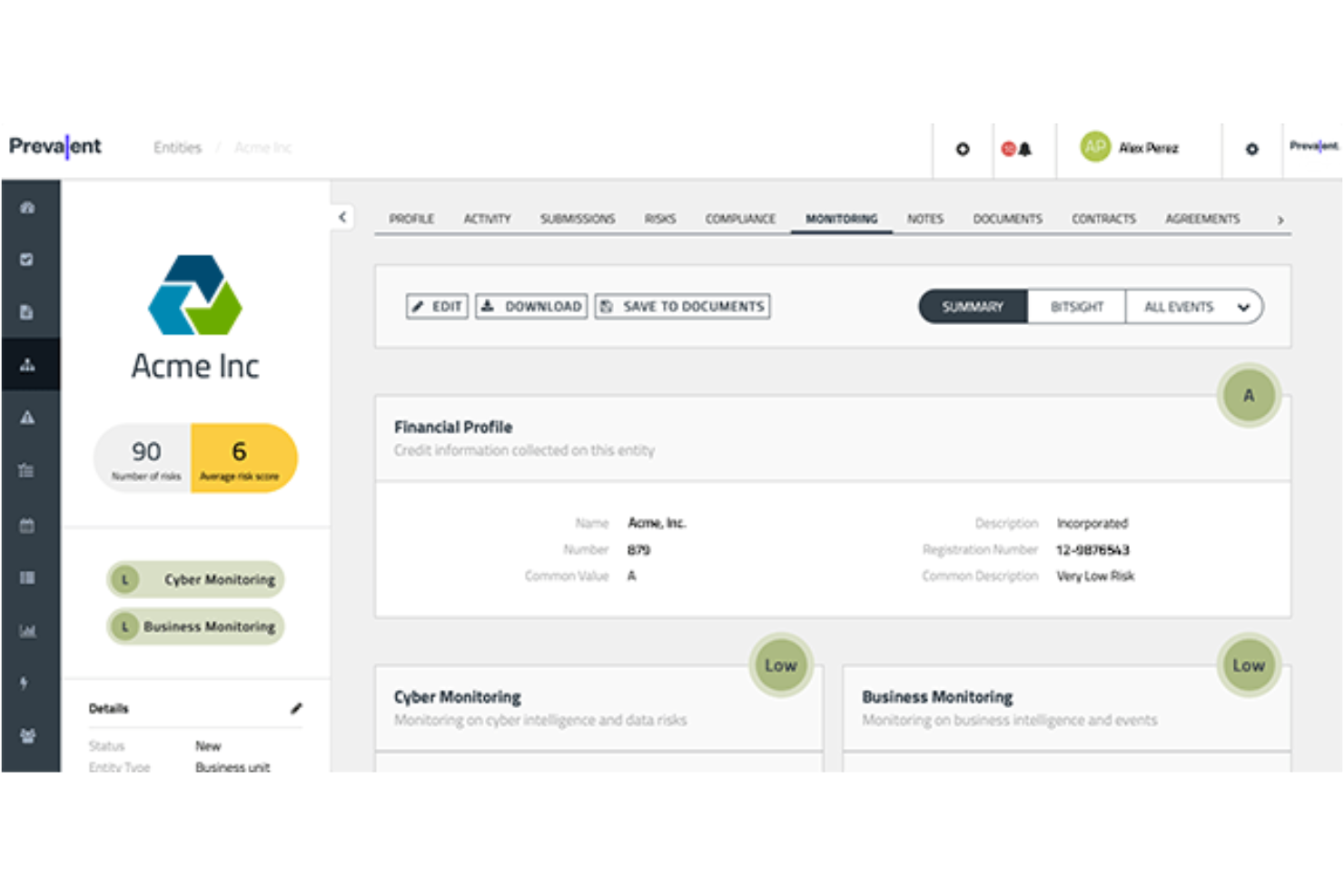
Prevalent es una plataforma de gestión de riesgos de terceros diseñada para ayudar a las organizaciones a gestionar los riesgos de proveedores y contratistas a lo largo de su ciclo de vida. Está dirigida a diversos equipos como gestión de riesgos, adquisiciones, seguridad y cumplimiento normativo en sectores como finanzas, salud y comercio minorista.
Por qué elegí Prevalent: Prevalent se centra en la monitorización de una amplia gama de amenazas cibernéticas y vulnerabilidades que pueden afectar tus relaciones con los proveedores. Con su funcionalidad de inteligencia cibernética de proveedores, Prevalent ofrece información sobre incidentes cibernéticos de terceros mediante el análisis de datos de más de 1,500 foros criminales, sitios web de la dark web, repositorios de código y bases de datos de vulnerabilidades. Esto permite a tu equipo identificar si alguno de tus proveedores se ha visto afectado por credenciales expuestas o posibles brechas de seguridad. Prevalent también rastrea riesgos operativos y financieros, supervisando la salud de la red de los proveedores e identificando vulnerabilidades que podrían comprometer la seguridad de los datos.
Funciones destacadas e integraciones:
Más allá de la monitorización cibernética, Prevalent ofrece herramientas adicionales para ayudarte a mantener bajo control el riesgo de tus proveedores. Su función de notificación de eventos de brechas te alerta cuando un proveedor de terceros experimenta un incidente de datos, para que tu equipo pueda responder proactivamente. La plataforma también proporciona información reputacional en tiempo real y un registro de riesgos que centraliza todos los datos de evaluación y monitorización. Las integraciones incluyen Active Directory, BitSight, ServiceNow, SecZetta y Source Defense.
Pros and Cons
Pros:
- Protocolos de seguridad sólidos para proteger los datos
- Los usuarios pueden personalizar los informes según sus necesidades específicas
- Funcionalidades extensas para gestionar riesgos de proveedores
Cons:
- Los desafíos en la migración de datos pueden complicar la configuración inicial
- La plataforma es compleja y presenta una curva de aprendizaje
Ideal para información sobre riesgos en tiempo real
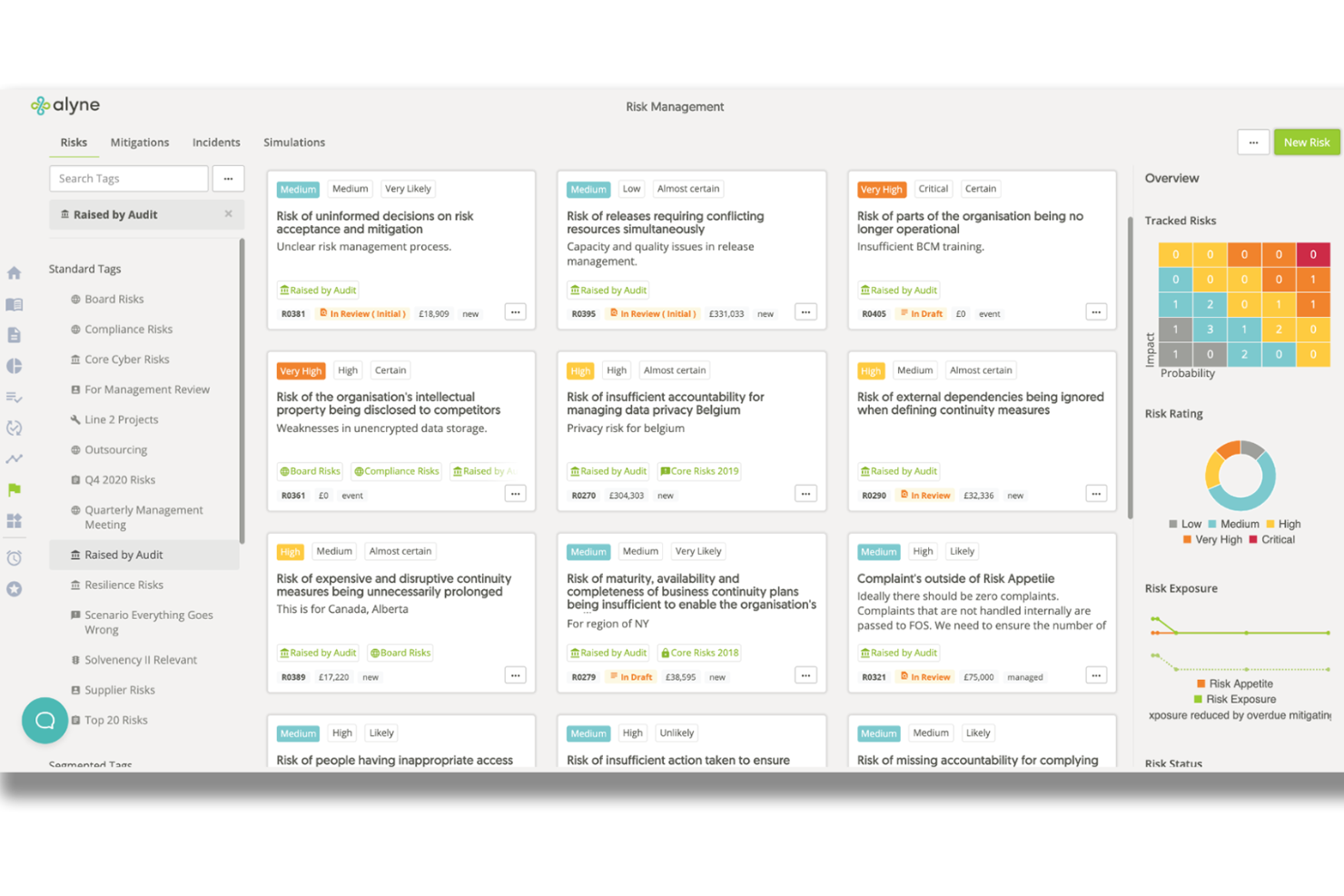
Alyne de Mitratech es una plataforma integral de gobierno, riesgo y cumplimiento (GRC) diseñada para ayudar a las organizaciones a identificar, evaluar y monitorear riesgos en diferentes ámbitos, incluyendo ciberseguridad, privacidad y cumplimiento normativo.
Por qué elegí Mitratech: Sus conocimientos de riesgo en tiempo real y las evaluaciones automatizadas mejoran el proceso de identificación de posibles vulnerabilidades de seguridad. Con sus bibliotecas integradas de controles y marcos alineados con estándares globales, como ISO 27001 y NIST, Alyne garantiza que las empresas tengan un enfoque estructurado para gestionar los riesgos de seguridad de manera eficaz.
Características destacadas e integraciones:
La plataforma incluye integraciones en tiempo real con proveedores de datos externos como Black Kite y SecurityScorecard, lo que potencia su capacidad para ofrecer evaluaciones de riesgo completas. Además, el diseño basado en la nube e impulsado por IA de Alyne permite el monitoreo y la gestión continua de riesgos. Las integraciones incluyen Black Kite, SecurityScorecard, LeanIX, Snowflake, Tableau, Microsoft Azure, AWS y otros proveedores de datos.
Pros and Cons
Pros:
- Plataforma habilitada con IA
- Evaluaciones personalizables
- Información procesable
Cons:
- No dispone de prueba gratuita
- Desafíos potenciales al integrarse con algunas herramientas de terceros

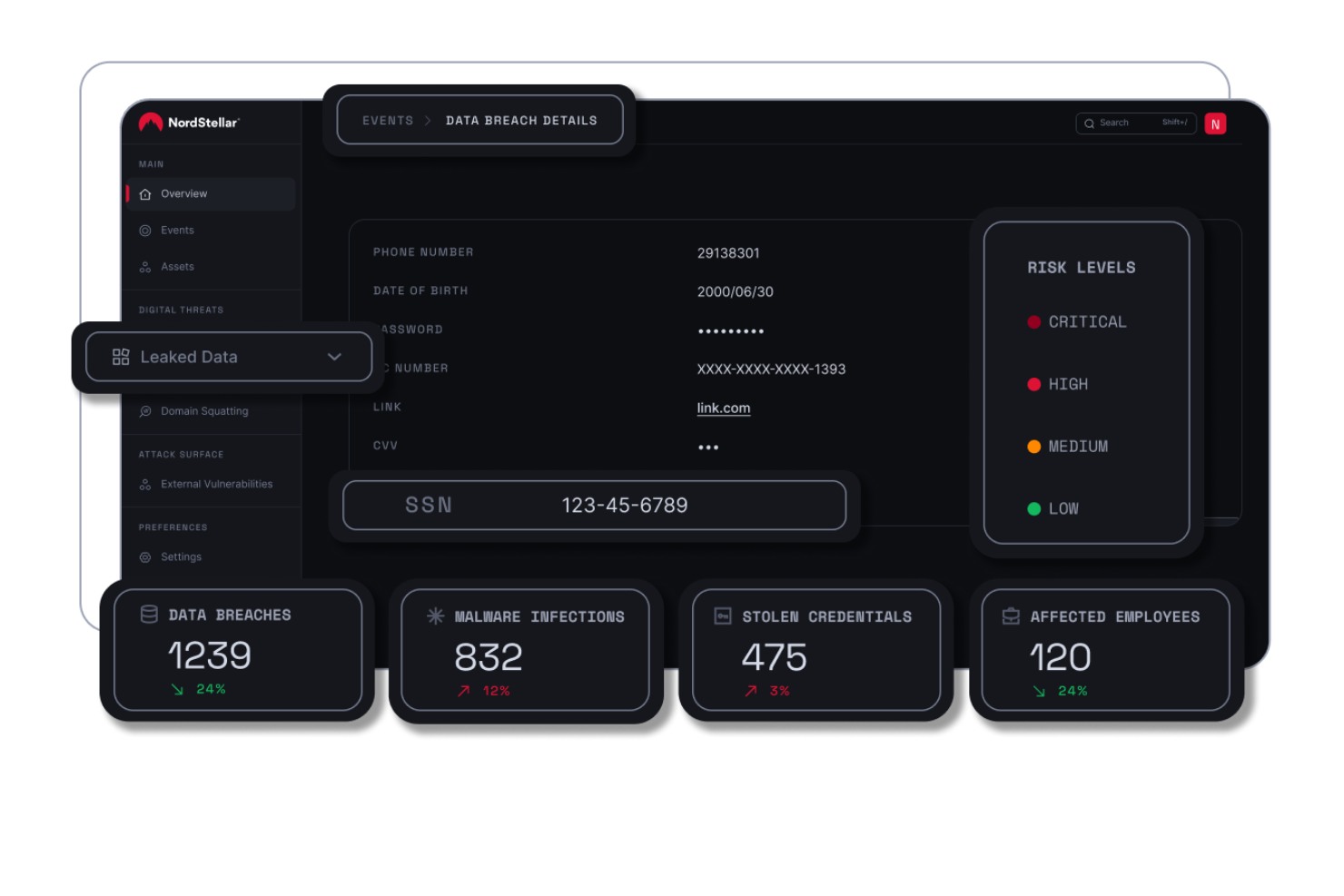
NordStellar es una herramienta de ciberseguridad diseñada para ayudar a las empresas a gestionar sus riesgos de seguridad. Centraliza la inteligencia de amenazas de múltiples fuentes, proporcionando alertas en tiempo real y una visión integral de las vulnerabilidades.
Por qué elegí NordStellar: Elegí NordStellar porque ofrece monitoreo de filtraciones de datos, lo que te ayuda a identificar información comprometida y responder rápidamente para minimizar el daño. Esta función es crucial para mantener segura tu información sensible y preservar la confianza de tus clientes. Además, el monitoreo de la dark web te alerta sobre amenazas potenciales que surgen en la dark web, permitiéndote tomar medidas proactivas. Otra razón por la que escogí NordStellar es por su gestión de la superficie de ataque. Esta característica identifica y ayuda a asegurar puntos de entrada vulnerables, reduciendo el riesgo de ciberataques. Al priorizar los riesgos, tu equipo puede enfocarse en las amenazas más urgentes, asegurando que tus esfuerzos de ciberseguridad sean enfocados y efectivos.
Funciones destacadas e integraciones:
Las funciones incluyen protección de marca, que te ayuda a monitorear y salvaguardar la reputación de tu empresa en línea. La plataforma también proporciona información centralizada sobre filtraciones, facilitando la gestión y priorización de riesgos. Con alertas en tiempo real, siempre estarás informado sobre amenazas potenciales, lo que te permite responder rápidamente y minimizar posibles daños. Las integraciones incluyen Splunk, QRadar y Datadog.
Pros and Cons
Pros:
- Las alertas en tiempo real permiten una respuesta rápida
- El monitoreo de la dark web detecta filtraciones
- La gestión de la superficie de ataque identifica vulnerabilidades
Cons:
- Los detalles de precios requieren solicitar una demostración
- La complejidad de la interfaz aumenta la curva de aprendizaje

Ideal para análisis de seguridad completos de código a nube
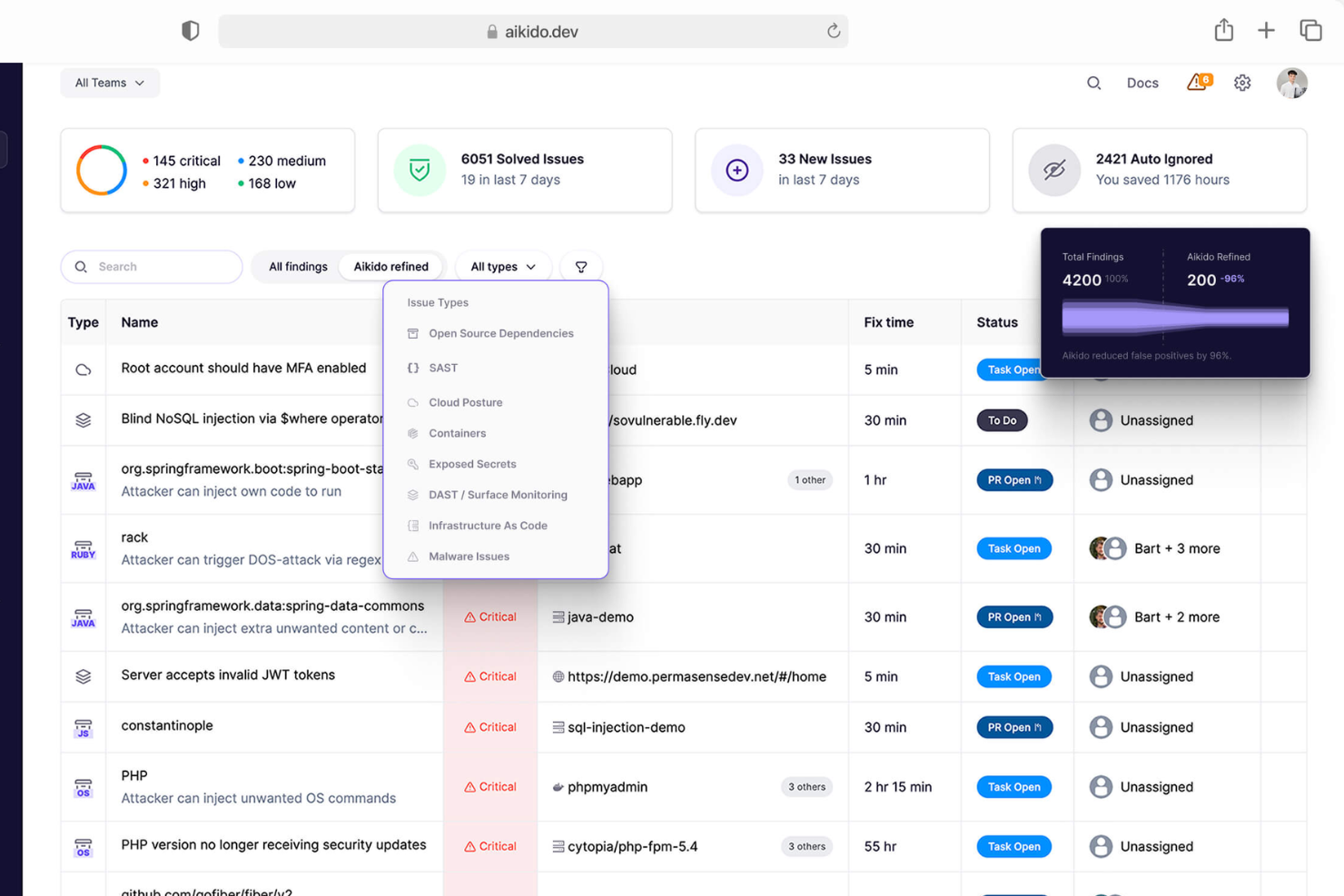
Aikido Security es una plataforma integral de DevSecOps diseñada para asegurar el código y los entornos en la nube. Ofrece funciones como gestión de vulnerabilidades, generación de SBOMs y protección de aplicaciones en tiempo de ejecución.
Por qué elegí Aikido Security: Me gusta que Aikido Security ofrezca una plataforma todo en uno que integra varias capacidades esenciales de análisis de seguridad, incluyendo pruebas estáticas de seguridad de aplicaciones (SAST), pruebas dinámicas de seguridad de aplicaciones (DAST), escaneo de infraestructura como código (IaC), análisis de composición de software (SCA) y gestión de postura de seguridad en la nube (CSPM). Esta integración permite a las organizaciones cubrir todo su panorama de seguridad desde el código hasta la nube, asegurando que se identifiquen y aborden todas las posibles vulnerabilidades.
Características destacadas e integraciones:
Incluye detección de secretos que escanea el código en busca de claves API filtradas y expuestas, contraseñas, certificados, claves de cifrado y otra información sensible para prevenir accesos no autorizados. También ofrece detección de malware, monitoreo de superficie y análisis de imágenes de contenedores. Las integraciones incluyen Amazon Web Services (AWS), Google Cloud, Microsoft Azure Cloud, Drata, Vanta, AWS Elastic Container Registry, Docker Hub, Jira, Asana y GitHub.
Pros and Cons
Pros:
- Ofrece un panel integral e informes personalizables
- Proporciona información procesable
- Interfaz fácil de usar
Cons:
- No posee seguridad de endpoint ni capacidades de detección de intrusiones
- Ignora vulnerabilidades si no hay solución disponible
New Product Updates from Aikido Security
Aikido Security Adds Pentest for AI Capabilities
Aikido Security adds Pentest for AI to test agents and LLM features against OWASP Agentic Top 10 risks. This helps teams identify AI-specific security weaknesses before they reach production. For more information, visit Aikido Security’s official site.

Mejor para la gestión de riesgos específicos de TI
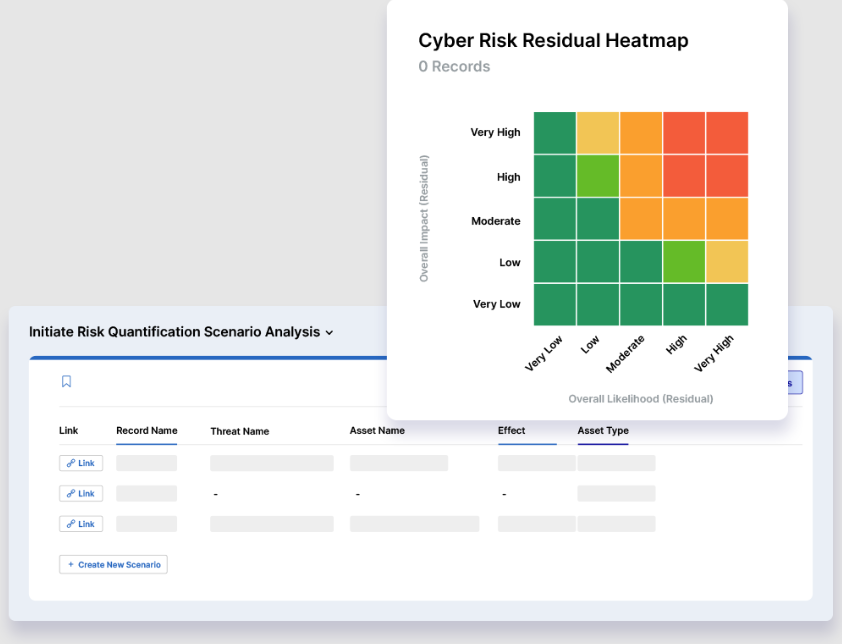
LogicGate ofrece una plataforma diseñada para agilizar las actividades de gestión de riesgos relacionados con TI. Su enfoque especializado proporciona a las organizaciones las herramientas que necesitan para identificar, evaluar y priorizar los riesgos de TI de manera eficiente.
Por qué elegí LogicGate: Elegí LogicGate tras una comparación minuciosa con otras herramientas debido a su enfoque personalizado en la gestión de riesgos de TI. En un panorama de soluciones más generalizadas, LogicGate destaca por sus funciones perfeccionadas para los retos específicos que enfrentan los departamentos de TI. Su capacidad para manejar vulnerabilidades, amenazas y controles de cumplimiento específicos de TI me convenció de su posición como la mejor opción para la gestión de riesgos orientada a TI.
Características destacadas e integraciones:
LogicGate cuenta con automatización de flujos de trabajo para la mitigación de riesgos y marcos de cumplimiento de TI integrados, ofreciendo una visión panorámica del panorama de riesgos de TI. Se integra con soluciones ITSM populares, mejorando sus capacidades mediante la incorporación de datos para una evaluación de riesgos más completa.
Pros and Cons
Pros:
- Adaptado para la gestión de riesgos de TI
- Automatización de flujos de trabajo para la mitigación de riesgos
- Incorporación de marcos de cumplimiento de TI
Cons:
- Puede que no sea adecuado para evaluaciones de riesgos no relacionados con TI
- Requiere cierta curva de aprendizaje para los nuevos usuarios
- La información sobre precios no está disponible fácilmente

Ideal para remediaciones generadas por IA
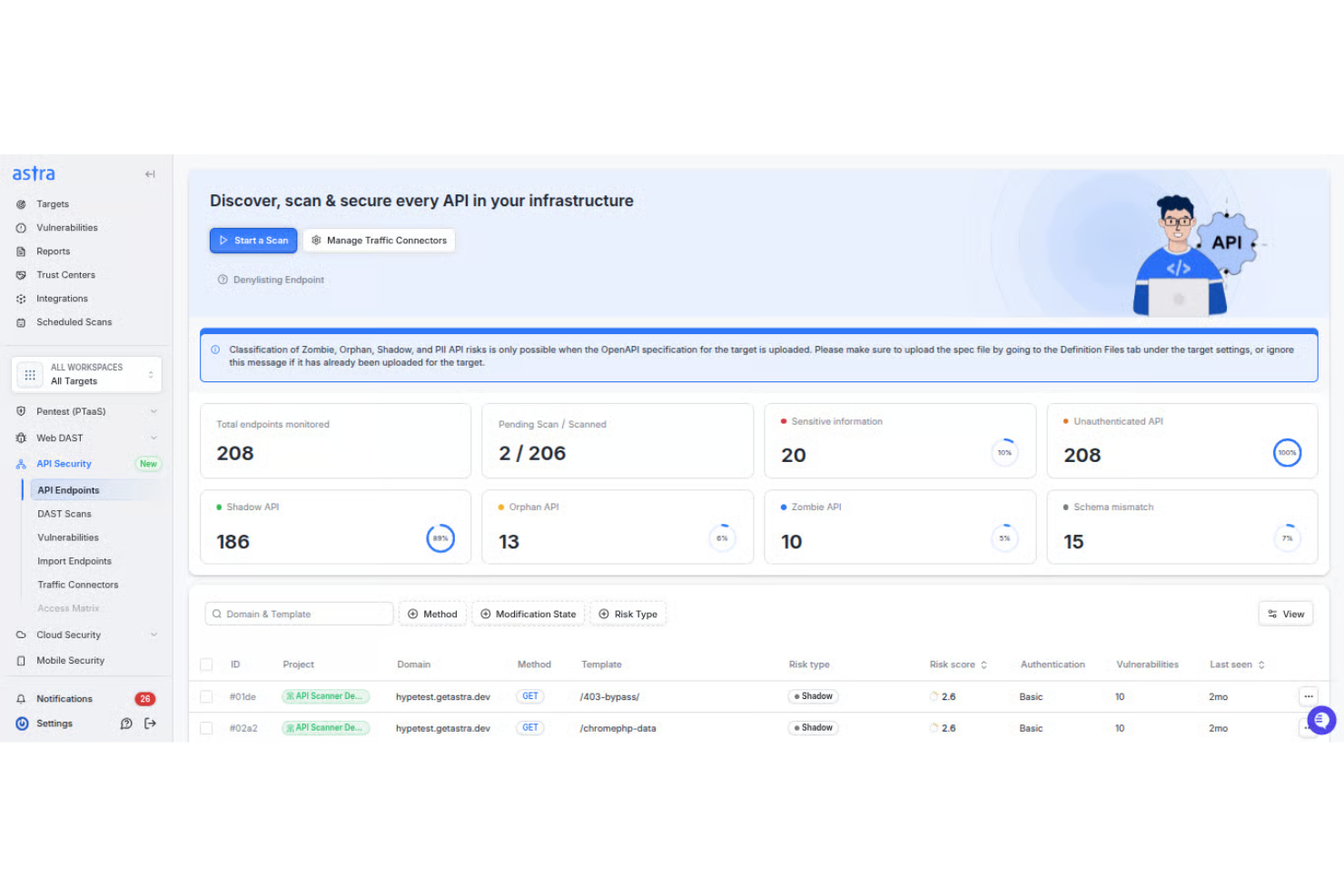
Astra Pentest es una herramienta de evaluación de riesgos de seguridad que te ayuda a identificar y corregir vulnerabilidades en tus sistemas. Combina pruebas automatizadas y manuales para proporcionar una evaluación exhaustiva de tu postura de seguridad.
Por qué elegí Astra Pentest: Elegí Astra Pentest porque ejecuta más de 8.000 pruebas automatizadas, cubriendo vulnerabilidades del Top 10 de OWASP y estándares de cumplimiento como GDPR e ISO 27001. Su panel de gestión de vulnerabilidades integrado te permite clasificar, priorizar y corregir problemas de manera eficiente, con pasos de remediación generados por IA que guían a tu equipo en cada corrección.
Características destacadas e integraciones:
Las características incluyen integración con pipelines CI/CD, lo que permite pruebas de seguridad continuas durante el proceso de desarrollo. También tienes la oportunidad de colaborar con expertos en seguridad en tiempo real, así que cuando encuentras vulnerabilidades complejas, puedes consultar directamente con profesionales. Se proporcionan informes detallados que resaltan las vulnerabilidades y ofrecen ideas accionables para la remediación.
Las integraciones incluyen Slack, Salesforce, Jira, Atlassian, GitHub, GitLab y Astra API Security Platform.
Pros and Cons
Pros:
- Pruebas híbridas automatizadas y manuales
- Más de 8.000 comprobaciones de vulnerabilidades
- Soporte de cumplimiento para los principales estándares
Cons:
- Requiere configuración por parte de expertos en seguridad
- Los tiempos de entrega de las pruebas manuales varían

Ideal para la gestión de seguridad y evaluaciones personalizadas
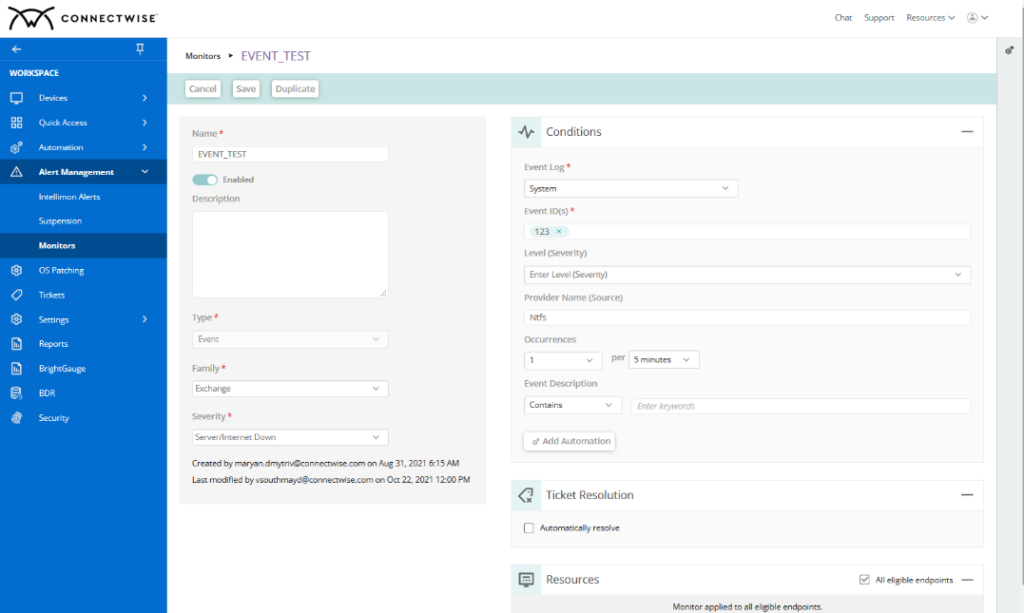
Connectwise ofrece evaluaciones de seguridad personalizadas y soluciones de gestión optimizadas para satisfacer las necesidades específicas de su organización. Logre la mejor gestión de seguridad posible con facilidad.
Por qué elegí Connectwise: La gestión de seguridad personalizada y las evaluaciones de Connectwise lo convierten en la opción ideal para empresas con necesidades únicas. Su enfoque híbrido y soluciones a medida lo distinguen de otras herramientas que ofrecen soluciones genéricas para todos.
Características destacadas e integraciones:
Connectwise sobresale con sus capacidades automatizadas de detección y respuesta, asegurando acciones rápidas ante posibles amenazas de seguridad. Sus evaluaciones de riesgos hechas a medida están diseñadas con la adaptabilidad en mente, adaptándose a empresas de todos los tamaños y sectores. En cuanto a las integraciones, Connectwise se integra bien con varias aplicaciones de terceros, aumentando su versatilidad en diversos entornos de TI.
Pros and Cons
Pros:
- La detección y respuesta automatizadas proporcionan intervenciones de seguridad oportunas.
- Las evaluaciones de riesgos personalizadas se adaptan a las necesidades únicas de cada organización.
- Las integraciones versátiles con aplicaciones de terceros amplían su utilidad en diferentes configuraciones de TI.
Cons:
- La falta de precios transparentes puede ser una barrera para algunos usuarios potenciales
- Puede tener una curva de aprendizaje más pronunciada para quienes no están familiarizados con las evaluaciones personalizadas
- La amplia gama de funciones puede ser abrumadora para empresas pequeñas que solo necesitan gestión de seguridad básica

Ideal para la gobernanza y el análisis de CyberGRC
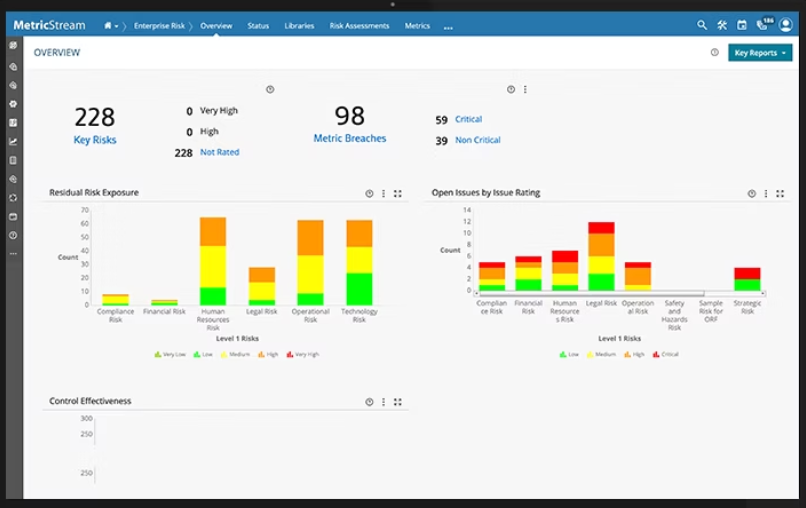
MetricStream agiliza las iniciativas de CyberGRC con un enfoque en gobernanza y análisis, simplificando la gestión de ciberseguridad y cumplimiento.
Por qué elegí MetricStream: Elegí MetricStream por su énfasis en la gobernanza de CyberGRC, un aspecto que otras herramientas suelen dejar de lado. Sus capacidades analíticas y el enfoque centrado en la gobernanza lo distinguen de otras opciones en el mercado. Dada la creciente cantidad de amenazas cibernéticas que enfrentan las organizaciones, considero que la experiencia de MetricStream en gobernanza y análisis de CyberGRC es crucial para aquellas empresas que buscan reforzar sus mecanismos de defensa.
Características y compatibilidades destacadas:
MetricStream es reconocido por sus sólidas capacidades de informes que proporcionan información sobre la postura de ciberseguridad de una organización. Su automatización de flujos de trabajo ayuda a optimizar los procesos de cumplimiento, asegurando que nada pase desapercibido. En cuanto a integraciones, MetricStream es compatible con varias herramientas de seguridad informática, fuentes de inteligencia de amenazas y bases de datos regulatorias, lo que garantiza que la organización se mantenga actualizada y en cumplimiento.
Pros and Cons
Pros:
- Sólidas capacidades de informes para obtener información profunda
- Automatización de flujos de trabajo para procesos de cumplimiento más ágiles
- Amplia integración con herramientas de seguridad informática y bases de datos regulatorias
Cons:
- La configuración inicial puede ser compleja para algunas organizaciones
- Requiere formación especializada para aprovechar al máximo sus capacidades
- La información sobre precios no está fácilmente disponible, lo que puede disuadir a posibles clientes

Archer
Mejor para seguridad informática y gestión integrada de riesgos
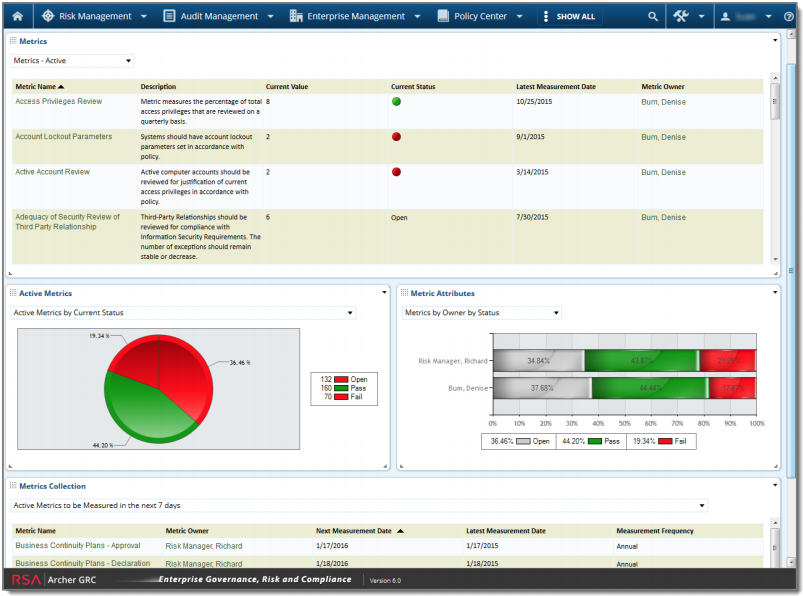
Archer es una herramienta integral orientada a la gestión de riesgos de seguridad informática, a la vez que ofrece capacidades de gestión de riesgos integrados. Con un fuerte énfasis en abordar los desafíos de seguridad TI y consolidar los datos de riesgos en toda la empresa, está diseñada para proporcionar una visión holística del panorama de riesgos de una organización.
Por qué elegí Archer: Archer llamó mi atención tras un minucioso análisis de varias herramientas de gestión de riesgos. Su doble enfoque en seguridad TI y en una gestión de riesgos integral y holística la diferencia de sus competidoras. Dada su capacidad para integrar los riesgos de seguridad TI en el marco general de la gestión de riesgos, Archer es ideal para organizaciones que buscan combinar estas dos funciones clave.
Características destacadas e integraciones:
Archer ofrece un panel dinámico que simplifica la visualización de datos de riesgo complejos, facilitando la toma de decisiones. Sus análisis avanzados permiten profundizar en los datos de riesgos para que las organizaciones descubran información oculta. En cuanto a integraciones, Archer es compatible con una amplia variedad de herramientas de seguridad TI y plataformas empresariales, lo que permite el flujo de datos y una mejor respuesta ante riesgos.
Pros and Cons
Pros:
- Panel dinámico para visualización sencilla de riesgos
- Análisis avanzados para evaluaciones detalladas de riesgos
- Amplia variedad de integraciones con herramientas de seguridad TI
Cons:
- La interfaz puede ser un reto para principiantes
- La implementación puede llevar tiempo en grandes empresas
- Falta de estructura de precios transparente

ProcessUnity
La mejor opción para análisis de riesgos de ciberseguridad impulsado por procesos
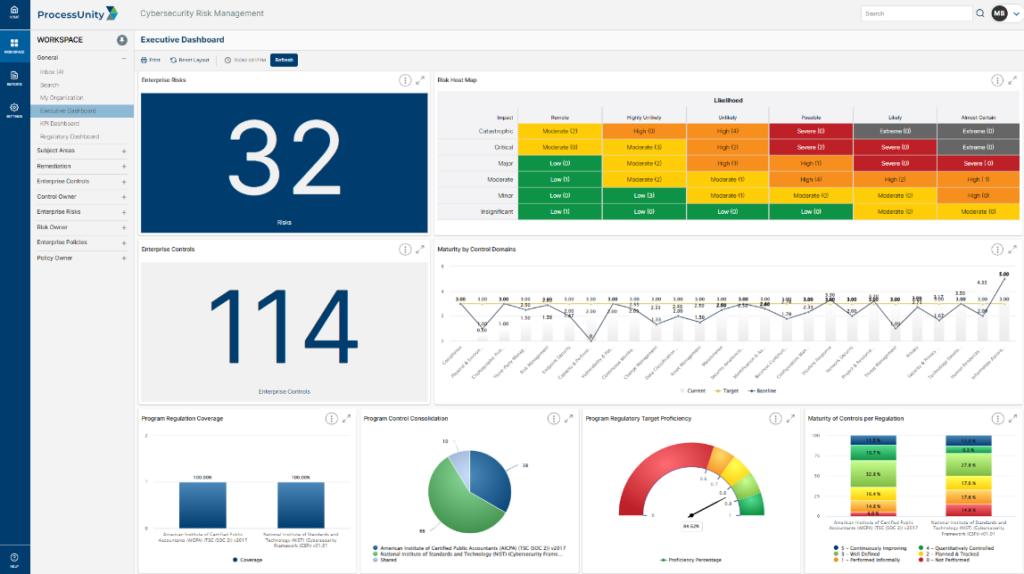
ProcessUnity ofrece a las organizaciones una forma estructurada de manejar los riesgos de ciberseguridad centrándose en procesos establecidos. El énfasis en el análisis de riesgos impulsado por procesos garantiza que las vulnerabilidades se identifiquen y aborden de manera sistemática, reflejando su designación como la mejor opción para este enfoque.
Por qué elegí ProcessUnity: Entre las numerosas herramientas que evalué, ProcessUnity se destacó por su enfoque sistemático y orientado a los procesos frente a los riesgos de ciberseguridad. Lo seleccioné por su énfasis constante en los flujos de trabajo, facilitando la compleja tarea de gestión de riesgos. Dado su enfoque en el análisis sistemático de riesgos, he determinado que ProcessUnity es la mejor opción para las organizaciones que buscan una metodología centrada en procesos para abordar las amenazas de ciberseguridad.
Características destacadas e integraciones:
ProcessUnity cuenta con registros de riesgos dinámicos y evaluaciones automatizadas, garantizando un ciclo continuo de evaluación de riesgos. Su panel de control proporciona una interfaz intuitiva, permitiendo a los usuarios navegar por métricas de riesgo y obtener información accionable sin esfuerzo. En cuanto a integraciones, ProcessUnity se sincroniza con una variedad de proveedores de inteligencia de riesgos de terceros, enriqueciendo sus datos nativos con panoramas de amenazas externas.
Pros and Cons
Pros:
- Registros dinámicos de riesgos para evaluación continua
- Panel intuitivo para visualizar claramente los riesgos
- Se integra eficientemente con fuentes externas de inteligencia de riesgos
Cons:
- Información de precios no disponible de forma inmediata
- Puede requerir cierta capacitación para un uso óptimo
- Datos integrados de inteligencia de amenazas limitados en comparación con algunos competidores
Otras Herramientas Destacadas de Evaluación de Riesgos de Seguridad
A continuación se muestra una lista de herramientas adicionales de evaluación de riesgos de seguridad que seleccioné pero que no llegaron al top 10. Sin duda vale la pena revisarlas.
- IBM Security Guardium Data Risk Manager
Mejor para la gestión de riesgos centrada en los datos
- IBM OpenPages
Ideal para la gestión de riesgos operativos y cumplimiento normativo
- Tenable Vulnerability Management
Mejor en detección y respuesta ante vulnerabilidades
- Qualys VMDR
Mejor para la gestión dinámica de vulnerabilidades
- Cybereason
Ideal para evaluaciones enfocadas de la postura cibernética
- FAIR Risk Management
Ideal para métodos de análisis de riesgos cuantitativos
- Riskonnect
Mejor para la integración integral de la gestión de riesgos
- NowSecure
Ideal para la gestión de riesgos en aplicaciones móviles


Reseñas Relacionadas de Herramientas de Evaluación de Riesgos de Seguridad
- Software de Gestión de Riesgos
- Herramientas de Gestión de Vulnerabilidades
- Herramientas DAST
- Sistemas de Detección y Prevención de Intrusiones
Cómo evalúo las herramientas de evaluación de riesgos de seguridad
Cuando un CISO necesita defender su postura de riesgo ante auditores, busco dos cosas: la funcionalidad básica que toda herramienta debe ofrecer y los elementos diferenciadores que separan las buenas de las excelentes.
Funcionalidad principal (requisitos básicos para esta lista)
Al seleccionar herramientas para mi lista, califico cada una en una escala del 0 (no ofrece la funcionalidad) al 5 (destaca en esta área) para cada una de las funcionalidades principales que se indican a continuación. Luego, calculo la puntuación total de la herramienta en porcentaje. Cada herramienta debe alcanzar una puntuación total mínima del 65% para ser considerada para su inclusión.
- Descubrimiento de activos y vulnerabilidades: Verifico si una herramienta puede inventariar automáticamente los activos y revelar vulnerabilidades en entornos locales, en la nube e híbridos sin necesidad de una intervención manual intensiva.
- Evaluación y priorización de riesgos: Cada herramienta debe clasificar los riesgos usando métodos establecidos como CVSS o FAIR, para que los equipos enfoquen la remediación en lo que realmente amenaza las operaciones del negocio.
- Mapeo de marcos de cumplimiento: Evalúo cuántos marcos preconfigurados soporta una herramienta—NIST CSF, ISO 27001, SOC 2, PCI DSS—y si los controles se mapean automáticamente a estos.
- Flujos de trabajo de evaluación de riesgos: Aquí es importante contar con plantillas estructuradas de evaluación, automatización de cuestionarios y programación de reevaluaciones, especialmente para equipos que gestionan revisiones de proveedores externos.
- Seguimiento de remediación y tratamiento de riesgos: Busco la capacidad de asignar tareas de remediación, hacer seguimiento de los SLA y documentar las decisiones de aceptación de riesgos para que nada se quede sin atender.
- Reportes y paneles de riesgos: Un resumen ejecutivo para la junta directiva necesita datos distintos a los de un analista de SOC, así que evalúo paneles personalizados según el rol y la generación de reportes listos para auditoría.
Una vez tengo una lista de herramientas que cumplen estos criterios, considero qué distingue a cada plataforma.
Factores diferenciadores (qué distingue a los proveedores)
Así es como comparo y contrasto distintos proveedores:
Características destacadas
La modelización de riesgos cuantitativa es un diferenciador importante. Las herramientas que traducen vulnerabilidades en un impacto financiero proyectado le dan al CISO una ventaja real al hablar de presupuestos. También evalúo la integración de inteligencia de amenazas, específicamente si una plataforma integra fuentes como MITRE ATT&CK o CISA KEV para contextualizar los riesgos con datos de explotación activa. La gestión de la superficie de ataque es relevante para equipos con grandes despliegues en la nube, donde el TI en la sombra puede introducir exposiciones que los escaneos tradicionales no detectan.
Más allá de las funciones
Aquí, la profundidad de la integración importa mucho. Una herramienta de evaluación de riesgos que se conecta de manera bidireccional con tu SIEM, ITSM y proveedores de la nube mantiene el flujo de datos de riesgo sin reingresos manuales entre Splunk, ServiceNow o AWS. También reviso la propia postura de seguridad del proveedor: certificaciones SOC 2 Tipo II e ISO 27001 indican que practican lo que predican. La escalabilidad y la estructura de licenciamiento también son aspectos clave, ya que el precio por activo puede incrementarse rápidamente a medida que tu entorno crece entre las distintas áreas del negocio.
Cómo Elegir Herramientas de Evaluación de Riesgos de Seguridad
Es fácil perderse en listas de características extensas y estructuras de precios complejas. Para ayudarte a mantenerte enfocado mientras avanzas en tu proceso único de selección de software, aquí tienes una lista de factores a tener en cuenta:
| Factor | Qué considerar |
|---|---|
| Escalabilidad | ¿Puede la herramienta crecer con tu organización? Considera cómo maneja el aumento de datos y usuarios a medida que tu empresa se expande. Busca planes flexibles que permitan el crecimiento. |
| Integraciones | ¿Funciona con tus sistemas actuales? Busca compatibilidad con tu stack de software actual para evitar interrupciones operativas. |
| Personalización | ¿Puedes adaptar la herramienta a tus necesidades? Asegúrate de que ofrezca opciones de personalización que se ajusten a tus flujos de trabajo y procesos empresariales. |
| Facilidad de uso | ¿La interfaz es intuitiva? Prueba la usabilidad de la herramienta para garantizar que tu equipo pueda adoptarla rápidamente sin una capacitación extensa. |
| Implementación y puesta en marcha | ¿Cuánto tiempo tomará la configuración? Evalúa el proceso de implementación, incluidos los recursos de capacitación y soporte, para minimizar el tiempo de inactividad durante la puesta en marcha. |
| Costo | ¿Se ajusta el precio a tu presupuesto? Compara los modelos de precios y considera costes adicionales como tarifas de puesta en marcha o soporte premium. |
| Salvaguardas de seguridad | ¿Las medidas de protección de datos son sólidas? Verifica las características de seguridad de la herramienta, como cifrado y controles de acceso, para proteger la información sensible. |
| Requisitos de cumplimiento | ¿Cumple con los estándares regulatorios? Asegúrate de que cumpla con regulaciones específicas de la industria para evitar problemas de cumplimiento. |
¿Qué Son las Herramientas de Evaluación de Riesgos de Seguridad?
Las herramientas de evaluación de riesgos de seguridad son soluciones de software diseñadas para identificar, evaluar y gestionar los riesgos de seguridad dentro de una organización. Los profesionales de seguridad informática, gestores de riesgos y responsables de cumplimiento suelen utilizar estas herramientas para proteger datos sensibles y garantizar el cumplimiento normativo.
Funciones como la monitorización en tiempo real, la generación automática de informes y las evaluaciones de vulnerabilidades ayudan a identificar amenazas, gestionar riesgos y mantener el cumplimiento normativo. En general, estas herramientas proporcionan información esencial y apoyo para proteger los activos digitales de una organización.
Características
Al seleccionar herramientas de evaluación de riesgos de seguridad, presta atención a las siguientes características clave:
- Monitorización en tiempo real: Supervisa continuamente tus sistemas para detectar y alertar sobre posibles amenazas de seguridad a medida que surgen.
- Generación automática de informes: Genera informes detallados sobre el estado de la seguridad y el cumplimiento, ahorrando tiempo y garantizando una documentación precisa.
- Evaluaciones de vulnerabilidades: Identifica debilidades en tus sistemas y ayuda a priorizar las acciones correctivas para reducir la exposición al riesgo.
- Cuantificación del riesgo: Mide el impacto potencial de los riesgos identificados, permitiéndote tomar decisiones informadas sobre la gestión del riesgo.
- Paneles personalizables: Ofrece vistas adaptadas de los datos de seguridad, para que puedas centrarte en la información más relevante para tus necesidades.
- Seguimiento del cumplimiento: Asegura que tu organización cumpla con los estándares del sector y los requisitos normativos, reduciendo el riesgo de sanciones.
- Automatización de flujos de trabajo: Agiliza los procesos y respuestas de seguridad, aumentando la eficiencia y reduciendo la intervención manual.
- Descubrimiento y clasificación de datos: Encuentra y clasifica datos sensibles, ayudando en su protección y en el cumplimiento de las normativas de datos.
- Inteligencia de amenazas: Proporciona información sobre amenazas emergentes para ayudarte a defenderte de manera proactiva contra posibles ataques.
- Capacidades de integración: Conecta con sistemas y herramientas existentes para un intercambio de datos fluido y operaciones de seguridad mejoradas.
Beneficios
Implementar herramientas de evaluación de riesgos de seguridad ofrece varios beneficios para tu equipo y tu empresa. Estos son algunos de los que puedes esperar:
- Mejora en la detección de amenazas: La monitorización en tiempo real ayuda a identificar rápidamente posibles amenazas de seguridad, permitiendo una respuesta y mitigación más rápidas.
- Mayor cumplimiento: La generación automática de informes y el seguimiento del cumplimiento aseguran que tu organización cumpla con los estándares normativos, reduciendo el riesgo de sanciones.
- Gestión eficiente de riesgos: Las evaluaciones de vulnerabilidades y la cuantificación del riesgo ayudan a priorizar los riesgos, permitiendo tomar decisiones informadas y asignar mejor los recursos.
- Ahorro de tiempo: La automatización de flujos de trabajo agiliza los procesos, reduciendo las tareas manuales y liberando a tu equipo para que se enfoque en iniciativas estratégicas.
- Protección de datos: El descubrimiento y la clasificación de datos salvaguardan la información sensible, ayudando a mantener la privacidad y el cumplimiento de las regulaciones de datos.
- Defensa proactiva: La inteligencia de amenazas proporciona información sobre amenazas emergentes, permitiéndote preparar y defenderte ante posibles ataques.
- Información personalizable: Los paneles personalizables ofrecen vistas adaptadas de los datos de seguridad, ayudándote a centrarte en la información más relevante para tus necesidades.
Costos y Precios
Seleccionar herramientas de evaluación de riesgos de seguridad requiere comprender los diferentes modelos y planes de precios disponibles. Los costos varían según las funciones, el tamaño del equipo, los complementos y más. La siguiente tabla resume los planes más comunes, sus precios promedio y las funciones típicas incluidas en las soluciones de herramientas de evaluación de riesgos de seguridad:
Tabla comparativa de planes para herramientas de evaluación de riesgos de seguridad
| Tipo de plan | Precio promedio | Funciones comunes |
|---|---|---|
| Plan gratuito | $0/user/month | Análisis básico de vulnerabilidades, informes limitados y soporte de la comunidad. |
| Plan personal | $10-$30/user/month | Monitorización en tiempo real, informes automáticos y seguimiento básico del cumplimiento. |
| Plan empresarial | $40-$80/user/month | Evaluaciones de riesgos avanzadas, automatización de flujos de trabajo y paneles personalizables. |
| Plan corporativo | $100-$200/user/month | Capacidades completas de integración, protección integral de datos y soporte al cliente dedicado. |
Preguntas frecuentes sobre herramientas de evaluación de riesgos de seguridad
¿Quién utiliza las herramientas de evaluación de riesgos de seguridad?
u003cp data-start=u0022528u0022 data-end=u0022673u0022u003ePrincipalmente las usan los equipos de TI, dueños de negocios y responsables de cumplimiento que desean entender y gestionar los posibles riesgos en sus operaciones.u003c/pu003e
¿Con qué frecuencia se debe realizar una evaluación de riesgos de seguridad?
u003cp data-start=u0022734u0022 data-end=u0022864u0022u003eEs mejor realizar una evaluación regularmente, al menos varias veces al año o cada vez que realice cambios importantes en sus sistemas o software.u003c/pu003e
¿Pueden las pequeñas empresas utilizar estas herramientas?
u003cp data-start=u0022910u0022 data-end=u00221043u0022u003eSí. Existen muchas opciones lo suficientemente simples para que equipos pequeños las utilicen. Ayudan a empresas de cualquier tamaño a detectar riesgos a tiempo y mantenerse organizadas.u003c/pu003e
¿Estas herramientas funcionan con otros programas?
u003cp data-start=u00221092u0022 data-end=u00221229u0022u003eLa mayoría sí. Pueden conectarse con los sistemas de trabajo más comunes, facilitando que todo esté en un solo lugar y evitando la duplicación de tareas.u003c/pu003e
¿Cuánto tiempo suele tomar la configuración?
u003cp data-start=u00221271u0022 data-end=u00221417u0022u003eEl tiempo de configuración depende de la complejidad de su sistema. Algunas herramientas pueden estar listas en pocas horas, mientras que otras pueden tardar algunos días en configurarse completamente.u003c/pu003e
¿Qué retos enfrentan los equipos al usar estas herramientas?
u003cp data-start=u00221479u0022 data-end=u00221636u0022u003eLos principales retos incluyen aprender a utilizar el software, gestionar grandes cantidades de información y asegurarse de que los resultados sean comprendidos y aplicados.u003c/pu003e
¿Cuál es la diferencia entre un escaneo de seguridad y una evaluación de riesgos completa?
u003cp data-start=u00221718u0022 data-end=u00221925u0022u003eUn escaneo de seguridad revisa problemas técnicos, como archivos inseguros o contraseñas débiles. Una evaluación de riesgos completa considera el panorama general, incluidas las personas, los procesos y cómo se gestionan todos sus sistemas.u003c/pu003e
¿Cómo ayudan estas herramientas en la planificación de seguridad a largo plazo?
u003cp data-start=u00221989u0022 data-end=u00222110u0022u003eRegistran y hacen seguimiento de los riesgos a lo largo del tiempo, ayudando a los equipos a identificar patrones y planificar mejor para prevenir problemas futuros.u003c/pu003e
¿Qué sigue?
Si estás investigando herramientas de evaluación de riesgos de seguridad, contacta a un asesor de SoftwareSelect para recibir recomendaciones gratuitas.
Solo tienes que completar un formulario y tendrás una breve charla en la que se enfocarán en conocer las necesidades específicas de tu empresa. Luego recibirás una lista corta de software para revisar. Incluso te apoyarán durante todo el proceso de compra, incluidas las negociaciones de precio.