

Cardano Review: Pros, Cons, Features, and Pricing
Cardano excels with its scientific approach and strong focus on security, making it a standout choice in blockchain software.

We review tools independently, and commissions help fund our testing. See our transparency policy, our methodology, or suggest a tool.
Cardano is a blockchain software platform built for deploying smart contracts and decentralized applications on a proof-of-stake network. It's worth a serious look if your team needs a developer environment backed by peer-reviewed research and formally verified code. Compared to Ethereum, Cardano tends to offer lower transaction fees and a more energy-efficient consensus mechanism—making it the stronger choice when cost control and protocol rigor matter as much as raw ecosystem size.
Cardano Evaluation Summary
0/5
- Pricing upon request
Why Trust Our Software Recommendations
6,700+
Reviews
20
Industry experts
16+
Evaluation factors
14
Years
Our team has been testing and reviewing software since 2012. As tech leaders ourselves, we know how difficult—and important—it is to choose the right software.
For this guide, we evaluated tools using hands-on testing and independent research, scoring tools using our selection criteria.
Our reviews reflect our human editorial judgment, not a sales pitch.
Expert reviewers:
- Paulo Gardini MiguelTech Director
 Tim FisherVP of AI
 Gabriel RosasTech Lead & Software Architect
 Christhian GruhnTech Lead & Platform Architect

Cardano Overview
In my opinion, Cardano stands out for its scientific approach and robust security features, making it a strong contender for industries like finance and healthcare. While its onboarding and customer support could improve, Cardano excels in offering a secure and scalable blockchain platform. It's particularly suitable for teams that prioritize security and sustainability. Compared to other blockchain solutions, including Ethereum (ETH), Bitcoin (BTC), Solana, and XRP, Cardano's focus on research and peer-reviewed development makes it a reliable choice for those who value long-term viability and innovation. If you're deciding on a blockchain platform, consider Cardano if your priorities align with security, scalability, and sustainable development practices.
Pros
- Cardano offers a high level of security for your blockchain projects.
- Its research-driven approach ensures sustainable and innovative development.
- Your team can benefit from its strong focus on scalability.
Cons
- Onboarding can be a bit challenging for your team.
- Customer support may not meet your expectations.
- You might find the user interface less intuitive compared to competitors.
Is Cardano Right For Your Needs?
Who Would be a Good Fit for Cardano?
Cardano is a good fit for industries like finance and healthcare that need strong security and scalability. Its research-driven approach ensures innovative and sustainable development, making it ideal for organizations that prioritize long-term viability. If your team values peer-reviewed advancements and a scientific foundation, Cardano’s functionalities align well with your goals.
- Finance SectorCardano offers enhanced security and scalability, perfect for handling sensitive financial transactions.
- Healthcare OrganizationsIts secure platform is ideal for managing confidential patient data and ensuring privacy, while minimizing transaction fees.
- Academic InstitutionsCardano's research-driven approach supports academic projects requiring dependable blockchain solutions and real-world implementations.
- Research TeamsCardano’s focus on scientific advancements aligns with teams conducting blockchain-related research under IOHK, led by Charles Hoskinson, the Ethereum co-founder.
- Government AgenciesIts emphasis on security is crucial for managing public records and sensitive governmental data, reducing volatility, and supporting short-term and long-term operations.
Who Would be a Bad Fit for Cardano?
Cardano might not be a great fit for startups or small businesses that need quick deployment and intuitive interfaces. Its complex onboarding process and less intuitive user interface can slow down teams looking for immediate implementation. If your team relies on extensive customer support, Cardano's current support offerings might not meet your needs.
- StartupsThe intricate onboarding process can hinder the fast deployment needed by startups or investors seeking a good investment.
- Small BusinessesCardano's less intuitive interface might overwhelm teams with limited tech resources.
- Customer Service TeamsThe limited customer support options may not adequately support your team's needs.
Our Review Methodology
How We Test & Score Tools
We’ve spent years building, refining, and improving our software testing and scoring system. The rubric is designed to capture the nuances of software selection and what makes a tool effective, focusing on critical aspects of the decision-making process.
Below, you can see exactly how our testing and scoring works across seven criteria. It allows us to provide an unbiased evaluation of the software based on core functionality, standout features, ease of use, onboarding, customer support, integrations, customer reviews, and value for money.
Core Functionality (25% of final scoring)
The starting point of our evaluation is always the core functionality of the tool. Does it have the basic features and functions that a user would expect to see? Are any of those core features locked to higher-tiered pricing plans? At its core, we expect a tool to stand up against the baseline capabilities of its competitors.
Standout Features (25% of final scoring)
Next, we evaluate uncommon standout features that go above and beyond the core functionality typically found in tools of its kind. A high score reflects specialized or unique features that make the product faster, more efficient, or offer additional value to the user.
We also evaluate how easy it is to integrate with other tools typically found in the tech stack to expand the functionality and utility of the software. Tools offering plentiful native integrations, 3rd party connections, and API access to build custom integrations score best.
Ease of Use (10% of final scoring)
We consider how quick and easy it is to execute the tasks defined in the core functionality using the tool. High scoring software is well designed, intuitive to use, offers mobile apps, provides templates, and makes relatively complex tasks seem simple.
Onboarding (10% of final scoring)
We know how important rapid team adoption is for a new platform, so we evaluate how easy it is to learn and use a tool with minimal training. We evaluate how quickly a team member can get set up and start using the tool with no experience. High scoring solutions indicate little or no support is required.
Customer Support (10% of final scoring)
We review how quick and easy it is to get unstuck and find help by phone, live chat, or knowledge base. Tools and companies that provide real-time support score best, while chatbots score worst.
Customer Reviews (10% of final scoring)
Beyond our own testing and evaluation, we consider the net promoter score from current and past customers. We review their likelihood, given the option, to choose the tool again for the core functionality. A high scoring software reflects a high net promoter score from current or past customers.
Value for Money (10% of final scoring)
Lastly, in consideration of all the other criteria, we review the average price of entry level plans against the core features and consider the value of the other evaluation criteria. Software that delivers more, for less, will score higher.
Core Features
Smart Contracts: Cardano enables you to create secure and reliable smart contracts for your projects. This feature helps automate agreements without needing intermediaries.
Decentralized Applications (DApps): Your team can develop DApps on Cardano's platform, ensuring they are both scalable and secure. It supports innovation in various sectors.
Proof-of-Stake (PoS): Cardano uses PoS for its consensus mechanism, which is energy-efficient, enabling staking rewards and improving liquidity. This helps your organization reduce environmental impact.
Security: Cardano's strong security framework protects your blockchain projects from potential threats. It's essential for industries handling sensitive data and cryptocurrency assets.
Scalability: The platform handles a high number of transactions per second, making it suitable for large-scale operations. This ensures smooth performance for growing businesses.
Peer-Reviewed Development: Cardano's features are based on peer-reviewed research, ensuring you get reliable and scientifically-backed solutions. This builds trust in the technology used.
Ease of Use
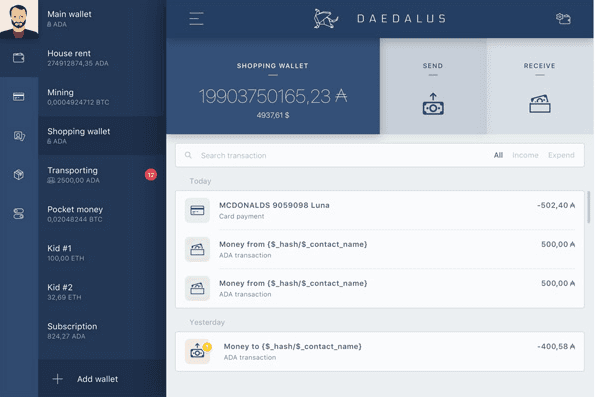
Cardano's user interface might feel less intuitive compared to competitors like Kraken or Coinbase, making it a bit challenging for newcomers. Your team may need extra time to get familiar with its setup and functionalities. However, once you get the hang of it, the platform's robust features and security measures offer significant value. If your team is prepared for a steeper learning curve, you'll find that Cardano's capabilities can significantly benefit your blockchain projects.
Integrations
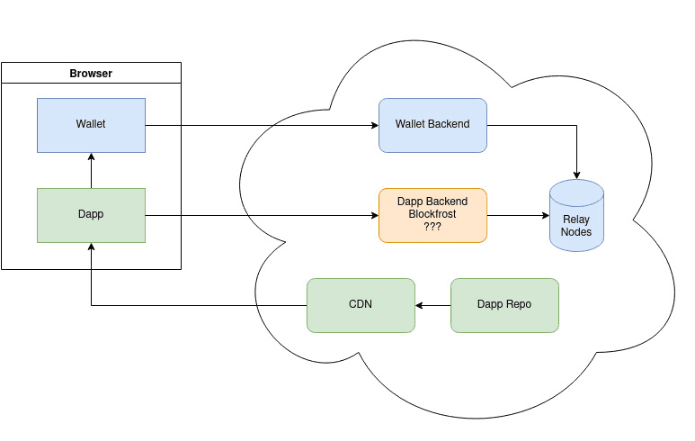
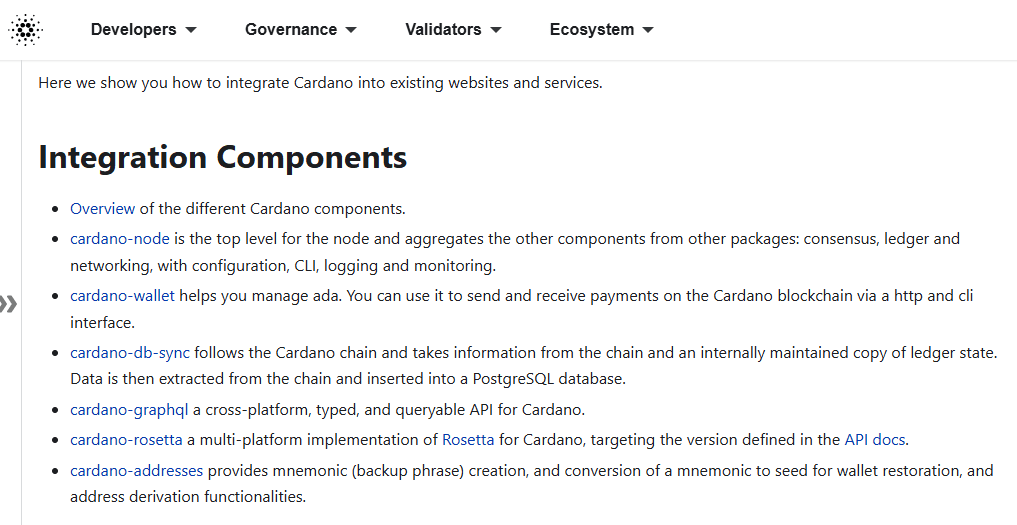
Cardano integrates with cardano-node, cardano-wallet, cardano-db-sync, cardano-graphql, cardano-rosetta, Blockfrost API, and user wallet authentication.
Cardano also provides an API for developers to build custom integrations and connect with third-party tools.
Cardano Specs
- 2-Factor Authentication: No
- Access Management: No
- Anti-Virus: No
- API: Yes
- Audit Trail: Yes
- Bug Tracking: No
- Calendar Management: No
- Customer Management: No
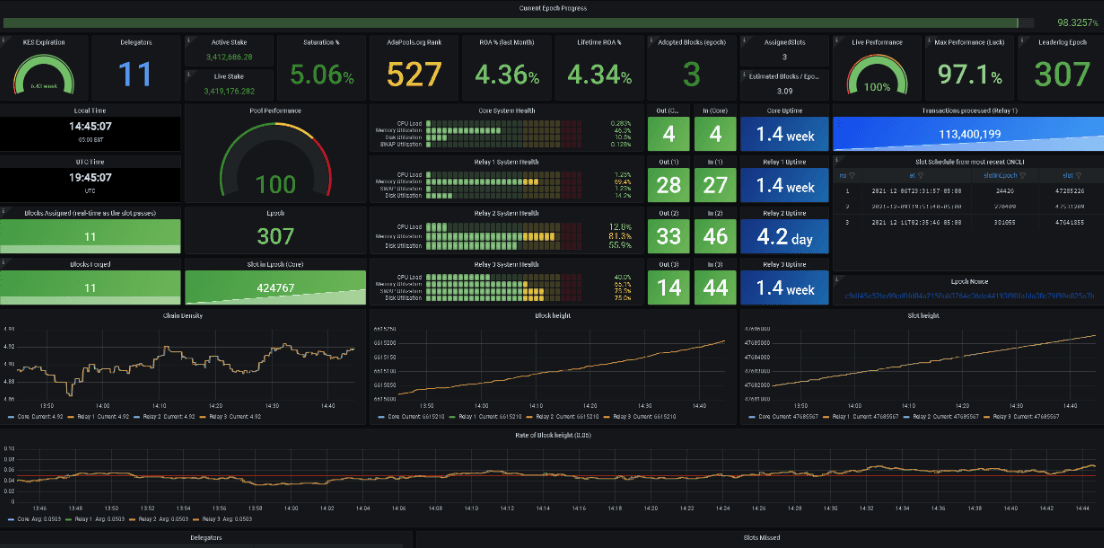
- Dashboard: Yes
- Data Export: Yes
- Data Import: Yes
- Data Visualization: No
- Email Integration: No
- External Integrations: Yes
- File Sharing: No
- File Transfer: No
- Firewall: No
- Google Apps Integration: No
- Inventory Tracking: No
- Malware Protection: No
- Multi-User: Yes
- Network Device Performance Monitoring: No
- Network Traffic Monitoring: No
- Network Visualization: No
- Notifications: Yes
- Project Management: No
- Remote Access: No
- Risk Assessment: No
- SAP Integration: No
- Scheduling: Yes
- Software Integration: Yes
- Third-Party Plugins/Add-Ons: Yes
- Ticket Management: No


