

10 Best Tenable Alternatives Reviewed in 2026

10 Best Tenable Alternatives Shortlist
Here's my pick of the 10 best software from the 14 tools reviewed.


Finding the right exposure management software can be tough, especially if Tenable isn't meeting your needs. Maybe you're looking for better integrations or web applications, specific features, a cloud-based platform, or a more user-friendly interface. Whatever the case, you're not alone in seeking Tenable alternatives.
In my experience, choosing the right tool can make a big difference for your team. It can mean better application security, easier patch management, and fewer headaches. I've reviewed several options to help you find the best fit.
I'll guide you through the top Tenable alternatives, highlighting what they offer and how they might solve your current challenges. This way, you can make an informed decision and find the solution that works best for your team.
What Is Tenable?
Tenable is an exposure management software that helps businesses manage their security risks and workload. Its vulnerability management tool, Tenable Nessus, is commonly used by IT professionals, cybersecurity teams, and risk managers. Features such as vulnerability scanning, compliance management, and real-time threat intelligence help minimize security risks and maintain compliance. Overall, Tenable provides value by facilitating your IT team's ability to proactively manage and mitigate cybersecurity threats.
Best Tenable Alternatives Summary
This comparison chart summarizes pricing details for my top Tenable alternative selections to help you find the best one for your budget and business needs.
| Tool | Best For | Trial Info | Price | ||
|---|---|---|---|---|---|
| 1 | Best for breach prevention | Free plan available | From $59.99/device/year (billed annually) | Website | |
| 2 | Best for agentless cloud visibility | Free demo available | Pricing upon request | Website | |
| 3 | Best for managed detection and response | Free trial + free demo available | From $1.62/asset/month (billed annually) | Website | |
| 4 | Best for autonomous penetration testing | Free demo available | Pricing upon request | Website | |
| 5 | Best for third-party risk management | Free demo available | Pricing upon request | Website | |
| 6 | Best for continuous security testing | Free demo available | Pricing upon request | Website | |
| 7 | Best for network security | Free demo + free trial available | Pricing upon request | Website | |
| 8 | Best for automated vulnerability triage | Free demo available | Pricing upon request | Website | |
| 9 | Best for full-spctrum exposure detectione | Free plan + free demo + 21-day free trial available | From $5,000/year | Website | |
| 10 | Best for integration with Microsoft tools | 30-day free trial + free demo available | From $3/user/month (billed annually) | Website |
Why Trust Our Software Reviews
We’ve been testing and reviewing software since 2023. As tech leaders ourselves, we know how critical and difficult it is to make the right decision when selecting software.
We invest in deep research to help our audience make better software purchasing decisions. We’ve tested more than 2,000 tools for different tech use cases and written over 1,000 comprehensive software reviews. Learn how we stay transparent & our software review methodology.
-

Freshservice
Visit WebsiteThis is an aggregated rating for this tool including ratings from Crozdesk users and ratings from other sites.4.6 -
Deel IT
Visit Website -
Rippling IT
Visit WebsiteThis is an aggregated rating for this tool including ratings from Crozdesk users and ratings from other sites.4.8



Best Tenable Alternatives Reviews
Below are my detailed summaries of the best Tenable alternatives that made it onto my shortlist. My reviews offer a detailed look at the key features, pros and cons, integrations, and ideal use cases of each tool to help you find the best one for you.
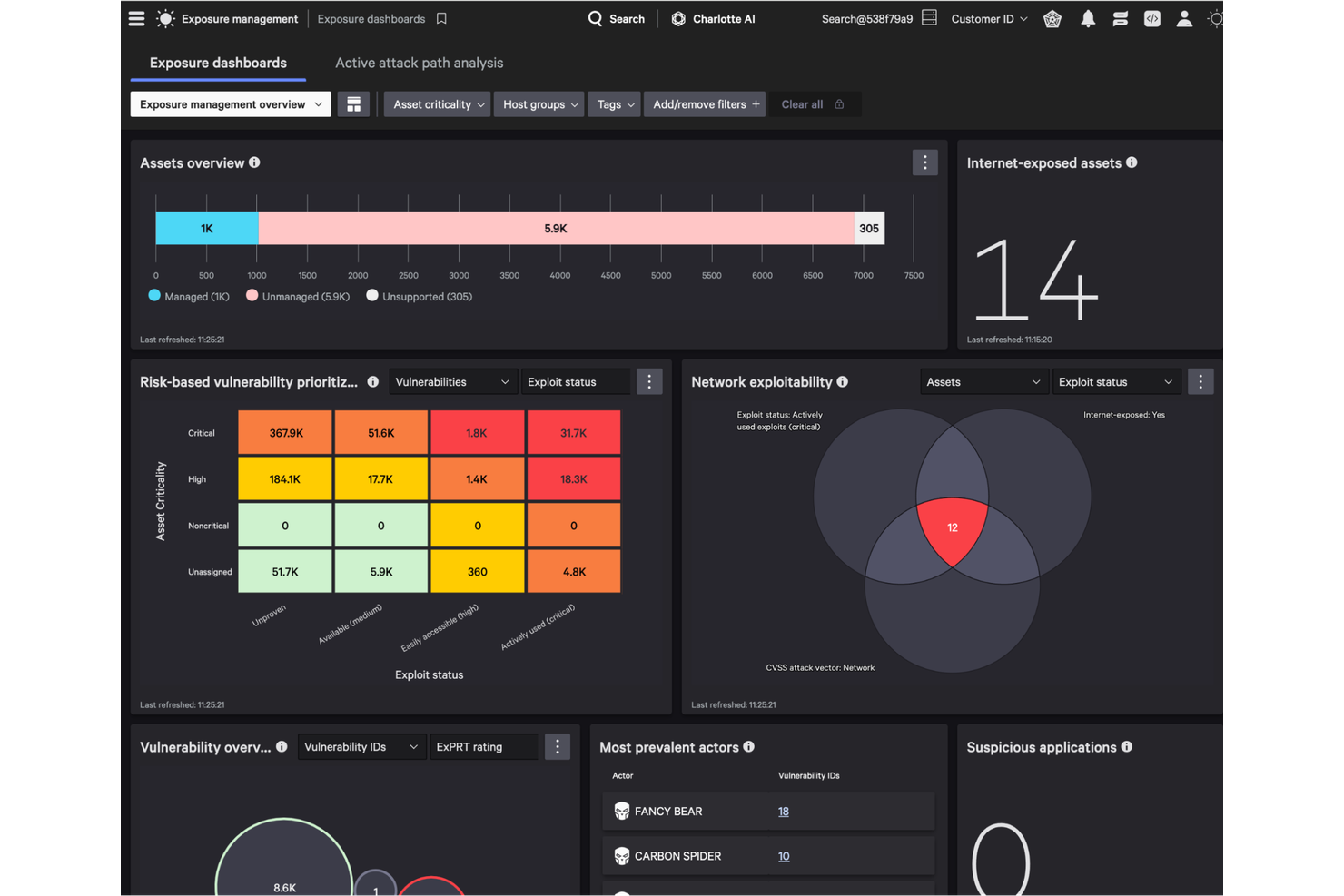
CrowdStrike is a cybersecurity platform primarily used by IT and security professionals to protect against cyber threats. It focuses on endpoint protection, threat intelligence, and incident response to secure your organization's digital assets.
Why it's a good Tenable alternative: CrowdStrike's AI-powered Falcon platform provides continuous monitoring and automated threat detection, helping your team stay ahead of cyber threats. It also offers cloud-native architecture, which ensures scalability and flexibility for your growth needs across web applications.
Standout Features and Integrations:
Features include intelligent threat detection that uses machine learning to detect and respond to breaches in real time. It also offers endpoint protection for Windows, macOS, and Linux devices, securing them against malware and other threats. Additionally, its threat intelligence provides insights into emerging cyber threats, helping you stay informed and prepared.
Integrations include ServiceNow, Splunk, AWS, Microsoft Azure, Google Cloud, Okta, Cisco, Qualys, Rapid7 InsightVM, Zscaler, IBM, and more.
Pros and Cons
Pros:
- Strong endpoint protection
- Scalable for growing businesses
- Single lightweight agent architecture
Cons:
- High local storage requirements
- Requires technical expertise

Wiz is a cloud security platform used by IT security teams to manage and secure cloud environments. It helps detect and mitigate risks, keeping your cloud infrastructure safe from threats.
Why it's a good Tenable alternative: Wiz provides AI-driven agentless cloud visibility, allowing you to see and secure your entire cloud environment without installing agents. This feature simplifies deployment and reduces overhead for your team. Continuous monitoring keeps you informed about potential vulnerabilities and misconfigurations. With real-time insights, you can quickly address security gaps, making it an excellent alternative to Tenable.
Standout Features and Integrations:
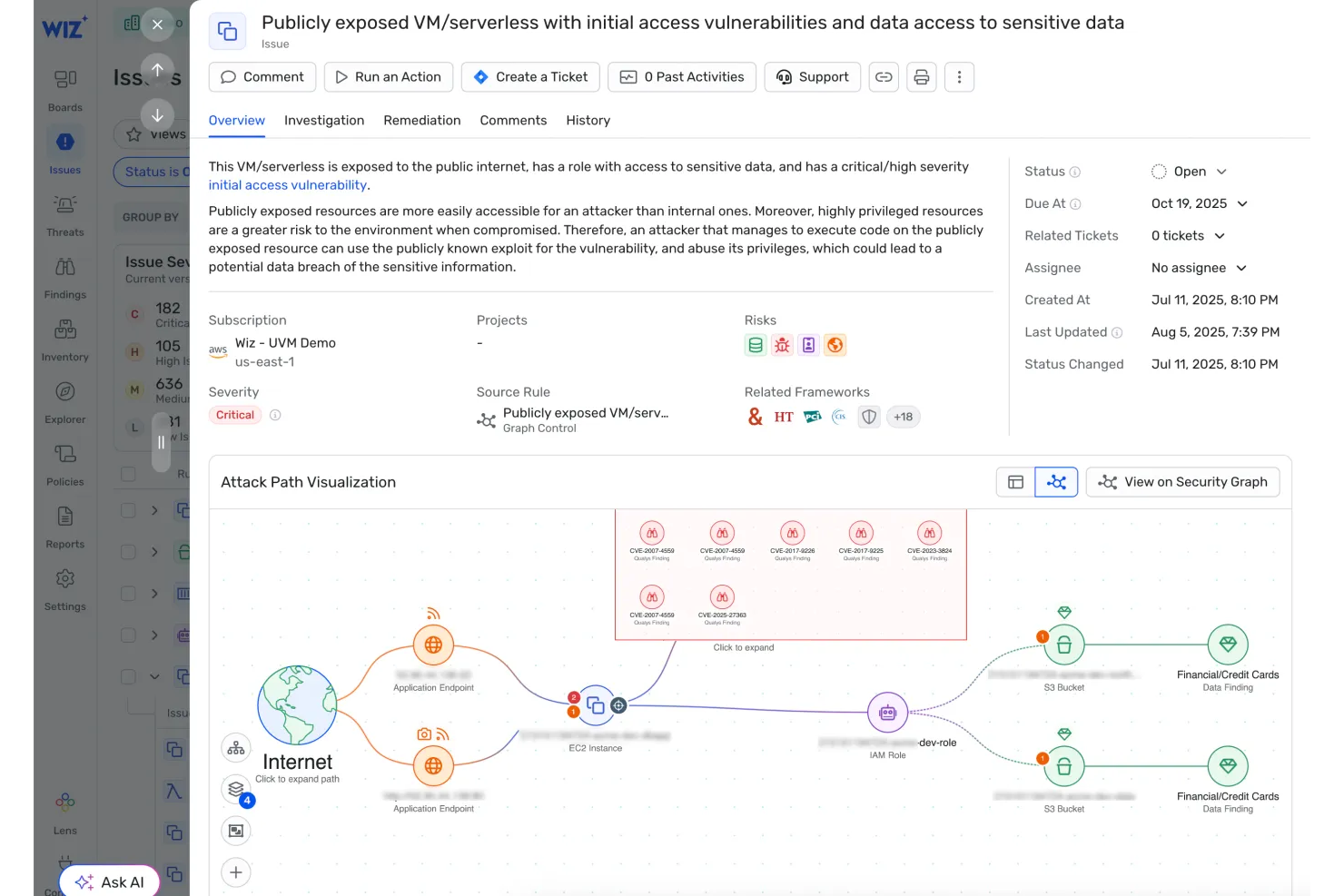
Features include risk assessment capabilities that help your team identify and prioritize vulnerabilities. For example, you can visualize any publicly exposed virtual machines with initial access vulnerabilities that may lead to sensitive data access. Automated remediation workflows ensure that threats are addressed swiftly and effectively.
Integrations include AWS, Microsoft Azure, Qualys, Rapid7 InsightVM, Google Cloud, Terraform, Jenkins, GitHub, GitLab, PagerDuty, Slack, and more.
Pros and Cons
Pros:
- Compliance management tools
- Automated remediation
- Agentless deployment
Cons:
- May require integration with other security tools
- Requires cloud expertise

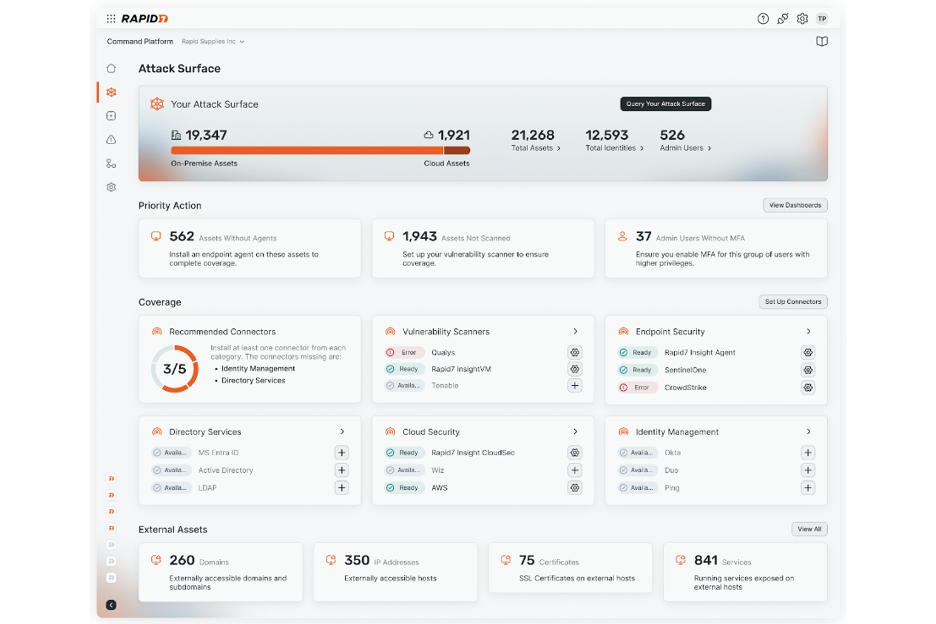
Rapid7 is a cybersecurity platform used by IT and SOC professionals to detect, manage, and respond to threats. It offers tools for vulnerability management, incident detection, and automated responses to secure your digital environment.
Why it's a good Tenable alternative: Rapid7 provides AI-driven managed detection and response services, allowing your team to focus on strategic initiatives while experts handle threat detection. Its real-time analytics help you identify and mitigate risks quickly. The platform's automation capabilities speed up incident response.
Standout Features and Integrations:
Features include automated threat intelligence that empowers your team to respond to emerging threats. The platform offers user behavior analytics to detect unusual activities within your network. Additionally, its customizable dashboards provide insights tailored to your organization's needs, such as priority actions for security gaps, coverage status with recommended connectors, and external asset exposure metrics.
Integrations include AWS, Microsoft Azure, Splunk, ServiceNow, Jira, Microsoft Sentinel, Cisco, Okta, and more.
Pros and Cons
Pros:
- User behavior analytics
- Built-in APIs
- Managed detection and response
Cons:
- Limited reporting options
- Expensive for small businesses

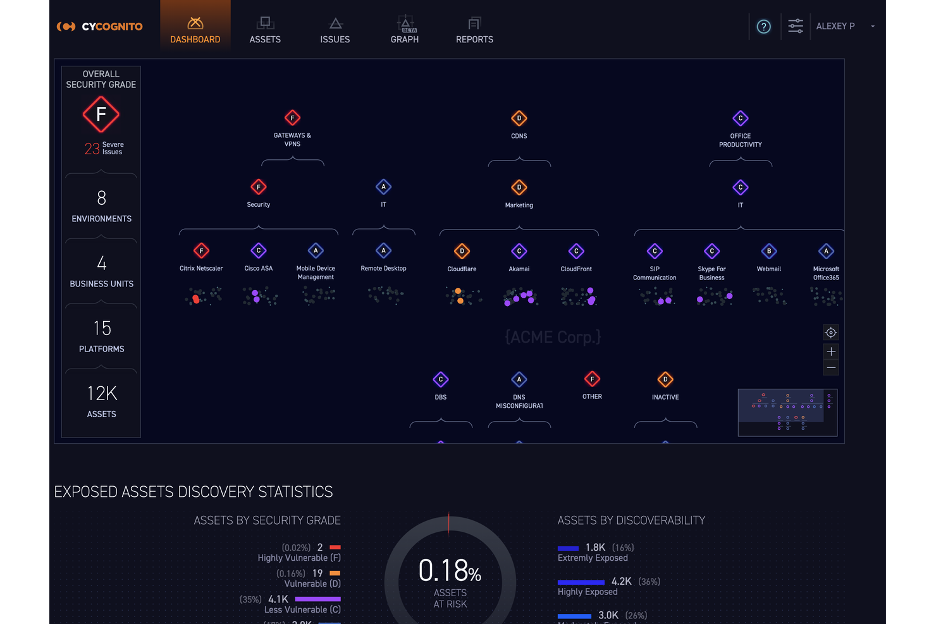
CyCognito is a cybersecurity platform used by IT security teams to identify and manage security risks across their digital footprint. It helps uncover hidden vulnerabilities and prioritize remediation efforts.
Why it's a good Tenable alternative: CyCognito's autonomous penetration testing capabilities allow your team to simulate attacks and identify vulnerabilities without manual intervention. Its AI-driven risk assessment provides insights into potential threats, boosting your team's ability to prioritize remediation. The platform's all-around visibility ensures you can manage risks effectively across all assets.
Standout Features and Integrations:
Features include continuous monitoring to keep your security posture up to date. The platform's threat intelligence provides context about vulnerabilities and risks. Additionally, its reporting tools and dashboard deliver detailed analyses of your security landscape and environment topology.
Integrations include AWS, Microsoft Azure, Google Cloud, Qualys, Rapid7 InsightVM, ServiceNow, Splunk, and more.
Pros and Cons
Pros:
- Detailed reporting tools
- Full-scale visibility
- Automated external attack surface mapping
Cons:
- Time-consuming feature fine-tuning
- External asset focus only

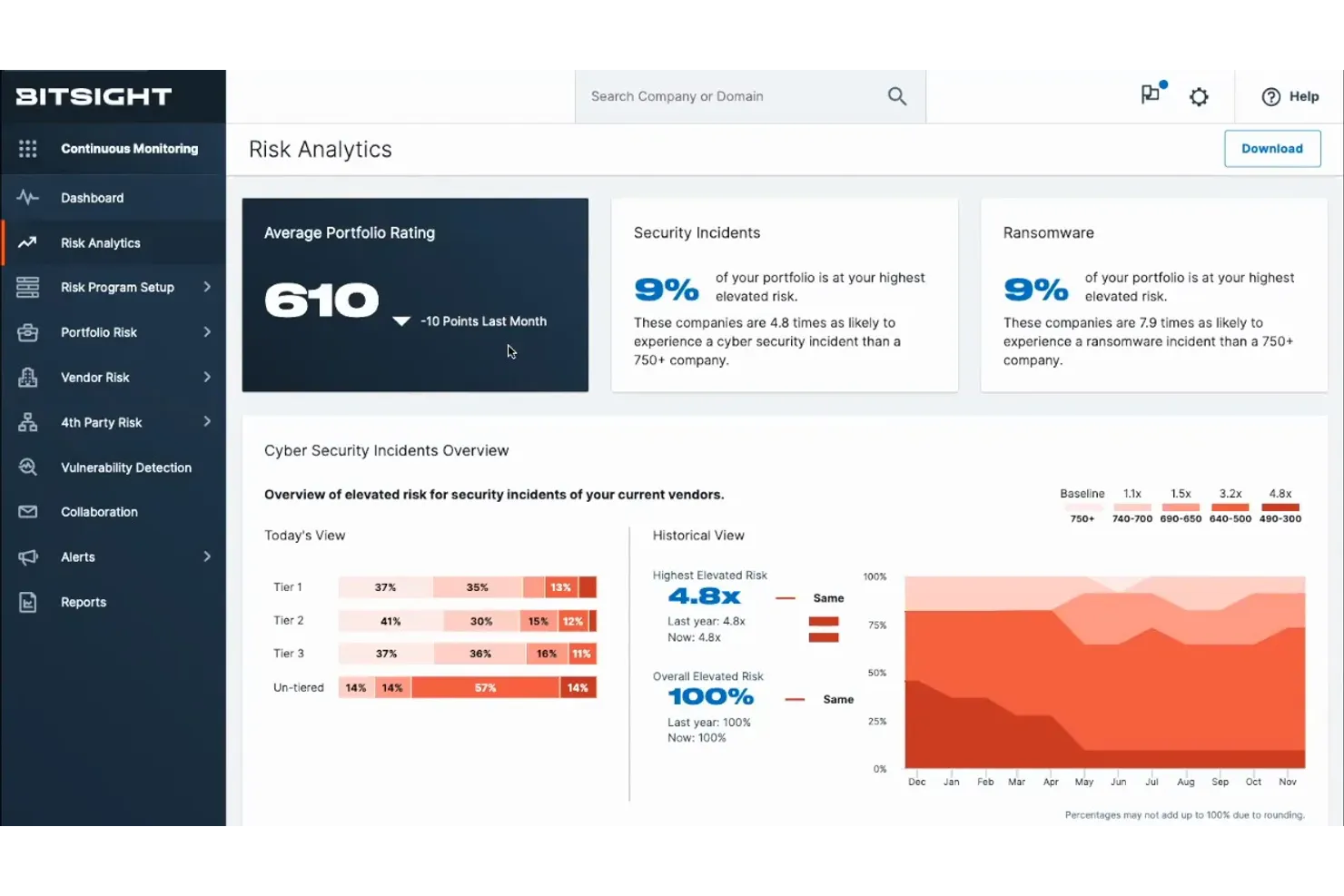
BitSight is a security ratings platform used by risk management and cybersecurity teams to assess and manage third-party risks. It provides insights into the security performance of vendors and partners, helping your team make informed decisions.
Why it's a good Tenable alternative: BitSight focuses on third-party risk management, offering detailed security ratings for vendors and partners. Its continuous monitoring capabilities provide real-time insights into potential risks. The platform's user-friendly interface makes it easy to understand and act on security data.
Standout Features and Integrations:
Features include AI-powered risk assessment tools that evaluate your vendors' security posture. The risk dashboard gives you a high-level cybersecurity incidents overview with tier-based risk distribution. The platform offers automated alerts to notify you of any significant changes in security ratings. BitSight also provides benchmarking capabilities to compare your security performance against industry standards.
Integrations include ServiceNow, Splunk, RSA Archer, Qualys, Microsoft Sentinel, AWS, Microsoft Azure, Google Cloud, Okta, and more.
Pros and Cons
Pros:
- Benchmarking capabilities
- Automated alerts
- Focus on third-party risk
Cons:
- Dependence on external data sources
- Requires ongoing management

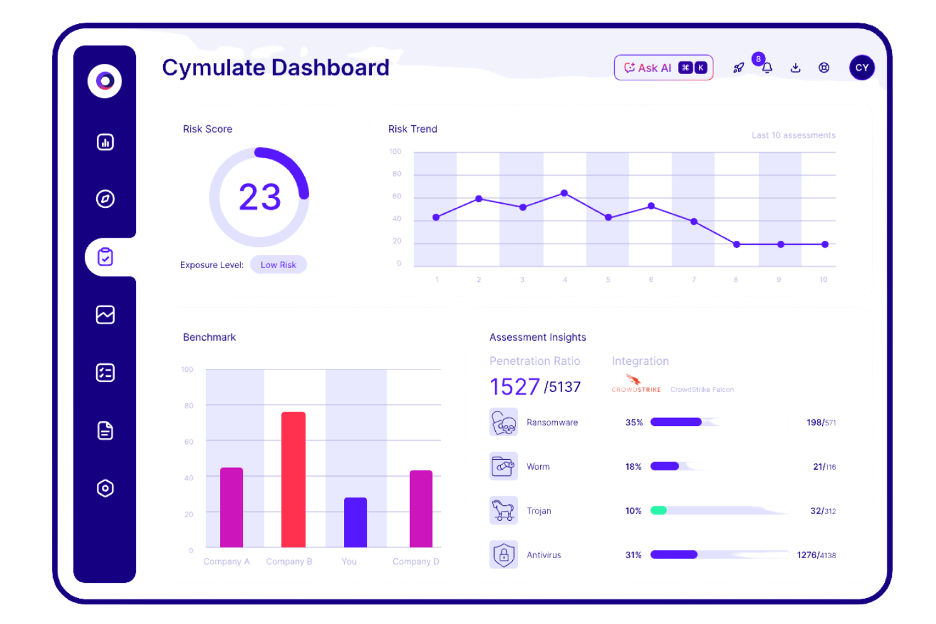
Cymulate is a breach and attack simulation platform used by cybersecurity teams to evaluate and improve their security posture. It provides continuous security testing to identify vulnerabilities and assess your defenses against potential threats.
Why it's a good Tenable alternative: Cymulate's continuous, automated security testing tools provide in-depth assessments of your security posture. The platform's user-friendly interface helps you quickly understand vulnerability assessment results and prioritize your IT team's response.
Standout Features and Integrations:
Features include AI-led threat intelligence that keeps you informed about emerging threats and vulnerabilities. The platform enables your team to simulate attacks and test your security measures against real-world scenarios. Additionally, its reporting tools provide detailed insights into your security posture, helping you prioritize remediation efforts.
Integrations include Splunk, ServiceNow, Rapid7 InsightVM, IBM QRadar, Cortex XSOAR, AWS GuardDuty, Microsoft Azure Sentinel, and more.
Pros and Cons
Pros:
- Immediate security gap visualization
- Automated threat simulations
- Continuous penetration testing
Cons:
- Primarily cloud/virtual focus
- No offline testing mode
Strata Cloud Manager is a cybersecurity platform used by IT security professionals to protect networks from cyber threats. It focuses on network security, cloud security, and threat intelligence to help your team safeguard digital assets.
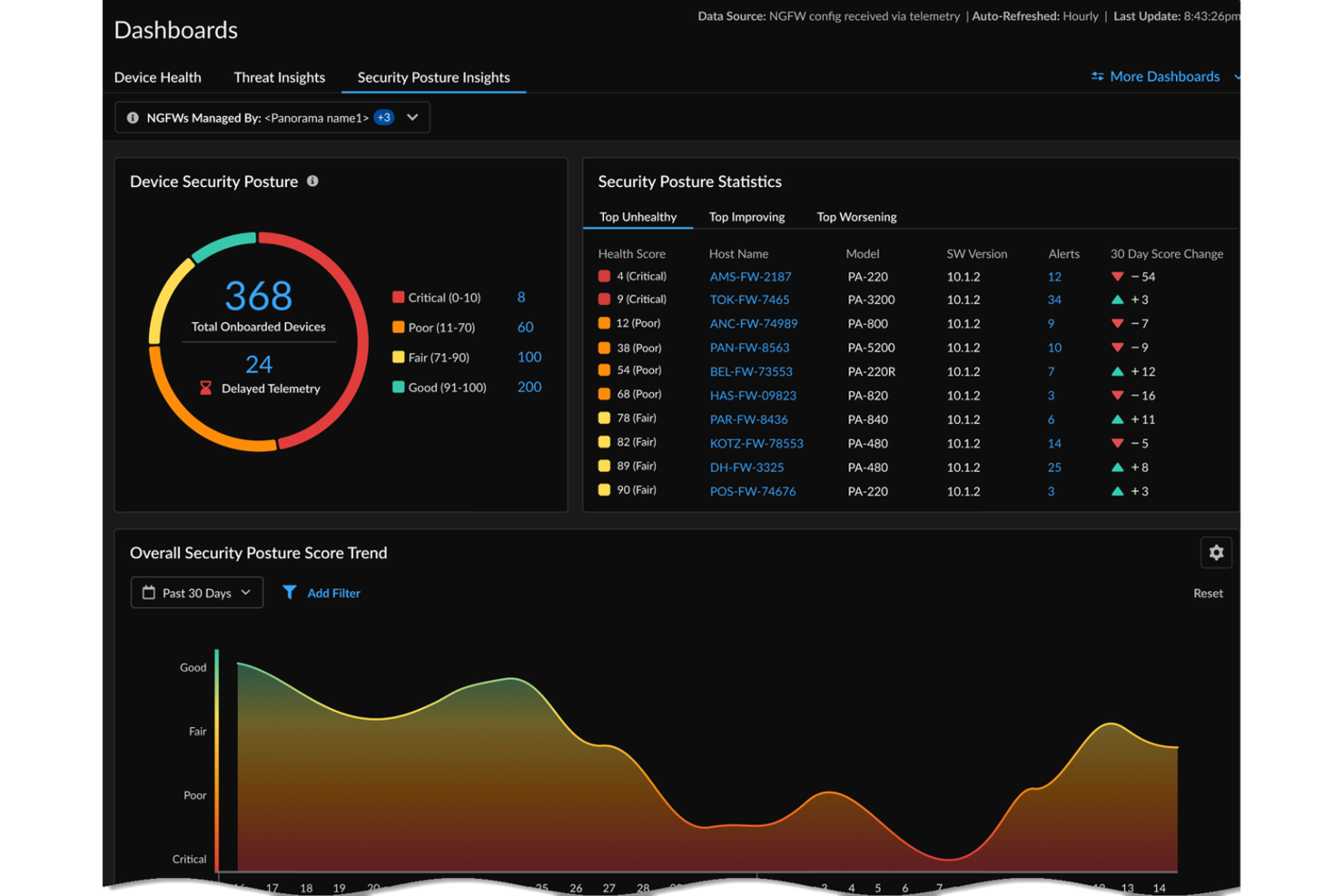
Why it's a good Tenable alternative: Strata Cloud Manager's AI-powered network security provides advanced and swift threat detection, prevention, and remediation capabilities. The security posture insights hub displays onboarded devices' real-time health scoring, critical alerts, and a 30-day trend analysis. The platform's cloud-based native architecture supports scalability, making it suitable for businesses of all sizes. These features ensure total protection for your network, setting it apart from Tenable.
Standout Features and Integrations:
Features include automated threat response, which helps your team act swiftly against potential breaches. The platform offers zero-trust network security to ensure that only authorized users have access to your resources. Additionally, detailed threat intelligence and vulnerability assessments provide insights into emerging security threats, keeping you informed.
Integrations include Prisma and more.
Pros and Cons
Pros:
- Zero-trust network security
- Automated threat response
- Scalable cloud-native architecture
Cons:
- High hardware dependency
- Complex setup process

Seemplicity is a security operations platform designed for cybersecurity teams to automate their vulnerability management solutions. It helps prioritize and remediate vulnerabilities efficiently in your organization's systems.
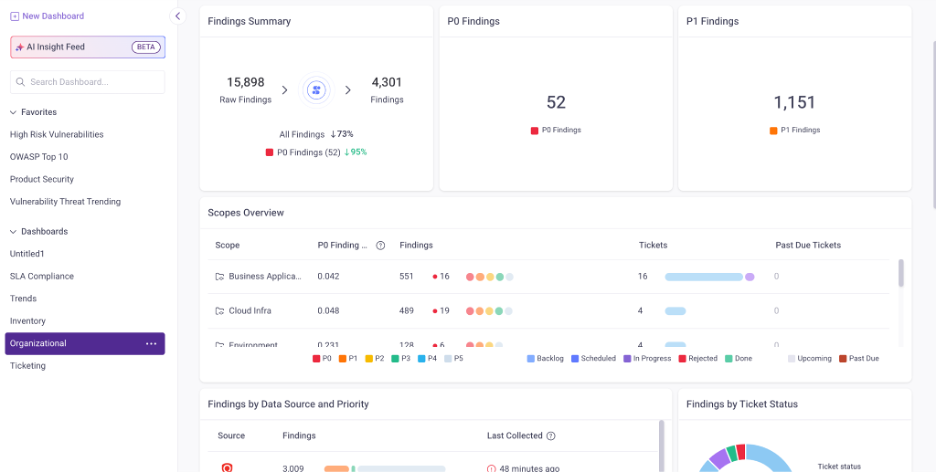
Why it's a good Tenable alternative: Seemplicity's AI agents automate vulnerability triage and workflows, allowing your team to manage and prioritize security issues with precision. Its intuitive dashboard provides clear visibility into vulnerabilities, helping you focus on patching what matters most.
Standout Features and Integrations:
Features include real-time alerts that keep your IT team informed about critical vulnerabilities. The platform provides detailed analytics to help you understand trends and patterns in your security data. Seemplicity also offers customizable reports, allowing you to tailor information to your specific needs.
Integrations include AWS, Microsoft Azure, Rapid7, Qualys, Slack, Jira, ServiceNow, Microsoft Defender, Trello, and more.
Pros and Cons
Pros:
- Customizable reports
- Intuitive dashboard
- Automated vulnerability triage
Cons:
- Learning curve for new users
- Basic vulnerability scanning

runZero is a network discovery and asset inventory platform used by IT and security teams to identify and manage all devices connected to a network. It provides top-down visibility into your network's assets and potential vulnerabilities.
Why it's a good Tenable alternative: runZero offers full-spectrum exposure detection, allowing your team to discover every device on your network without needing credentials. Its agentless AI-led vulnerability scanner ensures you can identify devices quickly and accurately. With detailed inventory reports, you can understand your network's security posture clearly.
Standout Features and Integrations:
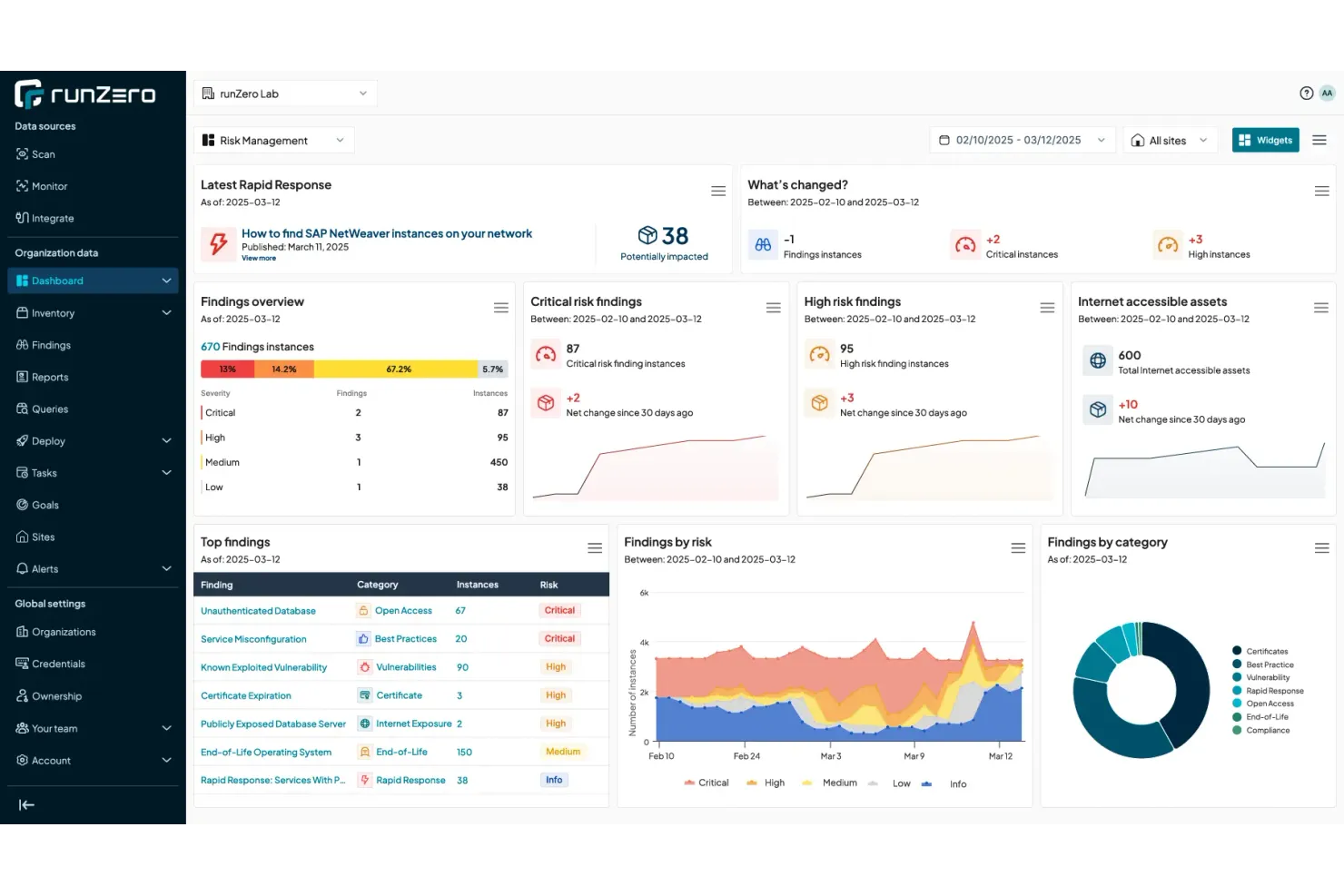
Features include continuous network scanning to keep your asset inventory up to date. The platform provides risk assessment tools to evaluate the security of your network devices, such as critical and high-risk trends, internet accessible assets, top findings by category, and temporal risk analysis charts.
Integrations include AWS, Microsoft Azure, Qualys, Rapid7, Google Cloud, Splunk, ServiceNow, Jira, Cisco, Palo Alto Networks, Nessus Professional, Tenable, and more.
Pros and Cons
Pros:
- Detailed inventory reports
- Easy integration with SIEM and ITSM tools
- Full-spectrum detection
Cons:
- Limited attack surface visibility
- No native patch management
Microsoft Defender is a security exposure management solution designed for security teams, including security admins, SecOps professionals, and CISOs, at small to medium businesses. It helps manage vulnerabilities across IT environments, providing tools for real-time threat detection and risk assessment.
Why it's a good Tenable alternative: Microsoft Defender offers full integration with Microsoft 365 and Azure, making it ideal for teams already using these platforms. Its advanced AI-led analytics capabilities and web application scanning provide deep insights into security risks, boosting your team's ability to respond to threats. The user-friendly interface ensures easy navigation and control over security exposures.
Standout Features and Integrations:
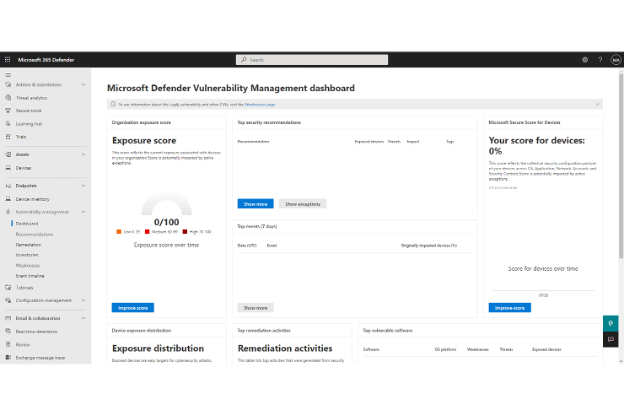
Features include real-time asset discovery, which helps you track all your assets and their security status. Vulnerability assessment tools provide insights into potential threats with helpful visualizations, such as organization-wide exposure scores, security guidance, and device security postures.
Integrations include most Microsoft products, Splunk, QRadar, ServiceNow, and more.
Pros and Cons
Pros:
- Native Windows kernel integration
- Best for limiting false positives
- Advanced analytics capabilities
Cons:
- Limited customization options
- Limited non-Windows feature parity
Other Tenable Alternatives
Here are some additional Tenable alternatives that didn’t make it onto my shortlist but are still worth checking out:
- Balbix
For risk quantification
- Nucleus Security
For automated remediation workflows
- SentinelOne
For real-time endpoint protection
- Darktrace
For AI-driven threat detection and response


Tenable Alternatives Selection Criteria
When selecting the best Tenable alternatives to include in this list, I considered common buyer needs and pain points related to exposure management software products, such as scalability and ease of integration. I also used the following framework to keep my evaluation structured and fair:
Core Functionality (25% of total score)
To be considered for inclusion in this list, each solution had to fulfill these common use cases:
- Identify vulnerabilities
- Provide risk assessments
- Enable threat detection
- Support compliance management
- Offer asset discovery
Additional Standout Features (25% of total score)
To help further narrow down the competition, I also looked for unique features, such as:
- AI-driven analytics
- Automated remediation
- Customizable dashboards
- Real-time alerts
- Integration with multiple cloud providers
Usability (10% of total score)
To get a sense of the usability of each system, I considered the following:
- Intuitive interface
- Easy navigation
- Customizable settings
- Availability of user guides
- Speed of performance
Onboarding (10% of total score)
To evaluate the onboarding experience for each platform, I considered the following:
- Availability of training videos
- Interactive product tours
- Access to webinars
- Availability of templates
- Presence of chatbots for guidance
Customer Support (10% of total score)
To assess each software provider's customer support services, I considered the following:
- Availability of 24/7 support
- Response time to inquiries
- Access to support documentation
- Availability of live chat
- Access to a dedicated account manager
Value for Money (10% of total score)
To evaluate the value for money of each platform, I considered the following:
- Pricing transparency
- Availability of flexible plans
- Cost compared to the features offered
- Discount options for annual billing
- Availability of a free trial
Customer Reviews (10% of total score)
To get a sense of overall customer satisfaction, I considered the following when reading customer reviews:
- Overall satisfaction ratings
- Feedback on feature effectiveness
- Comments on support quality
- Mentions of ease of use
- Reviews on integration capabilities
Why Look for a Tenable Alternative?
While Tenable is a good choice of exposure management software, there are a number of reasons why some users seek out alternative solutions. You might be looking for a Tenable alternative because…
- You need better integration with existing tools
- Your team requires more customizable features
- You're looking for more affordable pricing options
- You need support for a larger geographic region
- Your organization needs faster deployment times
- You're seeking advanced reporting capabilities
If any of these apply to you, you've come to the right place. My list contains several exposure management software options better suited for teams facing these challenges with Tenable and looking for alternative solutions.
Tenable Key Features
Here are some of Tenable's key features to help you contrast and compare what alternative solutions offer:
- Vulnerability scanning: Identifies security weaknesses across your network to help you prioritize fixes.
- Risk-based prioritization: Uses advanced analytics to focus your efforts on the most critical vulnerabilities.
- Continuous monitoring: Keeps an eye on your systems to detect threats in real time.
- Compliance management: Assists your team in meeting regulatory requirements and industry standards.
- Asset discovery: Identifies all devices connected to your network for better security management.
- Attack-path analysis: Maps potential attack paths to understand how threats could move through your environment.
- Threat intelligence: Provides insights into emerging threats to help your team stay ahead of attackers.
- Integrated reporting: Offers detailed reports to communicate your security posture to stakeholders.
- Remediation guidance: Suggests actionable steps to mitigate identified vulnerabilities.
- Cloud security: Extends protection to cloud environments, ensuring global coverage across all assets.
What's Next:
If you're in the process of researching Exposure Management Software, connect with a SoftwareSelect advisor for free recommendations.
You fill out a form and have a quick chat where they get into the specifics of your needs. Then you'll get a shortlist of software to review. They'll even support you through the entire buying process, including price negotiations.