

10 Best TBM Software in 2026

Best TBM Software Shortlist


TBM software, or technology business management software, helps you track, analyze, and manage your technology spend so you can make budgeting decisions with confidence. If you’re looking for tools that give you clear cost visibility, powerful allocation controls, and real data for conversations with finance, you’re in the right place.
Choosing the right TBM software is about minimizing financial guesswork and getting control over resource allocation. This guide will help you compare the leading options, highlight what each does best, and help you select a platform that matches your technical requirements and business priorities.
Why Trust Our Software Reviews
We’ve been testing and reviewing software since 2023. As tech leaders ourselves, we know how critical and difficult it is to make the right decision when selecting software.
We invest in deep research to help our audience make better software purchasing decisions. We’ve tested more than 2,000 tools for different tech use cases and written over 1,000 comprehensive software reviews. Learn how we stay transparent & our software review methodology.
Best TBM Software Summary
This comparison chart summarizes pricing details for my top TBM software selections to help you find the best one for your budget and business needs.
| Tool | Best For | Trial Info | Price | ||
|---|---|---|---|---|---|
| 1 | Best for unified IT and business cost views | Free demo available | Pricing upon request | Website | |
| 2 | Best for multi-model financial reporting | Free trial + free demo available | Pricing upon request | Website | |
| 3 | Best for global cost allocation flexibility | Free demo available | Pricing upon request | Website | |
| 4 | Best for healthcare IT financial management | Free demo available | Pricing upon request | Website | |
| 5 | Best for customizable cost allocation workflows | Free demo available | Pricing upon request | Website | |
| 6 | Best for dynamic budgeting across IT portfolios | Free demo available | Pricing upon request | Website | |
| 7 | Best for cloud cost transparency and optimization | Free demo available | Pricing upon request | Website | |
| 8 | Best for advanced chargeback capabilities | Free demo available | Pricing upon request | Website | |
| 9 | Best for actionable cost driver insights | Free demo available | Pricing upon request | Website | |
| 10 | Best for Salesforce-integrated workflows | Free demo available | Pricing upon request | Website |
Best TBM Software Reviews
Below are my detailed summaries of the best TBM software that made it onto my shortlist. My reviews offer a detailed look at the features, best use cases, and integrations of each platform to help you find the best one for you.

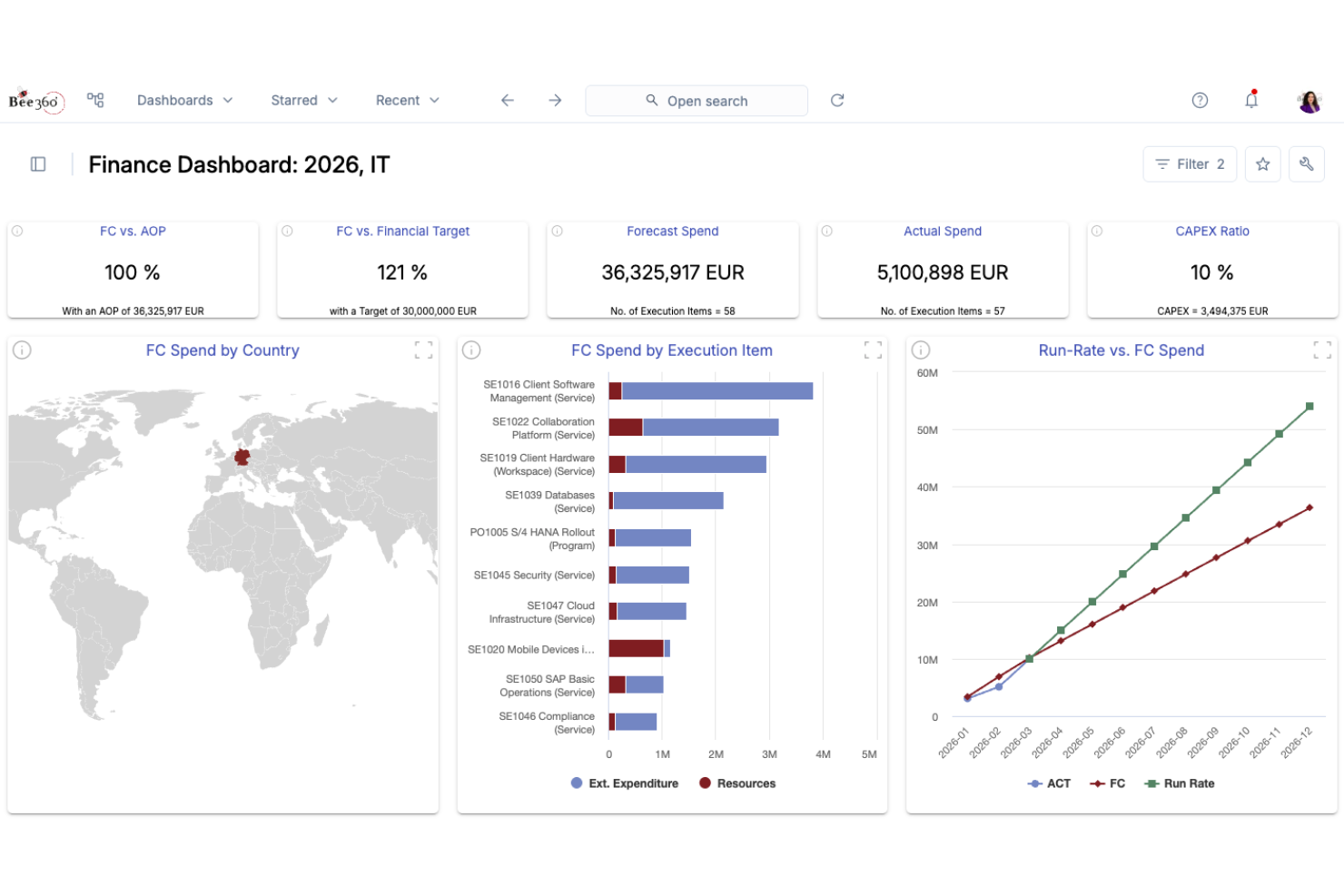
Bee360 is an IT financial management platform that covers cost modeling, automated billing, service catalog management, and cost allocation across IT towers and business units.
Who Is Bee360 Best For?
Bee360 is a strong fit for IT finance teams in large enterprises managing complex, multi-layered cost structures across centralized and federated IT models.
Why I Picked Bee360
I picked Bee360 as one of the best because it builds a true bidirectional cost model, linking IT tower spend to business unit consumption rather than stopping at the IT layer. I rely on the service catalog to surface what each IT service costs at the point of delivery, giving business units a clear picture of what they're consuming.
The automated billing engine then runs settlement calculations and pushes them directly to the financial system without manual exports.
Bee360 Key Features
- Cost framework configuration: Supports TBM, CIGREF, and Bee360's own Bee Approach so you can map spend to your existing cost taxonomy.
- Showback and chargeback module: Generates internal cost allocations and produces itemized statements for each consuming business unit.
- What-if scenario modeling: Runs cost simulations across different planning assumptions to compare the financial impact before committing to changes.
- Multi-entity support: Handles cost structures across multiple organizational units within a single platform instance.
Bee360 Integrations
Bee360 connects to ERP and financial systems through standard connectors to pull in cost data and push billing settlements. A REST API is also available for custom integrations.
Pros and Cons
Pros:
- Automated billing with financial system settlement
- Supports TBM, CIGREF, and custom cost models
- Connects ITFM with portfolio and architecture data
Cons:
- Limited third-party connector ecosystem
- Platform scope exceeds pure ITFM needs
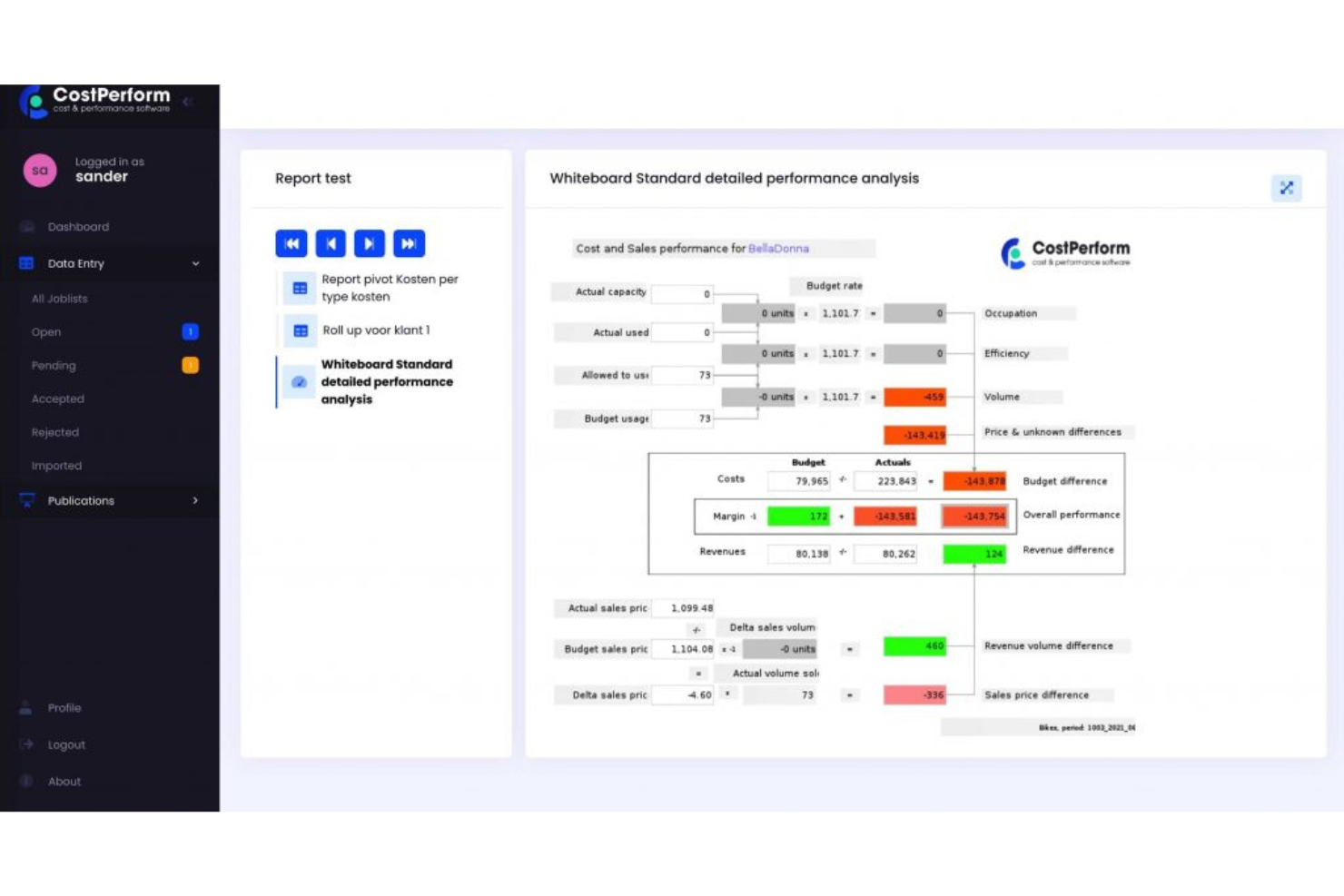
CostPerform is a TBM platform that covers IT cost allocation, bill of IT generation, multi-model cost structuring, and business-to-IT financial mapping using the TBM framework.
Who Is CostPerform Best For?
CostPerform is well-suited for large enterprises with decentralized IT environments that need to align IT costs across multiple business units and cost models simultaneously.
Why I Picked CostPerform
CostPerform is one of my top picks because I love how it maps IT costs across every layer of the TBM taxonomy, from IT towers down to business unit consumption, within a single reporting structure.
In practice, my team can present a cost-by-tower view to IT leadership and a business-value view to the CFO without maintaining two separate models. The multi-model architecture keeps each reporting layer synchronized as the underlying cost data changes.
CostPerform Key Features
- TBM taxonomy alignment: Structures IT costs according to the standard TBM taxonomy, mapping towers, sub-towers, and cost pools consistently.
- Showback and chargeback reporting: Generates consumption-based reports that show business units what they've used and what it costs.
- Scenario modeling: Lets you model cost outcomes across different allocation approaches before committing to a structure.
- Cost pool configuration: Allows you to define and manage custom cost pools that reflect your organization's IT landscape.
CostPerform Integrations
CostPerform integrates with reporting tools like Tableau and Power BI. It supports data imports from Excel files, text files, and direct database connections, and can consume web services including live data from Microsoft 365 (SharePoint/OneDrive) spreadsheets and Google Sheets. It also integrates with existing ERP systems, and an API is available for custom integrations and scripting.
Pros and Cons
Pros:
- Transparent cost allocation logic for stakeholders
- Supports activity-based and driver-based costing
- Multi-layered allocation models mirror real cost structures
Cons:
- Significant setup and configuration investment required
- Legacy desktop interface needs modernization
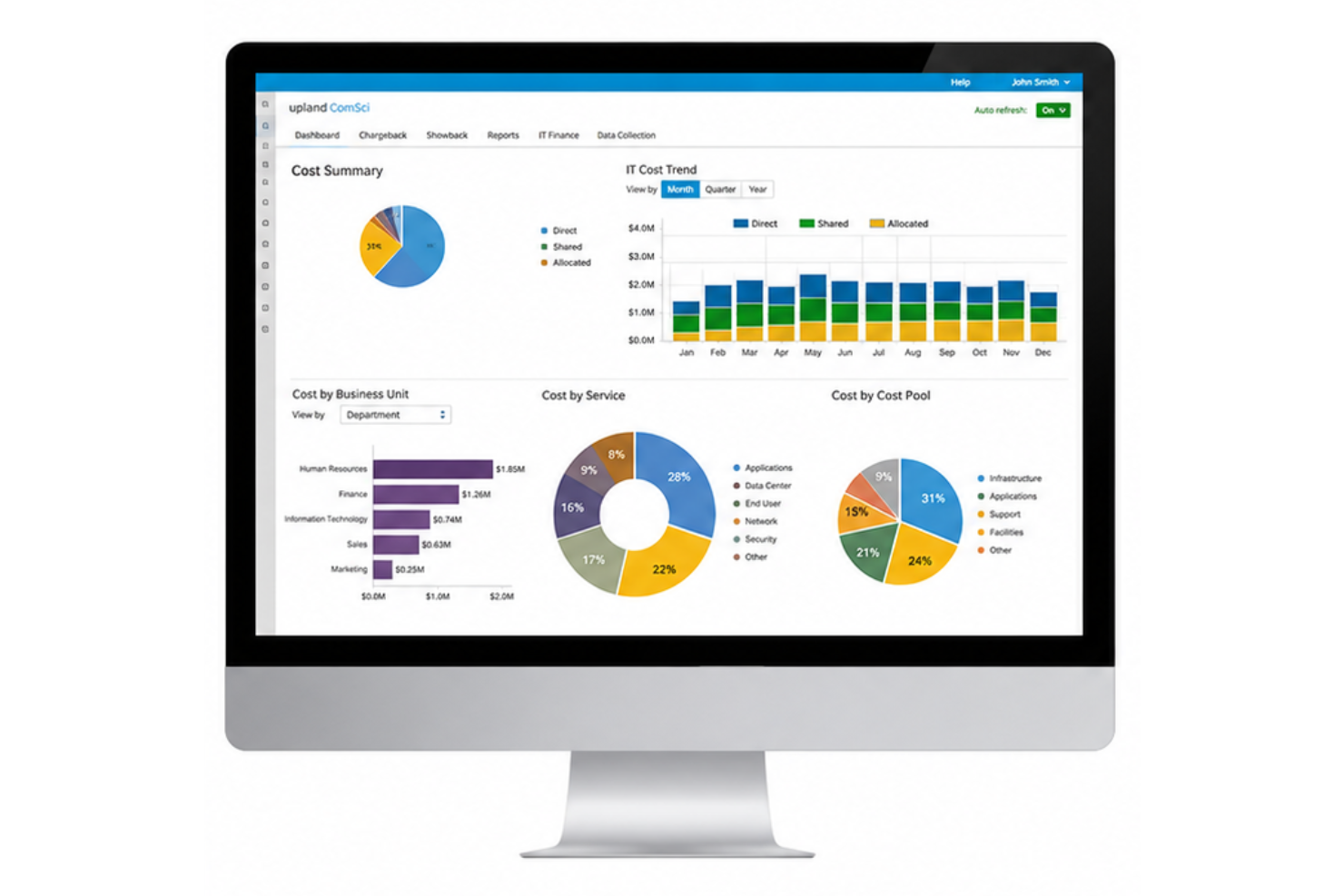
TBM and IT financial management platform, Upland Comsci covers cost allocation and modeling, showback and chargeback, cloud cost visibility, application and vendor rationalization, and IT budgeting and forecasting across labor, assets, and projects.
Who Is Upland Comsci Best For?
It's a natural fit for large, globally distributed organizations where IT finance teams manage costs across multiple currencies, regions, and shared service models.
Why I Picked Upland Comsci
Upland Comsci earns its spot on my shortlist because of its global cost allocation flexibility. I like that it supports multi-currency cost modeling, so my team can allocate and report costs across regions without manual conversion workarounds.
The configurable allocation drivers let you define exactly how costs flow from shared services to business units, which matters when your org spans multiple geographies with different cost structures.
Upland Comsci Key Features
- Cloud cost visibility: Map and report on public cloud spend across providers alongside on-premises costs in a unified view.
- IT service costing: Define and cost IT services at a granular level, including the underlying resources that make up each service.
- Project cost tracking: Monitor labor and non-labor project costs against budgets throughout the project lifecycle.
- Executive and operational reporting: Generate role-specific reports and dashboards for both IT finance teams and business unit stakeholders.
Upland Comsci Integrations
Upland Comsci pairs with Cimpl for telecom and cloud expense management. It supports integration and orchestration via REST API and scalable connectivity through the Upland Integration Platform.
Pros and Cons
Pros:
- Ingests source data in any format
- Flexible multi-currency cost allocation modeling
- Managed services team handles financial close
Cons:
- Limited public user reviews available online
- Small ecosystem of native integrations
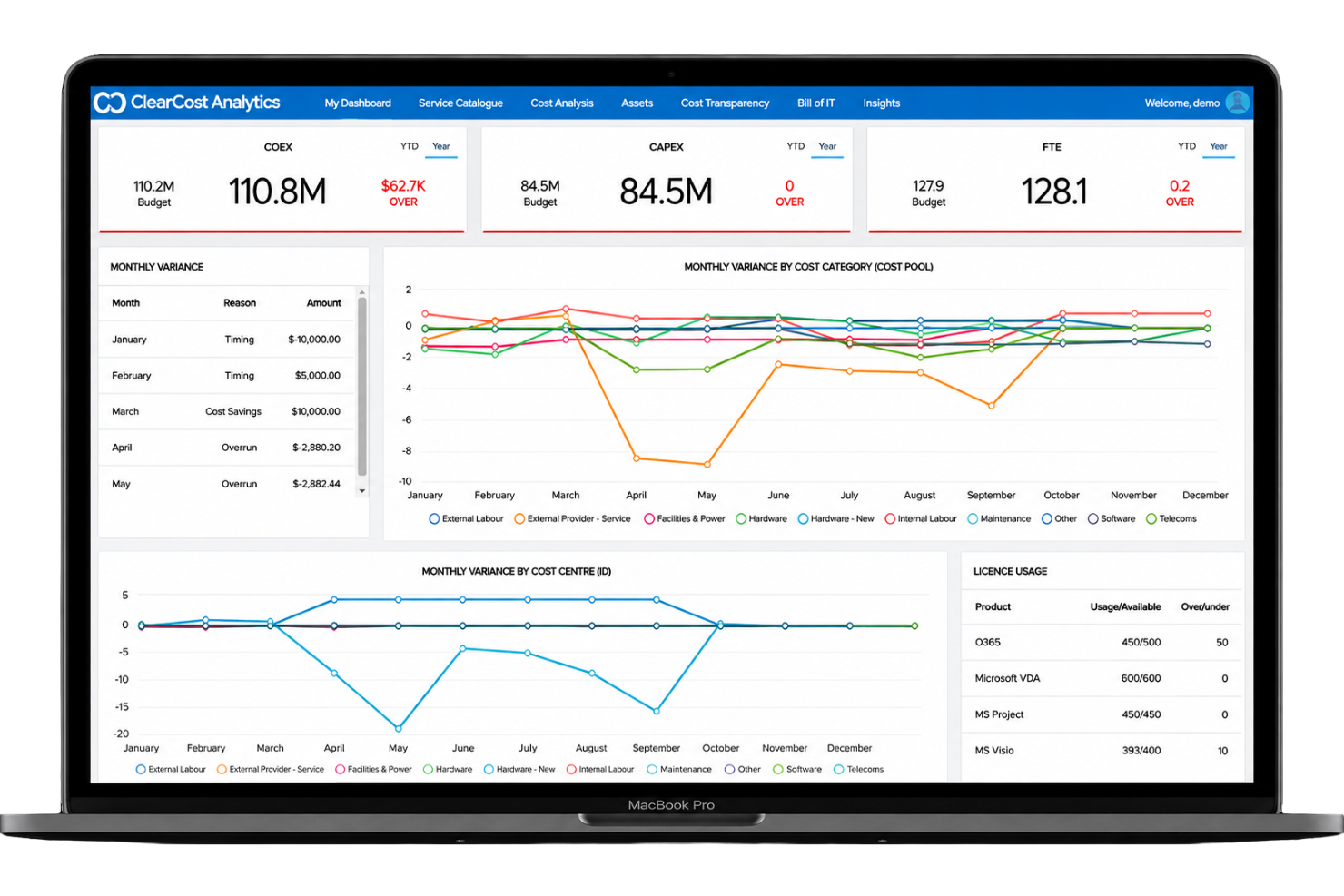
Built specifically for IT financial management, ClearCost is a TBM platform that spans cost allocation, service costing, vendor spend tracking, bill of IT reporting, and technology benchmarking across cloud, labor, asset, and project spend.
Who Is ClearCost Best For?
ClearCost is a natural fit for healthcare IT teams that need to align technology spend with clinical and operational cost centers under strict financial governance requirements.
Why I Picked ClearCost
ClearCost earns its spot on my shortlist because it maps IT costs directly to clinical service lines and cost centers, which is how healthcare finance teams think about budget accountability.
I like that it supports allocation models built around hospital department structures, so IT leaders can show CFOs exactly how infrastructure spend ties to specific clinical departments. That clinical cost center mapping isn't something most TBM tools offer out of the box.
ClearCost Key Features
- Bill of IT reporting: Generates itemized IT cost statements broken down by service, tower, and business unit.
- Chargeback and showback: Allocates IT costs back to consuming business units using configurable allocation rules.
- Vendor spend tracking: Captures and categorizes external vendor invoices against IT towers and services.
- Budgeting and planning module: Supports annual IT budget planning with actual vs. forecast cost comparisons.
ClearCost Integrations
ClearCost integrates with ITSM systems, including ServiceNow and BMC, as data sources for operational and infrastructure data. It can also be used with BI and visualization tools including SAP BusinessObjects, IBM Cognos, Power BI, and Tableau.
Pros and Cons
Pros:
- 90-day target deployment reduces time-to-value
- Built-in peer-to-peer cost benchmarking
- Bundled managed services support ongoing operations
Cons:
- Minimal independent user reviews available online
- English-only platform limits global teams

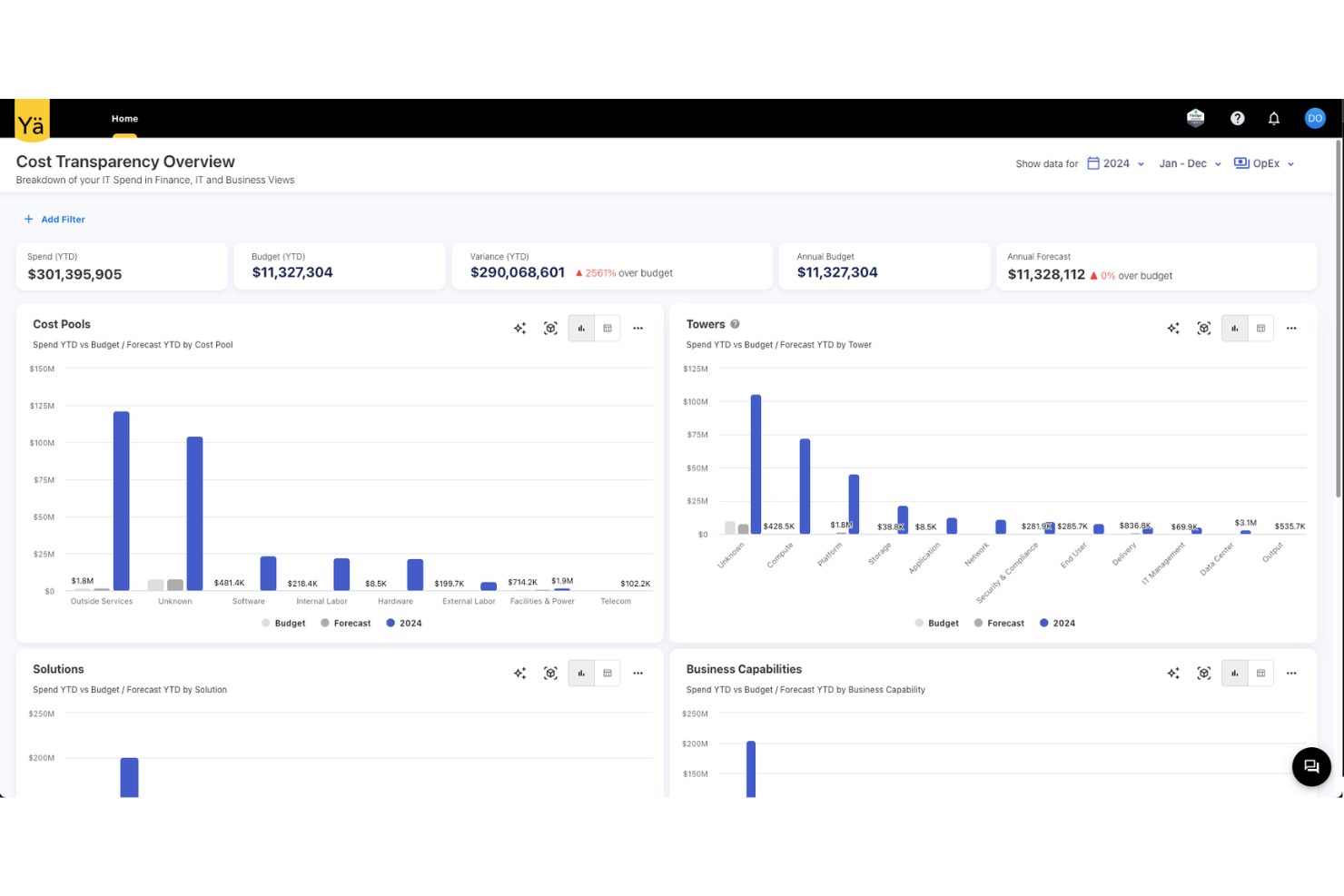
Yarken is a TBM and FinOps platform that handles cost ingestion, allocation, forecasting, chargeback, anomaly detection, and AI-driven variance reporting across cloud, SaaS, and infrastructure spend.
Who Is Yarken Best For?
Yarken suits FinOps teams and IT finance analysts at organizations with complex, multi-tower cost structures who need granular allocation across cloud, SaaS, and on-premises spend.
Why I Picked Yarken
Yarken earns its spot on my shortlist because it lets you build allocation workflows at the IT tower level, where each tower carries its own cost methodology and drivers. I think the ability to separate shared service modeling from direct cost assignment is what really sets it apart.
My team can push shared infrastructure costs downstream to specific applications or business units using consumption-based drivers, so every allocation reflects how resources were actually used.
Yarken Key Features
- Tag governance: Tracks tagging coverage across cloud resources and flags untagged or mistagged assets to improve cost attribution accuracy.
- Unit economics modeling: Calculates cost-per-unit metrics tied to business outputs, like cost per transaction or cost per user.
- Scenario modeling: Lets you simulate cost impact of infrastructure changes or budget shifts before committing to them.
- Role-based access control: Restricts cost data visibility by team, department, or business unit based on defined user roles.
Yarken Integrations
Yarken offers a broad set of integrations spanning cloud, ERP, ITSM, observability, HR, and data platforms, including AWS, Azure, GCP, Oracle Cloud, and Jira. It supports multiple ingestion methods like API connections, SFTP, cloud bucket ingestion (S3, GCS, Azure Blob), local agents, webhooks, and query federation.
Pros and Cons
Pros:
- Supports both TBM and FinOps natively
- Built-in sustainability and carbon tracking
- Flexible cost allocation model configurations
Cons:
- GCP cloud integration less documented than AWS
- Smaller market presence than IBM Apptio

Nicus
Best for dynamic budgeting across IT portfolios

Nicus is an IT financial management (ITFM) and TBM platform that covers cost modeling, budget planning, portfolio investment tracking, and IT cost allocation across the enterprise.
Who Is Nicus Best For?
Nicus is a strong fit for enterprise IT finance leaders and CIOs who need to connect technology spend to business strategy across large, complex IT portfolios.
Why I Picked Nicus
I've included Nicus in my top picks because its approach to IT budgeting goes well beyond static annual planning. What I like most is its real-time scenario modeling, which lets you run what-if forecasts instantly, comparing multiple budget versions with full audit trails to see how portfolio decisions play out before you commit.
I also like its concurrent budget collaboration, where multiple teams work on the same budget simultaneously. That matters a lot when you're managing a large, distributed IT portfolio.
Nicus Key Features
- Granular cost visibility: Drill into costs by service, application, business unit, vendor, or labor category to surface what's actually driving spend.
- Service and application TCO: Measure and compare the total cost of ownership for services and apps, including indirect costs like labor and support.
- Bill of IT with dispute workflows: Generates interactive billing reports and includes built-in dispute resolution workflows for chargeback and showback.
- Multi-currency and depreciation support: Tracks financials across currencies and automates depreciation calculations for capital asset planning.
Nicus Integrations
Nicus offers integrations spanning ERP, cloud, HR, IT operations, FinOps, and data platforms, including AWS, Azure, Google Cloud Platform, ServiceNow, SAP S/4HANA, Oracle Fusion Cloud ERP, Workday Financial Management, Snowflake, Datadog, and Flexera One. It also supports connections to custom and internal systems for ingesting business activity and operational data.
Pros and Cons
Pros:
- Concurrent multi-team budget collaboration
- Native ServiceNow platform architecture
- Flexible cost modeling beyond TBM taxonomy
Cons:
- Targets enterprises with $30M+ IT spend
- Interface could be more intuitive

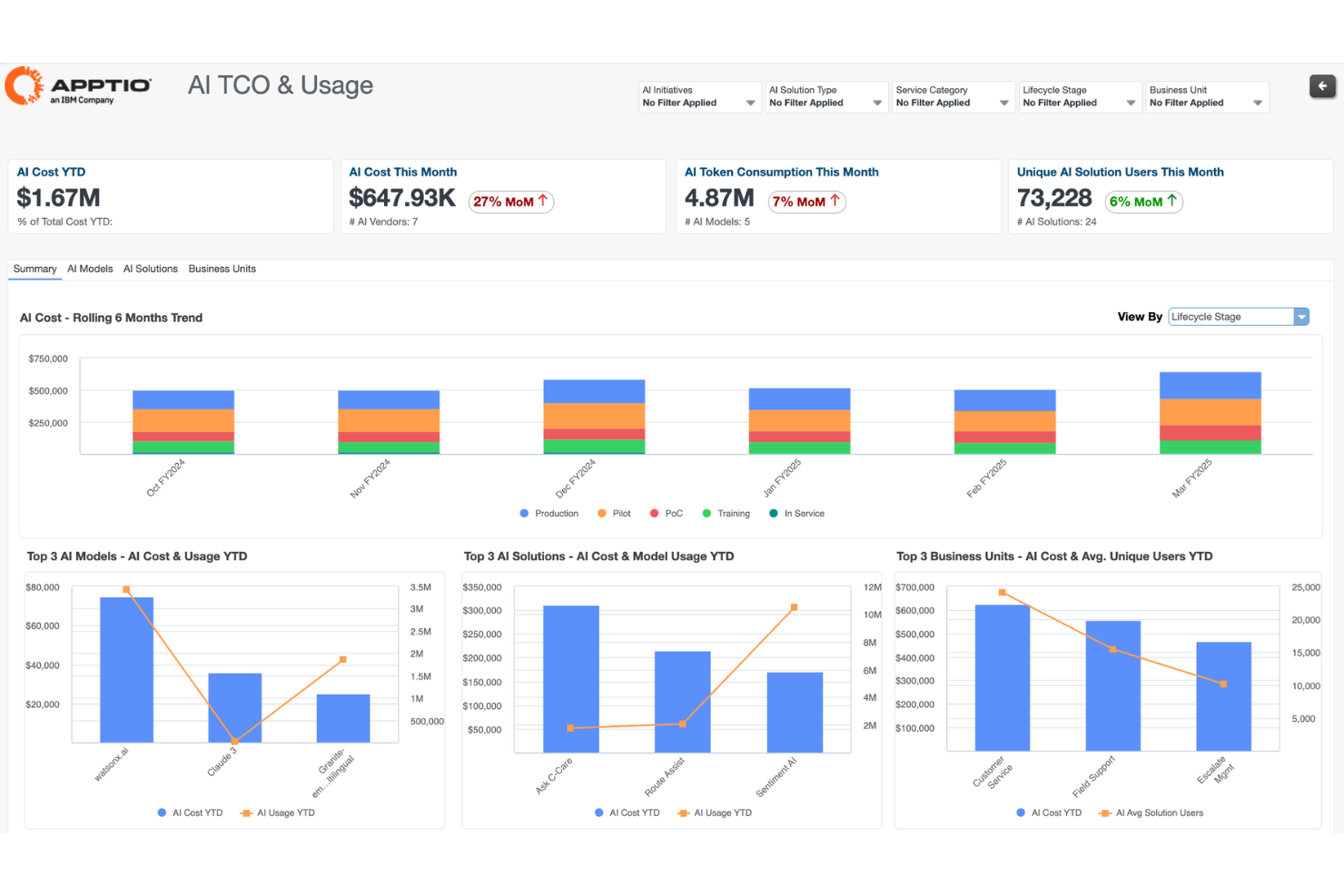
Apptio is an IBM TBM SaaS platform that covers IT financial management, FinOps, cloud cost optimization, and strategic portfolio management across hybrid IT and multi-cloud environments.
Who Is Apptio Best For?
Apptio is a strong fit for enterprise IT finance teams managing complex, multi-cloud environments who need granular visibility into technology spend.
Why I Picked Apptio
I picked Apptio as one of the best TBM platforms because of how precisely IBM Cloudability handles cloud cost visibility. You can break down spend by service, tag, and usage pattern across AWS, Azure, and GCP, then track reserved instance coverage in real time.
I also like its unit economics feature, which calculates per-unit cloud costs so you can tie spending directly to workloads. That level of cost attribution is genuinely hard to replicate in most TBM tools.
Apptio Key Features
- IT cost consolidation: Automatically ingests and structures financial and operational data from existing enterprise systems to eliminate manual spreadsheet-based processes.
- Showback and chargeback billing: Generates defensible IT billing reports that allocate costs back to business units to drive shared accountability.
- Benchmarking: Compares your IT spend against self-selected peer organizations to identify cost optimization opportunities.
- Planning and forecasting: Unifies financial data into a collaborative, repeatable budgeting process with automated data ingestion and variance tracking.
Apptio Integrations
Apptio uses its Datalink platform to automate data ingestion from source systems like SAP, Oracle, AWS, and ServiceNow through a library of pre-built connectors. Recent integrations with GitHub and Terraform bring cost insights into development workflows. Datalink also provides a connector for Workday, and a REST Service connector lets you pull data from any RESTful API endpoint into Apptio.
Pros and Cons
Pros:
- Covers multiple accounts and cloud providers
- Aligns with the TBM Council taxonomy
- Centralizes technology costs across the enterprise
Cons:
- Requires significant source data preparation effort
- Rigid cost modeling within TBM taxonomy
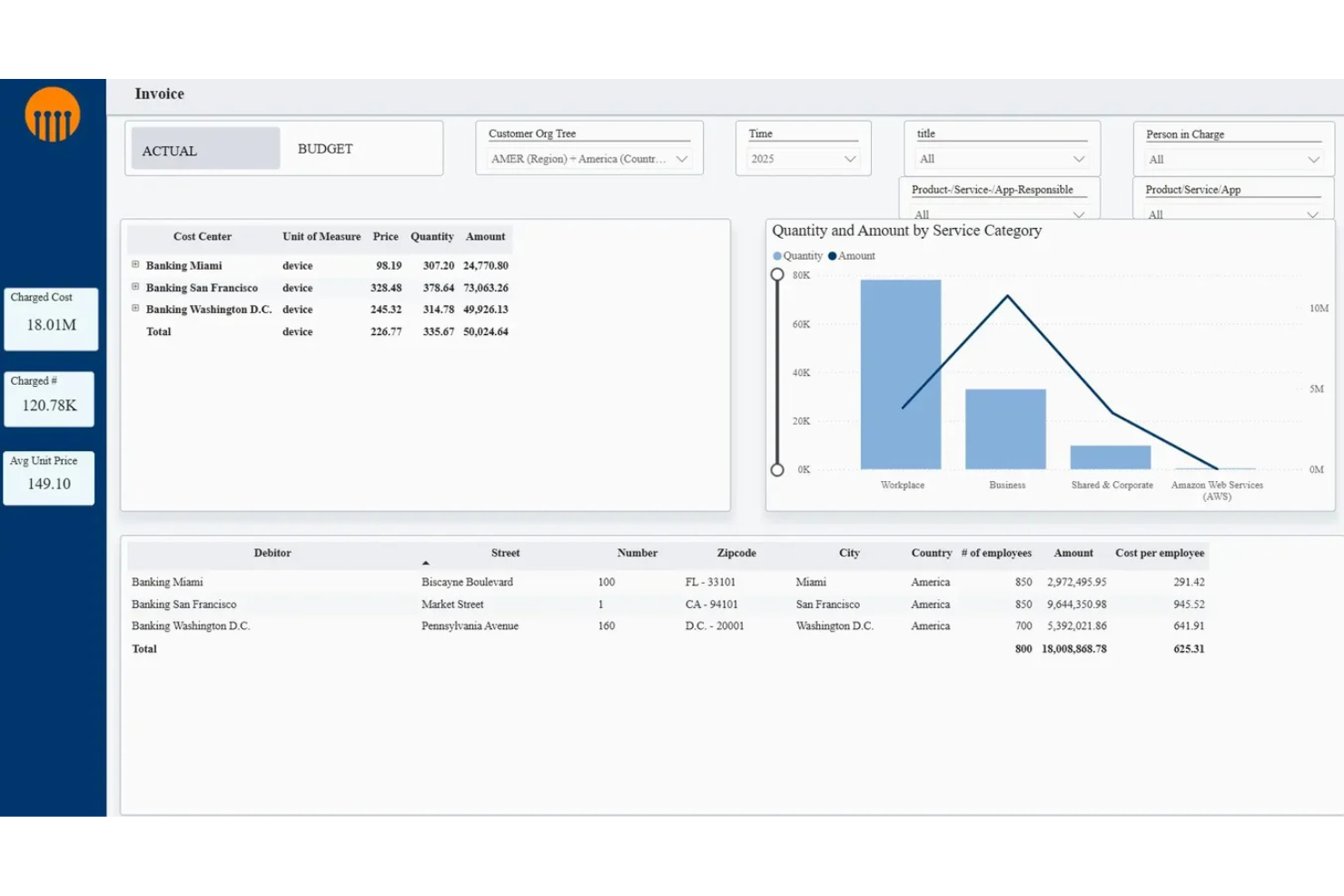
Serviceware Financial is an IT financial management platform that unifies cost transparency, planning and forecasting, charging and billing, cloud cost management, and IT benchmarking in a single governed model.
Who Is Serviceware Financial Best For?
Serviceware Financial is a strong fit for IT finance teams and CIOs at large enterprises that need to handle complex chargeback models, multi-entity cost allocation, and cross-departmental billing governance.
Why I Picked Serviceware Financial
I've included Serviceware Financial in my top picks because its Charging & Billing module is genuinely one of the most fully developed in the TBM space. What sets it apart is how it handles the full billing lifecycle: allocation rules, unit cost calculations, pricing policies (flat, tiered, and usage-based), approval workflows, and full auditability, all in a single governed model.
I also like that it supports the entire maturity arc from showback to hybrid to full chargeback without requiring you to rebuild the underlying cost model as governance evolves.
Serviceware Financial Key Features
- Rolling planning and forecasting: Build and update rolling IT budget plans using data-driven inputs rather than static annual cycles.
- IT cost benchmarking: Compare your IT spend against internal targets and external peer data to identify and justify optimization opportunities.
- Vendor and contract management: Consolidate every supplier, contract, and renewal date into a single view for ongoing cost control.
- Transfer pricing automation: Apply automated mark-ups and generate documentation to support global compliance across shared service entities.
Serviceware Financial Integrations
Serviceware Financial provides standard interfaces via ODBC/JDBC, file formats (CSV, XML), and web services (REST, API) for importing data from external ERP, HR, and ITSM sources such as ServiceNow and SAP. It also integrates with Microsoft Power BI through a dedicated BI Connector extension, and other analytics tools like Tableau and SAP Lumira can be embedded as well.
Pros and Cons
Pros:
- Full billing lifecycle in one platform
- Flexible cost modeling beyond TBM taxonomy
- Built-in cloud cost management module
Cons:
- Limited third-party review coverage online
- Primarily designed for large enterprises

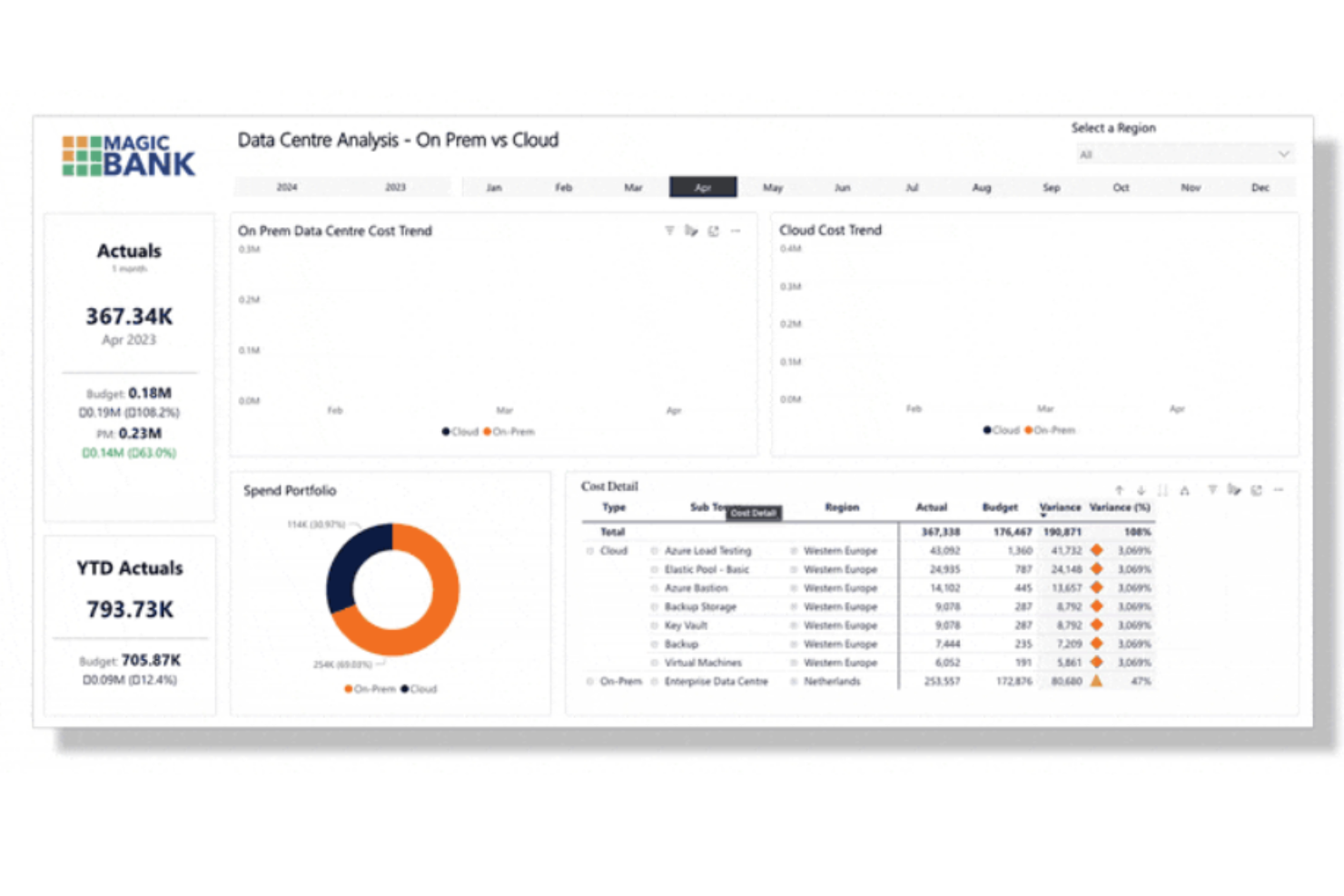
MagicOrange is a technology economics platform that unifies IT financial management and FinOps, covering cost modeling, allocation, chargeback, forecasting, and AI cost visibility across cloud, infrastructure, SaaS, and on-prem environments.
Who Is MagicOrange Best For?
MagicOrange is a strong fit for IT finance and FinOps practitioners at large enterprises managing complex, multi-layered technology spend across cloud, AI, SaaS, and on-prem infrastructure.
Why I Picked MagicOrange
I picked MagicOrange as one of the best because it goes further than most TBM tools when it comes to explaining why costs are changing. Its cost driver analysis connects spend to actual consumption signals, so when an AI workload or cloud service spikes, you're not just seeing the dollar amount—you're seeing the token usage, the vendor, and the business unit behind it.
I also like its predictive modeling layer, which lets you run scenario analysis against those same drivers before committing to budget decisions.
MagicOrange Key Features
- Chargeback and showback billing: Allocate IT costs back to business units using consumption-based rules, with options to bill or simply report.
- Service catalog costing: Build a priced catalog of IT services so stakeholders can see the true unit cost of each service consumed.
- SaaS spend management: Track SaaS license usage and spend across the organization to surface underused subscriptions.
- IT budget planning: Set and manage IT budgets against actuals within the same platform used for cost allocation.
MagicOrange Integrations
MagicOrange connects to financial, operational, cloud, and service data from systems like SAP, Oracle, AWS, Azure, Jira, Workday, and ServiceNow. It also offers prebuilt connectors for ERP systems like Microsoft Dynamics 365, along with automated data extraction and transformation. On the ITSM and asset side, it integrates with Flexera and BMC.
Pros and Cons
Pros:
- Supports both TBM and FinOps frameworks
- Natural language queries surface spending anomalies
- Unifies AI, cloud, and on-prem cost models
Cons:
- User interface feels outdated compared to competitors
- Initial data integration setup is time-consuming

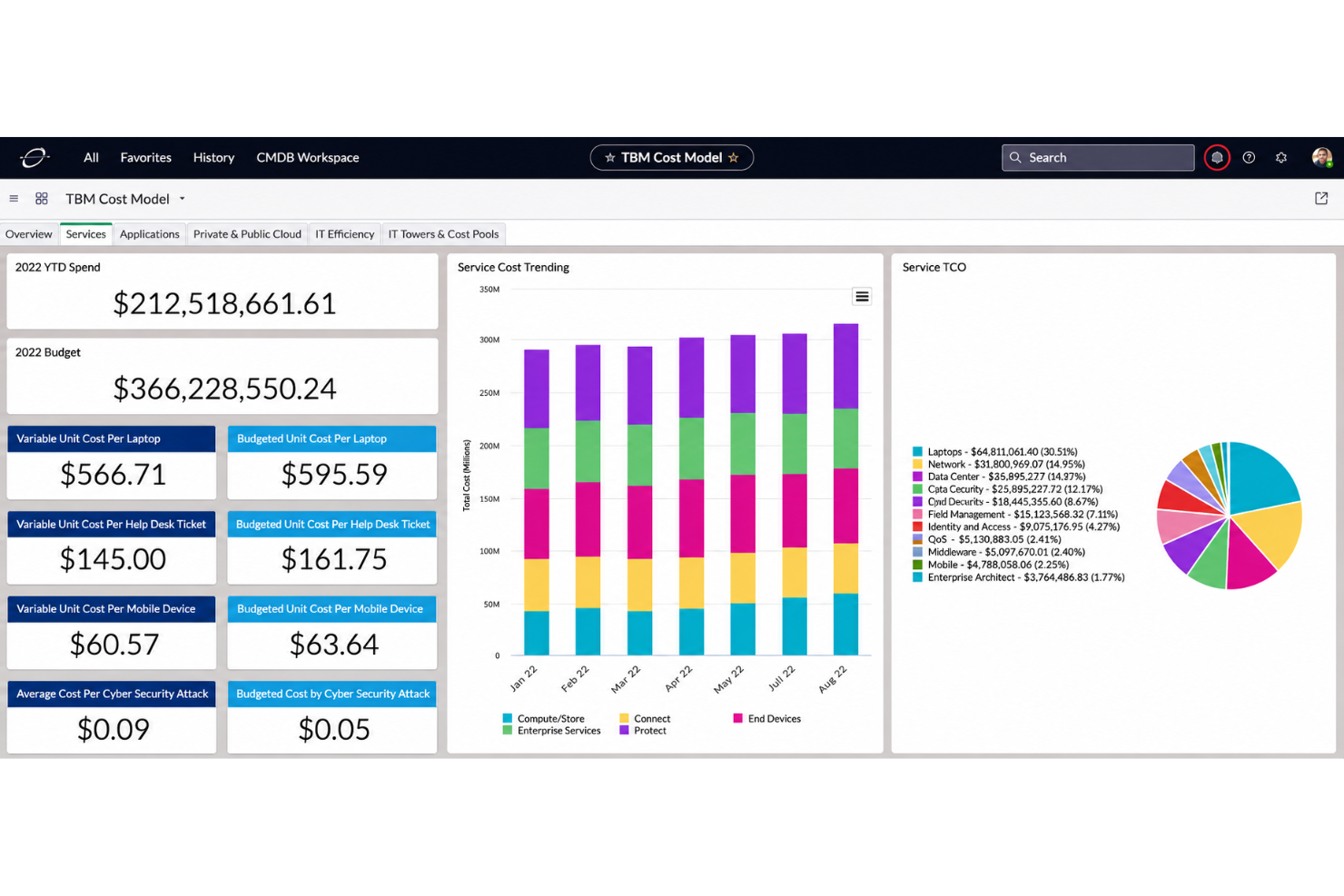
Proven Optics is a native ServiceNow application for IT financial management that covers IT budgeting, cost transparency, and chargeback billing within a single platform.
Who Is Proven Optics Best For?
Proven Optics is well-suited to large enterprises with dedicated IT finance or FinOps functions that need to manage and report on technology spend at scale.
Why I Picked Proven Optics
I've included Proven Optics in my top picks because it's the only ITFM tool I know that's genuinely native to ServiceNow, not just connected to it. That distinction matters when you're managing chargeback billing or variance reporting, because your cost data and operational data live in the same place with no sync lag or export risk.
I particularly like that it supports multiple cost models out of the box, including TBM, ITIL, and Educause, so you're not locked into one framework. The modular design also lets you start with budgeting or cost transparency and layer in billing later.
Proven Optics Key Features
- AI-powered forecasting: Applies AI models to historical spend data to anticipate budget needs and flag variances before they escalate
- App portfolio rationalization: Connects IT operations data with IT financials to identify redundant spending and consolidation opportunities
- Showback reporting: Visualizes and reports on IT consumption data for shared services, applications, and infrastructure across business units
- Self-service TBM portal: Gives stakeholders direct access to cost driver data in real time without needing to request reports from finance teams
Proven Optics Integrations
Proven Optics is built 100% natively inside ServiceNow, so it doesn't rely on traditional integrations. It can import data from external systems into its ServiceNow environment.
Pros and Cons
Pros:
- Modular apps let you start small
- Supports TBM, ITIL, and Educause frameworks
- Runs natively inside ServiceNow with zero exports
Cons:
- Limited third-party review coverage online
- Only useful if you run ServiceNow
Other TBM Software
Here are some additional TBM software options that didn’t make it onto my shortlist, but are still worth checking out:
- EZTBM
For guided TBM process automation
- USU IT Financial Management
For automated forecasting and budgeting
- Flexera One
With integrated AI cost management
- Clarity
For modular financial planning flexibility
- Vantage
For real-time cloud expense tracking
- CloudZero
For engineering-centric cost monitoring
- Finout
For holistic cloud cost visibility
- Oracle Cloud EPM Profitability and Cost Management
For granular profitability modeling


How I Evaluate TBM Software
I look at TBM tools in two layers: the baseline allocation and taxonomy features a CIO office needs on day one, and the differentiators—like scenario modeling and benchmarking—that matter at scale.
Core Functionality (Table Stakes For This List)
When I'm selecting tools for my list, I rank each one on a scale from 0 (does not offer the functionality) to 5 (excels in this area) for each core functionality listed below. Then, I calculate the tool's total score into a percentage. Each tool needs to achieve a minimum total score of 65% to be considered for inclusion.
- IT cost transparency: I check whether a platform can ingest data from GL systems, cloud billing, vendor contracts, and HR feeds into a single spend view without heavy manual work.
- Cost allocation and chargeback: Each tool should support configurable allocation models, like splitting shared infrastructure costs across business units based on actual consumption or headcount.
- TBM taxonomy alignment: I look for pre-built support for the TBM Council's cost pool, IT tower, and solution layers so teams can start mapping spend categories without building a taxonomy from scratch.
- Application and service costing: A tool should calculate fully-loaded costs per application, factoring in hosting, licensing, labor, and shared services to support rationalization decisions.
- IT budgeting and forecasting: I evaluate whether the platform offers driver-based planning and scenario modeling, such as simulating the budget impact of a cloud migration or vendor consolidation.
- Benchmarking and optimization: The tool should deliver industry-level cost comparisons across IT towers and recommend specific actions, like identifying overspent categories relative to peers.
Once I have a list of tools that meet this criteria, I consider what sets each platform apart.
Differentiating Factors (What Sets Vendors Apart)
Here's how I compare and contrast different vendors:
Standout Features
Scenario planning tools are a big differentiator. I look for platforms where you can model a data center exit or vendor consolidation and see the projected cost impact across towers before making a commitment. Cloud cost management also matters, especially the ability to pull in billing data from multiple providers and allocate that spend using the same taxonomy as on-premises costs. Application TCO modeling rounds this out by letting teams calculate fully-loaded costs per app, which is essential when building a rationalization business case.
Beyond Features
Implementation complexity is one of the first things I evaluate. A platform with pre-built connectors to your ERP, CMDB, and cloud billing systems can cut months off deployment compared to one that requires custom ETL work. I also consider whether a vendor offers dedicated TBM advisors or maturity roadmaps, since teams early in their TBM journey need guidance progressing from basic transparency to optimization. Target organization size matters too. Some platforms fit large enterprises managing thousands of apps, while others are better suited for mid-market IT teams.
How to Choose TBM Software
It’s easy to get bogged down in long feature lists and complex pricing structures. To help you stay focused as you work through your unique software selection process, here’s a checklist of factors to keep in mind:
| Factor | What to Consider |
|---|---|
| Scalability | Will the tool still fit if your IT spend or organizational complexity doubles in the next 2-3 years? |
| Integrations | Can you connect your GL, cloud billing, HR, and contract systems with minimal custom work? |
| Customizability | Are allocation logic, taxonomy mappings, and reporting templates flexible enough for your unique needs? |
| Ease of use | How easily can IT, finance, and business users access and act on the data without dedicated training? |
| Implementation and onboarding | What will it take to get live—do you have clear data sources and the right internal resources to support setup? |
| Cost | Understand all-in pricing. Does licensing align with your IT spend profile, user counts, or data volume? |
| Security safeguards | Does the vendor meet your internal standards for access control, audit trails, and data residency? |
| Support availability | Will you get fast, expert help during issues or roadblocks—especially during onboarding or quarterly cycles? |
What Is TBM Software?
TBM software is a financial management platform for IT organizations that helps you track, allocate, and analyze technology investments using industry-standard taxonomies. These tools give IT, finance, and business leaders visibility into IT investments, helping them align spending with business capabilities and strategic initiatives.
By supporting TBM practices, budgeting, and forecasting across cloud and traditional infrastructure, TBM software helps organizations optimize technology spending, improve cybersecurity planning, and adapt investments to changing business priorities, including Agile delivery models.
Features
When selecting TBM software, keep an eye out for the following key features:
- IT cost transparency: Unifies spending data from hardware, software, cloud services, labor, and vendors into a single dashboard for deep financial insight.
- Cost allocation and chargeback: Allocates IT costs to departments, products, or projects with flexible showback and chargeback models that support fair internal billing.
- TBM taxonomy alignment: Follows the Technology Business Management Council's taxonomy, standardizing how you categorize and report technology costs for benchmarking and governance.
- Application cost modeling: Tracks the full cost of ownership per application or service, including all direct and indirect resources, to aid rationalization and budgeting efforts.
- Budgeting and forecasting: Lets teams set IT budgets, forecast future spending, and compare actuals to plan, so they can make timely adjustments.
- Benchmarking and optimization: Delivers cost benchmarking against industry peers and gives actionable insights to pinpoint overspending or savings opportunities.
- Scenario planning: Offers modeling tools to simulate changes like vendor transitions or cloud migrations, helping you predict financial impacts before making decisions.
- Integration capabilities: Connects natively to financial systems, cloud providers, and asset inventories to streamline ongoing data flow and reduce manual entry.
- Reporting and dashboards: Provides configurable reports and dashboards for IT, finance, and executive audiences, ensuring everyone can access relevant insights.
- Security controls: Includes robust access management and audit tracking to protect sensitive financial and operational information.
Benefits
Implementing TBM software provides several benefits for your team and your business. Here are a few you can look forward to:
- Unified IT spend visibility: Aggregate costs from hardware, software, labor, and cloud to see your full technology spend in one place.
- Accurate cost allocation: Allocate IT expenses to business units or products using configurable models that support showback and chargeback.
- Better budget planning: Use forecasting, scenario planning, and variance reporting features to create and maintain IT budgets aligned with business outcomes.
- Informed decision-making: Track application and service TCO to guide rationalization, vendor negotiations, and cloud adoption strategies.
- Industry benchmarking: Compare IT costs and service metrics to anonymized peer data, revealing potential optimization opportunities.
- Standardized reporting: Enable consistent, governance-ready dashboards by aligning to TBM Council taxonomy and best practices.
- Improved cost optimization: Get actionable recommendations and identify areas of waste or overspending across all IT domains.
Costs and Pricing
Selecting TBM software requires an understanding of the various pricing models and plans available. Costs vary based on features, team size, add-ons, and more. The table below summarizes common plans, their average prices, and typical features included in TBM software solutions:
Plan Comparison Table for TBM Software
| Plan Type | Average Price | Common Features |
|---|---|---|
| Free Plan | $0 | Basic cost aggregation, limited reporting, single-user access, and manual data imports. |
| Personal Plan | $50-$100/user/month | Core cost tracking, basic allocation tools, simple dashboards, email support, and limited integrations. |
| Business Plan | $500-$2,000/month | Multi-user access, advanced allocation, custom reporting, workflow automation, and standard integrations. |
| Enterprise Plan | $5,000-$20,000/month | Unlimited users, full TBM taxonomy support, benchmarking, scenario planning, premium integrations, dedicated support, and advanced security controls. |
TBM Software FAQs
Here are some answers to common questions about TBM software:
How does TBM software help with cloud cost management?
TBM software brings cloud spend into the same financial framework as on-premises IT costs, letting you allocate, monitor, and optimize cloud usage by workload, team, or service. This unified approach helps you pinpoint wasted resources and forecast spend more accurately.
Can TBM software integrate with my existing financial and IT systems?
Yes, most TBM platforms offer native integrations with ERP systems, CMDBs, cloud billing platforms, and HR tools. Check whether your specific systems are supported and if custom integrations are required for unique or legacy data sources.
What’s the difference between showback and chargeback in TBM software?
Showback allocates IT costs to business units for awareness, without requiring payment. Chargeback goes further by billing units for their portion of IT spend. TBM software automates both, making allocations transparent and defensible.
How long does it take to implement TBM software?
Implementation timelines can range from a few months to over a year, depending on your data sources, integration needs, and internal resource availability. Pre-built connectors and vendor implementation support can speed up the process.
Is TBM software only for large enterprises?
No, while TBM software originated in large organizations, many solutions now scale down for mid-sized businesses. Smaller teams should check for pricing models, usability, and deployment options that fit their needs and budgets.