

Oracle Hybrid Cloud Review 2026: Pros, Cons, Features and Pricing

We review tools independently, and commissions help fund our testing. See our transparency policy, our methodology, or suggest a tool.
Oracle Hybrid Cloud is a cloud computing platform for organizations that need to bridge on-premises infrastructure with public cloud resources. For IT teams managing complex environments, Oracle Hybrid Cloud offers unified management, strong security controls, and deep integration with Oracle applications.
In this review, you’ll find a breakdown of Oracle Hybrid Cloud’s features, pricing, pros and cons, and the types of use cases where it delivers the most value.
Oracle Hybrid Cloud Evaluation Summary

4.6/5
- Pricing upon request
- Free plan available
Why Trust Our Software Recommendations
6,700+
Reviews
20
Industry experts
16+
Evaluation factors
14
Years
Our team has been testing and reviewing software since 2012. As tech leaders ourselves, we know how difficult—and important—it is to choose the right software.
For this guide, we evaluated tools using hands-on testing and independent research, scoring tools using our selection criteria.
Our reviews reflect our human editorial judgment, not a sales pitch.
Expert reviewers:
- Paulo Gardini MiguelTech Director
 Tim FisherVP of AI
 Gabriel RosasTech Lead & Software Architect
 Christhian GruhnTech Lead & Platform Architect

Oracle Hybrid Cloud Overview
If you’re judging cloud computing platforms on integration with existing Oracle workloads, Oracle Hybrid Cloud is a top pick. Its unified management, strong security, and flexible deployment options make it a smart choice for enterprises with complex hybrid needs. Pricing can be less transparent than some competitors, and the interface may feel dense for new users, but support and onboarding resources are solid.
I’d suggest Oracle Hybrid Cloud is best for organizations prioritizing Oracle application compatibility and needing to balance on-premises and cloud resources—especially in regulated or data-sensitive environments.
Pros
- Unified monitoring across on-premises and cloud resources.
- Flexible deployment for regulatory and data residency needs.
- Deep integration with Oracle databases and applications.
Cons
- Advanced features may require specialized Oracle expertise.
- Limited third-party ecosystem compared to some competitors.
- Pricing structure can be complex and less transparent.
Is Oracle Hybrid Cloud Right For Your Needs?
Who Would be a Good Fit for Oracle Hybrid Cloud?
Oracle Hybrid Cloud is a strong choice for organizations that need to integrate on-premises systems with cloud resources, especially when Oracle applications are central to their operations. Enterprises in regulated industries, large-scale IT departments, and global businesses with strict data residency requirements will find its hybrid deployment and unified management especially valuable.
Teams that rely on Oracle databases or need to modernize legacy Oracle workloads can take advantage of its deep compatibility and security features.
- Oracle-Centric BusinessesDelivers seamless integration with existing Oracle databases and applications.
- IT Operations TeamsProvides centralized monitoring and automation for hybrid environments.
- Government AgenciesOffers secure, on-premises options for confidential workloads and data.
- Large EnterprisesHandles complex, multi-region infrastructure with unified management tools.
- Healthcare ProvidersSupports sensitive data handling and regulatory requirements for patient information.
- Financial ServicesMeets strict compliance and data residency needs with hybrid deployment.
Who Would be a Bad Fit for Oracle Hybrid Cloud?
Oracle Hybrid Cloud isn’t ideal for organizations that want a broad third-party ecosystem, need simple pricing, or don’t rely on Oracle technologies. Smaller businesses, startups, and teams focused on open-source or non-Oracle stacks may find it less appealing.
If your workloads are cloud-native or you need rapid, low-cost scaling, other platforms may be a better match.
- Open-Source FocusedNot optimized for teams prioritizing open-source stacks and tools.
- Retail SMBsLimited value for businesses without legacy Oracle systems or compliance needs.
- Creative AgenciesDoesn’t prioritize rapid deployment or low-cost, short-term projects.
- DevOps-First TeamsFewer native tools for cloud-native, containerized, or serverless workflows.
- Non-Oracle WorkloadsLacks deep integration for non-Oracle databases and applications.
- Small StartupsPricing and complexity are overkill for limited infrastructure needs.
Our Review Methodology
How We Test & Score Tools
We’ve spent years building, refining, and improving our software testing and scoring system. The rubric is designed to capture the nuances of software selection and what makes a tool effective, focusing on critical aspects of the decision-making process.
Below, you can see exactly how our testing and scoring works across seven criteria. It allows us to provide an unbiased evaluation of the software based on core functionality, standout features, ease of use, onboarding, customer support, integrations, customer reviews, and value for money.
Core Functionality (25% of final scoring)
The starting point of our evaluation is always the core functionality of the tool. Does it have the basic features and functions that a user would expect to see? Are any of those core features locked to higher-tiered pricing plans? At its core, we expect a tool to stand up against the baseline capabilities of its competitors.
Standout Features (25% of final scoring)
Next, we evaluate uncommon standout features that go above and beyond the core functionality typically found in tools of its kind. A high score reflects specialized or unique features that make the product faster, more efficient, or offer additional value to the user.
We also evaluate how easy it is to integrate with other tools typically found in the tech stack to expand the functionality and utility of the software. Tools offering plentiful native integrations, 3rd party connections, and API access to build custom integrations score best.
Ease of Use (10% of final scoring)
We consider how quick and easy it is to execute the tasks defined in the core functionality using the tool. High scoring software is well designed, intuitive to use, offers mobile apps, provides templates, and makes relatively complex tasks seem simple.
Onboarding (10% of final scoring)
We know how important rapid team adoption is for a new platform, so we evaluate how easy it is to learn and use a tool with minimal training. We evaluate how quickly a team member can get set up and start using the tool with no experience. High scoring solutions indicate little or no support is required.
Customer Support (10% of final scoring)
We review how quick and easy it is to get unstuck and find help by phone, live chat, or knowledge base. Tools and companies that provide real-time support score best, while chatbots score worst.
Customer Reviews (10% of final scoring)
Beyond our own testing and evaluation, we consider the net promoter score from current and past customers. We review their likelihood, given the option, to choose the tool again for the core functionality. A high scoring software reflects a high net promoter score from current or past customers.
Value for Money (10% of final scoring)
Lastly, in consideration of all the other criteria, we review the average price of entry level plans against the core features and consider the value of the other evaluation criteria. Software that delivers more, for less, will score higher.
Core Features
Oracle Cloud Infrastructure (OCI) Integration
Connects on-premises and cloud resources for unified management. Lets you move workloads between environments without rearchitecting.
Autonomous Database
Automates patching, tuning, and scaling for Oracle databases. Reduces manual database administration and downtime risks.
Cloud@Customer Deployment
Brings Oracle Cloud services directly to your data center. Supports regulatory and data residency requirements without sacrificing cloud capabilities.
Unified Monitoring and Management
Centralizes visibility across hybrid and multi-cloud environments. Enables real-time monitoring, alerting, and automation from a single dashboard.
Advanced Security Controls
Offers encryption, identity management, and compliance tools built-in. Protects sensitive data and supports industry-specific regulations.
Disaster Recovery and Backup
Provides automated backup and failover for critical workloads. Minimizes downtime and data loss with built-in recovery options.

Standout Features
Dedicated Region Cloud@Customer
Lets you run a full public cloud region inside your own data center. This gives you all Oracle Cloud services with complete control over data location and security.
Exadata Cloud Service
Delivers high-performance Oracle Database workloads on Exadata infrastructure, both on-premises and in the cloud. You get extreme scalability and performance for mission-critical applications without managing hardware.
Ease of Use
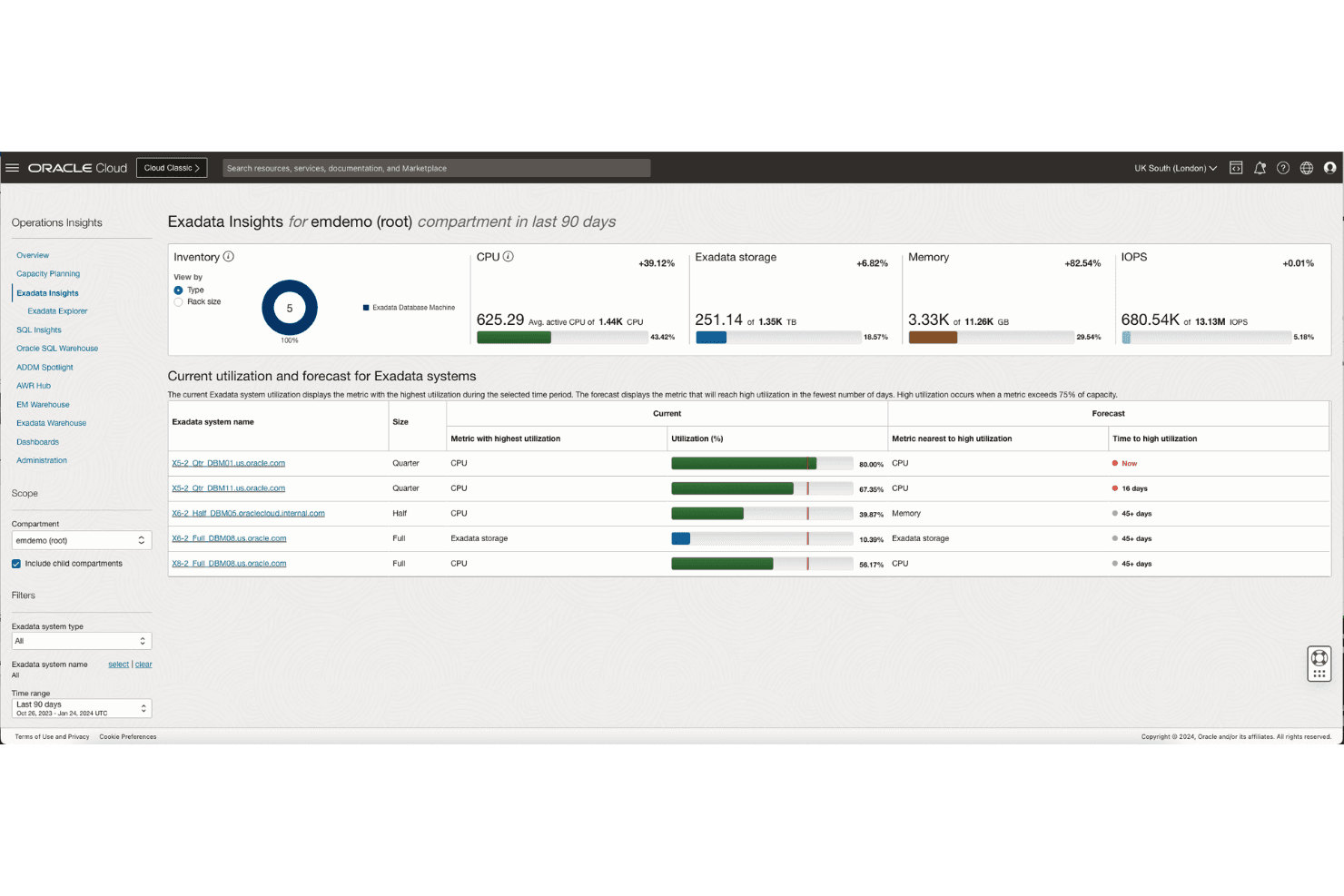
Oracle Hybrid Cloud’s interface is feature-rich but can feel overwhelming, especially for teams new to Oracle’s ecosystem. Many users mention that setup and navigation require specialized knowledge, particularly when configuring hybrid deployments or advanced security. However, once you’re familiar with the platform, unified dashboards and automation tools make ongoing management straightforward.
Experienced Oracle admins will find it efficient, but newcomers should expect a steeper learning curve.
Onboarding
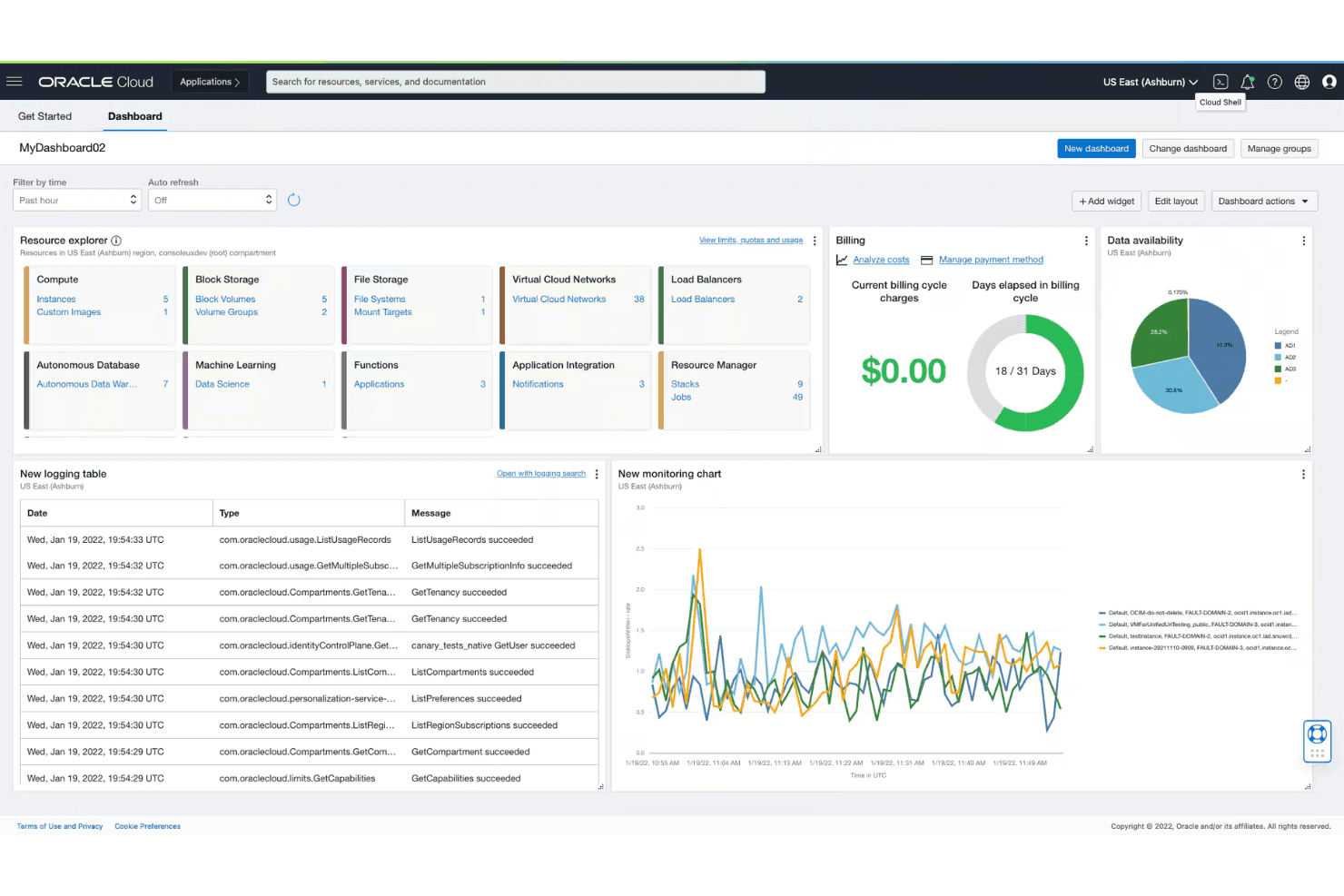
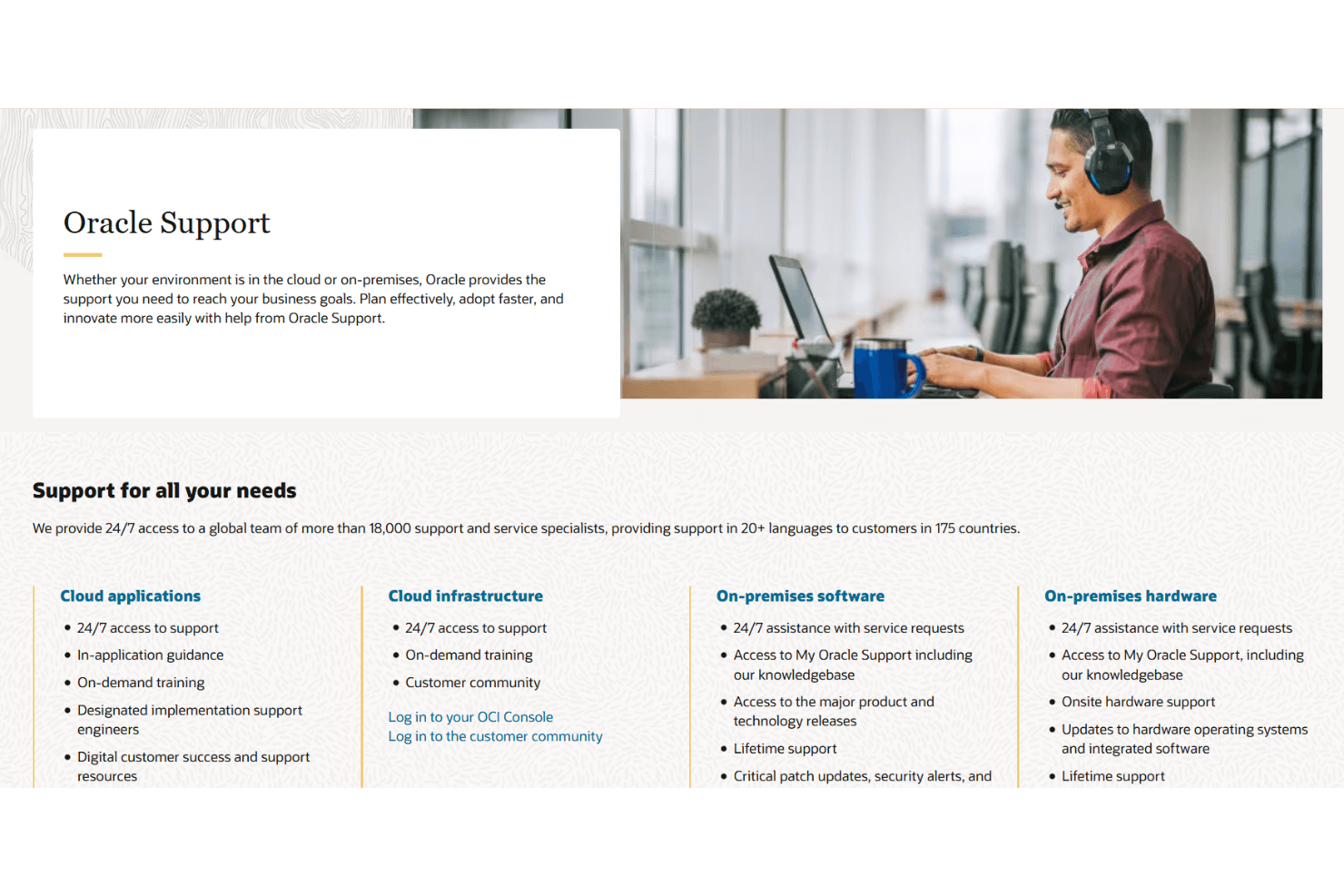
Oracle Hybrid Cloud offers detailed documentation, guided setup tools, and access to Oracle’s support network, which helps new users get started. Many users report that onboarding is smoother if you already use Oracle products, but those new to the ecosystem may face a longer ramp-up.
The availability of training resources and responsive support is a plus, but the complexity of hybrid configurations can extend the time to value for some teams.
Customer Support
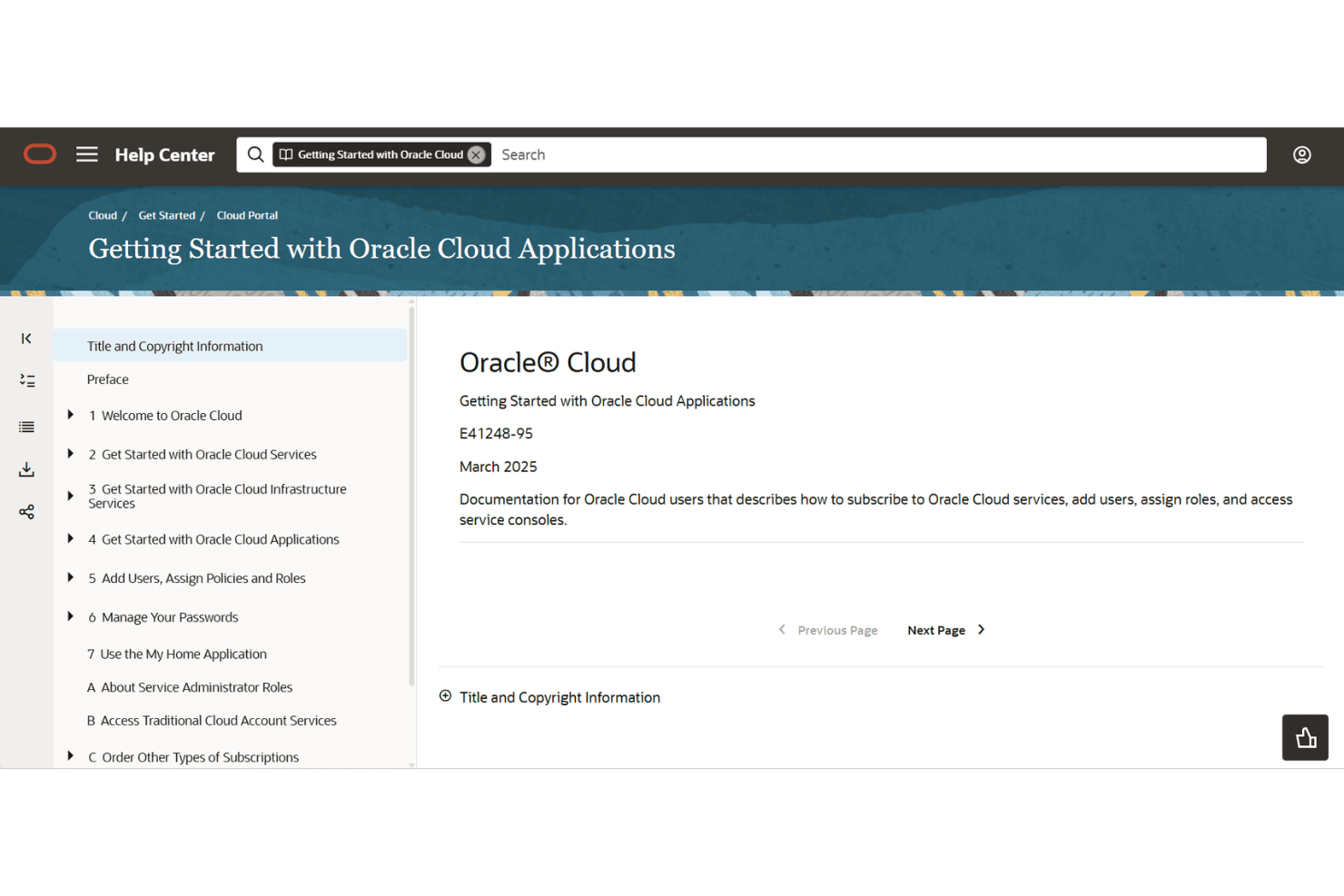
Oracle Hybrid Cloud users generally rate customer support as responsive and knowledgeable, especially for complex technical issues. Support is available through multiple channels, including 24/7 phone, chat, and a robust knowledge base. I’ve seen users appreciate the dedicated account managers and proactive guidance for enterprise deployments.
However, some mention that resolution times can vary for less urgent requests, so expectations should be set accordingly for non-critical issues.
Integrations
Oracle Hybrid Cloud integrates with Oracle E-Business Suite, Oracle Fusion Financials, Oracle Data Safe, Oracle Identity Cloud Service, Oracle Cloud VMware Solution, Oracle Cloud Observability and Management, Oracle Cloud Infrastructure FastConnect, Exadata Cloud@Customer, Oracle Cloud@Customer, and Roving Edge Infrastructure, among others.
Oracle Hybrid Cloud also offers a robust API and supports connections with third-party integration tools.

Value for Money
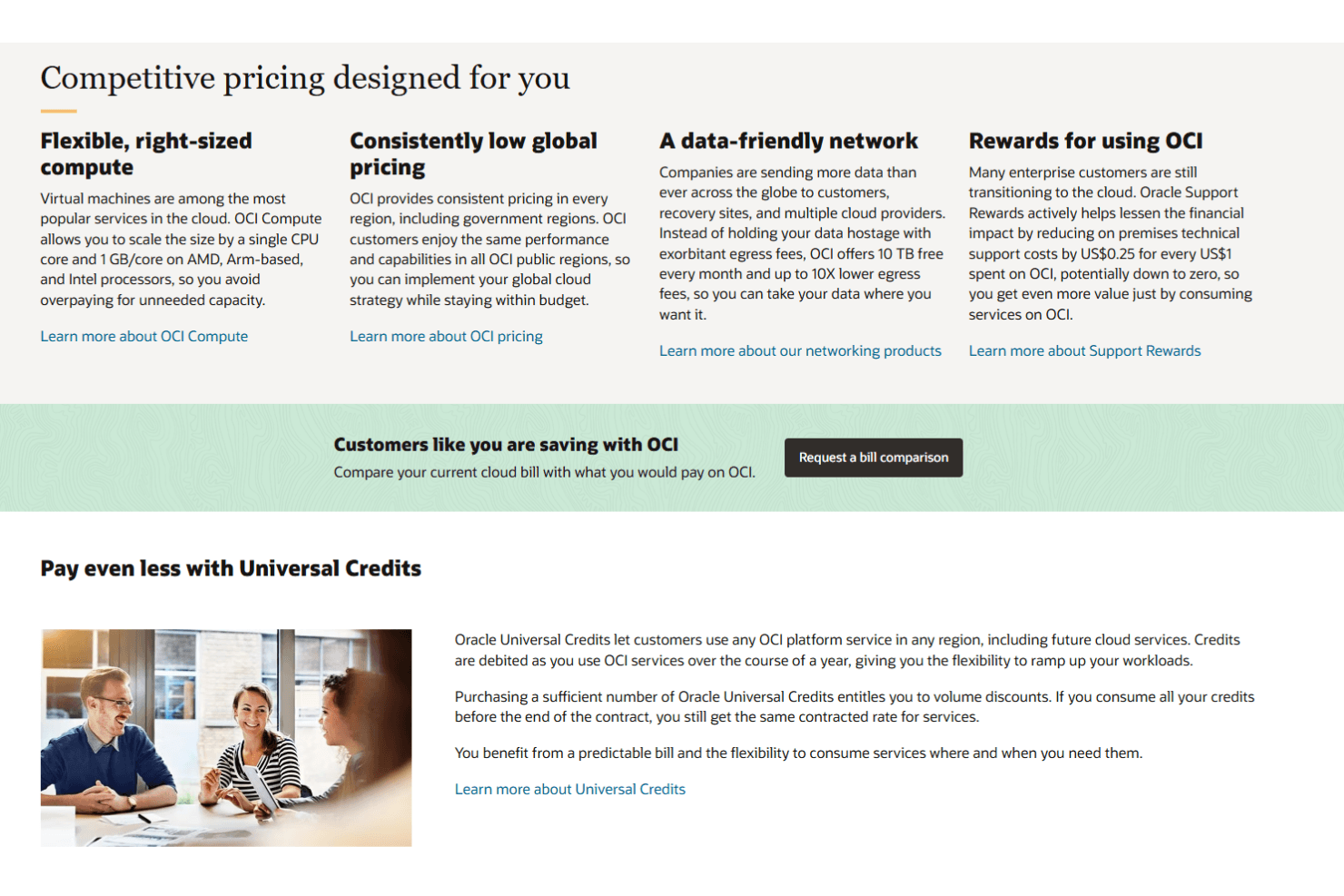
Oracle Hybrid Cloud’s pricing is complex and can be higher than average, but many users feel the advanced features and enterprise-grade capabilities justify the investment. The flexible deployment options and deep Oracle integration add value for organizations with specific compliance or performance needs, though smaller teams may find the cost harder to justify.
- Free Tier: Always-free services plus trial credits for testing without commitment.
- Pay As You Go (PAYG): Pay only for what you use—no upfront commitment, ideal for variable workloads.
- Annual Universal Credits: Prepaid yearly credits for flexible usage with more predictable budgeting.
Oracle Hybrid Cloud Specs
- 2-Factor Authentication: No
- Anti-Virus: No
- API: Yes
- Bug Tracking: No
- Dashboard: Yes
- Data Export: Yes
- Data Import: Yes
- Data Visualization: Yes
- Email Integration: No
- External Integrations: Yes
- File Sharing: No
- File Transfer: No
- Firewall: No
- Google Apps Integration: No
- Inventory Tracking: Yes
- Malware Protection: No
- Multi-User: Yes
- Network Device Performance Monitoring: No
- Network Traffic Monitoring: No
- Network Visualization: No
- Notifications: Yes
- Project Management: No
- Scheduling: Yes
- Third-Party Plugins/Add-Ons: No
Oracle Hybrid Cloud FAQs
Oracle Hybrid Cloud Company Overview & History
Oracle Hybrid Cloud is part of Oracle Corporation, a global technology company headquartered in Austin, Texas, with over 160,000 employees worldwide. Oracle is known for its extensive portfolio of enterprise software, cloud infrastructure, and database products, serving major clients like Deutsche Bank, Samsung, and Texas A&M University.
The company has invested heavily in research and development and is publicly traded, reporting over $57 billion in revenue for fiscal year 2025. Oracle’s hybrid cloud solutions are recognized for supporting complex regulatory, data residency, and performance needs across industries.
Oracle Major Milestones
- 1977: Oracle Corporation founded in Santa Clara, California.
- 2016: Oracle launches Oracle Cloud@Customer, bringing public cloud services to customer data centers.
- 2020: Oracle relocates its headquarters to Austin, Texas.
- 2021: Oracle named a Leader in hybrid cloud by major analyst firms for the third consecutive year.
- 2024: Oracle Cloud Infrastructure supports more than 200 AI and cloud services across public, dedicated, and hybrid environments.