


Freshservice vs. ServiceNow: Comparison and Expert Reviews for 2026


Choosing the right platform to manage IT services can feel overwhelming, especially when your team is already stretched thin. If you’re dealing with rising ticket volumes, slow incident resolution, or frustrated employees waiting on support, the pressure to find a better system is real.
As you evaluate ITSM tools, two names often come up: Freshservice and ServiceNow. In this article, you’ll get a side-by-side look at features, pricing, and use cases to help you confidently decide which solution will keep your IT operations running smoothly.
Freshservice vs. ServiceNow: An Overview
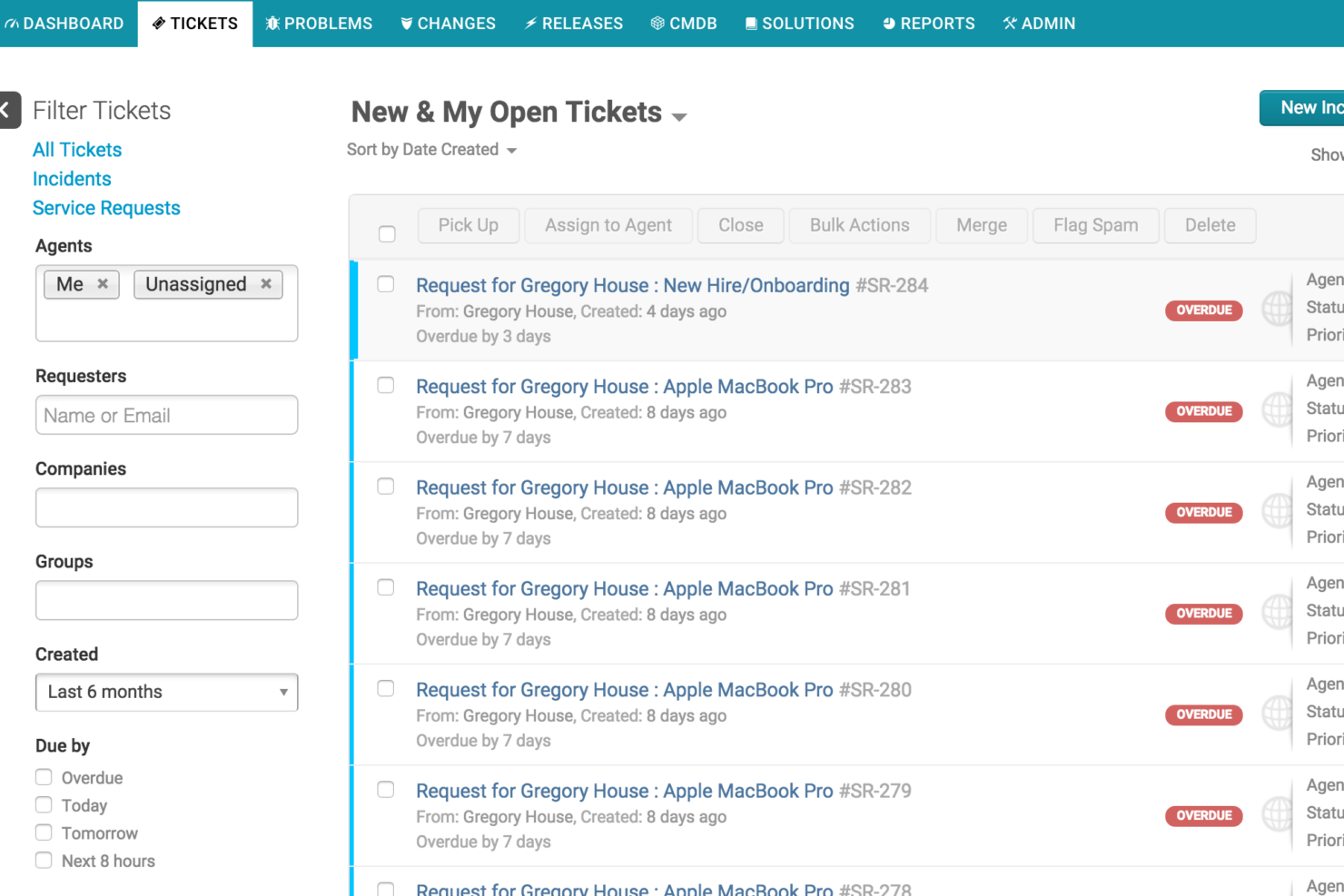
Freshservice


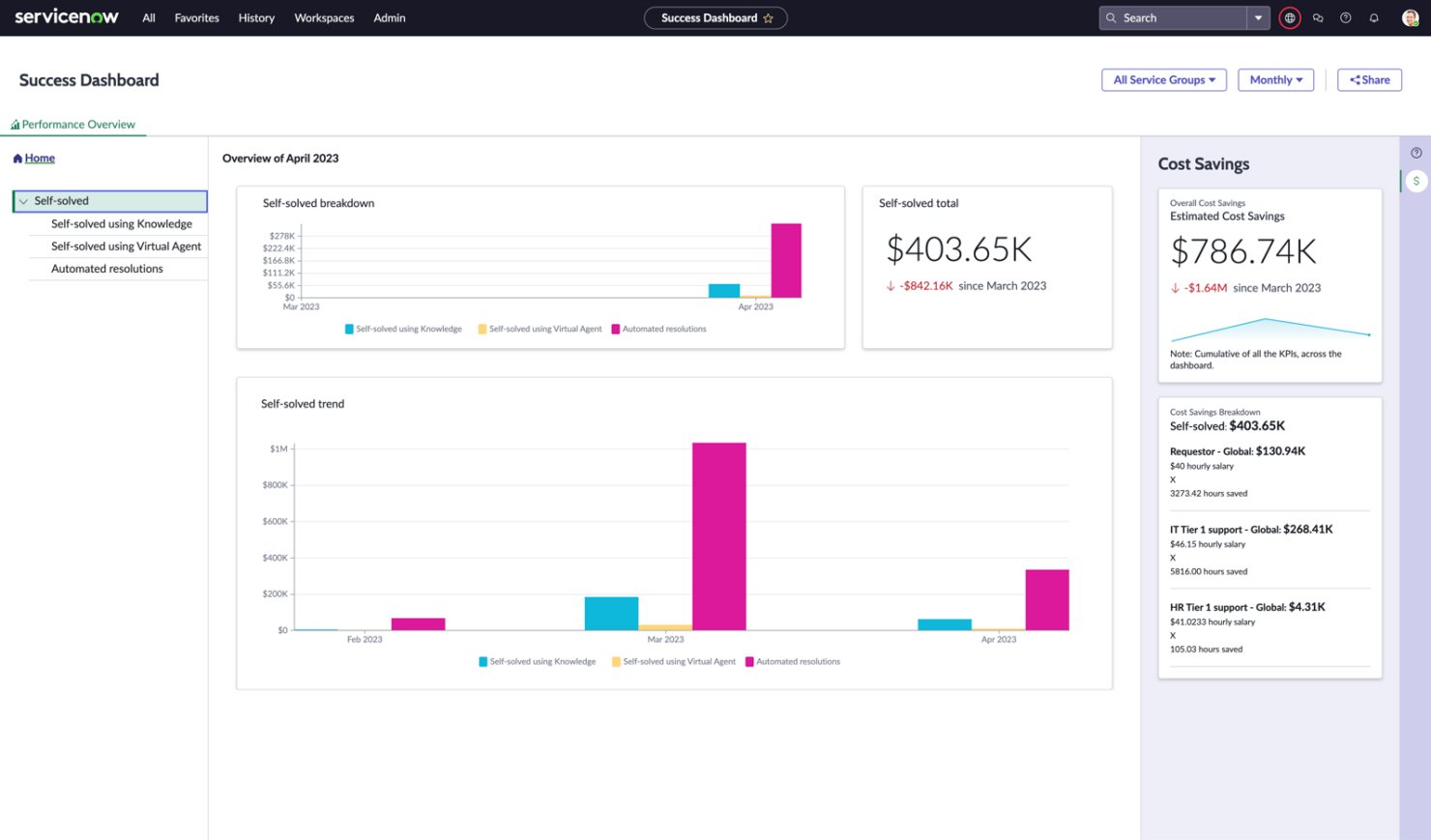
ServiceNow


Why Trust Our Software Reviews
We’ve been testing and reviewing software since 2023. As tech leaders ourselves, we know how critical and difficult it is to make the right decision when selecting software.
We invest in deep research to help our audience make better software purchasing decisions. We’ve tested more than 2,000 tools for different tech use cases and written over 1,000 comprehensive software reviews. Learn how we stay transparent & our software review methodology.
Freshservice vs. ServiceNow Pricing Comparison
| Freshservice | ServiceNow | |
|---|---|---|
| Free Trial | 14-day free trial + free demo available | Free demo available |
| Pricing | From $19/agent/month (billed annually) | Pricing upon request |
Freshservice Vs. ServiceNow Pricing & Hidden Costs
Freshservice uses a transparent, tiered subscription model with clearly defined features at each level, which makes it relatively easy to estimate costs as your team grows. ServiceNow also uses a subscription model, but pricing is typically customized based on factors such as user roles, selected modules, integrations, and the scale of your deployment. Because ServiceNow does not publish standard pricing publicly, organizations often need to request a quote and evaluate multiple configuration options before estimating the total cost.
To choose the right pricing model, think about the features you’ll actually use, the number of users, and any integrations your workflows depend on. Ask each vendor for a detailed quote that includes all potential add-ons, support tiers, and implementation costs.
Freshservice vs. ServiceNow Feature Comparison
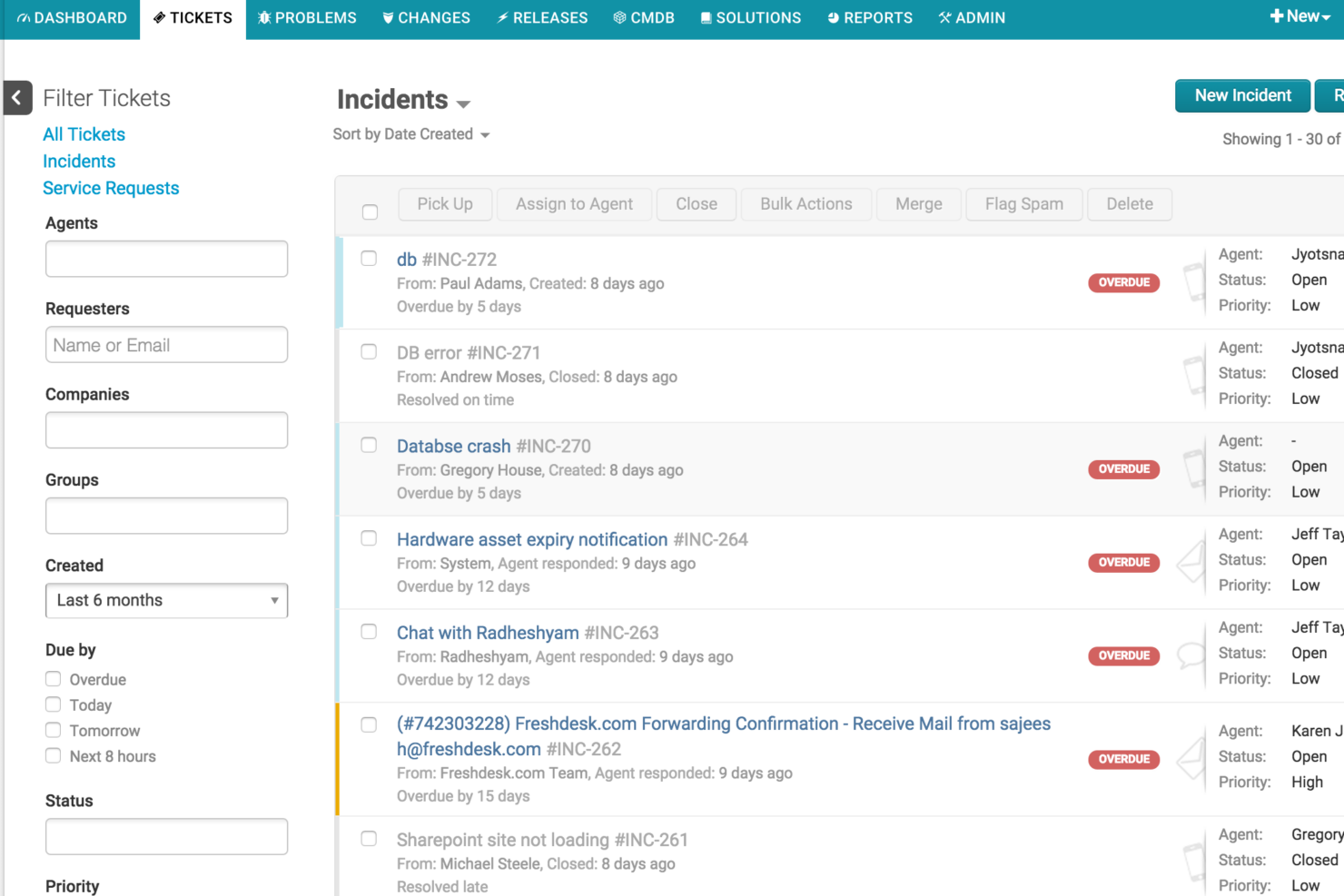
Both Freshservice and ServiceNow cover the core capabilities you’d expect from a modern IT service management platform. Each provides ITIL-aligned workflows for incident, problem, change, and service request management, along with tools such as a service catalog, knowledge base, SLA tracking, and workflow automation to streamline support operations.
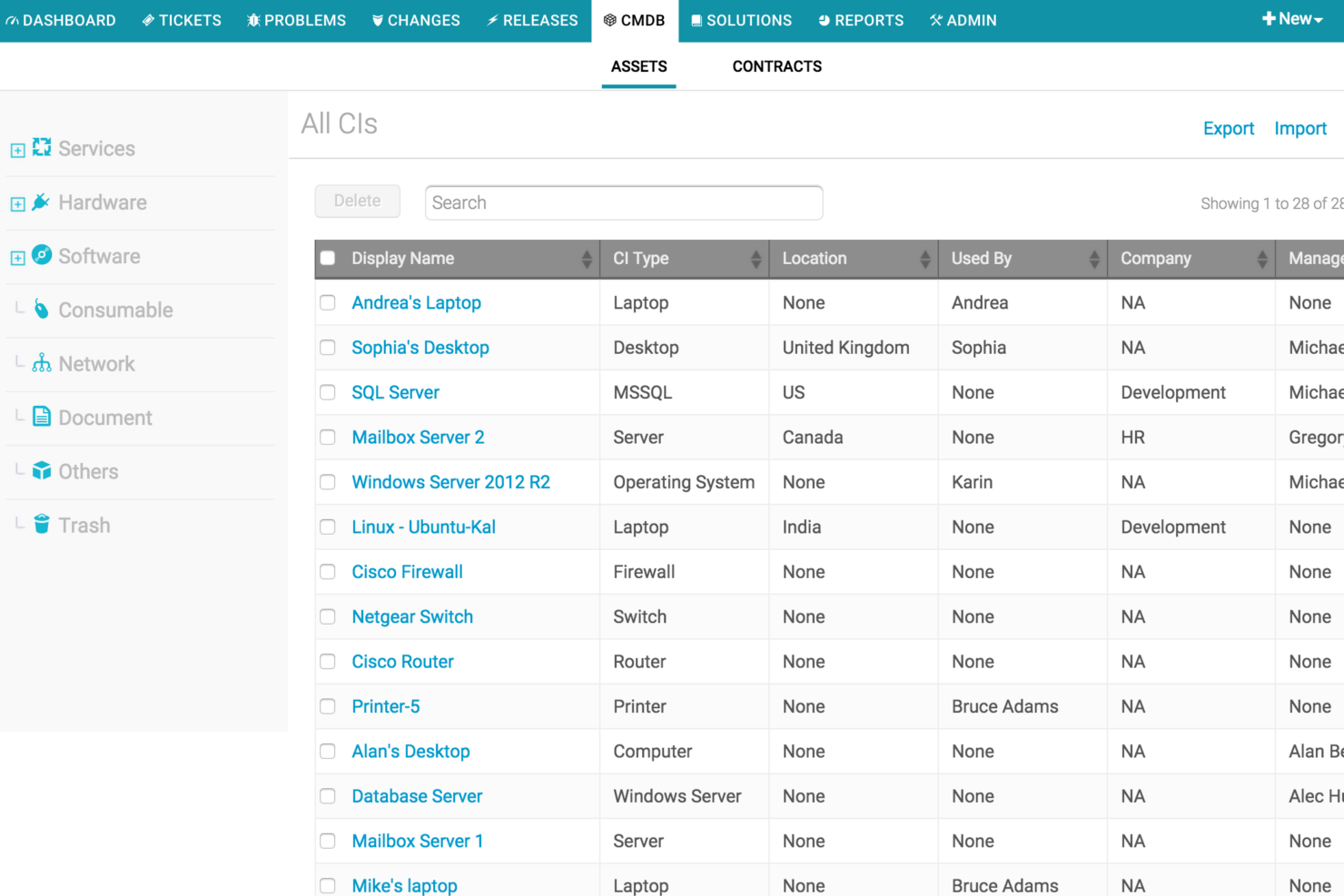
Where the platforms begin to diverge is in some of their standout capabilities. Freshservice’s differentiators include built-in IT asset management and CMDB visibility as part of the core platform, along with Workspaces and Journeys that allow organizations to extend service management to HR, legal, and other departments.
ServiceNow, on the other hand, stands out for its highly extensible enterprise platform and its Now Platform ecosystem, which supports deep customization, low-code application development, and enterprise-scale workflow automation across many business processes beyond IT.
| Freshservice | ServiceNow | |
|---|---|---|
| 2-Factor Authentication | ||
| API | ||
| Analytics | ||
| Anti-Virus | ||
| Batch Permissions & Access | ||
| Bug Tracking | ||
| CRM Integration | ||
| Call Integration | ||
| Chat | ||
| Contact Management | ||
| Customer Management | ||
| Data Export | ||
| Data Import | ||
| Email Integration | ||
| Escalation Management | ||
| External Integrations | ||
| Incident Management | ||
| Instant Chat Integration | ||
| Knowledge Base | ||
| Malware Protection | ||
| Multi-User | ||
| Notifications | ||
| Organization Management | ||
| Password & Access Management | ||
| Project Management | ||
| Real-time Alerts | ||
| SAP Integration | ||
| Self-service Portal | ||
| Social Media Integration | ||
| Support Forum | ||
| Ticket Management | ||
| Workflow Management |
Freshservice vs. ServiceNow Integrations
| Integration | Freshservice | ServiceNow |
|---|---|---|
| Microsoft Teams | ✅ | ✅ |
| Slack | ✅ | ✅ |
| Jira | ✅ | ✅ |
| Salesforce | ✅ | ✅ |
| Google Workspace | ✅ | ✅ |
| Azure Active Directory | ✅ | ✅ |
| Zoom | ✅ | ✅ |
| SAP | ✅ | ✅ |
| Oracle | ❌ | ✅ |
| API | ✅ | ✅ |
| Zapier | ✅ | ✅ |
Both Freshservice and ServiceNow cover the most popular IT and collaboration integrations, but ServiceNow stands out with deeper connections to enterprise platforms like Oracle, while Freshservice offers more out-of-the-box options for cloud tools and automation via Zapier. With robust APIs on both sides, you’ll find flexibility to connect with most systems.
Freshservice vs. ServiceNow Security, Compliance & Reliability
| Factor | Freshservice | ServiceNow |
|---|---|---|
| Data Encryption | Uses AES-256 encryption for data at rest and TLS 1.2 encryption for data in transit. | Encrypts data at rest and in transit, with optional advanced features such as customer-controlled encryption keys and edge encryption. |
| Regulatory Compliance | Supports major standards including SOC 1/2/3, ISO 27001, ISO 27701, PCI DSS, and GDPR compliance frameworks. | Supports a wide range of global compliance programs including SOC 1/2/3, ISO 27001, FedRAMP, HIPAA, GDPR, and additional government and industry certifications. |
| Access Controls | Role-based access control, SSO integrations, and two-factor authentication for user security. | Delivers granular access controls, SSO, and multi-factor authentication. |
| Uptime Guarantee | Cloud-native platform with public status monitoring and disaster recovery capabilities. | Global cloud infrastructure with high availability architecture and strong enterprise reliability commitments. |
ServiceNow generally provides broader enterprise compliance coverage and infrastructure capabilities, which can be important for organizations operating in regulated industries or large global environments. Freshservice still delivers strong security fundamentals—including modern encryption, role-based access control, and audited compliance frameworks—that are sufficient for most mid-market organizations.
Freshservice vs. ServiceNow Ease of Use
| Factor | Freshservice | ServiceNow |
|---|---|---|
| User Interface | Features a clean, modern interface with intuitive navigation and quick access to key functions. | Offers a powerful but complex interface that can feel overwhelming for new users. |
| Onboarding | Provides guided onboarding, in-app tutorials, and a straightforward setup process. | Requires more time and expertise to configure, often needing dedicated training. |
| Customization | Allows easy drag-and-drop workflow changes and form edits without coding. | Enables extensive customization and application development through the Now Platform, often requiring scripting or platform expertise. |
| Support | Provides customer support through chat, email, documentation, and community resources. | Offers enterprise support packages, extensive documentation, and a large partner ecosystem. |
| Mobile Access | Includes a user-friendly mobile app for managing tickets on the go. | Mobile app is robust but mirrors the complexity of the desktop experience. |
Freshservice is generally easier to adopt and manage day to day, particularly for teams implementing their first structured IT service desk. Its streamlined interface and guided setup help organizations get started quickly without requiring deep platform expertise.
ServiceNow, by contrast, prioritizes flexibility and enterprise-scale customization. While that power often comes with a steeper learning curve, it allows large organizations to build complex workflows, automate processes across departments, and extend the platform far beyond basic ITSM use cases.
Freshservice vs ServiceNow: Pros & Cons
Freshservice
- Fast setup and easy administration with strong out-of-the-box functionality.
- Built-in IT asset management with CMDB and deep cross-environment discovery.
- AI-powered automation and ticket assistance via Freddy AI.
- Many AI features are limited to higher-tier plans.
- Customization may be less flexible than some enterprise ITSM platforms.
- Reporting and analytics can be limited for advanced management reporting.
ServiceNow
- It enhances collaboration across different departments.
- The platform offers robust reporting and analytics tools.
- You can customize workflows to fit your team's specific needs.
- You might find the setup process time-consuming.
- The interface can feel cluttered and overwhelming.
- Your team may face a steep learning curve initially.
Best Use Cases for Freshservice and ServiceNow
Freshservice
- Mid-Size to Enterprise Organizations Provides strong out-of-the-box ITSM capabilities and integrations without the implementation complexity of traditional enterprise service management platforms.
- Lean Management Ideal for organizations that want powerful service management without needing large, specialized admin teams.
- Companies Implementing ITIL Best Practices Supports ITIL-aligned processes such as incident, problem, change, and SLA management for structured service delivery.
- Business Teams (HR, Facilities, Finance) Ideal for non-IT teams looking for an intuitive service management solution through enterprise service management capabilities.
- Multi-Tenant SaaS Environments Designed for organizations that benefit from faster updates, lower maintenance overhead, and scalable cloud infrastructure.
- Organizations Looking for a Unified Platform Strong fit for companies that want to manage assets, service management, and IT operations in a single platform.
ServiceNow
- Highly Customized Enterprise Environments Best for organizations that require deep customization and tailored workflows across complex operations.
- Organizations with Dedicated Platform Teams Well-suited for enterprises that have large specialist teams to implement, manage, and extend the platform.
- Advanced Governance and Portfolio Needs (GRC, PPM) Strong fit for companies needing extended capabilities beyond ITSM, such as governance, risk, and project portfolio management.
- Single-Tenant or Highly Controlled Environments Ideal for organizations that require greater control over infrastructure and deployment models.
- Project Management Your projects can run more smoothly with ServiceNow’s tools for tracking progress, managing resources, and improving team collaboration.
- Customer Service Teams ServiceNow enhances your team’s ability to track and resolve customer issues quickly with its efficient ticketing system.
Who Should Use Freshservice, and Who Should Use ServiceNow?
Freshservice is best suited for organizations that want a modern IT service management platform without the complexity of traditional enterprise systems. If you’re part of a mid-sized company, a growing IT team, or a distributed organization looking to standardize ticketing, automate workflows, and track IT assets in one platform, Freshservice offers a strong balance of usability and functionality. Its intuitive interface, AI features, built-in IT asset management, and fast onboarding make it particularly appealing for teams that want to implement structured ITSM practices quickly without needing a large administrative team.
ServiceNow, on the other hand, is often the better choice for large enterprises that require extensive customization, complex integrations, and large-scale service management across multiple departments. Organizations with mature IT operations, global infrastructure, or strict regulatory requirements may benefit from ServiceNow’s highly extensible platform and broader ecosystem. While it typically requires more time, expertise, and investment to implement, it provides the flexibility and scalability needed for organizations managing complex service environments.
Differences Between Freshservice and ServiceNow
| Freshservice | ServiceNow | |
|---|---|---|
| AI Pricing | Session-based AI pricing, which can be more flexible and cost-efficient at scale. | Assist-based AI pricing, which may scale more quickly with usage. |
| Customization | Low-code customization with workflow builders and configurable forms. | Extensive customization through scripting, APIs, and the Now Platform. |
| Licensing Flexibility | Offers business agent licenses for ESM, enabling non-IT teams to participate at lower cost. | Licensing typically structured around roles and modules with less flexibility for lighter-use personas. |
| Pricing Model | Transparent pricing primarily based on the number of agents, with additional modular pricing (e.g., AI based on sessions, Device42 based on assets). | Custom quote-based pricing depending on modules, users, and deployment scale. |
| Target Market | Best suited for mid-sized businesses and small agile enterprise teams with IT and broader business (HR, facilities, finance, etc.) use cases. | Designed primarily for large enterprises and complex global organizations. |
| Visit FreshserviceOpens new window | Read ServiceNow ReviewOpens new window |
Similarities Between Freshservice and ServiceNow
| Asset Management | Both provide IT asset management and CMDB capabilities. ServiceNow includes core asset management within its ITSM tiers, with additional capabilities available as add-ons. Similarly, Freshservice offers strong native capabilities with optional extensions like Device42. |
|---|---|
| Integration Support | Both integrate with popular tools like Microsoft Teams, Jira, and Salesforce, and offer open APIs for custom connections. |
| Knowledge Base | Each provides a searchable knowledge base for self-service and internal documentation, reducing ticket volume. |
| Mobile Accessibility | Both deliver mobile apps that let users manage tickets and approvals on the go, supporting remote workforces. |
| Visit FreshserviceOpens new window Read ServiceNow ReviewOpens new window | |
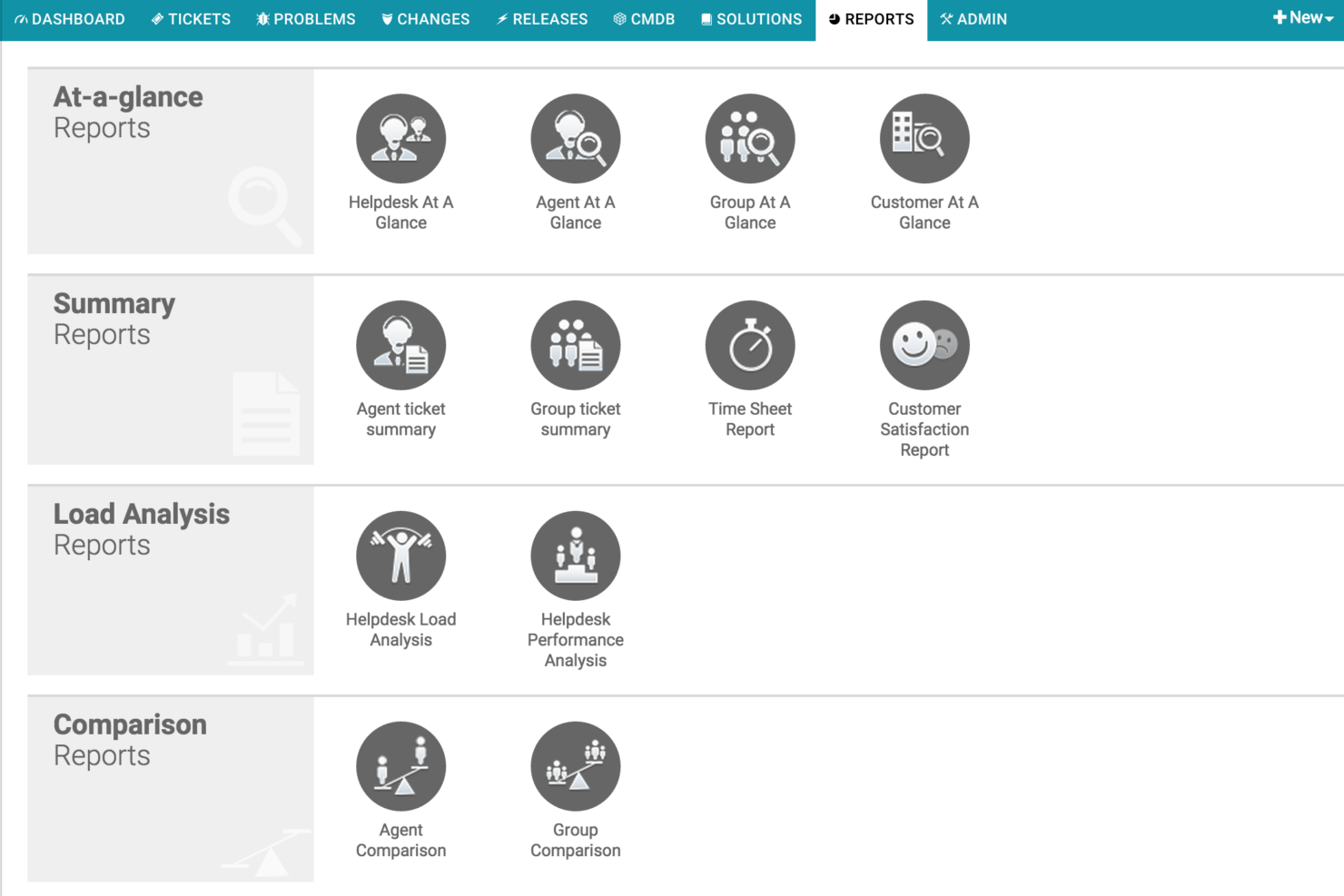
| Reporting & Analytics | Each platform includes customizable dashboards and detailed reporting to track performance and identify trends. |
| Ticket Management | Both offer robust ticketing systems with automation, SLAs, and escalation rules to streamline IT support. |
| Visit FreshserviceOpens new window Read ServiceNow ReviewOpens new window | |