



Checksum vs. QA Wolf: Comparison and Expert Reviews for 2026


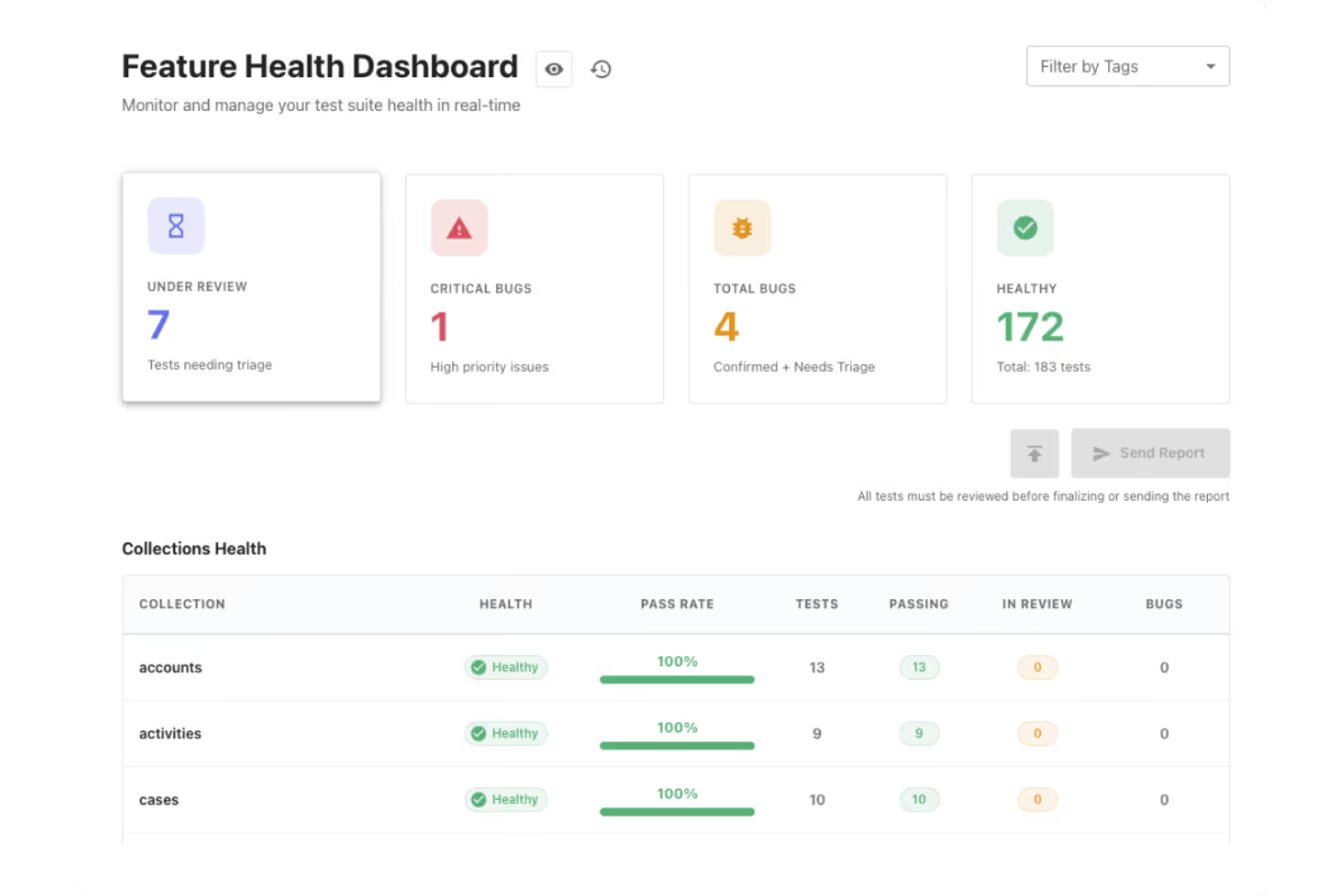
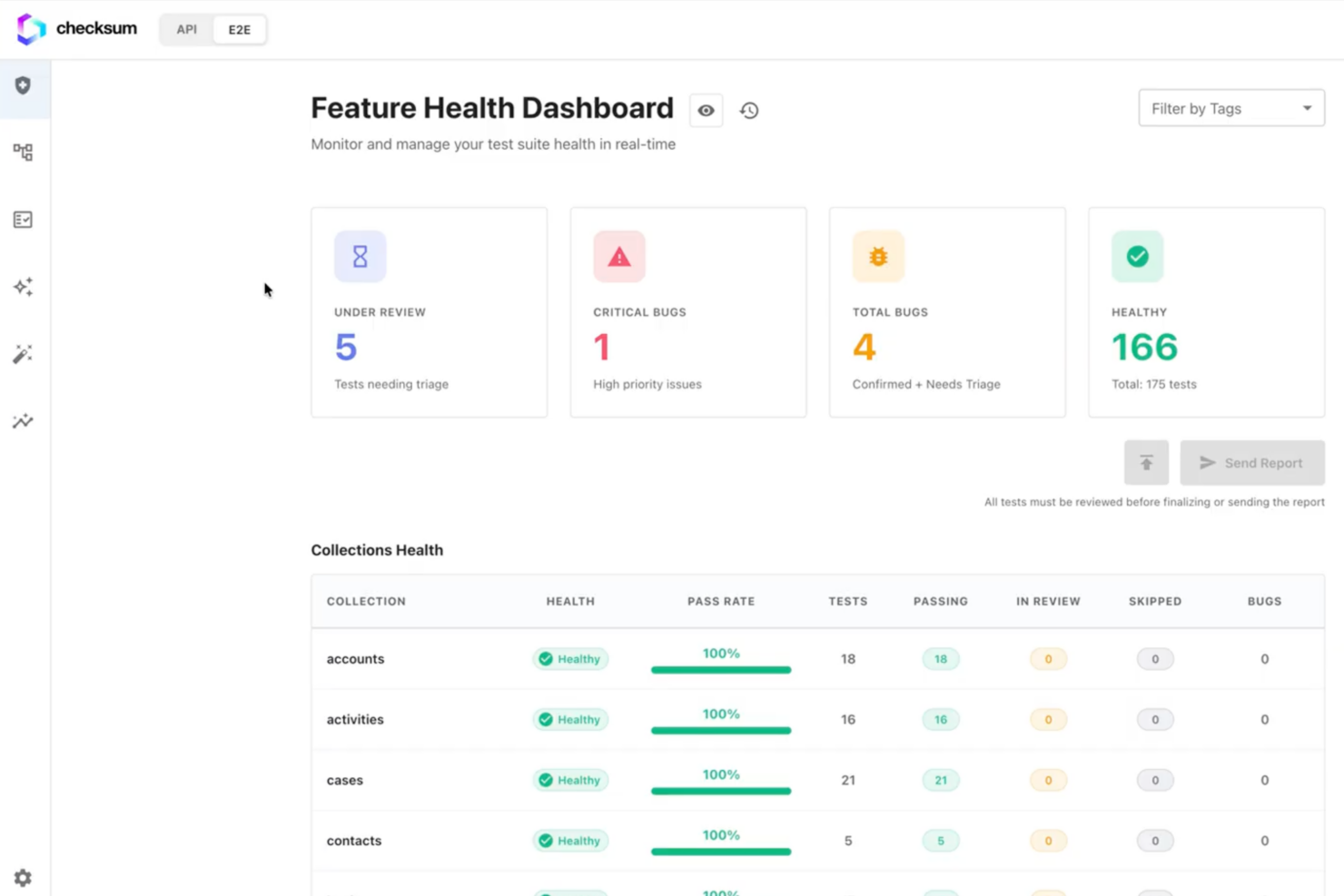
Comparing Checksum and QA Wolf comes down to how you want testing handled—built and maintained by your team, or largely taken off your plate. Both position themselves as modern end-to-end testing tools and broader test solutions, but they solve the problem in fundamentally different ways: Checksum focuses on autonomous test generation and maintenance inside your existing workflows, while QA Wolf combines an AI-powered platform with a fully managed QA service.
In this article, you’ll get a clear comparison of Checksum and QA Wolf, including their pros and cons, best-fit use cases, pricing, security, and usability. I’ll break down where each tool fits best so you can choose the option that actually aligns with how your team wants to run testing.
Checksum vs. QA Wolf: An Overview
Checksum
QA Wolf
Why Trust Our Software Reviews
We’ve been testing and reviewing software since 2023. As tech leaders ourselves, we know how critical and difficult it is to make the right decision when selecting software.
We invest in deep research to help our audience make better software purchasing decisions. We’ve tested more than 2,000 tools for different tech use cases and written over 1,000 comprehensive software reviews. Learn how we stay transparent & our software review methodology.
Checksum vs. QA Wolf Pricing Comparison
| Checksum | QA Wolf | |
|---|---|---|
| Free Trial | 30-day free trial | Free demo available |
| Pricing | Pricing upon request | Pricing upon request |
Checksum vs. QA Wolf Pricing & Hidden Costs
Checksum prices based on the number of workflows (tests) it maintains for you, with no per-seat or per-run fees, making costs more predictable as your usage scales. QA Wolf, on the other hand, follows a coverage-based model tied to its fully managed service—meaning you’re paying for a combination of platform access, infrastructure, and a dedicated QA team rather than just software. Checksum is more transparent about inclusions and exclusions, but neither provider offers exact pricing figures, so you’ll need to reach out to their respective teams for more information.
Checksum vs. QA Wolf Feature Comparison
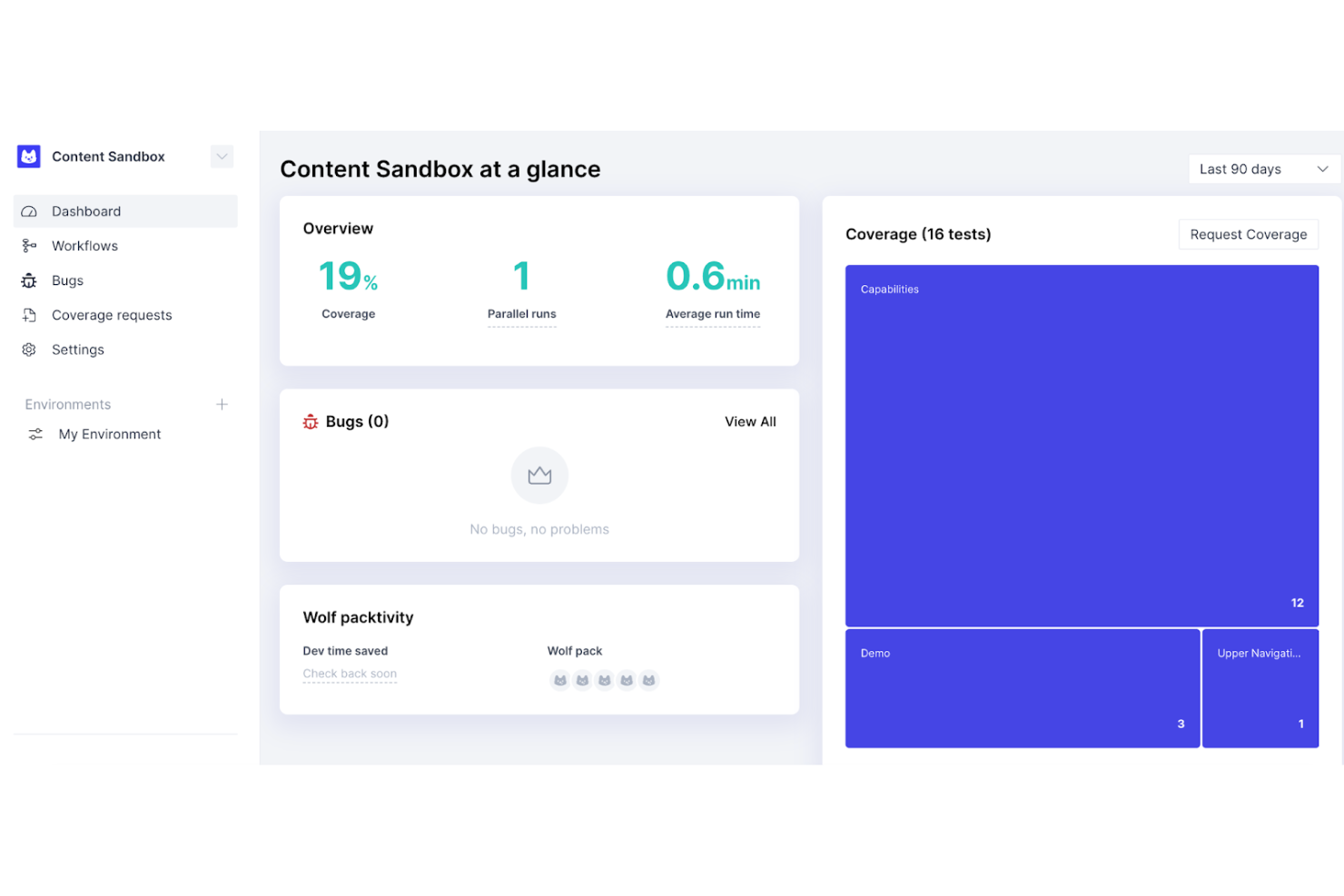
Checksum and QA Wolf share some core features. Both automate end-to-end test creation and execution, helping teams build and maintain reliable test suites. They integrate with CI/CD pipelines and provide visibility into test results through dashboards, notifications, and reporting. They also reduce manual QA effort by continuously running regression tests and surfacing issues as your application evolves.
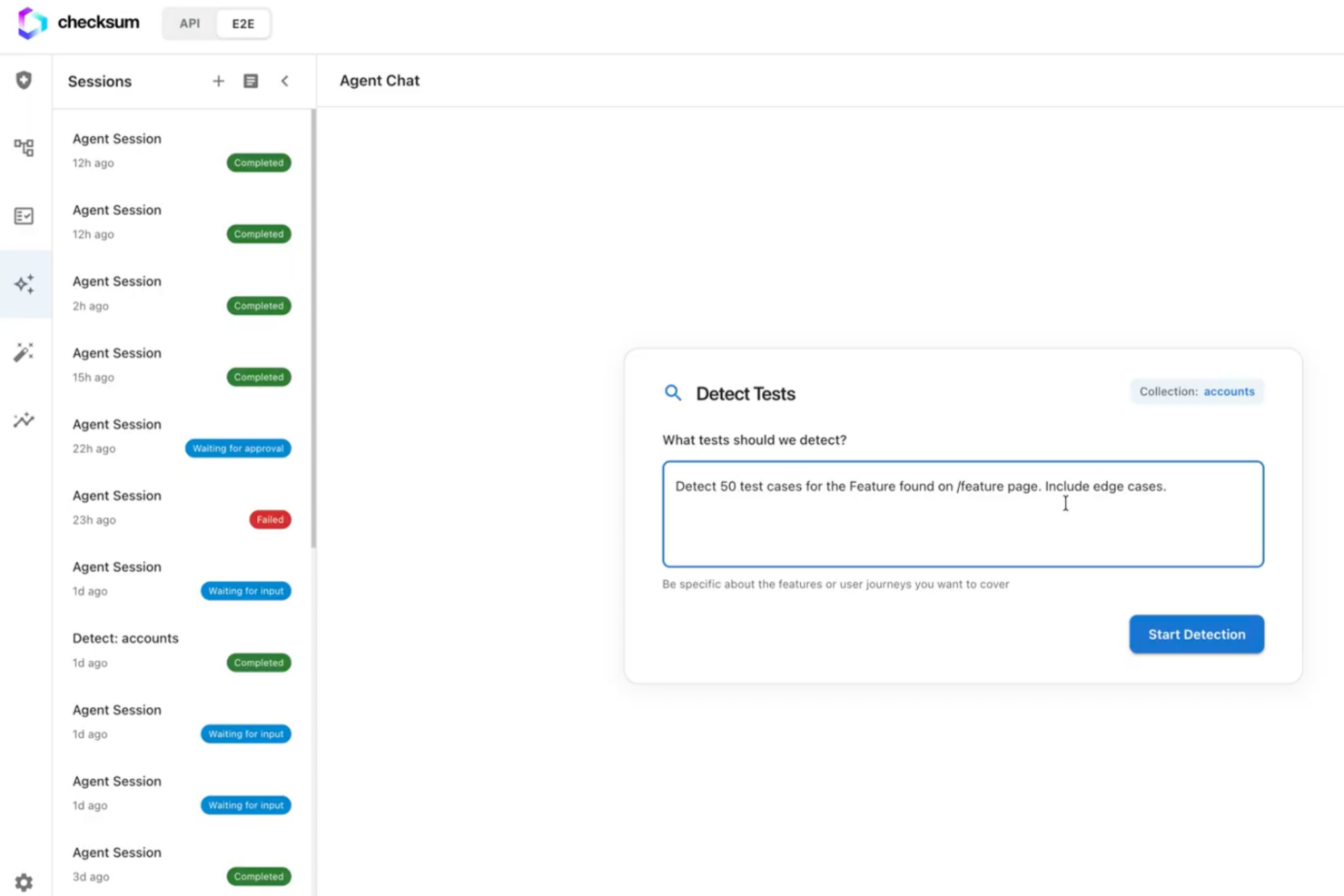
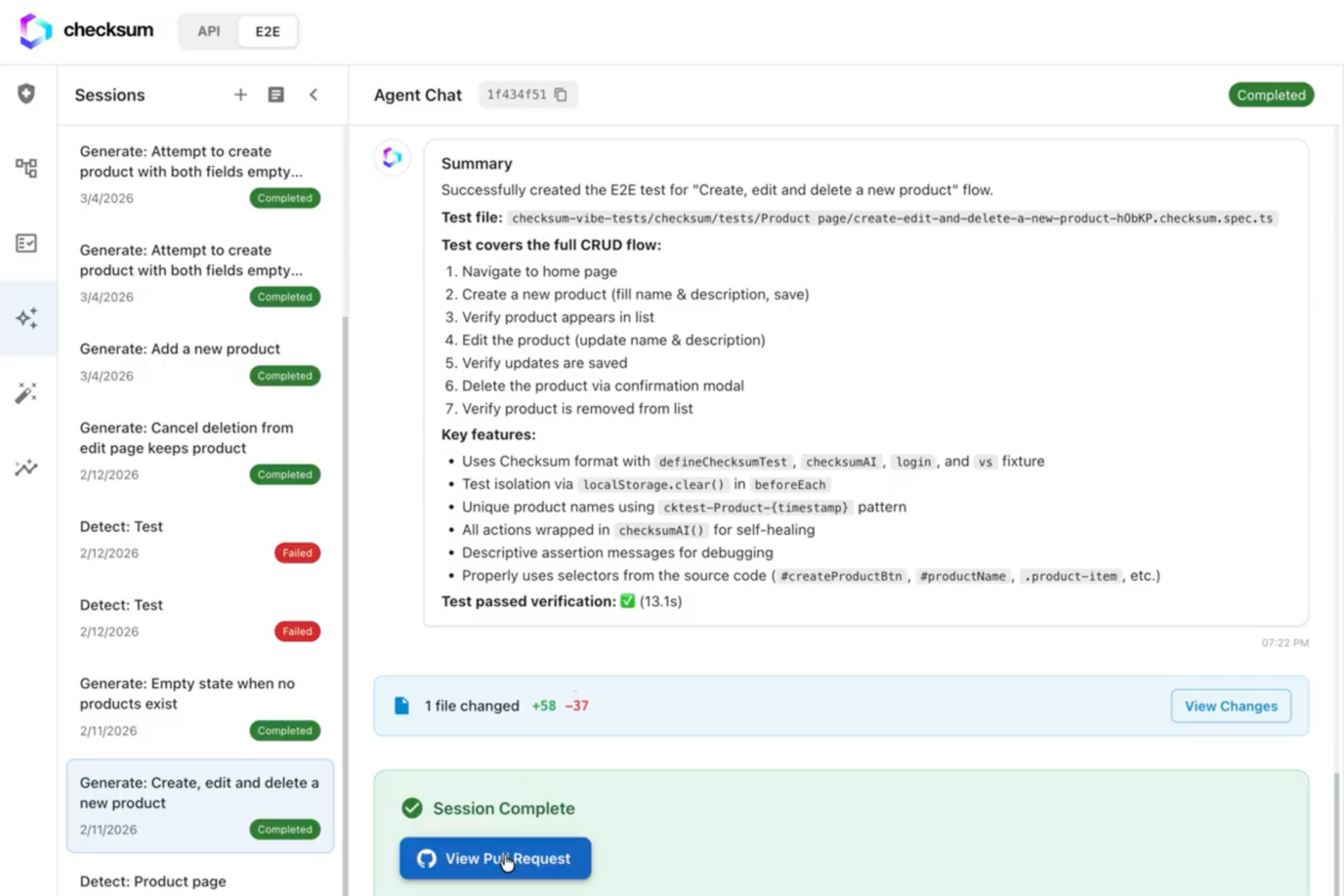
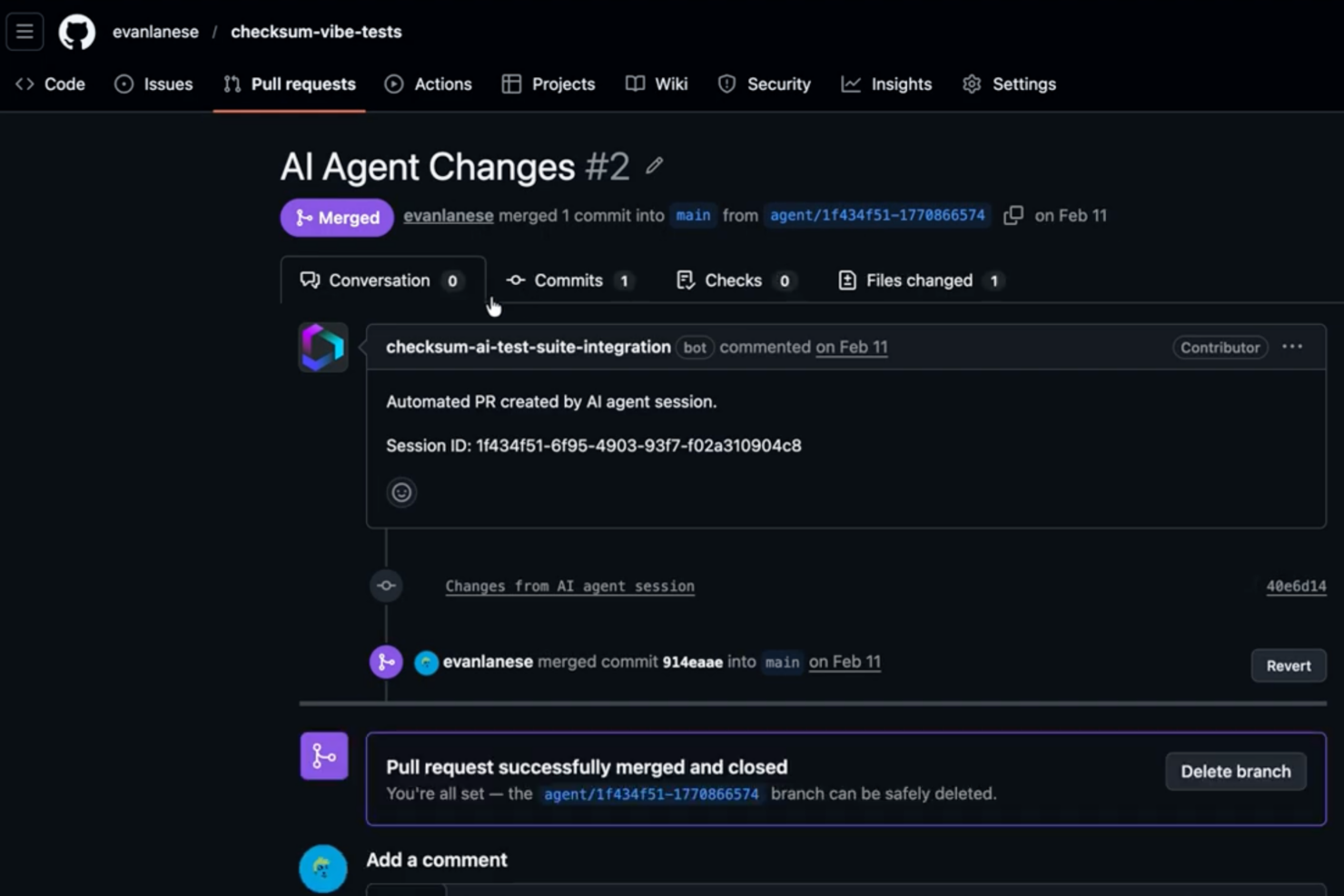
Where they differ is in how that work gets done. Checksum focuses on autonomous test generation and maintenance directly in your codebase, continuously updating Playwright tests as your app changes with minimal input from your team. QA Wolf, in contrast, combines its AI-driven platform with a fully managed QA service, where dedicated engineers build, run, and maintain your tests while delivering human-verified bug reports.
| Checksum | QA Wolf | |
|---|---|---|
| A/B Testing | ||
| API | ||
| Automated Testing | ||
| Browser Compatibility Testing | ||
| Bug Tracking | ||
| CI/CD Integration | ||
| Calendar Management | ||
| Dashboard | ||
| Data Export | ||
| Data Import | ||
| Data Visualization | ||
| Developer Tools | ||
| External Integrations | ||
| History/Version Control | ||
| Manual Testing | ||
| Multi-User | ||
| Notifications | ||
| Performance Testing | ||
| Regression Testing | ||
| Scheduling | ||
| Status Notifications | ||
| Third-Party Plugins/Add-Ons |
Checksum vs. QA Wolf Integrations
| Integration | Checksum | QA Wolf |
| Jira | ✅ | ✅ |
| GitHub | ✅ | ✅ |
| Jenkins | ✅ | ✅ |
| Slack | ✅ | ✅ |
| Microsoft Teams | ✅ | ✅ |
| Asana | ❌ | ✅ |
| Linear | ❌ | ✅ |
| Appium | ❌ | ✅ |
| Playwright | ✅ | ✅ |
| API | ✅ | ✅ |
Checksum and QA Wolf both cover the core integrations most teams rely on, including GitHub, Jira, Slack, and CI/CD pipelines, making it easy to embed testing into your software development workflow. That said, neither platform has an especially large native integration ecosystem compared to traditional testing tools. Instead, both rely heavily on APIs and webhooks to connect with your broader stack, which gives you flexibility but may require some custom setup depending on your workflow.
Checksum vs. QA Wolf Security, Compliance & Reliability
| Factor | Checksum | QA Wolf |
| Data Privacy | Emphasizes confidentiality, integrity, and availability with documented internal policies | Strong data privacy controls, including data classification, retention policies, and breach response plans. |
| Encryption | Uses end-to-end encryption for test data in transit and at rest. | Encrypts data in transit and at rest using modern protocols. |
| Regulatory Compliance | SOC 2 compliant; DPA available. | SOC 2 Type II and HIPAA compliant, with audit reports available. |
| Uptime & Reliability | No public uptime SLA disclosed. | Delivers high uptime with automated failover and real-time monitoring. |
| Access Controls | Supports granular user permissions and SSO integration. | Role-based access, least-privilege controls, user access reviews, and SSO via WorkOS. |
Checksum and QA Wolf both meet modern security standards, including encryption, access controls, and SOC 2 compliance. QA Wolf provides broader documented compliance coverage, including HIPAA, along with detailed security policies and monitoring practices, while Checksum emphasizes transparency through its Trust Center and structured internal controls. For most teams, both are secure options, but QA Wolf may better suit organizations with strict compliance requirements, whereas Checksum offers a more straightforward, well-documented security posture.
Checksum vs. QA Wolf Ease of Use
| Factor | Checksum | QA Wolf |
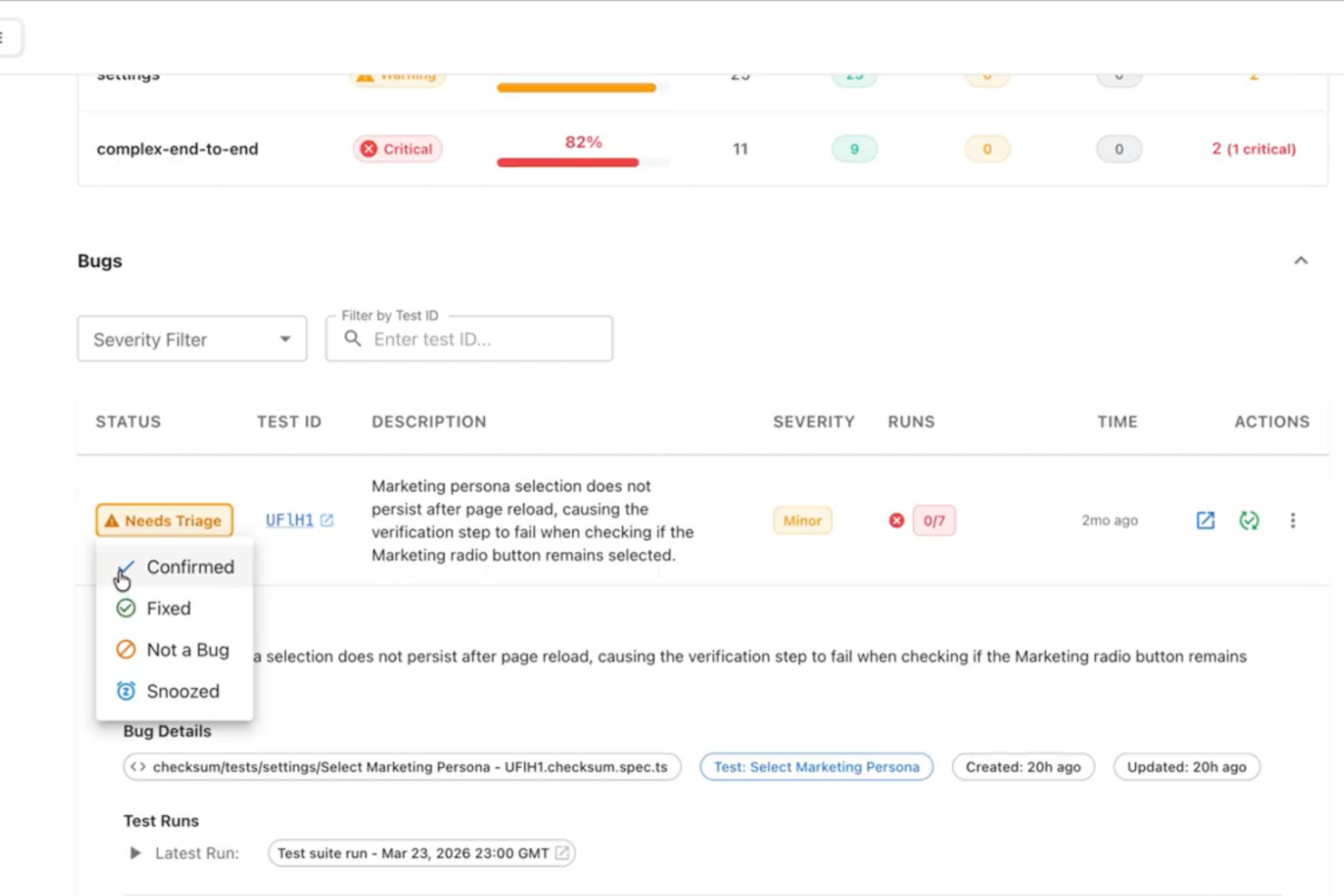
| User Interface | Offers a clean dashboard. A lot of user interaction also happens through CI/CD, pull requests, and notifications. | Platform interface plus ongoing collaboration with QA engineers via Slack or Teams. |
| Onboarding | Fully guided Proof of Value with a dedicated solutions engineer. | Guided onboarding with QA engineers, building test coverage and setting up workflows. |
| Test Creation | No manual creation—tests are generated and maintained automatically. | Tests are created and maintained by QA Wolf’s team using AI and human oversight. |
| Customer Support | Dedicated solutions engineer with proactive, hands-on support. | Embedded QA team providing continuous support and test maintenance. |
| Collaboration | Workflow-based (PRs, CI/CD, notifications) with support via Slack. | Highly collaborative model with shared channels and ongoing communication. |
Checksum and QA Wolf are both easy to use, but in different ways. Checksum simplifies testing by automating most of the work in the background, requiring minimal day-to-day input once it’s set up, while QA Wolf removes the need to manage testing altogether by pairing its platform with a dedicated quality assurance team. If you want a more autonomous, low-maintenance system, Checksum will feel easier for removing bottlenecks over time. If you prefer a fully managed, collaborative approach, QA Wolf offers a more hands-off experience from the start.
Checksum vs QA Wolf: Pros & Cons
Checksum
- Delivers tests as real Playwright code in your repo (no vendor lock-in).
- Automatically heals broken tests as the application changes, reducing maintenance overhead.
- Fully autonomous test generation, execution, and maintenance (not just AI-assisted).
- Not fully hands-off—some test maintenance may involve optional human review.
- Higher cost and no self-serve pricing make it less suitable for smaller teams or tight budgets.
- Requires access to a live staging or production-like environment to get started.
QA Wolf
- Platform-enabled service eliminates the need for in-house automation expertise.
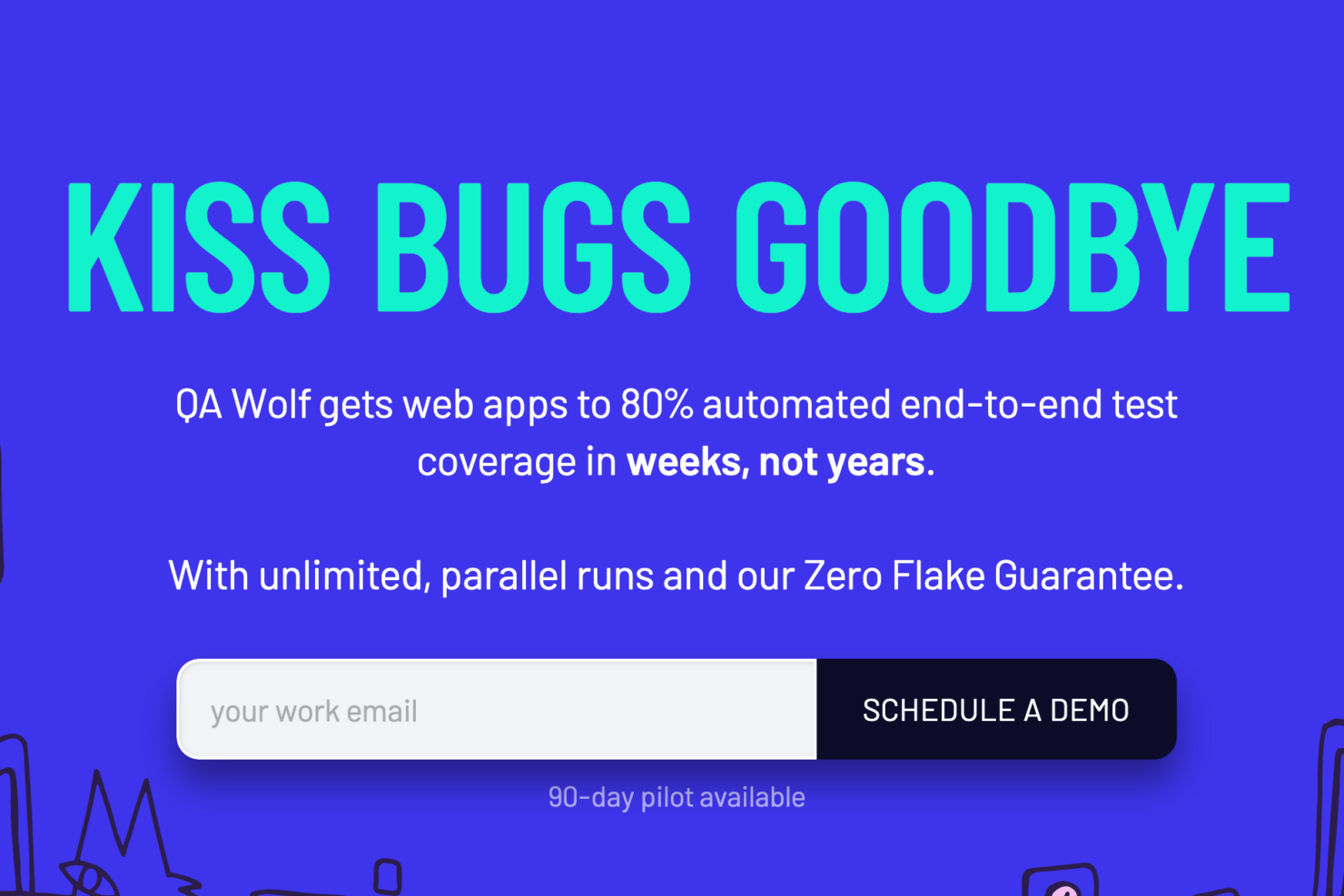
- 100% parallel test execution delivers fast results within minutes.
- AI generates and maintains tests, reducing manual testing and QA workload significantly.
- Onboarding may require coordination and an initial knowledge transfer effort.
- Requires trust in the external team to manage critical QA processes.
- Less control over test logic compared to fully in-house frameworks.
Best Use Cases for Checksum and QA Wolf
Checksum
- SaaS Teams (Mid-Market & Enterprise) Checksum helps mid-market and enterprise SaaS teams maintain reliable test coverage as they ship frequent releases, automatically generating and updating tests as the product evolves without engineering effort.
- Engineering Teams with Mature CI/CD Pipelines DevOps teams with established CI/CD workflows benefit from Checksum’s PR-based testing and continuous validation, catching issues at the pull request level before code is merged.
- Web Applications with Complex User Flows Products with multi-step user journeys gain value from Checksum’s end-to-end test generation and auto-healing, ensuring critical paths stay covered as UI elements and flows change.
- QA Teams Checksum allows QA teams to shift away from fixing brittle tests, focusing on higher-value validation work while the platform continuously maintains the test suite.
- Organizations Treating Quality as Infrastructure Companies that view testing as a core part of their delivery pipeline benefit most from Checksum’s continuous approach to test generation, execution, and maintenance.
- Teams with Broad Test Coverage Needs Checksum is a strong fit for teams that want unified coverage across end-to-end, API, and PR-level testing, without stitching together multiple tools or systems.
QA Wolf
- Engineering Teams Reduce QA time from hours to minutes with fully parallel test infrastructure and faster feedback loops for developers.
- Multi-Platform Products (Web + Mobile) Supports complex workflows across web, iOS, and Android with shared coverage and consistent testing across environments.
- Companies Without Dedicated QA Automation Engineers Offload test creation, debugging, and maintenance to a fully managed QA team without hiring specialized resources.
- Teams Struggling with Flaky or Broken Tests QA Wolf handles ongoing test maintenance, eliminating common reliability issues and reducing debugging time for engineers.
- Product-Led Companies Shipping Frequently Run full regression suites on every deploy without slowing down engineering velocity or delaying feature rollouts.
- High-Growth SaaS Teams Rapid release cycles benefit from fast, parallel test execution and continuous maintenance across evolving product features.
Who Should Use Checksum, and Who Should Use QA Wolf?
If you want to reduce or eliminate the ongoing burden of test maintenance while still keeping tests in your own codebase, I’d choose Checksum. It’s a strong fit if you already have a CI/CD pipeline and want an autonomous system that continuously generates, runs, and updates tests as your application evolves (without engineering teams needing to maintain them manually). If your goal is to treat testing as infrastructure and keep high-quality Playwright tests in your repo with no vendor lock-in, Checksum aligns well.
QA Wolf is better suited if you want to outsource most of the QA function without losing visibility into their software testing process. Its platform provides centralized dashboards, reporting, and integrations, while a dedicated QA team builds, runs, and maintains tests on your behalf. If you prefer a fully managed, service-driven approach with human oversight—but still want insight into results and coverage through a platform—QA Wolf is a good option.
Differences Between Checksum and QA Wolf
| Checksum | QA Wolf | |
|---|---|---|
| AI-Powered Role | System-level autonomy that continuously updates tests as code changes. | AI-assisted workflows combined with human QA for test creation and maintenance. |
| Core Approach | Autonomous testing AI agents that generate, run, and maintain tests in the background. | Platform + managed QA service combining AI, infrastructure, and human engineers. |
| Infrastructure | Flexible execution (run tests locally, in CI/CD, or via Checksum). | Fully managed cloud with 100% parallel execution and unlimited test runs. |
| Maintenance Model | Continuous self-healing with optional human review. | Ongoing maintenance handled by QA engineers with AI support and human verification. |
| Visit ChecksumOpens new window | Read QA Wolf ReviewOpens new window | |
| Test Coverage | Focused on web apps, APIs, and CI-level validation. | Covers web and mobile apps (iOS, Android) with end-to-end user flow testing. |
| Test Ownership | Tests delivered as Playwright code in your repo (no vendor lock-in). | Tests use open-source (Playwright/Appium) frameworks and are exportable, but are primarily built and managed by QA Wolf. |
| Visit ChecksumOpens new window | Read QA Wolf ReviewOpens new window |
Similarities Between Checksum and QA Wolf
| Automated Testing | Both automate end-to-end test cases, reducing manual testing and QA effort, and catching bugs before release. |
|---|---|
| Bug Detection & Reporting | Each one surfaces failures with actionable insights, helping teams quickly identify and resolve issues, including for complex edge cases. |
| Collaboration Tools | Each supports team collaboration, allowing multiple users to review, edit, and manage tests together. |
| Continuous Testing | Both run tests continuously within CI/CD pipelines to validate changes as your application evolves. |
| Native CI/CD Integration | Each integrates with tools like GitHub, GitLab, and other CI/CD systems for test automation execution. |
| Visit ChecksumOpens new window Read QA Wolf ReviewOpens new window | |