

10 Best DevOps Testing Tools Reviewed for 2026

10 Best DevOps Testing Tools Shortlist


With so many different DevOps testing tools available, figuring out which is right for you is tough. You know you want to facilitate continuous testing by automating test creation, execution, and analysis but need to figure out which tool is best.
In this post, I'll help make your choice easy, sharing my personal experiences using dozens of different DevOps software with various teams and projects, with my picks of the best DevOps testing tools.
Why Trust Our Software Recommendations
Our team has been testing and reviewing software since 2012. As tech leaders ourselves, we know how difficult—and important—it is to choose the right software.
For this guide, we evaluated tools using hands-on testing and independent research, scoring tools using our selection criteria.
Our reviews reflect our human editorial judgment, not a sales pitch.
Expert reviewers:
The Best DevOps Testing Tools Summary
| Tool | Best For | Trial Info | Price | ||
|---|---|---|---|---|---|
| 1 | Best for real device testing | Free trial available | From $199/month/year (minimum of 4 seats) | Website | |
| 2 | Best for end-to-end testing with expert support | Free demo available | From 1¢/AI credit | Website | |
| 3 | Best load testing tool for engineering teams | 14-day free trial | From $29/5 users/month | Website | |
| 4 | Best tool for no-code test automation | Free trial available | From $50/user/month (billed annually) | Website | |
| 5 | Best for AI-generated test creation | 14-day free trial + free demo available | Pricing upon request | Website | |
| 6 | Best community-powered test automation farmwork | Not available | Free plan available | Website | |
| 7 | Best for proactive performance testing | Free plan + free demo available | Pricing upon request | Website | |
| 8 | Best DevOps testing tool for tracking and reporting Java code coverage | Not available | Free To Use | Website | |
| 9 | Best PHP unit test framework | Not available | Free to use | Website | |
| 10 | Best DevOps testing tool for performing automated UI tests | 14-day free trial + free demo available | From $3,598/year (billed annually) | Website |
Overviews Of The 10 Best DevOps Testing Tools
Here’s a brief description of each DevOps testing tool that showcases each software’s best use case, outstanding features, and some pros and cons. I’ve also included screenshots to give you a snapshot of their user interface.
TestGrid
Best for real device testing
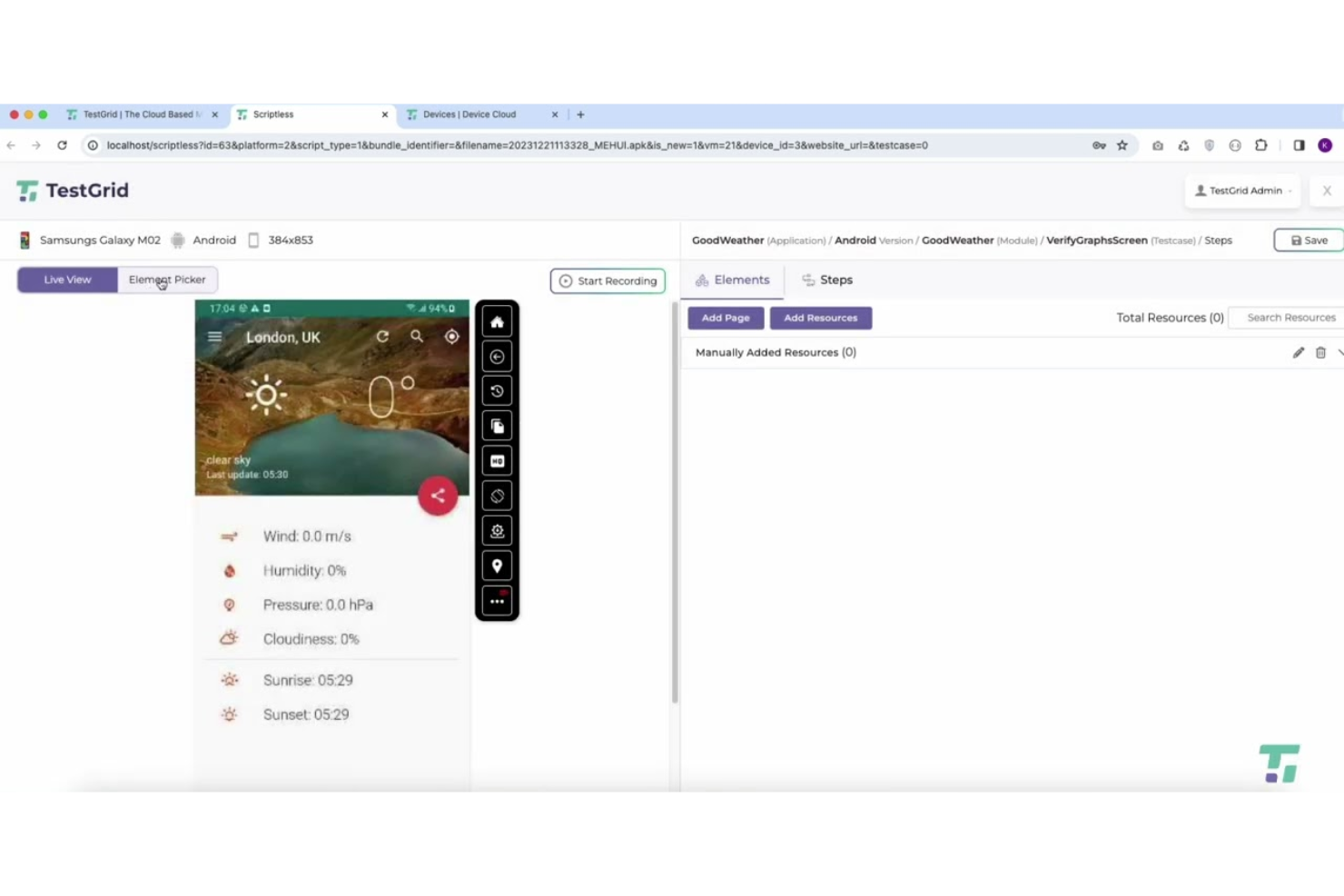
TestGrid’s TestOS 2.0 is a unified testing platform designed to support modern development and DevOps workflows. It helps teams automate testing across web, mobile, and API environments while keeping testing activities integrated within the development pipeline. With support for real device testing, TestGrid allows teams to validate application performance on actual devices, helping improve reliability before release.
Why I Picked TestGrid
I picked TestGrid for its real device testing, which allows teams to validate application performance on actual mobile devices and browsers. This helps DevOps teams detect compatibility and performance issues that may not appear in simulators or emulators. TestGrid also includes AI-assisted features like CoTester 2.0 to support test creation and improve testing workflows within the development pipeline.
TestGrid Key Features
In addition to real device testing, TestGrid offers:
- Codeless Automation: Allows your team to create automated tests without writing code, reducing the barrier to entry for non-technical team members.
- Performance Testing: Provides insights into application performance under load, helping you identify bottlenecks before they impact users.
- Cross-Browser Testing: Ensures compatibility across different browsers, crucial for delivering a consistent user experience.
- IoT Testing: Supports testing for Internet of Things devices, expanding your testing scope to include new and emerging technologies.
TestGrid Integrations
Integrations include Jira, Slack, Microsoft Teams, Bitrise, and Travis CI. An API is also available for custom integrations.
Pros and Cons
Pros:
- AI-powered automation reduces manual testing effort and execution time
- Codeless automation enables non-technical teams to build and run tests
- End-to-end testing support across web, mobile, and API environments
Cons:
- Some integrations and advanced features require additional setup
- User interface may need improvement for smoother navigation

QA Wolf
Best for end-to-end testing with expert support

QA Wolf is a test automation platform that comes with 24-hour expert support to monitor and maintain test suites, making it ideal for DevOps teams looking for efficiency without compromising reliability.
Why I picked QA Wolf: As a DevOps testing tool, QA Wolf stands out for its robust integration capabilities and continuous testing support. It integrates into CI/CD pipelines, enabling continuous testing and providing immediate feedback on code changes. The platform also supports parallel test execution, reducing the time required to run comprehensive test suites. Furthermore, with 24-hour expert support, QA Wolf ensures that tests are always up-to-date and reliable.
QA Wolf Standout Features and Integrations
Standout features: All bugs are human-verified by the QA Wolf team, ensuring that only genuine issues are reported. This feature significantly reduces noise in the test results, allowing teams to focus on real bugs. Additionally, QA Wolf offers real-time bug reporting, integrating seamlessly with popular issue trackers to facilitate quick resolution of issues.
Integrations: QA Wolf integrates with Microsoft Teams, GitHub, Jira, Asana, Linear, Slack, GitLab, Bitbucket, Jenkins, CircleCI, Travis CI, and Azure DevOps.
Pros and Cons
Pros:
- Real-time reports
- Human-verified bugs
- 24/7 test maintenance
Cons:
- Less flexibility for customizing your own tests
- Reliance on external team may take time to get used to
New Product Updates from QA Wolf

QA Wolf Adds Real Media Testing for iOS Apps
QA Wolf introduces real media testing for iOS apps using camera and microphone inputs. This update improves test reliability for real-world use cases. For more information, visit QA Wolf’s official site.
 .
.
k6
Best load testing tool for engineering teams

k6 provides the tooling for running performance tests. With the software, you can break the QA silo in performance testing by testing early and continuously.
Why I picked k6: This DevOps testing software helps you shift left and improve team collaboration. With k6, you can run tests from 21 load zones and simulate real global traffic patterns. It allows you to write test scripts once and run them in different environments. For instance, you can use the same script for local, distributed, and cloud tests.
k6 Standout Features and Integrations
Standout features: Even though k6 is designed for load testing, it supports other types of testing. It stands out from close alternatives with fault injection testing, synthetic testing, and infrastructure testing. Additionally, there is an active k6 community, which you can join to learn, share, and meet with other testers.
Integrations: k6 integrates with your test authoring tools, IDE extensions, converters, result store, and visualization systems, CI/CD environments, and test management solutions. That said, major integrations include Test Builder, IntelliJ IDEA, IntelliSense, Postman, Datadog, AWS CodeBuild, Bamboo, CircleCI, TestRail, and TraceTest.
Pros and Cons
Pros:
- Seamless integrations
- Good customer support
- Free plan available
Cons:
- More customization required
- More cross-browser testing features required

Opkey
Best tool for no-code test automation

Opkey provides a no-code test automation platform that allows both business and technical users to automate their application testing quickly.
Why I picked Opkey: I added this tool to my list because it allows both business and technical users to build and execute automated tests. Opkey features more than 15 packaged apps and 150 technologies, which enables you to run single-app and cross-app tests with no-code automation. There are up to 30,000 pre-built tests; they enable you to automate tests quickly to achieve 90% test coverage in just hours.
Opkey Standout Features and Integrations
Standout features: Opkey helps you maintain your continuous testing efforts with AI. There is a self-healing capability that enables you to streamline the maintenance of test scripts. You can schedule tests, auto-generate reports, collaborate across teams, and quickly diagnose why tests fail.
It offers a drag-and-drop test builder that streamlines the test creation process and helps you automate tests quickly, no matter how complex they are. With Opkey’s test recorder, you automatically keep track of browser sessions and build reusable test scripts.
Integrations include Salesforce, Microsoft 365, Jira Software, Jenkins, Oracle PeopleSoft, Bamboo, SAP HANA, Veeva CRM, qTest, and Oracle Cloud infrastructure.
Pros and Cons
Pros:
- Pre-built tests
- Root cause analysis
- Automate tests without writing programming languages
Cons:
- New testers might find the tool hard to navigate
- More documentation features required

Reflect
Best for AI-generated test creation

Reflect is a DevOps testing tool that leverages Generative AI to speed up and simplify test creation. By eliminating traditional CSS selectors and XPath locators, Reflect allows you to build more reliable end-to-end tests with greater speed and accuracy.
Why I picked Reflect: Reflect stands out for its AI-generated tests, which can be created from plain-text instructions, allowing your team to build thorough tests without needing to code. It also supports visual regression detection to catch UI inconsistencies across browsers, helping ensure a consistent user experience. On top of that, Reflect’s built-in API testing lets you combine UI and backend validation in one flow, while its parameterization capabilities make it easy to test different inputs and edge cases in a flexible way.
Reflect Standout Features and Integrations
Standout features: Reflect also includes automated test maintenance, which reduces the time spent on keeping tests up to date as your application evolves. Reflect also provides comprehensive test results with built-in notifications for test failures, keeping your team informed in real-time.
Integrations: Some integrations include Slack, Jira, Linear, Azure DevOps, Bitbucket, CircleCI, GitHub, Jenkins, and Codefresh.
Pros and Cons
Pros:
- Comprehensive CI/CD integration
- AI-powered test maintenance
- No-code test creation
Cons:
- Could offer more customization options for test configurations
- Limitations to mobile app testing

Best community-powered test automation farmwork

TestProject is a free test automation tool that is designed to help you streamline your test automation experience. It's a community-driven tool that aims to provide effective, industry-standard test automation capabilities that any team of testers can use.
Why I picked TestProject: I added TestProject to the list because it’s easy to get started with. It features an easy-to-use test recorder, which helps you record and playback tests with ease. The tool lets you get started with running tests with a minimal learning curve. TestProject simplifies team collaboration. It allows team members to work together and share test resources.
It allows cross-browser and cross-platform testing. You can run tests on Android, iOS, Windows, Linux, and MacOS environments. Once you install the software, it provides you access to testing on all connected platforms and browsers.
TestProject Standout Features and Integrations
Standout features: TestProject is a community-powered, free test automation framework that is designed for agile teams. The tool is built on top of industry-leading open-source tools: Selenium and Appium. Another standout feature is the built-in recording capability, which empowers you to share and reuse recorded steps between test cases.
The Smart Recorder comes with AI-powered self-healing capability. The self-healing feature dynamically streamlines test maintenance, reduces time spent debugging tests, and decreases the occurrence of false failures in test runs.
Integrations: Build custom integrations using TestProject’s RESTful API. You can integrate with CI/CD tools, such as GitHub, Sauce Labs, GitLab, Jenkins, BrowserStack, CircleCI, Slack, and TeamCity.
Pros and Cons
Pros:
- Seamless integrations
- Extensible with a library of shared add-ons
- Improved collaboration
Cons:
- More and easier support options are required
- TestProject agents get disconnected sometimes
Best for proactive performance testing

New Relic is an observability platform that helps you monitor, debug, and improve your entire software stack. It offers real-time insights into your applications and infrastructure, enabling you to identify and resolve issues quickly.
Why I picked New Relic: In the realm of DevOps testing tools, New Relic's application performance monitoring (APM) stands out for me. It allows you to track key metrics like response times, throughput, and error rates, giving you a clear picture of your application's health. This level of detail helps your team proactively identify performance bottlenecks during testing phases, ensuring that issues are addressed before deployment.
New Relic Standout Features and Integrations
Standout features: New Relic also offers synthetic monitoring to simulate user interactions and proactively test your application's performance and availability. It also has infrastructure monitoring to keep tabs on servers and hosts, log management for centralized log analysis, and alerting capabilities to notify your team of critical issues.
Integrations: Some integrations include Atlassian Jira, AWS EventBridge, Email, Mobile Push Notifications, Opsgenie, PagerDuty, ServiceNow, Slack, Splunk On-call (VictorOps), Webhook, xMatters, and Redis.
Pros and Cons
Pros:
- Integrates well with various platforms
- Offers robust alerting features
- Provides detailed insights into application performance
Cons:
- Dashboards may require customization for specific use cases
- The user interface can be overwhelming for new users


EMMA is a Java code coverage tool based on bytecode instrumentation. This is an open-source solution that is designed to measure and report Java code coverage.
Why I picked EMMA: This tool has a unique feature combination: support for large-scale enterprise software development while helping developers maintain a fast and iterative work culture. EMMA offers up to three types of output report formats, including plain text, HTML, and XML. You have the flexibility to present test results in any format that your team prefers. All report types allow you to present data in detail and support drill-down to uncover useful insights.
EMMA Standout Features and Integrations
Standout features: EMMA is super fast; the runtime overhead of added instrumentation is small and the bytecode instrument is very fast. This makes it a fast software testing solution for agile teams. The software is 100% pure Java. So, it has no external library dependencies. It works in any Java 2 JVM.
Integrations: EMMA integrates with DevOps and test automation tools.
Pros and Cons
Pros:
- Available for free
- No third-party library dependencies
- Very fast
Cons:
- More product info required
- UI needs to be improved

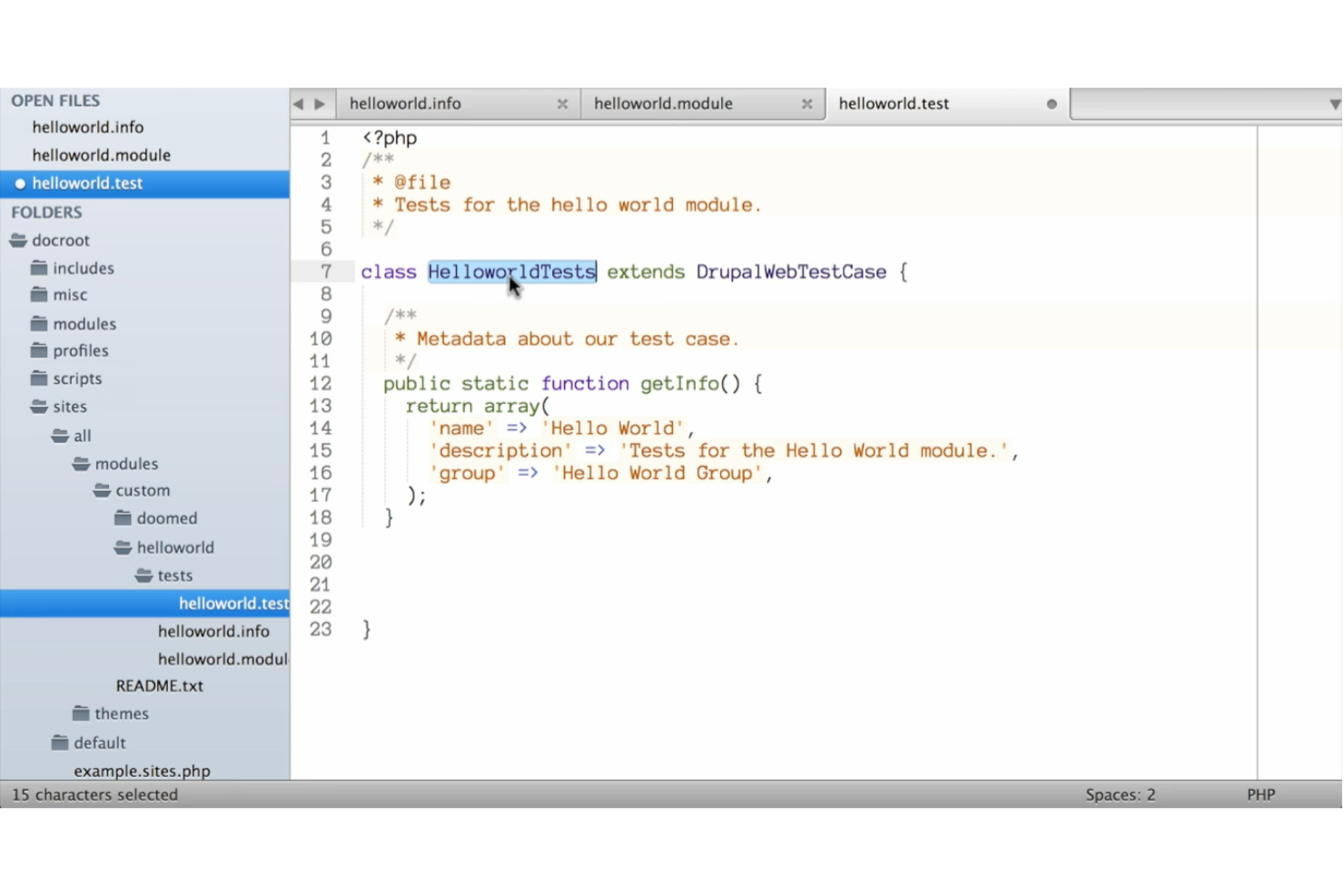
SimpleTest is a unit testing tool for PHP. It helps you test common and important PHP tasks, such as logging into a site.
Why I picked SimpleTest: It’s a testing tool designed to help you test common but fiddly PHP tasks easily. It has support for SSL, forms, frames, proxies, and basic authentication.
SimpleTest is also easy to get started with. JUnit users will be familiar with most of the interfaces. And those conversant with unit testing can dive directly into SimpleTest with the one-page starter guide and the complete API.
SimpleTest Standout Features and Integrations
Standout features: SimpleTest allows you to request new features. If you need some new functionality in the tool, you can notify the developers through the features tracker. There is a mailing list you can join to receive support and tips if you need help with your testing strategy. The documentation is dense and thorough so you have access to the information you need to understand how the tool works and how to run tests effectively.
Integrations are available with GitHub, Travis CI, Drupal, and other DevOps tools and test automation frameworks.
Pros and Cons
Pros:
- User support is available
- You can request new features
- Freemium version available
Cons:
- UI needs to be improved
- More product info needed


TestComplete is a DevOps testing solution that provides easy-to-use GUI test automation capabilities. It comes with AI-powered features that let you continuously automate tests across desktop, web, and mobile operating systems with ease.
Why I picked TestComplete: It allows you to integrate into your DevOps toolset to speed up continuous testing. TestComplete offers a simple Command Line Interface and REST API, which enables you to integrate your automated tests into CI tools, source control solutions, test management software, and bug-tracking systems. This tool gives you the flexibility to scale your testing efforts according to your needs.
TestComplete lets you quickly build automated UI tests with the help of scriptless Record and Replay or keyword-driven tests. It empowers you to record your tests once and play them back across a variety of application types. Another interesting thing about TestComplete is its free training and support, which provides the help you need from the initial roll-out of the software to day-to-day support.
TestComplete Standout Features and Integrations
Standout features include an AI-powered object recognition engine, automated test reporting and analysis, and automated test reuse. With AI-powered visual recognition, you can save time building and maintaining tests by properly dynamic UI elements. TestComplete’s automated reporting capabilities enable you to get real-time data on how your tests are performing.
It also enables you to tap into the power of automated test reuse. You can extend test coverage, save time, and reduce costs by reusing your automated tests across projects and platforms.
Integrations: TestComplete allows you to integrate with DevOps, test management, version control, and bug-tracking tools. Key integrations include Jenkins, Azure DevOps, Git, Bitbucket, Jira, BitBar, GitLab, TeamCity, Appium, Selenium, and ReadyAPI.
Pros and Cons
Pros:
- Parallel testing
- Very scalable
- Free training and support
Cons:
- More customization required
- Pricing is on the high side
Other Options
Here are a few more worthwhile options that didn’t make the best DevOps testing tools list:
- Mocha
JavaScript test framework
- Tricentis Tosca
For model-based test automation and test data management
- Parasoft
For integrating AI-powered API testing and Selenium-based web testing into your CI/CD workflows
- Typemock
DevOps testing software for unit testing
- AppVerify
For automated data-driven functional testing
- Predator
For API performance testing
- Modern Requirements
For requirements traceability in Azure DevOps
- Testsigma
Software for creating end-to-end tests faster for web applications, mobile apps, and APIs with English scripts that self-heal
- Docker
DevOps automated testing tool for delivering applications that run anywhere
- Jenkins
Cross-platform DevOps testing software


Related Testing Software Reviews
Here are some software reviews you should check out if you want to learn more about software testing tools.
- Best Software Testing Tools for QAs
- Best Automation Testing Tools
- Best Testing Tools for Mobile Applications
- Best Configuration Management Tools
- Best Web Server Monitoring Tools
- Best DevOps Orchestration Tools for QA
How I Evaluate DevOps Testing Tools
I evaluate every tool across two layers: baseline requirements—like CI/CD triggering and pipeline-native test reporting—and differentiators that separate the best options from the rest.
Core Functionality (Table Stakes For This List)
When I'm selecting tools for my list, I rank each one on a scale from 0 (does not offer the functionality) to 5 (excels in this area) for each core functionality listed below. Then, I calculate the tool's total score into a percentage. Each tool needs to achieve a minimum total score of 65% to be considered for inclusion.
- CI/CD Pipeline Integration: I check whether a tool plugs into platforms like Jenkins, GitLab CI, GitHub Actions, and Azure DevOps with native connectors and configurable triggers.
- Test Automation Framework: Each tool should support automated execution across multiple test types—unit, API, UI, integration—with reusable components and standard frameworks.
- Continuous Testing Support: I look for event-driven test execution that fires on every commit, build, or deploy, with parallel runs so pipelines aren't bottlenecked by slow suites.
- Multi-Environment & Infrastructure Testing: Tools should handle testing across dev, staging, and production while also validating containers, Kubernetes clusters, or IaC configs.
- Reporting & Feedback Loops: I evaluate how test results surface—real-time dashboards, failure diagnostics, and alerting integrations all help teams pinpoint what broke and why.
- Version Control & Collaboration: Strong Git integration matters here, including branch-aware testing, PR-triggered runs, and shared visibility across dev, QA, and ops teams.
Once I have a list of tools that meet this criteria, I consider what sets each platform apart.
Differentiating Factors (What Sets Vendors Apart)
Here's how I compare and contrast different vendors:
Standout Features
AI-powered test generation is a big differentiator—tools that auto-create and self-heal test cases based on code changes save teams hours of maintenance after every sprint. I also look for service virtualization, which lets you test against simulated APIs or microservices when dependencies aren't available yet. Shift-left security testing matters here too, since catching vulnerabilities during the build rather than after deployment keeps release timelines intact.
Beyond Features
Ecosystem integrations are one of the first things I evaluate—your testing tool needs to connect with issue trackers like Jira, ChatOps platforms like Slack, and observability tools like Datadog to close the feedback loop. Deployment and licensing models also matter more than people expect. Some teams need self-hosted options for compliance reasons, while others benefit from cloud-native SaaS with elastic test runners. I also consider developer experience: strong CLI support, solid documentation, and Git-native workflows directly affect how fast your team adopts the tool.
How to Choose DevOps Testing Tool
It’s easy to get bogged down in long feature lists and complex pricing structures. To help you stay focused as you work through your unique software selection process, here’s a checklist of factors to keep in mind:
| Factor | What to Consider |
|---|---|
| Scalability | Can the tool handle your growth? Ensure it supports the number of tests and users you plan to have in the future. Look for tools that offer flexible scaling options. |
| Integrations | Does it work with your existing tools? Check for compatibility with your CI/CD pipelines, version control systems, and other essential software your team uses. |
| Customizability | Can you tailor it to your workflows? Look for tools that allow you to customize dashboards, reports, and test configurations to fit your team's specific needs. |
| Ease of use | How intuitive is the interface? Consider tools that require minimal training and offer user-friendly navigation to help your team get up to speed quickly. |
| Implementation and onboarding | How long will setup take? Assess the complexity of integrating the tool into your current systems and the availability of onboarding resources like tutorials and support. |
| Cost | Is it within your budget? Compare pricing plans and consider any hidden costs like add-ons or support fees. Look for discounts for annual subscriptions. |
| Security safeguards | Does it protect your data? Ensure the tool complies with security standards and offers features like encryption and access controls to safeguard your information. |
| Support availability | Is help readily available? Evaluate the vendor's support options, such as 24/7 availability, live chat, and dedicated account managers, to ensure you get timely assistance. |
What Are DevOps Testing Tools?
DevOps testing tools are software solutions that automate and facilitate the testing process within a DevOps framework. They are typically used by developers, testers, and IT operations professionals to ensure software quality and reliability. Automation, integration with CI/CD pipelines, and real-time reporting help with efficient testing and faster deployment cycles. These tools ultimately enhance collaboration and improve software delivery speed.
Features
When selecting DevOps testing tools, keep an eye out for the following key features:
- Continuous testing tools: Automates repetitive testing tasks throughout each stage of development, saving time and reducing human error.
- Integration capabilities: Connects seamlessly with existing CI/CD pipelines and other essential tools.
- Real-time reporting: Provides immediate feedback on test results, aiding quick decision-making.
- Scalability: Supports growth by handling increased test loads and user numbers without compromising performance.
- Customizable dashboards: Allows users to tailor views and reports to meet specific team needs.
- Test data management: Ensures consistent and accurate data for reliable test execution.
- Security safeguards: Protects sensitive data with features like encryption and access controls.
- Risk-based testing: Prioritizes test cases based on potential impact, optimizing resource allocation.
- Cross-platform compatibility: Ensures applications function correctly across various environments.
- User-friendly interface: Offers an intuitive design that requires minimal training for effective use.
Benefits
Implementing DevOps testing tools provides several benefits for your team and your business. Here are a few you can look forward to:
- Increased efficiency: Automated testing reduces manual workload, allowing your team to focus on more strategic tasks.
- Faster deployment: Integration with CI/CD pipelines speeds up the release process, getting updates to market quicker.
- Improved collaboration: Shared dashboards and real-time reporting enhance communication across development and operations teams.
- Enhanced quality assurance: Risk-based testing and detailed analytics ensure higher software quality and reliability.
- Scalability: Supports growth by efficiently handling larger test loads and user expansions.
- Cost savings: By reducing manual testing and errors, the tools can lower overall project costs.
- Better compliance: Automated compliance checks ensure your software meets industry standards and regulations.
Costs & Pricing
Selecting DevOps testing tools requires an understanding of the various pricing models and plans available. Costs vary based on features, team size, add-ons, and more. The table below summarizes common plans, their average prices, and typical features included in DevOps testing tools solutions:
Plan Comparison Table for DevOps Testing Tools
| Plan Type | Average Price | Common Features |
|---|---|---|
| Free Plan | $0 | Basic automation, limited integration options, and community support. |
| Personal Plan | $10-$30/user/month | Expanded integrations, basic analytics, customizable dashboards, and email support. |
| Business Plan | $50-$100/user/month | Advanced analytics, priority support, cross-platform testing, and enhanced security features. |
| Enterprise Plan | $150-$300/user/month | Full customization, dedicated account manager, comprehensive compliance tools, and unlimited integrations. |
DevOps Testing Tools FAQs
Here are some answers to common questions about DevOps testing tools:
How do DevOps testing tools work in a CI/CD pipeline?
Can these tools help with security testing?
What’s the difference between cloud-based and on-premise tools?
Are DevOps testing tools useful for small teams?
What metrics should teams track in DevOps testing?
How do DevOps testing tools manage cross-environment testing?
What’s Next:
If you're in the process of researching DevOps testing tools, connect with a SoftwareSelect advisor for free recommendations.
You fill out a form and have a quick chat where they get into the specifics of your needs. Then you'll get a shortlist of software to review. They'll even support you through the entire buying process, including price negotiations.