Joining the right cybersecurity community lets you tap into expert advice, hands-on resources, and real-world support. Here’s where you’ll meet practitioners who solve the same challenges, share the latest insights, and help you keep your skills—and your systems—sharp.
The 16 Best Cybersecurity Communities
Below are my summaries of the best cybersecurity communities. My reviews offer a look at each community's audience, size, cost, and more.
1. ISC2 - Best for globally recognized certifications
- Audience: Cybersecurity professionals seeking certification and networking
- Size: 500,000+ members
- Membership Cost: Free for candidates, from $50/year
- Platform: Website, local chapters, conferences, webinars, in-person events
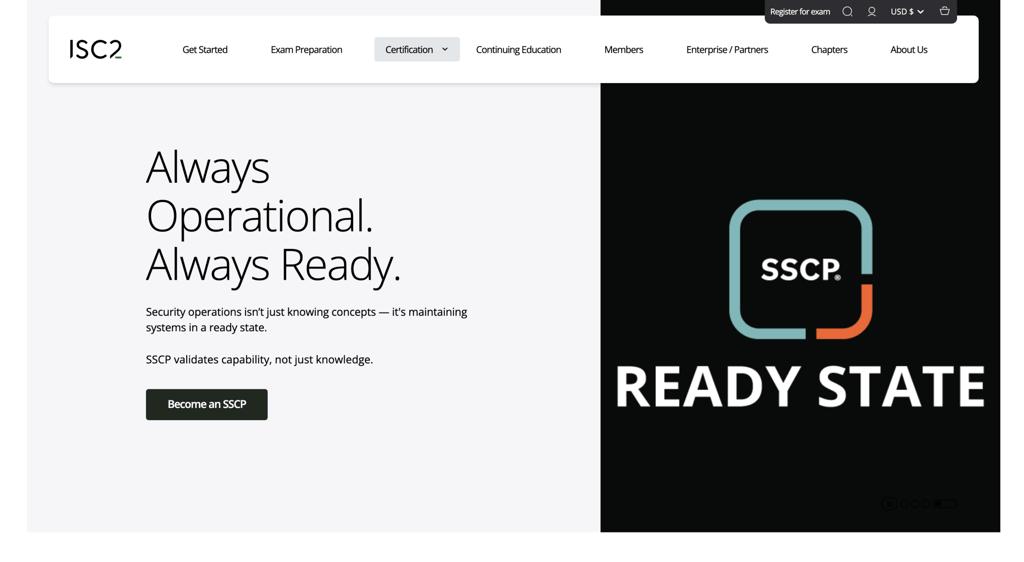
ISC2 is the world's largest nonprofit cybersecurity professional association, with 500,000+ members across 175+ countries, built around its portfolio of industry-standard certifications like CISSP and CCSP. If you're serious about advancing your cybersecurity career, this is where credentials meet community.
Why join? ISC2 is one of the few communities where your membership directly ties to career-defining credentials that employers—including government agencies—actively look for when hiring. Beyond the certifications, you get access to local chapters for in-person networking, discounts on major conferences like RSA and Black Hat, and the annual ISC2 Security Congress.
I'd especially recommend the free Candidate program if you're not yet certified—it gets you a first-year membership at no cost and includes a free self-paced CC certification course and exam attempt.
2. ISACA - Best for governance and risk learning
- Audience: IT audit, risk, and cybersecurity professionals worldwide
- Size: 185,000+ members
- Membership Cost: $145 to join, then $135/year
- Platform: Website, ISACA Engage, local chapters, conferences, webinars, in-person events
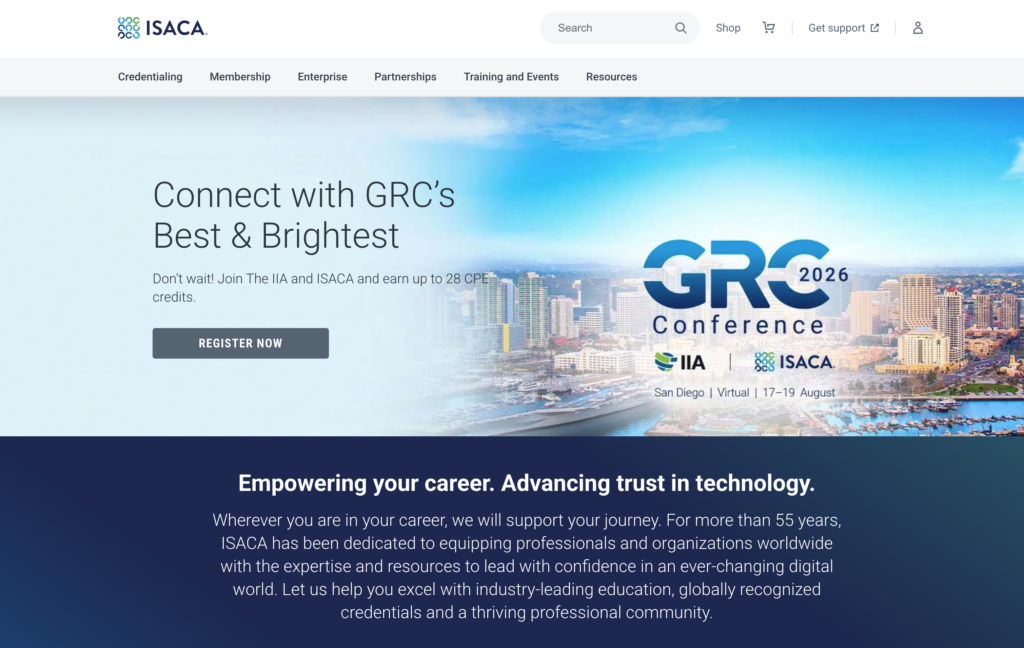
Founded in 1969, ISACA is a global nonprofit association for IT audit, governance, risk, and cybersecurity professionals, with 185,000+ members across 188 countries. It's the organization behind CISM and CISA—two of the most respected credentials for security managers and IT auditors.
Why join? If you work at the intersection of cybersecurity, risk, and compliance, ISACA fills a gap that purely technical communities don't—it's built around governance frameworks like COBIT and credentials like CISM that speak directly to leadership and regulatory stakeholders.
Membership gives you access to the ISACA Engage online community, local chapter events, and conferences where the conversations focus on audit readiness, risk strategy, and security program management. I'd particularly recommend it if you're a security professional moving into a management or GRC-focused role and want a community that reflects that career direction.
3. SANS Institute - Best for hands-on security training
- Audience: Technical cybersecurity practitioners and security leaders worldwide
- Size: 400,000+ members
- Membership Cost: Free
- Platform: Website, webcasts, virtual summits, in-person events, newsletters
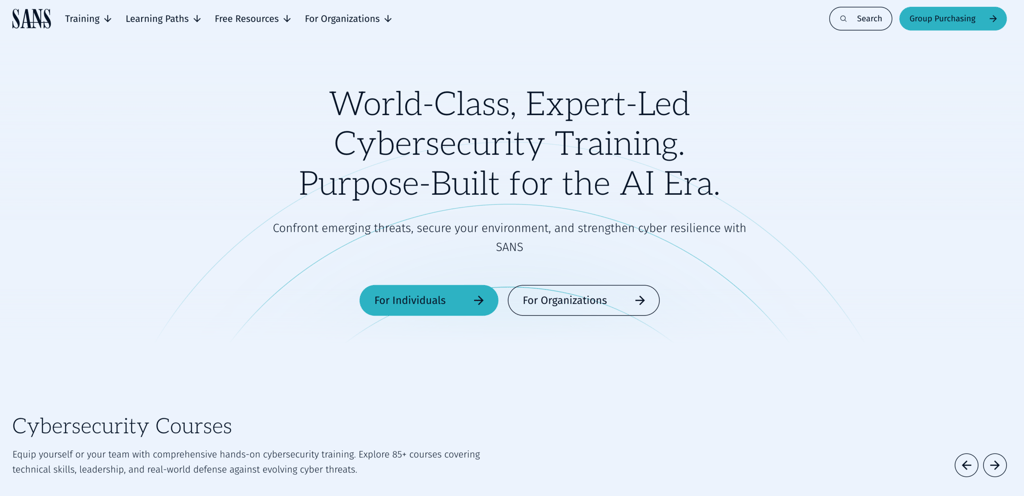
Founded in 1989, SANS Institute is a global cybersecurity training and research organization trusted by 492 Fortune 500 companies and 159 governments. The free community membership gives you access to expert-led webcasts, original research, 150+ tools, and 17+ annual summits—no paid course enrollment required.
Why join? SANS stands out for technical depth across DFIR, offensive security, cloud, ICS/OT, and AI security. You also get real-time threat intelligence from the Internet Storm Center, NetWars challenges, and practical guidance that complements tools like network security software. If you’re pursuing GIAC certifications or want job-relevant training, SANS is a strong choice.
Have an account? Log In
4. OWASP Foundation - Best for application security practitioners
- Audience: Application security engineers, developers, and pentesters worldwide
- Membership Cost: From $50/year
- Platform: Website, Slack, GitHub, local meetups, conferences, webinars
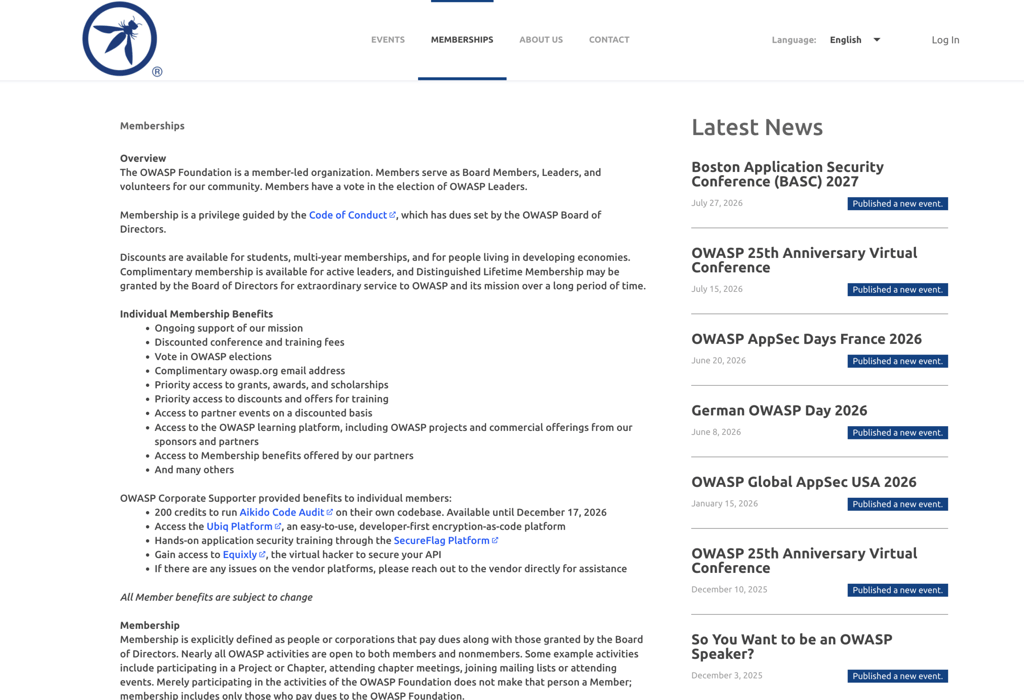
Founded in 2001, OWASP (Open Worldwide Application Security Project) is a vendor-neutral, nonprofit community dedicated to improving software security through open-source projects, research, and global collaboration. It's run entirely by volunteers and supported by the OWASP Foundation, with participation open to anyone—free of charge.
Why join? OWASP is home to the OWASP Top 10 and a wide range of open-source security tools, including OWASP ZAP and Juice Shop. The community is also useful for understanding how these projects fit alongside other static application security testing tools used in development workflows.
Beyond these resources, you can join local chapters, participate in its Slack community, and attend Global AppSec conferences where practitioners share real-world security insights. If your work touches web, mobile, or API security, I’d consider OWASP one of the most directly useful communities on this list.
5. Information Systems Security Association (ISSA) - Best for local cybersecurity networking

- Audience: Cybersecurity professionals at all career stages worldwide
- Size: 10,000+ members
- Membership Cost: $95/year + chapter dues
- Platform: Website, local chapter meetups, conferences, webinars, special interest groups
Founded in 1984, ISSA is an international nonprofit membership organization built around local chapters, making it one of the few cybersecurity communities where in-person peer networking is the core offering. It's governed by an elected board of cybersecurity professionals and structured around the Cyber Security Career Lifecycle® to serve members at every career stage.
Why join? What sets ISSA apart is its 100+ local chapters—if you want to meet peers in your city rather than just online, this is where I'd point you first. Membership also gets you CPE credits through web conferences, access to Special Interest Groups (privacy, vCISO, emerging tech, women in security, and more), and the monthly ISSA Journal with practitioner-focused content. For senior professionals, there's also an application-based Cyber Executive Membership with quarterly in-person forums.
6. Cloud Security Alliance (CSA) - Best for cloud security standards

- Audience: Cloud security professionals, architects, and CISOs worldwide
- Size: 150,000+ members
- Membership Cost: $10,000/year, free membership available
- Platform: Website, working groups, LinkedIn, webinars, in-person events, local chapters
Founded in 2009, the Cloud Security Alliance (CSA) is a nonprofit organization and the leading global authority on cloud security best practices, research, and standards. It's run by a mix of volunteer practitioners and enterprise members who collectively produce the frameworks that the industry actually uses—like the Cloud Controls Matrix (CCM) and the AI Controls Matrix (AICM).
Why join? What makes CSA different from other cybersecurity communities is that joining means you can actively contribute to the standards shaping the field—through 40+ working groups, you're not just consuming research, you're co-authoring it. You also get access to certifications like the CCSK and CCZT, local chapter networking, and CPE-eligible webinars, all at no cost for individual participation.
I'd point cloud security engineers, architects, and CISOs here first if you want your work to be grounded in—and contribute to—the most widely referenced cloud security frameworks in the industry.
7. r/cybersecurity (Reddit) - Best for candid career advice
- Audience: Cybersecurity professionals and aspiring professionals worldwide
- Size: 1,550,000+ members
- Membership Cost: Free
- Platform: Reddit
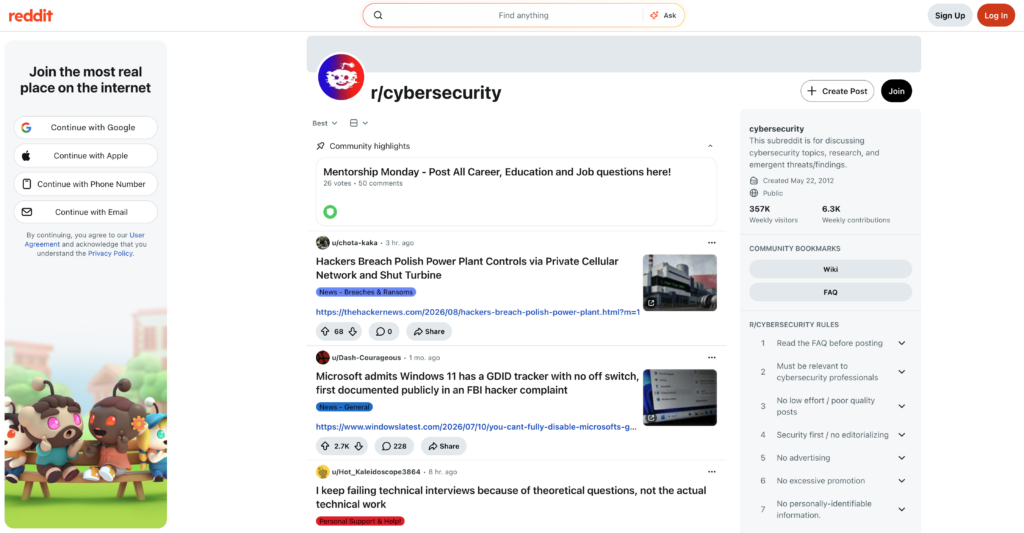
Launched in 2012, r/cybersecurity is a moderated Reddit community for working cybersecurity professionals and people actively breaking into the field. Its rules keep discussions focused and professional, with AI-generated content, low-effort posts, and personal security questions directed away from the main community.
Why join? What sets r/cybersecurity apart is the candor—you'll get honest takes on hiring, salaries, and career moves that you won't find in more formal professional communities. Weekly Mentorship Monday threads are a reliable space to ask career questions and get real answers from practitioners, and scheduled AMAs bring in security researchers and industry figures for direct Q&A. It's especially useful if you're navigating a career transition, figuring out how to get into cybersecurity, or want a pulse on how working professionals actually think about the industry.
8. BSides - Best for local infosec events

- Audience: Security practitioners, researchers, and students worldwide
- Membership Cost: Free
- Platform: In-person conferences, bsides.org, local chapter sites
BSides is a global network of grassroots, volunteer-run infosec conferences that started in 2009 when talks rejected by Black Hat became the foundation for a community-first alternative. With 1,329 events across 73 countries and notable speakers like Dan Kaminsky and Dave Kennedy on the circuit, it's built a serious reputation while staying deliberately independent.
Why join? If you want in-person connection with local practitioners without the cost and corporate polish of major conferences, BSides is the right move—most events are free or under $50. You'll find talks, CTFs, and hands-on villages covering everything from red teaming to AI security, with a speaker culture that actively welcomes emerging voices. It's also a great opportunity if you're looking to speak for the first time or want to find your local infosec community.
9. DEF CON - Best for hacker culture

- Audience: Hackers, security researchers, and offensive security professionals
- Size: 35,000+ members
- Platform: In-person conference, local meetups, forums, VR chapters, Discord
Founded in 1993 by Jeff Moss (aka "Dark Tangent"), DEF CON is one of the world's oldest and largest hacker conferences, drawing around 30,000 attendees to Las Vegas each year. It's the cultural heartbeat of the global infosec community—built by hackers, for hackers.
Why join? The annual conference is the main draw, with dozens of specialty villages covering everything from car hacking and AI to lockpicking and social engineering, plus CTF competitions and talks from top researchers. But DEF CON isn't just a once-a-year event—DEF CON Groups (DCGs) run free local meetups worldwide year-round, and DCGVR gives you a virtual entry point if you can't make it to Las Vegas.
10. Women in CyberSecurity (WiCyS) - Best for women in security
- Audience: Women in cybersecurity at all career stages
- Size: 5,000+ members
- Membership Cost: From $20
- Platform: Online portal, in-person conferences, local chapters, virtual events
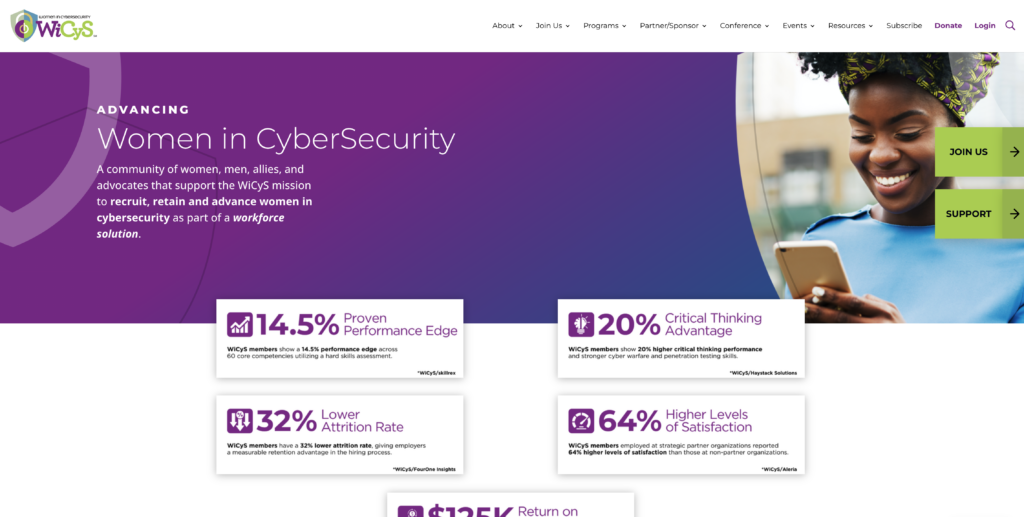
Founded in 2013 by Dr. Ambareen Siraj through a National Science Foundation grant, WiCyS is a global nonprofit built to recruit, retain, and advance women in cybersecurity at every career stage. Executive Director Lynn Dohm leads the organization alongside a network of industry, academic, and government partners.
Why join? WiCyS goes well beyond networking—membership gives you access to structured mentorship cohorts, a cybersecurity-specific job board, and scholarships and training programs in partnership with organizations like SANS and Google.
The annual in-person conference is one of the most career-focused events in the field, with a career fair, technical workshops, and speakers from across the industry. I'd especially recommend it if you're early in your career or actively looking to move up—the wrap-around support here is genuinely hard to find elsewhere.
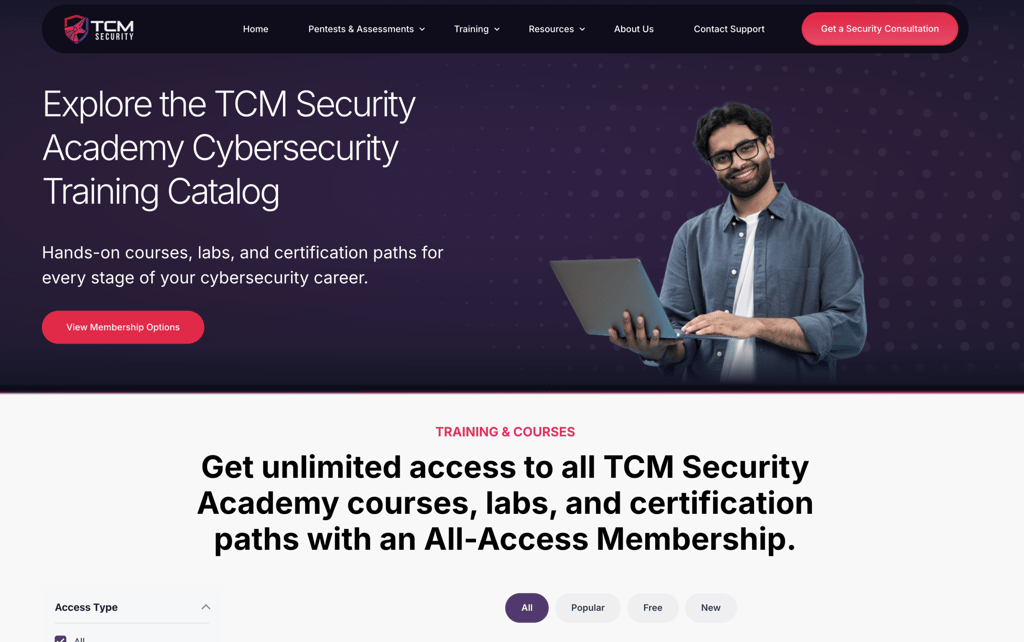
11. TCM Security Academy Community - Best for aspiring pentesters
- Audience: Aspiring and early-career pentesters and blue teamers
- Size: 70,000+ members
- Membership Cost: From $29.99/month, free tier available
- Platform: Discord, online academy website, live streams
TCM Security Academy is a veteran-owned cybersecurity training platform founded by Heath Adams (The Cyber Mentor), built around one of the largest cybersecurity Discord communities in existence—70,000+ members strong. It's purpose-built for people who want hands-on, affordable training with a real community behind it.
Why join? The Discord is where the community actually lives—you'll find course-specific channels, active mentors, working professionals, and learners at every stage, all in one place. What sets it apart is the combination of affordable, practitioner-led training (from instructors like Tib3rius and Alex Olsen) with recognized certifications like the PNPT that employers actually know.
If you're breaking into pentesting or pivoting into security, I think this is one of the most practical communities you can plug into.
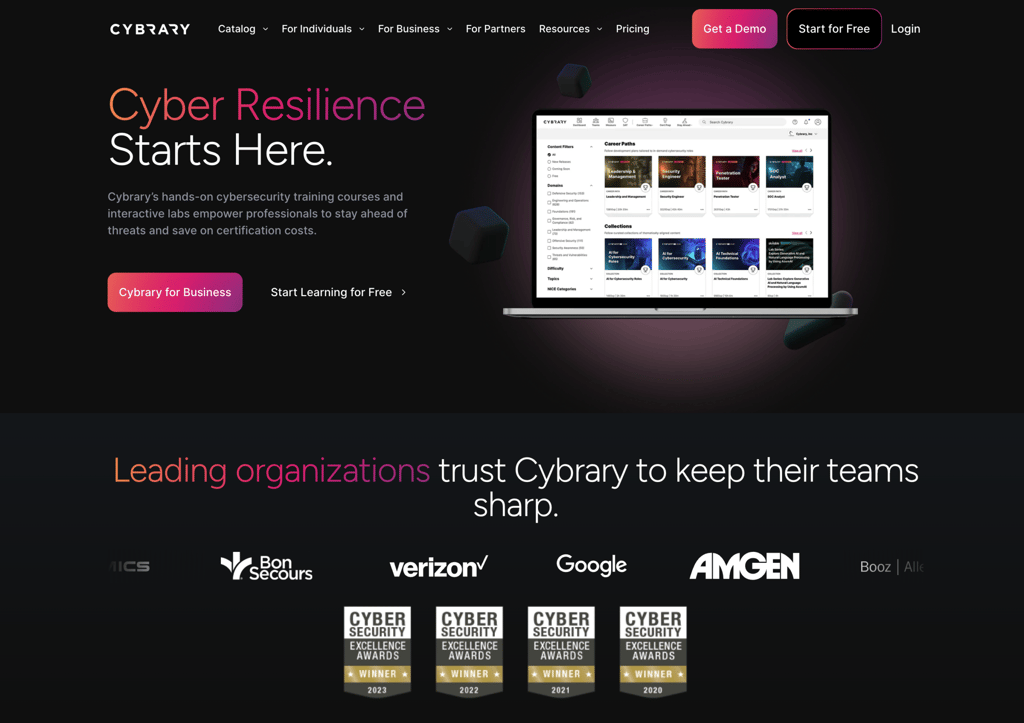
12. Cybrary - Best for certification prep
- Audience: Career changers and early-to-mid career cybersecurity professionals
- Size: 2,500,000+ members
- Membership Cost: Free
- Platform: Website, Slack, virtual labs
Founded in 2015 by Ralph Sita and Ryan Corey, Cybrary is one of the largest online cybersecurity learning platforms, with over 2 million registered users and a course library built around real certification paths and role-based career tracks. It's a strong fit for anyone working toward credentials like Security+, CISSP, or MITRE ATT&CK while wanting a community to learn alongside.
Why join? The free tier gives you access to foundational courses and the Slack community right away—no credit card required—which makes it easy to get a feel for the platform before committing. What I think sets Cybrary apart is the combination of structured cert prep, hands-on virtual labs, and CEU credits that count toward maintaining existing certifications. If you're on a team, Cybrary for Business adds dashboards and reporting, making it one of the few platforms that scales from individual learner to enterprise training program.
13. MITRE Engage - Best for cyber deception strategy
- Audience: Blue team leads and cyber deception practitioners
- Membership Cost: Free
- Platform: Website, LinkedIn, email, events
Launched by The MITRE Corporation in 2022, MITRE Engage is an open framework built on over a decade of real-world adversary engagement operations, designed to help defenders plan and execute deception and denial strategies. It's aimed squarely at blue team leads, cybersecurity analysts, and CISOs who want a structured, evidence-based approach to stopping adversaries before they reach their objectives.
Why join? What I find most useful about MITRE Engage is how directly it maps to MITRE ATT&CK—so if your team is already working with ATT&CK, Engage gives you a logical next layer for planning active defense. You get free access to the full framework, a starter kit, playbooks, and worksheets you can put to work immediately.
Community engagement happens through LinkedIn updates, email access to the Engage team, and events like Cyber Deception Day, making it a practical resource hub rather than a chat-based community.
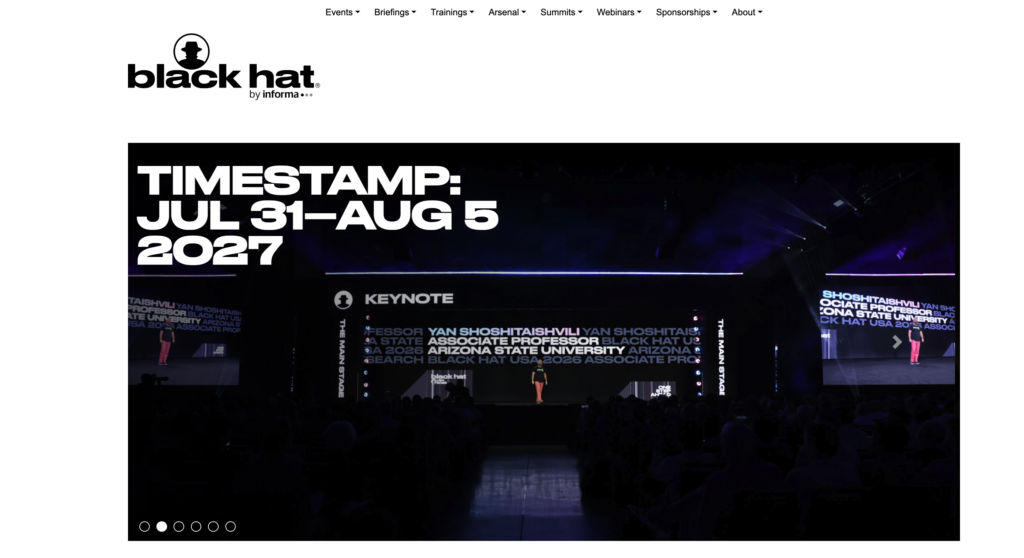
14. Black Hat - Best for elite security conferences
- Audience: Security engineers, researchers, and cybersecurity leaders worldwide
- Membership Cost: Free
- Platform: In-person conferences, website, webinars, YouTube
Founded in 1997 and organized by Informa Tech, Black Hat is a global cybersecurity conference series that brings security professionals together through research briefings, technical training, networking, and community events. Its conferences span major regions worldwide and attract practitioners, researchers, vendors, and security leaders interested in emerging threats, tools, and techniques.
Why join? Black Hat is where cutting-edge research gets disclosed first—zero-days, novel attack techniques, and defensive breakthroughs are regularly debuted at the Briefings stage, with past speakers including Mikko Hypponen and Nicole Perlroth. Beyond the talks, the Arsenal track lets you get hands-on with open-source tools directly from their creators, and the multi-day Trainings are among the most technically rigorous courses you'll find anywhere.
If an in-person pass isn't in your budget, I'd still recommend tuning into the free monthly webinars and YouTube archive to stay current on what the research community is actually working on.
More Articles
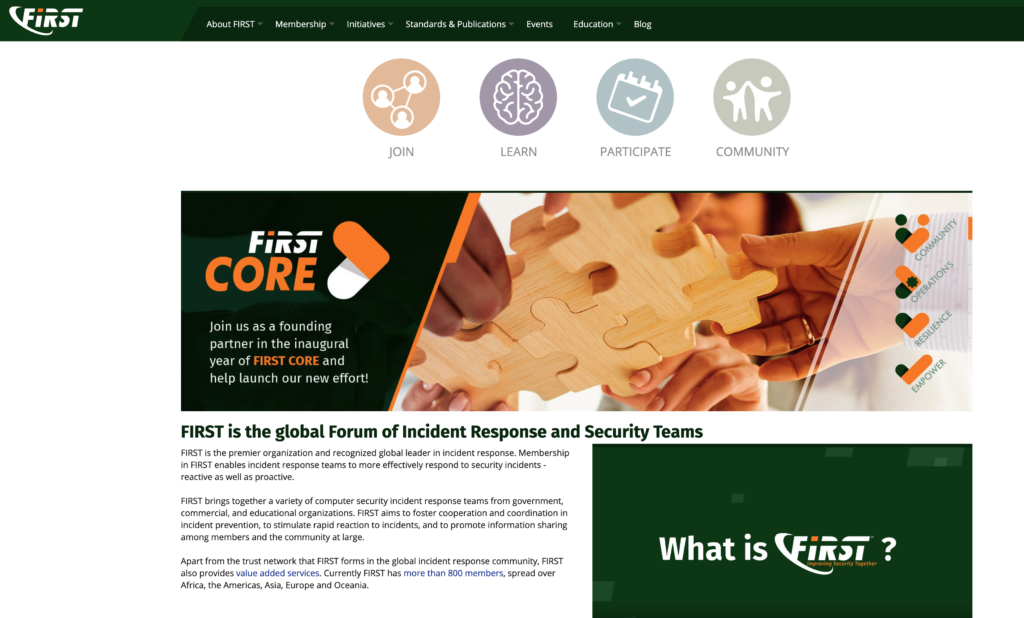
15. Forum of Incident Response and Security Teams (FIRST) - Best for incident response leaders
- Audience: CSIRT and PSIRT teams, incident response professionals worldwide
- Size: 800+ member teams
- Membership Cost: From $100
- Platform: Website, member portal, mailing lists, webinars, in-person conferences, regional symposia
Founded in 1990, FIRST is the global professional network for incident response and security teams—connecting 800+ CSIRTs, PSIRTs, and national CERTs across 100+ countries under a nonprofit, practitioner-governed structure. It's also the organization behind industry standards like CVSS, EPSS, and TLP that the broader security field depends on daily.
Why join? If your team handles incident response or vulnerability coordination, FIRST gives you access to 30+ Special Interest Groups covering everything from threat intelligence and ransomware to ICS security and AI, plus members-only information sharing that's difficult to replicate elsewhere.
The annual FIRSTCON conference brings the global IR community together, and the mentorship program connects newer teams with established practitioners. I'd flag one important caveat: membership is organization-based rather than individual, so your CSIRT or PSIRT applies as a team and needs sponsorship from two existing member teams to get in.
16. Executive Women's Forum (EWF) - Best for women cybersecurity leaders

- Audience: Women leaders in cybersecurity, risk, and privacy
- Size: 20,000+ members
- Membership Cost: $1,250
- Platform: Website, member portal, in-person conferences, virtual events, mentoring program
Founded in 2002 by Joyce Brocaglia, EWF is a global community built specifically for women in cybersecurity, risk management, and privacy—with 60+ corporate Benefactors including Microsoft, Google, and IBM backing its programs. It's one of the few communities in security that centers women's leadership and career advancement at every level, from high-potential practitioners to CISOs.
Why join? EWF's value is most tangible through three things: the flagship Annual Conference (700+ women leaders, three days), the Lift Mentoring Program (structured six-month pairings with senior practitioners), and the Leadership Academy for accelerated executive development.
Membership also gets you access to the EWF CONNECT portal with archived event recordings, AI security training, and CPE credits. I'd say the $1,250 annual membership is easiest to justify if your employer will sponsor it—and at that price point, the mentoring and conference access alone make it worthwhile if you're on a CISO or senior leadership track.
What’s Next?
Boost your SaaS growth and leadership skills. Subscribe to our newsletter for the latest insights from CTOs and aspiring tech leaders. We'll help you scale smarter and lead stronger with guides, resources, and strategies from top experts!