

Swimm Review 2026: Pros, Cons, Features, and Pricing
Swimm stands out for seamlessly integrating code documentation into developer workflows, making it ideal for teams seeking up-to-date, in-context docs, though it may not suit those needing broader, non-code documentation.

We review tools independently, and commissions help fund our testing. See our transparency policy, our methodology, or suggest a tool.
Swimm is a documentation software built for engineering teams that need code documentation to stay accurate as the codebase changes. I'd consider it over something like Confluence if your team's docs keep going stale—Swimm ties documentation directly to specific lines of code and automatically flags it for review when that code is updated, something a general-purpose wiki simply can't do.
Swimm Evaluation Summary
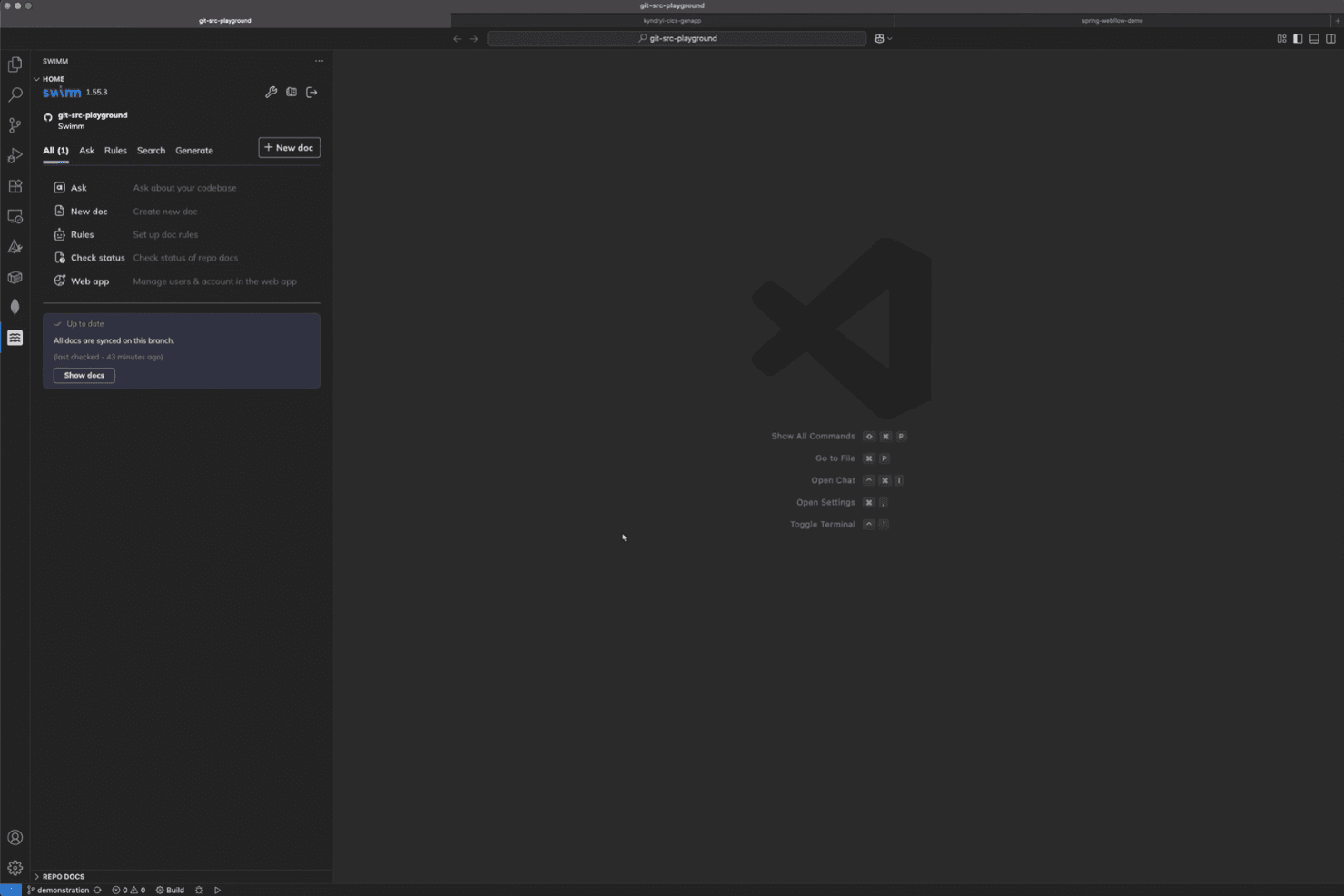
4.4/5
- Pricing upon request
- Free demo available
Why Trust Our Software Recommendations
6,700+
Reviews
20
Industry experts
16+
Evaluation factors
14
Years
Our team has been testing and reviewing software since 2012. As tech leaders ourselves, we know how difficult—and important—it is to choose the right software.
For this guide, we evaluated tools using hands-on testing and independent research, scoring tools using our selection criteria.
Our reviews reflect our human editorial judgment, not a sales pitch.
Expert reviewers:
- Paulo Gardini MiguelTech Director
 Tim FisherVP of AI
 Gabriel RosasTech Lead & Software Architect
 Christhian GruhnTech Lead & Platform Architect

Swimm Overview
Swimm excels at keeping code documentation current by syncing docs with code changes, making it a strong choice for teams prioritizing in-context, developer-focused documentation. Its intuitive interface, Git integrations, and onboarding tools set it apart, though its pricing may be higher than some alternatives, and it’s less suited for non-technical documentation.
If you’re judging options for engineering teams that need living docs tied to code, Swimm’s auto-sync and review features make it a top contender, especially for fast-moving environments where outdated docs slow onboarding or code reviews.
Pros
- Swimm keeps your documentation in sync with your code, reducing manual updates.
- Its intuitive interface makes it easy for your team to adopt and use.
- Swimm's live documentation feature enhances collaboration and learning.
Cons
- Swimm might lack advanced features some large enterprises need.
- Some users find the initial setup process a bit complex.
- Swimm's customization options may be limited compared to competitors.
Is Swimm Right For Your Needs?
Who Would be a Good Fit for Swimm?
Swimm is ideal for software development teams in tech startups and IT departments that prioritize code collaboration and documentation. If your team struggles with keeping documentation up-to-date, Swimm’s live documentation feature can save you time and reduce manual work. It’s especially useful for teams that onboard new developers frequently, as its intuitive interface helps newcomers understand codebases quickly. Swimm fits well in agile environments where continuous learning and adaptation are crucial.
- Tech StartupsSwimm helps your startup team keep documentation aligned with rapid code changes, making collaboration smoother.
- IT DepartmentsYour IT team can benefit from Swimm’s ability to streamline onboarding and training processes through live documentation.
- Agile TeamsSwimm supports your agile team’s need for dynamic and up-to-date documentation, enhancing sprint planning and execution.
- Educational InstitutionsSwimm is great for teaching coding, providing students with real-time, interactive code documentation for better learning.
- Remote TeamsIf your team works remotely, Swimm ensures everyone stays on the same page with synchronized documentation.
- Product DevelopmentSwimm aids your product development team in maintaining clear, accessible documentation throughout the project lifecycle.
Who Would be a Bad Fit for Swimm?
Swimm might not suit large enterprises needing advanced customization and extensive features. If your team requires highly tailored documentation processes, Swimm’s current capabilities may fall short. Additionally, organizations with minimal coding tasks or those focusing on non-technical documentation might find limited value. Swimm’s core focus on code collaboration means it might not meet the needs of teams where coding isn’t a primary activity.
- Large EnterprisesYour enterprise might need more customization options than Swimm currently provides for complex documentation needs.
- Non-Technical TeamsIf your team doesn’t work with code, Swimm’s focus on code documentation won’t align with your requirements.
- Small Retail BusinessesSwimm won’t offer much value to small retail businesses that don’t engage in software development.
- Legal DepartmentsYour legal team likely needs document management solutions focused on legal texts, not code.
- Construction CompaniesConstruction teams usually don’t require code documentation, making Swimm irrelevant to their workflow.
- Creative AgenciesIf your agency focuses on design or marketing, Swimm’s code-centric features won’t address your main tasks.
Our Review Methodology
How We Test & Score Tools
We’ve spent years building, refining, and improving our software testing and scoring system. The rubric is designed to capture the nuances of software selection and what makes a tool effective, focusing on critical aspects of the decision-making process.
Below, you can see exactly how our testing and scoring works across seven criteria. It allows us to provide an unbiased evaluation of the software based on core functionality, standout features, ease of use, onboarding, customer support, integrations, customer reviews, and value for money.
Core Functionality (25% of final scoring)
The starting point of our evaluation is always the core functionality of the tool. Does it have the basic features and functions that a user would expect to see? Are any of those core features locked to higher-tiered pricing plans? At its core, we expect a tool to stand up against the baseline capabilities of its competitors.
Standout Features (25% of final scoring)
Next, we evaluate uncommon standout features that go above and beyond the core functionality typically found in tools of its kind. A high score reflects specialized or unique features that make the product faster, more efficient, or offer additional value to the user.
We also evaluate how easy it is to integrate with other tools typically found in the tech stack to expand the functionality and utility of the software. Tools offering plentiful native integrations, 3rd party connections, and API access to build custom integrations score best.
Ease of Use (10% of final scoring)
We consider how quick and easy it is to execute the tasks defined in the core functionality using the tool. High scoring software is well designed, intuitive to use, offers mobile apps, provides templates, and makes relatively complex tasks seem simple.
Onboarding (10% of final scoring)
We know how important rapid team adoption is for a new platform, so we evaluate how easy it is to learn and use a tool with minimal training. We evaluate how quickly a team member can get set up and start using the tool with no experience. High scoring solutions indicate little or no support is required.
Customer Support (10% of final scoring)
We review how quick and easy it is to get unstuck and find help by phone, live chat, or knowledge base. Tools and companies that provide real-time support score best, while chatbots score worst.
Customer Reviews (10% of final scoring)
Beyond our own testing and evaluation, we consider the net promoter score from current and past customers. We review their likelihood, given the option, to choose the tool again for the core functionality. A high scoring software reflects a high net promoter score from current or past customers.
Value for Money (10% of final scoring)
Lastly, in consideration of all the other criteria, we review the average price of entry level plans against the core features and consider the value of the other evaluation criteria. Software that delivers more, for less, will score higher.
Core Features
AI-Powered Static Analysis
Swimm scans your codebase to build a knowledge base, revealing architecture, patterns, and hidden logic. This helps teams quickly understand complex systems without manual research.
Living Inventory Creation
Swimm automatically generates an up-to-date inventory of programs, modules, and dependencies with clear, explanatory names. This inventory evolves as your code changes, keeping documentation current.
Automated Dependency Diagrams
The platform creates diagrams that map relationships between programs, variables, and job flows. These visuals make it easier to grasp how different parts of your system interact.
Business Logic Extraction
Swimm uncovers and documents business logic buried in legacy code, making it accessible to both technical and non-technical stakeholders. This feature supports modernization and migration projects.
Customizable Documentation Outputs
You can tailor documentation outputs to match your organization’s standards and needs. Swimm allows you to tune docs for clarity, completeness, and relevance.
Enterprise-Grade Security and Compliance
Swimm is SOC2 and ISO 27001 compliant, with secure cloud and on-premise deployment options. This ensures your documentation process meets strict security and compliance requirements.
Standout Features
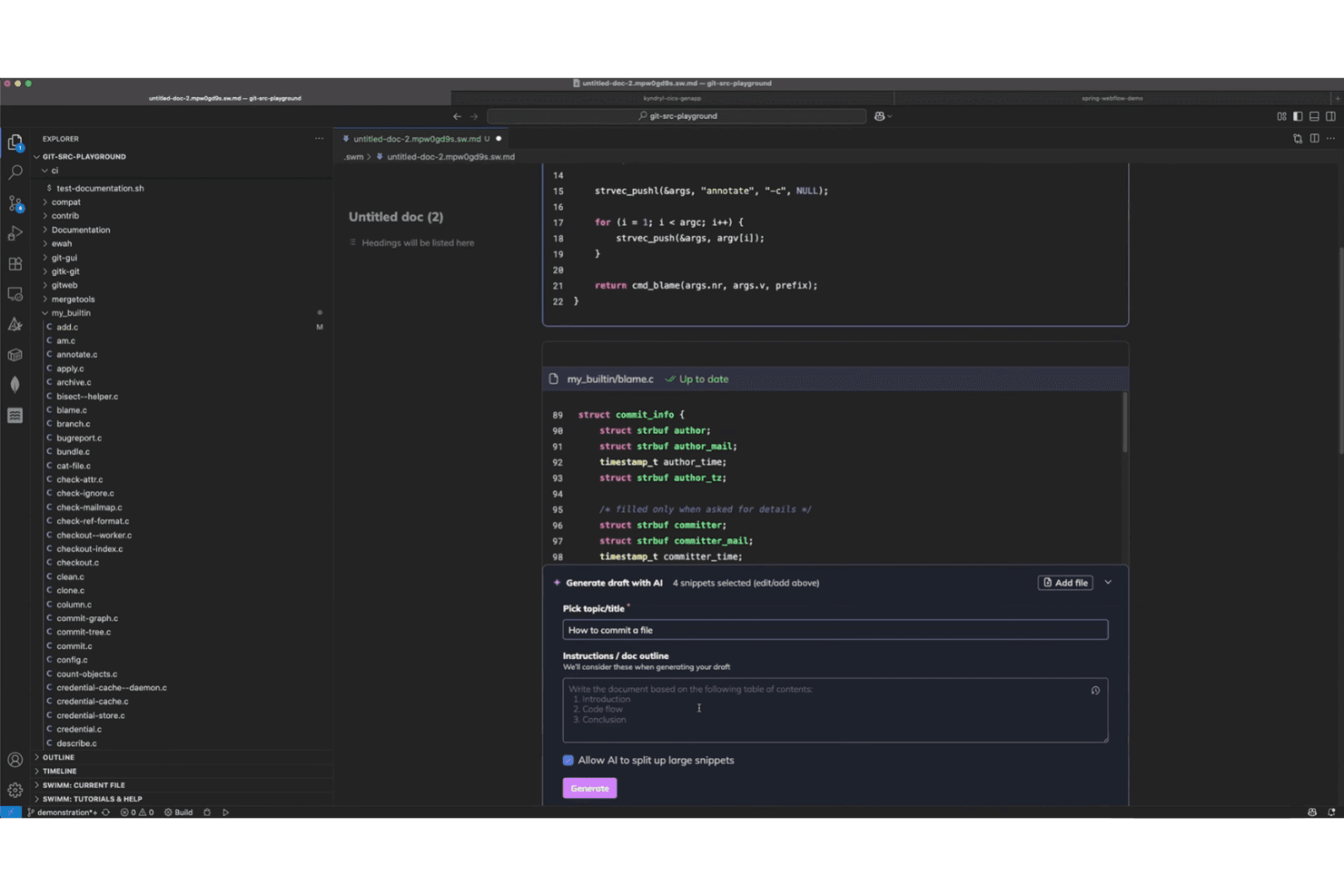
Auto-Sync With Code Changes
Swimm automatically updates documentation whenever code changes are merged, ensuring docs never fall out of sync. This reduces manual upkeep and prevents outdated information from slowing down development or onboarding.
In-Context Code Walkthroughs
Swimm lets you embed step-by-step walkthroughs directly within your codebase, guiding users through complex logic or workflows. This feature helps new team members ramp up faster and supports knowledge transfer during handoffs.

Ease of Use
Swimm is user-friendly for technical teams, with an interface designed to fit naturally into developer workflows. Users highlight the intuitive onboarding process and the ease of creating and updating docs directly from the codebase. Features like auto-sync and in-context walkthroughs minimize manual work and reduce friction, especially for new team members. However, some users note that non-technical staff may find the platform less approachable due to its code-centric focus.
Onboarding
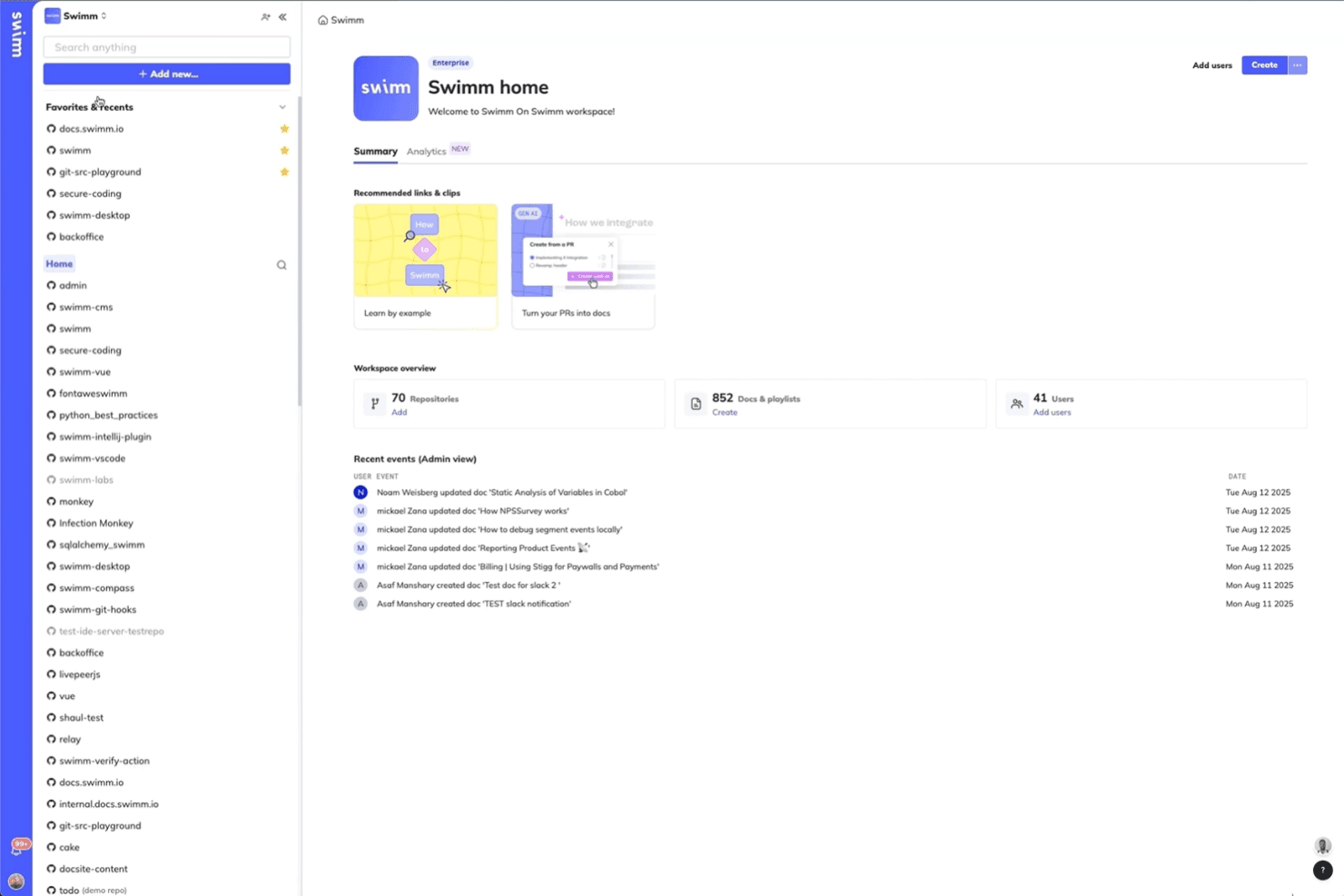
Swimm’s onboarding experience is highly rated by users for its guided setup, interactive tutorials, and clear documentation. New users can quickly connect their repositories and start generating documentation, with helpful prompts and walkthroughs at each step. The platform offers responsive support, a detailed knowledge base, and community forums, which help teams reach value fast. Some users mention that technical familiarity is helpful, but most find the onboarding process smooth and well-supported.
Customer Support
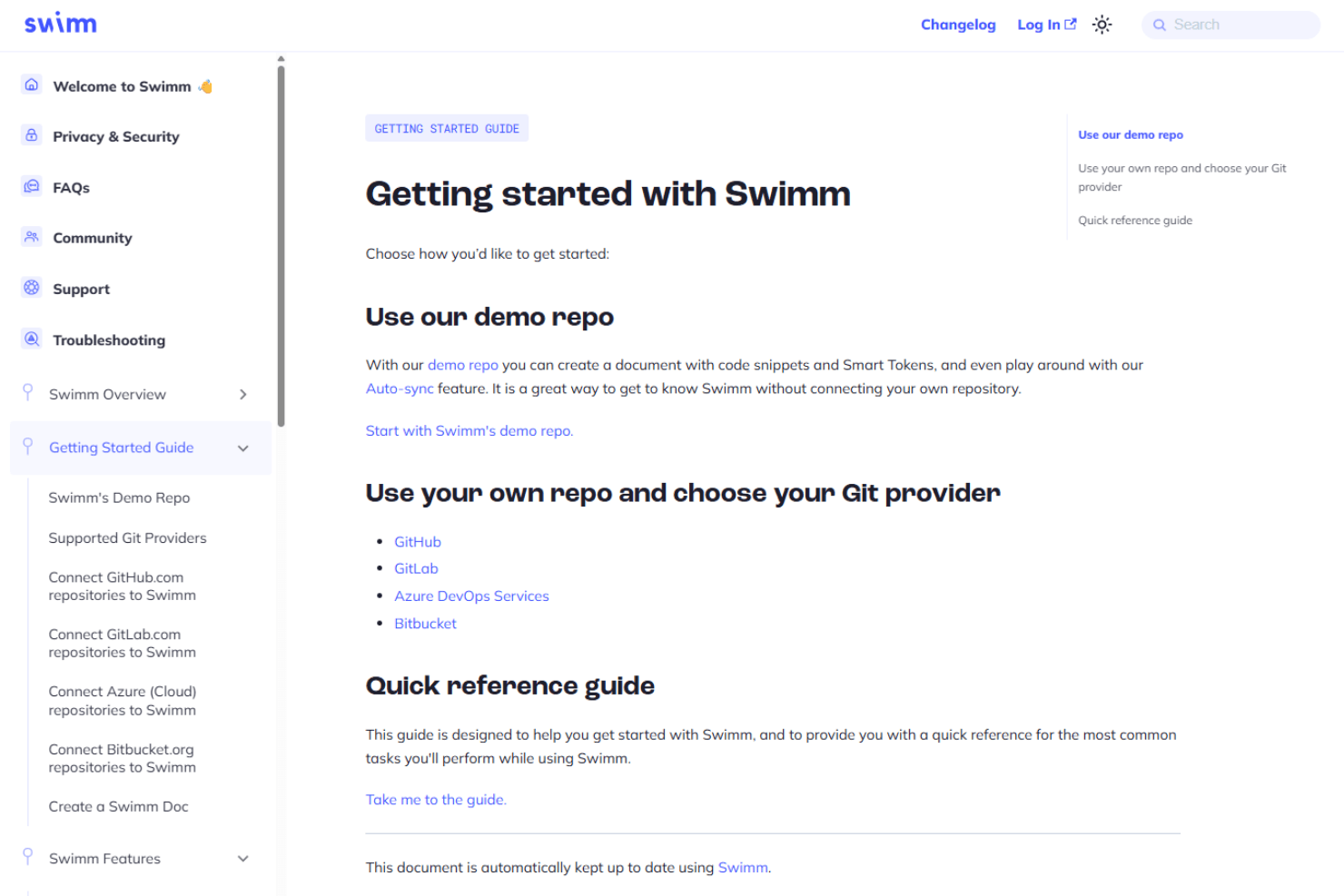
Swimm receives positive feedback for its responsive and knowledgeable customer support team. Users appreciate the quick turnaround on support tickets, access to live chat, and the depth of the online knowledge base. The availability of onboarding assistance and community forums adds extra value, especially for teams adopting the platform at scale. Some users note that complex technical questions are handled well, making support a reliable resource for troubleshooting and best practices.
Integrations
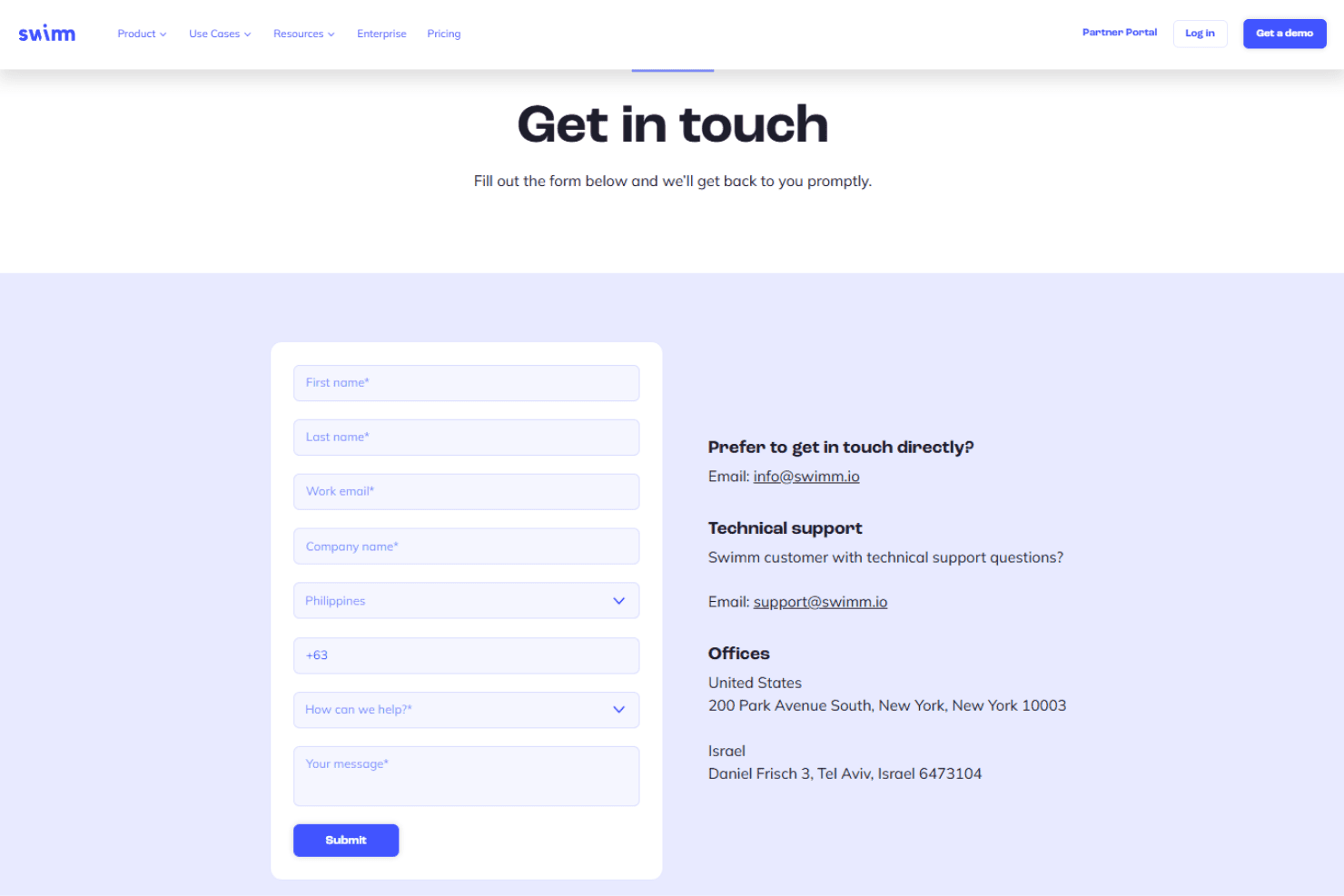
Swimm integrates with GitHub, GitLab, Bitbucket, Azure DevOps, VS Code, JetBrains IDEs (including IntelliJ, PyCharm, WebStorm, Rider, PhpStorm, and Android Studio), GitHub Copilot, Backstage, and Slack, among others.
Swimm also offers an API and supports integration with third-party tools for extended workflows.
Value for Money
Swimm offers custom pricing tailored to each team’s needs, reflecting its value for maintaining up-to-date, code-coupled documentation. Its features, including automation, security support, and workflow integration, make it well-suited for teams managing complex codebases.
Swimm Specs
- API: Yes
- Bug Tracking: No
- CI/CD Integration: Yes
- Cloud Deployment: No
- Code Review: Yes
- Code Transformation: No
- Collaboration Support: Yes
- Data Export: Yes
- Data Import: Yes
- Developer Tools: Yes
- External Integrations: Yes
- Git Integration: Yes
- History/Version Control: Yes
- IDE Plugins: Yes
- Local Deployment: No
- Multi-User: Yes
- Notifications: Yes
- Project Management: Yes
- Release Management: No
- Static Analysis: Yes
- Task Scheduling/Tracking: No
- Testing: No
Swimm FAQs
Swimm Company Overview & History
Swimm is a documentation and codebase optimization company founded in 2019 and headquartered in Tel Aviv, Israel. The company employs around 57 people and focuses exclusively on its flagship product, Swimm, with no other products or major affiliations reported. Swimm is known for its developer-centric culture and has gained attention for helping teams modernize and document complex legacy codebases.
Swimm Major Milestones
- 2019: Company founded in Tel Aviv, Israel.
- 2021: Raised 33.3 million.
- 2024: Reported $8.8 million in annual revenue with a 57-person team.