
Sauce Labs Review: Pros, Cons, Features and Pricing Explained


Sauce Labs is an end-to-end testing tools platform designed for teams who need to automate and scale browser and device testing. If you’re struggling with fragmented environments, inconsistent test results, or the overhead of maintaining in-house test infrastructure, Sauce Labs offers a cloud-based solution that helps you run tests across real browsers and devices. In this review, I’ll break down Sauce Labs’s features, use cases, pros and cons, and pricing—so you can decide if this end-to-end testing tools platform fits your team’s needs.
Sauce Labs Evaluation Summary
- From $39/month (billed annually)
- 28-day free trial + free demo available
Why Trust Our Software Reviews
We’ve been testing and reviewing software since 2023. As tech leaders ourselves, we know how critical and difficult it is to make the right decision when selecting software.
We invest in deep research to help our audience make better software purchasing decisions. We’ve tested more than 2,000 tools for different tech use cases and written over 1,000 comprehensive software reviews. Learn how we stay transparent & our software review methodology.
Sauce Labs Overview
When I compare Sauce Labs to other end-to-end testing tools, I think its real device cloud, wide browser coverage, and strong integration options set it apart. The interface is straightforward, and onboarding is quick for most teams. Pricing can be higher, especially for large-scale mobile testing, but the reliability and support justify it for many. I’d suggest Sauce Labs for teams who need to test across multiple environments without managing hardware. If you’re judging by scalability and ecosystem fit, Sauce Labs is a top pick for enterprise and fast-moving QA teams.
pros
-
Provides extensive cross-browser and real device testing without internal infrastructure.
-
Includes rich debugging artifacts like video recordings, logs, and screenshots for failed tests.
-
Offers secure testing of private environments via encrypted tunneling and enterprise VPN options.
cons
-
Pricing can become expensive quickly, especially for small teams or limited testing needs.
-
Advanced configurations and scaling automation workflows introduce a noticeable learning curve.
-
Less direct control over test code when using AI/low-code workflows.
-

NordLayer
Visit WebsiteThis is an aggregated rating for this tool including ratings from Crozdesk users and ratings from other sites.4.3 -
TestDevLab
Visit Website -
Intruder
Visit WebsiteThis is an aggregated rating for this tool including ratings from Crozdesk users and ratings from other sites.4.8




Our Review Methodology
How We Test & Score Tools
We’ve spent years building, refining, and improving our software testing and scoring system. The rubric is designed to capture the nuances of software selection and what makes a tool effective, focusing on critical aspects of the decision-making process.
Below, you can see exactly how our testing and scoring works across seven criteria. It allows us to provide an unbiased evaluation of the software based on core functionality, standout features, ease of use, onboarding, customer support, integrations, customer reviews, and value for money.
Core Functionality (25% of final scoring)
The starting point of our evaluation is always the core functionality of the tool. Does it have the basic features and functions that a user would expect to see? Are any of those core features locked to higher-tiered pricing plans? At its core, we expect a tool to stand up against the baseline capabilities of its competitors.
Standout Features (25% of final scoring)
Next, we evaluate uncommon standout features that go above and beyond the core functionality typically found in tools of its kind. A high score reflects specialized or unique features that make the product faster, more efficient, or offer additional value to the user.
We also evaluate how easy it is to integrate with other tools typically found in the tech stack to expand the functionality and utility of the software. Tools offering plentiful native integrations, 3rd party connections, and API access to build custom integrations score best.
Ease of Use (10% of final scoring)
We consider how quick and easy it is to execute the tasks defined in the core functionality using the tool. High scoring software is well designed, intuitive to use, offers mobile apps, provides templates, and makes relatively complex tasks seem simple.
Onboarding (10% of final scoring)
We know how important rapid team adoption is for a new platform, so we evaluate how easy it is to learn and use a tool with minimal training. We evaluate how quickly a team member can get set up and start using the tool with no experience. High scoring solutions indicate little or no support is required.
Customer Support (10% of final scoring)
We review how quick and easy it is to get unstuck and find help by phone, live chat, or knowledge base. Tools and companies that provide real-time support score best, while chatbots score worst.
Customer Reviews (10% of final scoring)
Beyond our own testing and evaluation, we consider the net promoter score from current and past customers. We review their likelihood, given the option, to choose the tool again for the core functionality. A high scoring software reflects a high net promoter score from current or past customers.
Value for Money (10% of final scoring)
Lastly, in consideration of all the other criteria, we review the average price of entry level plans against the core features and consider the value of the other evaluation criteria. Software that delivers more, for less, will score higher.
Core Features
Cross-Browser and Cross-Device Testing
Test web and mobile applications across thousands of browsers, devices, and operating systems reliably.
Real and Virtual Device Cloud
Access real devices, emulators, and simulators without maintaining expensive in-house testing infrastructure.
Parallel Test Execution
Run multiple automated tests simultaneously to accelerate feedback cycles and improve release velocity significantly.
CI/CD Integrations & Framework Support
Integrate seamlessly with CI/CD pipelines and frameworks like Selenium, Appium, Cypress, and Playwright.
Debugging Artifacts and Test Observability
Capture videos, screenshots, logs, and metadata for every test to simplify debugging and collaboration.
Unified Platform Across the SDLC
Combine testing, analytics, distribution, and production monitoring into a single continuous quality platform.

Ease of Use
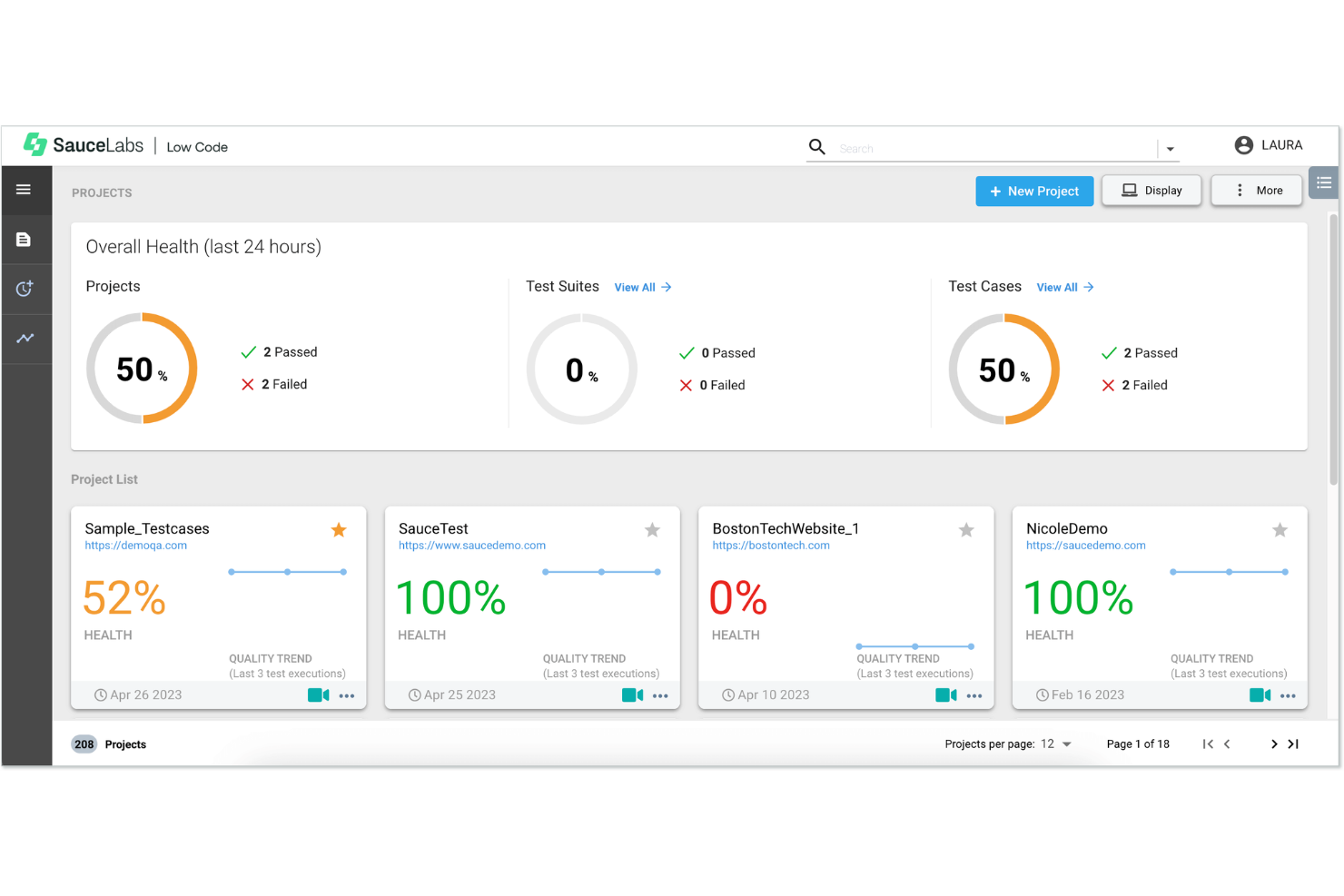
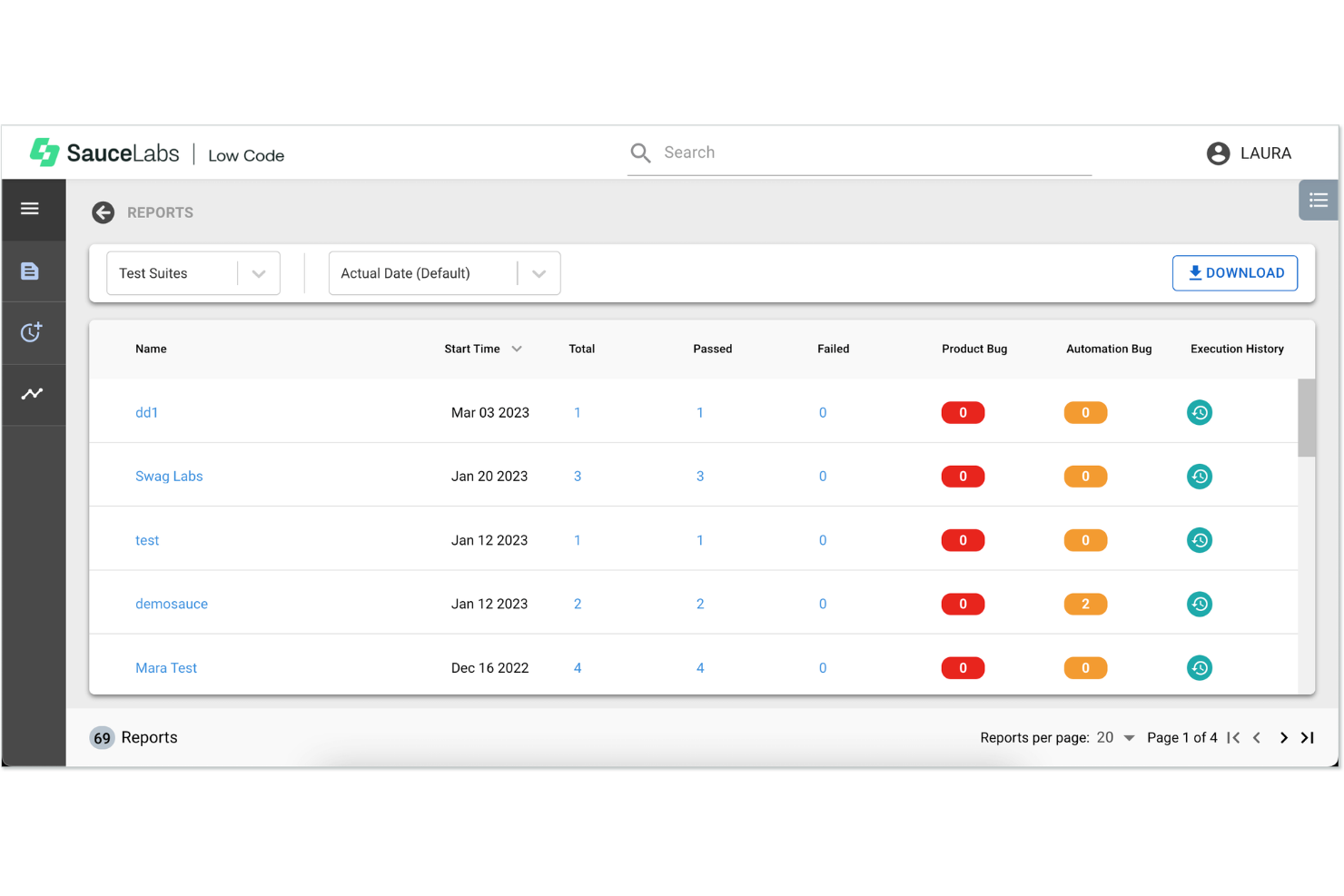
Sauce Labs is user-friendly for both new and experienced QA teams, with a clean dashboard and clear test result reporting. I think the onboarding process is straightforward, and the documentation is thorough, which helps teams get started quickly. Users often mention that setting up parallel tests and accessing real devices is intuitive. However, some advanced features require more technical setup, so teams with complex needs may need extra ramp-up time.
Integrations
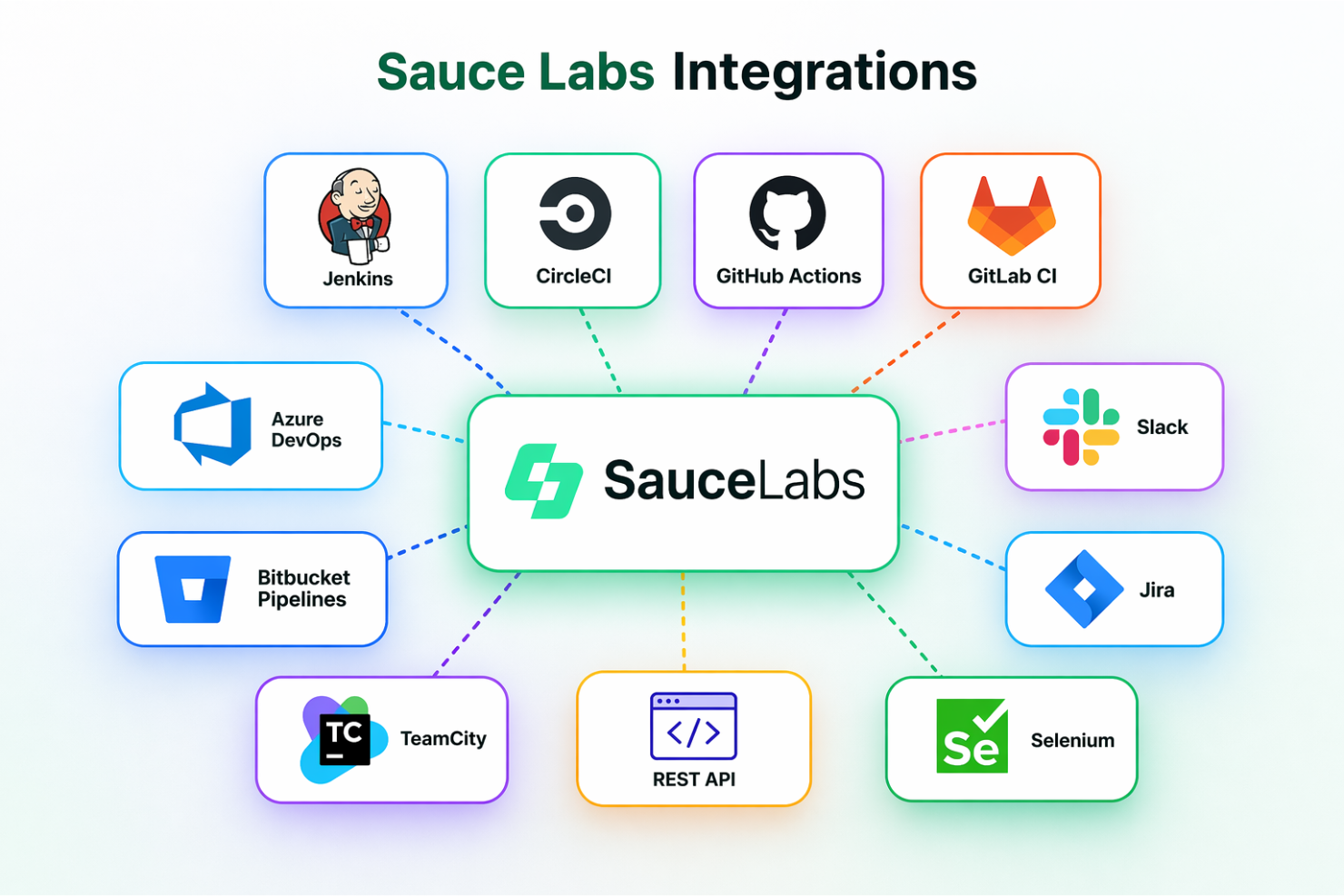
Sauce Labs integrates with Jenkins, CircleCI, GitHub Actions, GitLab CI, Azure DevOps, Bitbucket Pipelines, TeamCity, Slack, Jira, and Selenium, among others.
Sauce Labs also offers a REST API for custom integrations and workflow extensions.
Sauce Labs Specs
- A/B Testing
- API
- Automated Testing
- Browser Compatibility Testing
- Bug Tracking
- Calendar Management
- CI/CD Integration
- Dashboard
- Data Export
- Data Import
- Data Visualization
- Developer Tools
- External Integrations
- History/Version Control
- Manual Testing
- Multi-User
- Notifications
- Performance Testing
- Regression Testing
- Scheduling
- Status Notifications
- Third-Party Plugins/Add-Ons