

Roboflow vs Vertex AI: Comparison & Expert Reviews for 2026


When you’re comparing machine learning tools, the real question is how well a platform fits your team’s workflow. You may be weighing speed, scalability, infrastructure demands, and how much control you need as projects grow. Those decisions become more important as models move closer to production.
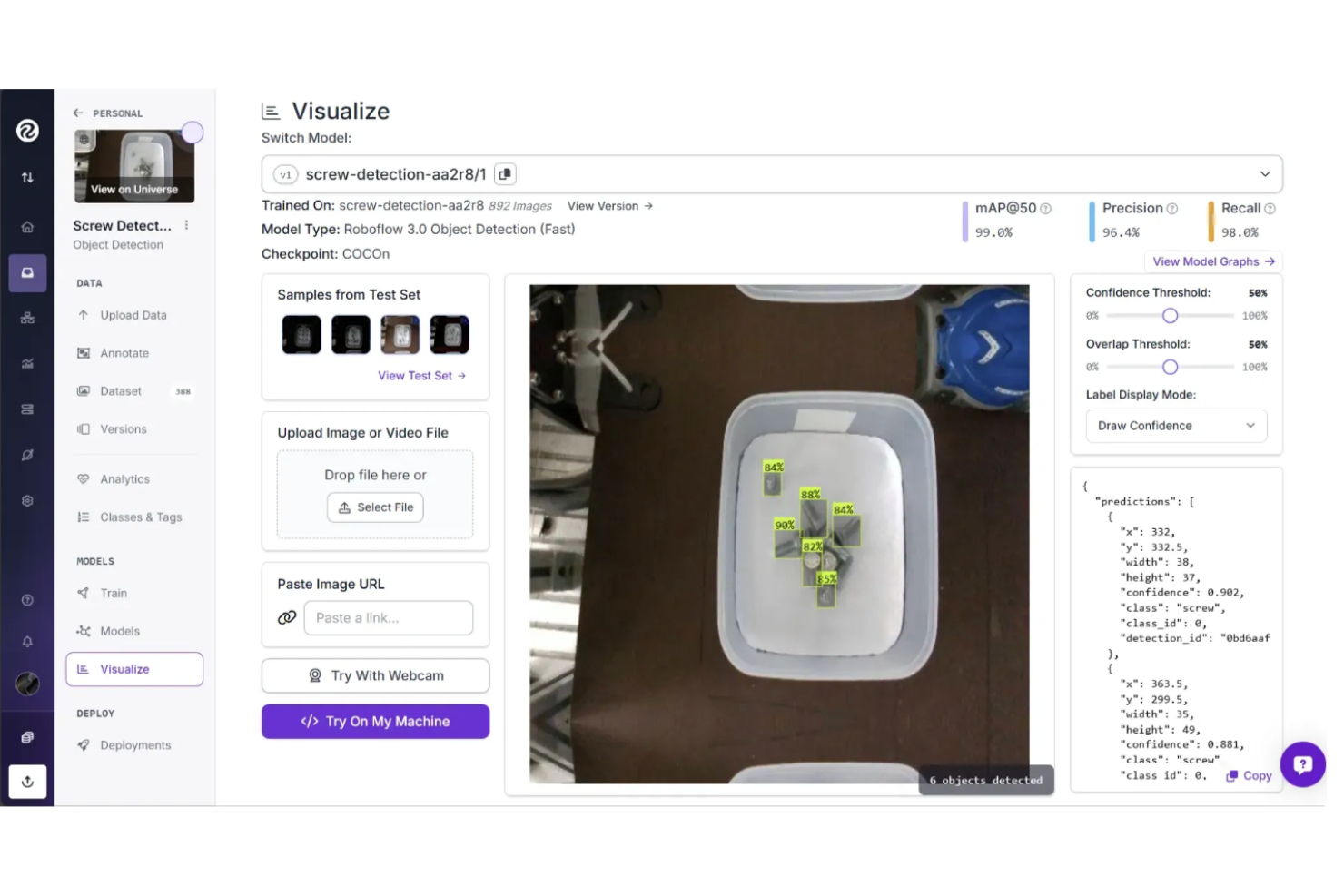
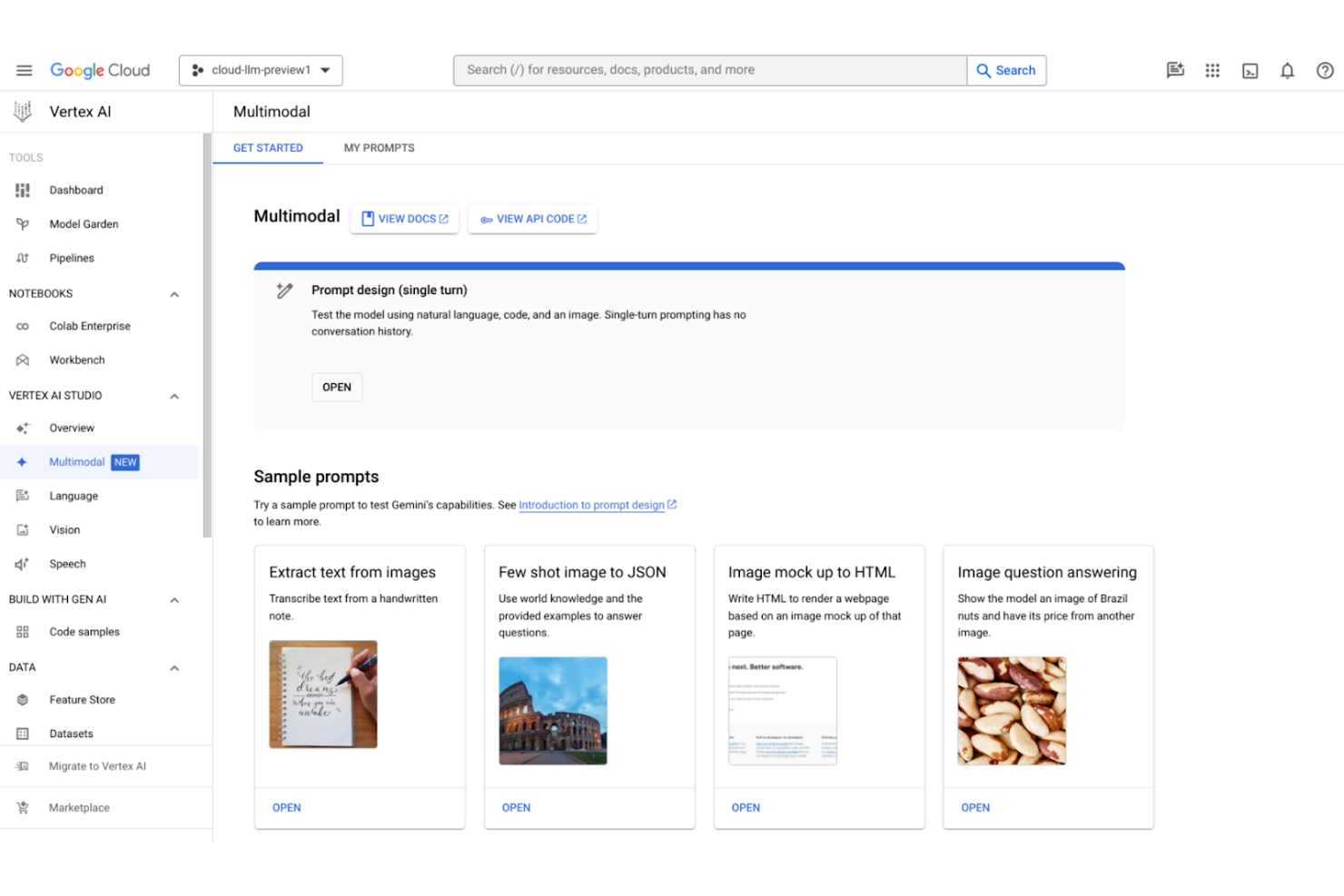
Roboflow and Vertex AI take different approaches. Roboflow simplifies computer vision development with an easy, streamlined workflow. Vertex AI is Google Cloud’s fully managed AI platform for building and using machine learning and generative AI at scale. I’ll walk you through how they compare so you can decide which one fits your team’s goals.
Roboflow vs. Vertex AI: An Overview
Roboflow
Vertex AI
Why Trust Our Software Reviews
Roboflow vs. Vertex AI Pricing Comparison
| Roboflow | Vertex AI | |
|---|---|---|
| Free Trial | Free plan available | |
| Pricing | From $79/month (for 3 users, billed annually) | From $0.19/user/hour for training models with standard machines |
Roboflow vs. Vertex AI Pricing & Hidden Costs
Roboflow uses a tier-based subscription model with free and paid plans that scale based on dataset size and usage. Costs are generally predictable, but they can increase if you exceed limits or need enterprise features. Vertex AI, on the other hand, follows a pay-as-you-go model within Google Cloud, charging separately for compute, storage, training, and inference. This offers flexibility, but costs can rise with heavy workloads or large-scale deployments.
Roboflow vs. Vertex AI Feature Comparison
| Roboflow | Vertex AI | |
|---|---|---|
| A/B Testing | ||
| API | ||
| Analytics | ||
| Big Data | ||
| Cloud Deployment | ||
| Dashboard | ||
| Data Export | ||
| Data Import | ||
| Data Mining | ||
| Data Visualization | ||
| External Integrations | ||
| Local Deployment | ||
| Multi-User | ||
| Optimized Search Processing | ||
| SAP Integration | ||
| Sentiment Analysis |
Roboflow vs. Vertex AI Integrations
| Integration | Roboflow | Vertex AI |
|---|---|---|
| Google Cloud Storage | ✅ | ✅ |
| AWS S3 | ✅ | ✅ |
| Microsoft Azure | ✅ | ❌ |
| Labelbox | ❌ | ❌ |
| Slack | ✅ | ❌ |
| BigQuery | ❌ | ✅ |
| TensorFlow* | ✅ | ✅ |
| PyTorch* | ✅ | ✅ |
| API | ✅ | ✅ |
| Zapier | ✅ | ✅ |
*Framework = Support refers to model or dataset compatibility.
Both Roboflow and Vertex AI offer solid integration ecosystems, but with different priorities. Roboflow focuses on streamlined connectivity for computer vision workflows, helping you move data and deploy models quickly. Vertex AI is deeply embedded in Google Cloud, emphasizing tight cloud-native integration and scalable infrastructure.
Roboflow vs. Vertex AI Security, Compliance & Reliability
| Factor | Roboflow | Vertex AI |
|---|---|---|
| Data Privacy | Provides workspace and project-level access controls, with private deployment options available for enterprise customers. | Uses Google Cloud’s enterprise-grade privacy controls and granular IAM policies. |
| Regulatory Compliance | Maintains SOC 2 Type II compliance and supports GDPR-aligned data practices. | Inherits Google Cloud certifications, including SOC 2, ISO/IEC 27001, and HIPAA (with BAA). |
| Encryption | Encrypts data in transit and at rest using industry-standard protocols. | Uses Google-managed encryption at rest and in transit, with customer-managed key (CMEK) options available. |
| Uptime & Reliability | Offers high availability, with SLAs available on enterprise plans. | Backed by Google Cloud’s global infrastructure, with SLAs depending on service configuration. |
| Infrastructure & Deployment Flexibility | Offers cloud-hosted services with enterprise options for private or dedicated deployments. | Fully managed within Google Cloud, designed for large-scale, cloud-native deployment across regions. |
Both Roboflow and Vertex AI prioritize protecting sensitive data through encryption, access controls, and secure cloud infrastructure. Roboflow maintains SOC 2 Type II compliance and offers private deployment options for enterprise customers with stricter data requirements. Vertex AI builds on Google Cloud’s global infrastructure and broad compliance certifications, supporting regulated environments at scale. Both platforms provide monitoring and reliability measures to ensure data availability and operational stability.
Roboflow vs. Vertex AI Ease of Use
| Factor | Roboflow | Vertex AI |
|---|---|---|
| User Interface | Features a visual dashboard with drag-and-drop dataset tools. | Offers a feature-rich interface designed for cloud-native ML workflows. |
| Onboarding | Provides guided tutorials and quick-start resources. | Requires familiarity with Google Cloud and ML concepts for full use. |
| Setup Process | Enables fast project setup with minimal configuration. | Involves configuring Google Cloud services and project settings. |
| Documentation | Supplies example-driven guides and community resources. | Provides detailed, technical documentation for advanced use cases. |
| Learning Curve | Designed for faster adoption, especially for teams focused on computer vision use cases. | May require more familiarity with cloud infrastructure due to broader platform scope and integration with multiple Google Cloud services. |
Roboflow is generally easier to adopt for teams focused on streamlined computer vision workflows, while Vertex AI offers broader AI capabilities that may require more familiarity with cloud infrastructure. Roboflow is designed for you to move faster, whereas Vertex AI prioritizes flexibility and scalability within the Google Cloud ecosystem.
Roboflow vs Vertex AI: Pros & Cons
Roboflow
- Offers open source tools and public datasets for experimentation.
- Supports deployment to edge devices, cloud, or on-premises.
- AI-assisted annotation speeds up labeling large datasets.
- Performance and latency vary by deployment method.
- Limited low-level customization compared to fully custom ML pipelines.
- Costs can scale quickly with high-volume training and inference.
Vertex AI
- Model monitoring tools help track drift and performance.
- AutoML supports custom model creation without deep coding.
- Managed pipelines automate model training and deployment.
- Limited transparency in resource usage and billing details.
- Onboarding is challenging for teams new to Google Cloud.
- Pricing structure is complex and hard to predict.
Best Use Cases for Roboflow and Vertex AI
Roboflow
- Manufacturing Deploy vision AI to automate quality inspections, detect defects, track inventory, and improve efficiency across modern manufacturing operations.
- Industrial Manufacturing Use vision AI to monitor equipment performance, prevent downtime, automate inspections, and optimize complex industrial production environments at scale.
- Healthcare & Medicine Apply vision AI to analyze medical imagery, monitor patients, automate workflows, and improve diagnostic accuracy and healthcare outcomes.
- Automotive Enhance automotive manufacturing with vision AI that detects defects, monitors assembly lines, optimizes processes, and prevents costly production downtime.
- Aerospace & Defense Use vision AI to inspect components, verify assembly accuracy, monitor safety compliance, and ensure quality across aerospace manufacturing operations.
- Consumer Goods Protect product quality and brand trust using vision AI to inspect packaging, verify labels, detect defects, and optimize production.
Vertex AI
- Budget-Constrained Educational Programs Variable cloud pricing may be difficult to manage for classroom environments.
- Government & Public Sector Programs Agencies running secure, cloud-based AI initiatives can leverage Google Cloud’s infrastructure and certifications.
- Logistics & Supply Chain Operations Enables predictive analytics and optimization models using large, distributed datasets.
- Financial Services & Insurance Divisions Model monitoring, governance, and scalable compute align with regulated AI initiatives.
- Retail & Ecommerce Data Teams Supports demand forecasting, personalization, and computer vision workflows at scale.
- Healthcare & Life Sciences Departments Organizations handling sensitive clinical or research data can use Google Cloud’s compliance-backed infrastructure and monitoring tools.
- AI & Generative AI Teams Teams building large language models, multimodal systems, or AI agents can leverage managed training, evaluation, and Gemini model access.
Who Should Use Roboflow, and Who Should Use Vertex AI?
If you’re looking for a computer vision and machine learning platform that’s fast to adopt, easy to manage, and designed to help you move from dataset to deployed model without heavy cloud configuration, Roboflow is likely the better fit. It’s ideal if you want built-in preprocessing, streamlined training, and a focused workflow that lets your team experiment and ship quickly.
If, instead, you need a fully managed AI platform with deep Google Cloud integration, advanced MLOps capabilities, and support for large-scale machine learning or generative AI initiatives, Vertex AI may be the stronger choice. It’s well-suited for organizations that require enterprise governance, scalable infrastructure, and tight alignment with broader cloud architecture.
Differences Between Roboflow and Vertex AI
| Roboflow | Vertex AI | |
|---|---|---|
| Annotation Capabilities | Built-in image annotation tools with automation and dataset versioning. | Provides managed data labeling services and AutoML workflows within Google Cloud. |
| Automation | Simplifies training and deployment with integrated workflows for rapid iteration. | Supports advanced automation through managed training, hyperparameter tuning, and pipeline orchestration. |
| Cloud Storage | Connects with major cloud storage providers and offers private deployment options for enterprise plans. | Deep, native integration across Google Cloud services and infrastructure. |
| Pricing Model | Subscription tiers based on usage limits, collaboration features, and deployment needs. | Pay-as-you-go pricing based on compute, storage, model usage, and cloud resources consumed. |
| User Interface | Visual dashboard focused on streamlined computer vision workflows. | Feature-rich, cloud-native interface designed for broader ML and AI workloads. |
| Visit RoboflowOpens new window | Read Vertex AI ReviewOpens new window |
Similarities Between Roboflow and Vertex AI
| API Access | Both provide APIs for integrating models into applications and automating workflows. |
|---|---|
| Dataset Management | Each platform provides tools for uploading, organizing, and versioning datasets to support model development. |
| Deployment Options | Both support deploying models to scalable cloud environments for production inference. |
| Framework Support | Both support popular ML frameworks like TensorFlow and PyTorch, offering flexibility in model development. |
| Security Standards | Both implement encryption at rest and in transit, along with enterprise-grade security controls. |
| Visit RoboflowOpens new window Read Vertex AI ReviewOpens new window | |