

Intercom Review 2026: Key Features, Pros, Cons, and Updated Pricing



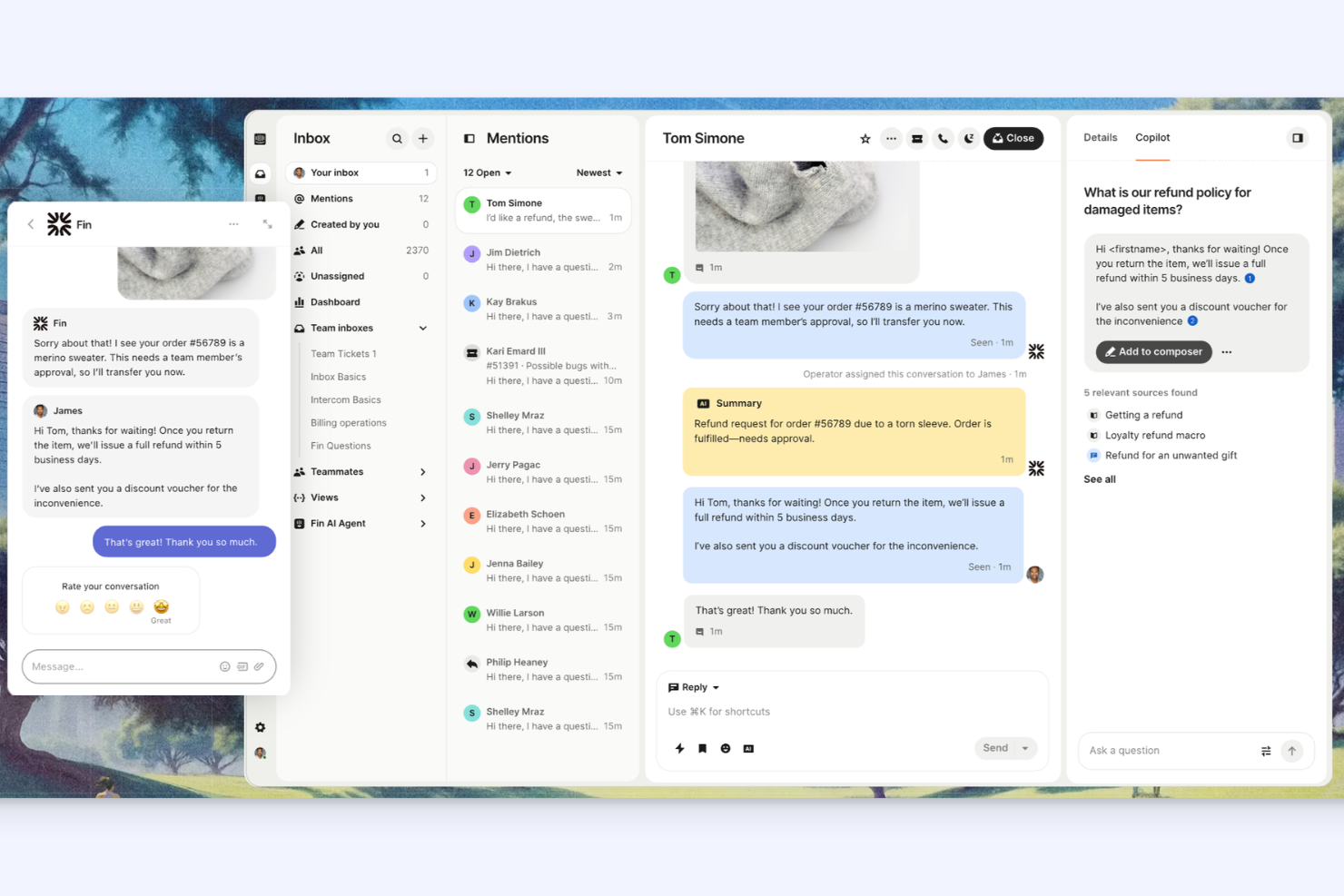
Intercom is a help desk software built around conversational, AI-driven support—covering live chat, in-app messaging, and automated ticketing in one platform. It's a strong fit for SaaS and tech teams that want to handle customer conversations proactively, not just reactively. If you're weighing it against Zendesk, Intercom's advantage is a more modern, messaging-first interface with AI automation built in from the ground up, rather than patched in through third-party add-ons.
Intercom Evaluation Summary
- From $29/user/month
- 14-day free trial
Why Trust Our Software Recommendations
Our team has been testing and reviewing software since 2012. As tech leaders ourselves, we know how difficult—and important—it is to choose the right software.
For this guide, we evaluated tools using hands-on testing and independent research, scoring tools using our selection criteria.
Our reviews reflect our human editorial judgment, not a sales pitch.
Intercom Overview
Intercom offers a modern interface, strong automation, and deep integrations, making it a top choice for teams prioritizing chat-based support and proactive engagement. Its onboarding is straightforward, and the workflow builder is intuitive, but pricing can climb quickly as you add features or users. Compared to others, Intercom excels at real-time messaging and self-serve support, but may be less appealing if you need granular ticket management or budget-friendly plans. It’s best for fast-moving IT teams or tech-driven environments that value automation, visibility into customer data, and a unified support
pros
-
Real-time chat and messaging across multiple channels.
-
Workflow automation reduces manual ticket handling.
-
Unified inbox for managing all customer conversations.
cons
-
Pricing increases quickly with advanced features.
-
Limited ticket categorization and escalation options.
-
Support response times can be inconsistent.
-

Rippling IT
Visit WebsiteThis rating combines scores from multiple user review sites to reflect overall customer sentiment about the product.4.8 -
Freshservice
Visit WebsiteThis rating combines scores from multiple user review sites to reflect overall customer sentiment about the product.4.6 -
Deel IT
Visit WebsiteThis rating combines scores from multiple user review sites to reflect overall customer sentiment about the product.4.9




Our Review Methodology
How We Test & Score Tools
We’ve spent years building, refining, and improving our software testing and scoring system. The rubric is designed to capture the nuances of software selection and what makes a tool effective, focusing on critical aspects of the decision-making process.
Below, you can see exactly how our testing and scoring works across seven criteria. It allows us to provide an unbiased evaluation of the software based on core functionality, standout features, ease of use, onboarding, customer support, integrations, customer reviews, and value for money.
Core Functionality (25% of final scoring)
The starting point of our evaluation is always the core functionality of the tool. Does it have the basic features and functions that a user would expect to see? Are any of those core features locked to higher-tiered pricing plans? At its core, we expect a tool to stand up against the baseline capabilities of its competitors.
Standout Features (25% of final scoring)
Next, we evaluate uncommon standout features that go above and beyond the core functionality typically found in tools of its kind. A high score reflects specialized or unique features that make the product faster, more efficient, or offer additional value to the user.
We also evaluate how easy it is to integrate with other tools typically found in the tech stack to expand the functionality and utility of the software. Tools offering plentiful native integrations, 3rd party connections, and API access to build custom integrations score best.
Ease of Use (10% of final scoring)
We consider how quick and easy it is to execute the tasks defined in the core functionality using the tool. High scoring software is well designed, intuitive to use, offers mobile apps, provides templates, and makes relatively complex tasks seem simple.
Onboarding (10% of final scoring)
We know how important rapid team adoption is for a new platform, so we evaluate how easy it is to learn and use a tool with minimal training. We evaluate how quickly a team member can get set up and start using the tool with no experience. High scoring solutions indicate little or no support is required.
Customer Support (10% of final scoring)
We review how quick and easy it is to get unstuck and find help by phone, live chat, or knowledge base. Tools and companies that provide real-time support score best, while chatbots score worst.
Customer Reviews (10% of final scoring)
Beyond our own testing and evaluation, we consider the net promoter score from current and past customers. We review their likelihood, given the option, to choose the tool again for the core functionality. A high scoring software reflects a high net promoter score from current or past customers.
Value for Money (10% of final scoring)
Lastly, in consideration of all the other criteria, we review the average price of entry level plans against the core features and consider the value of the other evaluation criteria. Software that delivers more, for less, will score higher.
Core Features
Unified Inbox
Manage all customer conversations from chat, email, and social in one place. This centralizes support and reduces missed messages.
Automated Workflows
Set up bots and rules to route, assign, and resolve tickets automatically. This reduces manual work and speeds up response times.
Customizable Chatbots
Deploy bots to answer common questions and collect information 24/7. These bots can escalate complex issues to human agents as needed.
In-App Messaging
Send targeted messages to users directly inside your product or app. This helps guide users, announce updates, or offer support at key moments.
Knowledge Base
Build and maintain a self-serve help center with articles and FAQs. Customers can find answers without waiting for an agent.
Reporting and Analytics
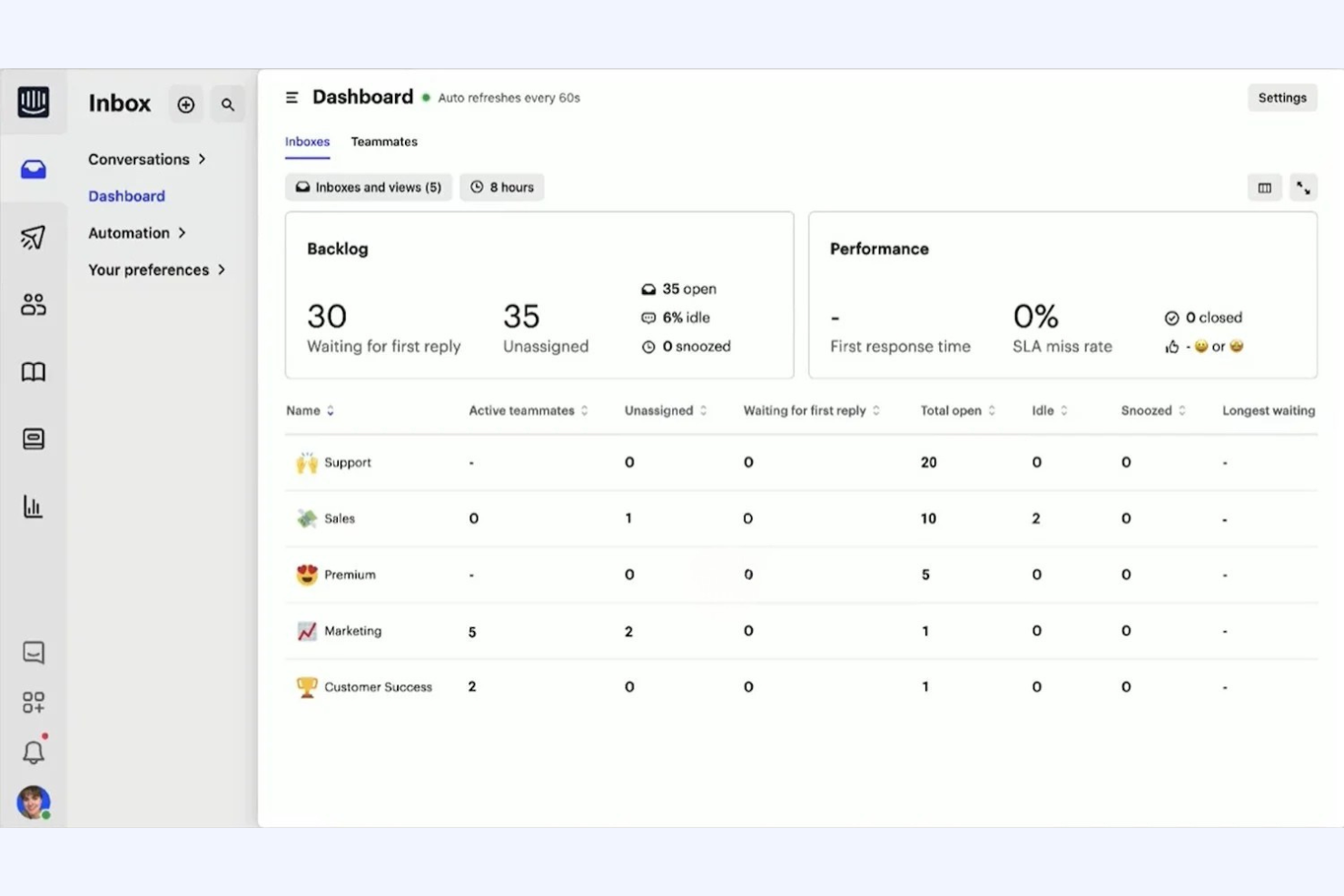
Track conversation volume, response times, and customer satisfaction with built-in dashboards. These insights help teams identify trends and improve support quality.
Ease of Use
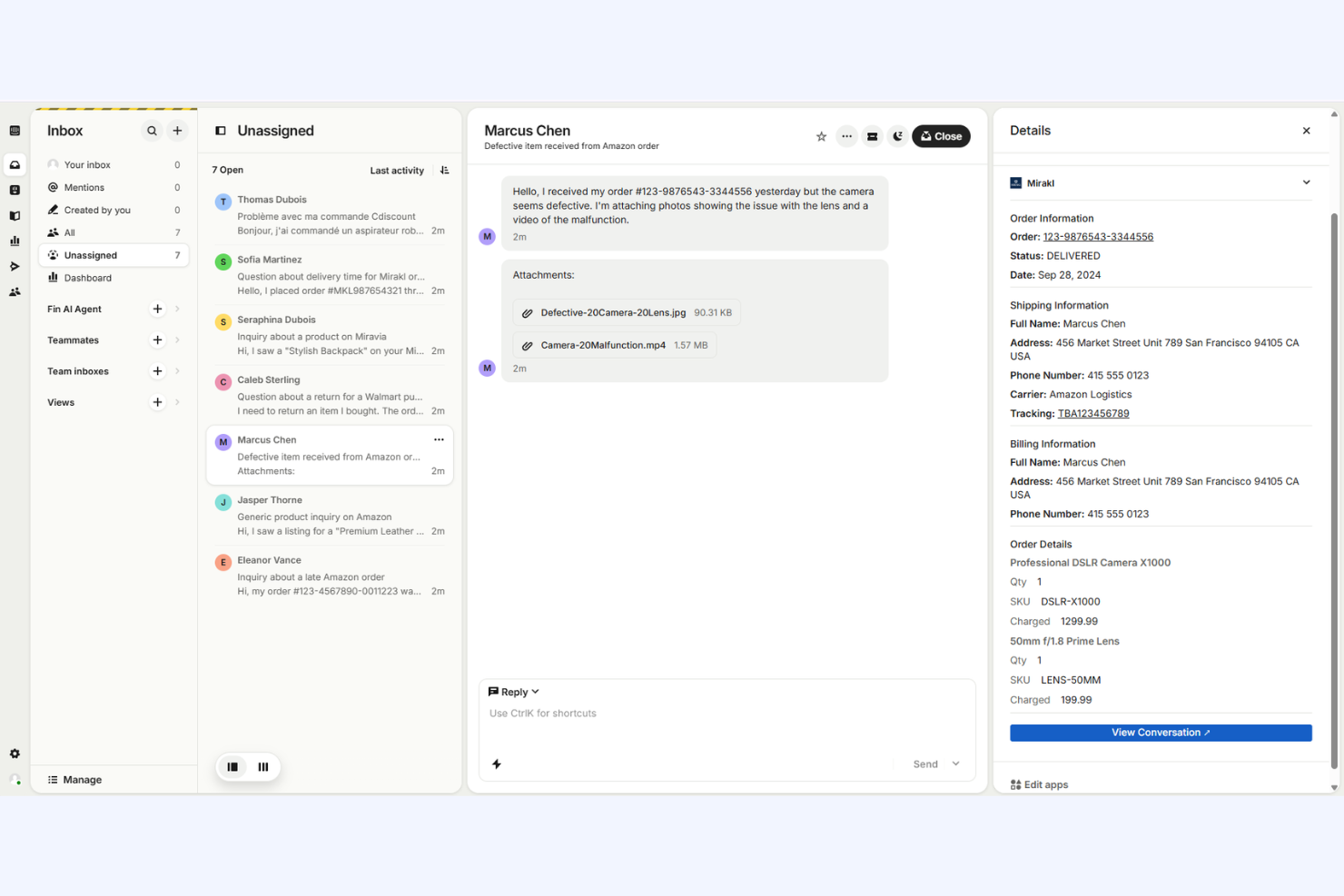
Intercom’s interface is clean, modern, and easy to navigate, making onboarding straightforward for most teams. Users often highlight the intuitive workflow builder and clear conversation management tools. Setting up chatbots and automated rules requires minimal technical skill, and the in-app guidance helps new users get started quickly. However, some advanced settings and reporting options can feel buried, which may slow down less technical users during setup or customization.
Integrations
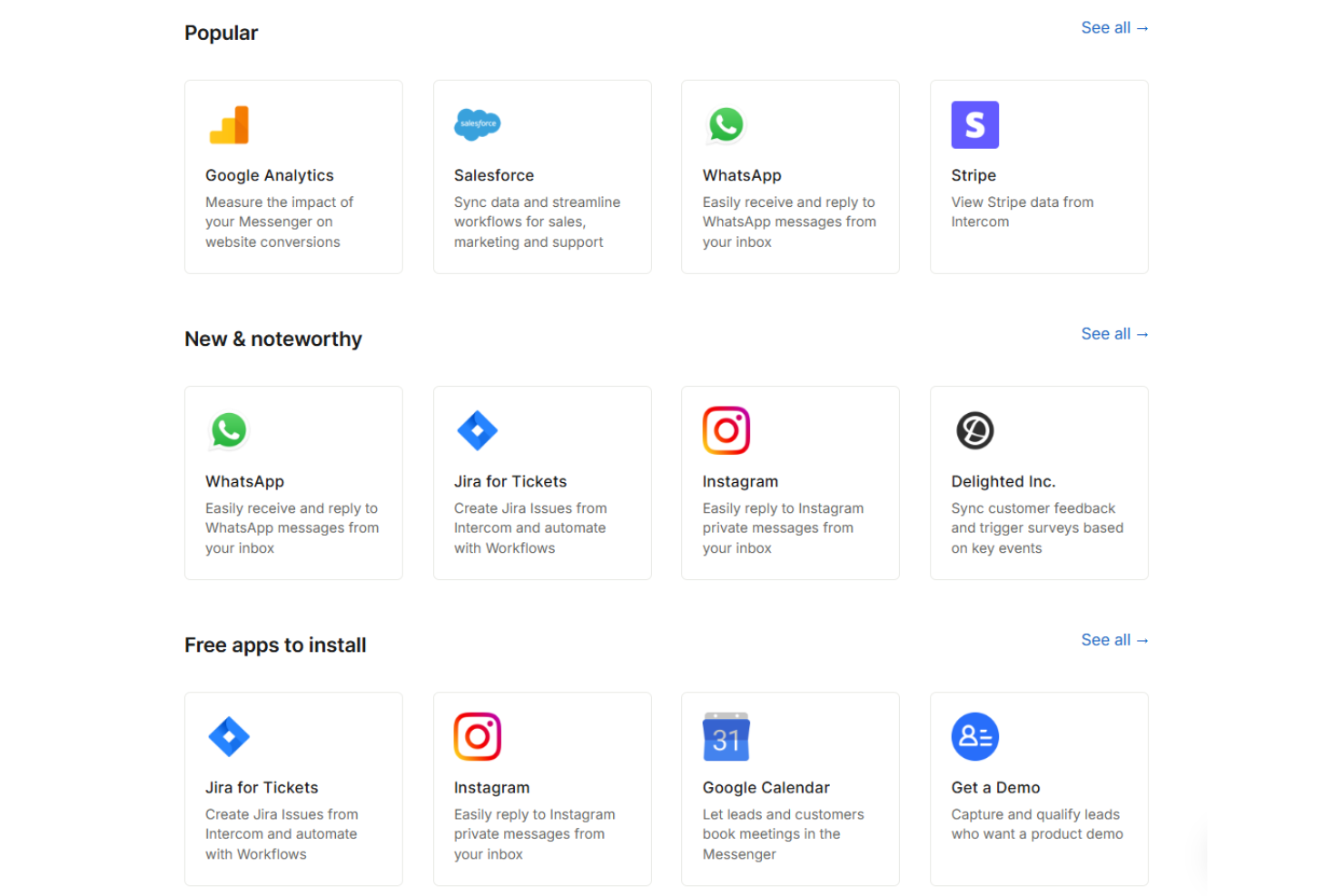
Intercom integrates with Slack, Salesforce, HubSpot, Shopify, Zendesk, Google Analytics, Stripe, Jira, Mailchimp, and Facebook Messenger, among others.
Intercom also offers a robust API and connects with third-party integration tools like Zapier for expanded automation and connectivity.
Intercom Specs
- API
- Batch Permissions & Access
- Call Logging
- Call Monitoring
- Chat
- Click-to-Dial
- Contact Management
- Customer Management
- Customer Service
- Dashboard
- Data Export
- Data Import
- Email Integration
- Escalation Management
- External Integrations
- Feedback Management
- Google Apps Integration
- Instant Chat Integration
- Knowledge Base
- Lead Management
- Lead Scoring
- Marketing Automation
- Multi-User
- Notifications
- Self-service Portal
- Workflow Management




Intercom FAQs
How does Intercom handle data security and compliance?
Can Intercom support multi-language customer conversations?
What customization options are available for chat widgets and bots?
Does Intercom offer SLA management or escalation features?
How does Intercom manage user and agent permissions?
What reporting and analytics capabilities does Intercom provide?
Can Intercom be used for both support and proactive customer engagement?
How scalable is Intercom for growing teams or enterprises?
What’s Next?
Boost your SaaS growth and leadership skills. Subscribe to our newsletter for the latest insights from CTOs and aspiring tech leaders. We'll help you scale smarter and lead stronger with guides, resources, and strategies from top experts!