

10 Best Free Cybersecurity Tools Reviewed in 2026

Best Free Cybersecurity Tools Shortlist


In today's digital landscape, cybersecurity is crucial, yet finding budget-friendly solutions can be tough. You want to protect your data without overspending. That's where free cybersecurity tools come in handy.
I've spent years evaluating SaaS tools, and I know how important it is for your team to access reliable, cost-effective security solutions. You shouldn't have to compromise on safety just because of budget constraints.
In this listicle, I'll share my top picks for free cybersecurity tools, focusing on those that offer genuine value without hidden costs. You'll find insights into features, usability, and what sets each tool apart. Let's explore options that fit your needs and keep your data safe.
Why Trust Our Software Recommendations
Our team has been testing and reviewing software since 2012. As tech leaders ourselves, we know how difficult—and important—it is to choose the right software.
For this guide, we evaluated tools using hands-on testing and independent research, scoring tools using our selection criteria.
Our reviews reflect our human editorial judgment, not a sales pitch.
Expert reviewers:
Free Cybersecurity Tools Comparison Table
This comparison table summarizes pricing details for my top free cybersecurity tools selections:
| Tool | Best For | Trial Info | Price | ||
|---|---|---|---|---|---|
| 1 | Best for real-time endpoint protection | Free demo available | Pricing upon request | Website | |
| 2 | Best for penetration testing | Free demo available | Free to use | Website | |
| 3 | Best for web vulnerability scanning | Free plan available | From $475/user/year | Website | |
| 4 | Best for network monitoring | Not available | Free to use | Website | |
| 5 | Best for web app security testing | Not available | Free to use | Website | |
| 6 | Best for vulnerability assessment | Not available | Free to use | Website | |
| 7 | Best for host-based intrusion detection | Not available | Free to use | Website | |
| 8 | Best for web server scanning | Not available | Free to use | Website | |
| 9 | Best for password management | Not available | Free to use | Website | |
| 10 | Best for small business security | Free plan available | From $150/user/month | Website |
Best Free Cybersecurity Tool Reviews
Below are my detailed summaries of the best free cybersecurity tools that made it onto my shortlist. My reviews offer a detailed look at the key features, pros & cons, integrations, and ideal use cases of each tool to help you find the best one for you. While some of these tools offer a completely free version, others offer a free trial period. I’ve added a note about what’s free in each of my reviews.

Best for real-time endpoint protection
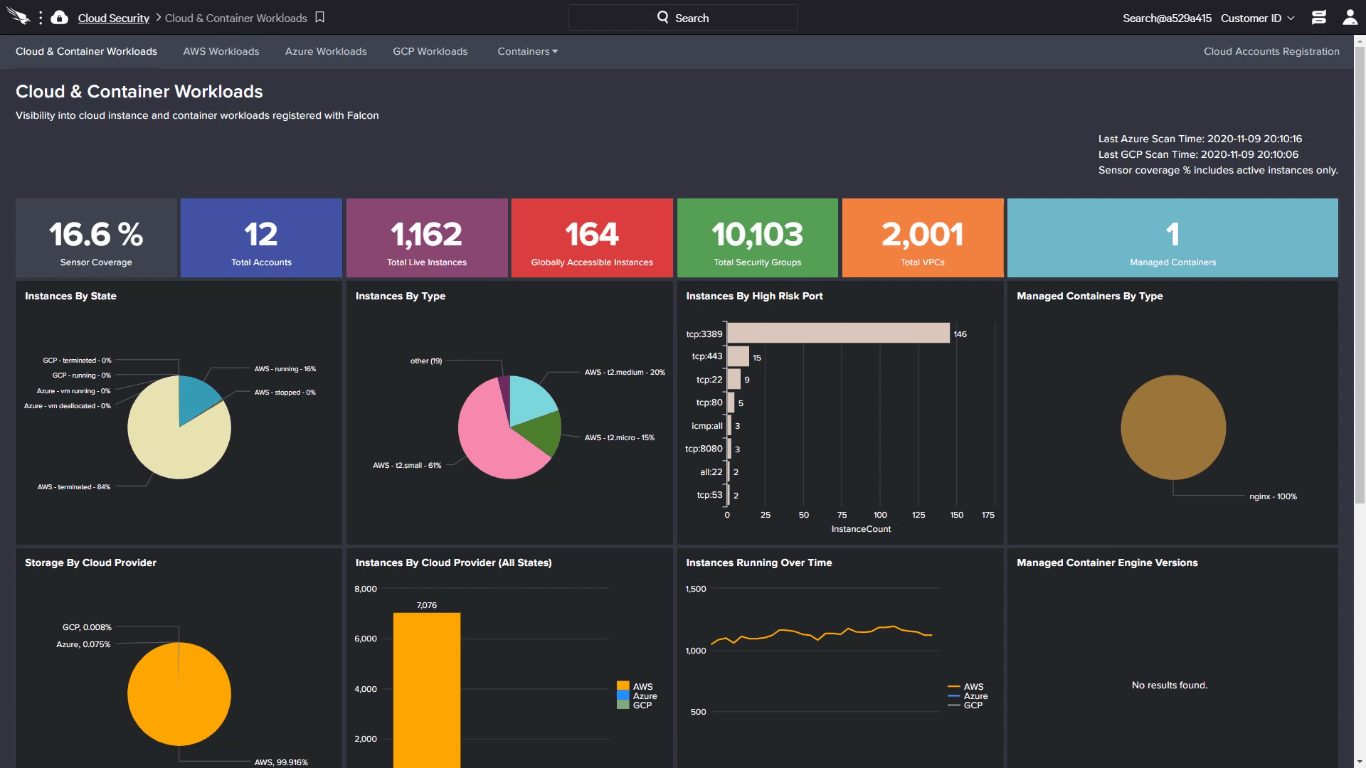
CrowdStrike Falcon is an AI-native endpoint security platform that combines next-generation antivirus, EDR, threat intelligence, and cloud workload protection into a single, lightweight agent.
Who Is CrowdStrike Falcon Best For?
CrowdStrike Falcon is a strong fit for mid-size to enterprise security teams that need centralized endpoint visibility across distributed or cloud-heavy environments.
Why I Picked CrowdStrike Falcon
I picked CrowdStrike Falcon as one of the best for real-time endpoint protection because of how its AI-native detection model handles threats that never touch disk. In environments where 82% of detections are malware-free, signature-based tools simply don't cut it. Falcon Prevent uses behavioral AI to catch attacks mid-execution, while Falcon Insight XDR layers in adversary-driven indicators of attack, giving my team context-rich detections the moment something suspicious starts. That combination, AI prevention plus EDR depth, means my team isn't waiting for an alert to escalate before taking action.
CrowdStrike Falcon Key Features
- Falcon Firewall Management: A centralized host firewall policy manager that lets you set, enforce, and audit firewall rules across your entire endpoint fleet from a single console.
- Falcon Device Control: USB device management that gives you visibility and control over peripheral devices, letting you block, monitor, or allow specific device types by policy.
- Falcon for Mobile: Endpoint detection and response extended to Android and iOS devices, covering mobile threats within the same Falcon console used for desktops and servers.
- Charlotte AI detection triage: An agentic AI layer that automatically triages incoming detections, summarizes findings, and guides response workflows without requiring manual analyst review for each alert.
CrowdStrike Falcon Integrations
CrowdStrike Falcon's Marketplace lets customers discover and deploy integrations built for the Falcon ecosystem. The broader Falcon platform connects to 180+ SaaS, SIEM, ITSM, cloud, vulnerability management, and identity tools through a unified API. Notable integrations include Splunk, ServiceNow, Jira, Okta, Slack, Palo Alto Prisma Cloud, Mimecast, Zscaler ZPA, Google Workspace, and tools across the Microsoft ecosystem including Microsoft 365 and Microsoft Defender. An API is available for custom integrations, and Falcon Fusion SOAR provides pre-configured HTTP Action templates for 130+ vendor APIs to speed up custom workflows.
What's Free?
CrowdStrike Falcon offers a 15-day free trial that includes Falcon Prevent (next-gen antivirus), Falcon Device Control, and Express Support, with no credit card required. There is no free-forever plan, so you'll need to move to a paid tier starting at $7.99 per device per month (Falcon Go) once the trial ends.
Pros and Cons
Pros:
- Behavior-based detection catches fileless attacks
- Auto-quarantines files and isolates compromised hosts
- Lightweight sensor barely uses system resources
Cons:
- Free trial excludes partners and MSSPs
- Limited offline detection and response capabilities

Best for penetration testing

Kali Linux is an open-source operating system designed for cybersecurity professionals and ethical hackers. It provides an extensive suite of tools for penetration testing, security research, and network analysis.
Why I picked Kali Linux: It offers a free-forever plan with a wide range of tools for penetration testing. The platform includes features like vulnerability analysis and network scanning, which are essential for security professionals. Kali Linux's focus on penetration testing makes it an ideal choice for those looking to conduct in-depth security assessments. You can use its extensive toolset to identify and address security vulnerabilities.
Standout features & integrations:
Features include an extensive library of pre-installed security tools, allowing you to conduct various cybersecurity tasks. You can use its customizable interface to tailor the environment to your needs. The platform supports multiple languages, making it accessible to a global audience.
Integrations include Metasploit, Nmap, Wireshark, Aircrack-ng, Hydra, John the Ripper, Burp Suite, OWASP ZAP, Maltego, and Armitage.
What's free? Kali Linux offers a free-forever plan with no restrictions on users or features, providing access to its entire suite of tools.
Pros and Cons
Pros:
- Supports multiple languages
- Highly customizable environment
- Extensive tool library
Cons:
- Requires technical expertise
- Slight learning curve


Burp Suite is a web application security tool used mainly by security professionals and developers. It helps in identifying vulnerabilities and securing web applications through manual and automated testing.
Why I picked Burp Suite: The Community Edition of Burp Suite provides essential manual tools for web security testing at no cost. It allows your team to conduct basic vulnerability assessments without needing a subscription. The free version's focus on web vulnerability scanning makes it a valuable tool for those looking to secure their web applications. You can rely on its capabilities to identify and address potential security gaps.
Standout features & integrations:
Features include tools for intercepting requests, which let you examine and modify web traffic. You can use its spidering feature to map out web applications. The scanner feature helps in identifying common vulnerabilities.
Integrations include Jenkins, Jira, GitHub, GitLab, Bamboo, Azure DevOps, TeamCity, TFS, and Bitbucket.
What's free? Burp Suite offers a free-forever Community Edition with basic manual tools for web security testing.
Pros and Cons
Pros:
- Detailed documentation available
- Detailed documentation available
- Active community support
Cons:
- Requires some technical knowledge
- Limited automation in free version


Aircrack-ng is a suite of tools designed for network monitoring and testing. It's primarily used by network administrators and security professionals to assess Wi-Fi security and troubleshoot network issues.
Why I picked Aircrack-ng: The free offering allows you to monitor and test your network security without any cost. Its ability to capture and analyze packets makes it ideal for network monitoring. The suite includes tools for packet capturing, decryption, and analysis, which are crucial for identifying vulnerabilities. You can conduct thorough network assessments using its free features, aligning with its focus on network monitoring.
Standout features & integrations:
Features include packet sniffing, which lets you capture data on your network. You can also decrypt WEP and WPA keys to assess network security. The suite's ability to replay attacks provides insights into potential vulnerabilities.
Integrations include Wireshark, tcpdump, airodump-ng, aireplay-ng, airdecap-ng, and airbase-ng.
What's free? Aircrack-ng offers a free-forever plan with no user restrictions, making it accessible for unlimited use.
Pros and Cons
Pros:
- Regular updates provided
- Extensive documentation available
- Strong community support
Cons:
- Not beginner-friendly
- Requires command-line knowledge


ZAP, or Zed Attack Proxy, is an open-source web application security scanner used by developers and security professionals. It helps identify vulnerabilities in web applications, providing a comprehensive testing environment for enhancing security.
Why I picked ZAP: The tool offers a free-forever version with features that are essential for web app security testing. It includes automated scanners and a set of tools that allow you to discover security vulnerabilities. ZAP's focus on web app security testing makes it a valuable resource for developers and security teams. You can use its intuitive interface to conduct thorough security assessments without needing a subscription.
Standout features & integrations:
Features include an automated scanner that lets you quickly identify vulnerabilities in your web applications. You can use its spidering tool to map out and analyze the structure of your web app. The tool also provides a passive scanner that monitors web traffic for potential security issues.
Integrations include Jenkins, GitHub, GitLab, JIRA, Slack, Docker, Selenium, Azure DevOps, AWS, and SonarQube.
What's free? ZAP offers a free-forever plan with no user restrictions, allowing full access to its security testing features.
Pros and Cons
Pros:
- Suitable for both developers and testers
- Detailed reporting features
- Customizable testing environment
Cons:
- The occasional false positives may require manual verification
- User interface may require a learning curve for beginners


OpenVAS, which refers to Open Vulnerability Assessment System, is an open-source vulnerability scanner used by IT and security teams to assess network vulnerabilities. It provides a varied suite of tools for detecting security issues, helping organizations strengthen their defenses.
Why I picked OpenVAS: The tool offers a free-forever plan with extensive scanning capabilities to assess vulnerabilities. You can perform detailed network scans and generate reports on potential security threats. OpenVAS's focus on vulnerability assessment makes it an invaluable tool for ensuring network security. You can use its customizable scan configurations to tailor assessments to your specific needs.
Standout features & integrations:
Features include an intuitive web-based interface that lets you manage scans and view results easily. You can use its scheduling feature to automate regular scans of your network environment. The tool also provides detailed reporting, allowing you to analyze vulnerabilities and prioritize remediation efforts.
Integrations include Greenbone Security Manager, Nagios, Splunk, OTRS, OpenSCAP, Nessus, Qualys, AlienVault, Tenable.io, and Kibana.
What's free? OpenVAS is available as a free and open-source software for download, with no user restrictions, providing access to its full range of vulnerability scanning features.
Pros and Cons
Pros:
- Regular updates to vulnerability data
- Customizable scan configurations
- Extensive scanning capabilities
Cons:
- Limited official documentation
- Scans can be resource-intensive


OSSEC is an open-source host-based intrusion detection system (HIDS) designed for monitoring and analyzing server activity. It is mainly used by IT and security teams to detect unauthorized access and changes to system files.
Why I picked OSSEC: The tool offers a free-forever plan with comprehensive intrusion detection capabilities. You can monitor file integrity, perform log analysis, and receive real-time alerts on suspicious activities. OSSEC's focus on host-based intrusion detection makes it an essential tool for maintaining server security. You can customize its rules and configurations to match your specific security needs.
Standout features & integrations:
Features include real-time alerting, which notifies you of any suspicious activities on your system. You can use its rootkit detection feature to identify hidden threats. The tool also offers centralized management, allowing you to monitor multiple systems from a single interface.
Integrations include AlienVault, Splunk, Nagios, Graylog, ELK Stack, Kibana, Logstash, Grafana, PagerDuty, and AWS CloudWatch.
What's free? OSSEC offers a free-forever plan with no limitations on users or features, providing access to its full range of intrusion detection capabilities.
Pros and Cons
Pros:
- Supports multiple platforms
- Real-time alerting system
- Customizable rules and configurations
Cons:
- May need manual configuration for cloud integration
- Lack of dashboards often means time-consuming log analysis


Nikto is an open-source web server scanner used by IT security professionals to identify vulnerabilities and configuration issues. It performs tests against web servers to find potential security threats.
Why I picked Nikto: The tool offers a free-forever version that provides extensive scanning capabilities for web servers. You can detect outdated software and insecure files, helping your team address vulnerabilities. Nikto's focus on web server scanning makes it an essential tool for ensuring server security. You can rely on its regular updates to keep up with the latest threats.
Standout features & integrations:
Features include a deep database of vulnerabilities that lets you identify potential risks quickly. You can perform SSL checks to ensure secure connections. The tool also supports custom plugins, allowing you to extend its capabilities as needed.
Integrations include Metasploit, Nessus, Burp Suite, Nmap, Acunetix, Qualys, OpenVAS, ZAP, IBM AppScan, and WebInspect.
What's free? Nikto offers a free-forever plan with no limitations on users or features, providing full access to its web server scanning capabilities.
Pros and Cons
Pros:
- Fast scanning capabilities
- Supports custom plugin development
- Regular vulnerability database updates
Cons:
- No built-in reporting features
- Limited user interface


KeePass is a free, open-source password manager designed for individuals and small teams. It helps users securely store and manage passwords, offering a range of encryption options to protect sensitive information.
Why I picked KeePass: The tool provides a free-forever plan with strong encryption features to keep your passwords safe. You can store all your passwords in a single database, encrypted with AES or Twofish algorithms. KeePass's focus on password management makes it a reliable choice for those looking to enhance their security practices. You can also generate strong, random passwords to improve your overall security posture.
Standout features & integrations:
Features include a customizable interface that lets you organize passwords into groups for better management. You can use its auto-type feature to input passwords automatically into applications. The tool also offers a built-in password generator to create complex passwords easily.
Integrations include KeePassXC, KeePassHTTP, KeeAnywhere, KeePassSync, KeeWeb, KeePassX, KeeFox, KeePassDroid, MiniKeePass, and MacPass.
What's free? KeePass offers a free-forever plan with no restrictions, allowing full access to its password management features.
Pros and Cons
Pros:
- Frequent updates and improvements
- Open-source and community-driven
- Strong encryption options
Cons:
- Not beginner-friendly
- Requires manual setup


Defendify is an all-in-one cybersecurity platform tailored for IT teams, providing multi-layered protection and cybersecurity management. It serves industries like manufacturing, healthcare, and e-commerce, addressing compliance and cyber insurance needs.
Why I picked Defendify: The free offering, their Cybersecurity Essentials package, includes essential tools for small and mid-sized businesses. These features help your team quickly assess and address vulnerabilities without any cost. Defendify's focus on small business security makes it accessible for those with limited resources. You can benefit from its user-friendly interface and full protection.
Standout features & integrations:
Features include phishing simulations that help your team recognize threats. You can use awareness training and features like a compromised password scan and a cybersecurity health checkup to improve cybersecurity knowledge across your organization. The platform also offers technology-acceptable policies for better compliance management.
Integrations include Microsoft 365, Google Workspace, Slack, Okta, Duo, AWS, Azure, Salesforce, Dropbox, and Zoom.
What's free? Defendify offers a free-forever plan with tools like compromised password scans and cybersecurity health checkups.
Pros and Cons
Pros:
- Offers cybersecurity training
- Suitable for small businesses
- Free essential tools included
Cons:
- Requires regular updates
- Limited advanced features
Other Cybersecurity Tools
Here are some additional cybersecurity tool options that also offer free plans or trials. While these tools didn’t make it onto my shortlist, they’re still worth checking out:
- Gophish
For phishing simulation
- Have I Been Pwned
For data breach alerts
- Metasploit Framework
For exploit development
- Zeek
For network analysis
- Suricata
For intrusion detection
- Security Onion
For host visibility
- Google Authenticator
For two-factor authentication
- Thycotic Secret Server
For enterprise password management
- Wazuh
For cloud security
- OSFMount
For mounting disk images


How I Evaluate Free Cybersecurity Tools
I look at free cybersecurity tools in two layers: the baseline every tool must clear—like real threat detection and genuine free access—and the differentiators that set the best apart.
Core Functionality (Table Stakes For This List)
When I'm selecting tools for my list, I rank each one on a scale from 0 (does not offer the functionality) to 5 (excels in this area) for each core functionality listed below. Then, I calculate the tool's total score into a percentage. Each tool needs to achieve a minimum total score of 65% to be considered for inclusion.
- Threat Detection Capability: I evaluate whether a tool can identify real threats—malware, intrusions, anomalous traffic—across the surfaces it claims to cover.
- Genuinely Free Access: Each tool needs a usable free tier, whether that's open-source, freemium, or a community edition with enough depth to deliver real value.
- Security Scanning Depth: I look at what each tool actually scans—ports, web apps, containers, code repos—and how configurable scan profiles are.
- Alerting & Reporting Output: Good alerts should give you severity context, not just noise. I check for exportable reports you can hand to a manager or auditor.
- Remediation Guidance Quality: Tools like Wazuh and OpenVAS surface CVSS scores and fix recommendations. I look for that kind of actionable context in every tool.
- Integration With Security Stacks: Whether it's pushing logs to a SIEM or plugging into a CI/CD pipeline, I evaluate how each tool connects to real-world workflows.
Once I have a list of tools that meet this criteria, I consider what sets each platform apart.
Differentiating Factors (What Sets Vendors Apart)
Here's how I compare and contrast different vendors:
Standout Features
Custom rule authoring is a big differentiator. Tools like Snort and Suricata let you write detection rules tuned to your specific environment, which matters when you're defending infrastructure with unique traffic patterns. I also evaluate community plugin ecosystems, since active contributor bases extend what a tool can do without waiting on a vendor roadmap. Cross-platform coverage is another factor I weigh, especially for teams managing mixed Windows, Linux, and containerized environments from a single toolset.
Beyond Features
Licensing terms deserve close attention—some tools restrict free use to non-commercial settings, which can catch IT teams off guard mid-deployment. I also check update cadence and project activity. A tool with stale vulnerability databases or months-old commits is a liability, not an asset. Community and documentation quality matters just as much; projects like OSSEC and Nmap thrive because their contributor bases keep knowledge bases current and forums active, which is often the only support channel you'll get with free tools.
How to Choose a Free Cybersecurity Tool
Complex feature lists and pricing structures can make it hard to figure out what you’re really getting from free cybersecurity tools. To help you stay focused as you work through your software selection process, here are some factors to keep in mind:
| Factor | What to Consider |
|---|---|
| Free Offer Scope | Understand what's included in the free plan. Check for limitations on features, number of users, or duration to ensure it meets your needs. |
| Scalability | Consider whether the tool can grow with your team. Look for options that accommodate increased data or users as your business expands. |
| Integrations | Check if the tool integrates with your existing tech and computer systems. Seamless compatibility with tools like Slack, Jira, or AWS can enhance workflow efficiency. |
| Ease of Use | Evaluate the user interface and setup process. A tool that's easy to navigate and requires minimal training will save your team time and frustration. |
| Security Features | Ensure the tool offers essential security features like encryption, firewall protection, and intrusion detection to safeguard your data effectively. |
| Support | Look for available customer support options. Access to live chat or community forums can be crucial when you encounter issues. |
| Customization | Determine if the tool allows you to tailor settings to fit your specific security needs, providing flexibility in how you manage cybersecurity tasks. |
| Performance | Assess the tool’s impact on system performance. A tool that runs efficiently without slowing down your network is essential for smooth operations. |
What Are Free Cybersecurity Tools?
Cybersecurity tools are software solutions designed to protect systems, networks, and data from cyber threats. These tools often come with free plans or trials, allowing users to access basic features without cost. They're typically used by IT professionals, security analysts, and small business owners who need to secure their digital assets. These tools provide value by offering protection against data breaches, malware, and unauthorized access. Features like threat detection, encryption, and network monitoring help with maintaining security and ensuring peace of mind for users.
Features
Let’s go over the features commonly found in cybersecurity tools, and which ones are usually included in free vs. paid plans.
Typically Free Cybersecurity Tools Features
- Threat detection: Identifies potential security threats and alerts users to take action, helping prevent breaches.
- Password management: Stores and encrypts passwords in a secure database, making it easier to manage credentials.
- Network monitoring: Provides visibility into network activity to detect unusual behavior and unauthorized access.
- Vulnerability scanning: Scans systems for known vulnerabilities, allowing users to address security gaps.
- Log analysis: Analyzes system logs to identify patterns and anomalies that could indicate security issues.
- Basic reporting: Generates simple reports on security events, helping users track and understand threats.
- Rootkit detection: Identifies hidden malicious software, protecting systems from covert attacks.
- File integrity monitoring: Tracks changes to critical files, ensuring unauthorized modifications are detected.
Typically Paid Cybersecurity Tools Features
- Advanced threat intelligence: Offers in-depth analysis, AI-powered functionalities, and context for threats, enabling proactive security measures.
- Automated incident response: Provides tools to automatically respond to threats, reducing response time and minimizing damage from potential cybercriminals.
- Comprehensive analytics: Delivers detailed insights and analytics to better understand security posture and risks.
- Customizable dashboards: Allow users to create tailored views of security data and network traffic, enhancing situational awareness.
- Integration with SIEM systems: Connects with Security Information and Event Management systems for centralized security management.
- Advanced reporting: Provides detailed and customizable reports, giving users a deeper understanding of security events.
- Role-based access control: Enables fine-grained control over user permissions, ensuring only authorized personnel can access sensitive data.
- Cloud security features: Offers additional protections for cloud-based environments, safeguarding data stored off-premises.
Benefits
Implementing free and open-source cybersecurity tools provides several benefits for your team and your business. Here are a few you can look forward to:
- Cost savings: Access essential security features without financial investment, allowing you to allocate resources elsewhere.
- Improved security awareness: Utilize tools like threat detection and log analysis to stay informed about potential risks.
- Easy access: Quickly deploy and use tools without complex licensing agreements, making it easier to start protecting your systems.
- Scalability: Many tools can grow with your business, providing continued protection as your needs evolve.
- Community support: Benefit from active user communities that offer advice and share best practices, enhancing your security efforts.
- Customizability: Adjust settings and configurations to suit your specific needs, ensuring the tools work effectively for your environment.
- Increased efficiency: Automate routine security tasks, freeing up time for your team to focus on other critical activities.
Costs & Pricing
I realize you came to this article looking for the best cybersecurity tools options that are available for free. While most tools in this list are free and open source tools, some may only offer limited features. In which case, there's a good chance you'll need to scale your plan up in the future.
The table below summarizes common plans, their average prices, and typical features included in cybersecurity tools solutions:
Plan Comparison Table for Cybersecurity Tools
| Plan Type | Average Price | Common Features |
|---|---|---|
| Free Plan | $0 | Basic threat detection, password management, network monitoring, and log analysis. |
| Personal Plan | $5-$25/user/month | Advanced threat detection, custom alerts, basic reporting, and limited integrations. |
| Business Plan | $30-$75/user/month | Comprehensive analytics, automated response, enhanced reporting, and full integrations. |
| Enterprise Plan | $100+/user/month | Advanced threat intelligence, customizable dashboards, role-based access, and cloud security. |
Free Cybersecurity Tools FAQs
Here are some answers to common questions about free cybersecurity tools:
How do I choose free tools for my security stack?
Start by mapping your biggest risks (web apps, endpoints, networks, identity) and pick one strong free tool per layer rather than piling on overlapping scanners. Check OS support, update cadence, and community activity, because abandoned security projects become liabilities. Prioritize tools that export standard formats (CSV, JSON, SARIF) so results can be centralized later. Finally, run a small pilot on a non-critical asset to validate usability and noise levels there.
Can free cyber tools satisfy compliance needs?
Free tools can support compliance, but they rarely cover every control alone. Use them to generate evidence—scan reports, configuration baselines, access logs—then document processes around them. For frameworks like ISO 27001 or SOC 2, you’ll still need policies, risk registers, and periodic reviews. Make sure the tools’ data handling aligns with requirements and security programs (encryption, retention, access control). When auditors ask for continuity and support, be ready to show maintenance plans too.
How often should I run vulnerability scans, free?
Short answer: Frequency depends on the change rate and exposure. For internet-facing systems, run vulnerability scans weekly or after any major release; for internal networks, monthly is often fine. Lightweight checks like dependency and container scans can run on every CI build. Schedule Aircrack-ng or wireless audits quarterly, or after office moves. Pair automated scans with a quarterly manual review to catch logic and auth issues scanners miss. Consistency matters more than perfection.
Are free security tools safe to use in production?
They can be, if you stage them properly. Never point exploit or aggressive scanning tools at production without scoping and throttling—Metasploit, Nikto, and active ZAP scans can cause outages. Start in a staging environment, then move to production with profiles and narrow targets. Coordinate with IT for maintenance windows, monitor system load during tests, and keep rollback plans ready. For always-on tools like OSSEC or KeePass, test policies before rollout.
How can teams learn to use these tools effectively?
Treat adoption like ongoing security training, not a one-off install. Create short, role-based playbooks: admins learn OpenVAS and OSSEC tuning, developers learn ZAP/Burp basics, and all staff learn KeePass plus phishing awareness via Gophish. Run monthly “attack and defend” labs using Kali tools on sandbox targets. Track simple metrics—phish click-rate, time-to-patch, high-risk findings—share wins, and refresh training quarterly to keep momentum. Record FAQs and office hours for new hires, too.
What’s the best way to keep free tools updated now?
Free doesn’t mean set-and-forget. Subscribe to project release feeds, GitHub alerts, or distro repositories, so you know when engines and signatures update. Automate updates where possible, but test new versions in staging to avoid breaking workflows. Maintain a simple inventory with version numbers and owners. If a tool stops receiving updates or its community goes quiet, plan a replacement quickly. Regular maintenance keeps free security tools safe and effective consistently.