

Atlassian Bamboo Review 2026: Pros, Cons, Features, and Pricing
Atlassian Bamboo stands out for seamless Jira integration and robust CI/CD features, but may suit larger teams best due to its pricing and complexity compared to simpler CI tools.

We review tools independently, and commissions help fund our testing. See our transparency policy, our methodology, or suggest a tool.
Bamboo is a continuous integration tool built by Atlassian for teams that need to automate builds, test pipelines, and deployments in a structured, connected environment. I'd consider it most seriously if your team already runs on Jira and Bitbucket—Bamboo's native integration with both makes it a more cohesive option than Jenkins, which typically requires significant plugin configuration and ongoing maintenance to reach the same level of connectivity.
Bamboo Evaluation Summary

4.1/5
- From $1,200
- 30-day free trial
Why Trust Our Software Recommendations
6,700+
Reviews
20
Industry experts
16+
Evaluation factors
14
Years
Our team has been testing and reviewing software since 2012. As tech leaders ourselves, we know how difficult—and important—it is to choose the right software.
For this guide, we evaluated tools using hands-on testing and independent research, scoring tools using our selection criteria.
Our reviews reflect our human editorial judgment, not a sales pitch.
Expert reviewers:
- Paulo Gardini MiguelTech Director
 Tim FisherVP of AI
 Gabriel RosasTech Lead & Software Architect
 Christhian GruhnTech Lead & Platform Architect

Bamboo Overview
If you’re judging Atlassian Bamboo against other continuous integration tools, its deep Jira and Bitbucket integration, flexible deployment projects, and clear interface make it a strong choice for teams already using Atlassian products. Pricing can be steep for smaller teams, and onboarding takes some effort, but the documentation and support are solid.
Bamboo is best for organizations that want tight toolchain integration and need advanced build and deployment pipelines—especially if you’re managing complex workflows or multiple environments.
Pros
- Built-in disaster recovery and high availability features.
- Supports parallel and distributed builds for faster pipelines.
- Deep integration with Jira and Bitbucket for traceability.
Cons
- Limited flexibility for cloud-based or hybrid deployments.
- Configuration UI can be less intuitive for new users.
- Pricing increases quickly with more remote agents.
Is Bamboo Right For Your Needs?
Who Would be a Good Fit for Bamboo?
Bamboo is a strong choice for teams that need advanced build and deployment pipelines, especially if you’re already invested in Atlassian’s ecosystem. It is best for organizations with complex workflows, strict compliance needs, or large-scale software delivery.
Its traceability, parallel build support, and disaster recovery features make it ideal for regulated industries, enterprise IT, and teams managing multiple environments.
- Managed ITServices Centralizes deployment management for multiple client environments.
- Product EngineeringIntegrates with Jira for end-to-end visibility across releases.
- Financial ServicesDisaster recovery and traceability features support strict security needs.
- DevOps TeamsSupports advanced automation and custom build pipelines.
- Large EnterprisesScales well with distributed builds and high availability options.
- Regulated IndustriesBamboo’s audit trails and deployment controls help meet compliance requirements.
Who Would be a Bad Fit for Bamboo?
Bamboo might not suit small businesses or startups with limited resources, as its setup can be more time-consuming compared to simpler CI/CD tools. Teams not using Atlassian products may find Bamboo’s integration capabilities less beneficial. If your team prefers a modern interface, you might find Bamboo’s design outdated. Additionally, if you’re looking for extensive documentation, Bamboo’s resources might fall short for advanced features.
- Education SectorComplexity and cost don’t align with academic project needs.
- Non-Atlassian UsersBest features require deep integration with Jira and Bitbucket.
- Cloud-Native TeamsLimited flexibility for hybrid or fully cloud-based deployments.
- FreelancersOverkill for solo developers or small-scale automation.
- Marketing AgenciesLacks features tailored to non-technical or creative workflows.
- Small StartupsPricing and setup overhead outweigh benefits for simple projects.
Our Review Methodology
How We Test & Score Tools
We’ve spent years building, refining, and improving our software testing and scoring system. The rubric is designed to capture the nuances of software selection and what makes a tool effective, focusing on critical aspects of the decision-making process.
Below, you can see exactly how our testing and scoring works across seven criteria. It allows us to provide an unbiased evaluation of the software based on core functionality, standout features, ease of use, onboarding, customer support, integrations, customer reviews, and value for money.
Core Functionality (25% of final scoring)
The starting point of our evaluation is always the core functionality of the tool. Does it have the basic features and functions that a user would expect to see? Are any of those core features locked to higher-tiered pricing plans? At its core, we expect a tool to stand up against the baseline capabilities of its competitors.
Standout Features (25% of final scoring)
Next, we evaluate uncommon standout features that go above and beyond the core functionality typically found in tools of its kind. A high score reflects specialized or unique features that make the product faster, more efficient, or offer additional value to the user.
We also evaluate how easy it is to integrate with other tools typically found in the tech stack to expand the functionality and utility of the software. Tools offering plentiful native integrations, 3rd party connections, and API access to build custom integrations score best.
Ease of Use (10% of final scoring)
We consider how quick and easy it is to execute the tasks defined in the core functionality using the tool. High scoring software is well designed, intuitive to use, offers mobile apps, provides templates, and makes relatively complex tasks seem simple.
Onboarding (10% of final scoring)
We know how important rapid team adoption is for a new platform, so we evaluate how easy it is to learn and use a tool with minimal training. We evaluate how quickly a team member can get set up and start using the tool with no experience. High scoring solutions indicate little or no support is required.
Customer Support (10% of final scoring)
We review how quick and easy it is to get unstuck and find help by phone, live chat, or knowledge base. Tools and companies that provide real-time support score best, while chatbots score worst.
Customer Reviews (10% of final scoring)
Beyond our own testing and evaluation, we consider the net promoter score from current and past customers. We review their likelihood, given the option, to choose the tool again for the core functionality. A high scoring software reflects a high net promoter score from current or past customers.
Value for Money (10% of final scoring)
Lastly, in consideration of all the other criteria, we review the average price of entry level plans against the core features and consider the value of the other evaluation criteria. Software that delivers more, for less, will score higher.
Core Features
Parallel Builds
Run multiple builds and tests at the same time to speed up delivery. This helps teams catch issues faster and reduce bottlenecks in the pipeline.
Deployment Projects
Automate and manage releases across different environments with clear visibility. You can track, promote, and roll back deployments as needed.
Custom Build Plans
Design flexible build workflows with stages, jobs, and tasks tailored to your process. This lets you automate everything from code compilation to artifact creation.
Branch Detection
Automatically create and manage build plans for new branches. This supports feature branching and helps teams test changes in isolation.
Built-In Disaster Recovery
Protect your build and deployment data with backup and restore options. This is valuable for teams with strict uptime or compliance requirements.
Role-Based Permissions
Control who can view, edit, or run builds and deployments. This feature supports secure collaboration and helps enforce separation of duties.

Standout Features
Build Result Chaining
Bamboo lets you trigger builds based on the results of previous builds, creating complex, automated workflows. This is especially useful for multi-stage pipelines where one project’s success should kick off another.
Manual Stage Gates
You can require manual approval before certain deployment stages proceed, adding an extra layer of control. This feature is valuable for teams needing compliance checks or stakeholder sign-off before production releases.
Ease of Use
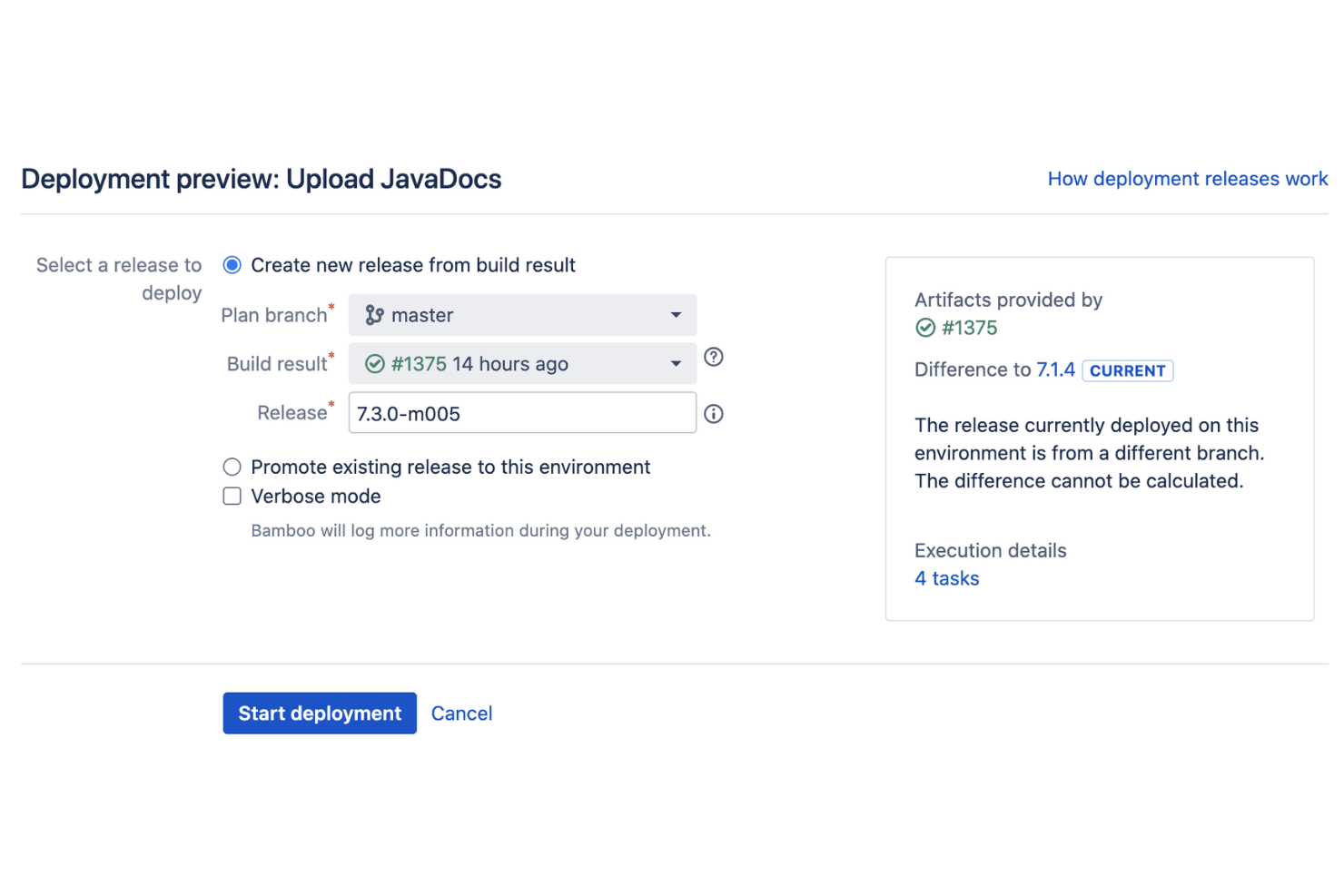
Bamboo’s interface is clean and logically organized, but it’s not the most beginner-friendly option for continuous integration. Many users mention that configuring complex build plans and deployment projects takes time to master, especially if you’re new to CI/CD concepts.
However, once set up, the visual pipeline editor and detailed logs make ongoing management straightforward. Teams with prior CI experience will appreciate the control and transparency Bamboo offers, but onboarding can be a hurdle for smaller or less technical teams.

Onboarding
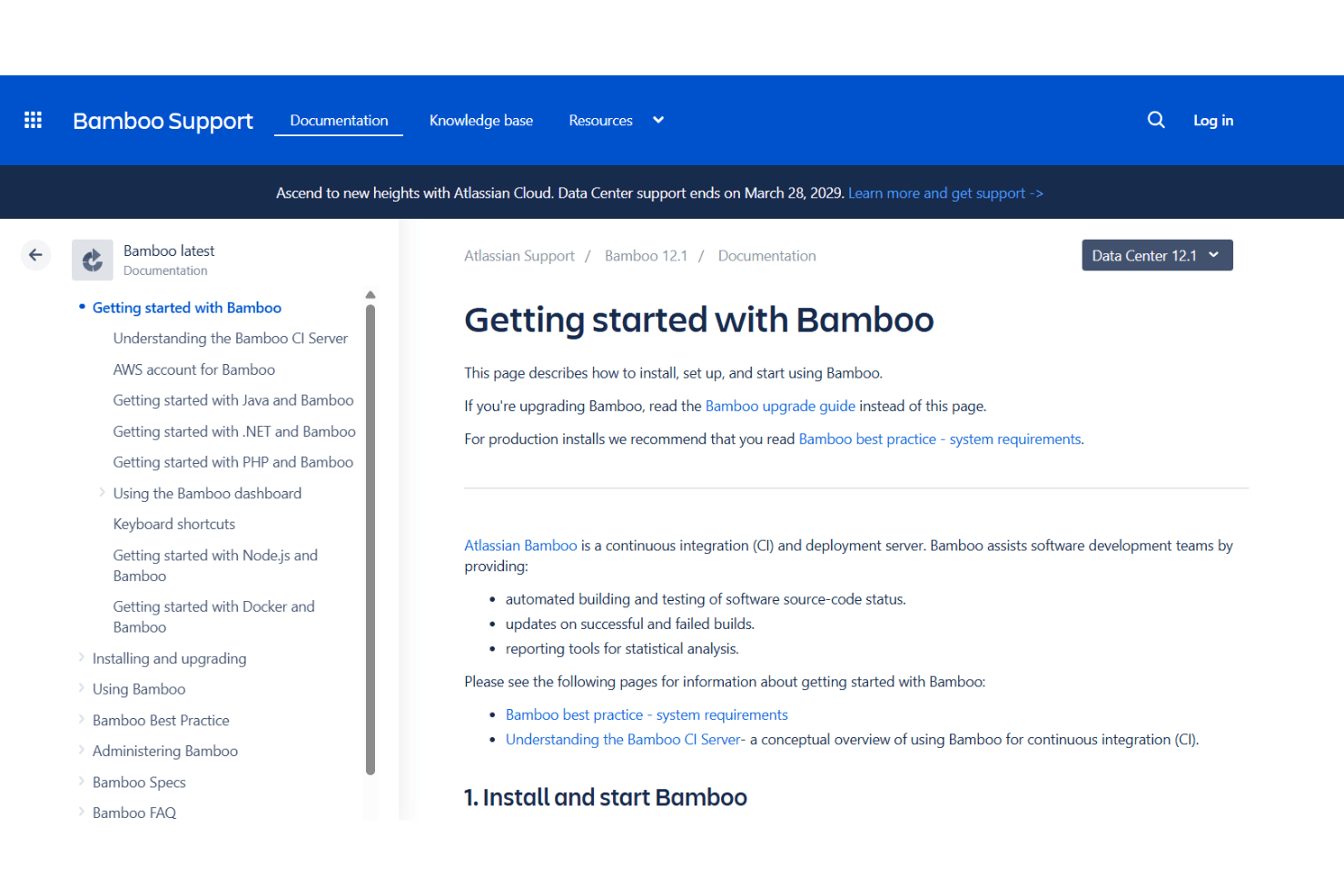
Bamboo’s onboarding experience is thorough but can feel overwhelming for new users, especially those unfamiliar with CI/CD pipelines. The documentation is detailed, and Atlassian’s community forums and support channels are active, which helps shorten the learning curve.
Many users say initial setup and configuration require careful attention, but the guided tutorials and sample projects provide a helpful starting point. Teams willing to invest time upfront will find the resources available make the transition smoother.
Customer Support
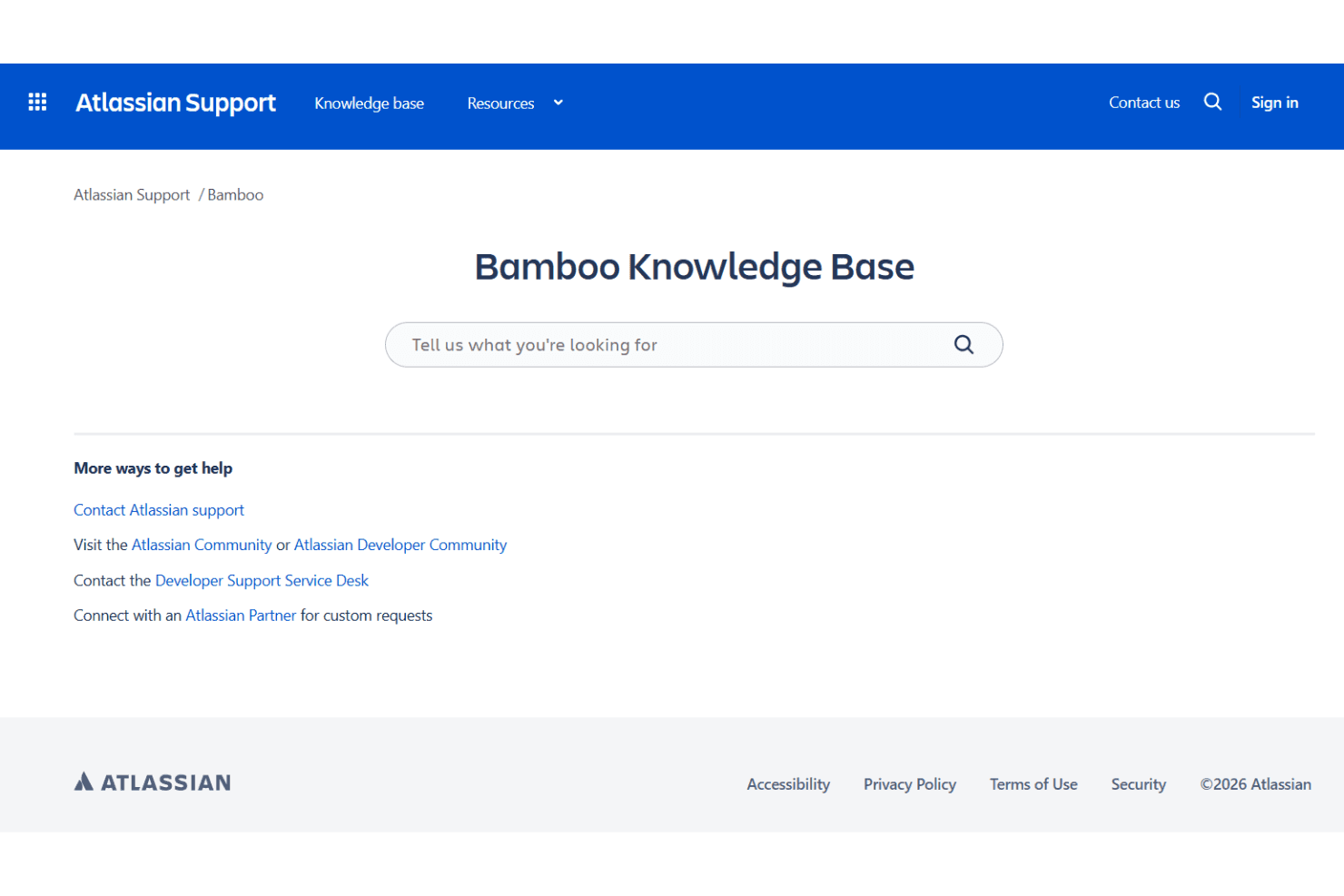
Bamboo users generally report positive experiences with Atlassian’s customer support, highlighting responsive ticket handling and a well-maintained knowledge base. The active community forums and extensive documentation help resolve most issues quickly.
The combination of direct support, community input, and clear troubleshooting guides makes it easier for teams to solve problems, though some users mention that complex issues can take longer to resolve due to the tool’s depth and flexibility.
Integrations
Atlassian Bamboo review integrates with Jira Software, Bitbucket, Fisheye, Crucible, AWS CodeDeploy, Docker, Maven, Git, Subversion, and Mercurial, among others.
Bamboo also offers a REST API and supports custom scripts for connecting with additional third-party tools.

Value for Money
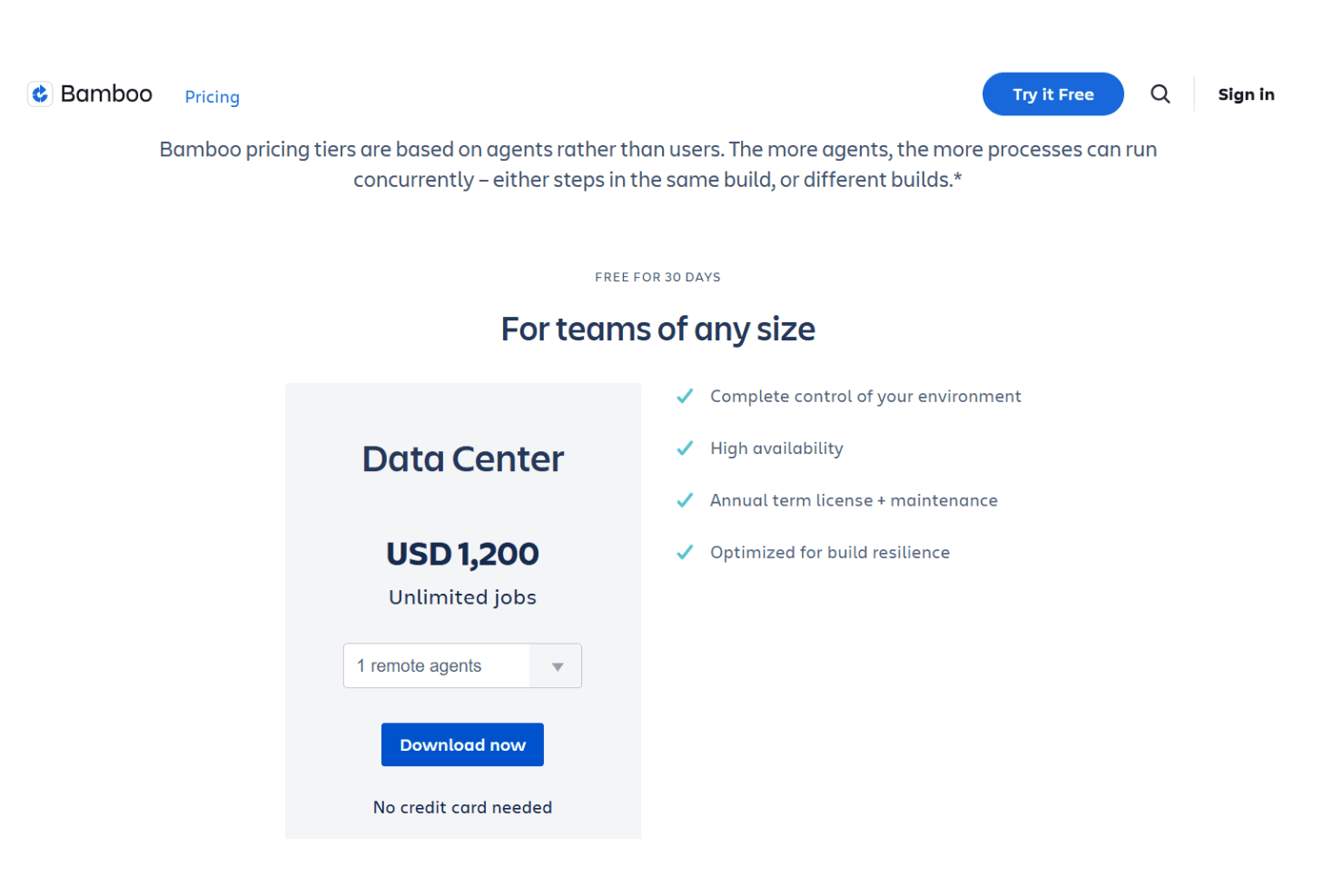
Bamboo’s pricing is competitive for larger teams that need advanced features and deep Atlassian integration, but it can get expensive as you add more remote agents. Many users feel the cost is justified by its scalability, security, and automation capabilities, though smaller teams may find the entry price high for their needs.
Bamboo Specs
- A/B Testing: No
- API: Yes
- Automated Testing: Yes
- Browser Compatibility Testing: No
- Bug Tracking: Yes
- Calendar Management: No
- CI/CD Integration: Yes
- Dashboard: Yes
- Data Export: Yes
- Data Import: Yes
- Data Visualization: No
- Developer Tools: Yes
- External Integrations: Yes
- History/Version Control: Yes
- Manual Testing: No
- Multi-User: Yes
- Notifications: Yes
- Performance Testing: No
- Regression Testing: No
- Scheduling: Yes
- Status Notifications: Yes
- Third-Party Plugins/Add-Ons: Yes
Bamboo FAQs
Bamboo Company Overview & History
Atlassian, headquartered in Sydney, Australia, is a global software company known for products like Bamboo, Jira Software, and Bitbucket. The company employs thousands worldwide and is recognized for its collaborative work culture and focus on agile development tools. Atlassian’s products are used by organizations of all sizes, including notable clients such as NASA and Splunk.
The company is publicly traded and has built a reputation for supporting software teams with integrated, scalable solutions.
Atlassian Major Milestones
- 2002: Atlassian founded in Sydney, Australia.
- 2007: Bamboo released as a continuous integration and deployment tool.
- 2010s: Integration with Jira Software, Bitbucket, and Fisheye deepens, expanding Bamboo’s capabilities.
- 2020s: Bamboo Data Center edition launched, offering high availability and disaster recovery for enterprise teams.
- Ongoing: Atlassian products adopted by major organizations like NASA and Splunk, reinforcing its presence in the enterprise software market.