
ArangoDB Review: Pros, Cons, Features and Pricing
ArangoDB excels with its flexible multi-model database approach, offering your team a versatile solution in the Infrastructure Software space.

We review tools independently, and commissions help fund our testing. See our transparency policy, our methodology, or suggest a tool.
ArangoDB is an IT infrastructure software built around a native multi-model database engine that handles graph, document, and key-value data in a single system. It's worth considering when your applications need to query complex data relationships without managing multiple specialized databases. I'd choose ArangoDB over Neo4j when you need graph traversal capabilities but also need document and key-value storage, whereas something like Neo4j locks you into a graph-only model, while ArangoDB handles all three natively without running separate database layers.
ArangoDB Evaluation Summary
4.6/5
- Priced by the hour based on the size of the deployment and the region in which it is created
- 14-day free trial available
Why Trust Our Software Recommendations
6,700+
Reviews
20
Industry experts
16+
Evaluation factors
14
Years
Our team has been testing and reviewing software since 2012. As tech leaders ourselves, we know how difficult—and important—it is to choose the right software.
For this guide, we evaluated tools using hands-on testing and independent research, scoring tools using our selection criteria.
Our reviews reflect our human editorial judgment, not a sales pitch.
Expert reviewers:
- Paulo Gardini MiguelTech Director
 Tim FisherVP of AI
 Gabriel RosasTech Lead & Software Architect
 Christhian GruhnTech Lead & Platform Architect

ArangoDB Overview
In my opinion, ArangoDB is a strong choice for businesses needing a NoSQL l database. It excels with flexible data handling and a unified query language, making it a valuable asset for industries like finance and e-commerce. Compared to other infrastructure software, its standout features are its versatility and performance in managing complex data relationships. However, onboarding can be smoother, and customer support, while adequate, isn't exceptional. If your team values a flexible, cost-effective solution for intricate data tasks, ArangoDB is worth cons
Pros
- It supports multiple data models, giving your team flexibility in handling different data types.
- The single query language simplifies your data management tasks.
- ArangoDB's performance excels in managing complex data relationships efficiently.
Cons
- Onboarding can be challenging for new users, requiring time to get up to speed on the internal workings and schema.
- Customer support may not meet all your expectations, especially for complex issues.
- It might not be the best fit if your team prefers a more intuitive user interface.
Is ArangoDB Right For Your Needs?
Who Would be a Good Fit for ArangoDB?
ArangoDB is ideal for businesses handling complex data relationships, like those in e-commerce and finance. If your team needs to manage diverse data models with a single query language, ArangoDB's multi-model database is a strong choice. Its flexibility and performance make it suitable for industries where data integration and analysis are crucial to operations. Teams familiar with graph databases, such as Neo4j, will particularly appreciate its efficiency in managing interconnected data.
- E-commerce AnalyticsArangoDB efficiently manages complex customer, supply chain, and transaction data relationships.
- Finance DepartmentsIt supports intricate data models, crucial for financial analysis and reporting.
- Data Integration TeamsArangoDB excels in handling diverse data models with ease.
- Tech StartupsIts versatility provides a flexible foundation for evolving data needs and mitigating vulnerabilities.
- Healthcare AnalyticsIt handles complex patient and treatment data relationships effectively.
- Research InstitutionsArangoDB supports varied data models, crucial for complex research data management.
Who Would be a Bad Fit for ArangoDB?
ArangoDB might not suit businesses that need simple, straightforward database solutions or those with limited technical expertise. If your team prefers a more intuitive interface and doesn't need to manage complex data relationships, ArangoDB's advanced features could be overwhelming. Small businesses with basic data needs may find it unnecessarily complex, and those expecting extensive customer support might be disappointed.
- Small Retail ShopsThey often need simpler databases like Microsoft SQL without complex data management.
- Non-Technical TeamsTeams without technical expertise might struggle with ArangoDB's advanced features, particularly how to efficiently traverse complex graphs.
- Basic Inventory ManagementSimple inventory systems don't require the complexity ArangoDB offers.
- FreelancersIndividual users with straightforward data needs may find it too complex.
- Local NonprofitsThey usually require simple, budget-friendly database options.
- Traditional ManufacturingIndustries with straightforward data requirements won't benefit from ArangoDB's multi-model capabilities.
Our Review Methodology
How We Test & Score Tools
We’ve spent years building, refining, and improving our software testing and scoring system. The rubric is designed to capture the nuances of software selection and what makes a tool effective, focusing on critical aspects of the decision-making process.
Below, you can see exactly how our testing and scoring works across seven criteria. It allows us to provide an unbiased evaluation of the software based on core functionality, standout features, ease of use, onboarding, customer support, integrations, customer reviews, and value for money.
Core Functionality (25% of final scoring)
The starting point of our evaluation is always the core functionality of the tool. Does it have the basic features and functions that a user would expect to see? Are any of those core features locked to higher-tiered pricing plans? At its core, we expect a tool to stand up against the baseline capabilities of its competitors.
Standout Features (25% of final scoring)
Next, we evaluate uncommon standout features that go above and beyond the core functionality typically found in tools of its kind. A high score reflects specialized or unique features that make the product faster, more efficient, or offer additional value to the user.
We also evaluate how easy it is to integrate with other tools typically found in the tech stack to expand the functionality and utility of the software. Tools offering plentiful native integrations, 3rd party connections, and API access to build custom integrations score best.
Ease of Use (10% of final scoring)
We consider how quick and easy it is to execute the tasks defined in the core functionality using the tool. High scoring software is well designed, intuitive to use, offers mobile apps, provides templates, and makes relatively complex tasks seem simple.
Onboarding (10% of final scoring)
We know how important rapid team adoption is for a new platform, so we evaluate how easy it is to learn and use a tool with minimal training. We evaluate how quickly a team member can get set up and start using the tool with no experience. High scoring solutions indicate little or no support is required.
Customer Support (10% of final scoring)
We review how quick and easy it is to get unstuck and find help by phone, live chat, or knowledge base. Tools and companies that provide real-time support score best, while chatbots score worst.
Customer Reviews (10% of final scoring)
Beyond our own testing and evaluation, we consider the net promoter score from current and past customers. We review their likelihood, given the option, to choose the tool again for the core functionality. A high scoring software reflects a high net promoter score from current or past customers.
Value for Money (10% of final scoring)
Lastly, in consideration of all the other criteria, we review the average price of entry level plans against the core features and consider the value of the other evaluation criteria. Software that delivers more, for less, will score higher.
Core Features
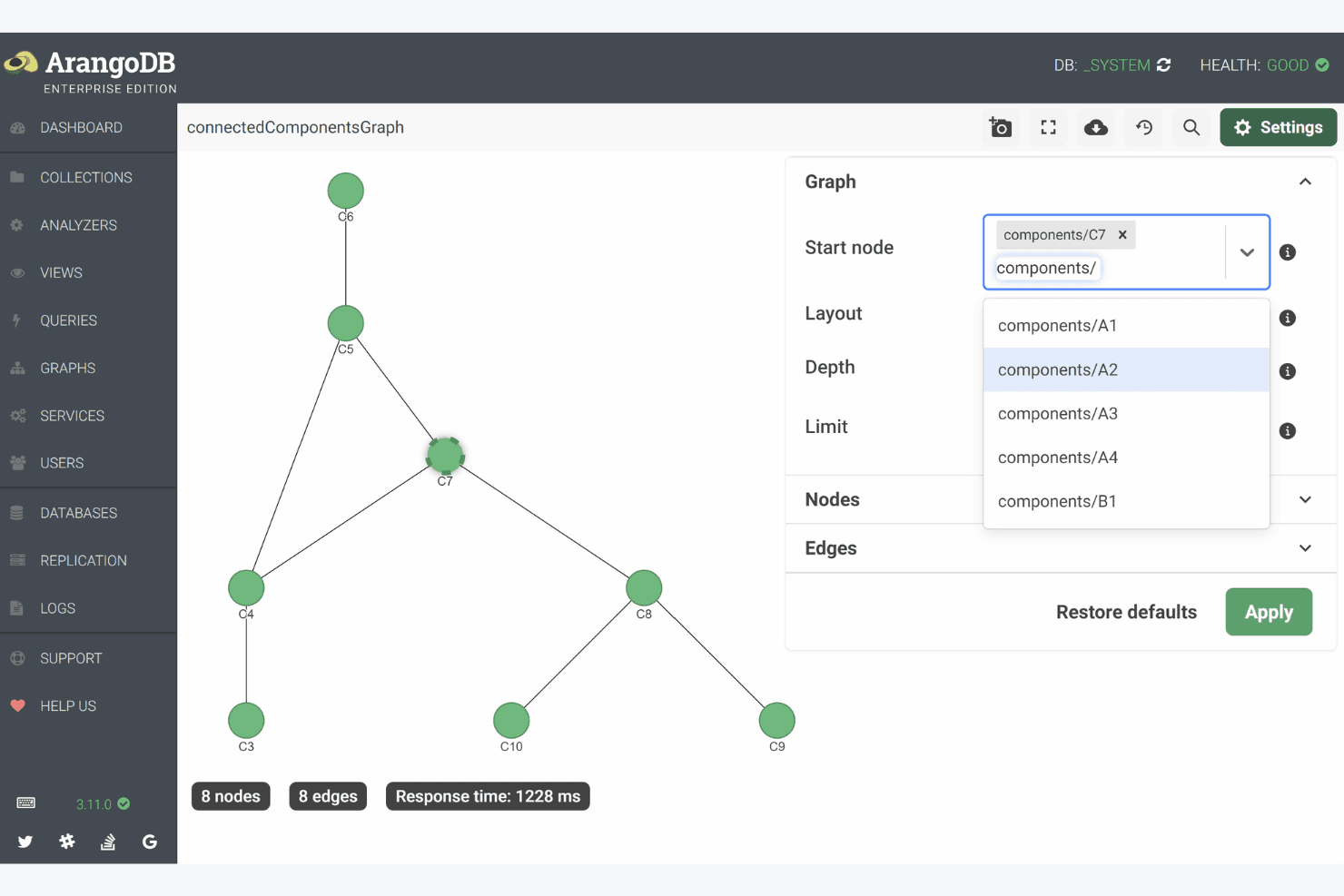
Multi-Model Database: ArangoDB lets your team work with different data models like document, graph, and key-value in one system. This is helpful for building machine learning based applications.
AQL (ArangoDB Query Language): AQL provides a powerful, unified query language that handles various data models. Your team can perform complex queries without needing multiple query languages.
Graph Database Capabilities: ArangoDB excels in managing interconnected data with its graph database features. This is valuable for projects requiring complex relationship mappings.
ACID Transactions: It ensures data consistency and reliability with support for ACID transactions. Your critical business operations can rely on secure and predictable data handling.
Sharding and Replication: These features help distribute data across clusters, boosting performance and reliability. Your team can manage large datasets more efficiently.
Built-in Full-Text Search: ArangoDB offers full-text search capabilities within its database. This allows your team to perform advanced search operations without needing external tools.
Standout Features
Foxx Microservices Framework: ArangoDB includes a built-in framework for creating microservices directly in the database. This empowers your team to deploy and manage services efficiently.
SmartGraphs: This feature optimizes graph data management, reducing the complexity of handling large graphs. It enhances performance, making your graph data operations faster and more efficient.
Ease of Use
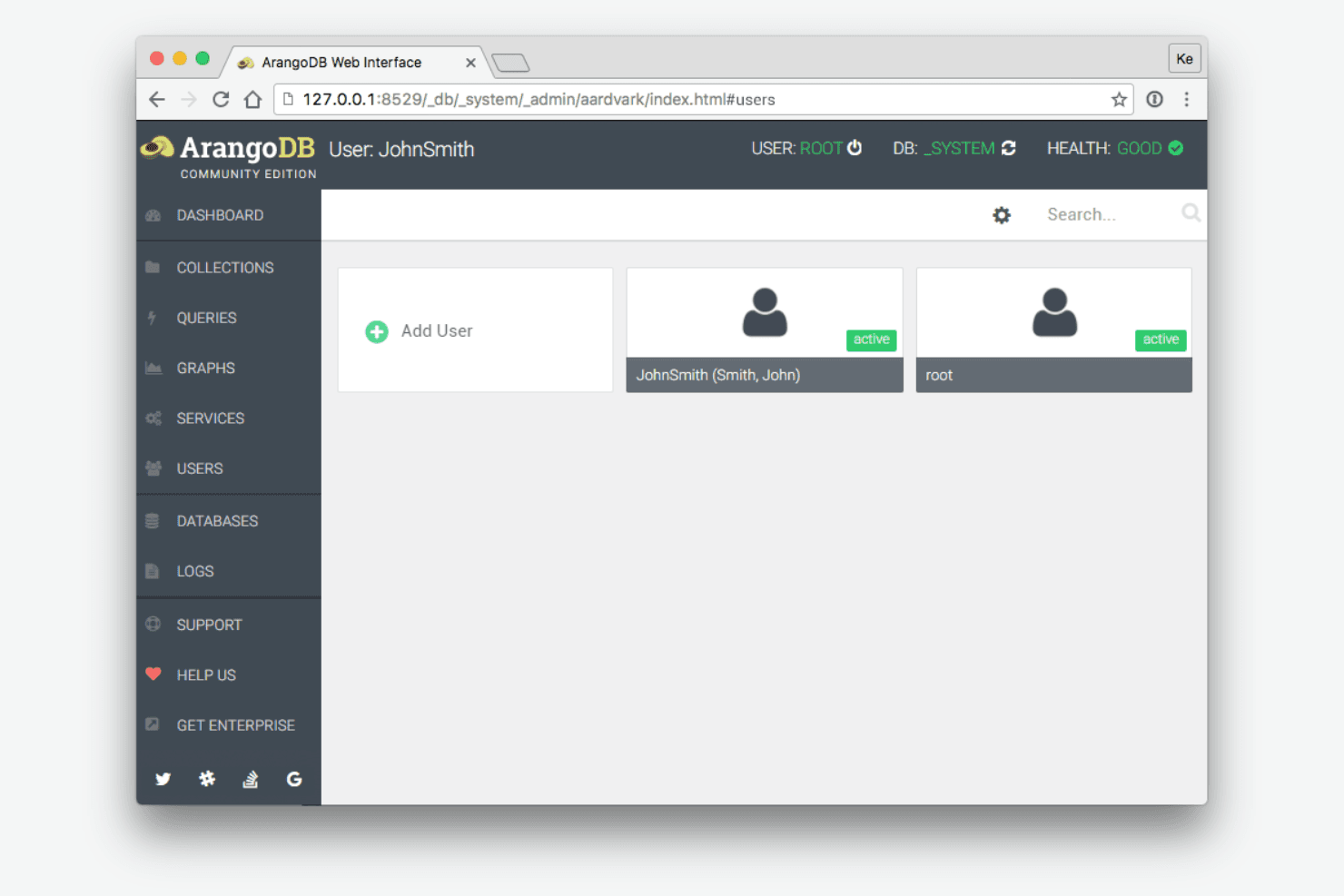
ArangoDB offers a solid user experience, though its advanced features can present a learning curve for new users. The interface is functional but may not be as intuitive as some might hope. If your team is familiar with multi-model databases, you'll find its unified query language and graph capabilities valuable. However, teams new to such systems might need time to adapt to its complex functionalities. Overall, it's user-friendly for those with the right expertise.
Onboarding
ArangoDB's onboarding can be challenging, especially for teams new to multi-model databases. While it provides documentation and tutorials, the complexity of its features might require additional time and effort to fully grasp. Your team may benefit from supplementary training or support to unlock its potential. The available resources are helpful, but they might not always cover the depth needed for complex use cases. Overall, expect a learning curve before achieving full proficiency.

Customer Support
ArangoDB's customer support is generally adequate but might not always meet your expectations, especially for complex queries. While it offers standard support channels like documentation and community forums, response times can vary. Your team might find the support helpful for basic issues, but might need dedicated expert support for intricate problems. Overall, the support is functional, but there’s room for improvement in handling complex user needs.

Integrations
ArangoDB integrates with Spring Data, Spring Boot Starter, Apache Spark, Apache Kafka, and Apache TinkerPop.
ArangoDB also provides an API for custom integrations and connects with third-party integration tools.
Value for Money
ArangoDB pricing offers a flexible model that balances cost with its extensive feature set. Its pricing plans cater to different organizational needs, providing value through its multi-model capabilities. While ArangoDB no longer offers a free trial, you can download its open source database at no cost for non-commercial use cases. For commercial projects, consider these options:
- Managed Cloud : Offers cloud-based database management with scaling and cluster-sizing.
- OEM: Provides on-prem, edge, or SaaS deployment options. Integrates ArangoDB into your product..
- Data Platform: Includes high availability, observability, and centralized orchestration.
- AI Data Platform: Provides GPU Acceleration, Co-pilot, and natural language support for AQL.

ArangoDB Specs
- 2-Factor Authentication: No
- Access Management: No
- Anti-Virus: No
- API: No
- Audit Trail: No
- Bug Tracking: No
- Calendar Management: No
- Customer Management: No
- Dashboard: No
- Data Export: No
- Data Import: No
- Data Visualization: No
- Email Integration: No
- External Integrations: No
- File Sharing: No
- File Transfer: No
- Firewall: No
- Google Apps Integration: No
- Inventory Tracking: No
- Malware Protection: No
- Multi-User: No
- Network Device Performance Monitoring: No
- Network Traffic Monitoring: No
- Network Visualization: No
- Notifications: No
- Project Management: No
- Remote Access: No
- Risk Assessment: No
- SAP Integration: No
- Scheduling: No
- Software Integration: No
- Third-Party Plugins/Add-Ons: No
- Ticket Management: No
ArangoDB FAQs
ArangoDB Company Overview & History
ArangoDB, founded in 2014 by Claudius Weinberger and Frank Celler, is headquartered in San Mateo, California. The company specializes in providing a multi-model database solution, known for its flexibility and scalability. Notable clients include JPMorgan Chase & Co. and General Dynamics Mission Systems, Inc. ArangoDB is privately held, backed by investors like Bow Capital and Target Partners.
ArangoDB Major Milestones
2014: Founded by Claudius Weinberger and Frank Celler.
2019: Released ArangoGraph,its first cloud-based multi-model data platform.
2021: Secured $27.8 million in Series B funding.
2025: Launched AI Data Platform to enable cost-efficient AI-powered applications