Ex-Google Startup CTO Shares How He’s Using AI to Build His Company From the Ground Up
Valliappa Lakshmanan
Co-Founder and CTO of Obin
See how an ex-Google CTO uses AI agents to build software faster, automate finance workflows, and redesign development around human oversight and AI execution.
Key Takeaways
Expertise: Valliappa Lakshmanan shares insights on building an AI-native company focused on finance workflows.
Autonomous Agents: Obin specializes in developing AI agents that handle finance tasks independently, minimizing human intervention.
AI Integration: Deep expertise in AI is crucial; domain knowledge enhances AI performance and reduces errors.
Review Processes: Increased AI-generated content necessitates new review methods to ensure correctness and manage deployment.
Cognitive Overload: The fast pace of AI tools can overwhelm teams, leading to a need for structured 'deep thinking' time.
Valliappa Lakshmanan is the cofounder and CTO of Obin, an AI-native company that builds autonomous agents for finance workflows. Previously, he was the Director of Analytics and AI Solutions at Google Cloud. And he has deep experience in AI integration.
We sat down with Lak to understand how he's building an AI-native company. Here's what he had to say.
A deep expertise in AI integration
I'm Lak, cofounder and CTO at Obin. We build autonomous AI agents that execute finance workflows end-to-end.
I started my career as a machine learning researcher, focusing on severe weather prediction. We were one of the first industries to build real-time ML models and deploy them in production. Then, the deep-learning technology wave of 2014 brought me to private industry.
I led the Analytics and AI solutions team at Google Cloud, working with many customers implementing AI in production. I then moved to Silver Lake, a private equity firm, where I helped create and execute the AI strategy for the companies in their portfolio.
So, I bring deep expertise both in implementing AI in production and in reimagining how businesses adapt and leverage the possibilities of the new technology.
More Articles
Working against a high bar

Obin is less than a year old, but we have a rapidly growing team. The engineering challenge with building autonomous AI agents in finance is flipping the model from building chatbots and copilots — where humans control every step of the loop — to a mode where the AI carries out the workflow end-to-end, and humans review and oversee.
This closely tracks how we build software as well — AI agents write most of the code under our engineers' careful supervision.
We work with some of the largest companies in finance on their most critical functions, so the bar for task completion and accuracy is very high.
As a result, we work with Robin — our agent harness that simplifies building agents for regulated industries and ensures they meet all necessary compliance and auditability checks.
Why AI-native Companies Have the Advantage

Valliappa Shares
As long as we can verify the code’s operation, and the code is small enough, it is very reliable.
Since the company is relatively new, we have been fortunate to build agentically. We are fully AI-native in all our functions.
Most notably, we use AI extensively in software development. Claude Code generates almost all of our initial code. As long as we can verify the code's operation, and the code is small enough, it is very reliable. And we have a Claude review bot in our CI/CD to review every commit and PR. The "quick wins" and problems that our bot highlights have reduced the burden on code reviewers, allowing us to move faster.
Another advantage is that we no longer need user stories or PRDs to build software. Now, we just prototype and iterate.
AI also generates design documentation from the code, and we also use AI to reformat that documentation for different audiences (security, data architects, AI engineers, etc.). We can pick up, highlight, and reformat the documentation much faster than it would take a human to do it manually.
And as a final example, we create investor and sales presentations using AI as well.
Why Managing AI Workers Has Its Challenges

Every one of our engineers is effectively an engineering manager overseeing a cohort of AI workers. Thanks to this approach, we reduced feature implementation time, and code quality actually improved due to better error handling.
However, deployment velocity presented a challenge. Now, we must carefully manage dev environments to enable feature testing.
Why AI Artifacts Require New Review Processes
With the increase in AI-created artifacts — code, config files, documents, pipelines, etc. — it's important for tech leaders to scale up their ability to review. You can and should create correctness checks for each artifact.
Here's an example: You can compare a remittance notice's information against previous remittance notices for the same deal, borrower, etc.
Better to front-load correctness checks than to discover a problem with the AI-generated artifact at runtime!
And then, of course, use human review gates.
You can and should create correctness checks for each artifact…Better to front-load correctness checks than to discover a problem with the AI-generated artifact at runtime.
Where Humans Must Still Be Present in AI Software Development
When it comes to code, there is a clear split between what AI handles and what humans handle.
Currently, all commits and PRs receive preliminary AI review. Humans, however, perform final PR merges. A senior engineer continues to review all PRs for architecture.
The boundary is anything involving context beyond the source code. This means humans must handle anything related to stakeholders and regulatory complexity, for example.
Why Domain Expertise Matters in AI Integration
AI works best in areas where you have deep expertise. It's important to know what "good" looks like, so that you can iterate with the model until it performs well.
In areas where we don't have the expertise, the AI outputs have tended to be shallow.
Here's an example. Out of the box, AI didn't work well for generating our deal summaries. It couldn't handle conflicting information in the source documents, and often focused on the most extreme statements instead of the most important ones. For non-grounded information, AI hasn't seen enough private-market information to catch nuances. And since we weren't experts on it, we found it difficult to bring it up to speed.
Valliappa Shares
It’s important to know what “good” looks like, so that you can iterate with the (AI) model until it performs well.
Why Tech Leaders Must be Cautious of Automating Existing Processes
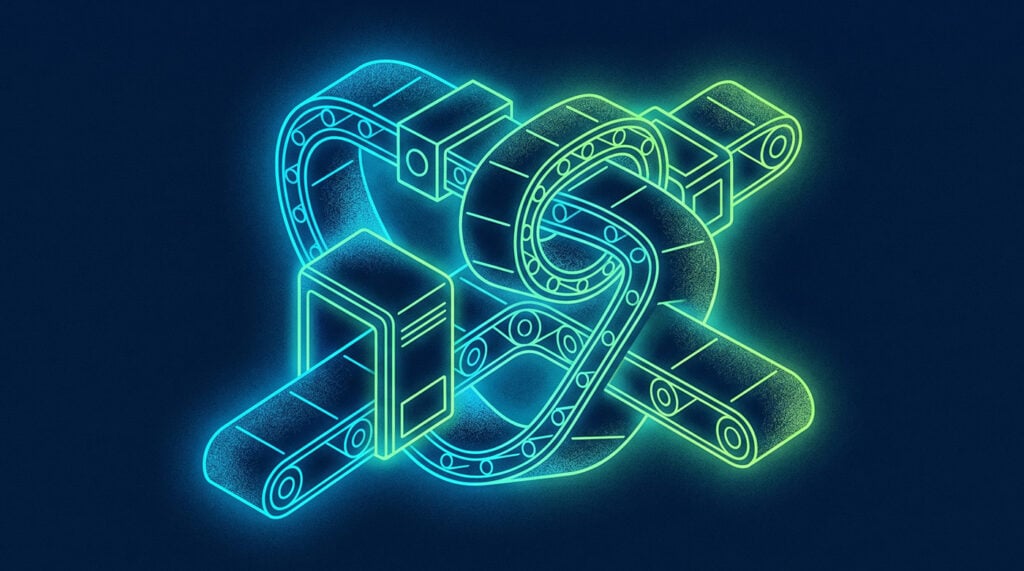
When it comes to automation, don't automate your current processes. Instead, use AI to cut out the intermediate steps and get straight to the final outcome.
For example, consider the steps you take to create a PowerPoint slide. It's tempting to have the AI follow those exact steps, but a slide is ultimately XML + images. The AI can generate it without taking your steps. This idea also applies to business processes — you can create an invoice without using the current invoice-creation system. Just call the relevant backend APIs to get the right prices and quantities.
Why AI Can Create Cognitive Overload
Here's one of the biggest downsides I've seen for tech leaders: The speed at which AI tools operate creates significant cognitive overload.
To reduce the overload, we instituted a "deep thinking" time of two hours every afternoon. As for whether it will help, the jury is still out.
Follow Along
You can follow along with Valliappa Lakshmanan on LinkedIn, or check out Obin.
More expert interviews to come on The CTO Club!