

Trovare lo strumento giusto per la gestione dei dati di test può essere un compito impegnativo. Con così tante opzioni disponibili, è difficile determinare quale soddisfi davvero le proprie esigenze senza sprecare tempo o risorse preziose. Se hai riscontrato problemi con strumenti eccessivamente complessi, che non riescono a stare al passo con la crescita dei tuoi progetti o che non rispettano le normative sulla privacy dei dati, non sei il solo. Un ottimo strumento di gestione dei dati di test dovrebbe semplificare la creazione, la gestione e la sicurezza dei tuoi insiemi di dati, integrandosi perfettamente nei tuoi flussi di lavoro di test.
In qualità di professionista del test del software con esperienza pratica in decine di strumenti, ho affrontato e superato le stesse difficoltà che stai vivendo. Per questo ho creato questa guida: per semplificare la tua ricerca e fornirti un elenco selezionato dei migliori strumenti di gestione dei dati di test attualmente disponibili. Che la tua priorità sia l'automazione, la conformità o la scalabilità, questo articolo ti aiuterà a prendere una decisione consapevole.
Perché fidarsi dei nostri consigli sui software
6,700+
Reviews
20
Industry experts
16+
Evaluation factors
14
Years
Il nostro team testa e recensisce software dal 2012. In quanto leader tecnologici noi stessi, sappiamo quanto sia difficile — e importante — scegliere il software giusto.
Per questa guida, abbiamo valutato gli strumenti attraverso test praticie ricerche indipendenti, assegnando un punteggio agli strumenti in base ai nostri criteri di selezione.
Le nostre recensioni riflettono il nostro giudizio editoriale umano, non un discorso di vendita.
Revisori esperti:
- Paulo Gardini MiguelDirettore tecnico
 Tim FisherVP dell'IA
 Gabriel RosasTech Lead e architetto software
 Christhian GruhnTech Lead e architetto della piattaforma

Tabella comparativa degli strumenti di gestione dei dati di test
La tabella seguente confronta i dettagli sui prezzi dei miei migliori strumenti di gestione dei dati di test.
| Tool | Best For | Trial Info | Price | ||
|---|---|---|---|---|---|
| 1 | Ideale per il mascheramento conforme ai requisiti normativi con creazione automatica di sottoinsiemi | Prova gratuita di 14 giorni | Prezzi su richiesta | Website | |
| 2 | Ideale per dati di test sintetici nativi per CI/CD | Demo gratuita disponibile | Prezzi su richiesta | Website | |
| 3 | Ideale per gestire diversi ambienti di dati di test da una posizione centralizzata | Versione di prova gratuita di 14 giorni | A partire da €15,000/utente/anno (con fatturazione annuale) | Website | |
| 4 | Ideale per la gestione del TDM sull'intero ciclo di vita con clonazione dei database | Demo gratuita disponibile | Prezzi su richiesta | Website | |
| 5 | Ideale per il mascheramento dei dati di test in ambienti che includono mainframe | Non disponibile | Prezzi su richiesta | Website | |
| 6 | Ideale per aziende con ambienti complessi | Prova gratuita di 30 giorni disponibile | Prezzi su richiesta | Website | |
| 7 | Migliore creazione di sottoinsiemi tra database nei settori regolamentati | Demo gratuita disponibile | Prezzo su richiesta | Website | |
| 8 | Ideale per il mascheramento nei flussi multi-database | Demo gratuita disponibile | Prezzi su richiesta | Website | |
| 9 | Ideale per la progettazione visiva dei dati basata sulla copertura | Prova gratuita di 14 giorni | Prezzi su richiesta | Website | |
| 10 | Ideale per la clonazione di database in stile Git tra cinque motori | Demo gratuita disponibile | Prezzi su richiesta | Website |





Recensioni dei migliori strumenti di gestione dei dati di test
Di seguito trovi le mie descrizioni dettagliate dei migliori strumenti di gestione dei dati di test inclusi nel mio elenco selezionato. Le mie recensioni offrono una panoramica dettagliata delle funzionalità principali, dei pro e dei contro, delle integrazioni e dei casi d’uso ideali di ciascuno strumento, per aiutarti a trovare quello più adatto a te.
 Ideale per il mascheramento conforme ai requisiti normativi con creazione automatica di sottoinsiemi
- Prova gratuita di 14 giorni
- Prezzi su richiesta
Visit WebsiteCustomer Rating:4.3/5
Tonic maschera e rende anonime le colonne sensibili dei database per dati di test sicuri. Tonic Structural è una piattaforma di gestione dei dati di test che maschera, crea sottoinsiemi e fornisce dati di produzione per gli ambienti non di produzione, con supporto per database relazionali, database NoSQL, magazzini di dati e origini basate su file.
Per chi è più adatto Tonic?
Tonic Structural è particolarmente adatto ai team del settore sanitario e finanziario focalizzati sulla conformità, che devono mascherare e creare sottoinsiemi dei dati di produzione mantenendo una documentazione sulla privacy pronta per gli audit.
Perché ho scelto Tonic
Tonic si è guadagnato un posto nella mia rosa di candidati perché le sue funzionalità di mascheramento e creazione di sottoinsiemi sono strettamente integrate, una combinazione che vedo raramente. Mi piace molto il modo in cui il Privacy Hub contrassegna ogni colonna come A rischio, Protetta o Non sensibile, consentendo poi di applicare generatori in blocco ed esportare un rapporto completo sulla privacy per gli audit. Il sottoinsiemizzatore brevettato gestisce automaticamente le chiavi esterne virtuali e le dipendenze circolari, così il sottoinsieme mascherato mantiene intatta l'integrità referenziale anche negli schemi complessi composti da più tabelle.
Funzionalità principali di Tonic
- Agente Structural: Un assistente di chat basato sull'intelligenza artificiale integrato nell'app, che riepiloga i risultati della scansione della sensibilità, consiglia i generatori e li applica automaticamente alle colonne.
- Controlli della privacy differenziale: I generatori categoriali e continui supportano la privacy differenziale, con un budget per la privacy configurabile che limita l'inferenza statistica dai dati trasformati.
- Output del repository di container: Structural scrive i dati mascherati e sottoinsiemizzati direttamente come volumi di container per PostgreSQL, MySQL e SQL Server, consentendo di avviare database isolati su richiesta.
- Cronologia delle versioni: Registra ogni modifica alla configurazione dell'area di lavoro, inclusi generatori, regole di creazione dei sottoinsiemi, modalità delle tabelle e script post-processo, con attribuzione e possibilità di ripristinare versioni precedenti.
Integrazioni di Tonic
Tonic offre integrazioni native con PostgreSQL, MySQL, SQL Server, Oracle, MongoDB, Snowflake, BigQuery, Redshift, Databricks e Amazon S3. Supporta inoltre REST API, GitHub Actions, Kubernetes, Helm e registri di container, tra cui Amazon ECR, Google Artifact Registry e Azure Container Registry.
Pros and Cons
Pros:
- Preserva le relazioni tra tabelle negli schemi complessi
- Privacy Hub associa le colonne sensibili agli audit
- I dati simili a quelli di produzione mantengono le relazioni statistiche
Cons:
- La sintesi da zero richiede il prodotto Fabricate separato
- I database containerizzati richiedono una distribuzione Kubernetes
Learn more about Tonic: Ideale per dati di test sintetici nativi per CI/CD
- Demo gratuita disponibile
- Prezzi su richiesta
Visit WebsiteCustomer Rating:4.6/5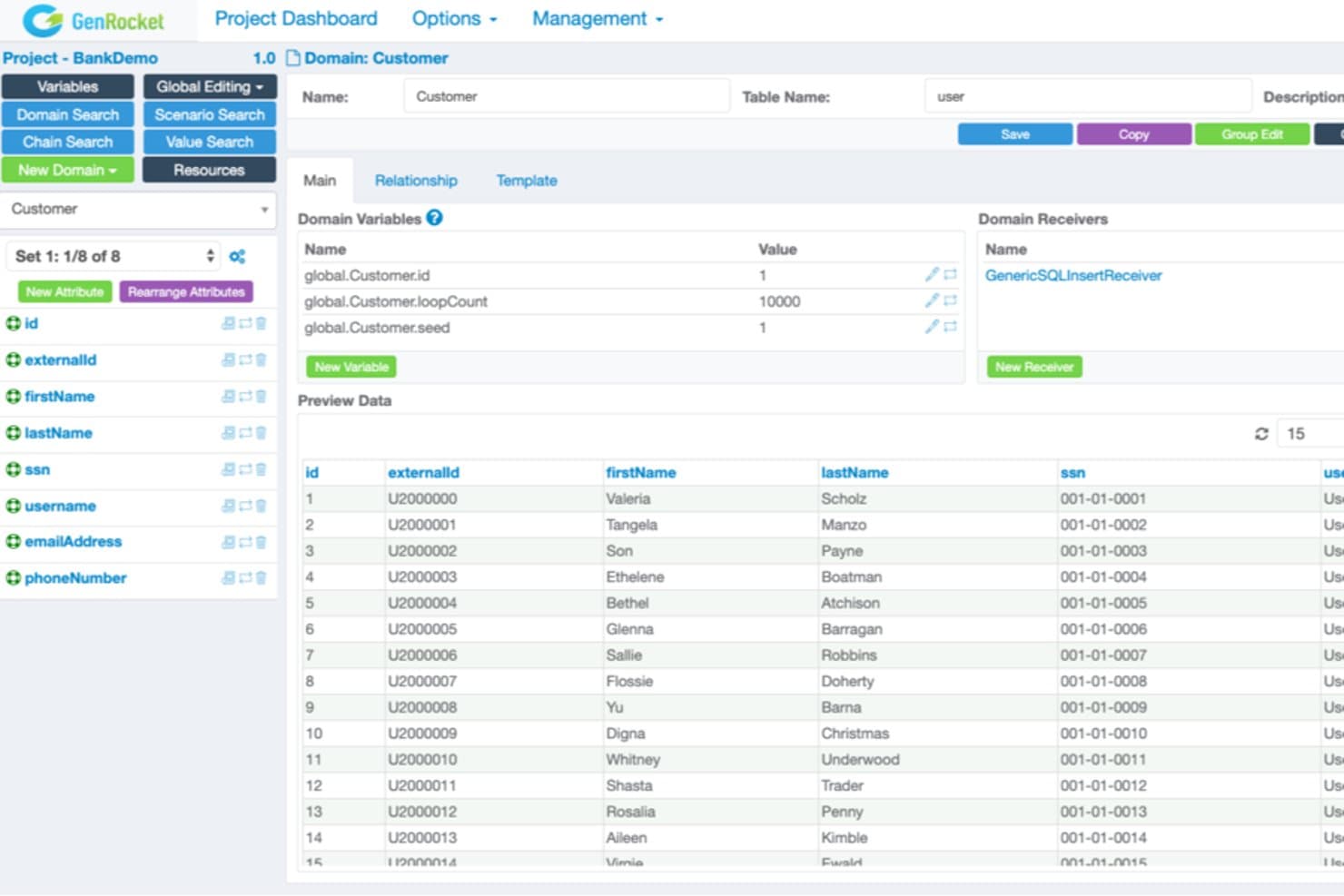
GenRocket consente agli utenti di visualizzare in anteprima e configurare visivamente i domini dei dati di test. GenRocket è una piattaforma per la gestione dei dati di test sintetici che genera dati in tempo reale a partire da metadati e schemi, coprendo il mascheramento dei dati, la creazione intelligente di sottoinsiemi, l'output in più formati e il provisioning autonomo tramite pipeline CI/CD.
Per chi è più adatto GenRocket?
GenRocket è particolarmente adatto ai team QA e DevOps che necessitano di dati di test sintetici generati su richiesta direttamente all'interno delle pipeline CI/CD, senza mai accedere ai dati di produzione.
Perché ho scelto GenRocket
GenRocket si è guadagnato un posto nella mia lista ristretta perché è l'unica piattaforma per i dati di test che abbia visto progettata specificamente per generare dati sintetici in tempo reale, direttamente all'interno di una pipeline CI/CD, senza mai accedere alla produzione. Il suo motore brevettato per l'integrità referenziale mantiene la coerenza dei dati tra più schemi e database contemporaneamente, una caratteristica davvero rara. Apprezzo inoltre il fatto che ogni set di dati per un caso di test venga generato in appena 100 millisecondi, così l'esecuzione della pipeline non si arresta in attesa del provisioning dei dati.
Caratteristiche principali di GenRocket
- Rilevamento delle modifiche allo schema G-Delta: identifica automaticamente le modifiche agli schemi dei database MySQL, MS SQL, Oracle e PostgreSQL, quindi attiva G-Refactor per aggiornare tutti i casi di dati di test interessati.
- Mascheramento sul posto: sostituisce i campi sensibili nei database Oracle, MS SQL Server, IBM DB2, PostgreSQL e MySQL con equivalenti generati sinteticamente, senza mai leggere i valori reali di produzione.
- Portale autonomo G-Portal: offre a sviluppatori e tester un'interfaccia basata sui ruoli per cercare, richiedere, monitorare e scaricare i casi di dati di test senza coinvolgere un team centrale dei dati per ogni richiesta.
- Oltre 750 generatori di dati intelligenti: copre praticamente qualsiasi tipo di dato, dominio o regola aziendale, inclusi la logica condizionale, le dipendenze tra campi e i vincoli delle espressioni regolari.
Integrazioni di GenRocket
GenRocket si integra con Jenkins, Azure DevOps, TeamCity, CircleCI, GitHub, Cucumber, Selenium, JUnit, JMeter e LoadRunner. Supporta inoltre REST API, JDBC, SOAP, socket TCP/IP e il deployment Docker per flussi di lavoro CI/CD personalizzati.
Pros and Cons
Pros:
- La generazione di dati sintetici mantiene l'integrità referenziale
- Provisioning dei dati in tempo reale per le pipeline CI/CD
- Volume di dati illimitato senza cicli di aggiornamento
Cons:
- Nessun mascheramento con conservazione o reversibilità del formato
- Il rilevamento dei dati personali identificabili (PII) non sarà completamente disponibile fino al {{year}}
Learn more about GenRocket: Ideale per gestire diversi ambienti di dati di test da una posizione centralizzata
- Versione di prova gratuita di 14 giorni
- A partire da €15,000/utente/anno (con fatturazione annuale)
Visit WebsiteCustomer Rating:4.5/5
Il mascheramento dei dati aiuta a mantenere private le informazioni sensibili dei clienti. DATPROF è una piattaforma per la gestione dei dati di test che combina mascheramento dei dati, sottoinsiemi, generazione di dati sintetici, individuazione dei PII, virtualizzazione dei database e provisioning centralizzato su origini dati relazionali, NoSQL e cloud.
Per chi è più adatto DATPROF?
DATPROF è particolarmente adatto agli ingegneri dei dati e agli amministratori di database delle aziende medio-grandi che gestiscono ambienti complessi con più database, dove l'integrità referenziale e la conformità sono imprescindibili.
Perché ho scelto DATPROF
Ho scelto DATPROF come una delle soluzioni migliori perché il suo modello di licenza indipendente dal volume lo distingue davvero: il costo della licenza rimane invariato sia che si mascherino 500 GB sia che se ne mascherino 100 TB, un aspetto importante quando si crea un sottoinsieme di un database di produzione come quello da 23 TB che Heineken ha ridotto a 130 GB. Il rilevamento brevettato dei cicli nelle chiavi esterne di DATPROF Subset gestisce schemi complessi con migliaia di tabelle mantenendo intatta l'integrità referenziale tra i sistemi. A questo si aggiunge l'orchestrazione centralizzata del portale Runtime, che consente a ogni membro del team di eseguire il provisioning del proprio ambiente aggiornato senza dover attendere un DBA.
Funzionalità principali di DATPROF
- Mascheramento deterministico tra sistemi: Applica valori mascherati coerenti per lo stesso input in più database contemporaneamente, preservando l'integrità referenziale per la tracciabilità dei test end-to-end.
- Individuazione e profilazione dei PII: Analizza i database per identificare automaticamente dove risiedono i dati sensibili, con supporto per regole di rilevamento personalizzate basate su espressioni regolari o su elenchi.
- Portale di approvvigionamento autonomo: Consente a tester e sviluppatori di accedere a DATPROF Runtime e aggiornare autonomamente i propri ambienti di test, senza dover attendere un DBA.
- Clonazione di database con copia su scrittura: DATPROF Virtualize avvia ambienti di database virtuali a dimensione completa senza consumare spazio di archiviazione aggiuntivo, con il ripristino dello snapshot completato in meno di 20 secondi.
Integrazioni di DATPROF
DATPROF supporta le integrazioni CI/CD con Jenkins, Azure DevOps, GitLab e Bamboo, oltre alle integrazioni per l'automazione dei test con Parasoft e Tosca. La sua API REST supporta integrazioni personalizzate, con inserzioni nel marketplace disponibili tramite Azure Marketplace e AWS Marketplace.
Pros and Cons
Pros:
- Il mascheramento preserva l'integrità referenziale tra database
- La creazione di sottoinsiemi riduce in modo efficiente enormi set di dati di produzione
- Portale web basato sui ruoli per l'aggiornamento autonomo
Cons:
- Supporto nativo limitato per le origini dati SaaS
- Nessuna copertura per mainframe o per un'ampia gamma di database NoSQL
Learn more about DATPROF: Ideale per la gestione del TDM sull'intero ciclo di vita con clonazione dei database
- Demo gratuita disponibile
- Prezzi su richiesta

Enov8 offre una visibilità immediata sui dati PII a livello dirigenziale e tra diverse fonti di dati. Enov8 è una piattaforma per la gestione dei dati di test che copre l'intero ciclo di vita del TDM, inclusi profilazione dei dati basata sull'intelligenza artificiale, mascheramento, creazione di sottoinsiemi, generazione di dati sintetici e virtualizzazione dei database tramite il suo motore di clonazione vME.
Per chi è più adatto Enov8?
Enov8 è particolarmente adatto ai team DevOps e QA di settori regolamentati che necessitano di un'unica piattaforma per gestire insieme mascheramento, creazione di sottoinsiemi, dati sintetici e virtualizzazione dei database.
Perché ho scelto Enov8
Ho scelto Enov8 come una delle migliori soluzioni perché è l'unico strumento della mia lista che abbina la gestione del TDM sull'intero ciclo di vita al suo motore di clonazione dei database vME, che crea copie dei database realistiche rispetto alla produzione con una dimensione di circa 40 MB per clone, indipendentemente dalle dimensioni della fonte. Apprezzo particolarmente il fatto che mascheramento, creazione di sottoinsiemi e generazione di dati sintetici confluiscano direttamente nel livello di virtualizzazione, così i cloni sono già conformi ai requisiti di privacy prima di raggiungere un ambiente di test.
Funzionalità principali di Enov8
- Individuazione dei dati PII basata sull'intelligenza artificiale: Un motore di profilazione basato sull'apprendimento automatico analizza automaticamente le fonti di dati connesse per classificare i campi sensibili e segnalare le colonne a rischio normativo prima dell'inizio del mascheramento.
- Prenotazione dei dati di test: Un sistema di prenotazione integrato consente ai team di riservare e gestire centralmente i dataset, prevenendo conflitti tra utenti e ambienti simultanei.
- Scansione di convalida post-mascheramento: Un'esecuzione di convalida basata sull'apprendimento automatico conferma l'efficacia del mascheramento dopo ogni passaggio di messa in sicurezza e genera prove di conformità pronte per gli audit.
- Hub di integrazione DevOps Manager: Un livello di orchestrazione indipendente dal linguaggio che ospita script di automazione in Python, Bash, Ansible, Java e altri linguaggi, collegando Enov8 alle pipeline CI/CD di Jenkins, GitLab CI/CD e Azure DevOps.
Integrazioni di Enov8
Enov8 supporta oltre 100 integrazioni, tra cui Jenkins, GitLab CI/CD, Azure DevOps, CircleCI, Travis CI, Bitbucket Pipelines, AWS CodeDeploy e Ansible. La sua API REST, i webhook, lo scheduler e il supporto di DevOps Manager consentono di creare flussi di lavoro CI/CD personalizzati.
Pros and Cons
Pros:
- Virtualizzazione dei database con cloni compatti da 40 MB
- Individuazione delle PII e convalida del mascheramento basate sull'intelligenza artificiale
- La prenotazione centralizzata dei dati di test previene i conflitti di assegnazione
Cons:
- Il volume delle recensioni pubbliche è relativamente limitato
- Non sono elencate attestazioni di conformità di terze parti
Learn more about Enov8: Ideale per il mascheramento dei dati di test in ambienti che includono mainframe
- Non disponibile
- Prezzi su richiesta

Broadcom Test Data Manager tiene traccia dello stato dei processi di importazione in un'unica vista. Broadcom Test Data Manager è una piattaforma aziendale per la gestione dei dati di test che combina mascheramento dei dati, generazione di dati sintetici, sottoinsiemistica, individuazione dei dati personali identificabili (PII), virtualizzazione dei database e provisioning self-service, con supporto dedicato per gli ambienti mainframe oltre ai moderni database distribuiti e cloud.
Per chi è più indicato Broadcom Test Data Manager?
Le grandi aziende che eseguono ambienti mainframe insieme a sistemi distribuiti moderni trarranno il massimo vantaggio da questa piattaforma.
Perché ho scelto Broadcom Test Data Manager
Ho incluso Broadcom Test Data Manager tra le mie scelte principali perché è l'unica piattaforma che abbia visto in grado di gestire gli ambienti mainframe come componente di primo livello insieme ai moderni sistemi distribuiti. Il modulo CA TDM for Mainframe dedicato consente di mascherare e creare sottoinsiemi di dati su z/OS, VSAM e IMS tramite la stessa interfaccia utente utilizzata per SQL Server o Oracle. La mappa di calore automatizzata dei dati personali identificabili (PII) analizza interi schemi mainframe e segnala i campi sensibili prima ancora di applicare una singola regola di mascheramento, riducendo il lavoro di mappatura manuale che normalmente rallenta i team addetti alla conformità.
Funzionalità principali di Broadcom Test Data Manager
- Portale dati self-service: Un catalogo centralizzato in cui i tester richiedono, riservano e rilasciano dati di test su richiesta utilizzando moduli dinamici, senza dover attendere gli amministratori dei database.
- Virtualizzazione dei database DAVE: Un motore di clonazione copy-on-write che crea in pochi minuti cloni di database indipendenti a partire da un'immagine di base condivisa, con un sovraccarico minimo in termini di spazio di archiviazione.
- Automazione dei flussi di lavoro Javelin: Un motore di automazione visiva integrato che orchestra le attività di mascheramento, creazione di sottoinsiemi e provisioning e che può essere attivato tramite REST API o pipeline CI/CD.
- Conservazione dell'integrità referenziale: Le operazioni di mascheramento e creazione di sottoinsiemi mantengono le relazioni tra le tabelle, così i set di dati di test restano coerenti dal punto di vista funzionale per i test end-to-end.
Integrazioni di Broadcom Test Data Manager
Le integrazioni documentate includono Azure DevOps, CA Release Automation, CA Service Virtualization, CA BlazeMeter, CA Agile Requirements Designer, HP ALM e CA Agile Central. Le API REST supportano flussi di lavoro CI/CD personalizzati, mentre Docker e Kubernetes supportano distribuzioni containerizzate.
Pros and Cons
Pros:
- Mascheramento dei dati di test inclusivo degli ambienti mainframe
- Individuazione automatizzata dei dati personali identificabili (PII) e mappe di calore
- Virtualizzazione dei database copy-on-write (DAVE)
Cons:
- Nessuna opzione di distribuzione SaaS disponibile
- L'interfaccia utente appare datata e complessa
Learn more about Broadcom Test Data Manager: Ideale per aziende con ambienti complessi
- Prova gratuita di 30 giorni disponibile
- Prezzi su richiesta
Visit WebsiteCustomer Rating:4.5/5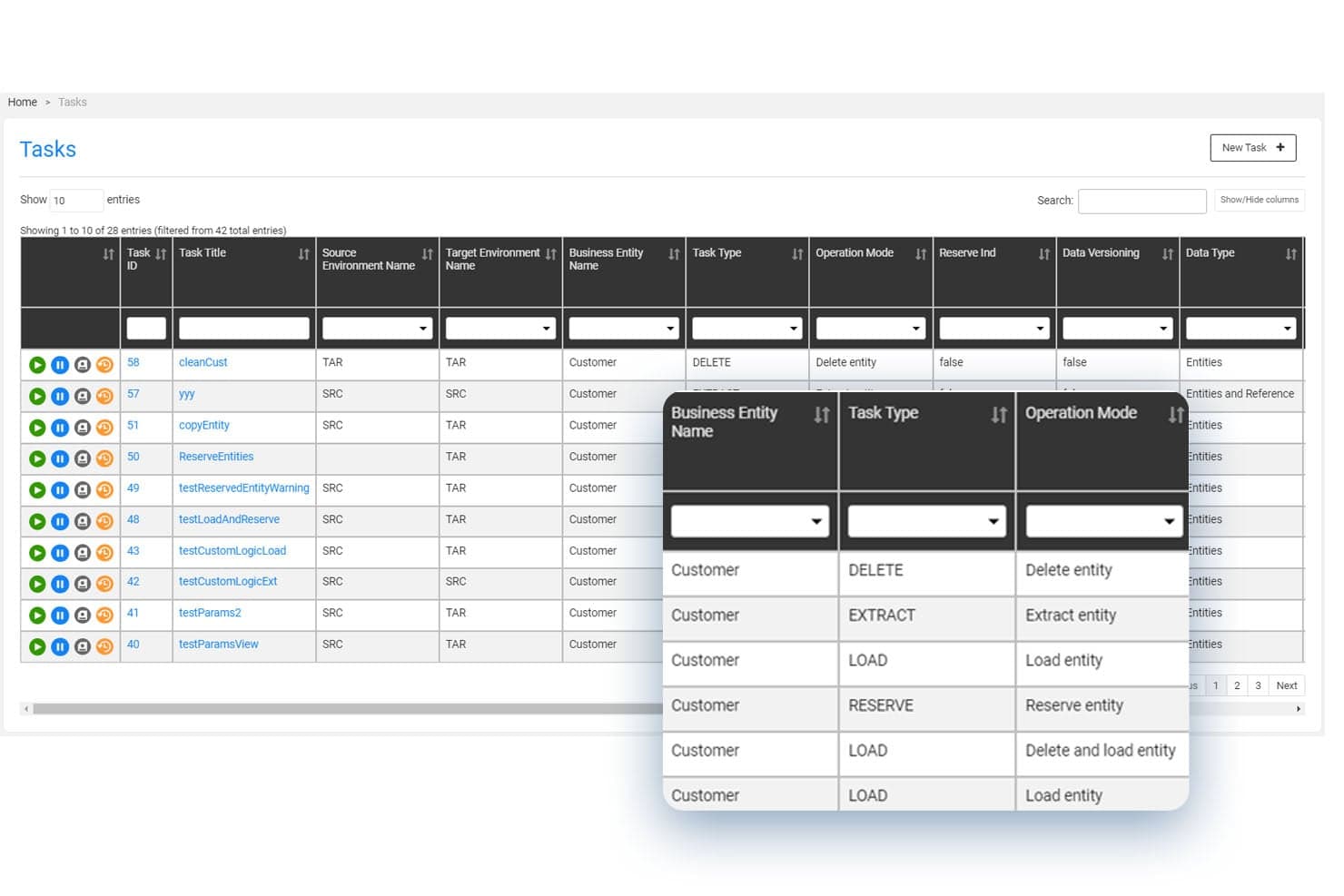
La gestione dei dati di test K2View consente agli utenti di gestire e filtrare le attività sui dati in base al tipo e alla modalità operativa. La gestione dei dati di test K2View è una piattaforma TDM aziendale che unifica il mascheramento dei dati, la generazione di dati sintetici, la creazione di sottoinsiemi e il provisioning self-service tra origini dati relazionali, NoSQL, mainframe e cloud attraverso un'architettura brevettata Micro-Database™.
Per chi è più indicata la gestione dei dati di test K2View?
K2View è progettata per le grandi aziende che gestiscono dati di test in ambienti eterogenei—mainframe, cloud, NoSQL e relazionali—tutti contemporaneamente.
Perché ho scelto la gestione dei dati di test K2View
K2View si è guadagnata un posto nella mia lista ristretta perché la sua architettura brevettata Micro-Database™ risolve un problema che la maggior parte degli strumenti TDM tende a evitare: mantenere l'integrità referenziale tra origini mainframe, NoSQL e cloud contemporaneamente. Sono particolarmente colpito dal suo mascheramento in transito, che significa che i dati PII vengono mascherati al momento dell'estrazione e non arrivano mai non mascherati in un ambiente di test. La sua creazione di sottoinsiemi incentrata sulle entità consente ai team di estrarre un record cliente completo che si estende tra Oracle, Kafka e MongoDB in un'unica operazione, senza regole di join manuali.
Caratteristiche principali della gestione dei dati di test K2View
- Portale TDM self-service: Un'interfaccia basata sul web che consente ai tester di richiedere, prenotare e ripristinare i dati di test senza coinvolgere i team dei dati o gli amministratori di database.
- Istantanea e ripristino Time Machine: Salva stati specifici dei dati di test in qualsiasi momento, consentendo ai tester di ripristinare istantaneamente gli ambienti a una configurazione nota.
- Rilevamento automatizzato dei dati PII: I classificatori integrati analizzano tutte le origini connesse, contrassegnano i campi sensibili e consigliano o applicano automaticamente le policy di mascheramento.
- TDM basato su agenti: Una funzionalità guidata dall'intelligenza artificiale che legge i casi di test e assembla autonomamente set di dati conformi e pronti per il provisioning, senza configurazione manuale.
Integrazioni della gestione dei dati di test K2View
K2View offre connettori integrati per Oracle, SQL Server, PostgreSQL, DB2, MongoDB, Snowflake, Salesforce, Amazon S3, Kafka e sistemi mainframe. La connettività REST, JDBC e ODBC supporta integrazioni personalizzate e flussi di lavoro CI/CD con Jenkins, GitHub Actions e Azure DevOps.
Pros and Cons
Pros:
- Il mascheramento in transito impedisce l'esposizione di dati PII non mascherati
- La creazione di sottoinsiemi incentrata sulle entità copre mainframe e cloud
- Rilevamento automatizzato dei dati PII integrato nella piattaforma
Cons:
- Non progettata per i piccoli team
- L'integrazione CI/CD basata su API richiede configurazione
Learn more about K2View Test Data Management: Migliore creazione di sottoinsiemi tra database nei settori regolamentati
- Demo gratuita disponibile
- Prezzo su richiesta

IBM InfoSphere Optim consente di creare rapidamente dati di test. IBM Test Data Management è una soluzione aziendale per la gestione dei dati di test che include il mascheramento dei dati, il sottoinsieme tra database e il provisioning dei dati su richiesta per un'ampia gamma di origini dati relazionali e mainframe.
Per chi è più adatto IBM Test Data Management?
IBM Test Data Management è particolarmente adatto alle grandi aziende di settori regolamentati—servizi finanziari, sanità e assicurazioni—che gestiscono ambienti complessi con più database o che includono sistemi mainframe, nei quali il mascheramento dei dati e la creazione di sottoinsiemi tra database sono requisiti di conformità.
Perché ho scelto IBM Test Data Management
IBM Test Data Management si è guadagnato un posto nella mia lista ristretta grazie al modo in cui gestisce la creazione di sottoinsiemi tra database a livello di oggetti aziendali, estraendo simultaneamente sottoinsiemi con integrità referenziale da più database connessi. Sono particolarmente colpito dalla sua funzionalità di estrazione federata, che consente ai team di lavorare su ecosistemi di dati eterogenei, incluse origini mainframe come VSAM e IMS, ambito in cui opera quasi nessuno strumento concorrente. Le oltre 40 regole di mascheramento predefinite, con output che preserva il formato, lo rendono realmente utile negli ambienti regolamentati dal GDPR e dall'HIPAA.
Funzionalità principali di IBM Test Data Management
- Integrazione con Governance Catalog: trascina le regole di classificazione dei dati direttamente sulle mappe delle colonne per assegnare automaticamente le procedure di mascheramento da un catalogo centrale delle policy.
- Ambiente di esecuzione Apache Spark: un motore Spark integrato gestisce l'elaborazione di dati su larga scala all'interno di flussi di lavoro automatizzati per la creazione di sottoinsiemi e il mascheramento.
- Controllo degli accessi basato sui ruoli: il controllo degli accessi basato sui ruoli (RBAC), supportato da Keycloak e compatibile con LDAP, SAML, OIDC e Kerberos, controlla chi può accedere, richiedere e aggiornare i set di dati di test.
- Report sulla conformità: la reportistica integrata convalida l'applicazione delle policy sulla privacy dei dati negli ambienti regolamentati dal GDPR e dall'HIPAA.
Integrazioni di IBM Test Data Management
Le integrazioni documentate includono IBM Governance Catalog, IBM Cloud Pak for Data, Keycloak, Apache Spark e database come Db2, Oracle, SQL Server, PostgreSQL, Snowflake, SAP, Teradata, Informix, Netezza e MongoDB con funzionalità limitate. La sua API REST OpenAPI 2.0 supporta l'orchestrazione personalizzata e i flussi di lavoro CI/CD, mentre l'edizione z/OS si connette a VSAM e IMS.
Pros and Cons
Pros:
- Preserva l'integrità referenziale tra i database
- Il mascheramento con preservazione del formato supporta i dati regolamentati
- Gestisce sottoinsiemi VSAM e IMS
Cons:
- Nessuna generazione nativa di dati sintetici
- Le copie fisiche sostituiscono la clonazione virtuale
Learn more about IBM Test Data Management: Ideale per il mascheramento nei flussi multi-database
- Demo gratuita disponibile
- Prezzi su richiesta

Tonic.ai consente agli utenti di gestire le regole di mascheramento dei dati nelle tabelle del database. Tonic.ai è una piattaforma di gestione dei dati di test che copre il mascheramento e il sottoinsieme dei dati strutturati, la redazione dei dati non strutturati e la generazione completa di dati sintetici nei database relazionali, negli archivi NoSQL e nei data warehouse cloud.
Per chi è più adatto Tonic.ai?
Tonic.ai è particolarmente adatto agli ingegneri dei dati e agli amministratori di database (DBA) che gestiscono dati di test in ambienti complessi con più database, comprendenti database relazionali, archivi NoSQL e data warehouse cloud.
Perché ho scelto Tonic.ai
Ho scelto Tonic.ai come una delle soluzioni migliori perché il suo motore di mascheramento deterministico applica valori mascherati coerenti allo stesso input in PostgreSQL, MongoDB, Snowflake e in ogni altra origine della pipeline contemporaneamente. Ciò significa che un ID cliente mascherato nel database relazionale corrisponde allo stesso valore mascherato nel data warehouse e nell'archivio di documenti, mantenendo intatti i join tra i sistemi. Il suo motore brevettato per la creazione di sottoinsiemi rafforza ulteriormente questo aspetto estraendo porzioni coerenti dal punto di vista referenziale, consentendo a eBay di ridurre un set di dati da 8 PB a un ambiente di test pulito da 1 GB senza interrompere alcuna relazione tra tabelle.
Funzionalità principali di Tonic.ai
- Individuazione automatizzata di PII/PHI: analizza le origini dati connesse, rileva i campi sensibili e consiglia trasformazioni di mascheramento senza dover mappare manualmente ogni colonna.
- Tonic Ephemeral: avvia database isolati su richiesta all'interno delle pipeline CI/CD utilizzando connessioni DNS dirette, quindi li elimina automaticamente al termine dell'esecuzione dei test.
- Rilevamento delle modifiche allo schema: identifica le colonne nuove o modificate e può bloccare automaticamente la generazione dei dati per impedire fughe accidentali di PII negli ambienti di test.
- Preset dei generatori: consente di salvare e riutilizzare globalmente regole di mascheramento e trasformazione denominate tra gli spazi di lavoro, mantenendo coerenti le politiche di mascheramento su larga scala.
Integrazioni di Tonic.ai
Tonic.ai offre un'integrazione nativa con GitHub Actions, oltre alla connettività tramite API REST per Jenkins e GitLab CI. Si connette a PostgreSQL, MySQL, SQL Server, Oracle, MongoDB, DynamoDB, Snowflake, BigQuery, Redshift e Databricks.
Pros and Cons
Pros:
- Il motore brevettato per la creazione di sottoinsiemi preserva l'integrità referenziale
- Mascheramento deterministico su più piattaforme di database
- Individuazione automatizzata delle PII con suggerimenti basati sull'intelligenza artificiale
Cons:
- Nessun supporto nativo per le origini dati dei mainframe
- La configurazione iniziale può essere complessa per le aziende
Learn more about Tonic.ai: Ideale per la progettazione visiva dei dati basata sulla copertura
- Prova gratuita di 14 giorni
- Prezzi su richiesta

Curiosity Software visualizza le relazioni tra i dati tramite un diagramma a partizioni radiali. Curiosity Software è una piattaforma per la gestione dei dati di test che combina mascheramento dei dati, generazione di dati sintetici, creazione di sottoinsiemi, virtualizzazione e approvvigionamento autonomo con oltre 250 integrazioni di origine, inclusi sistemi mainframe come VSAM, IMS e CICS.
Per chi è più adatto Curiosity Software?
Curiosity Software è adatto ai team QA aziendali e agli ingegneri dei dati che lavorano in ambienti complessi con più origini, soprattutto quelli che supportano sistemi mainframe o gestiscono dati di test su larga scala soggetti a requisiti di conformità.
Perché ho scelto Curiosity Software
Ho scelto Curiosity Software come una delle soluzioni migliori perché il suo approccio alla progettazione dei dati basato sulla copertura lo distingue davvero. Invece di creare manualmente script per le regole dei dati di test, si costruiscono modelli visivi dei flussi di dati che codificano la logica e i vincoli aziendali, mentre la piattaforma identifica automaticamente le lacune di copertura e genera dati sintetici per colmarle. Trovo particolarmente utile lo strumento 'Trova e crea': individua i dati esistenti necessari ai test e genera record sintetici mirati solo dove rimangono delle lacune, così non si esegue mai un approvvigionamento eccessivo né si lavora alla cieca.
Funzionalità principali di Curiosity Software
- Individuazione automatizzata dei dati personali: analizza le origini dati connesse per individuare e contrassegnare automaticamente i campi sensibili prima che i dati vengano forniti agli ambienti non di produzione.
- Portale di approvvigionamento autonomo: un portale basato su Internet consente ai team di richiedere e fornire dati di test su richiesta, utilizzando processi parametrizzati e riutilizzabili, senza coinvolgere il team responsabile dei dati di test.
- Integrazione con i flussi CI/CD: i processi relativi ai dati di test possono essere attivati dinamicamente tramite API in Jenkins, GitLab, GitHub, Azure DevOps e Bitbucket, per fornire i dati non appena necessari.
- Tracciamento della derivazione dei dati basato su grafi: memorizza la tracciabilità e i dati sulle relazioni tra origini utilizzando Neo4j, producendo rappresentazioni visive dei flussi che evidenziano chiavi esterne, join e riferimenti orfani.
Integrazioni di Curiosity Software
Curiosity Software offre oltre 250 integrazioni, tra cui Oracle, SQL Server, Snowflake, Salesforce, VSAM, IMS, Jenkins, GitHub, GitLab e Azure DevOps. Le sue API supportano integrazioni personalizzate e la distribuzione tempestiva dei dati di test attivata dai flussi CI/CD negli ambienti cloud, locali e ibridi.
Pros and Cons
Pros:
- Progettazione dei dati di test basata su modelli visivi
- Mascheramento e creazione di sottoinsiemi dei dati mainframe inclusi
- Individuazione automatizzata dei dati personali con funzionalità basate sulla conformità
Cons:
- Opzioni di creazione dei sottoinsiemi descritte in modo meno dettagliato nella documentazione
- Nessuna certificazione SOC 2 o ISO 27001 pubblicata
Learn more about Curiosity Software: Ideale per la clonazione di database in stile Git tra cinque motori
- Demo gratuita disponibile
- Prezzi su richiesta

Redgate SQL Provision consente agli utenti di gestire cloni di database tra più istanze SQL. Redgate SQL Provision è uno strumento di gestione dei dati di test che include il mascheramento dei dati, la creazione di sottoinsiemi e la clonazione di database in stile Git per SQL Server, PostgreSQL, MySQL, MariaDB e Oracle.
Per chi è più adatto Redgate SQL Provision?
Redgate SQL Provision è una soluzione ideale per amministratori di database e ingegneri QA che necessitano di clonazione e mascheramento dei database rapidi e con controllo delle versioni su più motori relazionali.
Perché ho scelto Redgate SQL Provision
Ho scelto Redgate SQL Provision come una delle soluzioni migliori perché la sua clonazione di database in stile Git è davvero diversa da qualsiasi altra soluzione abbia visto tra cinque motori. Redgate Clone avvia un contenitore di dati attivo in pochi secondi, indipendentemente dalle dimensioni del database, quindi un database SQL Server da 5 TB viene predisposto con la stessa rapidità di uno da 128 MB. È possibile creare rami, reimpostare e salvare revisioni come in un flusso di lavoro Git, rendendo semplice fornire a ogni tester il proprio ambiente isolato senza duplicare lo spazio di archiviazione.
Funzionalità principali di Redgate SQL Provision
- CLI per l'anonimizzazione (
rganonymize): uno strumento da riga di comando in tre passaggi che classifica le colonne contenenti informazioni personali, associa le regole di mascheramento e sostituisce i valori reali in SQL Server, PostgreSQL, MySQL, MariaDB e Oracle. - Mascheramento deterministico: maschera ogni valore di input nello stesso valore di output a ogni esecuzione usando un seme fisso, mantenendo coerenti i dati mascherati tra le tabelle correlate.
- Creazione di sottoinsiemi di dati: la CLI
rgsubsetestrae una parte configurabile del database di origine, impostata per impostazione predefinita al 10%, seguendo le chiavi esterne per preservare l'integrità referenziale. - Set di dati personalizzati con IA: consente di descrivere in linguaggio naturale i valori necessari e genera un elenco verificabile di un massimo di 1.000 valori da usare nella sostituzione per il mascheramento.
Integrazioni di Redgate SQL Provision
Redgate SQL Provision si integra con SQL Server, PostgreSQL, MySQL, MariaDB, Oracle, Docker, AWS CloudFormation, Azure Kubernetes Service, SQL Data Catalog, PowerShell e dbatools. Le sue CLI supportano flussi di lavoro CI/CD basati su script, ma non sono documentati plugin nativi per Jenkins, Azure DevOps e GitHub Actions.
Pros and Cons
Pros:
- La ramificazione in stile Git aggiorna rapidamente i database di test
- Il mascheramento deterministico preserva la coerenza tra le tabelle
- La creazione di sottoinsiemi consapevole delle chiavi esterne protegge l'integrità relazionale
Cons:
- La generazione di dati sintetici si limita agli elenchi di valori
- Il posizionamento del prodotto genera incertezza negli acquirenti
Learn more about Redgate SQL Provision:
Altri strumenti di gestione dei dati di test
Ecco alcune opzioni aggiuntive di strumenti di gestione dei dati di test che non sono entrate nel mio elenco selezionato, ma che vale comunque la pena prendere in considerazione:
- 11Perforce DelphixIdeale per virtualizzare cloni completi dei database di produzione
- 12SynthesizedIdeale per il mascheramento dei dati di test nativo per SAP
- 13Tricentis ToscaIdeale per i test potenziati dall'IA
- 14InformaticaIdeale per i test aziendali
- 15BMC CompuwareIdeale per test immediati
- 16Rocket Data ExpressIdeale per risparmiare risorse di test
- 17Accelario Continuous DataOps PlatformIdeale per la virtualizzazione dei database attivata da CI/CD
- 18Avo Test Data ManagementIdeale per una generazione rapida e affidabile di dati di test
- 19SynthoIdeale per la generazione di dati sintetici con la privacy al primo posto
- 20IRI VoracityIdeale per mascherare insieme dati strutturati e dati oscuri
Come valuto gli strumenti di gestione dei dati di test
Suddivido la mia valutazione in tre parti, attribuendo il peso maggiore alle funzionalità fondamentali: uno strumento deve mascherare i dati sensibili e generare set di dati sintetici realistici. Dopodiché, analizzo le funzionalità distintive, come l'individuazione dei dati sensibili. Oltre alle funzionalità, considero la flessibilità di distribuzione, il supporto del fornitore e la chiarezza dei prezzi.
Funzionalità fondamentali (requisiti minimi per questo elenco)
Quando seleziono gli strumenti da inserire nel mio elenco, assegno a ciascuno un punteggio su una scala da 0 (non offre la funzionalità) a 5 (eccelle in quest'area) per ogni funzionalità fondamentale elencata di seguito. Converto quindi il totale in una percentuale per aiutare a valutare l'idoneità complessiva di ciascuno strumento, attribuendo un peso aggiuntivo alle funzionalità che ho ritenuto essenziali.
- Mascheramento dei dati (essenziale): verifico che le tecniche di mascheramento rimangano coerenti tra le diverse origini, così che un ID cliente mascherato in una tabella corrisponda ovunque venga visualizzato.
- Generazione di dati sintetici (essenziale): cerco strumenti in grado di produrre set di dati statisticamente realistici, non semplici stringhe casuali, in modo che i team QA possano individuare i casi limite durante i test.
- Sottoinsieme di dati: valuto quanto bene uno strumento riesca a estrarre set di dati più piccoli preservando le relazioni tra chiavi esterne all'interno di schemi complessi composti da più tabelle.
- Provisioning degli ambienti di test: in questo caso sono importanti cicli rapidi di clonazione e aggiornamento. Valuto la velocità con cui i team possono avviare un ambiente nuovo prima di ogni sprint.
- Gestione dell'integrità referenziale: le relazioni interrotte tra le tabelle invalidano i risultati dei test. Verifico che join e vincoli rimangano validi dopo le operazioni di mascheramento o di estrazione dei sottoinsiemi.
- Integrazione con le pipeline: cerco integrazioni native con strumenti CI/CD come Jenkins o GitLab, affinché il provisioning dei dati venga eseguito automaticamente insieme alle fasi di compilazione e distribuzione.
Una volta ottenuto un elenco di strumenti che soddisfano i criteri, considero ciò che distingue ciascuna piattaforma.
Fattori distintivi (ciò che differenzia i fornitori)
Ecco come confronto e metto in contrapposizione i diversi fornitori:
Funzionalità distintive
Cerco funzionalità di generazione dei dati basate sull'IA che apprendano i modelli di produzione e producano set di dati sintetici statisticamente fedeli, senza bisogno di creare manualmente le regole. Anche l'individuazione dei dati sensibili è altrettanto importante, poiché la classificazione automatica delle informazioni personali identificabili tra diverse origini riduce il rischio di non conformità prima ancora che inizi il mascheramento. Valuto inoltre i dati di test sottoposti a controllo delle versioni, che consentono ai team di creare rami e ripristinare i set di dati tra un ciclo di sprint e l'altro.
Oltre le funzionalità
Valuto se un fornitore offre modelli di distribuzione on-premise, cloud e ibridi, poiché i team dei settori regolamentati spesso devono mantenere i dati all'interno del firewall. Anche la trasparenza dei prezzi è altrettanto importante: alcuni fornitori applicano un costo in base al volume dei dati, mentre altri fatturano per ambiente, e questa distinzione influisce sulla possibilità di estendere l'adozione a più team di prodotto. Verifico inoltre la disponibilità di supporto per l'avviamento e la qualità della documentazione, soprattutto per le organizzazioni che non dispongono di solide competenze interne di ingegneria dei dati.
Come scegliere uno strumento di gestione dei dati di test
È facile perdersi in lunghi elenchi di funzionalità e strutture tariffarie complesse. Per aiutarti a rimanere concentrato mentre affronti il tuo specifico processo di selezione del software, ecco un elenco di controllo dei fattori da tenere a mente:
| Fattore | Cosa considerare |
|---|---|
| FattoreScalabilità | Cosa considerareLo strumento crescerà insieme al tuo team? Considera il futuro volume di dati e la crescita degli utenti. Cerca piani flessibili in grado di supportare la crescita senza aumenti significativi dei costi. |
| FattoreIntegrazioni | Cosa considerareFunziona con i tuoi sistemi esistenti? Verifica la compatibilità con gli strumenti di test, i database e i flussi di lavoro attuali per evitare interruzioni. |
| FattorePersonalizzazione | Cosa considerarePuoi adattare lo strumento alle tue esigenze? Valuta se consente di creare modelli di dati e flussi di lavoro personalizzati adatti ai tuoi processi. |
| FattoreFacilità d'uso | Cosa considerareÈ intuitivo per il tuo team? Considera la curva di apprendimento e se il personale non tecnico può utilizzare facilmente lo strumento senza una formazione approfondita. |
| FattoreImplementazione e avviamento | Cosa considerareIn quanto tempo puoi iniziare? Cerca strumenti che offrano una configurazione rapida, risorse per la formazione e assistenza per garantire una transizione senza problemi. |
| FattoreCosto | Cosa considerareRientra nel tuo budget? Confronta i modelli tariffari e assicurati che non vi siano costi nascosti. Verifica se è disponibile una prova gratuita o una demo da testare prima di prendere un impegno. |
| FattoreMisure di sicurezza | Cosa considerareIn che modo protegge i tuoi dati? Assicurati che lo strumento sia conforme agli standard di sicurezza dei dati e offra crittografia e controlli degli accessi per proteggere le informazioni sensibili. |
| FattoreRequisiti di conformità | Cosa considerareSoddisfa le esigenze normative? Verifica se lo strumento supporta la conformità alle normative pertinenti sulla protezione dei dati, come il GDPR o l'HIPAA, in base ai requisiti del tuo settore. |
Cosa sono gli strumenti di gestione dei dati di test?
Gli strumenti di gestione dei dati di test sono software utilizzati per generare, gestire e mantenere i dati destinati al test del software. Gestiscono la creazione e la manipolazione dei dati di test, assicurandosi che siano accurati, sicuri e adatti a diversi scenari di test.
Questi strumenti svolgono un ruolo fondamentale nell'organizzazione e nel provisioning dei dati per i test funzionali, delle prestazioni e di regressione nello sviluppo software, spesso operando insieme agli strumenti per il testing dei database per garantire una convalida completa dei dati.
Funzionalità
Quando selezioni gli strumenti per la gestione dei dati di test, presta attenzione alle seguenti funzionalità chiave:
- Mascheramento dei dati: Protegge le informazioni sensibili sostituendole con dati fittizi, garantendo la conformità alle normative sulla privacy.
- Sottoinsiemi di dati: Estrae un sottoinsieme di dati da grandi dataset, rendendo i test più gestibili ed efficienti.
- Funzionalità di integrazione: Si connette agli strumenti di test e ai database esistenti, facilitando flussi di lavoro fluidi.
- Modelli di dati personalizzati: Consente agli utenti di creare modelli adattati alle proprie esigenze specifiche di test, migliorando la flessibilità.
- Generazione dei dati basata sull'IA: Utilizza l'intelligenza artificiale per generare dati di test realistici, migliorando l'accuratezza dei test.
- Provisioning dei dati in tempo reale: Fornisce accesso immediato ai dati di test necessari, riducendo i ritardi nel processo di testing.
- Supporto multi-cloud: Consente allo strumento di funzionare in diversi ambienti cloud, offrendo flessibilità nella distribuzione.
- Crittografia e controlli degli accessi: Garantisce la sicurezza dei dati crittografandoli e impostando le autorizzazioni di accesso degli utenti.
- Risorse formative: Offre tutorial, webinar e altri materiali didattici per supportare l'inserimento degli utenti e l'adozione dello strumento.
- Supporto alla conformità: Aiuta a garantire che la gestione dei dati soddisfi gli standard e le normative del settore, come GDPR o HIPAA.
Vantaggi
L'implementazione di strumenti per la gestione dei dati di test offre diversi vantaggi al tuo team e alla tua azienda. Eccone alcuni che puoi aspettarti:
- Maggiore privacy dei dati: Le funzionalità di mascheramento dei dati aiutano a proteggere le informazioni sensibili, garantendo la conformità alle normative sulla privacy.
- Maggiore efficienza dei test: Il provisioning dei dati in tempo reale riduce i ritardi, consentendo cicli di test più rapidi.
- Maggiore accuratezza dei dati: La generazione dei dati basata sull'IA crea dati di test realistici, aumentando l'affidabilità dei risultati dei test.
- Risparmio sui costi: La creazione di sottoinsiemi di dati estrae solo i dati necessari, riducendo i costi di archiviazione e di elaborazione.
- Flessibilità nella distribuzione: Il supporto multi-cloud consente allo strumento di funzionare in diversi ambienti, adattandosi alle esigenze della tua infrastruttura.
- Inserimento intuitivo degli utenti: L'accesso a risorse formative e tutorial favorisce una rapida adozione e un utilizzo efficiente dello strumento.
- Conformità normativa: Le funzionalità di supporto alla conformità aiutano a soddisfare gli standard del settore, riducendo il rischio di problemi legali.
Costi e prezzi
La selezione degli strumenti per la gestione dei dati di test richiede una comprensione dei vari modelli e piani tariffari disponibili. I costi variano in base alle funzionalità, alle dimensioni del team, agli elementi aggiuntivi e ad altro ancora. La tabella seguente riassume i piani comuni, i relativi prezzi medi e le funzionalità tipicamente incluse nelle soluzioni di gestione dei dati di test:
Tabella comparativa dei piani per gli strumenti di gestione dei dati di test
| Tipo di piano | Prezzo medio | Funzionalità comuni |
|---|---|---|
| Tipo di pianoPiano gratuito | Prezzo medio$0 | Funzionalità comuniMascheramento di base dei dati, creazione limitata di sottoinsiemi di dati e funzionalità di integrazione limitate. |
| Tipo di pianoPiano personale | Prezzo medio$5-$25/utente/mese | Funzionalità comuniMaggiore privacy dei dati, generazione dei dati basata sull'IA e supporto di base. |
| Tipo di pianoPiano aziendale | Prezzo medio$30-$75/utente/mese | Funzionalità comuniCreazione avanzata di sottoinsiemi di dati, supporto multi-cloud e accesso alle risorse formative. |
| Tipo di pianoPiano per grandi aziende | Prezzo medio$100+/utente/mese | Funzionalità comuniModelli di dati personalizzati, supporto completo alla conformità, supporto clienti premium e funzionalità di integrazione complete. |
Domande frequenti sugli strumenti di gestione dei dati di test
Ecco alcune risposte alle domande comuni sugli strumenti di gestione dei dati di test:
È meglio scegliere le funzionalità di mascheramento o i dati sintetici?
Il mascheramento protegge i dati reali nascondendo i dettagli personali. Il software che genera dati sintetici crea set di dati fittizi ma realistici. Scegli il mascheramento se utilizzi dati di produzione; scegli i dati sintetici se vuoi set di dati di test più sicuri e completamente generati.
Se ti trovi ancora nella fase in cui “devi raccogliere altri dati di test”, prova: I 10 migliori strumenti per i test di usabilità e ottenere feedback dagli utenti reali.
Perché la sicurezza dei dati è importante negli strumenti TDM?
Il software TDM gestisce spesso dati di produzione sensibili. Senza un adeguato mascheramento o una crittografia, rischi fughe di dati o problemi di conformità. Scegli sempre uno strumento che supporti crittografia, anonimizzazione e controlli degli accessi.
Quali integrazioni dovrebbe supportare uno strumento TDM?
Dovrebbe funzionare con i tuoi strumenti CI/CD, come Jenkins, GitLab o Azure DevOps. Anche l’integrazione con i principali database (Oracle, SQL Server, PostgreSQL) e le piattaforme cloud è fondamentale per un’automazione fluida.
Come si testa uno strumento TDM prima di acquistarlo?
Esegui una piccola prova di fattibilità. Prova a clonare, mascherare e aggiornare i dati nella tua configurazione reale. Verifica la velocità di esecuzione e se si adatta al flusso di lavoro esistente.
In che modo gli strumenti TDM possono aiutare con la conformità?
Gli strumenti efficaci tengono traccia di ogni modifica ai dati, conservano i registri di controllo e garantiscono la coerenza dei dati mascherati. Questo aiuta il tuo team a rimanere conforme a normative come GDPR, HIPAA o CCPA.