

Le migliori alternative a Nagios aiutano i team a monitorare i sistemi senza dover gestire requisiti di configurazione complessi o imbattersi in limiti di scalabilità. Offrono dashboard più chiare, configurazioni più semplici e integrazioni flessibili che facilitano il monitoraggio delle prestazioni di server, reti e applicazioni.
Molte organizzazioni iniziano a cercare alternative dopo aver riscontrato problemi come la configurazione di plug-in di Nagios che non si integrano correttamente, la perdita di tempo nella risoluzione di messaggi di errore criptici o il raggiungimento dei limiti prestazionali con la crescita delle esigenze di monitoraggio. Queste difficoltà rallentano le operazioni e rendono più difficile per i team IT mantenere la visibilità su larga scala.
Ho testato piattaforme di monitoraggio in ambienti di produzione reali, collaborato con team che stavano abbandonando implementazioni Nagios obsolete e valutato le prestazioni di questi strumenti in infrastrutture ibride e cloud. Queste esperienze mi hanno mostrato quali soluzioni riducono effettivamente il carico del monitoraggio e quali invece introducono nuove complessità.
In questa guida scoprirai quali alternative a Nagios offrono una configurazione più semplice, una migliore scalabilità e informazioni più utili, così il tuo team potrà concentrarsi sulla risoluzione dei problemi invece di lottare con il sistema di monitoraggio.
Cos'è Nagios?
Nagios è una piattaforma a codice sorgente aperto per il monitoraggio e la gestione delle reti, progettata per il monitoraggio di reti e sistemi. I professionisti IT e gli amministratori di sistema utilizzano generalmente Nagios per tenere sotto controllo l'infrastruttura critica e garantire operazioni fluide.
Le sue funzionalità di avvisi, reportistica e monitoraggio aiutano a rilevare i problemi, analizzare le prestazioni e gestire efficacemente le risorse di rete. Nel complesso, Nagios offre valore aiutando il tuo team a mantenere l'affidabilità dei sistemi e a ridurre al minimo i tempi di inattività.
Tabella di confronto delle alternative a Nagios
Questa tabella di confronto riassume i dettagli sui prezzi delle mie migliori alternative a Nagios:
| Tool | Best For | Trial Info | Price | ||
|---|---|---|---|---|---|
| 1 | Ideale per il monitoraggio unificato di dispositivi e sensori | Prova gratuita di 30 giorni | Da $200/mese (fatturazione annuale) | Website | |
| 2 | Ideale per infrastrutture IT complesse | Piano gratuito disponibile | Prezzi su richiesta | Website | |
| 3 | Ideale per il monitoraggio multicloud | Prova gratuita di 30 giorni + demo gratuita disponibile | A partire da $10/mese (fatturati annualmente) | Website | |
| 4 | Ideale per il monitoraggio delle applicazioni web | Prova gratuita di 30 giorni + piano gratuito + demo gratuita disponibile | Da $19.99/mese | Website | |
| 5 | Ideale per configurazioni plug-and-play | Demo gratuita disponibile | Prezzo su richiesta | Website | |
| 6 | Ideale per l'osservabilità dell'intero stack | Prova gratuita di 14 giorni | A partire da $5/mese | Website | |
| 7 | Ideale per le capacità di creazione di grafici | Download gratuito | Gratuito | Website | |
| 8 | Ideale per AIOps e osservabilità | Demo gratuita disponibile | Prezzo su richiesta | Website | |
| 9 | Ideale per il monitoraggio end-to-end | Prova gratuita di 7 giorni | Prezzi su richiesta | Website | |
| 10 | Ideale per reti distribuite | Consulenza gratuita disponibile | Prezzo su richiesta | Website |


Perché fidarsi dei nostri consigli sui software
6,700+
Reviews
20
Industry experts
16+
Evaluation factors
14
Years
Il nostro team testa e recensisce software dal 2012. In quanto leader tecnologici noi stessi, sappiamo quanto sia difficile — e importante — scegliere il software giusto.
Per questa guida, abbiamo valutato gli strumenti attraverso test praticie ricerche indipendenti, assegnando un punteggio agli strumenti in base ai nostri criteri di selezione.
Le nostre recensioni riflettono il nostro giudizio editoriale umano, non un discorso di vendita.
Revisori esperti:
- Paulo Gardini MiguelDirettore tecnico
 Tim FisherVP dell'IA
 Gabriel RosasTech Lead e architetto software
 Christhian GruhnTech Lead e architetto della piattaforma

Recensioni delle migliori alternative a Nagios
Di seguito trovi le mie analisi dettagliate delle migliori alternative a Nagios incluse nel mio elenco. Le mie recensioni offrono uno sguardo approfondito alle funzionalità principali, ai pro e contro, alle integrazioni e ai casi d’uso ideali di ogni strumento, per aiutarti a trovare quello più adatto a te.
 Ideale per il monitoraggio unificato di dispositivi e sensori
- Prova gratuita di 30 giorni
- Da $200/mese (fatturazione annuale)
Visit WebsiteCustomer Rating:4.6/5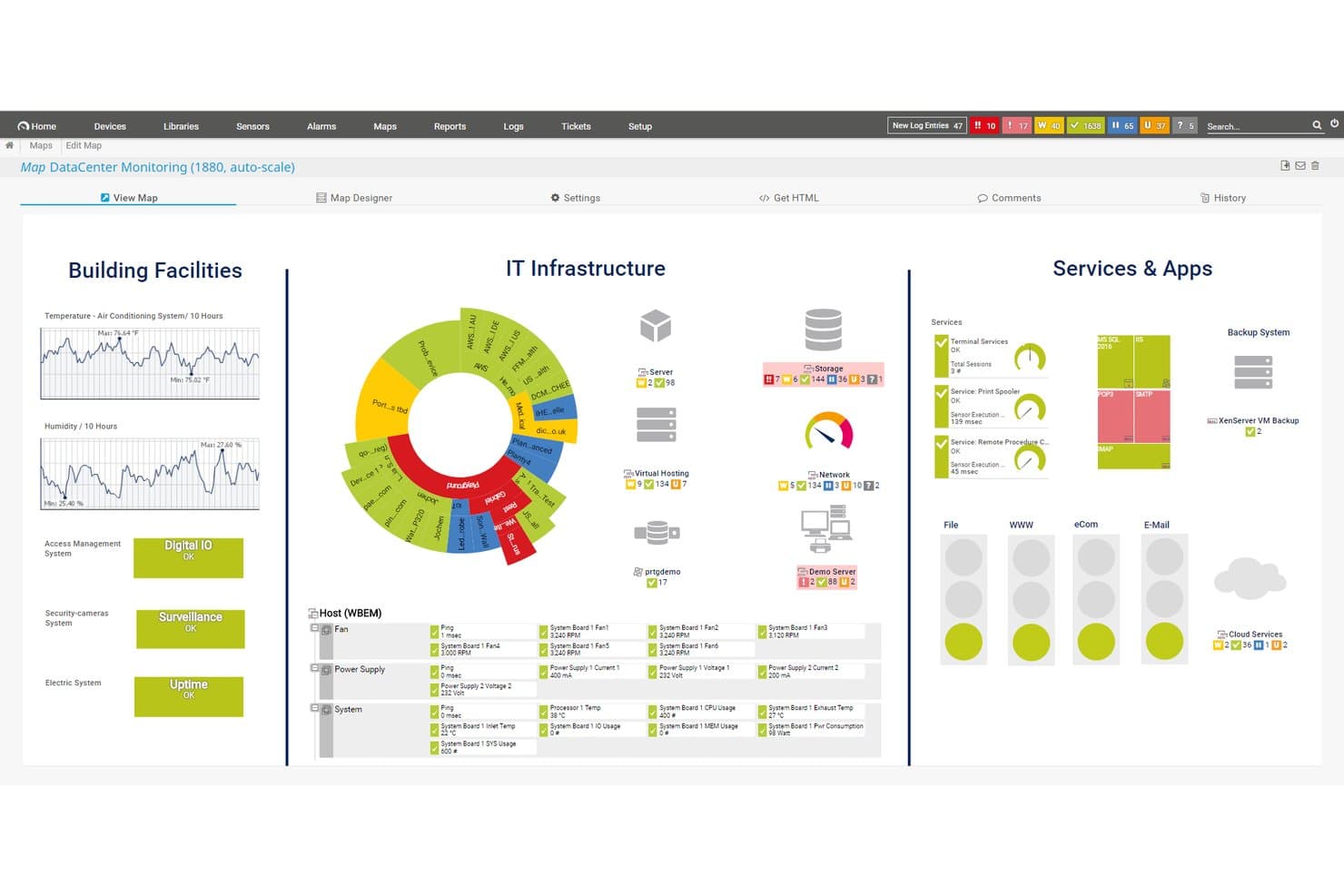
Paessler PRTG offre una mappa di monitoraggio data center personalizzabile che visualizza le strutture dell'edificio, l'infrastruttura IT, i servizi e le applicazioni in una dashboard unificata. Paessler PRTG è una piattaforma di monitoraggio on-premise e cloud-hosted che aiuta i team IT e i manager dei NOC a tenere traccia di reti, server, applicazioni e dispositivi da un'unica interfaccia, senza la complessa configurazione manuale richiesta da strumenti come Nagios.
Per chi è più indicato Paessler PRTG?
PRTG è particolarmente adatto ai team di infrastruttura IT di livello medio-grande o enterprise che gestiscono ambienti con dispositivi eterogenei, sia on-premise che ibridi.
Perché Paessler PRTG è una valida alternativa a Nagios
Ho scelto Paessler PRTG perché la sua architettura basata su sensori lo distingue significativamente da Nagios. Mentre Nagios richiede la configurazione manuale dei plugin per ogni controllo, l'auto-discovery di PRTG esegue la scansione della rete e crea automaticamente sensori su dispositivi, server e servizi. Apprezzo anche il fatto che un'unica installazione di PRTG copre risorse IT, OT e IoT utilizzando protocolli come SNMP, WMI, NetFlow e OPC UA, senza la necessità di strumenti separati per ogni ambiente.
Funzionalità principali di Paessler PRTG
- Monitoraggio distribuito tramite sonde remote: Implementa sonde remote per estendere il monitoraggio su più sedi e reti.
- Editor di mappe personalizzabile: Crea mappe di rete interattive e in tempo reale utilizzando un editor drag-and-drop.
- Controllo degli accessi basato sui ruoli: Assegna i permessi utente per controllare chi può visualizzare o gestire specifiche dashboard e sensori.
- Audit logging e single sign-on: Abilita l'accesso sicuro e traccia l'attività degli utenti con funzioni di autenticazione enterprise e conformità.
Integrazioni di Paessler PRTG
Paessler PRTG offre integrazioni native con AWS, Microsoft Azure, VMware, Siemens Industrial Edge, Cisco Meraki, HPE, Dell EMC, OPC UA e MQTT. È disponibile un'API per integrazioni personalizzate.
Pros and Cons
Pros:
- Rileva automaticamente i dispositivi senza configurazione manuale dei plugin
- Monitora nativamente IT, OT e IoT
- Un'unica interfaccia copre tutti i livelli dell'infrastruttura
Cons:
- Il limite dei sensori fa aumentare rapidamente i costi
- La componente server richiede l'installazione su Windows
Learn more about Paessler PRTG: Ideale per infrastrutture IT complesse
- Piano gratuito disponibile
- Prezzi su richiesta
Visit WebsiteCustomer Rating:4.7/5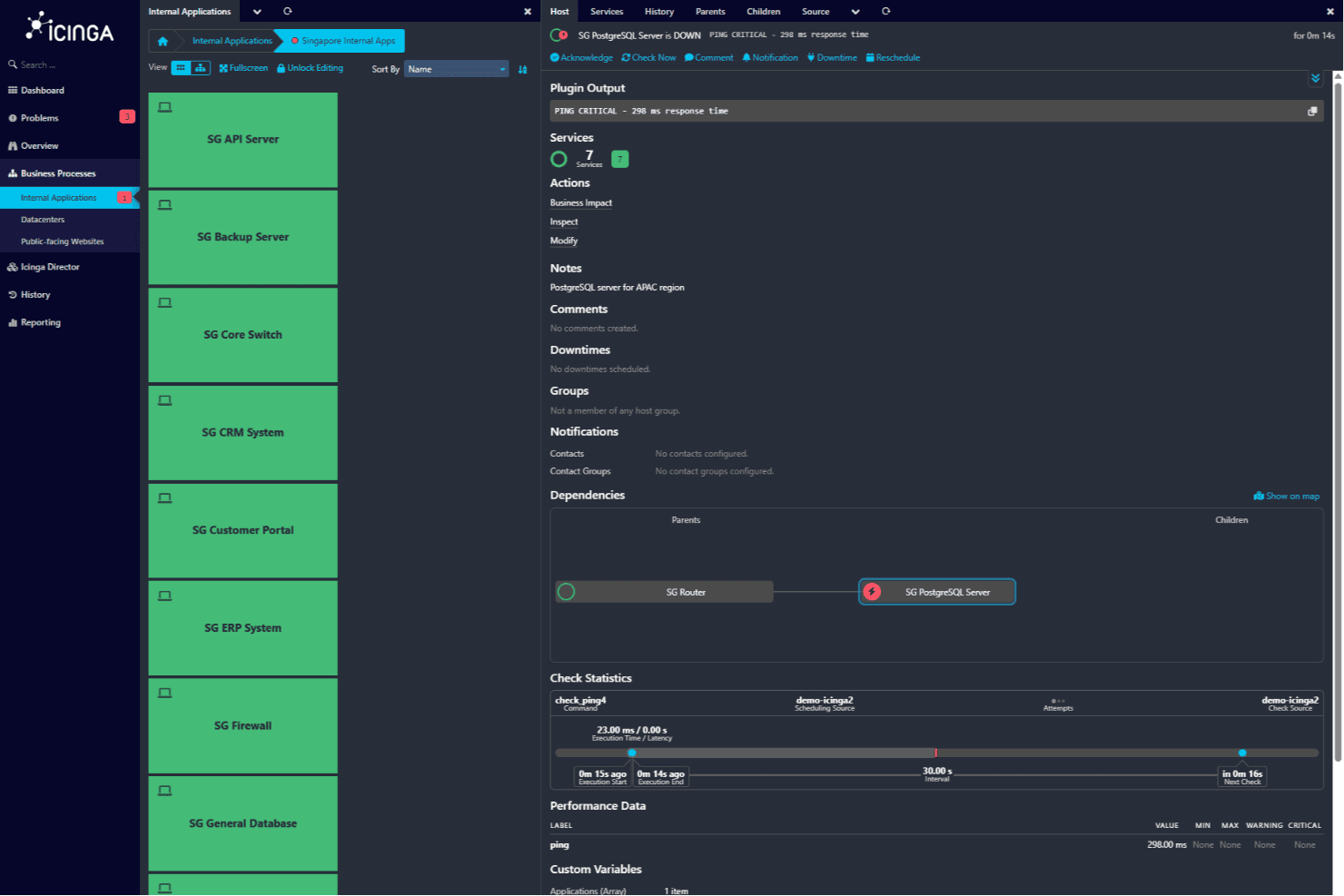
Schermata dei dettagli dell'host che mostra lo stato di SG PostgreSQL Server con un avviso di ping critico e la catena delle dipendenze che collega a SG Router. Icinga è una soluzione di monitoraggio open source pensata per infrastrutture IT complesse, utilizzata principalmente da professionisti e organizzazioni IT. Monitora server, reti, applicazioni e ambienti cloud.
Perché è una buona alternativa a Nagios: Icinga eccelle nelle configurazioni IT complesse grazie al monitoraggio dell'infrastruttura, all'automazione e alle notifiche. Offre un monitoraggio specializzato per Kubernetes, database e VMware, risultando ideale per gli ambienti complessi. Le sue funzionalità di analisi e gestione di metriche e registri aiutano il team a ottenere informazioni utili. La piattaforma si integra inoltre con gli strumenti di gestione dei servizi IT, aumentandone l'utilità.
Funzionalità e integrazioni principali:
Funzionalità che includono il monitoraggio dell'infrastruttura, l'automazione e il monitoraggio del cloud. Offre inoltre funzionalità di analisi e gestione di metriche e registri, supportando il monitoraggio specializzato per Kubernetes, database e VMware.
Integrazioni che includono Puppet, Ansible, Chef, SaltStack, Grafana, Graylog, Elasticsearch, InfluxDB, Jira e Slack.
Pros and Cons
Pros:
- Flessibilità dell'open source
- Supporta ambienti complessi
- Compatibilità con i plugin di Nagios
Cons:
- Curva di apprendimento più ripida
- Richiede competenze tecniche
Learn more about Icinga: Ideale per il monitoraggio multicloud
- Prova gratuita di 30 giorni + demo gratuita disponibile
- A partire da $10/mese (fatturati annualmente)
Visit WebsiteCustomer Rating:4.7/5
Site24x7 monitora le prestazioni e la disponibilità dell'infrastruttura multicloud. Per le aziende alla ricerca di un'alternativa affidabile a Nagios, Site24x7 offre una combinazione efficace di funzionalità di monitoraggio e caratteristiche di facile utilizzo. Questa soluzione basata sul cloud è destinata ai professionisti IT e alle organizzazioni che richiedono un monitoraggio esteso di server, reti, applicazioni e siti web in diversi ambienti. Site24x7 affronta sfide come la gestione di ambienti multicloud e l'automazione delle attività ripetitive, offrendo un modo conveniente per monitorare l'infrastruttura IT con un unico piano.
Perché ho scelto Site24x7
Ho scelto Site24x7 come una delle migliori alternative a Nagios per le sue affidabili funzionalità di monitoraggio multicloud e automazione. Con Site24x7 puoi monitorare senza problemi ambienti come AWS, Azure e GCP da un'unica console, semplificando la gestione di infrastrutture complesse. Inoltre, l'automazione delle attività ripetitive della piattaforma contribuisce a ridurre il lavoro manuale, consentendo al tuo team di concentrarsi su iniziative più strategiche. Queste funzionalità sono fondamentali per le organizzazioni che desiderano migliorare l'efficienza e ottimizzare i processi di monitoraggio.
Funzionalità principali di Site24x7
Oltre al monitoraggio multicloud e all'automazione, Site24x7 offre:
- Gestione dei log: fornisce informazioni dettagliate sull'intero stack tecnologico per migliorare l'analisi e la risoluzione dei problemi.
- Monitoraggio delle API: garantisce il corretto funzionamento delle API per mantenere l'affidabilità dei servizi.
- Pagine di stato: consente di creare pagine personalizzabili per comunicare i tempi di inattività e rafforzare la fiducia degli utenti.
- Gestione degli incidenti: facilita la gestione efficiente degli incidenti tramite una documentazione dettagliata, inclusi i log degli errori e le tempistiche.
Integrazioni di Site24x7
Le integrazioni includono AWS, Azure, Google Cloud Platform, Docker, Kubernetes, Microsoft Exchange, Microsoft SharePoint e altro ancora.
Pros and Cons
Pros:
- Monitoraggio completo per vari sistemi
- Il monitoraggio completo dell'intero stack basato sull'intelligenza artificiale supporta la gestione dell'infrastruttura multicloud
- Il monitoraggio flessibile si integra facilmente con diversi componenti dell'infrastruttura
Cons:
- I bug degli avvisi causano problemi durante l'aggiunta di nuove configurazioni di monitoraggio
- La configurazione complessa rallenta la configurazione iniziale e la comprensione della piattaforma
Learn more about Site24x7: Ideale per il monitoraggio delle applicazioni web
- Prova gratuita di 30 giorni + piano gratuito + demo gratuita disponibile
- Da $19.99/mese
Visit WebsiteCustomer Rating:4.5/5
Dotcom-Monitor traccia la disponibilità, le prestazioni e la funzionalità dei siti web per i team IT e di sviluppo. Dotcom-Monitor è uno strumento di monitoraggio delle prestazioni web rivolto a sviluppatori, team IT e marketer digitali. Aiuta a garantire la disponibilità, le prestazioni e la funzionalità dei siti web.
Perché è una buona alternativa a Nagios: Dotcom-Monitor è specializzato nel monitoraggio delle applicazioni web, offrendo approfondimenti sulle prestazioni in tempo reale. Le sue capacità di monitoraggio sintetico permettono al tuo team di simulare le interazioni degli utenti e rilevare problemi in modo proattivo. Lo strumento fornisce report completi per aiutarti a comprendere le tendenze delle prestazioni nel tempo. Grazie al focus sul monitoraggio delle applicazioni web, offre un approccio specializzato che si differenzia dalle capacità di monitoraggio generali di Nagios.
Funzionalità e integrazioni principali:
Funzionalità includono il monitoraggio sintetico che simula le interazioni degli utenti per rilevare i problemi prima che colpiscano gli utenti reali. Offre inoltre report approfonditi per aiutarti a comprendere le tendenze delle prestazioni nel tempo. Gli approfondimenti sulle prestazioni in tempo reale garantiscono la possibilità di risolvere tempestivamente i problemi.
Integrazioni includono Amazon Web Services, Microsoft Azure, Google Cloud Platform, Jenkins, PagerDuty, Slack, Splunk, New Relic, ServiceNow e Atlassian Jira.
Pros and Cons
Pros:
- Monitoraggio specializzato delle applicazioni web
- Approfondimenti sulle prestazioni in tempo reale
- Reportistica dettagliata
Cons:
- Richiede alcune competenze tecniche
- Limitato alle applicazioni web
Learn more about Dotcom-Monitor: Ideale per configurazioni plug-and-play
- Demo gratuita disponibile
- Prezzo su richiesta

Munin traccia le prestazioni di sistema e l'utilizzo delle risorse per amministratori e team IT. Munin è uno strumento di monitoraggio delle risorse in rete progettato per amministratori di sistema e professionisti IT. Fornisce informazioni sulle prestazioni del sistema e sull'utilizzo delle risorse.
Perché è una valida alternativa a Nagios: Munin offre un'impostazione plug-and-play semplice, che permette al tuo team di iniziare rapidamente il monitoraggio. Crea automaticamente grafici per i dati sulle prestazioni, consentendoti di visualizzare facilmente le tendenze. Lo strumento è leggero, riducendo il consumo di risorse sui tuoi sistemi. La sua facilità d'uso e la configurazione minima lo rendono una scelta pratica per chi cerca un'alternativa semplice a Nagios.
Funzionalità principali e integrazioni:
Funzionalità includono la creazione automatica dei grafici, che ti aiuta a visualizzare le tendenze dei dati nel tempo. Supporta inoltre un'architettura leggera, minimizzando il consumo di risorse di sistema. Il semplice processo di configurazione ti permette di iniziare rapidamente senza dover affrontare impostazioni complesse.
Integrazioni includono Nagios, Cacti, Zabbix, Graphite, InfluxDB, Prometheus, Elasticsearch, Grafana, Jenkins e Docker.
Pros and Cons
Pros:
- Procedura di configurazione semplice
- Architettura leggera
- Creazione automatica dei grafici
Cons:
- Scalabilità limitata
- Set di funzionalità di base
Learn more about Munin: Ideale per l'osservabilità dell'intero stack
- Prova gratuita di 14 giorni
- A partire da $5/mese

Sematext offre monitoraggio cloud e gestione dei log per applicazioni, infrastruttura e log. Sematext è una piattaforma cloud di monitoraggio e gestione dei log pensata per sviluppatori, team delle operazioni IT e team DevOps. Fornisce informazioni sulle prestazioni delle applicazioni, sul monitoraggio dell'infrastruttura e sulla gestione dei log.
Perché è una buona alternativa a Nagios: Sematext offre osservabilità dell'intero stack, consentendo al tuo team di monitorare applicazioni, infrastruttura e log in un unico luogo. Le sue analisi in tempo reale aiutano a identificare rapidamente i problemi di prestazioni. I dashboard intuitivi dello strumento facilitano la visualizzazione dei dati e il monitoraggio delle metriche. Grazie alle sue funzionalità complete di monitoraggio, Sematext offre un approccio più integrato rispetto a Nagios.
Funzionalità e integrazioni principali:
Le funzionalità includono analisi in tempo reale che aiutano il tuo team a identificare rapidamente i problemi. I dashboard intuitivi semplificano la visualizzazione dei dati, consentendo di monitorare facilmente le metriche. Le sue funzionalità complete di monitoraggio garantiscono una visione completa dei tuoi sistemi.
Le integrazioni includono AWS, Azure, Google Cloud Platform, Kubernetes, Docker, Elasticsearch, Apache Kafka, NGINX, Redis e MySQL.
Pros and Cons
Pros:
- Osservabilità dell'intero stack
- Analisi in tempo reale
- Dashboard intuitivi
Cons:
- Richiede un periodo di apprendimento
- Funzionalità offline limitate
Learn more about Sematext:

Cacti offre monitoraggio di rete e creazione di grafici con visualizzazioni dettagliate delle prestazioni. Cacti è uno strumento di monitoraggio e creazione di grafici di rete progettato per amministratori IT e responsabili di rete. Fornisce visualizzazioni dettagliate dei dati di rete e delle prestazioni dei sistemi.
Perché è una buona alternativa a Nagios: Cacti eccelle nelle funzionalità di creazione di grafici, permettendo di realizzare rappresentazioni visive dettagliate dei dati di rete. La sua interfaccia intuitiva rende semplice la configurazione e la gestione dei grafici, anche per set di dati complessi. Lo strumento supporta la raccolta dati tramite SNMP, aumentando la precisione dei grafici. Con il suo focus sulla visualizzazione, Cacti offre un vantaggio distintivo per i team che necessitano di insight chiari e grafici sulle loro reti.
Caratteristiche e integrazioni principali:
Caratteristiche includono avanzate capacità di creazione di grafici che consentono di visualizzare facilmente dati complessi. Supporta SNMP per una raccolta dati precisa, migliorando l'accuratezza dei grafici. L'interfaccia intuitiva semplifica la configurazione e la gestione di queste visualizzazioni.
Integrazioni includono Nagios, InfluxDB, Graphite, Prometheus, Elasticsearch, Grafana, OpenNMS, Zabbix, SolarWinds e Splunk.
Pros and Cons
Pros:
- Eccellenti funzionalità di creazione di grafici
- Interfaccia intuitiva
- Supporta la raccolta dati SNMP
Cons:
- Scalabilità limitata
- Funzionalità di allerta di base
Learn more about Cacti: Ideale per AIOps e osservabilità
- Demo gratuita disponibile
- Prezzo su richiesta

Zenoss Core monitora infrastrutture IT ibride e fornisce informazioni sulle prestazioni in tempo reale. Zenoss Core è una piattaforma ibrida di monitoraggio IT e analisi progettata per i team di operazioni IT. Fornisce informazioni sulle prestazioni dell'infrastruttura e aiuta a rilevare e risolvere i problemi in tempo reale.
Perché è una buona alternativa a Nagios: Zenoss Core integra funzionalità AIOps, offrendo analisi avanzate per prevedere e prevenire problemi prima che possano influire sulle tue operazioni. Il monitoraggio in tempo reale garantisce una visione completa della tua infrastruttura, aiutando il tuo team a rispondere rapidamente agli incidenti. Le funzionalità di osservabilità della piattaforma ti consentono di monitorare le metriche di prestazione e ottenere informazioni sullo stato di salute del sistema. Con il suo focus su analisi e osservabilità, Zenoss Core offre un approccio più proattivo rispetto a Nagios.
Funzionalità principali & integrazioni:
Funzionalità includono analisi avanzate che aiutano a prevedere e prevenire potenziali problemi. Il monitoraggio in tempo reale offre una visibilità completa sulla tua infrastruttura. Le capacità di osservabilità della piattaforma assicurano un monitoraggio efficace delle metriche di prestazione e dello stato di salute del sistema.
Integrazioni includono Amazon Web Services, Microsoft Azure, Google Cloud Platform, VMware, Docker, Kubernetes, ServiceNow, Splunk, PagerDuty e Slack.
Pros and Cons
Pros:
- Capacità avanzate di analisi
- Monitoraggio in tempo reale
- Rilevamento proattivo dei problemi
Cons:
- Richiede competenze tecniche
- Complessità nell'impostazione iniziale
Learn more about Zenoss Core: Ideale per il monitoraggio end-to-end
- Prova gratuita di 7 giorni
- Prezzi su richiesta

Centreon monitora infrastrutture, applicazioni e reti per dare ai team IT piena visibilità. Centreon è una soluzione di monitoraggio IT progettata per le aziende che necessitano di una visibilità end-to-end, utilizzata principalmente dai team operativi IT. Monitora l'infrastruttura IT, le applicazioni e le reti per garantire prestazioni ottimali.
Perché è una buona alternativa a Nagios: Centreon offre un monitoraggio end-to-end con funzionalità come la scoperta automatica e dashboard centralizzate. Fornisce informazioni in tempo reale sul tuo ambiente IT, aiutando il team a identificare e risolvere rapidamente i problemi. La scalabilità della piattaforma supporta le aziende in crescita, permettendo di monitorare reti estese. La sua interfaccia intuitiva e gli avvisi personalizzabili facilitano l'adattamento del sistema alle tue esigenze.
Funzionalità principali & integrazioni:
Funzionalità includono la scoperta automatica, dashboard centralizzate e avvisi personalizzabili. Offre inoltre informazioni in tempo reale e scalabilità per sostenere la crescita aziendale.
Integrazioni includono Amazon Web Services, Microsoft Azure, Google Cloud Platform, Docker, Kubernetes, VMware, Cisco, Juniper, Slack e ServiceNow.
Pros and Cons
Pros:
- Visibilità end-to-end
- Funzione di scoperta automatica
- Scalabile per aziende in crescita
Cons:
- Richiede competenze tecniche
- Complessità nella configurazione iniziale
Learn more about Centreon:

OpenNMS gestisce reti distribuite con strumenti di monitoraggio, eventi e prestazioni. OpenNMS è una piattaforma open-source per la gestione delle reti, progettata per reti distribuite e utilizzata principalmente da amministratori di rete e professionisti IT. Offre monitoraggio della rete, gestione degli eventi e misurazione delle prestazioni.
Perché è una valida alternativa a Nagios: OpenNMS è pensato per reti distribuite con funzionalità come gestione degli eventi e monitoraggio dei servizi. Supporta implementazioni su larga scala, rendendolo ideale per la gestione di infrastrutture di rete complesse. La piattaforma offre raccolta e visualizzazione dei dati sulle prestazioni per aiutare il tuo team a gestire la salute della rete. La sua scalabilità e la capacità di gestire sistemi distribuiti la distinguono da Nagios.
Funzionalità e integrazioni principali:
Funzionalità includono gestione degli eventi, monitoraggio dei servizi e raccolta dei dati sulle prestazioni. Fornisce inoltre strumenti di visualizzazione per lo stato della rete e supporta implementazioni su larga scala per reti complesse.
Integrazioni comprendono Grafana, Elasticsearch, Prometheus, Kafka, PagerDuty, Slack, Jenkins, AWS, Azure e Google Cloud Platforms
Pros and Cons
Pros:
- Supporta reti su larga scala
- Flessibilità open-source
- Metriche dettagliate sulle prestazioni
Cons:
- Richiede competenze tecniche
- Curva di apprendimento ripida
Learn more about OpenNMS:
Altre alternative a Nagios
Ecco alcune ulteriori alternative a Nagios che non sono entrate nel mio elenco, ma che vale comunque la pena prendere in considerazione:
- 11MonitorixIdeale per un monitoraggio leggero
- 12op5 MonitorIdeale per la scalabilità aziendale
- 13NaemonIdeale per architettura modulare Prezzo su richiesta
- 14ArgusIdeale per il monitoraggio di sistemi e reti
Come valuto le alternative a Nagios
Divido la mia valutazione in due livelli: i requisiti di base che ogni strumento deve soddisfare—avvisi in tempo reale, copertura di più ambienti e rilevamento automatico—e gli elementi distintivi che separano i migliori dagli altri.
Funzionalità fondamentali (requisiti minimi per questo elenco)
Quando seleziono gli strumenti per il mio elenco, assegno a ciascuno un punteggio su una scala da 0 (non offre la funzionalità) a 5 (eccelle in quest'area) per ogni funzionalità fondamentale elencata di seguito. Quindi, converto il punteggio totale dello strumento in una percentuale. Ogni strumento deve raggiungere un punteggio totale minimo del 75% per essere preso in considerazione.
- Monitoraggio dell'infrastruttura: verifico se uno strumento monitora server, dispositivi di rete e servizi con controlli dello stato in tempo reale e metriche delle prestazioni—come utilizzo di CPU, memoria, disco e interfacce in una flotta eterogenea di host Linux e Windows.
- Avvisi e notifiche: ogni strumento dovrebbe supportare avvisi su più canali (email, Slack, PagerDuty, SMS) con soglie configurabili e criteri di escalation, affinché l'ingegnere reperibile giusto riceva la notifica quando un disco si riempie alle 2 del mattino.
- Pannelli di controllo e visualizzazione: valuto se i pannelli di controllo sono sufficientemente personalizzabili da creare viste specifiche per ciascun ruolo—ad esempio, un display a parete del NOC che mostra lo stato della rete rispetto a un pannello sulle prestazioni dei container per un team DevOps.
- Rilevamento automatico e supporto agli agenti: gli strumenti che rilevano automaticamente host e servizi tramite SNMP, WMI o le API dei provider cloud fanno risparmiare ore di configurazione manuale, e cerco opzioni flessibili basate su agenti e senza agenti per coprire sia i segmenti protetti da firewall sia i VPC cloud.
- Integrazioni ed estensibilità: considero le integrazioni predefinite con piattaforme ITSM come ServiceNow o Jira Service Management, oltre all'accesso tramite API e al supporto dei plugin per scrivere controlli personalizzati o trasferire dati a strumenti come Grafana.
- Copertura di più ambienti: che si utilizzino server fisici, carichi di lavoro multi-cloud distribuiti tra AWS e Azure o cluster Kubernetes, valuto quanto bene ogni strumento monitori ambienti locali, cloud e containerizzati.
Una volta ottenuto un elenco di strumenti che soddisfano questi criteri, considero ciò che distingue ogni piattaforma.
Elementi distintivi (ciò che differenzia i fornitori)
Ecco come confronto i diversi fornitori:
Funzionalità di spicco
Le funzionalità AIOps sono molto importanti in questo ambito. Gli strumenti che utilizzano l'apprendimento automatico per definire il comportamento normale e segnalare le vere anomalie riducono il rumore degli avvisi in modi che le soglie statiche non potranno mai offrire. Valuto anche la mappatura delle dipendenze e della topologia—quando uno switch principale si interrompe, vedere l'ampiezza dell'impatto sui servizi dipendenti accelera notevolmente la risoluzione dei problemi. L'automazione e l'auto-riparazione completano il quadro. Cerco strumenti in grado di attivare automaticamente azioni delle procedure operative, come riavviare un servizio non funzionante o svuotare una directory temporanea prima ancora che un avviso raggiunga il team reperibile.
Oltre le funzionalità
Il supporto alla migrazione è fondamentale quando si abbandona Nagios. Verifico se uno strumento può importare le configurazioni dei controlli esistenti o riutilizzare i plugin personalizzati, evitando di ricostruire tutto da zero. La trasparenza dei prezzi è altrettanto importante—gli utenti di Nagios sono abituati all'economia open source, quindi valuto se i fornitori offrono un piano gratuito o un prezzo prevedibile per host che non aumenti improvvisamente con la crescita dell'ambiente. Anche lo stato di salute della community e dell'ecosistema ha il suo peso. Un marketplace di plugin attivo e un ciclo di rilascio frequente indicano una sostenibilità a lungo termine.
Perché cercare un'alternativa a Nagios?
Sebbene Nagios sia una buona scelta per lo sviluppo software, sono diversi i motivi per cui alcuni utenti cercano soluzioni alternative. Potresti cercare un'alternativa a Nagios perché…
- Hai bisogno di interfacce utente più intuitive
- Il tuo team necessita di una migliore scalabilità
- Cerchi una configurazione più semplice
- Vuoi funzionalità di analisi avanzate
- La tua azienda ha bisogno di sistemi di avviso più rapidi
Se una di queste situazioni ti rispecchia, sei nel posto giusto. Il mio elenco contiene diverse opzioni di sviluppo software più adatte ai team che affrontano queste difficoltà con Nagios e sono alla ricerca di soluzioni alternative. Per i team che stanno valutando soluzioni di monitoraggio più ampie, esplorare alternative a New Relic può offrire ulteriori opzioni per un monitoraggio completo delle prestazioni delle applicazioni.
Caratteristiche principali di Nagios
Ecco alcune delle caratteristiche principali di Nagios, per aiutarti a mettere a confronto ciò che offrono le soluzioni alternative:
- Funzionalità di monitoraggio: monitora le prestazioni e la disponibilità di server, applicazioni e dispositivi di rete.
- Sistema di avvisi: invia notifiche tramite e-mail o SMS quando si verificano problemi, consentendo una risposta rapida.
- Interfaccia web: offre un pannello di controllo intuitivo per il monitoraggio e la reportistica in tempo reale.
- Componenti aggiuntivi personalizzabili: supporta una vasta gamma di componenti aggiuntivi per estendere le funzionalità in base a esigenze specifiche.
- Scalabilità: può essere scalato per monitorare ambienti di grandi dimensioni con numerosi dispositivi.
- Supporto della comunità: è sostenuto da una comunità attiva per la risoluzione dei problemi e i miglioramenti.
- Risoluzione dei problemi: include funzionalità come la conferma degli avvisi e i gestori degli eventi per la risoluzione automatica dei problemi.
- Pianificazione proattiva: offre strumenti per l’analisi delle tendenze, la pianificazione della capacità e la gestione dei periodi di inattività programmati.
- Reportistica: genera report sulla disponibilità e report storici per monitorare le prestazioni e la conformità agli SLA.
- Funzionalità per più utenti: consentono a più utenti di accedere a viste personalizzate dell’infrastruttura.