

Reseña de Boomi: Ventajas, Desventajas, Características y Precios
Boomi se destaca por ofrecer soluciones de integración en la nube fáciles de usar, convirtiéndose en una de las principales opciones para empresas que buscan una conectividad de datos eficiente.

Revisamos herramientas de forma independiente y las comisiones ayudan a financiar nuestras pruebas. Consulta nuestra política de transparencia, nuestra metodología o sugiere una herramienta.
Boomi is a cloud integration platform for IT teams that need to connect applications, data, and processes across hybrid and multi-cloud environments. I'd consider it if you're looking for something less developer-intensive than MuleSoft but more capable than basic point-to-point tools—particularly if your team needs to design and manage integrations without deep coding expertise at every step.
Boomi Evaluation Summary
4.4/5
- From $99/month
- 30-day free trial
Por qué confiar en nuestras recomendaciones de software
6,700+
Reviews
20
Industry experts
16+
Evaluation factors
14
Years
Nuestro equipo lleva probando y evaluando software desde 2012. Como líderes tecnológicos, sabemos lo difícil —y lo importante— que es elegir el software adecuado.
Para esta guía, evaluamos las herramientas mediante pruebas prácticas e investigación independiente, puntuando las herramientas según nuestros criterios de selección.
Nuestras reseñas reflejan nuestro criterio editorial humano, no un discurso de ventas.
Revisores expertos:
- Paulo Gardini MiguelDirector técnico
 Tim FisherVP de IA
 Gabriel RosasTech Lead y arquitecto de software
 Christhian GruhnTech Lead y arquitecto de plataforma

Boomi Overview
In my opinion, Boomi is a solid choice for mid to large organizations needing a reliable cloud integration platform. It excels with its user-friendly interface and strong support for various integrations, which makes it a good fit for finance and healthcare teams. Boomi’s low-code interface and flexible Atom runtime make it easy to connect systems, and users often highlight its visual mapping tools and large library of pre-built connectors. However, teams should expect a steep learning curve for advanced workflows and a complex, opaque licensing model that can become expensive for simpler use cases.
Pros
- Drag-and-drop data mapping to speed up transformation development.
- Highly scalable in cloud, on-prem, or hybrid environments.
- Intuitive interface.
- Strong customer support.
Cons
- The onboarding process can be time-consuming for your team.
- High-volume workloads can experience slowdowns.
- Steep learning curve for groovy scripting and exception handling.
- Some users report occasional performance lags during peak times.
Is Boomi Right For Your Needs?
Who Would be a Good Fit for Boomi?
Boomi is best suited for mid- to large-scale enterprises in sectors like finance, healthcare, and retail that need to integrate many applications across complex, mixed environments. It’s especially valuable for organizations replacing aging, custom-built middleware or those that require strong MDM and B2B/EDI capabilities. Teams looking to improve data processes will benefit from Boomi’s scalable architecture and intuitive interface, while IT and operations teams gain from its broad connector ecosystem and reliable support.
- Finance TeamsBoomi's secure data integration supports financial operations and compliance.
- Healthcare ProvidersIts ability to handle sensitive data makes it perfect for healthcare integration needs.
- Retail OperationsThe robust capability to handle complex electronic data interchange (EDI) and B2B supply chain integration is essential for high-volume manufacturing and retail sectors.
- IT DepartmentsYour IT team will appreciate Boomi's scalability and comprehensive support for complex integrations.
- Large EnterprisesProvides a modern, cloud-native, low-code platform to consolidate and replace brittle, expensive, custom-coded on-premises integration infrastructure.
- Data AnalystsIts strong data handling features help analysts integrate and analyze data efficiently. A dedicated MDM service also ensures a single source of truth for core business data (Customer, Product, Vendor) across multiple operational systems (ERP, CRM, E-commerce).
Who Would be a Bad Fit for Boomi?
Boomi might not be the best choice for small businesses or startups with limited integration needs and resources. If your team lacks IT expertise, the learning curve can be steep, and the onboarding process may feel cumbersome. Additionally, businesses with simple, straightforward integration requirements might find Boomi's extensive features unnecessary and overwhelming, making it a less cost-effective option.
- Small StartupsThe high cost, complex licensing, and significant operational overhead are massive overkill. Simple point-to-point integrations are far better handled by platforms like Zapier.
- Non-Technical TeamsThe steep learning curve in advanced configuration, scripting, and Atom monitoring means teams without dedicated, trained integration developers will struggle to utilize the platform effectively.
- Simple IntegrationsIf your needs are basic, Boomi's capabilities might be excessive and not cost-effective.
- Local BusinessesIf your operations are small-scale, Boomi's scalability might be more than necessary.
- Budget-Conscious OrganizationsThe highly complex pricing model makes it nearly impossible to budget efficiently, and the high entry cost is prohibitive compared to consumption-based or simpler SaaS models.
- FreelancersAs an individual, you might find Boomi's platform too complex for your simple needs.
Nuestra metodología de revisión
Cómo probamos y puntuamos las herramientas
Hemos invertido años construyendo, refinando y mejorando nuestro sistema de pruebas y puntuación de software. La rúbrica está diseñada para captar los matices de la selección de software y lo que hace a una herramienta efectiva, enfocándose en aspectos críticos del proceso de toma de decisiones.
A continuación, puedes ver exactamente cómo nuestro sistema de prueba y puntuación funciona a través de siete criterios. Esto nos permite ofrecer una evaluación imparcial del software basada en funcionalidad central, características destacadas, facilidad de uso, incorporación, soporte al cliente, integraciones, reseñas de clientes y relación calidad-precio.
Funcionalidad principal (25% de la puntuación final)
El punto de partida de nuestra evaluación siempre es la funcionalidad central de la herramienta. ¿Tiene las características y funciones básicas que un usuario esperaría encontrar? ¿Alguna de esas funciones principales está limitada a planes de precios superiores? Esperamos que una herramienta esté a la altura de las capacidades básicas de sus competidores.
Características destacadas (25% de la puntuación final)
Luego, evaluamos las características poco comunes y sobresalientes que van más allá de la funcionalidad principal que normalmente se encuentra en herramientas de su tipo. Una puntuación alta refleja características especializadas o únicas que hacen el producto más rápido, eficiente o que ofrecen valor adicional al usuario.
También evaluamos qué tan fácil es integrar con otras herramientas que normalmente forman parte del ecosistema tecnológico para expandir la funcionalidad y utilidad del software. Las herramientas que ofrecen abundantes integraciones nativas, conexiones de terceros y acceso API para crear integraciones personalizadas obtienen la mejor puntuación.
Facilidad de uso (10% de la puntuación final)
Consideramos cuán rápido y sencillo es ejecutar las tareas definidas por la funcionalidad principal usando la herramienta. El software con mejor puntuación está bien diseñado, es intuitivo, ofrece aplicaciones móviles, proporciona plantillas y hace que tareas relativamente complejas parezcan sencillas.
Incorporación (10% de la puntuación final)
Sabemos lo importante que es la adopción rápida por parte del equipo para una nueva plataforma, por lo que evaluamos cuán fácil es aprender y usar una herramienta con entrenamiento mínimo. Evaluamos cuán rápido un miembro del equipo puede configurarla y comenzar a utilizarla sin experiencia previa. Las soluciones con mayor puntuación requieren poco o ningún soporte.
Soporte al cliente (10% de la puntuación final)
Revisamos qué tan rápido y sencillo es resolver dudas y encontrar ayuda por teléfono, chat en vivo o base de conocimientos. Las herramientas y compañías que proporcionan soporte en tiempo real obtienen la mejor puntuación, mientras que los chatbots obtienen la peor.
Reseñas de clientes (10% de la puntuación final)
Además de nuestras pruebas y evaluaciones, consideramos la puntuación neta de promotores por parte de clientes actuales y anteriores. Revisamos la probabilidad de que elijan la herramienta de nuevo para la funcionalidad principal. Una puntuación alta refleja una alta puntuación neta de promotores actuales o pasados.
Relación calidad-precio (10% de la puntuación final)
Por último, considerando todos los demás criterios, revisamos el precio promedio de los planes de nivel básico comparado con las funciones principales y consideramos el valor de los demás criterios de evaluación. El software que ofrezca más, por menos, obtendrá una puntuación mayor.
Core Features
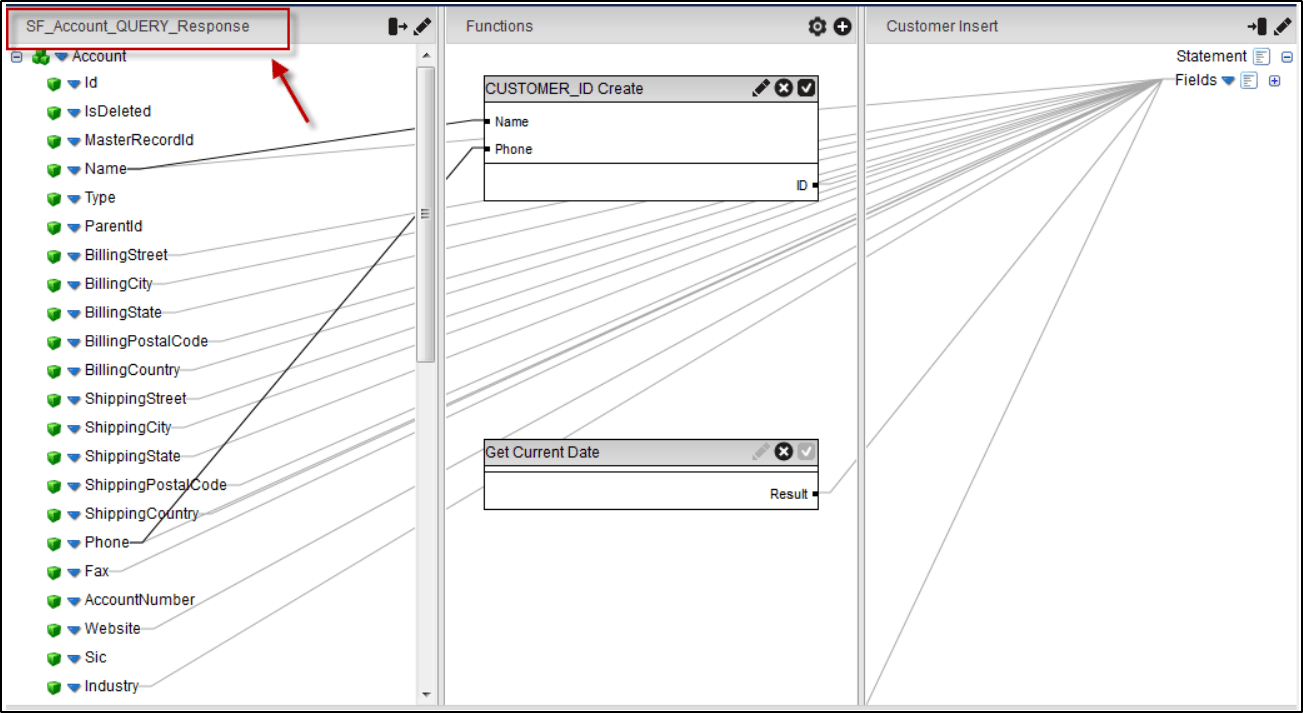
Data Mapping: Enable fast, visual ETL development through drag-and-drop tools supported by Boomi Suggest, which recommends mappings based on community patterns.
Drag and Drop Workflow Automation: Automate complex, multi-step integration processes using a visual orchestration canvas that supports transformations, conditional routing, and external API calls. Allow teams to model end-to-end data flows without deep coding expertise.
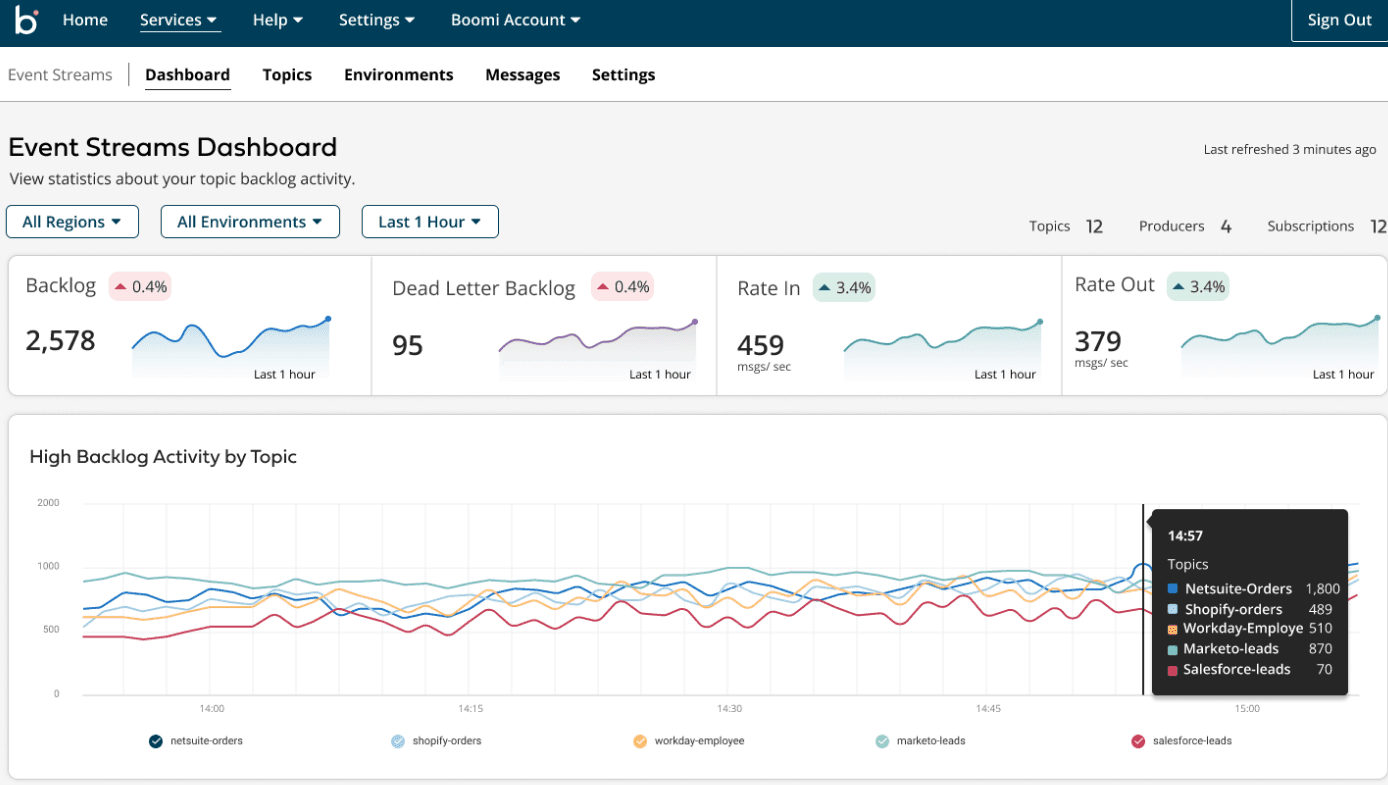
Real-Time Monitoring: Keep an eye on your integrations with Boomi's real-time monitoring dashboards. You'll spot issues quickly, ensuring minimal disruption to your operations.
Error Handling: Boomi provides robust error handling, alerting your team to any integration failures. This feature helps maintain data integrity and operational continuity.
Scalability: Scale integrations seamlessly by deploying additional Atoms or Atom Clouds close to the data source, enabling distributed processing and higher availability. Support growing workloads without architectural redesign or performance bottlenecks.
Security Compliance: Ensure secure data handling with industry-standard encryption, role-based access, and compliance certifications required in finance, healthcare, and other regulated environments.
Ease of Use
Boomi’s drag-and-drop interface and low-code AtomSphere environment make basic data mapping and workflow design feel simple and visual. But this ease of use can be misleading. To achieve real operational efficiency like handling exceptions, writing custom scripts, or optimizing deployments, you need a strong grasp of how the Atom runtime actually works. These tasks require deeper technical expertise, because building a flow is easy, but managing its performance and reliability at scale is not.
Integrations
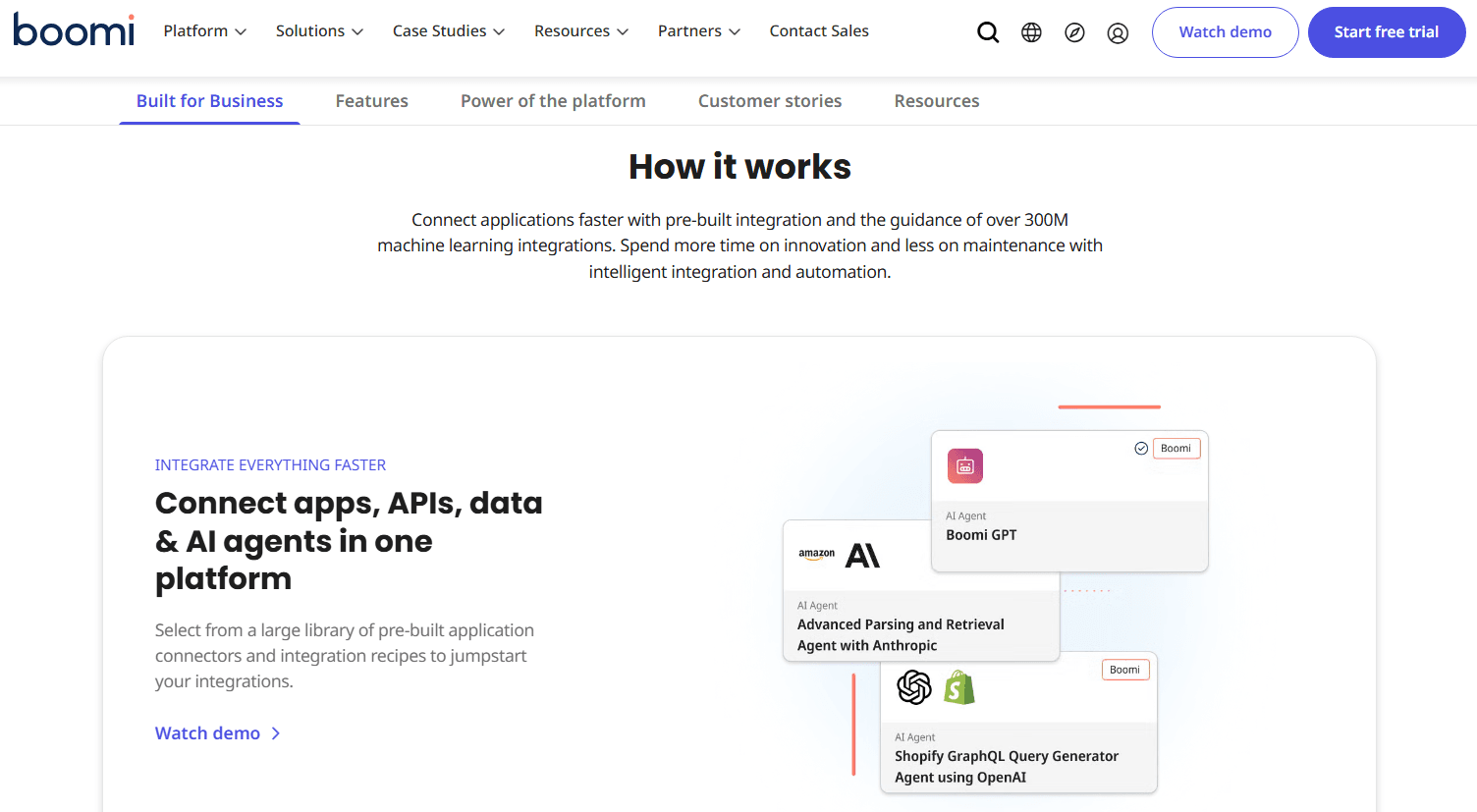
Boomi offers seamless integrations with Google Cloud, Amazon S3, Microsoft Dynamics CRM, Salesforce, SAP, Oracle E-Business Suite, Workday, Shopify, NetSuite, and HubSpot.
Boomi also offers an API for custom integrations and connects with third-party integration tools to expand its capabilities.
Boomi Specs
- 2-Factor Authentication: Yes
- Accounts Payable: Yes
- Accounts Receivable: Yes
- API: Yes
- Approval Workflows: Yes
- Balance Sheet: Yes
- Billing/Invoicing: Yes
- Budgeting: Yes
- Calendar Management: Yes
- Comparative Reporting: Yes
- CRM Integration: Yes
- Custom Reports: Yes
- Customer Management: Yes
- Dashboard: Yes
- Data Export: Yes
- Data Import: Yes
- Data Visualization: Yes
- Expense Tracking: Yes
- External Integrations: Yes
- Forecasting: Yes
- General Account Ledger: Yes
- Historical Data Analysis: Yes
- Inventory Tracking: Yes
- Multi-Currency: Yes
- Multi-User: Yes
- Notifications: Yes
- P&L: Yes
- Payroll: Yes
- Scenario Planning: Yes
- Scheduling: Yes
- Supplier Management: Yes
- Tax Management: Yes
- Time Management: Yes


