

Descifrando los 10 mejores programas de gestión de registros de 2026

10 Lista de selección del mejor software de gestión de registros


Navegar por el laberinto de los registros puede ser una tarea abrumadora, ¿verdad? El software de gestión de registros es su mapa: transforma y organiza grandes volúmenes de datos en información coherente. Con esta herramienta, podrá identificar rápidamente los problemas, mejorar la seguridad y aumentar el rendimiento del sistema. Si está cansado de revisar registros interminables o de pasar por alto detalles cruciales, este software es su respuesta para lograr claridad y eficiencia.
Por qué confiar en nuestras recomendaciones de software
Nuestro equipo lleva probando y evaluando software desde 2012. Como líderes tecnológicos, sabemos lo difícil —y lo importante— que es elegir el software adecuado.
Para esta guía, evaluamos las herramientas mediante pruebas prácticas e investigación independiente, puntuando las herramientas según nuestros criterios de selección.
Nuestras reseñas reflejan nuestro criterio editorial humano, no un discurso de ventas.
Resumen del mejor software de gestión de registros
| Tool | Best For | Trial Info | Price | ||
|---|---|---|---|---|---|
| 1 | La mejor opción para el análisis contextual de logs y trazas | Plan gratuito + prueba gratuita + demostración gratuita disponible | Desde $26/mes (facturado anualmente) | Website | |
| 2 | Mejor para almacenamiento de datos a largo plazo y cumplimiento | Demo gratuita disponible | Desde $0.09/GB/mes | Website | |
| 3 | Ideal para el procesamiento de registros a alta velocidad | Prueba gratuita de 30 días + demo gratis | Precios bajo solicitud | Website | |
| 4 | Mejor para información de datos en tiempo real | Prueba gratuita de 30 días | Desde $15/usuario/mes (facturado anualmente) | Website | |
| 5 | Ideal para soluciones de monitoreo integradas | Not available | Desde $15/usuario/mes (facturado anualmente) | Website | |
| 6 | Ideal para la centralización de registros basada en la nube | Prueba gratuita de 30 días + plan gratuito + demo gratuita disponible | Desde $9/usuario/mes (facturado anualmente) | Website | |
| 7 | Mejor para análisis de datos a gran escala | Prueba gratuita de 14 días + demostración gratuita disponible | Desde $150/usuario/mes (facturado anualmente) | Website | |
| 8 | Mejor para búsqueda y visualización escalables | Prueba gratuita + demo gratis disponible | Desde $16/usuario/mes (facturado anualmente) | Website | |
| 9 | La mejor para análisis de registros centrado en la seguridad | Prueba gratuita + demo gratuita disponible | Desde $25/usuario/mes (facturado anualmente) | Website | |
| 10 | Ideal para el análisis de reglas de cortafuegos | Demo gratuita disponible | Desde $33/usuario/mes | Website |
Reseñas del mejor software de gestión de registros

Sentry
La mejor opción para el análisis contextual de logs y trazas
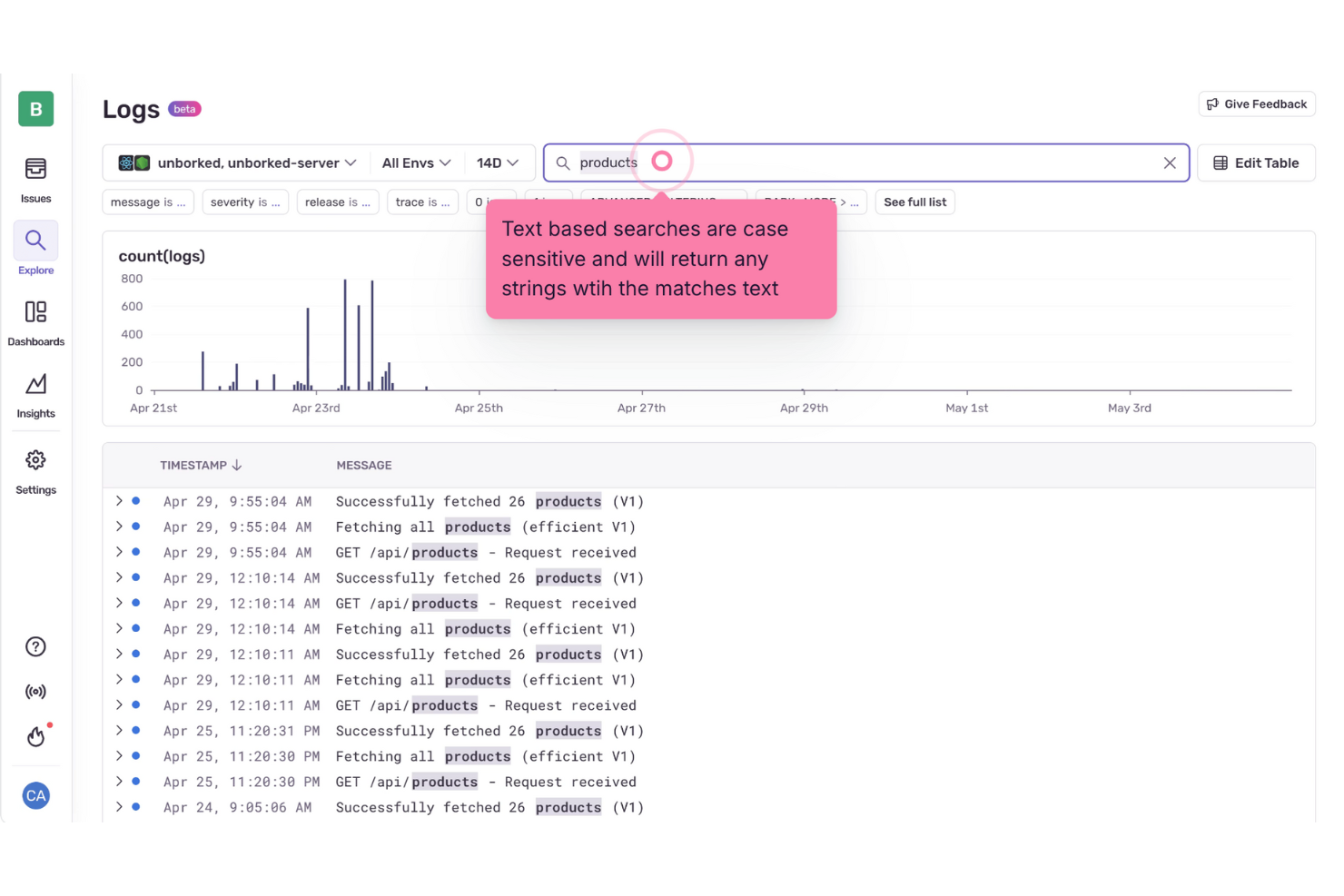
Sentry está dirigido a desarrolladores y profesionales de TI que buscan mejorar sus procesos de gestión de registros. Al integrar los logs con el monitoreo de errores y trazas de rendimiento, Sentry proporciona una plataforma integral para comprender el comportamiento de las aplicaciones. Esta herramienta resulta especialmente atractiva para quienes trabajan en industrias donde la solución de problemas en tiempo real y la resolución de errores son fundamentales, como el desarrollo de software y las operaciones de TI. Sentry aborda el desafío de identificar y resolver fallos silenciosos y bucles de reintento, asegurando que tu equipo pueda mantener el rendimiento y la fiabilidad de las aplicaciones.
Por qué elegí Sentry
Elegí Sentry por su capacidad única de conectar logs estructurados con trazas y errores, ofreciendo una visión holística del rendimiento de las aplicaciones. Esta característica te permite detectar bucles de reintento y fallos silenciosos que pueden no generar excepciones, proporcionando un contexto invaluable para la solución de problemas. Con sus capacidades avanzadas de búsqueda, puedes consultar los logs de forma eficiente por contenido del mensaje o atributos, facilitando la identificación de inconvenientes. Estas funcionalidades responden directamente a las necesidades de los equipos que buscan mejorar sus procesos de gestión de logs y resolución de errores.
Características clave de Sentry
Además de sus logs conectados con trazas, Sentry ofrece:
- Registro estructurado: Permite a tu equipo enviar, visualizar y consultar registros estructurados junto con los errores de la aplicación.
- Alertas basadas en registros: Te permite crear alertas basadas en patrones específicos de logs, ayudándote a detectar problemas anticipadamente.
- Widgets de tablero: Proporciona tableros visuales para el análisis de tendencias, ofreciéndote información sobre los datos de logs a lo largo del tiempo.
- Transmisión en tiempo real de logs: Permite el seguimiento en vivo de logs, para que puedas monitorear logs en tiempo real mientras se ejecutan o fallan trabajos.
- Exportación de registros desde Explorar → Logs: Te permite exportar hasta 10.000 líneas de logs como CSV o JSON Lines, con descargas disponibles en el navegador o generadas en segundo plano y enviadas por correo electrónico.
Integraciones de Sentry
Las integraciones incluyen Slack, GitHub, GitLab, Jira, Bitbucket, PagerDuty, Microsoft Teams, Trello, Datadog y AWS Lambda.
Pros and Cons
Pros:
- El rastreo distribuido muestra información detallada del rendimiento por transacción
- El agrupamiento avanzado de errores ayuda a priorizar problemas para una resolución rápida
- Ofrece seguimiento de errores en tiempo real en aplicaciones web, móviles y de backend
Cons:
- Alertas e información de aplicaciones limitadas en planes de nivel inferior
- No todas las integraciones están disponibles de forma nativa, algunas dependen de APIs de terceros
New Product Updates from Sentry

Sentry Lets Seer Iterate on Pull Requests
Sentry lets Seer continue working on the pull requests it opens by responding to review feedback, fixing certain CI failures, and pushing follow-up commits. This keeps updates, discussion, and revision history in the same pull request. For more information, visit Sentry’s official site.
 .
.
Mejor para almacenamiento de datos a largo plazo y cumplimiento
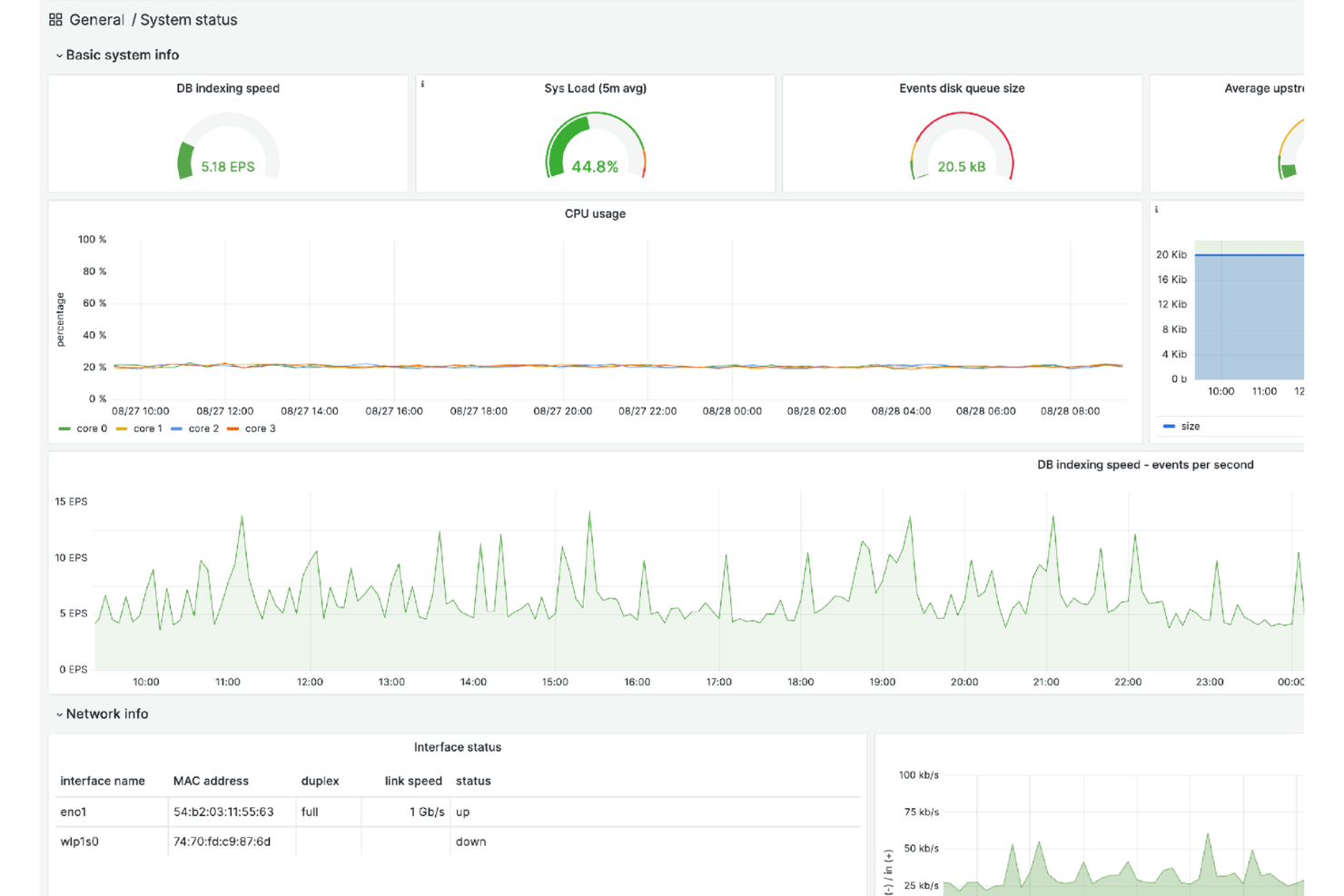
Logmanager es una plataforma de gestión de registros que ayuda a los equipos de TI a agregar registros de diversas fuentes y almacenarlos a largo plazo para fines de cumplimiento. La normalización de datos consistente garantiza que los datos de registro se presenten en un panel de visualización unificado, proporcionando a los usuarios la información necesaria de una manera fácilmente accesible.
Por qué elegí Logmanager: Permite que tu equipo almacene, busque y analice datos de registros a cualquier escala, unificando los registros de toda tu infraestructura de TI. Este enfoque integral brinda contexto para la resolución de problemas, el monitoreo de infraestructura y el análisis de seguridad, asegurando que tus sistemas se mantengan robustos y seguros.
Características destacadas e integraciones:
Con soporte nativo para más de 140 fuentes de registros, agregar nuevas fuentes es rápido y sencillo. También ofrece información procesable mediante tableros predefinidos y preparación para el cumplimiento, ayudando a tu organización a cumplir con los requisitos de auditoría e informes para estándares como GDPR, NIS2 e ISO 27001. Algunas integraciones incluyen Apache Tomcat, Aruba Networks, CheckPoint Firewall, dispositivos Cisco, DELL iDRAC, ESET Remote Administrator, productos Fortinet, IBM AIX Syslog, productos de Microsoft y MySQL.
Pros and Cons
Pros:
- Escalable y fiable, adaptándose a las crecientes necesidades de datos
- Capacidades de búsqueda y filtrado rápidas
- Visión integral del estado de la infraestructura de TI con tableros personalizables
Cons:
- El precio podría ser elevado para operaciones más pequeñas
- La personalización puede ser compleja en ciertos casos de uso

Ideal para el procesamiento de registros a alta velocidad
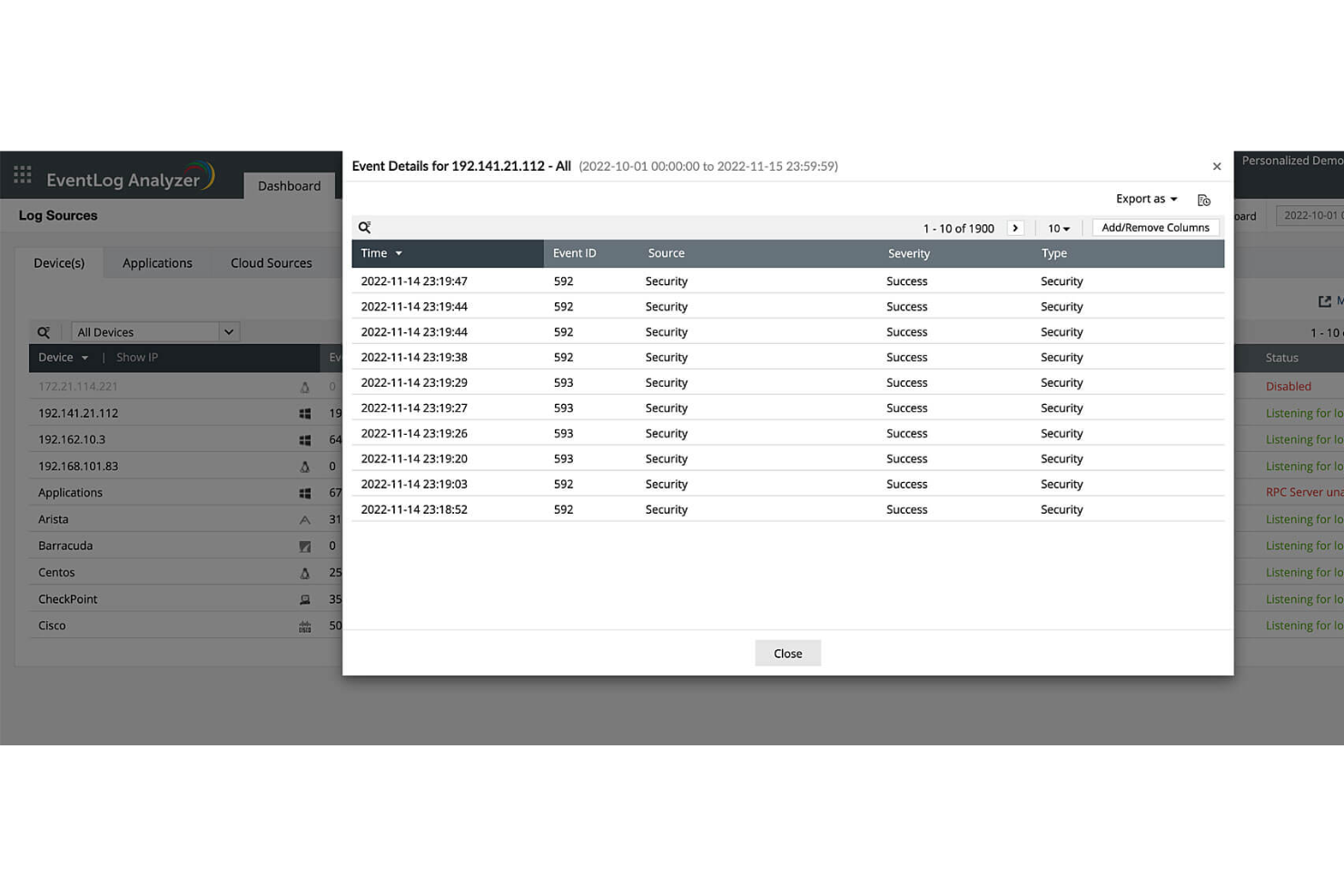
ManageEngine EventLog Analyzer es una solución integral de gestión de registros y cumplimiento de TI diseñada para mejorar la seguridad de la red y agilizar el cumplimiento con los requisitos de auditoría de TI. Esta herramienta es compatible tanto con sistemas operativos Windows como Linux, proporcionando monitoreo de registros en tiempo real, auditorías y capacidades detalladas de generación de informes.
Por qué elegí ManageEngine EventLog Analyzer: Me gusta que EventLog Analyzer ofrezca procesamiento de registros a alta velocidad. Esto asegura que grandes volúmenes de datos de registro se procesen de manera eficiente, lo cual es crucial para el monitoreo en tiempo real y una rápida respuesta ante incidentes. El software también admite una amplia variedad de fuentes de registros, incluyendo registros de eventos de Windows y Unix, syslogs y registros de aplicaciones, lo que lo convierte en una solución versátil para entornos de TI diversos.
Características destacadas e integraciones:
Otra característica notable es la capacidad de auditoría de seguridad en tiempo real. EventLog Analyzer proporciona monitoreo continuo de Active Directory y servidores Windows, permitiendo a las organizaciones rastrear cambios y detectar rápidamente intentos de acceso no autorizado. También ofrece detección avanzada de amenazas. La herramienta se integra con Log360, ADAudit Plus, Firewall Analyzer, SharePoint Manager Plus, M365 Security Plus, Cloud Security Plus, DataSecurity Plus, FileAnalysis, OpManager Plus y NetFlow Analyzer.
Pros and Cons
Pros:
- Amplias capacidades de gestión de registros
- Capacidades de auditoría exhaustivas
- Opciones de informes detallados y personalizables
Cons:
- Funcionalidad limitada en dispositivos móviles
- Algunos usuarios consideran que la configuración inicial es compleja

Mejor para información de datos en tiempo real
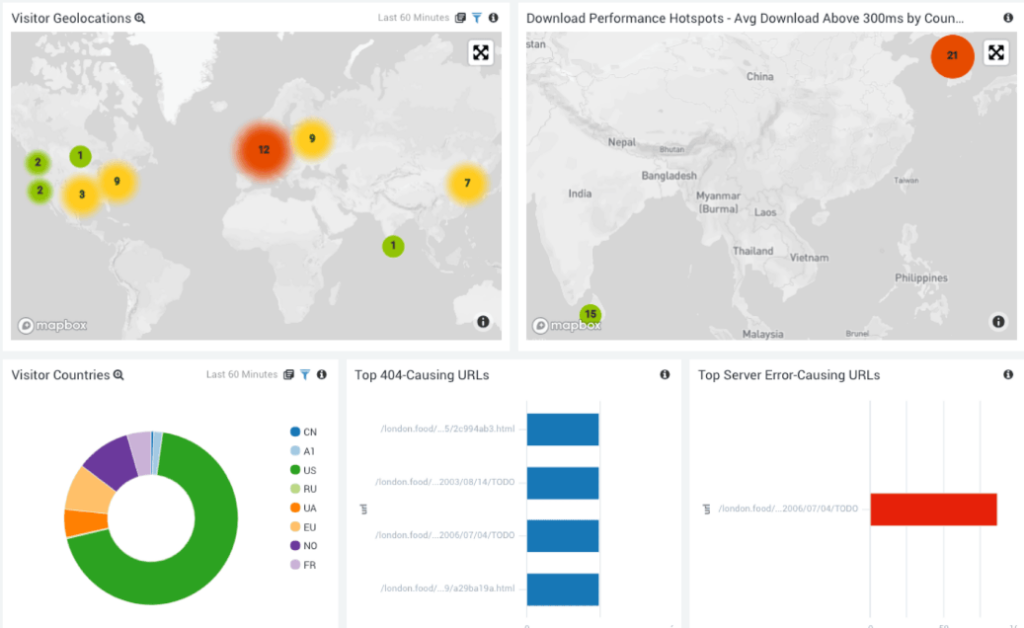
En el cambiante panorama de la gestión de registros, Sumo Logic surge como una plataforma SaaS orientada a ofrecer información procesable de datos en tiempo real. Gracias a su capacidad para procesar y analizar rápidamente grandes flujos de datos, resulta indispensable para quienes no pueden permitirse retrasos en la comprensión de su información.
Por qué elegí Sumo Logic: Elegí Sumo Logic tras analizar sus fortalezas y compararla con varias otras herramientas del mercado. Un elemento que influyó especialmente en mi decisión fue su avanzada capacidad de análisis sintáctico, que permite un análisis de datos preciso y veloz. La promesa de obtener información en tiempo real no es una simple retórica con Sumo Logic; realmente lo cumple, lo que la convierte en la elección ideal para quienes buscan interpretaciones inmediatas de sus datos.
Funciones e integraciones destacadas:
Entre sus numerosas funciones, destacan las políticas de retención de Sumo Logic, que permiten a los usuarios gestionar de forma eficiente el tiempo de almacenamiento de sus datos según sus necesidades particulares. Además, su funcionalidad SIEM garantiza un sólido monitoreo de seguridad y detección de amenazas. En cuanto a integraciones, Sumo Logic se conecta con una gran variedad de herramientas de terceros, ampliando su utilidad a través de diversas infraestructuras.
Pros and Cons
Pros:
- Capacidades avanzadas de análisis sintáctico para un análisis de datos profundo
- Políticas de retención flexibles que se adaptan a diversas necesidades de almacenamiento de datos
- Funciones SIEM integrales para mayor seguridad
Cons:
- Cierta complejidad en la configuración inicial para principiantes
- Los precios pueden ser elevados para organizaciones pequeñas
- El modelo SaaS puede no ser adecuado para organizaciones con requisitos estrictos de residencia de datos


La Gestión de Logs de Datadog está diseñada para capturar, organizar y visualizar registros de eventos de diversas infraestructuras. Con énfasis en soluciones de monitoreo integradas, esta herramienta ofrece a las organizaciones una visión clara y holística, reforzando su posición como la mejor opción para un monitoreo integral.
Por qué elegí la Gestión de Logs de Datadog: Al determinar las herramientas más efectivas para el monitoreo integrado, la Gestión de Logs de Datadog surgió continuamente como líder en mis comparaciones. El motivo por el que me incliné por esta plataforma es su combinación única de capacidades de registro de eventos junto con amplias funcionalidades de integración. Por su diseño y eficacia, está claro que Datadog es ideal para quienes buscan soluciones de monitoreo integradas.
Características destacadas y integraciones:
Datadog destaca por su capacidad para ingerir de manera eficiente una amplia gama de datos de registro, asegurando que no se pierda información vital. Sus capacidades de registro de eventos, especialmente para sistemas Linux, son de primer nivel, ofreciendo claridad y detalle. En cuanto a integraciones, Datadog colabora con numerosas plataformas, desde proveedores de la nube hasta infraestructuras de servidores, aumentando su utilidad en diversos entornos de TI.
Pros and Cons
Pros:
- Potente capacidad para registros de eventos, especialmente en entornos Linux
- Ingesta efectiva de datos de registro variados
- Amplia gama de integraciones con otras plataformas de TI
Cons:
- La configuración inicial puede ser compleja para algunos usuarios
- La interfaz puede ser abrumadora para principiantes
- El costo puede ser prohibitivo para empresas más pequeñas

Loggly
Ideal para la centralización de registros basada en la nube

A medida que el ámbito digital se expande cada vez más, Loggly surge como un faro para quienes buscan centralizar sus archivos de registro en la nube. Ofreciendo una plataforma unificada para gestionar y monitorear registros, está especialmente orientado a quienes desean centralizar sin las limitaciones de soluciones locales (on-premise).
Por qué elegí Loggly: Durante el proceso de selección de las mejores herramientas para esta lista, Loggly destacó notablemente. Tras evaluar su funcionalidad frente a un sinfín de opciones, concluí que su enfoque basado en la nube ofrece una flexibilidad inigualable. Esta orientación distintivamente nativa de la nube, junto con sus sólidas capacidades, consolidó mi opinión de que es realmente la mejor opción para quienes buscan centralización de logs en la nube.
Características e integraciones destacadas:
Loggly impresiona con sus capacidades dinámicas de indexación, que ayudan a recuperar registros de manera rápida y precisa. Al manejar diversos formatos con destreza, asegura que los usuarios no se vean restringidos por el tipo u origen de los archivos de registro. Además, las integraciones de Loggly, que abarcan desde herramientas de alertas hasta plataformas de visualización, potencian su utilidad total para diversas necesidades operativas.
Pros and Cons
Pros:
- Capacidades sólidas de indexación para una recuperación rápida de registros
- Se adapta a varios formatos de registros
- Amplia gama de integraciones de terceros
Cons:
- La interfaz puede ser intimidante para principiantes
- No es tan completa en funciones como algunas opciones premium
- Carece de ciertas herramientas avanzadas de análisis

Splunk
Mejor para análisis de datos a gran escala

Splunk es una potencia en el ámbito de la gestión de registros, cuyo objetivo es transformar los datos de las máquinas en información útil. Para aquellos que se ahogan en vastos océanos de datos, Splunk actúa como un faro, guiándolos hacia interpretaciones significativas.
Por qué elegí Splunk: Al componer esta lista, determiné que el dominio de Splunk en el mercado no era mera casualidad. Según mi criterio, tras comparar varias plataformas, Splunk ofrece uno de los entornos más robustos para analizar grandes volúmenes de datos. Su distinción radica en su capacidad para gestionar análisis de datos a gran escala, proporcionando información invaluable que muchas otras plataformas podrían pasar por alto. En mi opinión, esta capacidad lo hace el mejor para quienes necesitan análisis de datos profundos a una escala considerable.
Características destacadas & integraciones:
La fortaleza de Splunk reside en sus avanzadas funciones de búsqueda, que permiten una resolución de problemas precisa y la extracción de datos exactos. Sus técnicas de agregación de datos filtran eficientemente enormes volúmenes, presentando al usuario solo la información más relevante. El rico ecosistema de Splunk incluye multitud de aplicaciones e integraciones, lo que lo hace altamente adaptable a las necesidades de cualquier organización.
Pros and Cons
Pros:
- Capacidades excepcionales de análisis de datos
- Ecosistema de aplicaciones completo para diversas necesidades
- Sólidas técnicas de agregación de datos
Cons:
- Curva de aprendizaje más pronunciada para principiantes
- Precio más alto comparado con algunos competidores
- Puede ser excesivo para empresas más pequeñas

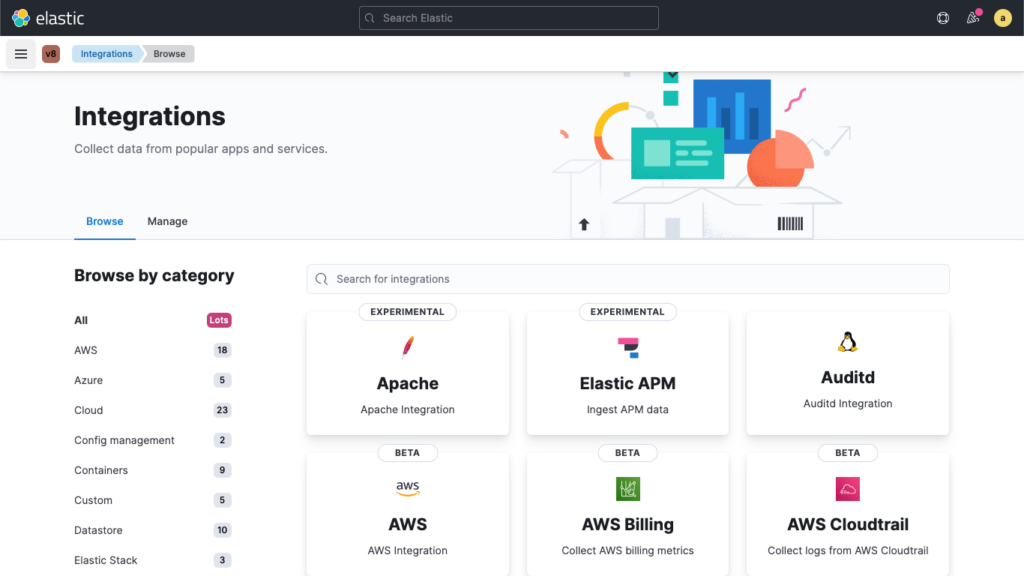
Elastic se destaca como un símbolo de eficiencia en el abarrotado ámbito de la gestión de registros. Diseñado para quienes exigen tanto potentes capacidades de búsqueda como visualización de primer nivel, la arquitectura de Elastic ofrece la escalabilidad crucial para empresas en crecimiento y proyectos complejos.
Por qué elegí Elastic: Al seleccionar herramientas para esta guía, Elastic entró de forma natural en la lista. No fue solo por su popularidad, sino que tras compararlo con sus competidores, descubrí que su equilibrio entre el poder de búsqueda y las herramientas de visualización es realmente notable. Es este equilibrio, junto con su escalabilidad innata, lo que me llevó a determinar que Elastic es la mejor opción para quienes priorizan la búsqueda escalable y la visualización de primer nivel en sus operaciones.
Características e integraciones destacadas:
En esencia, Elastic está equipado con sólidas herramientas de análisis que hacen que el examen de los datos sea un proceso más intuitivo. Su monitoreo del rendimiento de aplicaciones garantiza que los equipos de devops estén por delante de posibles inconvenientes. Las integraciones API que aporta Elastic refuerzan su funcionalidad general, permitiendo a los usuarios conectar diversas plataformas y herramientas sin esfuerzo.
Pros and Cons
Pros:
- Herramientas de análisis completas para obtener información en profundidad
- Efectivo monitoreo del rendimiento de aplicaciones
- Integraciones de API versátiles que potencian la funcionalidad
Cons:
- Podría ser demasiado complejo para proyectos más pequeños
- La configuración inicial puede ser desafiante
- El precio puede ser prohibitivo para equipos pequeños

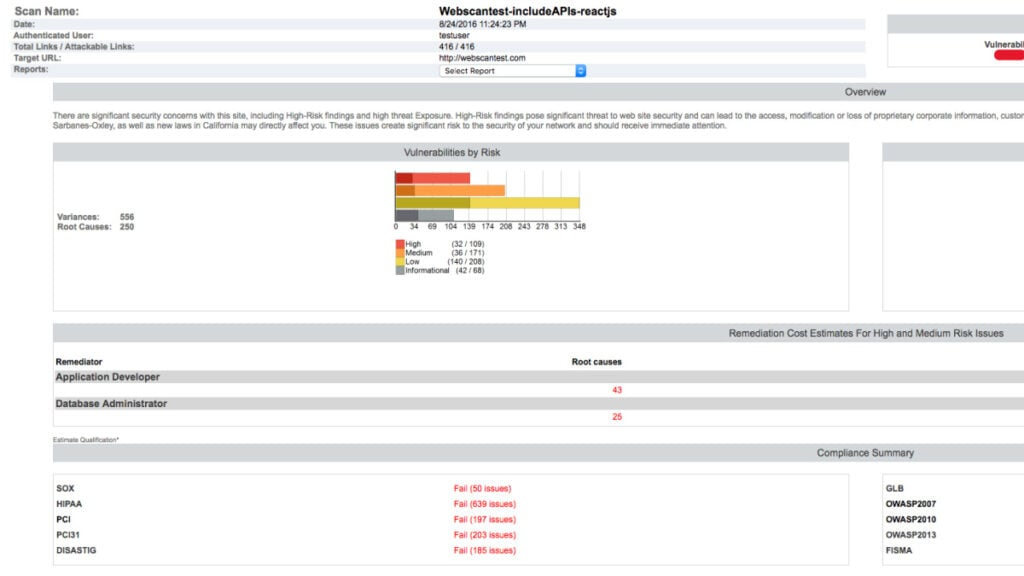
Rapid7 se especializa en proporcionar soluciones de analítica de registros con un enfoque en la seguridad. Su plataforma integra técnicas avanzadas de análisis de registros con una atención especial en detectar, comprender y responder a amenazas de seguridad. Gracias a su enfoque centrado en la seguridad, Rapid7 resulta ser una herramienta indispensable para las organizaciones que priorizan la protección de sus datos.
Por qué elegí Rapid7: En el vasto panorama de herramientas de análisis de registros, elegir Rapid7 fue una decisión impulsada por su énfasis incomparable en la seguridad. Tras una cuidadosa comparación y análisis, consideré que la plataforma de Rapid7 ofrece una combinación única de capacidades de analítica de registros junto con conocimientos en seguridad. Esta combinación la convierte, sin duda, en la mejor opción para el análisis de registros centrado en la seguridad.
Características destacadas e integraciones:
Una de las características distintivas de Rapid7 es su sofisticado lenguaje de consultas, que permite a los profesionales de TI profundizar en sus registros y extraer conocimientos útiles. Además, la capacidad de la plataforma para proporcionar alertas en tiempo real garantiza que cualquier comportamiento anómalo se detecte rápidamente. En cuanto a integraciones, Rapid7 se adapta bien a varias plataformas de seguridad y bases de datos de inteligencia de amenazas, reforzando así sus capacidades defensivas.
Pros and Cons
Pros:
- Lenguaje de consultas robusto para un análisis detallado de registros
- Alertas en tiempo real para la detección inmediata de amenazas
- Fuerte integración con las principales plataformas de seguridad
Cons:
- La interfaz puede resultar desafiante para los recién llegados
- Las funciones avanzadas requieren una curva de aprendizaje pronunciada
- Las integraciones pueden necesitar ajustes para un rendimiento óptimo

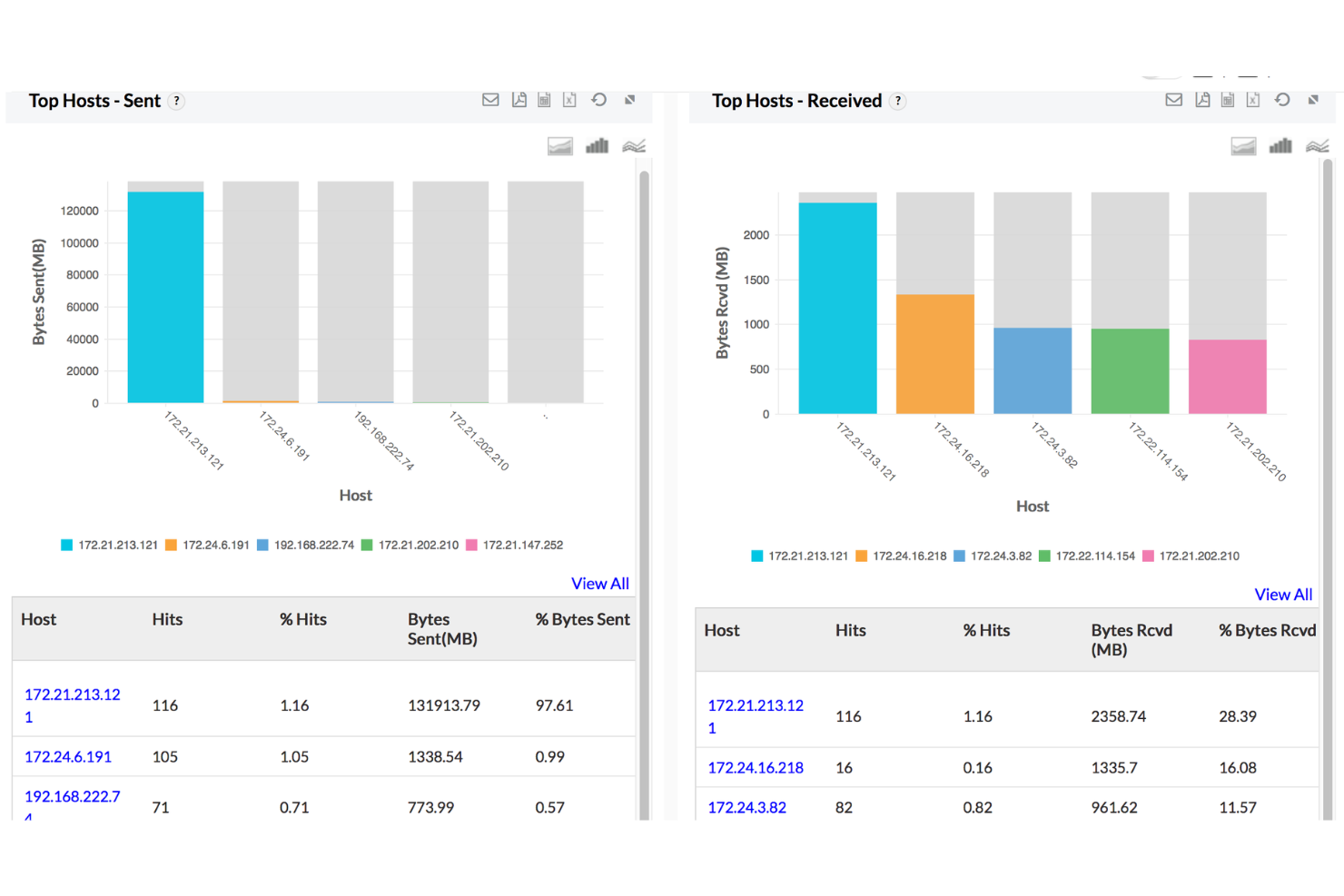
ManageEngine Firewall Analyzer es una herramienta de gestión de registros centrada en cortafuegos que ayuda a los equipos de TI a supervisar los cambios de configuración, rastrear el tráfico de red y analizar eventos de seguridad a través de múltiples proveedores. Recoge y analiza registros de una amplia gama de cortafuegos, permitiéndote visualizar el comportamiento del tráfico, garantizar el cumplimiento de políticas y investigar actividades sospechosas desde un panel centralizado.
Por qué elegí ManageEngine Firewall Analyzer: Incluí esta herramienta porque te da una visibilidad precisa sobre cómo están funcionando las reglas de los cortafuegos y dónde podrían estar mal configuradas. Esto es útil si buscas reducir accesos innecesarios, fortalecer las políticas de seguridad o limpiar conjuntos de reglas obsoletos. También facilita el seguimiento de cumplimiento con plantillas integradas para normativas regulatorias y mantiene un registro de los cambios realizados en las configuraciones de los cortafuegos, lo que te ayuda a detectar actualizaciones no autorizadas o lapsos en auditorías.
Características destacadas e integraciones:
La herramienta ofrece monitoreo en tiempo real del uso de VPN, picos de ancho de banda y tendencias de actividad de usuarios. También puedes realizar búsquedas forenses en los registros para encontrar el origen de eventos de seguridad y configurar alertas automáticas para anomalías en el tráfico o violaciones de reglas. Es compatible con diversas herramientas de ManageEngine como OpManager, Log360, Endpoint Central y M365 Security Plus, además de ser compatible con los principales fabricantes de cortafuegos como Cisco, Fortinet, Palo Alto y CheckPoint.
Pros and Cons
Pros:
- Las capacidades de monitoreo en tiempo real ayudan a identificar patrones de tráfico inusuales
- Seguimiento de VPN y gestión de ancho de banda
- Proporciona información detallada sobre el tráfico del cortafuegos y la actividad de los usuarios
Cons:
- Respuestas más lentas a parches en vulnerabilidades de software de terceros
- Requiere actualizaciones y mantenimiento regulares
Otro software de gestión de registros destacado
A continuación se incluye una lista de software adicional de gestión de registros que seleccioné, pero que no llegó a estar entre los 12 primeros. Sin duda, vale la pena echarles un vistazo.
- ManageEngine
Ideal para la gestión integral de TI
- Graylog
Mejor para la gestión de registros de código abierto
- Logz.io
Ideal para el análisis de registros impulsado por inteligencia artificial
- Papertrail
Ideal para el seguimiento y búsqueda de registros de manera directa
- Syslog-ng
La mejor opción para un enrutamiento y filtrado de logs versátil
- Dataset
Ideal para almacenamiento de datos estructurados


Otras reseñas de software de gestión de registros
- Herramientas de análisis de registros
- Software de gestión de puntos de conexión
- Herramientas de gestión de API
Cómo evalúo el software de gestión de registros
Evalúo en dos niveles: criterios de base que toda herramienta de gestión de registros debe cumplir, y diferenciadores—como la detección de anomalías mediante ML o el soporte de OpenTelemetry—que separan a las mejores del resto.
Funcionalidad clave (requisitos mínimos para esta lista)
Al seleccionar herramientas para mi lista, califico cada una en una escala del 0 (no ofrece la funcionalidad) al 5 (destaca en esta área) para cada funcionalidad principal listada a continuación. Después, calculo la puntuación total de la herramienta como un porcentaje. Cada herramienta necesita alcanzar una puntuación total mínima del 75% para ser considerada para su inclusión.
- Recopilación e ingesta de registros: Compruebo cuántos tipos de fuente soporta cada herramienta de manera nativa—servidores, contenedores, servicios en la nube, dispositivos de red—y si ofrece opciones tanto basadas en agentes como sin agentes.
- Agregación centralizada y almacenamiento: Cada herramienta debe consolidar los registros en un repositorio unificado e indexado con políticas de retención configurables que permitan segmentar entre almacenamiento en caliente, tibio y frío.
- Capacidades de búsqueda y consulta: Evalúo la rapidez con la que una herramienta devuelve resultados sobre conjuntos de datos grandes y si ofrece un lenguaje de consulta dedicado para filtrar, agregar y correlacionar entradas de registros.
- Monitoreo y alertas en tiempo real: Busco reglas de alerta configurables que vayan más allá de los umbrales estáticos—disparadores basados en patrones, lógica de múltiples condiciones e integraciones con herramientas como PagerDuty o Slack.
- Análisis y estructuración: La herramienta debe detectar automáticamente formatos de registro comunes como JSON, syslog y Apache, y extraer campos estructurados sin requerir que escribas expresiones regulares para cada nueva fuente.
- Tableros e informes visuales: Evalúo si se pueden construir tableros personalizados que muestren tendencias operativas de un vistazo—cosas como picos en la tasa de errores, patrones de latencia o volumen de ingesta a lo largo del tiempo.
Una vez que tengo una lista de herramientas que cumplen con estos criterios, considero qué distingue a cada plataforma.
Factores diferenciadores (qué distingue a los proveedores)
Así es como comparo y contrasto diferentes proveedores:
Características destacadas
Los análisis impulsados por IA/ML pueden detectar anomalías que pasarían desapercibidas con reglas manuales—como una fuga lenta de memoria que se propaga en un clúster de Kubernetes. También evalúo si una herramienta correlaciona nativamente los registros con métricas y trazas, lo cual reduce el tiempo que se pierde alternando entre plataformas durante un incidente. El control de la optimización de costos es igual de importante. Herramientas que ofrecen filtrado de ingesta, muestreo y segmentación de índices te dan una ventaja real sobre volúmenes de registros fuera de control.
Más allá de las características
La transparencia en los precios es crucial aquí—algunas herramientas cobran por volumen de ingesta, otras por retención o usuarios, y los cargos inesperados durante un pico de incidentes pueden arruinar rápidamente el presupuesto. También evalúo el soporte de integración, especialmente para OpenTelemetry, Fluentd y Fluent Bit, ya que los estándares abiertos evitan que quedes atado al ecosistema de un único proveedor. Para equipos en industrias reguladas, reviso certificaciones como SOC 2, HIPAA e ISO 27001, junto con RBAC y claves de cifrado gestionadas por el cliente.
Cómo elegir un software de gestión de registros
Es fácil perderse entre largas listas de funciones y estructuras de precios complejas. Para ayudarle a mantener la concentración mientras avanza en su proceso particular de selección de software, aquí tiene una lista de factores que debe tener en cuenta:
| Factor | Qué debe considerar |
|---|---|
| Escalabilidad | ¿Puede el software crecer junto con sus necesidades de datos? Considere las cargas de datos futuras y compruebe si la herramienta puede gestionar un volumen mayor sin problemas de rendimiento. |
| Integraciones | ¿Se conecta con sus herramientas actuales? Asegúrese de que sea compatible con su conjunto tecnológico para evitar silos de datos y optimizar los flujos de trabajo. |
| Personalización | ¿Puede adaptar la herramienta para que se ajuste a sus procesos? Busque paneles e informes ajustables que respondan a las necesidades específicas de su equipo. |
| Facilidad de uso | ¿La interfaz es intuitiva para su equipo? Evite las herramientas con curvas de aprendizaje pronunciadas para garantizar una adopción rápida y eficiente. |
| Implementación e incorporación | ¿Cuánto tiempo se tardará en empezar? Considere el tiempo y los recursos necesarios para la configuración y la capacitación, y busque herramientas con un soporte integral durante la incorporación. |
| Coste | ¿Los precios son transparentes y se ajustan al presupuesto? Compare las opciones de suscripción y las tarifas ocultas para encontrar una herramienta que ofrezca una buena relación calidad-precio para su inversión. |
| Medidas de seguridad | ¿Cumple con sus estándares de seguridad? Asegúrese de que la herramienta ofrezca cifrado, controles de acceso y cumplimiento de las normativas pertinentes de protección de datos. |
| Disponibilidad del soporte | ¿La ayuda está fácilmente disponible? Compruebe si ofrece opciones de soporte las 24 horas, los 7 días de la semana, y un servicio ágil para garantizar que recibirá asistencia cuando la necesite. |
¿Qué es el software de gestión de registros?
El software de gestión de registros es una herramienta especializada diseñada para recopilar, centralizar, analizar y visualizar datos de registros. Los profesionales de TI, seguridad y operaciones lo utilizan para transformar registros sin procesar en paneles y métricas útiles. Además del análisis, estas herramientas de supervisión de registros ayudan a archivar datos históricos, lo que garantiza que los usuarios puedan revisar registros anteriores e identificar patrones o anomalías relevantes para el estado, la seguridad y la optimización del rendimiento del sistema. Para consultar opciones completas, considera explorar alternativas a Sumo Logic que ofrecen sólidas capacidades de archivado.
Características
Al seleccionar un software de gestión de registros, presta atención a las siguientes características clave:
- Supervisión en tiempo real: Rastrea los datos de los registros a medida que se generan para identificar y abordar rápidamente los problemas.
- Alertas: Notifica a los usuarios sobre anomalías o posibles amenazas para garantizar una intervención oportuna.
- Agregación de registros: Recopila datos de múltiples fuentes para ofrecer una visión completa del rendimiento del sistema.
- Búsqueda y filtrado: Permite a los usuarios encontrar fácilmente entradas específicas de los registros, lo que facilita la resolución de problemas y el análisis.
- Paneles personalizables: Permite a los usuarios adaptar su interfaz para mostrar datos y métricas relevantes.
- Capacidades de integración: Se conecta con las herramientas y sistemas existentes para mejorar la eficiencia del flujo de trabajo.
- Características de seguridad: Proporciona cifrado y controles de acceso para proteger los datos confidenciales.
- Escalabilidad: Admite necesidades de datos crecientes sin degradar el rendimiento.
- Interfaz fácil de usar: Garantiza una experiencia sencilla gracias a una navegación intuitiva y una curva de aprendizaje mínima.
- Asistencia para la incorporación: Ofrece recursos como vídeos de capacitación y recorridos interactivos para una implementación fluida.
Beneficios
Implementar un software de gestión de registros proporciona varios beneficios para tu equipo y tu empresa. Estos son algunos de los que puedes esperar:
- Mejor resolución de problemas: Identifica y resuelve rápidamente los problemas mediante la supervisión y las alertas en tiempo real.
- Mayor seguridad: Protege los datos confidenciales con características de seguridad como el cifrado y los controles de acceso.
- Mayor eficiencia: Ahorra tiempo con las funciones de búsqueda y filtrado que te ayudan a encontrar fácilmente las entradas de los registros.
- Mejor toma de decisiones: Obtén información de los datos agregados para tomar decisiones operativas fundamentadas.
- Información personalizable: Adapta los paneles para mostrar las métricas más importantes para tu equipo.
- Escalabilidad: Gestiona necesidades de datos crecientes sin sacrificar el rendimiento ni la velocidad.
- Integración fluida: Conéctate con los sistemas existentes para crear un flujo de trabajo cohesionado y mejorar la productividad.
Costos y precios
Seleccionar un software de gestión de registros requiere comprender los diversos modelos de precios y planes disponibles. Los costos varían según las características, el tamaño del equipo, los complementos y otros factores. La tabla siguiente resume los planes habituales, sus precios promedio y las características típicas incluidas en las soluciones de software de gestión de registros:
Tabla comparativa de planes para software de gestión de registros
| Tipo de plan | Precio promedio | Características habituales |
|---|---|---|
| Plan gratuito | $0 | Recopilación básica de registros, retención de datos limitada y asistencia de la comunidad. |
| Plan personal | $5-$25/usuario/mes | Supervisión en tiempo real, alertas básicas e integraciones limitadas. |
| Plan empresarial | $30-$100/usuario/mes | Búsqueda y filtrado avanzados, paneles personalizables y seguridad mejorada. |
| Plan corporativo | $100+/usuario/mes | Capacidades de integración completas, asistencia prioritaria y amplia escalabilidad. |
Preguntas más comunes sobre el software de gestión de registros (FAQ)
¿Es posible personalizar los paneles en el software de gestión de registros?
Muchas soluciones de gestión de registros ofrecen paneles personalizables, en los que puedes adaptar la interfaz para mostrar datos y métricas relevantes. Esto te ayuda a centrarte en los indicadores clave de rendimiento y agilizar la supervisión. Comprueba si el software te permite crear paneles que se ajusten a las necesidades específicas de tu equipo.
¿Cuál es el software más barato y cuál es el más caro en la gestión de registros?
El software más barato suele incluir versiones de código abierto o versiones básicas de herramientas comerciales, mientras que las opciones más caras están dirigidas a grandes empresas y ofrecen amplias funciones y opciones de escalabilidad. Es importante tener en cuenta que, aunque las opciones de código abierto como Elastic Stack pueden utilizarse de forma gratuita, pueden generarse costes al ampliar su escala o elegir funcionalidades adicionales.
¿Hasta qué punto son fáciles de usar estas herramientas?
La mayoría de los sistemas modernos de gestión de registros priorizan la facilidad de uso. Normalmente incluyen paneles intuitivos, funcionalidades de arrastrar y soltar y herramientas claras de visualización. Esto es crucial, ya que un sistema complicado podría dificultar el análisis eficiente de los registros.
¿Estos sistemas son compatibles con entornos como Kubernetes o plataformas específicas como las de Microsoft?
Por supuesto. La mayoría de las soluciones de gestión de registros de primer nivel son compatibles con diversos entornos, desde clústeres de Kubernetes hasta plataformas específicas como el sistema de eventos de Windows de Microsoft. Las capacidades de integración son una característica fundamental de una herramienta eficaz de gestión de registros.
Lo siguiente:
Si estás investigando software de gestión de registros, conecta con un asesor de SoftwareSelect para obtener recomendaciones gratuitas.
Rellenas un formulario y mantienes una breve conversación en la que se detallan tus necesidades. Después recibirás una lista de preselección de software para revisar. Incluso te ayudarán durante todo el proceso de compra, incluidas las negociaciones de precios.