


SysAid vs. Freshservice: Comparison and Expert Reviews for 2026



Choosing an IT service management platform can be challenging when multiple solutions promise to improve your service delivery. SysAid and Freshservice both provide tools for managing incidents, assets, workflows, and service requests, but they take different approaches to automation and AI. SysAid emphasizes agentic AI, workflow automation, and customization, while Freshservice focuses on ServiceOps and ease of adoption through out-of-the-box functionality, which can be a hit or miss with large enterprises.
In this article, you’ll get a side-by-side comparison of SysAid and Freshservice, digging into pros, cons, use cases, pricing, security, and usability. I’ll help you understand where each shines, where they come up short, and which might fit your IT team best.
SysAid vs. Freshservice: An Overview
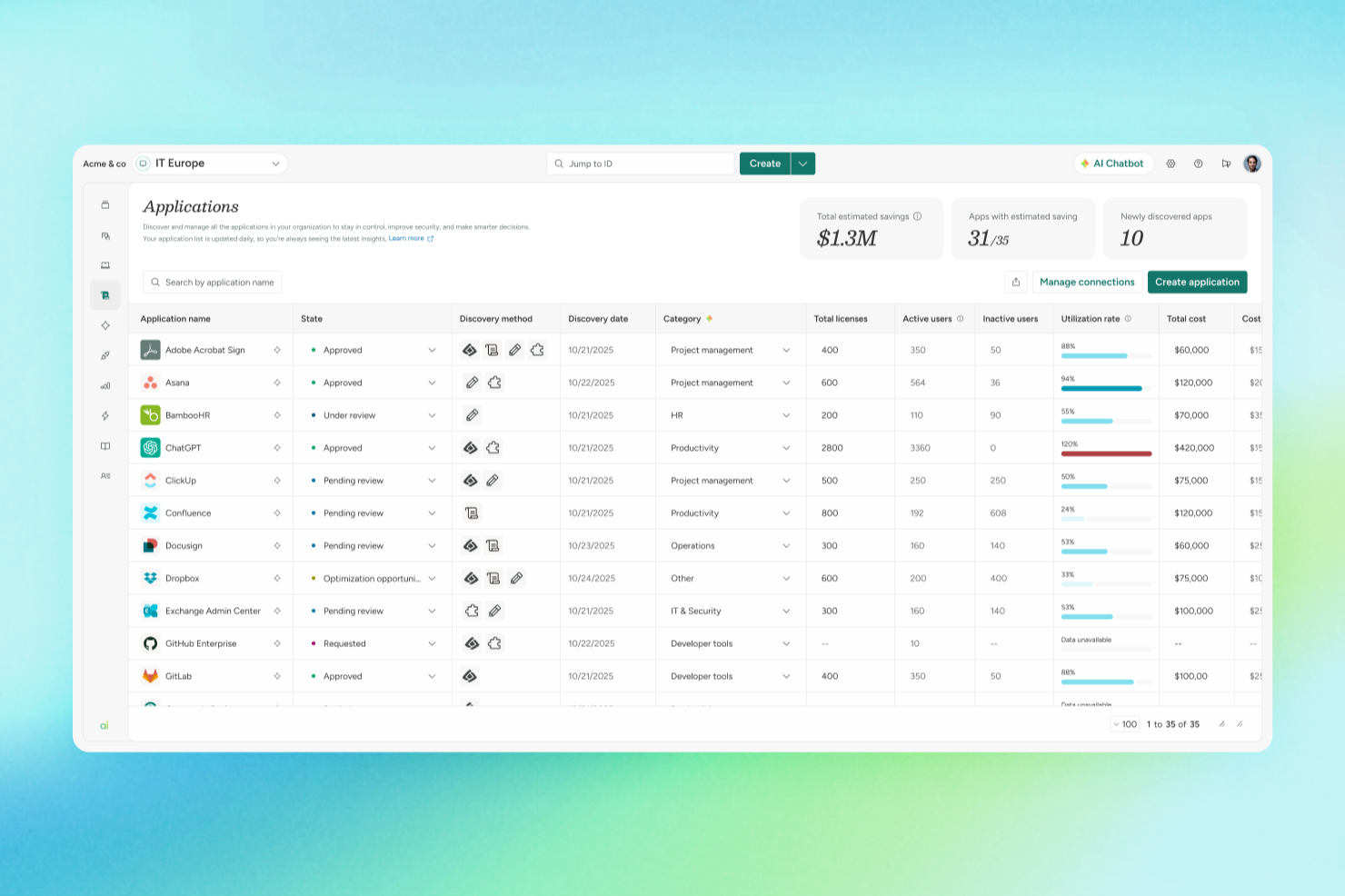
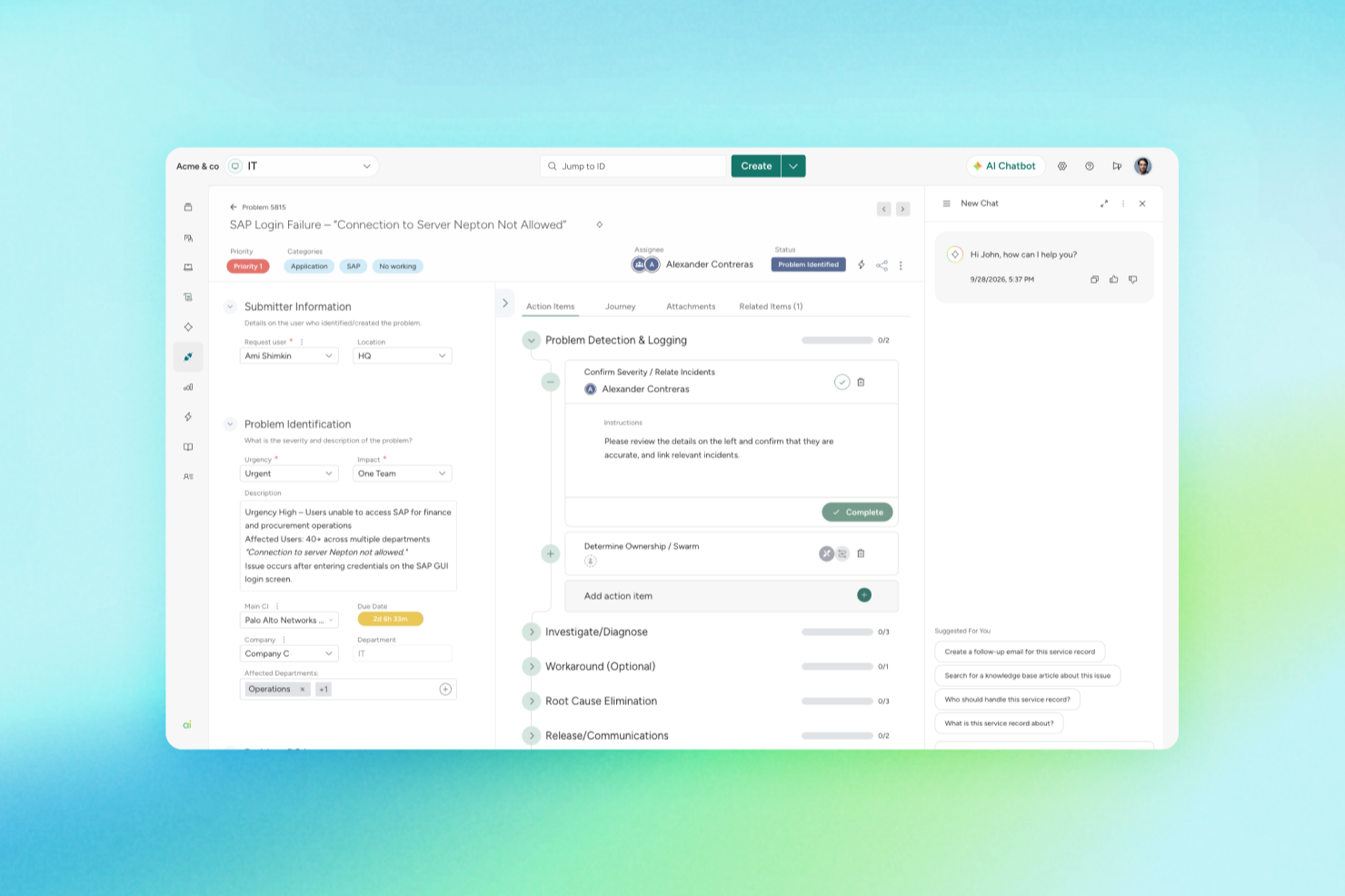
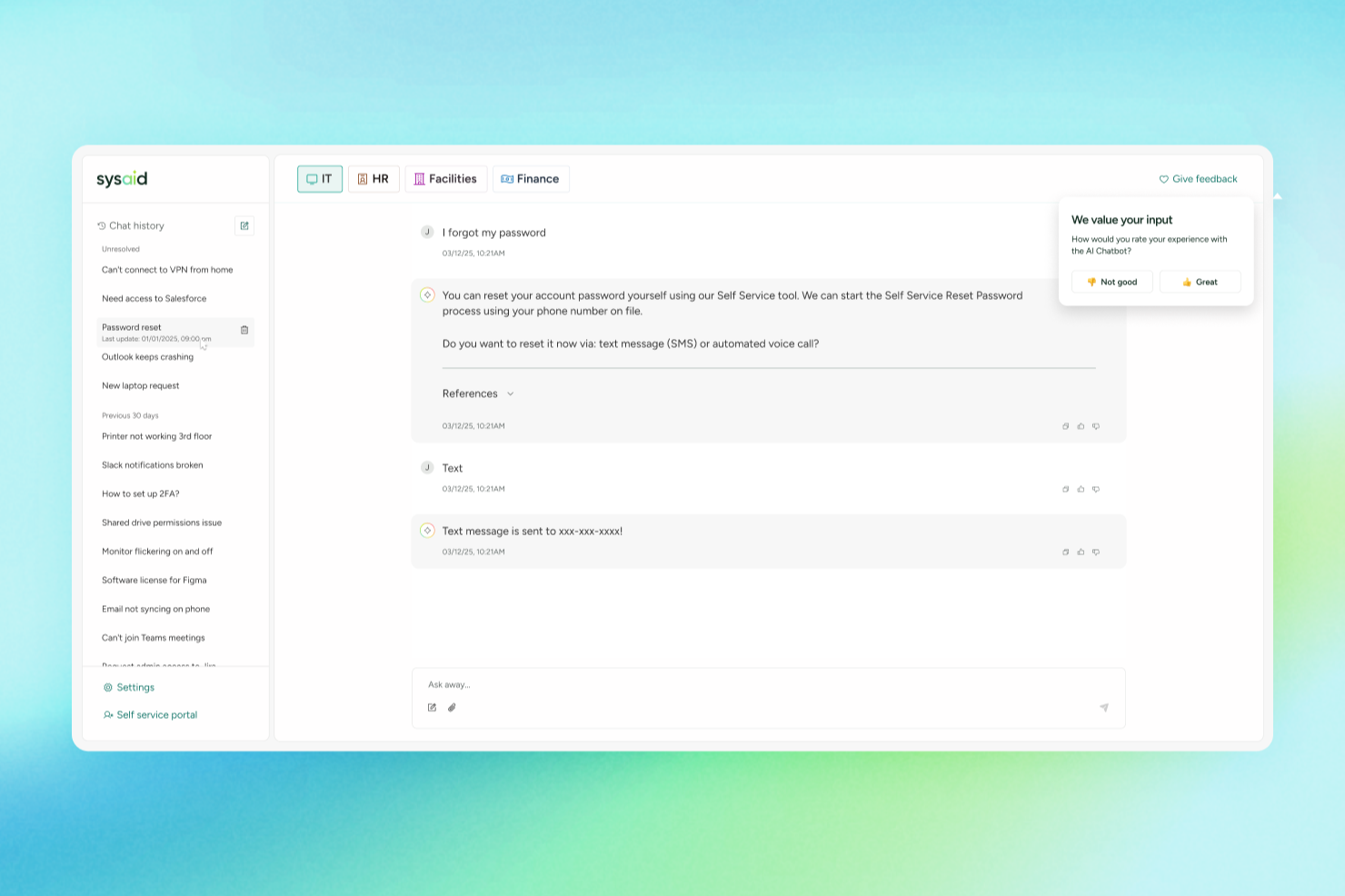
SysAid
Freshservice

Why Trust Our Software Reviews
We’ve been testing and reviewing software since 2023. As tech leaders ourselves, we know how critical and difficult it is to make the right decision when selecting software.
We invest in deep research to help our audience make better software purchasing decisions. We’ve tested more than 2,000 tools for different tech use cases and written over 1,000 comprehensive software reviews. Learn how we stay transparent & our software review methodology.
SysAid vs. Freshservice Pricing Comparison
| SysAid | Freshservice | |
|---|---|---|
| Free Trial | Free trial available | 14-day free trial |
| Pricing | From $89/agent/month | From $19/user/month (billed annually) |
SysAid vs. Freshservice Pricing & Hidden Costs
SysAid and Freshservice take different approaches to pricing. SysAid provides customized pricing based on factors such as your chosen package, number of users, and the assets you need to manage, making it important to work closely with sales to understand your total costs. Freshservice offers publicly listed per-agent pricing tiers, but costs can increase as you add capabilities such as advanced AI features, IT asset management, connector usage, premium support, or professional services.
When evaluating either platform, I recommend considering your expected growth, asset count, AI requirements, implementation needs, and integration strategy to understand the true total cost of ownership. Request a detailed quote and confirm which features, support services, and onboarding resources are included before making a decision.
SysAid vs. Freshservice Feature Comparison
Both SysAid and Freshservice provide comprehensive ITSM functionality, including incident, problem, and change management, self-service portals, asset management, workflow automation, reporting, and AI-powered service desk capabilities. Either platform can serve as a centralized hub for managing IT services and support operations.
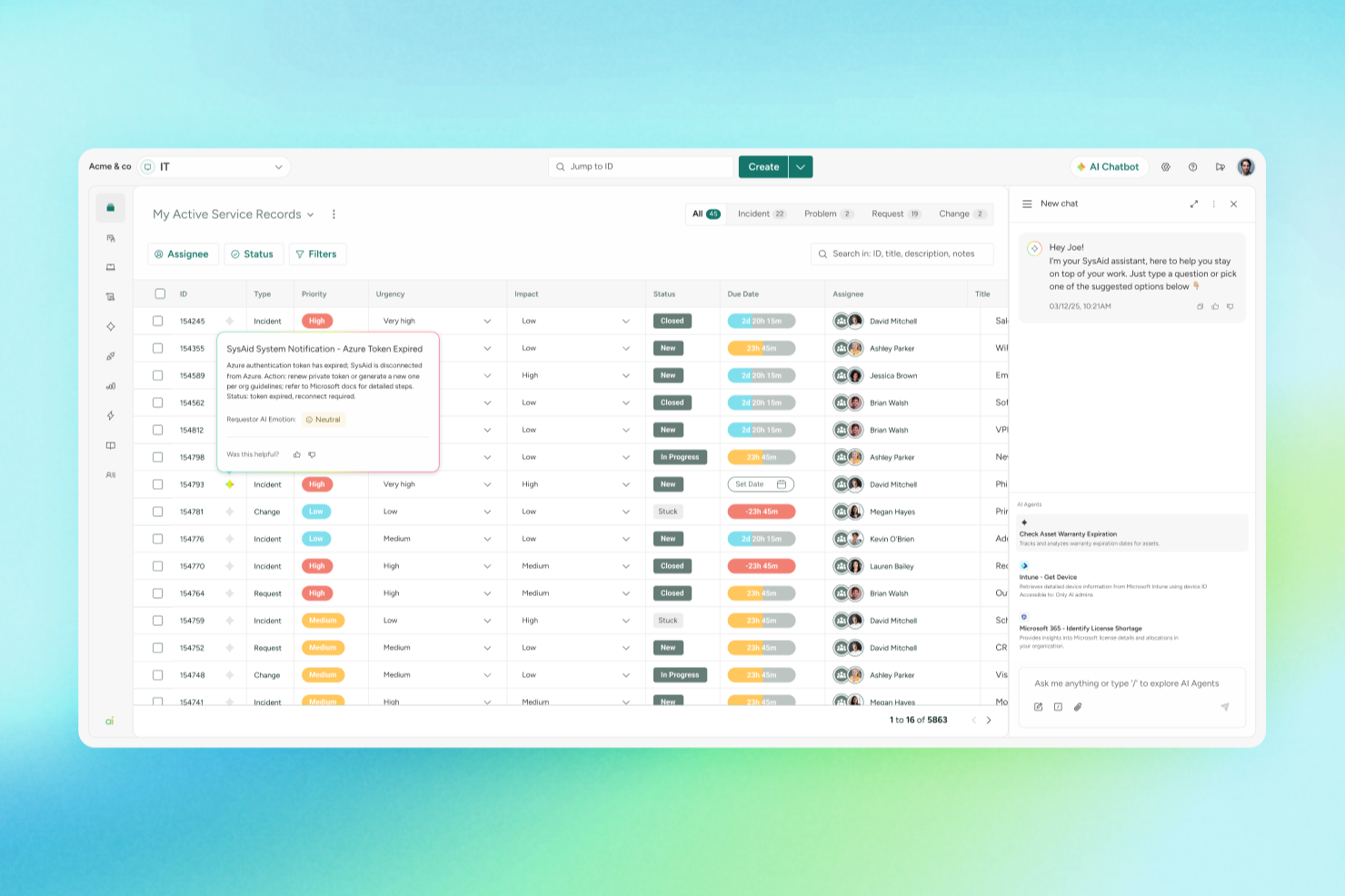
Overall, SysAid places a deeper emphasis on agentic AI built-in, offering AI agents (pre-built and custom-built available) designed to automate routine service management work, along with extensive customization and governance controls that allow organizations to tailor workflows, define rules, and maintain visibility into automated actions.
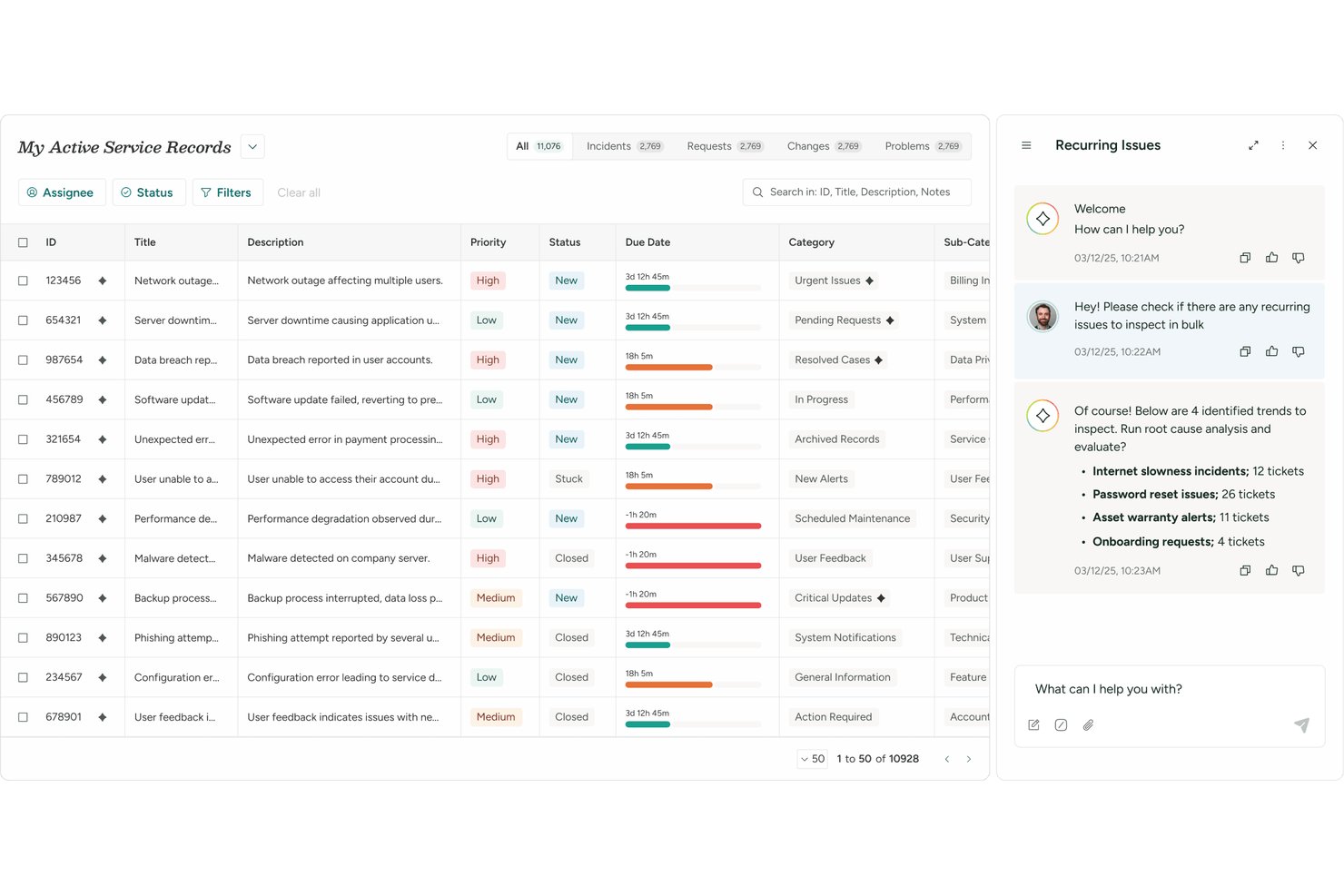
While Freshservice also offers agentic AI through its Freddy AI Agent Studio, there is less opportunity for customization and governance, and it tends to centralize its AI around a broader ServiceOps strategy, combining AI-powered capabilities with features such as Workspaces and Journeys to help organizations coordinate services across departments.
| SysAid | Freshservice | |
|---|---|---|
| 2-Factor Authentication | ||
| API | ||
| Analytics | ||
| Anti-Virus | ||
| Batch Permissions & Access | ||
| Bug Tracking | ||
| CRM Integration | ||
| Call Integration | ||
| Chat | ||
| Contact Management | ||
| Customer Management | ||
| Data Export | ||
| Data Import | ||
| Email Integration | ||
| Escalation Management | ||
| External Integrations | ||
| Incident Management | ||
| Instant Chat Integration | ||
| Knowledge Base | ||
| Malware Protection | ||
| Multi-User | ||
| Notifications | ||
| Organization Management | ||
| Password & Access Management | ||
| Project Management | ||
| Real-time Alerts | ||
| SAP Integration | ||
| Self-service Portal | ||
| Social Media Integration | ||
| Support Forum | ||
| Ticket Management | ||
| Workflow Management |
SysAid vs. Freshservice Integrations
| Integration | SysAid | Freshservice |
|---|---|---|
| Microsoft Teams | ✅ | ✅ |
| Slack | ✅ | ✅ |
| Jira | ✅ | ✅ |
| Active Directory | ✅ | ✅ |
| Google Workspace | ✅ | ✅ |
| Salesforce | ✅ | ✅ |
| Okta | ✅ | ✅ |
| Zendesk | ❌ (via Workato) | ✅ |
| API | ✅ | ✅ |
| Zapier | ✅ | ✅ |
Both SysAid and Freshservice offer broad integration capabilities, connecting with popular collaboration, identity management, and business applications. SysAid emphasizes flexibility through its API, customizable workflows, and integration options (many of which are possible through Workato) that help organizations tailor the platform to existing IT processes.
Freshservice, meanwhile, offers a larger ecosystem of native and marketplace integrations. Organizations seeking extensive out-of-the-box integrations may prefer Freshservice, while those prioritizing customization and process flexibility may find SysAid the stronger fit.
SysAid vs. Freshservice Security, Compliance & Reliability
| Factor | SysAid | Freshservice |
|---|---|---|
| Data Encryption | AES-256 encryption at rest and SSL/TLS encryption in transit. | AES-256 encryption at rest and TLS encryption in transit. |
| Compliance & Certifications | Supports GDPR and HIPAA requirements and maintains certifications including SOC 2 Type II, ISO 27001, ISO 27017, ISO 27018, TX-RAMP, and Cyber Essentials. | Supports GDPR and CCPA requirements and maintains certifications including SOC 1 Type II, SOC 2 Type II, SOC 3, ISO 27001, and ISO 27701. |
| User Access Controls | Provides RBAC, SSO, MFA, Active Directory integration, audit capabilities, and customer database segregation. | Offers RBAC, SSO, MFA, audit logging, and identity integrations with providers such as Okta and Azure AD. |
| Reliability & Deployment | Available in both cloud and on-premises deployments, with regional cloud hosting options and daily backups. | Cloud-native platform with resilient hosting architecture, automated backups, and multi-region infrastructure. |
Both platforms provide enterprise-grade security foundations, including encryption, role-based access controls, SSO, and MFA. Freshservice benefits from a strong cloud-native security program and a broad portfolio of compliance certifications, while SysAid distinguishes itself with deployment flexibility, regional hosting options, healthcare-focused security support, and certifications such as ISO 27017, ISO 27018, and TX-RAMP. SysAid also places a greater emphasis on AI governance and traceability, giving administrators visibility into automated actions and AI-driven workflows.
As an enterprise business, you’ll be safe with either platform, though if you need more control over deployment and residency or have healthcare-related compliance requirements, SysAid will have more options for you.
SysAid vs. Freshservice Ease of Use
| Factor | SysAid | Freshservice |
|---|---|---|
| User Interface | Modern interface focused on flexibility, with extensive configuration options and customizable workflows. Some parts of the platform may offer different experiences due to ongoing updates. | Intuitive, modern UI with streamlined navigation and clear layouts designed for quick adoption. |
| Onboarding | Offers self-guided, guided, and dedicated onboarding, plus implementation services, training, and AI-assisted configuration tools. | Fast onboarding experience with setup wizards, in-app guidance, templates, and extensive self-service resources. |
| Customization | Highly customizable workflows, forms, automations, and service management processes. | Supports workflow and form customization while emphasizing ease of administration and out-of-the-box functionality. |
| Customer Support | Strong customer success focus with onboarding specialists, implementation support, live chat, WhatsApp, callback options, and dedicated resources on eligible plans. | Comprehensive knowledge base, training resources, community forums, 24/7 chatbot, and 24/5 email and chat support with real agents. |
Freshservice offers an easier learning curve thanks to its intuitive interface, guided setup, and strong out-of-the-box functionality. Because SysAid prioritizes flexibility, automation, and custom agentic AI capabilities that allow organizations to automate routine service management work, it introduces additional configuration considerations. SysAid offsets much of the complexity through onboarding resources, implementation support, and AI-assisted setup tools.
SysAid vs Freshservice: Pros & Cons
SysAid
- Agentic AI can autonomously resolve routine incidents and fulfill requests before they reach technicians.
- Highly configurable workflows adapt to your team's unique processes.
- Comprehensive ITSM and asset management in one platform.
- Better suited for larger IT teams than small businesses.
- Some interface areas are still transitioning to the modern experience.
- Broad configuration options require thoughtful setup and planning.
Freshservice
- Fast setup and easy administration with strong out-of-the-box functionality.
- Built-in IT asset management with CMDB and deep cross-environment discovery.
- AI-powered automation and ticket assistance via Freddy AI.
- Many AI features are limited to higher-tier plans.
- Customization may be less flexible than some enterprise ITSM platforms.
- Reporting and analytics can be limited for advanced management reporting.
Best Use Cases for SysAid and Freshservice
SysAid
- Enterprise IT Departments Built for large IT teams managing complex service operations, assets, and support workflows across departments.
- Government Organizations Supports structured workflows, service management, operational accountability, and consistent service delivery across agencies.
- Manufacturing Companies Asset visibility and automation support distributed operational environments, equipment tracking, and service efficiency.
- Education Institutions Self-service and centralized support simplify campus-wide IT operations, request management, and user support.
- Healthcare IT Asset tracking and service management support regulated environments, compliance initiatives, and operational continuity.
- Organizations Focused on AI Adoption Built-in AI agents can resolve incidents, fulfill requests, and automate repetitive service workflows with minimal human intervention.
Freshservice
- Companies Implementing ITIL Best Practices Supports ITIL-aligned processes such as incident, problem, change, and SLA management for structured service delivery.
- Lean Management Ideal for organizations that want powerful service management without needing large, specialized admin teams.
- Mid-Size to Enterprise Organizations Provides strong out-of-the-box ITSM capabilities and integrations without the implementation complexity of traditional enterprise service management platforms.
- Business Teams (HR, Facilities, Finance) Ideal for non-IT teams looking for an intuitive service management solution through enterprise service management capabilities.
- Multi-Tenant SaaS Environments Designed for organizations that benefit from faster updates, lower maintenance overhead, and scalable cloud infrastructure.
- Organizations Looking for a Unified Platform Strong fit for companies that want to manage assets, service management, and IT operations in a single platform.
Who Should Use SysAid, and Who Should Use Freshservice?
SysAid is best suited for midsize and enterprise organizations that want an ITSM platform combining advanced automation, agentic AI, and extensive workflow customization. I recommend SysAid for teams with established processes, compliance requirements, or a desire to automate incident resolution, request fulfillment, and routine service management work while maintaining strong governance over those autonomous processes.
Its low-code approach, built-in IT asset management capabilities, and AI-driven workflows also make it appealing for organizations looking to accelerate automation and realize value quickly without extensive development resources.
Freshservice is a better fit if you prioritize cloud-first service management and strong out-of-the-box functionality.
While it also offers AI agents and automation capabilities, it places less emphasis on deep customization and governance, which makes it fitting for small to mid-market organizations that don't have specialized admin teams.
Differences Between SysAid and Freshservice
| SysAid | Freshservice | |
|---|---|---|
| AI Governance and Traceability | More mature AI governance. It emphasizes visibility into AI-driven actions and automated workflows, allowing administrators to define rules, monitor activity, and maintain traceability over actions performed by AI agents. | Provides governance through existing security controls, audit logging, and administrative oversight, with additional AI governance capabilities planned for the future. |
| Automation & AI | Emphasizes agentic AI, customizable AI agents, AI automations, and workflow execution designed to automate routine service management work. | Combines Freddy AI, AI agents, and ServiceOps capabilities to automate service delivery while placing less emphasis on enterprise customizability and more emphasis on ease of adoption and out-of-the-box functionality. |
| Deployment Options | Offers both cloud and on-premises deployment options for organizations with specific security, compliance, or infrastructure requirements. | Fully cloud-based platform designed for SaaS-first service management. |
| Enterprise Service Management | Can be configured for non-IT departments through custom workflows and service catalogs. | Includes dedicated ESM capabilities such as Workspaces and Journeys for HR, Finance, Facilities, and other teams. |
| Pricing Transparency | Custom pricing tailored to organizational requirements. | Publicly listed pricing tiers for Starter, Growth, and Pro plans. |
| Visit SysAidOpens new window | Visit FreshserviceOpens new window |
Similarities Between SysAid and Freshservice
| Core ITSM Modules | Both provide incident, problem, change, request, and asset management capabilities within a unified ITSM platform. |
|---|---|
| IT Asset Management | Both provide IT asset management capabilities that connect assets to service records for improved visibility and troubleshooting. |
| Knowledge Management | Both include knowledge bases and self-service resources that help users resolve common issues without submitting tickets. |
| Reporting & Analytics | Each platform provides dashboards, reporting tools, and analytics to help teams track service performance and operational metrics. |
| Visit SysAidOpens new window Visit FreshserviceOpens new window | |
| SLA Management | Each tool supports service level agreements, prioritization rules, and escalation workflows to maintain service quality. |
| Service Catalogs | Each platform includes service catalog functionality that standardizes request fulfillment and service delivery processes. |
| Visit SysAidOpens new window Visit FreshserviceOpens new window | |