

Checksum vs. QA Wolf: Confronto e Recensioni degli Esperti per il 2026
Confronta Checksum e QA Wolf per i test end-to-end: scopri come si differenziano per funzionalità, prezzi ed esperienze degli utenti, per scegliere la soluzione più adatta alle tue esigenze.

Recensiamo gli strumenti in modo indipendente e le commissioni ci aiutano a finanziare i nostri test. Consulta la nostra politica sulla trasparenza, la nostra metodologia, oppure suggerisci uno strumento.
Il confronto tra Checksum e QA Wolf si riduce a come desideri che venga gestito il testing: sviluppato e mantenuto dal tuo team, oppure affidato quasi completamente a una soluzione esterna. Entrambi si propongono come strumenti moderni di test end-to-end e soluzioni di testing più ampie, ma affrontano il problema in modi fondamentalmente diversi: Checksum punta su una generazione e manutenzione autonoma dei test tramite l’intelligenza artificiale, integrandosi direttamente nei tuoi workflow esistenti (non serve un team QA umano); QA Wolf, invece, abbina una piattaforma AI a un servizio QA completamente gestito.
In questo articolo troverai un confronto chiaro tra Checksum e QA Wolf, con pro e contro, casi d’uso ideali, prezzi, sicurezza e facilità d’uso. Analizzerò nel dettaglio per quali esigenze è più adatto ciascun strumento, così potrai scegliere la soluzione che si allinea effettivamente al modo in cui desideri gestire il testing nel tuo team.
Checksum
0/5
- 30-day free trial
- Pricing upon request
QA Wolf
4.9/5
- Free demo available
- From 1¢/AI credit
Perché fidarsi dei nostri consigli sui software
6,700+
Reviews
20
Industry experts
16+
Evaluation factors
14
Years
Il nostro team testa e recensisce software dal 2012. In quanto leader tecnologici noi stessi, sappiamo quanto sia difficile — e importante — scegliere il software giusto.
Per questa guida, abbiamo valutato gli strumenti attraverso test praticie ricerche indipendenti, assegnando un punteggio agli strumenti in base ai nostri criteri di selezione.
Le nostre recensioni riflettono il nostro giudizio editoriale umano, non un discorso di vendita.
Revisori esperti:
- Paulo Gardini MiguelDirettore tecnico
 Tim FisherVP dell'IA
 Gabriel RosasTech Lead e architetto software
 Christhian GruhnTech Lead e architetto della piattaforma

| Checksum | QA Wolf | |
|---|---|---|
| Free Trial | 30-day free trial | Free demo available |
| Pricing | Pricing upon request | From 1¢/AI credit |
Prezzi e Costi Nascosti di Checksum vs. QA Wolf
Checksum applica il prezzo in base al numero di workflow (test) che mantiene per te, senza costi aggiuntivi per utente o per esecuzione, rendendo il costo più prevedibile con la crescita dell’utilizzo. QA Wolf, invece, adotta un modello basato sulla copertura legata al suo servizio completamente gestito: in pratica, si paga per un mix di accesso alla piattaforma, infrastruttura e un team QA dedicato, e non solo per il software. Checksum è più trasparente su ciò che è incluso ed escluso, ma nessuno dei due fornitori fornisce cifre esatte, quindi sarà necessario contattare i rispettivi team per maggiori informazioni.
Checksum e QA Wolf condividono alcune funzionalità di base. Entrambi automatizzano la creazione e l’esecuzione dei test end-to-end, aiutando i team a costruire e mantenere suite di test affidabili. Si integrano con pipeline CI/CD e offrono visibilità sui risultati dei test tramite dashboard, notifiche e reportistica. Inoltre, riducono il lavoro manuale del QA eseguendo test di regressione in modo continuo e segnalando i problemi man mano che l’applicazione si evolve.
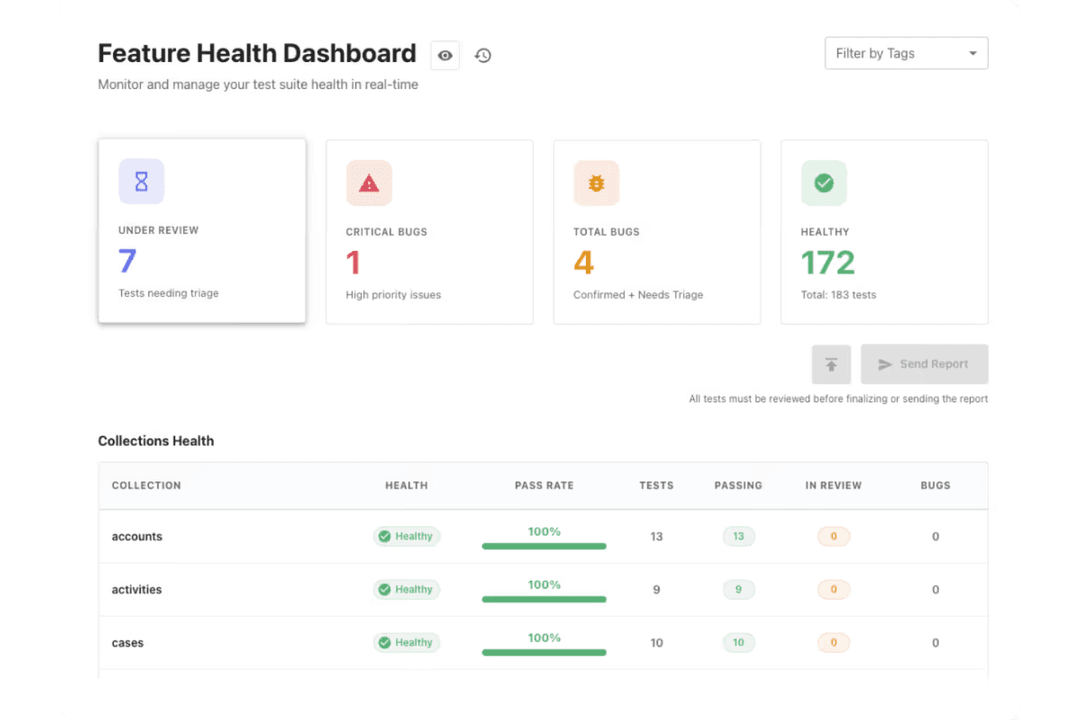
La differenza fra i due sta nel modo in cui viene svolta questa attività. La piattaforma AI-nativa di Checksum si focalizza su una generazione e manutenzione autonoma dei test direttamente nel codice sorgente, aggiornando continuamente i test Playwright all’aumentare delle modifiche nell’app con un intervento minimo del team. QA Wolf, invece, unisce una piattaforma guidata dall’AI a un servizio QA completamente gestito, in cui ingegneri dedicati costruiscono, eseguono e mantengono i tuoi test con l’invio di report di bug verificati da persone.
| Checksum | QA Wolf | |
|---|---|---|
| A/B Testing | No | No |
| API | Yes | Yes |
| Automated Testing | Yes | No |
| Browser Compatibility Testing | Yes | No |
| Bug Tracking | Yes | Yes |
| Calendar Management | Yes | Yes |
| CI/CD Integration | Yes | No |
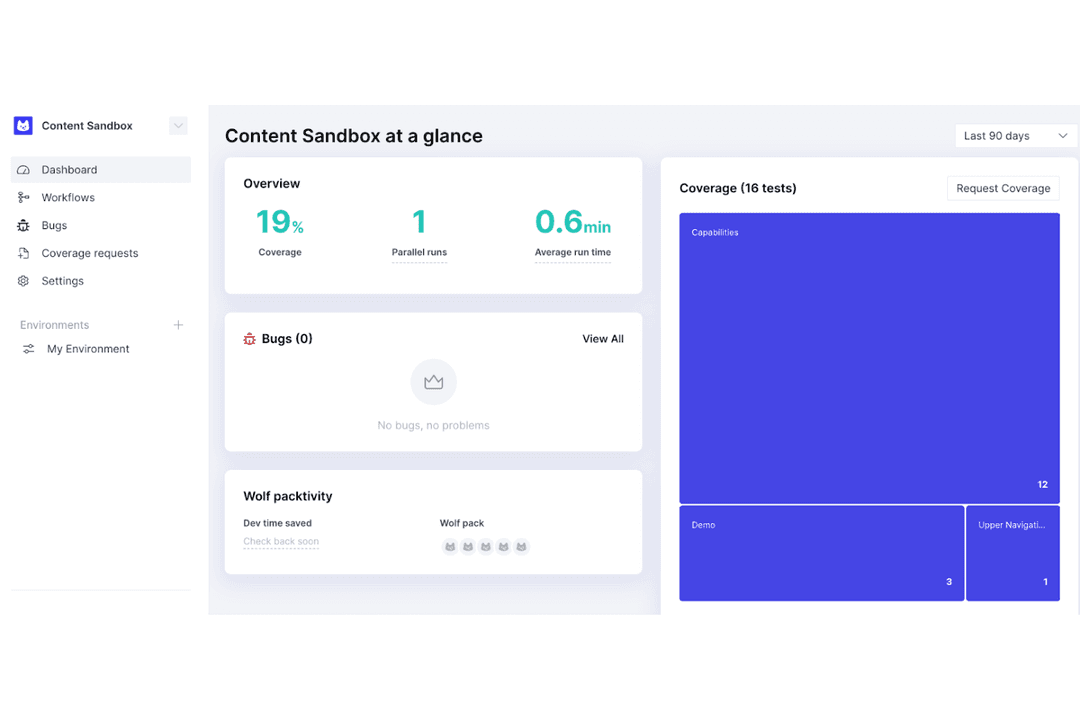
| Dashboard | Yes | Yes |
| Data Export | Yes | Yes |
| Data Import | Yes | Yes |
| Data Visualization | Yes | Yes |
| Developer Tools | Yes | No |
| External Integrations | Yes | Yes |
| History/Version Control | Yes | No |
| Manual Testing | Yes | No |
| Multi-User | Yes | Yes |
| Notifications | Yes | Yes |
| Performance Testing | Yes | No |
| Regression Testing | Yes | No |
| Scheduling | Yes | Yes |
| Status Notifications | Yes | No |
| Third-Party Plugins/Add-Ons | Yes | Yes |
| Integrazione | Checksum | QA Wolf |
| Jira | ✅ | ✅ |
| GitHub | ✅ | ✅ |
| Jenkins | ✅ | ✅ |
| Slack | ✅ | ✅ |
| Microsoft Teams | ✅ | ✅ |
| Asana | ✅ | ✅ |
| Linear | ✅ | ✅ |
| Appium | ❌ | ✅ |
| Playwright | ✅ | ✅ |
| API | ✅ | ✅ |
Sia Checksum che QA Wolf coprono le integrazioni principali su cui la maggior parte dei team fa affidamento, tra cui GitHub, Jira, Slack e le pipeline CI/CD, consentendo di integrare facilmente il testing nel tuo workflow di sviluppo software. Detto ciò, nessuna delle due piattaforme offre un enorme ecosistema di integrazioni native rispetto a strumenti di testing tradizionali. Entrambe, piuttosto, fanno ampio uso di API e webhook per collegarsi allo stack aziendale più ampio, offrendo così flessibilità ma richiedendo a volte configurazioni personalizzate in base al proprio workflow.
| Fattore | Checksum | QA Wolf |
| Privacy dei dati | Sottolinea la riservatezza, l'integrità e la disponibilità con politiche interne documentate | Controlli forti sulla privacy dei dati, inclusa classificazione, politiche di conservazione e piani di risposta alle violazioni. |
| Crittografia | Utilizza crittografia end-to-end per i dati di test sia in transito che a riposo. | Crittografa i dati in transito e a riposo utilizzando protocolli moderni. |
| Conformità normativa | Conforme SOC 2; DPA disponibile. | Conforme SOC 2 Type II e HIPAA, con rapporti di audit disponibili. |
| Uptime & Affidabilità | Nessun SLA di uptime pubblico dichiarato. | Garantisce alta disponibilità con failover automatico e monitoraggio in tempo reale. |
| Controlli di accesso | Supporta permessi utente granulari e integrazione SSO. | Accesso basato sui ruoli, controllo del minimo privilegio, revisioni degli accessi utente e SSO tramite WorkOS. |
Checksum e QA Wolf soddisfano entrambi gli standard di sicurezza moderni, inclusi crittografia, controlli di accesso e conformità SOC 2. QA Wolf offre una copertura di conformità più ampia e documentata, compresa HIPAA, insieme a politiche di sicurezza dettagliate e pratiche di monitoraggio, mentre Checksum enfatizza la trasparenza tramite il suo Trust Center e controlli interni strutturati. Per la maggior parte dei team, entrambi sono opzioni sicure, ma QA Wolf può essere più adatto a organizzazioni con forti esigenze di conformità, mentre Checksum offre una postura di sicurezza più semplice e ben documentata.
| Fattore | Checksum | QA Wolf |
| Interfaccia utente | Offre una dashboard pulita. Molte interazioni utente avvengono anche tramite CI/CD, pull request e notifiche. | Interfaccia della piattaforma più collaborazione continua con ingegneri QA tramite Slack o Teams. |
| Onboarding | Proof of Value completamente guidata con un solutions engineer dedicato. | Onboarding guidato con ingegneri QA, costruendo copertura dei test e configurando i workflow. |
| Creazione test | Nessuna creazione manuale—i test vengono generati e mantenuti automaticamente. | I test sono creati e mantenuti dal team di QA Wolf utilizzando AI e supervisione umana. |
| Supporto clienti | Solutions engineer dedicato con supporto pratico e proattivo. | Team QA integrato che offre supporto continuo e manutenzione dei test. |
| Collaborazione | Basato su workflow (PR, CI/CD, notifiche) con supporto tramite Slack. | Modello altamente collaborativo con canali condivisi e comunicazione costante. |
Checksum e QA Wolf sono entrambi semplici da usare, ma in modi diversi. Checksum semplifica i test automatizzando la maggior parte del lavoro in background, richiedendo un coinvolgimento minimo una volta configurato, mentre QA Wolf elimina la necessità di gestire i test abbinando la piattaforma a un team QA dedicato. Se vuoi un sistema più autonomo e a bassa manutenzione, Checksum sarà più facile da utilizzare poiché rimuove i colli di bottiglia nel tempo. Se preferisci un approccio completamente gestito e collaborativo, QA Wolf offre un'esperienza "hands-off" fin dall'inizio.
Checksum
- Fully autonomous test generation, execution, and maintenance (not just AI-assisted).
- Automatically heals broken tests as the application changes, reducing maintenance overhead.
- Delivers tests as real Playwright code in your repo (no vendor lock-in).
- Requires access to a live staging or production-like environment to get started.
- Higher cost and no self-serve pricing make it less suitable for smaller teams or tight budgets.
- Not fully hands-off—some test maintenance may involve optional human review.
QA Wolf
- AI generates and maintains tests, reducing manual testing and QA workload significantly.
- 100% parallel test execution delivers fast results within minutes.
- Platform-enabled service eliminates the need for in-house automation expertise.
- Less control over test logic compared to fully in-house frameworks.
- Requires trust in the external team to manage critical QA processes.
- Onboarding may require coordination and an initial knowledge transfer effort.
Checksum
- Teams with Broad Test Coverage NeedsChecksum is a strong fit for teams that want unified coverage across end-to-end, API, and PR-level testing, without stitching together multiple tools or systems.
- Organizations Treating Quality as InfrastructureCompanies that view testing as a core part of their delivery pipeline benefit most from Checksum’s continuous approach to test generation, execution, and maintenance.
- QA TeamsChecksum allows QA teams to shift away from fixing brittle tests, focusing on higher-value validation work while the platform continuously maintains the test suite.
- Web Applications with Complex User FlowsProducts with multi-step user journeys gain value from Checksum’s end-to-end test generation and auto-healing, ensuring critical paths stay covered as UI elements and flows change.
- Lean Startups & Teams with No Existing Test CoverageTeams starting from zero can use Checksum to rapidly generate a full test suite without upfront engineering effort. This makes it a strong fit for teams that need to go from no coverage to comprehensive validation quickly, without building a testing framework from scratch.
- SaaS Teams (Mid-Market & Enterprise)Checksum helps mid-market and enterprise SaaS teams with established CI/CD workflows maintain reliable test coverage as they ship frequent releases, automatically generating and updating tests as the product evolves without engineering effort.
QA Wolf
- High-Growth SaaS TeamsRapid release cycles benefit from fast, parallel test execution and continuous maintenance across evolving product features.
- Product-Led Companies Shipping FrequentlyRun full regression suites on every deploy without slowing down engineering velocity or delaying feature rollouts.
- Teams Struggling with Flaky or Broken TestsQA Wolf handles ongoing test maintenance, eliminating common reliability issues and reducing debugging time for engineers.
- Companies Without Dedicated QA Automation EngineersOffload test creation, debugging, and maintenance to a fully managed QA team without hiring specialized resources.
- Multi-Platform Products (Web + Mobile)Supports complex workflows across web, iOS, and Android with shared coverage and consistent testing across environments.
- Engineering TeamsReduce QA time from hours to minutes with fully parallel test infrastructure and faster feedback loops for developers.
Chi dovrebbe usare Checksum e chi dovrebbe usare QA Wolf?
Se vuoi ridurre o eliminare il carico continuo della manutenzione dei test mantenendo comunque i test nel tuo codice sorgente, sceglierei Checksum. È ideale se hai già una pipeline CI/CD e desideri un sistema autonomo che generi, esegua e aggiorni continuamente i test man mano che la tua applicazione si evolve (senza che i team di ingegneria debbano mantenerli manualmente). Se il tuo obiettivo è trattare il testing come infrastruttura e mantenere test Playwright di alta qualità nel tuo repository senza vendor lock-in, Checksum è una scelta coerente.
QA Wolf è più adatto se vuoi esternalizzare la maggior parte della funzione QA senza perdere visibilità sul processo di test del software. La sua piattaforma offre dashboard centralizzate, reportistica e integrazioni, mentre un team QA dedicato crea, esegue e mantiene i test per te. Se preferisci un approccio completamente gestito e orientato ai servizi con supervisione umana—ma vuoi comunque avere visibilità su risultati e copertura tramite la piattaforma—QA Wolf è una buona opzione.
| Checksum | QA Wolf | |
|---|---|---|
| AI-Powered Role | Checksum System-level autonomy that continuously updates tests as code changes. Human-in-the-loop verification is optional. | QA Wolf AI-assisted workflows combined with human QA for test creation and maintenance. |
| Core Approach | Checksum Autonomous testing AI agents that generate, run, and maintain tests in the background. System is fine-tuned on 1.5M+ test runs, with 50-200 targeted tests generated per PR, and 4 agents covering the full SDLC. | QA Wolf Platform + managed QA service combining AI, infrastructure, and human engineers. |
| Infrastructure | Checksum Flexible execution (run tests locally, in CI/CD, or via Checksum). 100% test repair, fine-tuned on 1.5M+ test runs, 50-200 targeted tests generated per PR, 4 agents covering the full SDLC. | QA Wolf Fully managed cloud with 100% parallel execution and unlimited test runs. |
| Maintenance Model | Checksum Continuous self-healing with optional human review. | QA Wolf Ongoing maintenance handled by QA engineers with AI support and human verification. |
| Test Coverage | Checksum Focused on web apps, APIs, and CI-level validation. | QA Wolf Covers web and mobile apps (iOS, Android) with end-to-end user flow testing. |
| Test Ownership | Checksum Tests delivered as Playwright code in your repo (no vendor lock-in). | QA Wolf Tests use open-source (Playwright/Appium) frameworks and are exportable, but are primarily built and managed by QA Wolf. |
| Automated Testing | Both automate end-to-end test cases, reducing manual testing and QA effort, and catching bugs before release. |
|---|---|
| Bug Detection & Reporting | Each one surfaces failures with actionable insights, helping teams quickly identify and resolve issues, including for complex edge cases. |
| Collaboration Tools | Each supports team collaboration, allowing multiple users to review, edit, and manage tests together. |
| Continuous Testing | Both run tests continuously within CI/CD pipelines to validate changes as your application evolves. |
| Native CI/CD Integration | Each integrates with tools like GitHub, GitLab, and other CI/CD systems for test automation execution. |