
Reseña de Datadog Log Management: Ventajas, Desventajas, Características y Precios
Datadog Log Management destaca por sus conocimientos en tiempo real e integración. Es costoso, ideal para equipos tecnológicos que requieren un monitoreo completo.

Revisamos herramientas de forma independiente y las comisiones ayudan a financiar nuestras pruebas. Consulta nuestra política de transparencia, nuestra metodología o sugiere una herramienta.
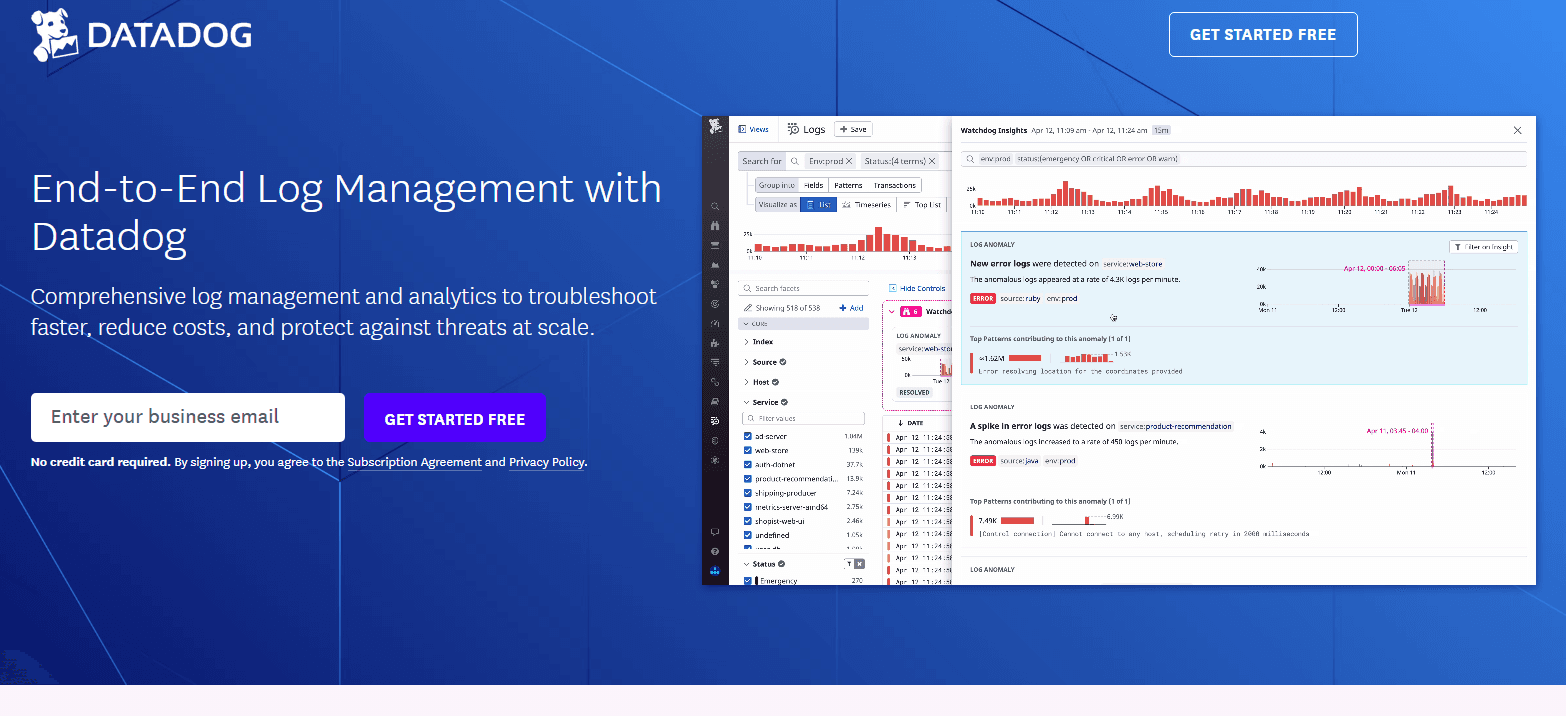
Datadog Log Management is a log monitoring software built for teams that need centralized log collection, search, and analysis across cloud-native and distributed environments. I'd especially consider it if you want logs, metrics, and traces connected in a single platform, rather than piecing that together with the ELK Stack, which gives you more control but requires significant infrastructure management on your end.
Datadog Log Management Evaluation Summary
0/5
- From $0.10 per scanned GB
Por qué confiar en nuestras recomendaciones de software
6,700+
Reviews
20
Industry experts
16+
Evaluation factors
14
Years
Nuestro equipo lleva probando y evaluando software desde 2012. Como líderes tecnológicos, sabemos lo difícil —y lo importante— que es elegir el software adecuado.
Para esta guía, evaluamos las herramientas mediante pruebas prácticas e investigación independiente, puntuando las herramientas según nuestros criterios de selección.
Nuestras reseñas reflejan nuestro criterio editorial humano, no un discurso de ventas.
Revisores expertos:
- Paulo Gardini MiguelDirector técnico
 Tim FisherVP de IA
 Gabriel RosasTech Lead y arquitecto de software
 Christhian GruhnTech Lead y arquitecto de plataforma

Datadog Log Management Overview
In my opinion, Datadog Log Management is a solid choice for teams needing detailed log insights. Its real-time monitoring and integration capabilities make it attractive for tech-driven environments. However, its pricing can be steep, especially for smaller businesses. Compared to other solutions, it excels in integration and real-time insights but may fall short in cost-effectiveness for those on tighter budgets. It's best suited for medium to large enterprises that can leverage its full feature set for comprehensive monitoring. If you're deciding on a tool, consider your team's size and budget to determine if Datadog fits your needs.
Pros
- Real-time log analysis that keeps your team informed instantly.
- Customizable dashboard and robust altering system.
Cons
- Learning the interface can be tricky for new users.
- Initial setup process may be a bit complex.
- Occasional delays in customer support response.
Is Datadog Log Management Right For Your Needs?
Who Would be a Good Fit for Datadog Log Management?
Datadog Log Management is ideal for tech-driven businesses like SaaS companies or e-commerce platforms that require real-time log insights. If your team needs detailed monitoring and alerting to keep systems running smoothly, this tool is a great choice. The out-of-the-box dashboard and robust alerts make it a strong contender for environments where quick response times are crucial.
- E-commerce PlatformsDatadog's real-time log analysis helps you catch and fix issues quickly, ensuring a smooth shopping experience.
- SaaS CompaniesYou can customize dashboards to monitor user activity and system performance effectively with Datadog.
- IT DepartmentsDatadog's alerts help your team catch system errors before they disrupt operations.
- DevOps TeamsWith robust monitoring tools, Datadog assists in maintaining uptime and reliability during deployments.
- Financial ServicesDatadog provides the detailed monitoring needed to ensure compliance and security in financial transactions.
- Healthcare ITDatadog's real-time insights help your team maintain system integrity and patient data security.
Who Would be a Bad Fit for Datadog Log Management?
Datadog Log Management might not suit small businesses or startups with limited budgets and simpler needs. If your team doesn't require advanced monitoring and real-time analysis, the complexities and cost of Datadog may outweigh its benefits. Basic operations or teams with minimal tech infrastructure might find the tool's features excessive and challenging to implement effectively.
- Small BusinessesThe cost and complexity of Datadog can be overwhelming and unnecessary for your straightforward operations.
- StartupsYou might find Datadog's advanced features excessive if your tech stack is still evolving.
- Non-Tech IndustriesIf your industry doesn't rely heavily on tech infrastructure, Datadog's capabilities might be overkill.
- FreelancersFor solo work, Datadog's extensive monitoring features are often more than you need.
- Local Retail ShopsWithout a significant online presence, the real-time insights Datadog offers may not add value to your business.
- Basic IT TeamsIf your team handles only fundamental system maintenance, Datadog's advanced tools could be unnecessary.
Nuestra metodología de revisión
Cómo probamos y puntuamos las herramientas
Hemos invertido años construyendo, refinando y mejorando nuestro sistema de pruebas y puntuación de software. La rúbrica está diseñada para captar los matices de la selección de software y lo que hace a una herramienta efectiva, enfocándose en aspectos críticos del proceso de toma de decisiones.
A continuación, puedes ver exactamente cómo nuestro sistema de prueba y puntuación funciona a través de siete criterios. Esto nos permite ofrecer una evaluación imparcial del software basada en funcionalidad central, características destacadas, facilidad de uso, incorporación, soporte al cliente, integraciones, reseñas de clientes y relación calidad-precio.
Funcionalidad principal (25% de la puntuación final)
El punto de partida de nuestra evaluación siempre es la funcionalidad central de la herramienta. ¿Tiene las características y funciones básicas que un usuario esperaría encontrar? ¿Alguna de esas funciones principales está limitada a planes de precios superiores? Esperamos que una herramienta esté a la altura de las capacidades básicas de sus competidores.
Características destacadas (25% de la puntuación final)
Luego, evaluamos las características poco comunes y sobresalientes que van más allá de la funcionalidad principal que normalmente se encuentra en herramientas de su tipo. Una puntuación alta refleja características especializadas o únicas que hacen el producto más rápido, eficiente o que ofrecen valor adicional al usuario.
También evaluamos qué tan fácil es integrar con otras herramientas que normalmente forman parte del ecosistema tecnológico para expandir la funcionalidad y utilidad del software. Las herramientas que ofrecen abundantes integraciones nativas, conexiones de terceros y acceso API para crear integraciones personalizadas obtienen la mejor puntuación.
Facilidad de uso (10% de la puntuación final)
Consideramos cuán rápido y sencillo es ejecutar las tareas definidas por la funcionalidad principal usando la herramienta. El software con mejor puntuación está bien diseñado, es intuitivo, ofrece aplicaciones móviles, proporciona plantillas y hace que tareas relativamente complejas parezcan sencillas.
Incorporación (10% de la puntuación final)
Sabemos lo importante que es la adopción rápida por parte del equipo para una nueva plataforma, por lo que evaluamos cuán fácil es aprender y usar una herramienta con entrenamiento mínimo. Evaluamos cuán rápido un miembro del equipo puede configurarla y comenzar a utilizarla sin experiencia previa. Las soluciones con mayor puntuación requieren poco o ningún soporte.
Soporte al cliente (10% de la puntuación final)
Revisamos qué tan rápido y sencillo es resolver dudas y encontrar ayuda por teléfono, chat en vivo o base de conocimientos. Las herramientas y compañías que proporcionan soporte en tiempo real obtienen la mejor puntuación, mientras que los chatbots obtienen la peor.
Reseñas de clientes (10% de la puntuación final)
Además de nuestras pruebas y evaluaciones, consideramos la puntuación neta de promotores por parte de clientes actuales y anteriores. Revisamos la probabilidad de que elijan la herramienta de nuevo para la funcionalidad principal. Una puntuación alta refleja una alta puntuación neta de promotores actuales o pasados.
Relación calidad-precio (10% de la puntuación final)
Por último, considerando todos los demás criterios, revisamos el precio promedio de los planes de nivel básico comparado con las funciones principales y consideramos el valor de los demás criterios de evaluación. El software que ofrezca más, por menos, obtendrá una puntuación mayor.
Core Features
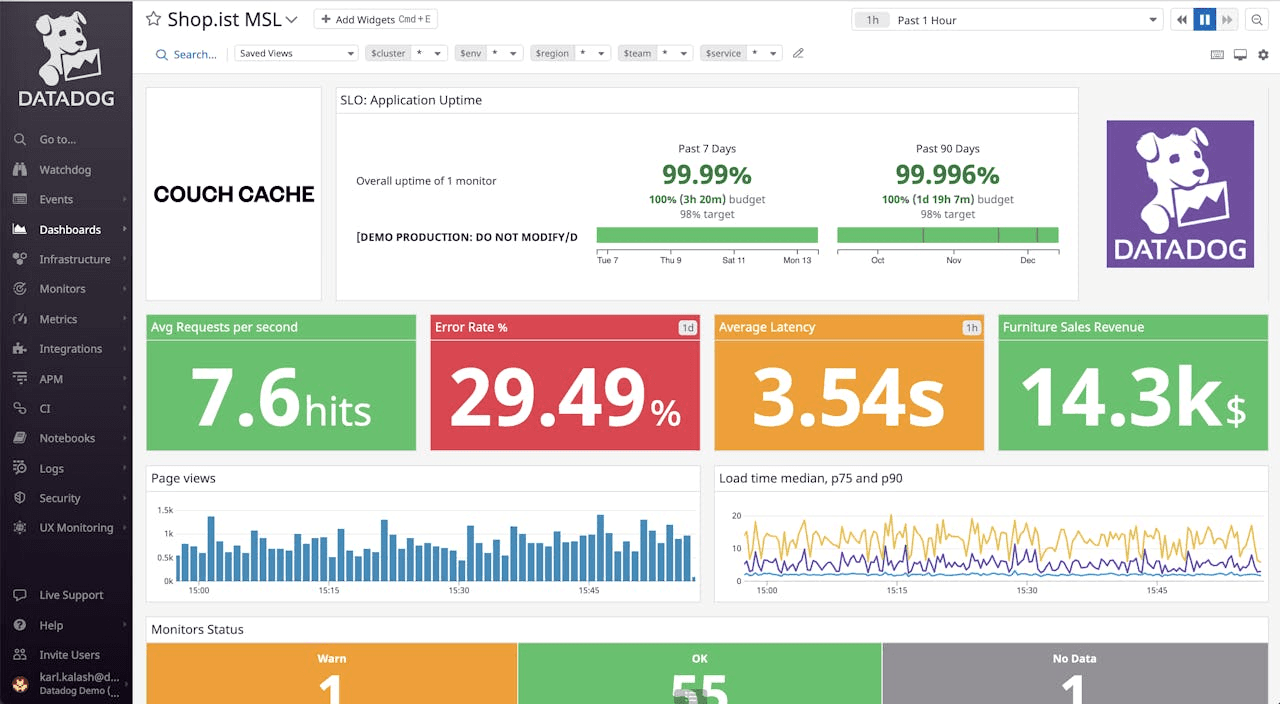
Real-Time Log Analysis: Datadog lets you monitor logs as they happen, giving your team immediate insights into system performance. It helps you catch and address issues quickly.
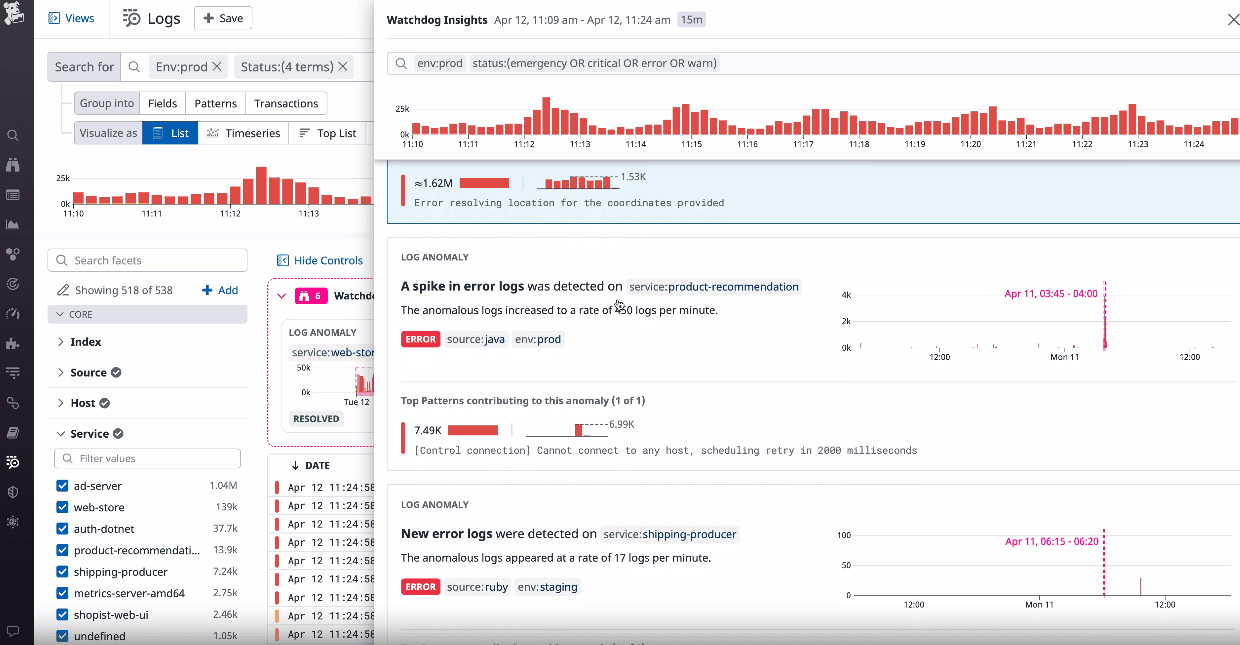
Customizable Dashboards: You can tailor dashboards to display the metrics most important to your team. This flexibility ensures you focus on what matters most.
Alerting System: Datadog's alerts notify you of potential problems before they escalate. These notifications keep your team proactive rather than reactive.
Log Search and Filtering: You can easily search and filter logs to find specific data to debug issues. This makes troubleshooting faster and more efficient.
Log Retention: Datadog stores logs for a set period, allowing you to review historical data. This is valuable for audits and long-term analysis.
Scalability: Datadog grows with your business, managing increased data loads without losing efficiency. It's perfect for SRE teams monitoring microservices.
Ease of Use
Datadog Log Management offers a user-friendly interface, but the learning curve can be steep for new users. The customizable dashboards and intuitive search functions make navigation easier once you get the hang of it. Some users find the initial setup complex, but the clear alerting system and real-time monitoring compensate for this. If your team spends time exploring its features, you'll find it a powerful tool that enhances your monitoring capabilities.
Integrations
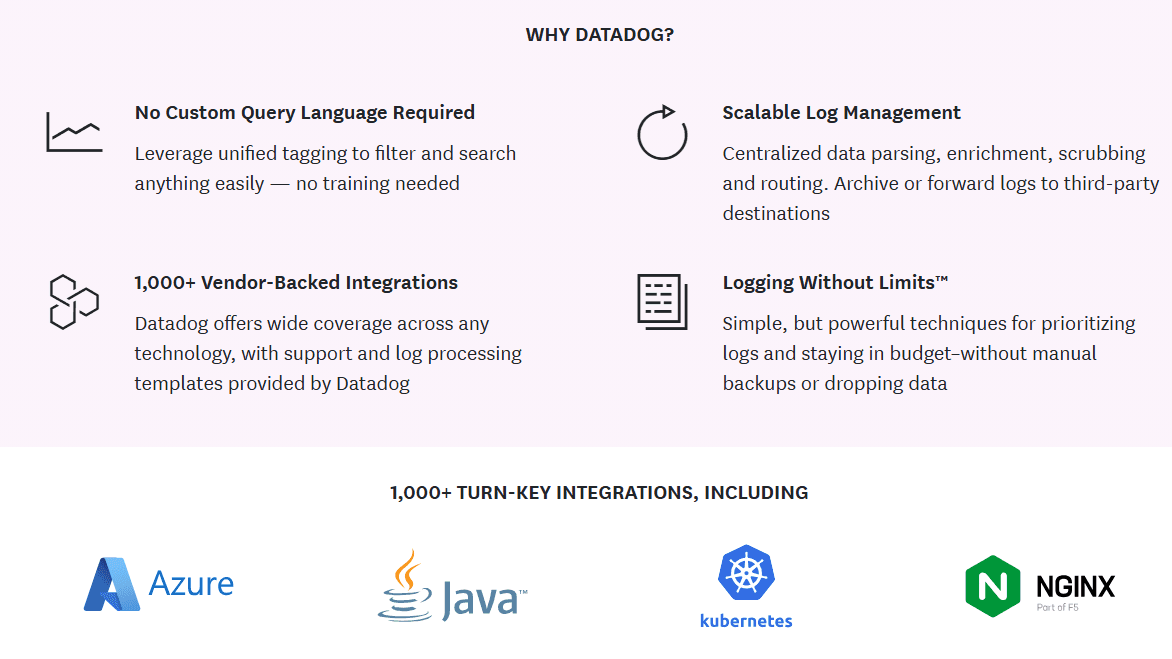
Datadog Log Management integrates with AWS, Azure, Google Cloud, Slack, Jira, Kubernetes, Docker, GitHub, Microsoft Teams, Splunk, and PagerDuty.
Datadog Log Management also provides an API for custom integrations and connects with third-party integration tools to expand its capabilities.
Datadog Log Management Specs
- 2-Factor Authentication: Yes
- Access Management: Yes
- Anti-Virus: No
- API: Yes
- Audit Trail: Yes
- Bug Tracking: No
- Calendar Management: No
- Customer Management: No
- Dashboard: Yes
- Data Export: Yes
- Data Import: No
- Data Visualization: Yes
- Email Integration: Yes
- External Integrations: Yes
- File Sharing: No
- File Transfer: No
- Firewall: No
- Google Apps Integration: No
- Inventory Tracking: No
- Malware Protection: No
- Multi-User: Yes
- Network Device Performance Monitoring: Yes
- Network Traffic Monitoring: Yes
- Network Visualization: Yes
- Notifications: Yes
- Project Management: No
- Remote Access: No
- Risk Assessment: No
- SAP Integration: No
- Scheduling: No
- Software Integration: Yes
- Third-Party Plugins/Add-Ons: Yes
- Ticket Management: Yes


