

Die besten Nagios-Alternativen helfen Teams dabei, Systeme zu überwachen, ohne sich mit komplexen Einrichtungsanforderungen auseinandersetzen oder an Skalierbarkeitsgrenzen stoßen zu müssen. Sie bieten übersichtlichere Dashboards, einfachere Konfigurationen und flexible Integrationen, mit denen sich die Leistung von Servern, Netzwerken und Anwendungen leichter verfolgen lässt.
Viele Unternehmen beginnen mit der Suche nach Alternativen, nachdem sie mit Problemen wie der Konfiguration von Nagios-Plug-ins, die sich nicht nahtlos integrieren lassen, dem Zeitaufwand für die Fehlersuche bei kryptischen Fehlermeldungen oder Leistungseinbußen bei wachsenden Überwachungsanforderungen zu kämpfen hatten. Diese Herausforderungen verlangsamen den Betrieb und erschweren es IT-Teams, auch in großem Maßstab den Überblick zu behalten.
Ich habe Überwachungsplattformen in Live-Produktionsumgebungen getestet, mit Teams gearbeitet, die von veralteten Nagios-Bereitstellungen migriert sind, und untersucht, wie sich diese Tools in hybriden und Cloud-Infrastrukturen bewähren. Diese Erfahrungen haben mir gezeigt, welche Lösungen den Überwachungsaufwand tatsächlich reduzieren und welche neue Komplexität schaffen.
In diesem Leitfaden erfahren Sie, welche Nagios-Alternativen eine einfachere Einrichtung, bessere Skalierbarkeit und aussagekräftigere Erkenntnisse bieten, damit sich Ihr Team auf die Behebung von Problemen konzentrieren kann, anstatt mit dem Überwachungssystem zu kämpfen.
Was ist Nagios?
Nagios ist eine Open-Source-Plattform für die Überwachung und Verwaltung von Netzwerken, die für die Netzwerk- und Systemüberwachung entwickelt wurde. IT-Fachleute und Systemadministratoren verwenden Nagios im Allgemeinen, um die kritische Infrastruktur im Blick zu behalten und einen reibungslosen Betrieb sicherzustellen.
Die Funktionen für Alarmierung, Berichterstellung und Überwachung helfen Ihnen dabei, Probleme zu erkennen, die Leistung zu analysieren und Netzwerkressourcen effektiv zu verwalten. Insgesamt bietet Nagios einen Mehrwert, indem es Ihr Team dabei unterstützt, die Systemzuverlässigkeit aufrechtzuerhalten und Ausfallzeiten zu minimieren.
Vergleichstabelle der Nagios-Alternativen
Diese Vergleichstabelle fasst die Preisdetails meiner besten ausgewählten Nagios-Alternativen zusammen:
| Tool | Best For | Trial Info | Price | ||
|---|---|---|---|---|---|
| 1 | Am besten geeignet für einheitliches Geräte- und Sensormonitoring | 30-tägige kostenlose Testversion | Ab $200/Monat (jährliche Abrechnung) | Website | |
| 2 | Am besten für komplexe IT-Infrastrukturen | Kostenloser Tarif verfügbar | Preis auf Anfrage | Website | |
| 3 | Am besten für die Überwachung von Multi-Cloud-Umgebungen | 30-tägige kostenlose Testversion + kostenlose Demo verfügbar | Ab $10/Monat (jährlich abgerechnet) | Website | |
| 4 | Ideal für die Überwachung von Webanwendungen | 30-tägige kostenlose Testphase + kostenloser Tarif + kostenlose Demo verfügbar | Ab $19.99/Monat | Website | |
| 5 | Am besten für Plug-and-Play-Installation | Kostenlose Demo verfügbar | Preise auf Anfrage | Website | |
| 6 | Am besten für die ganzheitliche Überwachung des gesamten Stacks geeignet | 14-tägige kostenlose Testversion | Ab $5/Monat | Website | |
| 7 | Am besten für Visualisierungsmöglichkeiten geeignet | Kostenloser Download | Kostenlos nutzbar | Website | |
| 8 | Am besten für AIOps und Beobachtbarkeit | Kostenlose Demo verfügbar | Preise auf Anfrage | Website | |
| 9 | Am besten für End-to-End-Überwachung geeignet | 7-tägige kostenlose Testversion | Preise auf Anfrage | Website | |
| 10 | Am besten für verteilte Netzwerke | Kostenlose Beratung verfügbar | Preise auf Anfrage | Website |


Warum Sie unseren Software-Empfehlungen vertrauen können
6,700+
Reviews
20
Industry experts
16+
Evaluation factors
14
Years
Unser Team testet und bewertet Software seit 2012. Als Tech-Führungskräfte wissen wir selbst, wie schwierig – und wichtig – es ist, die richtige Software auszuwählen.
Für diesen Leitfaden haben wir Tools mithilfe von praktischen Tests und unabhängiger Recherche bewertet und dabei unsere Bewertungskriterien angewendet.
Unsere Bewertungen spiegeln unser menschliches redaktionelles Urteilsvermögen wider, keine Verkaufsstrategie.
Expertenprüfer:
- Paulo Gardini MiguelTech-Direktor
 Tim FisherVP für KI
 Gabriel RosasTech Lead & Software-Architekt
 Christhian GruhnTech Lead & Plattform-Architekt

Bewertungen der besten Nagios-Alternativen
Nachfolgend finden Sie meine ausführlichen Zusammenfassungen der besten Nagios-Alternativen, die es in meine Auswahl geschafft haben. Meine Bewertungen bieten einen detaillierten Einblick in die wichtigsten Funktionen, Vor- & Nachteile, Integrationen und idealen Anwendungsfälle jedes Tools, damit Sie die beste Lösung für sich finden.
 Am besten geeignet für einheitliches Geräte- und Sensormonitoring
- 30-tägige kostenlose Testversion
- Ab $200/Monat (jährliche Abrechnung)
Visit WebsiteCustomer Rating:4.6/5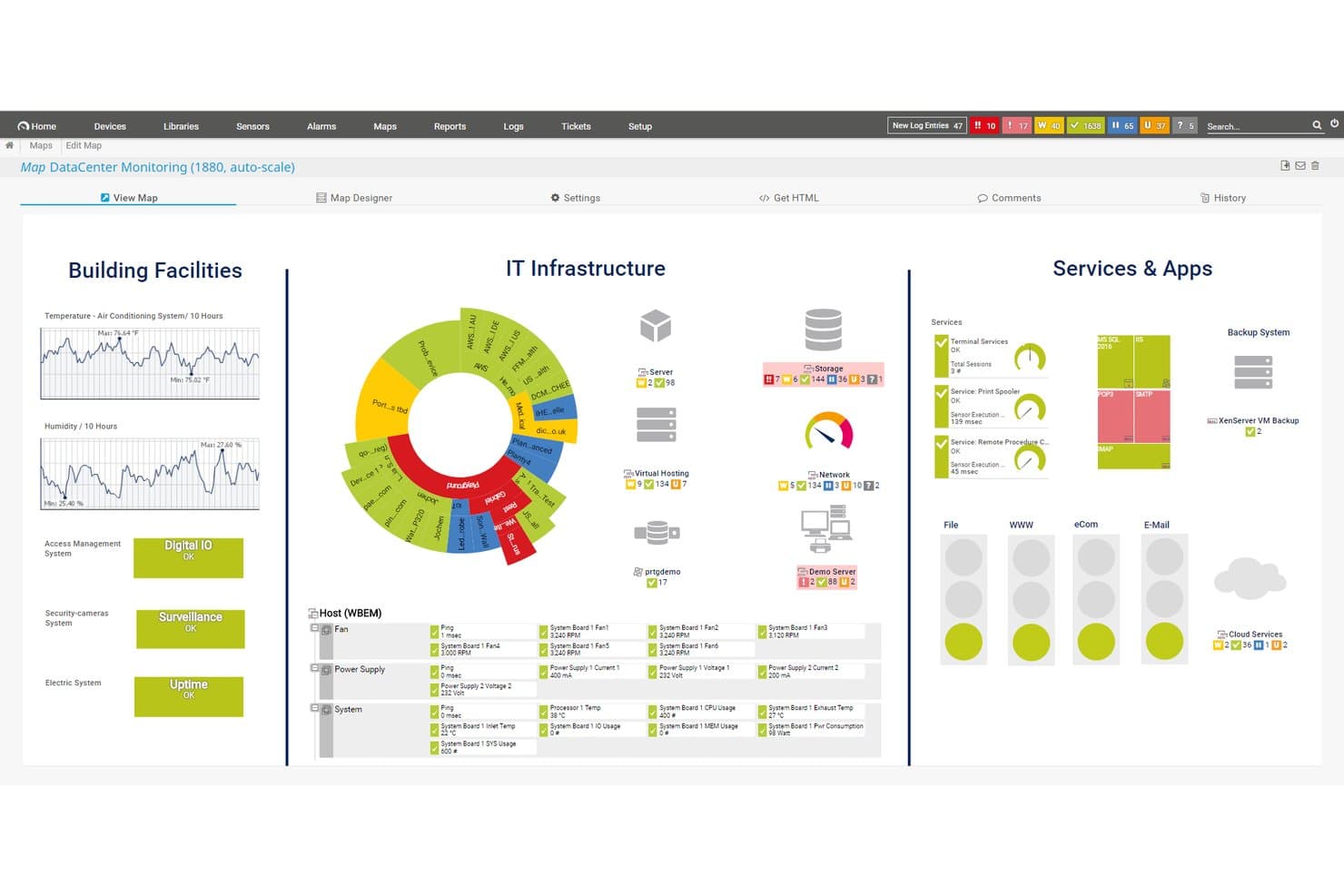
Paessler PRTG bietet eine anpassbare Rechenzentrum-Überwachungskarte, die Gebäudetechnik, IT-Infrastruktur sowie Dienste und Anwendungen in einer einheitlichen Dashboard-Ansicht darstellt. Paessler PRTG ist eine lokal und cloudbasierte Monitoring-Plattform, die IT-Teams und NOC-Manager dabei unterstützt, Netzwerke, Server, Anwendungen und Geräte über eine zentrale Oberfläche zu überwachen – ohne die komplexen manuellen Konfigurationen, die Tools wie Nagios erfordern.
Für wen ist Paessler PRTG am besten geeignet?
PRTG eignet sich besonders für mittlere bis große IT-Infrastrukturteams im Enterprise-Bereich, die umfangreiche, gemischte Geräteumgebungen über lokale und hybride Setups hinweg verwalten.
Warum Paessler PRTG eine gute Alternative zu Nagios ist
Ich habe Paessler PRTG gewählt, weil die sensorbasierte Architektur es deutlich von Nagios unterscheidet. Während Nagios für jede Überprüfung eine manuelle Plugin-Konfiguration verlangt, scannt die Auto-Discovery von PRTG Ihr Netzwerk und legt automatisch Sensoren für Geräte, Server und Dienste an. Außerdem schätze ich, dass eine einzelne PRTG-Installation IT-, OT- und IoT-Ressourcen mithilfe von Protokollen wie SNMP, WMI, NetFlow und OPC UA abdeckt – ohne dass für jede Umgebung separate Tools nötig sind.
Wichtige Funktionen von Paessler PRTG
- Verteiltes Monitoring über Remote-Probes: Setzen Sie Remote-Probes ein, um die Monitoring-Reichweite über mehrere Standorte und Netzwerke hinweg zu erweitern.
- Anpassbarer Map-Designer: Erstellen Sie Echtzeit-, interaktive Netzwerkpläne mit einem Drag-and-Drop-Editor.
- Rollenbasierte Zugriffskontrolle: Weisen Sie Nutzerberechtigungen zu, um festzulegen, wer auf bestimmte Dashboards und Sensoren zugreifen oder diese verwalten darf.
- Audit-Logging und Single Sign-on: Ermöglichen Sie sicheren Zugriff und verfolgen Sie Nutzeraktivitäten durch Enterprise-Authentifizierung und Compliance-Features.
Paessler PRTG Integrationen
Paessler PRTG bietet native Integrationen mit AWS, Microsoft Azure, VMware, Siemens Industrial Edge, Cisco Meraki, HPE, Dell EMC, OPC UA und MQTT. Eine API für eigene Integrationen ist verfügbar.
Pros and Cons
Pros:
- Automatische Gerätserkennung ohne manuelle Plugin-Einrichtung
- Überwacht IT, OT und IoT nativ
- Eine einzige Oberfläche deckt alle Infrastrukturebenen ab
Cons:
- Sensorenanzahl begrenzt und lässt Kosten schnell steigen
- Server-Komponente benötigt Windows-Installation
Learn more about Paessler PRTG: Am besten für komplexe IT-Infrastrukturen
- Kostenloser Tarif verfügbar
- Preis auf Anfrage
Visit WebsiteCustomer Rating:4.7/5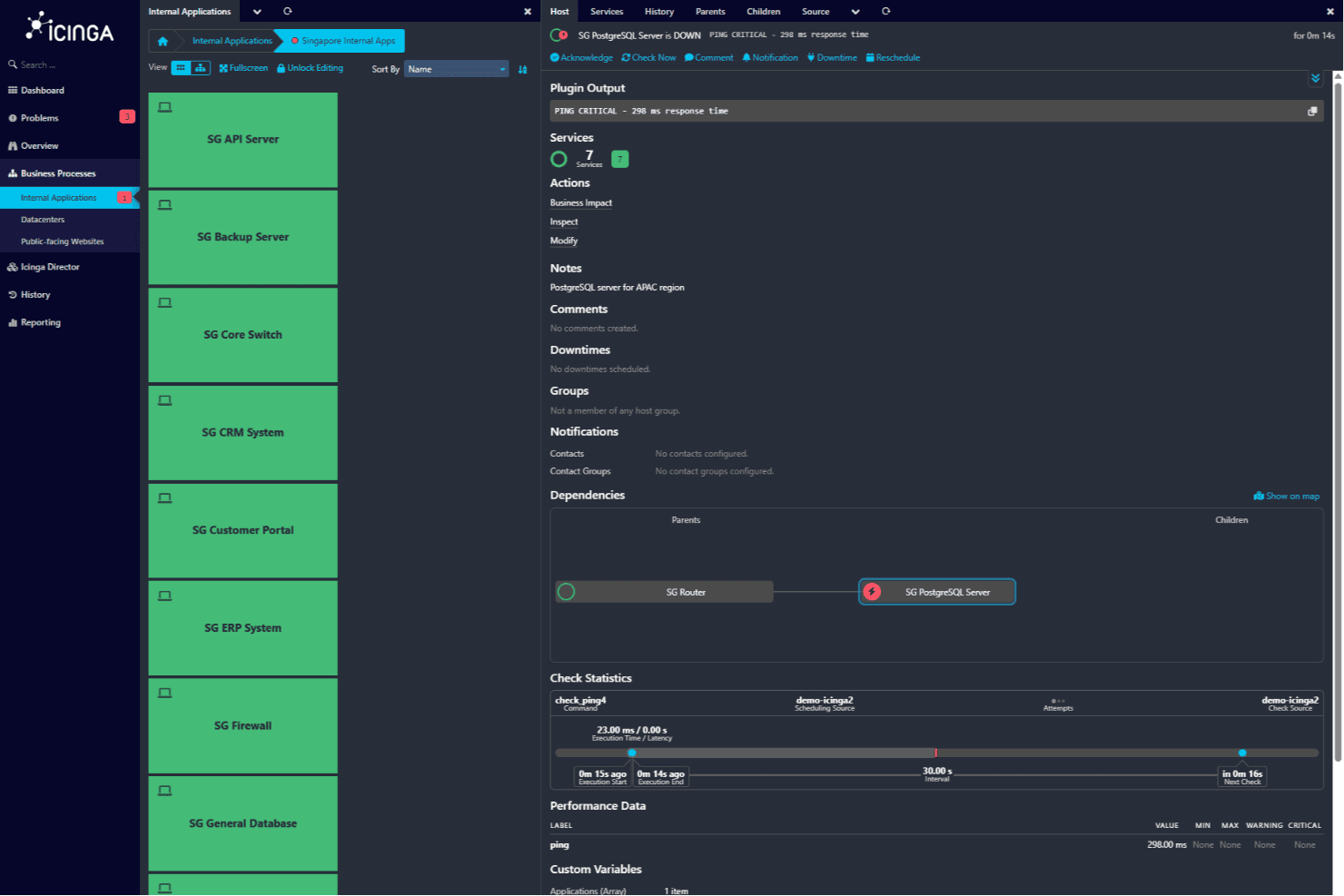
Host-Detailbildschirm mit dem Status des SG PostgreSQL Server, der eine kritische Ping-Warnung und eine Abhängigkeitskette zum SG Router anzeigt. Icinga ist eine Open-Source-Überwachungslösung, die auf komplexe IT-Infrastrukturen zugeschnitten ist und hauptsächlich von IT-Fachleuten und Organisationen eingesetzt wird. Sie überwacht Server, Netzwerke, Anwendungen und Cloud-Umgebungen.
Warum es eine gute Nagios-Alternative ist: Icinga überzeugt in komplexen IT-Umgebungen mit Infrastrukturüberwachung, Automatisierung und Benachrichtigungen. Es bietet spezialisierte Überwachung für Kubernetes, Datenbanken und VMware und eignet sich daher ideal für komplexe Umgebungen. Die Analyse sowie die Verwaltung von Metriken und Protokollen helfen Ihrem Team, Erkenntnisse zu gewinnen. Die Plattform lässt sich außerdem in IT-Service-Management-Tools integrieren, wodurch ihr Nutzen erweitert wird.
Hervorstechende Funktionen & Integrationen:
Funktionen umfassen Infrastrukturüberwachung, Automatisierung und Cloud-Überwachung. Außerdem bietet die Lösung Analysefunktionen sowie die Verwaltung von Metriken und Protokollen und unterstützt die spezialisierte Überwachung von Kubernetes, Datenbanken und VMware.
Integrationen umfassen Puppet, Ansible, Chef, SaltStack, Grafana, Graylog, Elasticsearch, InfluxDB, Jira und Slack.
Pros and Cons
Pros:
- Flexibilität durch Open Source
- Unterstützt komplexe Umgebungen
- Kompatibilität mit Nagios-Plugins
Cons:
- Steilere Lernkurve
- Erfordert technische Kenntnisse
Learn more about Icinga: Am besten für die Überwachung von Multi-Cloud-Umgebungen
- 30-tägige kostenlose Testversion + kostenlose Demo verfügbar
- Ab $10/Monat (jährlich abgerechnet)
Visit WebsiteCustomer Rating:4.7/5
Site24x7 verfolgt die Leistung und Verfügbarkeit von Multi-Cloud-Infrastrukturen. Für Unternehmen, die eine zuverlässige Nagios-Alternative suchen, bietet Site24x7 eine überzeugende Kombination aus Überwachungsmöglichkeiten und benutzerfreundlichen Funktionen. Diese cloudbasierte Lösung richtet sich an IT-Fachleute und Unternehmen, die eine umfassende Überwachung von Servern, Netzwerken, Anwendungen und Websites in verschiedenen Umgebungen benötigen. Site24x7 bewältigt Herausforderungen wie die Verwaltung von Multi-Cloud-Umgebungen und die Automatisierung wiederkehrender Aufgaben und bietet eine kostengünstige Möglichkeit, die IT-Infrastruktur mit einem einzigen Tarif zu überwachen.
Warum ich Site24x7 ausgewählt habe
Ich habe Site24x7 aufgrund seiner zuverlässigen Multi-Cloud-Überwachungsfunktionen und Automatisierungsmöglichkeiten als führende Nagios-Alternative ausgewählt. Mit Site24x7 können Sie Umgebungen wie AWS, Azure und GCP nahtlos über eine einzige Konsole überwachen, wodurch die Verwaltung komplexer Infrastrukturen erleichtert wird. Darüber hinaus trägt die Automatisierung wiederkehrender Aufgaben durch die Plattform dazu bei, den manuellen Aufwand zu reduzieren, sodass sich Ihr Team auf strategischere Vorhaben konzentrieren kann. Diese Funktionen sind für Unternehmen entscheidend, die ihre Effizienz steigern und ihre Überwachungsprozesse optimieren möchten.
Die wichtigsten Funktionen von Site24x7
Neben der Multi-Cloud-Überwachung und Automatisierung bietet Site24x7:
- Protokollverwaltung: Liefert Einblicke in Ihren gesamten Technologie-Stack für erweiterte Analysen und Fehlerbehebung.
- API-Überwachung: Stellt sicher, dass Ihre APIs ordnungsgemäß funktionieren, um die Zuverlässigkeit der Dienste zu gewährleisten.
- Statusseiten: Ermöglichen Ihnen, anpassbare Seiten zu erstellen, um über Ausfallzeiten zu informieren und das Vertrauen der Nutzer zu stärken.
- Vorfallmanagement: Ermöglicht eine effiziente Bearbeitung von Vorfällen durch eine detaillierte Dokumentation, einschließlich Fehlerprotokollen und Zeitabläufen.
Integrationen von Site24x7
Zu den Integrationen gehören AWS, Azure, Google Cloud Platform, Docker, Kubernetes, Microsoft Exchange, Microsoft SharePoint und weitere.
Pros and Cons
Pros:
- Umfassende Überwachung verschiedener Systeme
- AI-gestützte Überwachung des gesamten Technologie-Stacks unterstützt die Verwaltung von Multi-Cloud-Infrastrukturen
- Flexible Überwachung lässt sich problemlos in mehrere Infrastrukturkomponenten integrieren
Cons:
- Fehler in Warnmeldungen verursachen Probleme beim Hinzufügen neuer Überwachungskonfigurationen
- Eine komplexe Konfiguration verlangsamt die Ersteinrichtung und das Verständnis der Plattform
Learn more about Site24x7: Ideal für die Überwachung von Webanwendungen
- 30-tägige kostenlose Testphase + kostenloser Tarif + kostenlose Demo verfügbar
- Ab $19.99/Monat
Visit WebsiteCustomer Rating:4.5/5
Dotcom-Monitor verfolgt Website-Verfügbarkeit, Performance und Funktionalität für IT- und Entwickler-Teams. Dotcom-Monitor ist ein Tool zur Überwachung der Web-Performance, das sich an Entwickler, IT-Teams und digitale Marketer richtet. Es hilft dabei, die Verfügbarkeit, Leistung und Funktionalität von Websites sicherzustellen.
Warum es eine gute Nagios-Alternative ist: Dotcom-Monitor ist auf die Überwachung von Webanwendungen spezialisiert und bietet Echtzeit-Einblicke in die Performance. Dank seiner synthetischen Überwachungsfunktionen kann Ihr Team Nutzerinteraktionen simulieren und Probleme proaktiv erkennen. Das Tool bietet umfassende Berichte, die dabei helfen, Leistungstrends im Zeitverlauf zu verstehen. Mit dem Fokus auf Webanwendungs-Überwachung verfolgt es einen spezialisierten Ansatz, der sich von den allgemeinen Überwachungsmöglichkeiten von Nagios unterscheidet.
Herausragende Funktionen & Integrationen:
Funktionen umfassen synthetisches Monitoring, das Nutzerinteraktionen simuliert, um Probleme zu erkennen, bevor sie echte Nutzer beeinträchtigen. Es bietet zudem umfassendes Reporting, um Leistungstrends über die Zeit hinweg zu analysieren. Die Echtzeit-Performance-Einblicke helfen dabei, Probleme schnell zu beheben.
Integrationen umfassen Amazon Web Services, Microsoft Azure, Google Cloud Platform, Jenkins, PagerDuty, Slack, Splunk, New Relic, ServiceNow und Atlassian Jira.
Pros and Cons
Pros:
- Spezialisierte Webanwendungs-Überwachung
- Echtzeit-Performance-Einblicke
- Umfassendes Reporting
Cons:
- Erfordert technisches Know-how
- Beschränkt auf Webanwendungen
Learn more about Dotcom-Monitor: Am besten für Plug-and-Play-Installation
- Kostenlose Demo verfügbar
- Preise auf Anfrage

Munin verfolgt Systemleistung und Ressourcennutzung für Administratoren und IT-Teams. Munin ist ein netzwerkbasiertes Ressourcenüberwachungstool, das für Systemadministratoren und IT-Profis entwickelt wurde. Es bietet Einblicke in die Systemleistung und Ressourcennutzung.
Warum es eine gute Nagios-Alternative ist: Munin bietet eine unkomplizierte Plug-and-Play-Installation, sodass Ihr Team schnell mit dem Monitoring starten kann. Es erstellt automatisch Diagramme aus Leistungsdaten, wodurch sich Trends mühelos visualisieren lassen. Das Tool ist ressourcensparend und belastet Ihre Systeme kaum. Die einfache Bedienbarkeit und der minimale Konfigurationsaufwand machen es zu einer praktischen Wahl für alle, die eine unkomplizierte Alternative zu Nagios suchen.
Herausragende Funktionen & Integrationen:
Funktionen umfassen die automatische Diagrammerstellung, die hilft, Datentrends über die Zeit zu visualisieren. Zudem unterstützt Munin eine leichte Architektur, die den Ressourcenverbrauch auf Systemen minimiert. Dank der einfachen Konfigurationsschritte können Sie ohne komplexe Einrichtung sofort loslegen.
Integrationen gibt es zu Nagios, Cacti, Zabbix, Graphite, InfluxDB, Prometheus, Elasticsearch, Grafana, Jenkins und Docker.
Pros and Cons
Pros:
- Einfache Einrichtung
- Leichte Architektur
- Automatische Diagrammerstellung
Cons:
- Begrenzte Skalierbarkeit
- Grundlegender Funktionsumfang
Learn more about Munin: Am besten für die ganzheitliche Überwachung des gesamten Stacks geeignet
- 14-tägige kostenlose Testversion
- Ab $5/Monat

Sematext bietet Cloud-Überwachung und Protokollierung für Anwendungen, Infrastruktur und Protokolle. Sematext ist eine cloudbasierte Plattform zur Überwachung und Protokollierung für Entwickler, IT-Betriebsteams und DevOps-Teams. Sie bietet Einblicke in die Anwendungsleistung, die Infrastrukturüberwachung und die Protokollverwaltung.
Warum es eine gute Nagios-Alternative ist: Sematext ermöglicht eine ganzheitliche Überwachung des gesamten Stacks, sodass Ihr Team Anwendungen, Infrastruktur und Protokolle an einem Ort überwachen kann. Die Echtzeitanalysen helfen dabei, Leistungsprobleme schnell zu erkennen. Die benutzerfreundlichen Dashboards erleichtern die Visualisierung von Daten und die Nachverfolgung von Metriken. Mit seinen umfassenden Überwachungsfunktionen bietet Sematext einen stärker integrierten Ansatz als Nagios.
Herausragende Funktionen & Integrationen:
Zu den Funktionen gehören Echtzeitanalysen, die Ihrem Team helfen, Probleme schnell zu erkennen. Die benutzerfreundlichen Dashboards machen die Datenvisualisierung unkompliziert und ermöglichen es Ihnen, Metriken problemlos zu verfolgen. Die umfassenden Überwachungsfunktionen stellen sicher, dass Sie einen vollständigen Überblick über Ihre Systeme haben.
Zu den Integrationen gehören AWS, Azure, Google Cloud Platform, Kubernetes, Docker, Elasticsearch, Apache Kafka, NGINX, Redis und MySQL.
Pros and Cons
Pros:
- Ganzheitliche Überwachung des gesamten Stacks
- Echtzeitanalysen
- Benutzerfreundliche Dashboards
Cons:
- Erfordert eine Einarbeitungszeit
- Eingeschränkte Offline-Funktionen
Learn more about Sematext: Am besten für Visualisierungsmöglichkeiten geeignet
- Kostenloser Download
- Kostenlos nutzbar

Cacti bietet Netzwerküberwachung und Visualisierung mit detaillierten Leistungsübersichten. Cacti ist ein Netzwerküberwachungs- und Visualisierungstool, das für IT-Administratoren und Netzwerkmanager entwickelt wurde. Es bietet detaillierte Visualisierungen von Netzwerkdaten und Systemleistung.
Warum es eine gute Nagios-Alternative ist: Cacti überzeugt durch ausgefeilte grafische Darstellungsmöglichkeiten, mit denen Sie detaillierte visuelle Repräsentationen Ihrer Netzwerkdaten erstellen können. Die intuitive Benutzeroberfläche erleichtert die Einrichtung und Verwaltung von Diagrammen, auch bei komplexen Datensätzen. Das Tool unterstützt die Datensammlung über SNMP, was die Präzision der Visualisierungen erhöht. Dank des Schwerpunkts auf Visualisierung bietet Cacti einen klaren Vorteil für Teams, die übersichtliche grafische Einblicke in ihre Netzwerke benötigen.
Herausragende Funktionen & Integrationen:
Funktionen umfassen fortschrittliche Visualisierungsmöglichkeiten, mit denen Sie komplexe Daten einfach veranschaulichen können. Es unterstützt SNMP für eine präzise Datenerfassung und erhöht dadurch die Genauigkeit Ihrer Diagramme. Die intuitive Benutzeroberfläche macht das Einrichten und Verwalten dieser Visualisierungen besonders einfach.
Integrationen umfassen Nagios, InfluxDB, Graphite, Prometheus, Elasticsearch, Grafana, OpenNMS, Zabbix, SolarWinds und Splunk.
Pros and Cons
Pros:
- Ausgezeichnete grafische Darstellungsmöglichkeiten
- Intuitive Benutzeroberfläche
- Unterstützt SNMP-Datenerfassung
Cons:
- Begrenzte Skalierbarkeit
- Einfache Alarmierungsfunktionen
Learn more about Cacti: Am besten für AIOps und Beobachtbarkeit
- Kostenlose Demo verfügbar
- Preise auf Anfrage

Zenoss Core überwacht hybride IT-Infrastrukturen und liefert Performance-Informationen in Echtzeit. Zenoss Core ist eine hybride Plattform für IT-Überwachung und -Analytik, die für IT-Betriebsteams entwickelt wurde. Sie liefert Einblicke in die Infrastruktur-Performance und hilft, Probleme in Echtzeit zu erkennen und zu beheben.
Warum es eine gute Alternative zu Nagios ist: Zenoss Core integriert AIOps-Funktionen und bietet erweiterte Analytik, um Probleme vorherzusagen und zu verhindern, bevor sie Ihren Betrieb beeinträchtigen. Die Echtzeit-Überwachung verschafft Ihnen einen umfassenden Überblick über Ihre Infrastruktur, sodass Ihr Team schnell auf Vorfälle reagieren kann. Die Observability-Features der Plattform stellen sicher, dass Sie Leistungskennzahlen verfolgen und Einblicke in die Systemgesundheit gewinnen. Mit seinem Fokus auf Analytik und Beobachtbarkeit bietet Zenoss Core einen proaktiveren Ansatz als Nagios.
Hervorstechende Funktionen & Integrationen:
Funktionen beinhalten erweiterte Analytik, die hilft, potenzielle Probleme vorherzusagen und zu verhindern. Die Überwachung in Echtzeit bietet Ihnen eine umfassende Sichtbarkeit Ihrer Infrastruktur. Die Fähigkeiten zur Beobachtbarkeit der Plattform sorgen dafür, dass Sie Leistungskennzahlen und die Systemgesundheit effektiv verfolgen können.
Integrationen umfassen Amazon Web Services, Microsoft Azure, Google Cloud Platform, VMware, Docker, Kubernetes, ServiceNow, Splunk, PagerDuty und Slack.
Pros and Cons
Pros:
- Erweiterte Analysefunktionen
- Echtzeit-Überwachung
- Proaktive Fehlererkennung
Cons:
- Technisches Fachwissen erforderlich
- Komplexität bei der Ersteinrichtung
Learn more about Zenoss Core: Am besten für End-to-End-Überwachung geeignet
- 7-tägige kostenlose Testversion
- Preise auf Anfrage

Centreon überwacht Infrastrukturen, Anwendungen und Netzwerke und verschafft IT-Teams vollständige Transparenz. Centreon ist eine IT-Überwachungslösung, die für Unternehmen entwickelt wurde, die eine End-to-End-Transparenz benötigen und wird hauptsächlich von IT-Betriebsteams eingesetzt. Sie überwacht IT-Infrastrukturen, Anwendungen und Netzwerke, um eine optimale Leistung sicherzustellen.
Warum es eine gute Nagios-Alternative ist: Centreon bietet End-to-End-Überwachung mit Funktionen wie automatischer Erkennung und zentralisierten Dashboards. Es liefert Ihrem Team in Echtzeit Einblicke in Ihre IT-Umgebung und hilft, Probleme schnell zu erkennen und zu beheben. Die Skalierbarkeit der Plattform unterstützt wachsende Unternehmen und stellt sicher, dass Sie umfangreiche Netzwerke überwachen können. Durch die benutzerfreundliche Oberfläche und anpassbare Benachrichtigungen lässt sich das System leicht auf Ihre Bedürfnisse zuschneiden.
Herausragende Funktionen & Integrationen:
Funktionen umfassen automatische Erkennung, zentralisierte Dashboards und anpassbare Benachrichtigungen. Zusätzlich bietet es Einblicke in Echtzeit und Skalierbarkeit für wachsende Unternehmen.
Integrationen umfassen Amazon Web Services, Microsoft Azure, Google Cloud Platform, Docker, Kubernetes, VMware, Cisco, Juniper, Slack und ServiceNow.
Pros and Cons
Pros:
- End-to-End-Transparenz
- Automatische Erkennungsfunktion
- Skalierbar für wachsende Unternehmen
Cons:
- Erfordert technisches Fachwissen
- Komplexität der Ersteinrichtung
Learn more about Centreon:

OpenNMS verwaltet verteilte Netzwerke mit Überwachungs-, Ereignis- und Performance-Tools. OpenNMS ist eine Open-Source-Netzwerkmanagement-Plattform, die für verteilte Netzwerke entwickelt wurde und hauptsächlich von Netzwerkadministratoren und IT-Fachleuten genutzt wird. Sie bietet Netzwerküberwachung, Ereignismanagement und Leistungsüberwachung.
Warum es eine gute Nagios-Alternative ist: OpenNMS ist auf verteilte Netzwerke zugeschnitten und bietet Funktionen wie Ereignismanagement und Dienstüberwachung. Es unterstützt groß angelegte Implementierungen und ist daher ideal für komplexe Netzwerkstrukturen. Die Plattform ermöglicht die Erfassung und Visualisierung von Leistungsdaten, um Ihrem Team beim Netzwerkmanagement zu helfen. Ihre Skalierbarkeit und die Fähigkeit, verteilte Systeme zu verwalten, heben sie von Nagios ab.
Herausragende Funktionen & Integrationen:
Funktionen umfassen Ereignismanagement, Dienstüberwachung und Leistungsdatenerfassung. Zusätzlich bietet sie Visualisierungstools für die Netzwerkgesundheit und unterstützt groß angelegte Implementierungen für komplexe Netzwerke.
Integrationen umfassen Grafana, Elasticsearch, Prometheus, Kafka, PagerDuty, Slack, Jenkins, AWS, Azure und Google Cloud Plattformen
Pros and Cons
Pros:
- Unterstützt groß angelegte Netzwerke
- Open-Source-Flexibilität
- Detaillierte Leistungsmetriken
Cons:
- Erfordert technisches Fachwissen
- Hohe Lernkurve
Learn more about OpenNMS:
Weitere Nagios-Alternativen
Hier sind einige zusätzliche Nagios-Alternativen, die es nicht in meine Auswahl geschafft haben, aber dennoch einen Blick wert sind:
- 11MonitorixAm besten geeignet für leichtgewichtiges Monitoring
- 12op5 MonitorAm besten geeignet für Unternehmensskalierbarkeit
- 13NaemonAm besten geeignet für modulare Architektur Preise auf Anfrage
- 14ArgusAm besten für System- und Netzwerküberwachung geeignet
Cómo evalúo los competidores de Supermetrics
Divido mi evaluación en dos capas: requisitos básicos que toda herramienta debe cumplir—como la profundidad de los conectores y la programación de pipelines—y diferenciadores que revelan dónde una solución encaja mejor que otra.
Funcionalidad principal (Imprescindibles para esta lista)
Cuando selecciono herramientas para mi lista, califico cada una en una escala de 0 (no ofrece la funcionalidad) a 5 (sobresale en esta área) para cada funcionalidad principal que aparece a continuación. Posteriormente, calculo la puntuación total de la herramienta en un porcentaje. Cada herramienta necesita alcanzar una puntuación total mínima del 65% para ser considerada en la inclusión.
- Conectores de datos de marketing: Reviso si una herramienta cubre las plataformas de las que dependen la mayoría de los equipos de marketing—Google Ads, Meta Ads, LinkedIn Ads, GA4, TikTok y HubSpot como mínimo.
- Entrega a múltiples destinos: El destino de los datos importa, así que busco soporte para Google Sheets, Looker Studio, BigQuery, Snowflake, Power BI y otros destinos habituales.
- Actualización automática de datos: Las sincronizaciones programadas mantienen los paneles al día sin necesidad de actualizaciones manuales. Evalúo cuán granulares son las opciones de programación—cada hora, diaria o casi en tiempo real.
- Mezcla de datos multicanal: Comparar el gasto en Meta Ads contra las conversiones de Google Ads en una sola vista requiere mezcla de datos. Busco capacidades integradas de mapeo de campos y unión de datos.
- Rellenado histórico de datos: Una herramienta que solo extrae datos desde la fecha de conexión genera puntos ciegos. Reviso hasta qué punto cada plataforma puede recuperar registros históricos.
- Informes y paneles: Las plantillas prediseñadas para informes específicos de cada canal ahorran tiempo de configuración. Evalúo si la herramienta ofrece diseños listos para usar o si es necesario crearlo todo desde cero.
Una vez tengo una lista de herramientas que cumplen estos criterios, considero lo que diferencia a cada plataforma.
Factores diferenciadores (Qué distingue a los proveedores)
Así es como comparo y contrasto los diferentes proveedores:
Características destacadas
Una capa de transformación de datos integrada marca una gran diferencia. Las herramientas que permiten renombrar campos, convertir monedas o crear métricas calculadas antes de que los datos lleguen a tu almacén ahorran horas de limpieza posterior. También evalúo la gestión multi-cuenta, especialmente relevante para agencias que manejan docenas de cuentas publicitarias de clientes desde un solo espacio de trabajo. Las capacidades de alerta y monitoreo cierran mi comparación; las notificaciones de fallos de sincronización vía Slack o correo electrónico ayudan a los equipos a detectar pipelines rotos antes de una reunión con el cliente, no durante la misma.
Más allá de la funcionalidad
La transparencia en el modelo de precios es una de las primeras cosas que evalúo. Algunas herramientas cobran por conector, otras por fila o por destino—y esas diferencias se acumulan rápidamente cuando manejas más de 15 cuentas publicitarias. También considero el perfil del usuario objetivo. Una agencia que gestiona docenas de cuentas de clientes necesita aislamiento de espacios de trabajo y facturación consolidada, mientras que un equipo interno que opera la infraestructura de una sola marca puede priorizar la profundidad del almacén sobre la multi-tenencia. La velocidad de implementación también importa; busco incorporación autoservicio con plantillas preconfiguradas que permitan tener informes en vivo en horas, no semanas.
Warum nach einer Nagios-Alternative suchen?
Obwohl Nagios eine gute Wahl für die Softwareentwicklung ist, gibt es mehrere Gründe, warum einige Nutzer nach alternativen Lösungen suchen. Sie suchen möglicherweise nach einer Nagios-Alternative, weil …
- Sie intuitivere Benutzeroberflächen benötigen
- Ihr Team eine bessere Skalierbarkeit benötigt
- Sie eine einfachere Konfiguration suchen
- Sie erweiterte Analysefunktionen wünschen
- Ihr Unternehmen schnellere Alarmsysteme benötigt
Wenn Sie sich in einem dieser Punkte wiedererkennen, sind Sie hier genau richtig. Meine Liste enthält mehrere Softwareentwicklungsoptionen, die besser für Teams geeignet sind, die mit diesen Herausforderungen bei Nagios konfrontiert sind und nach alternativen Lösungen suchen. Für Teams, die umfassendere Überwachungslösungen in Betracht ziehen, kann die Erkundung von New Relic-Alternativen zusätzliche Optionen für eine umfassende Überwachung der Anwendungsleistung bieten.
Nagios-Schlüsselfunktionen
Hier sind einige der wichtigsten Funktionen von Nagios, damit Sie die Angebote alternativer Lösungen gegenüberstellen und vergleichen können:
- Überwachungsfunktionen: Verfolgt die Leistung und Verfügbarkeit von Servern, Anwendungen und Netzwerkgeräten.
- Warnsystem: Sendet bei auftretenden Problemen Benachrichtigungen per E-Mail oder SMS und ermöglicht so eine schnelle Reaktion.
- Weboberfläche: Bietet ein benutzerfreundliches Dashboard für Überwachung und Berichterstellung in Echtzeit.
- Anpassbare Plugins: Unterstützt eine Vielzahl von Plugins für erweiterte Funktionen, die auf spezifische Anforderungen zugeschnitten sind.
- Skalierbarkeit: Kann skaliert werden, um große Umgebungen mit zahlreichen Geräten zu überwachen.
- Community-Unterstützung: Wird von einer starken Community unterstützt, die bei der Fehlerbehebung und Weiterentwicklung hilft.
- Problembehebung: Funktionen wie die Bestätigung von Warnmeldungen und Ereignisbehandler zur automatischen Behebung von Problemen.
- Proaktive Planung: Werkzeuge für Trendanalysen, Kapazitätsplanung und die Verwaltung geplanter Ausfallzeiten.
- Berichterstellung: Erstellt Verfügbarkeits- und Verlaufsberichte zur Nachverfolgung der Leistung und der Einhaltung von SLAs.
- Mandantenfähigkeit: Ermöglicht mehreren Benutzern den Zugriff auf individuell angepasste Ansichten der Infrastruktur.