


Checksum vs TestMu AI: Confronto e Recensioni degli Esperti per il 2026
Confronta Checksum e TestMu AI per il testing end-to-end—scopri le principali differenze, i punti di forza e le opinioni degli esperti per aiutarti a scegliere lo strumento più adatto alle tue esigenze.

Recensiamo gli strumenti in modo indipendente e le commissioni ci aiutano a finanziare i nostri test. Consulta la nostra politica sulla trasparenza, la nostra metodologia, oppure suggerisci uno strumento.
Se stai facendo fatica a scegliere tra Checksum e TestMu AI (precedentemente LambdaTest), non sei l’unico. Vuoi uno strumento di test end-to-end che si adatti al tuo flusso di lavoro, offra risultati affidabili e non rallenti il tuo team. Entrambi si propongono come soluzioni moderne per il testing, promettendo velocità, copertura e automazione dei test, ma quale risponde davvero alle tue esigenze?
In questo articolo troverai un confronto chiaro tra Checksum e TestMu AI, con pro e contro, casi d’uso, prezzi, sicurezza e facilità d’uso. Ti illustrerò dove ciascuna piattaforma eccelle, dove invece presenta delle lacune e quale rappresenta la scelta migliore per le esigenze di testing e il flusso di lavoro del tuo team.
Checksum
0/5
- 30-day free trial
- Pricing upon request
TestMu AI
4.9/5
- Free plan + free demo available
- From $15/month (billed annually)
Perché fidarsi dei nostri consigli sui software
6,700+
Reviews
20
Industry experts
16+
Evaluation factors
14
Years
Il nostro team testa e recensisce software dal 2012. In quanto leader tecnologici noi stessi, sappiamo quanto sia difficile — e importante — scegliere il software giusto.
Per questa guida, abbiamo valutato gli strumenti attraverso test praticie ricerche indipendenti, assegnando un punteggio agli strumenti in base ai nostri criteri di selezione.
Le nostre recensioni riflettono il nostro giudizio editoriale umano, non un discorso di vendita.
Revisori esperti:
- Paulo Gardini MiguelDirettore tecnico
 Tim FisherVP dell'IA
 Gabriel RosasTech Lead e architetto software
 Christhian GruhnTech Lead e architetto della piattaforma

| Checksum | TestMu AI | |
|---|---|---|
| Free Trial | 30-day free trial | Free plan + free demo available |
| Pricing | Pricing upon request | From $15/month (billed annually) |
Prezzi e costi nascosti di Checksum vs. TestMu AI (precedentemente LambdaTest)
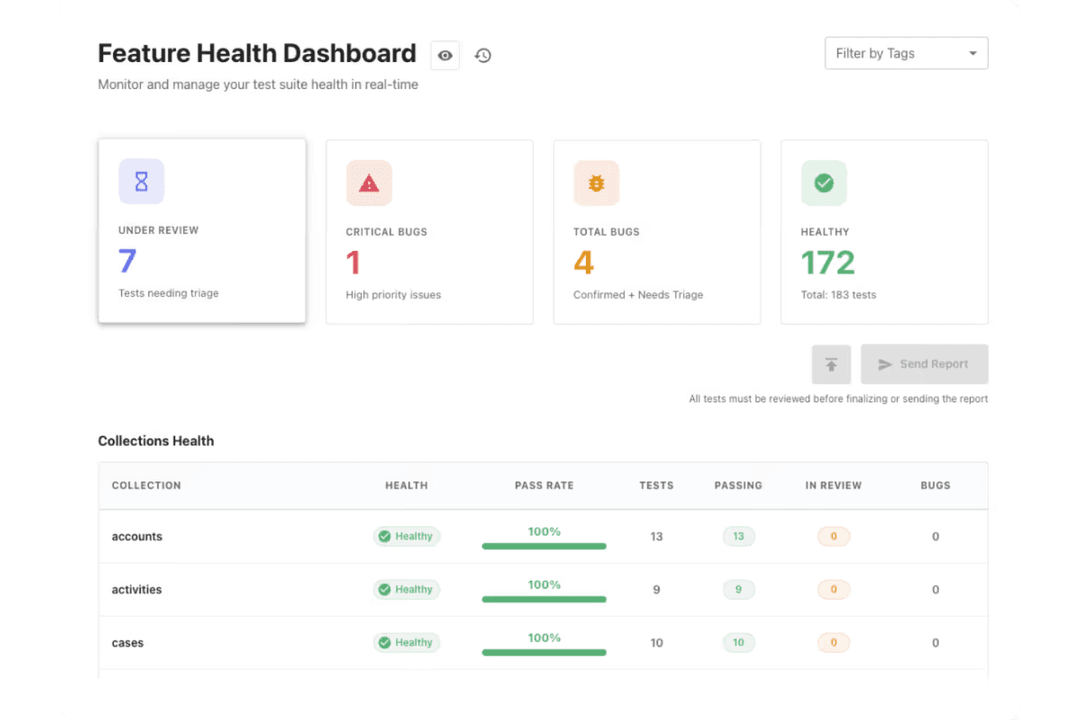
Checksum e TestMu AI adottano approcci molto diversi al prezzo, e questa differenza può avere un impatto significativo a seconda del modo in cui lavora il tuo team. Checksum applica il prezzo in base al numero di workflow (test) che gestisce, senza costi per utente o per esecuzione. Al contrario, TestMu AI utilizza un modello modulare basato sull’utilizzo: i prezzi variano a seconda delle funzionalità come test live, dispositivi reali, esecuzione in parallelo e funzionalità AI, che possono incidere notevolmente man mano che la scala aumenta.
Se stai valutando entrambi, è importante andare oltre al prezzo base. Con Checksum, ti suggerisco di concentrarti su quanti workflow ti servono davvero e se la riduzione della manutenzione dei test giustifica il costo. Con TestMu AI, è fondamentale capire quali moduli ti servono, come l’utilizzo (ad esempio test in parallelo o dispositivi reali) influenza il prezzo e come i costi crescono all’aumentare del team. Prendersi il tempo di mappare i prezzi sul reale utilizzo ti aiuterà a evitare sorprese e scegliere ciò che conviene davvero sul lungo termine.
Checksum e TestMu AI si sovrappongono in diverse aree chiave. Entrambi supportano la generazione e l’esecuzione automatica dei test, si integrano con pipeline CI/CD e si connettono con strumenti come GitHub, GitLab e Slack. Usano anche l’IA per velocizzare la creazione dei test, individuare i problemi e migliorare la copertura.
Dove differiscono è sia nell’ampiezza delle funzionalità che nell’approccio. Checksum si concentra sull’autonomia offrendo manutenzione continua dei test, generazione di test dalle pull request, test di plugin di terze parti e un modello test-as-code (l’IA mantiene aggiornata una suite Playwright direttamente nel tuo repository). TestMu AI, invece, propone una piattaforma più completa che comprende test agent-to-agent per applicazioni IA, un cloud di browser e dispositivi reali su larga scala, gestione centralizzata dei test e supporto per test mobile, accessibilità e performance.
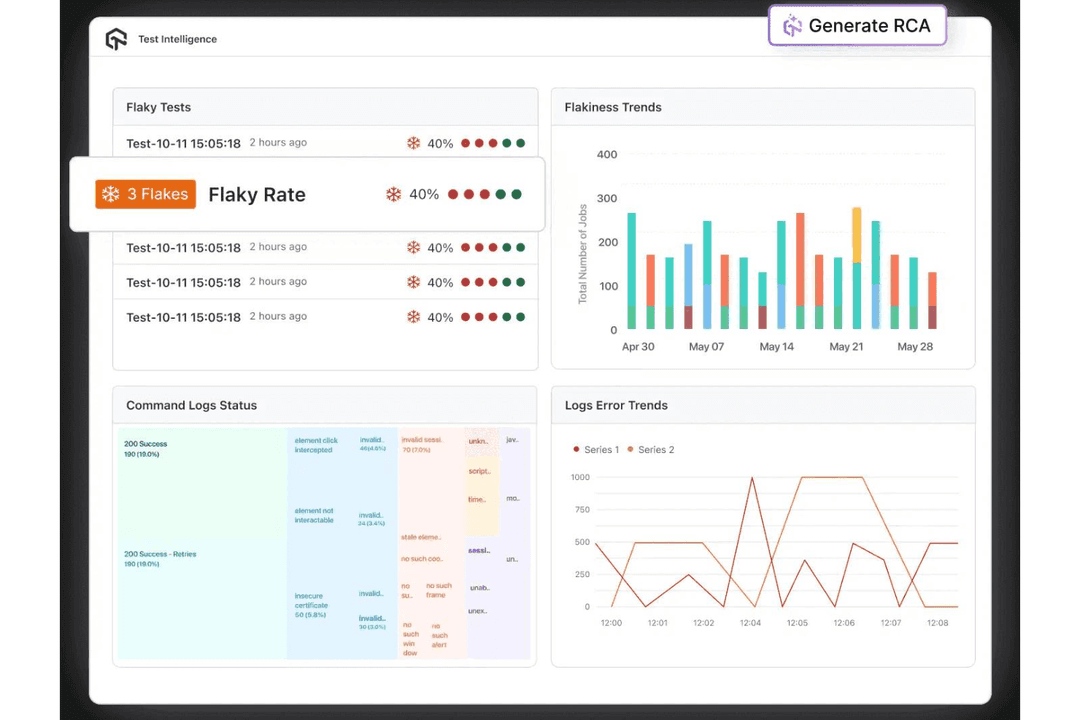
Questa differenza nasce dal modo in cui ciascuno applica l’IA. TestMu AI è nativamente AI in tutto il ciclo di vita—con agenti AI per la creazione dei test (KaneAI), orchestrazione dell’esecuzione (HyperExecute) e analisi (Test Intelligence) per potenziare e scalare i workflow di assurance della qualità. Anche Checksum è nativo IA, ma più focalizzato: usa l’IA per ridurre o eliminare al massimo la necessità di gestire i test, generandoli, eseguendoli e mantenendoli in background in modo continuo.
| Checksum | TestMu AI | |
|---|---|---|
| A/B Testing | No | No |
| API | Yes | Yes |
| Automated Testing | Yes | Yes |
| Browser Compatibility Testing | Yes | Yes |
| Bug Tracking | Yes | Yes |
| Calendar Management | Yes | No |
| CI/CD Integration | Yes | Yes |
| Dashboard | Yes | Yes |
| Data Export | Yes | Yes |
| Data Import | Yes | Yes |
| Data Visualization | Yes | Yes |
| Developer Tools | Yes | Yes |
| External Integrations | Yes | Yes |
| History/Version Control | Yes | Yes |
| Manual Testing | Yes | Yes |
| Multi-User | Yes | Yes |
| Notifications | Yes | Yes |
| Performance Testing | Yes | Yes |
| Regression Testing | Yes | Yes |
| Scheduling | Yes | Yes |
| Status Notifications | Yes | Yes |
| Third-Party Plugins/Add-Ons | Yes | Yes |
| Integrazione | Checksum | TestMu AI |
| GitHub | ✅ | ✅ |
| GitLab | ✅ | ✅ |
| Slack | ✅ | ✅ |
| Microsoft Teams | ✅ | ✅ |
| Jenkins | ✅ | ✅ |
| CircleCI | ✅ | ✅ |
| ClickUp | ✅ | ✅ |
| Jira | ✅ | ✅ |
| Azure DevOps | ✅ | ✅ |
| Trello | ✅ | ✅ |
| Linear | ✅ | ✅ |
| API | ✅ | ✅ |
Sia Checksum che TestMu AI si integrano perfettamente con i principali flussi di lavoro degli sviluppatori, inclusi repository, strumenti CI/CD e piattaforme di comunicazione di squadra. Oltre alle integrazioni elencate qui sopra, TestMu AI dispone generalmente di una libreria di integrazioni native più ampia, ma poiché entrambe le piattaforme offrono anche supporto API e webhook, puoi abilitare integrazioni in tempo reale con qualsiasi sistema e workflow interno, indipendentemente dalla soluzione che scegli.
| Fattore | Checksum | TestMu AI |
|---|---|---|
| FattoreCrittografia dei Dati | ChecksumCrittografa i dati in transito e a riposo utilizzando protocolli standard di settore. | TestMu AIUtilizza crittografia TLS (in transito) e AES-256 (a riposo). |
| FattoreConformità Regolatoria IA | ChecksumDocumentazione pubblica limitata sull'allineamento al Regolamento UE sull'IA e ai framework di IA Responsabile. | TestMu AIAllineamento al Regolamento UE sull'IA e ai principi di IA Responsabile, con enfasi su trasparenza, supervisione umana e distribuzione sicura dell'IA. |
| FattoreConformità | ChecksumConforme SOC 2 con DPA disponibile per clienti enterprise. | TestMu AICertificazioni SOC 2 Type II e ISO (27001, 27017, 27701) e supporto GDPR. |
| FattoreControlli di Accesso | ChecksumControlli di accesso standard e politiche di sicurezza interne. | TestMu AISSO, SCIM, accesso basato sui ruoli, 2FA e controlli identità per enterprise. |
| FattoreInfrastruttura | ChecksumBasata su cloud con pratiche di sicurezza definite e sub-processori dichiarati. | TestMu AIOspitato su AWS/Azure con regioni globali e livelli di sicurezza documentati. |
| FattoreAffidabilità | ChecksumNessun SLA di uptime pubblico dichiarato. | TestMu AIPagina di stato pubblica; nessun SLA di uptime esplicitamente dichiarato pubblicamente. |
Sia Checksum sia TestMu AI seguono pratiche di sicurezza avanzate, compresa la crittografia, controlli di livello enterprise e infrastrutture orientate alla conformità. Checksum offre una solida base con la conformità SOC 2 e il DPA per clienti enterprise, risultando una soluzione affidabile per team con esigenze standard di sicurezza e governance.
TestMu AI si distingue grazie a una copertura di conformità più ampia, capacità di gestione dell'identità più avanzate e un posizionamento più forte in relazione ai nuovi standard di governance dell'IA. Il suo allineamento ai principi di IA Responsabile e al Regolamento UE sull'IA può risultare particolarmente vantaggioso per organizzazioni che valutano piattaforme di test assistite da IA o operano in contesti altamente regolamentati.
| Fattore | Checksum | TestMu AI |
| Interfaccia Utente | Dashboard pulita e intuitiva con viste personalizzabili e navigazione rapida. | Interfaccia moderna con flussi guidati e costruttori di test visuali. |
| Onboarding | Onboarding guidato e personalizzato (Proof of Value con ingegnere delle soluzioni). | Onboarding flessibile: self-service per piccoli team, guidato per enterprise. |
| Configurazione dei Test | Impostazione manuale dei test minima: i test sono generati e mantenuti automaticamente. | Più opzioni di configurazione (SDK, UI, IA tramite KaneAI), a seconda dei casi d'uso e casi limite. |
| Supporto Clienti | Ingegnere delle soluzioni dedicato, spesso via Slack, con guida proattiva. | Supporto reattivo, documentazione, community, oltre a livelli enterprise di supporto. |
Checksum e TestMu AI affrontano la facilità d'uso da prospettive opposte. Checksum è più semplice nell'uso quotidiano perché elimina la maggior parte del lavoro: l'onboarding è interamente guidato tramite Proof of Value e, una volta implementata, la piattaforma consente di generare, mantenere ed eseguire i test automaticamente in background con un coinvolgimento minimo del team.
TestMu AI è più semplice da avviare, soprattutto per piccoli team, grazie all'onboarding self-service, alla documentazione e alle opzioni di configurazione flessibili; tuttavia, nonostante la facilità di accesso e le funzionalità native di IA come KaneAI, richiede più configurazione manuale e gestione continuativa man mano che si scala. Se desideri uno sforzo minimo dopo la configurazione, Checksum è più facile nel complesso; se invece preferisci flessibilità e la possibilità di iniziare autonomamente, TestMu AI offre un punto di ingresso più accessibile.
Checksum
- Fully autonomous test generation, execution, and maintenance (not just AI-assisted).
- Automatically heals broken tests as the application changes, reducing maintenance overhead.
- Delivers tests as real Playwright code in your repo (no vendor lock-in).
- Requires access to a live staging or production-like environment to get started.
- Higher cost and no self-serve pricing make it less suitable for smaller teams or tight budgets.
- Not fully hands-off—some test maintenance may involve optional human review.
TestMu AI
- AI-native platform with autonomous test creation, execution, and analysis (KaneAI + Test Intelligence).
- Extensive test coverage across 3000+ browser and OS combinations and 10,000+ real devices, with the ability to test complex scenarios.
- A unified platform that combines visual, accessibility, test management, API, and performance testing tools in one place.
- Advanced features and enterprise capabilities may require onboarding support or technical guidance.
- Pricing can increase significantly as teams scale usage across multiple modules.
- Despite deep AI capabilities, it’s not ideal for hands-off teams as it still requires some engineering involvement.
Checksum
- Teams with Broad Test Coverage NeedsChecksum is a strong fit for teams that want unified coverage across end-to-end, API, and PR-level testing, without stitching together multiple tools or systems.
- Organizations Treating Quality as InfrastructureCompanies that view testing as a core part of their delivery pipeline benefit most from Checksum’s continuous approach to test generation, execution, and maintenance.
- QA TeamsChecksum allows QA teams to shift away from fixing brittle tests, focusing on higher-value validation work while the platform continuously maintains the test suite.
- Web Applications with Complex User FlowsProducts with multi-step user journeys gain value from Checksum’s end-to-end test generation and auto-healing, ensuring critical paths stay covered as UI elements and flows change.
- Lean Startups & Teams with No Existing Test CoverageTeams starting from zero can use Checksum to rapidly generate a full test suite without upfront engineering effort. This makes it a strong fit for teams that need to go from no coverage to comprehensive validation quickly, without building a testing framework from scratch.
- SaaS Teams (Mid-Market & Enterprise)Checksum helps mid-market and enterprise SaaS teams with established CI/CD workflows maintain reliable test coverage as they ship frequent releases, automatically generating and updating tests as the product evolves without engineering effort.
TestMu AI
- Product ManagersKaneAI enables product managers and non-technical stakeholders to create tests with natural language, contribute to coverage, validate user journeys, and collaborate more effectively with QA and engineering teams.
- Mobile App Testing TeamsThe real device cloud enables thorough validation across a wide range of devices, OS versions, and real-world usage conditions that emulators can’t fully replicate.
- Global Teams Requiring Localization TestingBroad browser, device, and geolocation coverage makes it easier to validate user experiences across multiple devices, regions, languages, and environments.
- AI Product Teams (LLMs, Chatbots, Voice Agents)Agent testing enables teams to evaluate hallucination, bias, and response quality, making it a strong fit for organizations building and deploying AI-driven applications.
- Enterprises Standardizing QA ToolingHelps enterprises consolidate testing tools into a single platform while scaling automation across teams. Its AI-native test creation, execution, and analysis improve reliability, enhance visibility, governance, and collaboration, and reduce maintenance for QA engineers.
- DevOps & Platform Engineering TeamsTestMu AI integrates directly into CI/CD pipelines and supports large-scale orchestration, making it ideal for teams embedding testing into infrastructure and release workflows.
Chi dovrebbe usare Checksum, e chi dovrebbe usare TestMu AI?
I team che vogliono ridurre o eliminare il carico continuo della manutenzione dei test dovrebbero usare Checksum. È particolarmente adatto per team di ingegneri con pipeline CI/CD mature che rilasciano frequentemente e desiderano una copertura di test affidabile e costantemente aggiornata senza dedicare tempo alla scrittura e alla correzione dei test. Se la tua priorità è minimizzare lo sforzo di QA manuale e mantenere i test nel tuo codice con poco coinvolgimento nel tempo, Checksum è la soluzione più indicata per il tuo processo di testing.
TestMu AI è una scelta migliore per quei team che necessitano di funzionalità di test estese su web, mobile e molteplici ambienti. Funziona bene per organizzazioni che desiderano una piattaforma unificata per gestire, eseguire e analizzare i test su larga scala, ma può anche supportare team più piccoli o startup grazie al suo onboarding self-service, alla bassa barriera d’accesso (tramite funzionalità IA-native) e a fasce di prezzo di ingresso più basse. Se hai bisogno di flessibilità, controllo e la possibilità di crescere e ottimizzare la tua configurazione di test nel tempo, TestMu AI può essere la scelta giusta per te.
| Checksum | TestMu AI | |
|---|---|---|
| AI-Powered Role | Checksum System-level autonomy: generates, runs, and maintains tests continuously with minimal input. | TestMu AI AI testing using agent-level autonomy: For example, KaneAI can author, execute, debug, and evolve tests within broader workflows. |
| Coverage | Checksum Focused on web app testing across end-to-end, API, and CI/CD workflows throughout the development lifecycle. | TestMu AI Broad platform covering web, mobile apps, APIs, AI systems, and more. |
| Maintenance Model | Checksum Continuous self-healing that adapts to code changes with minimal input. | TestMu AI AI-assisted maintenance with engineering oversight. |
| Test Generation | Checksum Autonomous and continuous in the background. | TestMu AI AI agent (KaneAI) supports natural language + multi-input test creation. |
| Test Ownership | Checksum Tests are delivered as standard Playwright code in your repo, so you can run, edit, or migrate them independently—no vendor lock-in. | TestMu AI Platform-centric with centralized management and execution. |
| CI/CD Pipeline Integration | Both integrate with CI/CD tools like GitHub, GitLab, Jenkins, and CircleCI to embed software testing into pipelines. |
|---|---|
| Cross-Browser Support | Both platforms allow you to test across multiple browsers and environments for broad coverage. |
| Enterprise Readiness | Both offer enterprise-grade features like security controls and scalability for larger teams. |
| Multi-Layer Testing Support | Both support testing functions beyond basic UI flows, including API-level validation. |
| Team Collaboration | Both facilitate collaboration among development teams and cross-functional departments, integrating with tools like Slack and Microsoft Teams to share results and alerts. |