Les 10 meilleurs logiciels blockchain de 2026

10 Meilleures solutions logicielles blockchain
Here's my pick of the 10 best software from the 23 tools reviewed.


Explorer le monde des logiciels blockchain peut s’avérer complexe. Vous cherchez sans doute une solution qui corresponde aux besoins de votre équipe, qu’il s’agisse d’améliorer la sécurité ou la transparence. D’après mon expérience, le bon logiciel peut vraiment faire la différence.
J’ai pris le temps de tester et d’évaluer de nombreuses options en me concentrant sur ce qui compte vraiment pour les experts techniques comme vous. Vous trouverez ci-dessous mes meilleurs choix, sélectionnés pour leurs atouts particuliers et leur capacité à répondre aux défis courants.
Cet article n’est pas simplement une liste ; c’est un guide pour vous aider à prendre une décision éclairée. Mon objectif est de proposer une analyse impartiale et approfondie, afin que vous puissiez choisir en toute confiance le logiciel blockchain qui vous convient le mieux.
Why Trust Our Software Reviews
Résumé des meilleurs logiciels blockchain
Ce tableau comparatif présente un résumé des détails tarifaires de mes principales sélections de logiciels blockchain afin de vous aider à trouver la solution la mieux adaptée à votre budget et aux besoins de votre entreprise.
| Tool | Best For | Trial Info | Price | ||
|---|---|---|---|---|---|
| 1 | Best for scalable BaaS on AWS | Not available | From $15/user/month (billed annually) + $50 base fee per month. | Website | |
| 2 | Best for integrating with Oracle-based systems | Not available | From $20/user/month (billed annually) + $100 base fee per month. | Website | |
| 3 | Best for rapid transaction finality | Not available | From $15/user/month (billed annually) + $30 base fee per month | Website | |
| 4 | Best for on-chain governance mechanisms | Not available | From $12/user/month (billed annually) | Website | |
| 5 | Best for high-throughput consensus services | Not available | From $10/user/month (min 5 seats) | Website | |
| 6 | Best for distributed cloud services | Not available | From $15/user/month (billed annually) + $60 base fee per month | Website | |
| 7 | Best for scalable decentralized applications | Not available | From $20/user/month (billed annually) + $50 base fee per month | Website | |
| 8 | Best for language model integration | Not available | From $25/user/month (billed annually) + $55 base fee per month | Website | |
| 9 | Best for private transaction networks | Not available | From $20/user/month (billed annually) + $70 base fee per month | Website | |
| 10 | Best for enterprise blockchain solutions | Not available | From $20/user/month (billed annually) + $50 base fee per month | Website |
-

Site24x7
Visit WebsiteThis is an aggregated rating for this tool including ratings from Crozdesk users and ratings from other sites.4.6 -
Docker
Visit WebsiteThis is an aggregated rating for this tool including ratings from Crozdesk users and ratings from other sites.4.6 -
Pulumi
Visit WebsiteThis is an aggregated rating for this tool including ratings from Crozdesk users and ratings from other sites.4.8




Avis détaillés sur les meilleurs logiciels blockchain
Vous trouverez ci-dessous mes résumés détaillés des meilleurs logiciels blockchain figurant dans ma sélection. Mes évaluations détaillent les principales fonctionnalités, avantages et inconvénients, intégrations et cas d’usages idéaux de chaque outil afin de vous aider à choisir celui qui vous conviendra le mieux.


Amazon Managed Blockchain is a fully managed service that simplifies the creation and management of scalable blockchain networks using popular frameworks like Hyperledger Fabric. Given its ability to scale easily on AWS, it’s the go-to choice for businesses looking for Blockchain-as-a-Service (BaaS) on this platform.
Why I Picked Amazon Managed Blockchain: In choosing a tool that would feature on this list, Amazon Managed Blockchain consistently stood out due to its integration with the AWS ecosystem. I selected it not just for its inherent capabilities in blockchain technology, but for the unparalleled scalability it offers to businesses already operating on AWS.
The service is especially useful for those looking to expand their blockchain networks without the operational headache, which is why I judged it to be the best for scalable BaaS on AWS.
Standout Features & Integrations:
One notable feature of Amazon Managed Blockchain is its support for Hyperledger Fabric, allowing for permissioned, private blockchain networks. It also offers robust options for managing nodes and a wide set of APIs for blockchain development.
Additionally, this service integrates well with other AWS services like Amazon CloudWatch for monitoring and AWS Lambda for executing smart contracts.
Pros and Cons
Pros:
- Offers a wide set of APIs for comprehensive blockchain development.
- Support for popular frameworks like Hyperledger Fabric.
- Strong integration with AWS services, making it suitable for businesses already on this platform.
Cons:
- Businesses not on AWS may find less value due to the tight AWS ecosystem integration.
- Not as framework-agnostic as some other BaaS providers.
- Pricing can become complex and add up quickly, especially for larger networks.


Oracle Blockchain is a comprehensive distributed ledger platform, engineered to bring about enterprise-grade blockchain capabilities. Tailored for integration with Oracle services and systems, it emerges as a natural choice for enterprises deeply embedded within the Oracle ecosystem.
Why I Picked Oracle Blockchain: In determining which tools would make the list, Oracle Blockchain particularly captured my attention. The main reason I selected it was its impeccable synergy with Oracle's suite of products. It's crafted with Oracle-based systems in mind, ensuring tight-knit integration, and thus, stands out from many generic blockchain platforms.
Based on my comparison and judgments, I firmly believe that it is unparalleled when it comes to integrating with Oracle-centric enterprises.
Standout Features & Integrations:
Oracle Blockchain's core strength lies in its enterprise-grade functionality, offering robust features like permissioned blockchain development, high scalability, and improved security measures.
More impressively, its deep-rooted integrations with Oracle's vast array of software products, like Oracle ERP, CRM, and Oracle Cloud Infrastructure services, make transitions and data flows exceptionally smooth.
Pros and Cons
Pros:
- Supports popular frameworks like Hyperledger Fabric, broadening its blockchain development capabilities.
- Boasts of robust features including high scalability and tight security protocols.
- Designed with Oracle systems at its core, ensuring smooth integration.
Cons:
- Relatively steep learning curve for those unfamiliar with Oracle's ecosystem.
- Pricing might seem steep for startups or smaller organizations.
- More suitable for enterprises already invested in Oracle, potentially limiting its appeal for non-Oracle users.

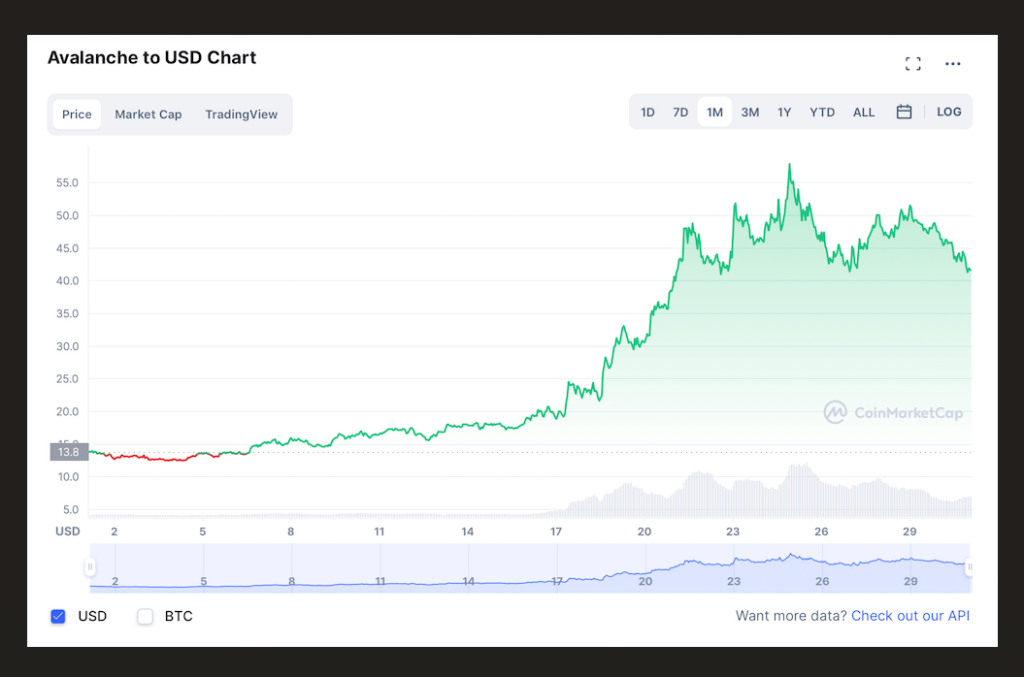
Avalanche is a distinguished player in the realm of blockchain platforms, specifically designed for quick transaction conclusions. Its architecture promises a swiftness in transaction finality that few can rival.
Why I Picked Avalanche: I chose Avalanche after a thorough examination of numerous blockchain platforms. The deciding factor was its impressive ability to achieve rapid transaction finality. Through judicious comparison and consideration, I formed the opinion that Avalanche is indeed a cut above the rest.
Its prowess in ensuring quick transaction conclusions makes it an optimal choice for those who value speed and efficiency in a blockchain network.
Standout Features & Integrations:
Avalanche boasts a decentralized finance ecosystem and a consensus mechanism that improves transaction speed. It caters to developers through its EVM-compatible functionality, facilitating blockchain app creation and development.
In terms of integrations, Avalanche connects with various blockchain-as-a-service providers and supports a myriad of programming languages, improving its utility in the blockchain world.
Pros and Cons
Pros:
- Broad spectrum of integrations with leading blockchain services.
- Versatile ecosystem compatible with EVM, aiding in dApps and blockchain development.
- Exceptional speed in transaction finality.
Cons:
- Annual billing could deter those seeking short-term solutions.
- The platform's focus on speed might not cater to every blockchain use-case.
- Might be overwhelming for beginners given its unique architecture.


Tezos stands out in the world of blockchain platforms, championing a strong on-chain governance model. This decentralized blockchain evolves by upgrading itself, ensuring stakeholders are at the helm of decision-making processes.
Why I Picked Tezos: Tezos captured my interest after I meticulously went through numerous blockchain platforms. What determined my choice was its unique approach to on-chain governance mechanisms. After comparing and analyzing, it became clear that when it comes to a decentralized decision-making process within a blockchain network, Tezos leads.
It's my firm opinion that for anyone prioritizing on-chain governance, Tezos is the best bet.
Standout Features & Integrations:
Tezos prides itself on its modular architecture and the ability for stakeholders to vote on proposed protocol changes. Its functionality goes beyond mere blockchain development, incorporating smart contracts and facilitating dApps creation.
Its integration landscape is diverse, linking with various blockchain-as-a-service providers and software development tools.
Pros and Cons
Pros:
- High scalability ensuring efficient performance on its blockchain network.
- Offers a robust ecosystem supporting dApps and smart contracts.
- Distinct on-chain governance model promoting decentralized decision-making.
Cons:
- Annual billing might be a commitment some users are hesitant about.
- Potential learning curve for users new to the on-chain governance concept.
- Its unique governance model might be unfamiliar to traditional blockchain developers.


Hedera is a decentralized public network that capitalizes on blockchain technology, striving for high-speed transactions and unparalleled security. Its primary focus lies in achieving high-throughput consensus, ensuring that large volumes of transactions are processed rapidly and effectively.
Why I Picked Hedera: In the vast ecosystem of blockchain platforms, Hedera has always grabbed my attention. I chose Hedera for its unique ability to provide rapid consensus services on its blockchain network.
When judging and comparing various platforms, it became evident that Hedera's algorithm, combined with its advanced blockchain technology, made it best for those looking for speed without compromising security.
Standout Features & Integrations:
Hedera offers features like the Hedera Token Service and consensus service, making it easier for businesses to mint their tokens or achieve consensus in real-time. Their smart contracts functionality, combined with the ability to build dApps, caters to diverse blockchain development needs. Important integrations include linking with other blockchain services, IoT solutions, and various dApp platforms, fortifying the applicability of their offering.
Pros and Cons
Pros:
- Offers interoperability with a range of blockchain networks and services.
- Supports development and deployment of dApps.
- Efficient consensus mechanism ensures speedy transactions.
Cons:
- Requires a minimum seat purchase, limiting its use for individual developers.
- Primarily focuses on consensus, which might not cater to all business needs.
- Might have a steeper learning curve for newcomers compared to other platforms.


Ankr AppChains is a pioneering solution that connects blockchain technology to distributed cloud services, allowing developers to create decentralized applications on a global scale. Its focus on distributed cloud infrastructure makes it a frontrunner for those who prioritize reliability and decentralization in their cloud services.
Why I Picked Ankr AppChains:
When I delved into the realm of blockchain-powered cloud services, Ankr AppChains clearly stood out. I chose this tool because it masterfully intertwines blockchain development with distributed cloud functionality.
Given the importance of cloud infrastructure in today's digital age, Ankr AppChains' emphasis on creating a decentralized cloud ecosystem is what convinced me that it's the best in the domain of distributed cloud services.
Standout Features & Integrations:
Ankr AppChains boasts a modular ecosystem, granting developers the flexibility to mold their dApps as per their unique requirements. The platform leverages blockchain networks such as Ethereum and Quorum, enabling real-time cloud functionalities.
Furthermore, its integrations extend to renowned platforms like Hyperledger Fabric, and it's also compatible with widely used programming languages, including Java and Javascript.
Pros and Cons
Pros:
- Modular design facilitates tailored software development.
- Wide array of integrations with major blockchain platforms.
- Centralizes blockchain technology and distributed cloud infrastructure.
Cons:
- Potential for higher costs based on extensive cloud utilization.
- Initial setup might be complex for non-tech-savvy individuals.
- The learning curve for users new to blockchain-as-a-service.


EOSIO stands as a dynamic blockchain platform tailored for building efficient dApps. It's designed from the ground up with scalability in mind, aiming to deliver decentralized applications that can handle vast user numbers with ease.
Why I Picked EOSIO: After carefully selecting and judging various platforms, I chose EOSIO primarily because of its innate ability to accommodate scalable decentralized applications. In the ever-growing ecosystem of blockchain technology, EOSIO distinctly stands out with its focus on accommodating large-scale dApps without compromising on speed or security.
For projects eyeing scalability as their prime concern, EOSIO has cemented itself as the go-to blockchain platform.
Standout Features & Integrations:
EOSIO brings to the table a high throughput, resulting in rapid transaction times, making it a dream for real-time dApps. Its consensus mechanism, combined with the EOS programming language, facilitates smoother blockchain development. On the integration front, EOSIO harmonizes well with multiple blockchain-as-a-service providers and offers flexibility with an array of programming languages, such as Java and Javascript, for developers.
Pros and Cons
Pros:
- Extensive compatibility with various programming languages aids blockchain development.
- Accommodates real-time dApps through its high throughput.
- Tailored for scalable dApps, ensuring efficient functionality.
Cons:
- Might not be the ideal fit for projects not primarily focused on scalability.
- Costs may become a concern for smaller startups.
- Learning curve for new developers unfamiliar with EOS programming language.


ChainGPT is a cutting-edge tool that merges blockchain technology with language models, paving the way for unique decentralized applications. Ideal for those wanting to blend the capabilities of language models with the robustness of blockchain networks, it sets the gold standard for such integrations.
Why I Picked ChainGPT: In the vast landscape of blockchain platforms and language models, ChainGPT caught my attention immediately. The reason I chose it is its unparalleled fusion of advanced language processing and decentralized ledger functionality.
After weighing its features against other tools, it was evident that ChainGPT has a distinctive edge when it comes to integrating language models into blockchain ecosystems, making it the best choice for such endeavors.
Standout Features & Integrations:
ChainGPT boasts a modular design, ensuring that developers have the flexibility to adapt its features according to their project's needs. Its real-time analytics, combined with its powerful language processing algorithms, offer a unique advantage to dApps developers.
In terms of integrations, ChainGPT smoothly collaborates with prominent blockchain platforms like Ethereum, Hyperledger Fabric, and even extends compatibility with programming languages such as Java and Javascript.
Pros and Cons
Pros:
- Extensive compatibility with leading blockchain platforms and programming languages.
- Modular design allows for tailored development.
- Integration of language models with blockchain networks.
Cons:
- The tool may be too specialized for broader blockchain applications.
- The pricing model may be a barrier for smaller projects.
- Might pose a learning curve for those unfamiliar with both blockchain and language models.


Corda is a distinguished blockchain platform designed explicitly for businesses, facilitating private transactions with direct transfer value. Its prowess in ensuring private, secure, and scalable transaction networks naturally aligns it as the best solution for private transaction endeavors.
Why I Picked Corda: Surveying the broad spectrum of blockchain platforms, my judgment consistently swayed towards Corda. I determined its selection based on its dedication to fostering a permissioned environment for transactions, making it stand out in the vast blockchain development landscape.
The ability of Corda to offer businesses the confidentiality they desire, without compromising on transactional integrity, reinforced my conviction that it's unequivocally the best for private transaction networks.
Standout Features & Integrations:
At the heart of Corda lies its permissioned nature, ensuring transactions remain visible only to parties with a legitimate need to view them. Its consensus mechanism is unique; it doesn't require the entire network to validate a transaction. Additionally, Corda integrates with the Java programming language, making it favorable for a vast developer community familiar with Java.
Pros and Cons
Pros:
- Strong integration with Java, simplifying blockchain development for many developers.
- Streamlined consensus mechanism expediting transaction validations.
- Focused on business, offering a permissioned transaction environment.
Cons:
- Limited integrations with other popular programming languages beyond Java.
- Its specialized nature might not suit all blockchain applications.
- Steeper learning curve when compared to more mainstream blockchain platforms.

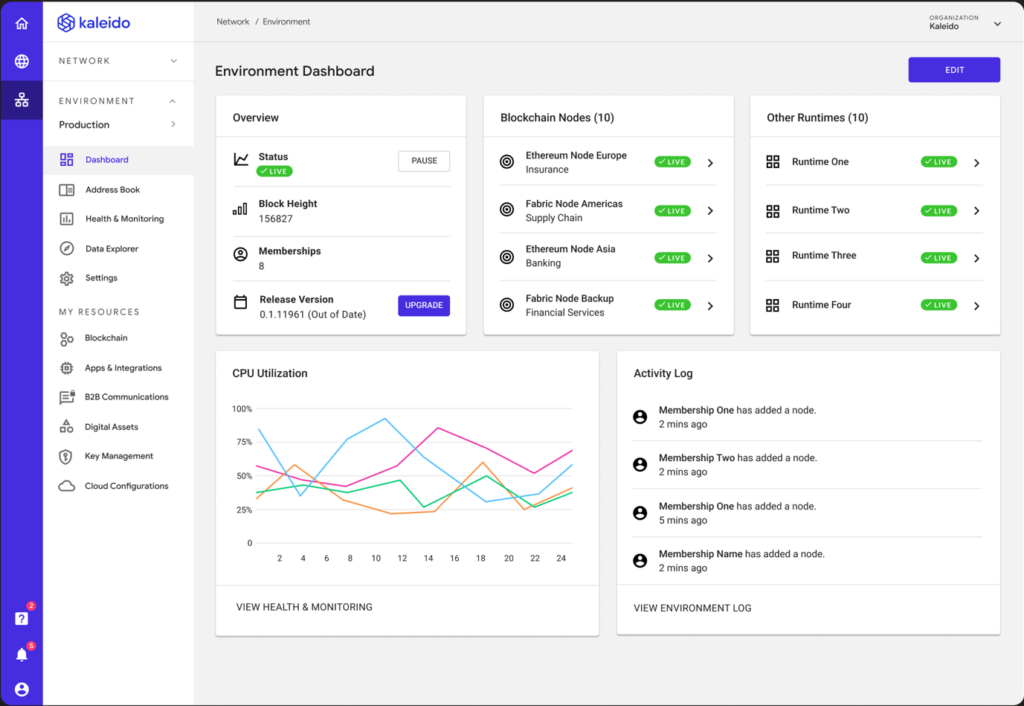
Kaleido serves as a comprehensive blockchain platform tailored specifically for enterprises seeking scalable and robust blockchain solutions. Recognizing the intricate demands of modern businesses, it caters to those looking for powerful blockchain functionality combined with enterprise-level security and support.
Why I Picked Kaleido: When judging various blockchain platforms, Kaleido's commitment to providing holistic enterprise solutions made it an obvious selection. In my opinion, compared to other platforms, Kaleido offers an unparalleled balance of flexibility, security, and robustness tailored specifically for businesses.
This is why I firmly believe it to be the best for companies requiring enterprise-grade blockchain solutions.
Standout Features & Integrations:
One of Kaleido's prominent features is its blockchain-as-a-service functionality, allowing companies to streamline their blockchain development process. The platform also provides real-time analytics, ensuring businesses can monitor their blockchain's performance closely.
On the integration front, Kaleido interfaces with popular tools like Ethereum's EVM, Quorum, and Consensys, improving its adaptability and utility for varied business needs.
Pros and Cons
Pros:
- Integrates effortlessly with several popular blockchain tools and services.
- Real-time analytics for comprehensive oversight of blockchain operations.
- Enterprise-focused blockchain solutions, ensuring robustness and scalability.
Cons:
- Requires a deeper understanding of the ecosystem for full utilization.
- The price point may not be attractive to businesses on a tight budget.
- Might be overkill for smaller entities or startups.
Autres logiciels blockchain
Voici quelques autres options logicielles blockchain qui n’ont pas été retenues dans ma sélection mais qui méritent tout de même votre attention :
- Ontology Blockchain
For identity and data integrity
- CoreLedger
For blockchain prototyping needs
- Moralis Web3
Good for easy Web3 application development
- Polkadot
Good for interoperability with Parachains
- Coinbase Cloud
Good for building crypto-native apps
- Alchemy
Good for developer tools in blockchain infrastructure
- Merkle Science
Good for risk management in digital assets
- Cobo DeFi
Good for secure DeFi asset management
- Tron
Good for high-capacity decentralized apps
- Algorand
Good for instant transaction confirmation
- IOTA
Good for scalable ledger transactions without fees
- Cosmos
Good for connecting multiple blockchains
- Crypto APIs
Good for integrating blockchain data and operations


Critères de sélection des logiciels blockchain
Pour choisir les meilleurs logiciels blockchain à inclure dans cette liste, j’ai pris en compte les besoins courants des acheteurs et les principaux points de douleur tels que la sécurité et les capacités d’intégration. J’ai également utilisé le cadre suivant pour garantir une évaluation structurée et équitable :
Fonctionnalité principale (25 % de la note totale)
Pour être retenue dans cette liste, chaque solution devait répondre à ces cas d’usage courants :
- Transactions de données sécurisées
- Exécution de contrats intelligents
- Technologie de registre distribué
- Vérification d’identité
- Tokenisation des actifs
Fonctionnalités supplémentaires remarquables (25 % de la note totale)
Pour affiner ma sélection, j’ai également recherché des caractéristiques uniques, telles que :
- Compatibilité inter-chaînes
- Analyses en temps réel
- Algorithmes de consensus personnalisables
- Méthodes de chiffrement avancées
- Prise en charge des applications décentralisées
Facilité d’utilisation (10 % de la note totale)
Pour évaluer l’ergonomie de chaque système, j’ai pris en compte les éléments suivants :
- Interface intuitive
- Navigation simple
- Courbe d’apprentissage faible
- Performance réactive
- Tableaux de bord personnalisables
Onboarding (10 % de la note totale)
Pour évaluer l’expérience de prise en main de chaque plateforme, j’ai analysé les aspects suivants :
- Disponibilité de vidéos de formation
- Visites interactives du produit
- Accès aux modèles
- Webinaires en direct
- Assistance par chatbot
Support client (10 % du score total)
Pour évaluer les services de support client de chaque fournisseur de logiciel, j’ai pris en compte les éléments suivants :
- Disponibilité du support 24/7
- Multiplicité des canaux de support
- Temps de réponse rapide
- Personnel d’assistance compétent
- Centre d’aide complet
Rapport qualité/prix (10 % du score total)
Pour évaluer le rapport qualité/prix de chaque plateforme, j’ai pris en compte les éléments suivants :
- Tarifs compétitifs
- Formules d’abonnement flexibles
- Disponibilité d’une période d’essai gratuite
- Rapport fonctionnalités/prix
- Réductions pour la facturation annuelle
Avis clients (10 % du score total)
Pour avoir une idée de la satisfaction globale des clients, j’ai pris en considération les aspects suivants lors de la lecture des avis clients :
- Notes de satisfaction des utilisateurs
- Fréquence des mises à jour
- Retours sur la fiabilité
- Commentaires sur la facilité d’intégration
- Taux de recommandation global
Comment choisir un logiciel blockchain
Il est facile de se perdre dans de longues listes de fonctionnalités et des structures tarifaires complexes. Pour vous aider à rester concentré lors de votre processus unique de sélection de logiciel, voici une liste de contrôle des facteurs à garder à l’esprit :
| Facteur | À prendre en compte |
|---|---|
| Scalabilité | Le logiciel peut-il gérer votre croissance ? Prenez en compte le volume des transactions et le nombre d’utilisateurs. Privilégiez les outils pouvant évoluer sans perte de performance. |
| Intégrations | Peut-il se connecter avec vos systèmes existants ? Assurez la compatibilité avec votre pile technologique actuelle et les futurs outils que vous prévoyez d’utiliser. |
| Personnalisation | Peut-il être adapté à vos besoins ? Évaluez les options de modification des flux de travail ou des fonctionnalités afin de répondre à vos processus spécifiques. |
| Facilité d’utilisation | Est-il convivial pour votre équipe ? Évaluez la courbe d’apprentissage et l’intuitivité de l’interface pour garantir une adoption rapide. |
| Mise en œuvre et prise en main | Combien de temps faudra-t-il pour tout installer ? Tenez compte du temps et des ressources nécessaires pour assurer une transition en douceur, y compris la formation et le support pendant le changement. |
| Coût | Est-ce dans votre budget ? Comparez les modèles de tarification, en incluant les frais cachés ou les coûts de fonctionnalités additionnelles, pour vérifier que cela convient à votre plan financier. |
| Protections de sécurité | Protège-t-il vos données ? Vérifiez la présence de méthodes de chiffrement, le respect des lois sur la protection des données et la régularité des mises à jour de sécurité. |
Qu’est-ce qu’un logiciel blockchain ?
Un logiciel blockchain est un outil qui facilite des transactions de données sûres et transparentes grâce à la technologie de registre distribué. Des professionnels comme les développeurs, les analystes financiers et les responsables conformité utilisent ces outils pour renforcer la sécurité et l’efficacité de la gestion des données. Les fonctionnalités telles que les transactions de données sécurisées, l’exécution de contrats intelligents et la vérification d’identité servent à protéger les informations et automatiser les processus. De manière générale, ces outils permettent aux utilisateurs de bénéficier d’une plus grande transparence et de réduire les risques dans leurs opérations.
Fonctionnalités
Lorsque vous choisissez un logiciel blockchain, gardez un œil sur les caractéristiques clés suivantes :
- Transactions de données sécurisées : Facilite les échanges d'informations sûrs et chiffrés, réduisant le risque de violations de données.
- Exécution de contrats intelligents : Automatise les accords en exécutant des conditions prédéfinies, économisant du temps et minimisant les erreurs manuelles.
- Technologie de registre distribué : Fournit un enregistrement décentralisé de toutes les transactions, garantissant transparence et confiance entre les utilisateurs.
- Vérification d'identité : Confirme les identités des utilisateurs afin de renforcer la sécurité et d'éviter les accès non autorisés.
- Tokenisation des actifs : Convertit les actifs physiques en jetons numériques, facilitant leur gestion et leur transfert.
- Compatibilité inter-chaînes : Permet l'interopérabilité entre différents réseaux blockchain, élargissant les options de fonctionnalités et d'intégration.
- Analyses en temps réel : Offre des informations sur les données blockchain, aidant les utilisateurs à prendre rapidement des décisions avisées.
- Tableaux de bord personnalisables : Permet aux utilisateurs d'adapter leur interface afin de mieux correspondre à leur flux de travail et à leurs préférences.
- Méthodes de chiffrement avancées : Protège les données par des techniques cryptographiques puissantes, sécurisant les informations sensibles.
- Support des applications décentralisées : Facilite le développement et le déploiement d'applications décentralisées, élargissant les cas d'utilisation de l'outil.
Avantages
La mise en place d'un logiciel blockchain offre plusieurs avantages pour votre équipe et votre entreprise. Voici quelques bénéfices auxquels vous pouvez vous attendre :
- Sécurité renforcée : Avec des transactions de données sécurisées et des méthodes de chiffrement avancées, vos informations sont protégées contre tout accès non autorisé.
- Transparence accrue : La technologie de registre distribué garantit que toutes les transactions sont visibles et vérifiables, instaurent la confiance entre les utilisateurs.
- Processus automatisés : L'exécution de contrats intelligents réduit le besoin d'intervention manuelle, économisant du temps et limitant les erreurs.
- Gestion efficace des actifs : La tokenisation des actifs permet de gérer et de transférer plus facilement et efficacement les actifs.
- Interopérabilité améliorée : La compatibilité inter-chaînes permet aux différents réseaux blockchain de fonctionner ensemble, élargissant les capacités de votre outil.
- Meilleure prise de décision : L'analyse en temps réel fournit des informations sur vos données blockchain, vous aidant à faire des choix avisés rapidement.
Coûts & Tarification
Le choix d'un logiciel blockchain nécessite de comprendre les différents modèles et plans de tarification disponibles. Les coûts varient en fonction des fonctionnalités, de la taille de l'équipe, des modules complémentaires, etc. Le tableau ci-dessous résume les plans courants, leurs prix moyens ainsi que les principales fonctionnalités généralement incluses dans les solutions logicielles blockchain :
Tableau comparatif des plans pour les logiciels blockchain
| Type de plan | Prix moyen | Fonctionnalités courantes |
|---|---|---|
| Plan gratuit | $0 | Transactions de données de base, exécution limitée de contrats intelligents et assistance communautaire. |
| Plan personnel | $10-$30/user/month | Sécurité renforcée, vérification d'identité et accès à des analyses de base. |
| Plan entreprise | $50-$100/user/month | Chiffrement avancé, compatibilité inter-chaînes et tableaux de bord personnalisables. |
| Plan grand compte | $150-$300/user/month | Support d'intégration complet, analyses en temps réel et service client dédié. |
FAQ sur les logiciels blockchain
Voici quelques réponses aux questions courantes concernant les logiciels blockchain :
Comment les logiciels blockchain assurent-ils la confidentialité des données ?
Les logiciels blockchain assurent la confidentialité des données en utilisant des méthodes de chiffrement avancées et des réseaux décentralisés. Cela signifie que les données sont stockées sur plusieurs nœuds plutôt que sur un seul serveur, ce qui rend l’accès non autorisé plus difficile. Vous devez évaluer les standards de chiffrement de tout logiciel envisagé afin de vérifier qu’ils répondent aux besoins de confidentialité de votre organisation.
Les logiciels blockchain peuvent-ils s'intégrer aux systèmes existants ?
Oui, de nombreuses solutions logicielles blockchain proposent des capacités d’intégration avec les systèmes existants. Il est important de vérifier la compatibilité avec votre pile technologique actuelle, y compris les bases de données et autres applications d’entreprise. Recherchez des logiciels avec des API ou des connecteurs intégrés pour faciliter l’intégration transparente.
Et maintenant :
Si vous êtes en train de rechercher des logiciels blockchain, contactez un conseiller SoftwareSelect pour obtenir des recommandations gratuites.
Vous remplissez un formulaire et discutez rapidement pour préciser vos besoins spécifiques. Vous recevrez ensuite une liste restreinte de logiciels à examiner. Ils vous accompagneront même tout au long du processus d'achat, y compris lors des négociations de prix.