

Avis sur Elasticsearch : Avantages, Inconvénients, Fonctionnalités et Tarifs
Elasticsearch excelle dans l’analyse de données en temps réel, ce qui en fait un choix de premier plan pour les équipes ayant besoin d’informations rapides à partir de grands jeux de données.

Nous évaluons les outils indépendamment ; les commissions aident à financer nos tests. Consultez notre politique de transparence et notre méthodologie.
Elasticsearch is a DataOps tool built around distributed search and real-time log analytics, designed for teams that need to index, query, and analyze large volumes of machine-generated data fast. I'd consider it when you need deep search and observability capabilities across structured and unstructured data at scale. If cost control and deployment flexibility matter to your team, Elasticsearch is worth a close look over Splunk—you get comparable search depth and analytics with open-source roots and far more control over how and where you run it.
Elasticsearch Evaluation Summary
4.5/5
- Pricing upon request
- Free trial available
Pourquoi faire confiance à nos recommandations de logiciels
6,700+
Reviews
20
Industry experts
16+
Evaluation factors
14
Years
Notre équipe teste et évalue des logiciels depuis 2012. En tant que leaders technologiques nous-mêmes, nous savons à quel point il est difficile — et important — de choisir le bon logiciel.
Pour ce guide, nous avons évalué les outils grâce à des tests pratiques et une recherche indépendante, en notant les outils selon nos critères de sélection.
Nos avis reflètent notre jugement éditorial humain, et non un argumentaire de vente.
Réviseurs experts:
- Paulo Gardini MiguelDirecteur technique
 Tim FisherVP de l'IA
 Gabriel RosasTech Lead et architecte logiciel
 Christhian GruhnTech Lead et architecte plateforme

Elasticsearch Overview
In my opinion, Elasticsearch is a strong choice for teams that need fast data insights and operate in distributed systems such as finance, e-commerce, and modern software development. Its real-time search engine and analytics engine deliver rapid querying across large datasets, outperforming many traditional SQL or relational database tools.
The onboarding experience is smooth and integrates well with the broader ELK stack, though occasional integration friction can occur. Elasticsearch’s Kibana-driven visualization layer makes metrics and data storage exploration intuitive, but user reviews often highlight slow response times in support. For teams prioritizing speed, scalability, and open-source search capabilities, Elasticsearch is a compelling option.
Pros
- Provides sub-second search query response times and real-time log analysis.
- Horizontal scaling to handle petabytes of data ingestion.
- Powerful and flexible visual interface for dashboarding and data exploration.
- It delivers real-time data analytics for quick insights.
- The search functionality is fast and efficient for large datasets.
- Your team will find the interface intuitive and easy to navigate.
Cons
- Requires complex JVM tuning since performance depends heavily on memory allocation.
- Consumes significant RAM and risks resource overuse or split-brain issues.
- ML features, and direct vendor support are only available through paid subscription.
- There might be a learning curve for those not tech-savvy.
Is Elasticsearch Right For Your Needs?
Who Would be a Good Fit for Elasticsearch?
Elasticsearch is well-suited for tech-savvy teams in industries like finance and e-commerce. If your work involves handling in-depth large datasets and you need quick, real-time insights, Elasticsearch's fast search capabilities can be invaluable. Departments such as IT or data analytics will benefit from its intuitive interface, allowing your team to manage data efficiently without getting bogged down in complexity.
- E-commerce AnalyticsElasticsearch analyzes large-scale transaction data to uncover customer behavior patterns and sales trends in real time. Its full-text search engine supports misspellings, synonyms, and relevance scoring, making it ideal for powering accurate and intuitive search on retail sites.
- Financial ServicesElasticsearch enables real-time visibility into financial transactions, allowing your team to detect anomalies as they occur. With paid-tier machine learning, it automatically analyzes behavioral patterns to flag fraud and other high-risk events much earlier than conventional systems.
- IT OperationsElasticsearch helps IT teams ingest, search, and analyze system logs at scale to maintain reliable performance. As the core engine of the ELK/Elastic Stack, it aggregates logs, traces, and metrics for real-time operational analytics and anomaly detection.
- Data Analytics TeamsWith its fast search capabilities, Elasticsearch supports your data team in performing complex queries with ease.
- Healthcare Data ManagementElasticsearch allows for the efficient handling and analysis of large patient data sets, aiding in quick decision-making.
- Retail Business IntelligenceYour retail team can leverage Elasticsearch to analyze sales data, helping with inventory management and customer insights.
Who Would be a Bad Fit for Elasticsearch?
Elasticsearch may not be ideal for small businesses or teams that lack technical expertise. If your team doesn't deal with large datasets or doesn't require real-time data analytics, the tool's capabilities might be overkill. Additionally, if you rely heavily on customer support for troubleshooting, you might find Elasticsearch's support lacking compared to other providers.
- Small BusinessesMassive operational overhead (JVM tuning, node management) is overkill. Simple SQL databases or managed NoSQL services are far more cost-effective and simpler to maintain.
- Non-Technical TeamsWithout a tech-savvy team, you might struggle with Elasticsearch's setup and troubleshooting processes. The required expertise in cluster lifecycle management, mapping configuration (JSON schema), and query DSL mandates dedicated DevOps or data engineering expertise.
- Customer Service DepartmentsIf your team requires constant support, Elasticsearch's customer service might not meet your expectations.
- Creative AgenciesFor agencies focused on creative output rather than data analysis, Elasticsearch's functionalities won't be a match.
- Local Brick-and-Mortar ShopsIf you don't handle large datasets, Elasticsearch's capabilities may far exceed your needs.
- Educational InstitutionsFor schools with basic data requirements, the complexity of Elasticsearch might not be warranted.
Notre méthodologie d'évaluation
Comment nous testons et notons les outils
Nous avons passé des années à développer, affiner et améliorer notre système de test et de notation des logiciels. Cette grille d’évaluation est conçue pour saisir les subtilités de la sélection des logiciels et ce qui rend un outil efficace, en se concentrant sur les aspects critiques du processus de décision.
Vous trouverez ci-dessous le détail de notre processus de test et de notation sur sept critères. Cela nous permet de fournir une évaluation impartiale du logiciel basée sur les fonctionnalités principales, les caractéristiques distinctives, la facilité d’utilisation, l’intégration, l’accompagnement lors de la prise en main, le support client, les avis utilisateurs et le rapport qualité-prix.
Fonctionnalité principale (25% de la note finale)
Le point de départ de notre évaluation est toujours la fonctionnalité principale de l’outil. Possède-t-il les fonctions de base auxquelles un utilisateur s’attend ? Certaines de ces fonctionnalités principales sont-elles limitées à des forfaits plus chers ? Nous attendons d’un outil qu’il soit au moins à la hauteur des capacités de base de ses concurrents.
Fonctionnalités remarquables (25% de la note finale)
Ensuite, nous évaluons les fonctionnalités exceptionnelles qui dépassent la fonctionnalité de base habituellement trouvée dans ce type d’outil. Un score élevé reflète des fonctionnalités spécialisées ou uniques rendant le produit plus rapide, plus efficace ou apportant une valeur ajoutée à l’utilisateur.
Nous évaluons aussi la facilité d’intégration avec d’autres outils courants dans la pile technologique pour élargir les fonctionnalités et l’utilité du logiciel. Les outils dotés de nombreuses intégrations natives, de connexions tierces et d’un accès API facilitant des intégrations personnalisées obtiennent les meilleurs scores.
Facilité d’utilisation (10% de la note finale)
Nous considérons la rapidité et la simplicité d’exécution des tâches principales avec l’outil. Les logiciels les mieux notés sont bien conçus, intuitifs, proposent des applications mobiles, offrent des modèles et rendent des tâches relativement complexes très simples.
Accompagnement lors de la prise en main (10% de la note finale)
Nous savons que l’adoption rapide d’une nouvelle plateforme au sein d’une équipe est cruciale. Nous évaluons donc la facilité avec laquelle un nouvel utilisateur peut apprendre et utiliser un outil avec un minimum de formation. Les meilleures solutions permettent une mise en route rapide, sans nécessité de support.
Support client (10% de la note finale)
Nous analysons la facilité et la rapidité avec lesquelles il est possible d’obtenir de l’aide par téléphone, chat en direct ou base de connaissances. Les outils et entreprises offrant une assistance en temps réel obtiennent les meilleurs scores, tandis que les chatbots sont moins bien notés.
Avis utilisateurs (10% de la note finale)
Au-delà de nos propres tests et évaluations, nous tenons compte du net promoter score des utilisateurs actuels et passés. Nous regardons la probabilité qu’ils choisiraient à nouveau l’outil pour ses fonctionnalités principales. Un logiciel bien noté reflète un net promoter score élevé.
Rapport qualité-prix (10% de la note finale)
Enfin, en tenant compte de tous les autres critères, nous examinons le prix moyen des forfaits d’entrée de gamme par rapport aux fonctionnalités principales et à la valeur des autres critères. Un logiciel offrant plus, pour moins cher, obtiendra un meilleur score.
Core Features
Real-Time Analytics: Elasticsearch supports near real-time search and analytics, allowing teams to analyze logs, metrics, and events as they arrive with minimal indexing latency.
Full-Text Search: Built on the Apache Lucene inverted index, Elasticsearch delivers fast, relevance-ranked full-text search across massive unstructured datasets with stemming, tokenization, and custom analyzers.
Scalability: The system scales horizontally across clusters by automatically distributing data into shards and replicas, ensuring consistent performance as data volume grows.
Cluster Management: Through distributed sharding and replica shards, Elasticsearch ensures fault tolerance and load balancing across nodes, coordinated via the internal cluster discovery mechanism.
Indexing: Elasticsearch indexes data for faster retrieval, helping your team access the information they need without delay.
Data Aggregation: The platform supports complex analytical aggregations (min, max, percentiles, histograms, time-series analysis), making it a powerful engine for operational analytics and real-time dashboards.
Ease of Use
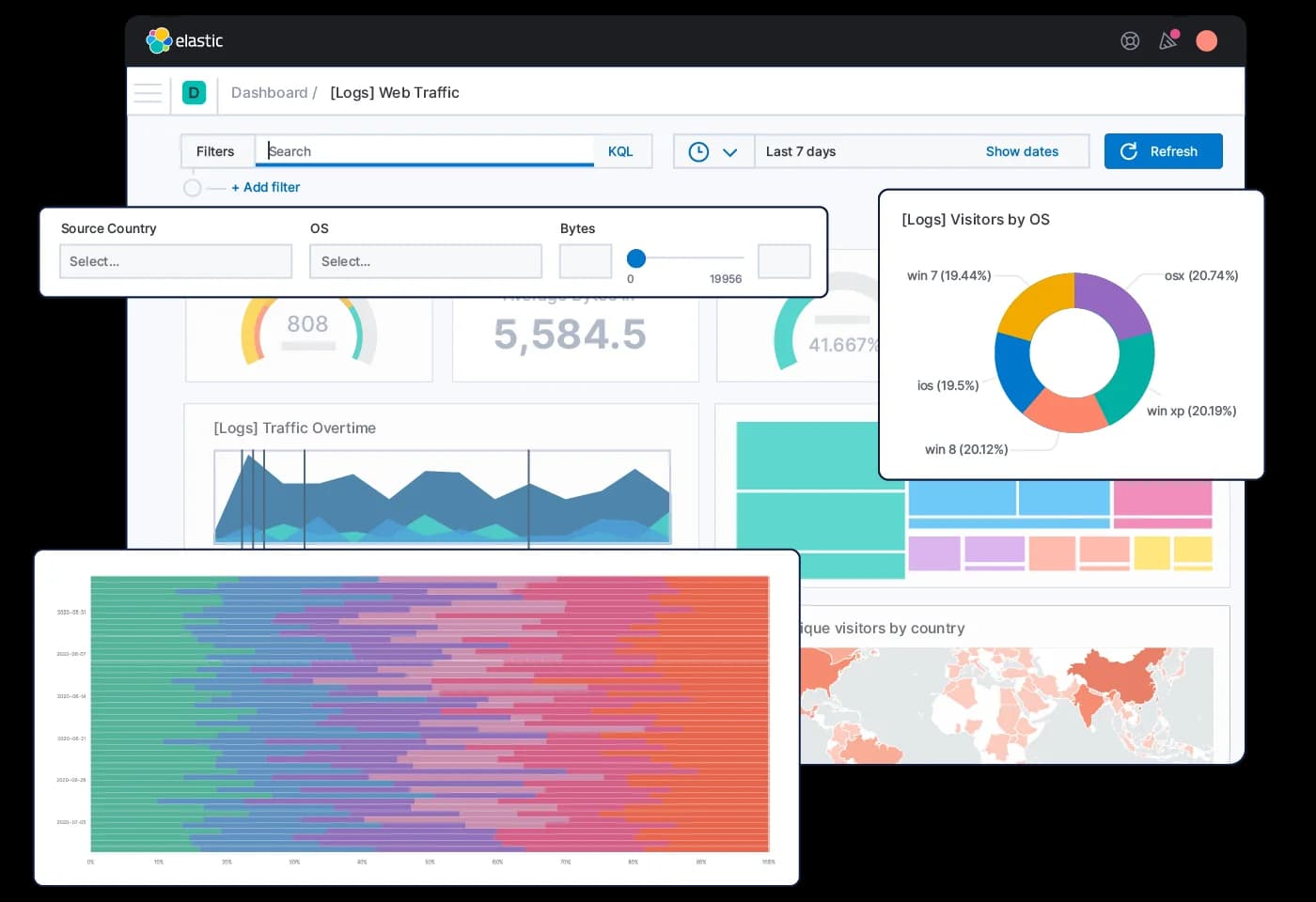
Elasticsearch is easy to explore but hard to operate. Kibana makes visualization, dashboards, and basic data discovery straightforward, yet the system itself requires technical skill. Setting up Elasticsearch means configuring JSON mappings, tuning clusters, and managing indexing behavior. Kibana is simple for data consumers, but the learning curve for developers and administrators remains steep.
Integrations
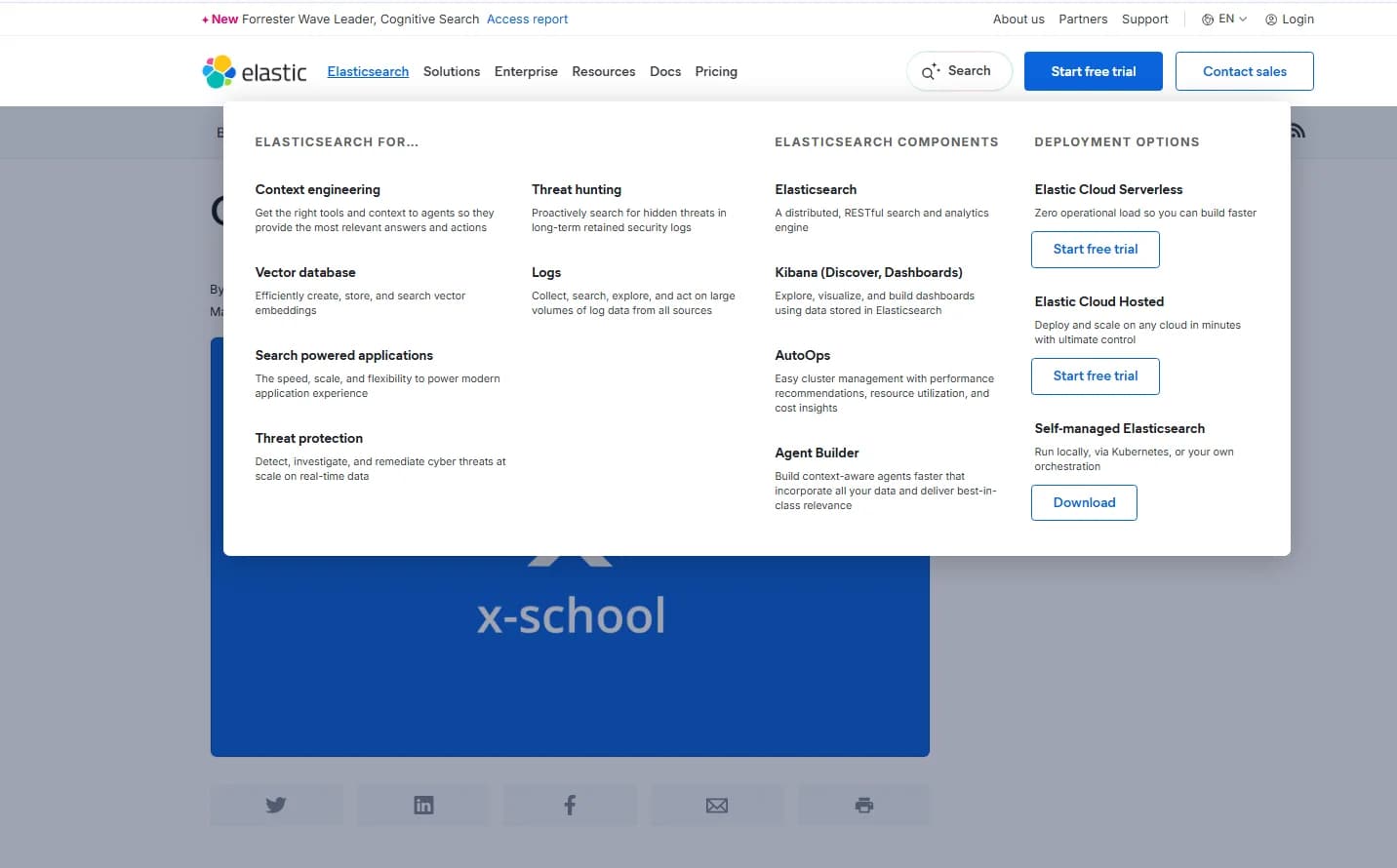
Elasticsearch integrates with Elastic Agent, Open Crawler, Data Connectors, AWS, Microsoft Azure, Google Cloud, Logstash, Elastic language clients, and APIs for data ingestion.
Elasticsearch also provides APIs and supports third-party integration tools, enhancing its flexibility in various environments.
Elasticsearch Specs
- API: Yes
- Bug Tracking: No
- CI/CD Integration: No
- Cloud Deployment: Yes
- Code Review: No
- Code Transformation: No
- Collaboration Support: No
- Data Export: Yes
- Data Import: Yes
- Developer Tools: Yes
- External Integrations: Yes
- Git Integration: No
- History/Version Control: No
- IDE Plugins: No
- Local Deployment: Yes
- Multi-User: Yes
- Notifications: Yes
- Project Management: No
- Release Management: No
- Static Analysis: No
- Task Scheduling/Tracking: No
- Testing: No


