

10 meilleurs fournisseurs de cloud privé pour les entreprises sécurisées en 2026

Liste des meilleurs fournisseurs de cloud privé


Trouver le bon fournisseur de cloud privé peut donner l’impression de devoir se frayer un chemin dans un labyrinthe. Les questions liées à la sécurité, à l’évolutivité et à la flexibilité à long terme se heurtent souvent aux préoccupations concernant les coûts et au risque redouté de dépendance à un fournisseur. Si vous avez déjà douté de ce dont votre organisation a réellement besoin ou craint de prendre une décision susceptible de limiter vos options à l’avenir, vous n’êtes pas seul. Ces difficultés peuvent rendre un processus déjà complexe encore plus intimidant.
Les fournisseurs de cloud privé proposent des solutions personnalisées qui aident les entreprises à garder le contrôle de leurs données, à garantir leur conformité et à faire évoluer leurs opérations en toute sécurité. Au fil des ans, j’ai travaillé avec des organisations confrontées à ces mêmes difficultés, en les aidant à faire le tri pour trouver des plateformes adaptées à leurs besoins spécifiques. Dans ce guide, je partagerai des enseignements issus de situations réelles, en analysant des facteurs clés tels que les performances, l’assistance et les coûts afin de vous aider à choisir en toute confiance le fournisseur de cloud privé qui correspond à vos objectifs.
Qu’est-ce qu’un fournisseur de cloud privé ?
Un cloud privé est un serveur distant hébergé dans un centre de données, auquel seuls des utilisateurs sélectionnés peuvent accéder via Internet ou un réseau interne privé. Cela contraste fortement avec un cloud public, accessible au grand public.
Les clouds privés sont gérés par des fournisseurs de cloud privé, qui sont responsables du déploiement, de la maintenance et des mises à jour. Ils travaillent en coulisses pour garantir que le cloud privé soit accessible, personnalisable, sécurisé et conforme aux normes du secteur et aux normes régionales, notamment celles relatives à la confidentialité des données.
Pourquoi faire confiance à nos recommandations de logiciels
Notre équipe teste et évalue des logiciels depuis 2012. En tant que leaders technologiques nous-mêmes, nous savons à quel point il est difficile — et important — de choisir le bon logiciel.
Pour ce guide, nous avons évalué les outils grâce à des tests pratiques et une recherche indépendante, en notant les outils selon nos critères de sélection.
Nos avis reflètent notre jugement éditorial humain, et non un argumentaire de vente.
Réviseurs experts:
Résumé des meilleurs fournisseurs de cloud privé
| Service | Best For | Trial Info | Price | ||
|---|---|---|---|---|---|
| 1 | Idéal pour les environnements complexes | Essai gratuit de 30 jours | Modèle de tarification à l'utilisation | Website | |
| 2 | Meilleure plateforme cloud open source | Essai gratuit de 60 jours | Tarification sur demande | Website | |
| 3 | Idéal pour des serveurs cloud mondiaux évolutifs | Essai gratuit de 30 jours disponible | À partir de 4 $/mois | Website | |
| 4 | Idéal pour la flexibilité | Offre gratuite disponible | Modèle de tarification à l'usage | Website | |
| 5 | Idéal pour une gestion simplifiée | Démo gratuite disponible | Tarification sur demande | Website | |
| 6 | Idéal pour l'hébergement multi-cloud | Essai gratuit de 30 jours | Paiement à l'utilisation | Website | |
| 7 | Idéal pour la virtualisation et la gestion | Selon le partenaire | Tarification sur demande | Website | |
| 8 | Idéal pour l'analytique et la surveillance | Essai gratuit de 45 jours | Tarification sur demande | Website | |
| 9 | La meilleure gamme complète de services cloud | Essai gratuit de 30 jours | Paiement à l'utilisation | Website | |
| 10 | Meilleure infrastructure de niveau entreprise | Essai gratuit de 30 jours | $60/instance/mois | Website |


Présentation des 12 meilleurs fournisseurs de cloud privé
Voici les 12 meilleurs fournisseurs de cloud privé actuellement disponibles sur le marché. Découvrez pourquoi j’ai choisi chacun d’eux et apprenez-en davantage sur leurs fonctionnalités, leurs intégrations et leurs offres tarifaires uniques.

Idéal pour les entreprises gérant de grandes quantités de données
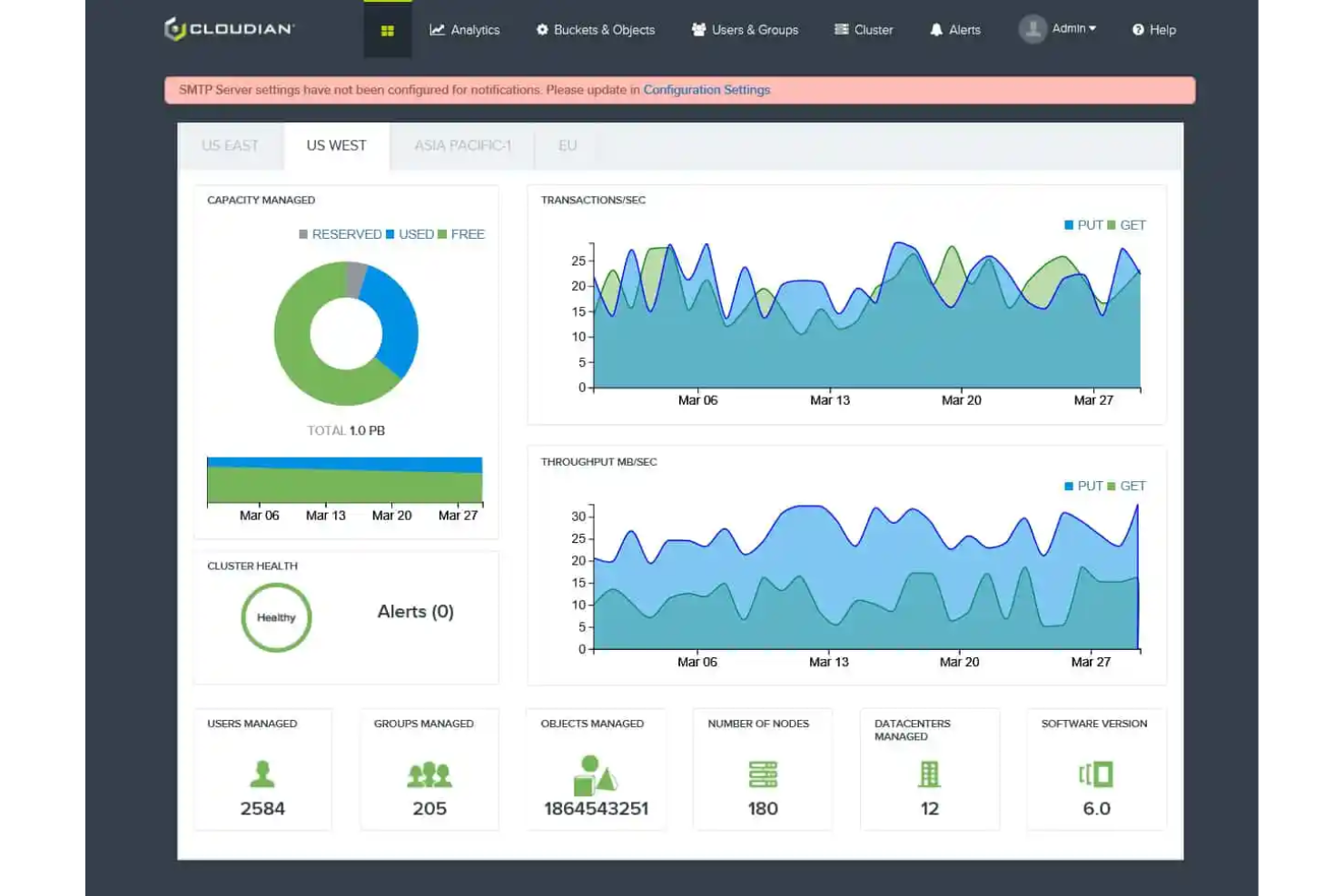
Cloudian HyperStore est une solution de stockage d'objets évolutive conçue spécifiquement pour les charges de travail nécessitant une grande capacité, ce qui en fait un excellent choix pour les CTO gérant des environnements cloud privés. Il offre une compatibilité S3 et des fonctionnalités avancées de gestion des données, essentielles pour les applications modernes axées sur les données.
Pourquoi j'ai choisi Cloudian HyperStore : J'ai choisi Cloudian HyperStore pour sa sécurité renforcée et sa protection des données, grâce à un stockage immuable et à des mesures de sécurité de niveau militaire pour empêcher tout accès non autorisé ou toute altération. Il excelle également dans le support du cloud hybride, permettant la gestion des données à travers différentes infrastructures. De plus, la plateforme prend en charge les workflows d'IA et propose des outils avancés d'analyse et d'observabilité, la rendant idéale pour les entreprises qui gèrent des volumes de données importants et qui ont besoin d'une rétention robuste et d'une vision approfondie.
Fonctionnalités et intégrations phares de Cloudian HyperStore :
Fonctionnalités phares : évolutivité à l'exa-octet, vous permettant de gérer d'immenses volumes de données sans craindre de manquer d'espace. La plateforme offre également un débit de lecture élevé, réduisant l'utilisation du processeur et améliorant les performances pour les applications intensives en données. De plus, Cloudian HyperStore garantit la souveraineté des données, assurant la conformité et la performance sur divers sites, ce qui est crucial pour garder le contrôle sur vos données.
Intégrations : AWS, Microsoft, VMware, Veeam, Snowflake, Microsoft SQL Server, Google GCP, Azure Blob, AWS Outposts, Commvault, Rubrik et Confluent Platform.
Pros and Cons
Pros:
- Solution de stockage d'objets hautement évolutive, adaptée aux grands ensembles de données
- Prise en charge des environnements multi-cloud
- Multiples passerelles d'accès (NFS, CIFS, SFTP) améliorent l'utilisation
Cons:
- Support limité de l'application mobile
- La configuration initiale peut être complexe et chronophage
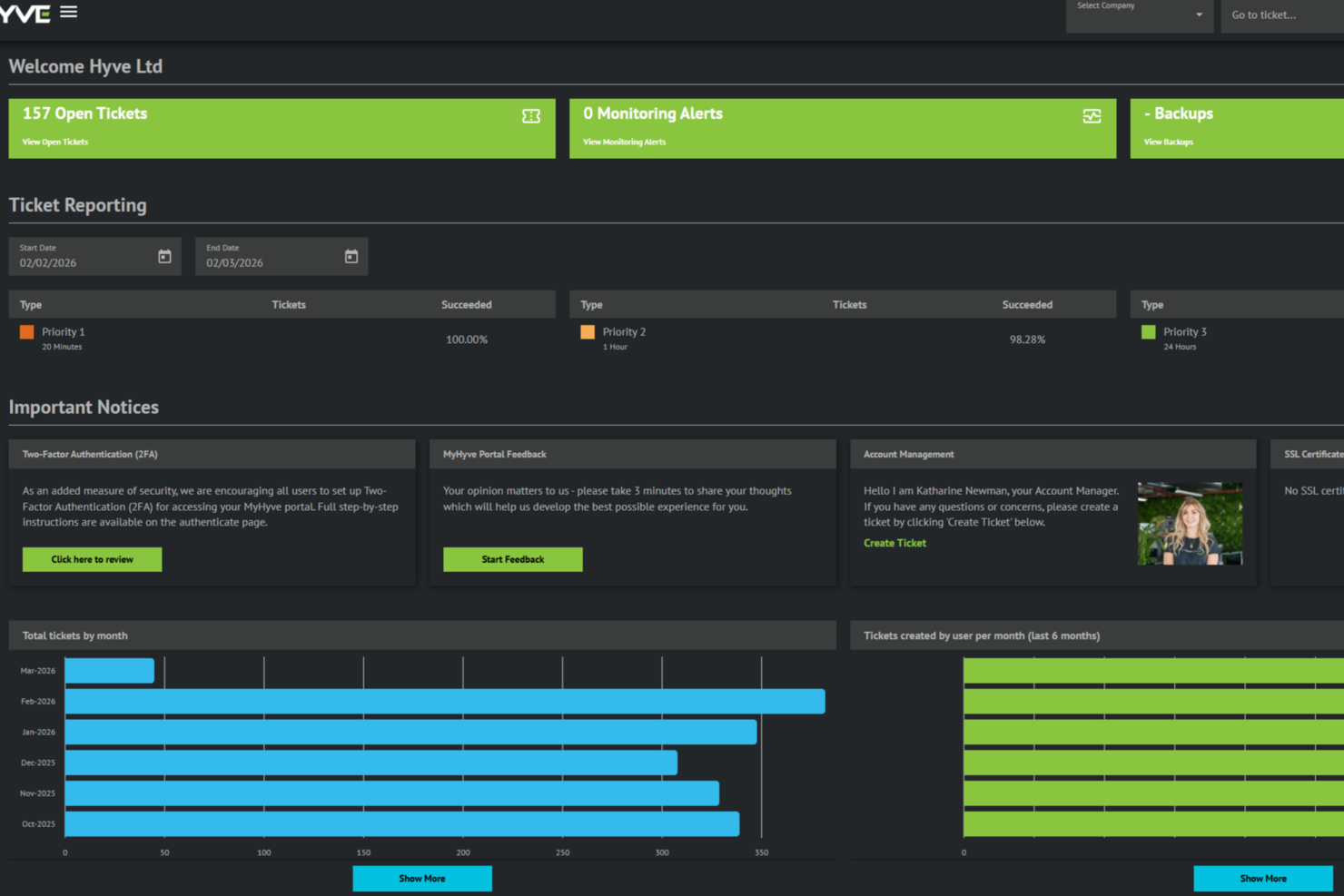
Hyve Managed Hosting propose des solutions cloud privées adaptées aux organisations ayant des exigences strictes en matière de disponibilité, de sécurité et de conformité. Les CTO et responsables informatiques à la recherche d'une infrastructure dédiée et d'une assistance personnalisée trouveront l'approche de Hyve attrayante. La plateforme répond aux défis liés à l'isolation des ressources, à l'évolution rapide et au maintien du contrôle sur les charges de travail sensibles.
À qui s'adresse Hyve Managed Hosting ?
Hyve Managed Hosting est un excellent choix pour les CTO et équipes informatiques des entreprises de taille moyenne à grande qui exigent une infrastructure cloud privée dédiée, un accompagnement personnalisé et des normes de conformité strictes.
Pourquoi j'ai choisi Hyve Managed Hosting
Pour les CTO qui ne peuvent pas se permettre de longues interruptions, j'ai choisi Hyve Managed Hosting en raison de son SLA de remplacement matériel en 20 minutes. Cet engagement signifie qu’en cas de panne d’un composant matériel, l’équipe de Hyve le remplace sous 20 minutes, minimisant ainsi les perturbations sur les charges de travail critiques. J’apprécie également que ce SLA soit soutenu par une surveillance de niveau entreprise et une assistance à réponse rapide, qui contribuent à garantir une haute disponibilité pour les environnements sensibles. Ces caractéristiques font de Hyve une option solide pour les organisations où la disponibilité et la continuité d’activité sont essentielles.
Principales fonctionnalités de Hyve Managed Hosting
D’autres fonctionnalités qui rendent Hyve Managed Hosting particulièrement adapté aux CTO gérant des environnements cloud privés incluent :
- Architecture cloud privée sur mesure : Hyve conçoit et déploie des environnements cloud privés adaptés aux besoins et aux charges de travail spécifiques de votre organisation.
- Isolation dédiée des ressources : Chaque client bénéficie d'une infrastructure physiquement et logiquement séparée, garantissant la confidentialité des données et la conformité.
- Assistance directe 24h/24 et 7j/7 par des ingénieurs : Vous pouvez joindre à tout moment des ingénieurs expérimentés pour obtenir de l'aide technique, sans passer par des centres d’appel généralistes.
- Contrôles de sécurité d'entreprise : La plateforme intègre des fonctions de sécurité avancées comme la protection DDoS, les pare-feux et des configurations prêtes pour la conformité.
Intégrations Hyve Managed Hosting
Les intégrations incluent VMware, HPE, Cisco, Juniper, Red Hat, Equinix, Telehouse, 3PAR et Hewlett Packard.
Pros and Cons
Pros:
- Conception de cloud privé personnalisée pour chaque client
- Options d'infrastructure haute disponibilité et redondante
- Fonctionnalités de sécurité et de conformité de niveau entreprise
Cons:
- La localisation du matériel peut être limitée selon les régions
- Nécessite de contacter les commerciaux pour la plupart des configurations

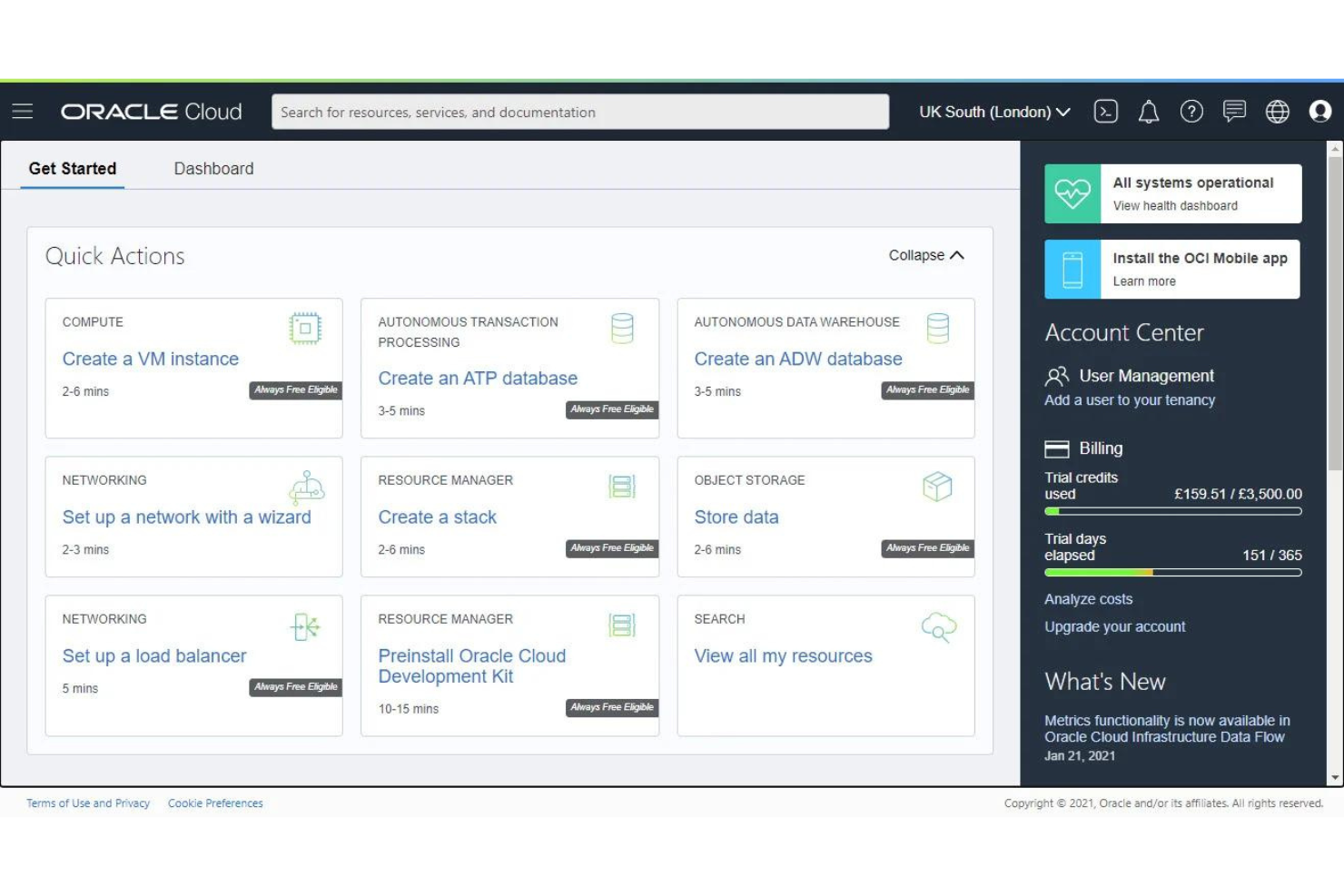
L'Oracle Cloud Infrastructure propose des services cloud privés pour les entreprises ayant des environnements complexes. Ces services comprennent des capacités de calcul haute performance, des ressources dédiées et un réseau avancé.
Pourquoi j'ai choisi Oracle Cloud Infrastructure : J'ai sélectionné OCI car sa suite complète de services cloud répond parfaitement aux besoins variés de mon entreprise. OCI regroupe tout ce dont j'ai besoin pour l'infrastructure cloud, la gestion de bases de données et des outils pour développeurs, ce qui me permet d'améliorer les opérations et l'efficacité.
Fonctionnalités et intégrations remarquables d'OCI :
Les fonctionnalités remarquables incluent des capacités réseau avancées telles que les réseaux cloud virtuels et l'équilibrage de charge, garantissant des performances optimales et une haute disponibilité. Elle offre aussi des fonctionnalités complètes de sécurité, comme la protection DDoS intégrée et la gestion des identités et des accès, pour protéger les données et les ressources.
Les intégrations incluent l'intégration native avec les applications et services Oracle, tels qu'Oracle Database, Oracle Integration Cloud et Oracle Identity and Access Management.
Pros and Cons
Pros:
- Une suite complète de services cloud
- Fonctionnalités de sécurité et de conformité renforcées
- Intégration avec les technologies Oracle
Cons:
- Peut être coûteux par rapport à certaines autres solutions cloud
- Courbe d'apprentissage pour les développeurs peu familiers des technologies Oracle
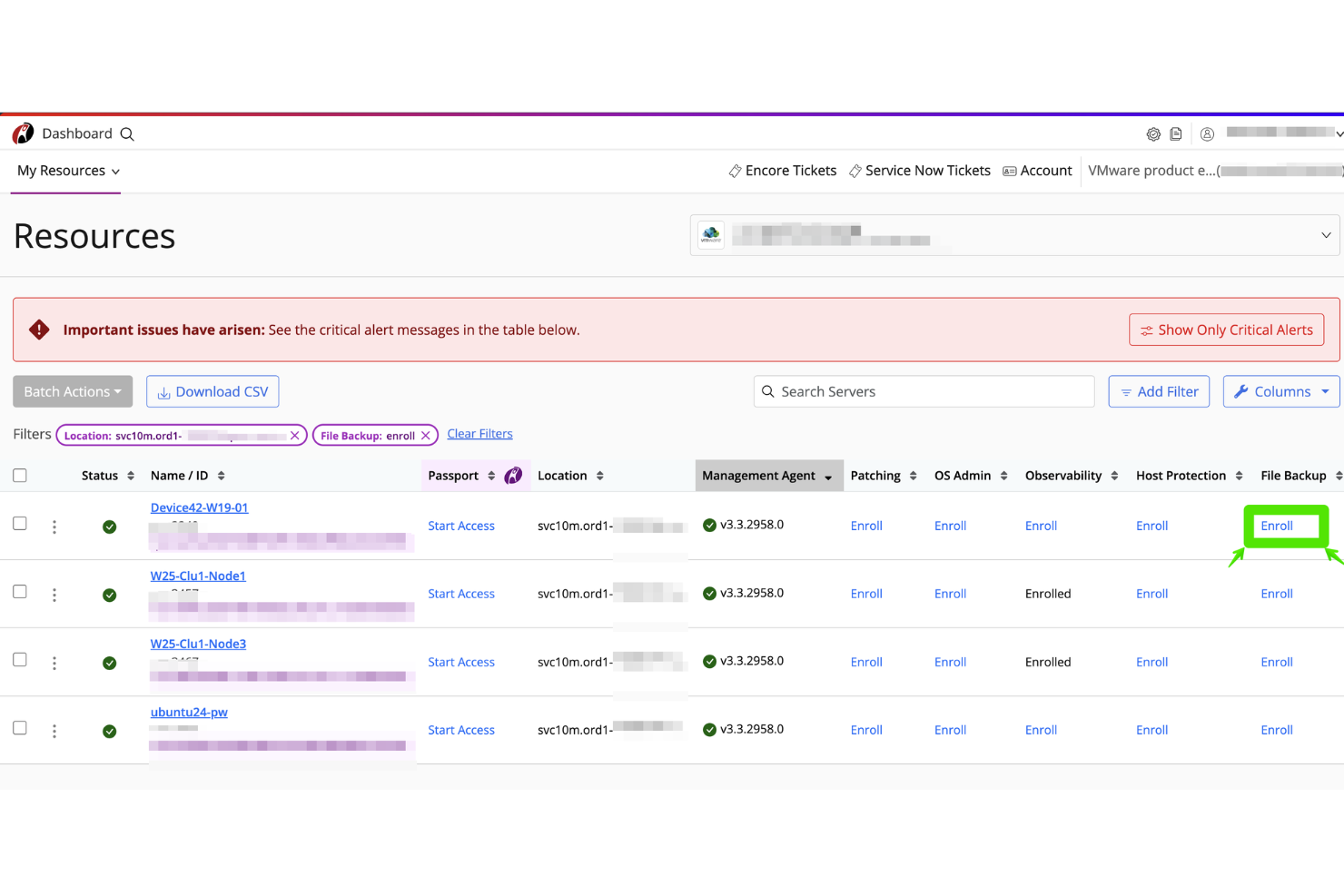
Rackspace propose une suite de solutions de cloud privé permettant aux organisations d'exécuter des environnements dédiés et mono-locataires avec un contrôle total sur l'infrastructure. Il prend en charge à la fois les clouds privés basés sur VMware et OpenStack, vous offrant des options selon votre architecture.
Pourquoi j'ai choisi Rackspace : J'ai choisi Rackspace car il apporte une réelle flexibilité hybride au cloud privé : grâce à son offre SDDC Anywhere, vous pouvez déployer un cloud privé managé dans votre propre centre de données ou espace de colocation tout en bénéficiant du support opérationnel de Rackspace. Leur solution de cloud privé VMware regroupe la pile logicielle sous licence et le matériel géré 24h/24 et 7j/7, ce qui vous évite d'avoir à licencier ou configurer l'infrastructure vous-même. Quant à leur cloud privé OpenStack, il fournit une base indépendante des fournisseurs pour vous éviter la dépendance tout en vous permettant de faire évoluer vos charges de travail avec plus de liberté.
Fonctionnalités et intégrations distinctives de Rackspace :
Parmi les fonctionnalités remarquables figurent l'intégration intelligente de l'IA et du cloud privé, comme l'analytique en temps réel et les pipelines ETL automatisés dans un environnement sécurisé (via Rackspace Private Cloud AI). Vous pouvez étendre vos charges de travail VMware sur site en toute transparence grâce au service SDDC Anywhere, vous permettant d'adapter ou déplacer vos applications selon les besoins.
Les intégrations incluent vSphere API, vCloud API, NSX API, vSAN API, vRealize API, Chef, Ansible, Puppet, Datadog, Cohesity, Rackspace Guest OS Services (GOSS), RackConnect v3.0 API et Managed Backup (MBU).
Pros and Cons
Pros:
- Stack entièrement géré incluant la licence VMware
- Possibilité de déployer un cloud privé sur site
- Prise en charge des charges de travail IA dans le cloud privé
Cons:
- Peut nécessiter des contrats ou engagements longue durée
- Moins de contrôle sur les opérations quotidiennes lorsque géré

Idéal pour une évolutivité importante et une couverture mondiale
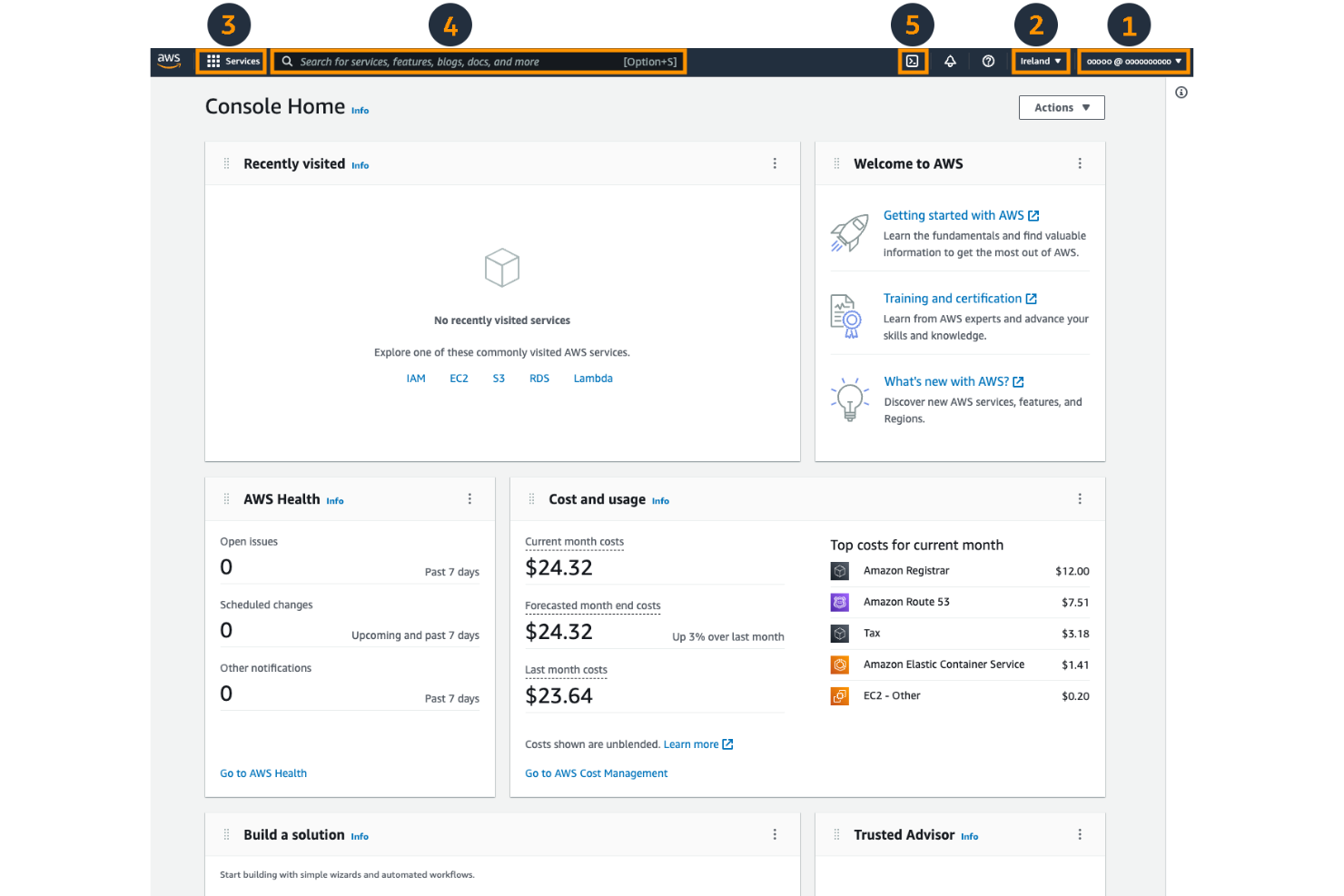
AWS est un fournisseur de cloud privé qui permet aux organisations de faire évoluer rapidement leurs ressources cloud privées pour répondre aux besoins changeants de l'entreprise.
Pourquoi j'ai choisi AWS : AWS s'est démarqué pour moi grâce à son évolutivité inégalée et à sa portée mondiale. Que j'aie besoin d'augmenter rapidement mes ressources ou de servir des clients situés dans différentes régions, AWS offre la flexibilité et l'infrastructure nécessaires pour soutenir mon activité. La capacité à ajuster l'échelle en fonction de la demande est cruciale dans le contexte dynamique actuel.
Fonctionnalités et intégrations remarquables d'AWS :
Parmi les fonctionnalités remarquables, on trouve sa grande capacité d'évolutivité, qui me donne les ressources nécessaires pour développer mon infrastructure cloud privée dans de nombreuses régions du monde. Ces fonctionnalités contribuent à la réputation d'AWS en tant que fournisseur de cloud privé de référence, reconnu par des entreprises de toutes tailles.
Les intégrations incluent un vaste écosystème de services variés, natifs ou préconfigurés. AWS propose des options d'intégration via l'AWS Marketplace, qui offre de nombreuses solutions tierces.
Pros and Cons
Pros:
- Infrastructure très sécurisée et robuste
- Portefeuille complet de services cloud
- Communauté et support solides
Cons:
- La tarification peut être complexe pour les débutants
- Courbe d'apprentissage abrupte pour certains services avancés

Idéal pour une gestion simplifiée et des solutions de bout en bout
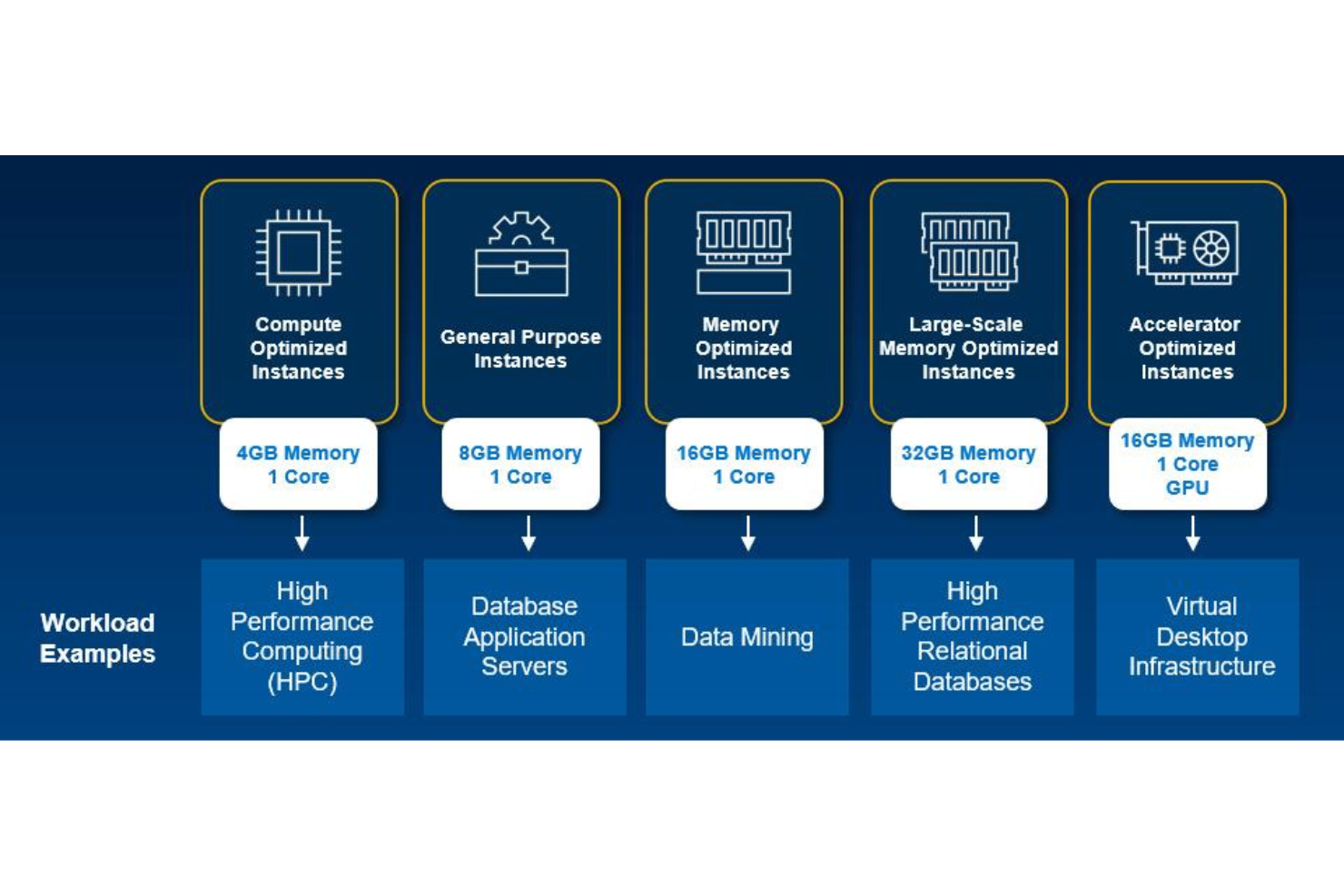
Dell Technologies Apex est un fournisseur de cloud réputé qui propose une gamme de solutions matérielles et logicielles spécialement conçues pour les déploiements de cloud privé.
Pourquoi j'ai choisi Dell : La raison pour laquelle j'ai sélectionné Dell Technologies comme l'un des meilleurs fournisseurs de cloud privé est son accent sur des outils de gestion simplifiés et des logiciels permettant d'optimiser le déploiement, la surveillance et la maintenance des clouds privés. Il offre également un moyen simple de gérer mon cloud, ce qui me permet de me concentrer sur les opérations de l'entreprise.
Fonctionnalités phares et intégrations de Dell :
Les fonctionnalités phares comprennent une interface intuitive et conviviale qui m'aide à mettre en place et exploiter des environnements de cloud privé. Elle ne fournit pas seulement une expérience de gestion optimisée, mais aussi des workflows automatisés et des fonctions de sécurité robustes comme le chiffrement des données, le contrôle d'accès et les mécanismes de détection des menaces. Ces fonctionnalités permettent aux entreprises de se concentrer sur leur cœur de métier tout en maximisant l'efficacité.
Les intégrations sont préconfigurées avec des logiciels tiers populaires comme AWS, Microsoft Azure, Google Cloud et Oracle, facilitant un flux de données efficace et l'interopérabilité.
Pros and Cons
Pros:
- Options d'infrastructure flexibles et évolutives
- Fonctionnalités de sécurité avancées et accompagnement à la conformité
- Support client solide et services professionnels
Cons:
- Options de montée en charge limitées par rapport aux fournisseurs natifs du cloud
- Moins axé sur l'IA et l'analyse avancée


Hewlett Packard Enterprise (HPE) GreenLake est un fournisseur de cloud privé de premier plan qui propose des solutions aux entreprises recherchant des environnements de cloud privé sécurisés et évolutifs.
Pourquoi j'ai choisi HPE : HPE s'est distingué par son expertise en hébergement multi-cloud et son support de niveau entreprise. Sa capacité à intégrer les clouds privés et publics me permet de bénéficier des atouts des deux mondes. Avec HPE, j'ai confiance dans le support fiable et les services adaptés aux exigences de mon entreprise.
Fonctionnalités et intégrations remarquables de HPE :
Parmi les fonctionnalités phares, on compte des capacités de cloud hybride, une infrastructure composable adaptable à mes besoins métier, ainsi que des services d'assistance complets. Ces fonctionnalités permettent aux entreprises de gérer efficacement leur infrastructure à travers les environnements de cloud public et privé.
Les intégrations incluent des capacités d'intégration via leur écosystème de partenaires. Il propose également des intégrations préconfigurées avec les principaux éditeurs de logiciels.
Pros and Cons
Pros:
- Capacités informatiques hautes performances
- Fonctionnalités de sécurité avancées et gestion de la conformité
- Offre solide de support et de services professionnels
Cons:
- Options d'évolutivité limitées par rapport aux fournisseurs cloud natifs
- Moins d'accent sur l'IA et l'analytique avancée

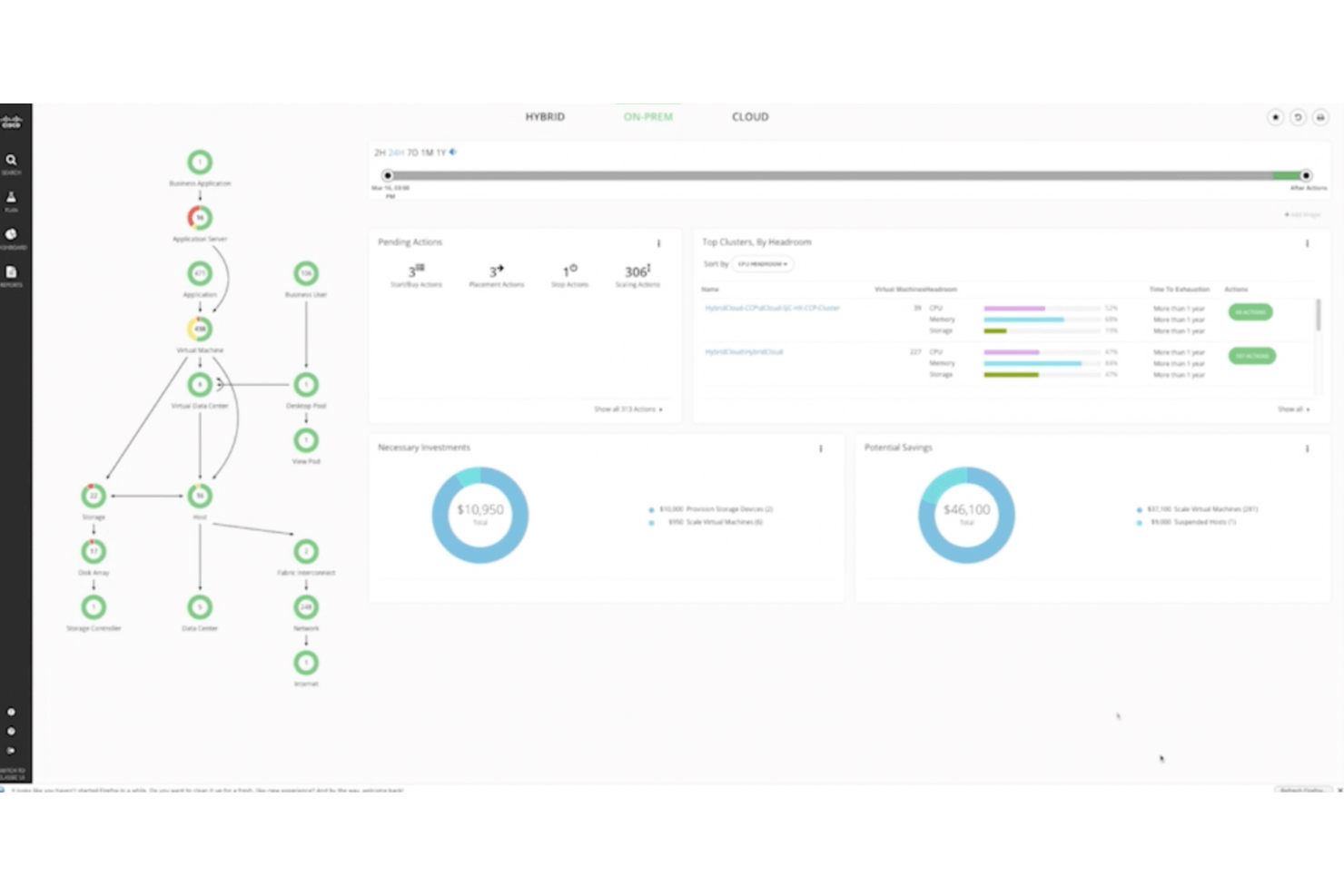
Cisco est un leader parmi les fournisseurs de cloud privé, offrant des solutions complètes et des fonctionnalités avancées. Il aide les entreprises à construire, gérer et optimiser leurs environnements cloud privés. Cela permet d'optimiser les opérations et de renforcer la sécurité des entreprises.
Pourquoi j'ai choisi Cisco : J'ai choisi Cisco car sa solution de cloud privé propose des capacités exceptionnelles d’analyse et de surveillance. J'apprécie également que Cisco me montre des données en temps réel sur mon environnement cloud, ce qui m'a aidé à améliorer l'utilisation des ressources et à trouver des moyens de réduire les coûts.
Fonctionnalités et intégrations phares de Cisco :
Les fonctionnalités phares comprennent Cisco Unified Computing System (UCS), qui combine les ressources de calcul, de réseau et de stockage au sein d'une plateforme unifiée. Elle offre des capacités de cloud hybride et une approche axée sur le réseau via Cisco Application Centric Infrastructure (ACI) et Cisco Software-Defined Networking (SDN), permettant un provisionnement réseau agile et automatisé, tout en améliorant la flexibilité et l'évolutivité.
Les intégrations incluent des applications d'entreprise et des systèmes populaires. Cela comprend les plateformes de gestion de la relation client (CRM), les outils de collaboration et les logiciels de gestion de réseau. Cisco propose également des intégrations prêtes à l'emploi avec les principaux fournisseurs de services cloud, tels qu'AWS et Azure.
Pros and Cons
Pros:
- Performances et fiabilité réseau remarquables
- Fonctionnalités de sécurité robustes
- Portefeuille complet de solutions réseau et d'infrastructure
Cons:
- Courbe d'apprentissage abrupte pour les configurations complexes
- Support limité pour le matériel non-Cisco dans certains cas

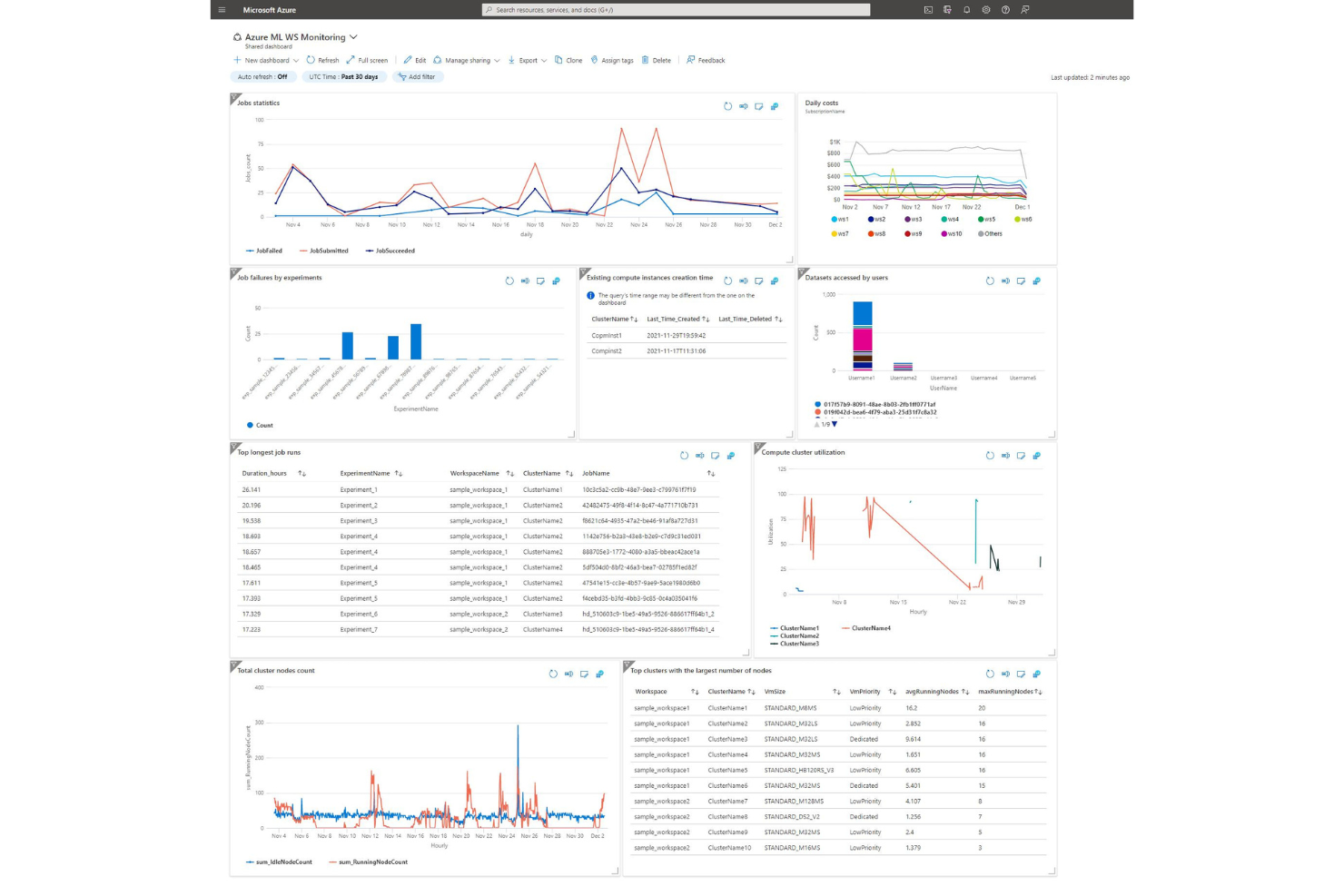
Microsoft Azure propose une suite complète de services cloud, incluant l'infrastructure, les bases de données, l'analytique, et bien plus encore. Azure permet aux entreprises d'utiliser la technologie Microsoft pour leur propre cloud privé sans avoir à gérer eux-mêmes la technologie.
Pourquoi j'ai choisi Microsoft Azure : Étant fortement investi dans l'écosystème Microsoft, je me suis naturellement tourné vers Microsoft Azure. L'intégration efficace avec les produits Microsoft existants rend la création et la gestion de mon cloud privé particulièrement pratiques. De plus, l'ensemble complet de services d'Azure me fournit tout ce dont j'ai besoin, d'une infrastructure robuste à des solutions analytiques avancées, tout cela sous un même toit.
Fonctionnalités et intégrations remarquables d'Azure :
Les fonctionnalités remarquables incluent le portail Azure, qui me permet de visualiser et de gérer toutes mes applications dans un hub unifié. Il calcule également automatiquement les frais actuels et prévisionnels, ce qui permet d'établir des prévisions et de planifier en conséquence.
Les intégrations incluent un ensemble complet d'intégrations natives avec divers services Microsoft, tels qu'Office 365, Dynamics 365 et Power Platform.
Pros and Cons
Pros:
- Large gamme de services et d'intégrations
- Forte orientation entreprise
- Capacités de cloud hybride
Cons:
- L'abondance d'options peut être déroutante
- Le support client peut être variable

Fonctionnalités de sécurité robustes et infrastructure de niveau entreprise
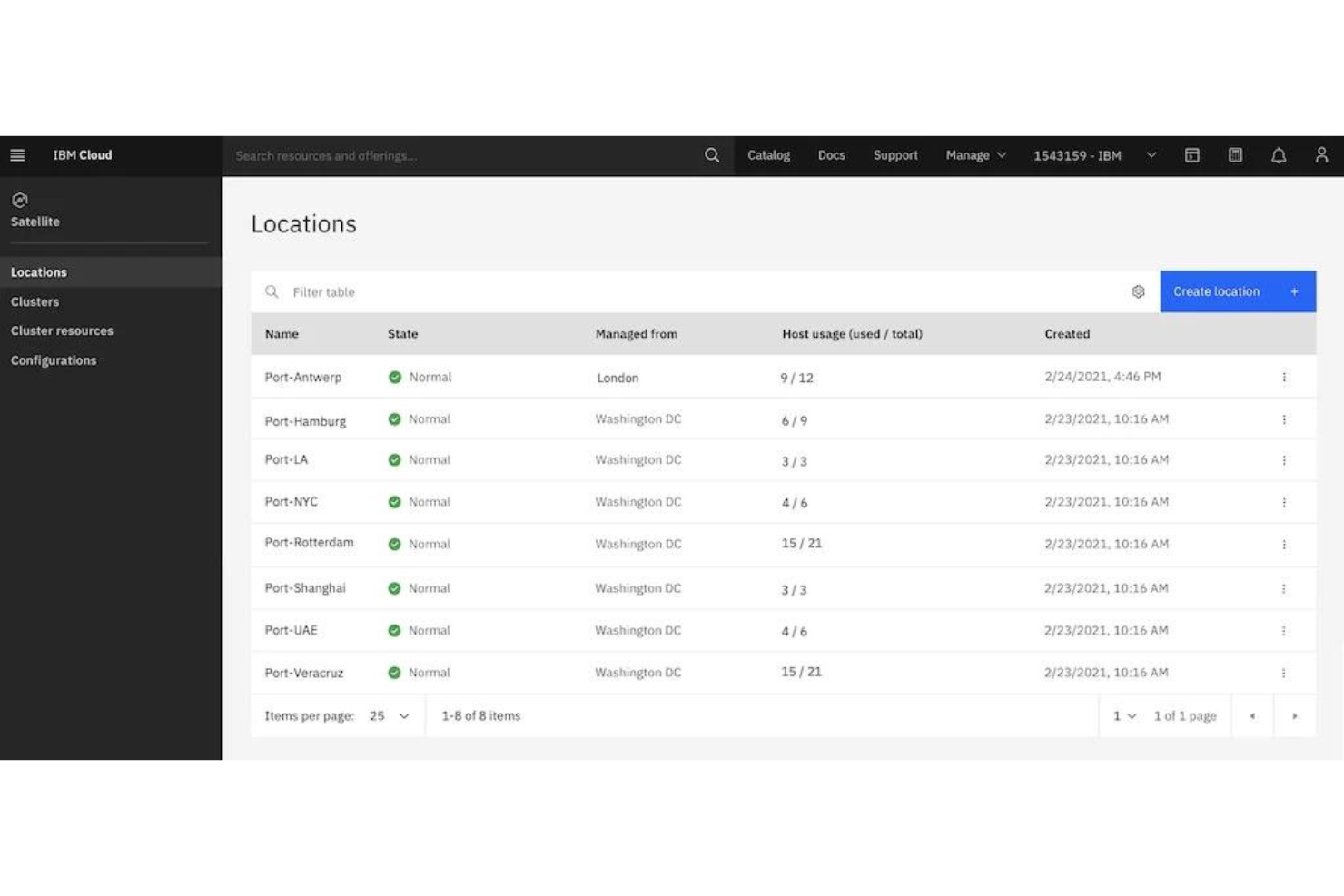
IBM Cloud Satellite est conçu pour offrir des performances élevées et une grande évolutivité, permettant aux entreprises de répondre efficacement à leurs besoins de cloud privé.
Pourquoi j'ai choisi IBM Cloud Satellite : J'ai opté pour IBM Cloud en raison de ses fonctionnalités de sécurité robustes et de son infrastructure de niveau entreprise. La sécurité est une priorité absolue pour moi, et les mesures d'encryption avancées d'IBM Cloud, la gestion des identités et la conformité réglementaire me procurent une tranquillité d'esprit. De plus, leur infrastructure de niveau entreprise garantit que les charges de travail critiques fonctionnent de manière fluide et fiable.
Fonctionnalités phares et intégrations d'IBM Cloud Satellite :
Parmi les fonctionnalités remarquables figurent ses options d'infrastructure flexibles, qui me permettent d'utiliser l'infrastructure de calcul d'autres fournisseurs tels qu'AWS, Azure ou Google Cloud comme emplacements Satellite IBM. Ses nombreux centres de données me permettent également de créer et de déployer des applications en toute sécurité, où que je sois dans le monde.
Les intégrations sont préconfigurées pour les services IBM Watson, IBM Cloud Functions (informatique serverless) et des outils tiers populaires.
Pros and Cons
Pros:
- Options de calcul hautes performances et infrastructure évolutive
- Capacités de gestion et d'automatisation avancées
- Intégration avec le large portefeuille de logiciels et de services d'IBM
Cons:
- Courbe d'apprentissage abrupte
- Support limité pour les technologies et plateformes non-IBM
Autres options
Voici une liste d’autres fournisseurs de cloud privé susceptibles d’être utiles à votre entreprise :
- Citrix
Meilleures solutions sécurisées de virtualisation d’applications et de bureaux
- BMC Software
Idéal pour des opérations informatiques rationalisées
- Trigma
Meilleures solutions cloud privées personnalisables


Vous pouvez également consulter ma liste des meilleurs fournisseurs de services cloud, des fournisseurs multicloud et des options de cloud hybride dans leur ensemble.
Critères de sélection des fournisseurs de cloud privé
Pour établir ma liste des meilleurs fournisseurs de cloud privé, j’ai utilisé un processus d’évaluation rigoureux fondé sur plusieurs critères, notamment :
Fonctionnalités essentielles
Les fonctionnalités essentielles de chaque fournisseur de cloud privé revêtaient pour moi une importance capitale. Voici certains des facteurs que j’ai pris en compte :
J’ai recherché des plateformes qui vous permettent de :
- Hébergez et gérez vos applications
- Personnalisez l’infrastructure pour répondre à vos besoins
- Intégrez des données et des services provenant d’autres sources
- Surveillez les indicateurs de performance depuis un emplacement unique
- Atteignez des niveaux élevés de performance et de fiabilité
Fonctionnalités clés
J’ai étudié les fonctionnalités clés proposées par chaque fournisseur de cloud privé afin d’identifier leurs arguments de vente uniques. Certaines de ces fonctionnalités comprennent :
- Évolutivité : les fournisseurs de cloud privé doivent proposer une infrastructure évolutive capable de répondre facilement aux variations des besoins en charge de travail.
- Logiciel de mesure : il aide les organisations à mieux comprendre leur consommation de ressources cloud et à optimiser l’allocation des ressources.
- Gestionnaire des ressources et des charges de travail : il permet aux entreprises d’allouer et de gérer efficacement leurs ressources cloud.
- Conformité : les fournisseurs de cloud privé doivent proposer des mesures de sécurité robustes, telles que des contrôles d’accès, le chiffrement des données et des fonctionnalités d’audit, afin de garantir la conformité réglementaire.
- Portail en libre-service : les meilleurs fournisseurs de cloud privé proposent des portails en libre-service qui permettent aux utilisateurs de gérer efficacement leur infrastructure et de provisionner les ressources selon leurs besoins.
Facilité d’utilisation
J’ai examiné attentivement la facilité de déploiement, de gestion et d’utilisation des solutions de cloud privé proposées par chaque fournisseur. J’ai évalué les interfaces intuitives, la documentation complète et les outils de gestion faciles à utiliser. Les fournisseurs qui facilitaient l’adoption et la gestion de leurs solutions de cloud privé par les entreprises ont bénéficié d’une considération supplémentaire.
Rentabilité
J’ai examiné les modèles tarifaires, notamment les formules d’abonnement, les options de paiement à l’utilisation et les coûts supplémentaires associés aux ressources et aux services. J’ai également pris en compte des facteurs tels que la transparence tarifaire du fournisseur, les fonctionnalités d’optimisation des coûts et la capacité à faire évoluer efficacement les ressources. J’ai privilégié les fournisseurs qui proposaient des structures tarifaires compétitives sans compromettre la qualité de leurs offres.
Questions fréquemment posées
Dans cette section, je réponds à certaines questions courantes sur les fournisseurs de cloud privé :
Quelle est la différence entre un fournisseur de cloud privé et un fournisseur de cloud public ?
Puis-je migrer mes applications et mes données existantes vers un cloud privé ?
Les solutions de cloud privé conviennent-elles aux petites entreprises ?
Choisir le bon fournisseur de cloud privé
Un cloud privé offre à votre entreprise un meilleur contrôle et une plus grande flexibilité sur vos services, votre infrastructure et vos ressources cloud. Il vous permet de façonner votre environnement cloud exactement comme vous le souhaitez, afin de réagir à l’évolution des charges de travail et de rester attentif aux enjeux de sécurité et de confidentialité. Il existe d’innombrables ressources sur le cloud pour en apprendre davantage.
Grâce à ma liste des meilleurs fournisseurs de cloud privé, vous disposez des éléments nécessaires pour prendre une décision éclairée quant à celui qui convient le mieux à votre entreprise. Abonnez-vous à la newsletter de The CTO Club pour rester informé des dernières informations et vous aider à créer des équipes et des systèmes SaaS évolutifs.

