


QA.tech vs. QA Wolf: Vergleich und Expertenbewertungen für 2026
Ich vergleiche QA.tech und QA Wolf hinsichtlich Automatisierung, Testabläufen und Team-Kompatibilität, um Ihnen zu helfen, die für Ihre Bedürfnisse in 2026 passende End-to-End-Testlösung zu finden.

Wir bewerten Tools unabhängig; Provisionen helfen, unsere Tests zu finanzieren. Siehe unsere Transparenzrichtlinie und unsere Methodik.
Keeping your test coverage reliable gets harder as applications grow and testing demands increase. The right testing platform should reduce manual maintenance while helping teams catch issues before they reach production.
If you're comparing end-to-end testing tools, QA.tech and QA Wolf both use AI to improve software testing, but they take different approaches. QA.tech uses autonomous AI agents that create and run tests based on application context, while QA Wolf combines AI-powered testing with a managed QA service that creates, runs, and maintains tests on your behalf.
In this comparison, I'll break down QA.tech and QA Wolf across features, pricing, security, usability, and use cases to help you decide which platform best fits your team's testing needs.
QA.tech
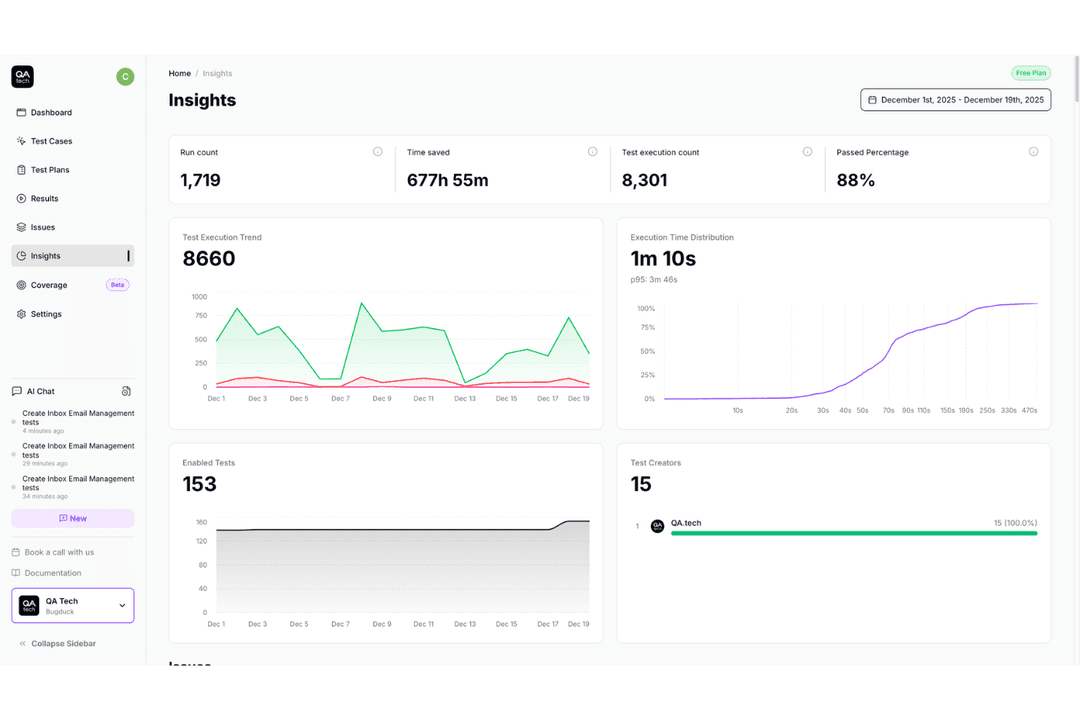
4.8/5
- Free demo available
- Pricing upon request
QA Wolf
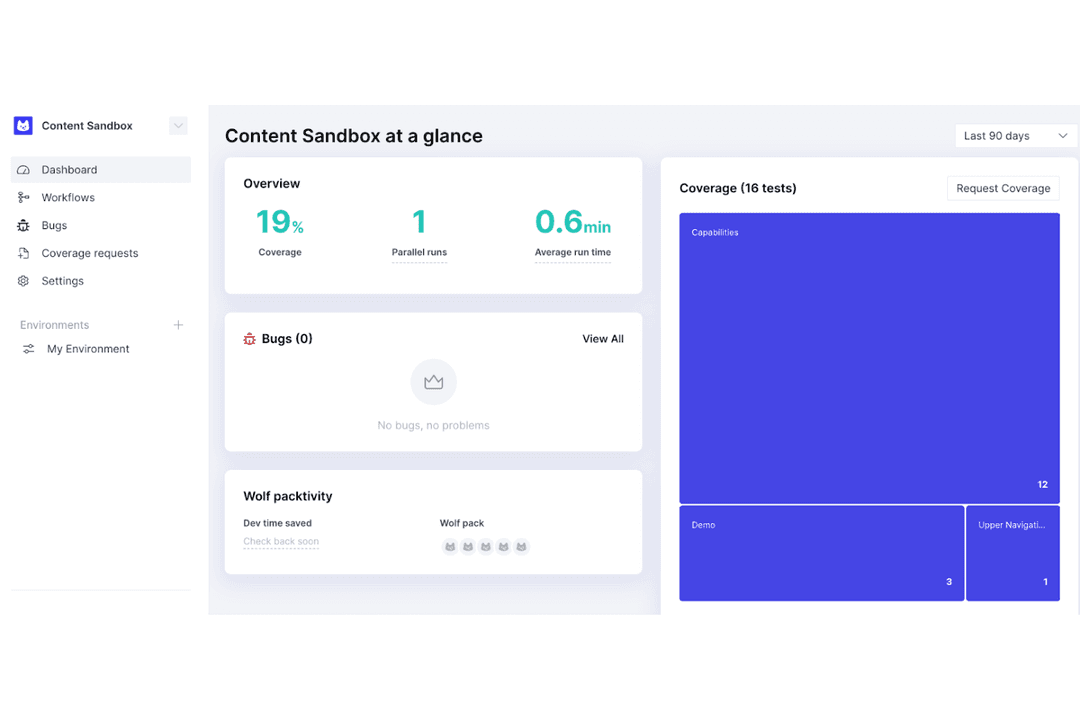
4.9/5
- Free demo available
- From 1¢/AI credit
Warum Sie unseren Software-Empfehlungen vertrauen können
6,700+
Reviews
20
Industry experts
16+
Evaluation factors
14
Years
Unser Team testet und bewertet Software seit 2012. Als Tech-Führungskräfte wissen wir selbst, wie schwierig – und wichtig – es ist, die richtige Software auszuwählen.
Für diesen Leitfaden haben wir Tools mithilfe von praktischen Tests und unabhängiger Recherche bewertet und dabei unsere Bewertungskriterien angewendet.
Unsere Bewertungen spiegeln unser menschliches redaktionelles Urteilsvermögen wider, keine Verkaufsstrategie.
Expertenprüfer:
- Paulo Gardini MiguelTech-Direktor
 Tim FisherVP für KI
 Gabriel RosasTech Lead & Software-Architekt
 Christhian GruhnTech Lead & Plattform-Architekt

| QA.tech | QA Wolf | |
|---|---|---|
| Free Trial | Free demo available | Free demo available |
| Pricing | Pricing upon request | From 1¢/AI credit |
QA.tech vs. QA Wolf: Preise & versteckte Kosten
QA.tech und QA Wolf setzen beide auf angebotsbasierte Preisgestaltung, strukturieren den Wert jedoch unterschiedlich. QA.tech bietet Starter-, Growth- und Enterprise-Tarife an, die je nach Benutzeranzahl, parallelen Testausführungen, Umgebungen, Integrationen, Sicherheitsanforderungen und Supportlevel skalieren. QA Wolf hingegen verwendet ein abdeckungsbasiertes Preismodell, das an den Managed-QA-Service gekoppelt ist. Hier umfasst die Preisgestaltung Plattform, Testinfrastruktur und QA-Support und nicht nur den Softwarezugang allein.
Beim Kostenvergleich sollten Sie berücksichtigen, wie viel Testverantwortung Ihr Team selbst übernehmen soll. QA.tech ist eine gute Wahl für Teams, die KI-gestütztes Testen in ihre Entwickler-Workflows integrieren möchten, während sich der Preis bei QA Wolf eher auf ein vollständig gemanagtes Service-Modell bezieht. Überlegen Sie vor Ihrer Entscheidung, wie häufig Sie Releases durchführen, wie groß Ihr Abdeckungsbedarf ist, welche QA-Ressourcen intern verfügbar sind und welchen Support Sie benötigen.
| QA.tech | QA Wolf | |
|---|---|---|
| A/B Testing | No | No |
| API | Yes | Yes |
| Automated Testing | Yes | No |
| Browser Compatibility Testing | Yes | No |
| Bug Tracking | Yes | Yes |
| Calendar Management | No | Yes |
| CI/CD Integration | Yes | No |
| Dashboard | Yes | Yes |
| Data Export | Yes | Yes |
| Data Import | Yes | Yes |
| Data Visualization | Yes | Yes |
| Developer Tools | Yes | No |
| External Integrations | Yes | Yes |
| History/Version Control | Yes | No |
| Manual Testing | No | No |
| Multi-User | Yes | Yes |
| Notifications | Yes | Yes |
| Performance Testing | No | No |
| Regression Testing | Yes | No |
| Scheduling | Yes | Yes |
| Status Notifications | Yes | No |
| Third-Party Plugins/Add-Ons | Yes | Yes |
| Integration | QA.tech | QA Wolf |
|---|---|---|
| IntegrationGitHub | QA.tech✅ | QA Wolf✅ |
| IntegrationGitLab | QA.tech✅ | QA Wolf✅ |
| IntegrationSlack | QA.tech✅ | QA Wolf✅ |
| IntegrationJira | QA.tech✅ | QA Wolf✅ |
| IntegrationCircleCI | QA.tech✅ | QA Wolf❌ |
| IntegrationAzure DevOps | QA.tech✅ | QA Wolf✅ |
| IntegrationMicrosoft Teams | QA.tech✅ | QA Wolf✅ |
| IntegrationLinear | QA.tech✅ | QA Wolf✅ |
| IntegrationTestRail | QA.tech❌ | QA Wolf✅ |
| IntegrationAPI | QA.tech✅ | QA Wolf✅ |
Sowohl QA.tech als auch QA Wolf integrieren sich mit gängigen Entwicklungs-, Kollaborations- und CI/CD-Tools, damit Teams das Testen in ihre bestehenden Workflows einbinden können. QA.tech bietet eine umfangreichere direkte Integrationsabdeckung für Entwicklungspipelines und Aufgabenverwaltung, während sich QA Wolf darauf fokussiert, seinen Managed-Testing-Workflow mit den Tools zu verbinden, die Teams bereits für die Verwaltung von Releases, Bugs und Entwicklungsfortschritt einsetzen.
| Faktor | QA.tech | QA Wolf |
|---|---|---|
| FaktorDatenverschlüsselung | QA.techAES-256-Verschlüsselung im Ruhezustand und TLS 1.2/1.3-Verschlüsselung während der Übertragung. | QA WolfVerschlüsselt Daten im Ruhezustand und während der Übertragung mit modernen Sicherheitsprotokollen. |
| FaktorRegulatorische Compliance | QA.techSOC 2 Typ II bescheinigt, DSGVO-konform, Datenaufbewahrung ausschließlich in der EU, ISO 27001 in Planung. | QA WolfSOC 2 Typ II und HIPAA-konform, Auditberichte verfügbar. |
| FaktorBetriebszeit-Garantie | QA.techSLA-basierter Support, verwaltete parallele Testausführung und Enterprise-Reliability Engineering. | QA WolfHochverfügbarkeitsarchitektur mit automatischem Failover und Echtzeitüberwachung. |
| FaktorZugangskontrollen | QA.techErzwungene MFA, SAML SSO, rollenbasierte Zugangskontrollen und verwalteter Teamzugriff. | QA WolfRollenbasierter Zugriff, Least-Privilege-Kontrollen, Benutzerüberprüfungen und SSO über WorkOS. |
| FaktorSicherheitsmanagement | QA.techVollständiges ISMS, Sicherheitsbewertungen und Tests ohne Zugriff auf den Quellcode notwendig. | QA WolfDatenklassifizierung, Aufbewahrungsrichtlinien und Prozesse zur Reaktion auf Sicherheitsverletzungen. |
Beide Plattformen bieten eine starke Sicherheitsgrundlage, darunter Verschlüsselung, Zugangskontrollen, SSO und Compliance-Programme. QA.tech zeichnet sich durch die SOC 2 Typ II Bescheinigung, DSGVO-Konformität, Datenaufbewahrung ausschließlich in der EU und testgetriebene Entwicklung ohne Quellcodezugriff aus. QA Wolf kombiniert SOC 2 Typ II und HIPAA-Konformität mit Datenschutzkontrollen und Zuverlässigkeitspraktiken, die den Managed-QA-Service unterstützen.
Die meisten Softwareteams erhalten mit beiden Plattformen eine starke Sicherheitsabdeckung. QA.tech eignet sich besonders für Teams, die Wert auf autonome Tests ohne erforderlichen Quellcodezugriff legen, während QA Wolf sich für Teams eignet, die ein gemanagtes QA-Angebot mit hohen Compliance-Anforderungen wünschen.
| Faktor | QA.tech | QA Wolf |
|---|---|---|
| FaktorBenutzeroberfläche | QA.techKonversationeller Arbeitsbereich für die Erstellung, Bearbeitung und Verwaltung von Tests mit KI-Agenten. | QA WolfPlattformoberfläche mit fortlaufender Zusammenarbeit über QA-Ingenieure und gemeinsame Kanäle. |
| FaktorEinarbeitung | QA.techGeführte Einarbeitung mit Solution Engineers, Workshops und Setup-Support. | QA WolfGeführte Einarbeitung mit QA-Ingenieuren, die beim Aufbau der Testabdeckung und Workflow-Einrichtung unterstützen. |
| FaktorTestwartung | QA.techKI-Agenten verwalten Tests basierend auf Zielen und Anwendungskontext anstatt fester Skripte. | QA WolfTests werden vom QA Wolf-Team mit KI und menschlicher Überwachung erstellt und gepflegt. |
| FaktorSupport | QA.techE-Mail-, Slack/Teams-Kanäle, Solution Engineers und Enterprise-Supportoptionen. | QA WolfIntegriertes QA-Team, das kontinuierlichen Support und Testwartung bietet. |
| FaktorLernkurve | QA.techErfordert Anpassung daran, KI-Agenten zu steuern, anstatt Tests manuell zu erstellen. | QA WolfKollaboratives Modell mit gemeinsamen Kanälen und fortlaufender Betreuung durch das QA-Team. |
QA.tech und QA Wolf sind beide darauf ausgelegt, End-to-End-Tests zu vereinfachen, setzen dabei aber unterschiedliche Schwerpunkte. QA.tech reduziert den manuellen Testaufwand durch autonome KI-Agenten, die Tests basierend auf dem Anwendungskontext erstellen und pflegen, während QA Wolf den internen QA-Aufwand reduziert, indem es die Plattform mit einem dedizierten QA-Team kombiniert.
Wer einen agentenbasierten Ansatz bevorzugt und das Testen innerhalb des Entwicklerteams halten möchte, dürfte sich mit QA.tech wohler fühlen. Wer einen vollständig gemanagten, kollaborativen Testprozess wünscht, erhält bei QA Wolf zusätzliche Unterstützung von QA-Ingenieuren.
QA.tech
- AI agents automate end-to-end test creation and execution
- Strong CI/CD integrations with automated pull request testing
- Parallel test execution speeds up regression testing workflows
- Limited cross-browser testing beyond Chromium
- Tests cannot be exported as code-based scripts
- Teams may need time to adapt to autonomous testing workflows
QA Wolf
- AI generates and maintains tests, reducing manual testing and QA workload significantly.
- 100% parallel test execution delivers fast results within minutes.
- Platform-enabled service eliminates the need for in-house automation expertise.
- Less control over test logic compared to fully in-house frameworks.
- Requires trust in the external team to manage critical QA processes.
- Onboarding may require coordination and an initial knowledge transfer effort.
QA.tech
- B2B SaaS CompaniesSaaS companies can use QA.tech to maintain test coverage across frequent product releases and changing application workflows.
- Software Development CompaniesDevelopment teams can automate end-to-end testing and integrate quality checks directly into CI/CD and pull request workflows.
- Fintech CompaniesFintech companies can validate critical user flows involving accounts, transactions, and complex authentication requirements.
- Healthtech PlatformsHealthtech platforms can automate regression testing as their applications, features, and user workflows continue to evolve.
- HR Tech and Recruiting PlatformsHR and recruiting platforms can test multi-step processes like onboarding, profiles, and user management across different roles.
- Ecommerce BusinessesEcommerce businesses can validate important customer journeys like account flows and checkout experiences during frequent updates.
QA Wolf
- High-Growth SaaS TeamsRapid release cycles benefit from fast, parallel test execution and continuous maintenance across evolving product features.
- Product-Led Companies Shipping FrequentlyRun full regression suites on every deploy without slowing down engineering velocity or delaying feature rollouts.
- Teams Struggling with Flaky or Broken TestsQA Wolf handles ongoing test maintenance, eliminating common reliability issues and reducing debugging time for engineers.
- Companies Without Dedicated QA Automation EngineersOffload test creation, debugging, and maintenance to a fully managed QA team without hiring specialized resources.
- Multi-Platform Products (Web + Mobile)Supports complex workflows across web, iOS, and Android with shared coverage and consistent testing across environments.
- Engineering TeamsReduce QA time from hours to minutes with fully parallel test infrastructure and faster feedback loops for developers.
Wer sollte QA.tech und wer QA Wolf nutzen?
Wenn Sie End-to-End-Tests skalieren möchten und Ihre Testabläufe im eigenen Entwicklerteam belassen wollen, ist QA.tech eine gute Wahl. Es eignet sich besonders, wenn Sie bereits CI/CD-Pipelines nutzen und autonome KI-Agenten wünschen, die den Anwendungskontext verstehen, Tests auf Basis von Nutzerzielen generieren und Änderungen validieren – ohne auf klassische Testscripte angewiesen zu sein. Wer die Testabdeckung erhöhen und gleichzeitig manuellen Aufwand reduzieren möchte, ist mit QA.tech gut beraten.
QA Wolf eignet sich, wenn Sie einen gemanagten Ansatz für QA-Automatisierung wünschen, ohne den gesamten Testprozess intern aufbauen zu müssen. Die Plattform kombiniert KI-basierte Tests mit einem dedizierten QA-Team, das für Sie Tests erstellt, ausführt, überprüft und pflegt. Wer ein dienstorientiertes Modell mit menschlicher Kontrolle bevorzugt und dennoch Transparenz hinsichtlich Ergebnissen und Abdeckung möchte, findet mit QA Wolf den passenden Workflow.
| QA.tech | QA Wolf | |
|---|---|---|
| Execution Model | QA.tech Runs agent-driven testing workflows with parallel execution and PR validation. | QA Wolf Provides fully managed cloud execution with parallel test runs and QA review. |
| Team Involvement | QA.tech Requires teams to define testing goals and guide AI agents as part of their workflow. | QA Wolf Reduces internal QA involvement by providing engineers who manage testing operations. |
| Test Authoring | QA.tech Uses autonomous AI agents that create and run tests based on user goals and application context. | QA Wolf Combines AI testing workflows with a managed QA team that creates and maintains tests. |
| Test Framework | QA.tech Tests are created and maintained through QA.tech’s agent-based testing system using application context. | QA Wolf Uses open-source Playwright and Appium tests that can be exported. |
| Test Ownership | QA.tech Teams guide AI agents and manage testing within their engineering workflows. | QA Wolf QA Wolf engineers handle test creation, verification, and ongoing maintenance. |
| Cloud-Based Platform | Both provide cloud-based test execution to help teams run and manage end-to-end testing workflows. |
|---|---|
| Development Integrations | Both connect with common development, CI/CD, and collaboration tools to support existing engineering workflows. |
| Parallel Test Runs | Both support parallel test execution to help teams shorten feedback cycles and speed up regression testing. |
| Security Controls | Both provide security features such as encryption, access management options, and SOC 2 compliance for managing testing data. |
| Test Reporting | Both provide test results, failure details, and reporting tools to help teams investigate issues and track testing outcomes. |