
Revue de CyberArk DevSecOps : Principales fonctionnalités, avantages, inconvénients et tarifs expliqués

Nous évaluons les outils indépendamment ; les commissions aident à financer nos tests. Consultez notre politique de transparence et notre méthodologie.
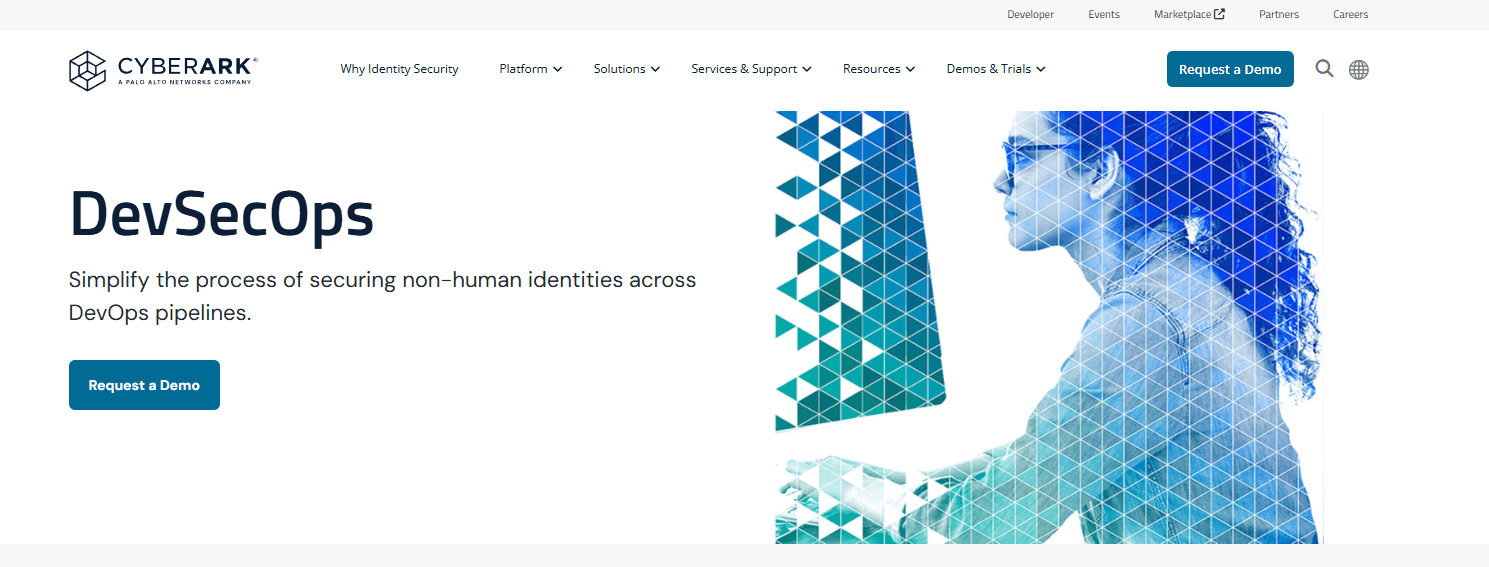
CyberArk DevSecOps is a DevOps security tool built around secrets management and privileged access control for CI/CD pipelines and developer environments. It's worth considering if your team needs to secure API keys, credentials, and certificates across automated workflows without slowing delivery cycles. I'd look at it over HashiCorp Vault if your organization already runs CyberArk's identity security platform—the native PAM integration gives you centralized secrets governance without managing a separate identity layer on top.
CyberArk DEVSECOPS Evaluation Summary
0/5
- Pricing upon request
- Free demo available
Pourquoi faire confiance à nos recommandations de logiciels
6,700+
Reviews
20
Industry experts
16+
Evaluation factors
14
Years
Notre équipe teste et évalue des logiciels depuis 2012. En tant que leaders technologiques nous-mêmes, nous savons à quel point il est difficile — et important — de choisir le bon logiciel.
Pour ce guide, nous avons évalué les outils grâce à des tests pratiques et une recherche indépendante, en notant les outils selon nos critères de sélection.
Nos avis reflètent notre jugement éditorial humain, et non un argumentaire de vente.
Réviseurs experts:
- Paulo Gardini MiguelDirecteur technique
 Tim FisherVP de l'IA
 Gabriel RosasTech Lead et architecte logiciel
 Christhian GruhnTech Lead et architecte plateforme

CyberArk DEVSECOPS Overview
CyberArk DevSecOps offers advanced secrets management and automation that set it apart for teams handling sensitive workloads at scale. Its user interface and integrations are more mature than most, and support is responsive, but onboarding can be complex for smaller teams. Pricing reflects its enterprise focus, so it's best suited for organizations prioritizing security and compliance over simplicity.
Pros
- Centralized secrets management across multi-cloud and hybrid environments
- Automated credential rotation reduces manual intervention and risk
- Granular policy controls support strict compliance requirements
Cons
- Onboarding and configuration can be complex for new teams
- Pricing may be high for smaller organizations or projects
- Limited native support for some niche DevOps toolchains
Is CyberArk DEVSECOPS Right For Your Needs?
Who Would be a Good Fit for CyberArk DEVSECOPS?
CyberArk DevSecOps is best suited for organizations with strict compliance needs, complex infrastructure, or high-value sensitive data at risk. Teams in regulated industries, large enterprises, and those with dedicated security operations will benefit from its advanced secrets management, automated credential rotation, and granular policy controls.
If your business must audit access, enforce least privilege, or manage secrets across hybrid and multi-cloud environments — including service accounts, machine identities, and SaaS apps — CyberArk DevSecOps offers the depth and control you need. Its IAM and PAM capabilities make it especially compelling for teams looking to strengthen their overall security posture.
- Financial ServicesMeets strict regulatory requirements with detailed audit trails and policy controls.
- Healthcare ITProtects sensitive patient data with automated secrets management and access controls.
- Large EnterprisesHandles complex, multi-cloud environments with centralized secrets management.
- Security OperationsEnables granular access policies and automated credential rotation for security teams.
- Government AgenciesSupports compliance mandates and secure access for distributed teams.
- DevOps Platform TeamsIntegrates with CI/CD pipelines to automate secrets handling at scale.
Who Would be a Bad Fit for CyberArk DEVSECOPS?
CyberArk DevSecOps is less suitable for small businesses, teams with limited security resources, or organizations with simple infrastructure. If your environment doesn't require advanced policy enforcement or you're looking for a lightweight solution, the complexity and cost may outweigh the benefits. Teams with niche toolchains or minimal compliance needs may find better value elsewhere.
- Small StartupsSetup complexity and pricing are excessive for basic security needs.
- Freelance DevOpsOverkill for individuals or very small teams managing simple projects.
- Non-Regulated IndustriesLacks cost justification for teams without compliance requirements.
- Minimal IT DepartmentsRequires dedicated resources for onboarding and ongoing management.
- Education SectorMay not align with budget constraints or simple infrastructure needs.
- Legacy-Only EnvironmentsLimited value if not integrating with modern DevOps pipelines or cloud.
Notre méthodologie d'évaluation
Comment nous testons et notons les outils
Nous avons passé des années à développer, affiner et améliorer notre système de test et de notation des logiciels. Cette grille d’évaluation est conçue pour saisir les subtilités de la sélection des logiciels et ce qui rend un outil efficace, en se concentrant sur les aspects critiques du processus de décision.
Vous trouverez ci-dessous le détail de notre processus de test et de notation sur sept critères. Cela nous permet de fournir une évaluation impartiale du logiciel basée sur les fonctionnalités principales, les caractéristiques distinctives, la facilité d’utilisation, l’intégration, l’accompagnement lors de la prise en main, le support client, les avis utilisateurs et le rapport qualité-prix.
Fonctionnalité principale (25% de la note finale)
Le point de départ de notre évaluation est toujours la fonctionnalité principale de l’outil. Possède-t-il les fonctions de base auxquelles un utilisateur s’attend ? Certaines de ces fonctionnalités principales sont-elles limitées à des forfaits plus chers ? Nous attendons d’un outil qu’il soit au moins à la hauteur des capacités de base de ses concurrents.
Fonctionnalités remarquables (25% de la note finale)
Ensuite, nous évaluons les fonctionnalités exceptionnelles qui dépassent la fonctionnalité de base habituellement trouvée dans ce type d’outil. Un score élevé reflète des fonctionnalités spécialisées ou uniques rendant le produit plus rapide, plus efficace ou apportant une valeur ajoutée à l’utilisateur.
Nous évaluons aussi la facilité d’intégration avec d’autres outils courants dans la pile technologique pour élargir les fonctionnalités et l’utilité du logiciel. Les outils dotés de nombreuses intégrations natives, de connexions tierces et d’un accès API facilitant des intégrations personnalisées obtiennent les meilleurs scores.
Facilité d’utilisation (10% de la note finale)
Nous considérons la rapidité et la simplicité d’exécution des tâches principales avec l’outil. Les logiciels les mieux notés sont bien conçus, intuitifs, proposent des applications mobiles, offrent des modèles et rendent des tâches relativement complexes très simples.
Accompagnement lors de la prise en main (10% de la note finale)
Nous savons que l’adoption rapide d’une nouvelle plateforme au sein d’une équipe est cruciale. Nous évaluons donc la facilité avec laquelle un nouvel utilisateur peut apprendre et utiliser un outil avec un minimum de formation. Les meilleures solutions permettent une mise en route rapide, sans nécessité de support.
Support client (10% de la note finale)
Nous analysons la facilité et la rapidité avec lesquelles il est possible d’obtenir de l’aide par téléphone, chat en direct ou base de connaissances. Les outils et entreprises offrant une assistance en temps réel obtiennent les meilleurs scores, tandis que les chatbots sont moins bien notés.
Avis utilisateurs (10% de la note finale)
Au-delà de nos propres tests et évaluations, nous tenons compte du net promoter score des utilisateurs actuels et passés. Nous regardons la probabilité qu’ils choisiraient à nouveau l’outil pour ses fonctionnalités principales. Un logiciel bien noté reflète un net promoter score élevé.
Rapport qualité-prix (10% de la note finale)
Enfin, en tenant compte de tous les autres critères, nous examinons le prix moyen des forfaits d’entrée de gamme par rapport aux fonctionnalités principales et à la valeur des autres critères. Un logiciel offrant plus, pour moins cher, obtiendra un meilleur score.
Core Features
Centralized Secrets Management
Store and manage credentials, API keys, and secrets in a single secure vault. This reduces the risk of hardcoded secrets, vulnerabilities, and unauthorized access.
Automated Credential Rotation
Automatically rotate passwords and keys on a schedule or after use. Which limits exposure if credentials are compromised.
Granular Policy Controls
Define and enforce access policies at the user, application, or environment level, supporting compliance requirements.
Audit and Reporting
Track all access and changes to secrets with detailed logs. This feature helps meet regulatory requirements and supports incident investigations.
Dynamic Secrets Injection
Inject secrets into apps and pipelines at runtime without storing them in code or config files, which minimizes accidental exposure risk.
Role-Based Access Control
Assign permissions based on roles to control who can access or manage secrets. This streamlines user management and reduces privilege escalation risk.
.jpg&w=3840&q=75)
Ease of Use
CyberArk DevSecOps offers a polished user interface and clear documentation, but its setup and configuration can be demanding, especially for teams new to enterprise security tools. Users often mention the initial learning curve and the need for dedicated onboarding resources.
However, once deployed, its centralized management and automation features make ongoing operations straightforward. The platform's depth and policy granularity are genuine strengths, but they add complexity compared to more lightweight security solutions. Teams coming from open source secrets management tools may find the transition particularly steep.
Integrations
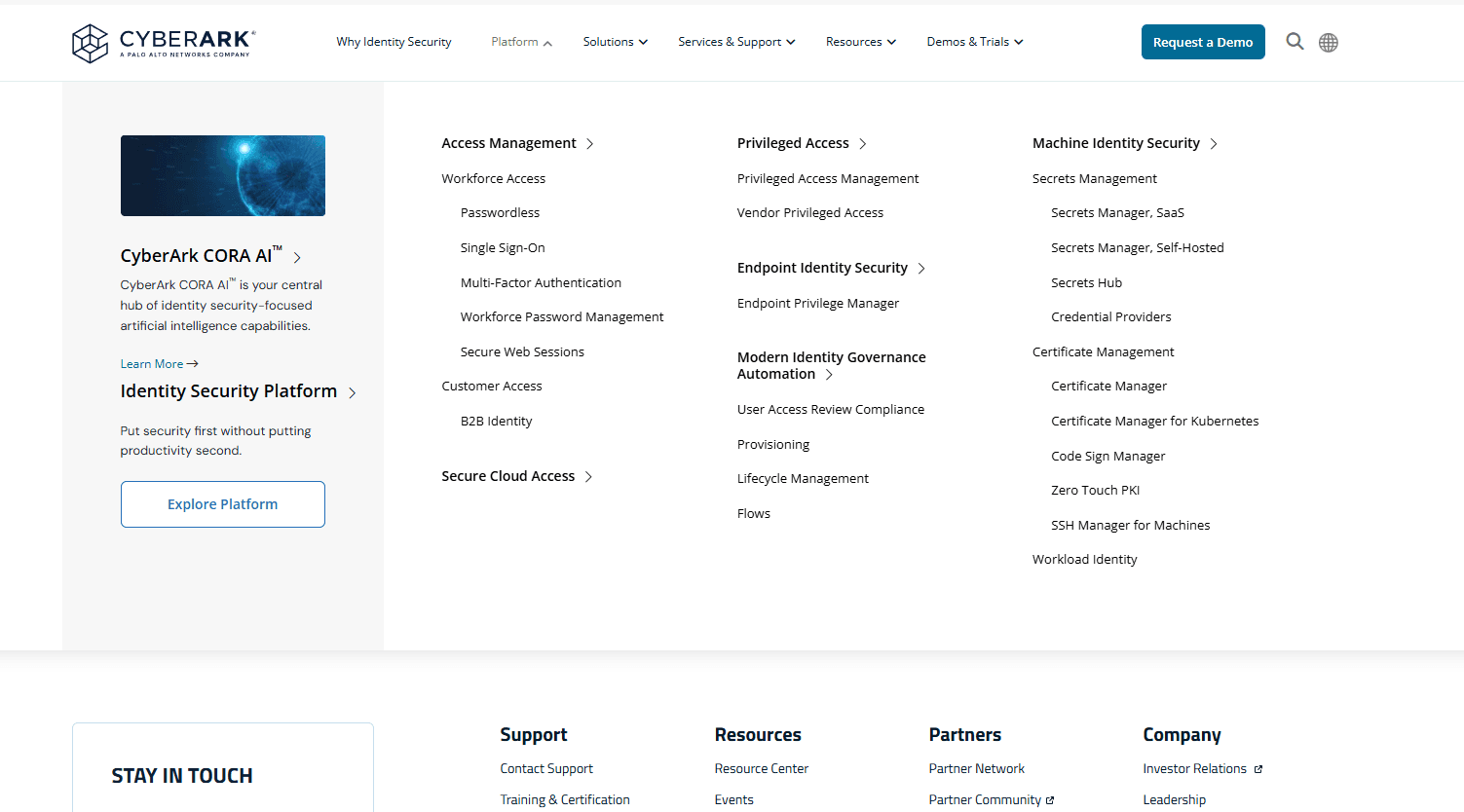
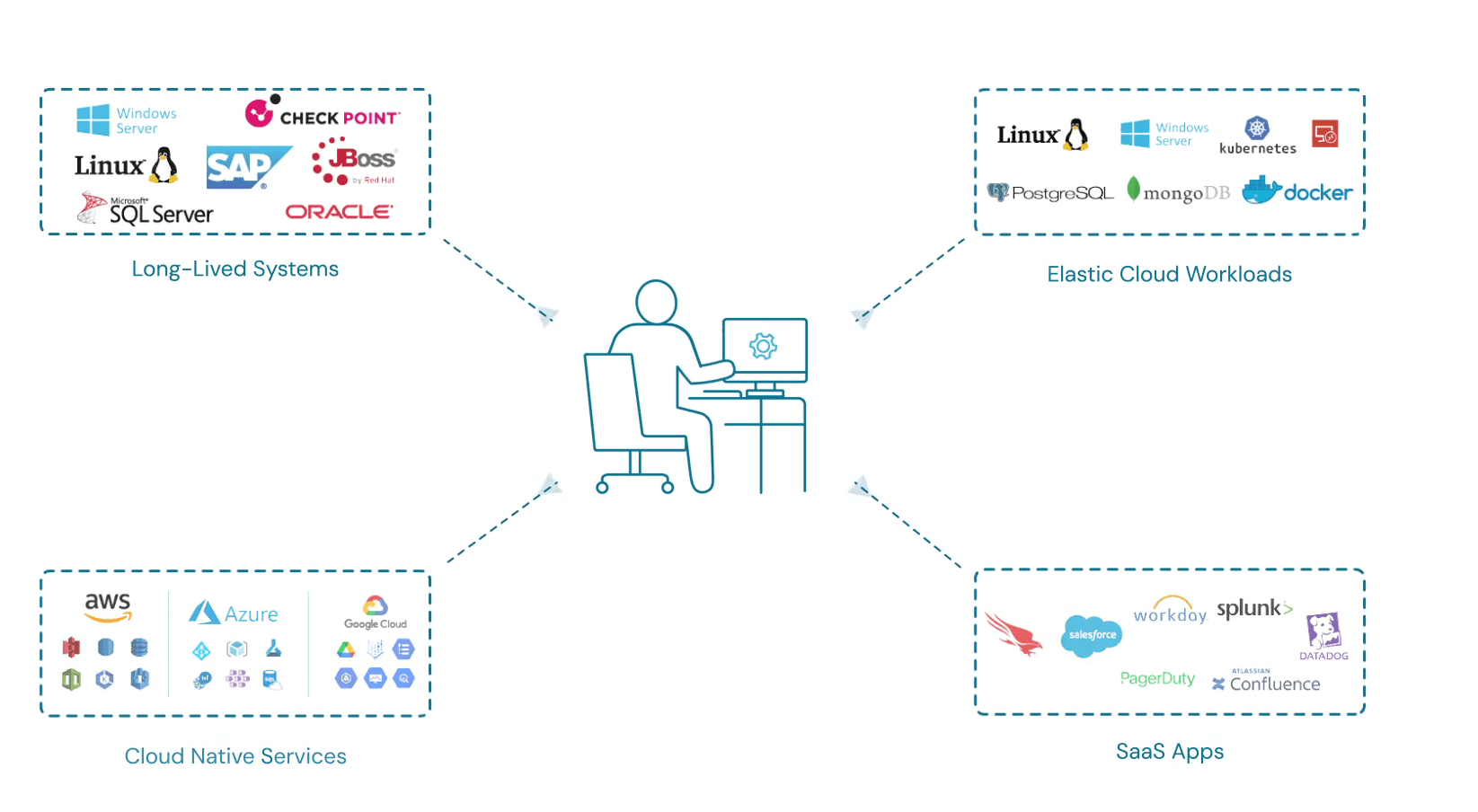
CyberArk DevSecOps is designed to integrate broadly with a variety of cloud platforms and DevOp tools like AWS, Azure, Google Cloud Platform, Kubernetes, Jenkins, GitHub, GitLab, and ServiceNow, among others.
The platform also offers a robust API and supports connections with third-party integration tools for custom workflows.
CyberArk DEVSECOPS Specs
- 2-Factor Authentication: Yes
- Access Management: Yes
- Anti-Virus: Yes
- API: Yes
- Audit Trail: Yes
- Bug Tracking: No
- Calendar Management: No
- Customer Management: No
- Dashboard: Yes
- Data Export: Yes
- Data Import: Yes
- Data Visualization: No
- Email Integration: No
- External Integrations: Yes
- File Sharing: No
- File Transfer: No
- Firewall: No
- Google Apps Integration: No
- Inventory Tracking: No
- Malware Protection: Yes
- Multi-User: Yes
- Network Device Performance Monitoring: Yes
- Network Traffic Monitoring: Yes
- Network Visualization: Yes
- Notifications: Yes
- Project Management: No
- Remote Access: Yes
- Risk Assessment: Yes
- SAP Integration: Yes
- Scheduling: Yes
- Software Integration: Yes
- Third-Party Plugins/Add-Ons: Yes
- Ticket Management: No


