

Avis SonarQube : avantages, inconvénients, fonctionnalités et tarification expliqués
SonarQube se distingue par ses analyses approfondies de la qualité du code et son intégration flexible, ce qui en fait un choix idéal pour les équipes axées sur la maintenabilité — bien que sa mise en place puisse représenter un défi pour les petits projets.

Nous évaluons les outils indépendamment ; les commissions aident à financer nos tests. Consultez notre politique de transparence et notre méthodologie.
SonarQube is an automated code review tool that runs static analysis on your codebase to catch bugs, vulnerabilities, and code smells. It's worth considering if your team needs code quality checks embedded directly in your CI/CD pipeline. I'd pick SonarQube over Checkmarx if you need quality gates that developers can act on immediately. Checkmarx skews more toward enterprise security auditing that sits outside the daily coding workflow.
SonarQube Evaluation Summary
4.4/5
- From $34/month
- Free plan + 14-day free trial + free demo available
Pourquoi faire confiance à nos recommandations de logiciels
6,700+
Reviews
20
Industry experts
16+
Evaluation factors
14
Years
Notre équipe teste et évalue des logiciels depuis 2012. En tant que leaders technologiques nous-mêmes, nous savons à quel point il est difficile — et important — de choisir le bon logiciel.
Pour ce guide, nous avons évalué les outils grâce à des tests pratiques et une recherche indépendante, en notant les outils selon nos critères de sélection.
Nos avis reflètent notre jugement éditorial humain, et non un argumentaire de vente.
Réviseurs experts:
- Paulo Gardini MiguelDirecteur technique
 Tim FisherVP de l'IA
 Gabriel RosasTech Lead et architecte logiciel
 Christhian GruhnTech Lead et architecte plateforme

SonarQube Overview
If you're judging automated code review tools by depth of analysis and integration options, SonarQube is a top contender. Its interface is straightforward, and onboarding is smooth for teams familiar with CI/CD. I think SonarQube's pricing is fair for the level of insight you get, especially with its customizable rules and strong language support. While support can feel limited for open-source users, the documentation is thorough. SonarQube outperforms others in maintainability tracking but can underperform for teams needing out-of-the-box cloud hosting. I'd suggest it's best for mid-sized to large teams focused on long-term code health.
Pros
- Detects security vulnerabilities and code smells in real-time
- Supports over 35 programming languages and IaC tools
- Offers customizable quality gates and rule profiles
Cons
- Initial setup and configuration can be complex
- Some false positives in static analysis results
- Limited support for open-source and free users
Is SonarQube Right For Your Needs?
Who Would be a Good Fit for SonarQube?
SonarQube is a strong choice for organizations that need deep code quality analysis, customizable rules, and support for multiple languages. Teams with established CI/CD pipelines, security requirements, or regulatory standards will get the most value. SonarQube's reporting and maintainability tracking make it especially useful for larger teams and industries where code quality is a top priority.
- Enterprise Software TeamsSonarQube's scalable analysis and reporting fit large, distributed development teams.
- Financial ServicesIts security vulnerability detection helps meet strict compliance and audit needs.
- DevOps DepartmentsTight CI/CD integration supports automated quality checks in pipelines.
- Government ITCustomizable rules and audit trails support regulatory and policy requirements.
- Healthcare TechnologyDetailed code health metrics help maintain high standards for patient data systems.
- Managed Service ProvidersMulti-project dashboards and user management suit agencies handling many clients.
Who Would be a Bad Fit for SonarQube?
SonarQube may not be ideal for teams needing instant cloud deployment, lightweight tools, or those with limited technical resources. Smaller businesses or teams with minimal code review needs might find the setup and maintenance overhead unnecessary compared to simpler alternatives.
- Small StartupsSetup complexity and resource needs outweigh benefits for small teams.
- Freelance DevelopersSolo users may not need SonarQube's advanced analysis features.
- Marketing AgenciesNon-technical teams won't benefit from code quality tracking.
- Legacy System MaintainersLimited support for outdated languages can restrict usefulness.
- Nonprofit OrganizationsBudget constraints make SonarQube's paid tiers less accessible.
- Rapid Prototyping TeamsTeams focused on speed over code quality may find it slows workflows.
Notre méthodologie d'évaluation
Comment nous testons et notons les outils
Nous avons passé des années à développer, affiner et améliorer notre système de test et de notation des logiciels. Cette grille d’évaluation est conçue pour saisir les subtilités de la sélection des logiciels et ce qui rend un outil efficace, en se concentrant sur les aspects critiques du processus de décision.
Vous trouverez ci-dessous le détail de notre processus de test et de notation sur sept critères. Cela nous permet de fournir une évaluation impartiale du logiciel basée sur les fonctionnalités principales, les caractéristiques distinctives, la facilité d’utilisation, l’intégration, l’accompagnement lors de la prise en main, le support client, les avis utilisateurs et le rapport qualité-prix.
Fonctionnalité principale (25% de la note finale)
Le point de départ de notre évaluation est toujours la fonctionnalité principale de l’outil. Possède-t-il les fonctions de base auxquelles un utilisateur s’attend ? Certaines de ces fonctionnalités principales sont-elles limitées à des forfaits plus chers ? Nous attendons d’un outil qu’il soit au moins à la hauteur des capacités de base de ses concurrents.
Fonctionnalités remarquables (25% de la note finale)
Ensuite, nous évaluons les fonctionnalités exceptionnelles qui dépassent la fonctionnalité de base habituellement trouvée dans ce type d’outil. Un score élevé reflète des fonctionnalités spécialisées ou uniques rendant le produit plus rapide, plus efficace ou apportant une valeur ajoutée à l’utilisateur.
Nous évaluons aussi la facilité d’intégration avec d’autres outils courants dans la pile technologique pour élargir les fonctionnalités et l’utilité du logiciel. Les outils dotés de nombreuses intégrations natives, de connexions tierces et d’un accès API facilitant des intégrations personnalisées obtiennent les meilleurs scores.
Facilité d’utilisation (10% de la note finale)
Nous considérons la rapidité et la simplicité d’exécution des tâches principales avec l’outil. Les logiciels les mieux notés sont bien conçus, intuitifs, proposent des applications mobiles, offrent des modèles et rendent des tâches relativement complexes très simples.
Accompagnement lors de la prise en main (10% de la note finale)
Nous savons que l’adoption rapide d’une nouvelle plateforme au sein d’une équipe est cruciale. Nous évaluons donc la facilité avec laquelle un nouvel utilisateur peut apprendre et utiliser un outil avec un minimum de formation. Les meilleures solutions permettent une mise en route rapide, sans nécessité de support.
Support client (10% de la note finale)
Nous analysons la facilité et la rapidité avec lesquelles il est possible d’obtenir de l’aide par téléphone, chat en direct ou base de connaissances. Les outils et entreprises offrant une assistance en temps réel obtiennent les meilleurs scores, tandis que les chatbots sont moins bien notés.
Avis utilisateurs (10% de la note finale)
Au-delà de nos propres tests et évaluations, nous tenons compte du net promoter score des utilisateurs actuels et passés. Nous regardons la probabilité qu’ils choisiraient à nouveau l’outil pour ses fonctionnalités principales. Un logiciel bien noté reflète un net promoter score élevé.
Rapport qualité-prix (10% de la note finale)
Enfin, en tenant compte de tous les autres critères, nous examinons le prix moyen des forfaits d’entrée de gamme par rapport aux fonctionnalités principales et à la valeur des autres critères. Un logiciel offrant plus, pour moins cher, obtiendra un meilleur score.
Core Features
Static Code Analysis
Scans source code for bugs, vulnerabilities, and code smells before deployment. Delivers actionable feedback directly in your workflow.
Quality Gates
Applies customizable pass/fail criteria to code changes. Prevents merging code that doesn't meet your team's standards.
Multi-Language Support
Analyzes code in over 35 programming languages, including Java, C#, Python, and JavaScript. Supports mixed-language repositories in a single project.
Security Vulnerability Detection
Identifies security hotspots and vulnerabilities using industry standards like OWASP Top 10. Flags risky code patterns for remediation.
Custom Rule Configuration
Lets you tailor analysis rules to match your organization's policies. Enables teams to enforce specific coding standards.
Detailed Reporting and Dashboards
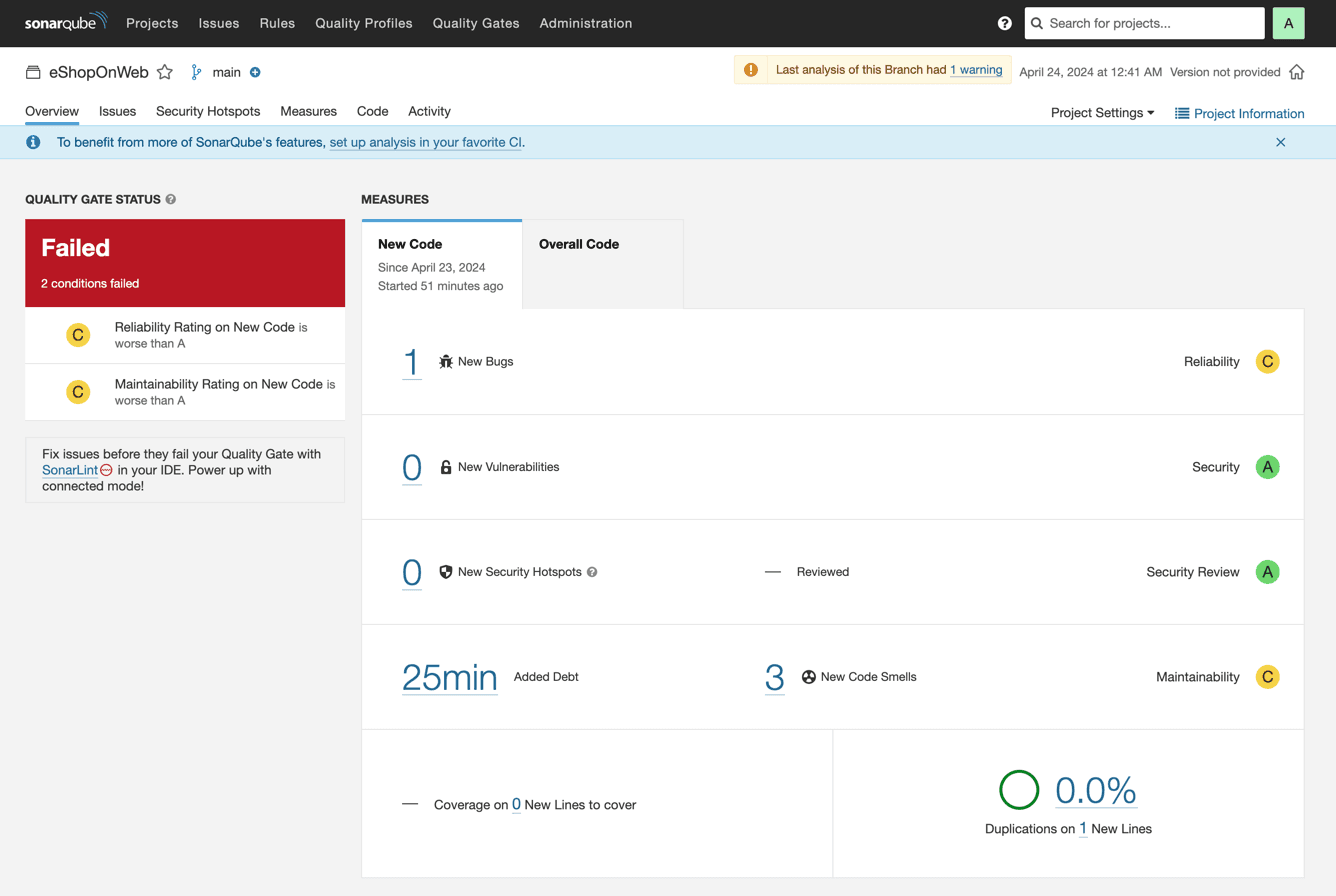
Provides visual dashboards with trends, metrics, and historical data. Helps teams track code quality and technical debt over time.
Ease of Use
SonarQube's interface is clean and straightforward, making it easy to navigate dashboards and drill into code issues. Most users find onboarding smooth if they're familiar with CI/CD concepts, but initial setup can be technical for smaller teams. The documentation is thorough, and in-app guidance helps with rule configuration and interpreting results. I think teams with some DevOps experience will find SonarQube's usability strong, especially for ongoing code quality monitoring.
Integrations
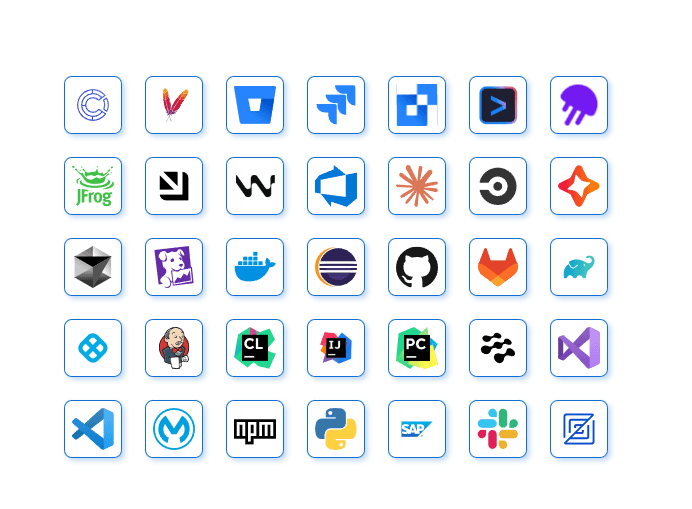
SonarQube integrates with Amazon CodeCatalyst, Android Studio, Apache Maven, Atlassian Bitbucket, Atlassian Jira, Visual Studio, Github, and GitLab, among others.
SonarQube also offers API access and supports connections with third-party integration tools.
SonarQube Specs
- API: Yes
- Bug Tracking: No
- CI/CD Integration: Yes
- Cloud Deployment: Yes
- Code Review: Yes
- Code Transformation: Yes
- Collaboration Support: Yes
- Data Export: Yes
- Data Import: Yes
- Developer Tools: Yes
- External Integrations: Yes
- Git Integration: Yes
- History/Version Control: Yes
- IDE Plugins: Yes
- Local Deployment: Yes
- Multi-User: Yes
- Notifications: Yes
- Project Management: Yes
- Release Management: Yes
- Static Analysis: Yes
- Task Scheduling/Tracking: No
- Testing: Yes


