

Los 10 Mejores Software de Alertas de TI de 2026

10 Mejor Software de Alertas de TI - Lista Corta


Mantenerse al tanto de los problemas de TI puede ser un reto para cualquier equipo. Necesitas enterarte de los problemas en el momento en el que surgen para mantener todo funcionando sin inconvenientes. Ahí es donde interviene el software de alertas de TI—te ayuda a detectar inconvenientes a tiempo, para que tu equipo pueda responder rápido y eficazmente.
En mi experiencia, elegir el software correcto puede suponer una gran diferencia en tu flujo de trabajo. He probado y analizado diversas opciones de forma independiente para presentarte mis mejores elecciones. Puedes contar con opiniones imparciales sobre sus características y beneficios.
Mientras sigues leyendo, encontrarás análisis detallados de cada solución, ayudándote a decidir cuál se adapta mejor a tus necesidades. La eficiencia y la tranquilidad de tu equipo están a solo unos pasos.
Por qué confiar en nuestras recomendaciones de software
Nuestro equipo lleva probando y evaluando software desde 2012. Como líderes tecnológicos, sabemos lo difícil —y lo importante— que es elegir el software adecuado.
Para esta guía, evaluamos las herramientas mediante pruebas prácticas e investigación independiente, puntuando las herramientas según nuestros criterios de selección.
Nuestras reseñas reflejan nuestro criterio editorial humano, no un discurso de ventas.
Revisores expertos:
Resumen del Mejor Software de Alertas de TI
Esta tabla comparativa resume los detalles de precios de mis principales selecciones de software de alertas de TI para ayudarte a encontrar el que mejor se adapte a tu presupuesto y necesidades de negocio.
| Tool | Best For | Trial Info | Price | ||
|---|---|---|---|---|---|
| 1 | Ideal para comunicación de emergencia multicanal | Demostración gratuita disponible | Precios a consultar | Website | |
| 2 | Mejor para monitoreo y analítica en tiempo real | Prueba gratuita de 14 días | Desde $15/usuario/mes (facturado anualmente) | Website | |
| 3 | Mejor para auto-triaje de alertas potenciado por IA | Prueba gratuita de 14 días + demo gratuita disponible | Desde $19/usuario/mes (facturado anualmente) | Website | |
| 4 | Ideal para el monitoreo avanzado de perfiles de umbral | Prueba gratuita de 30 días + demo gratuita disponible | Desde $129/técnico/mes (facturado anualmente) | Website | |
| 5 | Mejor para opciones flexibles de notificación | Plan gratuito + prueba gratuita de 30 días disponible | Desde $20/usuario/mes (facturado anualmente) | Website | |
| 6 | Ideal para gestión de parches | Prueba gratuita de 21 días + demo gratuita disponible | Desde $149/técnico/mes (facturado anualmente) | Website | |
| 7 | Mejor para alertas de inteligencia de amenazas | Demostración gratuita disponible | Precio a consultar | Website | |
| 8 | Ideal para configurar reglas inteligentes de alerta | Demostración gratuita disponible | Precio a consultar | Website | |
| 9 | Ideal para diagnósticos a nivel de código | Demo gratuita disponible | Desde $245/25 dispositivos | Website | |
| 10 | Ideal para alertas multicanal orientadas a la disponibilidad | Plan gratuito + demo gratis disponible | Desde $8/10 monitores/mes (facturado anualmente) | Website |


Reseñas del Mejor Software de Alertas de TI
A continuación están mis resúmenes detallados del mejor software de alertas de TI que entraron a mi lista corta. Mis reseñas ofrecen un análisis completo de las características clave, pros y contras, integraciones y casos de uso ideales de cada herramienta para ayudarte a encontrar la que más te conviene.

Preparis
Ideal para comunicación de emergencia multicanal
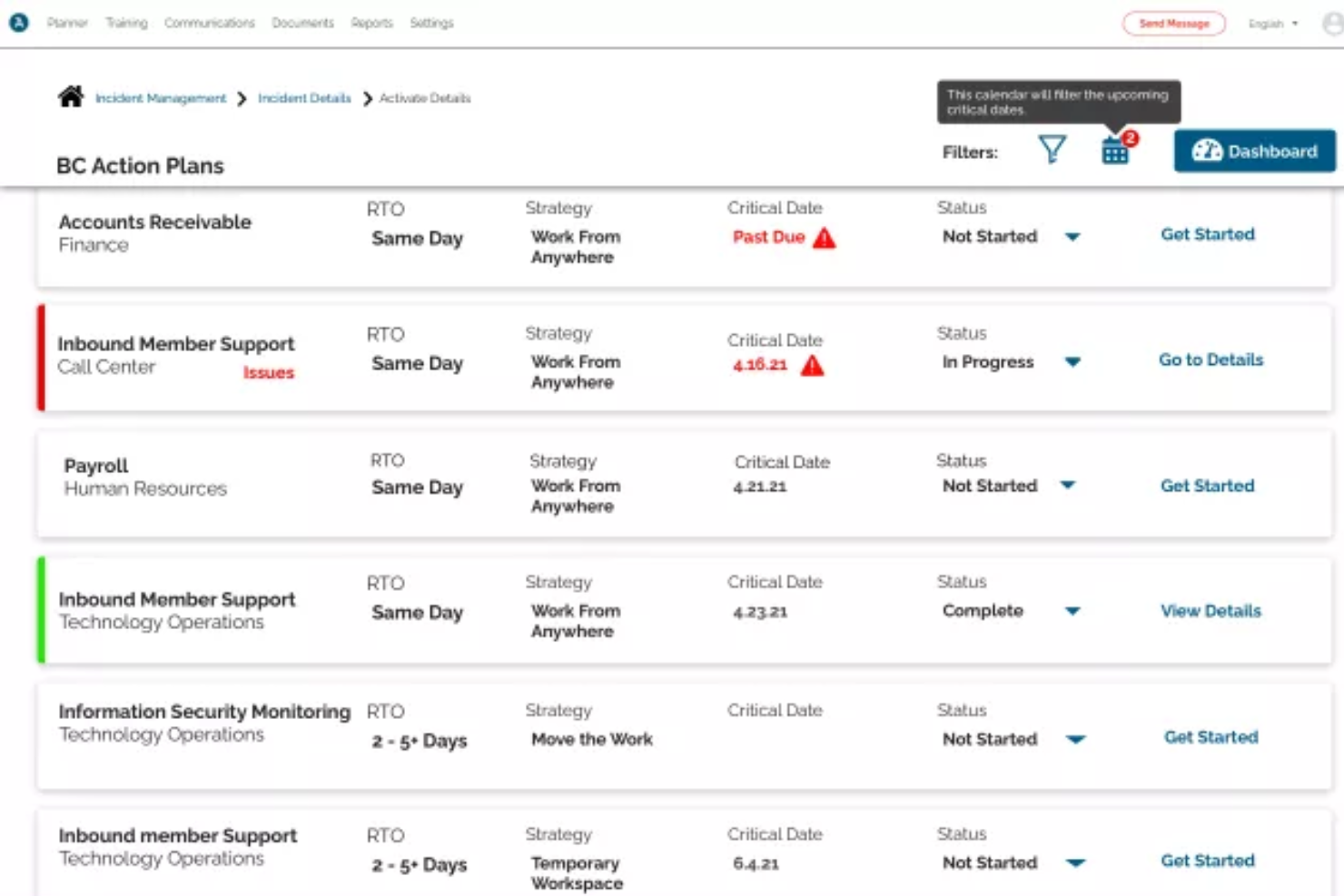
Preparis es un software integral de continuidad de negocio diseñado para ayudar a las organizaciones a gestionar y prepararse para emergencias. La plataforma ofrece un conjunto de herramientas que incluye evaluación de riesgos, gestión de incidentes y sistemas de notificación de emergencias, todo orientado a mejorar la resiliencia organizacional.
Por qué elegí Preparis: Elegí Preparis por su capacidad de comunicación multicanal, que garantiza que las alertas se entreguen a través de diversos medios como SMS, correo electrónico y notificaciones push. Esta versatilidad asegura que la información crítica llegue a sus partes interesadas de manera oportuna, independientemente de su canal de comunicación preferido, mejorando así la rapidez y eficacia de la respuesta de la organización durante emergencias de TI. Además, el software admite mensajería bidireccional, lo que permite el seguimiento y la respuesta en tiempo real.
Características destacadas e integraciones:
Además de su sistema de alertas, Preparis permite crear planes de recuperación ante desastres de TI personalizables y almacenar estos documentos en un lugar centralizado. La plataforma también ofrece un gestor de incidentes que permite rastrear, asignar y resolver incidentes de TI. Las integraciones incluyen sistemas como ADP y Okta.
Pros and Cons
Pros:
- Gestión eficaz de documentos para informes de incidentes, planes y auditorías
- Sistema de notificaciones multicanal en tiempo real
- Escalable para organizaciones de todos los tamaños
Cons:
- Integraciones limitadas
- Podría ofrecer una detección de incidentes más robusta específicamente para problemas de TI
Datadog
Mejor para monitoreo y analítica en tiempo real

Datadog es una plataforma integral de monitoreo en la nube que ofrece información sobre el rendimiento de las aplicaciones, el estado de la infraestructura y la gestión de registros. Con su robusto conjunto de herramientas analíticas, dota a las empresas de la capacidad para tomar decisiones informadas basadas en datos en tiempo real, lo que justifica su posición como la mejor opción para el monitoreo y analítica en tiempo real.
Por qué elegí Datadog: Al determinar las herramientas para este listado, Datadog surgió constantemente como líder en su ámbito. Juzgué su capacidad tanto por su amplia adopción en la industria como por su variedad de funciones de monitoreo y analítica.
En mi opinión, cuando se trata de monitoreo en tiempo real junto con potentes análisis, Datadog ocupa una posición única en el mercado.
Características destacadas e integraciones:
La plataforma de Datadog es especialmente fuerte en el monitoreo del rendimiento de aplicaciones, que proporciona una visión profunda de los problemas de las aplicaciones y la experiencia de los usuarios. Además, su capacidad de gestión de registros facilita la resolución eficiente de problemas. En cuanto a integraciones, Datadog se sincroniza con más de 400 tecnologías populares, incluyendo AWS, Docker y Slack, lo que lo convierte en una herramienta versátil en entornos tecnológicos diversos.
Pros and Cons
Pros:
- Información integral sobre el rendimiento de la aplicación
- La gestión eficiente de registros ayuda a resolver problemas más rápidamente
- Una amplia gama de integraciones se adapta a diversas pilas tecnológicas
Cons:
- El precio puede resultar elevado para equipos grandes
- La configuración inicial puede requerir una curva de aprendizaje
- Las métricas personalizadas pueden afectar los costos

Mejor para auto-triaje de alertas potenciado por IA
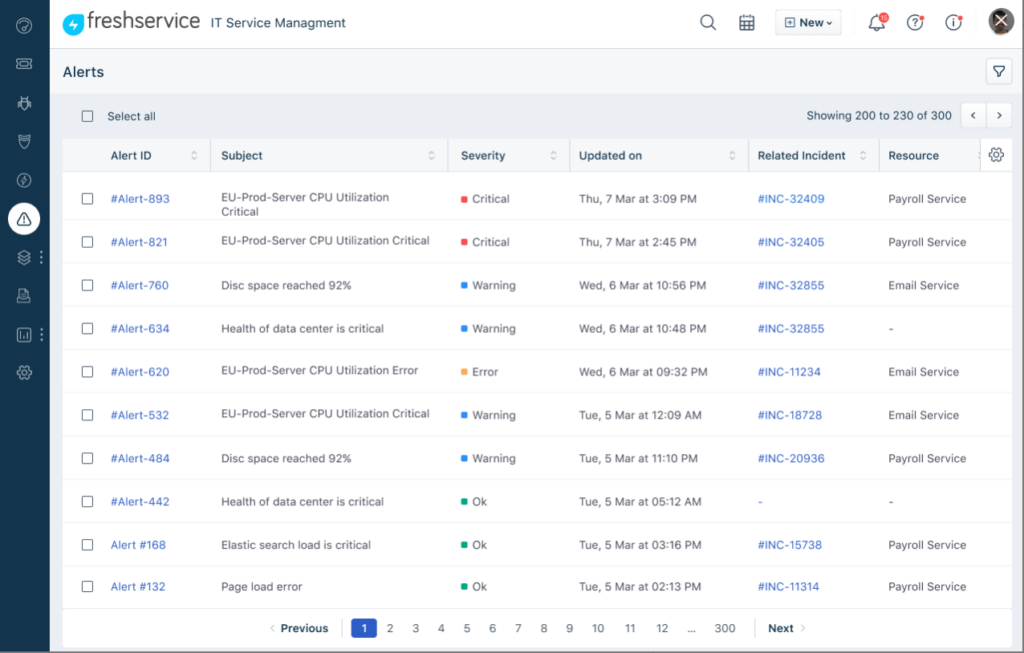
Freshservice es una plataforma de gestión de servicios de TI (ITSM) basada en la nube que incluye funcionalidades de alertas para equipos de TI. Te ayuda a gestionar incidentes, automatizar flujos de trabajo y conectar alertas con los procesos de la mesa de servicio. Sus funciones impulsadas por IA permiten una clasificación y direccionamiento de alertas más rápidos.
Por qué elegí Freshservice: Elegí Freshservice por sus capacidades de alertas con inteligencia artificial y auto-triaje incorporado. Utiliza aprendizaje automático para categorizar alertas, reducir el ruido y enrutar automáticamente los incidentes a las colas de la mesa de servicio adecuadas. Esto ayuda a los equipos de TI a responder más rápido, manteniendo flujos de tickets estructurados dentro del mismo sistema.
Funciones destacadas e integraciones:
Freshservice no es solo una herramienta ITSM, sino que también ofrece gestión de activos y soluciones de tickets robustas. Sus funciones están diseñadas para asegurar que los departamentos de TI operen de manera eficiente.
Freshservice ofrece integraciones nativas con Slack, Jira, Microsoft Teams y otras herramientas de colaboración y desarrollo.
Pros and Cons
Pros:
- Solución ITSM integral con funcionalidades adicionales
- Capacidades versátiles de integración con plataformas populares
- Interfaz fácil de usar, simplifica tareas complejas
Cons:
- La facturación anual puede ser un impedimento para algunos usuarios
- La curva de aprendizaje para quienes no están familiarizados con herramientas ITSM
- Algunas funciones avanzadas solo están disponibles en planes de nivel superior
New Product Updates from Freshservice
 Experience)
Freshservice Introduces a Reimagined IT Asset Management (ITAM) Experience
Freshservice introduces a reimagined IT Asset Management (ITAM) experience with continuous infrastructure discovery, dependency mapping, IPAM, and Software License Management. This update helps teams improve asset visibility and manage connected IT environments more effectively. For more information, visit Freshservice’s official site.
Atera
Ideal para el monitoreo avanzado de perfiles de umbral
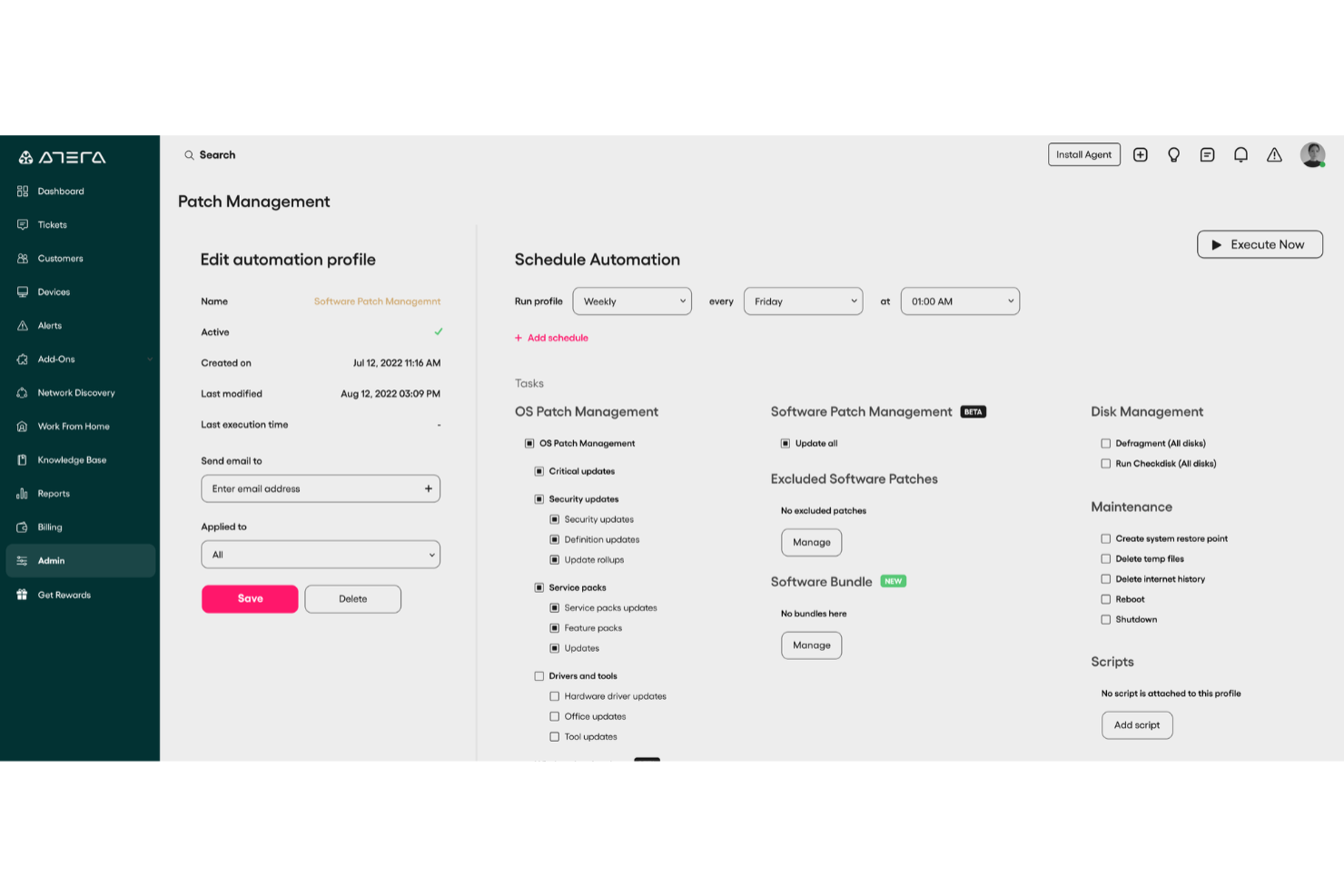
Atera es una solución integral de monitoreo y gestión remota (RMM) diseñada para ayudar a los profesionales de TI a supervisar, detectar y resolver proactivamente posibles problemas en sus entornos informáticos antes de que se conviertan en problemas críticos.
Por qué elegí Atera:
Ofrece capacidades de monitoreo en tiempo real que notifican a tu equipo sobre posibles incidencias de TI mediante alertas personalizables adaptadas a tu infraestructura particular. Al supervisar métricas clave de rendimiento como carga de CPU, uso de disco y actividad de red, Atera garantiza que tu equipo pueda abordar proactivamente las preocupaciones antes de que afecten a los usuarios finales. Además, su función de ‘scripts de autoreparación’ permite automatizar tareas de remediación como reiniciar equipos o reiniciar servicios cuando se superan ciertos umbrales, lo que ayuda a reducir la carga manual y aumentar la eficiencia.
Características destacadas e integraciones:
Otras características incluyen monitoreo avanzado de perfiles de umbral que rastrea métricas como recursos del sistema, tiempo activo de disco, procesos de Windows, dispositivos habilitados para SNMP e inicios de sesión de usuarios para ofrecer una visión integral de tu entorno TI. La solución también permite monitorear Active Directory, SQL Server, Exchange, VMware, Hyper-V y servicios DNS. Algunas integraciones incluyen Microsoft Active Directory, Exchange y VMware, asegurando compatibilidad con componentes de infraestructura de TI ampliamente utilizados.
Pros and Cons
Pros:
- Centraliza la gestión de tickets, RMM, PSA y activos
- Detección proactiva de incidencias y opciones de automatización
- Informes detallados y paneles para clientes
Cons:
- Curva de aprendizaje para nuevos usuarios debido a la amplia gama de funciones
- Algunas limitaciones en las funciones de PSA y facturación
New Product Updates from Atera

Atera Adds Webhook Triggers for Technician Assignment Changes
Atera ticket automation rules now support a webhook trigger when a ticket’s technician assignment changes, expanding automation beyond creation, status updates, and closure/resolution events. For more information, visit Atera's official site.

Checkmk
Mejor para opciones flexibles de notificación
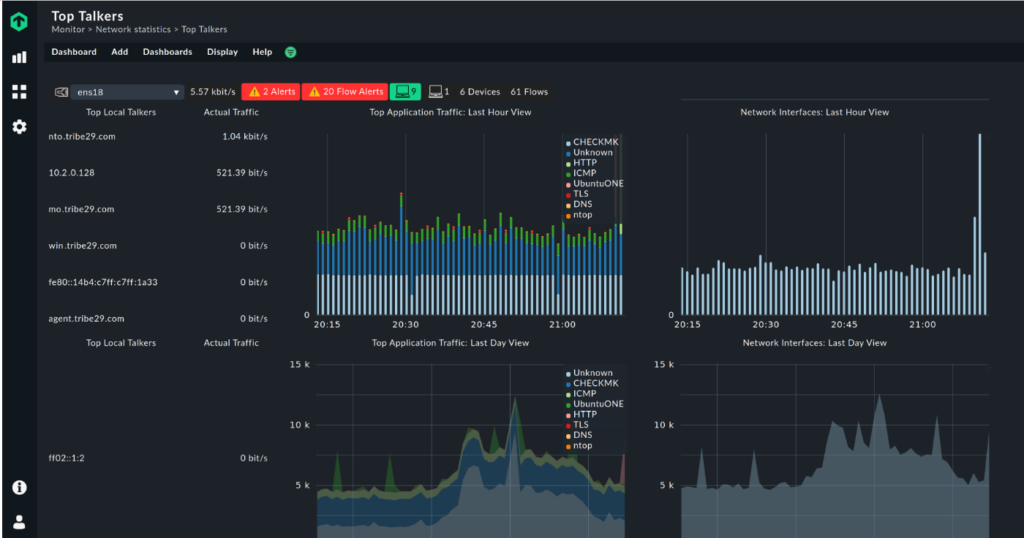
Checkmk es una herramienta de monitoreo que proporciona información detallada sobre aplicaciones, redes y sistemas. Una de sus características destacadas es su sistema de notificaciones flexible, que permite a los usuarios personalizar las alertas según parámetros y requisitos específicos.
Por qué elegí Checkmk: En mi búsqueda para seleccionar las herramientas de monitoreo más adecuadas, Checkmk llamó mi atención debido a su inigualable flexibilidad en las notificaciones. Mi decisión, basada en comparaciones y criterio, me llevó a valorar cómo permite alertas precisas, reduciendo el ruido y enfocándose en notificaciones vitales.
Esta capacidad para personalizar las alertas de manera detallada es la razón por la que la elegí como la mejor herramienta por sus opciones flexibles de notificación.
Características destacadas e integraciones:
Checkmk destaca por ofrecer monitoreo en tiempo real, descubrimiento automático de servicios y su módulo BI (Business Intelligence) para entornos complejos. Se integra con plataformas como Grafana, Jira y Slack para garantizar un monitoreo y una comunicación integral.
Pros and Cons
Pros:
- Personalización granular de alertas
- Integraciones robustas con otras plataformas
- Capacidades de monitoreo en tiempo real
Cons:
- Puede requerir una curva de aprendizaje pronunciada para principiantes
- El modelo de licencias puede ser confuso para algunos usuarios
- Algunas funciones avanzadas son exclusivas de la versión empresarial
New Product Updates from Checkmk
Checkmk Adds Experimental MCP Server and OAuth 2.0 Support
Checkmk adds an experimental MCP server and built-in OAuth 2.0 authorization for commercial editions. These updates let AI agents query monitoring data with native authorization support. For more information, visit Checkmk’s official site.
 .
.
SuperOps
Ideal para gestión de parches

SuperOps se destaca como una solución innovadora de gestión de TI, diseñada específicamente para Proveedores de Servicios Gestionados (MSP) y equipos internos de TI que buscan mejorar su eficiencia operativa. Aprovechando funcionalidades impulsadas por IA, aborda la complejidad de la automatización de servicios y la gestión de activos, ofreciendo a las empresas un enfoque simplificado para la notificación de alertas de TI. Ya sea que estés a cargo de un departamento de TI en crecimiento o gestionando servicios para múltiples clientes, SuperOps proporciona las herramientas necesarias para monitorizar y administrar infraestructuras de TI de manera eficaz, ayudándote a abordar desafíos como la velocidad de resolución de incidentes y la visibilidad operativa con facilidad.
Por qué elegí SuperOps
Elegí SuperOps por sus capacidades sofisticadas de gestión de alertas, que son esenciales para cualquier software de notificación de TI. Esta plataforma integra alertas inteligentes con automatización, permitiendo a tu equipo abordar proactivamente posibles problemas antes de que se agraven. Además, el sistema de tickets integrado garantiza que las alertas se conviertan en tareas accionables, facilitando un tiempo de respuesta más rápido. Estas características se alinean bien con las necesidades de los profesionales de TI que buscan mantener operaciones fluidas y minimizar tiempos de inactividad.
Características clave de SuperOps
Además de sus capacidades de gestión de alertas, SuperOps ofrece varias otras características que mejoran su utilidad para la notificación de TI:
- Mesa de servicios: Centraliza todas las solicitudes de servicio, permitiendo a tu equipo gestionar y responder a incidentes desde una única interfaz.
- Gestión de parches: Automatiza el proceso de aplicación de parches, asegurando que tus sistemas estén actualizados y protegidos contra vulnerabilidades.
- Gestión de activos: Proporciona seguimiento y administración integral de activos de TI, ayudándote a mantener un inventario organizado.
- Aplicación móvil: Permite la gestión de alertas y tickets fuera de la oficina, garantizando que permanezcas conectado y seas ágil dondequiera que estés.
Integraciones de SuperOps
Las integraciones incluyen Microsoft 365, Google Workspace, QuickBooks, Xero, Zapier, Slack, FreshBooks, Stripe y Harvest.
Pros and Cons
Pros:
- Sistema de tickets integrado enlaza alertas
- Plataforma PSA y RMM integrada
- Aplicación móvil para técnicos
Cons:
- El precio por punto final incrementa el coste
- Principalmente desarrollado para MSPs
New Product Updates from SuperOps

SuperOps Improves Ticket Visibility, Dynamic Forms, and Dashboard Views
SuperOps introduces improvements to ticket visibility, dynamic forms, and dashboard visualizations. These updates help technicians manage customer conversations, simplify ticket creation, and keep dashboard views consistent across teams. For more information, visit SuperOps' official site.
 .
.
Mejor para alertas de inteligencia de amenazas

ManageEngine Log360 es una solución unificada de gestión de eventos e información de seguridad (SIEM) diseñada para ayudar a las organizaciones a detectar, investigar y responder a amenazas de seguridad en toda su infraestructura de TI.
Por qué elegí ManageEngine Log360: Ofrece un motor de correlación en tiempo real que permite a tu equipo detectar amenazas de seguridad de manera precisa al correlacionar eventos sospechosos en tu red, asegurando que los problemas potenciales se identifiquen y se aborden rápidamente. El análisis de comportamiento de usuarios y entidades (UEBA) basado en aprendizaje automático de Log360 también ayuda a identificar amenazas internas analizando desviaciones en el comportamiento de los usuarios, proporcionando una capa extra de seguridad. Además, al aprovechar los feeds de inteligencia de amenazas en formato STIX/TAXII, el software puede descubrir, alertar y bloquear direcciones IP, dominios y URLs maliciosos en tiempo real.
Funciones destacadas e integraciones:
Otras funciones incluyen capacidades integradas de Prevención de Pérdida de Datos (DLP) que monitorizan el acceso a información sensible y previenen la exfiltración de datos, asegurando que tus datos críticos permanezcan seguros. El software también ofrece monitoreo de la web oscura para descubrir amenazas potenciales y datos expuestos antes de que impacten tu negocio. Algunas integraciones incluyen Microsoft Exchange, Amazon Web Services (AWS), Microsoft Entra ID, Microsoft Azure y Active Directory.
Pros and Cons
Pros:
- Visibilidad de seguridad integral a través de redes locales, en la nube e híbridas
- Feed avanzado de inteligencia de amenazas
- Consola de gestión de incidentes
Cons:
- Los registros pueden ser difíciles de leer y entender
- Complejo de configurar e implementar
New Product Updates from ManageEngine Log360
ManageEngine Log360 Adds New Log Source Integrations
ManageEngine Log360 adds new log source integrations for Bitdefender GravityZone, CrowdStrike Falcon Event Streams, Okta, and MikroTik to broaden security and network visibility. For more information, visit ManageEngine Log360's official site.
 .
.
Ideal para configurar reglas inteligentes de alerta

ManageEngine OPM Plus es un conjunto de herramientas de gestión de operaciones de TI que te ayuda a supervisar, gestionar y asegurar cada capa de tu infraestructura de TI. Reúne la monitorización de red, servidores, aplicaciones y seguridad en una sola plataforma unificada, asegurando que las alertas y los datos de rendimiento fluyan a través de una consola única y fácil de gestionar.
Por qué elegí ManageEngine OPM Plus: Elegí ManageEngine OPM Plus porque consolida todas las alertas de TI en un solo lugar, ayudándote a reducir el ruido de alertas y actuar sobre los problemas críticos más rápido. Puedes configurar reglas inteligentes de alerta, personalizar rutas de escalado y conectarte directamente con herramientas de colaboración como Slack y Microsoft Teams para que las personas correctas sean notificadas de inmediato. También me gusta que va más allá de la notificación de alertas, ya que incluye observabilidad completa y gestión automatizada de parches, ayudándote tanto a detectar como a solucionar problemas desde el mismo entorno.
Funciones destacadas e integraciones:
Incluye gestión avanzada de fallos con escalado de alertas automatizado, monitorización completa de rendimiento para redes, servidores y aplicaciones, y funcionalidades SIEM integradas para detectar y responder a amenazas de seguridad en tiempo real. También cuentas con herramientas de analítica y análisis de causa raíz para una resolución más rápida de incidentes. Las integraciones incluyen ServiceDesk Plus, ServiceNow, Jira, Slack, MS Teams, Ansible, plataformas SIEM, Log360, Analytics Plus, Grafana, la suite de Zoho y REST API.
Pros and Cons
Pros:
- Soporta monitorización multivendor amplia
- Permite flujos de trabajo automatizados de escalado de alertas
- Ofrece visibilidad del rendimiento en tiempo real
Cons:
- Requiere altos recursos del sistema
- Configuración compleja para principiantes

Ideal para diagnósticos a nivel de código
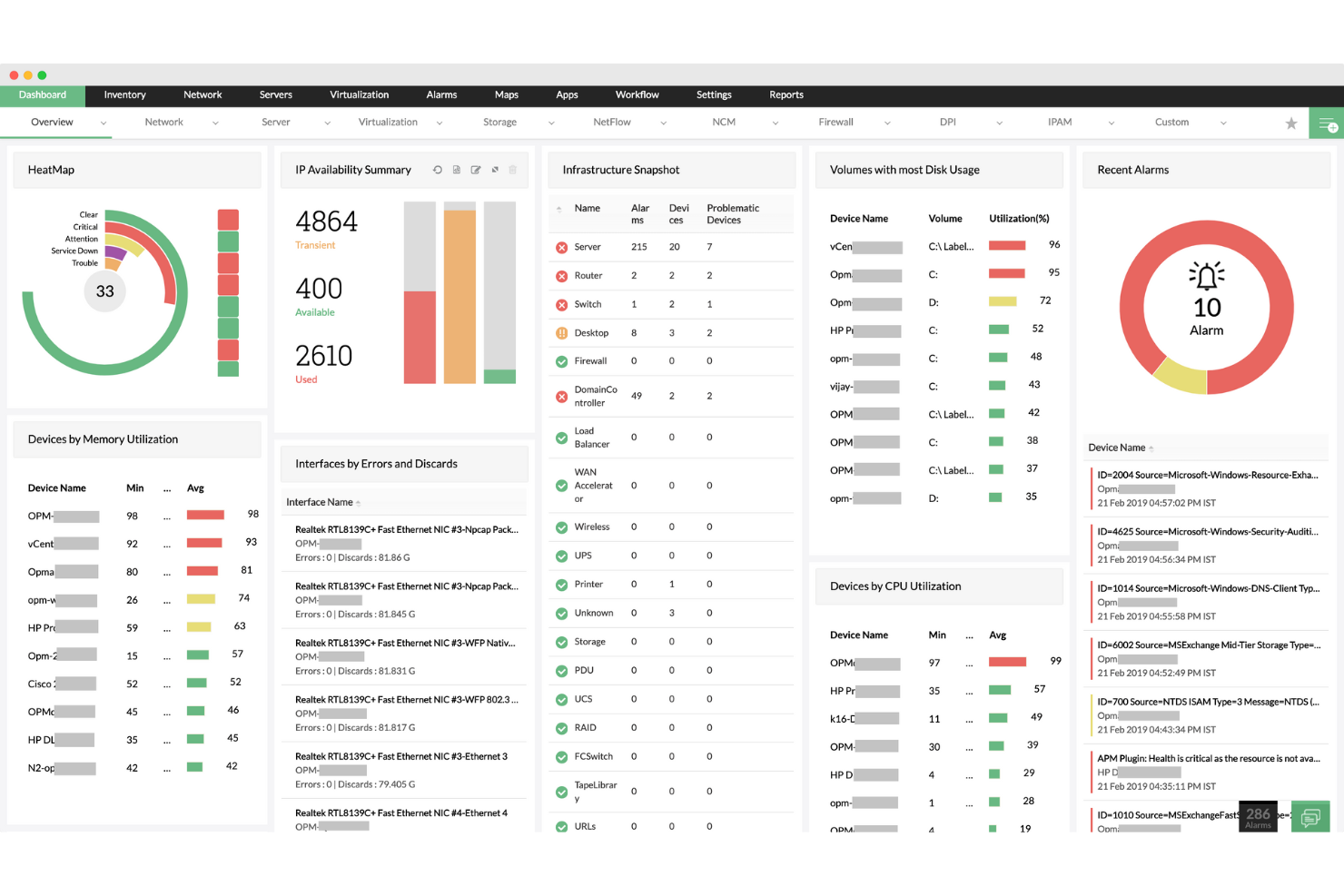
ManageEngine Applications Manager es una solución integral para el monitoreo del rendimiento de aplicaciones (APM) y monitoreo de infraestructura que admite más de 150 tecnologías en entornos locales, en la nube e híbridos. Proporciona diagnósticos en tiempo real, alertas impulsadas por IA y visibilidad detallada en pilas de aplicaciones, bases de datos, servicios en la nube y experiencias de usuario.
Por qué elegí ManageEngine Applications Manager: Seleccioné Applications Manager por su enfoque holístico en el monitoreo, que unifica la visibilidad de aplicaciones e infraestructura en una sola plataforma. Se destaca por ofrecer diagnósticos a nivel de código para pilas de aplicaciones como Java y .NET, junto con un monitoreo profundo de la infraestructura para máquinas virtuales, bases de datos y contenedores. La inclusión de monitoreo real del usuario (RUM), transacciones sintéticas y herramientas de observabilidad en la nube aumenta aún más su versatilidad en operaciones de TI.
Características destacadas e integraciones:
Applications Manager incluye rastreo distribuido de transacciones, detección de anomalías, monitoreo sintético mediante scripts de Selenium y paneles de rendimiento en tiempo real. Se integra con herramientas de ManageEngine como OpManager y ServiceDesk Plus, y es compatible con servicios de terceros como Slack y Site24x7.
Pros and Cons
Pros:
- Mapas de red en tiempo real y auto-actualizables
- Soporta entornos de múltiples proveedores
- Descubrimiento de red automatizado y programado
Cons:
- La configuración inicial puede ser compleja
- El precio puede ser alto para equipos pequeños
New Product Updates from ManageEngine OpManager

ManageEngine OpManager Adds NVIDIA GPU Monitoring
ManageEngine OpManager adds NVIDIA GPU monitoring for Linux servers, dedicated GPU dashboards, adaptive thresholds, and automated incident response to help teams track AI infrastructure performance, health, and resource usage. For more information, visit ManageEngine OpManager’s official site.
 .
.
UptimeRobot
Ideal para alertas multicanal orientadas a la disponibilidad
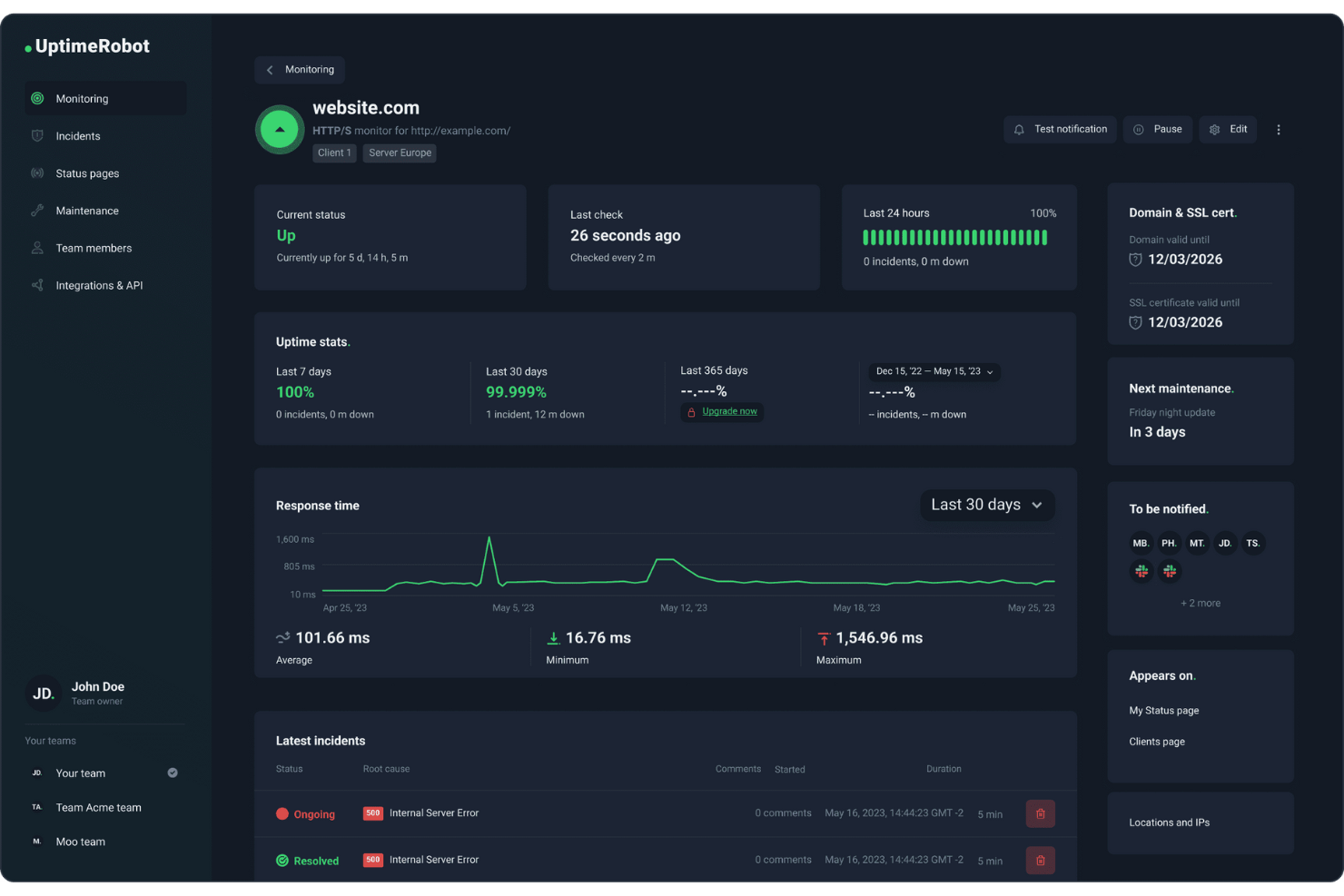
Si buscas una solución confiable de software de alertas de TI, UptimeRobot es una opción práctica para equipos que dependen de alertas multicanal orientadas a la disponibilidad. Da soporte a equipos DevOps, desarrolladores y propietarios de negocios monitoreando el tiempo de actividad, el estado SSL y los tiempos de respuesta en puntos clave. Con alertas enviadas a través de múltiples canales e integraciones con herramientas comunes, UptimeRobot ayuda a los equipos a mantenerse informados sobre problemas de disponibilidad y responder rápidamente a caídas del servicio.
Por qué elegí UptimeRobot
Elegí UptimeRobot por sus alertas multicanal enfocadas en el tiempo de actividad, lo cual ayuda a los equipos a responder rápidamente cuando los servicios se caen. Monitorea el tiempo de actividad, el estado SSL y los tiempos de respuesta, dando señales claras cuando surgen problemas de disponibilidad. Con alertas enviadas a través de herramientas como Slack y Microsoft Teams, los equipos pueden estar informados sin revisar constantemente los paneles. UptimeRobot también ofrece funciones como verificaciones HTTP personalizadas y ventanas de mantenimiento, facilitando así la gestión del monitoreo durante cambios planificados y operaciones continuas.
Características clave de UptimeRobot
Además de las alertas multicanal orientadas al tiempo de actividad, UptimeRobot ofrece:
- Páginas públicas de estado: Crea y personaliza fácilmente páginas de estado para comunicar la disponibilidad y los incidentes de tu servicio a las partes interesadas.
- Monitoreo desde múltiples ubicaciones: Realiza verificaciones desde varias ubicaciones para garantizar precisión y confiabilidad global en la disponibilidad.
- Colaboración en equipo: Invita a miembros del equipo con diferentes niveles de acceso para gestionar incidentes y monitorear el rendimiento de manera colaborativa.
- Webhooks: Configura alertas avanzadas e intégrate con aplicaciones personalizadas para una gestión de incidentes adaptada.
Integraciones de UptimeRobot
Las integraciones incluyen Slack, Microsoft Teams, Discord, Telegram, Splunk, Zapier, PagerTree, Pipedream, ilert y Zenduty.
Pros and Cons
Pros:
- Alertas confiables y oportunas ante caídas del sistema
- Admite varios tipos de monitoreo, incluyendo SSL y dominio
- Soporta notificaciones por email, SMS, Slack, Teams y webhook
Cons:
- Las funciones avanzadas requieren planes pagos, limitando el uso gratuito
- Lógica de alertas limitada en comparación con plataformas de gestión de incidentes
Otros Programas de Alertas de TI
Aquí tienes algunas otras opciones de software de alertas de TI que no entraron en mi lista corta, pero que igual vale la pena revisar:
- PagerDuty
Ideal para la gestión de guardias y escaladas
- New Relic
Ideal para políticas de alertas personalizables
- BigPanda
Ideal para correlación centralizada de alertas
- Better Stack
Mejor para monitorear tiempo de actividad y rendimiento
- Amazon Simple Notification Service (SNS)
Ideal para mensajería escalable en la nube
- FireEye Helix
Ideal para alertas avanzadas de inteligencia sobre amenazas
- Altera
El mejor para la gestión remota de TI
- xMatters
La mejor para la respuesta automatizada a incidentes
- OnPage
Mejor para la gestión de alertas de incidentes
- HipLink
Mejor para soluciones integrales de gestión de alertas


Cómo Evalúo el Software de Notificaciones de TI
Divido mi evaluación en capacidades imprescindibles—como la entrega multicanal y la programación de guardias—y los diferenciadores que distinguen una buena herramienta de la adecuada.
Funcionalidad Básica (Requisitos Indispensables Para Esta Lista)
Cuando selecciono herramientas para mi lista, califico cada una en una escala del 0 (no ofrece la funcionalidad) al 5 (sobresale en esta área) para cada funcionalidad básica que se detalla a continuación. Luego, calculo la puntuación total de la herramienta en porcentaje. Cada herramienta debe lograr una puntuación mínima total del 65% para ser considerada para su inclusión.
- Entrega de Alertas Multicanal: Verifico si la herramienta puede llegar a los responsables a través de SMS, correo electrónico, llamadas de voz, notificaciones push y aplicaciones de chat, porque una alerta perdida a las 3 AM elimina el propósito.
- Programación de Guardias: La gestión de rotaciones es fundamental aquí, incluyendo cambios de turno, sustituciones y cobertura "follow-the-sun" para que los equipos dispersos globalmente siempre tengan a alguien disponible.
- Políticas de Escalamiento: Evalúo si la plataforma permite definir reglas de escalamiento multinivel y basadas en tiempo, que redirijan automáticamente las alertas no reconocidas a responsables o gestores de respaldo.
- Integraciones con Herramientas de Monitorización: La herramienta debe conectarse con stacks de observabilidad como Datadog, Prometheus, Nagios y New Relic, de modo que las alertas ingresen sin reenvíos manuales ni scripts personalizados.
- Agregación y Eliminación de Duplicados de Alertas: Analizo cómo la plataforma agrupa alertas relacionadas y suprime duplicados—una sola caída de base de datos no debería inundar al ingeniero de guardia con 200 notificaciones separadas.
- Seguimiento y Reporte de Incidentes: Las métricas de respuesta como MTTA y MTTR deben registrarse y aparecer en paneles para que los equipos puedan medir el desempeño y realizar análisis posteriores útiles.
Una vez que tengo una lista de herramientas que cumplen con los criterios, considero lo que distingue a cada plataforma.
Factores Diferenciadores (Lo Que Distingue a los Proveedores)
Así es como comparo y contrasto diferentes proveedores:
Características Destacadas
La automatización de runbooks es un diferenciador clave—busco herramientas que ejecuten scripts de remediación predefinidos cuando se activa una alerta, como reiniciar un servicio fallido o escalar recursos incluso antes de que intervenga un humano. Las capacidades de ChatOps también son importantes, especialmente las plataformas que crean canales dedicados en Slack o Teams con todo el contexto del incidente adjunto. Las aplicaciones móviles para la respuesta completan esto permitiendo a los ingenieros de guardia reconocer, escalar y reasignar alertas directamente desde su teléfono fuera del horario laboral.
Más Allá de las Características
Las certificaciones de seguridad y cumplimiento tienen un gran peso en mi evaluación—los equipos en industrias reguladas necesitan cobertura como SOC 2 Tipo II, HIPAA o ISO 27001 antes de siquiera considerar una plataforma. La transparencia del modelo de precios también es importante, ya que la facturación por usuario funciona bien para equipos pequeños pero puede crecer rápidamente en comparación con modelos basados en el número de responsables. También verifico la flexibilidad de implementación, en particular si el proveedor ofrece redundancia multirregional, porque una plataforma de alertas que se cae durante una interrupción genera el mismo problema que está diseñada para solucionar.
Cómo elegir un software de alertas de TI
Es fácil perderse en una larga lista de funciones y estructuras de precios complejas. Para ayudarte a mantener el enfoque mientras analizas tus opciones, aquí tienes una lista de factores a considerar:
| Factor | Qué tener en cuenta |
|---|---|
| Escalabilidad | ¿El software crecerá junto a tu equipo? Considera necesidades futuras y si la herramienta puede gestionar un aumento de alertas y usuarios sin problemas. |
| Integraciones | ¿Funciona con tus herramientas actuales? Revisa si se conecta con tus sistemas de TI para ahorrar tiempo y eliminar trabajos manuales. |
| Personalización | ¿Puedes adaptarlo a tus necesidades? Busca opciones que permitan ajustar alertas y flujos de trabajo a los procesos específicos de tu equipo. |
| Facilidad de uso | ¿Es amigable para el usuario? Una interfaz sencilla reduce el tiempo de capacitación y errores. Prueba la demo para ver si tu equipo puede navegar fácilmente. |
| Implementación y onboarding | ¿Qué tan rápido puedes comenzar? Evalúa los recursos necesarios para la instalación y si el proveedor entrega materiales de capacitación para facilitar la transición. |
| Costo | ¿Se ajusta a tu presupuesto? Compara los planes de precios y busca posibles cargos ocultos. Aprovecha pruebas gratuitas antes de decidirte. |
| Medidas de seguridad | ¿Tus alertas están protegidas? Asegúrate de que el software cuente con cifrado robusto y protección de datos para mantener tu información segura. |
| Disponibilidad de soporte | ¿Hay ayuda disponible cuando la necesitas? Verifica si el proveedor ofrece soporte 24/7, chat en vivo o un gestor de cuentas dedicado. |
¿Qué es un software de alertas de TI?
El software de alertas de IT es una herramienta que notifica a los equipos sobre problemas de tecnología en tiempo real. Profesionales de IT como administradores de sistemas e ingenieros de redes utilizan estas herramientas para abordar rápidamente los problemas y minimizar el tiempo de inactividad. Funcionalidades como alertas en tiempo real, capacidades de integración y flujos de trabajo personalizables ayudan a notificar oportunamente y a gestionar incidentes de manera eficiente. En general, estas herramientas mejoran la eficiencia operativa manteniendo a los equipos informados y listos para actuar.
Características
Al seleccionar un software de alertas de IT, presta atención a las siguientes características clave:
- Alertas en tiempo real: Notifica instantáneamente a tu equipo sobre los problemas a medida que surgen, permitiendo una respuesta más rápida y reduciendo posibles interrupciones.
- Capacidades de integración: Conéctate fácilmente con los sistemas y herramientas de IT existentes para optimizar los flujos de trabajo y evitar la entrada manual de datos.
- Flujos de trabajo personalizables: Adapta los procesos de alerta a las necesidades específicas de tu equipo y mejora la eficiencia en la gestión de incidentes.
- Programación de guardias: Gestiona y automatiza las rotaciones de guardia para asegurar que los miembros apropiados del equipo estén disponibles cuando surjan problemas.
- Notificaciones multicanal: Envía alertas a través de diferentes canales como correo electrónico, SMS y aplicaciones móviles para garantizar que ninguna alerta crítica pase desapercibida.
- Seguimiento de incidentes: Mantén un registro detallado de los incidentes para analizar tendencias y mejorar futuras estrategias de respuesta.
- Soporte para aplicaciones móviles: Accede a las alertas y gestiona los incidentes en cualquier lugar, asegurando que tu equipo pueda responder rápidamente donde sea que estén.
- Acceso basado en roles: Controla quién ve qué información para mantener la seguridad y asegurar que los miembros del equipo tengan acceso a los datos relevantes.
- Análisis avanzados: Utiliza información basada en datos para comprender patrones de incidentes y mejorar el funcionamiento general de IT.
- Medidas de seguridad: Protege la información sensible con cifrado robusto y medidas avanzadas de protección de datos.
Beneficios
Implementar software de alertas de IT ofrece varios beneficios para tu equipo y tu negocio. Aquí tienes algunos de los que puedes beneficiarte:
- Respuesta más rápida: Las alertas en tiempo real permiten que tu equipo actúe rápidamente, reduciendo el tiempo de inactividad y minimizando el impacto en las operaciones.
- Mejor coordinación del equipo: Los flujos de trabajo personalizables y la programación de guardias ayudan a que tu equipo trabaje de manera más eficiente durante los incidentes.
- Toma de decisiones mejorada: Los análisis avanzados proporcionan información sobre patrones de incidentes, lo que facilita una mejor planificación y estrategias de respuesta.
- Mayor accesibilidad: Las notificaciones multicanal y el soporte para aplicaciones móviles aseguran que tu equipo pueda responder a las alertas sin importar dónde se encuentren.
- Mejor gestión de recursos: Las capacidades de integración permiten una conexión fluida con las herramientas existentes, ahorrando tiempo y reduciendo el trabajo manual.
- Mayor seguridad: El acceso basado en roles y las medidas de seguridad protegen los datos sensibles y garantizan que solo el personal autorizado gestione los incidentes.
- Resolución proactiva de problemas: El seguimiento de incidentes ayuda a identificar problemas recurrentes, permitiendo a tu equipo abordar causas raíz y prevenir incidentes futuros.
Costos y precios
Seleccionar un software de alertas de IT requiere comprender los distintos modelos y planes de precios disponibles. Los costos varían según las características, el tamaño del equipo, complementos y más. La siguiente tabla resume los planes más comunes, sus precios promedio y las características típicas incluidas en las soluciones de software de alertas de IT:
Tabla comparativa de planes para software de alertas de IT
| Tipo de plan | Precio promedio | Características comunes |
|---|---|---|
| Plan gratuito | $0 | Alertas básicas, integraciones limitadas e informes esenciales. |
| Plan personal | $5-$25/user/month | Alertas en tiempo real, soporte para aplicaciones móviles y análisis básicos. |
| Plan empresarial | $30-$50/user/month | Integraciones avanzadas, flujos de trabajo personalizables y programación de guardias. |
| Plan corporativo | $60-$100/user/month | Suite completa de análisis, soporte dedicado y funciones de seguridad mejoradas. |
Preguntas frecuentes sobre software de alertas IT
Aquí tienes respuestas a preguntas comunes sobre el software de alertas IT:
¿Cómo funcionan las políticas de escalado en el software de alertas IT?
Las políticas de escalado determinan cómo se gestionan las alertas cuando el primer responsable no las reconoce. Configura reglas basadas en el tiempo para escalar las alertas a otros miembros del equipo o a los responsables. Personaliza las políticas para adaptarlas a la estructura de tu equipo y asegurar respuestas oportunas ante incidencias críticas.
¿Puede el software de alertas IT rastrear el tiempo medio de reconocimiento (MTTA) o de resolución (MTTR)?
Sí, la mayoría de las herramientas de alertas IT ofrecen informes integrados para métricas como MTTA, MTTR y tasas de reconocimiento. Estas métricas te ayudan a comprender cómo responde tu equipo de IT bajo presión. Puedes revisar alertas previas, ver quién respondió e identificar retrasos en tus rutas de escalado. Esto facilita la detección de puntos débiles en tu proceso de respuesta a incidentes.
¿Los sistemas de alertas IT permiten la rotación de guardias para sysadmins o SREs?
La mayoría del software de alertas IT incluye herramientas para programar turnos de guardia pensadas para operaciones de IT. Puedes crear rotaciones, asignar responsables de respaldo y escalar alertas automáticamente si no hay respuesta. Algunas herramientas se integran con Google Calendar o Slack, de modo que tu equipo siempre sabe quién está de guardia. Este sistema ayuda a mantener tu cobertura confiable las 24 horas.
¿Qué canales de comunicación suelen soportar las herramientas de alertas IT?
El software de alertas IT normalmente soporta SMS, llamadas telefónicas, notificaciones push, correo electrónico e integraciones con herramientas como Microsoft Teams, Slack o PagerDuty. Puedes establecer reglas para enviar alertas por canales específicos según la hora, el equipo o la gravedad. Esta flexibilidad permite que tu equipo de IT responda rápidamente utilizando su método preferido.
¿Qué sigue?
Si estás investigando software de alertas IT, conéctate gratis con un asesor de SoftwareSelect para obtener recomendaciones.
Solo tienes que rellenar un formulario y concertar una breve charla donde analizarán los detalles de tus necesidades. Después recibirás una lista corta de software para revisar. Incluso te acompañarán en todo el proceso de compra, incluyendo la negociación de precios.