


Roboflow vs Vertex AI: Vergleich & Expertenbewertungen für 2026
Roboflow und Vertex AI sind leistungsstarke Tools für Computer Vision und maschinelles Lernen. Vergleichen Sie ihre Funktionen und Skalierbarkeit, um die passende Lösung für Ihre KI-Strategie zu finden.

Wir bewerten Tools unabhängig; Provisionen helfen, unsere Tests zu finanzieren. Siehe unsere Transparenzrichtlinie und unsere Methodik.
Wenn Sie Machine-Learning-Tools vergleichen, stellt sich die eigentliche Frage, wie gut eine Plattform in den Workflow Ihres Teams passt. Sie wägen möglicherweise Geschwindigkeit, Skalierbarkeit, Infrastruktur-Anforderungen und den Grad an Kontrolle ab, den Sie beim Wachstum Ihrer Projekte benötigen. Diese Entscheidungen werden umso wichtiger, je näher die Modelle an den Produktionseinsatz rücken.
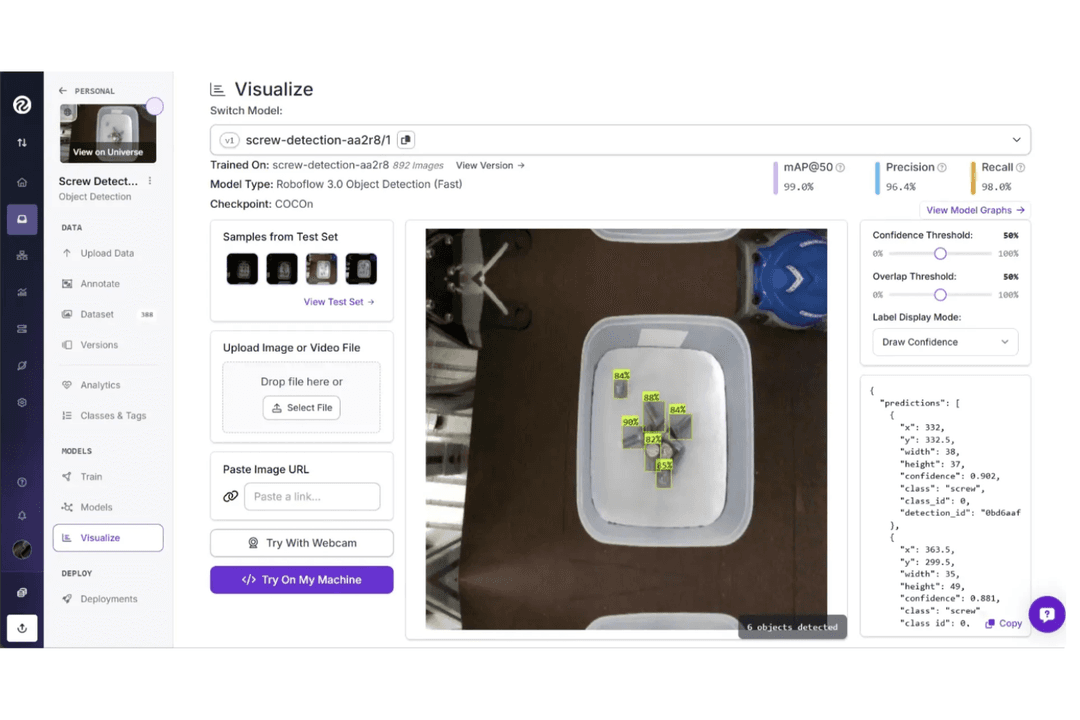
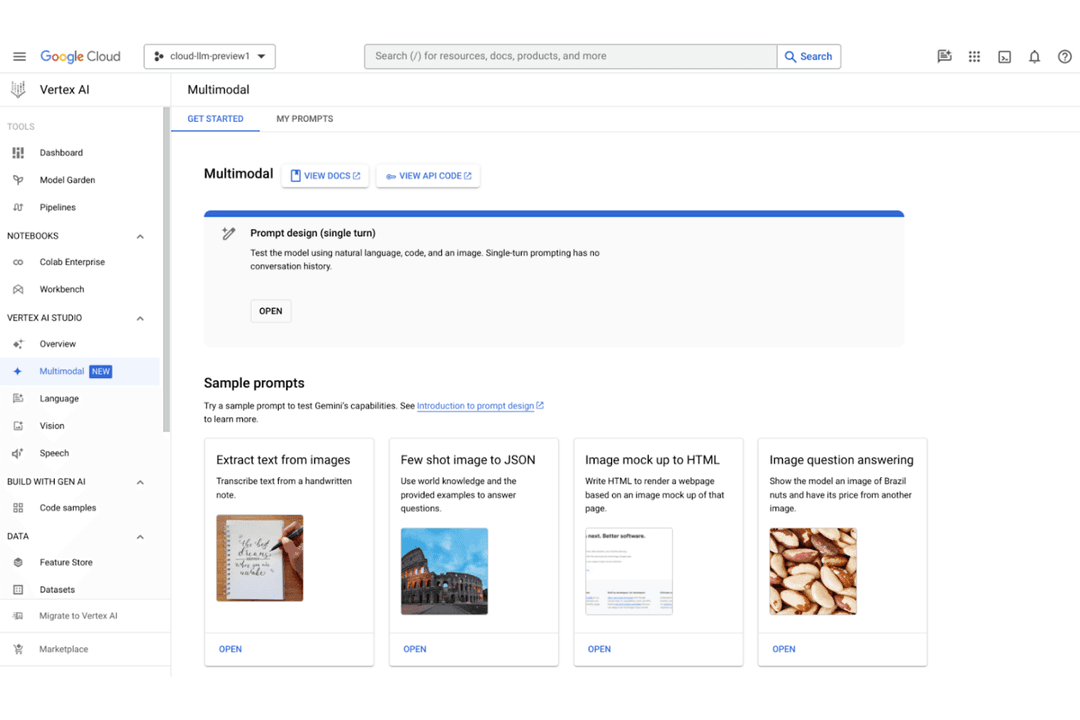
Roboflow und Vertex AI verfolgen unterschiedliche Ansätze. Roboflow vereinfacht die Entwicklung von Computer-Vision-Anwendungen durch einen einfachen, schlanken Workflow. Vertex AI ist die vollständig verwaltete KI-Plattform von Google Cloud für Aufbau und Einsatz von Machine Learning und generativer KI im großen Maßstab. Ich erkläre Ihnen die Unterschiede, damit Sie entscheiden können, welche Lösung zu den Zielen Ihres Teams passt.
Roboflow
4.8/5
- Free plan + free trial + free demo available
- From $99/month
Vertex AI
4.3/5
- Free plan available
- Pricing upon request
Warum Sie unseren Software-Empfehlungen vertrauen können
6,700+
Reviews
20
Industry experts
16+
Evaluation factors
14
Years
Unser Team testet und bewertet Software seit 2012. Als Tech-Führungskräfte wissen wir selbst, wie schwierig – und wichtig – es ist, die richtige Software auszuwählen.
Für diesen Leitfaden haben wir Tools mithilfe von praktischen Tests und unabhängiger Recherche bewertet und dabei unsere Bewertungskriterien angewendet.
Unsere Bewertungen spiegeln unser menschliches redaktionelles Urteilsvermögen wider, keine Verkaufsstrategie.
Expertenprüfer:
- Paulo Gardini MiguelTech-Direktor
 Tim FisherVP für KI
 Gabriel RosasTech Lead & Software-Architekt
 Christhian GruhnTech Lead & Plattform-Architekt

| Roboflow | Vertex AI | |
|---|---|---|
| Free Trial | Free plan + free trial + free demo available | Free plan available |
| Pricing | From $99/month | Pricing upon request |
Roboflow vs. Vertex AI Preise & Versteckte Kosten
Roboflow verwendet ein stufenbasiertes Abonnementmodell mit kostenlosen und kostenpflichtigen Plänen, die sich nach Datensatzgröße und Nutzung skalieren. Die Kosten sind im Allgemeinen vorhersehbar, können aber steigen, wenn Sie Limits überschreiten oder Unternehmensfunktionen benötigen. Vertex AI hingegen arbeitet mit einem nutzungsabhängigen Bezahlsystem innerhalb von Google Cloud, wobei für Rechenleistung, Speicher, Training und Inferenz jeweils separat abgerechnet wird. Das bietet Flexibilität, aber auch steigende Kosten bei hoher Auslastung oder großflächigen Anwendungen.
| Roboflow | Vertex AI | |
|---|---|---|
| A/B Testing | No | No |
| Analytics | Yes | Yes |
| API | Yes | Yes |
| Big Data | Yes | Yes |
| Cloud Deployment | Yes | Yes |
| Dashboard | Yes | Yes |
| Data Export | Yes | Yes |
| Data Import | Yes | Yes |
| Data Mining | Yes | Yes |
| Data Visualization | Yes | Yes |
| External Integrations | Yes | Yes |
| Local Deployment | Yes | No |
| Multi-User | Yes | Yes |
| Optimized Search Processing | No | No |
| SAP Integration | No | No |
| Sentiment Analysis | No | No |
| Integration | Roboflow | Vertex AI |
|---|---|---|
| IntegrationGoogle Cloud Storage | Roboflow✅ | Vertex AI✅ |
| IntegrationAWS S3 | Roboflow✅ | Vertex AI✅ |
| IntegrationMicrosoft Azure | Roboflow✅ | Vertex AI❌ |
| IntegrationLabelbox | Roboflow❌ | Vertex AI❌ |
| IntegrationSlack | Roboflow✅ | Vertex AI❌ |
| IntegrationBigQuery | Roboflow❌ | Vertex AI✅ |
| IntegrationTensorFlow* | Roboflow✅ | Vertex AI✅ |
| IntegrationPyTorch* | Roboflow✅ | Vertex AI✅ |
| IntegrationAPI | Roboflow✅ | Vertex AI✅ |
| IntegrationZapier | Roboflow✅ | Vertex AI✅ |
*Framework = Unterstützung bezieht sich auf Modell- oder Datensatzkompatibilität.
Sowohl Roboflow als auch Vertex AI bieten solide Integrations-Ökosysteme, setzen aber unterschiedliche Schwerpunkte. Roboflow konzentriert sich auf eine nahtlose Anbindung für Computer-Vision-Workflows, sodass Sie Daten bewegen und Modelle zügig bereitstellen können. Vertex AI ist tief in Google Cloud integriert und legt den Fokus auf enge, cloud-native Integration und skalierbare Infrastruktur.
| Faktor | Roboflow | Vertex AI |
|---|---|---|
| FaktorDatenschutz | RoboflowStellt Zugriffssteuerungen auf Arbeitsbereichs- und Projektebene bereit, mit privaten Bereitstellungsoptionen für Unternehmenskunden. | Vertex AINutzt Datenschutzkontrollen auf Unternehmensniveau von Google Cloud und granulare IAM-Richtlinien. |
| FaktorRegulatorische Compliance | RoboflowErfüllt SOC 2 Typ II und unterstützt datenschutzkonforme Prozesse nach DSGVO. | Vertex AIÜbernimmt Google Cloud-Zertifizierungen, u. a. SOC 2, ISO/IEC 27001 und HIPAA (mit BAA). |
| FaktorVerschlüsselung | RoboflowVerschlüsselt Daten während der Übertragung und im Ruhezustand mit branchenüblichen Protokollen. | Vertex AINutzt von Google verwaltete Verschlüsselung für ruhende und übertragene Daten, mit Option auf kundenseitig verwaltete Schlüssel (CMEK). |
| FaktorBetriebszeit & Zuverlässigkeit | RoboflowBietet hohe Verfügbarkeit, mit SLA für Unternehmenskunden. | Vertex AIGestützt auf die globale Infrastruktur von Google Cloud, mit SLAs je nach Servicekonfiguration. |
| FaktorInfrastruktur & Bereitstellungsflexibilität | RoboflowBietet cloudbasierte Dienste mit Optionen für private oder dedizierte Bereitstellungen im Enterprise-Bereich. | Vertex AIVollständig verwaltet innerhalb von Google Cloud, ausgelegt für großflächige, cloud-native Bereitstellung über Regionen hinweg. |
Sowohl Roboflow als auch Vertex AI legen großen Wert auf die Sicherung sensibler Daten durch Verschlüsselung, Zugriffssteuerungen und eine abgesicherte Cloud-Infrastruktur. Roboflow erfüllt SOC 2 Typ II und bietet Unternehmen mit erhöhten Anforderungen Optionen zur privaten Bereitstellung. Vertex AI baut auf der globalen Google Cloud-Infrastruktur und einer breiten Palette an Zertifizierungen auf, um regulierte Umgebungen in großem Maßstab abzubilden. Beide Plattformen bieten Überwachungs- und Zuverlässigkeitsmechanismen, um die Datenverfügbarkeit und Stabilität des Betriebs sicherzustellen.
| Faktor | Roboflow | Vertex AI |
|---|---|---|
| FaktorBenutzeroberfläche | RoboflowBietet ein visuelles Dashboard mit Drag-and-Drop-Tools für Datensätze. | Vertex AIStellt eine funktionsreiche Oberfläche für cloudnative ML-Workflows zur Verfügung. |
| FaktorOnboarding | RoboflowBietet geführte Tutorials und Schnellstart-Ressourcen. | Vertex AIErfordert zur vollständigen Nutzung Kenntnisse über Google Cloud und ML-Konzepte. |
| FaktorEinrichtungsprozess | RoboflowErmöglicht eine schnelle Projekterstellung mit minimaler Konfiguration. | Vertex AIBeinhaltet das Konfigurieren von Google Cloud-Diensten und Projekteinstellungen. |
| FaktorDokumentation | RoboflowStellt anwendungsorientierte Anleitungen und Community-Ressourcen zur Verfügung. | Vertex AIBietet detaillierte, technische Dokumentation für fortgeschrittene Anwendungsfälle. |
| FaktorLernkurve | RoboflowAusgelegt auf schnelle Einführung, besonders für Teams mit Fokus auf Computer-Vision-Anwendungsfälle. | Vertex AIKönnte aufgrund des breiteren Plattformumfangs und der Integration mehrerer Google-Cloud-Dienste mehr Kenntnisse über Cloud-Infrastrukturen erfordern. |
Roboflow ist im Allgemeinen leichter zu übernehmen für Teams, die sich auf optimierte Computer-Vision-Workflows konzentrieren, während Vertex AI umfassendere KI-Funktionen bietet, was jedoch mehr Vertrautheit mit Cloud-Infrastrukturen voraussetzen kann. Roboflow ist darauf ausgelegt, schnelle Fortschritte zu ermöglichen, während Vertex AI Flexibilität und Skalierbarkeit innerhalb des Google-Cloud-Ökosystems priorisiert.
Roboflow
- AI-assisted annotation speeds up labeling large datasets.
- Supports deployment to edge devices, cloud, or on-premises.
- Offers open source tools and public datasets for experimentation.
- Costs can scale quickly with high-volume training and inference.
- Limited low-level customization compared to fully custom ML pipelines.
- Performance and latency vary by deployment method.
Vertex AI
- Managed pipelines automate model training and deployment.
- AutoML supports custom model creation without deep coding.
- Model monitoring tools help track drift and performance.
- Pricing structure is complex and hard to predict.
- Onboarding is challenging for teams new to Google Cloud.
- Limited transparency in resource usage and billing details.
Roboflow
- ManufacturingDeploy vision AI to automate quality inspections, detect defects, track inventory, and improve efficiency across modern manufacturing operations.
- Industrial ManufacturingUse vision AI to monitor equipment performance, prevent downtime, automate inspections, and optimize complex industrial production environments at scale.
- Healthcare & MedicineApply vision AI to analyze medical imagery, monitor patients, automate workflows, and improve diagnostic accuracy and healthcare outcomes.
- AutomotiveEnhance automotive manufacturing with vision AI that detects defects, monitors assembly lines, optimizes processes, and prevents costly production downtime.
- Aerospace & DefenseUse vision AI to inspect components, verify assembly accuracy, monitor safety compliance, and ensure quality across aerospace manufacturing operations.
- Consumer GoodsProtect product quality and brand trust using vision AI to inspect packaging, verify labels, detect defects, and optimize production.
Vertex AI
- AI & Generative AI TeamsTeams building large language models, multimodal systems, or AI agents can leverage managed training, evaluation, and Gemini model access.
- Healthcare & Life Sciences DepartmentsOrganizations handling sensitive clinical or research data can use Google Cloud’s compliance-backed infrastructure and monitoring tools.
- Retail & Ecommerce Data TeamsSupports demand forecasting, personalization, and computer vision workflows at scale.
- Financial Services & Insurance DivisionsModel monitoring, governance, and scalable compute align with regulated AI initiatives.
- Logistics & Supply Chain OperationsEnables predictive analytics and optimization models using large, distributed datasets.
- Government & Public Sector ProgramsAgencies running secure, cloud-based AI initiatives can leverage Google Cloud’s infrastructure and certifications.
- Budget-Constrained Educational ProgramsVariable cloud pricing may be difficult to manage for classroom environments.
Wer sollte Roboflow nutzen und wer Vertex AI?
Wenn Sie eine Computer-Vision- und Machine-Learning-Plattform suchen, die schnell eingeführt, einfach zu verwalten ist und Ihnen dabei hilft, ohne komplexe Cloud-Konfigurationen vom Datensatz zum bereitgestellten Modell zu gelangen, ist Roboflow vermutlich die bessere Wahl. Ideal, wenn Sie integrierte Vorverarbeitung, optimiertes Training und einen fokussierten Workflow wünschen, der Ihrem Team schnelle Experimente und Auslieferung ermöglicht.
Wenn Sie hingegen eine vollständig verwaltete KI-Plattform mit tiefer Google-Cloud-Integration, fortschrittlichen MLOps-Fähigkeiten und Unterstützung für groß angelegte Machine-Learning- oder generative KI-Projekte benötigen, ist Vertex AI möglicherweise die stärkere Option. Sie eignet sich besonders für Organisationen, die Wert auf Enterprise-Governance, skalierbare Infrastruktur und enge Anbindung an eine umfassende Cloud-Architektur legen.
| Roboflow | Vertex AI | |
|---|---|---|
| Annotation Capabilities | Roboflow Built-in image annotation tools with automation and dataset versioning. | Vertex AI Provides managed data labeling services and AutoML workflows within Google Cloud. |
| Automation | Roboflow Simplifies training and deployment with integrated workflows for rapid iteration. | Vertex AI Supports advanced automation through managed training, hyperparameter tuning, and pipeline orchestration. |
| Cloud Storage | Roboflow Connects with major cloud storage providers and offers private deployment options for enterprise plans. | Vertex AI Deep, native integration across Google Cloud services and infrastructure. |
| Pricing Model | Roboflow Subscription tiers based on usage limits, collaboration features, and deployment needs. | Vertex AI Pay-as-you-go pricing based on compute, storage, model usage, and cloud resources consumed. |
| User Interface | Roboflow Visual dashboard focused on streamlined computer vision workflows. | Vertex AI Feature-rich, cloud-native interface designed for broader ML and AI workloads. |
| API Access | Both provide APIs for integrating models into applications and automating workflows. |
|---|---|
| Dataset Management | Each platform provides tools for uploading, organizing, and versioning datasets to support model development. |
| Deployment Options | Both support deploying models to scalable cloud environments for production inference. |
| Framework Support | Both support popular ML frameworks like TensorFlow and PyTorch, offering flexibility in model development. |
| Security Standards | Both implement encryption at rest and in transit, along with enterprise-grade security controls. |