

10 Beste Tenable-Alternativen im Test 2026

10 Beste Tenable Alternativen Kurzliste
Here's my pick of the 10 best software from the 14 tools reviewed.


Die richtige Exposure-Management-Software zu finden, kann schwierig sein, besonders wenn Tenable Ihre Anforderungen nicht erfüllt. Vielleicht suchen Sie nach besseren Integrationen oder Webanwendungen, bestimmten Funktionen, einer Cloud-basierten Plattform oder einer benutzerfreundlicheren Oberfläche. Was auch immer der Grund ist: Sie sind nicht allein auf der Suche nach Alternativen zu Tenable.
Aus meiner Erfahrung kann die Wahl des richtigen Tools einen großen Unterschied für Ihr Team machen. Es kann bessere Anwendungssicherheit, einfacheres Patch-Management und weniger Kopfschmerzen bedeuten. Ich habe mehrere Optionen geprüft, um Ihnen zu helfen, die beste Lösung zu finden.
Ich führe Sie durch die besten Alternativen zu Tenable und zeige auf, was sie bieten und wie sie Ihre aktuellen Herausforderungen möglicherweise lösen können. So können Sie eine fundierte Entscheidung treffen und die Lösung finden, die am besten zu Ihrem Team passt.
Was ist Tenable?
Tenable ist eine Exposure-Management-Software, die Unternehmen dabei hilft, ihre Sicherheitsrisiken und Arbeitslasten zu verwalten. Das Vulnerability-Management-Tool Tenable Nessus wird häufig von IT-Profis, Cybersicherheitsteams und Risikomanagern verwendet. Funktionen wie Schwachstellen-Scanning, Compliance-Management und Echtzeit-Bedrohungsinformationen helfen, Sicherheitsrisiken zu minimieren und die Einhaltung von Vorschriften zu gewährleisten. Insgesamt bietet Tenable einen Mehrwert, indem es dem IT-Team ermöglicht, Cybersecurity-Bedrohungen proaktiv zu managen und zu mindern.
Beste Tenable Alternativen Zusammenfassung
Diese Vergleichstabelle fasst die Preisinformationen meiner besten Tenable Alternative-Auswahlen zusammen, um Ihnen zu helfen, die beste Lösung für Ihr Budget und Ihre geschäftlichen Anforderungen zu finden.
| Tool | Best For | Trial Info | Price | ||
|---|---|---|---|---|---|
| 1 | Best for breach prevention | Free plan available | From $59.99/device/year (billed annually) | Website | |
| 2 | Best for agentless cloud visibility | Free demo available | Pricing upon request | Website | |
| 3 | Best for managed detection and response | Free trial + free demo available | From $1.62/asset/month (billed annually) | Website | |
| 4 | Best for autonomous penetration testing | Free demo available | Pricing upon request | Website | |
| 5 | Best for third-party risk management | Free demo available | Pricing upon request | Website | |
| 6 | Best for continuous security testing | Free demo available | Pricing upon request | Website | |
| 7 | Best for network security | Free demo + free trial available | Pricing upon request | Website | |
| 8 | Best for automated remediation workflows | Free demo available | Pricing upon request | Website | |
| 9 | Best for integration with Microsoft tools | 30-day free trial + free demo available | From $3/user/month (billed annually) | Website | |
| 10 | Best for automated vulnerability triage | Free demo available | Pricing upon request | Website |
Why Trust Our Software Reviews
-

Site24x7
Visit WebsiteThis is an aggregated rating for this tool including ratings from Crozdesk users and ratings from other sites.4.6 -
GitHub Actions
Visit WebsiteThis is an aggregated rating for this tool including ratings from Crozdesk users and ratings from other sites.4.8 -
Docker
Visit WebsiteThis is an aggregated rating for this tool including ratings from Crozdesk users and ratings from other sites.4.6




Beste Tenable Alternativen Bewertungen
Nachfolgend finden Sie meine ausführlichen Zusammenfassungen der besten Tenable Alternativen, die es auf meine Kurzliste geschafft haben. Meine Bewertungen bieten einen detaillierten Einblick in die wichtigsten Funktionen, Vor- und Nachteile, Integrationen und idealen Anwendungsfälle jedes Tools, um Ihnen die beste Wahl zu erleichtern.
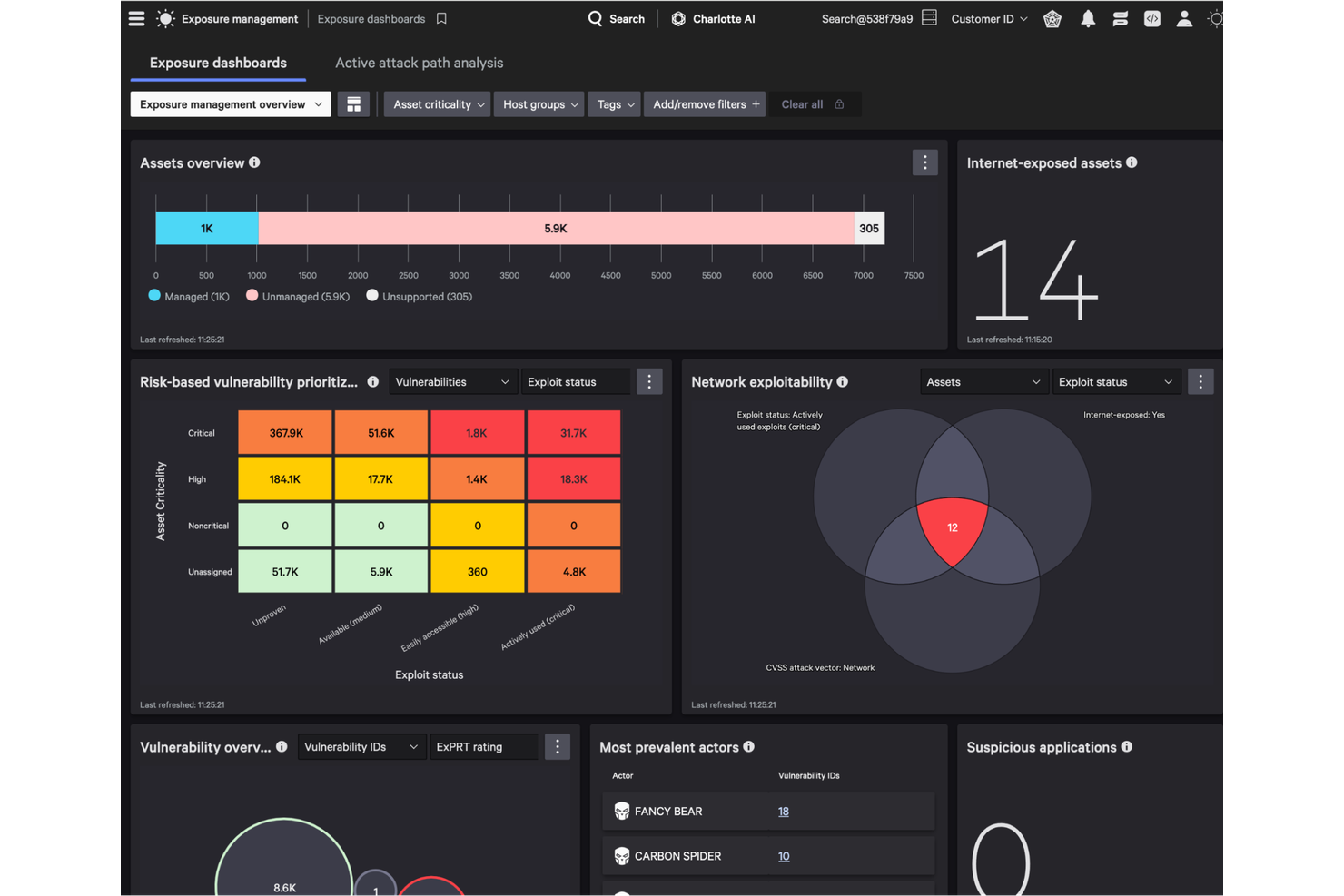
CrowdStrike is a cybersecurity platform primarily used by IT and security professionals to protect against cyber threats. It focuses on endpoint protection, threat intelligence, and incident response to secure your organization's digital assets.
Why it's a good Tenable alternative: CrowdStrike's AI-powered Falcon platform provides continuous monitoring and automated threat detection, helping your team stay ahead of cyber threats. It also offers cloud-native architecture, which ensures scalability and flexibility for your growth needs across web applications.
Standout Features and Integrations:
Features include intelligent threat detection that uses machine learning to detect and respond to breaches in real time. It also offers endpoint protection for Windows, macOS, and Linux devices, securing them against malware and other threats. Additionally, its threat intelligence provides insights into emerging cyber threats, helping you stay informed and prepared.
Integrations include ServiceNow, Splunk, AWS, Microsoft Azure, Google Cloud, Okta, Cisco, Qualys, Rapid7 InsightVM, Zscaler, IBM, and more.
Pros and Cons
Pros:
- Strong endpoint protection
- Scalable for growing businesses
- Single lightweight agent architecture
Cons:
- High local storage requirements
- Requires technical expertise

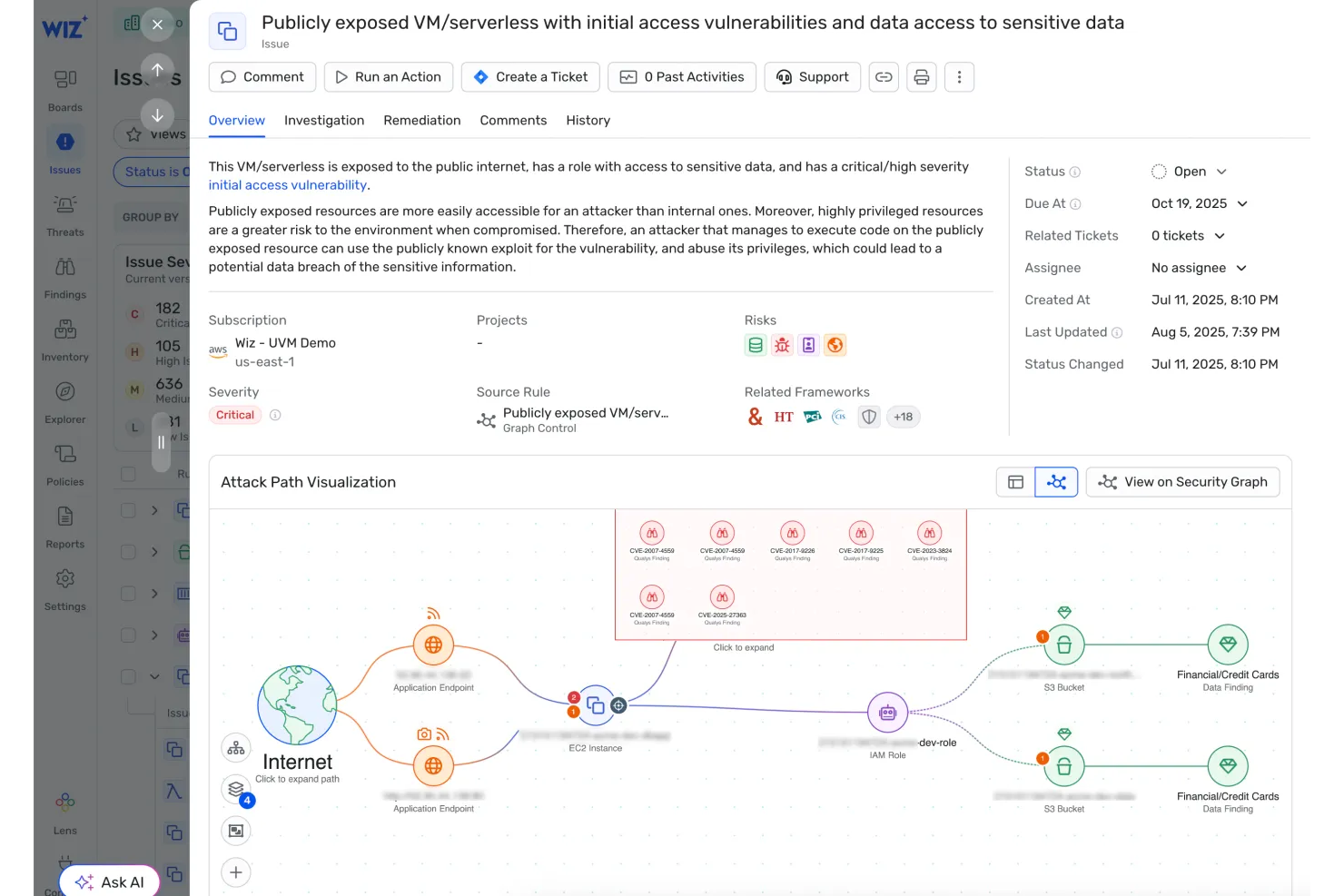
Wiz is a cloud security platform used by IT security teams to manage and secure cloud environments. It helps detect and mitigate risks, keeping your cloud infrastructure safe from threats.
Why it's a good Tenable alternative: Wiz provides AI-driven agentless cloud visibility, allowing you to see and secure your entire cloud environment without installing agents. This feature simplifies deployment and reduces overhead for your team. Continuous monitoring keeps you informed about potential vulnerabilities and misconfigurations. With real-time insights, you can quickly address security gaps, making it an excellent alternative to Tenable.
Standout Features and Integrations:
Features include risk assessment capabilities that help your team identify and prioritize vulnerabilities. For example, you can visualize any publicly exposed virtual machines with initial access vulnerabilities that may lead to sensitive data access. Automated remediation workflows ensure that threats are addressed swiftly and effectively.
Integrations include AWS, Microsoft Azure, Qualys, Rapid7 InsightVM, Google Cloud, Terraform, Jenkins, GitHub, GitLab, PagerDuty, Slack, and more.
Pros and Cons
Pros:
- Compliance management tools
- Automated remediation
- Agentless deployment
Cons:
- May require integration with other security tools
- Requires cloud expertise

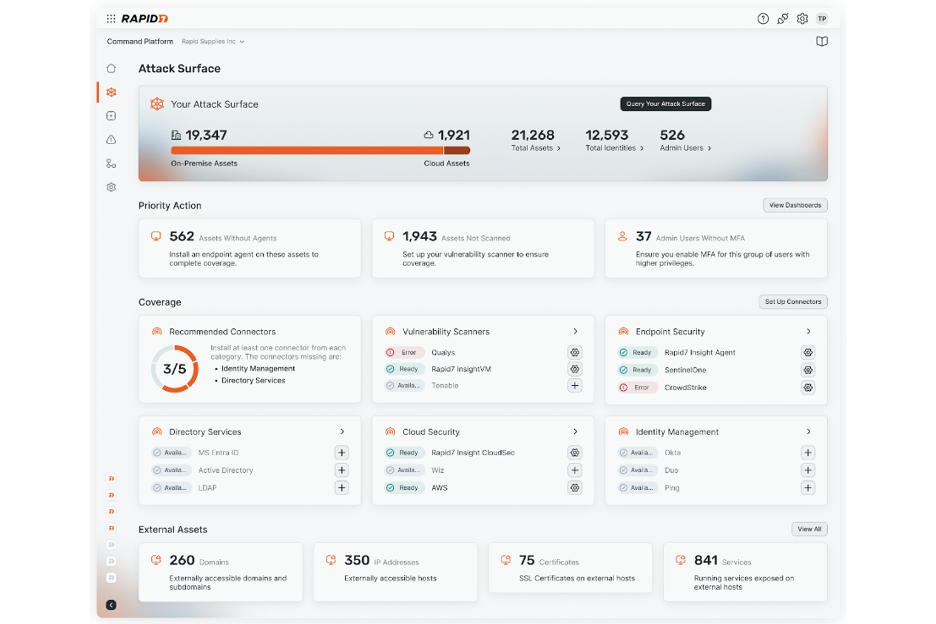
Rapid7 is a cybersecurity platform used by IT and SOC professionals to detect, manage, and respond to threats. It offers tools for vulnerability management, incident detection, and automated responses to secure your digital environment.
Why it's a good Tenable alternative: Rapid7 provides AI-driven managed detection and response services, allowing your team to focus on strategic initiatives while experts handle threat detection. Its real-time analytics help you identify and mitigate risks quickly. The platform's automation capabilities speed up incident response.
Standout Features and Integrations:
Features include automated threat intelligence that empowers your team to respond to emerging threats. The platform offers user behavior analytics to detect unusual activities within your network. Additionally, its customizable dashboards provide insights tailored to your organization's needs, such as priority actions for security gaps, coverage status with recommended connectors, and external asset exposure metrics.
Integrations include AWS, Microsoft Azure, Splunk, ServiceNow, Jira, Microsoft Sentinel, Cisco, Okta, and more.
Pros and Cons
Pros:
- User behavior analytics
- Built-in APIs
- Managed detection and response
Cons:
- Limited reporting options
- Expensive for small businesses

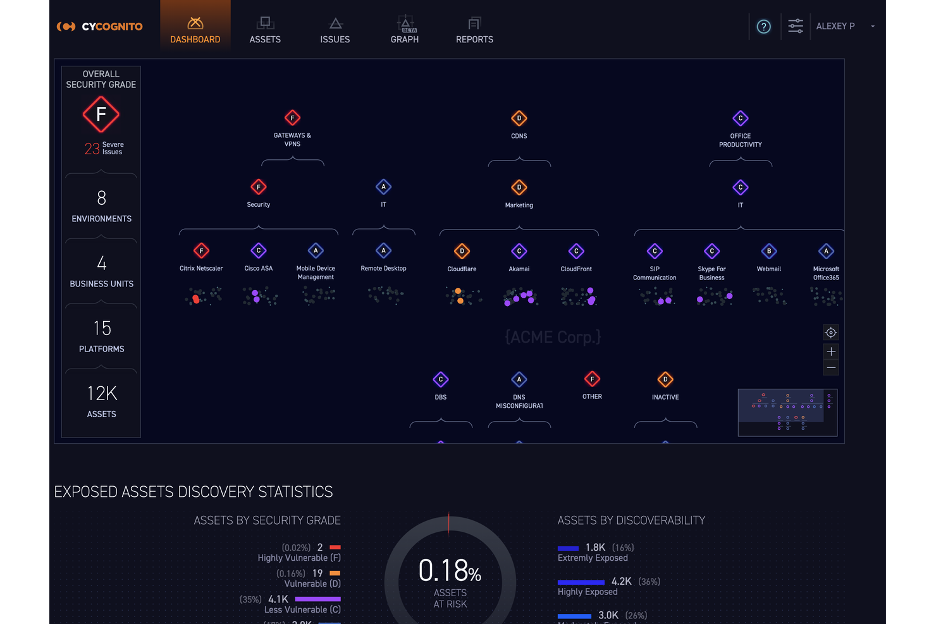
CyCognito is a cybersecurity platform used by IT security teams to identify and manage security risks across their digital footprint. It helps uncover hidden vulnerabilities and prioritize remediation efforts.
Why it's a good Tenable alternative: CyCognito's autonomous penetration testing capabilities allow your team to simulate attacks and identify vulnerabilities without manual intervention. Its AI-driven risk assessment provides insights into potential threats, boosting your team's ability to prioritize remediation. The platform's all-around visibility ensures you can manage risks effectively across all assets.
Standout Features and Integrations:
Features include continuous monitoring to keep your security posture up to date. The platform's threat intelligence provides context about vulnerabilities and risks. Additionally, its reporting tools and dashboard deliver detailed analyses of your security landscape and environment topology.
Integrations include AWS, Microsoft Azure, Google Cloud, Qualys, Rapid7 InsightVM, ServiceNow, Splunk, and more.
Pros and Cons
Pros:
- Detailed reporting tools
- Full-scale visibility
- Automated external attack surface mapping
Cons:
- Time-consuming feature fine-tuning
- External asset focus only

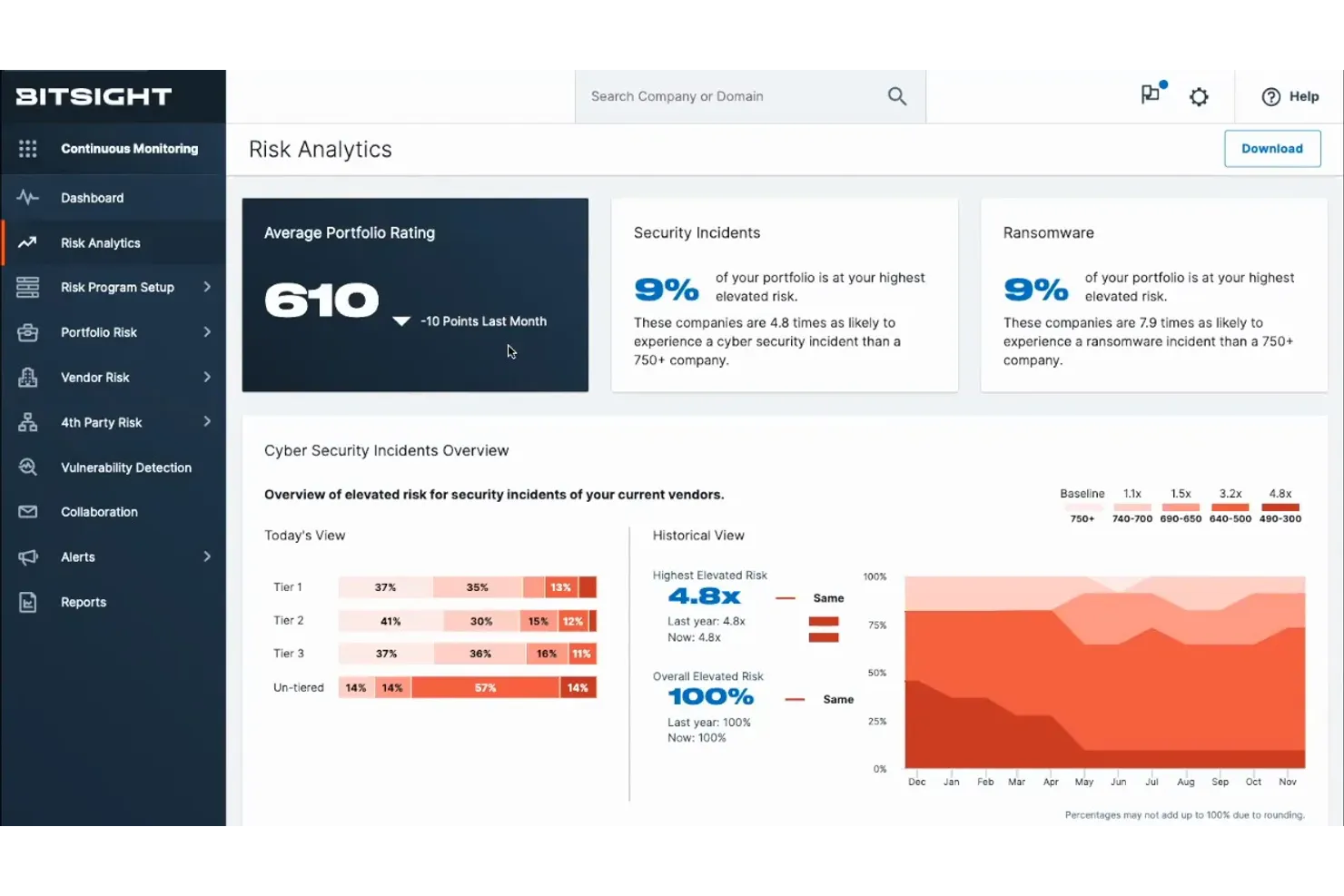
BitSight is a security ratings platform used by risk management and cybersecurity teams to assess and manage third-party risks. It provides insights into the security performance of vendors and partners, helping your team make informed decisions.
Why it's a good Tenable alternative: BitSight focuses on third-party risk management, offering detailed security ratings for vendors and partners. Its continuous monitoring capabilities provide real-time insights into potential risks. The platform's user-friendly interface makes it easy to understand and act on security data.
Standout Features and Integrations:
Features include AI-powered risk assessment tools that evaluate your vendors' security posture. The risk dashboard gives you a high-level cybersecurity incidents overview with tier-based risk distribution. The platform offers automated alerts to notify you of any significant changes in security ratings. BitSight also provides benchmarking capabilities to compare your security performance against industry standards.
Integrations include ServiceNow, Splunk, RSA Archer, Qualys, Microsoft Sentinel, AWS, Microsoft Azure, Google Cloud, Okta, and more.
Pros and Cons
Pros:
- Benchmarking capabilities
- Automated alerts
- Focus on third-party risk
Cons:
- Dependence on external data sources
- Requires ongoing management

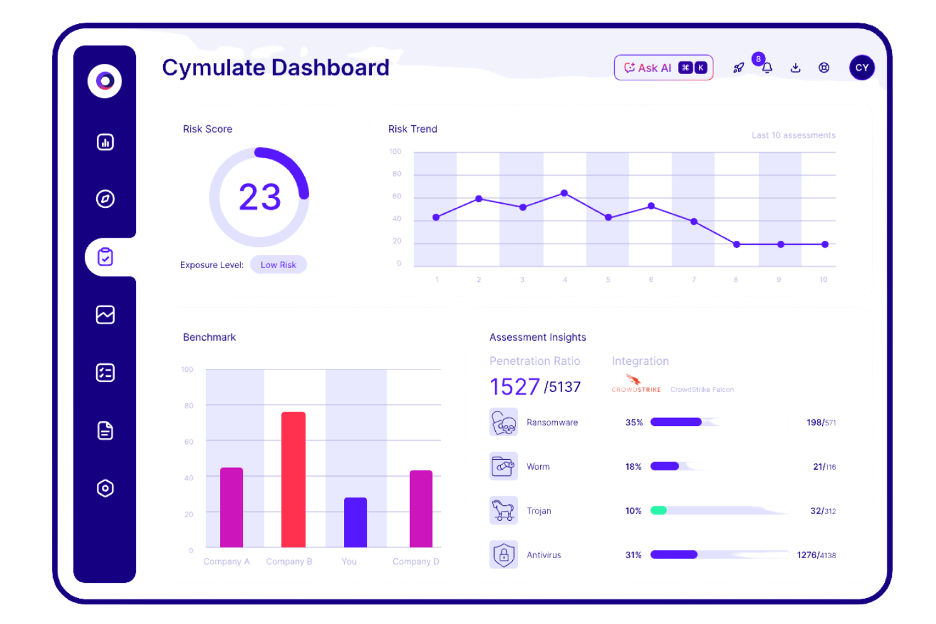
Cymulate is a breach and attack simulation platform used by cybersecurity teams to evaluate and improve their security posture. It provides continuous security testing to identify vulnerabilities and assess your defenses against potential threats.
Why it's a good Tenable alternative: Cymulate's continuous, automated security testing tools provide in-depth assessments of your security posture. The platform's user-friendly interface helps you quickly understand vulnerability assessment results and prioritize your IT team's response.
Standout Features and Integrations:
Features include AI-led threat intelligence that keeps you informed about emerging threats and vulnerabilities. The platform enables your team to simulate attacks and test your security measures against real-world scenarios. Additionally, its reporting tools provide detailed insights into your security posture, helping you prioritize remediation efforts.
Integrations include Splunk, ServiceNow, Rapid7 InsightVM, IBM QRadar, Cortex XSOAR, AWS GuardDuty, Microsoft Azure Sentinel, and more.
Pros and Cons
Pros:
- Immediate security gap visualization
- Automated threat simulations
- Continuous penetration testing
Cons:
- Primarily cloud/virtual focus
- No offline testing mode
Strata Cloud Manager is a cybersecurity platform used by IT security professionals to protect networks from cyber threats. It focuses on network security, cloud security, and threat intelligence to help your team safeguard digital assets.
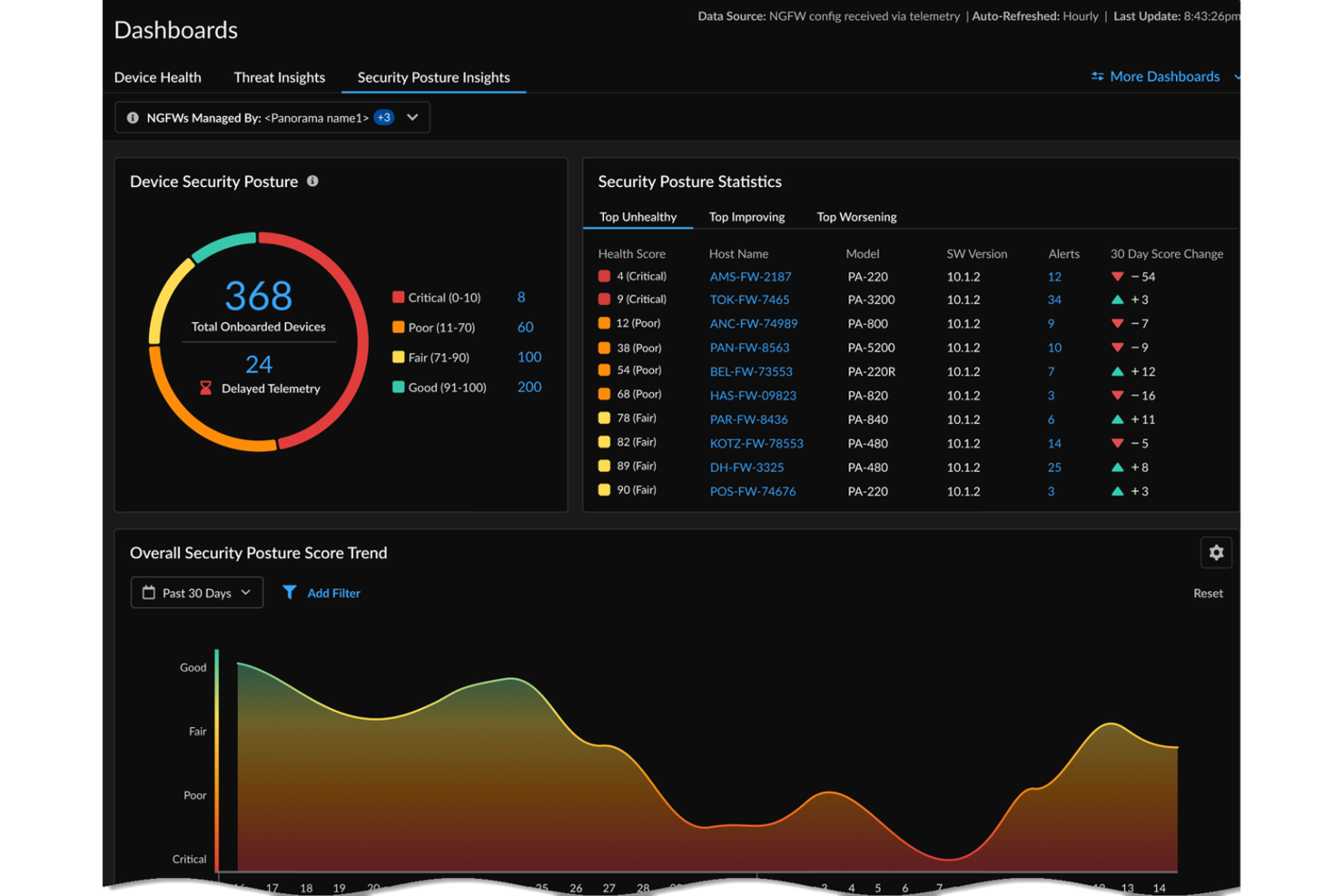
Why it's a good Tenable alternative: Strata Cloud Manager's AI-powered network security provides advanced and swift threat detection, prevention, and remediation capabilities. The security posture insights hub displays onboarded devices' real-time health scoring, critical alerts, and a 30-day trend analysis. The platform's cloud-based native architecture supports scalability, making it suitable for businesses of all sizes. These features ensure total protection for your network, setting it apart from Tenable.
Standout Features and Integrations:
Features include automated threat response, which helps your team act swiftly against potential breaches. The platform offers zero-trust network security to ensure that only authorized users have access to your resources. Additionally, detailed threat intelligence and vulnerability assessments provide insights into emerging security threats, keeping you informed.
Integrations include Prisma and more.
Pros and Cons
Pros:
- Zero-trust network security
- Automated threat response
- Scalable cloud-native architecture
Cons:
- High hardware dependency
- Complex setup process
Nucleus Security is an AI-driven vulnerability management platform used by IT security teams to organize and automate vulnerability remediation. It helps prioritize and manage vulnerabilities across your organization's systems and web apps.
Why it's a good Tenable alternative: Nucleus Security offers automated remediation workflows that facilitate your team's vulnerability management. Its centralized dashboard provides a clear view of your security posture, allowing you to prioritize tasks effectively. With real-time updates, you can quickly adapt to new threats.
Standout Features and Integrations:
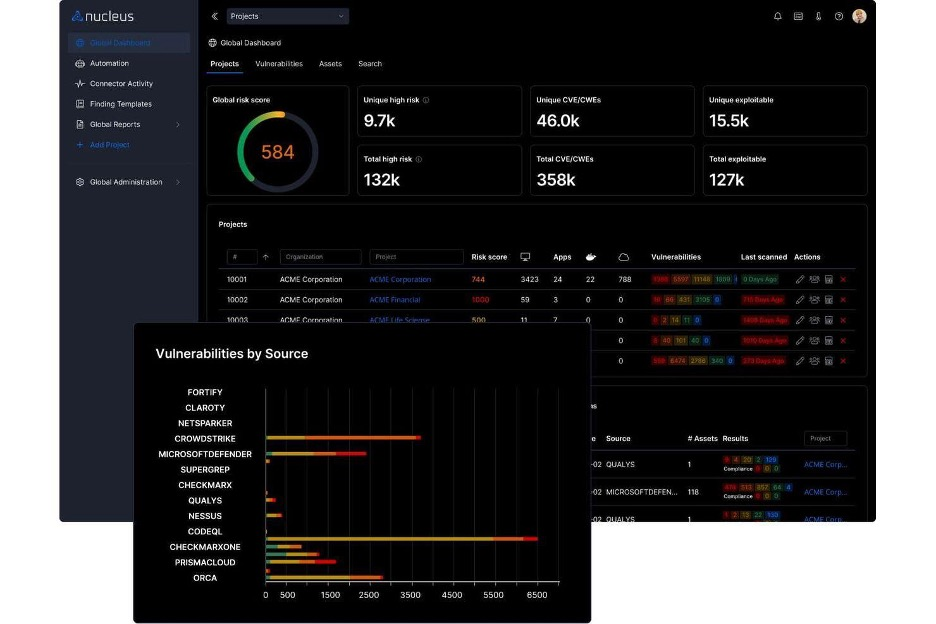
Features include customizable dashboards that provide insights into your organization's security status. This includes risk scoring, vulnerabilities by source, and project-level exposure metrics with detailed CVE/CWE tracking across multiple security tools to help you prioritize vulnerabilities.
Integrations include AWS, Microsoft Azure, Jira, ServiceNow, Splunk, Tenable, Qualys, Rapid7 InsightVM, Microsoft Defender, and more.
Pros and Cons
Pros:
- Real-time updates
- Unified vulnerability data ingestion
- Centralized vulnerability management
Cons:
- No internal scanning engine
- Dependency on connected tools
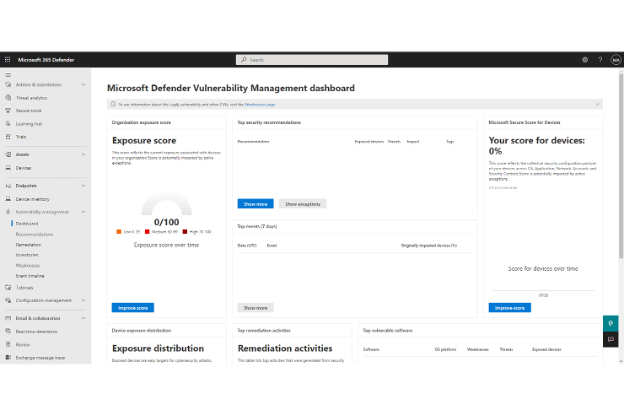
Microsoft Defender is a security exposure management solution designed for security teams, including security admins, SecOps professionals, and CISOs, at small to medium businesses. It helps manage vulnerabilities across IT environments, providing tools for real-time threat detection and risk assessment.
Why it's a good Tenable alternative: Microsoft Defender offers full integration with Microsoft 365 and Azure, making it ideal for teams already using these platforms. Its advanced AI-led analytics capabilities and web application scanning provide deep insights into security risks, boosting your team's ability to respond to threats. The user-friendly interface ensures easy navigation and control over security exposures.
Standout Features and Integrations:
Features include real-time asset discovery, which helps you track all your assets and their security status. Vulnerability assessment tools provide insights into potential threats with helpful visualizations, such as organization-wide exposure scores, security guidance, and device security postures.
Integrations include most Microsoft products, Splunk, QRadar, ServiceNow, and more.
Pros and Cons
Pros:
- Native Windows kernel integration
- Best for limiting false positives
- Advanced analytics capabilities
Cons:
- Limited customization options
- Limited non-Windows feature parity

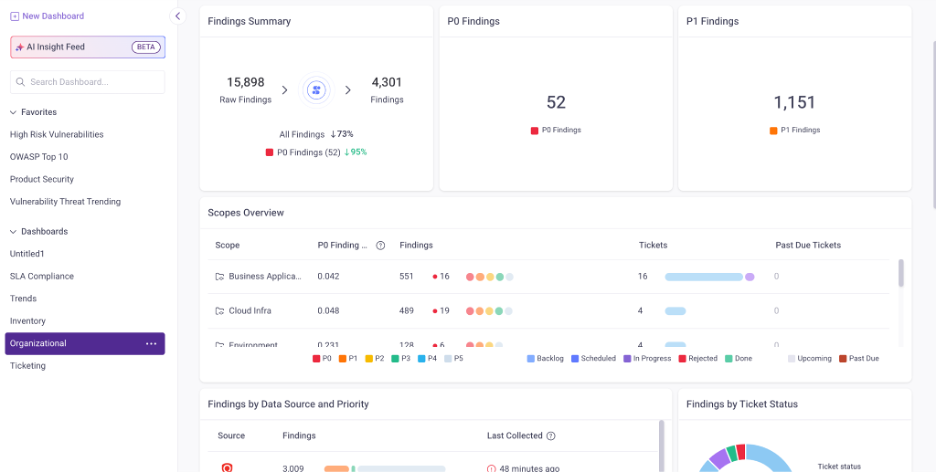
Seemplicity is a security operations platform designed for cybersecurity teams to automate their vulnerability management solutions. It helps prioritize and remediate vulnerabilities efficiently in your organization's systems.
Why it's a good Tenable alternative: Seemplicity's AI agents automate vulnerability triage and workflows, allowing your team to manage and prioritize security issues with precision. Its intuitive dashboard provides clear visibility into vulnerabilities, helping you focus on patching what matters most.
Standout Features and Integrations:
Features include real-time alerts that keep your IT team informed about critical vulnerabilities. The platform provides detailed analytics to help you understand trends and patterns in your security data. Seemplicity also offers customizable reports, allowing you to tailor information to your specific needs.
Integrations include AWS, Microsoft Azure, Rapid7, Qualys, Slack, Jira, ServiceNow, Microsoft Defender, Trello, and more.
Pros and Cons
Pros:
- Customizable reports
- Intuitive dashboard
- Automated vulnerability triage
Cons:
- Learning curve for new users
- Basic vulnerability scanning
Weitere Tenable Alternativen
Hier sind einige zusätzliche Tenable Alternativen, die es nicht auf meine Kurzliste geschafft haben, aber trotzdem einen Blick wert sind:
- runZero
For full-spctrum exposure detectione
- Balbix
For risk quantification
- SentinelOne
For real-time endpoint protection
- Darktrace
For AI-driven threat detection and response


Auswahlkriterien für Tenable Alternativen
Bei der Auswahl der besten Tenable Alternativen für diese Liste habe ich häufige Anforderungen von Käufern und Schmerzpunkte im Zusammenhang mit Exposure-Management-Softwareprodukten berücksichtigt, wie Skalierbarkeit und einfache Integration. Außerdem habe ich den folgenden Rahmen verwendet, um meine Bewertung strukturiert und fair zu halten:
Kernfunktionen (25 % der Gesamtbewertung)
Um in diese Liste aufgenommen zu werden, musste jede Lösung diese gängigen Anwendungsfälle erfüllen:
- Erkennung von Schwachstellen
- Bereitstellung von Risikoanalysen
- Bedrohungserkennung ermöglichen
- Unterstützung des Compliance-Managements
- Asset-Erkennung anbieten
Weitere herausragende Funktionen (25 % der Gesamtbewertung)
Um die Auswahl weiter einzugrenzen, habe ich auch nach besonderen Funktionen gesucht, wie zum Beispiel:
- KI-gesteuerte Analysen
- Automatisierte Behebung
- Anpassbare Dashboards
- Echtzeit-Benachrichtigungen
- Integration mit mehreren Cloud-Anbietern
Benutzerfreundlichkeit (10% der Gesamtbewertung)
Um einen Eindruck von der Benutzerfreundlichkeit jedes Systems zu erhalten, habe ich Folgendes berücksichtigt:
- Intuitive Benutzeroberfläche
- Einfache Navigation
- Anpassbare Einstellungen
- Verfügbarkeit von Benutzerhandbüchern
- Geschwindigkeit der Leistung
Onboarding (10% der Gesamtbewertung)
Um die Onboarding-Erfahrung jeder Plattform zu bewerten, habe ich Folgendes einbezogen:
- Verfügbarkeit von Schulungsvideos
- Interaktive Produkttouren
- Zugang zu Webinaren
- Verfügbarkeit von Vorlagen
- Vorhandensein von Chatbots zur Unterstützung
Kundensupport (10% der Gesamtbewertung)
Um den Kundensupport der jeweiligen Software-Anbieter zu bewerten, habe ich Folgendes herangezogen:
- Rund-um-die-Uhr-Support
- Reaktionszeit auf Anfragen
- Zugang zu Support-Dokumentation
- Verfügbarkeit von Live-Chat
- Zugriff auf einen persönlichen Account-Manager
Preis-Leistungs-Verhältnis (10% der Gesamtbewertung)
Um das Preis-Leistungs-Verhältnis der jeweiligen Plattform zu bewerten, habe ich auf Folgendes geachtet:
- Transparente Preisgestaltung
- Verfügbarkeit flexibler Tarife
- Kosten im Verhältnis zu den angebotenen Funktionen
- Rabattmöglichkeiten bei jährlicher Abrechnung
- Verfügbarkeit einer kostenlosen Testphase
Kundenbewertungen (10% der Gesamtbewertung)
Um ein Gesamtbild der Kundenzufriedenheit zu erhalten, habe ich die folgenden Punkte bei der Durchsicht von Kundenbewertungen betrachtet:
- Gesamtzufriedenheitsbewertungen
- Rückmeldungen zur Effektivität der Funktionen
- Kommentare zur Qualität des Supports
- Erwähnungen der Benutzerfreundlichkeit
- Bewertungen zur Integrationsfähigkeit
Warum nach einer Tenable-Alternative suchen?
Obwohl Tenable eine gute Wahl für Exposure-Management-Software ist, gibt es mehrere Gründe, warum manche Nutzer nach alternativen Lösungen suchen. Sie könnten nach einer Alternative zu Tenable suchen, weil…
- Sie eine bessere Integration mit bestehenden Tools benötigen
- Ihr Team mehr anpassbare Funktionen benötigt
- Sie günstigere Preisoptionen suchen
- Sie Unterstützung für eine größere geografische Region brauchen
- Ihr Unternehmen schnellere Bereitstellungszeiten benötigt
- Sie erweiterte Berichtsfunktionen suchen
Wenn einer dieser Punkte auf Sie zutrifft, sind Sie hier genau richtig. Meine Liste enthält verschiedene Exposure-Management-Softwares, die besser für Teams geeignet sind, die mit Tenable vor diesen Herausforderungen stehen und nach Alternativen suchen.
Wichtige Funktionen von Tenable
Hier sind einige der wichtigsten Funktionen von Tenable, um zu veranschaulichen, welche Alternativen angeboten werden:
- Schwachstellen-Scan: Erkennt Sicherheitslücken im gesamten Netzwerk, damit Sie die Behebungsmaßnahmen priorisieren können.
- Risikobasierte Priorisierung: Setzt fortschrittliche Analysen ein, um sich auf die kritischsten Schwachstellen zu konzentrieren.
- Konzertierte Überwachung: Überwacht Ihre Systeme kontinuierlich, um Bedrohungen in Echtzeit zu erkennen.
- Compliance-Management: Unterstützt Ihr Team bei der Einhaltung gesetzlicher Anforderungen und Branchenstandards.
- Asset-Erkennung: Identifiziert alle mit Ihrem Netzwerk verbundenen Geräte für ein optimiertes Sicherheitsmanagement.
- Angriffsvektor-Analyse: Kartiert potenzielle Angriffspfade, um nachvollziehen zu können, wie Bedrohungen sich in Ihrer Umgebung ausbreiten könnten.
- Bedrohungsinformationen: Stellt Einblicke in aufkommende Bedrohungen bereit, damit Ihr Team Angreifern immer einen Schritt voraus ist.
- Integriertes Reporting: Bietet detaillierte Berichte, um den Sicherheitsstatus gegenüber Stakeholdern zu kommunizieren.
- Leitfaden zur Behebung: Schlägt konkrete Schritte zur Behebung identifizierter Schwachstellen vor.
- Cloud-Sicherheit: Erweitert den Schutz auf Cloud-Umgebungen und stellt globale Abdeckung für alle Assets sicher.
Wie geht es weiter?
Wenn Sie gerade dabei sind, sich über Exposure Management Software zu informieren, verbinden Sie sich mit einem SoftwareSelect-Berater für kostenlose Empfehlungen.
Sie füllen ein Formular aus und führen ein kurzes Gespräch, in dem auf Ihre individuellen Anforderungen eingegangen wird. Anschließend erhalten Sie eine Auswahlliste passender Software. Sie werden sogar während des gesamten Kaufprozesses unterstützt – einschließlich Preisverhandlungen.