

10 beste Intercom-Alternativen im Test 2026

Beste Intercom-Alternativen – Kurzliste


Intercom erfüllt möglicherweise nicht die spezifischen Anforderungen jedes Teams. Viele Technikexperten stehen bei der Nutzung von Intercom vor Herausforderungen in Bezug auf Anpassungsmöglichkeiten, Skalierbarkeit oder Kosten. Ganz gleich, ob Sie Kundenanfragen verwalten oder eine bessere Integration in Ihre bestehenden Systeme anstreben – es ist wichtig, die passende Lösung zu finden.
Meiner Erfahrung nach kann die richtige Kundendienstplattform die Arbeitsweise Ihres Teams grundlegend verändern, die Kommunikation verbessern und die Effizienz steigern. Ich habe verschiedene Alternativen zu Intercom unabhängig getestet und bewertet und mich dabei auf das konzentriert, was für Sie wirklich wichtig ist.
In diesem Artikel finden Sie unvoreingenommene Bewertungen führender Alternativen, die jeweils einzigartige Funktionen bieten, um Ihre spezifischen geschäftlichen Herausforderungen zu bewältigen. Sehen wir uns Optionen an, die besser zu Ihren Zielen passen und den Arbeitsablauf Ihres Teams verbessern können.
Was ist Intercom?
Intercom ist eine Kundendienstplattform, die darauf ausgelegt ist, die Kommunikation zwischen Unternehmen und ihren Kunden zu verbessern. Sie wird häufig von Kundensupportteams, Marketingfachleuten und Produktmanagern eingesetzt, die Nutzer effizient erreichen und einbinden müssen. Mit Funktionen wie Live-Chat, automatisierten Nachrichten und der Nachverfolgung von Kundendaten hilft Intercom Ihrem Team dabei, Interaktionen zu verwalten und die Nutzererfahrung zu verbessern. Insgesamt bietet Intercom eine zentrale Lösung zur Optimierung der Kundenkommunikation und des Kundensupports.
Vergleichstabelle der Intercom-Alternativen
Diese Vergleichstabelle fasst die Preisinformationen meiner wichtigsten Intercom-Alternativen zusammen:
| Tool | Best For | Trial Info | Price | ||
|---|---|---|---|---|---|
| 1 | Am besten für unbegrenzte Kontakte | 14-tägige kostenlose Testversion + kostenlose Demo verfügbar | Ab $9.6/Monat | Website | |
| 2 | Am besten für ein einfaches Ticketsystem geeignet | Kostenlose 30-Tage-Testversion verfügbar | Ab 24 $/Nutzer/Monat (jährlich abgerechnet) | Website | |
| 3 | Am besten für E-Commerce-Integration geeignet | 30-tägige kostenlose Testversion + kostenlose Demo verfügbar | Ab 40 $/Monat | Website | |
| 4 | Am besten für die Automatisierung der Ticketverwaltung geeignet | Kostenloser Tarif + kostenlose Demo verfügbar | Ab 39,99 $/Monat | Website | |
| 5 | Am besten für KI-gestützte Interaktion geeignet | Kostenlose Demo verfügbar | Preise auf Anfrage | Website | |
| 6 | Am besten geeignet für einen starken Fokus auf Datenschutz | Kostenlose Demo verfügbar | Preise auf Anfrage | Website | |
| 7 | Am besten für anpassbare KI-Agenten | 14-tägige kostenlose Testversion + kostenloser Tarif verfügbar | Ab $45/Monat | Website | |
| 8 | Am besten für Omnichannel-Support geeignet | Kostenlose Demo verfügbar | Ab $59/Sitzplatz/Monat (jährlich abgerechnet) | Website | |
| 9 | Am besten für eine nahtlose Integration geeignet | 14-tägige kostenlose Testversion | Ab $20/Benutzer/Monat | Website | |
| 10 | Am besten für kostengünstige Skalierbarkeit geeignet | Kostenloser Tarif verfügbar | Ab $29.75/Monat (jährlich abgerechnet) | Website |
Warum Sie unseren Software-Empfehlungen vertrauen können
Unser Team testet und bewertet Software seit 2012. Als Tech-Führungskräfte wissen wir selbst, wie schwierig – und wichtig – es ist, die richtige Software auszuwählen.
Für diesen Leitfaden haben wir Tools mithilfe von praktischen Tests und unabhängiger Recherche bewertet und dabei unsere Bewertungskriterien angewendet.
Unsere Bewertungen spiegeln unser menschliches redaktionelles Urteilsvermögen wider, keine Verkaufsstrategie.
Expertenprüfer:
Bewertungen der besten Intercom-Alternativen
Nachfolgend finden Sie meine ausführlichen Zusammenfassungen der besten Intercom-Alternativen, die es in meine Kurzliste geschafft haben. Meine Bewertungen bieten einen detaillierten Einblick in die wichtigsten Funktionen, Vor- und Nachteile, Integrationen und idealen Einsatzmöglichkeiten jedes Tools, damit Sie die beste Lösung für Ihre Anforderungen finden.

Am besten für unbegrenzte Kontakte
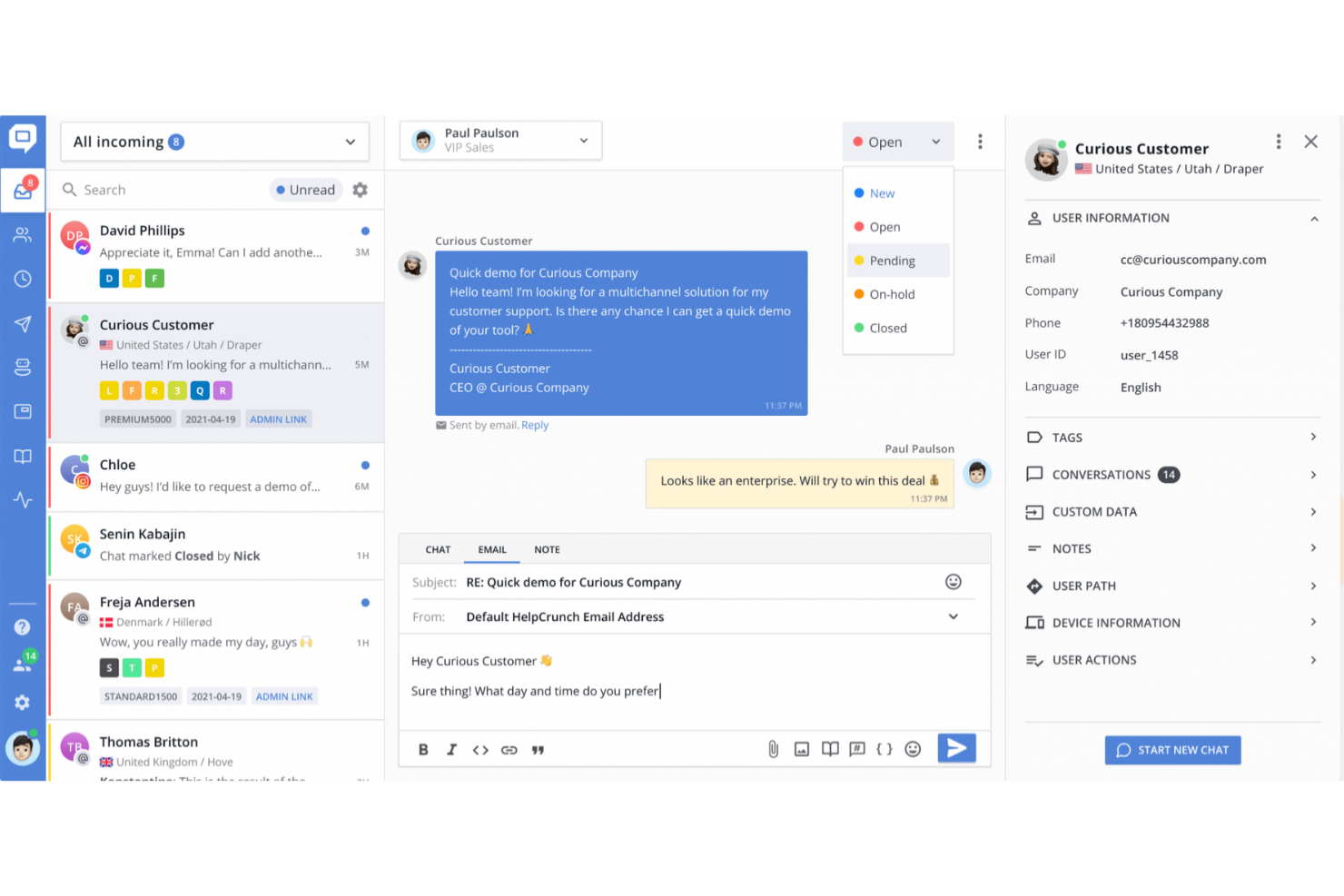
HelpCrunch ist eine Kundenservice-Software, die sich auf Live-Chat und E-Mail-Marketing konzentriert und für Start-ups und kleine Teams entwickelt wurde, die ihre Kundenkommunikation und ihren Support verwalten.
Warum HelpCrunch eine gute Intercom-Alternative ist: HelpCrunch bietet unbegrenzte Kontakte, sodass Ihr Team Kundeninteraktionen ohne Einschränkungen verwalten kann. Die Live-Chat-Funktion ist ein anpassbares Support-Tool, das eine Echtzeit-Kommunikation ermöglicht und zum Erscheinungsbild Ihrer Marke passt. Zusätzlich hilft die Wissensdatenbank-Funktion von HelpCrunch Ihrem Team dabei, ein Self-Service-Portal für Ihre Kunden zu erstellen.
Hervorstechende Funktionen und Integrationen:
Zu den Funktionen gehört ein anpassbares Chat-Widget, mit dem Ihr Team das Erscheinungsbild des Chats an Ihre Markenidentität anpassen kann. Die Automatisierung des E-Mail-Marketings ermöglicht es Ihnen, zielgerichtete Nachrichten zu versenden, während der Wissensdatenbank-Builder Sie dabei unterstützt, hilfreiche Artikel für Ihre Kunden zu erstellen.
Zu den Integrationen gehören Slack, WordPress, Shopify, Google Analytics und weitere.
Pros and Cons
Pros:
- Unbegrenzte Kontakte
- Anpassbare Pop-ups
- E-Mail-Automatisierung
Cons:
- Eingeschränkte erweiterte Berichtsfunktionen
- Für die Einrichtung ist möglicherweise technischer Support erforderlich

Groove
Am besten für ein einfaches Ticketsystem geeignet
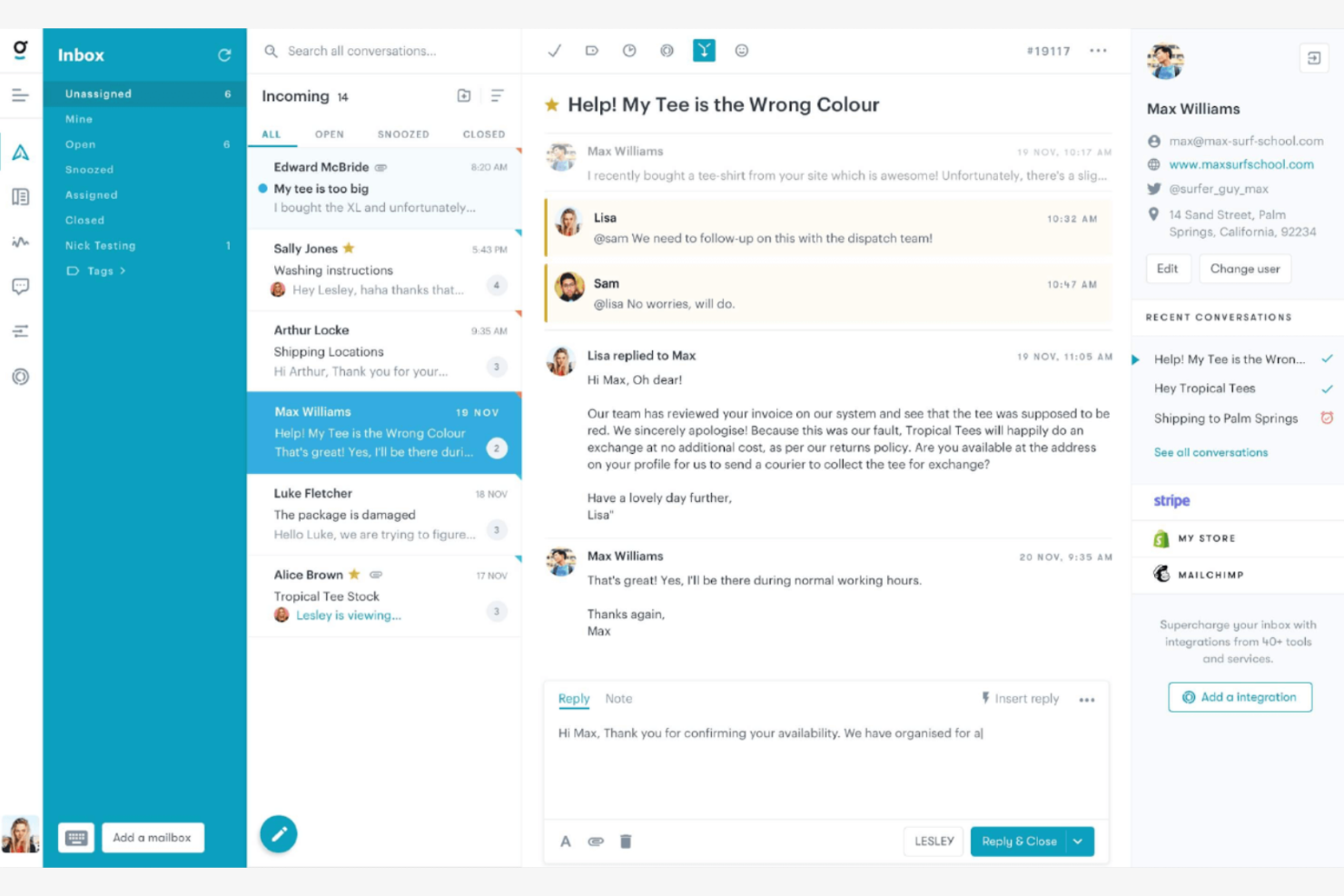
Groove ist eine Kundenservice-Plattform, die Teams dabei unterstützt, Kundenanfragen über einen gemeinsamen Posteingang und ein Ticketsystem zu verwalten, und hauptsächlich von kleinen bis mittelgroßen Unternehmen genutzt wird.
Warum Groove eine gute Intercom-Alternative ist: Groove bietet ein einfaches Ticketsystem, das Ihrem Team bei der Verwaltung von Kundenanfragen hilft. Die Funktion des gemeinsamen Posteingangs ermöglicht Teammitgliedern den Zugriff auf dieselben Informationen und minimiert dadurch doppelte Antworten. Darüber hinaus liefern die Berichtstools Einblicke in die Teamleistung und Kundenzufriedenheit.
Hervorstechende Funktionen und Integrationen:
Zu den Funktionen gehören Tools zur Ticketautomatisierung, mit denen Ihr Team häufige Anfragen automatisch bearbeiten kann, sodass mehr Zeit für komplexere Probleme bleibt. Das System zur Bewertung der Kundenzufriedenheit von Groove liefert Feedback zur Leistung Ihres Teams.
Zu den Integrationen gehören Slack, Facebook, Shopify, Jira, Mailchimp und weitere.
Pros and Cons
Pros:
- Einfaches Ticketsystem
- Gemeinsamer Posteingang
- Automatisierungsfunktionen
Cons:
- Grundlegende Anpassungsmöglichkeiten
- Begrenzte Skalierbarkeit

Gorgias
Am besten für E-Commerce-Integration geeignet
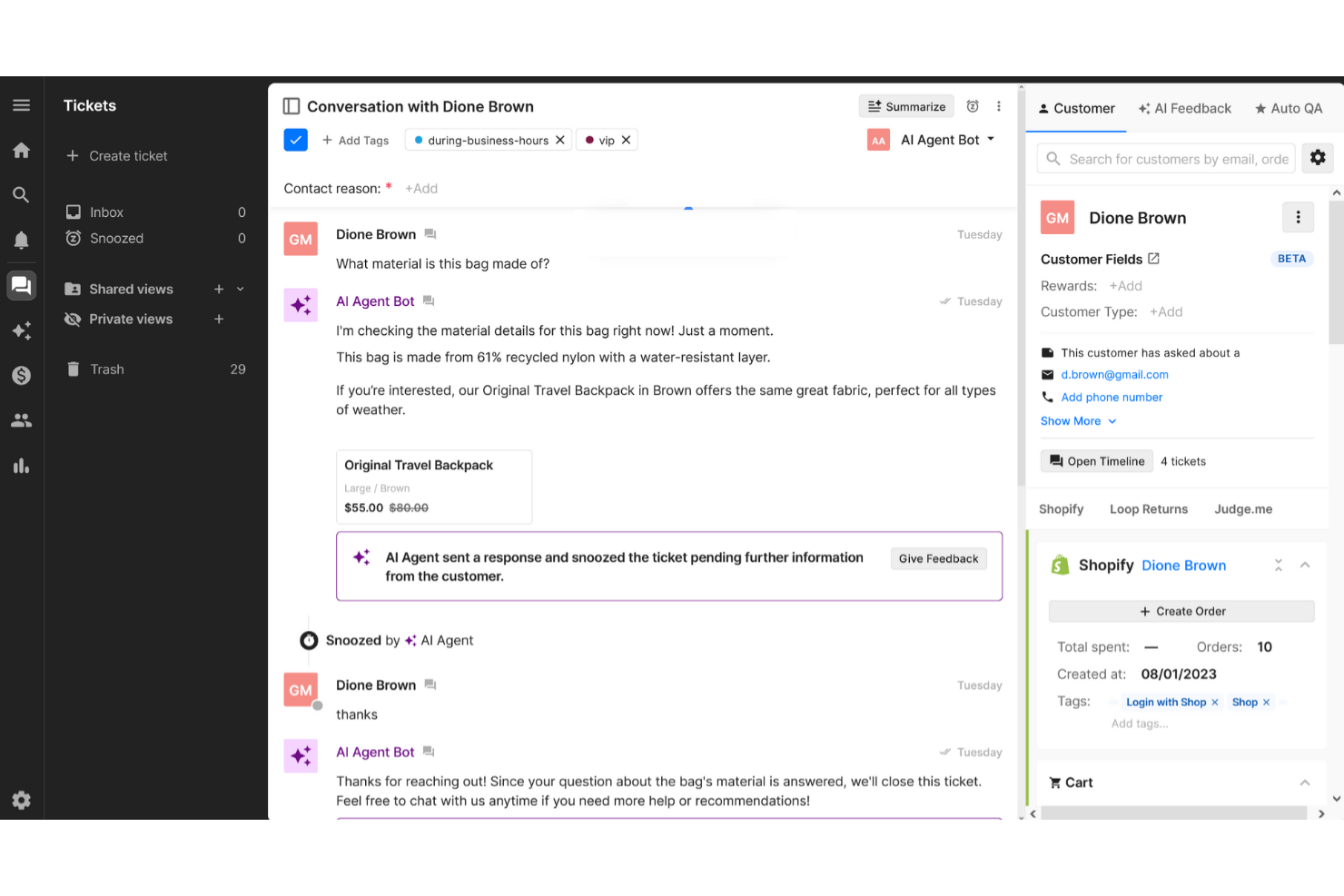
Gorgias ist eine Kundensupport-Plattform für E-Commerce-Unternehmen, die Online-Händlern dabei hilft, Anfragen zu verwalten und effizient kanalübergreifenden Support zu bieten.
Warum Gorgias eine gute Intercom-Alternative ist: Gorgias zeichnet sich durch seine E-Commerce-Integration aus und ermöglicht es Ihrem Team, den Kundensupport direkt innerhalb der Plattform Ihres Shops zu verwalten. Die Automatisierungsfunktionen helfen dabei, sich wiederholende Aufgaben zu reduzieren, sodass sich Ihr Team auf komplexere Anfragen konzentrieren kann. Die zentrale Kundenansicht der Plattform hilft Ihrem Team, auf die benötigten Informationen zuzugreifen, um personalisierten Support zu bieten. Darüber hinaus stellt Gorgias detaillierte Analysen bereit, mit denen Sie die Supportleistung verfolgen und die Kundenzufriedenheit verbessern können.
Hervorzuhebende Funktionen und Integrationen:
Zu den Funktionen gehören Makros, mit denen Ihr Team durch die Automatisierung von Antworten auf häufige Fragen Zeit sparen kann. Die Plattform bietet kanalübergreifenden Support, sodass alle Kundenanfragen über eine einzige Plattform bearbeitet werden können. Das zentrale Dashboard verschafft Ihrem Team einen vollständigen Überblick über die Kundeninteraktionen.
Zu den Integrationen gehören Shopify, Adobe Commerce, Facebook, Instagram, WhatsApp und weitere.
Pros and Cons
Pros:
- Starke E-Commerce-Integration
- Automatisierung sich wiederholender Aufgaben
- Kanalübergreifender Support
Cons:
- Makros und Automatisierung erfordern Wartung
- Ressourcenintensiv für kleinere Teams

Am besten für die Automatisierung der Ticketverwaltung geeignet
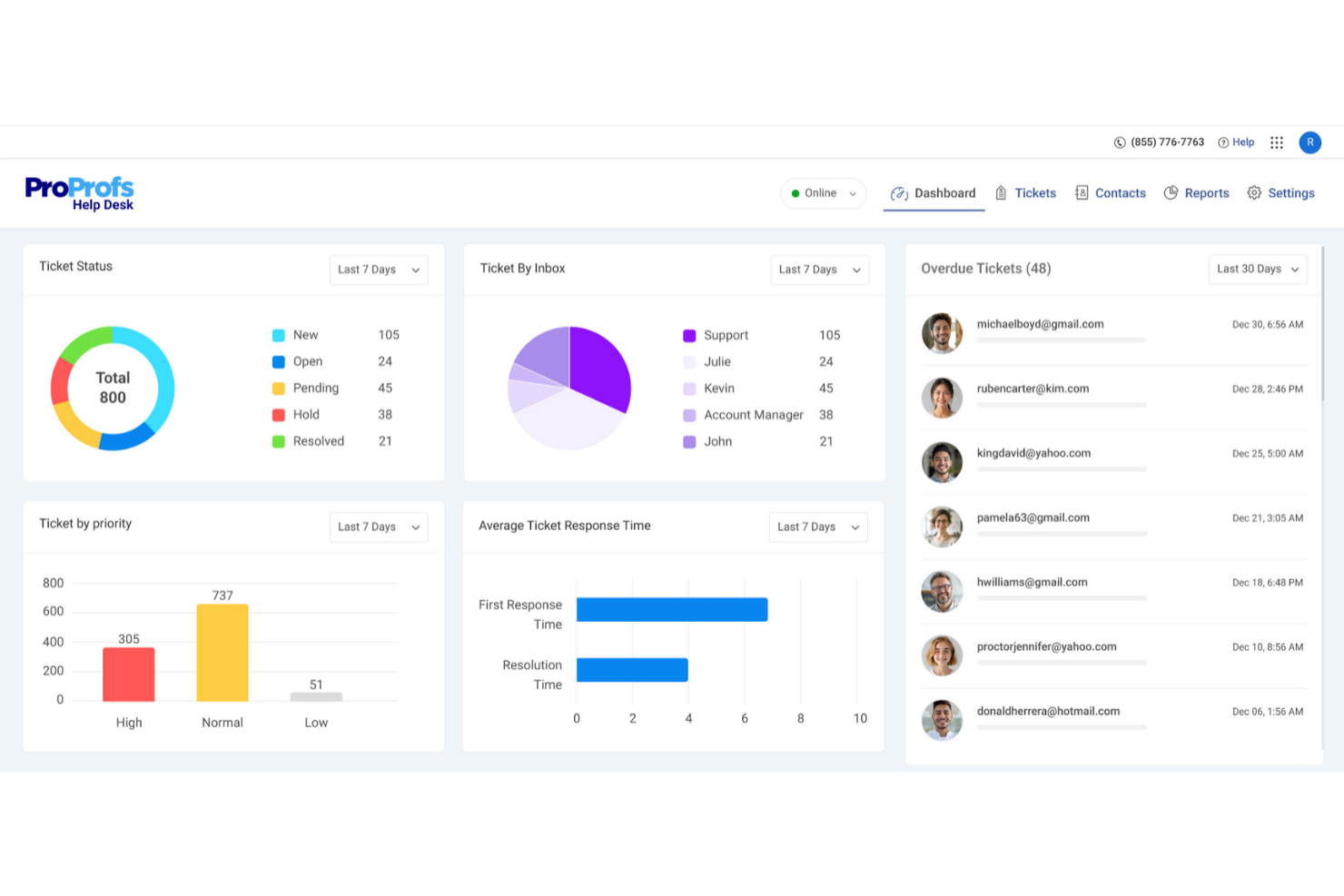
ProProfs Help Desk ist eine Kundensupport-Software, die Ticketverwaltung und Automatisierung nutzt, um Supportteams bei der Verwaltung von Anfragen und einer schnelleren Beantwortung zu unterstützen.
Warum ProProfs Help Desk eine gute Intercom-Alternative ist: ProProfs Help Desk automatisiert die Ticketzuweisung, sodass Fragen an das richtige Teammitglied weitergeleitet werden und Ihr Team effizient antworten kann. Der kollaborative Posteingang der Plattform ermöglicht es Ihrem Team, effektiv zusammenzuarbeiten und die Antwortzeit zu verkürzen. Darüber hinaus helfen Ihnen die Berichtstools, Supportkennzahlen zu verfolgen und die Leistung zu verbessern.
Herausragende Funktionen und Integrationen:
Zu den Funktionen gehören vorgefertigte Antworten, mit denen Ihr Team schnell auf häufige Fragen reagieren kann. Die SLA-Verwaltungstools der Plattform unterstützen Sie dabei, Serviceerwartungen zu erfüllen, während Sie mit der Wissensdatenbank nützliche Ressourcen für Kunden erstellen können.
Zu den Integrationen gehören Salesforce, Slack, Shopify, Jira, Microsoft Dynamics CRM und weitere.
Pros and Cons
Pros:
- Automatisierte Ticketzuweisung
- Kollaborativer Posteingang
- SLA-Verwaltung
Cons:
- Begrenzte erweiterte Funktionen
- Die Automatisierungsoptionen sind relativ grundlegend
Drift
Am besten für KI-gestützte Interaktion geeignet
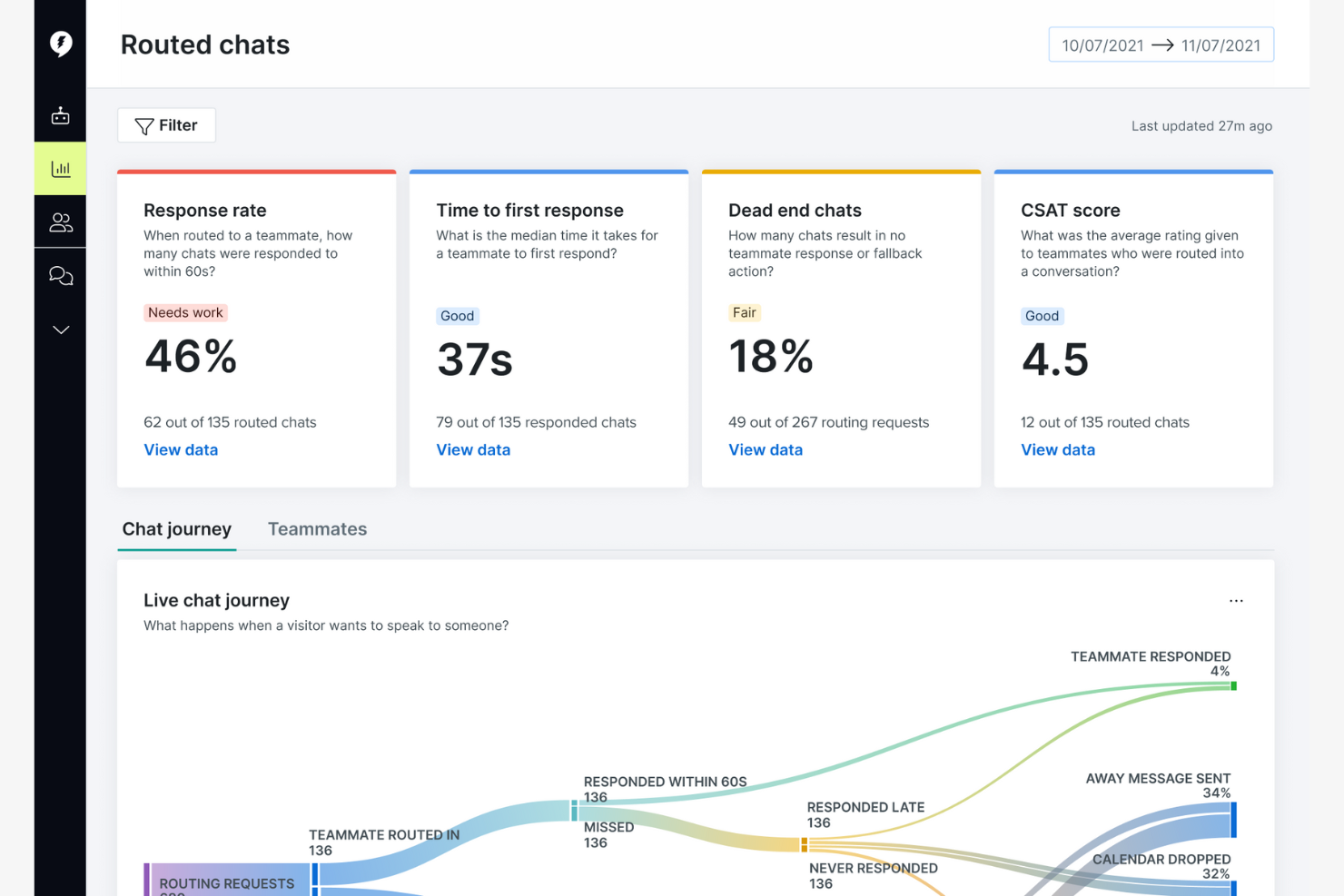
Drift ist eine dialogorientierte Marketingplattform mit Fokus auf KI-Chatbots und Live-Chat, die von Vertriebs- und Marketingteams genutzt wird, um potenzielle Kunden anzusprechen und Leads zu qualifizieren.
Warum Drift eine gute Intercom-Alternative ist: Drift bietet KI-gestützte Interaktionstools, die Ihrem Team dabei helfen, effizient mit Kunden in Kontakt zu treten. Die Chatbots sind darauf ausgelegt, Leads automatisch zu qualifizieren, wodurch Ihr Team Zeit und Aufwand spart. Die Echtzeit-Messaging-Funktionen von Drift ermöglichen schnelle Antworten und steigern dadurch die Kundenzufriedenheit. Darüber hinaus stellt Drift detaillierte Analysen bereit, mit denen Sie die Leistung Ihres Teams verfolgen und optimieren können.
Herausragende Funktionen und Integrationen:
Zu den Funktionen gehören dialogorientierte Landingpages, über die Ihr Team direkt mit Website-Besuchern interagieren kann. Die E-Mail-Abläufe der Plattform helfen dabei, personalisierte E-Mail-Follow-ups zu automatisieren, und benutzerdefinierte Bots können an Ihre spezifischen Geschäftsanforderungen angepasst werden.
Integrationen umfassen Salesforce, HubSpot, Slack und weitere.
Pros and Cons
Pros:
- KI-gestützte Chatbots
- Echtzeit-Messaging
- Automatisierte Lead-Qualifizierung
Cons:
- Eingeschränkte Nutzung für Supportteams
- Begrenzte Sprachunterstützung

Kustomer
Am besten geeignet für einen starken Fokus auf Datenschutz
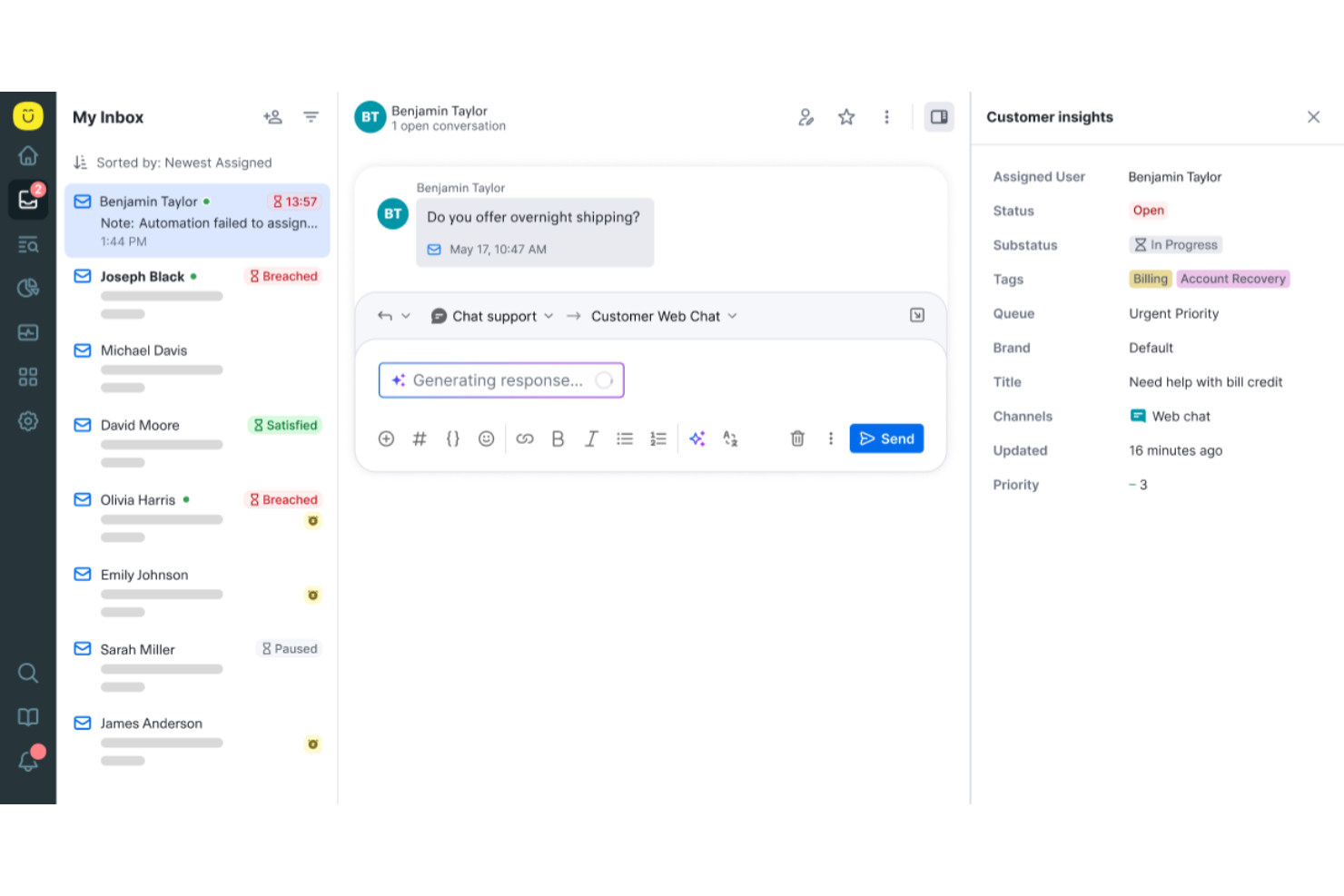
Kustomer ist eine Kundenservice-Plattform, die Kundeninteraktionen in einer einzigen Zeitleiste zentralisiert und von Supportteams genutzt wird, um Gespräche zu verwalten und personalisierten Support bereitzustellen.
Warum Kustomer eine gute Alternative zu Intercom ist: Kustomer legt Wert auf Datenschutz und sorgt dafür, dass Ihre Kundeninteraktionen sicher bleiben. Die Zeitleistenansicht bietet einen Überblick über Kundeninteraktionen und hilft Ihrem Team, die Reise jedes Kunden zu verstehen. Die Automatisierungsfunktionen der Plattform reduzieren manuelle Aufgaben, sodass sich Ihr Team auf wichtigere Anliegen konzentrieren kann. Darüber hinaus liefert die erweiterte Berichterstellung von Kustomer Einblicke in die Leistung Ihres Teams und die Kundenzufriedenheit.
Herausragende Funktionen und Integrationen:
Zu den Funktionen gehört eine Sentimentanalyse, die Ihrem Team hilft, die Emotionen der Kunden während der Interaktionen einzuschätzen und so die Kundenbeziehungen zu verbessern. Die SLA-Management-Funktionen von Kustomer helfen Ihrem Team, Antwortzeiten und Serviceerwartungen einzuhalten. Die intelligente Weiterleitung leitet Anfragen anhand bestimmter Kriterien an das passende Teammitglied weiter.
Zu den Integrationen gehören Salesforce, Shopify, Slack, WhatsApp, Instagram, Facebook und weitere.
Pros and Cons
Pros:
- Starke Datenschutzfunktionen
- Werkzeuge für Kundenzeitleisten
- Sentimentanalyse
Cons:
- Der KI-Agent ist ein Zusatzmodul und nicht in den Basistarifen enthalten
- Begrenzte Anpassungsmöglichkeiten

Crisp
Am besten für anpassbare KI-Agenten
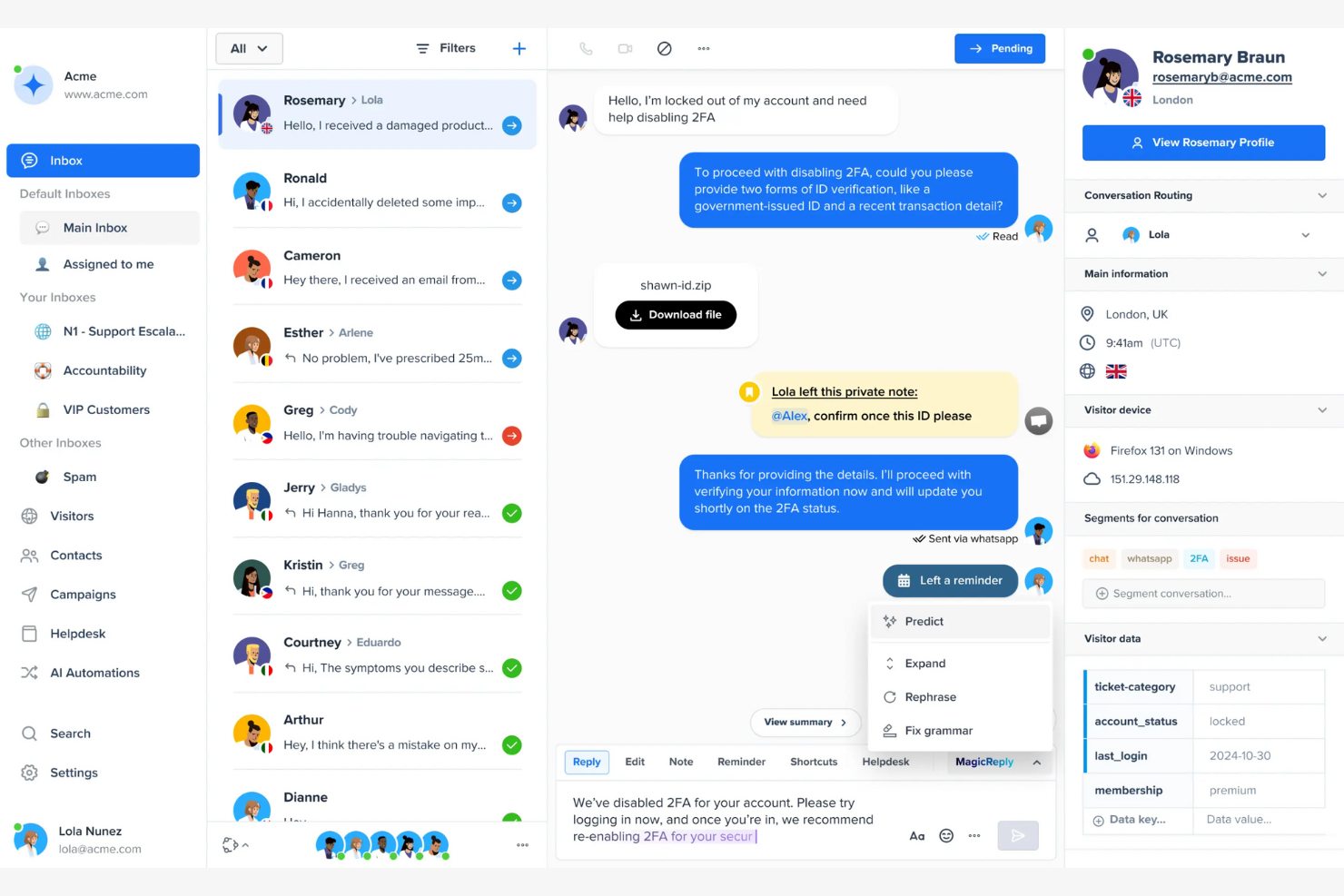
Crisp ist eine Kundenkommunikationsplattform, die Support- und Vertriebsteams dabei unterstützt, mit Nutzern in Kontakt zu treten und den Kundenservice zu verwalten.
Warum Crisp eine gute Intercom-Alternative ist: Crisp bietet anpassbare KI-Agenten, sodass Ihr Team Chatbots auf spezifische Anforderungen zuschneiden kann. Die Live-Chat-Funktion der Plattform ermöglicht Interaktionen in Echtzeit, sodass Ihr Team schnell auf Kundenanfragen reagieren kann. Der gemeinsame Posteingang von Crisp bündelt mehrere Kommunikationskanäle in einer Oberfläche und erleichtert Ihrem Team die Verwaltung von Gesprächen. Darüber hinaus hilft die Wissensdatenbank dabei, einen FAQ-Bereich zu erstellen, in dem Kunden selbstständig Antworten finden können.
Herausragende Funktionen und Integrationen:
Zu den Funktionen gehört ein integrierter Videochat, über den Ihr Team persönlich mit Kunden in Kontakt treten und die Kommunikation verbessern kann. Die Werkzeuge für gemeinsames Browsen ermöglichen es Teammitgliedern, gemeinsam mit Kunden durch eine Website zu navigieren und praktische Unterstützung zu leisten. Die Funktion zum intelligenten Durchsuchen bietet Echtzeit-Einblicke in das Kundenverhalten.
Zu den Integrationen gehören WordPress, Slack, Shopify, Mailchimp, Facebook Messenger, WhatsApp, HubSpot und weitere.
Pros and Cons
Pros:
- Funktion für einen gemeinsamen Posteingang
- Erstellung einer Wissensdatenbank
- Videochat-Option
Cons:
- Einschränkungen der mobilen Anwendung
- Eingeschränkte Sprachunterstützung

Pylon
Am besten für Omnichannel-Support geeignet
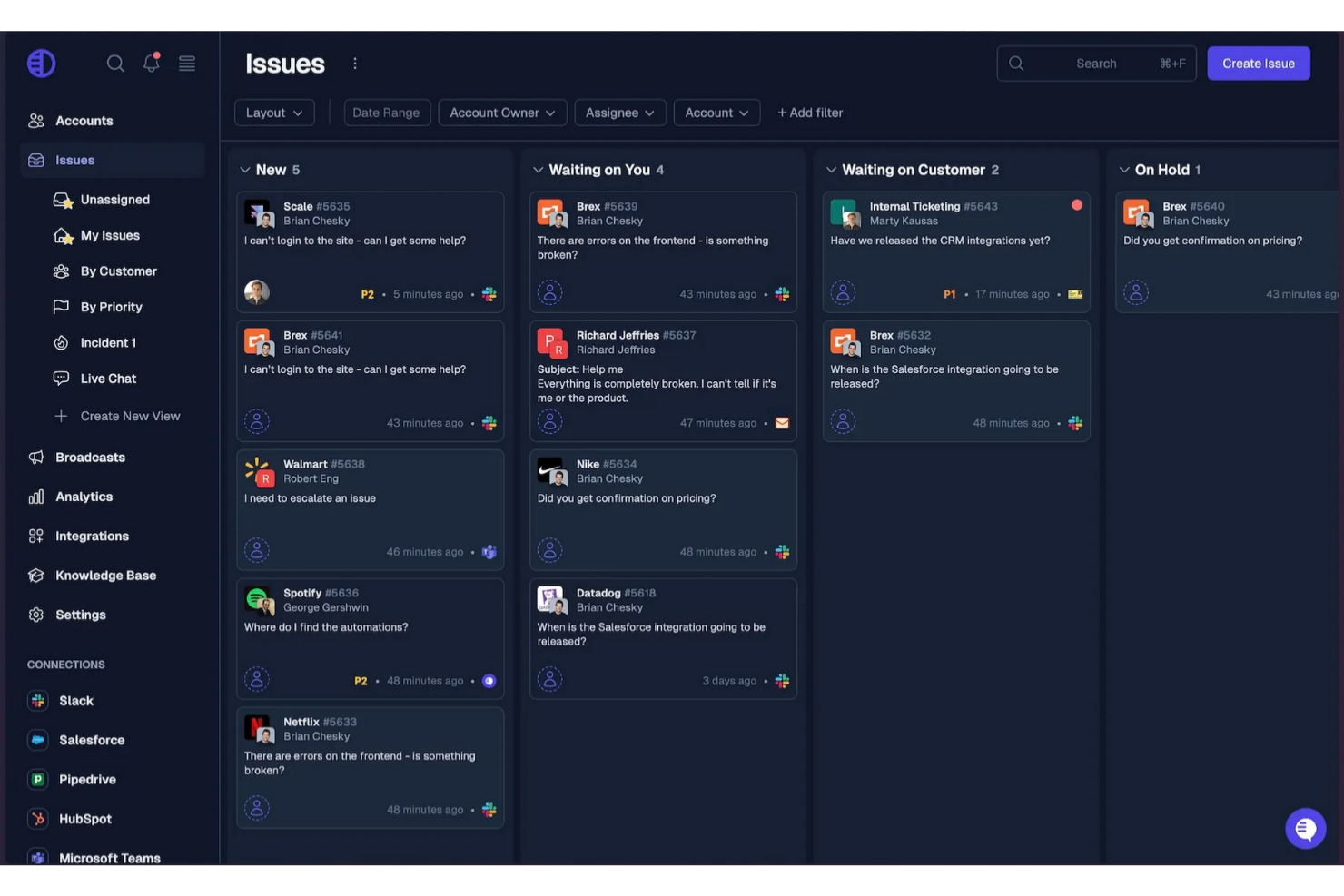
Pylon ist eine Kundensupport-Plattform, die Teams dabei unterstützt, Interaktionen über mehrere Kanäle hinweg zu verwalten und dadurch Service und Kommunikation zu verbessern.
Warum Pylon eine gute Intercom-Alternative ist: Pylon bietet Omnichannel-Support und ermöglicht es Ihrem Team, die Kommunikation über verschiedene Plattformen hinweg an einem Ort zu verwalten. Der einheitliche Posteingang ermöglicht es Ihrem Team, effizient auf Anfragen zu antworten, ohne zwischen verschiedenen Tools wechseln zu müssen. Darüber hinaus liefern die Berichtstools Einblicke in Kundeninteraktionen und helfen Ihrem Team, die Servicequalität zu verbessern.
Besondere Funktionen und Integrationen:
Zu den Funktionen gehören Ticketverwaltung, Echtzeitanalysen und anpassbare Workflows. Die Ticketverwaltung hilft Ihrem Team, Kundenanfragen zu organisieren und zu priorisieren. Echtzeitanalysen liefern Einblicke in die Teamleistung und Kundenzufriedenheit. Anpassbare Workflows ermöglichen es Ihrem Team, Routineaufgaben zu automatisieren und dadurch die Effizienz zu steigern.
Zu den Integrationen gehören Slack, Salesforce, HubSpot, Microsoft Teams, Asana und weitere.
Pros and Cons
Pros:
- Leistungsstarker Omnichannel-Support
- Funktion für einen einheitlichen Posteingang
- Anpassbare Workflows
Cons:
- Höhere Preise pro Sitzplatz
- Begrenzte Berichtstiefe

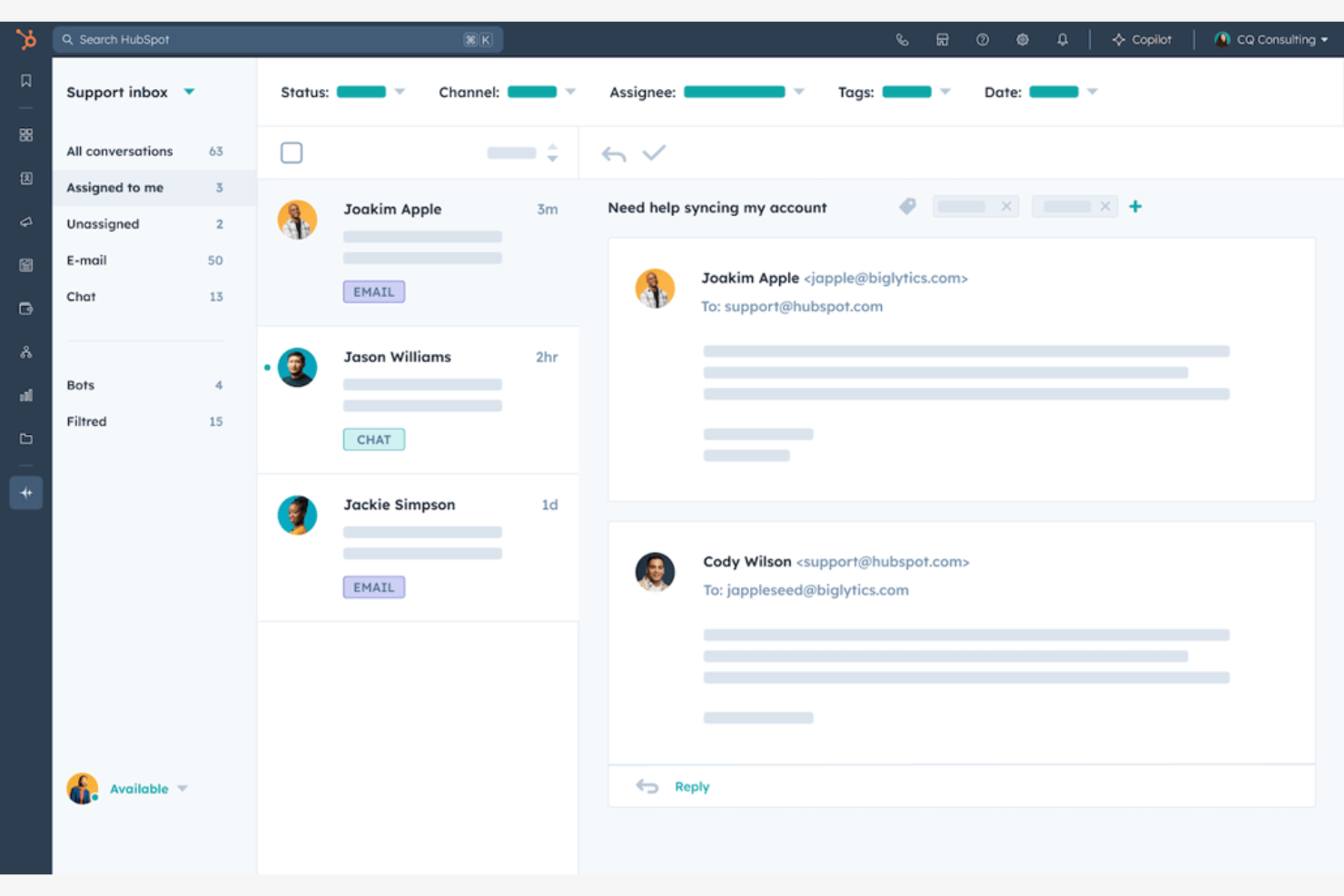
HubSpot Service Hub ist eine Kundensupport-Plattform mit Schwerpunkt auf Ticketverwaltung, Automatisierung und Kundenfeedback, die von Supportteams zur Verwaltung und Verbesserung von Kundeninteraktionen eingesetzt wird.
Warum HubSpot Service Hub eine gute Intercom-Alternative ist: HubSpot Service Hub bietet eine nahtlose Integration mit anderen HubSpot-Tools und ermöglicht deinem Team eine Komplettlösung. Die Automatisierungsfunktionen helfen dabei, sich wiederholende Aufgaben zu reduzieren. Darüber hinaus unterstützt das Ticketsystem eine effiziente Nachverfolgung und Lösung von Problemen.
Hervorstechende Funktionen und Integrationen:
Zu den Funktionen gehört ein Tool zur Erstellung einer Wissensdatenbank, mit dem dein Team eine Bibliothek hilfreicher Artikel für Kunden aufbauen kann. Die Kundenfeedback-Umfragen der Plattform liefern Einblicke in die Kundenzufriedenheit und in verbesserungswürdige Bereiche.
Zu den Integrationen gehören Salesforce, Slack, Shopify, Mailchimp, Microsoft Teams, SurveyMonkey, Eventbrite, Google Calendar, Facebook Messenger und weitere.
Pros and Cons
Pros:
- Nahtlose Integration mit HubSpot-Tools
- Ticketsystem
- Erstellung einer Wissensdatenbank
Cons:
- Abhängigkeit vom HubSpot-Ökosystem
- Eingeschränkte erweiterte Analysen in niedrigeren Tarifen

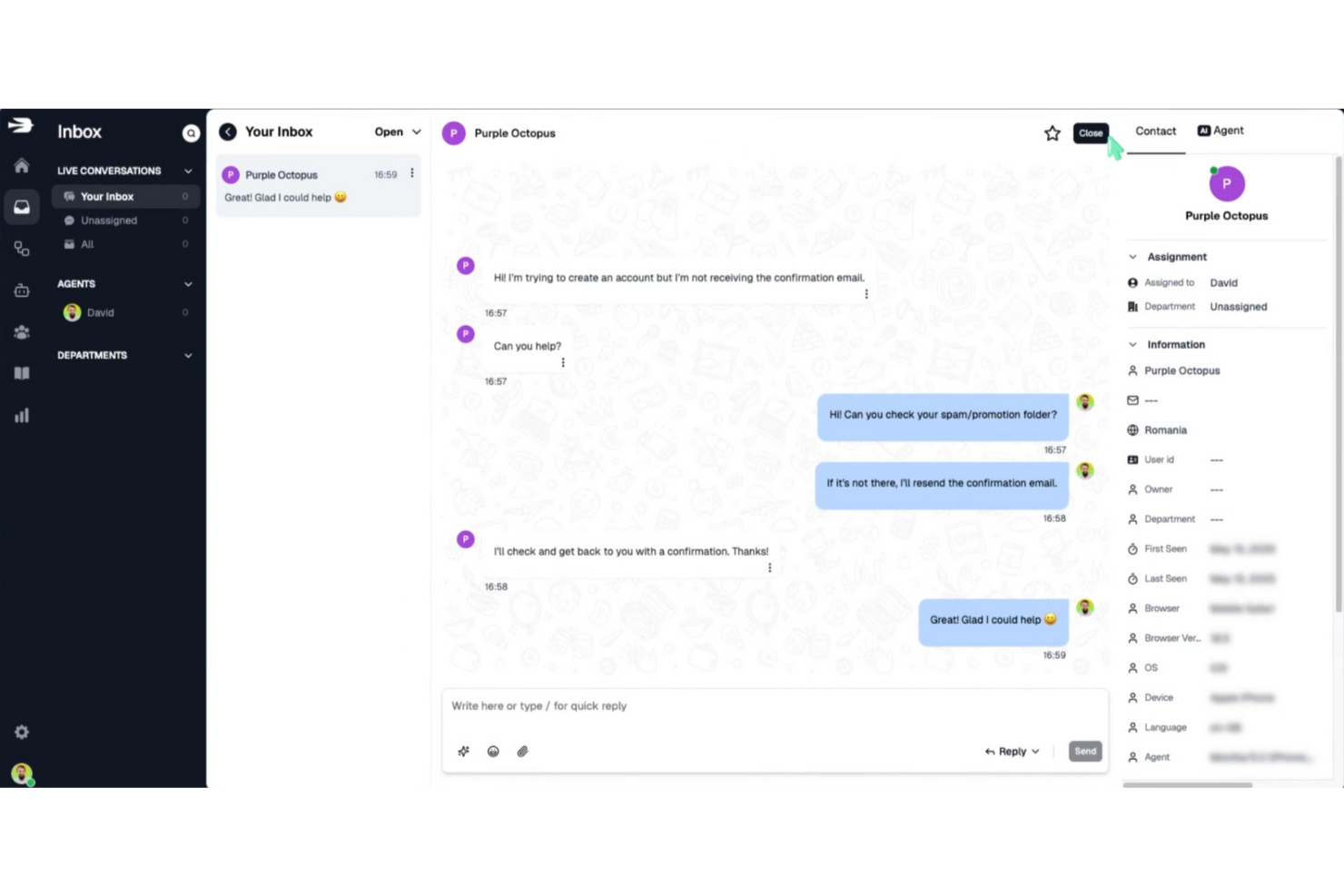
Chatabird ist eine Kundensupport-Plattform, die Live-Chat und KI-Automatisierung kombiniert und kleinen Unternehmen dabei hilft, die Supporteffizienz zu steigern und Kosten zu senken.
Warum Chatabird eine gute Intercom-Alternative ist: Chatabird bietet kostengünstige Skalierbarkeit und ermöglicht Ihrem Team, unbegrenzt viele Unterhaltungen und Benutzerplätze ohne zusätzliche Gebühren zu verwalten. Die KI-Agenten sind anpassbar, sodass Ihr Team Antworten automatisieren und den Arbeitsaufwand reduzieren kann. Die Workflow-Automatisierung der Plattform macht Supportaufgaben effizienter, verbessert die Antwortzeiten und steigert die Kundenzufriedenheit. Darüber hinaus bietet Chatabird detaillierte Analysen zur Überwachung der Teamleistung und zur Optimierung der Abläufe.
Hervorstechende Funktionen und Integrationen:
Zu den Funktionen gehören Wissensdatenbank-Tools, mit denen Ihr Team Self-Service-Ressourcen für Kunden erstellen und das Supportaufkommen reduzieren kann. Die Live-Chat-Funktion von Chatabird ermöglicht die Interaktion mit Kunden in Echtzeit und verbessert die Servicequalität.
Zu den Integrationen gehören Shopify, Slack, Facebook, Instagram, WhatsApp, Mailchimp, Google Analytics und WordPress.
Pros and Cons
Pros:
- Anpassbare KI-Agenten
- Unbegrenzte Unterhaltungen und Benutzerplätze
- Workflow-Automatisierung
Cons:
- Einarbeitungsaufwand für die KI-Automatisierung
- Kleineres Ökosystem
Bewertungen der besten Intercom-Alternativen
Hier sind einige weitere Intercom-Alternativen, die es nicht in meine Kurzliste geschafft haben, aber dennoch einen Blick wert sind:


So bewerte ich Intercom-Alternativen
Ich betrachte Intercom-Alternativen durch zwei Perspektiven: Grundlegende Anforderungen wie Live-Chat, Ticketing und Bot-Routing sowie Unterscheidungsmerkmale wie Self-Hosting, API-Tiefe und Preisstruktur.
Kernfunktionen (Grundvoraussetzungen für diese Liste)
Wenn ich Tools für meine Liste auswähle, bewerte ich jedes einzelne auf einer Skala von 0 (bietet die Funktionalität nicht) bis 5 (hervorragend in diesem Bereich) für jede der unten aufgeführten Kernfunktionen. Anschließend rechne ich die Gesamtpunktzahl des Tools prozentual um. Jedes Tool muss eine Mindestgesamtpunktzahl von 65 % erreichen, um für die Aufnahme in Betracht gezogen zu werden.
- Live-Chat & Messaging: Ich prüfe, ob Echtzeit-Chats über Web, Mobile und E-Mail angeboten werden, inklusive persistenter Gesprächshistorie – nicht nur ein einfaches Pop-up-Widget.
- Ticketing & Helpdesk: Jedes Tool sollte Ticketzuweisung, SLA-Tracking und gemeinsame Postfächer bieten, sodass IT-Teams Warteschlangen über einen einzelnen Chat-Thread hinaus verwalten können.
- KI-Chatbots & Automatisierung: Ich bewerte, ob Bots mehrstufiges Triage-Handling übernehmen können, z. B. das Routing einer Passwortzurücksetzung im Vergleich zu einem Störungsmeldungs-Alarm – ohne dass für jedes Szenario manuelle Regeln benötigt werden.
- Integrationen für Entwickler & IT: Native Anbindungen an Tools wie Jira, Slack, GitHub und PagerDuty sind hier wichtig, ebenso wie eine öffentliche API und Unterstützung für Webhooks.
- Wissensdatenbank & Self-Service: Ein integriertes Helpcenter mit Suchfunktion und kategorisierten Artikeln ermöglicht Endanwendern, häufige Probleme selbst zu lösen, bevor sie ein Ticket eröffnen.
- Kundendaten & Segmentierung: Das Nachverfolgen von Benutzerattributen und -ereignissen ermöglicht gezielte Nachrichten, z. B. werden nur betroffene Konten bei einer Servicebeeinträchtigung benachrichtigt.
Sobald ich eine Liste von Tools habe, die diese Kriterien erfüllen, prüfe ich, wodurch sich jede Plattform besonders auszeichnet.
Unterscheidungsmerkmale (Was Anbieter voneinander abhebt)
So vergleiche und differenziere ich zwischen den einzelnen Anbietern:
Herausragende Funktionen
Self-Hosting ist besonders für Teams relevant, die sensible Infrastrukturdaten verwalten. Daher prüfe ich, ob eine Plattform auf eigenen Servern oder in einer privaten Cloud betrieben werden kann. Ein Open-Source-Code geht noch einen Schritt weiter, indem er Entwicklungsteams ermöglicht, den Code zu prüfen und individuell zu erweitern. Zudem bewerte ich proaktive In-App-Kommunikation – Tools, die zum Beispiel Incident-Banner oder Release-Notes auf Basis des Nutzerverhaltens anzeigen, entlasten den Support, indem sie wiederkehrende Anfragen reduzieren.
Mehr als nur Funktionen
Die Preisstruktur ist entscheidend beim Wechsel von Intercom, daher beurteile ich, ob Plattformen pro Nutzer, pro Konversation oder nach MAU-Volumen abrechnen. Ebenso fließt die Migrationsunterstützung in meine Bewertung ein – das Importieren jahrelanger Chatprotokolle, Makros und Kontaktdaten kann einen Rollout verzögern, wenn keine passenden Tools oder Onboarding-Hilfen vorhanden sind. Sicherheits- und Compliance-Zertifikate wie SOC 2 Typ II und DSGVO-Konformität sind ebenfalls wichtige Kriterien, insbesondere für Teams, die Vorfalldaten oder interne IT-Anfragen bearbeiten.
Warum nach einer Intercom-Alternative suchen?
Obwohl Intercom eine gute Wahl als Kundendienstplattform ist, gibt es mehrere Gründe, warum manche Nutzer nach alternativen Lösungen suchen. Sie könnten nach einer Intercom-Alternative suchen, weil:
- Sie günstigere Preise benötigen
- Ihr Team erweiterte Anpassungsmöglichkeiten benötigt
- Sie eine einfachere Einarbeitung wünschen
- Sie eine bessere Integration in bestehende Tools benötigen
- Ihr Unternehmen in Regionen tätig ist, die Intercom nicht unterstützt
- Sie flexiblere Optionen für die Skalierung wünschen
Wenn einer dieser Punkte auf Sie zutrifft, sind Sie hier richtig. Meine Liste enthält mehrere Kundendienstplattformen, die besser für Teams geeignet sind, die mit diesen Herausforderungen konfrontiert sind und nach alternativen Lösungen suchen.
Die wichtigsten Funktionen von Intercom
Hier sind einige der wichtigsten Funktionen von Intercom, damit Sie vergleichen können, was alternative Lösungen zu bieten haben:
- KI-Agent: Automatisiert Antworten auf Kundenanfragen.
- Gemeinsamer Posteingang: Zentralisiert die gesamte Kundenkommunikation an einem Ort und ermöglicht so einen einfachen Zugriff.
- Omnichannel-Support: Verwaltet Interaktionen über verschiedene Kanäle wie E-Mail, Chat und soziale Medien.
- Hilfezentrum: Bietet Kunden eine Self-Service-Option, um selbst Antworten zu finden.
- Workflows: Automatisiert sich wiederholende Aufgaben, um die Effizienz des Teams und die Reaktionszeiten zu verbessern.
- Berichte: Liefert Einblicke in die Teamleistung und Kennzahlen zur Kundenzufriedenheit.
- Wissenszentrale: Zentralisiert Informationen, damit Ihr Team informiert und effizient bleibt.
- Ausgehende Kommunikation: Ermöglicht eine proaktive Interaktion mit Kunden durch Kampagnen.
- Copilot: Unterstützt Agenten während der Interaktionen mit KI-gestützten Einblicken und Empfehlungen.
Wie geht es weiter?
Wenn Sie gerade eine Kundenserviceplattform recherchieren, wenden Sie sich an einen SoftwareSelect-Berater, um kostenlose Empfehlungen zu erhalten.
Sie füllen ein Formular aus und führen ein kurzes Gespräch, in dem Ihre spezifischen Anforderungen besprochen werden. Anschließend erhalten Sie eine Vorauswahl an Software, die Sie prüfen können. Die Berater unterstützen Sie sogar während des gesamten Kaufprozesses, einschließlich der Preisverhandlungen.