

10 Best Datacenter Proxy Providers In 2026

Best Datacenter Proxy Providers Shortlist


Datacenter proxy providers give you access to non-residential IP addresses hosted in data centers, letting you route internet traffic for web scraping, site testing, or managing multiple accounts. If you’re searching for high-speed proxies with consistent availability, avoiding bans, or handling bulk requests, the right provider makes all the difference. In this guide, you’ll get an overview of top-rated datacenter proxy platforms, what they’re best at, and how to match their features with your team’s demands.
Why Trust Our Software Recommendations
Our team has been testing and reviewing software since 2012. As tech leaders ourselves, we know how difficult—and important—it is to choose the right software.
For this guide, we evaluated tools using hands-on testing and independent research, scoring tools using our selection criteria.
Our reviews reflect our human editorial judgment, not a sales pitch.
Expert reviewers:
Best Datacenter Proxy Providers Summary
This comparison chart summarizes pricing details for my top datacenter proxy providers selections to help you find the best one for your budget and business needs.
| Tool | Best For | Trial Info | Price | ||
|---|---|---|---|---|---|
| 1 | Best for flexible country selection | Free plan available | From $200/month | Website | |
| 2 | Best for dedicated IPv4 address allocation | 3-day free trial | From $2/month | Website | |
| 3 | Best for compliance-focused organizations | Free trial available | From $0.50/GB | Website | |
| 4 | Best for automated performance monitoring | Not available | From $5 | Website | |
| 5 | Best for API-driven management | 7-day free trial | From $1.90/proxy | Website | |
| 6 | Best for ethically sourced proxy pools | Free demo available | From $4.90/GB | Website | |
| 7 | Best for large-scale IP rotation needs | Free trial available | From $0.5/1,000 records | Website | |
| 8 | Best for customizable traffic control | Free plan available | From $1.5/1,000 records/month | Website | |
| 9 | Best for rapid deployment requirements | 3-day free trial | From $2/GP | Website | |
| 10 | Best for unlimited bandwidth usage | Free plan available | From $7/month | Website |
Best Datacenter Proxy Providers Reviews
Below are my detailed summaries of the best datacenter proxy providers that made it onto my shortlist. My reviews offer a detailed look at the features, pricing, and best use cases of each platform to help you find the best one for you.

SOAX
Best for flexible country selection
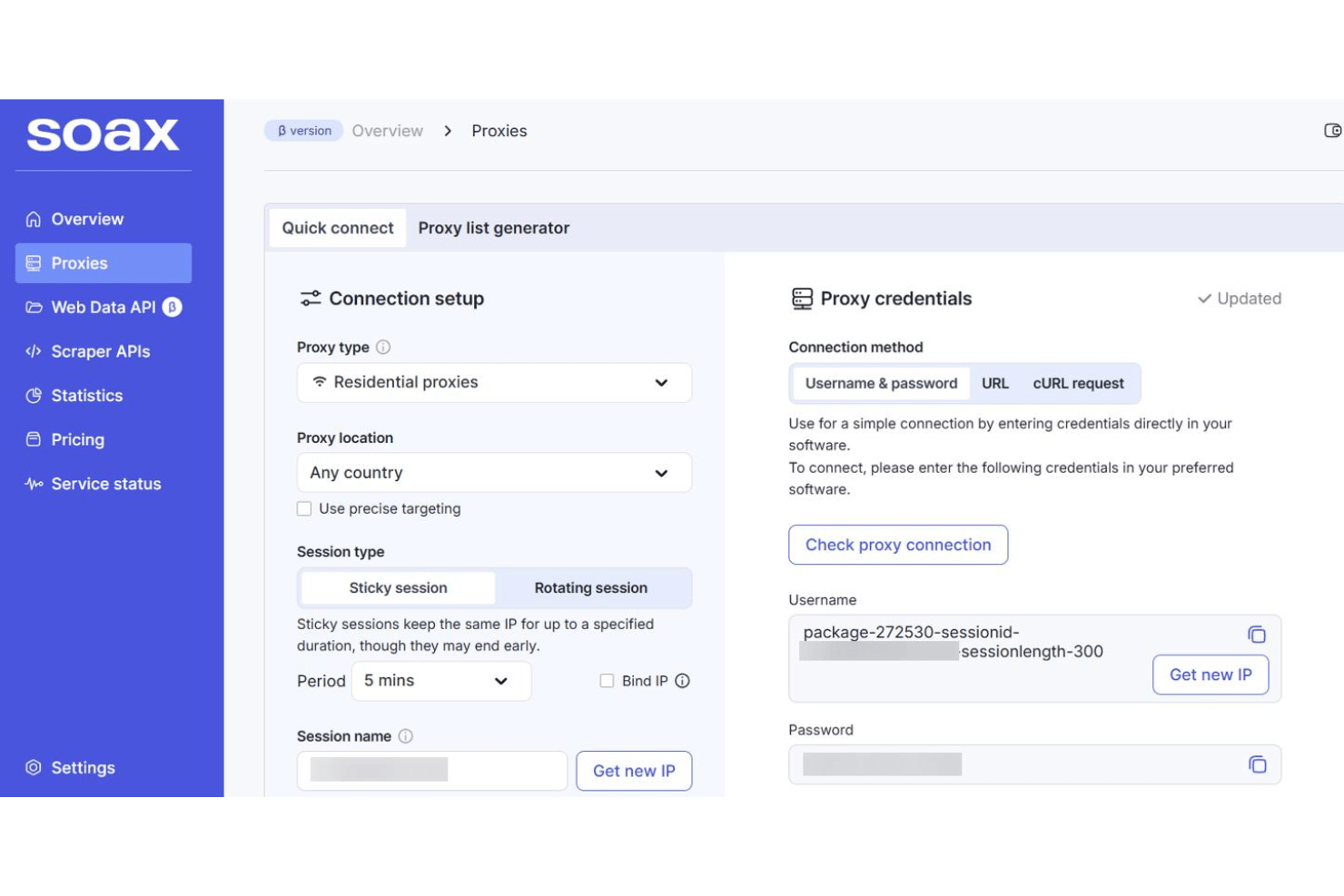
SOAX is a datacenter proxy provider offering shared and dedicated datacenter IPs with country and city-level targeting, ASN rotation, unlimited concurrent sessions, and a unified dashboard for proxy management across HTTP/HTTPS and SOCKS5 protocols.
Who Is SOAX Best For?
SOAX is a strong fit for web scraping engineers and DevOps teams running high-volume, concurrent data extraction workloads that need API-driven proxy control.
Why I Picked SOAX
I've included SOAX in my top picks because its unified subscription model gives you access to IPs across 195 countries spanning residential, mobile, ISP, and datacenter networks from a single credit balance. I particularly like the country and city-level targeting controls, which let me dial in geo-specific requests without switching platforms or accounts. The ASN rotation layer adds another degree of targeting precision that's genuinely useful when scraping localized content or verifying region-specific ad placements.
SOAX Key Features
- Unlimited concurrent sessions: Allows for high-volume, parallel connections without imposed thread limits.
- Dashboard-based proxy management: Lets you monitor usage, configure connections, and manage proxy pools in real time.
- SOCKS5 and HTTP/HTTPS protocol support: Enables integration with a range of applications and workflows.
- Shared and dedicated datacenter proxy options: Provides tiered access models for project-based or exclusive IP assignments.
SOAX Integrations
SOAX provides integration guides for Python, and Selenium, and is compatible with antidetect browsers like Multilogin, GoLogin, and Undetectable. An API is available for custom integrations.
Pros and Cons
Pros:
- Fine-grained country and ASN targeting
- Unlimited concurrent sessions for heavy workloads
- Detailed dashboard for live proxy management
Cons:
- Geographic coverage limited for datacenter IPs
- Datacenter IP pool size not disclosed

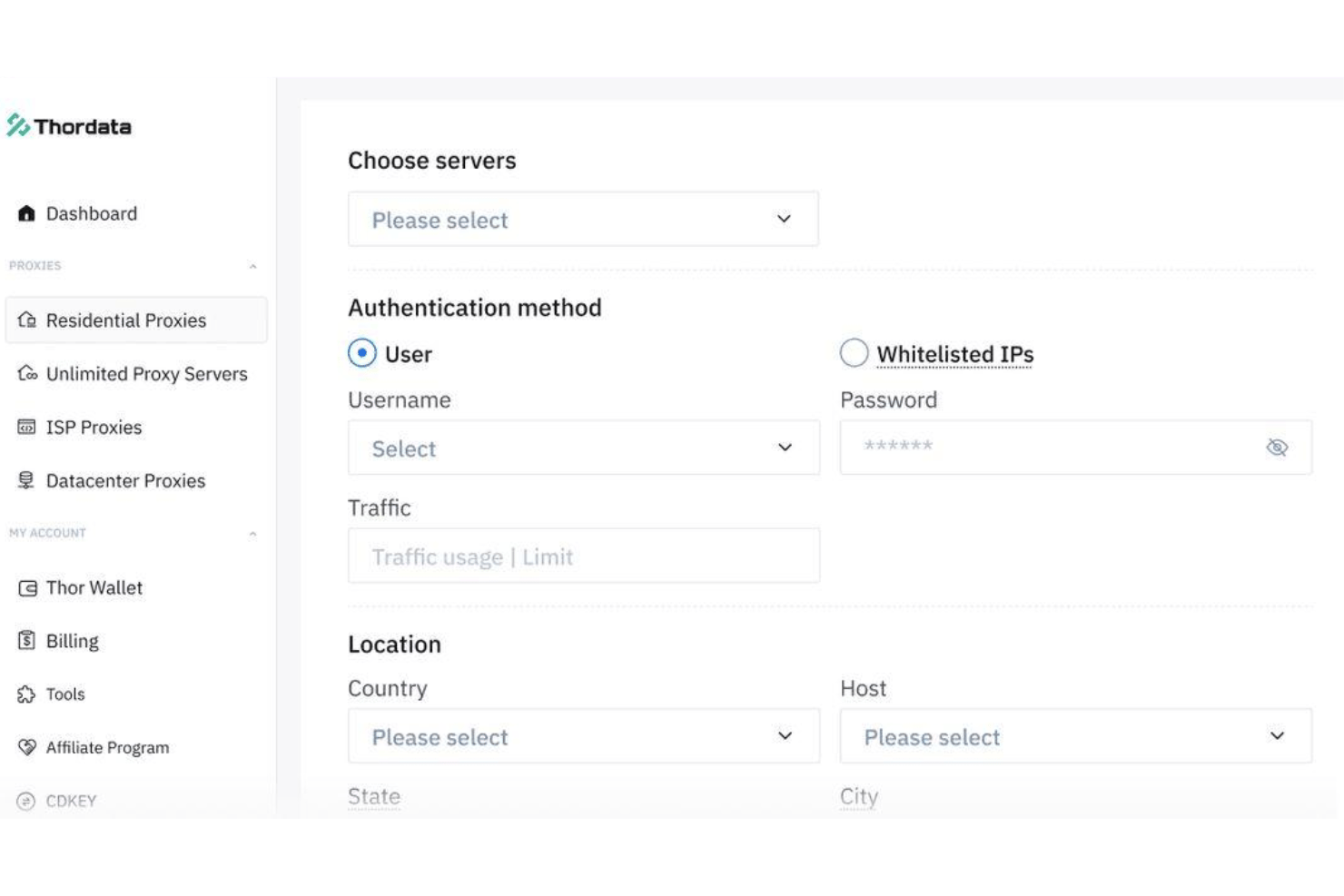
Thordata is a datacenter proxy service with a pool of 1M+ IPs across 60+ countries, offering dedicated and shared allocation modes, HTTP/HTTPS support, configurable IP rotation, and API-driven session management.
Who Is Thordata Best For?
Web scraping engineers and technical teams running high-volume data collection workflows will get the most out of Thordata's dedicated datacenter IP allocation.
Why I Picked Thordata
I picked Thordata as one of the best because the dedicated proxy mode gives my team exclusive IPv4 addresses billed per IP with no traffic fees attached. When I'm running scraping jobs against targets that track IP reputation, having a private address that no other user is hitting simultaneously changes the reliability picture entirely. The 1M+ IP pool spread across 60+ countries means I can also match geographic targeting requirements without falling back to shared infrastructure.
Thordata Key Features
- Global IP pool: Offers more than one million datacenter IPs spanning 60+ countries across multiple ASNs.
- Sub-user management: Lets you create sub-accounts with usage permissions and bandwidth controls for team segmentation.
- Real-time dashboard: Provides live monitoring, IP whitelisting, and detailed connection analytics from a unified console.
- Multi-protocol support: Integrates with HTTP and HTTPS protocols and common proxy management tools and frameworks.
Thordata Integrations
Thordata offers integrations with Playwright, Puppeteer, Selenium, AdsPower Browser, BitBrowser, ClonBrowser, Ghost Browser, SwitchyOmega, and FoxyProxy, and provides an API for custom integrations.
Pros and Cons
Pros:
- Offers detailed dashboard for connection analytics
- High-volume IP pool across 60+ countries
- Dedicated IPv4 pool with exclusive allocation
Cons:
- Strict refund conditions and usage caps
- Limited SOCKS5 protocol documentation
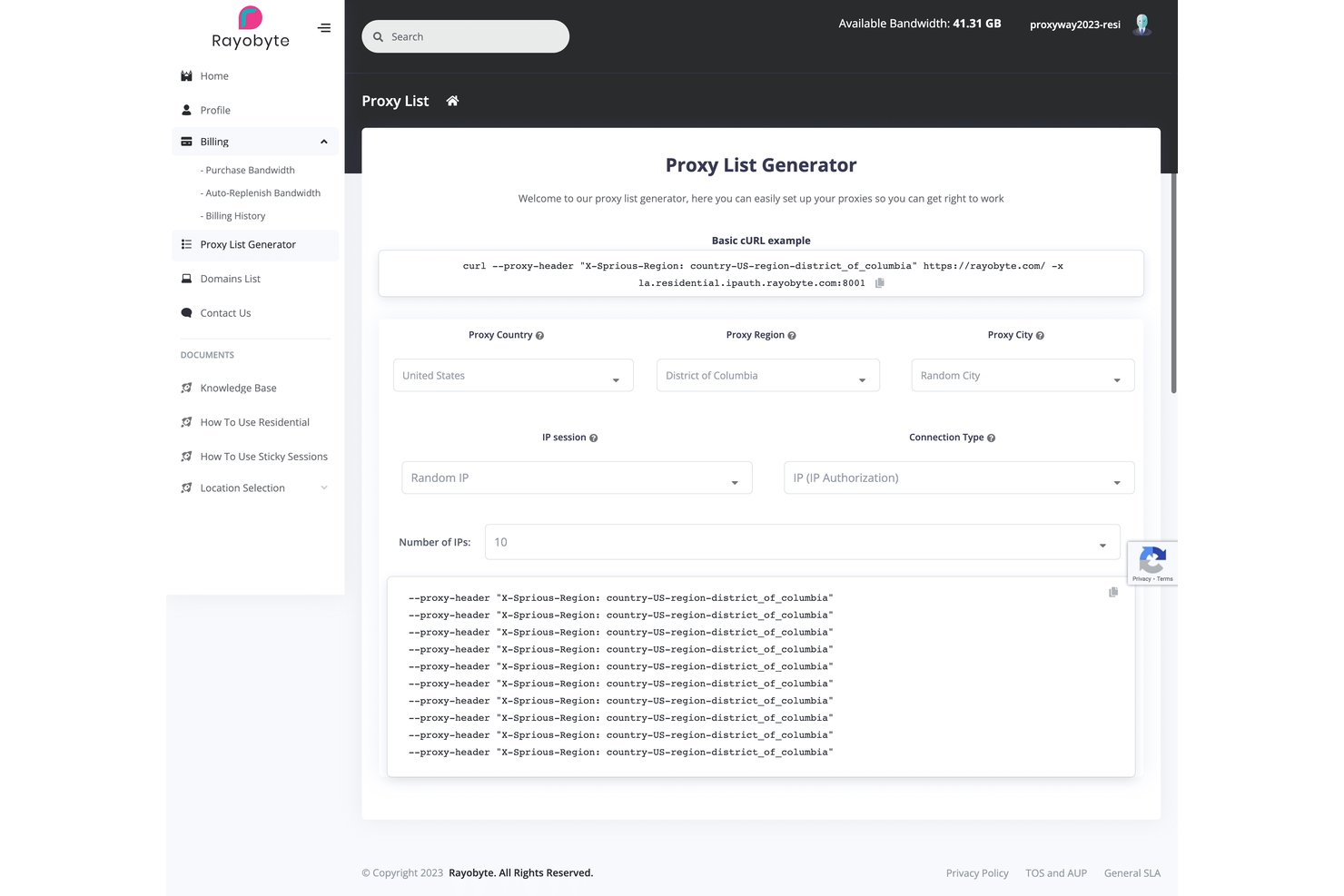
Rayobyte is a datacenter proxy provider offering 300,000+ IPs across 9+ ASNs, 20,000 unique C-class subnets, and 29+ global locations, with dedicated, semi-dedicated, and rotating proxy options backed by EWDCI-certified ethical sourcing standards.
Who Is Rayobyte Best For?
Rayobyte is a strong fit for enterprise teams and compliance-sensitive organizations that need ethically sourced datacenter proxies for large-scale web data collection.
Why I Picked Rayobyte
I picked Rayobyte as one of the best because its EWDCI certification gives procurement and legal teams a documented ethical sourcing standard to point to during vendor reviews. I also like that it operates on self-owned ASNs, and its three-pronged abuse prevention framework (prevention, detection, and response) is built directly into the infrastructure. It's the kind of audit trail that actually holds up when a compliance team starts asking questions.
Rayobyte Key Features
- Global subnet and ASN diversity: Access IPs across 9+ ASNs and 20,000 C-class subnets worldwide.
- Unlimited concurrent connections: Run high-volume tasks with no restrictions on bandwidth or thread count.
- Rotating and static IP gateway: Choose between rotating proxy endpoints or persistent static IPs for varied scraping strategies.
- SOCKS5 and HTTP/HTTPS protocol support: Integrate proxies in diverse environments with multiple authentication and protocol options.
Rayobyte Integrations
Rayobyte provides an API for custom integrations and offers a browser extension for proxy management. Native integrations are not clearly listed.
Pros and Cons
Pros:
- Rotating and static datacenter proxies offered
- Unlimited bandwidth and concurrent threads
- EWDCI-certified ethical sourcing and compliance
Cons:
- No city-level targeting for datacenter IPs
- Fewer global locations than top competitors
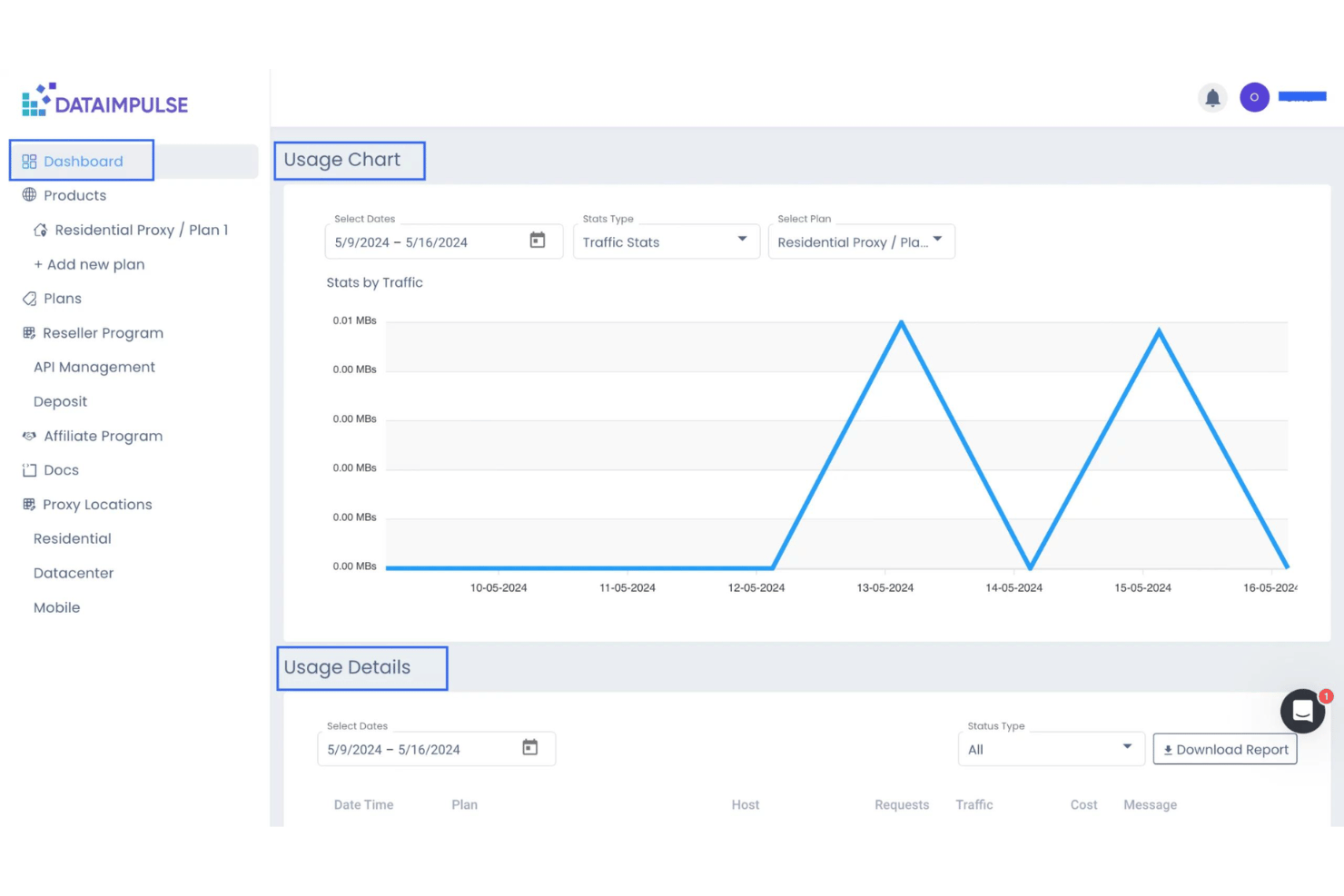
DataImpulse is a pay-as-you-go datacenter proxy provider offering a 20M-IP pool across 195+ countries, with rotating and sticky sessions, HTTP(S)/SOCKS5 support, and full API access for programmatic IP rotation control.
Who Is DataImpulse Best For?
DataImpulse is a natural fit for web scraping engineers and DevOps teams running high-volume, automated data collection or performance monitoring workflows.
Why I Picked DataImpulse
DataImpulse earns its spot on my shortlist because of how well the datacenter network holds up under sustained automated load. I rely on the sub-100ms latency and 99.9% uptime SLA when running continuous SERP and price monitoring jobs, where dropped connections or slow response times skew the data. The full API-driven rotation lets me configure per-request IP changes or sticky sessions up to 30 minutes without touching the dashboard, which keeps my monitoring pipelines running without manual intervention.
DataImpulse Key Features
- City/state/ASN targeting: Choose IPs based on location or ASN for granular geographic and network-specific requests.
- Shared proxy pool: Access a rotating set of datacenter IPs shared across users, with instant availability and transparent allocation.
- Sub-user management: Segment accounts and allocate bandwidth or traffic caps for agencies or large teams managing multiple workflows.
- Multi-protocol support: Use proxies with both HTTP(S) and SOCKS5 to cover a wide range of automation and scraping tools.
DataImpulse Integrations
DataImpulse offers native integrations with Scrapy, Puppeteer, Selenium, Playwright, Shadowrocket, Multilogin, AdsPower, GoLogin, SwitchyOmega, and Octoparse, and provides an API for custom integrations.
Pros and Cons
Pros:
- Granular city, state, and ASN targeting
- Sub-100ms latency and 99.9% uptime SLA
- Large datacenter IP pool with 195+ countries
Cons:
- Occasional bans on scraping protected targets
- No dedicated or private IP option
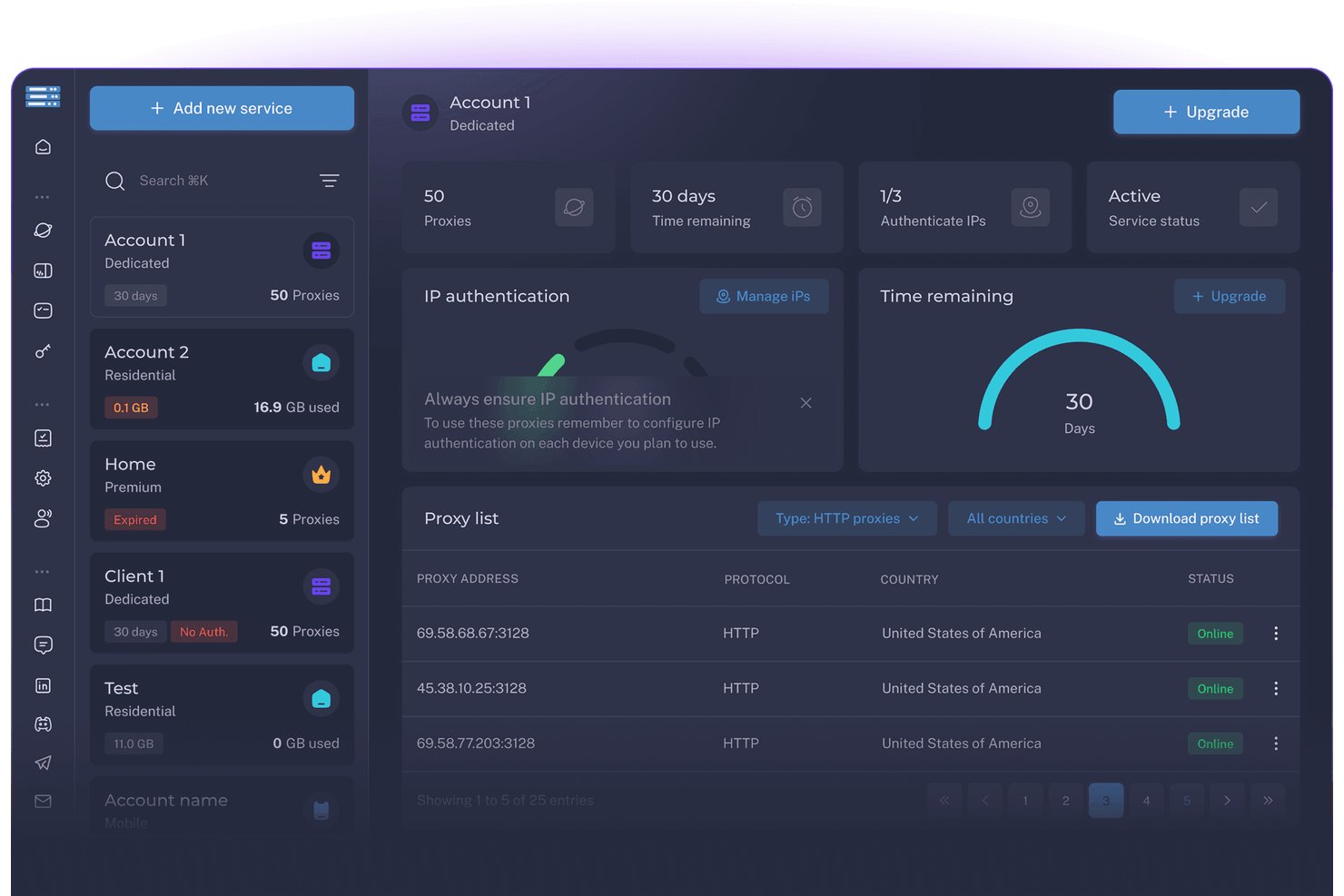
ProxyScrape Premium is a shared datacenter proxy service offering a pool of 40,000 static IPv4 IPs across 9 countries, with unlimited concurrent connections, HTTP and SOCKS5 protocol support, and API-accessible proxy list management.
Who Is ProxyScrape Best For?
It's a practical fit for developers and scraping engineers running high-volume, budget-conscious data collection on non-sensitive targets.
Why I Picked ProxyScrape
ProxyScrape earns its spot on my shortlist because the API lets me pull the full proxy list programmatically and slot it directly into my scraping stack without touching a dashboard. I can authenticate via username:password or IP whitelisting, and the product ships with ready-to-run code samples in Python, Node.js, Go, and four other languages. In practice, that means I can drop ProxyScrape into an existing pipeline in under an hour, which matters when I'm spinning up a new data collection job quickly.
ProxyScrape Key Features
- Static datacenter IP pool: Access to 40,000 fixed IPv4 datacenter proxies across 9 countries for consistent session management.
- Unlimited concurrent connections: No enforced limits on the number of simultaneous connections per account for larger job execution.
- SOCKS5 and HTTP protocol support: Choose between HTTP or SOCKS5 protocols for compatibility with a wide range of tools and scripts.
- 24/7 human support: Customer support is available around the clock via live chat and ticket system for technical issues or provisioning needs.
ProxyScrape Integrations
Native integrations are not clearly listed. ProxyScrape offers an API for custom integrations and provides code samples for Python, Node.js, Go, Java, PHP, and C#.
Pros and Cons
Pros:
- Choice of HTTP or SOCKS5 protocols
- Simple API for proxy list management
- Unlimited concurrent connections supported
Cons:
- Limited to 9 country locations
- No automatic IP rotation available

IPRoyal
Best for ethically sourced proxy pools
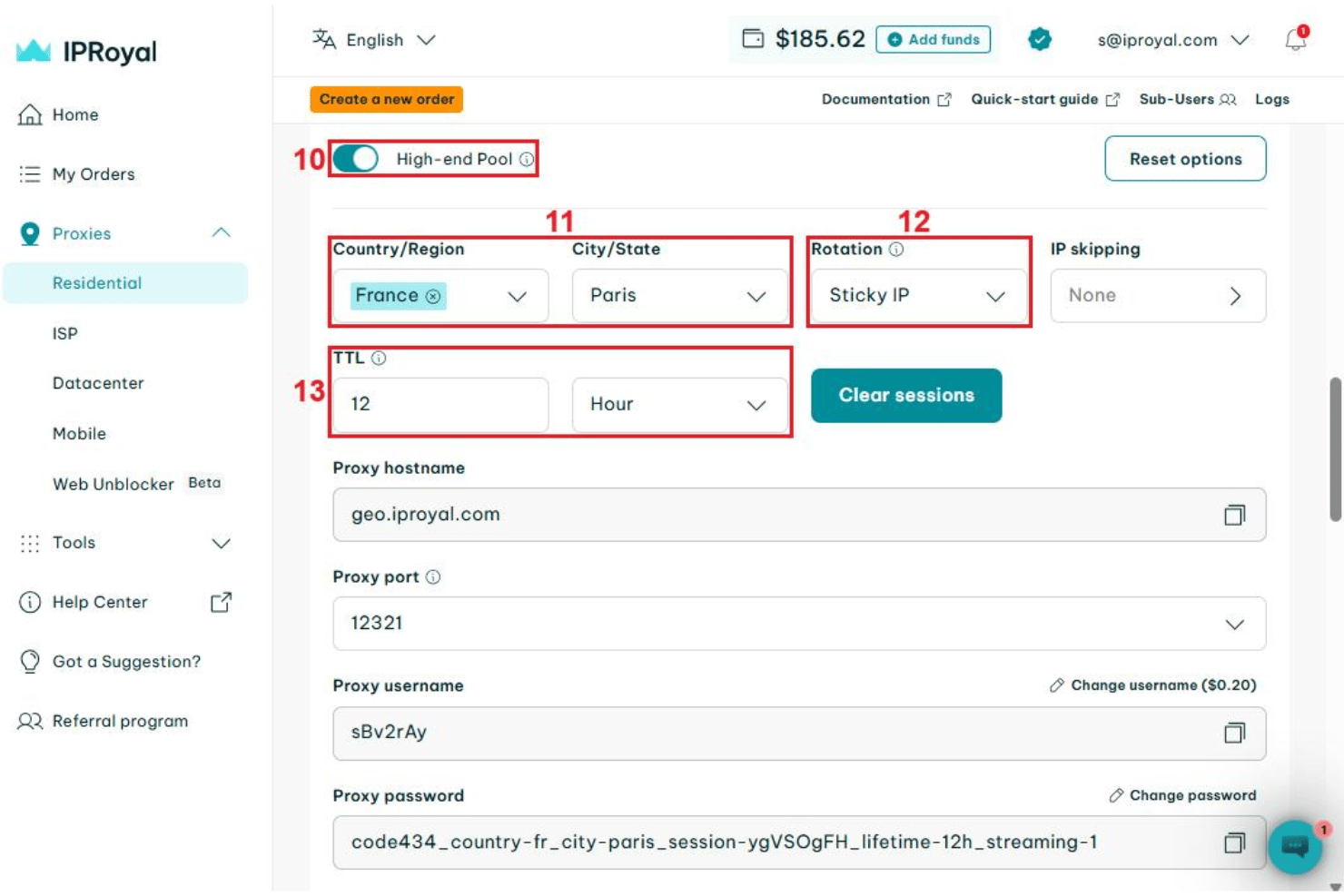
IPRoyal is a datacenter proxy provider offering dedicated IPv4 proxies across 60+ locations, with dual authentication, HTTP/HTTPS and SOCKS5 protocol support, unlimited concurrent sessions, and configurable IP rotation.
Who Is IPRoyal Best For?
IPRoyal suits individual developers and small-to-mid-sized teams running web scraping, SEO tracking, or ad verification workflows at moderate scale.
Why I Picked IPRoyal
IPRoyal earns its spot on my shortlist because I think their ethical IP sourcing model is genuinely differentiated in this space. The Pawns.app peer network underpins how they build their broader proxy pool, meaning IPs come from consenting users rather than silent harvesting. On the datacenter side, I like the optional fraud-score filtering via Scamalytics and IPQualityScore, which lets me screen IP cleanliness before committing to a scraping or ad verification run.
IPRoyal Key Features
- Global datacenter footprint: Access dedicated IPs in over 60 countries with fine-grained location targeting.
- Dual authentication: Choose between username/password or IP whitelisting for proxy access management.
- HTTP(S) and SOCKS5 protocol support: Switch between protocols to fit diverse integration or security needs.
- Unlimited concurrency: Run as many parallel connections as you need without imposed session limits.
IPRoyal Integrations
IPRoyal offers native integrations with Shadowrocket, Norconex, DuoPlus, GoLogin, and more, and provides an API for custom integrations.
Pros and Cons
Pros:
- Customizable IP rotation and session options
- Unlimited concurrent connections supported
- Ethically sourced proxy pools
Cons:
- Less granular city-level targeting available
- Smaller datacenter IP pool than top competitors

Oxylabs
Best for large-scale IP rotation needs
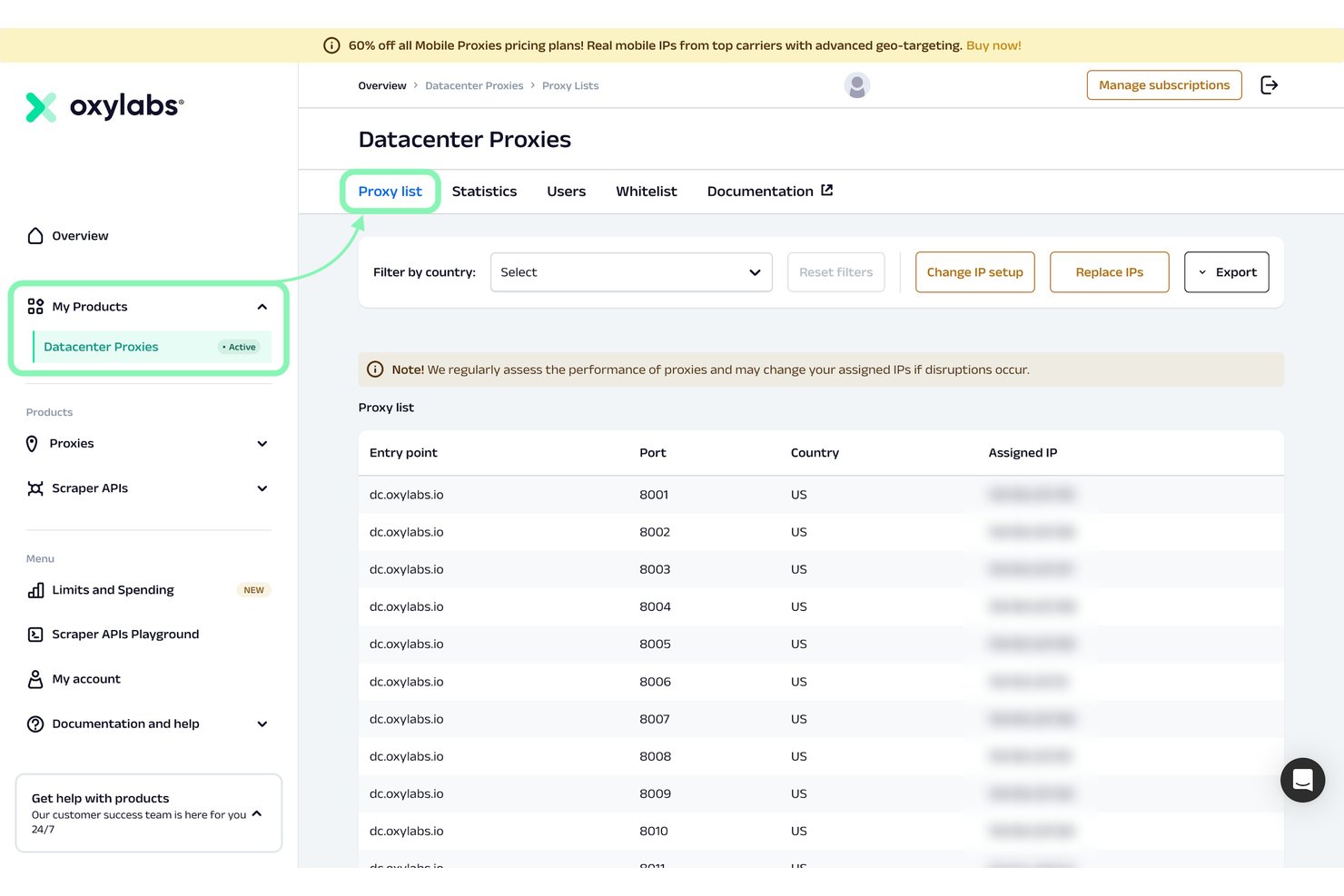
Oxylabs is a datacenter proxy provider offering dedicated and shared IP pools across 188 countries, with configurable IP rotation, sticky sessions, and SOCKS5 support built for high-volume, concurrent web data collection.
Who Is Oxylabs Best For?
Oxylabs suits web scraping engineers and data teams at mid-to-enterprise scale who need a high-throughput, multi-country datacenter proxy infrastructure.
Why I Picked Oxylabs
Oxylabs earns its spot on my shortlist because the dedicated IP pool tops 1.9 million addresses across roughly 8,000 subnets. That depth is what makes per-request rotation viable at scale, since you're cycling through a genuinely diverse range of ASNs rather than a thin list of recycled addresses. I also like that you can mix rotation modes: assign sticky sessions for stateful workflows while rotating freely on everything else, all controlled through the same gateway endpoint.
Oxylabs Key Features
- Sub-user management: Create multiple sub-accounts with custom traffic limits and access controls.
- City and ASN targeting: Select proxies by city or autonomous system number for advanced geo-targeting.
- Integrated dashboard analytics: Monitor usage statistics, active sessions, and spending in real time.
- 24/7 expert support: Reach a dedicated technical team around the clock for troubleshooting and guidance.
Oxylabs Integrations
Oxylabs offers native integrations with Selenium, Puppeteer, Playwright, Scrapy, FoxyProxy, MuLogin, and SwitchyOmega, and provides an API and open source SDKs for custom integrations.
Pros and Cons
Pros:
- Supports granular city-level proxy selection
- Reliable geo-targeting in 180+ countries
- Exceptionally large datacenter IP pool
Cons:
- Fewer blocklist management tools than peers
- Concurrency limits after bandwidth thresholds

Best for customizable traffic control
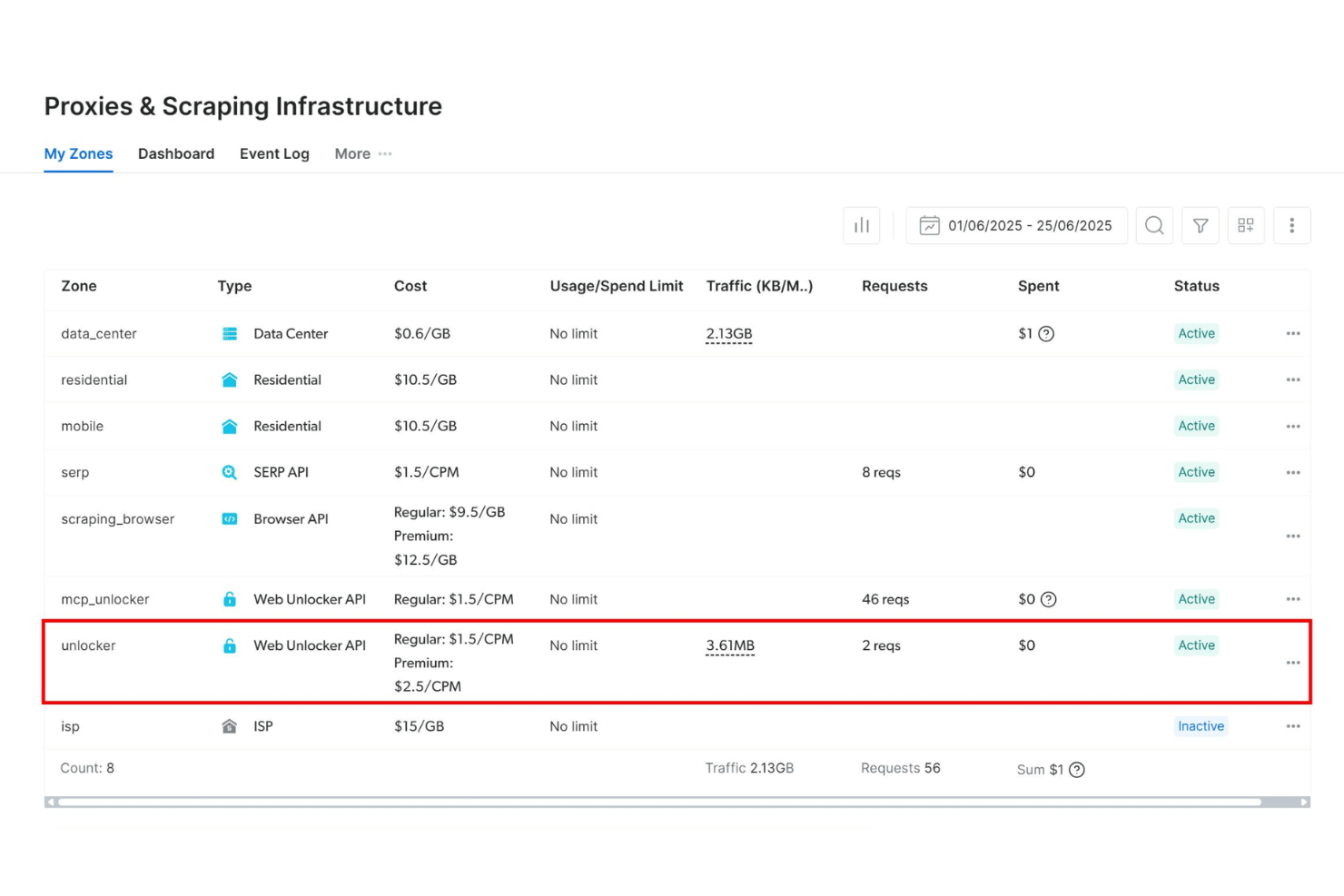
Bright Data is a datacenter proxy network offering 1.3M+ shared and dedicated IPs across 98 countries, with configurable IP rotation, city-level geo-targeting, and support for HTTP/HTTPS and SOCKS5 protocols.
Who Is Bright Data Best For?
Bright Data is a strong fit for web scraping engineers and DevOps teams running high-volume, concurrent data collection workflows that require enterprise-grade proxy infrastructure.
Why I Picked Bright Data
Bright Data earns its spot on my shortlist because the rotation control it offers is genuinely rare at this scale. I can configure per-request rotation, sticky sessions, or timed rotation through the API or the included Proxy Manager, so I'm not locked into one traffic pattern across different jobs. For concurrent workflows, I assign shared IPs to bulk crawls and switch to dedicated IPs where I need a consistent session identity across requests.
Bright Data Key Features
- Sub-user management: Create multiple sub-accounts with customizable permissions and bandwidth caps for team or client segmentation.
- City-level geo targeting: Select proxies from specific countries and cities for precise data collection and ad verification use cases.
- Unlimited concurrent sessions: Run as many simultaneous connections as needed to handle high-volume scraping and testing jobs.
- SOCKS5 and HTTP/HTTPS protocols: Connect using multiple proxy protocols to meet compatibility and security standards across applications.
Bright Data Integrations
Bright Data offers native integrations with Crew AI, Haystack, n8n, Agno, and more, and supports SDKs for Python. An API is available for custom integrations and third-party software connections.
Pros and Cons
Pros:
- Native SOCKS5, HTTP, and HTTPS support
- Highly granular IP rotation configuration
- Massive datacenter IP pool worldwide
Cons:
- KYC verification can slow onboarding
- Complex setup for non-technical users

Best for rapid deployment requirements
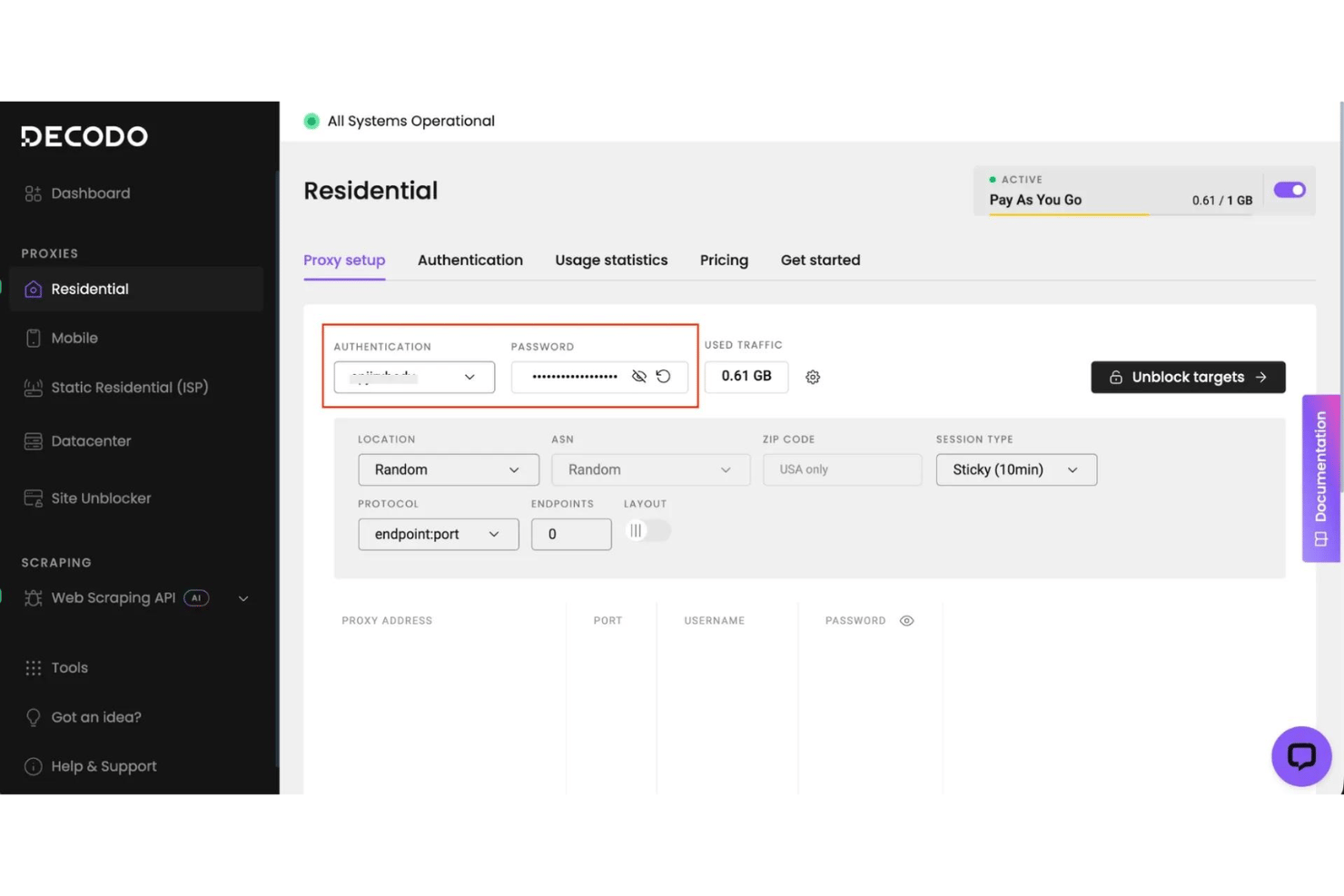
Decodo is a datacenter proxy provider offering 500K+ shared and dedicated IPs across 18+ countries, with configurable rotation, sticky sessions, HTTP(S) and SOCKS5 support, and a single endpoint for bulk request routing.
Who Is Decodo (formerly Smartproxy) Best For?
Decodo suits web scraping engineers and DevOps teams who need datacenter proxy access without going through an enterprise sales process.
Why I Picked Decodo (formerly Smartproxy)
Decodo earns its spot on my shortlist because the self-serve signup model means you go from registration to a working proxy connection in under 10 minutes, with no sales call required. I particularly like the single endpoint architecture, which routes requests across 500K+ IPs without any custom routing logic on my side. The support for both user:pass and IP whitelisting authentication from day one means I can match the auth method to my existing stack immediately.
Decodo (formerly Smartproxy) Key Features
- Real-time statistics dashboard: Monitor traffic, request counts, and success rates via a live dashboard.
- SOCKS5 protocol support: Use SOCKS5 proxies for flexible connection compatibility with various apps and scripts.
- Global shared and dedicated IPs: Access 500K+ datacenter IPs with both shared and dedicated allocation models.
- API integration for proxy management: Automate proxy configuration, usage monitoring, and rotation through a documented API.
Decodo (formerly Smartproxy) Integrations
Decodo offers native integrations with tools like Scrapy, Playwright, Puppeteer, Selenium, Shadowrocket, and more. An API is available for custom integrations.
Pros and Cons
Pros:
- Real-time proxy pool status dashboard
- Native integration with multiple scraping frameworks
- Rapid onboarding without sales involvement
Cons:
- Fair-use policy may throttle heavy traffic
- Limited dedicated proxy geographies

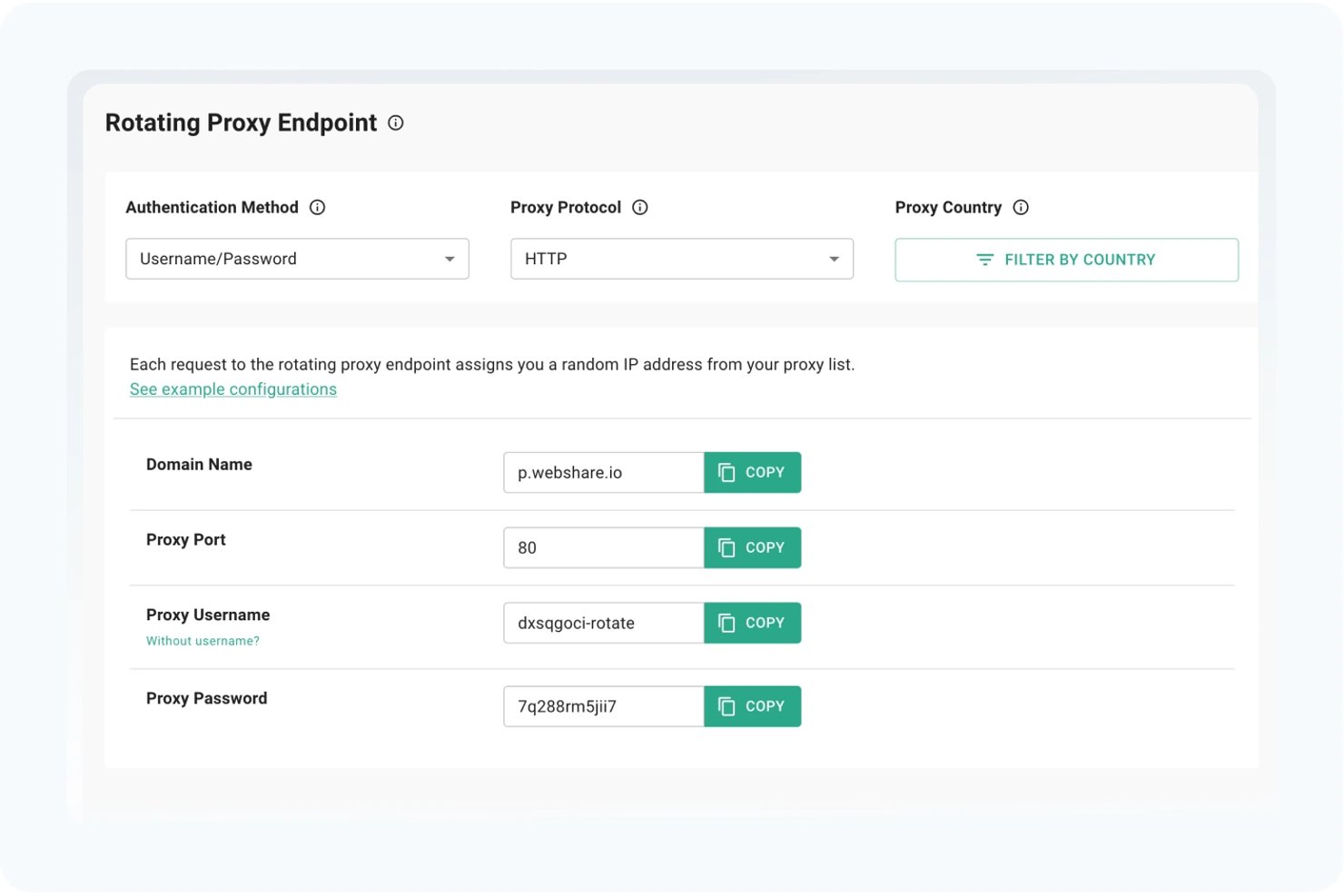
Webshare is a datacenter proxy provider offering shared, private, and dedicated IP tiers across 50+ countries, with HTTP/SOCKS5 support, rotating endpoints, and a self-serve API for high-volume proxy management.
Who Is Webshare Best For?
Webshare suits web scraping engineers and DevOps teams running high-concurrency, bandwidth-heavy workloads who need cost-effective datacenter IPs at scale.
Why I Picked Webshare
I've included Webshare in my top picks because its per-proxy pricing model means you're never charged for bandwidth consumption, which matters when you're running continuous scraping jobs across thousands of targets. Instead of watching a GB counter, I can push requests through its 100+ Gbps network at up to 3,000 threads per proxy without hitting a billing wall. The rotating proxy endpoint handles IP cycling automatically, so I'm not managing rotation logic manually while simultaneously worrying about data caps.
Webshare Key Features
- API-based proxy management: Automate proxy creation, whitelisting, and usage tracking through a full-featured REST API.
- Sub-user access controls: Create sub-accounts with customizable permissions to segment traffic and manage team usage.
- Multiple proxy allocation tiers: Choose shared, private, or dedicated datacenter IPs with clearly defined access scope.
- SOCKS5 and HTTP support: Connect to proxies using both SOCKS5 and HTTP protocols for broad compatibility with tools and scripts.
Webshare Integrations
Webshare offers a Chrome browser extension for proxy management and provides a REST API for custom integrations. SOCKS5 and HTTP support allows integration with most web scraping tools and scripts.
Pros and Cons
Pros:
- REST API for automation and monitoring
- Large global datacenter IP pool
- No data caps on any paid plan
Cons:
- Shared proxies have lower Google SERP success
- Limited city-level targeting on datacenter IPs
Other Datacenter Proxy Providers
Here are some additional datacenter proxy providers options that didn’t make it onto my shortlist, but are still worth checking out:
- Shifter
For rotating backconnect architecture
- MarsProxies
For instant proxy activation
- Infatica
For global multi-geo proxy coverage
- NodeMaven
For high concurrency web scraping needs
- Proxy-Seller
For custom proxy location selection
- ProxyEmpire
For pay-as-you-go bandwidth plans
- Proxy-Cheap
For bulk proxy package options
- MyPrivateProxy
For eco-conscious infrastructure options
- Storm Proxies
For hassle-free quick setup
- SquidProxies
For straightforward subnet configurations


How I Evaluate Datacenter Proxy Providers
I split my evaluation into baseline criteria every provider must meet—like IP pool size and rotation controls—and differentiators that separate top picks for scraping or ad verification workloads.
Core Functionality (Table Stakes for This List)
When I'm selecting tools for my list, I rank each one on a scale from 0 (does not offer the functionality) to 5 (excels in this area) for each core functionality listed below. Then, I calculate the tool's total score into a percentage. Each tool needs to achieve a minimum total score of 65% to be considered for inclusion.
- Datacenter IP pool: I look at the total number of IPs, how many subnets and ASNs they span, and whether the diversity is enough to avoid mass bans during high-volume scraping jobs.
- Geographic coverage: The number of available countries and regions matters when you need localized results, like pulling SERP data or verifying ads in specific markets.
- Concurrent session support: I check how many parallel connections a provider allows, since bulk scraping and load testing workflows fall apart fast under tight thread limits.
- IP rotation controls: Providers should offer configurable rotation options—per-request cycling for scraping and sticky sessions for workflows like multi-step checkout testing.
- Authentication and protocols: I evaluate whether the provider supports both user:pass and IP whitelisting alongside HTTP/HTTPS and SOCKS5, which gives you flexibility across different toolchains.
- Dedicated vs. shared options: Clear allocation models matter here. Some projects need dedicated IPs for consistent identity, while shared pools work fine for broad data collection at lower cost.
Once I have a list of tools that meet the criteria, I consider what sets each platform apart.
Differentiating Factors (What Sets Vendors Apart)
Here's how I compare and contrast different vendors:
Standout Features
A built-in proxy manager or API that gives you real-time traffic analytics and city-level targeting makes a big difference when you're running multiple scraping projects at once. I also look at whether a provider offers sub-user management, which lets agencies and larger teams assign separate bandwidth caps per client or department. Unlimited bandwidth plans are worth evaluating too, especially if you're doing continuous SERP monitoring where metered billing gets expensive fast.
Beyond Features
Pricing structure is one of the first things I compare. Pay-per-IP and pay-per-GB models lead to very different costs depending on whether your workload is request-heavy or data-heavy. I also check whether a provider offers hybrid access to residential or ISP proxies alongside datacenter IPs, since some targets block pure datacenter traffic and you need a fallback. Compliance matters too; providers with KYC vetting and clear acceptable use policies help protect your team from sharing infrastructure with abusive traffic.
How to Choose Datacenter Proxy Providers
It’s easy to get bogged down in long feature lists and complex pricing structures. To help you stay focused as you work through your unique software selection process, here’s a checklist of factors to keep in mind:
| Factor | What to Consider |
|---|---|
| Scalability | Can the proxy pool and infrastructure handle traffic spikes and future growth in your usage volume? |
| Integrations | Will the proxies work smoothly with your scraping tools, automation scripts, or monitoring platforms? |
| Customizability | How flexible are the settings for rotation, session lifetimes, and geographic targeting to match workflow needs? |
| Ease of use | Is the dashboard or API interface intuitive enough for quick ramp-up by new team members? |
| Implementation and onboarding | What’s required to roll out proxies to your systems? Are there guides, code samples, or assisted onboarding? |
| Cost | Does the billing model align with how your team consumes bandwidth or IPs, and will it scale without surprises? |
| Security safeguards | Are there controls to restrict proxy access, monitor usage, and detect abuse that could impact your reputation? |
| Support availability | How quickly can you get help with connection issues or setup problems during critical workloads? |
What Are Datacenter Proxy Providers?
Datacenter proxy providers are companies that supply IP addresses hosted on data center servers, enabling users to route internet traffic through non-residential IPs. These solutions help teams access web data, automate web scraping, bypass geo-restrictions, and manage multiple online identities using private datacenter proxies or a rotating datacenter proxy. Many providers also offer mobile proxies, a web scraping API, and a web unlocker to help bypass anti-bot systems. These capabilities make datacenter proxies well suited for market research, large-scale data collection, and other high-volume automation tasks.
Features of Datacenter Proxy Providers
When selecting datacenter proxy providers, keep an eye out for the following key features:
- Large IP pool: Access to thousands or millions of unique datacenter IPs allows your team to perform extensive data collection, bypass IP bans, and reduce the risk of detection.
- Geographic targeting: Choose IPs from specific locations or regions to gather localized data, check geo-restricted content, and optimize global scraping strategies.
- IP rotation controls: Automatically or manually rotate IPs per request, session, or time interval to avoid blocks and maintain high session success rates.
- Concurrent session support: Launch multiple simultaneous connections without hitting provider-imposed limits, ensuring uninterrupted scaling of automated tasks.
- Sticky sessions: Maintain the same IP for a set period or session—useful for e-commerce scraping, account management, and operations requiring state persistence.
- Protocol flexibility: Support for HTTP, HTTPS, and SOCKS5 protocols so you can handle a variety of use cases, from browser automation to security testing tools.
- Authentication options: Secure your access using username/password authentication or IP allow-listing for flexible integration with different systems and teams.
- Dashboard or API management: Monitor usage, view analytics, control IP allocation, and manage sub-users through an interface or developer API for operational efficiency.
- Dedicated and shared IP modes: Decide between exclusive-use IPs for sensitive projects and shared pools for lower-cost, high-volume data collection needs.
- High uptime and reliability: Dependable, well-maintained infrastructure minimizes outages so mission-critical jobs aren’t interrupted when you need to scale.
Benefits of Datacenter Proxy Providers
Implementing datacenter proxy providers provides several benefits for your team and your business. Here are a few you can look forward to:
- Scalable automation: Easily manage large-scale web scraping, SEO tracking, or data extraction projects thanks to vast IP pools and unlimited concurrent sessions.
- Reduced block risk: Frequent IP rotation and access to multiple subnets lower the chances of bans or CAPTCHAs during high-volume automated activity.
- Global reach: Geographic targeting options allow you to access content and validate ads or listings from nearly any country or region.
- Flexible workflows: Features like sticky sessions and mixed protocol support enable session-based actions, multi-step processes, and integration with diverse tools.
- Improved anonymity: Datacenter proxies mask your origin with non-residential IPs, helping protect sensitive research or competitive monitoring.
- Cost predictability: Flat-rate and bandwidth-unmetered plans support high-volume or continuous operations without surprise charges each billing cycle.
- Centralized management: Dashboard and API controls simplify monitoring usage, adjusting allocation, and maintaining secure, organized proxy access across projects.
Costs and Pricing of Datacenter Proxy Providers
Selecting datacenter proxy providers requires an understanding of the various pricing models and plans available. Costs vary based on features, team size, add-ons, and more. The table below summarizes common plans, their average prices, and typical features included in datacenter proxy providers solutions:
Plan Comparison Table for Datacenter Proxy Providers
| Plan Type | Average Price | Common Features |
|---|---|---|
| Free Plan | $0 | Limited number of IPs, basic rotation, restricted geographic targeting, and minimal support. |
| Personal Plan | $20-$70/month | Moderate IP pool, user:pass authentication, simple dashboard controls, and standard bandwidth caps. |
| Business Plan | $100-$600/month | Large IP pool, geographic targeting, advanced rotation, concurrent sessions, API access, and better usage reporting. |
| Enterprise Plan | $1000+/month | Millions of IPs, dedicated account manager, sub-user management, custom SLAs, hybrid proxy types, and 24/7 support. |
Datacenter Proxy Providers FAQs
Here are some answers to common questions about datacenter proxy providers:
How do datacenter proxies differ from residential proxies?
Datacenter proxies use IPs assigned to data centers, not home internet connections. This makes them faster and cheaper, but also more likely to be detected or blocked by some websites compared to residential proxies.
Are datacenter proxies legal to use?
Yes, datacenter proxies are legal in most countries when used for legitimate purposes. Always review local laws, provider terms, and use them responsibly to avoid violating any regulations or site policies.
What tasks are datacenter proxies best suited for?
Datacenter proxies are ideal for bulk web scraping, ad verification, SEO monitoring, and tasks that need speed and scalability but don’t depend on mimicking real residential users.
Can I use the same datacenter IP for long sessions?
Yes, many providers offer sticky sessions that let you use the same IP for several minutes or even hours, which helps with tasks needing consistent identity, like e-commerce monitoring.
How do providers prevent abuse on shared IPs?
Reputable providers impose usage limits, maintain blacklists, and vet new customers to minimize abuse. This protects your reputation and helps reduce bans when you’re using shared proxy pools.
Do datacenter proxies work with automation tools like Scrapy or Puppeteer?
Yes, most datacenter proxy providers support integration with popular scraping and automation frameworks through standard HTTP, HTTPS, or SOCKS5 protocols. Always check compatibility before committing.