

10 Meilleures Plateformes IoT Open Source pour 2026

Meilleure sélection de plateformes IoT open source
Voici ma sélection de plateformes IoT open source :


Une plateforme IoT open source est un cadre logiciel qui vous permet de connecter, gérer et surveiller des appareils et des données à travers l’Internet des Objets, avec un code source disponible pour la personnalisation et les améliorations communautaires. Si vous recherchez la meilleure plateforme IoT open source, vous jonglez certainement avec les besoins d’intégration, les exigences de sécurité et la gestion d’une grande diversité d’appareils à grande échelle.
La bonne plateforme peut aider votre équipe à automatiser la gestion des appareils, standardiser les flux de données et garder votre infrastructure flexible à mesure que vos projets grandissent. Dans cette liste, vous trouverez une comparaison des principales plateformes IoT open source pour 2026, afin que vous puissiez évaluer les fonctionnalités, le soutien de la communauté et l’architecture pour faire un choix éclairé pour votre environnement.
Why Trust Our Software Reviews
We’ve been testing and reviewing software since 2023. As tech leaders ourselves, we know how critical and difficult it is to make the right decision when selecting software.
We invest in deep research to help our audience make better software purchasing decisions. We’ve tested more than 2,000 tools for different tech use cases and written over 1,000 comprehensive software reviews. Learn how we stay transparent & our software review methodology.
Résumé des meilleures plateformes IoT open source
Ce tableau comparatif résume les détails tarifaires de mes meilleures sélections de plateformes IoT open source pour vous aider à trouver la meilleure solution selon votre budget et vos besoins professionnels.
| Tool | Best For | Trial Info | Price | ||
|---|---|---|---|---|---|
| 1 | Best for modular device management and visualization | Free plan available | From $10/month | Website | |
| 2 | Best for real-time data access and control | Free plan available | From $3/month | Website | |
| 3 | Best for collaborative IoT project ecosystems | Free plan available | From €25,000/year | Website | |
| 4 | Best for distributed architecture with broad protocol support | Free plan available | Free to use | Website | |
| 5 | Best for flexible smart city and energy solutions | Free demo available | Pricing upon request | Website | |
| 6 | Best for scalable industrial multi-protocol IoT | Free demo available | Pricing upon request | Website | |
| 7 | Best for enterprise device management and analytics | Free plan available | Pricing upon request | Website | |
| 8 | Best for open building and home automation | Free plan available | Free to use | Website | |
| 9 | Best for vendor-neutral edge computing | Free plan available | Free to use | Website | |
| 10 | Best for secure device interoperability | Free plan available | Free to use | Website |
-

Site24x7
Visit WebsiteThis is an aggregated rating for this tool including ratings from Crozdesk users and ratings from other sites.4.7 -
GitHub Actions
Visit WebsiteThis is an aggregated rating for this tool including ratings from Crozdesk users and ratings from other sites.4.8 -
Docker
Visit WebsiteThis is an aggregated rating for this tool including ratings from Crozdesk users and ratings from other sites.4.6




Avis sur les meilleures plateformes IoT open source
Vous trouverez ci-dessous mes résumés détaillés des plateformes IoT open source ayant figuré dans ma sélection. Mes avis offrent un aperçu approfondi des fonctionnalités, intégrations et cas d’utilisation idéaux de chaque plateforme, pour vous aider à trouver celle qui répond à vos besoins.

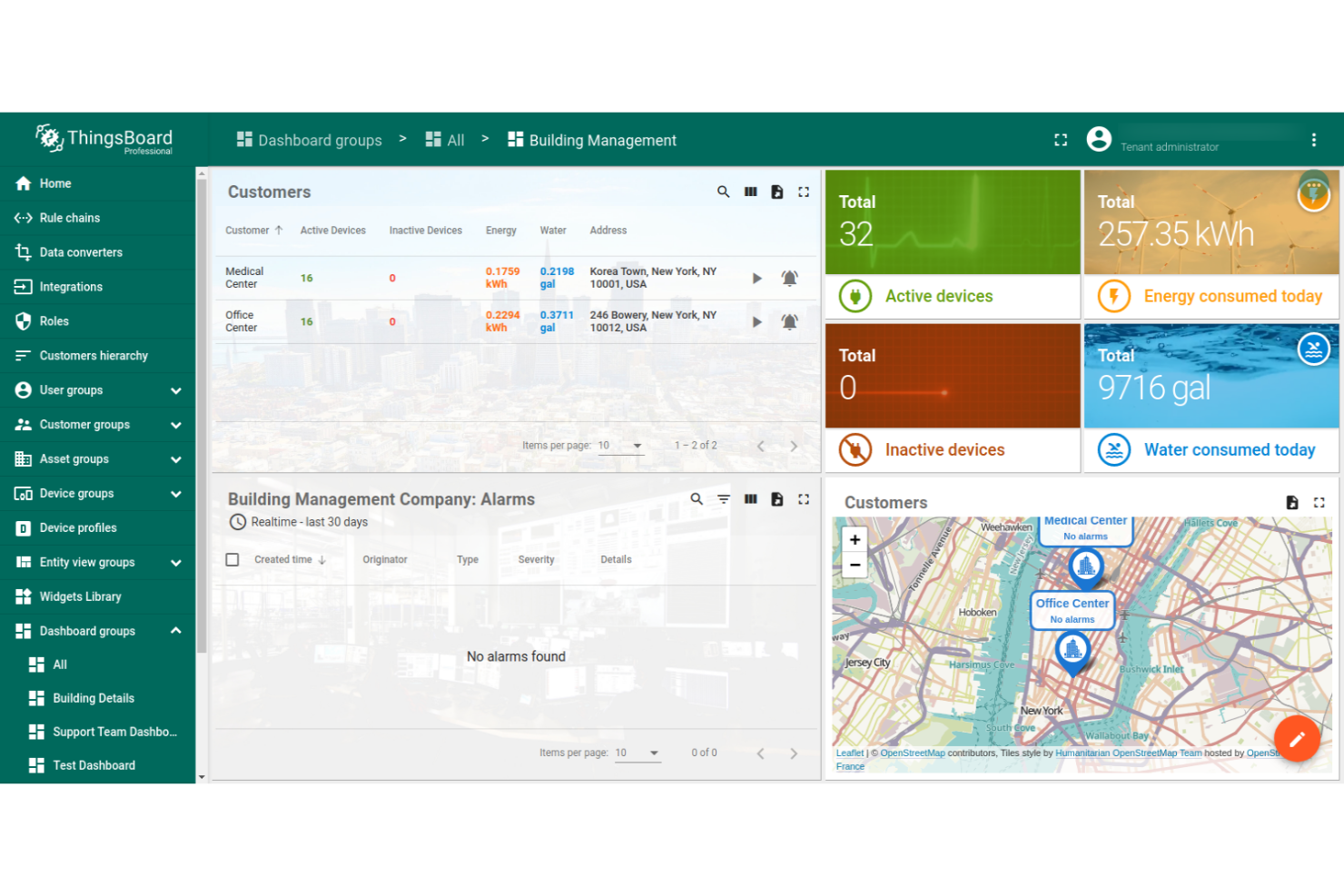
If you need a flexible platform for managing connected devices and visualizing IoT data, ThingsBoard offers a modular approach that fits a range of deployment needs. It’s well-suited for IT teams in manufacturing, utilities, or smart building projects who want to customize device management and data processing workflows. The platform’s open architecture helps you integrate with multiple protocols and scale as your IoT environment grows.
Who is ThingsBoard Best For?
IoT engineers and operations teams in small to mid-sized organizations globally managing modular device networks and visualizing collected data.
Why I Picked ThingsBoard
I chose ThingsBoard because its modular architecture gives you the flexibility to tailor device management, data collection, and visualization to your project’s needs. The platform lets you define custom rule chains for processing device data, which is valuable for teams handling complex IoT workflows. I also appreciate the built-in dashboard editor, which makes it easy to visualize real-time and historical data from connected devices. For open source IoT projects that require both scalability and customization, ThingsBoard stands out for its adaptable design.
ThingsBoard Key Features
Some other features in ThingsBoard that are useful for open source IoT projects include:
- Multi-Tenancy Support: Manage multiple customers or business units within a single deployment, each with isolated data and device access.
- OTA Firmware Updates: Push over-the-air firmware updates to connected devices directly from the platform.
- Custom Widgets Library: Build and reuse custom widgets for dashboards to tailor data visualization to your needs.
- Alarm Management: Set up and manage alarms for device events, thresholds, or connectivity issues to support proactive monitoring.
ThingsBoard Integrations
Integrations include MQTT, CoAP, HTTP, LoRaWAN, SigFox, NB-IoT, LwM2M, ThingsBoard IoT Gateway, Trendz Analytics, and more.
Pros and Cons
Pros:
- Built-in dashboard editor enables custom data visualization
- Modular architecture allows for flexible deployment and scaling
- Supports multiple IoT protocols including MQTT, CoAP, and HTTP
Cons:
- Resource usage is high for large-scale deployments
- Documentation can be inconsistent or lacking for advanced features

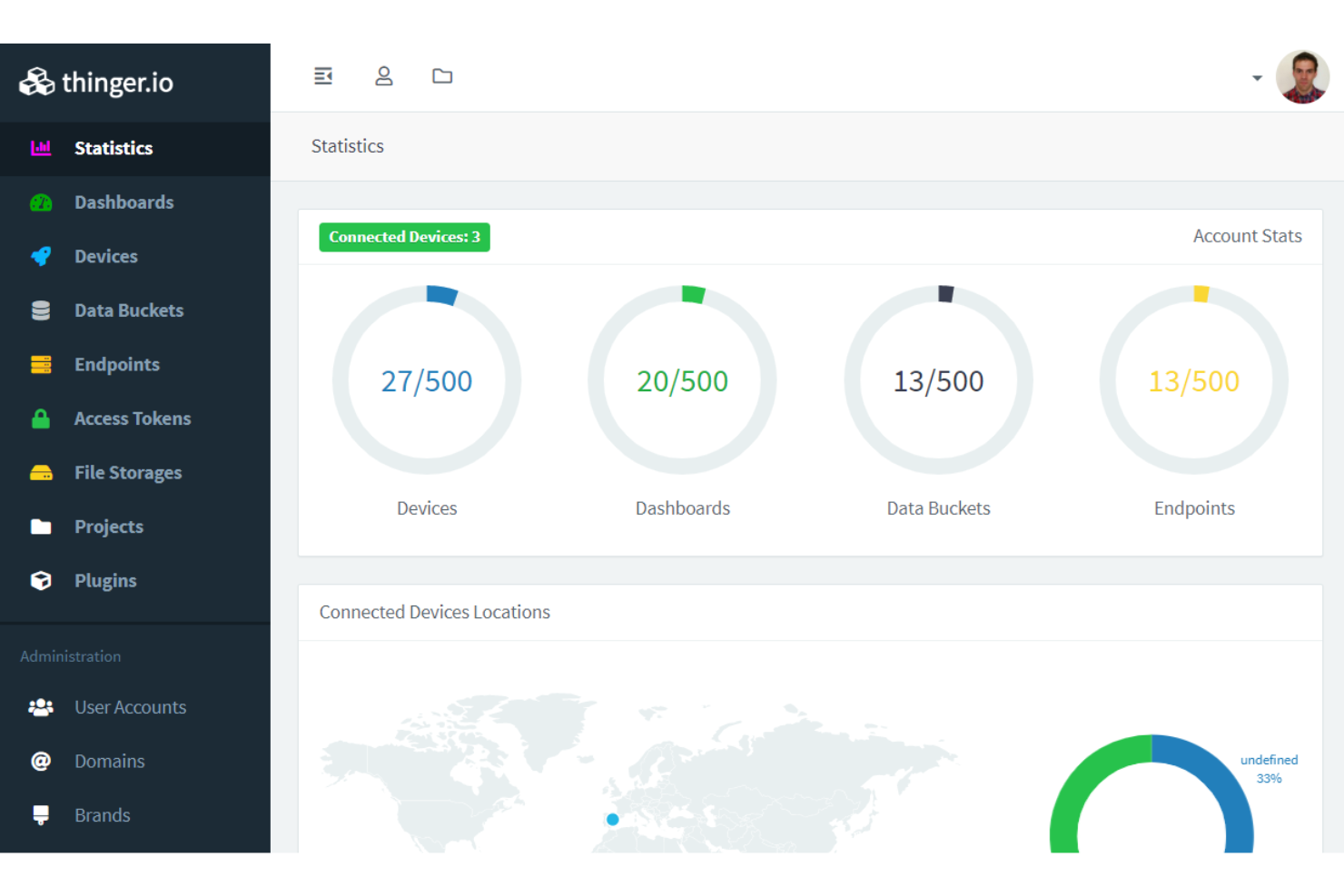
Thinger.io offers a real-time open source IoT platform designed for teams that need fast device onboarding and live data visualization. It’s especially useful for engineers, system integrators, and businesses managing connected devices across multiple locations. With its built-in dashboards and device management tools, Thinger.io helps you quickly connect, monitor, and control IoT assets without heavy custom development.
Who is Thinger.io Best For?
IoT developers and product teams in small to mid-sized companies worldwide requiring real-time device access and control.
Why I Picked Thinger.io
What drew me to Thinger.io is its focus on real-time device management and data visualization within an open source IoT platform. The platform’s live dashboards let you monitor device status and sensor data as it happens, which is valuable for teams that need immediate insights or rapid troubleshooting. I also like that Thinger.io provides a unified device management interface, making it easier to onboard, organize, and control connected assets at scale. For organizations that prioritize real-time monitoring and want to avoid building these capabilities from scratch, Thinger.io offers a practical, open source solution.
Thinger.io Key Features
In addition to its real-time monitoring and device management, Thinger.io offers several other features worth noting:
- Data Buckets: Store and retrieve historical device data for analysis and reporting.
- Custom API Endpoints: Expose device functions and data through configurable REST API endpoints.
- Rule Engine: Set up automated actions and alerts based on device data or events.
- White-Labeling: Customize the platform’s branding and interface for client or internal deployments.
Thinger.io Integrations
Integrations include MQTT, Dragino, SenseCAP, Heltec, Comet, WIKA, ChirpStack, Milesight, The Things Stack, and more.
Pros and Cons
Pros:
- Open source server can be self-hosted for full data control
- Device provisioning supports bulk onboarding for large IoT fleets
- Real-time dashboards display live sensor and device data updates
Cons:
- UI customization options are basic compared to other open source platforms
- Community support is smaller compared to more established platforms

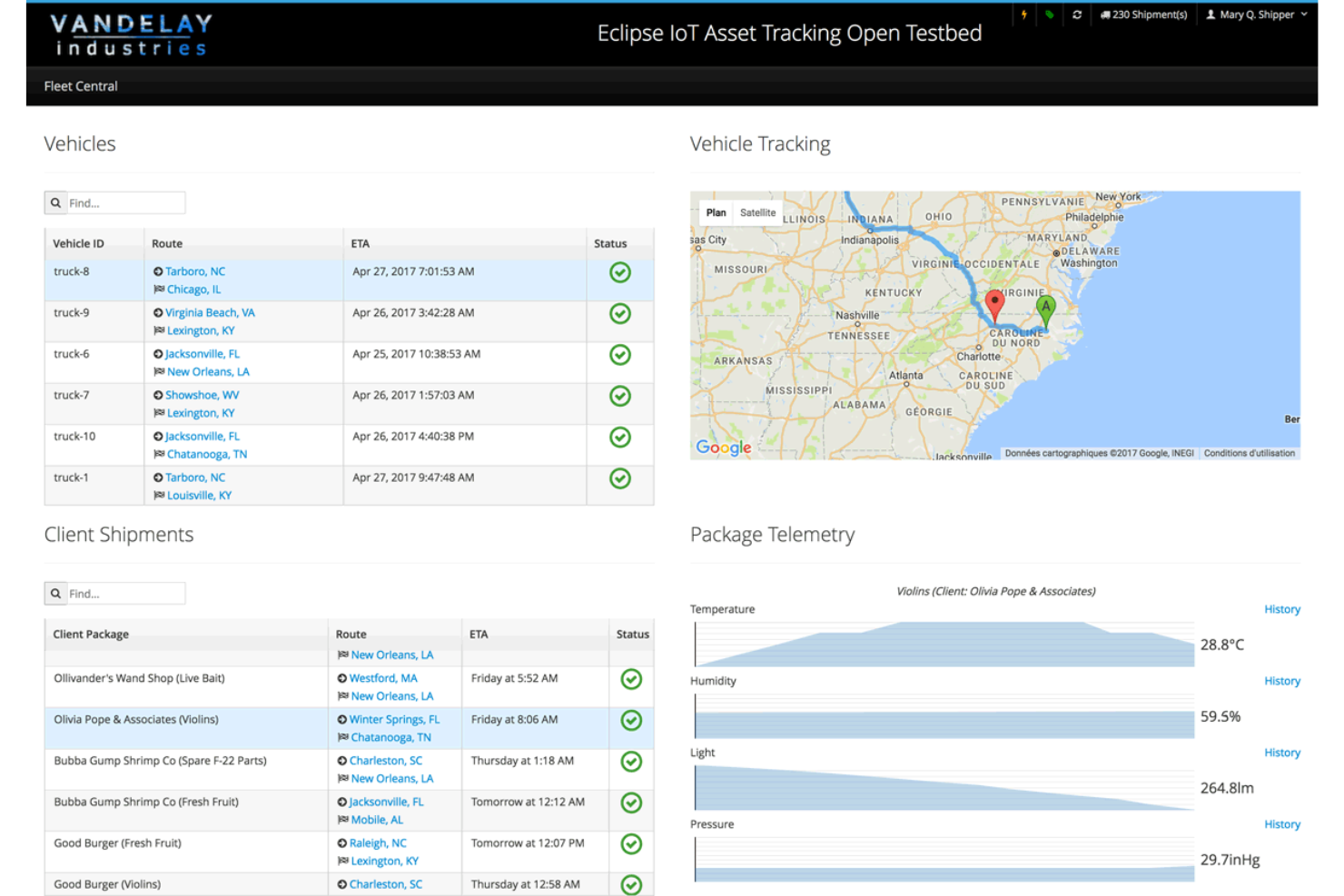
If you’re looking for a modular, open source IoT platform with a broad ecosystem, Eclipse IoT brings together a suite of frameworks and services for device connectivity, data management, and edge computing. It’s a strong fit for enterprises, solution architects, and developers who want to build custom IoT solutions using interoperable components. With its focus on open standards and community-driven development, Eclipse IoT helps you avoid vendor lock-in and tailor your stack to specific industry or project needs.
Who is Eclipse IoT Best For?
IoT developers and research teams in small to mid-sized organizations globally collaborating on open source IoT project ecosystems.
Why I Picked Eclipse IoT
What sets Eclipse IoT apart is its open source ecosystem of modular frameworks and services, which gives you the flexibility to assemble a solution that fits your exact requirements. I picked Eclipse IoT because it offers a wide range of building blocks, like Eclipse Hono for device connectivity and Eclipse Ditto for digital twins, that you can mix and match. This modular approach means you’re not locked into a single architecture or vendor’s vision. For teams building complex or large-scale IoT systems, Eclipse IoT’s community-driven development and adherence to open standards make it a reliable foundation.
Eclipse IoT Key Features
Some other features that make Eclipse IoT appealing for open source IoT projects include:
- Eclipse Kapua Device Management: Manage device registration, configuration, and monitoring from a central interface.
- Eclipse Mosquitto MQTT Broker: Enable lightweight, reliable messaging for IoT devices using the MQTT protocol.
- Eclipse Kura Edge Computing: Deploy and manage applications at the network edge for real-time processing.
- Eclipse hawkBit Software Updates: Roll out firmware and software updates to connected devices remotely.
Eclipse IoT Integrations
Native integrations are not currently publicly listed.
Pros and Cons
Pros:
- Active community contributions drive frequent updates and improvements
- Strong support for open standards and interoperability across devices
- Modular architecture lets you combine only the components you need
Cons:
- Project governance and roadmap can be unclear for long-term planning
- Documentation quality varies widely between different Eclipse IoT projects

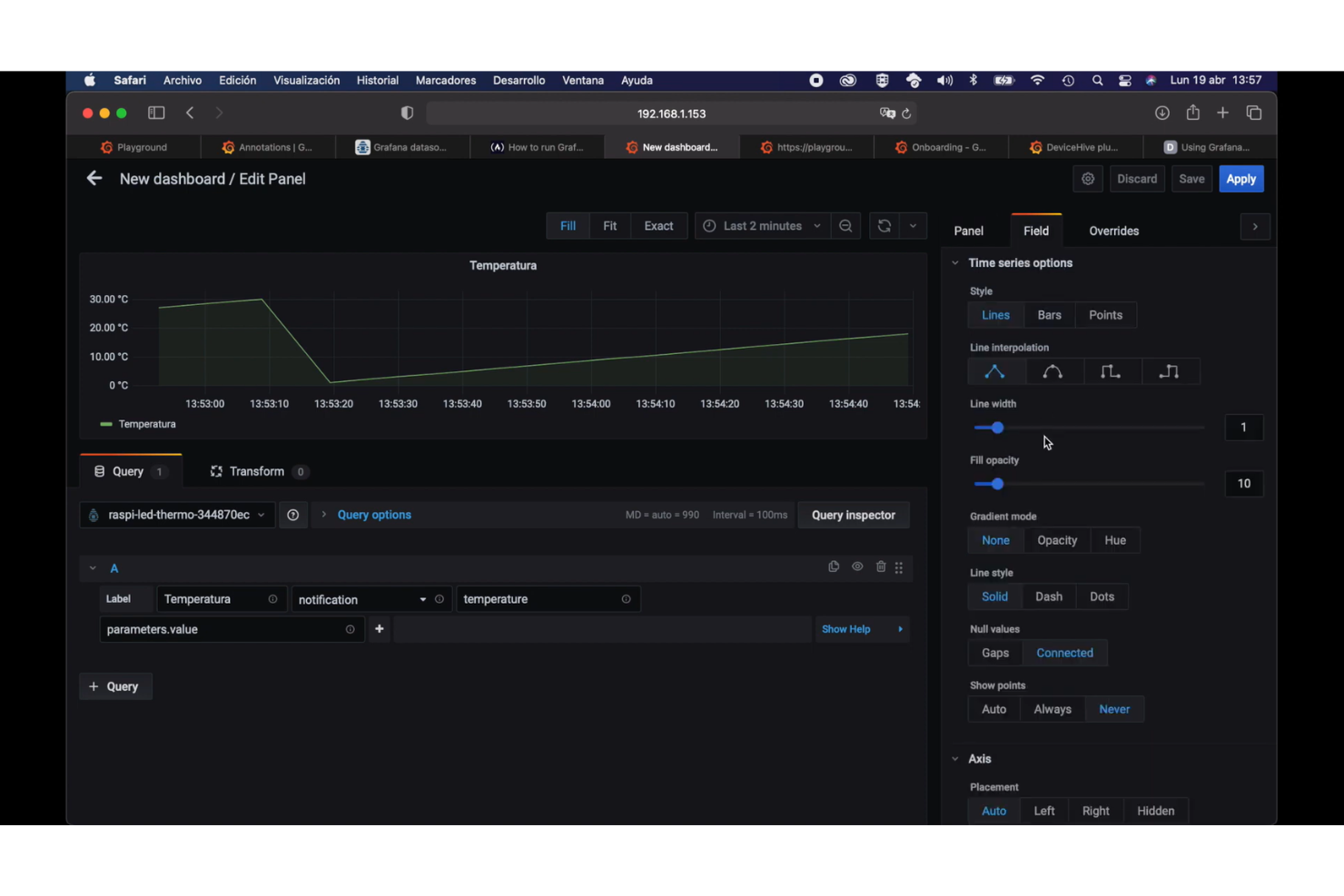
DeviceHive offers a flexible, open source IoT platform designed for teams that need real-time device communication and scalable data streaming. It’s especially useful for developers, system integrators, and enterprises building custom IoT solutions across smart energy, logistics, or industrial automation. With its support for multiple communication protocols and a robust API layer, DeviceHive helps you connect, manage, and monitor diverse device fleets without vendor lock-in.
Who is DeviceHive Best For?
IoT architects and systems integrators in mid-sized organizations worldwide managing distributed device architectures with broad protocol support.
Why I Picked DeviceHive
DeviceHive stands out for its flexible device connectivity and real-time data streaming, which are essential for modern IoT deployments. The platform supports a wide range of communication protocols, including MQTT, WebSockets, and REST, so you can connect almost any device or gateway. I appreciate that DeviceHive offers a scalable messaging architecture, letting you handle high-throughput data streams without bottlenecks. For teams building custom IoT solutions, DeviceHive’s open API layer makes it easy to integrate device data into your own applications and analytics pipelines.
DeviceHive Key Features
Some other features that make DeviceHive a strong option for open source IoT projects include:
- Role-Based Access Control: Assign granular permissions to users and devices for secure management.
- Command and Notification System: Send commands to devices and receive asynchronous notifications from them.
- Plugin Architecture: Extend platform functionality with custom plugins for specialized use cases.
- Built-In Device Registry: Organize, register, and manage device metadata within a centralized system.
DeviceHive Integrations
Integrations include Alexa, ElasticSearch, Apache Spark, Cassandra, Kafka, REST API, MQTT, WebSockets, Docker, and more.
Pros and Cons
Pros:
- Active open source community provides frequent updates and support
- Built-in role-based access control for device and user security
- Scalable architecture handles large device fleets and high data volumes
Cons:
- Documentation can be inconsistent for advanced deployment scenarios
- Limited built-in analytics and visualization tools for device data

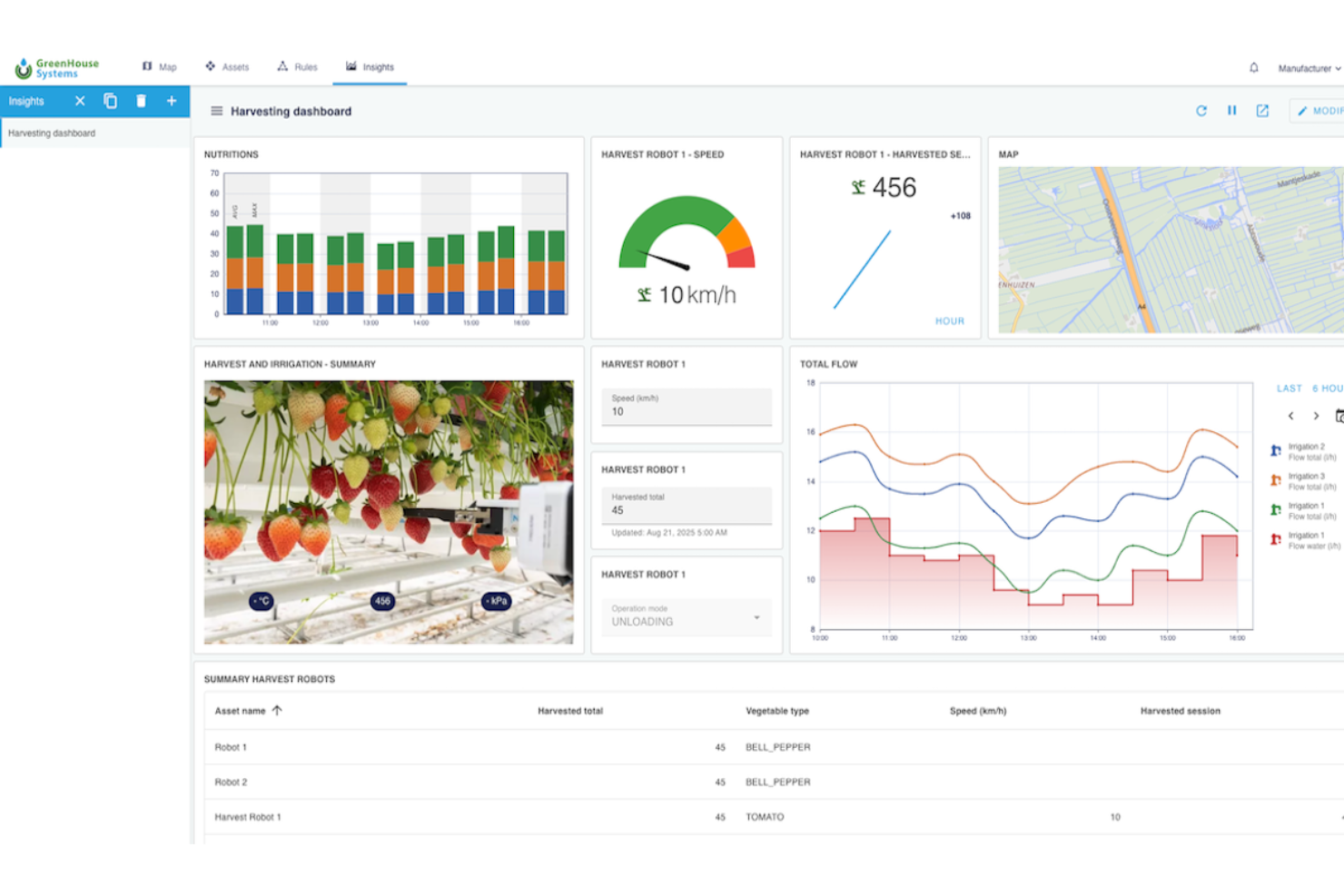
OpenRemote stands out for teams that need an open source IoT platform with a strong edge gateway and asset management capabilities. It’s a good fit for organizations managing distributed assets, such as smart cities, energy providers, or facility managers who want to unify device control and automate responses at the edge. The platform’s open architecture and flexible deployment options help you build secure, scalable IoT solutions tailored to complex environments.
Who is OpenRemote Best For?
Smart city planners and energy managers in mid-sized organizations in Europe and North America implementing flexible IoT solutions for urban and energy infrastructures.
Why I Picked OpenRemote
What sets OpenRemote apart is its focus on edge gateway functionality and asset management within an open source IoT platform. The platform lets you deploy edge gateways that process data and automate actions locally, which is valuable for projects where latency or connectivity is a concern. I appreciate how its asset management system allows you to organize, monitor, and control a wide range of devices and resources from a single interface. For teams building solutions in environments like smart cities or distributed infrastructure, OpenRemote’s architecture supports both centralized oversight and local autonomy.
OpenRemote Key Features
Some other features in OpenRemote that are useful for open source IoT projects include:
- Rules Engine: Create custom automation rules to trigger actions based on device data or events.
- User and Role Management: Assign granular permissions and roles to control access across your organization.
- REST API Access: Integrate with external systems or custom applications using a documented REST API.
- Map-Based Visualization: Monitor and manage assets using interactive, real-time map views.
OpenRemote Integrations
Integrations include MQTT, HTTP, WebSocket, Modbus, KNX, BACnet, Philips Hue, Google Home, Amazon Alexa, and more.
Pros and Cons
Pros:
- Open source codebase allows for full platform customization
- Asset management tools help organize and monitor distributed devices
- Supports edge gateway deployment for local data processing needs
Cons:
- Limited out-of-the-box templates for common IoT use cases
- Documentation can be sparse for advanced configuration scenarios
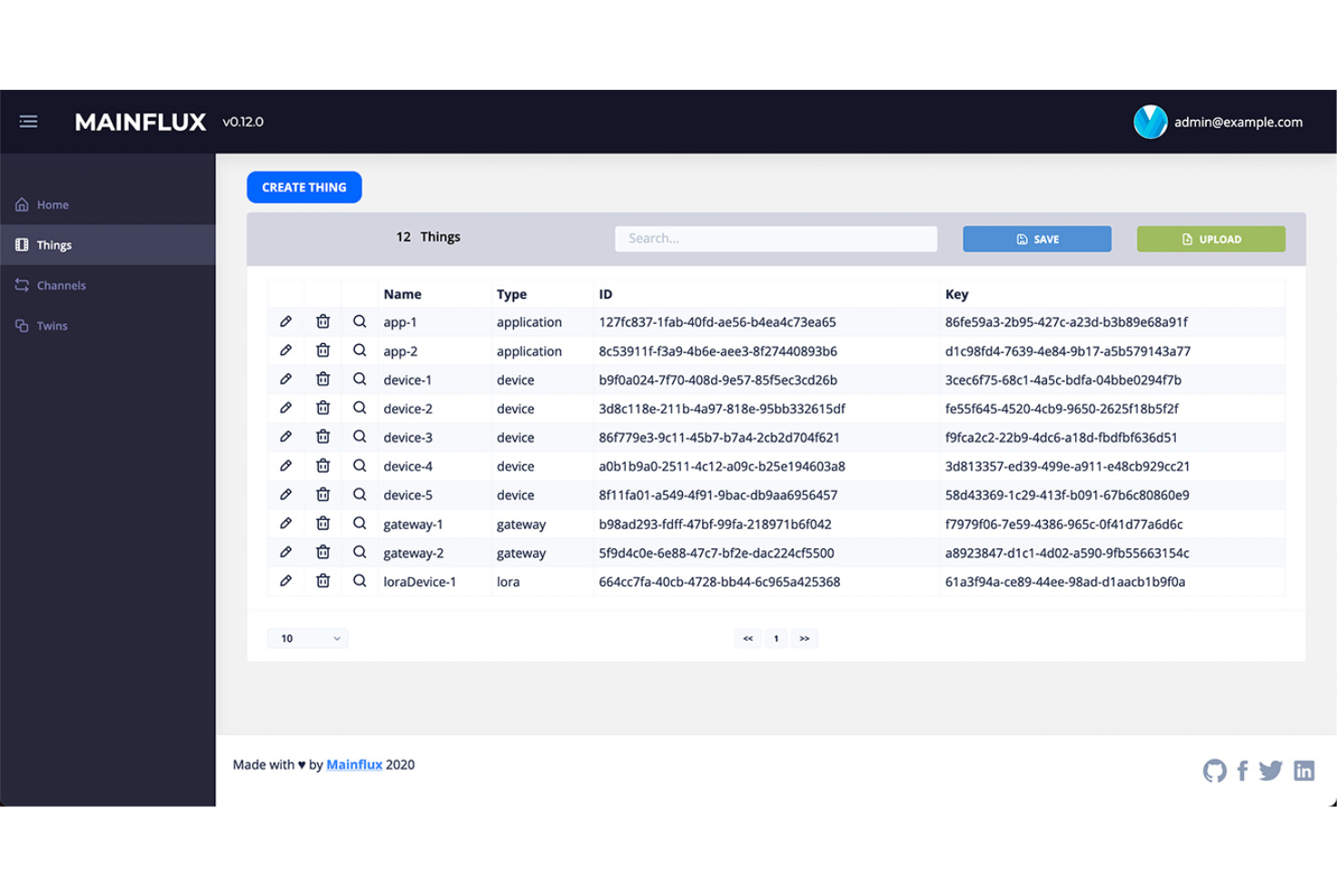
Mainflux stands out for teams that need a scalable, open source IoT platform with strong multi-protocol and edge computing support. It’s a good fit for enterprises, industrial operators, and solution architects managing complex device networks or hybrid cloud-edge deployments. With its modular architecture and support for protocols like MQTT, HTTP, and CoAP, Mainflux helps you unify device connectivity and data flow across diverse environments.
Who is Mainflux Best For?
Industrial IoT engineers and operations teams in mid-sized to large companies globally deploying scalable, multi-protocol device networks.
Why I Picked Mainflux
What makes Mainflux a strong choice for open source IoT platforms is its focus on scalability and multi-protocol support, which are essential for complex, enterprise-grade deployments. The platform’s modular architecture lets you deploy and manage services independently, so you can scale components as your device network grows. I appreciate that Mainflux supports MQTT, HTTP, and CoAP natively, making it easier to connect a wide range of devices and gateways. For teams building hybrid cloud-edge solutions, Mainflux’s edge computing capabilities help you process and route data closer to the source, reducing latency and bandwidth use.
Mainflux Key Features
Some other features that make Mainflux appealing for open source IoT projects include:
- Multi-Tenancy: Manage multiple independent organizations or projects within a single deployment.
- Integrated Identity and Access Management: Control user and device permissions with built-in authentication and authorization.
- Data Persistence Options: Store device data in PostgreSQL, InfluxDB, or other supported databases.
- Docker and Kubernetes Support: Deploy and orchestrate Mainflux services using containerization platforms.
Mainflux Integrations
Integrations include EdgeX Foundry, NATS, PostgreSQL, InfluxDB, MQTT, HTTP, CoAP, WebSocket, Docker, and more.
Pros and Cons
Pros:
- Docker and Kubernetes compatibility simplifies deployment and orchestration
- Built-in identity and access management for device and user security
- Modular architecture allows independent scaling of platform components
Cons:
- Documentation can be sparse for advanced configuration scenarios
- Limited built-in visualization and dashboarding tools for device data
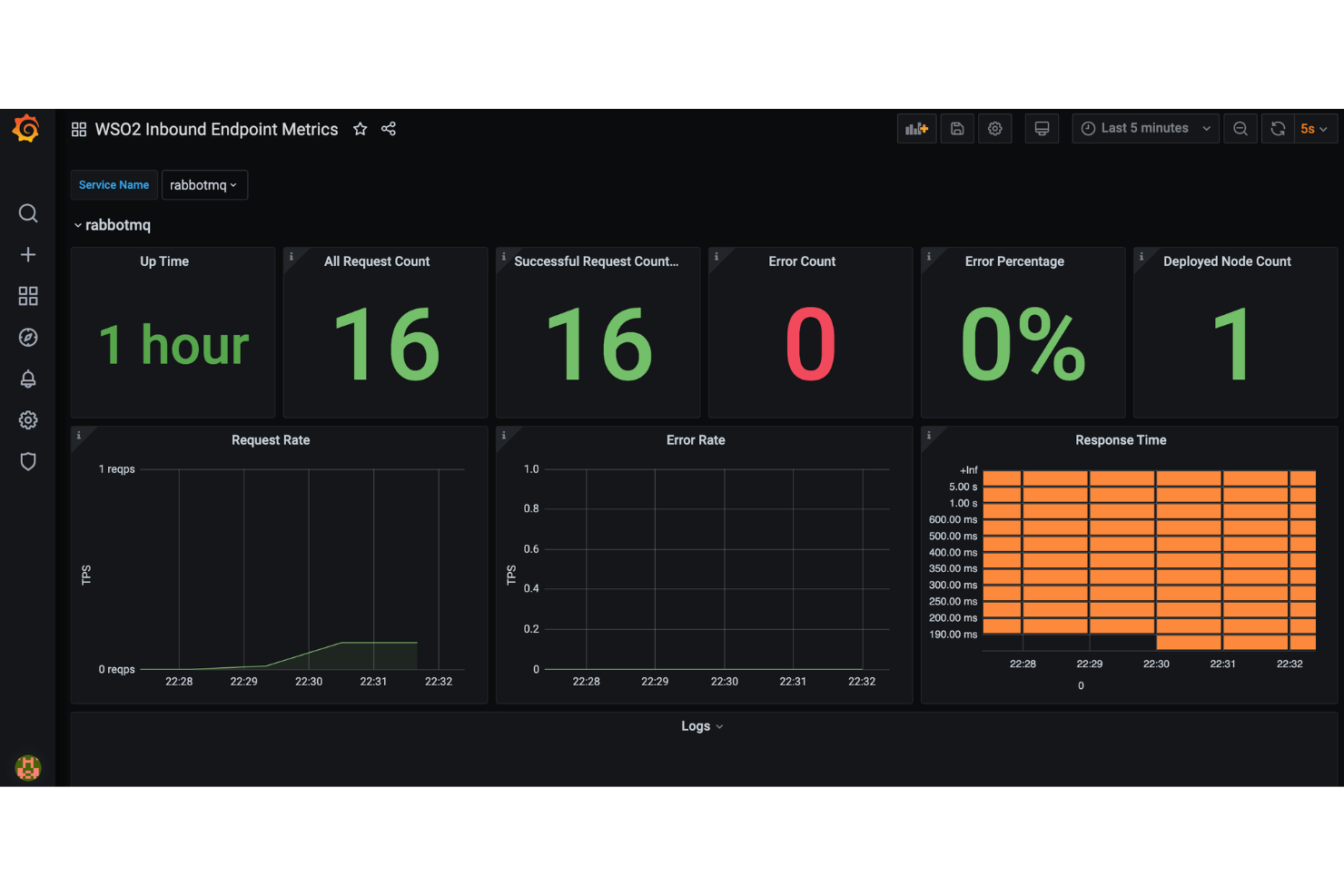
WSO2 IoT stands out for organizations that need an enterprise-grade, open source IoT platform with built-in device management and analytics. It’s designed for IT teams and solution architects who want to securely connect, manage, and monitor large fleets of devices across different environments. With its focus on scalability, policy enforcement, and integration with enterprise systems, WSO2 IoT helps you address complex deployment and compliance needs in sectors like manufacturing, logistics, and smart cities.
Who is WSO2 IoT Best For?
Enterprise IT and IoT managers in mid-sized to large organizations worldwide handling device management and analytics at scale.
Why I Picked WSO2 IoT
For teams that need enterprise-grade device management in an open source IoT platform, WSO2 IoT offers a strong set of capabilities. I picked WSO2 IoT because it combines device enrollment, policy management, and real-time monitoring in a single platform. Its support for secure device provisioning and granular access controls helps organizations meet strict compliance and operational requirements. If you’re looking to manage large, diverse device fleets with centralized control, WSO2 IoT’s integrated approach stands out in the open source space.
WSO2 IoT Key Features
In addition to its device management strengths, WSO2 IoT offers several other features worth noting:
- Built-in Analytics Engine: Collect and analyze device data in real time for actionable insights.
- Multi-Tenancy Support: Manage multiple organizations or business units from a single deployment.
- Customizable Dashboards: Create visualizations and monitor device metrics through configurable dashboards.
- Rule-Based Event Processing: Set up automated actions and alerts based on device events and conditions.
WSO2 IoT Integrations
Native integrations are not currently publicly listed.
Pros and Cons
Pros:
- Multi-tenancy lets you manage multiple organizations in one instance
- Built-in analytics engine processes real-time device data streams
- Device enrollment and policy management support large-scale deployments
Cons:
- Documentation can be inconsistent across different platform components
- Initial setup and configuration require significant technical expertise
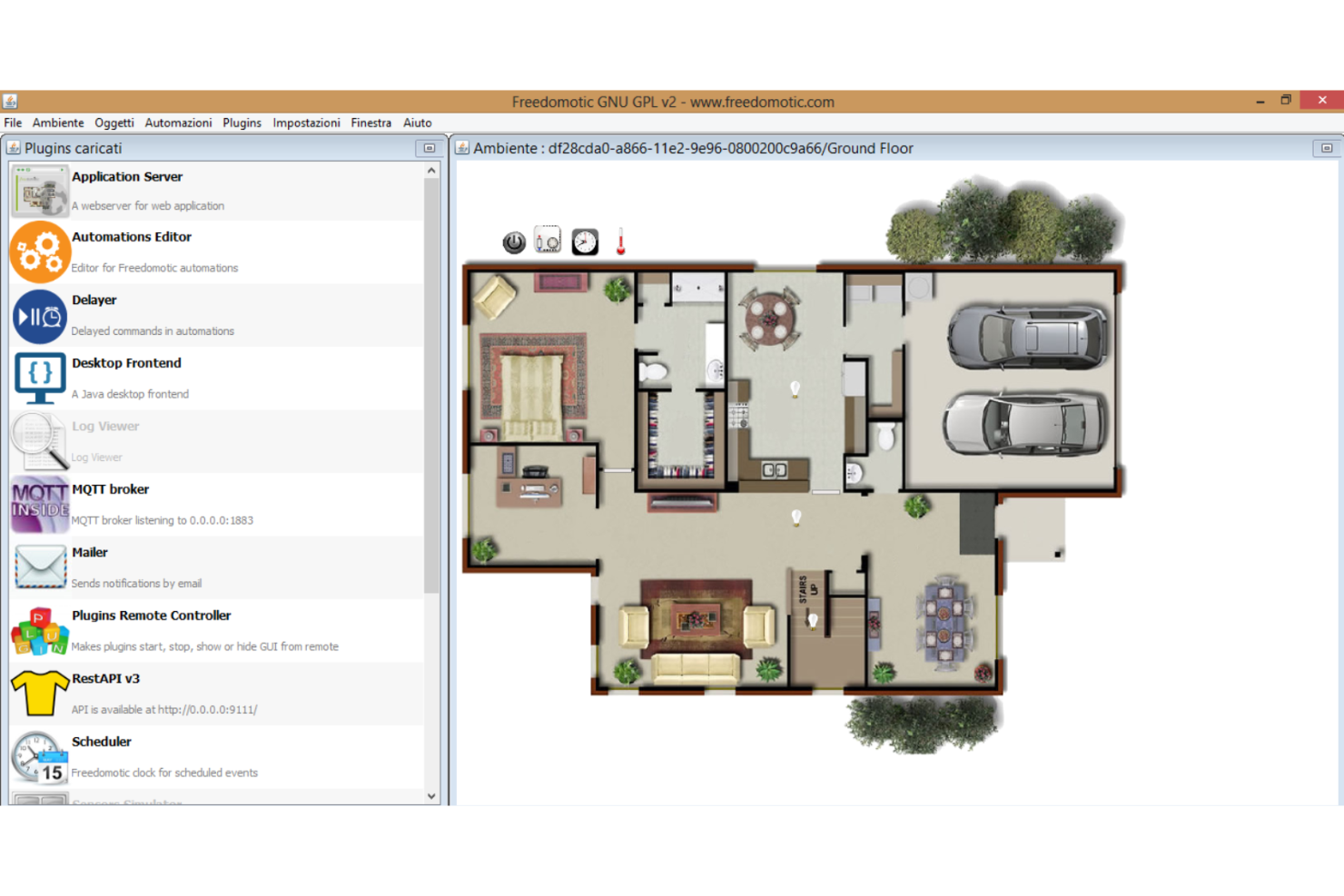
Freedomotic is designed for IT teams and system integrators who need a flexible, open source IoT platform for smart building automation. Its modular architecture lets you connect a wide range of devices and protocols, making it a fit for complex environments like offices, campuses, or industrial facilities. If you’re looking to build custom automation workflows and integrate legacy systems, Freedomotic offers a toolkit that supports deep customization and extensibility.
Who is Freedomotic Best For?
Building automation engineers and home automation teams in small to mid-sized organizations in Europe deploying open source automation solutions.
Why I Picked Freedomotic
What drew me to Freedomotic is its focus on flexibility for smart building automation. The platform’s modular plugin system lets you add or remove device support and automation logic as your environment changes. I appreciate that you can integrate both modern IoT devices and legacy systems, which is rare among open source options. For teams managing diverse building technologies, Freedomotic’s architecture makes it possible to tailor automation workflows to very specific operational needs.
Freedomotic Key Features
In addition to its modular approach to device and automation integration, Freedomotic offers several other features worth highlighting:
- Web-Based Management Console: Manage devices, plugins, and automation rules through a browser interface.
- Event-Driven Automation Engine: Trigger actions and workflows based on real-time events from connected devices.
- Role-Based Access Control: Assign permissions and manage user roles for secure platform administration.
- Extensive Plugin Marketplace: Access a library of plugins for device support, protocol adapters, and third-party integrations.
Freedomotic Integrations
Integrations include Arduino remote controller, Arduino weather shield, Arduino USB, and more.
Pros and Cons
Pros:
- Web-based management console provides centralized device control
- Open source codebase allows for deep customization and auditing
- Modular plugin system supports a wide range of device types
Cons:
- Smaller user community means less peer support and resources
- Limited documentation makes advanced configuration challenging for new users

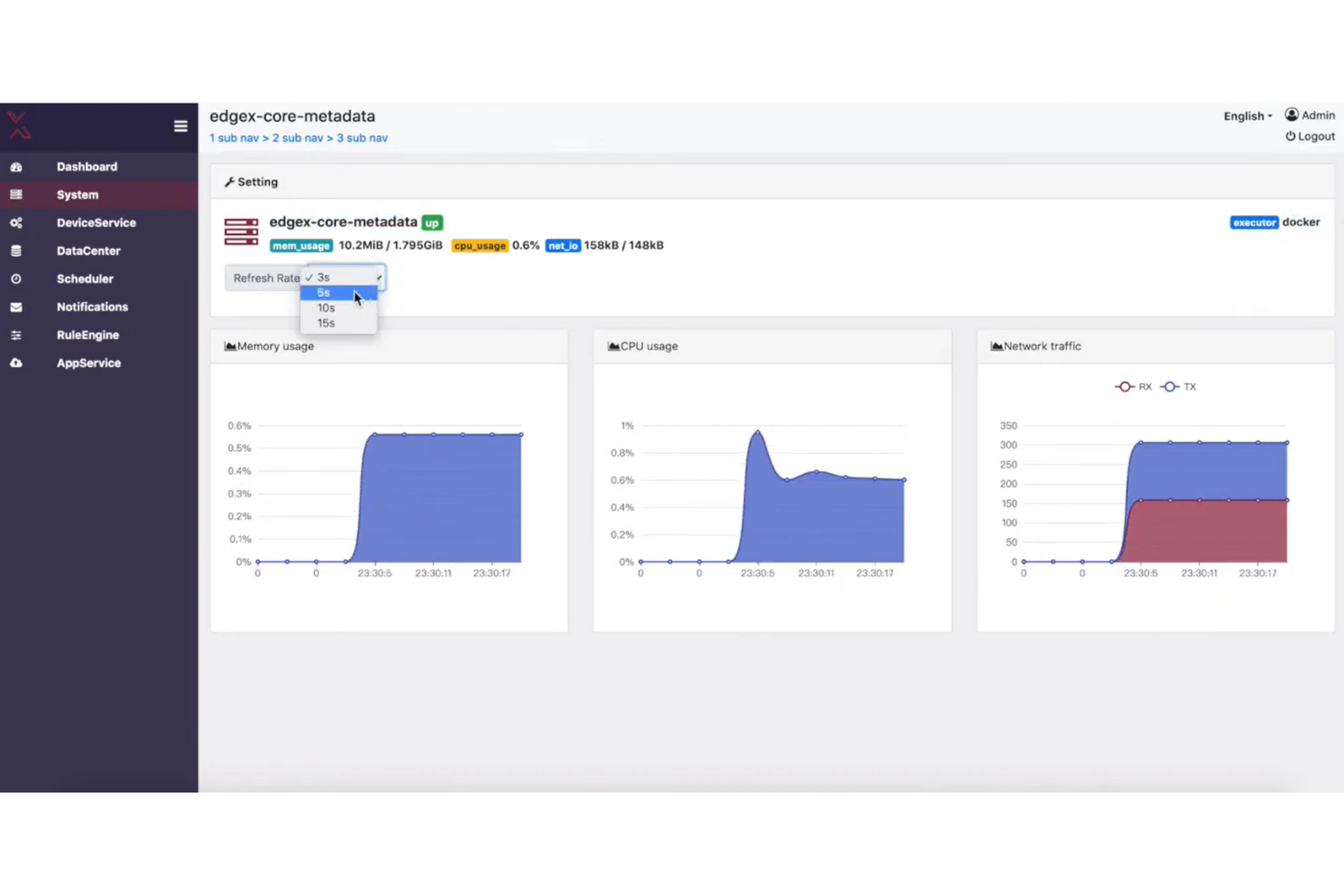
EdgeX Foundry stands out for IT architects and developers who need a vendor-neutral, open source IoT platform built on microservices. Its framework is designed for edge computing scenarios, making it a strong fit for organizations managing distributed devices and data at the edge. If you’re looking to standardize device connectivity and data flow across diverse hardware, EdgeX Foundry offers a flexible foundation for scalable, interoperable IoT solutions.
Who is EdgeX Foundry Best For?
IoT platform engineers and system integrators in mid-sized organizations globally implementing vendor-neutral edge computing solutions.
Why I Picked EdgeX Foundry
What makes EdgeX Foundry a strong choice is its open, vendor-neutral microservices framework designed specifically for edge IoT deployments. I picked it because its architecture lets you deploy, scale, and update individual services independently, which is essential for complex edge environments. The platform’s device service layer supports a wide range of protocols, making it easier to connect diverse hardware without vendor lock-in. For teams building distributed IoT solutions, EdgeX Foundry’s modular approach gives you the flexibility to tailor deployments to your exact requirements.
EdgeX Foundry Key Features
Some other features that make EdgeX Foundry appealing for open source IoT projects include:
- Core Data Service: Collect, store, and manage device data in a central repository.
- Rules Engine: Define and execute rules for real-time data processing and event handling.
- RESTful APIs: Interact with all microservices and device data using standardized APIs.
- Edge Analytics Support: Run analytics workloads directly at the edge for faster insights.
EdgeX Foundry Integrations
Integrations include Intel, Dell, HP, IBM, Ubuntu, Wipro, IOTech, Thundersoft, TIBCO, and more.
Pros and Cons
Pros:
- Flexible deployment options for edge, cloud, or hybrid environments
- Vendor-neutral design avoids hardware and software lock-in
- Microservices architecture allows independent scaling of platform components
Cons:
- Documentation can be fragmented across different project repositories
- Initial setup requires significant infrastructure and configuration work

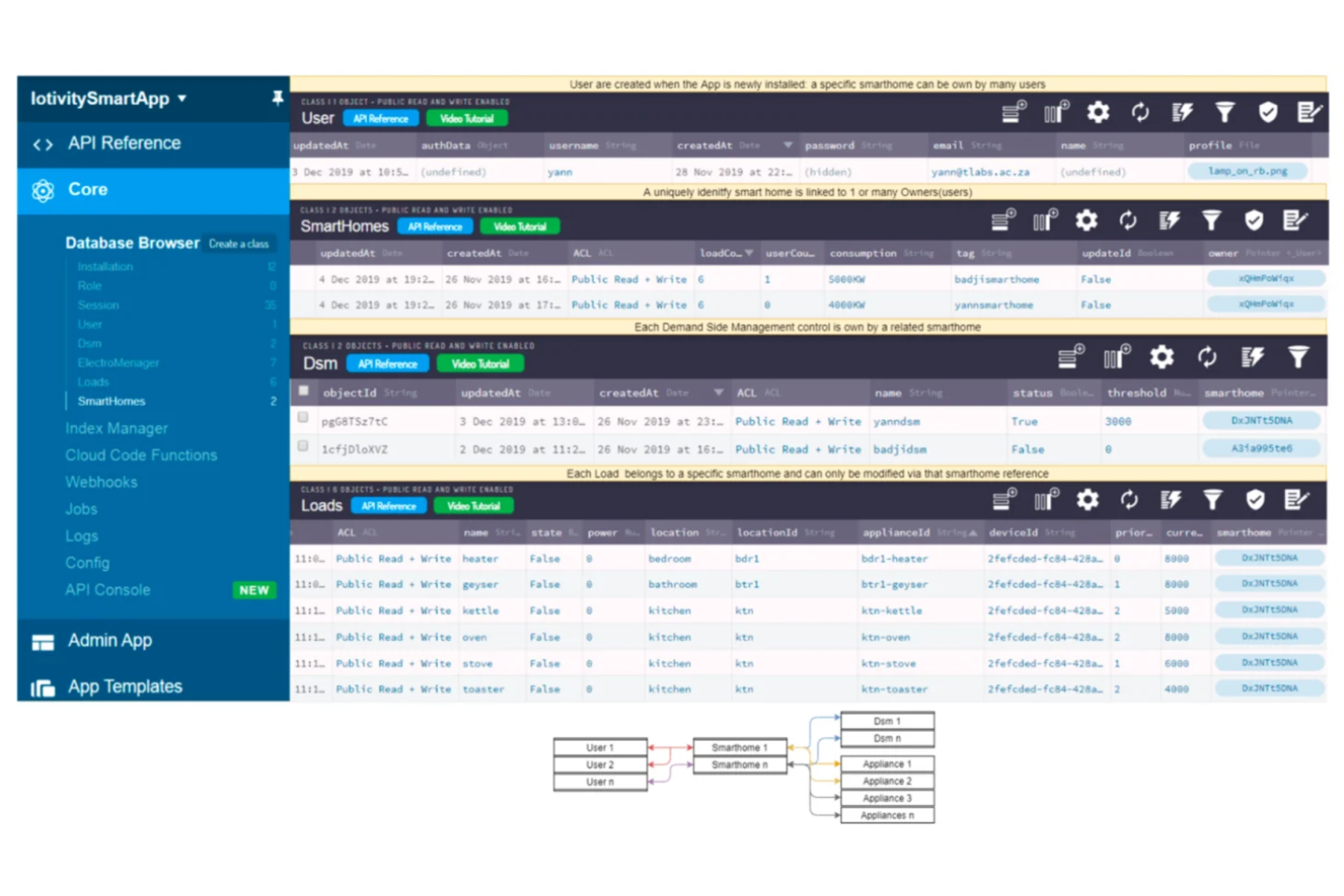
IoTivity offers an open source framework focused on secure, standardized device-to-device communication for IoT environments. It’s a strong fit for IT teams and developers who need to ensure interoperability across a wide range of connected devices and operating systems. If you’re building solutions that require reliable discovery, messaging, and data exchange between heterogeneous IoT devices, IoTivity provides a unified approach grounded in open standards.
Who is IoTivity Best For?
IoT developers and security teams in mid-sized to large organizations worldwide ensuring secure device interoperability across platforms.
Why I Picked IoTivity
What drew me to IoTivity is its focus on secure, standardized device-to-device IoT connectivity. The platform’s open source framework is built around the Open Connectivity Foundation (OCF) specifications, which means you get a consistent approach to device discovery, messaging, and data exchange across different vendors and operating systems. I appreciate that IoTivity supports both constrained and rich devices, making it suitable for a wide range of IoT deployments. For teams prioritizing interoperability and security in their IoT projects, IoTivity’s standards-based architecture is a strong foundation.
IoTivity Key Features
Some other features that make IoTivity useful for open source IoT projects include:
- Resource Directory: Register and discover available resources across devices in a network.
- Security Manager: Manage access control and security policies for connected devices.
- Cloud Connectivity: Enable device-to-cloud and cloud-to-device communication through standardized interfaces.
- Cross-Platform SDKs: Develop applications for multiple operating systems using provided software development kits.
IoTivity Integrations
Native integrations are not currently publicly listed.
Pros and Cons
Pros:
- Security framework includes access control and device authentication
- Open source licensing allows full codebase inspection and modification
- Supports both constrained and rich device environments for flexibility
Cons:
- Upgrading to new protocol versions may require significant code changes
- Lacks built-in analytics or visualization tools for device data
Autres plateformes IoT open source
Voici quelques autres options de plateformes IoT open source qui n’ont pas été retenues dans ma sélection principale, mais qui méritent tout de même d’être examinées :
- OpenBalena
For managing IoT device fleets
- FIWARE
For open APIs for smart solutions
- Eclipse Kapua
For modular IoT gateway and device management
- Eclipse Kura
For edge computing on IoT gateways
- Eclipse Ditto
For managing IoT digital twins
- Mender
For open source over-the-air device update
- KubeEdge
For extending Kubernetes to edge and IoT workloads
- VerneMQ
For high-performance MQTT at IoT scale


Critères de sélection d’une plateforme IoT open source
Pour sélectionner la meilleure plateforme IoT open source à inclure dans cette liste, j’ai pris en compte les besoins courants des acheteurs et leurs points de douleur, tels que l’assurance de l’interopérabilité entre des dispositifs variés et la gestion de déploiements à grande échelle. J’ai également utilisé le cadre suivant pour garantir une évaluation structurée et objective :
Fonctionnalités principales (25 % de la note totale)
Pour être incluse dans cette liste, chaque solution devait répondre à ces cas d’usage courants :
- Connecter et gérer des dispositifs IoT
- Collecter et stocker les données des capteurs
- Permettre le traitement des données en temps réel
- Fournir une authentification et une sécurité des dispositifs
- Assurer l’intégration avec des systèmes externes
Fonctionnalités distinctives supplémentaires (25 % de la note totale)
Pour affiner la sélection, j’ai également recherché des fonctionnalités uniques, comme :
- Prise en charge de la modélisation de jumeaux numériques
- Capacités d’edge computing intégrées
- Outils avancés de visualisation des données
- Processus automatisés d’enrôlement de dispositifs
- Normes ouvertes pour l’échange de données
Facilité d’utilisation (10 % de la note totale)
Pour évaluer l’ergonomie de chaque système, j’ai pris en compte les éléments suivants :
- Interface utilisateur claire et intuitive
- Navigation et structure des menus logiques
- Tableaux de bord et vues personnalisables
- Accessibilité de la documentation au sein de la plateforme
- Nombre minimal d'étapes pour les tâches courantes
Intégration des nouveaux utilisateurs (10 % du score total)
Pour évaluer l'expérience d'intégration de chaque plateforme, j'ai pris en compte les éléments suivants :
- Disponibilité de guides d'installation pas à pas
- Accès à des vidéos de formation et des tutoriels
- Tours interactifs du produit pour les nouveaux utilisateurs
- Modèles prédéfinis pour les cas d'usage courants
- Support d'intégration ou chatbots réactifs
Assistance client (10 % du score total)
Pour évaluer les services d'assistance client de chaque fournisseur de logiciels, j'ai pris en compte les éléments suivants :
- Disponibilité de forums communautaires ou de groupes d'utilisateurs
- Accès à la documentation technique et aux FAQ
- Réactivité du support par e-mail ou via tickets
- Disponibilité d'un chat en direct ou d'un support téléphonique
- Mises à jour et communications régulières de la part du fournisseur
Rapport qualité/prix (10 % du score total)
Pour évaluer le rapport qualité/prix de chaque plateforme, j'ai pris en compte les éléments suivants :
- Structure tarifaire transparente et prévisible
- Disponibilité d'une offre gratuite ou d'une version d'essai
- Flexibilité pour s'adapter à l'évolution de l'utilisation ou des appareils
- Inclusion des fonctionnalités essentielles dans la tarification de base
- Coût comparé à des solutions open source similaires
Avis des clients (10 % du score total)
Pour évaluer la satisfaction globale des clients, j'ai pris en compte les éléments suivants lors de la lecture des avis utilisateurs :
- Retours sur la fiabilité et la disponibilité
- Commentaires sur la facilité d'intégration
- Remarques concernant l'assistance communautaire et fournisseur
- Expériences des utilisateurs avec la montée en charge
- Satisfaction globale vis-à-vis des fonctionnalités proposées
Comment choisir une plateforme IoT open source
Il est facile de se laisser submerger par de longues listes de fonctionnalités et des grilles tarifaires complexes. Pour vous aider à rester concentré durant votre processus de sélection, voici une liste de points à garder à l'esprit :
| Facteur | À prendre en compte |
|---|---|
| Scalabilité | La plateforme peut-elle gérer la croissance prévue en nombre d'appareils et de données ? Recherchez un support éprouvé pour des milliers, voire des millions d'appareils. |
| Intégrations | Peut-elle se connecter nativement à vos systèmes, protocoles et services cloud existants ? Vérifiez la compatibilité avec votre pile technologique. |
| Personnalisation | Peut-on facilement adapter la plateforme à vos processus ou exigences sectorielles spécifiques ? Considérez la présence d'API ouvertes, le support des plugins et la modularité. |
| Facilité d'utilisation | Votre équipe pourra-t-elle configurer, gérer et surveiller les appareils sans formation poussée ? Évaluez l'interface et la documentation disponible. |
| Mise en œuvre et intégration | De quelles ressources, compétences et délais disposerez-vous pour le déploiement ou la migration ? Analysez la disponibilité des outils de migration, guides et du support communautaire. |
| Coût | En dehors des licences, quels sont les coûts cachés — comme l'infrastructure, le support, ou la montée en charge ? Comparez le coût total de possession, et pas uniquement le prix initial. |
| Garantie de sécurité | La plateforme propose-t-elle l'authentification des appareils, le chiffrement des données et des contrôles d'accès ? Vérifiez la conformité aux politiques de sécurité de votre organisation. |
| Disponibilité du support | Quels canaux de support sont proposés en cas de problème ? Évaluez la force de la communauté open source ainsi que les options de support payantes. |
Qu'est-ce qu'une plateforme IoT open source ?
Une plateforme IoT open source est un cadre logiciel permettant aux organisations de connecter leurs appareils, de gérer et d'analyser les données provenant d'objets connectés, dont le code source est librement accessible pour modification et distribution. Ces plateformes favorisent l'intégration d'appareils, la collecte de données et l'automatisation, permettant aux équipes de construire des solutions IoT évolutives tout en gardant la main sur la personnalisation, la sécurité et le déploiement. La licence open source encourage la collaboration et la transparence sur des projets IoT variés.
Fonctionnalités d'une plateforme IoT open source
Lorsque vous sélectionnez une plateforme IoT open source, soyez attentif aux fonctionnalités clés suivantes :
- Gestion des appareils a0;: Centralise l'intégration, la surveillance et le contrôle e0 distance des appareils connect e9s, facilitant ainsi la maintenance de larges parcs d'appareils et assurant leur bon fonctionnement.
- Collecte de donn e9es a0;: R e9cup e8re et traite les donn e9es provenant de divers capteurs et appareils en temps r e9el, prenant en charge plusieurs protocoles et formats de donn e9es pour une int e9gration flexible.
- Informatique en p e9riph e9rie a0;: Permet le traitement et l'analyse des donn e9es e0 la p e9riph e9rie du r e9seau, r e9duisant la latence et l'utilisation de la bande passante pour les applications sensibles au temps ou disposant de ressources limit e9es.
- Contr f4les de s e9curit e9 a0;: Fournit l'authentification, le chiffrement et la gestion des acc e8s afin de prot e9ger les donn e9es des appareils et de garantir que seuls les utilisateurs et syst e8mes autoris e9s peuvent interagir avec la plateforme.
- Outils d e9volutivit e9 a0;: Prend en charge l e9volutivit e9 horizontale et les d e9ploiements distribu e9s, vous permettant de passer de quelques appareils e0 des milliers ou des millions sans refonte majeure.
- Acc e8s API a0;: Propose des API ouvertes et bien document e9es pour l'int e9gration avec des applications externes, des tableaux de bord ou des outils d e9analyse, permettant l'automatisation et la cr e9ation de flux de travail personnalis e9s.
- Traitement des e9v e9nements a0;: D e9tecte et r e9agit e0 des e9v e9nements ou motifs de donn e9es sp e9cifiques des appareils, permettant la mise en place d e9alertes, d e9actions ou de workflows automatis e9s en fonction des conditions en temps r e9el.
- Stockage de donn e9es a0;: Inclut des options de stockage int e9gr e9es ou modulaires pour les donn e9es IoT en s e9ries temporelles, structur e9es ou non structur e9es, prenant en charge aussi bien l'analyse e0 court terme que l'archivage e0 long terme.
- Prise en charge des protocoles a0;: Prend en charge nativement les protocoles IoT courants comme MQTT, CoAP et HTTP, garantissant la compatibilit e9 avec une large gamme d'appareils et de passerelles.
- Tableau de bord et visualisation a0;: Offre des outils pour cr e9er des tableaux de bord personnalis e9s et visualiser les donn e9es des appareils, aidant les utilisateurs e0 surveiller l' e9tat du syst e8me et obtenir des informations exploitables.
B e9n e9fices d f9ne plateforme IoT open source
La mise en place d'une plateforme IoT open source offre de nombreux avantages e0 votre e9quipe et e0 votre entreprise. Voici quelques b e9n e9fices e0 anticiper a0;:
- Personnalisation a0;: Modifiez le code source et adaptez les processus selon les besoins sp e9cifiques de gestion d'appareils, de traitement de donn e9es et d'int e9gration de votre organisation.
- Efficacit e9 des co fbts a0;: c9vitez la d e9pendance e0 un fournisseur et les frais de licence, avec la souplesse n e9cessaire pour faire e9voluer les d e9ploiements e0 l'aide de vos infrastructures ou de ressources cloud.
- Interop e9rabilit e9 a0;: Profitez des standards ouverts et du large support des protocoles pour connecter des appareils, capteurs et syst e8mes externes diversifi e9s dans tout votre e9cosyst e8me IoT.
- Soutien de la communaut e9 a0;: Acc e9dez e0 une communaut e9 mondiale pour le d e9pannage, la documentation et le partage de bonnes pratiques, acc e9l e9rant ainsi la r e9solution de probl e8mes et l'innovation.
- Transparence de la s e9curit e9 a0;: Analysez et am e9liorez directement les contr f4les de s e9curit e9 dans le code source, garantissant la conformit e9 avec vos politiques d'entreprise et normes du secteur.
- c9volutivit e9 a0;: D e9ployez et g e9rez des milliers ou des millions d'appareils gr e2ce aux outils int e9gr e9s pour les environnements IoT distribu e9s et e0 grande e9chelle.
- Innovation rapide a0;: Exp e9rimentez de nouvelles fonctionnalit e9s, int e9grations ou capacit e9s d'edge computing sans attendre les prochaines mises e0 jour ou versions du fournisseur.
Co fbts et tarification d f9ne plateforme IoT open source
Choisir une plateforme IoT open source implique de bien comprendre les diff e9rents mod e8les de tarification et abonnements existants. Les co fbts varient selon les fonctionnalit e9s, la taille de l e9quipe, les modules additionnels et plus encore. Le tableau ci-dessous r e9sume les offres courantes, leurs prix moyens et les caract e9ristiques g e9n e9ralement incluses dans les solutions IoT open source a0;:
Tableau comparatif des offres pour plateformes IoT open source
| Type d f9offre | Prix moyen | Caract e9ristiques courantes |
|---|---|---|
| Offre gratuite | $0 | Acc e8s aux fonctionnalit e9s de base de la plateforme, support communautaire, gestion simple des appareils et acc e8s API ouvert. |
| Offre personnelle | $10 20130/mois | Toutes les fonctionnalit e9s gratuites, h e9bergement cloud limit e9, stockage de donn e9es e0 petite e9chelle et contr f4les de s e9curit e9 de base. |
| Offre Business | $50 20200/mois | Gestion multi-utilisateurs, gestion avanc e9e des appareils, int e9grations, s e9curit e9 renforc e9e et outils d'analyse. |
| Offre Entreprise | $500 20 2,000/mois | SLA personnalis e9s, support prioritaire, outils de d e9ploiement e0 grande e9chelle, fonctions de conformit e9 et accompagnement d e9di e9 e0 l'int e9gration. |
FAQ sur les plateformes IoT open source
Voici des réponses à des questions courantes sur les plateformes IoT open source :
Puis-je utiliser une plateforme IoT open source pour des projets commerciaux ?
Oui, la plupart des plateformes IoT open source peuvent être utilisées dans des projets commerciaux, mais vous devez vérifier les conditions spécifiques de la licence afin d’être conforme en matière de redistribution, de modification et de support.
Comment les plateformes IoT open source gèrent-elles la sécurité ?
Les plateformes IoT open source intègrent généralement des fonctionnalités telles que l’authentification des appareils, le chiffrement des données et le contrôle d’accès. Vous pouvez également examiner et modifier le code source afin de satisfaire aux normes et exigences de sécurité de votre organisation.
Quelles compétences techniques sont nécessaires pour déployer une plateforme IoT open source ?
Vous aurez besoin d’une expérience avec les serveurs Linux, le réseau, la conteneurisation, ainsi qu’une familiarité avec les protocoles IoT et la programmation de base. Certaines plateformes demandent des compétences avancées pour la personnalisation et l’intégration.
Existe-t-il des coûts cachés avec les plateformes IoT open source ?
Oui, même si le logiciel en lui-même est souvent gratuit, il peut y avoir des coûts liés à l’infrastructure, à l’hébergement cloud, au support et à la maintenance continue. Il est important de prendre en compte le coût total de possession, y compris les ressources internes et les besoins d’évolutivité.
Comment évaluer le support communautaire d’une plateforme IoT open source ?
Vérifiez l’activité des forums, les mises à jour récentes du code, la documentation disponible et la fréquence des mises à jour. Une communauté active peut vous aider pour le dépannage, les bonnes pratiques et la pérennité de la solution.
Et ensuite :
Si vous êtes en train de rechercher une plateforme IoT open source, contactez un conseiller SoftwareSelect pour des recommandations gratuites.
Vous remplissez un formulaire et échangez brièvement avec eux pour détailler vos besoins. Ensuite, vous recevrez une liste restreinte de logiciels à examiner. Ils vous accompagneront même tout au long du processus d’achat, y compris lors des négociations de prix.