

Reseña de Elastic APM: Ventajas, Desventajas, Características y Precios
Elastic APM destaca como una herramienta de monitoreo rentable y flexible para usuarios de Elastic Stack, aunque requiere ciertos conocimientos de gestión.

Revisamos herramientas de forma independiente y las comisiones ayudan a financiar nuestras pruebas. Consulta nuestra política de transparencia, nuestra metodología o sugiere una herramienta.
Elastic APM is an application monitoring software built into the Elastic Stack, giving teams distributed tracing, error tracking, and service performance metrics in one place. It's worth considering when you're already running Elasticsearch or Kibana, since the native integration means your traces, logs, and metrics all live in the same environment. If you're weighing it against Datadog, Elastic APM is the stronger fit for teams that want that unified observability layer without paying per-host pricing that scales against you.
Elastic APM Evaluation Summary
0/5
- Pricing upon request
Por qué confiar en nuestras recomendaciones de software
6,700+
Reviews
20
Industry experts
16+
Evaluation factors
14
Years
Nuestro equipo lleva probando y evaluando software desde 2012. Como líderes tecnológicos, sabemos lo difícil —y lo importante— que es elegir el software adecuado.
Para esta guía, evaluamos las herramientas mediante pruebas prácticas e investigación independiente, puntuando las herramientas según nuestros criterios de selección.
Nuestras reseñas reflejan nuestro criterio editorial humano, no un discurso de ventas.
Revisores expertos:
- Paulo Gardini MiguelDirector técnico
 Tim FisherVP de IA
 Gabriel RosasTech Lead y arquitecto de software
 Christhian GruhnTech Lead y arquitecto de plataforma

Elastic APM Overview
In my opinion, Elastic APM is a solid choice for teams already invested in the Elastic Stack. Its open source APM agents offer flexibility, but they require a level of expertise to manage effectively. Compared to other APM software, it provides deep Elastic integration but might lag in user-friendliness for non-tech teams. Self-hosted users and those on lower-tier pricing plans might experience occasional slower support response times. This APM solution is best suited for businesses with technical teams ready to leverage its full potential, especially in environments with existing Elastic tools. If you're looking for a cost-effective solution with robust integration capabilities, Elastic APM could be the right fit for your team.
Pros
- You can customize it extensively to fit your team's specific needs.
- It offers real-time monitoring, visualization and insights, helping your team react quickly.
- It's part of the Elastic Stack, providing a unified ecosystem for data analysis.
Cons
- Your team might find the user interface less intuitive than other tools.
- It requires significant management expertise, which can be a hurdle for some teams.
- You might experience slower response times from customer support compared to competitors.
Is Elastic APM Right For Your Needs?
Who Would be a Good Fit for Elastic APM?
Elastic APM is a great choice for tech-savvy teams in industries like finance and e-commerce, where performance insights are vital. If your team is already using the Elastic Stack, you'll find the integration seamless, giving you a unified platform for monitoring and analysis. Its native OpenTelemetry instrumentation capabilities make it ideal for environments where quick detection and responses are crucial. Your team can customize it to fit specific needs, which is perfect for businesses with unique workflows or requirements.
- Tech StartupsYour team can benefit from Elastic APM's self-hosted open-source flexibility, adapting it to evolving needs without high initial costs.
- E-commerce PlatformsReal-time monitoring helps you keep track of customer experiences and optimize your online store's performance.
- Financial ServicesYou can rely on its detailed insights to maintain system integrity and quickly address any performance issues.
- DevOps TeamsElastic APM's customization options let your team tailor its full-stack observability and automation features to fit specific development and operational workflows.
- IT DepartmentsYour IT team can integrate it with existing Elastic tools to monitor backend applications, microservices, and other workloads.
- Digital AgenciesWith its flexible setup, you can use Elastic APM to monitor multiple client projects, ensuring high performance across the board.
Who Would be a Bad Fit for Elastic APM?
Elastic APM might not suit small businesses or non-technical teams lacking the expertise to manage its complexities. If your team needs a simple, out-of-the-box solution, you'll find its customization and management requirements overwhelming. Businesses that don't already use the Elastic Stack need more onboarding efforts compared to standalone application performance monitoring solutions.
- Small BusinessesYour team might find the setup and management too complex without dedicated IT resources.
- Non-Technical TeamsIf your team lacks technical expertise, you might struggle with its customization and configuration needs.
- Healthcare ProvidersYour team faces higher operational and governance overhead when working with Elastic APM’s open source agent.
- Educational InstitutionsYou might find its complexity and management requirements too demanding for limited IT departments.
- Retail ChainsIf you need a quick, simple monitoring solution, Elastic APM's setup might be too time-consuming.
- FreelancersYou likely need a straightforward tool, and Elastic APM's extensive features may be more than you need.
Nuestra metodología de revisión
Cómo probamos y puntuamos las herramientas
Hemos invertido años construyendo, refinando y mejorando nuestro sistema de pruebas y puntuación de software. La rúbrica está diseñada para captar los matices de la selección de software y lo que hace a una herramienta efectiva, enfocándose en aspectos críticos del proceso de toma de decisiones.
A continuación, puedes ver exactamente cómo nuestro sistema de prueba y puntuación funciona a través de siete criterios. Esto nos permite ofrecer una evaluación imparcial del software basada en funcionalidad central, características destacadas, facilidad de uso, incorporación, soporte al cliente, integraciones, reseñas de clientes y relación calidad-precio.
Funcionalidad principal (25% de la puntuación final)
El punto de partida de nuestra evaluación siempre es la funcionalidad central de la herramienta. ¿Tiene las características y funciones básicas que un usuario esperaría encontrar? ¿Alguna de esas funciones principales está limitada a planes de precios superiores? Esperamos que una herramienta esté a la altura de las capacidades básicas de sus competidores.
Características destacadas (25% de la puntuación final)
Luego, evaluamos las características poco comunes y sobresalientes que van más allá de la funcionalidad principal que normalmente se encuentra en herramientas de su tipo. Una puntuación alta refleja características especializadas o únicas que hacen el producto más rápido, eficiente o que ofrecen valor adicional al usuario.
También evaluamos qué tan fácil es integrar con otras herramientas que normalmente forman parte del ecosistema tecnológico para expandir la funcionalidad y utilidad del software. Las herramientas que ofrecen abundantes integraciones nativas, conexiones de terceros y acceso API para crear integraciones personalizadas obtienen la mejor puntuación.
Facilidad de uso (10% de la puntuación final)
Consideramos cuán rápido y sencillo es ejecutar las tareas definidas por la funcionalidad principal usando la herramienta. El software con mejor puntuación está bien diseñado, es intuitivo, ofrece aplicaciones móviles, proporciona plantillas y hace que tareas relativamente complejas parezcan sencillas.
Incorporación (10% de la puntuación final)
Sabemos lo importante que es la adopción rápida por parte del equipo para una nueva plataforma, por lo que evaluamos cuán fácil es aprender y usar una herramienta con entrenamiento mínimo. Evaluamos cuán rápido un miembro del equipo puede configurarla y comenzar a utilizarla sin experiencia previa. Las soluciones con mayor puntuación requieren poco o ningún soporte.
Soporte al cliente (10% de la puntuación final)
Revisamos qué tan rápido y sencillo es resolver dudas y encontrar ayuda por teléfono, chat en vivo o base de conocimientos. Las herramientas y compañías que proporcionan soporte en tiempo real obtienen la mejor puntuación, mientras que los chatbots obtienen la peor.
Reseñas de clientes (10% de la puntuación final)
Además de nuestras pruebas y evaluaciones, consideramos la puntuación neta de promotores por parte de clientes actuales y anteriores. Revisamos la probabilidad de que elijan la herramienta de nuevo para la funcionalidad principal. Una puntuación alta refleja una alta puntuación neta de promotores actuales o pasados.
Relación calidad-precio (10% de la puntuación final)
Por último, considerando todos los demás criterios, revisamos el precio promedio de los planes de nivel básico comparado con las funciones principales y consideramos el valor de los demás criterios de evaluación. El software que ofrezca más, por menos, obtendrá una puntuación mayor.
Core Features
Real-Time Monitoring: Elastic APM lets you track your application performance as it happens, so you can address issues quickly. Resolving bottlenecks early allows you to improve user experience.
Transaction Tracing: You can trace each transaction across your application to pinpoint where delays occur. This visibility helps you optimize your code and improve response times.
Error Logging: With error logging, you can capture and analyze errors in your application across endpoints. Early prevention stops issues from negatively impacting end users.
Service Maps: Elastic APM's service maps visually represent how different services interact within your application. This helps you understand dependencies and impacts on performance.
Machine Learning Powered Anomaly Detection: This feature uses machine learning to identify unusual patterns in your application data. You can be more proactive when troubleshooting bugs, errors, or irregular system behaviors.
Custom Dashboards: You can create dashboards tailored to your team's needs, displaying the metrics that matter most. This customization helps you focus on latency, error rate, and other data crucial for your operations.

Ease of Use
Elastic APM can be challenging to use for teams without technical expertise. Its interface might feel less intuitive compared to other tools, requiring a learning curve for effective use. If your team is already familiar with the Elastic Stack, you'll find it integrates well, but newcomers might struggle setting it up. The flexibility and depth of features are strengths, yet they demand time and knowledge to fully leverage.
Integrations
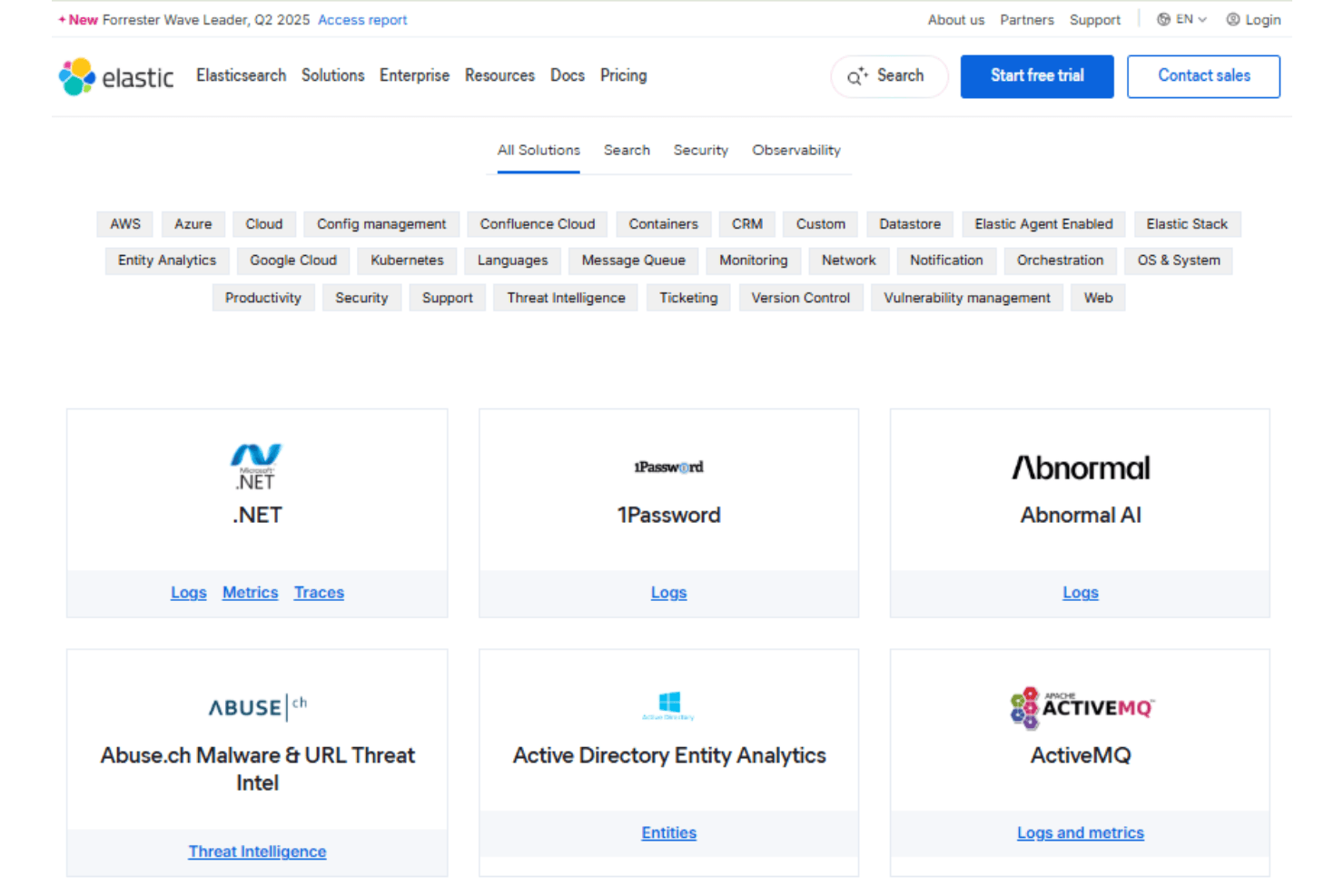
Elastic APM integrates with .NET, Go, Java, Node.js, PHP, Python, Ruby, iOS SDK, RUM (Real User Monitoring) for JavaScript, Microsoft Azure, Amazon Web Services (AWS), Kubernetes, Docker, Elastic Cloud, and more.
Elastic APM also offers an API and supports connections with third-party integration tools.
Elastic APM Specs
- AI Integration: Yes
- API: Yes
- Automated Testing: Yes
- Browser Compatibility Testing: Yes
- Bug Tracking: Yes
- Code Review: Yes
- Custom Reports: Yes
- Data Export: Yes
- Data Import: Yes
- Developer Tools: Yes
- External Integrations: Yes
- Malware Protection: Yes
- Multi-User: Yes
- Notifications: Yes
- Performance Testing: Yes
- Process Reporting: Yes
- Static Analysis: Yes
- Status Notifications: Yes
- Workflow Management: Yes


