

Navegando por el mundo complejo de la autenticación de usuarios, he aprendido a valorar el software de autenticación multifactor. Con el aumento de las filtraciones de datos, es esencial proteger las cuentas en línea más allá de las contraseñas. Esto va más allá de la tradicional combinación de usuario y contraseña e incluye algo que el usuario sabe, algo que el usuario posee o algo inherente al usuario.
Estas herramientas no solo garantizan que los usuarios finales reciban acceso seguro mediante códigos y aprovisionamiento de autoservicio, sino que también mejoran el acceso remoto, conectando de forma más segura las identidades de los usuarios en la web. ¿Los puntos de dolor? Gestionar múltiples autenticaciones de usuario, la gestión de identidades y accesos (IAM) y asegurar el acceso remoto sin comprometer la seguridad. Pero con el software adecuado, estos se resuelven, reforzando tus cuentas frente a filtraciones.
Por qué confiar en nuestras recomendaciones de software
6,700+
Reviews
20
Industry experts
16+
Evaluation factors
14
Years
Nuestro equipo lleva probando y evaluando software desde 2012. Como líderes tecnológicos, sabemos lo difícil —y lo importante— que es elegir el software adecuado.
Para esta guía, evaluamos las herramientas mediante pruebas prácticas e investigación independiente, puntuando las herramientas según nuestros criterios de selección.
Nuestras reseñas reflejan nuestro criterio editorial humano, no un discurso de ventas.
Revisores expertos:
- Paulo Gardini MiguelDirector técnico
 Tim FisherVP de IA
 Gabriel RosasTech Lead y arquitecto de software
 Christhian GruhnTech Lead y arquitecto de plataforma

Resumen del Mejor Software de Autenticación Multifactor
Esta tabla comparativa resume los detalles de precios de mis mejores selecciones de software MFA para ayudarte a encontrar el más adecuado según tu presupuesto y necesidades empresariales.
| Tool | Best For | Trial Info | Price | ||
|---|---|---|---|---|---|
| 1 | Ideal para MFA adaptativa con múltiples factores de autenticación | Versión gratuita disponible (hasta 50 usuarios de dominio) | Desde $595 (500 usuarios de dominio) | Website | |
| 2 | Ideal con controles de acceso privilegiado justo a tiempo | Prueba gratuita de 14 días | Precios bajo consulta | Website | |
| 3 | Ideal para combinar la gestión de contraseñas y MFA | Prueba gratuita de 30 días + plan gratuito disponible | Desde $3/usuario/mes (facturado anualmente) | Website | |
| 4 | Ideal para empresas SaaS que necesitan integración rápida | 30 días de prueba gratuita | Precio a consultar | Website | |
| 5 | Mejor para autenticación multifactor adaptativa | Prueba gratuita de 30 días disponible | Desde $2/usuario/mes | Website | |
| 6 | Ideal para lograr la autenticación sin contraseña | Prueba gratis de 14 días | Desde $8/usuario/mes (facturación anual) | Website | |
| 7 | La mejor para verificación por SMS y llamadas | Desde $15/usuario/mes | Website | ||
| 8 | Mejor para autenticación empresarial escalable | Prueba gratuita disponible | Desde $23/usuario/mes (facturado anualmente) | Website | |
| 9 | Ideal para quienes ya forman parte del entorno Salesforce | Plan gratuito disponible | Desde $25/usuario/mes (facturado anualmente) | Website | |
| 10 | La mejor opción para empresas en escenarios de nube híbrida | Precio bajo solicitud | Website |


Reseñas del Mejor Software de Autenticación Multifactor
A continuación, encontrarás mis resúmenes detallados de los mejores softwares de autenticación multifactor que seleccioné en mi lista corta. Mis reseñas ofrecen un análisis detallado de las características clave, ventajas y desventajas, integraciones y casos de uso ideales de cada herramienta para ayudarte a encontrar la más adecuada para ti.
 Ideal para MFA adaptativa con múltiples factores de autenticación
- Versión gratuita disponible (hasta 50 usuarios de dominio)
- Desde $595 (500 usuarios de dominio)
Visit WebsiteCustomer Rating:4.4/5This rating combines scores from multiple user review sites to reflect overall customer sentiment about the product.
Los usuarios disponen de múltiples opciones de configuración para establecer métodos de autenticación en ManageEngine ADSelfService Plus. ManageEngine ADSelfService Plus es una solución integral de autogestión de contraseñas y inicio de sesión único (SSO) diseñada para optimizar las operaciones de TI y mejorar la seguridad. Está dirigida a administradores de TI y usuarios finales, proporcionando funcionalidades como la autogestión de contraseñas, autenticación multifactor (MFA) y seguridad de endpoints.
Por qué elegí ManageEngine ADSelfService Plus: ADSelfService Plus admite diversas técnicas de autenticación como biometría, códigos TOTP, notificaciones push y llaves de seguridad, que refuerzan la seguridad al añadir múltiples capas de verificación más allá del tradicional usuario y contraseña. Esta adaptabilidad en los métodos de autenticación permite a las organizaciones personalizar sus protocolos de seguridad para satisfacer necesidades y requisitos de cumplimiento específicos. Además, su función de MFA adaptativa ajusta dinámicamente los requisitos de autenticación según factores de riesgo como la ubicación del usuario y el tipo de dispositivo, ofreciendo una medida de seguridad matizada y consciente del contexto.
Características destacadas e integraciones:
Otras características incluyen el inicio de sesión único (SSO), que se integra perfectamente con aplicaciones tanto locales como en la nube, ofreciendo una experiencia de inicio de sesión unificada y segura en diferentes entornos. La herramienta también dispone de capacidades de autogestión para el restablecimiento de contraseñas, permitiendo a los usuarios restablecer contraseñas y desbloquear cuentas de forma independiente. Las integraciones incluyen Zendesk, Freshdesk, Splunk, syslog y otras aplicaciones de ManageEngine como ManageEngine ADManager Plus y AD360.
Pros and Cons
Pros:
- Restablecimiento de contraseña por autoservicio
- Diversas opciones de MFA
- Amplias funciones de informes para auditorías y cumplimiento
Cons:
- Puede resultar costoso para organizaciones pequeñas
- La versión gratuita tiene funciones limitadas
Learn more about ManageEngine ADSelfService Plus: Ideal con controles de acceso privilegiado justo a tiempo
- Prueba gratuita de 14 días
- Precios bajo consulta
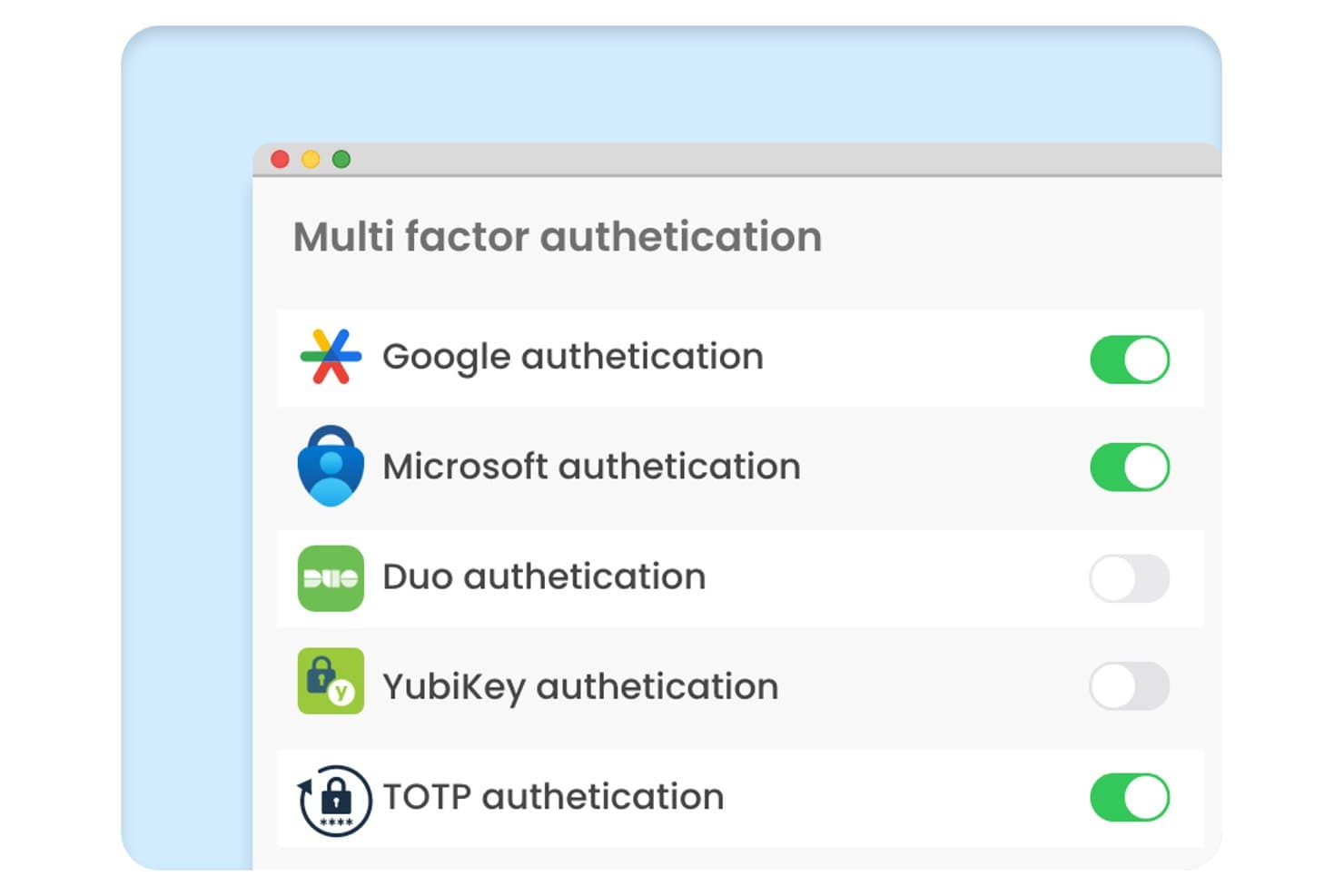
Securden Unified PAM ofrece un panel de configuración de autenticación multifactor con controles de activación y desactivación para los métodos de autenticación de Google, Microsoft, Duo, YubiKey y TOTP. Securden Unified PAM es una plataforma de gestión de accesos privilegiados que aplica la MFA en todas las cuentas privilegiadas, sesiones remotas y terminales mediante el almacenamiento seguro de credenciales, la grabación de sesiones y controles de acceso justo a tiempo.
¿Para quién es más adecuado Securden Unified PAM?
Equipos de seguridad informática y de IAM de organizaciones medianas y empresariales que necesitan una aplicación estricta de la MFA específicamente en cuentas privilegiadas, credenciales de administrador y accesos de proveedores.
Por qué elegí Securden Unified PAM
Elegí Securden Unified PAM porque su modelo de acceso justo a tiempo vincula la aplicación de la MFA directamente con el momento en que se solicita una sesión privilegiada, y no solo con el inicio de sesión. También me gusta cómo la MFA adaptativa se activa en función de anomalías de comportamiento, de modo que la conexión de un administrador de sistemas a un servidor de producción a una hora inusual activa automáticamente una autenticación reforzada. Además, la plataforma genera códigos TOTP directamente para las cuentas administradas, lo que cierra la brecha de la MFA en las credenciales compartidas que normalmente quedan desprotegidas.
Características principales de Securden Unified PAM
- Detección centralizada de cuentas privilegiadas: Analiza automáticamente su entorno para identificar credenciales y cuentas privilegiadas no administradas.
- Control de acceso basado en roles: Permite asignar permisos detallados mediante roles de usuario y grupos de seguridad personalizados.
- Grabación de sesiones privilegiadas: Graba todas las sesiones privilegiadas para auditorías forenses y el cumplimiento normativo.
- Integraciones con SIEM e ITSM: Se conecta con plataformas como Splunk, IBM QRadar y ServiceNow para ofrecer una supervisión unificada y respuesta ante incidentes.
Integraciones de Securden Unified PAM
Securden Unified PAM ofrece integraciones nativas con Active Directory, Microsoft Entra ID, Okta, OneLogin, Ping Identity, Splunk, IBM QRadar y ServiceNow. También dispone de una API para integraciones personalizadas.
Pros and Cons
Pros:
- El acceso justo a tiempo reduce la exposición a privilegios permanentes
- La MFA se aplica de forma nativa a las credenciales de administrador compartidas
- La detección de anomalías de comportamiento activa una autenticación reforzada
Cons:
- La complejidad de la configuración aumenta en implementaciones a gran escala
- Los paneles de informes ofrecen pocas opciones de personalización visual
Learn more about Securden Unified PAM: Ideal para combinar la gestión de contraseñas y MFA
- Prueba gratuita de 30 días + plan gratuito disponible
- Desde $3/usuario/mes (facturado anualmente)
Visit WebsiteCustomer Rating:4.6/5This rating combines scores from multiple user review sites to reflect overall customer sentiment about the product.
Imagen 10: Interfaz de autenticación sin contraseña de LastPass LastPass funciona como una herramienta integral diseñada tanto para gestionar contraseñas de forma segura como para ofrecer autenticación multifactor (MFA). Ha combinado de manera inteligente estas dos características esenciales, lo que la convierte en una opción ideal para quienes priorizan tanto la gestión de contraseñas como una autenticación mejorada.
Por qué elegí LastPass: Durante mi proceso de selección, LastPass destacó claramente por su doble capacidad: gestionar contraseñas y ofrecer también MFA. Al compararla con otras herramientas, su enfoque integral de la seguridad es lo que encontré único. Mi valoración es que, para individuos o empresas que ven el valor de unir la gestión de contraseñas con MFA, LastPass es una elección adecuada.
Características destacadas e integraciones:
LastPass proporciona una bóveda segura para almacenar contraseñas, notas y otras credenciales, todas las cuales se cifran localmente en el dispositivo del usuario. Además, su funcionalidad de MFA es robusta, integrando factores biométricos y contextuales para una mejor seguridad. En cuanto a integraciones, LastPass puede acoplarse con numerosos navegadores web, plataformas y cuenta con extensiones que aseguran que su funcionalidad sea fácilmente accesible en todos los dispositivos.
Pros and Cons
Pros:
- Combina la gestión de contraseñas y MFA en una sola plataforma
- El cifrado local garantiza que los datos del usuario permanezcan privados
- Amplia gama de integraciones con navegadores y plataformas
Cons:
- La facturación anual puede no resultar atractiva para todos los usuarios
- La interfaz de usuario puede resultar difícil para personas sin conocimientos técnicos
- Algunas funciones avanzadas solo están disponibles en los niveles de mayor precio
Learn more about LastPass: Ideal para empresas SaaS que necesitan integración rápida
- 30 días de prueba gratuita
- Precio a consultar
Visit WebsiteCustomer Rating:4.8/5This rating combines scores from multiple user review sites to reflect overall customer sentiment about the product.
Imagen 6: Vista general del estilo del constructor de autenticación de Frontegg Frontegg es una plataforma diseñada para potenciar a las empresas SaaS con funcionalidades preconstruidas y totalmente personalizables para mejorar sus aplicaciones. Este enfoque acelera significativamente los procesos de integración, lo que resulta especialmente ventajoso para las empresas SaaS que buscan incorporar rápidamente funciones esenciales.
Por qué elegí Frontegg: Durante el proceso de determinar las herramientas más valiosas para esta lista, Frontegg captó mi atención por su enfoque específico hacia las empresas SaaS. Su capacidad para ofrecer una integración rápida realmente la diferencia de otras plataformas. Consideré que Frontegg es, de hecho, la mejor opción para las entidades SaaS que requieren una integración ágil de características.
Características destacadas e integraciones:
Frontegg ofrece un conjunto de funcionalidades SaaS preconstruidas, que abarcan desde la gestión de usuarios y notificaciones, hasta capacidades de seguridad y auditoría. Su enfoque permite a las empresas omitir largos procesos de desarrollo y acceder inmediatamente a características ya probadas. Además, las integraciones de Frontegg con plataformas populares como Slack, Azure y AWS garantizan que sus funcionalidades puedan complementar fácilmente los entornos tecnológicos existentes.
Pros and Cons
Pros:
- Soluciones hechas a medida específicamente para empresas SaaS
- Funcionalidades preconstruidas eliminan largos tiempos de desarrollo
- Amplias opciones de integración con las principales plataformas
Cons:
- Puede no ser adecuado para empresas que no sean SaaS
- La personalización puede implicar una curva de aprendizaje para algunos
- La transparencia en los precios podría mejorar
Learn more about Frontegg: Mejor para autenticación multifactor adaptativa
- Prueba gratuita de 30 días disponible
- Desde $2/usuario/mes
Visit WebsiteCustomer Rating:4.5/5This rating combines scores from multiple user review sites to reflect overall customer sentiment about the product.
Panel de miniOrange IDP que muestra la gestión centralizada de identidades, configuración de SSO y el ajuste de autenticación multifactor desde una única consola de administración. Para quienes buscan una solución de autenticación multifactor que combine seguridad y facilidad de uso, miniOrange IDP ofrece una opción atractiva. Está dirigido a empresas de diversos sectores que desean reforzar sus medidas de seguridad sin complicar el acceso de los usuarios. Al integrar métodos de verificación adicionales, miniOrange IDP ayuda a las organizaciones a proteger información sensible mientras mantiene una experiencia de inicio de sesión amigable para el usuario.
Por qué elegí miniOrange IDP
Elegí miniOrange IDP por su autenticación multifactor adaptativa, la cual ajusta de manera inteligente las medidas de seguridad según el comportamiento del usuario y los niveles de riesgo. Esta función garantiza que tu equipo permanezca seguro sin interrupciones innecesarias. Además, la amplia capacidad de integración de la plataforma con más de 6000 aplicaciones la convierte en una opción versátil para empresas que buscan optimizar la gestión de accesos. El panel centralizado de miniOrange IDP permite a los administradores gestionar eficientemente el acceso de los usuarios y supervisar las políticas de seguridad, abordando inquietudes comunes en la gestión de entornos de usuarios diversos.
Características clave de miniOrange IDP
Además de su autenticación multifactor adaptativa y capacidades de integración, también encontré útiles las siguientes características:
- Múltiples métodos de MFA: Soporta notificaciones push, OTP vía SMS y correo electrónico, Google Authenticator, tokens de hardware, biometría y preguntas de seguridad.
- Autenticación sin contraseña: Permite el inicio de sesión sin contraseña utilizando FIDO2, biometría y métodos de autenticación por push.
- Políticas de acceso condicional: Aplica requisitos de autenticación basados en el comportamiento del usuario, dispositivo, ubicación y nivel de riesgo.
- Opciones de autoservicio: Permite a los usuarios restablecer contraseñas y configurar sus propios métodos de MFA, lo que puede ayudar a reducir las solicitudes al soporte de TI.
- Protección de dispositivos y VPN: Protege el acceso a VPN, así como los inicios de sesión de Windows, macOS y Linux.
Integraciones de miniOrange IDP
Las integraciones incluyen Microsoft 365, Google Workspace, AWS, Salesforce, Slack, Zoom, ServiceNow, Atlassian, GitHub, Dropbox y WordPress. La plataforma soporta integración con más de 6,000 aplicaciones en la nube, locales y legacy. También se dispone de una API para integraciones personalizadas o aplicaciones propietarias.
Pros and Cons
Pros:
- Soluciones robustas de MFA adaptativo y funciones de seguridad
- Panel centralizado para la gestión de usuarios y políticas
- Admite inicios de sesión personalizables y con marca propia
Cons:
- Políticas de reembolso restrictivas
- La configuración inicial puede ser compleja, especialmente para organizaciones pequeñas
Learn more about miniOrange: Ideal para lograr la autenticación sin contraseña
- Prueba gratis de 14 días
- Desde $8/usuario/mes (facturación anual)
Visit WebsiteCustomer Rating:4.4/5This rating combines scores from multiple user review sites to reflect overall customer sentiment about the product.
Imagen 4: Vista previa del panel de Uniqkey Uniqkey es una solución de autenticación robusta diseñada para ofrecer a los usuarios la comodidad y seguridad de la autenticación sin contraseña. Uniqkey se destaca como una opción formidable para facilitar esta transición, especialmente para quienes priorizan las soluciones sin contraseñas.
Por qué elegí Uniqkey: En el proceso de determinar las mejores herramientas para esta lista, Uniqkey llamó mi atención por su dedicación a un entorno sin contraseñas. Su enfoque en un área tan específica y crucial de la ciberseguridad la hace diferente de muchas otras que comparé. La consideré la mejor herramienta para quienes buscan conseguir una autenticación sin contraseña, dada su orientación especializada y eficacia en este ámbito.
Funciones destacadas e integraciones:
La principal fortaleza de Uniqkey es su autenticación adaptativa, que analiza factores de riesgo en tiempo real para determinar el nivel necesario de verificación. Además, ofrece opciones de verificación biométrica y una bóveda segura de contraseñas para aquellos usuarios que aún deban gestionar algunas claves. En cuanto a integraciones, Uniqkey es compatible con una variedad de sistemas empresariales, lo que garantiza que las empresas puedan incorporarla sin causar interrupciones en los flujos de trabajo existentes.
Pros and Cons
Pros:
- Dedicada a un entorno sin contraseñas
- Autenticación adaptativa basada en riesgos en tiempo real
- Bóveda segura para contraseñas residuales
Cons:
- Puede suponer una curva de aprendizaje para quienes son nuevos en los sistemas sin contraseñas
- Limitada a ciertas plataformas y dispositivos
- Relativamente nueva en el mercado, lo que puede preocupar a usuarios que buscan marcas consolidadas
Learn more about Uniqkey: La mejor para verificación por SMS y llamadas
- Desde $15/usuario/mes
Visit WebsiteCustomer Rating:4.6/5This rating combines scores from multiple user review sites to reflect overall customer sentiment about the product.
Imagen 2: Ejemplo de panel de control de RingCaptcha RingCaptcha se presenta como una herramienta especializada orientada a garantizar una verificación de usuarios fiable a través de SMS y llamadas de voz. Dado que las empresas de hoy buscan medidas de seguridad más estrictas, especialmente durante el proceso de incorporación de usuarios, RingCaptcha aparece como líder gracias a su enfoque en la verificación móvil, lo que la posiciona perfectamente como la mejor en verificación por SMS y llamadas.
Por qué elegí RingCaptcha: Durante el proceso de selección de las herramientas adecuadas para esta lista, RingCaptcha captó mi atención por su marcada especificidad y eficacia en la verificación basada en móviles. Su especialización en la verificación por SMS y llamadas la hizo destacar. Esta dedicación a la verificación móvil es la razón por la que determiné que es la mejor opción para empresas que dependen en gran medida de estos métodos.
Funciones destacadas e integraciones:
El núcleo de RingCaptcha reside en su rápida entrega de SMS, sólida verificación mediante llamadas de voz y su panel de control fácil de usar para monitorear y gestionar las verificaciones. En cuanto a la integración, RingCaptcha es versátil, integrándose sin problemas con plataformas como Shopify, WordPress y WooCommerce, lo que garantiza un mayor alcance y aplicabilidad para distintos modelos de negocio.
Pros and Cons
Pros:
- Especializada en verificaciones por SMS y llamadas de voz
- Rápido mecanismo de entrega de SMS
- Panel de control centrado en el usuario para seguimiento
Cons:
- Puede ser demasiado específica para empresas que necesitan métodos de verificación variados
- Precio más elevado en comparación con algunos competidores
- Funcionalidades limitadas más allá de la verificación móvil
Learn more about RingCaptcha: Mejor para autenticación empresarial escalable
- Prueba gratuita disponible
- Desde $23/usuario/mes (facturado anualmente)

Imagen 1: Software de autenticación multifactor Auth0 Auth0 es una plataforma líder en gestión de identidades diseñada para simplificar la autenticación y autorización para empresas de todos los tamaños. Especialmente adaptada para grandes empresas, garantiza que a medida que los negocios crecen, sus medidas de seguridad escalen junto con ellos, lo que la convierte en una de las mejores opciones para la autenticación empresarial escalable.
Por qué elegí Auth0: Cuando seleccioné una herramienta de autenticación, Auth0 apareció constantemente al frente de las opciones. Su reputación de robustez y adaptabilidad en el ámbito de la gestión de identidades la distingue de sus competidores. Al compararla con otras herramientas, su escalabilidad, especialmente para grandes corporaciones, consolidó su posición como la mejor para autenticación empresarial escalable en mi opinión.
Características destacadas e integraciones:
Entre sus numerosas características, el inicio de sesión único (Single Sign-On), la autenticación multifactor adaptativa y su panel de administración fácil de usar son especialmente destacables. Respecto a las integraciones, Auth0 sobresale por su compatibilidad con diversas plataformas como AWS, Slack, Salesforce y Zendesk, asegurando que las empresas tengan un flujo de trabajo cohesivo e integrado.
Pros and Cons
Pros:
- Adaptable a varios tamaños de empresa
- Amplia gama de integraciones de terceros
- Herramientas de seguridad completas
Cons:
- La complejidad potencial puede ser un reto para empresas más pequeñas
- Algunas personalizaciones pueden requerir conocimientos técnicos
- El precio inicial puede ser elevado para algunos presupuestos
Learn more about Auth0: Ideal para quienes ya forman parte del entorno Salesforce
- Plan gratuito disponible
- Desde $25/usuario/mes (facturado anualmente)

Imagen 5: Asistente de Autenticación Multifactor de la Plataforma Salesforce La Plataforma Salesforce ofrece una amplia gama de herramientas y servicios diseñados para permitir a las empresas crear y escalar aplicaciones rápidamente. Está especialmente orientada a compañías y equipos que ya están inmersos en el ecosistema de Salesforce.
Por qué elegí la Plataforma Salesforce: Al seleccionar herramientas para esta lista, me incliné por la Plataforma Salesforce debido a sus grandes capacidades de integración y a las soluciones integrales que ofrece. Esta plataforma proporciona el enfoque más alineado y sinérgico. Por eso creo que es la mejor para quienes ya forman parte del entorno Salesforce.
Características destacadas e integraciones:
La Plataforma Salesforce se distingue por sus capacidades de desarrollo con poco código, lo que permite a las empresas crear aplicaciones de manera ágil. También cuenta con analítica impulsada por inteligencia artificial y un sólido modelo de seguridad para proteger datos sensibles. En cuanto a integraciones, la plataforma funciona naturalmente bien con otras soluciones de Salesforce como Sales Cloud, Service Cloud y Marketing Cloud, asegurando una experiencia cohesiva para los usuarios.
Pros and Cons
Pros:
- Integración profunda con otros productos de Salesforce
- El desarrollo con poco código agiliza la creación de aplicaciones
- Fuertes características de seguridad
Cons:
- Puede resultar abrumador para quienes son nuevos en Salesforce
- El precio puede aumentar a medida que se agregan más funcionalidades
- Requiere inversión en aprendizaje y capacitación para un uso óptimo
Learn more about Salesforce Platform: La mejor opción para empresas en escenarios de nube híbrida
- Precio bajo solicitud

Imagen 9: vista general de IBM Security Verify para almacenamiento de contraseñas IBM Security Verify ofrece una solución de gestión de identidades y acceso diseñada para proporcionar una experiencia de usuario segura en diversas plataformas y aplicaciones. Esta herramienta destaca especialmente para las empresas que operan en entornos de nube híbrida, gracias a sus sólidas capacidades de integración y funciones de seguridad diseñadas específicamente para estos escenarios.
Por qué elegí IBM Security Verify: Durante el proceso de selección de herramientas, IBM Security Verify llamó mi atención por su claro enfoque en situaciones de nube híbrida. A juzgar por sus características y los comentarios de los usuarios, se hizo evidente que sus puntos fuertes se sitúan en afrontar los retos únicos que presentan los entornos de nube híbrida. Esto me hace pensar que es ideal para empresas que navegan por este tipo de entornos complejos.
Características y integraciones destacadas:
IBM Security Verify cuenta con un conjunto completo de funcionalidades, incluyendo políticas de acceso adaptativas, conocimientos impulsados por IA y un motor de análisis de comportamiento del usuario. También está equipado con inicio de sesión único (SSO) y autenticación multifactor (MFA) para reforzar la seguridad. En cuanto a integraciones, la herramienta admite una amplia gama de aplicaciones, bases de datos y plataformas, lo que la hace adaptable a diversos ecosistemas de TI.
Pros and Cons
Pros:
- Funciones adaptadas para entornos de nube híbrida
- Medidas de seguridad integrales, incluyendo SSO y MFA
- Amplio espectro de integraciones
Cons:
- La transparencia en los precios podría mejorar
- La configuración inicial puede ser compleja para algunos usuarios
- Algunas empresas pueden considerar que cuenta con demasiadas funcionalidades para casos de uso sencillos
Learn more about IBM Security Verify:
Otros Softwares de Autenticación Multifactor
A continuación encontrarás una lista de software adicional de autenticación multifactor que seleccioné, pero que no llegaron al top 12. Sin duda vale la pena revisar cada uno de ellos.
- 11Microsoft AuthenticatorMejor para usuarios dentro del ecosistema de Microsoft
- 12Google AuthenticatorIdeal para usuarios de la suite de servicios de Google
- 13Twilio Verify APIIdeal para desarrolladores que necesitan procesos de verificación personalizables
- 14WatchGuard AuthPointLa mejor opción para garantizar la seguridad basada en dispositivos móviles
- 15ManageEngine ADManager PlusIdeal para métodos de autenticación diversos
Cómo evalúo el software de autenticación multifactor
Divido mi evaluación en dos capas: las capacidades básicas que toda herramienta debe ofrecer, como soporte multifactor e integración con IdP, y los diferenciadores que importan para entornos de TI específicos y necesidades de cumplimiento.
Funcionalidad central (criterios indispensables para esta lista)
Cuando selecciono herramientas para mi lista, califico cada una en una escala del 0 (no ofrece la funcionalidad) al 5 (destaca en esta área) para cada funcionalidad principal que aparece a continuación. Después, calculo el puntaje total de la herramienta y lo convierto en un porcentaje. Cada herramienta debe alcanzar una puntuación total mínima del 75% para ser considerada para la inclusión.
- Múltiples factores de autenticación: Verifico si una herramienta admite una amplia variedad de factores secundarios: notificaciones push, TOTP, llaves FIDO2, biometría y SMS, para que los equipos puedan elegir el tipo de factor según el nivel de riesgo.
- Integración con directorios & IdP: Cada herramienta debe conectarse a fuentes de identidad como Active Directory, Entra ID, Okta y Google Workspace, para que el alta y la baja de usuarios estén vinculadas a su ciclo de vida existente.
- Cobertura de aplicaciones y protocolos: Evalúo cuántas aplicaciones y protocolos protege una herramienta, desde aplicaciones SaaS mediante SAML/OIDC hasta VPN, RDP y sesiones SSH por RADIUS o conectores nativos.
- Políticas adaptativas y basadas en riesgo: Las reglas contextuales son clave: busco herramientas que ajusten los retos de autenticación según el estado del dispositivo, la ubicación de red o el comportamiento de acceso, en lugar de aplicar desafíos generales.
- Gestión de políticas para administradores: Una consola centralizada donde puedas definir políticas por grupo de usuarios, aplicación o tipo de dispositivo facilita la administración diaria a gran escala.
- Registro de auditoría e informes: Busco registros de autenticación exportables e informes de cumplimiento preconstruidos alineados a marcos como SOC 2, PCI-DSS o HIPAA, además de reenvío a SIEM para una visibilidad en tiempo real.
Una vez tengo una lista de herramientas que cumplen con los criterios, considero qué distingue a cada plataforma.
Factores diferenciadores (lo que distingue a los proveedores)
Así es como comparo y contrasto a los diferentes proveedores:
Características destacadas
El inicio de sesión sin contraseña mediante FIDO2 o biometría es un diferenciador importante—elimina el riesgo de phishing y reduce los tickets de restablecimiento de contraseña en el soporte técnico. También evalúo las capacidades de confianza en dispositivos, donde la herramienta verifica la salud del endpoint, como el estado de cifrado o la presencia de EDR, antes de conceder acceso. Para equipos DevOps, la disponibilidad de API y SDK es esencial. Integrar MFA en aplicaciones personalizadas o en pipelines CI/CD requiere endpoints REST bien documentados y librerías cliente que herramientas como Duo y Okta proporcionan.
Más allá de las funcionalidades
Las certificaciones de cumplimiento como SOC 2 Tipo II y FedRAMP me indican que un proveedor toma en serio su propia seguridad; esto es relevante cuando la propia herramienta es la puerta de entrada a tu entorno. La flexibilidad de despliegue es otro factor que valoro, ya que los equipos en industrias reguladas suelen requerir opciones locales o entornos aislados además de la nube. También reviso la profundidad del ecosistema, comprobando integraciones preconstruidas con SIEM como Splunk, MDM como Jamf y herramientas PAM como CyberArk, porque el MFA raramente opera de forma aislada del resto de tu infraestructura de seguridad.
Cómo elegir un software de autenticación multifactor
Es fácil perderse entre listas interminables de funciones y estructuras de precios complejas. Para ayudarte a mantenerte enfocado durante tu proceso de selección de software, aquí tienes una lista de factores que debes tener en cuenta:
| Factor | Qué tener en cuenta |
|---|---|
| FactorEscalabilidad | Qué tener en cuenta¿El software crecerá con tu equipo? Considera los límites de usuarios y las capacidades de expansión. Asegúrate de que puede adaptarse al crecimiento futuro sin requerir una renovación completa o costosas actualizaciones. |
| FactorIntegraciones | Qué tener en cuenta¿Funciona con tus herramientas actuales? Comprueba la compatibilidad con tus sistemas actuales, como CRM, clientes de correo electrónico o servicios en la nube, para evitar interrupciones en los flujos de trabajo. |
| FactorPersonalización | Qué tener en cuenta¿Puedes adaptarlo a tus necesidades? Busca opciones para ajustar configuraciones, políticas e interfaces de usuario para cumplir con tus requisitos específicos. Evita soluciones rígidas que te obliguen a seguir un enfoque único para todos. |
| FactorFacilidad de uso | Qué tener en cuenta¿Tu equipo lo adoptará rápidamente? Evalúa el diseño de la interfaz y la experiencia de usuario. Un sistema complicado podría ralentizar la adopción y frustrar a los usuarios. |
| FactorImplementación y adopción | Qué tener en cuenta¿Qué tan fluida es la transición? Revisa el soporte para la configuración, como guías, recursos de entrenamiento y asistencia especial para la implementación, para asegurar un cambio sin problemas desde tu sistema actual. |
| FactorCosto | Qué tener en cuenta¿Está dentro de tu presupuesto? Evalúa el modelo de precios, incluyendo tarifas ocultas, complementos y costos a largo plazo. Compáralo con las limitaciones de tu presupuesto para encontrar el equilibrio adecuado entre costo y funcionalidad. |
| FactorMedidas de seguridad | Qué tener en cuenta¿Están protegidos tus datos y las identidades de los usuarios? Verifica los estándares de cifrado, las prácticas de almacenamiento de datos y la conformidad con protocolos de seguridad como GDPR o HIPAA. |
| FactorRequisitos de cumplimiento | Qué tener en cuenta¿Cumple con los estándares de la industria? Asegúrate de que el software cumpla con los requisitos legales y regulatorios relevantes para tu sector, como PCI-DSS para el procesamiento de pagos. |
¿Qué es el software de autenticación multifactor?
El software de autenticación multifactor proporciona una capa adicional de seguridad al requerir que los usuarios faciliten dos o más métodos de verificación antes de conceder acceso a una cuenta o sistema. Este software ofrece múltiples factores de autenticación: desde OTPs para Windows, Linux y MAC/macOS hasta autenticación biométrica para aplicaciones móviles en Android y Apple iOS. Con estas herramientas, se obtienen notificaciones push, aplicaciones autenticadoras y tokens de software que funcionan fácilmente con el directorio activo.
Las organizaciones y los individuos aprovechan estas herramientas para reforzar la seguridad, especialmente en una época donde las amenazas cibernéticas son frecuentes. Este enfoque minimiza el riesgo de accesos no autorizados, incluso si actores maliciosos consiguen la contraseña de un usuario, garantizando que los datos sensibles y los sistemas permanezcan protegidos.
Características
Cuando elijas un software de MFA, ten en cuenta las siguientes características clave:
- Autenticación de dos factores: Proporciona una capa adicional de seguridad al requerir una segunda forma de verificación, como un código por mensaje de texto o correo electrónico.
- Capacidades de integración: Permiten una conexión fluida con sistemas existentes como CRM y clientes de correo electrónico para evitar interrupciones en los flujos de trabajo.
- Autenticación biométrica: Utiliza huellas dactilares o reconocimiento facial para verificar la identidad, ofreciendo una experiencia más segura y conveniente para el usuario.
- Autenticación basada en riesgos: Adapta las medidas de seguridad según el comportamiento y la ubicación del usuario para mejorar la protección sin sacrificar la usabilidad.
- Autenticación sin contraseña: Elimina la necesidad de contraseñas, reduciendo el riesgo de brechas provocadas por credenciales débiles o robadas.
- Políticas de usuario personalizables: Permiten crear protocolos de seguridad a medida para satisfacer necesidades organizativas específicas y requisitos de cumplimiento.
- Supervisión en tiempo real: Brinda alertas e información instantáneas sobre intentos de acceso no autorizado, permitiendo una respuesta rápida ante posibles amenazas.
- Seguimiento por geolocalización: Monitorea la ubicación de los usuarios para impedir el acceso desde regiones sospechosas o no autorizadas.
- Interfaz fácil de usar: Asegura la facilidad de uso con un diseño intuitivo, reduciendo el tiempo de capacitación y mejorando la adopción por parte de los usuarios.
- Soporte para cumplimiento: Está alineado con estándares de la industria como GDPR y HIPAA, asegurando el cumplimiento legal y regulatorio.
Beneficios
Implementar software de MFA ofrece varios beneficios para tu equipo y tu negocio. Aquí tienes algunos a esperar:
- Mayor seguridad: Proporciona capas adicionales de protección mediante funciones como autenticación en dos pasos y biométrica para reducir el acceso no autorizado.
- Reducción del riesgo de brechas: Minimiza las posibilidades de filtraciones de datos utilizando autenticación sin contraseñas y monitoreo en tiempo real para detectar actividades sospechosas.
- Mejor cumplimiento normativo: Ayuda a cumplir con las regulaciones del sector gracias al soporte de cumplimiento, asegurando que su organización se adhiera a los estándares legales.
- Mayor confianza de los usuarios: Genera confianza entre los usuarios al proteger información sensible y datos personales.
- Gestión de acceso flexible: Ofrece políticas de usuario personalizables, permitiendo adaptar las medidas de seguridad a sus necesidades específicas.
- Respuesta eficiente ante amenazas: Permite actuar rápidamente frente a amenazas potenciales con alertas instantáneas y seguimiento por geolocalización.
- Experiencia de usuario simplificada: Garantiza facilidad de uso mediante una interfaz amigable, facilitando la adopción y el uso eficaz del software por parte de su equipo.
Costos y Precios
Seleccionar un software de autenticación multifactor requiere comprender los diferentes modelos y planes de precios disponibles. Los costos varían según funciones, tamaño del equipo, complementos y más. La siguiente tabla resume los planes habituales, sus precios promedio y las características típicas incluidas en las soluciones MFA:
Tabla comparativa de planes para software de autenticación multifactor
| Tipo de plan | Precio promedio | Características comunes |
|---|---|---|
| Tipo de planPlan gratuito | Precio promedio$0 | Características comunesAutenticación básica en dos pasos, integraciones limitadas y soporte comunitario. |
| Tipo de planPlan personal | Precio promedio$5-$10/usuario/mes | Características comunesAutenticación en dos pasos, soporte por correo electrónico e integraciones básicas de aplicaciones. |
| Tipo de planPlan empresarial | Precio promedio$15-$25/usuario/mes | Características comunesSoporte multidispositivo, integraciones avanzadas, autenticación basada en riesgos y soporte prioritario. |
| Tipo de planPlan corporativo | Precio promedio$30-$50/usuario/mes | Características comunesPolíticas personalizables, autenticación biométrica, gestor de cuentas dedicado y soporte para cumplimiento normativo. |
Preguntas frecuentes sobre software de autenticación multifactor
Aquí respondemos a algunas preguntas comunes sobre el software MFA:
¿Se puede usar el software de autenticación multifactor con tokens de hardware?
Sí, muchas soluciones de autenticación multifactor son compatibles con tokens de hardware como capa adicional de seguridad. Esta función es útil si su equipo prefiere dispositivos físicos en vez de métodos digitales. Asegúrese de que el software que está considerando sea compatible con los tokens que desea utilizar.
¿Qué hago si no recibo los códigos de verificación?
Si no está recibiendo los códigos de verificación por SMS, puede deberse a problemas con el operador o aplicaciones de seguridad. Cambiar a una app autenticadora puede mejorar la fiabilidad. Revise si su software ofrece métodos alternativos de verificación para evitar interrupciones de acceso.
¿Se almacena la información del usuario en la nube?
El manejo de los datos de usuario varía según el proveedor. Algunas soluciones almacenan la información localmente, mientras que otras utilizan la nube. Es importante saber dónde se almacenan sus datos y cómo se protegen. Busque software que ofrezca comunicación segura para las solicitudes de autenticación.
¿Qué opciones de soporte hay para resolver problemas?
La mayoría de los proveedores ofrece diversas opciones de ayuda, incluyendo pasos para solucionar problemas comunes y asistencia directa. Busque software que proporcione documentación detallada, foros de usuario y canales directos de soporte como chat o teléfono para ayudarse de forma rápida.
¿Qué software es considerado el más asequible?
Aunque los precios pueden variar, OneLogin y Azure Multi-Factor Authentication han sido históricamente algunas de las opciones más económicas del mercado.
¿Qué software tiende a ser el más caro?
Soluciones premium como CyberArk Identity y Thales SafeNet Trusted Access suelen tener un precio más elevado debido a sus características avanzadas y capacidades a nivel empresarial.
¿Qué sigue?
Si estás investigando software de autenticación multifactor, conéctate con un asesor de SoftwareSelect para recibir recomendaciones gratuitas.
Rellenas un formulario y tienes una breve charla donde profundizan en los detalles de tus necesidades. Luego recibirás una lista corta de software para revisar. Incluso te apoyarán durante todo el proceso de compra, incluidas las negociaciones de precios.