

Desentrañando Los 10 Mejores Almacenamientos de Objetos de 2026

10 Mejor Software de Almacenamiento de Objetos - Lista Corta


¿Luchas con la gestión de datos? No eres el único. Muchos expertos en tecnología se enfrentan al reto de almacenar y acceder a grandes volúmenes de datos de manera eficiente. El software de almacenamiento de objetos puede ayudar a tu equipo a gestionar archivos de forma más eficaz, ofreciendo soluciones escalables que se adaptan a tus necesidades.
En mi experiencia, elegir el software adecuado puede marcar una gran diferencia. He probado y analizado varias opciones para ofrecerte una visión imparcial de las mejores alternativas del mercado.
En este artículo, te guiaré por mis principales recomendaciones, destacando las características clave y beneficios. Ya sea que enfrentes problemas con el almacenamiento en la nube o tengas inquietudes de cumplimiento, aquí encontrarás información útil para tomar tu decisión.
Por qué confiar en nuestras recomendaciones de software
Nuestro equipo lleva probando y evaluando software desde 2012. Como líderes tecnológicos, sabemos lo difícil —y lo importante— que es elegir el software adecuado.
Para esta guía, evaluamos las herramientas mediante pruebas prácticas e investigación independiente, puntuando las herramientas según nuestros criterios de selección.
Nuestras reseñas reflejan nuestro criterio editorial humano, no un discurso de ventas.
Revisores expertos:
Resumen del Mejor Software de Almacenamiento de Objetos
Esta tabla comparativa resume los detalles de precios de mis mejores selecciones de software de almacenamiento de objetos para ayudarte a encontrar el que mejor se ajuste a tu presupuesto y necesidades empresariales.
| Tool | Best For | Trial Info | Price | ||
|---|---|---|---|---|---|
| 1 | Ideal para compatibilidad nativa con S3 | Demo gratuita disponible | Precios a consultar | Website | |
| 2 | La mejor integración con Google Cloud | Plan gratuito disponible | Precio a consultar | Website | |
| 3 | Ideal para análisis de datos a gran escala | Not available | Precio a consultar | Website | |
| 4 | Mejor para integrarse con los servicios de Azure | Not available | Precios a consultar | Website | |
| 5 | Mejor opción por su ecosistema diverso y escalabilidad | Not available | Precio a consultar | Website | |
| 6 | La mejor opción para almacenamiento de objetos nativo en Kubernetes | Not available | Precio a consultar | Website | |
| 7 | La mejor para la gestión multicloud | Precio a consultar | Website | ||
| 8 | El mejor para necesidades de almacenamiento como servicio | Not available | Desde $12/usuario/mes (facturado anualmente) + cuota base de $30 por mes | Website | |
| 9 | Ideal para capacidades de nube híbrida | Not available | Precio a consultar | Website | |
| 10 | La mejor para garantizar la durabilidad de los datos | Not available | Desde $12/usuario/mes (facturado anualmente) + tarifa base de $30 por mes | Website |
Opiniones del Mejor Software de Almacenamiento de Objetos
A continuación, encontrarás mis resúmenes detallados sobre el mejor software de almacenamiento de objetos que integran mi lista corta. Mis reseñas ofrecen un análisis detallado de las características clave, pros y contras, integraciones y casos de uso ideales de cada herramienta para ayudarte a encontrar la mejor opción para ti.

Ideal para compatibilidad nativa con S3
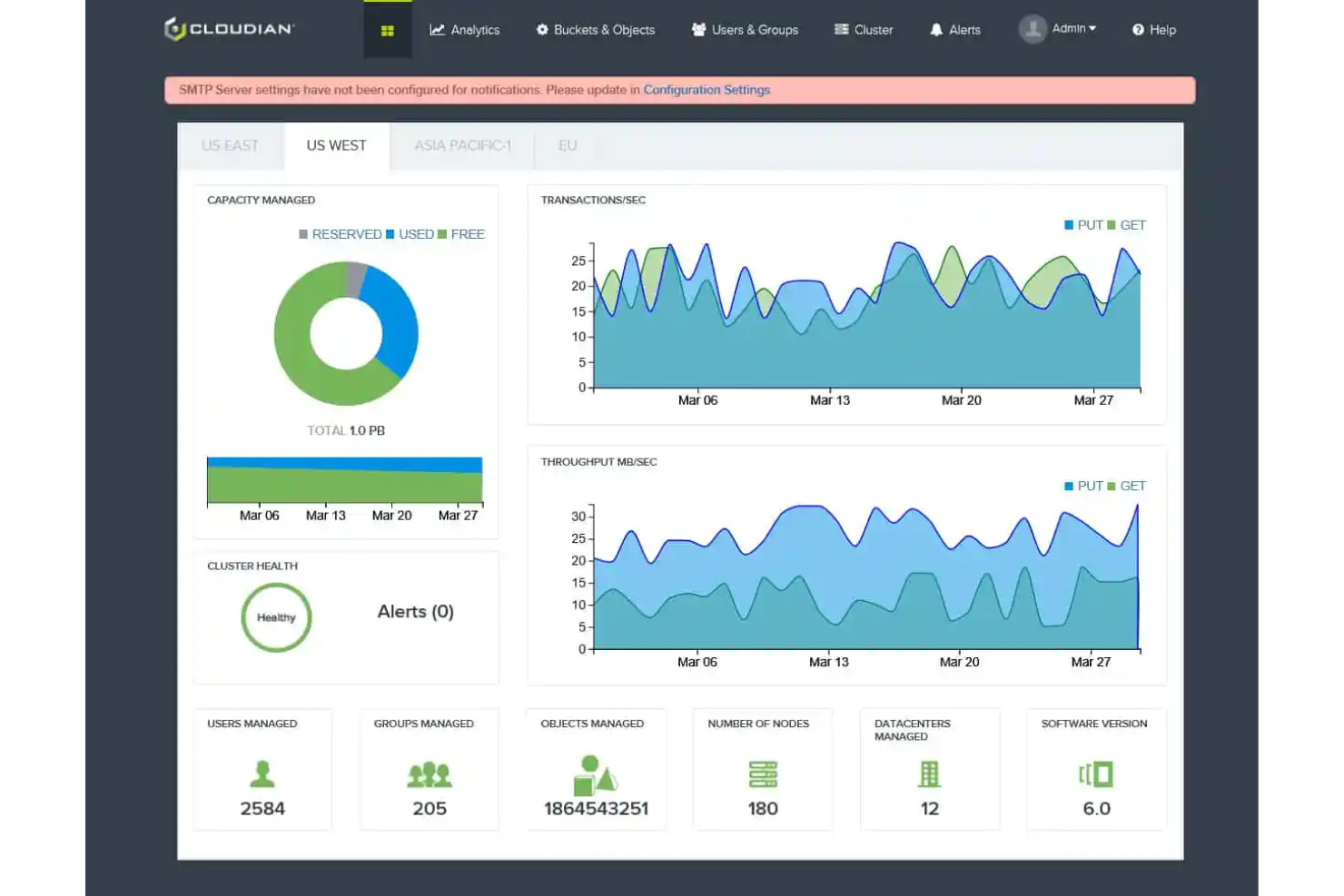
Cloudian HyperStore es una plataforma de almacenamiento de objetos escalable diseñada para ayudarte a gestionar grandes volúmenes de datos de manera eficiente. Ofrece compatibilidad con S3 y capacidades de nube híbrida, lo que la convierte en una herramienta versátil para las necesidades de almacenamiento de datos.
Por qué elegí Cloudian HyperStore: Elegí Cloudian HyperStore por su compatibilidad con S3, lo que asegura que puedas integrarla fácilmente con aplicaciones nativas en la nube. Esta característica es crucial para las empresas que buscan mantener soluciones de almacenamiento flexibles y escalables. Las capacidades de nube híbrida de la plataforma también permiten gestionar datos tanto en entornos locales como en la nube, brindando mayor control y adaptabilidad.
Otra razón para elegir Cloudian HyperStore son sus avanzadas funciones de protección de datos. Con seguridad de nivel militar, que incluye cifrado de datos y defensa contra ransomware, tus datos están protegidos frente a amenazas. Este nivel de protección es particularmente beneficioso si trabajas en industrias que manejan información sensible, como la atención médica y las telecomunicaciones.
Funciones destacadas e integraciones:
Las funciones incluyen escala a nivel exabyte, lo que permite un crecimiento ilimitado y una expansión no disruptiva en múltiples sitios. El rendimiento preparado para IA admite altas tasas de transferencia y baja latencia, esencial para cargas de trabajo de inteligencia artificial. La función de gestión unificada de archivos y objetos simplifica las operaciones de datos al gestionar tanto el almacenamiento de archivos como de objetos bajo un mismo sistema, mejorando la eficiencia operativa.
Las integraciones incluyen AWS, Microsoft, VMware, Veeam, Commvault, Kasten, Snowflake, Teradata, Confluent Platform, Rubrik, Google GCP y Azure Blob.
Pros and Cons
Pros:
- Múltiples puertas de acceso (NFS, CIFS, SFTP) aumentan la facilidad de uso
- Admite entornos multicloud
- Solución de almacenamiento de objetos altamente escalable, adecuada para grandes conjuntos de datos
Cons:
- La configuración inicial puede ser compleja y llevar mucho tiempo
- Soporte limitado para aplicaciones móviles

La mejor integración con Google Cloud
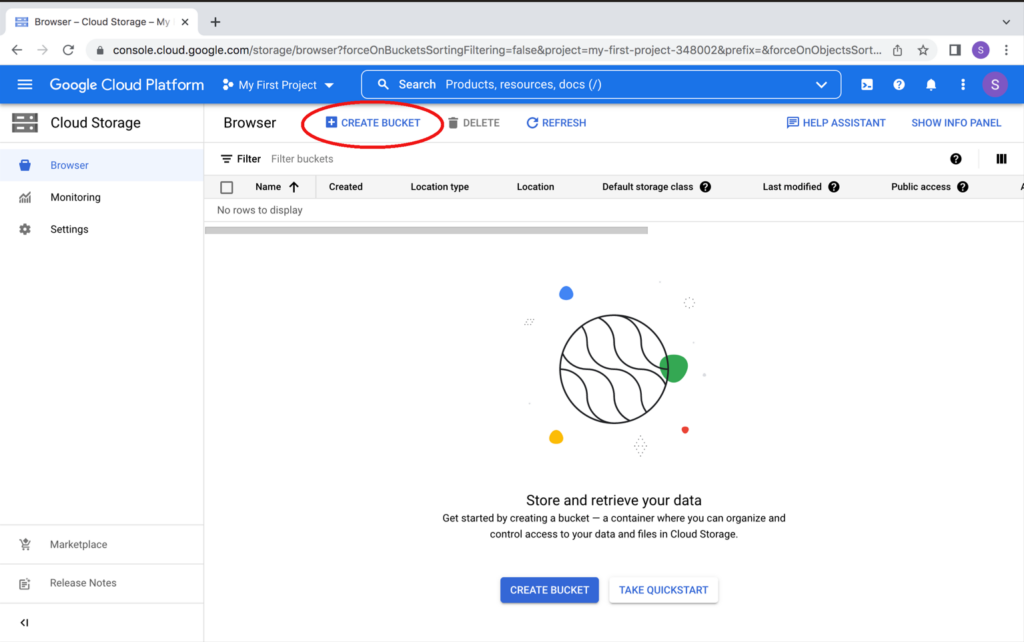
Google Cloud Storage (GCS) es una solución de almacenamiento de objetos a nivel empresarial diseñada para empresas que buscan almacenar y recuperar grandes cantidades de datos. Su integración dentro del ecosistema de Google Cloud lo convierte en una opción ideal para organizaciones que ya aprovechan los servicios de Google Cloud.
Por qué elegí Google Cloud Storage: Al seleccionar una solución de almacenamiento óptima, GCS destacó por su integración intrínseca con la diversa gama de servicios de Google Cloud. En mi opinión, tras comparar diferentes plataformas, su encaje nativo en el marco de Google Cloud lo diferencia de otras opciones.
Para empresas fuertemente vinculadas a los servicios de Google Cloud, esta herramienta surge naturalmente como la opción preferida.
Características destacadas e integraciones:
GCS presume de una gran durabilidad, asegurando que los datos permanezcan intactos y accesibles. También ofrece versionado, lo que permite a las empresas realizar un seguimiento y recuperar versiones de objetos.
En cuanto a integraciones, GCS colabora perfectamente con servicios de Google Cloud como BigQuery, Cloud Machine Learning y Dataflow, mejorando las capacidades de análisis y procesamiento de datos.
Pros and Cons
Pros:
- Integración directa con servicios de Google Cloud
- Alta durabilidad y disponibilidad de los datos
- Versionado de objetos incorporado
Cons:
- Puede resultar complejo para quienes no están familiarizados con la plataforma de Google Cloud
- Las tarifas de egreso pueden ser significativas para recuperaciones extensas de datos
- Posiblemente no sea la opción más económica para entidades que no utilizan Google Cloud

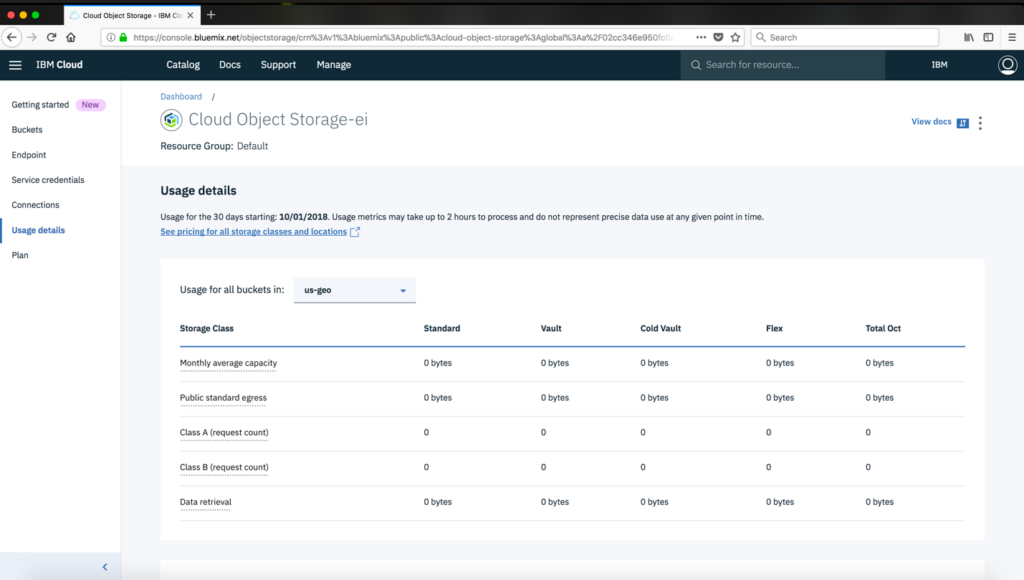
IBM Cloud Object Storage está diseñado para almacenar grandes cantidades de datos de manera altamente accesible y rentable. Especialmente adaptado para la analítica de datos, ofrece soluciones capaces de manejar la enorme afluencia de datos típica de las tareas analíticas a gran escala.
Por qué elegí IBM Cloud Object Storage: En mi búsqueda de plataformas de almacenamiento, IBM Cloud Object Storage destacó por su capacidad de gestionar grandes volúmenes de datos orientados a la analítica. Tras evaluar varias plataformas y comparar sus características, llegué a la conclusión de que la oferta de IBM está especialmente preparada para asumir las demandas intensivas del análisis de datos a gran escala.
Por ello, creo firmemente que es la mejor opción para las empresas que desean profundizar en el análisis de la información impulsada por datos.
Funciones e integraciones destacadas:
IBM Cloud Object Storage ofrece funciones como transferencias de datos integradas a alta velocidad y replicación automática de datos entre los centros de datos de IBM Cloud. Además, su sistema de archivado basado en políticas permite a los usuarios gestionar eficazmente el ciclo de vida de sus datos.
En cuanto a integraciones, la plataforma se integra armónicamente con la suite de herramientas de analítica e inteligencia artificial de IBM, proporcionando un ecosistema cohesivo para operaciones impulsadas por datos.
Pros and Cons
Pros:
- Diseñado para gestionar grandes volúmenes de datos de manera eficiente
- Funcionalidades integradas de transferencia de datos a alta velocidad
- Fácil integración con las herramientas de analítica e IA de IBM
Cons:
- Puede ser demasiado complejo para operaciones a pequeña escala
- La interfaz de usuario puede no ser tan intuitiva como la de algunos competidores
- La migración desde otra plataforma puede ser un reto para algunos usuarios

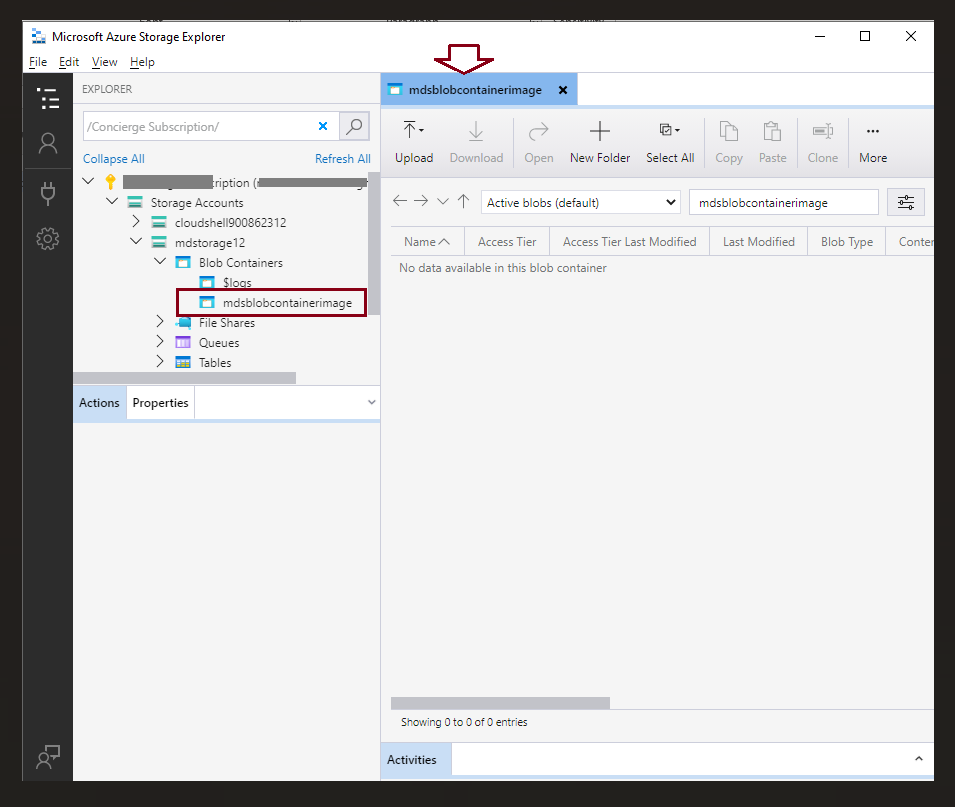
Azure Blob Storage es la solución de almacenamiento de objetos en la nube de Microsoft, diseñada para proporcionar a las empresas capacidades de almacenamiento de datos rápidas y seguras. Dada su integración intrínseca con el ecosistema de Azure, destaca en escenarios donde las empresas aprovechan la suite de servicios de Azure.
Por qué elegí Azure Blob Storage: Al determinar las soluciones de almacenamiento más eficientes, Azure Blob Storage se convirtió en una elección clara debido a su estrecha integración con los demás servicios de Azure. En mi opinión, después de comparar varias plataformas, su compatibilidad innata con el entorno de Azure lo hace sobresalir. Por lo tanto, para organizaciones que están profundamente invertidas en los servicios de Azure, esta herramienta es sin duda la mejor opción.
Características destacadas e integraciones:
Azure Blob Storage ofrece opciones de almacenamiento por niveles, garantizando un equilibrio óptimo entre precio y rendimiento. La plataforma también proporciona funciones avanzadas de protección de datos, como Azure Backup y Azure Site Recovery.
En cuanto a la integración, encaja de manera natural con servicios de Azure como Azure Machine Learning, Azure Functions y la amplia Microsoft Power Platform.
Pros and Cons
Pros:
- Integración inherente con una amplia gama de servicios de Azure
- Ofrece opciones de almacenamiento por niveles para flexibilidad en precio y rendimiento
- Funciones robustas de protección de datos
Cons:
- Puede resultar complejo para usuarios que no están familiarizados con el ecosistema de Azure
- Las tarifas de salida de datos pueden acumularse para empresas con grandes necesidades de recuperación de datos
- Puede que no sea la opción más rentable para organizaciones que no estén fuertemente invertidas en Azure

Mejor opción por su ecosistema diverso y escalabilidad
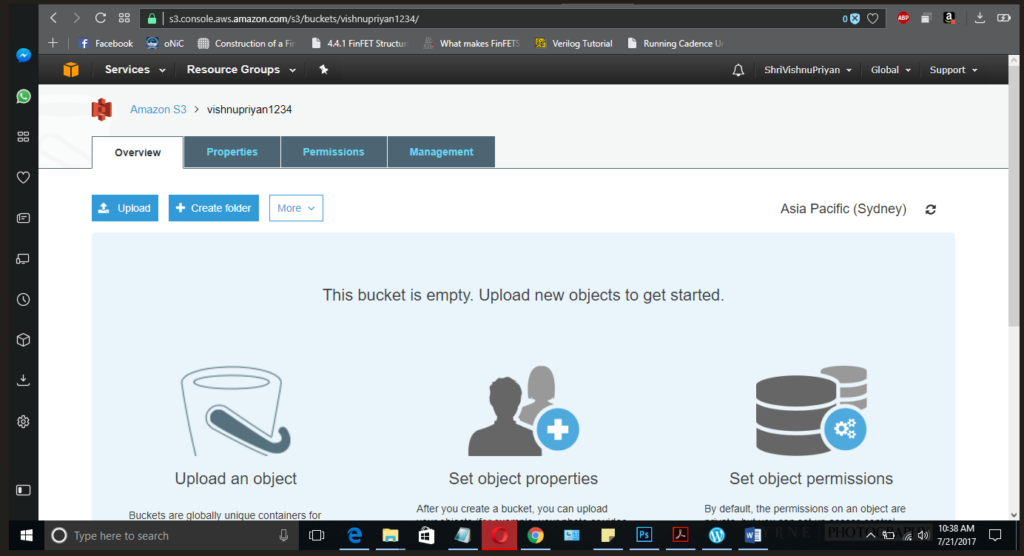
Amazon Simple Storage Service, comúnmente conocido como S3, es un servicio robusto de almacenamiento de objetos diseñado para una amplia gama de casos de uso, desde aplicaciones web hasta copias de seguridad de datos. Su amplio ecosistema y capacidad de escalabilidad lo hacen especialmente atractivo para empresas que requieren soluciones de almacenamiento expansivas y tienen necesidades operativas diversas.
Por qué elegí Amazon Simple Storage Service (S3): Al evaluar diversas soluciones de almacenamiento, Amazon S3 llamó mi atención debido a su inigualable escala y la amplitud de integración dentro del ecosistema de AWS. Desde mi perspectiva, su extensa presencia global, combinada con un conjunto completo de funciones, lo distingue de muchos competidores.
Creo que es especialmente adecuado para organizaciones que desean flexibilidad en la escala y una rica variedad de servicios integrados de AWS.
Funcionalidades y integraciones destacadas:
Amazon S3 ofrece una durabilidad de datos incomparable, asegurando la protección contra la pérdida de datos. Sus políticas de buckets y controles de acceso permiten una gestión matizada de la accesibilidad a los datos. En cuanto a integraciones, S3 funciona sin problemas con otros servicios de AWS, como AWS Lambda, Amazon Athena y AWS Glue, lo que potencia el análisis, el cómputo y el procesamiento de datos.
Pros and Cons
Pros:
- Amplia integración con servicios de AWS
- Alta durabilidad de los datos
- Controles de acceso avanzados y funciones de seguridad
Cons:
- La estructura de precios puede ser complicada debido a las diferentes clases de almacenamiento y opciones de recuperación
- Requiere una curva de aprendizaje para usuarios nuevos, especialmente al configurar políticas de buckets
- Posibles cargos por transferencia de salida al traspasar datos fuera de S3

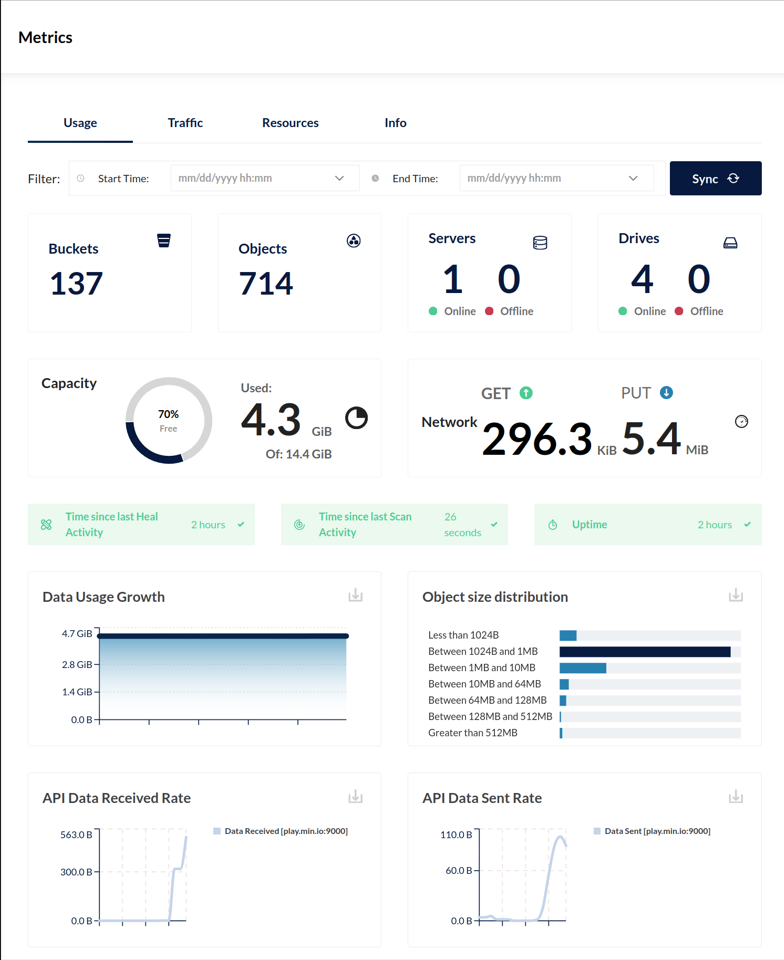
MinIO ofrece una solución de almacenamiento de objetos de alto rendimiento, nativa para Kubernetes. Diseñada específicamente pensando en Kubernetes, MinIO garantiza compatibilidad y un rendimiento optimizado para aplicaciones que operan dentro del ecosistema de Kubernetes.
Por qué elegí MinIO: Al elegir una solución de almacenamiento, el enfoque de MinIO en el almacenamiento de objetos nativo para Kubernetes llamó mi atención. Entre las numerosas herramientas de almacenamiento que evalué, MinIO se posicionó claramente como una herramienta diseñada para el entorno de Kubernetes. Este enfoque particular me llevó a determinar que MinIO es, sin duda, la mejor opción para organizaciones que dependen en gran medida de Kubernetes para el despliegue de sus aplicaciones.
Características destacadas e integraciones:
El conjunto de almacenamiento de MinIO cuenta con funciones como la codificación de borrado y la protección contra la corrupción de datos, lo que mejora la durabilidad e integridad de la información. El cifrado del lado del servidor garantiza que los datos permanezcan seguros en reposo.
En cuanto a integraciones, MinIO se ajusta perfectamente a las herramientas y plataformas de DevOps populares, incrementando su utilidad en una configuración centrada en Kubernetes.
Pros and Cons
Pros:
- Específicamente diseñado para entornos de Kubernetes
- La codificación de borrado y la protección contra la corrupción de datos mejoran la seguridad de la información
- Fácil integración con herramientas DevOps predominantes
Cons:
- Puede estar demasiado especializado para usuarios que no emplean Kubernetes
- Se requiere cierto nivel de familiaridad con Kubernetes para un uso óptimo
- La interfaz de usuario puede ser intimidante para algunos


Nutanix Objects Storage sirve como una solución integral para almacenar y gestionar datos en múltiples entornos de nube. Su arquitectura está diseñada de manera única para asegurar una gestión de datos coherente, lo que resulta especialmente beneficioso para las empresas que buscan operar en configuraciones de nube diversas sin complicaciones.
Por qué elegí Nutanix Objects Storage: Durante el proceso de selección y comparación de plataformas de gestión de nube, Nutanix Objects Storage llamó mi atención por sus sólidas capacidades multicloud.
Desde mi perspectiva, aunque muchas herramientas pueden afirmar gestionar múltiples nubes, Nutanix destaca por su eficiencia al conectar varias plataformas de nube y minimizar la fragmentación de datos. Consideré que esta herramienta es la mejor para las empresas que desean gestionar fácilmente datos en varios ecosistemas de nube sin complicaciones.
Características destacadas e integraciones:
Nutanix Objects Storage ofrece almacenamiento de objetos escalable con protección de datos integrada, lo que reduce el riesgo de pérdida de información. Su función de estratificación inteligente garantiza una utilización óptima de los recursos al mover datos entre niveles de almacenamiento según los patrones de acceso.
En cuanto a integraciones, ofrece compatibilidad con una amplia gama de aplicaciones de terceros, lo que facilita operaciones diversas dentro del entorno multicloud.
Pros and Cons
Pros:
- Gestión eficiente de datos multicloud
- Almacenamiento escalable con protección de datos integrada
- La estratificación inteligente mejora el uso de recursos
Cons:
- Puede tener una curva de aprendizaje más pronunciada para principiantes
- Algunas funciones avanzadas pueden ser complejas de configurar
- No es ideal para empresas con experiencia limitada en TI

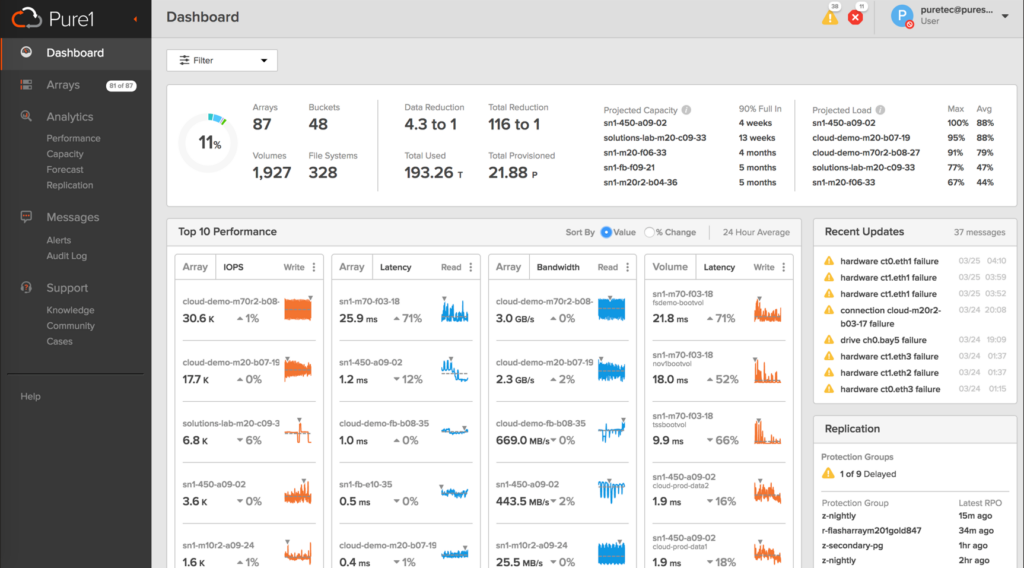
Evergreen//One se ha consolidado como líder en la prestación de almacenamiento como servicio. Reconociendo la tendencia hacia soluciones de almacenamiento orientadas a servicios, esta herramienta cubre eficazmente ese nicho, atendiendo específicamente a quienes buscan un enfoque basado en servicios.
Por qué elegí Evergreen//One: Al determinar qué herramientas incluir, Evergreen//One fue una elección evidente por su compromiso con el almacenamiento como servicio. La seleccioné porque, en mis comparaciones, constantemente demostró una ventaja en este ámbito, lo que resalta su destreza.
En mi opinión fundamentada, Evergreen//One realmente destaca como la mejor opción para quienes tienen necesidades de almacenamiento como servicio, simplificando la gestión y ofreciéndola como un servicio al instante.
Funciones destacadas e integraciones:
Evergreen//One ofrece una serie de funciones como precios de pago por uso y actualizaciones sin interrupciones, lo que facilita la gestión del almacenamiento. Además, sus capacidades de autoservicio otorgan a los usuarios la autonomía que desean. En cuanto a integraciones, Evergreen//One colabora con los principales proveedores de la nube e integra con muchas aplicaciones empresariales, asegurando soluciones de almacenamiento cohesionadas con los flujos de trabajo existentes.
Pros and Cons
Pros:
- Pago por uso, alineando los costes con el consumo
- Integración fluida con proveedores de la nube
- Capacidades de autoservicio completas
Cons:
- Puede ser demasiado orientado al servicio para algunos
- La lista de integraciones puede no cubrir todas las aplicaciones de nicho
- El modelo de pago por uso puede ser un reto presupuestario para algunos

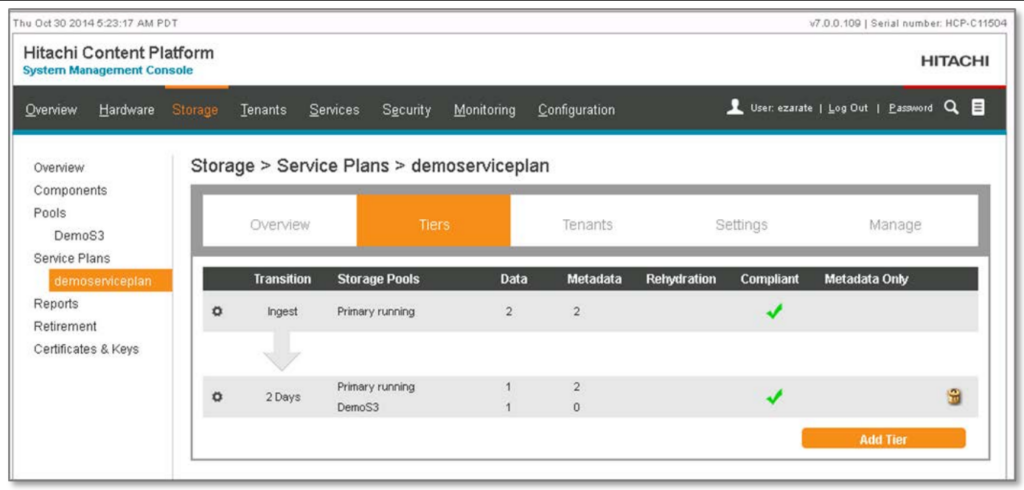
Hitachi Content Platform (HCP) es una solución de almacenamiento versátil que permite a las empresas integrar fácilmente su almacenamiento local con la nube. Su exclusiva arquitectura híbrida garantiza que las compañías mantengan la accesibilidad y seguridad de sus datos, sin importar dónde se encuentren, lo que respalda su reputación por sus sólidas capacidades de nube híbrida.
Por qué elegí Hitachi Content Platform: Durante el proceso de selección de plataformas de almacenamiento, Hitachi Content Platform destacó por su superior oferta de nube híbrida. Al determinar las mejores herramientas del mercado, consideré que HCP era una elección única, especialmente en comparación con otras plataformas por sus capacidades de almacenamiento híbrido.
En mi opinión, si una empresa busca maximizar las ventajas tanto del almacenamiento local como en la nube, Hitachi Content Platform es, sin duda, la mejor opción por sus capacidades híbridas.
Características destacadas e integraciones:
HCP cuenta con una arquitectura multinube, permitiendo a las empresas elegir el proveedor de nube que mejor se adapte a sus necesidades y luego integrarse fácilmente. Sus sólidas funciones de protección de datos aseguran que los datos permanezcan protegidos independientemente de su ubicación.
En cuanto a las integraciones, Hitachi Content Platform es compatible con la mayoría de aplicaciones empresariales y servicios en la nube principales, ofreciendo una solución versátil para las empresas que utilizan una amplia variedad de herramientas.
Pros and Cons
Pros:
- Ofrece una arquitectura multinube flexible
- Sólidas funciones de protección de datos para entornos híbridos
- Amplio soporte de integración para aplicaciones empresariales
Cons:
- Curva de aprendizaje potencial para quienes no estén familiarizados con entornos híbridos
- Algunas configuraciones pueden ser complejas para equipos pequeños
- Posible exceso de funcionalidades para empresas que no buscan amplias capacidades híbridas

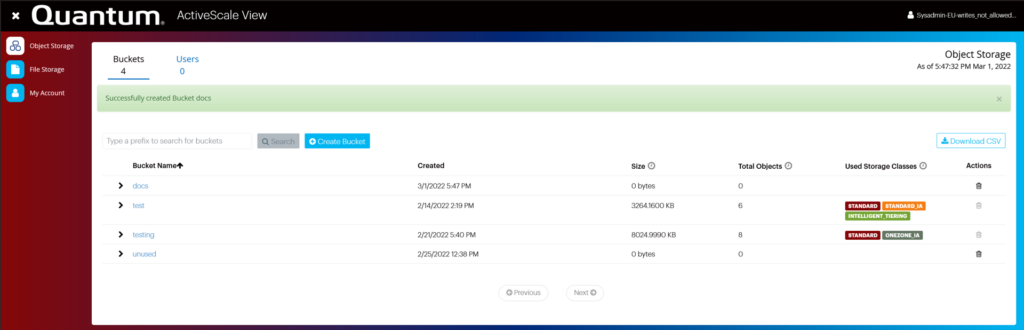
Quantum ActiveScale surge como un actor importante en el panorama del almacenamiento de objetos, proporcionando a las empresas una base confiable para sus vastas necesidades de almacenamiento de datos. Con un fuerte énfasis en la durabilidad de los datos, esta herramienta promete mantener la integridad de la información incluso a medida que aumentan las demandas de almacenamiento.
Por qué elegí Quantum ActiveScale: Al revisar numerosas soluciones de almacenamiento, Quantum ActiveScale llamó mi atención por su notable enfoque en la durabilidad de los datos. Seleccioné esta herramienta tras comprobar su capacidad para ofrecer capacidades inigualables de retención de datos.
Al compararla con otras, quedó claro que el compromiso de Quantum ActiveScale con la garantía de durabilidad de los datos la diferencia, convirtiéndola en la primera opción para quienes priorizan la preservación a largo plazo de la información.
Funciones destacadas e integraciones:
Quantum ActiveScale cuenta con funciones como Colocación Dinámica de Datos, asegurando que los datos permanezcan protegidos y accesibles incluso en caso de fallos de hardware. Además, su tecnología de Codificación de Borrado fortalece aún más la protección de los datos frente a posibles interrupciones.
En cuanto a integraciones, Quantum ActiveScale funciona bien con herramientas de análisis de datos populares, permitiendo a las empresas obtener insights sin migrar sus datos.
Pros and Cons
Pros:
- La Colocación Dinámica de Datos refuerza la protección de los datos
- Admite una escalabilidad masiva para almacenamiento a prueba de futuro
- La tecnología de Codificación de Borrado mejora aún más la durabilidad de los datos
Cons:
- La configuración inicial puede ser compleja para nuevos usuarios
- La interfaz de usuario puede requerir una curva de aprendizaje para algunos
- Puede no ser adecuada para organizaciones pequeñas con necesidades de almacenamiento limitadas
Otros Softwares de Almacenamiento de Objetos
Aquí tienes algunas opciones adicionales de software de almacenamiento de objetos que no llegaron a mi lista corta, pero aún así vale la pena revisar:
- Zadara
Ideal para respaldo en soluciones de almacenamiento de objetos
- Lunavi Cloud Storage
Mejor para almacenamiento en la nube escalable
- OpenIO
Bueno para el almacenamiento de objetos escalable y de código abierto


Cómo Evalúo el Software de Almacenamiento de Objetos
Desde almacenar conjuntos de datos de entrenamiento para IA hasta servir medios a gran escala, analizo cada herramienta en dos capas: los criterios de aceptación básicos que debe cumplir y los diferenciadores que la destacan.
Funcionalidad Básica (Condiciones Iniciales para Esta Lista)
Cuando selecciono herramientas para mi lista, califico cada una en una escala de 0 (no ofrece la funcionalidad) a 5 (destaca en esta área) para cada funcionalidad básica que se enumera a continuación. Luego, calculo la puntuación total de la herramienta como un porcentaje. Cada herramienta necesita lograr una puntuación total mínima del 75% para ser considerada en la inclusión.
- Compatibilidad con la API S3: Reviso si la plataforma soporta el estándar de la API S3, ya que la mayoría de herramientas de respaldo, pipelines CI/CD y frameworks de datos lo esperan de base.
- Almacenamiento de Objetos Escalable: Cada herramienta debe manejar el escalado horizontal desde terabytes hasta petabytes sin necesidad de redistribución manual ni caídas de rendimiento a medida que aumentan los volúmenes de datos.
- Durabilidad y Replicación de Datos: Evalúo cómo la plataforma protege los datos mediante codificación de borrado, replicación entre regiones o conmutación automática por error para escenarios de recuperación ante desastres.
- Gestión de Buckets y Objetos: La gestión de versiones, políticas de ciclo de vida y etiquetado de objetos son importantes aquí, especialmente para equipos que gestionan cargas mixtas como archivos de registros junto con activos multimedia activos.
- Control de Acceso y Encriptación: Busco políticas IAM granulares, permisos a nivel de bucket y encriptación tanto en reposo como en tránsito para cumplir con los estándares de seguridad empresarial.
- Almacenamiento Por Niveles y Ciclo de Vida: El movimiento automatizado entre niveles activo, frío y de archivo ayuda a mantener los costos bajo control, en particular para equipos que almacenan datos de cumplimiento de acceso infrecuente junto con activos de alto tráfico.
Una vez tengo una lista de herramientas que cumplen estos criterios, considero lo que diferencia a cada plataforma.
Factores Diferenciadores (Qué Distingue a los Proveedores)
Así es como comparo y contrasto diferentes proveedores:
Características Destacadas
El bloqueo de objetos y el soporte WORM es algo que siempre reviso: los equipos en salud o finanzas a menudo necesitan almacenamiento inmutable para cumplir mandatos de retención, y no todas las plataformas gestionan los modos de cumplimiento de la misma manera. Las opciones de despliegue en edge e híbrido también son relevantes. Si tu infraestructura abarca racks on-premises y nube pública, una herramienta que funcione de forma consistente en ambos entornos ahorra mucho trabajo operativo. También evalúo integraciones nativas de analítica, ya que consultar datos in situ con Spark o Presto evita costosos ciclos de extracción y carga.
Más Allá de las Características
La transparencia en la fijación de precios es clave: las tarifas por egreso y los cargos por solicitud pueden incrementar los costos silenciosamente a escala de petabytes, así que valoro si los proveedores ofrecen calculadoras de costos claras y facturación predecible. Las certificaciones de cumplimiento como SOC 2, HIPAA e ISO 27001 también son críticas, especialmente para equipos que almacenan datos sensibles bajo regulación. El encaje en el ecosistema importa igual: reviso la compatibilidad con plataformas de respaldo como Veeam o Commvault y herramientas IaC como Terraform, ya que el almacenamiento rara vez está aislado.
Cómo Elegir un Software de Almacenamiento de Objetos
Es fácil perderse entre largas listas de características y estructuras de precios complejas. Para ayudarte a mantener el enfoque durante tu proceso único de selección de software, aquí tienes una lista de factores a tener en cuenta:
| Factor | Qué tener en cuenta |
|---|---|
| Escalabilidad | ¿El software crecerá junto con tus necesidades de datos? Verifica si permite expandir el almacenamiento sin grandes interrupciones o costes. |
| Integraciones | ¿Funciona con tus herramientas actuales? Confirma que sea compatible con tu pila tecnológica para evitar dificultades de integración. |
| Personalización | ¿Puedes adaptarlo a tus flujos de trabajo? Busca opciones flexibles para ajustar el sistema a los procesos de tu equipo. |
| Facilidad de uso | ¿La interfaz es intuitiva? Elige un software que tu equipo pueda adoptar rápidamente sin necesidad de una formación exhaustiva. |
| Implementación y adopción | ¿Cuánto tiempo llevará implementarlo? Considera el tiempo y recursos necesarios para el despliegue y la calidad del soporte en la incorporación. |
| Costo | ¿Se ajusta a tu presupuesto? Compara planes de precios, incluyendo costes ocultos o cargos extra por aumentos de escala. |
| Protección y seguridad | ¿Hay medidas de protección de datos implementadas? Asegúrate de que el software ofrezca cifrado y cumpla con tus normas de seguridad. |
| Requisitos de cumplimiento | ¿Cumple con las regulaciones del sector? Verifica si permite cumplir con normativas relevantes para tu sector, como GDPR o HIPAA. |
¿Qué es el Software de Almacenamiento de Objetos?
El software de almacenamiento de objetos es un sistema que gestiona y almacena grandes cantidades de datos no estructurados. Los profesionales de TI, los gestores de datos y los arquitectos en la nube suelen utilizar estas herramientas para garantizar un manejo eficiente de los datos y la escalabilidad. La redundancia de datos, la fácil recuperación y las funciones de seguridad ayudan a gestionar grandes conjuntos de datos y a cumplir con los requisitos normativos. En general, estas herramientas proporcionan una forma escalable y segura de almacenar y acceder a los datos.
Características
Al seleccionar software de almacenamiento de objetos, tenga en cuenta las siguientes características clave:
- Escalabilidad de datos: Permite ampliar la capacidad de almacenamiento a medida que sus datos crecen, sin grandes interrupciones.
- Redundancia de datos: Garantiza la copia de seguridad y recuperación de datos, protegiendo contra la pérdida de información.
- Cifrado de seguridad: Protege los datos mediante cifrado, manteniéndolos seguros ante accesos no autorizados.
- Capacidades de integración: Se conecta de manera fluida con su ecosistema tecnológico existente para mejorar la eficiencia del flujo de trabajo.
- Etiquetado de metadatos: Facilita la rápida recuperación y organización de la información al etiquetar los datos con información relevante.
- Controles de acceso personalizables: Permite establecer permisos y gestionar quién puede acceder a diferentes conjuntos de datos.
- Monitorización de datos en tiempo real: Proporciona información sobre el uso y actividad de los datos, ayudando en la gestión de recursos.
- Soporte para el cumplimiento normativo: Ayuda a cumplir regulaciones específicas de la industria como el RGPD o la HIPAA.
- Interfaz fácil de usar: Ofrece un diseño intuitivo que reduce la curva de aprendizaje para los nuevos usuarios.
Beneficios
Implementar software de almacenamiento de objetos aporta varios beneficios para su equipo y su negocio. Estos son algunos de los que puede esperar:
- Escalabilidad: Amplíe fácilmente su capacidad de almacenamiento a medida que crecen sus datos, asegurando que nunca se quede sin espacio.
- Seguridad mejorada: Proteja la información sensible con cifrado y controles de acceso para evitar accesos no autorizados.
- Mejora en la recuperación de datos: Utilice el etiquetado de metadatos para encontrar y organizar datos rápidamente, ahorrando tiempo y esfuerzo.
- Eficiencia en costes: Optimice los costes de almacenamiento pagando solo por el espacio que necesita y evitando gastos innecesarios.
- Cumplimiento normativo: Cumpla con regulaciones como el RGPD o la HIPAA gracias a funciones de cumplimiento integradas.
- Integración sin complicaciones: Conecte con herramientas existentes para mejorar los flujos de trabajo y reducir tareas manuales de manejo de datos.
Costes y Precios
Seleccionar software de almacenamiento de objetos requiere comprender los diferentes modelos y planes de precios disponibles. Los costes varían según las funciones, el tamaño del equipo, los complementos y más. La siguiente tabla resume los planes comunes, sus precios promedio y las características típicas incluidas en las soluciones de software de almacenamiento de objetos:
Tabla comparativa de planes para software de almacenamiento de objetos
| Tipo de Plan | Precio Promedio | Características Comunes |
|---|---|---|
| Plan Gratuito | $0 | Capacidad básica de almacenamiento, recuperación limitada de datos y soporte mínimo. |
| Plan Personal | $5-$25/user/month | Almacenamiento moderado, características básicas de seguridad e integraciones limitadas. |
| Plan Empresarial | $50-$100/user/month | Seguridad mejorada, integraciones avanzadas y controles de acceso personalizables. |
| Plan Corporativo | $150-$300/user/month | Almacenamiento ilimitado, soporte de cumplimiento normativo y atención al cliente dedicada. |
Preguntas frecuentes sobre software de almacenamiento de objetos
Aquí tienes algunas respuestas a preguntas comunes sobre software de almacenamiento de objetos:
¿Qué medidas de seguridad debo esperar en el almacenamiento de objetos?
Espera cifrado, controles de acceso y redundancia de datos como medidas de seguridad estándar. Estas funciones protegen tus datos contra accesos no autorizados y garantizan que existan opciones de recuperación en caso de pérdida de datos. Verifica siempre que el software cumpla con los estándares de seguridad de tu sector.
¿Cómo se diferencia el almacenamiento de objetos del almacenamiento tradicional?
El almacenamiento de objetos gestiona los datos como objetos, cada uno con un identificador único y metadatos. El almacenamiento tradicional, como el almacenamiento por bloques o por archivos, organiza los datos de manera jerárquica, lo que hace que el almacenamiento de objetos sea más adecuado para datos no estructurados y entornos en la nube.
¿Necesito conocimientos técnicos específicos para usar estas herramientas?
Aunque las operaciones básicas pueden gestionarse con conocimientos técnicos mínimos, contar con experiencia es beneficioso para tareas como la instalación, configuración y optimización. Muchos proveedores ofrecen documentación detallada y soporte para ayudar a los usuarios.
¿Qué sigue?
Si estás investigando sobre software de almacenamiento de objetos, conéctate con un asesor de SoftwareSelect para obtener recomendaciones gratuitas.
Sólo tienes que rellenar un formulario y tendrás una breve charla donde analizarán las particularidades de tus necesidades. Luego recibirás una lista corta de software para revisar. Incluso te acompañarán durante todo el proceso de compra, incluidas las negociaciones de precios.