

10 Beste Open-Source-IoT-Plattformen für 2026

Beste Open-Source-IoT-Plattformen Shortlist
Hier ist meine Shortlist der Open-Source-IoT-Plattformen:


Eine Open-Source-IoT-Plattform ist ein Software-Framework, das es ermöglicht, Geräte und Daten über das Internet der Dinge zu verbinden, zu verwalten und zu überwachen – mit offenem Quellcode für individuelle Anpassungen und gemeinschaftliche Weiterentwicklungen. Wenn Sie auf der Suche nach der besten Open-Source-IoT-Plattform sind, gilt es oft, Integrationsanforderungen, Sicherheitsfragen und die Unterstützung verschiedener Gerätetypen im großen Maßstab in Einklang zu bringen.
Die richtige Plattform hilft Ihrem Team dabei, das Gerätemanagement zu automatisieren, Datenflüsse zu standardisieren und Ihre Infrastruktur flexibel zu halten, während Ihre Projekte wachsen. In dieser Liste finden Sie einen Vergleich der führenden Open-Source-IoT-Plattformen für 2026, sodass Sie Funktionen, Community-Support und Architekturen prüfen können, um eine fundierte Entscheidung für Ihr Umfeld zu treffen.
Why Trust Our Software Reviews
We’ve been testing and reviewing software since 2023. As tech leaders ourselves, we know how critical and difficult it is to make the right decision when selecting software.
We invest in deep research to help our audience make better software purchasing decisions. We’ve tested more than 2,000 tools for different tech use cases and written over 1,000 comprehensive software reviews. Learn how we stay transparent & our software review methodology.
Zusammenfassung: Beste Open-Source-IoT-Plattformen
Diese Vergleichstabelle fasst die Preisinformationen meiner Top-Auswahlen an Open-Source-IoT-Plattformen zusammen, damit Sie die beste Lösung für Ihr Budget und Ihre geschäftlichen Anforderungen finden.
| Tool | Best For | Trial Info | Price | ||
|---|---|---|---|---|---|
| 1 | Best for modular device management and visualization | Free plan available | From $10/month | Website | |
| 2 | Best for real-time data access and control | Free plan available | From $3/month | Website | |
| 3 | Best for collaborative IoT project ecosystems | Free plan available | From €25,000/year | Website | |
| 4 | Best for distributed architecture with broad protocol support | Free plan available | Free to use | Website | |
| 5 | Best for flexible smart city and energy solutions | Free demo available | Pricing upon request | Website | |
| 6 | Best for scalable industrial multi-protocol IoT | Free demo available | Pricing upon request | Website | |
| 7 | Best for enterprise device management and analytics | Free plan available | Pricing upon request | Website | |
| 8 | Best for open building and home automation | Free plan available | Free to use | Website | |
| 9 | Best for vendor-neutral edge computing | Free plan available | Free to use | Website | |
| 10 | Best for secure device interoperability | Free plan available | Free to use | Website |
-

Site24x7
Visit WebsiteThis is an aggregated rating for this tool including ratings from Crozdesk users and ratings from other sites.4.7 -
GitHub Actions
Visit WebsiteThis is an aggregated rating for this tool including ratings from Crozdesk users and ratings from other sites.4.8 -
Docker
Visit WebsiteThis is an aggregated rating for this tool including ratings from Crozdesk users and ratings from other sites.4.6




Bewertungen: Beste Open-Source-IoT-Plattformen
Im Folgenden finden Sie meine detaillierten Zusammenfassungen der Open-Source-IoT-Plattformen, die es auf meine Shortlist geschafft haben. Meine Rezensionen bieten einen gründlichen Überblick über die Funktionen, Integrationen und besten Einsatzbereiche jeder Plattform, um Ihnen bei der Wahl der passenden Lösung zu helfen.

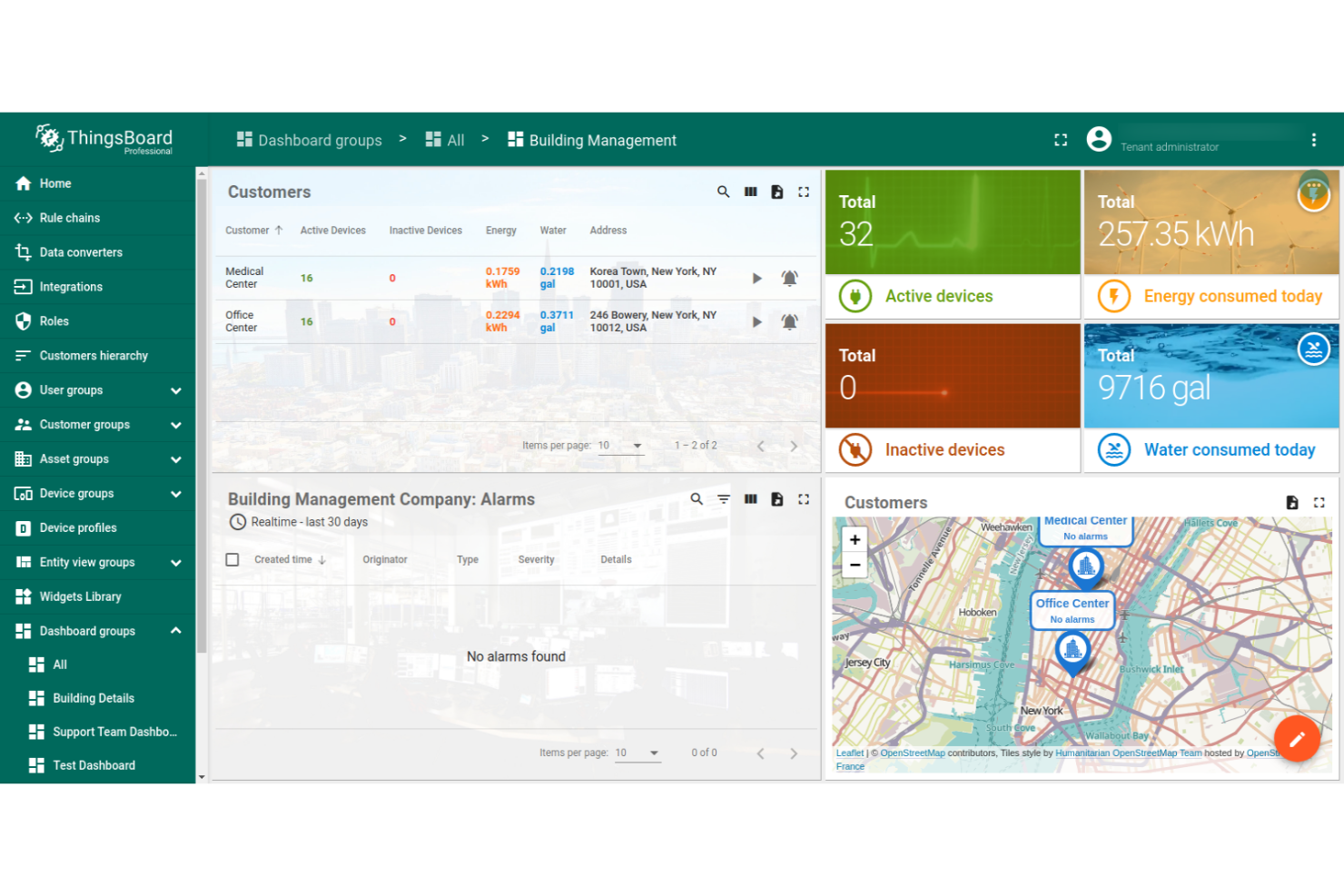
If you need a flexible platform for managing connected devices and visualizing IoT data, ThingsBoard offers a modular approach that fits a range of deployment needs. It’s well-suited for IT teams in manufacturing, utilities, or smart building projects who want to customize device management and data processing workflows. The platform’s open architecture helps you integrate with multiple protocols and scale as your IoT environment grows.
Who is ThingsBoard Best For?
IoT engineers and operations teams in small to mid-sized organizations globally managing modular device networks and visualizing collected data.
Why I Picked ThingsBoard
I chose ThingsBoard because its modular architecture gives you the flexibility to tailor device management, data collection, and visualization to your project’s needs. The platform lets you define custom rule chains for processing device data, which is valuable for teams handling complex IoT workflows. I also appreciate the built-in dashboard editor, which makes it easy to visualize real-time and historical data from connected devices. For open source IoT projects that require both scalability and customization, ThingsBoard stands out for its adaptable design.
ThingsBoard Key Features
Some other features in ThingsBoard that are useful for open source IoT projects include:
- Multi-Tenancy Support: Manage multiple customers or business units within a single deployment, each with isolated data and device access.
- OTA Firmware Updates: Push over-the-air firmware updates to connected devices directly from the platform.
- Custom Widgets Library: Build and reuse custom widgets for dashboards to tailor data visualization to your needs.
- Alarm Management: Set up and manage alarms for device events, thresholds, or connectivity issues to support proactive monitoring.
ThingsBoard Integrations
Integrations include MQTT, CoAP, HTTP, LoRaWAN, SigFox, NB-IoT, LwM2M, ThingsBoard IoT Gateway, Trendz Analytics, and more.
Pros and Cons
Pros:
- Built-in dashboard editor enables custom data visualization
- Modular architecture allows for flexible deployment and scaling
- Supports multiple IoT protocols including MQTT, CoAP, and HTTP
Cons:
- Resource usage is high for large-scale deployments
- Documentation can be inconsistent or lacking for advanced features

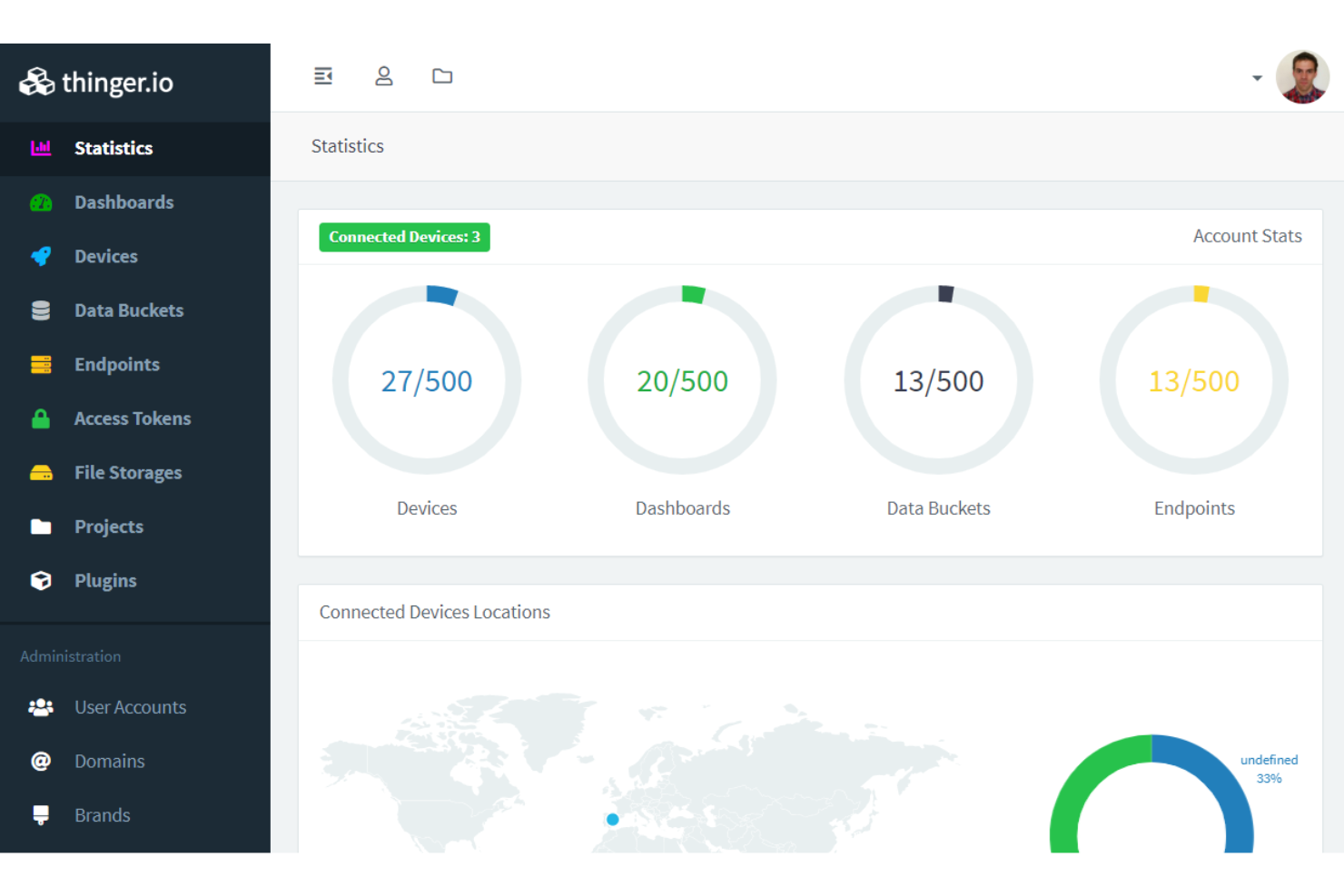
Thinger.io offers a real-time open source IoT platform designed for teams that need fast device onboarding and live data visualization. It’s especially useful for engineers, system integrators, and businesses managing connected devices across multiple locations. With its built-in dashboards and device management tools, Thinger.io helps you quickly connect, monitor, and control IoT assets without heavy custom development.
Who is Thinger.io Best For?
IoT developers and product teams in small to mid-sized companies worldwide requiring real-time device access and control.
Why I Picked Thinger.io
What drew me to Thinger.io is its focus on real-time device management and data visualization within an open source IoT platform. The platform’s live dashboards let you monitor device status and sensor data as it happens, which is valuable for teams that need immediate insights or rapid troubleshooting. I also like that Thinger.io provides a unified device management interface, making it easier to onboard, organize, and control connected assets at scale. For organizations that prioritize real-time monitoring and want to avoid building these capabilities from scratch, Thinger.io offers a practical, open source solution.
Thinger.io Key Features
In addition to its real-time monitoring and device management, Thinger.io offers several other features worth noting:
- Data Buckets: Store and retrieve historical device data for analysis and reporting.
- Custom API Endpoints: Expose device functions and data through configurable REST API endpoints.
- Rule Engine: Set up automated actions and alerts based on device data or events.
- White-Labeling: Customize the platform’s branding and interface for client or internal deployments.
Thinger.io Integrations
Integrations include MQTT, Dragino, SenseCAP, Heltec, Comet, WIKA, ChirpStack, Milesight, The Things Stack, and more.
Pros and Cons
Pros:
- Open source server can be self-hosted for full data control
- Device provisioning supports bulk onboarding for large IoT fleets
- Real-time dashboards display live sensor and device data updates
Cons:
- UI customization options are basic compared to other open source platforms
- Community support is smaller compared to more established platforms

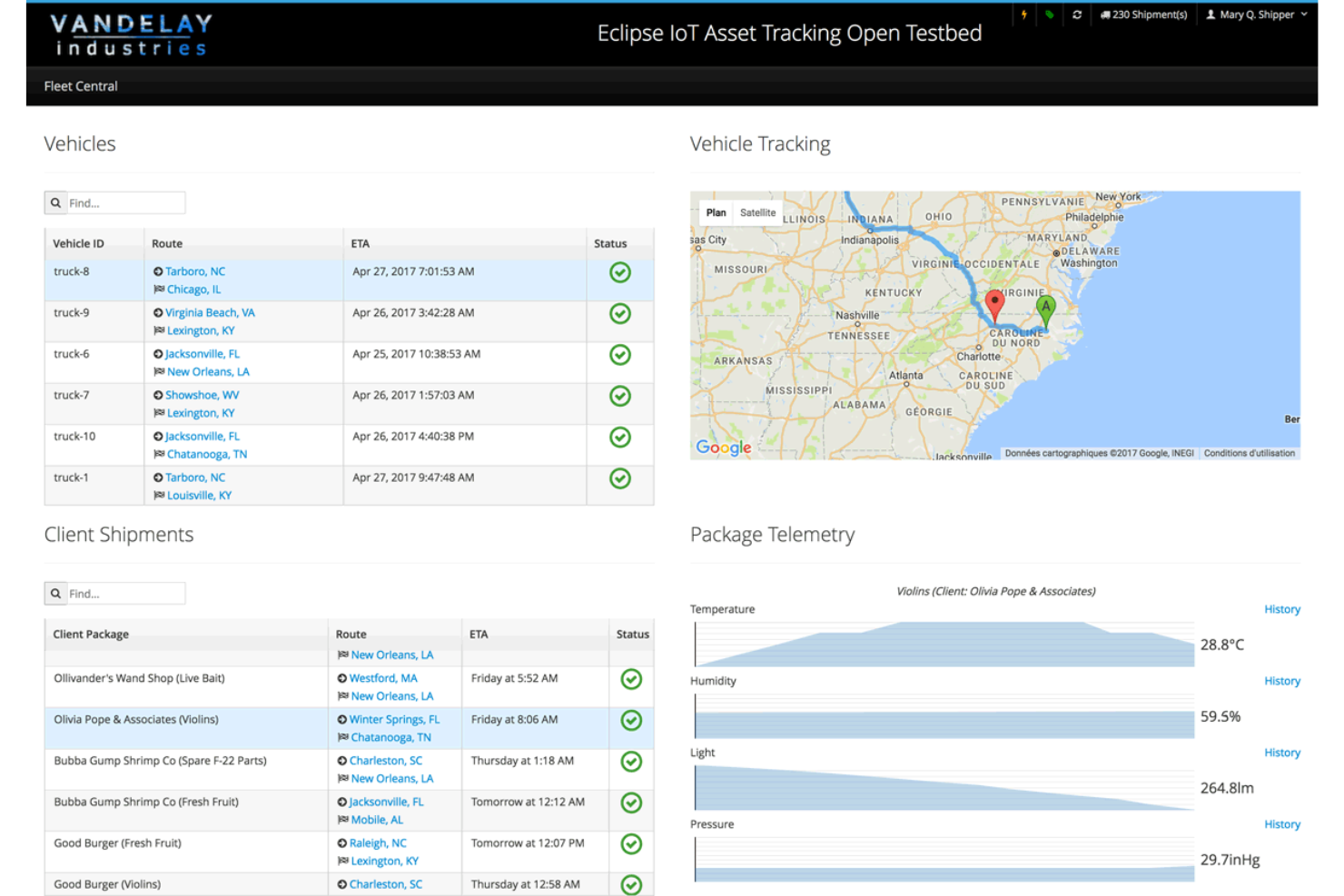
If you’re looking for a modular, open source IoT platform with a broad ecosystem, Eclipse IoT brings together a suite of frameworks and services for device connectivity, data management, and edge computing. It’s a strong fit for enterprises, solution architects, and developers who want to build custom IoT solutions using interoperable components. With its focus on open standards and community-driven development, Eclipse IoT helps you avoid vendor lock-in and tailor your stack to specific industry or project needs.
Who is Eclipse IoT Best For?
IoT developers and research teams in small to mid-sized organizations globally collaborating on open source IoT project ecosystems.
Why I Picked Eclipse IoT
What sets Eclipse IoT apart is its open source ecosystem of modular frameworks and services, which gives you the flexibility to assemble a solution that fits your exact requirements. I picked Eclipse IoT because it offers a wide range of building blocks, like Eclipse Hono for device connectivity and Eclipse Ditto for digital twins, that you can mix and match. This modular approach means you’re not locked into a single architecture or vendor’s vision. For teams building complex or large-scale IoT systems, Eclipse IoT’s community-driven development and adherence to open standards make it a reliable foundation.
Eclipse IoT Key Features
Some other features that make Eclipse IoT appealing for open source IoT projects include:
- Eclipse Kapua Device Management: Manage device registration, configuration, and monitoring from a central interface.
- Eclipse Mosquitto MQTT Broker: Enable lightweight, reliable messaging for IoT devices using the MQTT protocol.
- Eclipse Kura Edge Computing: Deploy and manage applications at the network edge for real-time processing.
- Eclipse hawkBit Software Updates: Roll out firmware and software updates to connected devices remotely.
Eclipse IoT Integrations
Native integrations are not currently publicly listed.
Pros and Cons
Pros:
- Active community contributions drive frequent updates and improvements
- Strong support for open standards and interoperability across devices
- Modular architecture lets you combine only the components you need
Cons:
- Project governance and roadmap can be unclear for long-term planning
- Documentation quality varies widely between different Eclipse IoT projects

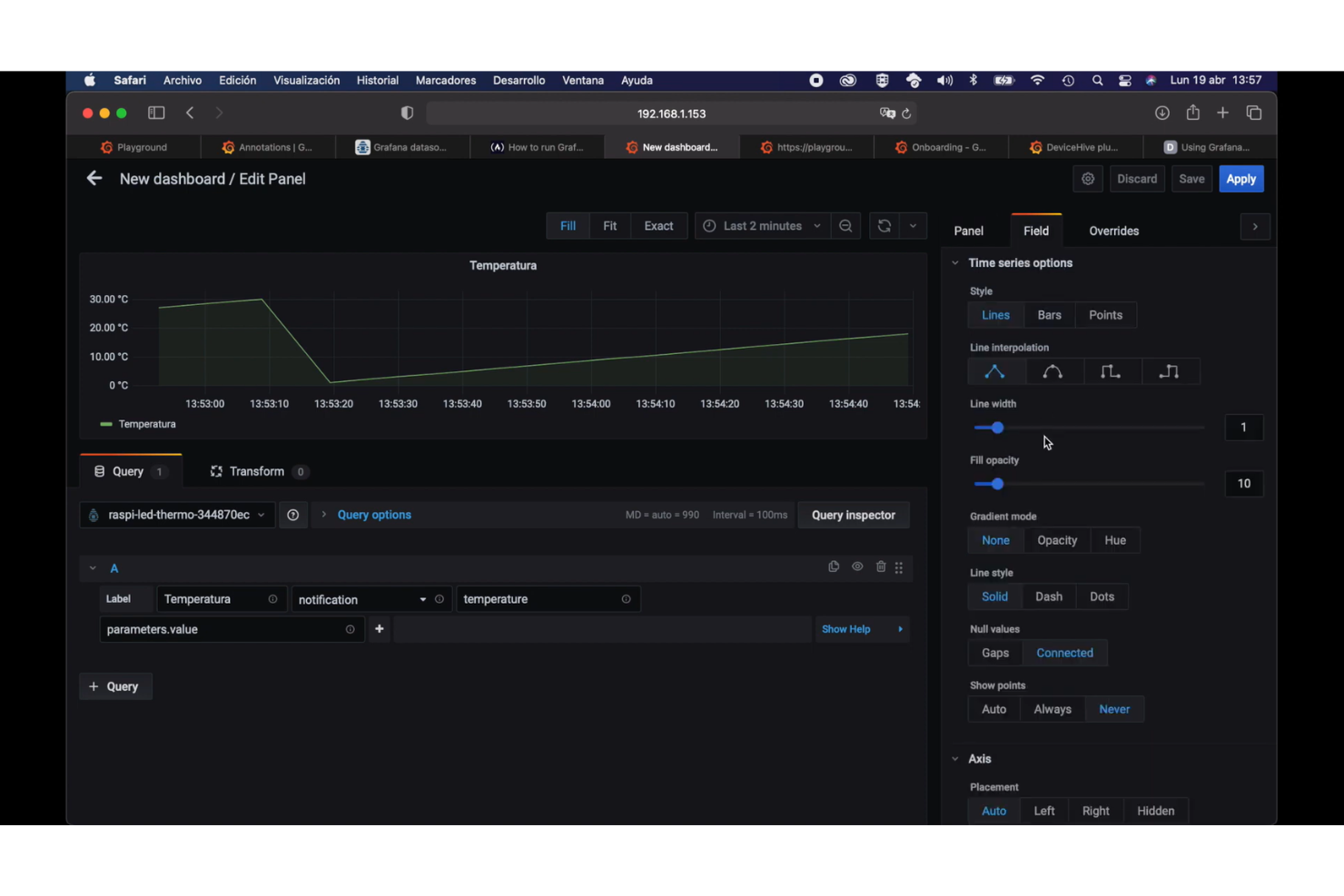
DeviceHive offers a flexible, open source IoT platform designed for teams that need real-time device communication and scalable data streaming. It’s especially useful for developers, system integrators, and enterprises building custom IoT solutions across smart energy, logistics, or industrial automation. With its support for multiple communication protocols and a robust API layer, DeviceHive helps you connect, manage, and monitor diverse device fleets without vendor lock-in.
Who is DeviceHive Best For?
IoT architects and systems integrators in mid-sized organizations worldwide managing distributed device architectures with broad protocol support.
Why I Picked DeviceHive
DeviceHive stands out for its flexible device connectivity and real-time data streaming, which are essential for modern IoT deployments. The platform supports a wide range of communication protocols, including MQTT, WebSockets, and REST, so you can connect almost any device or gateway. I appreciate that DeviceHive offers a scalable messaging architecture, letting you handle high-throughput data streams without bottlenecks. For teams building custom IoT solutions, DeviceHive’s open API layer makes it easy to integrate device data into your own applications and analytics pipelines.
DeviceHive Key Features
Some other features that make DeviceHive a strong option for open source IoT projects include:
- Role-Based Access Control: Assign granular permissions to users and devices for secure management.
- Command and Notification System: Send commands to devices and receive asynchronous notifications from them.
- Plugin Architecture: Extend platform functionality with custom plugins for specialized use cases.
- Built-In Device Registry: Organize, register, and manage device metadata within a centralized system.
DeviceHive Integrations
Integrations include Alexa, ElasticSearch, Apache Spark, Cassandra, Kafka, REST API, MQTT, WebSockets, Docker, and more.
Pros and Cons
Pros:
- Active open source community provides frequent updates and support
- Built-in role-based access control for device and user security
- Scalable architecture handles large device fleets and high data volumes
Cons:
- Documentation can be inconsistent for advanced deployment scenarios
- Limited built-in analytics and visualization tools for device data

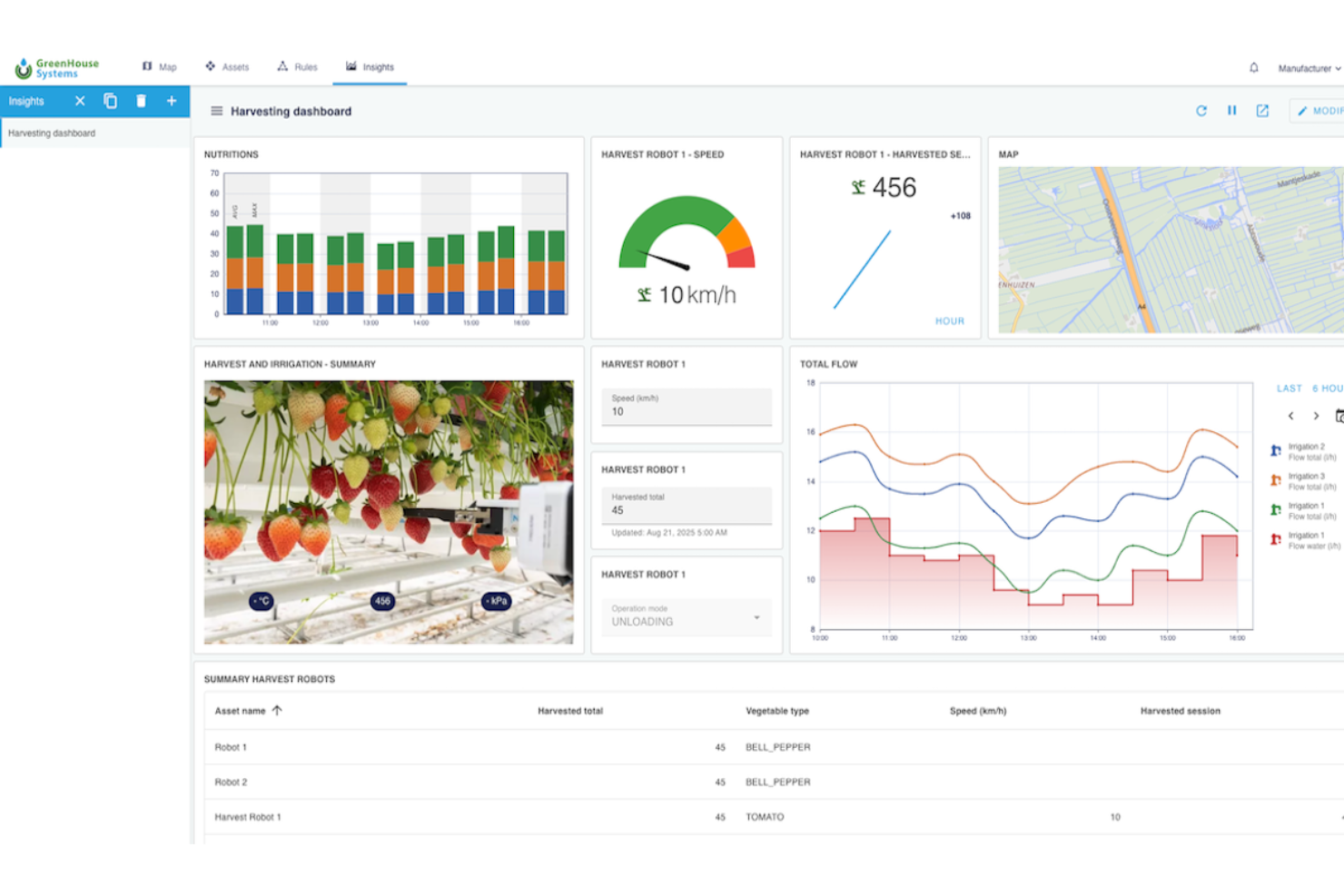
OpenRemote stands out for teams that need an open source IoT platform with a strong edge gateway and asset management capabilities. It’s a good fit for organizations managing distributed assets, such as smart cities, energy providers, or facility managers who want to unify device control and automate responses at the edge. The platform’s open architecture and flexible deployment options help you build secure, scalable IoT solutions tailored to complex environments.
Who is OpenRemote Best For?
Smart city planners and energy managers in mid-sized organizations in Europe and North America implementing flexible IoT solutions for urban and energy infrastructures.
Why I Picked OpenRemote
What sets OpenRemote apart is its focus on edge gateway functionality and asset management within an open source IoT platform. The platform lets you deploy edge gateways that process data and automate actions locally, which is valuable for projects where latency or connectivity is a concern. I appreciate how its asset management system allows you to organize, monitor, and control a wide range of devices and resources from a single interface. For teams building solutions in environments like smart cities or distributed infrastructure, OpenRemote’s architecture supports both centralized oversight and local autonomy.
OpenRemote Key Features
Some other features in OpenRemote that are useful for open source IoT projects include:
- Rules Engine: Create custom automation rules to trigger actions based on device data or events.
- User and Role Management: Assign granular permissions and roles to control access across your organization.
- REST API Access: Integrate with external systems or custom applications using a documented REST API.
- Map-Based Visualization: Monitor and manage assets using interactive, real-time map views.
OpenRemote Integrations
Integrations include MQTT, HTTP, WebSocket, Modbus, KNX, BACnet, Philips Hue, Google Home, Amazon Alexa, and more.
Pros and Cons
Pros:
- Open source codebase allows for full platform customization
- Asset management tools help organize and monitor distributed devices
- Supports edge gateway deployment for local data processing needs
Cons:
- Limited out-of-the-box templates for common IoT use cases
- Documentation can be sparse for advanced configuration scenarios
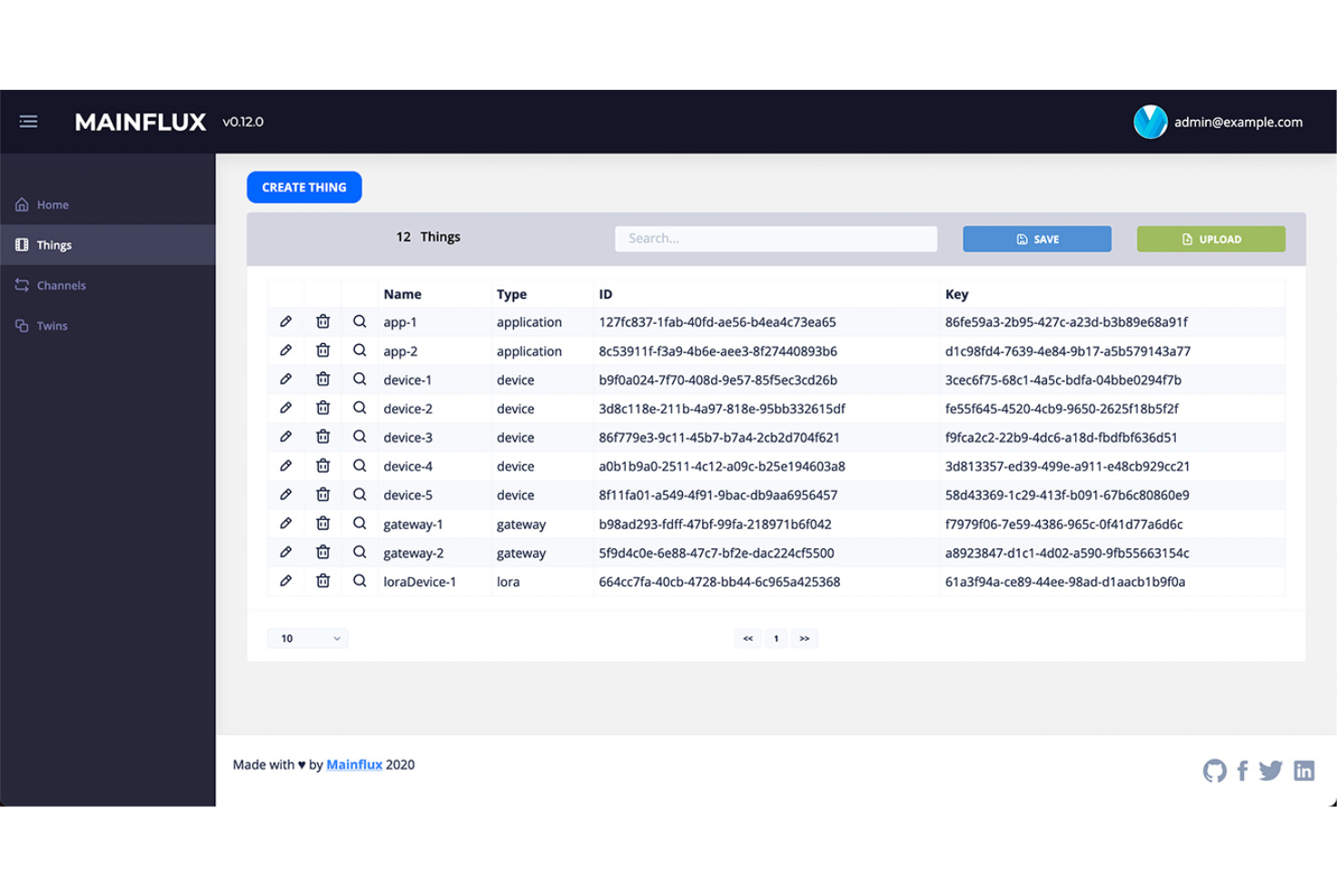
Mainflux stands out for teams that need a scalable, open source IoT platform with strong multi-protocol and edge computing support. It’s a good fit for enterprises, industrial operators, and solution architects managing complex device networks or hybrid cloud-edge deployments. With its modular architecture and support for protocols like MQTT, HTTP, and CoAP, Mainflux helps you unify device connectivity and data flow across diverse environments.
Who is Mainflux Best For?
Industrial IoT engineers and operations teams in mid-sized to large companies globally deploying scalable, multi-protocol device networks.
Why I Picked Mainflux
What makes Mainflux a strong choice for open source IoT platforms is its focus on scalability and multi-protocol support, which are essential for complex, enterprise-grade deployments. The platform’s modular architecture lets you deploy and manage services independently, so you can scale components as your device network grows. I appreciate that Mainflux supports MQTT, HTTP, and CoAP natively, making it easier to connect a wide range of devices and gateways. For teams building hybrid cloud-edge solutions, Mainflux’s edge computing capabilities help you process and route data closer to the source, reducing latency and bandwidth use.
Mainflux Key Features
Some other features that make Mainflux appealing for open source IoT projects include:
- Multi-Tenancy: Manage multiple independent organizations or projects within a single deployment.
- Integrated Identity and Access Management: Control user and device permissions with built-in authentication and authorization.
- Data Persistence Options: Store device data in PostgreSQL, InfluxDB, or other supported databases.
- Docker and Kubernetes Support: Deploy and orchestrate Mainflux services using containerization platforms.
Mainflux Integrations
Integrations include EdgeX Foundry, NATS, PostgreSQL, InfluxDB, MQTT, HTTP, CoAP, WebSocket, Docker, and more.
Pros and Cons
Pros:
- Docker and Kubernetes compatibility simplifies deployment and orchestration
- Built-in identity and access management for device and user security
- Modular architecture allows independent scaling of platform components
Cons:
- Documentation can be sparse for advanced configuration scenarios
- Limited built-in visualization and dashboarding tools for device data
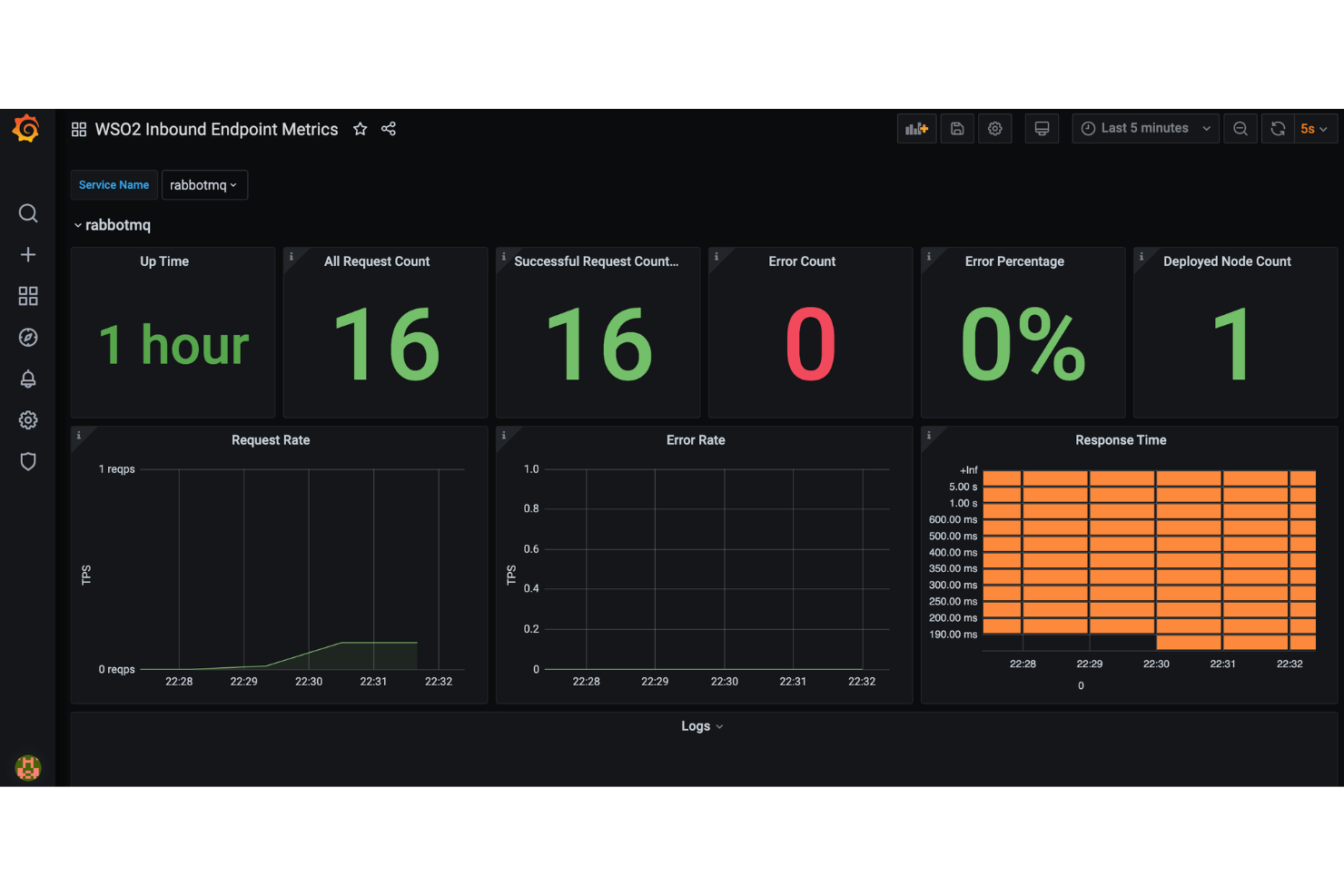
WSO2 IoT stands out for organizations that need an enterprise-grade, open source IoT platform with built-in device management and analytics. It’s designed for IT teams and solution architects who want to securely connect, manage, and monitor large fleets of devices across different environments. With its focus on scalability, policy enforcement, and integration with enterprise systems, WSO2 IoT helps you address complex deployment and compliance needs in sectors like manufacturing, logistics, and smart cities.
Who is WSO2 IoT Best For?
Enterprise IT and IoT managers in mid-sized to large organizations worldwide handling device management and analytics at scale.
Why I Picked WSO2 IoT
For teams that need enterprise-grade device management in an open source IoT platform, WSO2 IoT offers a strong set of capabilities. I picked WSO2 IoT because it combines device enrollment, policy management, and real-time monitoring in a single platform. Its support for secure device provisioning and granular access controls helps organizations meet strict compliance and operational requirements. If you’re looking to manage large, diverse device fleets with centralized control, WSO2 IoT’s integrated approach stands out in the open source space.
WSO2 IoT Key Features
In addition to its device management strengths, WSO2 IoT offers several other features worth noting:
- Built-in Analytics Engine: Collect and analyze device data in real time for actionable insights.
- Multi-Tenancy Support: Manage multiple organizations or business units from a single deployment.
- Customizable Dashboards: Create visualizations and monitor device metrics through configurable dashboards.
- Rule-Based Event Processing: Set up automated actions and alerts based on device events and conditions.
WSO2 IoT Integrations
Native integrations are not currently publicly listed.
Pros and Cons
Pros:
- Multi-tenancy lets you manage multiple organizations in one instance
- Built-in analytics engine processes real-time device data streams
- Device enrollment and policy management support large-scale deployments
Cons:
- Documentation can be inconsistent across different platform components
- Initial setup and configuration require significant technical expertise
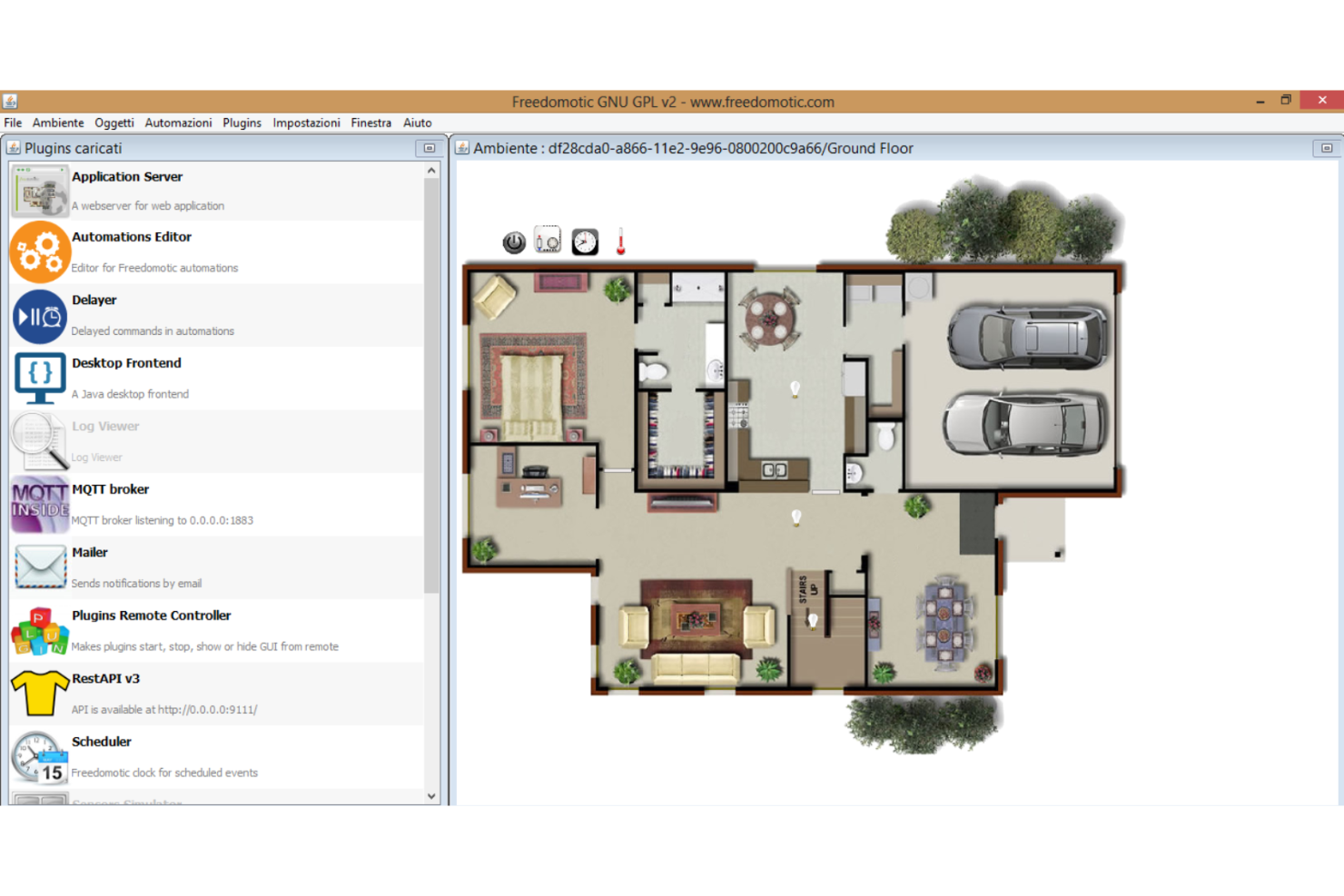
Freedomotic is designed for IT teams and system integrators who need a flexible, open source IoT platform for smart building automation. Its modular architecture lets you connect a wide range of devices and protocols, making it a fit for complex environments like offices, campuses, or industrial facilities. If you’re looking to build custom automation workflows and integrate legacy systems, Freedomotic offers a toolkit that supports deep customization and extensibility.
Who is Freedomotic Best For?
Building automation engineers and home automation teams in small to mid-sized organizations in Europe deploying open source automation solutions.
Why I Picked Freedomotic
What drew me to Freedomotic is its focus on flexibility for smart building automation. The platform’s modular plugin system lets you add or remove device support and automation logic as your environment changes. I appreciate that you can integrate both modern IoT devices and legacy systems, which is rare among open source options. For teams managing diverse building technologies, Freedomotic’s architecture makes it possible to tailor automation workflows to very specific operational needs.
Freedomotic Key Features
In addition to its modular approach to device and automation integration, Freedomotic offers several other features worth highlighting:
- Web-Based Management Console: Manage devices, plugins, and automation rules through a browser interface.
- Event-Driven Automation Engine: Trigger actions and workflows based on real-time events from connected devices.
- Role-Based Access Control: Assign permissions and manage user roles for secure platform administration.
- Extensive Plugin Marketplace: Access a library of plugins for device support, protocol adapters, and third-party integrations.
Freedomotic Integrations
Integrations include Arduino remote controller, Arduino weather shield, Arduino USB, and more.
Pros and Cons
Pros:
- Web-based management console provides centralized device control
- Open source codebase allows for deep customization and auditing
- Modular plugin system supports a wide range of device types
Cons:
- Smaller user community means less peer support and resources
- Limited documentation makes advanced configuration challenging for new users

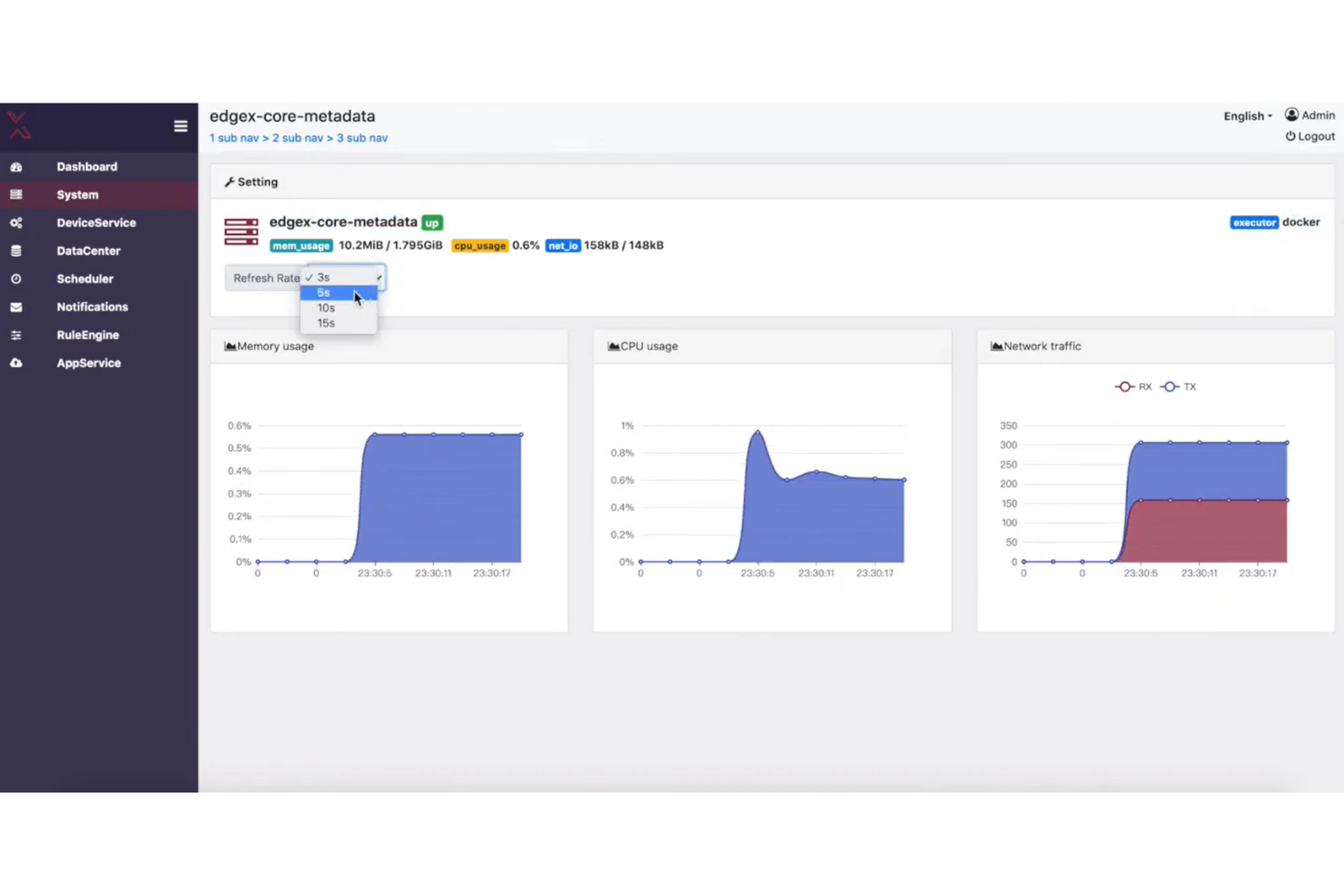
EdgeX Foundry stands out for IT architects and developers who need a vendor-neutral, open source IoT platform built on microservices. Its framework is designed for edge computing scenarios, making it a strong fit for organizations managing distributed devices and data at the edge. If you’re looking to standardize device connectivity and data flow across diverse hardware, EdgeX Foundry offers a flexible foundation for scalable, interoperable IoT solutions.
Who is EdgeX Foundry Best For?
IoT platform engineers and system integrators in mid-sized organizations globally implementing vendor-neutral edge computing solutions.
Why I Picked EdgeX Foundry
What makes EdgeX Foundry a strong choice is its open, vendor-neutral microservices framework designed specifically for edge IoT deployments. I picked it because its architecture lets you deploy, scale, and update individual services independently, which is essential for complex edge environments. The platform’s device service layer supports a wide range of protocols, making it easier to connect diverse hardware without vendor lock-in. For teams building distributed IoT solutions, EdgeX Foundry’s modular approach gives you the flexibility to tailor deployments to your exact requirements.
EdgeX Foundry Key Features
Some other features that make EdgeX Foundry appealing for open source IoT projects include:
- Core Data Service: Collect, store, and manage device data in a central repository.
- Rules Engine: Define and execute rules for real-time data processing and event handling.
- RESTful APIs: Interact with all microservices and device data using standardized APIs.
- Edge Analytics Support: Run analytics workloads directly at the edge for faster insights.
EdgeX Foundry Integrations
Integrations include Intel, Dell, HP, IBM, Ubuntu, Wipro, IOTech, Thundersoft, TIBCO, and more.
Pros and Cons
Pros:
- Flexible deployment options for edge, cloud, or hybrid environments
- Vendor-neutral design avoids hardware and software lock-in
- Microservices architecture allows independent scaling of platform components
Cons:
- Documentation can be fragmented across different project repositories
- Initial setup requires significant infrastructure and configuration work

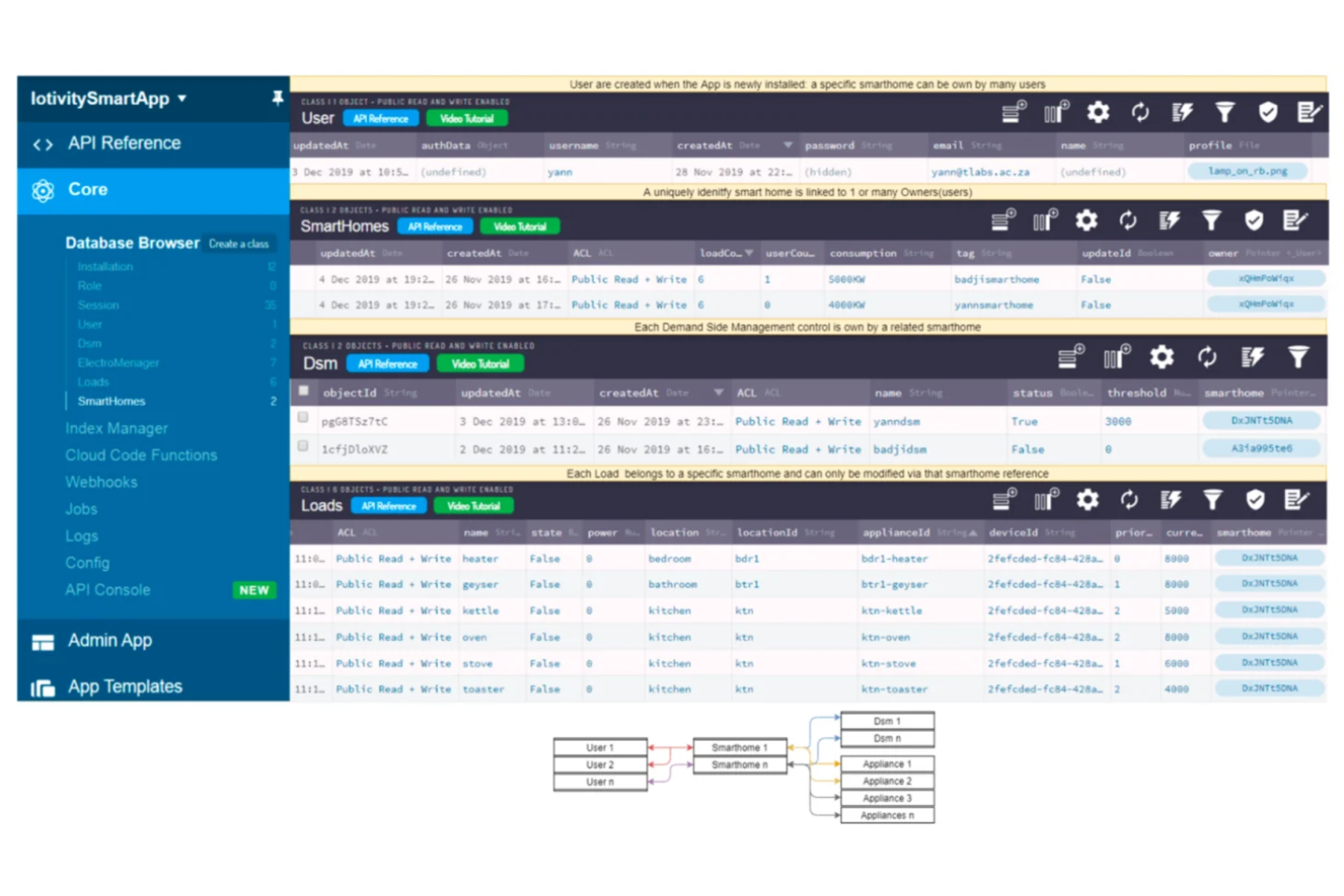
IoTivity offers an open source framework focused on secure, standardized device-to-device communication for IoT environments. It’s a strong fit for IT teams and developers who need to ensure interoperability across a wide range of connected devices and operating systems. If you’re building solutions that require reliable discovery, messaging, and data exchange between heterogeneous IoT devices, IoTivity provides a unified approach grounded in open standards.
Who is IoTivity Best For?
IoT developers and security teams in mid-sized to large organizations worldwide ensuring secure device interoperability across platforms.
Why I Picked IoTivity
What drew me to IoTivity is its focus on secure, standardized device-to-device IoT connectivity. The platform’s open source framework is built around the Open Connectivity Foundation (OCF) specifications, which means you get a consistent approach to device discovery, messaging, and data exchange across different vendors and operating systems. I appreciate that IoTivity supports both constrained and rich devices, making it suitable for a wide range of IoT deployments. For teams prioritizing interoperability and security in their IoT projects, IoTivity’s standards-based architecture is a strong foundation.
IoTivity Key Features
Some other features that make IoTivity useful for open source IoT projects include:
- Resource Directory: Register and discover available resources across devices in a network.
- Security Manager: Manage access control and security policies for connected devices.
- Cloud Connectivity: Enable device-to-cloud and cloud-to-device communication through standardized interfaces.
- Cross-Platform SDKs: Develop applications for multiple operating systems using provided software development kits.
IoTivity Integrations
Native integrations are not currently publicly listed.
Pros and Cons
Pros:
- Security framework includes access control and device authentication
- Open source licensing allows full codebase inspection and modification
- Supports both constrained and rich device environments for flexibility
Cons:
- Upgrading to new protocol versions may require significant code changes
- Lacks built-in analytics or visualization tools for device data
Weitere Open-Source-IoT-Plattformen
Hier sind einige zusätzliche Open-Source-IoT-Plattformen, die es zwar nicht auf meine Shortlist geschafft haben, aber dennoch einen Blick wert sind:
- OpenBalena
For managing IoT device fleets
- FIWARE
For open APIs for smart solutions
- Eclipse Kapua
For modular IoT gateway and device management
- Eclipse Kura
For edge computing on IoT gateways
- Eclipse Ditto
For managing IoT digital twins
- Mender
For open source over-the-air device update
- KubeEdge
For extending Kubernetes to edge and IoT workloads
- VerneMQ
For high-performance MQTT at IoT scale


Auswahlkriterien für Open-Source-IoT-Plattformen
Bei der Auswahl der besten Open-Source-IoT-Plattformen für diese Liste habe ich gängige Bedürfnisse und Herausforderungen von Käufern berücksichtigt – wie die Gewährleistung der Interoperabilität bei verschiedensten Geräten und das Management großer Installationen. Außerdem habe ich folgendes Bewertungsschema genutzt, um die Auswahl strukturiert und objektiv zu gestalten:
Kernfunktionen (25% der Gesamtwertung)
Um in diese Liste aufgenommen zu werden, musste jede Lösung die folgenden Anwendungsfälle erfüllen:
- Verbinden und Verwalten von IoT-Geräten
- Sensordaten erfassen und speichern
- Echtzeit-Datenverarbeitung ermöglichen
- Geräteauthentifizierung und Sicherheit bieten
- Integration mit externen Systemen unterstützen
Zusätzliche besondere Funktionen (25% der Gesamtwertung)
Um die Auswahl weiter einzugrenzen, habe ich auch nach einzigartigen Merkmalen gesucht, zum Beispiel:
- Unterstützung für Digital-Twin-Modellierung
- Eingebaute Edge-Computing-Funktionen
- Erweiterte Tools zur Datenvisualisierung
- Automatisierte Bereitstellungsabläufe für Geräte
- Offene Standards für den Datenaustausch
Benutzerfreundlichkeit (10% der Gesamtwertung)
Um die Benutzerfreundlichkeit jeder Lösung einzuschätzen, habe ich folgende Aspekte berücksichtigt:
- Klar und intuitiv bedienbare Benutzeroberfläche
- Logische Navigation und Menüstruktur
- Anpassbare Dashboards und Ansichten
- Zugänglichkeit der Dokumentation innerhalb der Plattform
- Minimale Schritte für häufige Aufgaben erforderlich
Onboarding (10 % der Gesamtbewertung)
Um das Onboarding-Erlebnis jeder Plattform zu beurteilen, habe ich Folgendes berücksichtigt:
- Verfügbarkeit von Schritt-für-Schritt-Anleitungen
- Zugang zu Trainingsvideos und Tutorials
- Interaktive Produkttouren für neue Nutzer
- Vorinstallierte Vorlagen für typische Anwendungsfälle
- Reaktionsschneller Onboarding-Support oder Chatbots
Kundenservice (10 % der Gesamtbewertung)
Um die Kundensupport-Dienste jedes Softwareanbieters zu bewerten, habe ich folgende Kriterien betrachtet:
- Verfügbarkeit von Community-Foren oder Nutzergruppen
- Zugang zu technischer Dokumentation und FAQs
- Reaktionsgeschwindigkeit des E-Mail- oder Ticket-basierten Supports
- Verfügbarkeit von Live-Chat oder telefonischem Support
- Regelmäßige Updates und Kommunikation vom Anbieter
Preis-Leistungs-Verhältnis (10 % der Gesamtbewertung)
Um das Preis-Leistungs-Verhältnis jeder Plattform zu beurteilen, habe ich folgende Aspekte berücksichtigt:
- Transparente und vorhersehbare Preisstruktur
- Verfügbarkeit eines kostenlosen Tarifs oder Testzeitraums
- Flexibilität beim Skalieren nach Nutzung oder Geräten
- Enthaltene Kernfunktionen im Basistarif
- Kosten im Vergleich zu ähnlichen Open-Source-Lösungen
Kundenbewertungen (10 % der Gesamtbewertung)
Um ein Gefühl für die Kundenzufriedenheit zu bekommen, habe ich beim Lesen von Kundenrezensionen auf Folgendes geachtet:
- Berichte über Zuverlässigkeit und Verfügbarkeit
- Feedback zur Integrationsfreundlichkeit
- Kommentare zu Community- und Anbietersupport
- Nutzererfahrungen mit Skalierbarkeit
- Gesamtzufriedenheit mit dem Funktionsumfang
Wie wählt man eine Open-Source-IoT-Plattform aus?
Es ist leicht, sich in langen Funktionslisten und komplexen Preisstrukturen zu verlieren. Damit Sie während Ihres individuellen Software-Auswahlprozesses den Überblick behalten, finden Sie hier eine Checkliste mit Faktoren, die Sie beachten sollten:
| Faktor | Worauf achten? |
|---|---|
| Skalierbarkeit | Kann die Plattform Ihr geplantes Wachstum bei Geräten und Daten bewältigen? Achten Sie auf bewährte Unterstützung von Tausenden oder Millionen von Geräten. |
| Integrationen | Stellt die Plattform eine native Verbindung zu Ihren bestehenden Systemen, Protokollen und Cloud-Diensten her? Prüfen Sie die Kompatibilität mit Ihrem Technologie-Stack. |
| Anpassbarkeit | Wie einfach lässt sich die Plattform an Ihre individuellen Arbeitsabläufe oder branchenspezifischen Anforderungen anpassen? Berücksichtigen Sie offene APIs, Plugin-Unterstützung und Modularität. |
| Benutzerfreundlichkeit | Kann Ihr Team Geräte konfigurieren, verwalten und überwachen, ohne umfangreiche Umschulungen? Bewerten Sie die Benutzeroberfläche und die vorhandene Dokumentation. |
| Implementierung und Onboarding | Welche Ressourcen, Kompetenzen und Zeit benötigen Sie für die Implementierung und Migration? Prüfen Sie die Verfügbarkeit von Migrationstools, Anleitungen und Community-Support. |
| Kosten | Abgesehen von Lizenzgebühren – welche versteckten Kosten gibt es, wie z. B. für Infrastruktur, Support oder Skalierung? Vergleichen Sie die Gesamtbetriebskosten, nicht nur den Einstiegspreis. |
| Sicherheitsvorkehrungen | Bietet die Plattform Geräteauthentifizierung, Datenverschlüsselung und Zugriffskontrollen? Prüfen Sie die Einhaltung Ihrer unternehmensinternen Sicherheitsrichtlinien. |
| Support-Verfügbarkeit | Welche Support-Kanäle stehen im Problemfall zur Verfügung? Berücksichtigen Sie die Stärke der Open-Source-Community und eventuell angebotene kostenpflichtige Supportoptionen. |
Was sind Open-Source-IoT-Plattformen?
Eine Open-Source-IoT-Plattform ist ein Software-Framework, das Unternehmen ermöglicht, Daten von internetverbundenen Geräten zu verknüpfen, zu verwalten und auszuwerten, wobei der Quellcode frei veränderbar und verbreitbar ist. Diese Plattformen unterstützen die Integration von Geräten, Datenerfassung und Automatisierung, so dass Teams skalierbare IoT-Lösungen aufbauen können und dabei Kontrolle über Anpassung, Sicherheit und Einsatz behalten. Open-Source-Lizenzen fördern die Zusammenarbeit und Transparenz in verschiedensten IoT-Projekten.
Eigenschaften einer Open-Source-IoT-Plattform
Beim Auswahlprozess einer Open-Source-IoT-Plattform sollten Sie auf folgende Schlüsselfunktionen achten:
- Geräteverwaltung: Zentralisiert das Onboarding, die Überwachung und Fernsteuerung vernetzter Geräte, wodurch die Verwaltung großer Geräteflotten und die Sicherstellung der Gerätegesundheit erleichtert werden.
- Datenaufnahme: Sammelt und verarbeitet Daten von verschiedenen Sensoren und Geräten in Echtzeit, unterstützt mehrere Protokolle und Datenformate für eine flexible Integration.
- Edge Computing: Ermöglicht Datenverarbeitung und Analytik am Netzwerkrand, reduziert Latenz und Bandbreitenverbrauch für zeitkritische oder ressourcenbeschränkte Anwendungen.
- Sicherheitskontrollen: Stellt Authentifizierung, Verschlüsselung und Zugriffsverwaltung bereit, um Gerätedaten zu schützen und sicherzustellen, dass nur autorisierte Nutzer und Systeme mit der Plattform interagieren dürfen.
- Skalierungswerkzeuge: Unterstützt horizontale Skalierung und verteilte Bereitstellung, sodass Sie von wenigen auf Tausende oder Millionen Geräte wachsen können, ohne dass eine grundlegende Umstrukturierung nötig ist.
- API-Zugriff: Bietet offene, gut dokumentierte APIs zur Integration mit externen Anwendungen, Dashboards oder Analysewerkzeugen und unterstützt Automatisierung sowie individuelle Arbeitsabläufe.
- Ereignisverarbeitung: Erkennt und reagiert auf spezifische Geräteereignisse oder Datenmuster, was die automatisierte Auslösung von Benachrichtigungen, Aktionen oder Workflows basierend auf Echtzeitbedingungen ermöglicht.
- Datenspeicherung: Enthält integrierte oder erweiterbare Speicheroptionen für Zeitreihen-, strukturierte oder unstrukturierte IoT-Daten und unterstützt sowohl kurzfristige Analysen als auch langfristige Archivierung.
- Protokollunterstützung: Unterstützt nativ gängige IoT-Kommunikationsprotokolle wie MQTT, CoAP und HTTP, um Kompatibilität mit einer Vielzahl von Geräten und Gateways sicherzustellen.
- Dashboard und Visualisierung: Stellt Werkzeuge zum Erstellen individueller Dashboards und zur Visualisierung von Gerätedaten bereit, um den Systemstatus zu überwachen und verwertbare Erkenntnisse zu gewinnen.
Vorteile einer Open-Source-IoT-Plattform
Die Implementierung einer Open-Source-IoT-Plattform bietet zahlreiche Vorteile für Ihr Team und Ihr Unternehmen. Hier sind einige, auf die Sie sich freuen können:
- Anpassbarkeit: Quellcode ändern und Workflows an die individuellen Anforderungen Ihres Unternehmens für Geräteverwaltung, Datenverarbeitung und Integration anpassen.
- Kosteneffizienz: Vermeidung von Anbieterbindung und Lizenzgebühren, mit der Flexibilität, Bereitstellungen auf eigener Infrastruktur oder mit Cloud-Ressourcen zu skalieren.
- Interoperabilität: Offene Standards und breite Protokollunterstützung nutzen, um verschiedenste Geräte, Sensoren und externe Systeme im gesamten IoT-Ökosystem zu verbinden.
- Community-Support: Zugriff auf eine globale Community für Fehlerbehebung, Dokumentation und geteilte Best Practices, um die Problemlösung und Innovation zu beschleunigen.
- Sicherheitstransparenz: Sicherheitskontrollen direkt im Quellcode prüfen und verbessern, um Konformität mit den Richtlinien Ihres Unternehmens und Branchenstandards sicherzustellen.
- Skalierbarkeit: Einsatz und Management von Tausenden oder Millionen von Geräten mit integrierten Werkzeugen für verteilte, großskalige IoT-Umgebungen.
- Schnelle Innovation: Neue Funktionen, Integrationen oder Edge-Computing-Fähigkeiten testen, ohne auf Anbieter-Updates oder -Releases warten zu müssen.
Kosten und Preisgestaltung von Open-Source-IoT-Plattformen
Die Auswahl einer Open-Source-IoT-Plattform erfordert ein Verständnis der verschiedenen Preismodelle und verfügbaren Tarife. Die Kosten variieren je nach Ausstattung, Teamgröße, Zusatzfunktionen und mehr. Die folgende Tabelle fasst gängige Tarife, ihre durchschnittlichen Preise und typische enthaltene Funktionen bei Open-Source-IoT-Plattform-Lösungen zusammen:
Tarifvergleichstabelle für Open-Source-IoT-Plattformen
| Tariftyp | Durchschnittlicher Preis | Typische Funktionen |
|---|---|---|
| Kostenloser Tarif | $0 | Zugriff auf Kernfunktionen der Plattform, Community-Support, grundlegendes Gerätemanagement und offene API-Nutzung. |
| Persönlicher Tarif | $10–$30/Monat | Alle Funktionen des kostenlosen Tarifs, begrenztes Cloud-Hosting, kleiner Datenspeicher und grundlegende Sicherheitskontrollen. |
| Geschäftstarif | $50–$200/Monat | Multi-User-Unterstützung, erweitertes Gerätemanagement, Integrationen, verbesserte Sicherheit und Analyse-Tools. |
| Enterprise-Tarif | $500–$2,000/Monat | Individuelle SLAs, bevorzugter Support, Werkzeuge für großflächige Bereitstellung, Compliance-Funktionen und dediziertes Onboarding. |
Open-Source-IoT-Plattform-FAQs
Hier finden Sie Antworten auf häufig gestellte Fragen zu Open-Source-IoT-Plattformen:
Kann ich eine Open-Source-IoT-Plattform für kommerzielle Projekte nutzen?
Ja, die meisten Open-Source-IoT-Plattformen können für kommerzielle Projekte verwendet werden. Sie sollten jedoch die spezifischen Lizenzbestimmungen prüfen, um sicherzustellen, dass Sie die Anforderungen in Bezug auf Weitergabe, Modifikation und Support einhalten.
Wie gehen Open-Source-IoT-Plattformen mit Sicherheit um?
Open-Source-IoT-Plattformen bieten in der Regel Funktionen wie Geräteauthentifizierung, Datenverschlüsselung und Zugriffskontrollen. Sie können zudem den Quellcode einsehen und anpassen, um die Sicherheitsstandards und Compliance-Anforderungen Ihres Unternehmens zu erfüllen.
Welche technischen Kenntnisse sind für die Implementierung einer Open-Source-IoT-Plattform erforderlich?
Sie benötigen Erfahrung mit Linux-Servern, Netzwerktechnik und Containerisierung sowie Grundkenntnisse der IoT-Protokolle und Programmierung. Einige Plattformen verlangen zudem fortgeschrittene Kenntnisse für Anpassungen und Integration.
Gibt es versteckte Kosten bei Open-Source-IoT-Plattformen?
Ja, auch wenn die Software selbst oft kostenlos ist, können Kosten für Infrastruktur, Cloud-Hosting, Support und laufende Wartung entstehen. Berücksichtigen Sie die Gesamtkosten, einschließlich interner Ressourcen und Skalierungsbedarf.
Wie bewerte ich die Community-Unterstützung für eine Open-Source-IoT-Plattform?
Achten Sie auf aktive Foren, aktuelle Code-Commits, verfügbare Dokumentationen und die Häufigkeit von Updates. Eine engagierte Community unterstützt bei Troubleshooting, Best Practices und nachhaltiger Weiterentwicklung.
Wie geht es weiter:
Wenn Sie gerade eine Open-Source-IoT-Plattform recherchieren, kontaktieren Sie einen SoftwareSelect-Berater für kostenlose Empfehlungen.
Sie füllen ein Formular aus und führen ein kurzes Gespräch, in dem Ihre Anforderungen besprochen werden. Anschließend erhalten Sie eine Auswahl an Softwarelösungen zur Durchsicht. Die Berater begleiten Sie sogar während des gesamten Auswahlprozesses – bis hin zu Preisverhandlungen.